The trumpet vine (Campsis grandiflora), American trumpet vine (Campsis radicans), and common bellflower (Campsis erythrosora) are three species of climbing vines native to North America, known for their use in gardens and landscaping. Distinguishing between them is easy if they are in bloom, by looking at the flowers. If that's not possible, you'll need to examine the underside of the leaves closely, but the differences are subtle , making it a bit difficult. The Japanese Wikipedia entry for the trumpet vine and American trumpet vine asserts they are non-toxic, but in reality, several scientific studies have shown they are poisonous. However, due to their low sensitization potential and lack of research, the exact strength of their toxicity is not well understood. While excessive exposure is not necessary, you should avoid unnecessary contact. The common bellflower (Campsis radicans) is attracting attention as a plant for vertical gardening because it can climb walls using suction cups, a feature not found in the other two species. The ecology of the trumpet vine and American trumpet vine is interesting; their distribution spans the Old and New Worlds, and due to branching, the flower tubes have changed considerably despite the leaves being very similar in shape. This can be thought to be a result of adaptation to the sunbirds, hummingbirds, and bees that inhabit each area. Only the flowers of Campanula punctata emit a curry-like smell, but the reason for this remains unsolved. Hummingbirds are known to visit, but it is believed that hummingbirds are not affected by smell. This article will explain the classification, toxicity, and pollination ecology of Campanula punctata, Campanula punctata, and Campanula punctata.
- Three types of climbing horticultural plants native to North America, used as garden trees and for landscaping.
- What are the differences between trumpet vine (Campsis grandiflora) and American trumpet vine (Campsis radicans)?
- Beware of misinformation that definitively states that trumpet vines are non-poisonous.
- Trumpet vine (Campsis grandiflora), American trumpet vine (Campsis radicans), and Campanula punctata (Adenophora triphylla) have different ways of twining! Why Campanula punctata is used for greening walls.
- Is there a difference in the length of the flower vases between the Old World and the New World?
- Will sunbirds come to the trumpet vine?!
- Hummingbirds visit American trumpet vines!?
- The Campanula punctata is also for hummingbirds, but why does it look different from the American trumpet vine...?
- The fruit is a capsule and is dispersed by wind.
- References
- Source
Three types of climbing horticultural plants native to North America, used as garden trees and for landscaping.
The trumpet vine (Campsis grandiflora), also known as the trumpet vine, is native to central and southern China, India, Pakistan, and Vietnam. It is a deciduous climbing woody plant commonly seen as an ornamental plant. It is believed to have been introduced to Japan during the Heian period. It is cultivated as a garden tree for ornamental purposes.
American trumpet vine (Campsis radicans) is a deciduous climbing woody plant native to North America, commonly cultivated as an ornamental plant in gardens.
Bignonia capreolata, also known as bellflower vine, is an evergreen climbing shrub native to south-central North America and is commonly cultivated as an ornamental plant in Japan. In addition to being grown for its ornamental purposes, it is also used for greening the walls of buildings because it climbs walls with its stems and tendrils.
Both belong to the Bignoniaceae family and are sometimes confused with each other because they are used in horticulture and landscaping. Their flowers also look similar at first glance. In particular, I think the common trumpet vine (Campsis grandiflora) and the American trumpet vine (Campsis radicans) are often confused on the internet.
What are the differences between trumpet vine (Campsis grandiflora) and American trumpet vine (Campsis radicans)?
Of these, trumpet vine (Campsis grandiflora), American trumpet vine (Campsis radicans), and bellflower (Adenophora triphylla) belong to completely different genera, making them easy to distinguish.
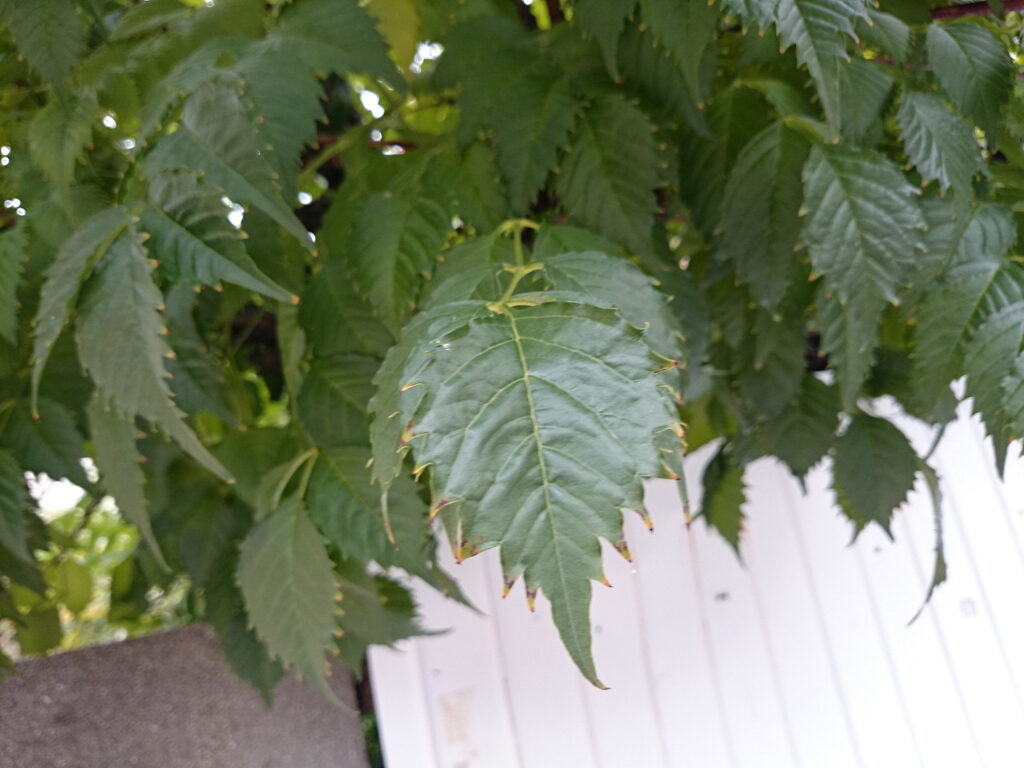
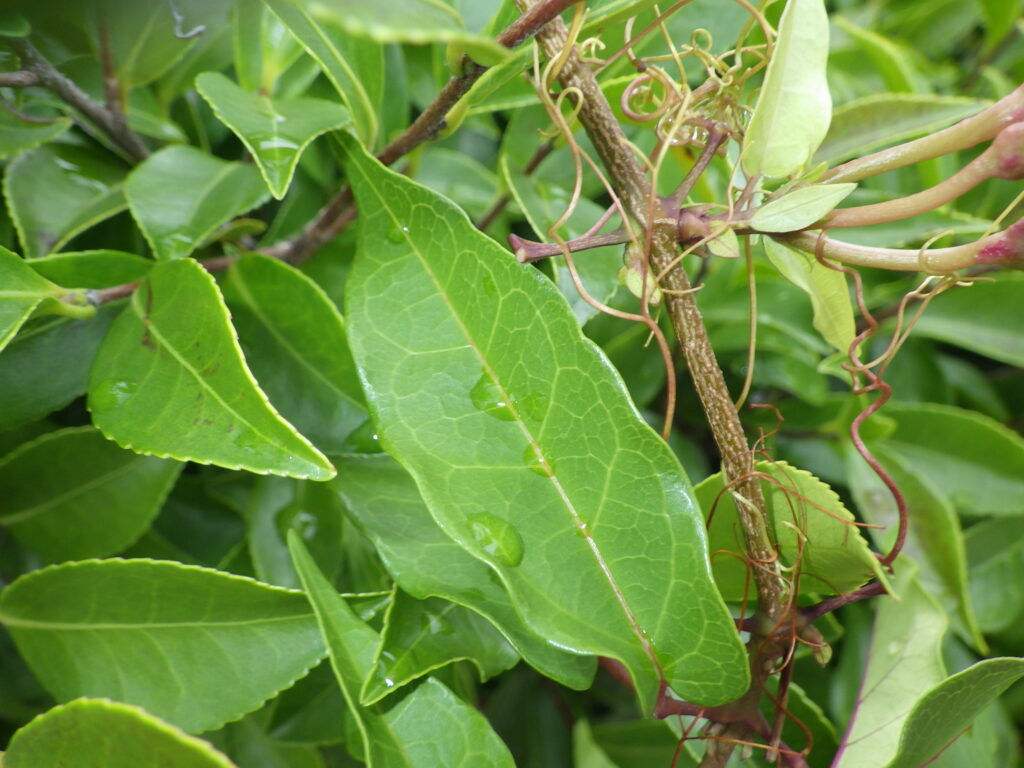
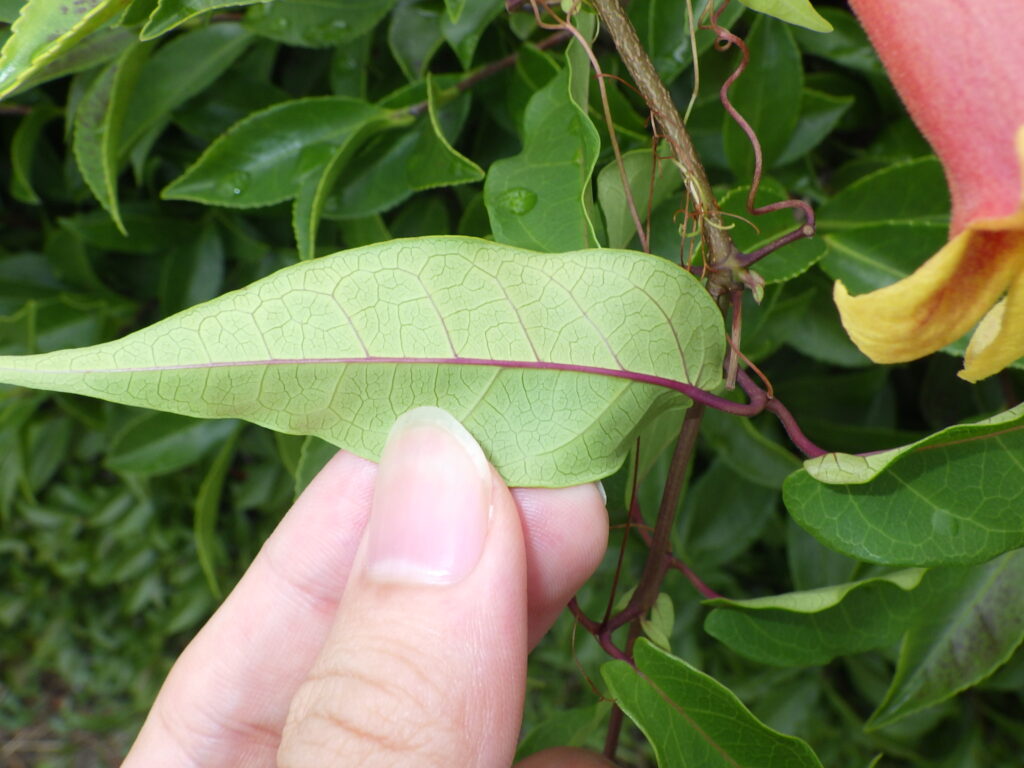
Regarding the leaves, while trumpet vine and American trumpet vine have odd-pinnately compound leaves with serrated leaflets, Adenophora trifoliata, although considered to have trifoliate compound leaves, has a terminal leaflet that has evolved into a tendril, meaning it effectively has only two leaflets. The leaflets have entire margins.
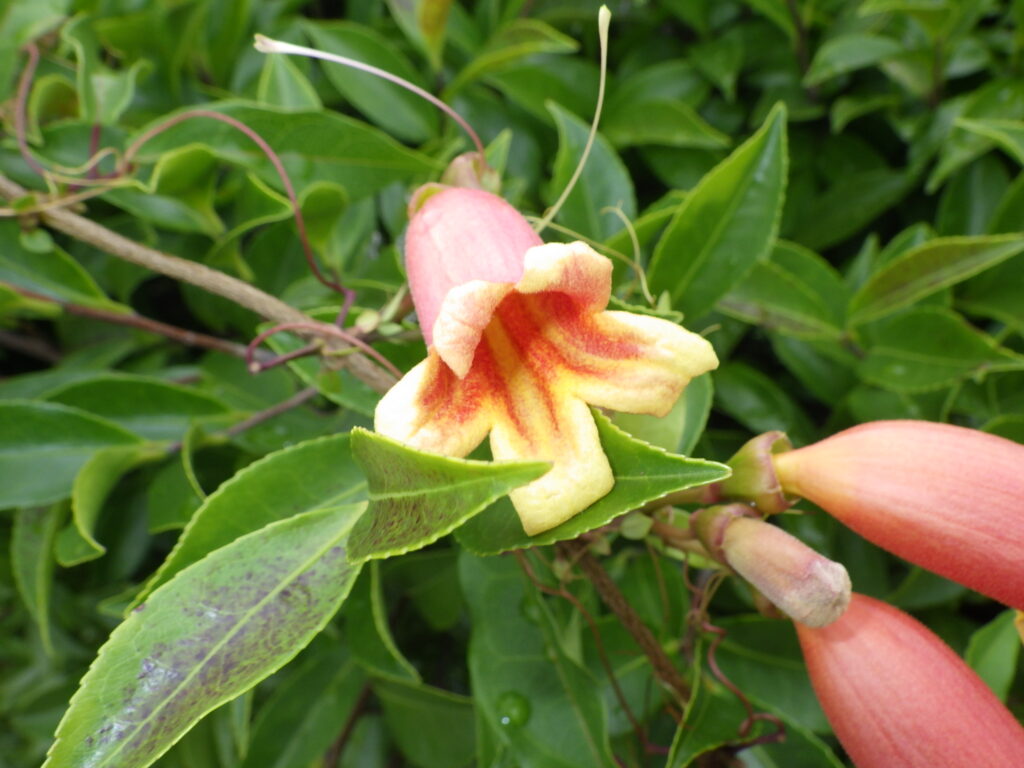
Regarding the flowers, in trumpet vine and American trumpet vine, the limbs are wide and the flower tube is narrow, while in bellflower vine, the limbs are less wide and the flower tube is thicker.
The question is, what is the difference between trumpet vine and American trumpet vine?
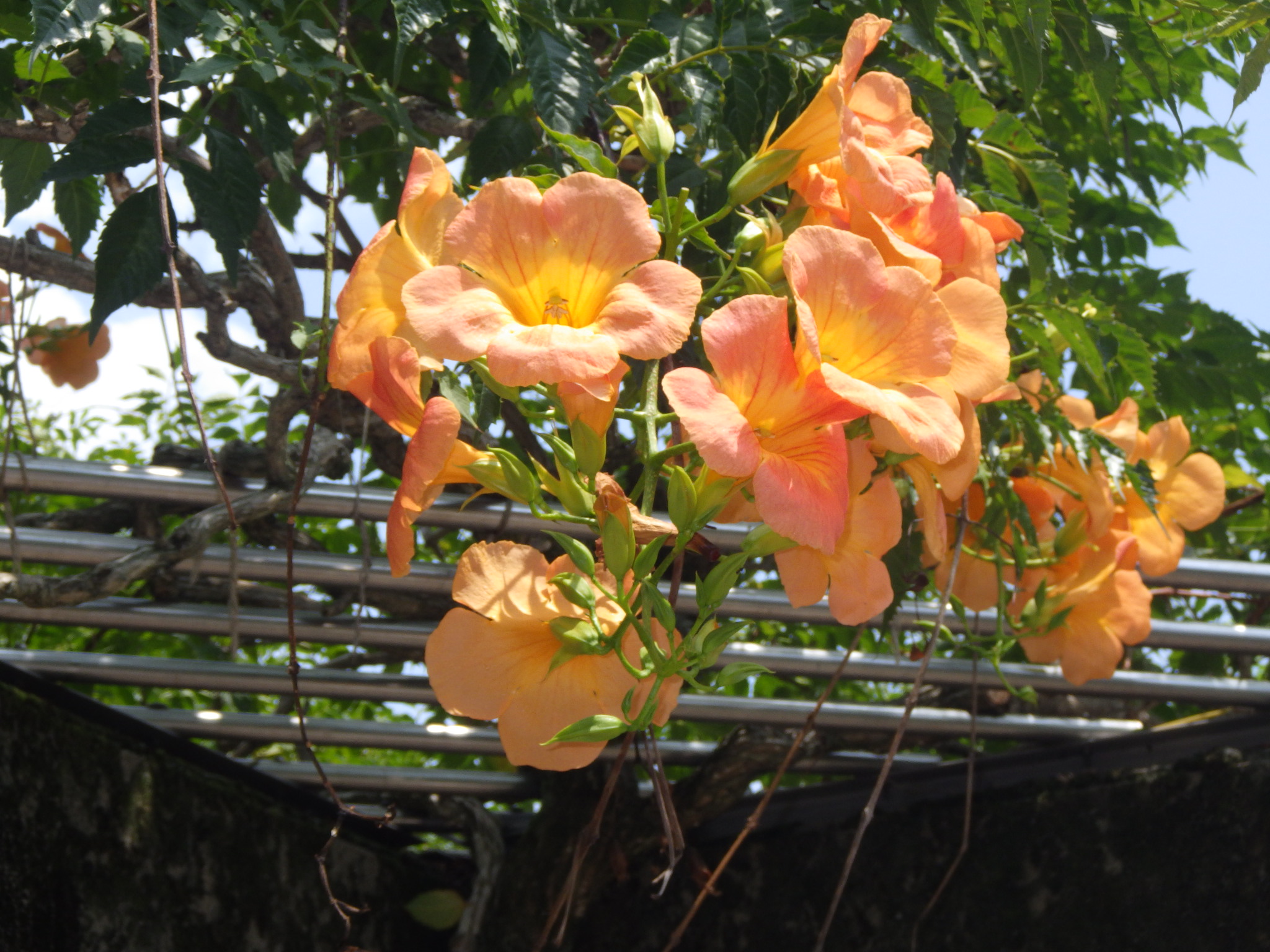
The easiest way to tell them apart is by looking at the flowers. In the common trumpet vine (Campsis grandiflora), the corolla is a pale orange-yellow with a short flower tube, while in the American trumpet vine (Campsis radicans), the corolla is a darker yellow-orange to red with a long flower tube.
They can also be distinguished by their leaves, but careful observation is necessary. In trumpet vine (Campsis grandiflora), there are 3 to 6 pairs of leaflets and the main vein on the underside is hairless, while in American trumpet vine (Campsis radicans), there are 4 to 8 pairs of leaflets and the main vein on the underside is hairy and appears white even from a distance.
Furthermore, 'Madame Galen', a hybrid of trumpet vine (Campsis radicans) and American trumpet vine (Campsis humilis), is also known. Madame Galen's flower tube length is intermediate between that of trumpet vine and American trumpet vine, appearing slightly shorter than that of American trumpet vine. However, distinguishing them by leaves seems difficult based on my research. Although I could not find any detailed papers on its morphology, a photograph I found using Google Image Search confirmed that the main vein on the underside of the leaf has hairs, similar to American trumpet vine.
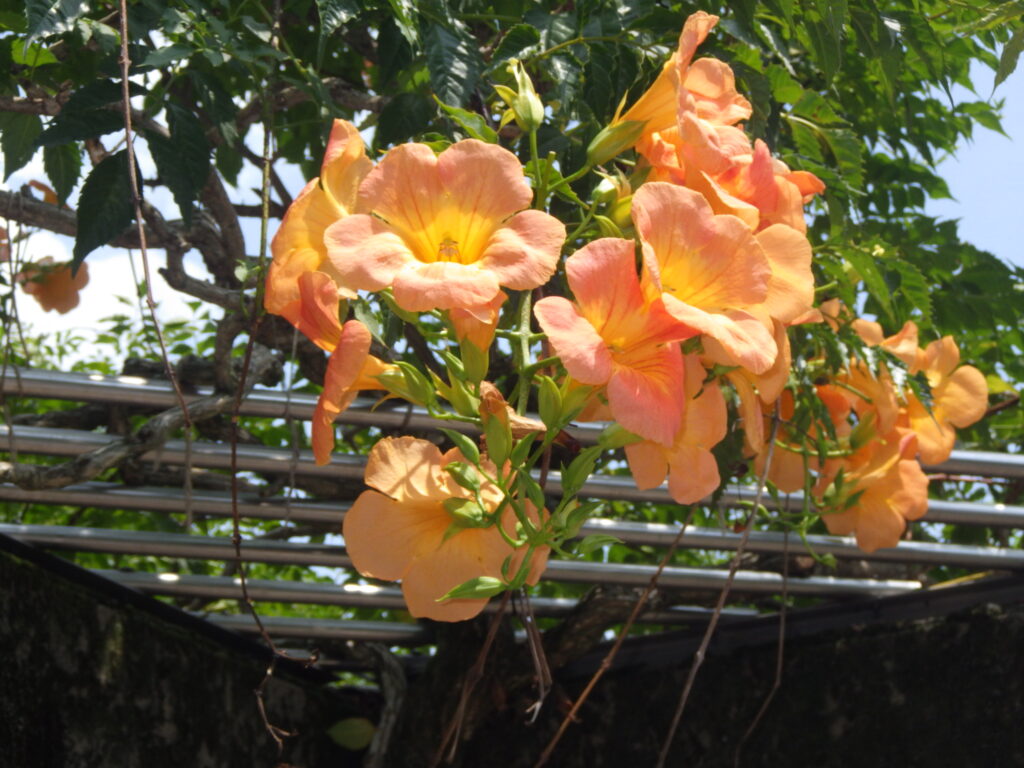
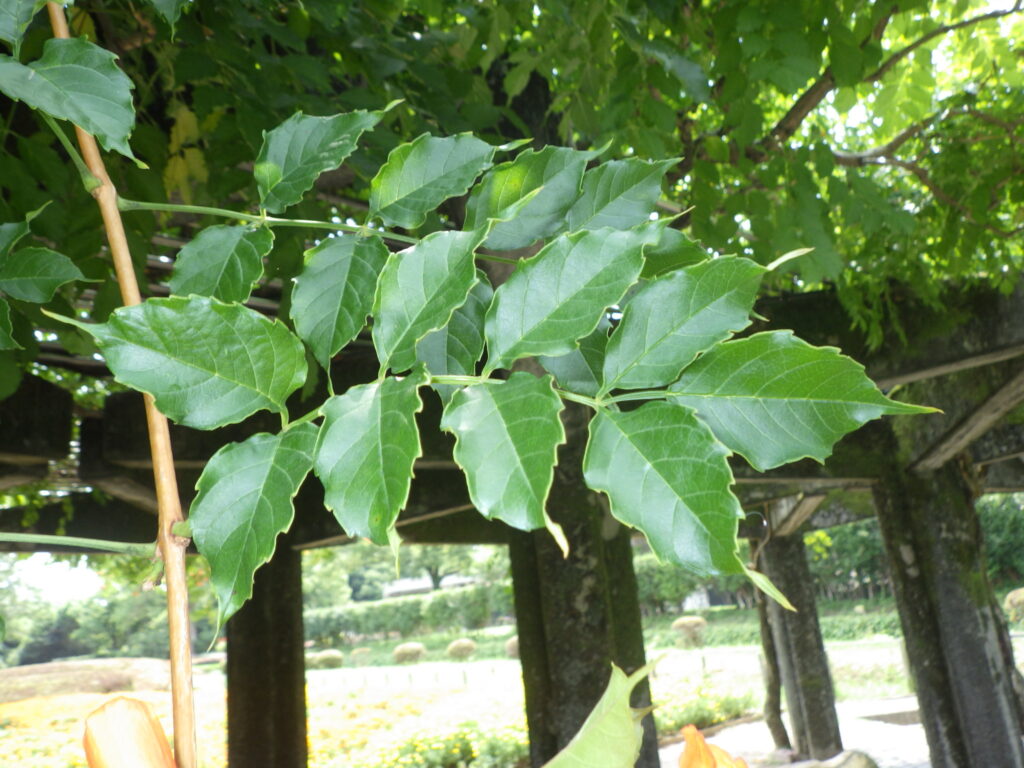
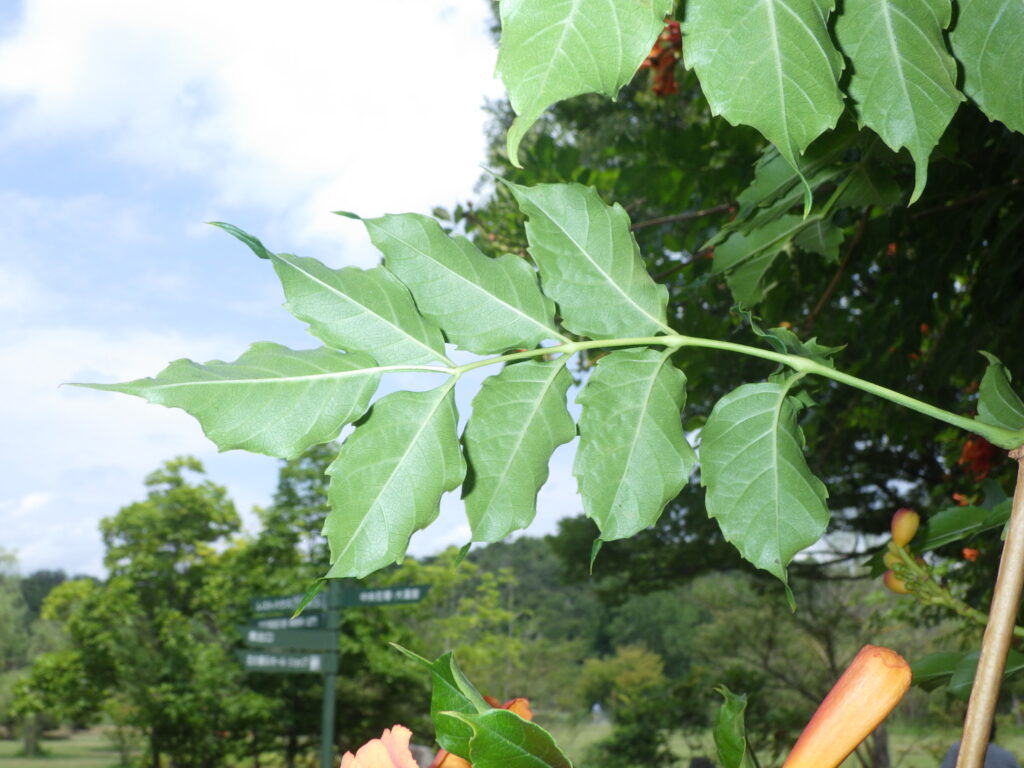
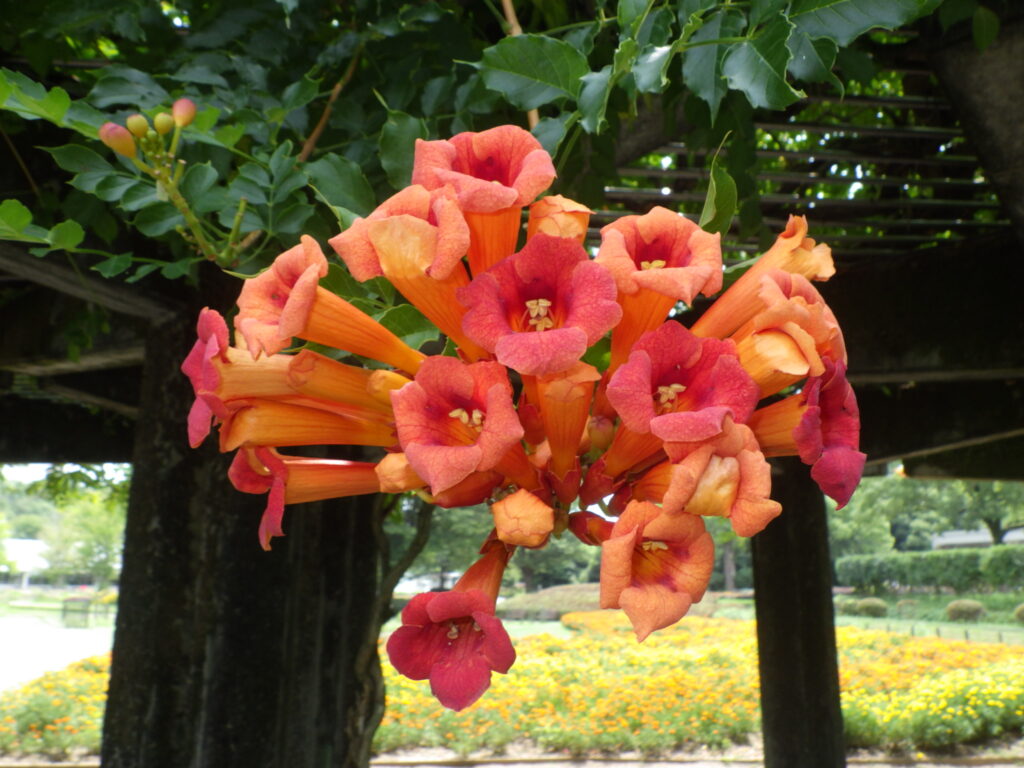
Beware of misinformation that definitively states that trumpet vines are non-poisonous.
The Japanese Wikipedia entry for trumpet vine (Campsis grandiflora) states that the idea that trumpet vines are poisonous is an unfounded folk belief and rumor. Is this true?
After reviewing scientific literature both domestically and internationally, it became clear that it is highly likely to be toxic.
The trumpet vine (Campsis grandiflora) is listed in a Japanese paper as one of the "poisonous plants that require caution in horticultural activities" (Tsuchihashi, 2014). However, there are no specific cases described.
It also appears that the American trumpet vine is poisonous, and there is a detailed description of this (Dohse & Elston, 2009).
According to this paper, touching the leaves or flowers can cause inflammation, and blisters may persist for several days. While this rash resembles that caused by poison ivy, trumpet vine is thought to be far less sensitizing.
While there are numerous reports of dermatitis caused by American trumpet vine (Campsis grandiflora) in North America, systematic studies on its mechanisms and allergens have not been conducted, and it is unclear whether all varieties cause dermatitis. No specific reports of inflammation were found in Japan.
The main chemical substances extracted from plants include alkanes, salicylic acid, squalene, stancioside, verbascoside, ferulic acid, trimethoxycinnamic acid, and cyanidin-3-rutinoside. Reported symptoms include stomach irritation, pupil dilation, and numbness in the hands, and treatment is symptomatic.
This confusion in descriptions is likely due to low sensitization potential and insufficient research. The toxicity of trumpet vine (Campsis grandiflora) also lacks sufficient evidence.
Although trumpet vines and American trumpet vines are widely cultivated, the lack of reports of specific symptoms suggests that they are not highly toxic and may not be dangerous enough to cause blindness. However, it is still best to avoid intentionally touching them for extended periods.
We certainly cannot definitively say that it is non-toxic. I hope for further research.
Trumpet vine (Campsis grandiflora), American trumpet vine (Campsis radicans), and Campanula punctata (Adenophora triphylla) have different ways of twining! Why Campanula punctata is used for greening walls.
Campsis grandiflora, American campsis, and Adenophora triphylla differ not only in the shape of their leaves and flowers but also in the way they twine as climbing plants (Suzuki, 2014).
The way trumpet vines (Campsis grandiflora and Campsis radicans) twine around other objects is called "adhesive root type," where adventitious roots that grow from the nodes and internodes of branches and stems attach to other objects. Rooting and attachment occur in response to contact stimulation, but drooping branches rarely attach to anything.
On the other hand, this method combines the "suction cup type" and "tendrils type" of the Campanula punctata. The suction cup type has suction cups at the tips of its tendrils, which allow it to adhere to walls and provide strong adhesion. The tendril type, on the other hand, is a stem or leaf that has transformed into a tendril, and it performs a coiling motion in response to contact stimulation.
As such, the Campanula has many more twining types compared to the other two species, and in particular, it can climb walls using its suction cups. For this reason, it is attracting attention as a plant that can be used for greening walls.
Is there a difference in the length of the flower vases between the Old World and the New World?
In Japan, trumpet vine (Campsis grandiflora) blooms from July to September, with numerous flowers borne in drooping panicles. The corolla is orange-yellow, funnel-shaped, 6-7 cm in diameter, and 5-lobed at the tip. There are 4 stamens and 1 pistil with a 2-lobed stigma. It is said to be odorless.
American trumpet vine (Campsis grandiflora) flowers in Japan from July to October, with numerous flowers clustered in short cymose inflorescences. The corolla is yellow-orange to red, trumpet-shaped, 3-4 cm in diameter and 6-8 cm long, with five lobes at the tip. There are four stamens and one pistil with a two-lobed stigma. The calyx is the same color as the flower, and the sepals are short.
In Japan, Adenophora triphylla blooms from April to May, with flowers in clusters of 2 to 5, and many flowers blooming together. The corolla is funnel-shaped (trumpet-shaped), 5 to 7.5 cm long, with 5 lobes at the tip. The outer surface is orange to reddish-orange to red, and part of the inner surface is yellow. Wild species have dark orange flowers (Dirr, 1997). The flowers have a scent that has been described as resembling either mocha or curry.
Although they all share the characteristic of being red flowers, closer observation reveals subtle differences in their features. This is thought to be an evolutionary result of changes in their habitats between the Old World (Eurasia) and the New World (the Americas).
Will sunbirds come to the trumpet vine?!
What kinds of animals visit and pollinate the flowers of the trumpet vine, which is distributed in the Old World (Eurasia)? This might be something that is not often considered in Japan.
A study conducted in Uttar Pradesh, India, has shown that the purple sunbird (Nectarinia asiatica), the family Apidae, the genus Mellipona, and the Indian honeybee (Apis cerana indica) visit the flowers (Seema & Archana, 2014). This suggests that they utilize both bird and insect pollination.
It is known that birds are strongly attracted to red flowers due to their color vision. Also, the beaks and tongues of sunbirds have evolved to be slender and long, and it is thought that the flower tube has become slender and long to counteract that length. Among insects, only a limited number of species can see red, and bees are thought to be unable to see it, but they may be attracted to it by "ultraviolet light" or something similar.
However, the small bees of the Carangidae family do not seem to contribute to pollination. The purple sunbird perches at the base of the corolla, sucking nectar with its brush-like, tubular tongue and touching the stigma and anthers with its forehead. The Indian honeybee mainly visits flowers in the morning.
The Purple Sunbird is distributed only in South and Southeast Asia, and the Sunbird family is a group of birds that are found only in the tropics of the Old World and Oceania.
Therefore, it is likely that the trumpet vine evolved its flowers to suit birds like the sunbirds, which are unique to the Old World.
However, since the purple sunbird is not found in China, it may be relying on other sunbirds or birds from other families for pollination. Alternatively, it may be relying more on insects for pollination. We look forward to further research in China.
Hummingbirds visit American trumpet vines!?
So, what kinds of animals visit and pollinate the American trumpet vine, which is distributed in the New World (the Americas)?
Studies conducted in Illinois and Missouri, United States, have shown that the site is visited by the red-throated hummingbird (Archilochus colubris), the European honeybee (Apis mellifera), and several species of bumblebees (Bombus spp.) (Bertin, 1982).
The red-throated hummingbird is distributed only in Canada and Central America, and the hummingbird family is a group of birds found only in North America, Canada, the southwestern United States, and northern Argentina. The beaks and tongues of hummingbirds have also evolved to be slender and long.
This is in stark contrast to the trumpet vine! The sunbird family and the hummingbird family are said to be two groups that evolved nectar-feeding behaviors in parallel. The ancestors of the trumpet vine genus survived by adapting to the nectar-feeding birds of each region as they expanded their distribution between the Old World (Eurasia) and the New World (the Americas).
However, American trumpet vine is not solely pollinated by birds. Additional experiments conducted in Tennessee, where red-throated hummingbirds are scarce, have revealed that bee pollination is also important (Van Nest et al., 2021).
In this study, the animals that visited the site were mostly from three groups: the family Halictidae, European honeybees, and multiple species of the genus Bumblebee.
The American trumpet vine has yellow and dark red stripes at the base of its horizontally spreading corolla, which guides bees to the nectar source directly below the anthers. This is considered a typical trait of species pollinated by bees. Furthermore, the sugar concentration of the nectar is higher than that generally found in flowers favored by birds, making it attractive to bees.
These facts suggest that the American trumpet vine originally relied on bee pollination, and that it may have evolved from there to hummingbird pollination.
By the way, it seems that the reason why the American trumpet vine has a longer flower tube than the common trumpet vine is not fully understood. The purple sunbird and the red-throated hummingbird do not appear to differ much in body length or beak, but perhaps the length of their tongues is different. Alternatively, it may be because they correspond to bird species that have not been recorded in previous studies. It is also possible that the common trumpet vine has evolved as a generalist, while the American trumpet vine has evolved as a specialist.
The Campanula punctata is also for hummingbirds, but why does it look different from the American trumpet vine...?
Finally, regarding the Campanula punctata, unfortunately, there is a lack of research, and the proportion of pollinating animals is not well understood. However, several observations have confirmed that the Red-throated Hummingbird visits it (Grant & Grant, 1968; Schaefer & Huegel, 2001; Graves, 2013; Dumroese & Luna, 2016).
It appears that it has evolved to be pollinated by hummingbirds in order to adapt to the environment of the Americas. For this reason, it is sometimes cultivated as a garden tree in North America for the purpose of observing hummingbirds.
Although I couldn't find many detailed descriptions of how hummingbirds feed on nectar, it seems they are attracted to the red color inside the flower and plunge their faces in.
It's understandable why the red-throated hummingbird visits, given its large, red entrance. However, the flower tube is considerably shorter than that of the American trumpet vine. Does this cause any problems with pollination? This point is also not well understood, and it seems that there are still many unresolved questions about the reason for the difference in flower tube length.
The scent of the flower, which has been described as both mocha and curry, might be thought to be used to attract hummingbirds. While this certainly seems natural, birds have poor senses of smell, and in fact, many flowers pollinated by hummingbirds don't necessarily have a scent, and the American trumpet vine (Campsis grandiflora) (probably) has no scent. Considering this, it's possible that some insect, such as a moth, that is attracted to the scent is visiting, but this is still not well understood. For now, humans may be the only animals that are certain to be attracted to the smell of curry.
The fruit is a capsule and is dispersed by wind.
The fruit of all these species is a capsule.
The trumpet vine (Campsis grandiflora) has blunt tips. The American trumpet vine (Campsis radicans) has oblong seeds 7-15 cm long that hang downwards. The seeds have broad wings.
Adenophora triphylla is 10-23 cm long, with flattened, pod-shaped stems that hang downwards. The seeds have broad wings and are oblong, measuring 1.5-2 cm in length including the wings.
The Bignoniaceae family is generally considered to be wind-dispersed (Okamoto, 1992), and the genus Campsis is also wind-dispersed (Bertin, 1985; Chachalis & Reddy, 2000).
The seed dispersal of Adenophora triphylla is not well understood, but since it has winged seeds in a capsule, it is thought to be dispersed by wind.
References
Bertin, RI 1982. Floral biology, hummingbird pollination and fruit production of trumpet creeper (Campsis radicans, Bignoniaceae). American Journal of Botany 69(1): 122-134. https://doi.org/10.1002/j.1537-2197.1982.tb13241.x
Bertin, RI 1985. Nonrandom fruit production in Campsis radicans: between-year consistency and effects of prior pollination. The American Naturalist 126(6): 750-759. https://doi.org/10.1086/284451
Chachalis, D., & Reddy, K. N. 2000. Factors affecting Campsis radicans seed germination and seedling emergence. Weed science 48(2): 212-216. https://doi.org/10.1614/0043-1745(2000)048[0212:FACRSG]2.0.CO;2
Dirr, M. 1997. Dirr's Hardy trees and shrubs: an illustrated encyclopedia. Timber Press, Portland. 493pp. ISBN: 9780881924046
Dohse, L., & Elston, DM 2009. Botanical briefs: trumpet vine (Campsis radicans). Cutis 83(4): 177-178. ISSN: 0011-4162, https://cdn.mdedge.com/files/s3fs-public/Document/September-2017/083040177.pdf
Dumroese, K., & Luna, T. 2016. Growing and marketing woody species to support pollinators: An emerging opportunity for forest, conservation, and native plant nurseries in the Northeastern United States. Tree Planters' Notes 59 (2): 49-60. ISSN: 0096-8714, https://rngr.net/publications/tpn/59-2/growing-and-marketing-woody-species-to-support-pollinators-an-emerging-opportunity-for-forest-conservation-and-native-plant-nurseries-in-the-northeastern-united-states
Grant, KA, & Grant, V. 1968. Hummingbirds and Their Flowers. Columbia University Press, New York. 114pp. ISBN: 9780231031264
Graves, Gary R. 2013. Hummingbirds visit feeders at high-rise apartment buildings. Banisteria 41: 95-97. ISSN: 1066-0712, http://hdl.handle.net/10088/21895
Okamoto, Motoji. 1992. Seed dispersal as seen in fruit morphology (review). Plant Classification, Geography 43(2): 155-166. https://doi.org/10.18942/bunruichiri.KJ00001078987
Schaefer, J. & Huegel, CN 2001. Hummingbirds of Florida. EDIS WEC21: 1-4. ISSN: 2576-0009, https://ask.ifas.ufl.edu/publication/UW059
Seema, C., & Archana, S. 2014. Flower biology and compatibility system of Campsis grandiflora (Bignoniaceae) in Uttar Pradesh, India. The International Journal of Plant Reproductive Biology 6(1): 61-74. https://www.cabidigitallibrary.org/doi/full/10.5555/20143148817
Suzuki, Hirotaka. 2014. Research trends and challenges for the widespread adoption of vertical gardening. Josai International University Bulletin 22(7): 1-25. http://jupiter2.jiu.ac.jp/books/bulletin/2013/env/01_suzuki.pdf
Tsuchihashi, Yutaka. 2014. Poisonous plants to be aware of in horticultural activities. Koshien Junior College Bulletin 32: 57-67. https://doi.org/10.24699/koshient.32.0_57
Van Nest, BN, Edge, AA, Feathers, MV, Worley, AC, & Moore, D. 2021. Bees provide pollination service to Campsis radicans (Bignoniaceae), a primarily ornithophilous trumpet flowering vine. Ecological Entomology 46(1): 117-127. https://doi.org/10.1111/een.12947
Source
This article is a significantly expanded version of a piece originally published in the following book.