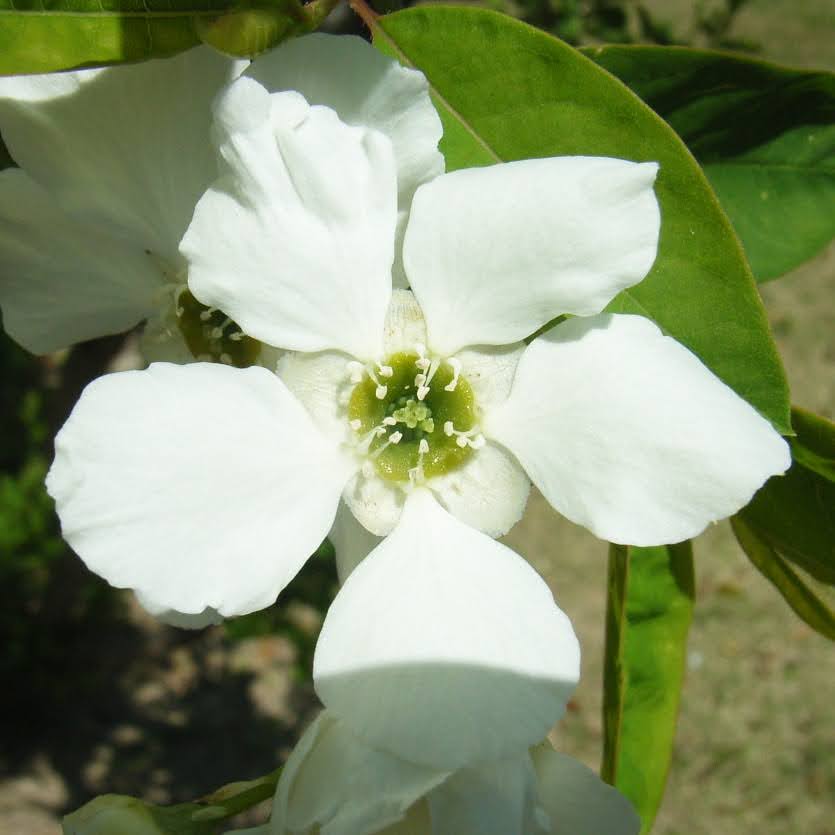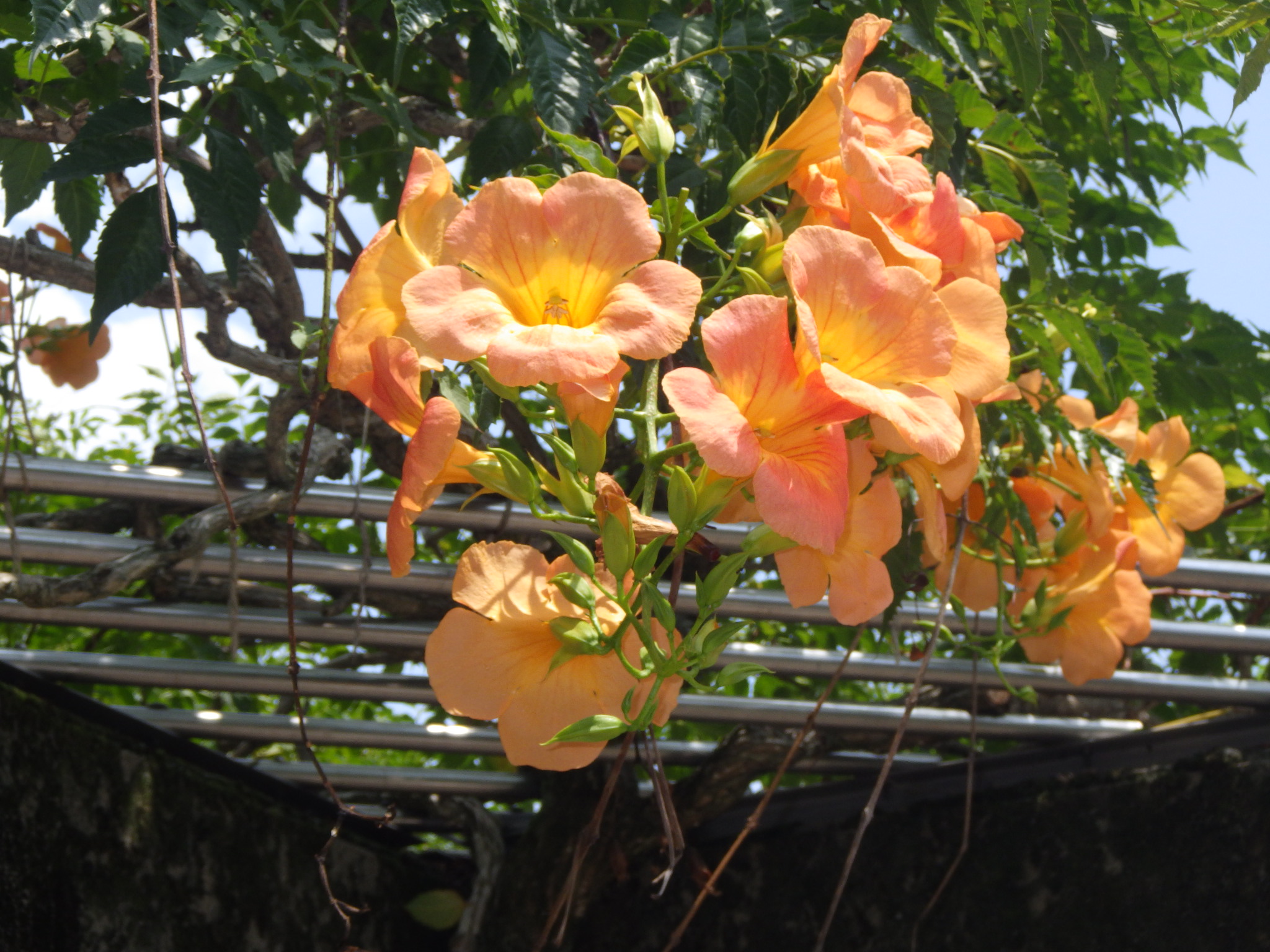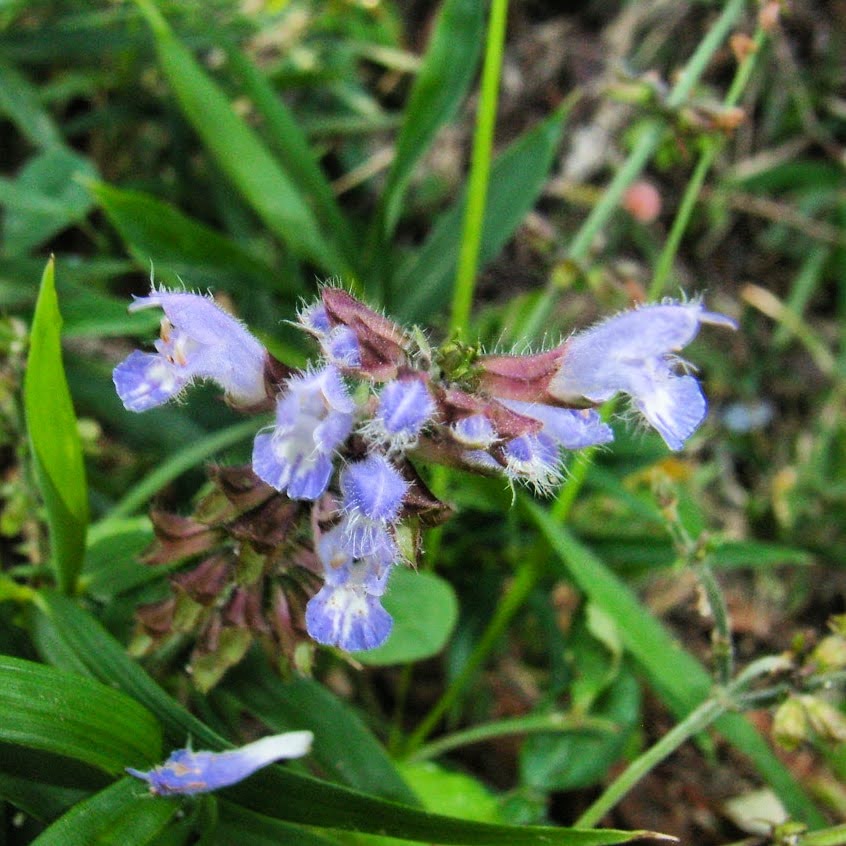
Salvia japonica, Salvia japonica, Salvia japonica in autumn, and Salvia japonica in mountain are all members of the Salvia genus, known as wildflowers of Japan, but their similar names can sometimes lead to confusion. These similarly named Salvia species can be distinguished by carefully observing the structure of their corollas, stamens, and leaves. While there are some general trends in flower color, there is considerable variation between individuals, making color-based distinction unreliable. These Salvia species have labiate flowers, commonly found in the mint family, but they are specifically adapted to attract various bees, being structured to fit comfortably on their backs. This common flower structure across Salvia species raises concerns about hybridization, but geographical isolation, differences in habitat, and flowering periods likely precede pollinating insects. However, there are exceptions within the Salvia genus as a whole; Salvia japonica is known to be specifically pollinated by the bumblebee species Salvia japonica. This article will explain the classification and pollination ecology of Salvia species.
- A member of the Salvia genus, known as a wild plant of Japan.
- What are the differences between Haruno-tamurasou, Natsu-no-tamurasou, Aki-no-tamurasou, and Miyama-tamurasou?
- What is the structure of a flower?
- The flower was specifically designed for bees, and it was shaped to fit snugly on the bee's back!?
- Summer sage and autumn sage undergo completely opposite sex changes!?
- Are differences in habitat and flowering period, rather than pollinating insects, influencing the species differences among Tamura's plants?
- Meanwhile, bumblebees are visiting the yellow-flowered sage!?
- The fruit is a schizocarp.
- References
- Source
A member of the Salvia genus, known as a wild plant of Japan.
Haruno Tamurasou (Salvia ranzaniana) is a perennial herb distributed in Honshu (Mie and Wakayama prefectures), Shikoku, and Kyushu, growing in wooded areas in mountain valleys.
Salvia lutescens var. intermedia, also known as summer sage, is a perennial herb distributed in Honshu (Kanagawa Prefecture, Tokai region, and Kinki region) and grows in mountainous woodlands and forest edges.
Salvia lutescens var. crenata, also known as Miyama Tamurasou, is a perennial herb distributed in Honshu (Saitama, Kanagawa, Yamanashi, Nagano, Gifu, and Fukui prefectures), growing in woodlands and forest edges. It is also known as Kenatsunotamurasou.
Salvia japonica, also known as autumn sage, is a perennial herb distributed from Honshu, Shikoku, and Kyushu in Japan; to the Korean Peninsula, China (central to southern); Taiwan; and the Ryukyu Islands, growing in sparse woodlands and along roadsides in mountainous areas (Satake, 1999).
All of these are wild plants belonging to the genus Salvia in the Lamiaceae family, and their names are similar and can easily be confused. Furthermore, all four species introduced share the common characteristic of having compound leaves.
What are the differences between Haruno-tamurasou, Natsu-no-tamurasou, Aki-no-tamurasou, and Miyama-tamurasou?
However, the four species of the genus Salvia introduced can be distinguished by comparing the structure of the corolla and stamens, as well as the leaves (Kanagawa Prefecture Flora Survey Association, 2018).
First, in the case of *Salvia japonica*, the height is less than 20 cm, the corolla is almost the same length as the calyx and hardly extends, and the flowering period is in spring. In contrast, the other three species, *Salvia japonica*, *Salvia japonica var. alpestris*, and *Salvia japonica var. autumn*, are taller than 20 cm, the corolla is longer than the calyx and clearly extends, and the flowering period is from summer to autumn.
Of the remaining three species, *Salvia japonica* has a ring of hairs near the base of the corolla, and the two stamens initially protrude obliquely along the upper lip, with the connective curving strongly downwards as the anthers dehisce. In contrast, *Salvia japonica* and *Salvia japonica var. alpestris* have a ring of hairs near the center of the corolla, and the two stamens protrude long along the upper lip.
The difference between Salvia japonica var. japonica and Salvia japonica var. alpina is that in Salvia japonica var. japonica, the terminal leaflet is ovate, elliptic-ovate, or ovate-lanceolate with an acute tip, while in Salvia japonica var. alpina, the terminal leaflet is broadly ovate or spherical-ovate with an obtuse or rounded tip.
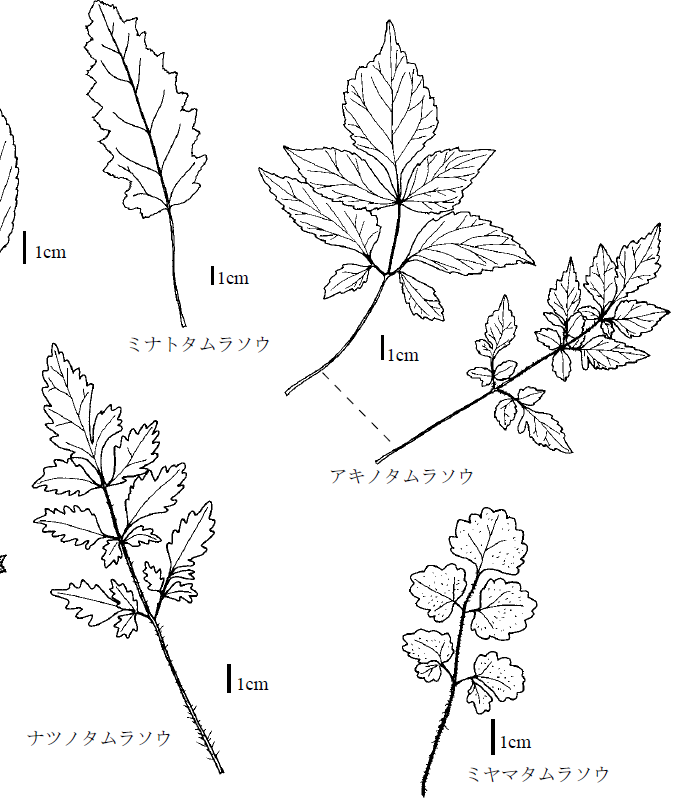
While the above classifications are quite accurate, comparing only the leaves is probably the quickest way to compare them.
In *Salvia japonica* and *Salvia japonica var. alpina*, the tip of the terminal leaflet is obtuse or rounded, whereas in *Salvia japonica var. natsuno* and *Salvia japonica var. akino*, the tip of the terminal leaflet is acute.
The difference between summer sage and autumn sage is that summer sage has deep serrations, while autumn sage has shallow serrations.
The flower colors are also somewhat predetermined.
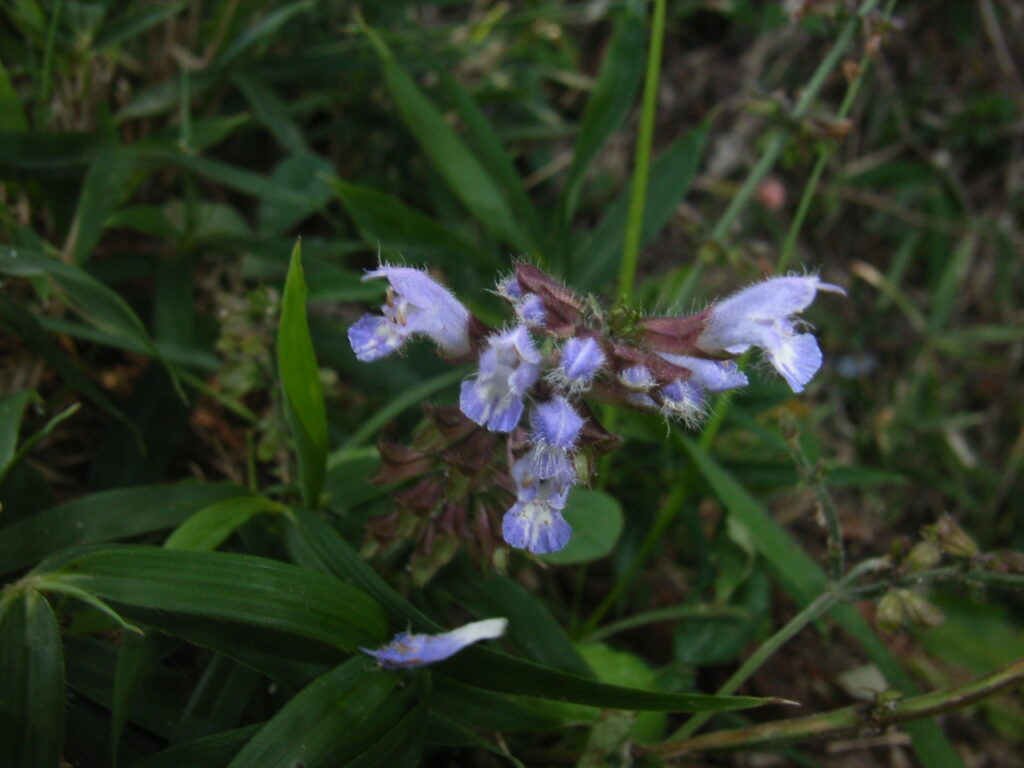
Haruno-tamurasou is white, Natsu-no-tamurasou and Aki-no-tamurasou are bluish-purple, and Miyama-tamurasou is pale blue.
However, there are several varieties of Salvia lutescens, including Salvia lutescens var. intermedia f. albiflora, which has white flowers; Salvia japonica f. albiflora, which has white flowers; Salvia japonica var. lutescens, which has pale yellow flowers; and Salvia lutescens var. crenata f. leucantha, which has white flowers.
While these opinions are in the minority, judging solely on the color of the flowers would be quite premature.
Furthermore, the "Kanagawa Prefecture Flora 2018" states that "the shape of the terminal leaflet and the amount of hairs on the inflorescence axis and calyx tube are intermediate between those of Salvia japonica and Salvia japonica var. alpestris." Since Salvia japonica and Salvia japonica var. alpestris are continuous and ambiguous, it may be difficult to distinguish between them in the first place.
Other species include Salvia pygmaea, which is distributed from the Amami Islands to the Nansei Islands; Salvia lutescens var. stolonifera, which is distributed in Honshu (Aichi, Shizuoka, and Kanagawa prefectures); and Salvia isensis, which is distributed in Honshu (Shizuoka, Aichi, and Mie prefectures), but these will be omitted here.
Although the genus Salvia also includes Salvia, which is commonly planted in gardens, it is easily distinguishable from wild species by its larger flowers, so it will be omitted from this article.
What is the structure of a flower?
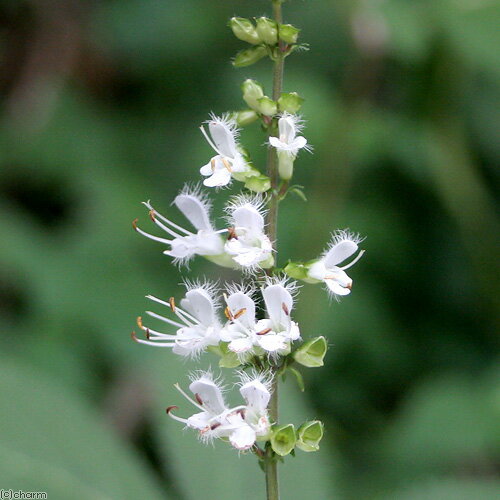
The flower structure is all of the lip-shaped type commonly found in the mint family, so the tip of the corolla is split horizontally into two parts like lips.
Salvia japonica flowers from April to June. Its corolla is white and almost the same length as the calyx, so it hardly extends, and the calyx tube is sparsely covered with spreading hairs.
Salvia japonica blooms from June to August. Its corolla is bluish-purple, 8-10 mm long, and covered with short hairs on its outer surface. The calyx is tubular and bell-shaped, with a two-lipped tip. At flowering, it is 3-4 mm long and covered with spreading soft hairs, sometimes with glandular hairs.
Miyama Tamurasou flowers from June to August, with pale blue corollas, and its flower spikes and calyxes are densely covered with soft white hairs, often mixed with glandular hairs.
Salvia japonica flowers from July to November, producing flower spikes 10-20 cm long at the top of the stem. The flower spike axis is usually covered with spreading hairs, occasionally with glandular hairs. The corolla is purple to bluish-purple, the entire flower faces diagonally, and the outer surface is covered with short hairs. The stamens extend along the upper petals, protruding slightly diagonally, and then curve downwards. Pollen is released from the underside of the anthers (the part that releases pollen) of the stamens.
The names of the Tamurasou species are likely based on the season they bloom, but since Akinotamurasou also blooms in summer, and Harunotamurasou begins to appear in early summer, it's difficult to determine the species solely by its flowering period, which makes it a bit confusing.
The flower was specifically designed for bees, and it was shaped to fit snugly on the bee's back!?
What kinds of insects visit these flowers?
It has been believed that the insects that visit Salvia japonica are bees such as bumblebees (Tanaka, 1976; 1997).
It is believed that the insects that visit Salvia japonica are bees (Tanaka, 1976; Tanaka and Hirano, 2000).
When a bee visits a flower of the Styrax genus, it pushes up the upper part of the petals and stamens in search of nectar deep inside. As a result, the entire stamen fits perfectly onto the bee's back, and the pollen released from the underside of the anthers adheres to it, completing the preparation for pollination.
This structure is highly adapted to attract bees. However, the types of bees that visit are not well understood.
Furthermore, recent research conducted mainly in the Kansai region has shown that members of the families Bryoptera and Syrphidae visit Salvia japonica, while members of the family Syrphidae visit Salvia japonica and Salvia japonica var. alpestris (Yamauchi and Takano, 2015). However, it is not clear to what extent these members contribute to pollination based on the shape of the flowers.
Tamurasou species exhibit a distinctive feature of having hairy corollas, but the adaptive significance of this characteristic does not appear to have been studied. This is another unique feature that makes it intriguing.
Summer sage and autumn sage undergo completely opposite sex changes!?
Summer sage and autumn sage undergo sex change. However, interestingly, the order in which they change sex is different (Tanaka, 1976; 1997).
In Salvia japonica, the pistil is formed first, then the style moves, and the stamens are formed, a phenomenon called "protandry" (female-first maturation).
On the other hand, Salvia japonica exhibits protandry, where the stamens appear first, followed by the pistil. As described above, after the stamens emerge and have finished pollinating, the two stamens move backward to the left and right like a breaststroke, and the pistil extends in the same position as the stamens (Tanaka and Hirano, 2000). The photograph is thought to show the later stage.
Both are thought to be preventing self-pollination, but the reason for these differences is unknown.
Are differences in habitat and flowering period, rather than pollinating insects, influencing the species differences among Tamura's plants?
The morphology of the flowers of the four species of the genus Styrax that I introduced are all similar, with only very subtle differences, and I believe this is also true for insects.
Therefore, it is possible that the species diverged not because of the types of insects that visit, but because their distribution was geographically isolated (Yamauchi & Takano, 2015). It is also thought that by changing their habitat and flowering period, they may be preventing hybridization among closely related species or preventing competition, thus creating a niche partition.
Indeed, many species in the genus Salvia have localized distributions, and even if they grow in the same area, Salvia japonica is found in forests, while Salvia japonica is found in sparse woodlands and along roadsides, so their environments are different.
While there is some overlap in their flowering periods, there are also differences.
However, the specific types of bees that visit have never been studied in detail. I'm very much looking forward to finding out if this is correct.
Meanwhile, bumblebees are visiting the yellow-flowered sage!?
On the other hand, the same can be said for the Salvia genus, which I haven't mentioned yet.
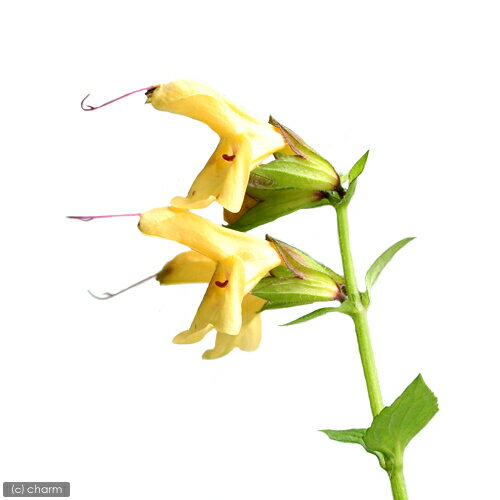
In Japan (Honshu, Shikoku, and Kyushu), the large, yellow-flowered Salvia nipponica var. nipponica is thought to be pollinated by bumblebees (Tanaka & Hirano, 2000). Another study conducted in Miyagi Prefecture revealed that pollination is entirely carried out by the long-mouthed bumblebee Bombus diversus diversus (Miyake & Sakai, 2005). Clearly, the visiting insects are different.
Furthermore, Salvia plebeia, which is distributed in Honshu (west of Ibaraki Prefecture), Shikoku, Kyushu, the Ryukyu Islands, the Korean Peninsula, China, Taiwan, Indochina, India, Afghanistan, Malaysia, and Australia, has considerably smaller flowers, so it is questionable whether the same bees would visit it.
Horticultural salvias have undoubtedly undergone a completely different evolution, and the pollination ecology of the Salvia genus is quite fascinating.
The fruit is a schizocarp.
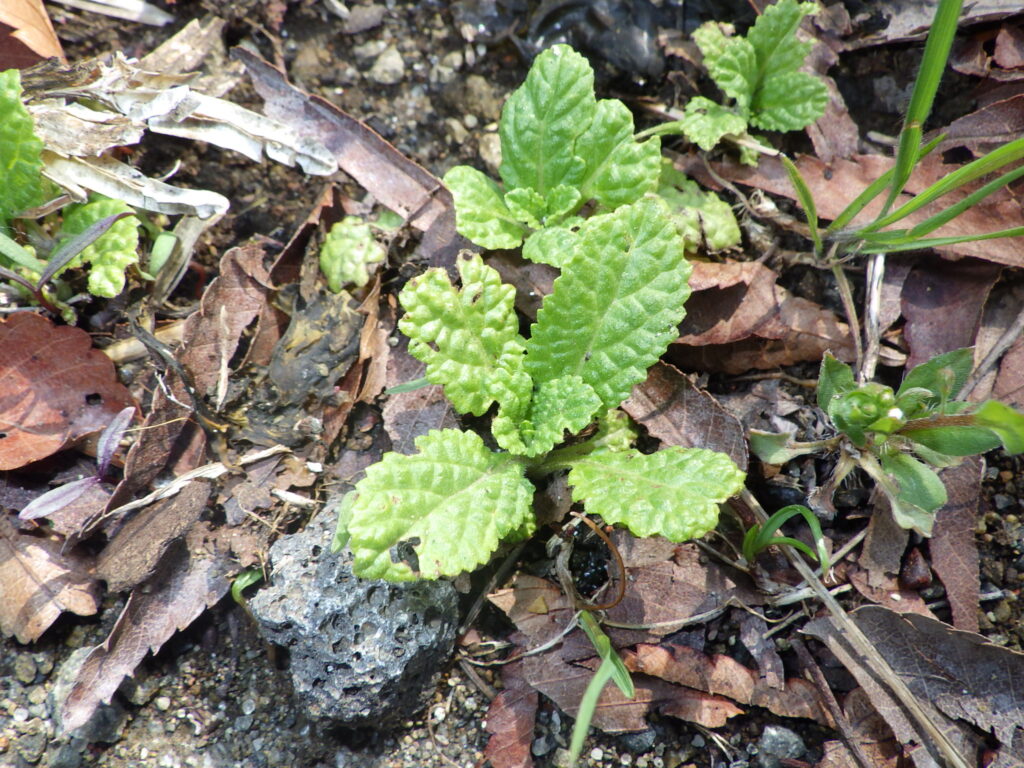
The fruit is a schizocarp, common to the Lamiaceae family, and consists of four segments. It is thought to be dispersed by gravity, but the details are not fully understood.
References
Kanagawa Prefecture Flora Survey Association. 2018. Kanagawa Prefecture Flora 2018 (Electronic Edition). Kanagawa Prefecture Flora Survey Association, Odawara. 1803pp. ISBN: 9784991053726
Miyake, YC, & Sakai, S. 2005. Effects of number of flowers per raceme and number of racemes per plant on bumblebee visits and female reproductive success in Salvia nipponica (Labiatae). Ecological Research 20(4): 395-403. https://doi.org/10.1007/s11284-004-0035-4
Satake, Yoshisuke. 1999. Wild Plants of Japan (New Edition, Herbaceous Plants 3, Sympetalous Plants). Heibonsha, Tokyo. 259pp. ISBN: 9784582535037
Tanaka, Hajime. 1976. Observation of insect-pollinated and wind-pollinated flowers. New Science Co., Ltd., Tokyo. 109pp. ISBN: 9784821600236
Tanaka, Hajime. 1997. Ecology Guide: Nature Created by Flowers and Insects. Hoikusha, Tokyo. 197pp. ISBN: 9784586312054
Tanaka, Hajime & Hirano, Takahisa. 2000. The Face of Flowers: Wisdom for Bearing Fruit. Yama-kei Publishers, Tokyo. 191pp. ISBN: 9784635063043
Yamauchi, Takeo & Takano, Atsuko. 2015. Records of hoverflies and pygmy flies visiting Salvia species in Honshu. Human and Nature 26: 71-74. ISSN: 0918-1725, https://doi.org/10.24713/hitotoshizen.26.0_71
Source
This article is a significantly expanded version of a piece originally published in the following book.