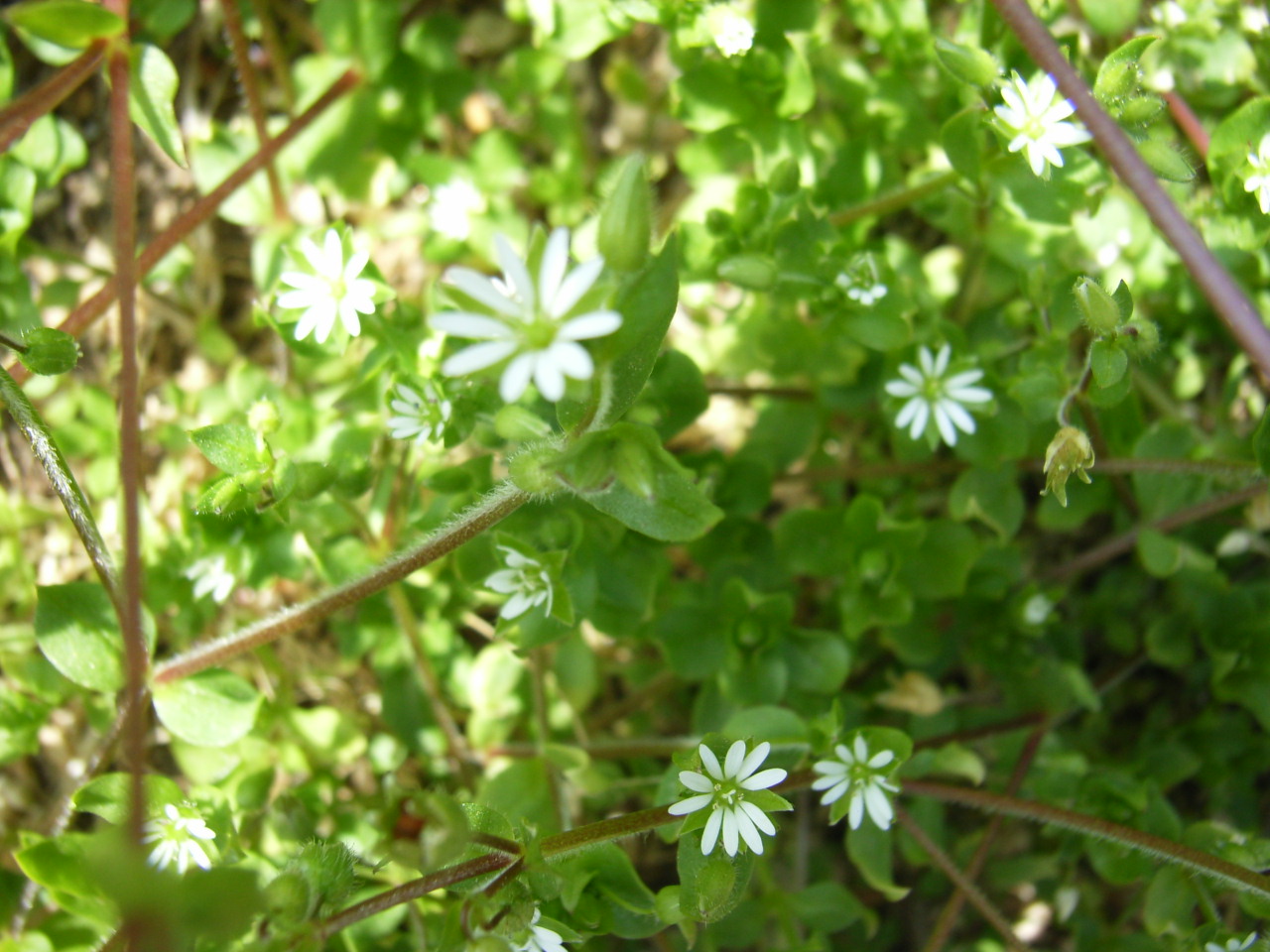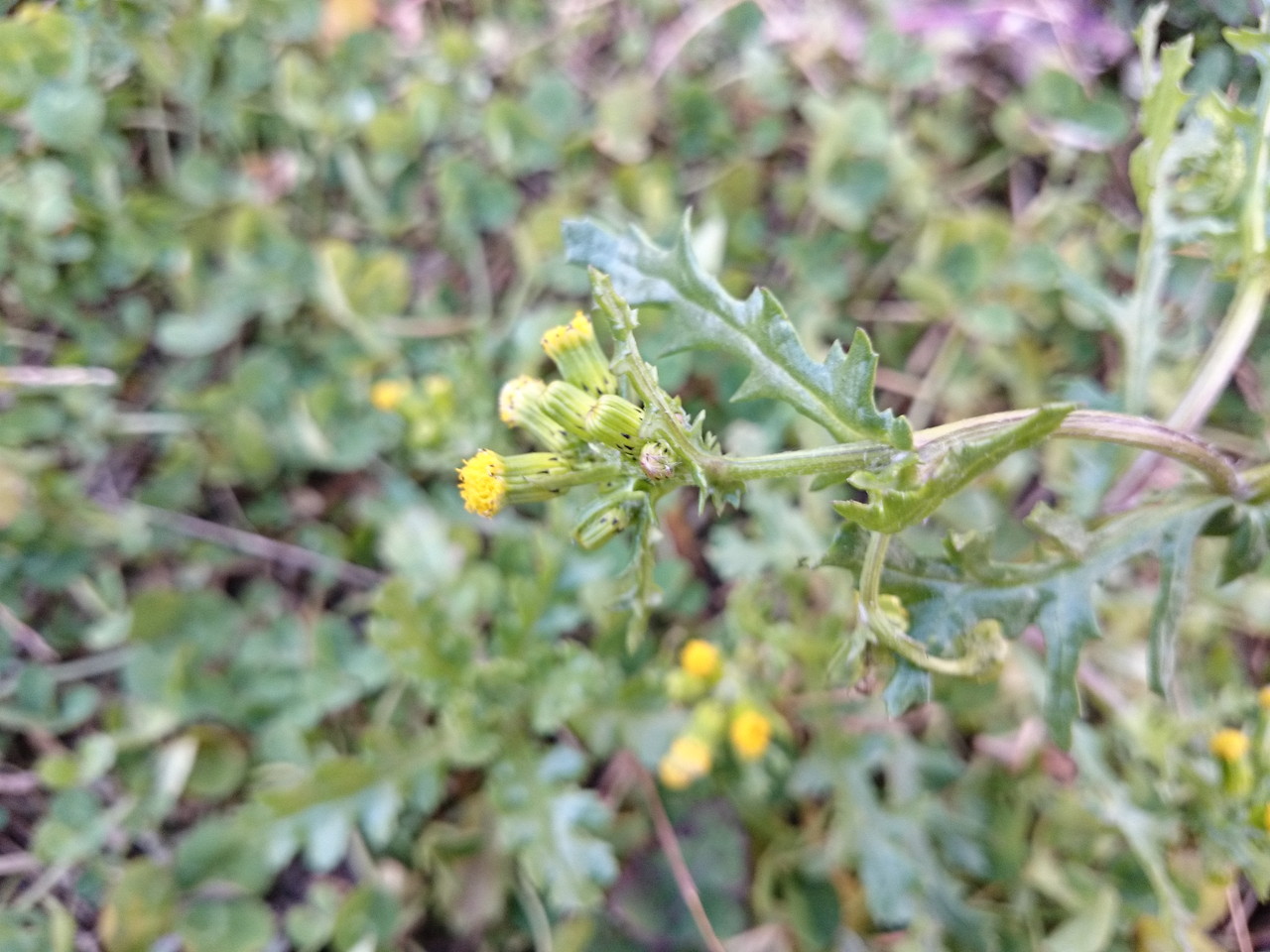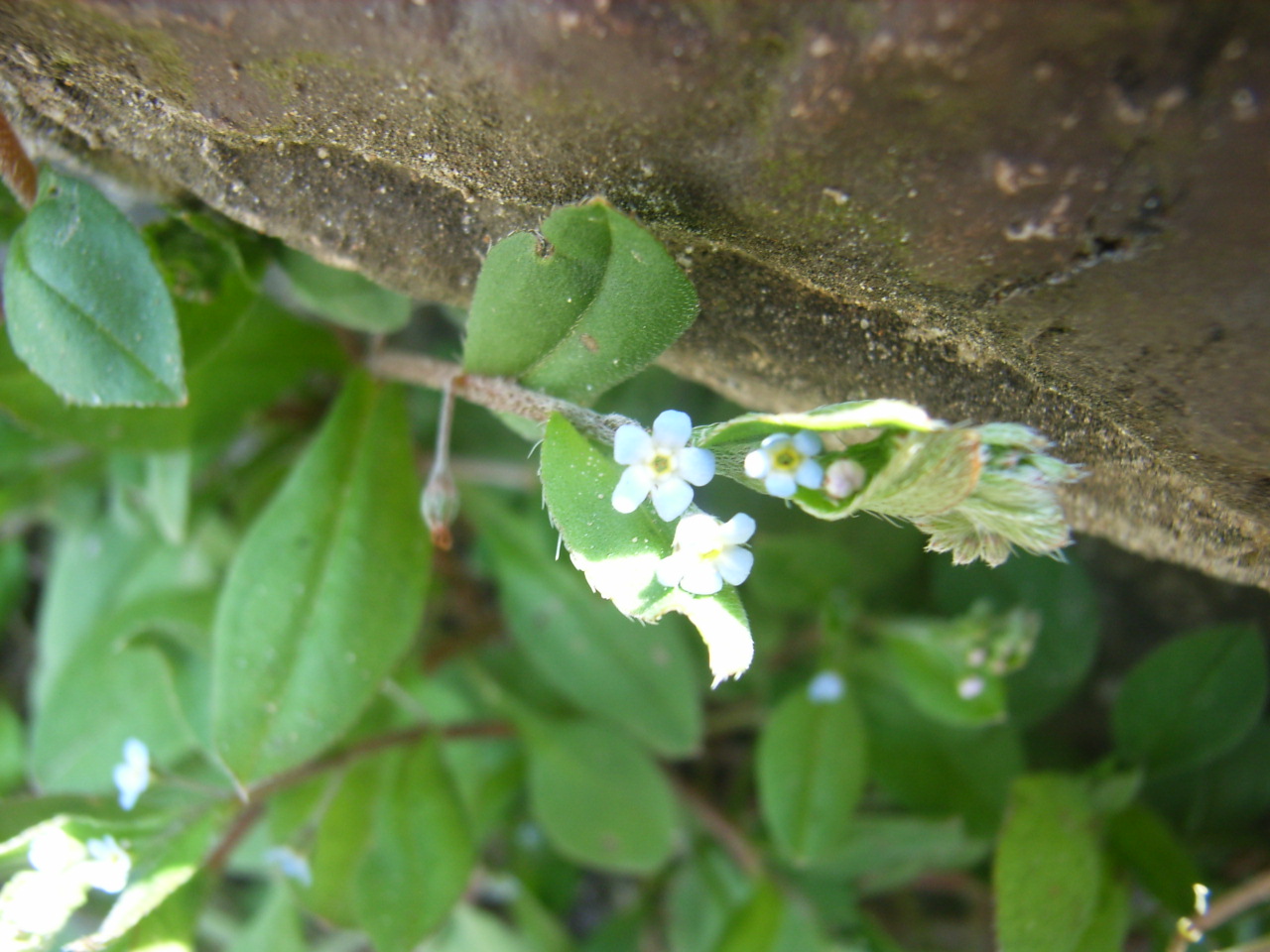
Both *Myosotis scorpioides* and *Myosotis scorpioides* belong to the genus *Myosotis* in the family Boraginaceae, and are biennial herbs characterized by entire leaves, scorpion-shaped inflorescences, blue corollas, and the presence of appendages. *Myosotis scorpioides* is particularly well-known and popular for its pretty blue flowers that bloom in spring. You can easily distinguish between *Myosotis scorpioides* and *Myosotis scorpioides* by checking the length of the pedicels. *Myosotis scorpioides* belongs to a different genus but grows in similar locations and is known as a species that resembles *Myosotis scorpioides*. Observing how the flowers are arranged is the easiest way to distinguish them. *Myosotis scorpioides* and *Myosotis scorpioides* also look similar, but their growth patterns and sizes are quite different. This article will explain the classification and morphology of the genus *Myosotis scorpioides*.
- What are *Myosotis scorpioides* and *Myosotis alpestris*?
- What is the difference between *Myosotis scorpioides* and *Myosotis alpestris*?
- What is the difference between cucumber grass and flowering flower?
- What are the differences between forget-me-nots and wild forget-me-nots/wild purple forget-me-nots?
- References
What are *Myosotis scorpioides* and *Myosotis alpestris*?
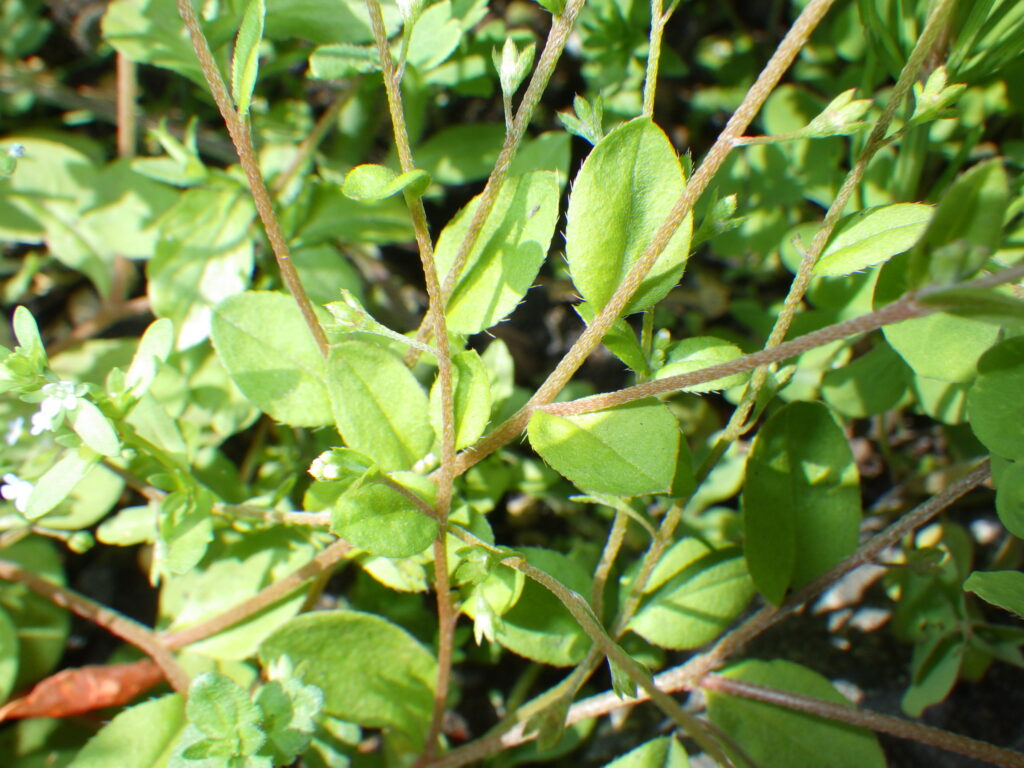
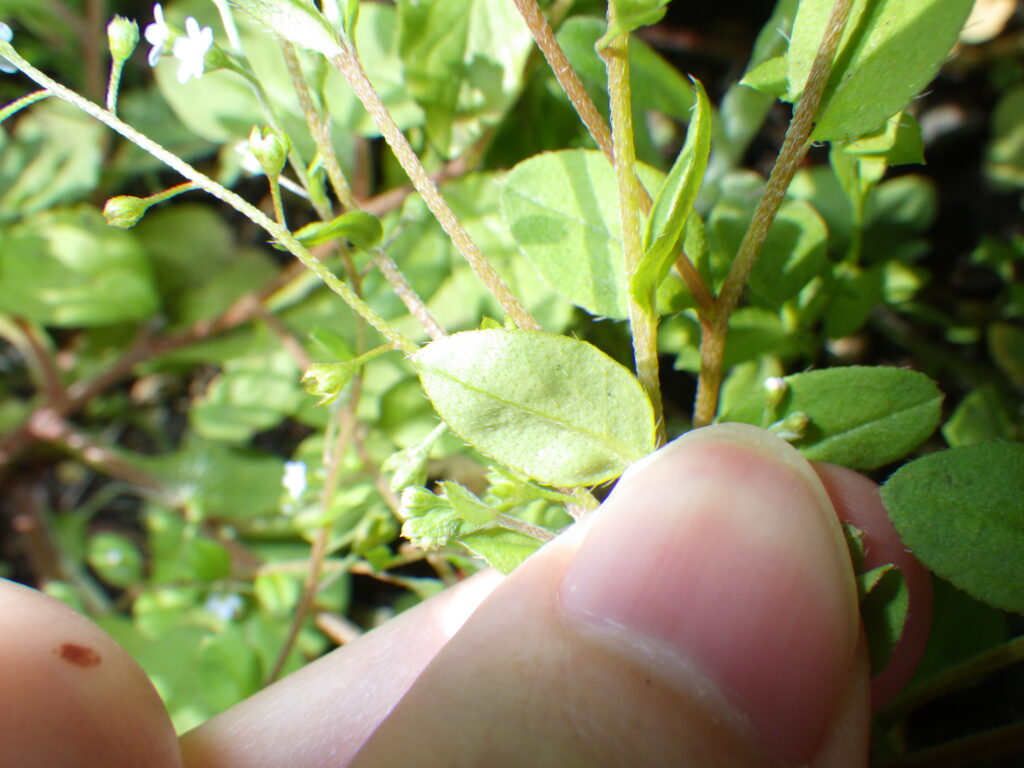
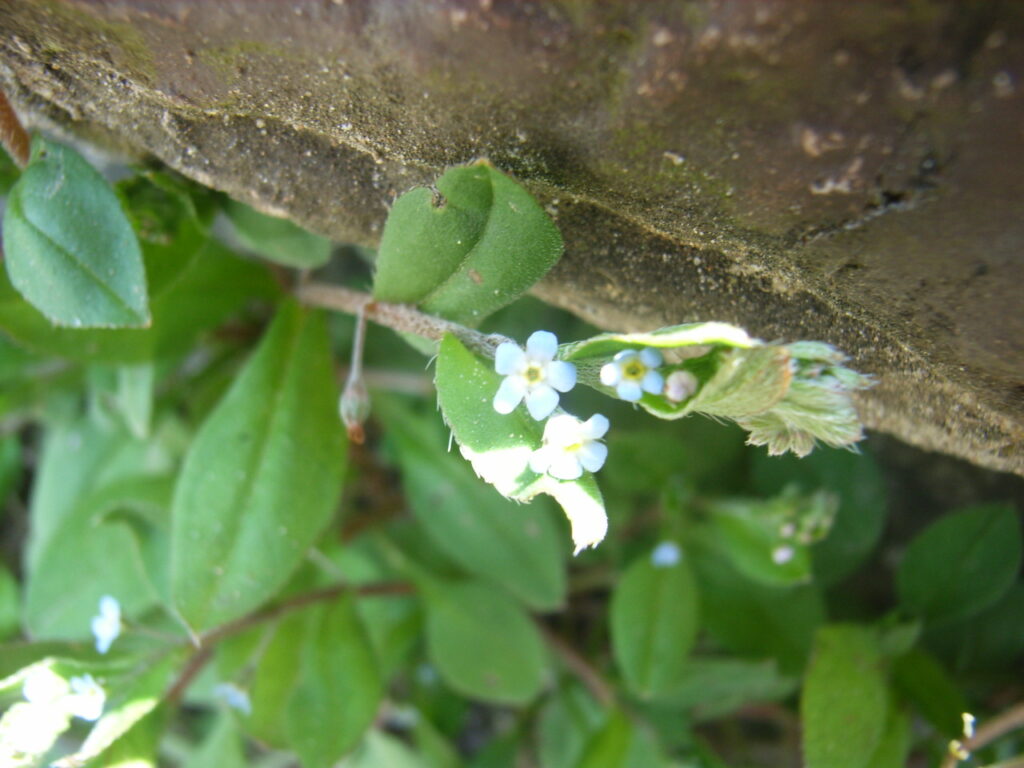
Cucumber grass , Trigonotis peduncularis, also known as Tabirako, is a biennial plant widely distributed in Hokkaido, Honshu, Shikoku, Kyushu, and the Ryukyu Islands in Japan, as well as in temperate to warm temperate regions of Asia, growing in fields and along roadsides (Kanagawa Prefecture Flora Survey Association, 2018). Its Japanese name comes from the fact that it smells like a cucumber when rubbed.
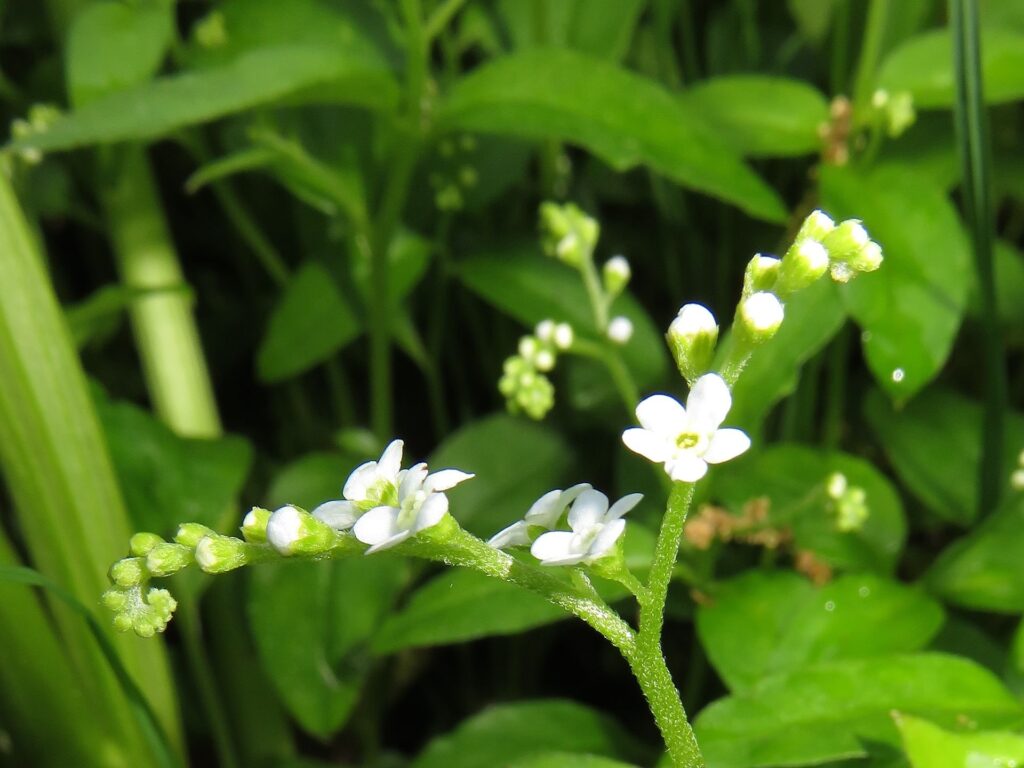
Trigonotis brevipes, also known as Mizutabirako, is a perennial herb distributed in Honshu, Shikoku, and Kyushu in Japan, growing in wetlands in mountain valleys.
All of these species belong to the genus Myosotis in the family Boraginaceae. A key characteristic is their entire leaves and the unique "scorpion-type inflorescence," which resembles the tail (more precisely, the "terminal body" or "post-abdomen") of a scorpion. The flowers are similar to many other species in the Boraginaceae family, but a distinctive feature is the presence of a projection called an "appendix" in the center of the corolla. As with other species in the genus Myosotis, they also share the common characteristic of having tetrahedron-shaped fruitlets.
In particular, forget-me-not (Cucumber grass) is very well-known as a type of weed that can be frequently observed on roadsides in urban areas, as it produces tiny, pale bluish-purple flowers only about 2 mm in diameter from March to May. It is one of the first species featured in plant encyclopedias.
However, there are several closely related species in the Boraginaceae family as well as the Myosotis genus, and while it's not that difficult to distinguish them once you're familiar with them, you might be unsure at first.
What is the difference between *Myosotis scorpioides* and *Myosotis alpestris*?
It is relatively easy to distinguish between Myosotis scorpioides and Myosotis alpestris (Kanagawa Prefecture Flora Survey Association, 2018).
In forget-me-nots, the pedicels (the thin parts connecting the flower to the plant body) are the same length as or longer than the calyx, and the inflorescence curves backward after flowering. In contrast, in myosotis scorpioides, the pedicels are shorter than the calyx, and the inflorescence remains upright after flowering.
In short, in forget-me-nots, the pedicels are noticeably longer, and the inflorescence is often winding.
Furthermore, regarding their habitats, while forget-me-nots grow in fields and roadsides and can be observed very commonly, water hyacinths only grow in localized environments such as wetlands in mountain valleys, making them quite difficult to observe.
A variety known as Trigonotis brevipes var. coronata is also found, which has a ring-shaped appendage on the dorsal side of the fruitlets.
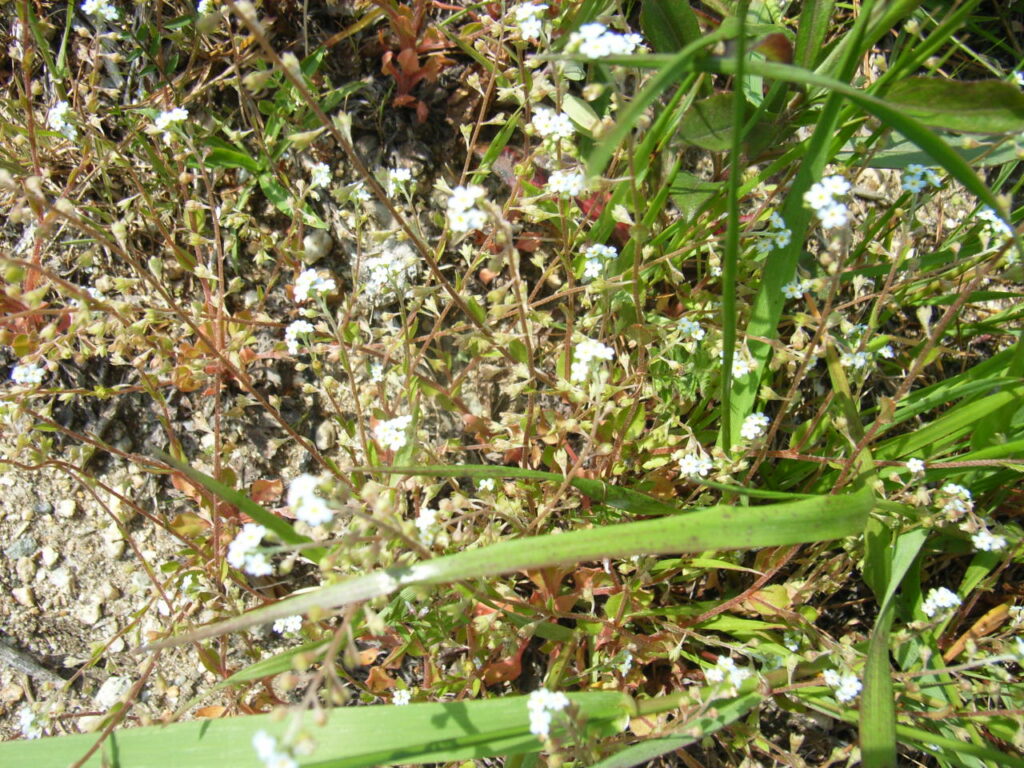


What is the difference between cucumber grass and flowering flower?
While cucumber grass is closely related to water hyacinth, many people might be more interested in the differences between it and other plants, particularly in terms of their actual habitats.
Bothriospermum zeylanicum, also known as Hanaibana (flower inside the leaf), is an annual to biennial herb that grows in fields and roadsides. It is distributed in Hokkaido, Honshu, Shikoku, Kyushu, the Ryukyu Islands, and the Ogasawara Islands in Japan; as well as in Korea, China, Southeast Asia, India, and Central Asia.
The most significant difference between forget-me-nots and dwarf rhododendrons, which are important from a taxonomic perspective, lies in the shape of their fruits. Forget-me-nots have a smooth surface, while dwarf rhododendrons have a rough surface due to the dense growth of short protrusions.
However, the fruit is rather plain, so it might be difficult to spot.
Another easily noticeable difference is that while forget-me-nots form scorpion-shaped inflorescences, the flowers of *Myosotis scorpioides* are solitary and grow in the upper leaf axils.
Therefore, you won't see the winding inflorescences of *Myosotis scorpioides* (cucumber grass) in *Myosotis scorpioides*. This characteristic is the origin of its Japanese name, "hanaibana" (flower inside the leaf), which comes from the fact that the flowers grow between the leaves.
Furthermore, the flower color differs between the two plants: in the forget-me-not (Cucumber Grass), the corolla is pale bluish-purple with a yellow central appendage, while in the flower of the 'Hanaibana' (Japanese Honeysuckle), the corolla is primarily white with pale bluish-purple at the base of the lobes, and the central appendage is white.
Another difference is that only *Hanaibana* has bracts, but these may be difficult to distinguish from normal leaves and therefore confusing.
In my experience, *Hanaibana* (a type of wildflower) is not as numerous as *Cucumber Grass* (another type of wildflower), and I don't get the impression that it grows in clusters.
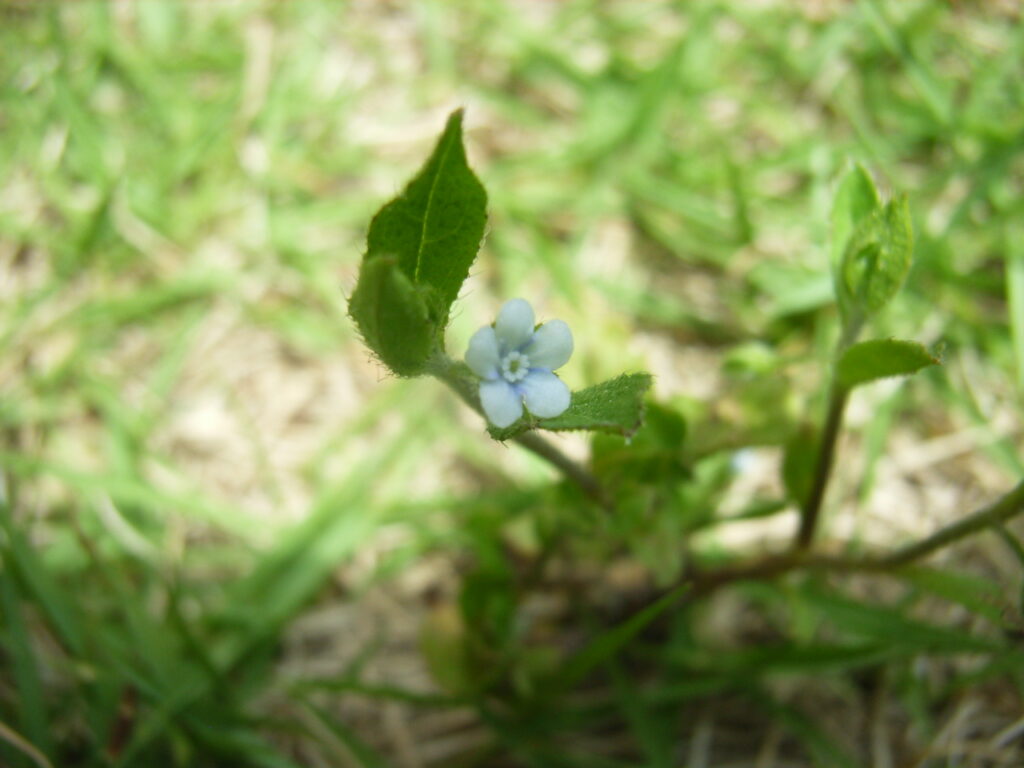
What are the differences between forget-me-nots and wild forget-me-nots/wild purple forget-me-nots?
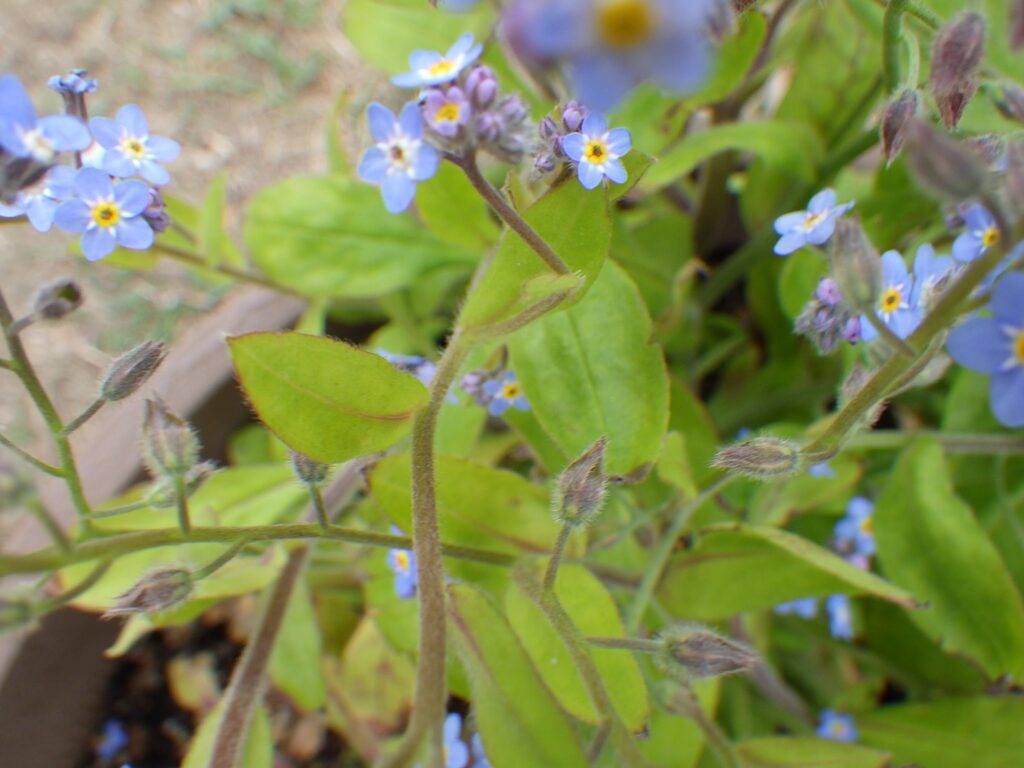
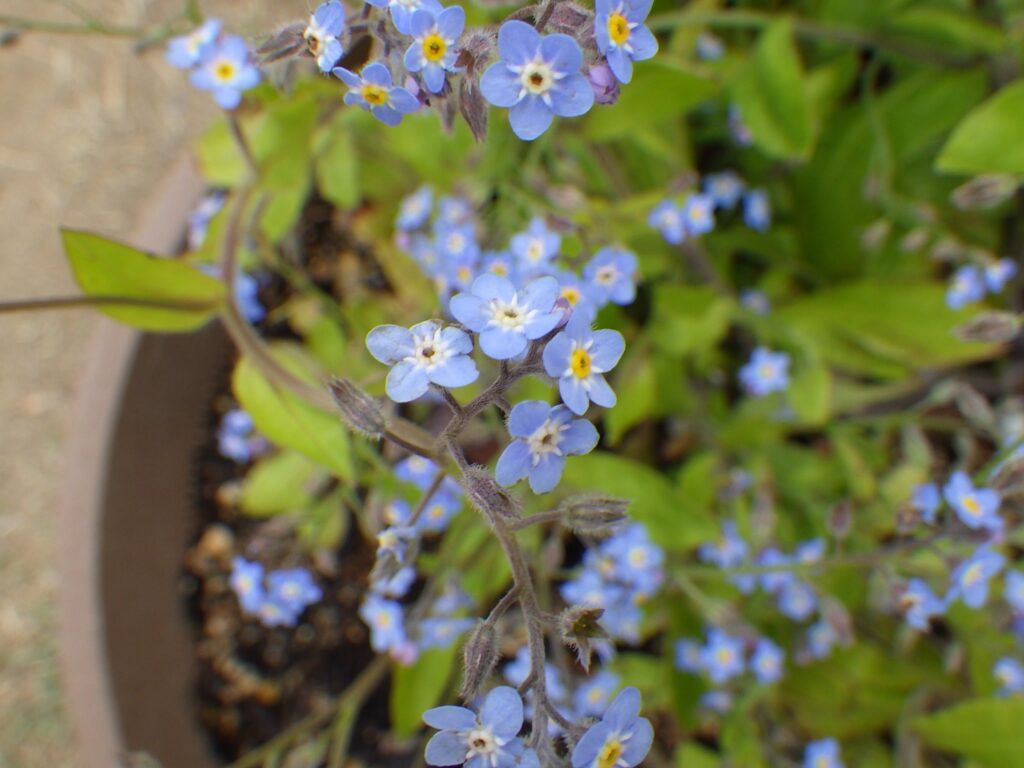
Many people may be wondering about the differences between forget-me-nots and wild purple flowers. Forget-me-nots and wild purple flowers have similar flower colors and shapes to forget-me-nots, and the appendage in the center of the corolla is also yellow.
Both Myosotis scorpioides (true forget-me-not) and Myosotis arvensis (field purple) belong to the Myosotis genus and are native to Europe. They are commonly cultivated as ornamental plants in gardens, but they can escape cultivation and become naturalized.
From a taxonomic perspective, the shape of the fruit is also important here (Shimizu et al., 2001; Kanagawa Prefectural Flora Survey Association, 2018).
The fruits of the Myosotis and Forget-Me-Not genera gradually divide into four parts, forming "schizocarps." However, in Myosotis, these schizocarps are tetrahedral and angular, while in Forget-Me-Not, they are oval and round.
However, you might find it difficult to observe such aspects in the wild.
The most obvious difference is in their growth patterns. In forget-me-nots, the stem branches profusely at the base, spreading out horizontally, and the branches grow diagonally upwards, reaching a height of only about 6 cm. In contrast, in forget-me-nots and wild purple, the stems grow upright and can reach a height of 20 to 50 cm.
The flower size varies: cucumber grass has a diameter of 2mm, wild forget-me-not has a diameter of 3mm, and true forget-me-not has a diameter of 8mm. The forget-me-nots in the Myosotis genus are larger and have bigger flowers, making them suitable for gardening.
For those who want to learn about the differences between species in the Forget-Me-Not genus, please see our other article.
References
Kanagawa Prefecture Flora Survey Association. 2018. Kanagawa Prefecture Flora 2018 (Electronic Edition). Kanagawa Prefecture Flora Survey Association, Odawara. 1803pp. ISBN: 9784991053726
Shimizu, K., Morita, H., & Hirota, S. 2001. Illustrated Guide to Naturalized Plants of Japan: 600 Species of Plant Invaders (Revised). National Rural Education Association, Tokyo. 553pp. ISBN: 9784881370858