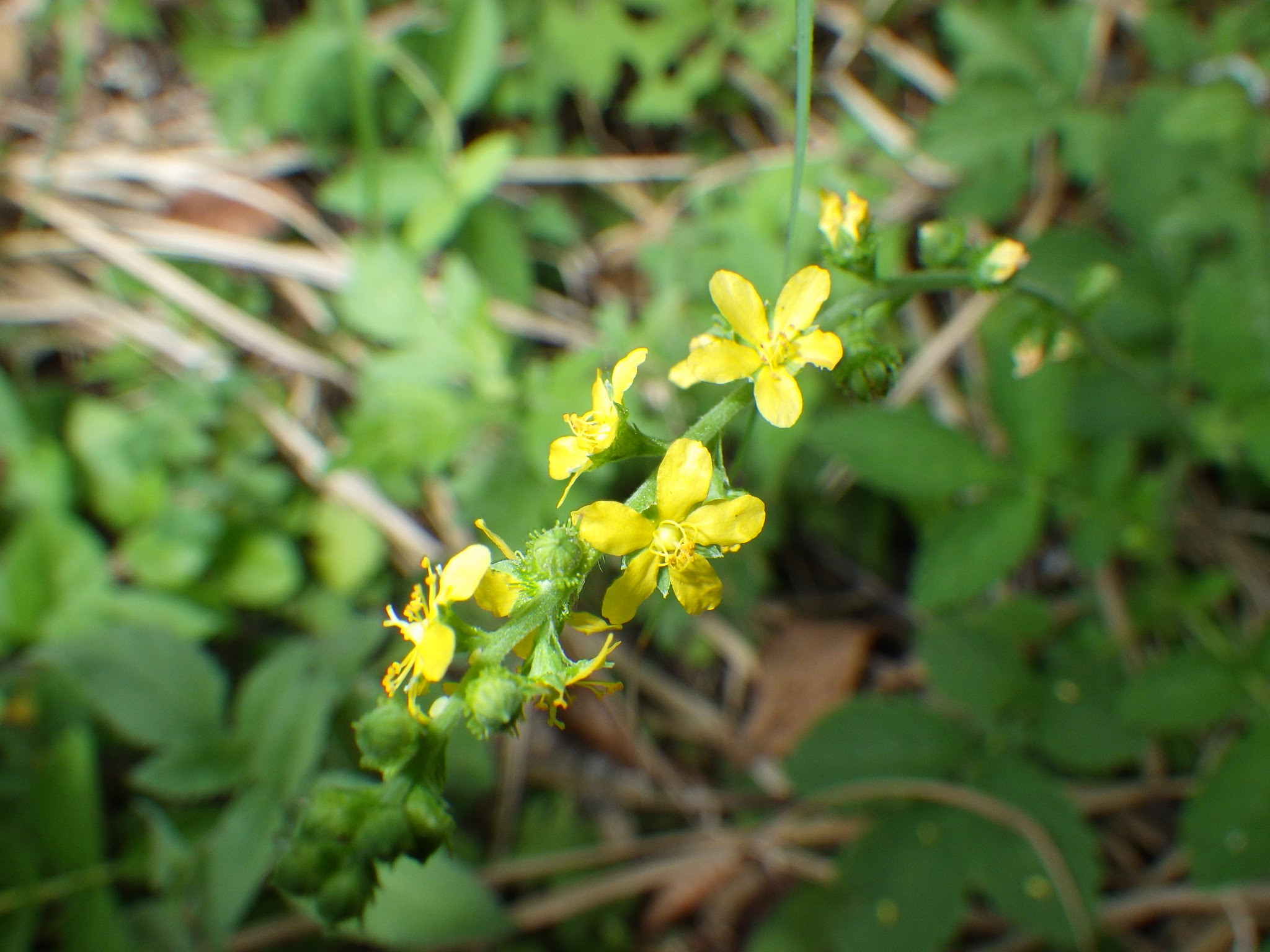
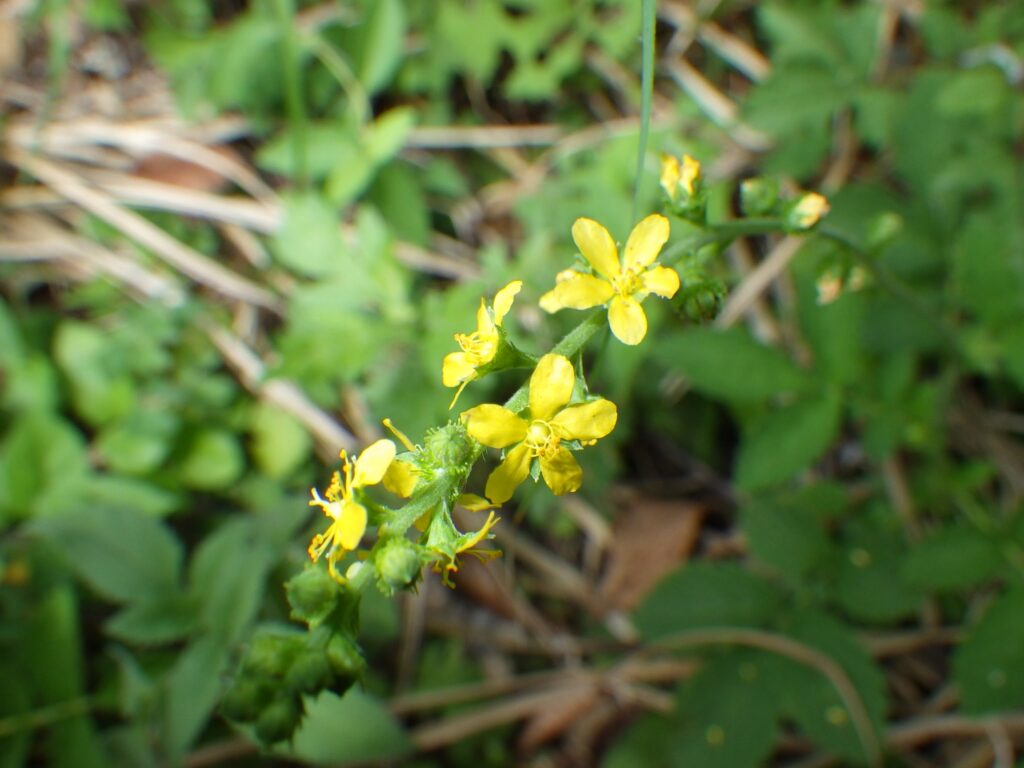
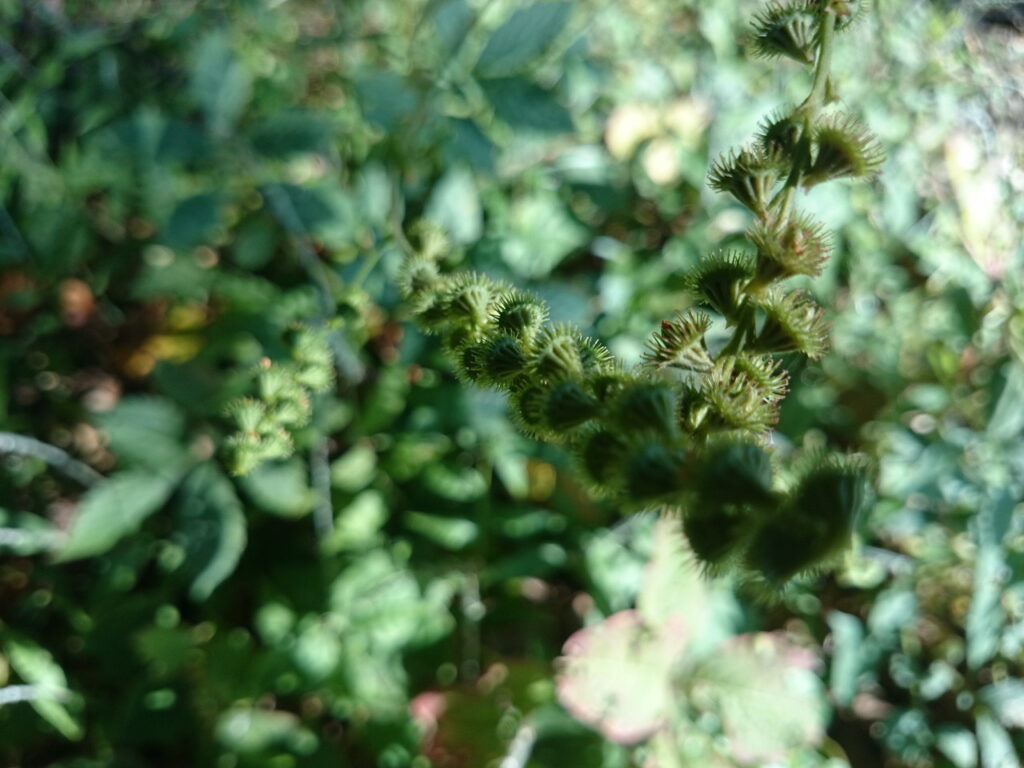
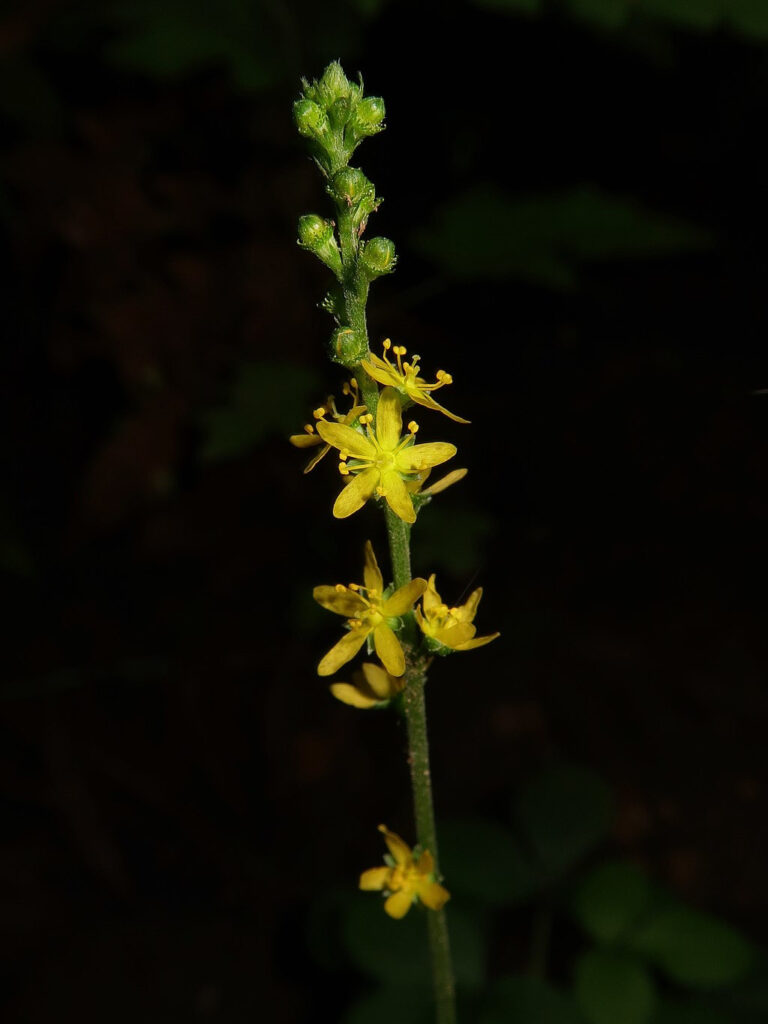
Agrimonia pilosa, Agrimonia fusiforme, and Agrimonia pilosa are all perennial herbs belonging to the genus Agrimonia in the family Rosaceae, and in Japan they grow in forest edges and other similar areas. Their most distinctive features are the hook-shaped thorns below the calyx and their fruits, which are "burrs." As their names suggest, these two species differ in their overall size. Specifically, the shape of the leaflets and the number of stamens are important differences. There is also a plant called Mizuhiki, which has a very similar name, but it belongs to the Polygonaceae family and, although its fruits are also "burrs," the shape of its leaves, flowers, and fruits are all different. This article will explain the classification of the genus Agrimonia.
What are Kinmizuhiki and Himekinmizuhiki?
Agrimonia pilosa var. japonica, also known as golden water lily, is a perennial herb commonly found in Hokkaido, Honshu, Shikoku, and Kyushu in Japan; as well as in Korea, China, Sakhalin, Ussuri, and Indochina, growing along roadsides, forest edges, and grasslands in lowlands and mountainous areas (Kanagawa Prefecture Flora Survey Association, 2018).
Agrimonia nipponica, also known as Himekinmizuhiki, is a perennial herb distributed in Hokkaido (southwestern part), Honshu, Shikoku, and Kyushu in Japan, as well as in Korea (Jeju Island). It grows in woodlands, forest edges, and roadsides in lowlands to mountainous areas. It tends to prefer shade more than Agrimonia pilosa.
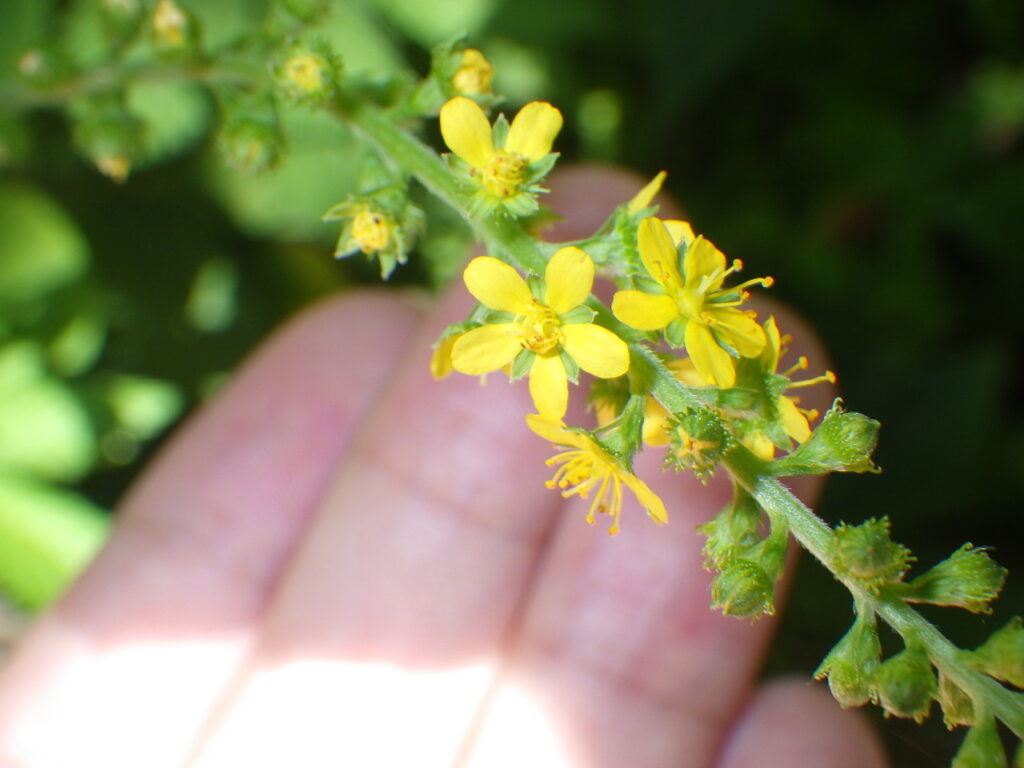
Both belong to the genus Agrimonia in the family Rosaceae and are perennial herbs that grow in forest edges and other similar areas in Japan. Morphologically, they share common characteristics such as odd-pinnately compound leaves, five-petaled flowers with yellow petals, and inflorescences that are sparsely arranged spike-like inflorescences.
The most significant common features are the hook-shaped thorns beneath the calyx and the fact that their fruits are "burrs" that stick to things.
These distinctions can be difficult to make without careful observation.
What is the difference between *Persicaria filiformis* and *Persicaria thunbergii*?
The main difference between *Persicaria filiformis* and *Persicaria thunbergii* is, as the names suggest, their overall size.
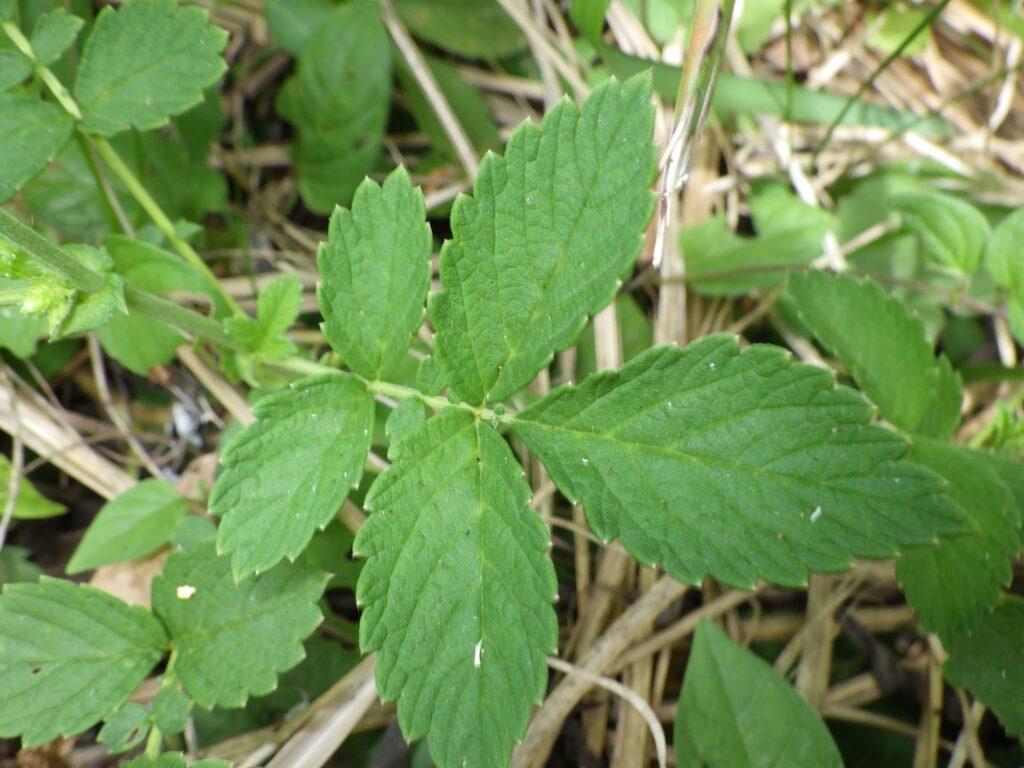
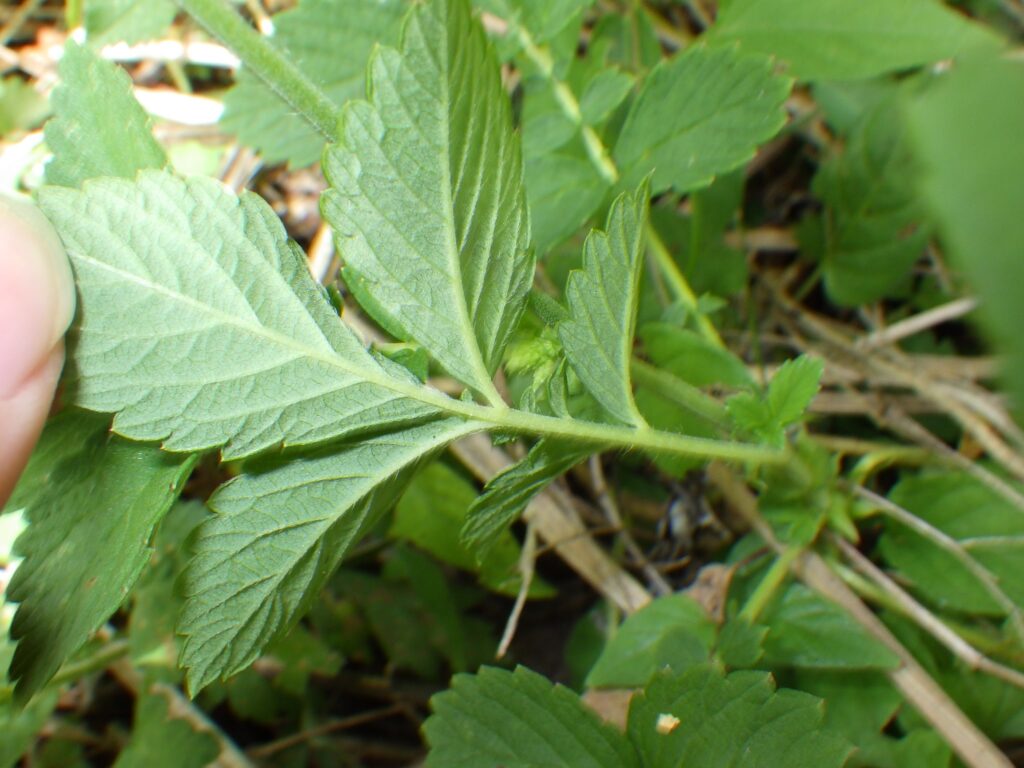
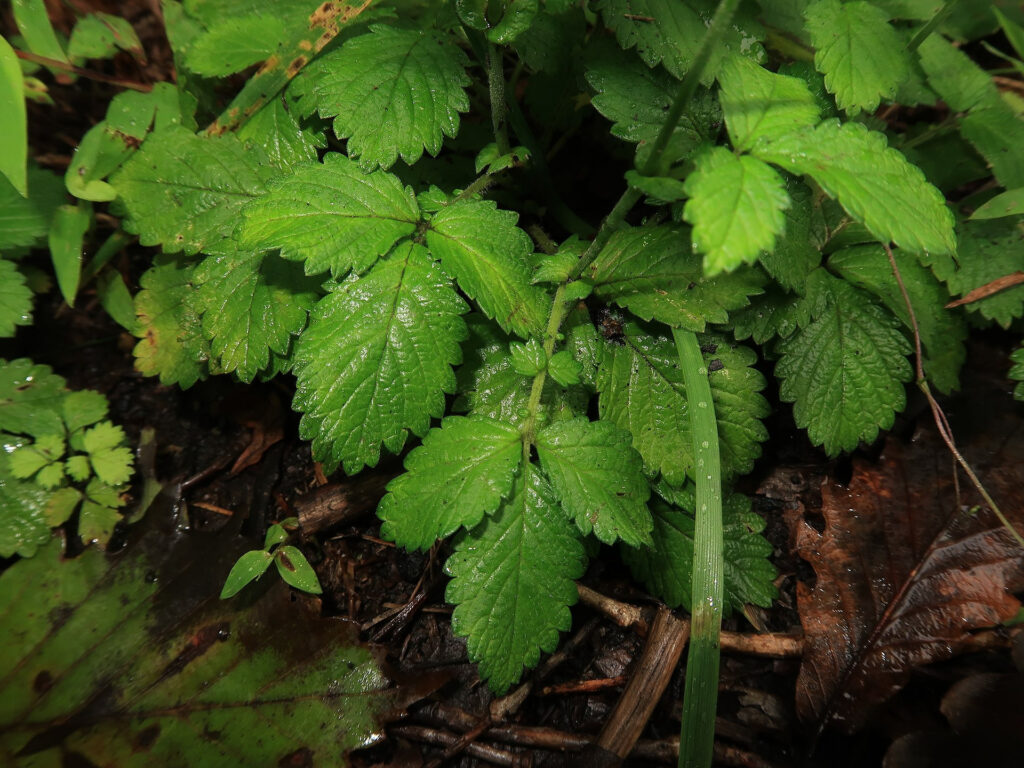
The main difference between Agrimonia pilosa and Agrimonia ovalifolia lies in their odd-pinnately compound leaves. The odd-pinnately compound leaves of the Agrimonia genus contain a mixture of larger and smaller leaflets.
In Agrimonia pilosa, the number of larger leaflets is usually 5 to 9, and the tip usually gradually narrows to an acute point, whereas in Agrimonia pilosa, the number of larger leaflets is usually 3 to 5, and the tip usually narrows abruptly to a rounded or slightly pointed point.
There are also differences in the flowers themselves.
While *Persicaria filiformis* has 8 to 15 stamens and oval-shaped petals, *Persicaria thunbergii* has 5 to 6 stamens and narrower petals.
Note that *Persicaria filiformis* var. nepalensis is sometimes classified based on the amount of hair. *Persicaria filiformis* var. viscidula is sometimes called *Persicaria filiformis* var. viscidula, which has semi-circular stipules at the base of the leaves with many serrations and dense yellowish-brown hairs on the stem. *Persicaria filiformis* var. viscidula f. subglabra has fewer hairs. *Persicaria filiformis* var. succapitata has inflorescences and fruit clusters that do not form spikes but rather clump together like a "Daruma" doll, with round leaflets and coarse serrations (Naruhashi & Seo, 1996).
Additionally, a hybrid of two species, Agrimonia x nippono-pilosa, is known. Its leaf shape is similar to that of Agrimonia pilosa, but its serrations resemble those of Agrimonia pilosa var. japonica, the glandular dots on the underside of the leaves are unclear, and all of its fruits are sterile.
What are other species in the genus Agrimonia?
Although the population of the genus Agrimonia is quite small, several other species are known.
Agrimonia coreana is distributed in Hokkaido (southwestern part), Honshu, Shikoku, and Kyushu in Japan; as well as in Korea, China (northeastern part), and Siberia (southeastern part).
Agrimonia noguchii subsp. hakonensis is distributed in at least Kanagawa and Shizuoka prefectures.
In *Persicaria filiformis*, the stipules are small and clasp the stem, the flowers are about 6 mm in diameter, the petals are oblong and narrow, there are 5 to 8 stamens, the mature fruit is about 3 mm in diameter, and the leaves are often clustered at the base of the stem. In contrast, these two species have large stipules that spread out in a fan shape and clasp the stem, the flowers are 7 to 15 mm in diameter, the petals are oval, there are 10 to 28 stamens, the mature fruit is about 5 mm in diameter, and the leaves are often evenly spaced on the stem.
For a distinction between the two species, please refer to the Kanagawa Prefectural Flora Survey Association (2018).
What is the difference between Kinmizuhiki and Mizuhiki?
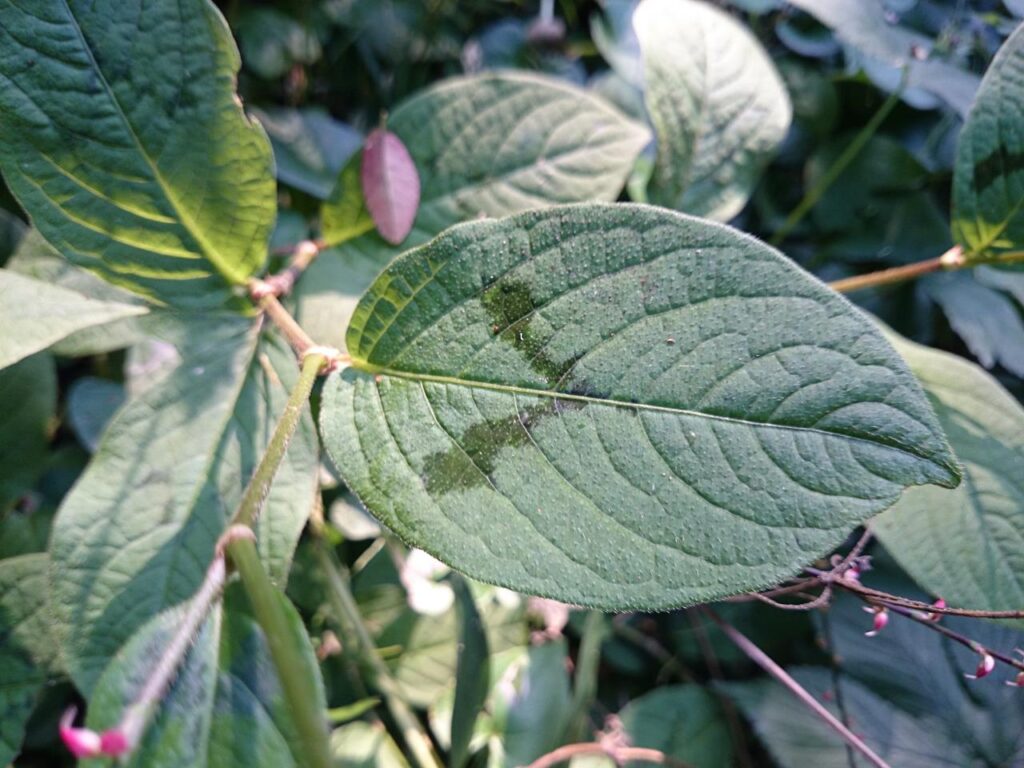
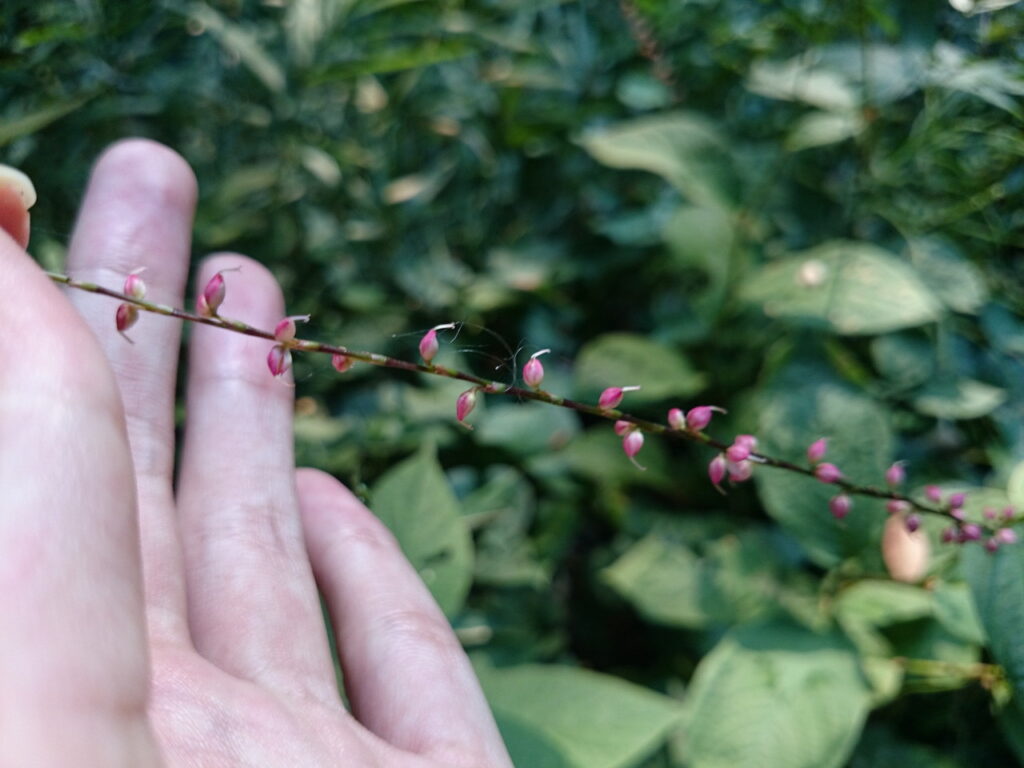
There is a plant called Mizuhiki that has a similar name to Kinmizuhiki.
Persicaria filiformis, also known as Mizuhiki, is a perennial herb distributed in Hokkaido, Honshu, Shikoku, Kyushu, and the Ryukyu Islands in Japan; as well as in Korea, China, India, and the Himalayas, and can be found in forest edges everywhere.
However, while golden mizuhiki belongs to the rose family, mizuhiki belongs to the buckwheat family. They are completely different species, differing only in their similar names and the fact that their fruits are similar in that they stick to things.
In Polygonum filiforme, the leaves are entire, and the flowers consist only of sepals, which are four-lobed. The lobes are oval-shaped, with the upper ones being red and the lower ones being lighter in color. The fruit retains its curved style, which causes it to stick to surfaces.
References
Kanagawa Prefecture Flora Survey Association. 2018. Kanagawa Prefecture Flora 2018 (Electronic Edition). Kanagawa Prefecture Flora Survey Association, Odawara. 1803pp. ISBN: 9784991053726
Naruhashi, Naohiro & Seo, Mutsu. 1996. A new variety of the genus Agrimonia in the Rosaceae family: Agrimonia spp. 'Daruma-kinmizuhiki'. *Phytogeography and Taxonomy* 44(1-2): 82-84. https://doi.org/10.24517/00055582