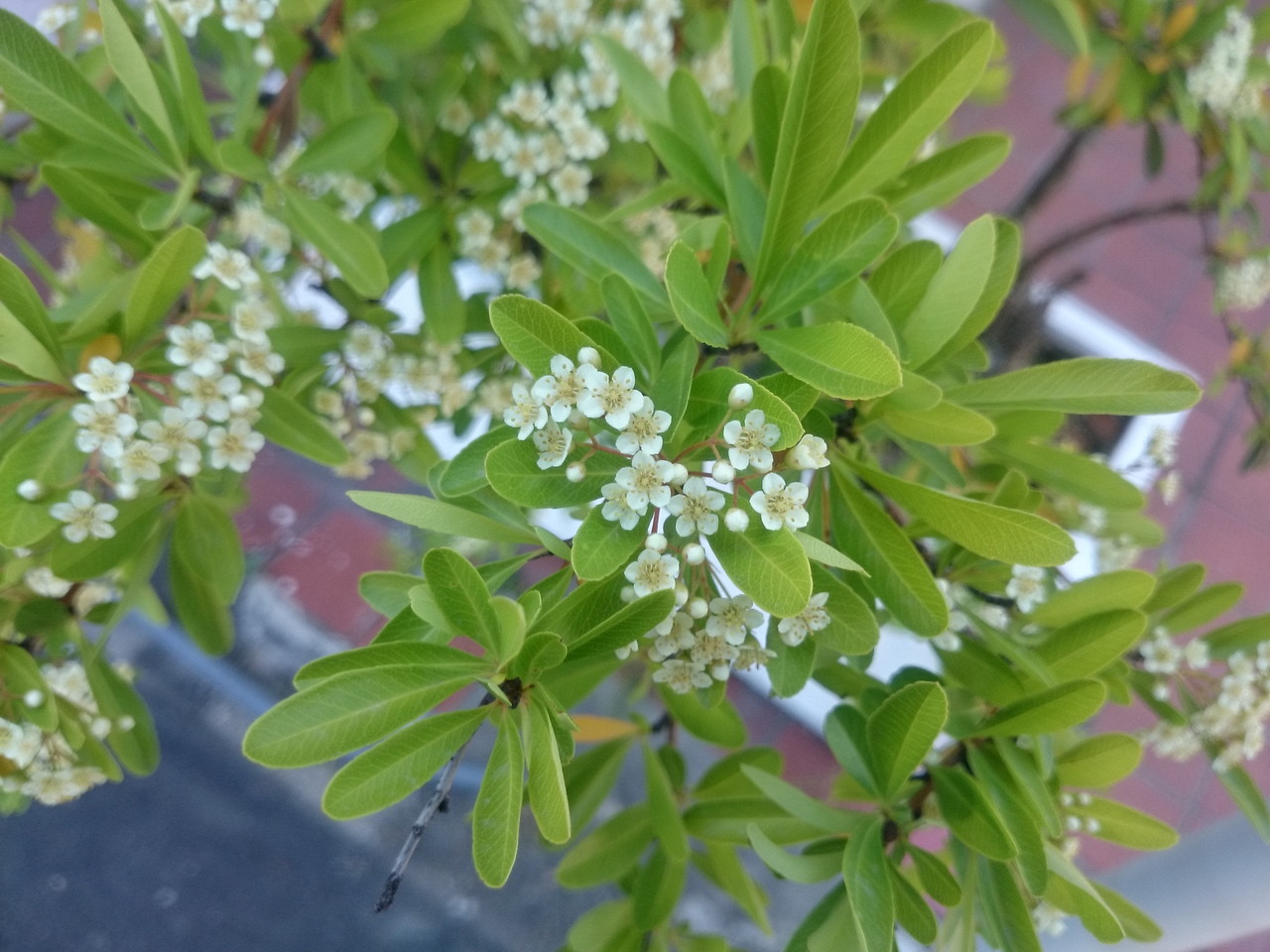
Pyracantha coccinea, Pyracantha japonica, and Pyracantha leucocephala are all members of the genus Pyracantha in the family Rosaceae. They are characterized by their bright red fruits that appear in winter and are frequently cultivated as ornamental plants. However, in horticulture, these plants are often collectively called "Pyracantha" or "Pyracantha" without much distinction between the species, perhaps because they are difficult to distinguish. In reality, they are different species, and Pyracantha leucocephala can be easily distinguished by the hairs on the underside of its leaves and the color of its fruit. The problem lies in distinguishing between Pyracantha coccinea and Pyracantha japonica. There are differences in leaf shape, but it is quite complicated and a source of confusion. I strongly recommend observing the condition of the hairs on the flowers and the shape of the fruit instead. Pyracantha is sometimes said to be a cause of sudden death in waxwings, but I disagree. This article will explain the classification, morphology, and ecology of the genus Pyracantha.
What are *Pyracantha coccinea*, *Viburnum plicatum*, and *Pyracantha coccinea*?
Pyracantha coccinea, also known as evergreen hawthorn, is native to the Mediterranean region of Europe and West Asia, and is cultivated as an ornamental plant worldwide, including in Japan (RBG Kew, 2024). It was introduced to Japan during the Meiji era.
Pyracantha crenulata, also known as Himalayan craneberry, is an evergreen shrub native to Central Asia and China, and cultivated for ornamental purposes worldwide, including in Japan. It is believed to have been introduced to Japan in the early Showa period (1926-1989).
Pyracantha angustifolia, also known as false orange tree (Tachibanamodoki), is an evergreen shrub native to southern China and cultivated for ornamental purposes worldwide, including in Japan. It was introduced to Japan during the Meiji era.
All of these plants belong to the genus Pyracantha in the family Rosaceae, and in horticulture, they are collectively called "Pyracantha" or "Pyracantha" based on the genus name, without much distinction between the different species. They are very popular as ornamental plants and are frequently seen in urban areas. It is also common to see them growing semi-wild after their fruits are eaten by birds, and although they are an introduced species, they have become quite familiar in Japan.
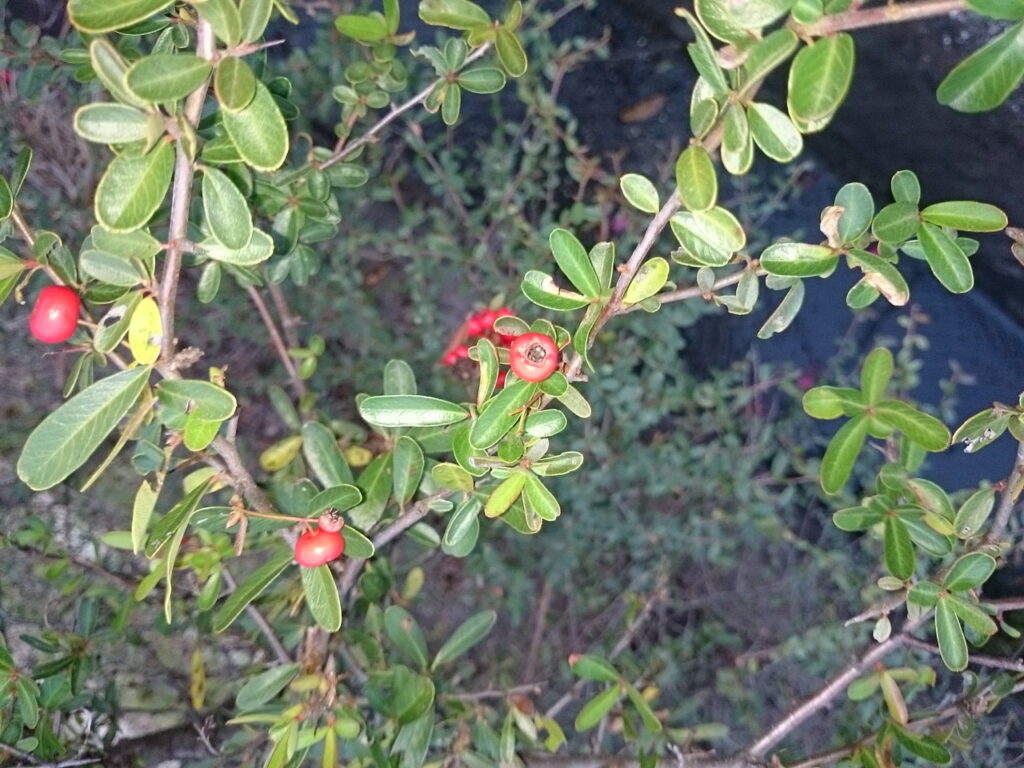
The most distinctive features of these three species are their glossy, small leaves typical of evergreen trees, the numerous small, reddish fruits they bear, and the thorns growing from their branches. However, these characteristics are common to all three species, so it can be quite difficult to distinguish between them.
What are the differences between Hawthorn, Viburnum plicatum, and False Mandarin?
Of the three species, *Tachibana-modoki* can be distinguished relatively easily (Flora of North America Editorial Committee, 2015; Kanagawa Prefecture Flora Survey Association, 2018; Hayashi, 2019).
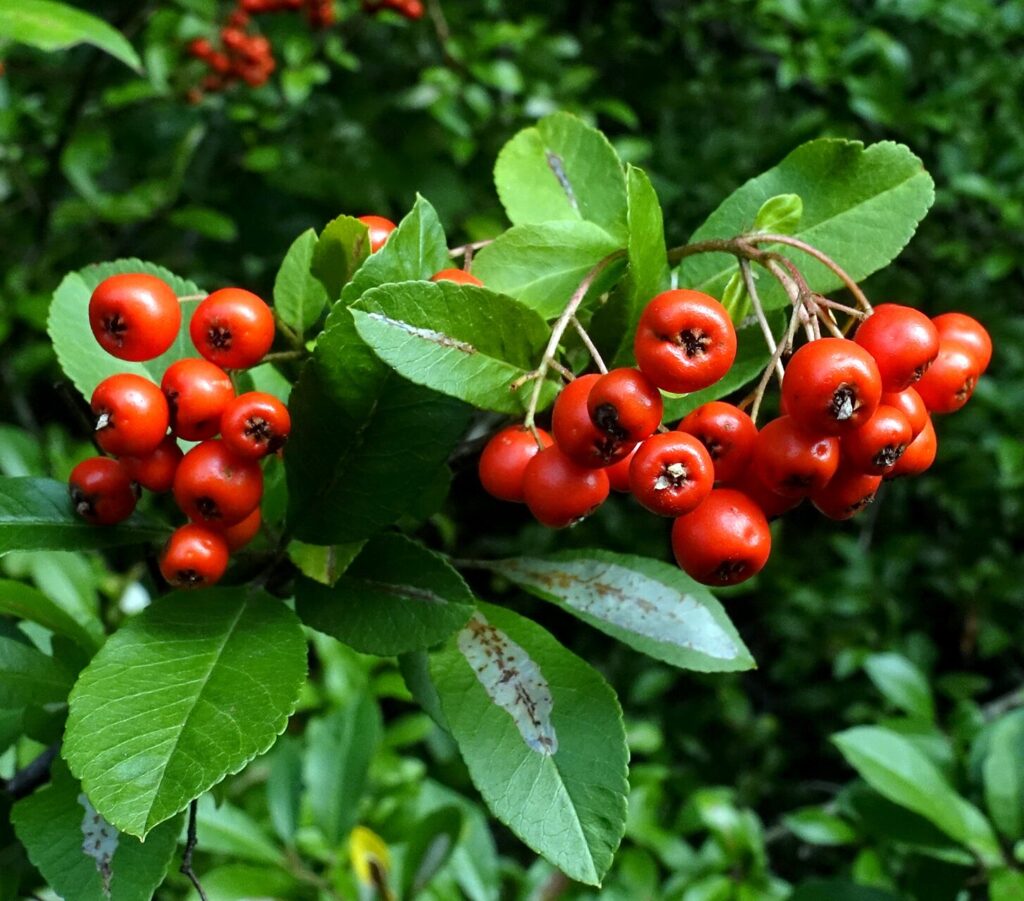
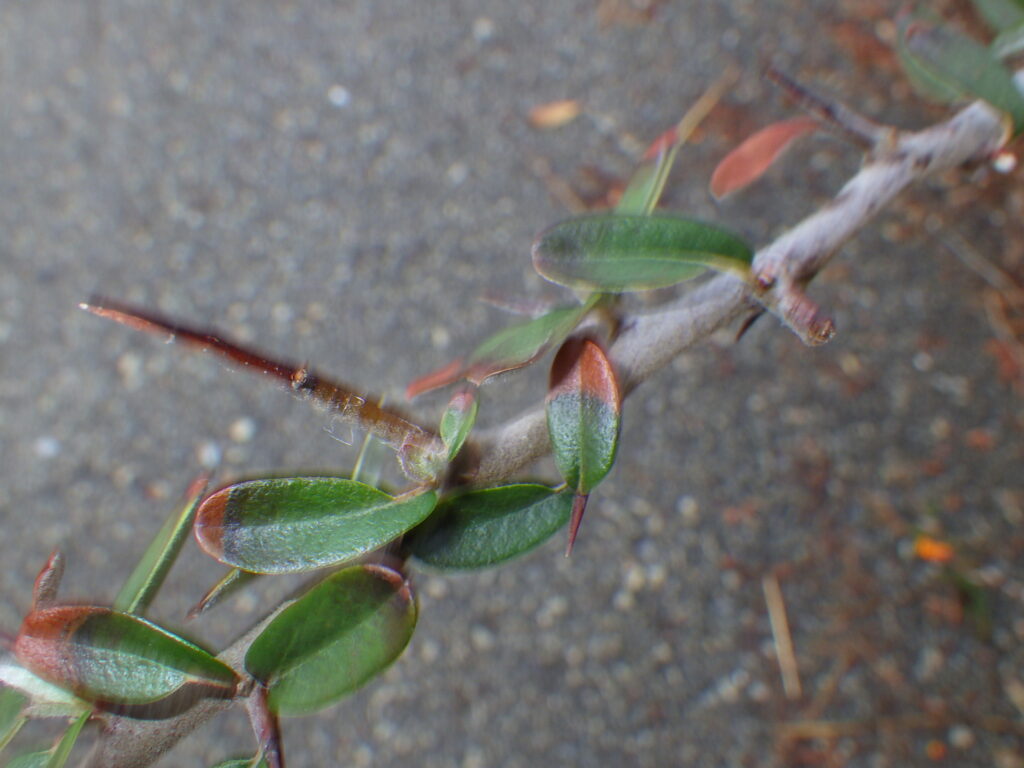
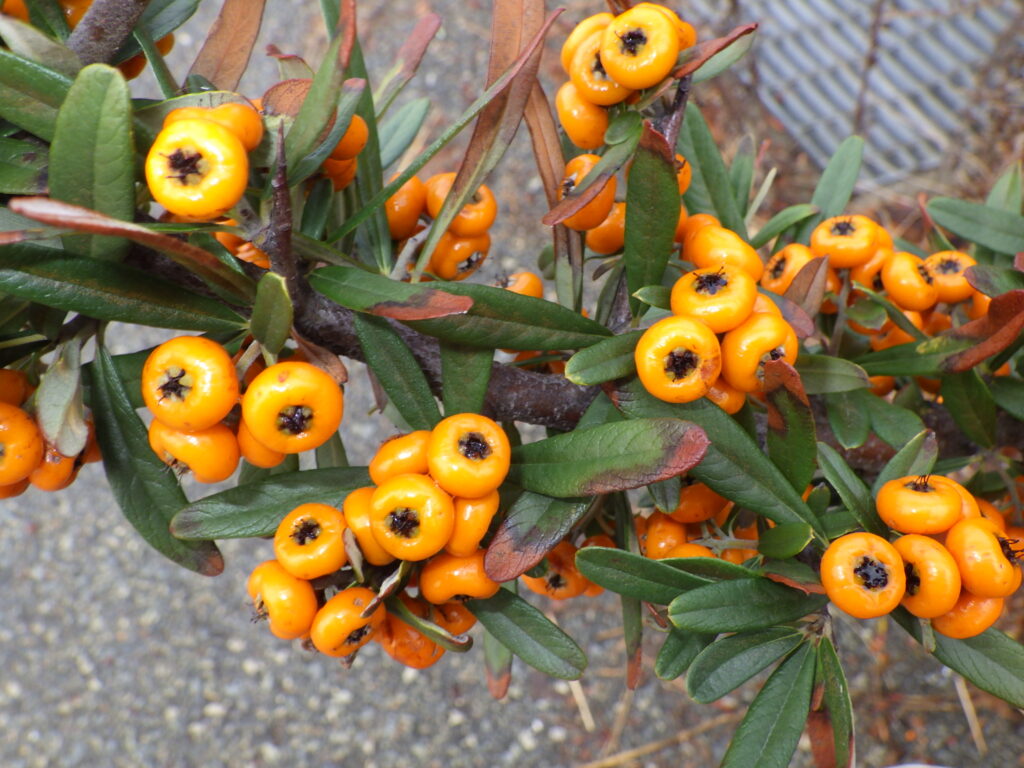
In contrast to Pyracantha coccinea and Pyracantha japonica, the leaves are somewhat wide, the underside of the leaves is hairless, and the fruit ripens to a bright red color, while in Pyracantha coccinea, the leaves are narrowly oblong to narrowly obovate, the underside of the leaves is densely covered with downy hairs, and the fruit ripens to an orange-yellow color.
The problem lies in distinguishing between *Pyracantha coccinea* and *Pyracantha japonica*. Distinguishing between these two species is quite difficult. There is inconsistency in how they are described in field guides, leading to confusion regarding their distinction.
A commonly cited difference is that the leaves of Pyracantha coccinea are oblanceolate or obovate, while those of Pyracantha coccinea are oblong or narrowly oblanceolate.
To put it simply, in the case of Pyracantha coccinea, the widest part of the leaf is towards the tip, whereas in the case of Viburnum plicatum, the widest part of the leaf is towards the center.
This point may also be helpful, but I think it's not very reliable because the explanations are very difficult to understand due to the use of technical terms, and there is too much variation from leaf to leaf and from individual to individual.
Personally, I think we should focus on checking the following two points.
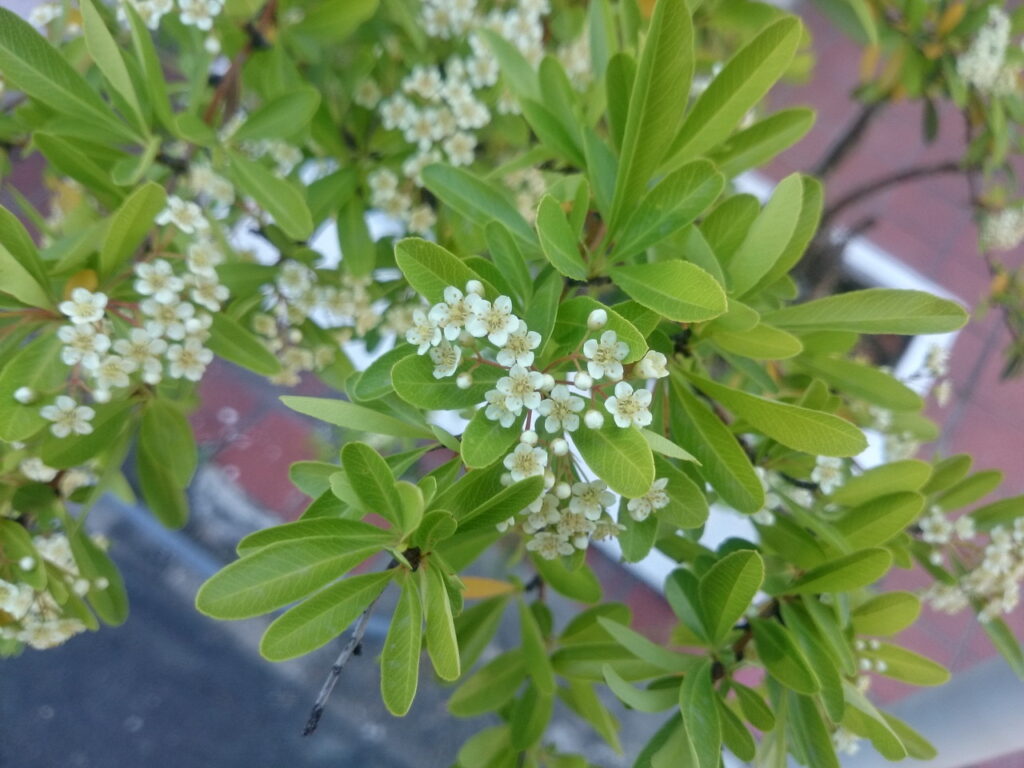
Regarding the flowers, *Pyracantha coccinea* has fine hairs on the pedicel and calyx tube, while *Pyracantha japonica* has hairless pedicels and calyx tubes. To confirm this, you will need to record the back of the flower, so be careful.
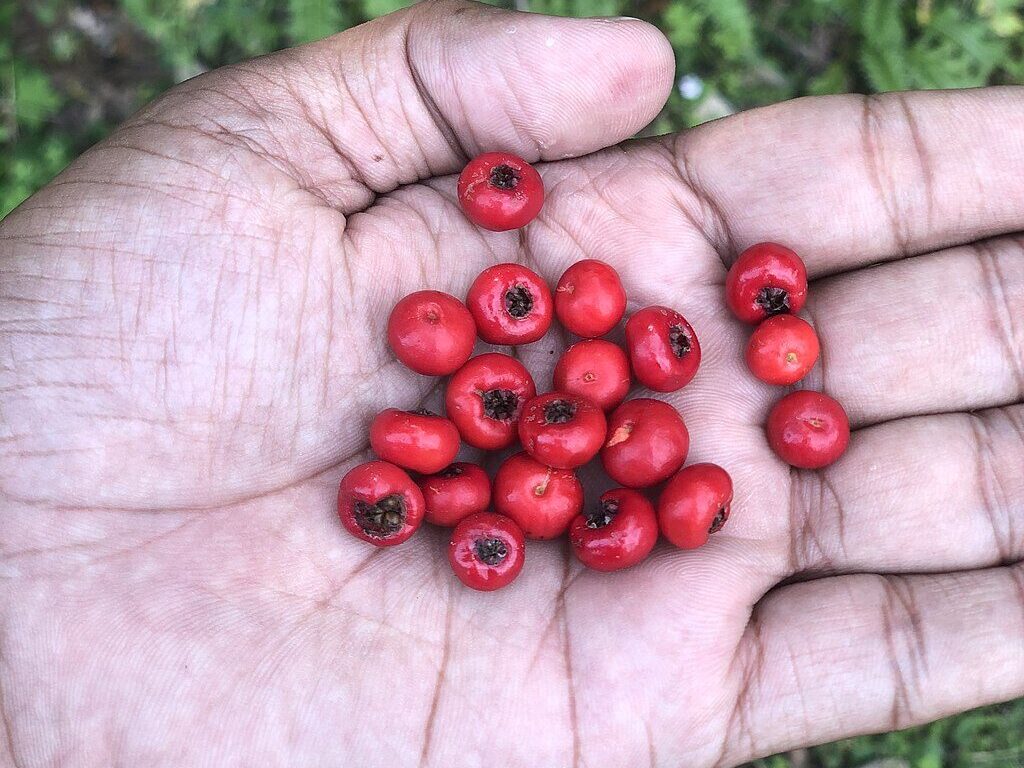
Regarding the fruit, the fruit of *Pyracantha coccinea* is spherical, while that of *Pyracantha japonica* is oblate (a shape that looks like a sphere has been pressed only at the top and bottom).
Some books suggest that hybridization is occurring, so there may be individuals that are not clearly distinguishable, but the above method of distinction should be sufficient for now.
The difference in seed length—about 2mm for *Pyracantha coccinea* and about 3mm for *Viburnum plicatum*—is often mentioned, but it's certainly not practical.

Is it a myth that pyracantha poison causes sudden death in waxwings?
You often see descriptions in university-level textbooks and other sources stating that pyracantha fruit is a cause of sudden death in waxwings (Bohemian waxwings and Japanese waxwings). Pyracantha contains amygdalin, which is also found in some species of the rose family, such as apricots and almonds. When waxwings eat it, it is digested in their stomachs, and cyanide compounds are synthesized, leading to death due to the toxic components.
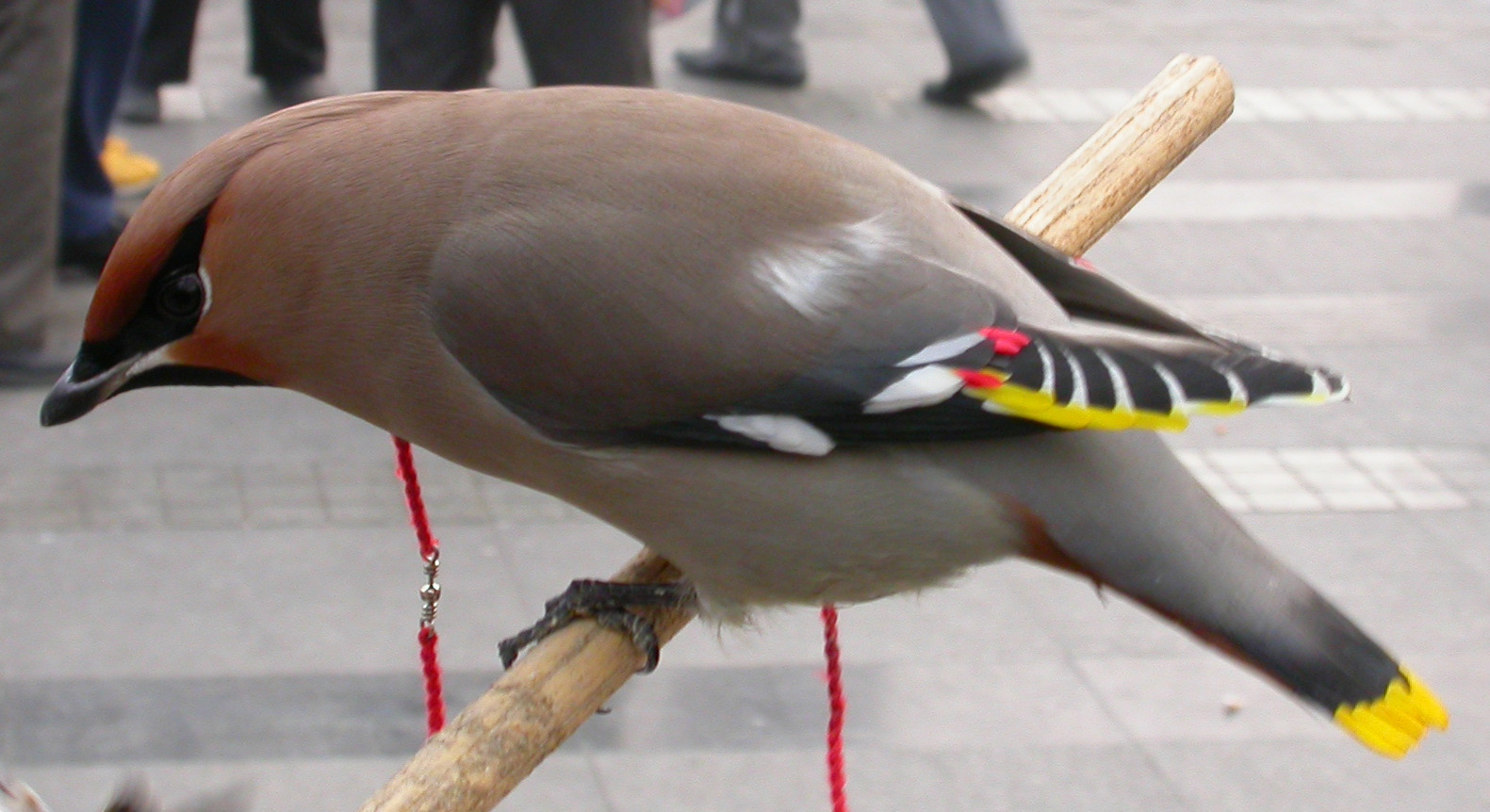
Is this really true?
Personally, I find this highly questionable.
This is because research in North America has shown that the closely related species, the Japanese waxwing, consumes large quantities of fruits containing amygdalin, such as the fruits of several species in the genus Prunus and several species in the genus Sambucus (Struempf et al., 1999).
Additional experiments have shown that when the Japanese waxwing ate artificial fruit containing four times the amount of amygdalin found in wild fruit, it did not exhibit any outward signs of toxicity such as tremors, ataxia, or paralysis, even after ingesting 5.5 times the oral lethal dose for rats in four hours.
Although the exact mechanism is not understood, it is thought that amygdalin is toxic only when ingested by mammals, or that mammals are resistant to cyanide compounds. In fact, it is believed that the presence of amygdalin in the fruits of the Rosaceae family is an evolutionary adaptation by the plants to ensure that only birds, which carry seeds over long distances, eat the fruit.
Therefore, it is unlikely that pyracantha would be the cause of death for waxwings without some other specific additional factor within Japan.
Upon reviewing the original study supporting this claim, the toxicity was confirmed by feeding mice pyracantha seeds collected from waxwing carcasses (Maruyama, 1998). Given the facts mentioned above, it cannot be said that this method yielded accurate results. The paper itself already mentions the possibility that mammals and birds have different toxin tolerances.
Another study has identified pesticide exposure, anemia due to overeating, and internal organ rupture or suffocation during falls as possible causes of sudden death (Miyagawa, 2007). Further research is needed to determine if these are the true causes.
References
Hayashi, Masayuki. 2019. Tree Leaves: Expanded and Revised Edition - Identifying 1300 Species Through Real-Life Scans. Yama-kei Publishers, Tokyo. 824pp. ISBN: 9784635070447
Flora of North America Editorial Committee. 2015. Flora of North America (Vol. 9 Magnoliophyta: Picramniaceae to Rosaceae). Oxford University Press, Oxford. 713pp. ISBN: 9780195340297
Kanagawa Prefecture Flora Survey Association. 2018. Kanagawa Prefecture Flora 2018 (Electronic Edition). Kanagawa Prefecture Flora Survey Association, Odawara. 1803pp. ISBN: 9784991053726
Maruyama, Setsuko. 1998. On sudden mass death in migratory waxwings. Hygienic Chemistry 44(1): 17-24. https://doi.org/10.1248/jhs1956.44.17
Miyagawa, Ashiko. 2007. Investigation of the cause and process of the mass death of waxwings in Nagano Prefecture. Journal of the National Environmental Research Institute 32(4): 189-193. ISSN: 1346-4965, https://tenbou.nies.go.jp/science/institute/region/journal/JELA_3204025_2007.pdf
RBG Kew. 2024. The International Plant Names Index and World Checklist of Vascular Plants. Plants of the World Online. http://www.ipni.org and https://powo.science.kew.org/
Struempf, HG, Schondube, JE, & Del Rio, CM 1999. The cyanogenic glycoside amygdalin does not deter consumption of ripe fruit by cedar waxwings. The Auk 116(3): 749-758. https://doi.org/10.2307/4089335