Japanese anemone (Anemone hupehensis), Taiwanese anemone, and button-leaved Japanese anemone all belong to the genus Anemone in the family Ranunculaceae. Japanese anemone and button-leaved Japanese anemone, in particular, are popular perennial plants in horticulture, representing autumn. However, these species are often confused. Biologically, "Japanese anemone" and "Japanese anemone" are the same. Also, most of what is introduced as "Japanese anemone" is actually button-leaved Japanese anemone. Japanese anemone and Taiwanese anemone are distinguished by the shape of their leaves and the number of sepals (not petals) on their flowers. Button-leaved Japanese anemone is a hybrid, so it has characteristics intermediate between Japanese anemone and Himalayan anemone. It is believed that most of what is currently cultivated in Japan is button-leaved Japanese anemone. This article will explain the classification of Japanese anemone species.
What are Japanese anemones, Taiwanese anemones, Himalayan anemones, and Botan-kibune anemones?
Japanese anemone (Anemone hupehensis var. japonica, also known as Eriocapitella japonica overseas) is a perennial herb native to southeastern China, Taiwan, and Vietnam, growing as a shrub in hilly areas, on grassy slopes, and along rivers (Wu et al., 2001; RBG Kew, 2023). It has become naturalized in Japan, South Korea, and Hawaii after being cultivated for ornamental purposes. In Japan, in particular, it has been cultivated for a long time. The variety found in the Kibune district of Kyoto is sometimes called Kibunegiku, but this is merely another name and there is no biological difference.
Taiwanese anemone (Anemone matsudae, known as Eriocapitella hupehensis overseas) is a perennial plant distributed in southern China, Taiwan, Myanmar, and Nepal.
Himalayan anemone (Anemone vitifolia, also known as Eriocapitella vitifolia overseas) is a perennial herb distributed in southern China (including the Himalayas), Nepal, and Pakistan, growing in sparse woodlands, grassy slopes, and riverbanks. It was once confused with Taiwanese anemone.
Anemone x hybrida (known as Eriocapitella x hybrida overseas), also called Peony Kibunegiku, is a horticultural hybrid created by crossing Japanese anemone (Anemone hupehensis) and Himalayan anemone (Anemone hupehensis) (Herman, 2004). After botanist Robert Fortune discovered Japanese anemone in Shanghai in 1843, he sent it to England, where it was hybridized by Europeans. Currently, it is cultivated more than Japanese anemone in Japan.
All of these plants belong to the genus Anemone in the Ranunculaceae family, and Anemone hupehensis in particular, as well as Anemone japonica and Anemone sempervirens, are representative perennial plants of autumn that are widely cultivated in horticulture.
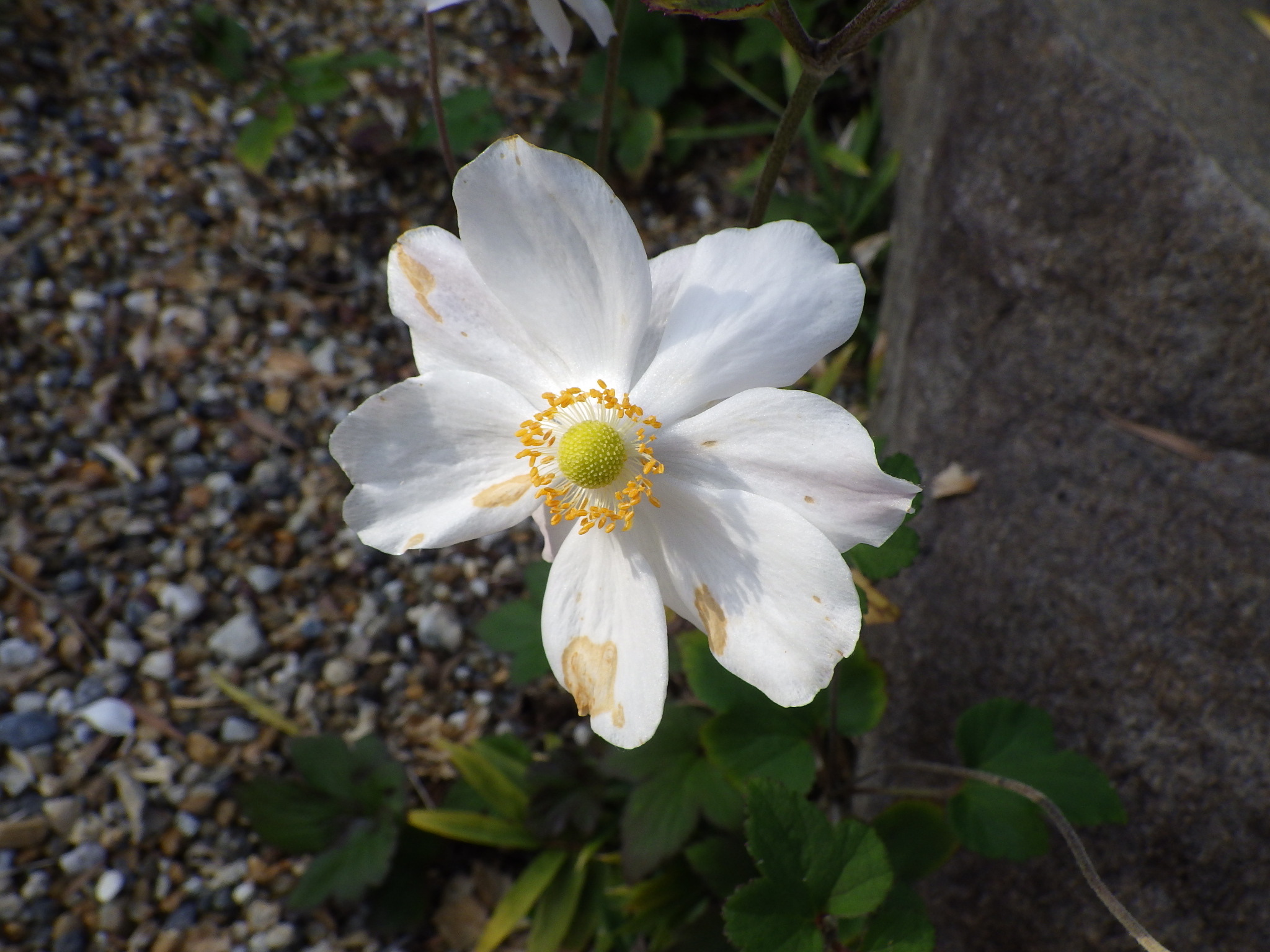
The fact that what appears to be the most conspicuous petals of the flower are actually sepals reflects the characteristics of the Ranunculaceae family, while the opposite or whorled arrangement of leaves on the above-ground stem and the achene-like fruit reflect the characteristics of the Anemone genus (Kanagawa Prefecture Flora Survey Association, 2018).
Furthermore, among the Anemone genus, the presence of a pedicel on the achene and branched stems are characteristic features of the Anemone genus. For this reason, in some countries, it is classified as a separate genus called Eriocapitella.
However, these Japanese anemones are extremely often confused, and almost everything that is generally referred to as "Japanese anemone" on the internet is actually *Anemone hupehensis*.
What are the differences between Japanese anemone, Taiwanese anemone, and Himalayan anemone?
First, let's keep in mind that, biologically speaking, "Japanese anemone" and "yellow anemone" are exactly the same thing.
Japanese anemone, Himalayan anemone, and Taiwanese anemone are completely different species (or varieties), so there are clear differences between them.
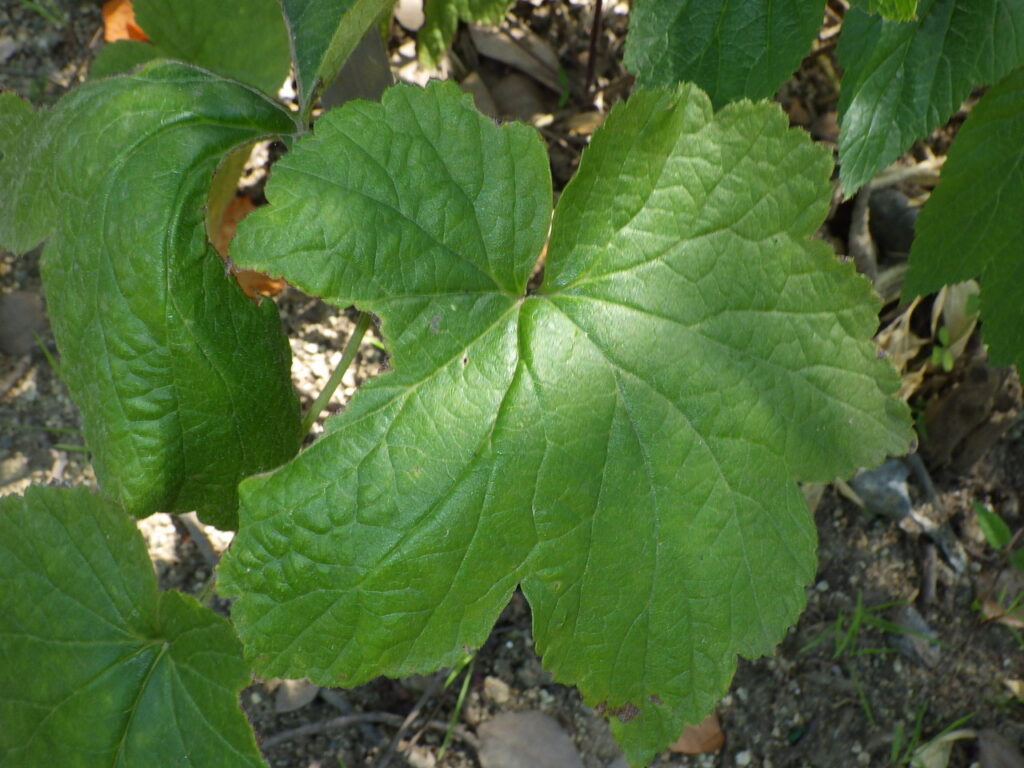
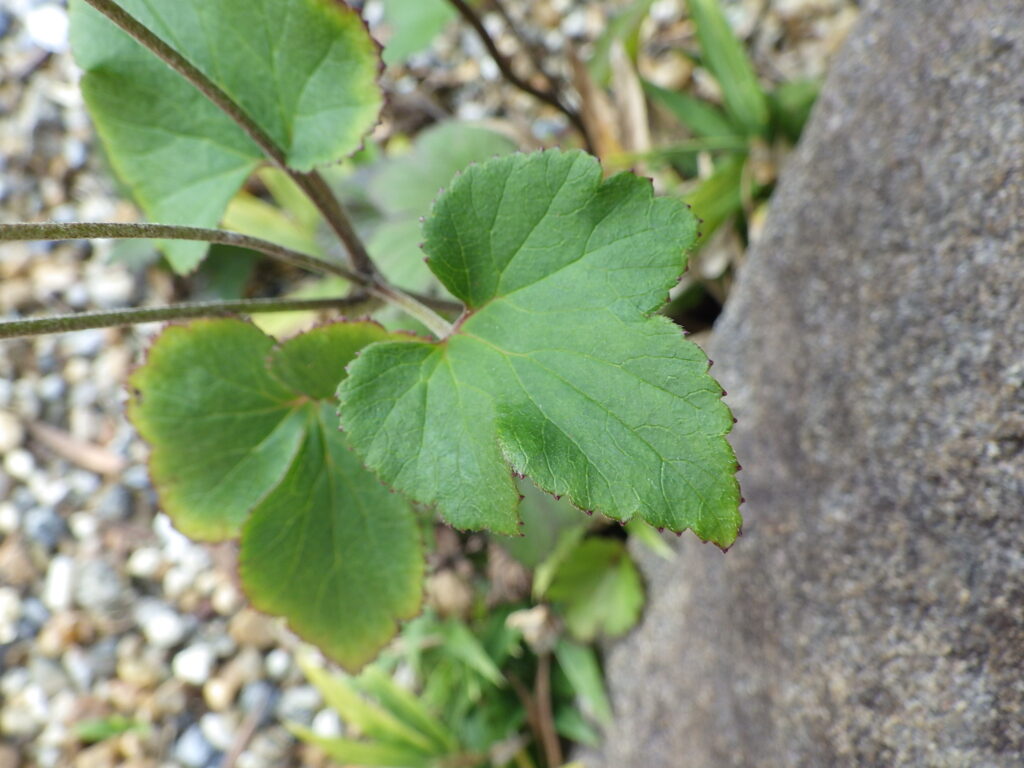
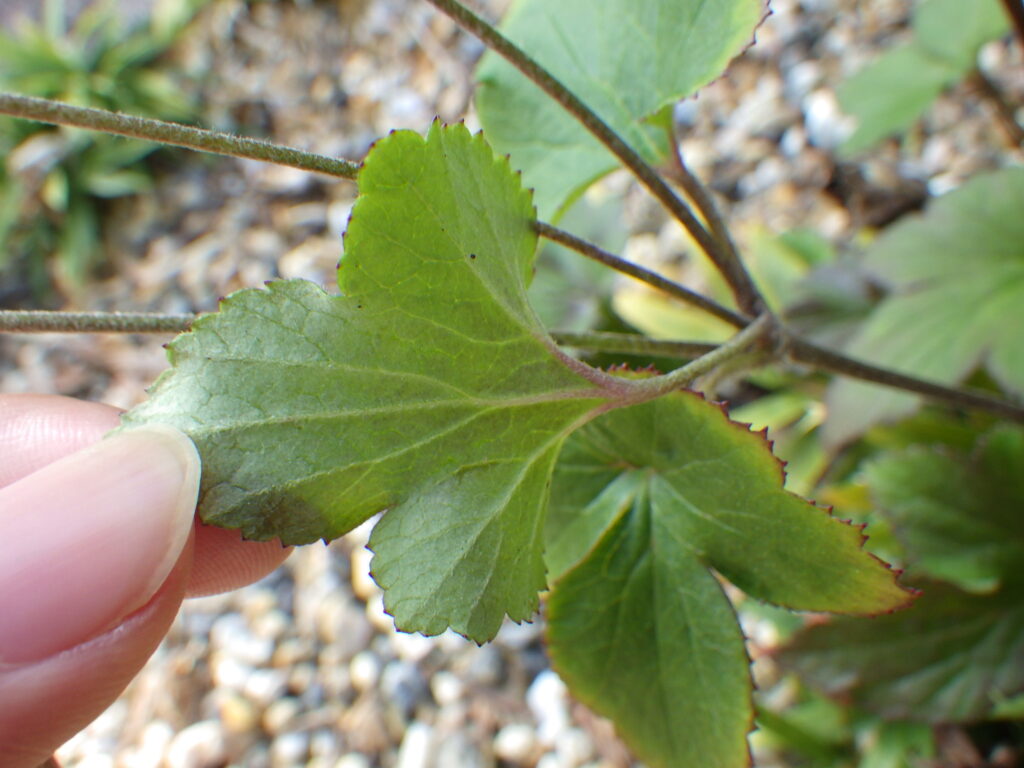
Specifically, the difference lies in the fact that Japanese anemone and Taiwanese anemone have trifoliate compound leaves (originally one leaf completely divided into three), while Himalayan anemone has simple leaves (leaves that are not divided) and three shallow lobes (with shallow incisions).
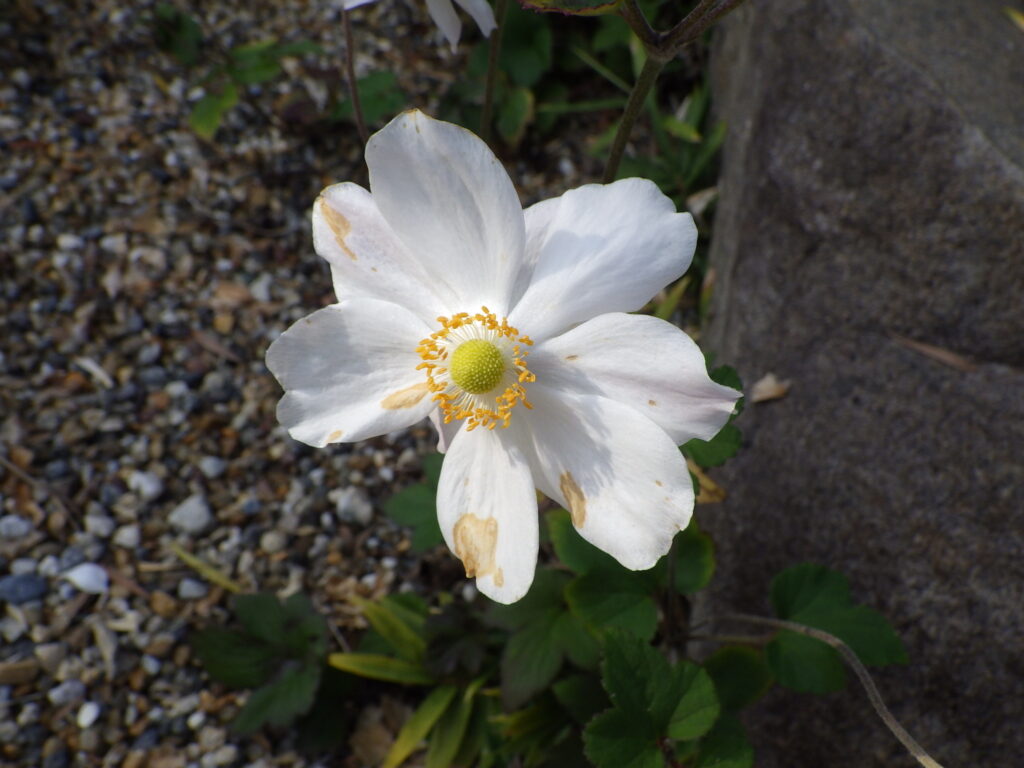
Another difference is that while Japanese anemones cultivated in Japan have semi-double to double sepals (about 10 to 20 petals) that resemble petals, Taiwanese anemones and Himalayan anemones have single sepals (5 to 8 petals at most).


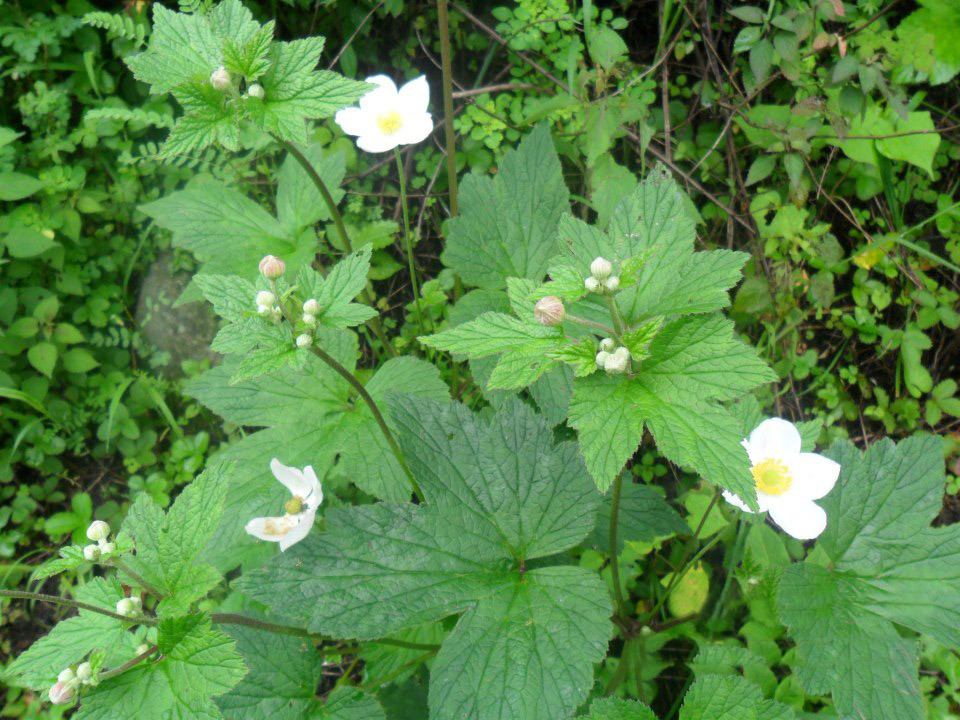

What are the differences between *Chrysanthemum boreale* and other species?
The problem lies with the button-leaved anemone (Anemone hupehensis). Since the button-leaved anemone is a hybrid of Japanese anemone (Anemone hupehensis) and Himalayan anemone (Anemone japonica), individuals in an intermediate state can be said to belong to this species. Incidentally, some articles claim that it is a hybrid with Taiwanese anemone (Anemone taiwanensis), but this is not the case. The flower color ranges from white to purple, and the calyx ranges from single to double flowers. The leaves also range from compound to simple.
Specifically, if you see a plant with semi-double to double flowers but simple, three-lobed leaves, you can assume it is a type of chrysanthemum called *Chrysanthemum boreale*.
Also, while the flowers of the true Japanese anemone (Shumeigiku) are generally purple, the Botan-kibunegiku (Peony-leaved Chrysanthemum) is white to purple, so if it's white, it's likely to be Botan-kibunegiku.
In reality, it seems that many of the plants currently cultivated in Japan are actually the Peony-leaved Anemone. This suggests that the original Japanese anemone, once cultivated in Japan, has been replaced by the Peony-leaved Anemone, which was hybridized in Europe. Depending on how you look at it, it might be sad that the original Japanese anemone is being forgotten. Moreover, this fact is not even known to many people.
Taiwanese anemone and Himalayan anemone may occasionally be cultivated in Japan, but it is unclear how common they actually are.
References
Herman, R. 2004. Fall-blooming anemones. Fine Gardening 99: 48-52. ISSN: 0896-6281, https://www.finegardening.com/article/fall-blooming-anemones
Kanagawa Prefecture Flora Survey Association. 2018. Kanagawa Prefecture Flora 2018 (Electronic Edition). Kanagawa Prefecture Flora Survey Association, Odawara. 1803pp. ISBN: 9784991053726
RBG Kew. 2023. The International Plant Names Index and World Checklist of Vascular Plants. Plants of the World Online. http://www.ipni.org and https://powo.science.kew.org/
Wu, ZY, Raven, PH & Hong, DY (Eds.). 2001. Flora of China (Vol. 6 Caryophyllaceae through Lardizabalaceae). Science Press, Beijing, and Missouri Botanical Garden Press, St. Louis. 512pp. ISBN: 9781930723054