Enokigusa is a common species found on roadsides and in fields in flat areas, but if you're not familiar with it, you might get confused with the hackberry tree (Enoki), as its name suggests. While there are similarities such as leaf veins, serrations, and pointed tips, their classifications are fundamentally different, with a major difference being whether they are herbaceous or woody plants. Their flowers and fruits are also completely different. The leaves are similar, but upon closer inspection, their shape and sheen are different. Two varieties of Enokigusa have been identified: velvet Enokigusa and long-leaved Enokigusa. They are distinguished by the shape of their leaves and the amount of hairiness, but the differences are continuous and not always distinguishable. Enokigusa has unique flowers, and self-pollination occurs when its male flowers fall to the ground and are received by its female flowers in a basket-like bract. This can be found with a little research, but it also seems that wind pollination occurs. Considering all of this together, the reason why Enokigusa uses such a roundabout method of self-pollination may become clear. The fruit is a capsule, and the seeds are dispersed by ants. This article will explain the classification, pollination ecology, and seed dispersal of *Celtis sinensis*.
- Enokigusa, a plant that grows on roadsides and in fields in flat areas and resembles the leaves of the hackberry tree.
- You can distinguish between hackberry grass and hackberry by the stiffness of their branches and the shape of their leaves.
- Enokigusa is divided into two types: velvet enokigusa and long-leaved enokigusa.
- A mechanism where one male flower is received by another female flower.
- Why go through such a roundabout pollination process? They usually rely on wind pollination too!?
- The fruit is a capsule, and the seeds are dispersed by ants.
- References
- Source
Enokigusa, a plant that grows on roadsides and in fields in flat areas and resembles the leaves of the hackberry tree.
Acalypha australis, also known as hackberry grass, is distributed in Hokkaido, Honshu, Shikoku, Kyushu, and the Ryukyu Islands in Japan; as well as in China, South Korea, Laos, the Philippines, eastern Russia, and Vietnam. It has naturalized in northern Australia and eastern India. It is an annual plant that grows along roadsides and in fields in lowland areas (Satake, 1999).
It belongs to the genus Acalypha in the family Euphorbiaceae. Other known species in the genus include the naturalized species Acalypha ostryifolia and the cultivated species Acalypha hispida and Acalypha hispaniolae, but all of them are rarely seen in the wild, and their flower forms differ greatly, so there is no confusion between the species.
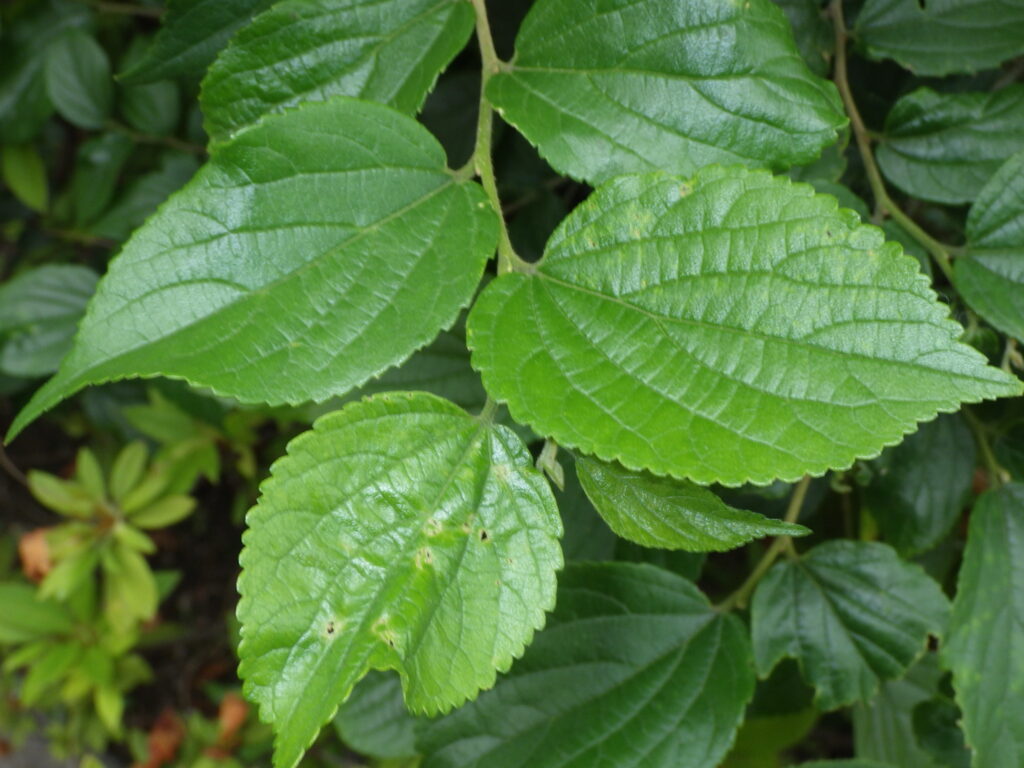
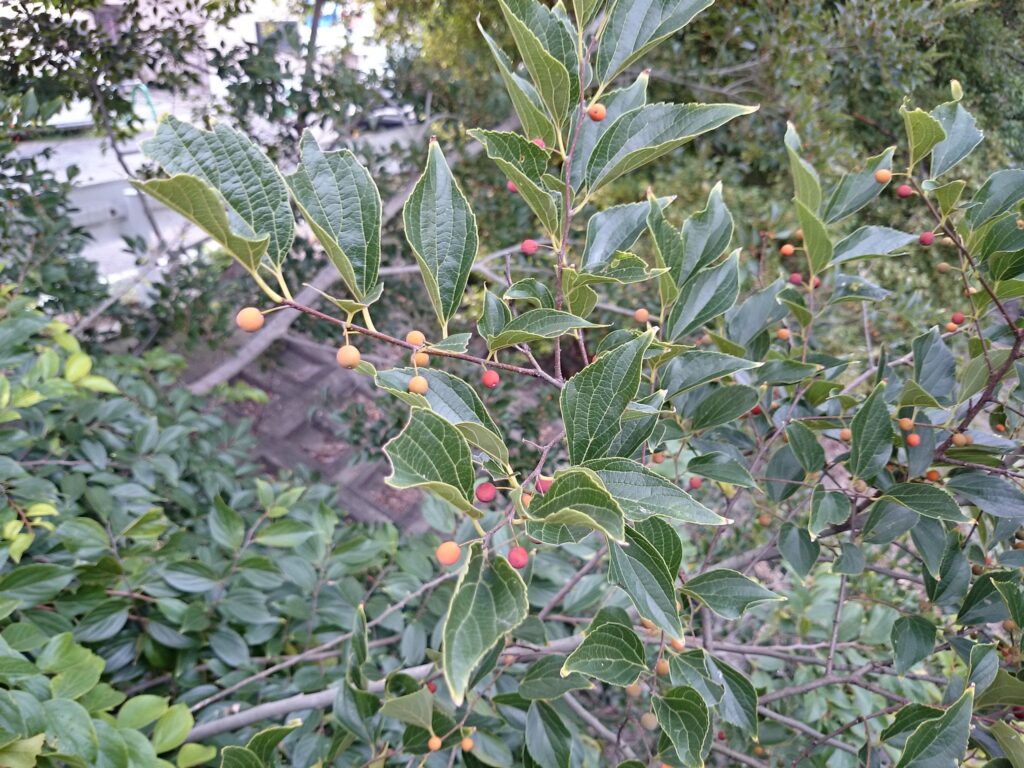
However, as its name suggests, it is sometimes compared to Celtis sinensis, a completely different species belonging to the Cannabaceae family. The leaf veins, serrations, and pointed tips are similar, so it may be difficult to distinguish between them at first.
The Japanese hackberry (Enoki) is a deciduous tree distributed in Honshu, Shikoku, and Kyushu in Japan; as well as in Korea and China. It grows in sunny, moderately moist areas from hills to mountains, and along coastal areas.
Although it is a large deciduous tree, the fruits of wild and cultivated individuals are eaten by birds, and the seeds are dispersed. As a result, young trees can grow even in small green spaces in urban areas, and these young trees can sometimes be found in the same places as hackberry, which may cause confusion.
You can distinguish between hackberry grass and hackberry by the stiffness of their branches and the shape of their leaves.
However, there are significant differences between *Celtis sinensis* and *Celtis sinensis* (Hayashi et al., 2013).
The biggest difference, as mentioned above, is that hackberry is an annual plant, while hackberry is a deciduous tree. Therefore, they are clearly distinguishable in large specimens, and even large hackberry plants have soft stems, while hackberry plants have hard, firm stems even in young trees.
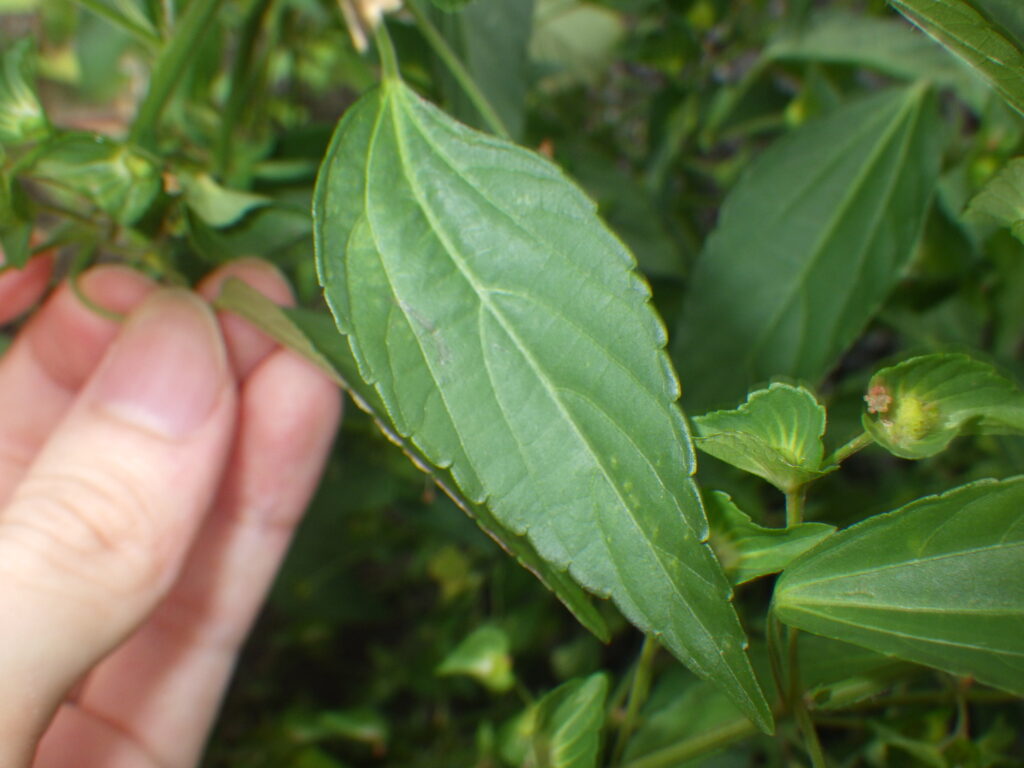
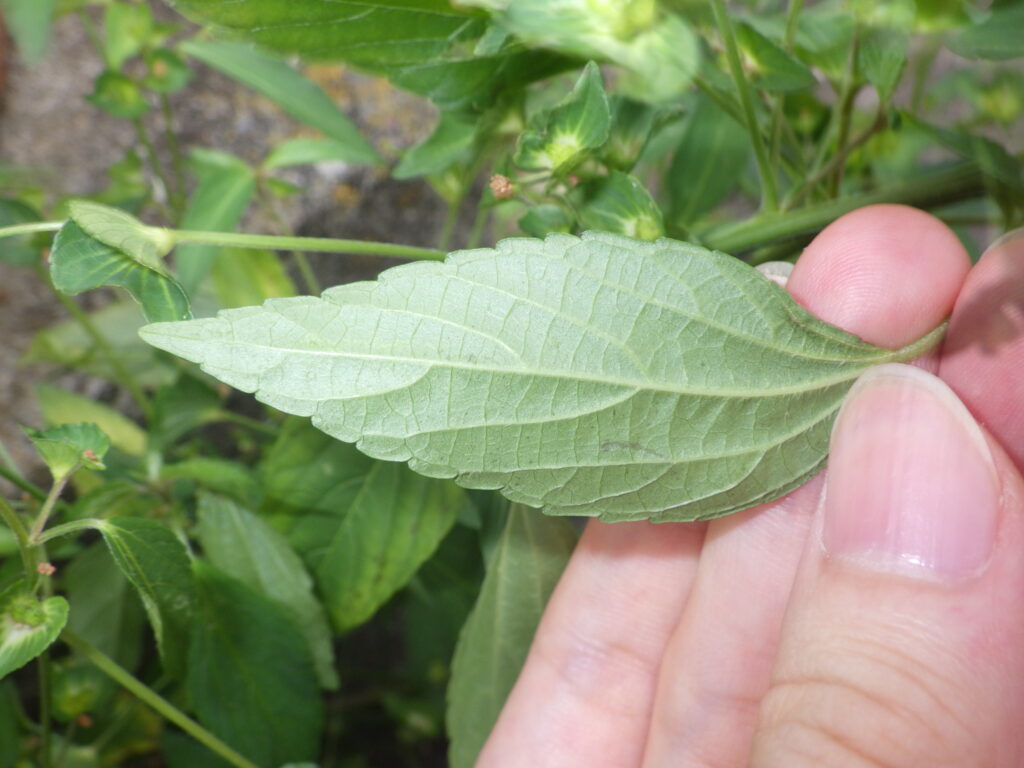
Although the leaves are very similar, those of *Celtis sinensis* are nearly bilaterally symmetrical, oblong to broadly lanceolate, with fine serrations and a slight sheen, while those of *Celtis sinensis* are nearly bilaterally asymmetrical, broadly elliptic, with sparse serrations and no sheen.
In addition, mature hackberry trees have small, wavy, blunt serrations on the upper third of their leaves, but some have entire margins, and young trees have blunt serrations almost to the base. The extent of blunt serrations also varies in hackberry grass, so this point may not be relevant.
The flowers and fruits are completely different. In hackberry, the inflorescence is located in the leaf axils, with small male flowers arranged in a spike at the top and female flowers enclosed in a conical involucre at the base, a form that doesn't immediately resemble a flower. The fruit is a drupe, spherical in shape and about 6 mm in diameter, whereas in Japanese hackberry, the perianth has four segments, resembling a typical flower, and the fruit is a capsule, spherical in shape and about 3 mm in diameter.
For other species similar to hackberry, please see our separate article.
Enokigusa is divided into two types: velvet enokigusa and long-leaved enokigusa.
Although not widely known, two varieties of hackberry have been identified (Kanagawa Prefecture Flora Survey Association, 2018).
Velvet hawkweed f. velutina has stems densely covered with upward-curving hairs, and ovate leaves with blunt tips, densely covered with long, obliquely ascending hairs on the veins and fine, erect hairs between the veins, giving them a velvety feel to the touch. It can be found in cultivated fields and roadside grasslands.
*Lysimachia japonica f. glareosa* has small leaves that are uniform in shape and size from the lower to the upper part of the stem. The underside of the leaves has long, erect or obliquely ascending hairs on the veins, sometimes also growing between the veins. While the amount of hair varies, there are no fine, erect hairs between the veins, so it does not feel particularly velvety to the touch. It can be found on roadsides in urban areas and in dry, bare ground.
Basically, velvet hackberry has leaves that are not very pointed at the tip and have many hairs, while long-leaved hackberry has leaves that are pointed at the tip and have fewer hairs, which is how they can be distinguished.
However, the "Flora of Kanagawa Prefecture 2018," which surveyed plants in Kanagawa Prefecture, states that "when many specimens are collected, there are many that are difficult to classify, and this time we were unable to create separate distribution maps." There are also many intermediate individuals, and it seems possible that they may no longer be distinguished in the future.
A mechanism where one male flower is received by another female flower.
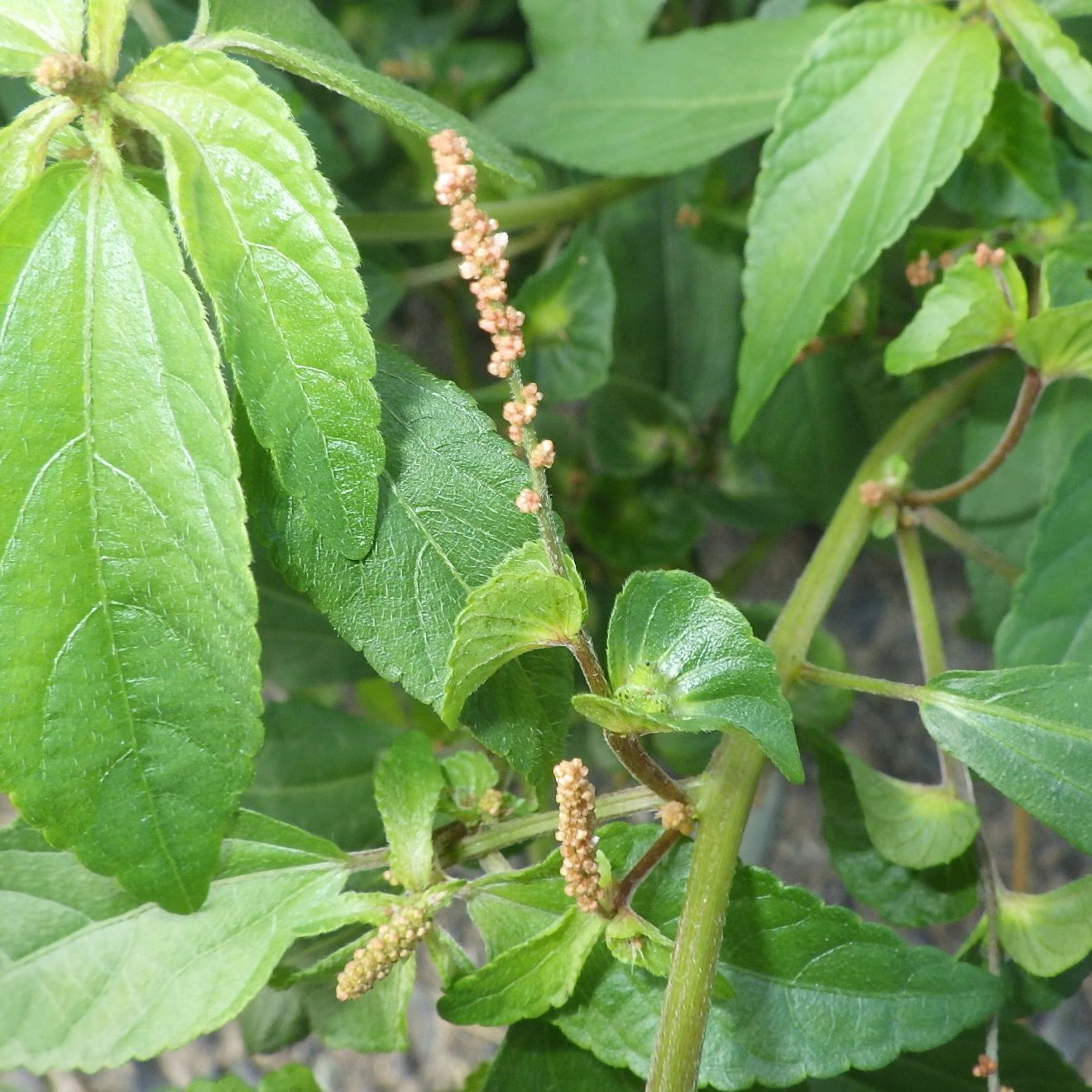
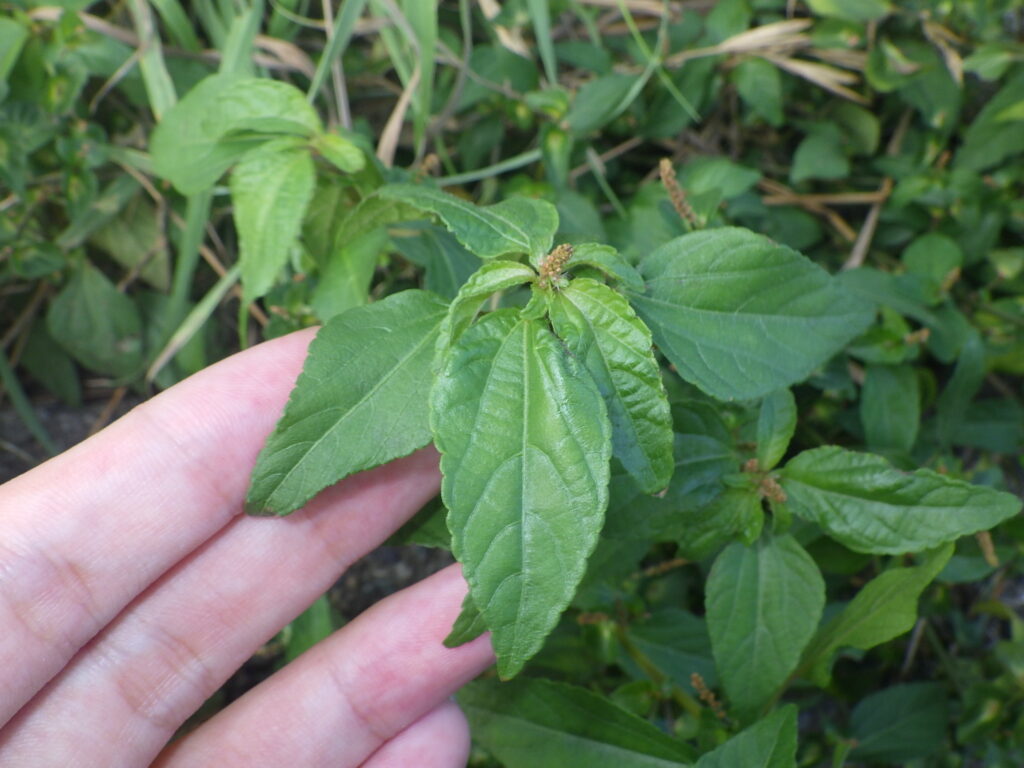
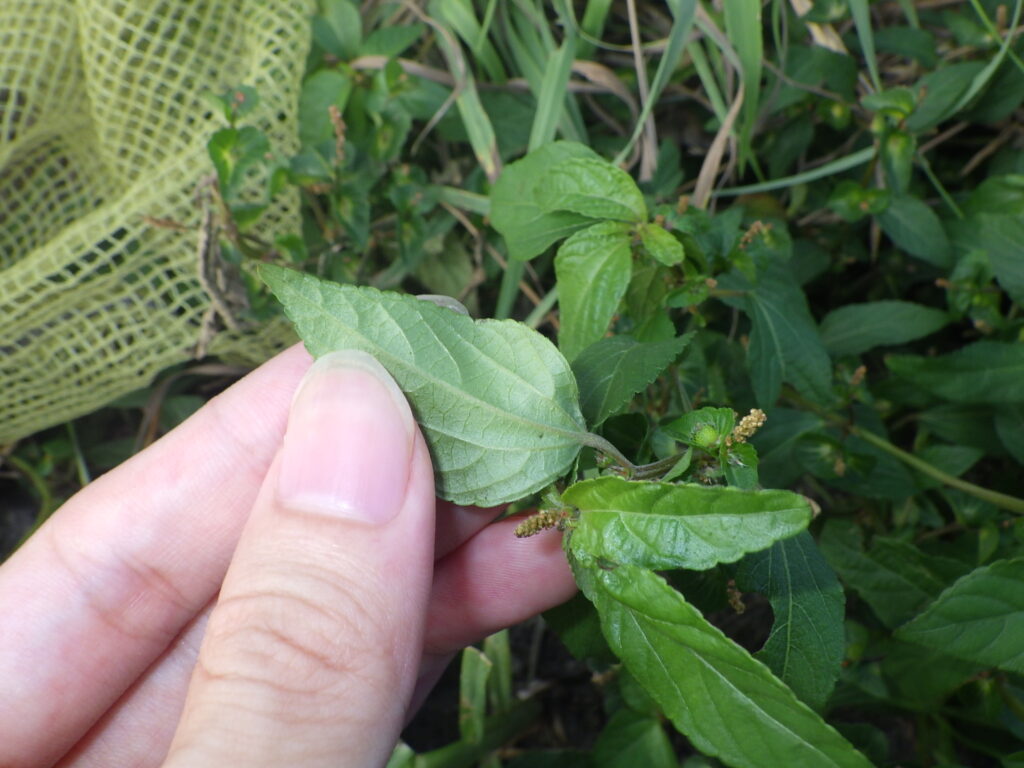
The flowering period of the Japanese hackberry (Enokigusa) is from August to October. The inflorescence grows in the leaf axils, and the reddish, spike-like structures are the male inflorescences, which are covered with countless tiny male flowers. Of course, the male flowers contain a large amount of pollen. Just below them, the inconspicuous female flowers are arranged, enclosed in small, leaf-like structures called bracts. This structure is unprecedented. Why is it arranged this way?
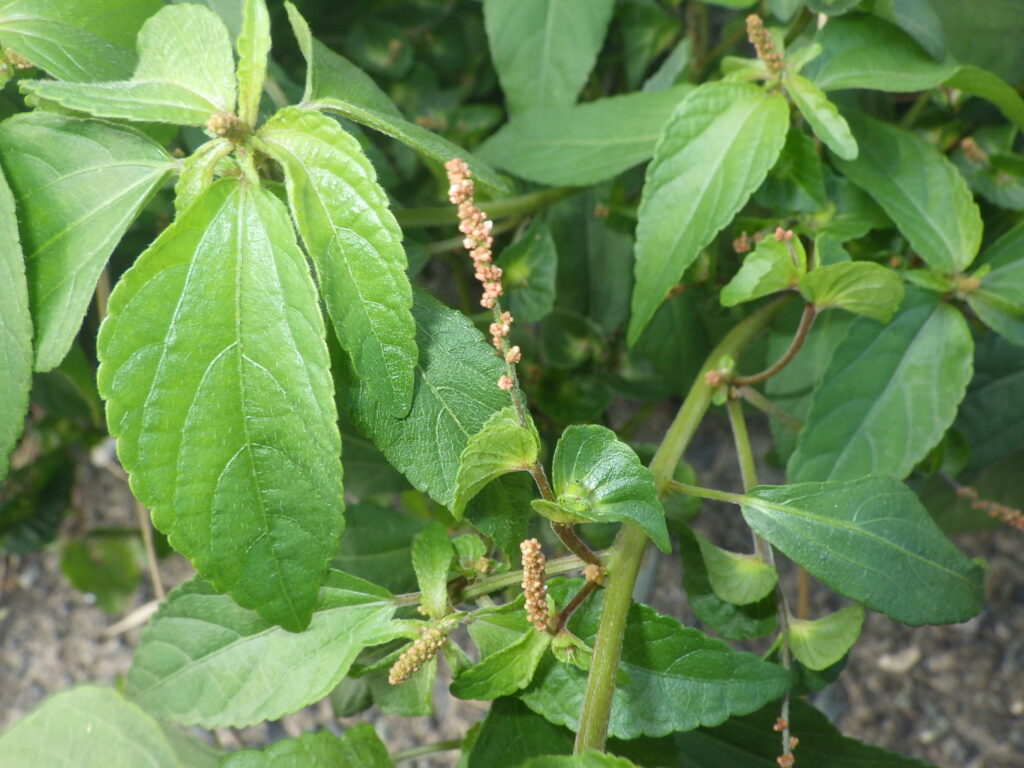
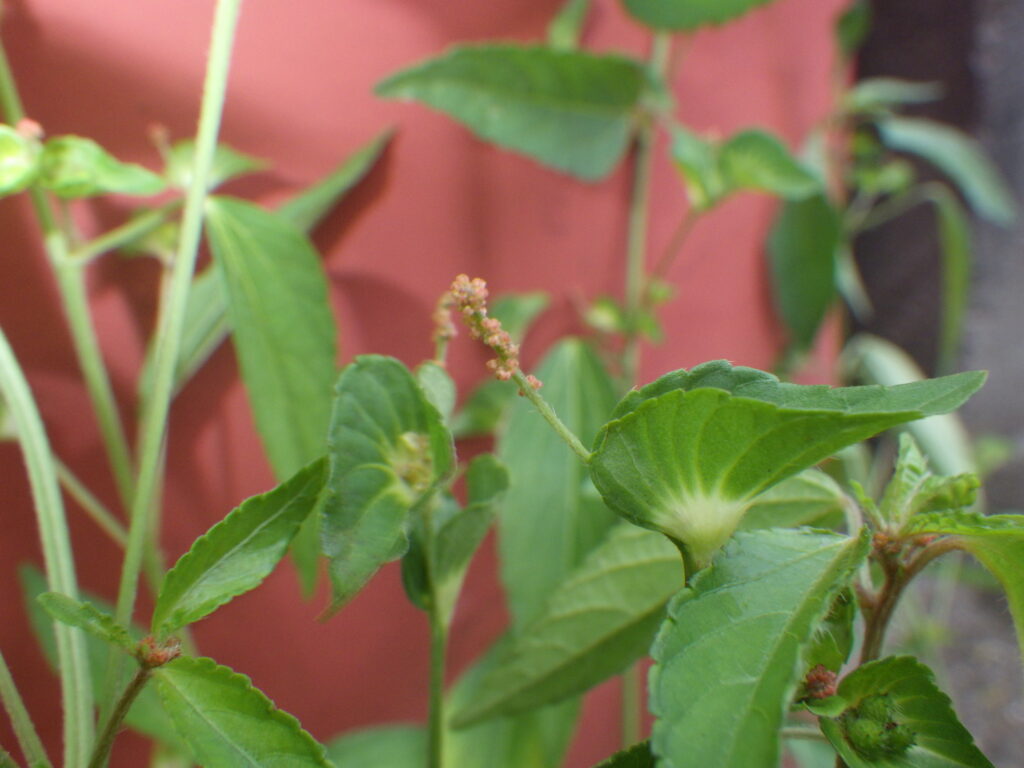
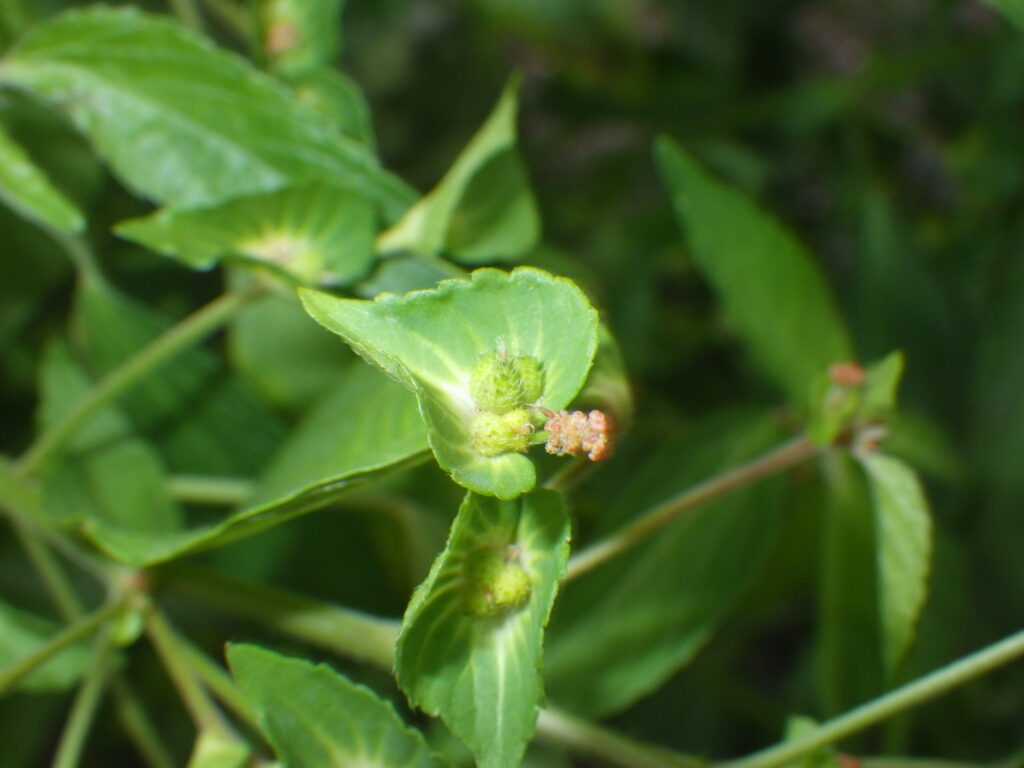
This is thought to be because the red male flowers "drop" onto the bracts and combine with the female flowers for self-pollination (Osada, 1985). In fact, this has been observed. It seems to be a very well-structured and clever mechanism.
However, it seems to have a fatal flaw: this pollination method is limited to self-pollination. Does it not require genes from other individuals?
Generally, a lack of genetic diversity is thought to make organisms more vulnerable to changes in the natural environment and more susceptible to the effects of parasitic organisms such as viruses and bacteria.
Why go through such a roundabout pollination process? They usually rely on wind pollination too!?
If a plant truly wants to self-pollinate, it should simply place male and female flowers next to each other or produce cleistogamous flowers that don't open their petals. Some plants actually do this, so why go through such a roundabout process?
Considering all of this, we can only suspect that another method of pollination is at work. However, both the male and female flowers of the hackberry plant are small, pale in color, and the pollen is also small, so it seems unlikely that insects would be able to reach them. So how is the pollen being transported?
According to research papers on species of the genus *Utricularia* that are particularly close to *Utricularia japonica* found overseas, it has been confirmed that these species are wind-pollinated, meaning their pollen is carried by the wind (Sagun et al., 2010; Hernández-Villa et al., 2020).
Some research has also been conducted on Japanese hackberry (Tanaka, 2000). This research also points out that hackberry is wind-pollinated. According to this research, the stamens of the male flowers of hackberry have a function that allows them to repel and scatter pollen.
Generally, plants with stamens that spring back bloom in sheltered environments with little wind, such as gaps in forests or cultivated fields, where they are clustered together with other tall plants. In such environments, pollen has fewer opportunities to be blown away or dispersed far, so it releases pollen spontaneously. This is thought to be a good example of the Japanese hackberry (Celtis sinensis).
It seems natural to assume that the reason they go through the troublesome process of self-pollination is to ensure opportunities for cross-pollination by wind.
In short, hackberry plants are pollinated in two ways: self-pollination, where they drop their pollen, and cross-pollination, where they are carried out by the wind. However, there are currently no studies focusing on the proportion of pollination that occurs through these two methods, so it remains unknown. It can be said that this plant is still shrouded in mystery due to a lack of research. It may be unassuming because it does not rely on insects for pollination, but it can still be said to be a beautiful flower in its own right.
The fruit is a capsule, and the seeds are dispersed by ants.
The fruit is a capsule that is spherical, about 3 mm in diameter, and contains three seeds, each about 1.5 mm in diameter. These seeds have a tissue called an elaiosome that serves as food for ants (Nakanishi, 1999; Fujii et al., 2012). Ants visit the plant, targeting the elaiosome, and disperse the seeds by carrying them away.
A study conducted in Hyogo Prefecture showed that when brown ants were presented with seeds of the Japanese elm (Lamium amplexicaule), they were recorded to have carried them away (Fujii et al., 2012). Therefore, it is possible that seeds are dispersed by brown ants in the wild. Since brown ants are extremely common in fields and urban areas, it is very understandable that Japanese elm can be found in similar locations.
References
Fujii, M., Kosaka, A., & Masui, K. 2012. Plants that rely on ants to disperse their seeds. Kyosei no Hiroba 7: 63-68. ISSN: 1881-2147, https://www.hitohaku.jp/publication/book/kyousei7_063.pdf
Hayashi, Yasaka, Kadota, Yuichi, and Hirano, Takahisa. 2013. Yamakei Handy Illustrated Guide 1: Wildflowers (Revised and Expanded New Edition). Yama-kei Publishers, Tokyo. 664pp. ISBN: 9784635070195
Hernández-Villa, V., Vibrans, H., Uscanga-Mortera, E., & Aguirre-Jaimes, A. 2020. Floral visitors and pollinator dependence are related to floral display size and plant height in native weeds of central Mexico. Flora 262: 151505. ISSN: 0367-2530, https://doi.org/10.1016/j.flora.2019.151505
Kanagawa Prefecture Flora Survey Association. 2018. Kanagawa Prefecture Flora 2018 (Electronic Edition). Kanagawa Prefecture Flora Survey Association, Odawara. 1803pp. ISBN: 9784991053726
Nagata, Takemasa. 1985. Introduction to Identifying Wildflowers: A Field Guide (Vol. 7: Primroses). Hoikusha, Osaka. 206pp. ISBN: 9784586310074
Nakanishi, Hiroki. 1999. Seed dispersal by ants. In: Ueda, Keisuke (Ed.), Seed Dispersal: The Evolution of Mutual Aid Vol. 2: Forests Created by Animals (pp. 104-117). Tsukiji Shokan. ISBN: 9784806711933
Sagun, VG, Levin, GA, & Van Welzen, PC 2010. Revision and phylogeny of Acalypha (Euphorbiaceae) in Malesia. Blumea 55(1): 21-60. ISSN: 0006-5196, https://doi.org/10.3767/000651910X499141
Satake, Yoshisuke. 1999. Wild Plants of Japan (New Edition, Woody Plants 1). Heibonsha, Tokyo. 321pp. ISBN: 9784582535044
Tanaka, Hajime. 2000. Pollen size and dispersal mode of wind-pollinated angiosperms. Journal of Plant Research 75(2): 116-122. ISSN: 0022-2062, https://doi.org/10.51033/jjapbot.75_2_9406
Source
This article is a significantly expanded version of a piece originally published in the following book.