Both Achyranthes japonica (also known as Achyranthes japonica var. japonica) and Achyranthes japonica var. japonica belong to the genus Achyranthes in the family Amaranthaceae, and are fairly common perennial herbs in Japan. Their most distinctive feature, and one that often affects humans, is that their fruits are "burrs." Many people walking along the edge of a forest may have had the trouble of their clothes getting caught on them. These two varieties may be confused if you're not very familiar with plants, but there are significant differences in leaf shape, and as their names suggest, they grow in different locations. Once you understand the differences, you're unlikely to confuse these two varieties. This article will explain the classification of the genus Achyranthes.
What are Inokozuchi and Hinatainokozuchi?
Achyranthes bidentata var. japonica, also known as Inokozuchi or Hikageinokozuchi, is a perennial herb commonly found in woodlands from plains to low mountains, distributed across Honshu, Shikoku, and Kyushu in Japan (Kanagawa Prefecture Flora Survey Association, 2018). It flowers from August to September.
Achyranthes bidentata var. fauriei, also known as Hinatainokozuchi, is a perennial herb distributed in Honshu, Shikoku, and Kyushu in Japan, as well as in China, growing in sunny locations such as roadsides, fields, and embankments. It flowers from August to September. Note that while the most detailed list of scientific and Japanese names , 'Ylist', lists the above scientific name, the 'Kanagawa Prefecture Flora 2018' uses Achyranthes bidentata var. tomentosa.
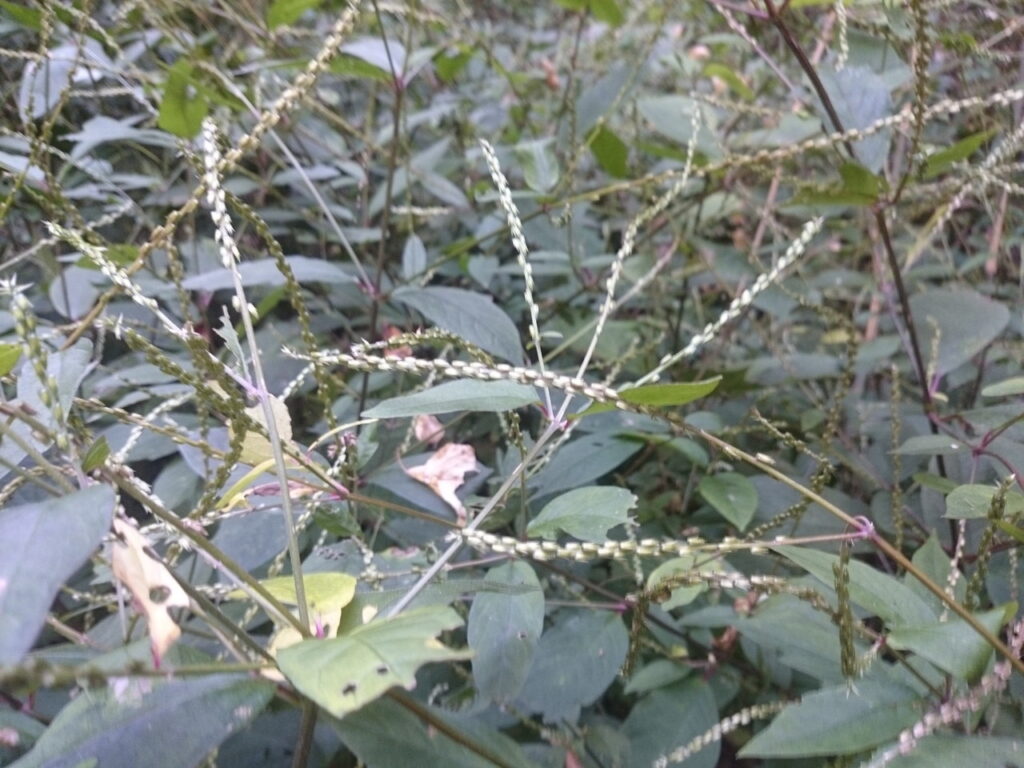
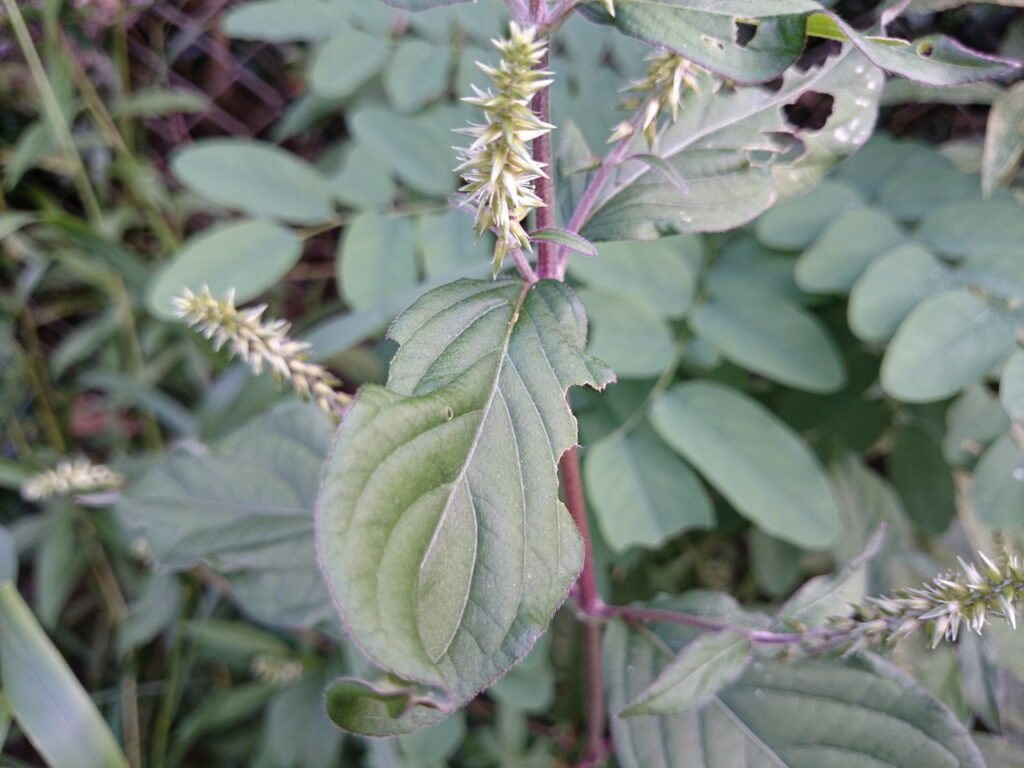
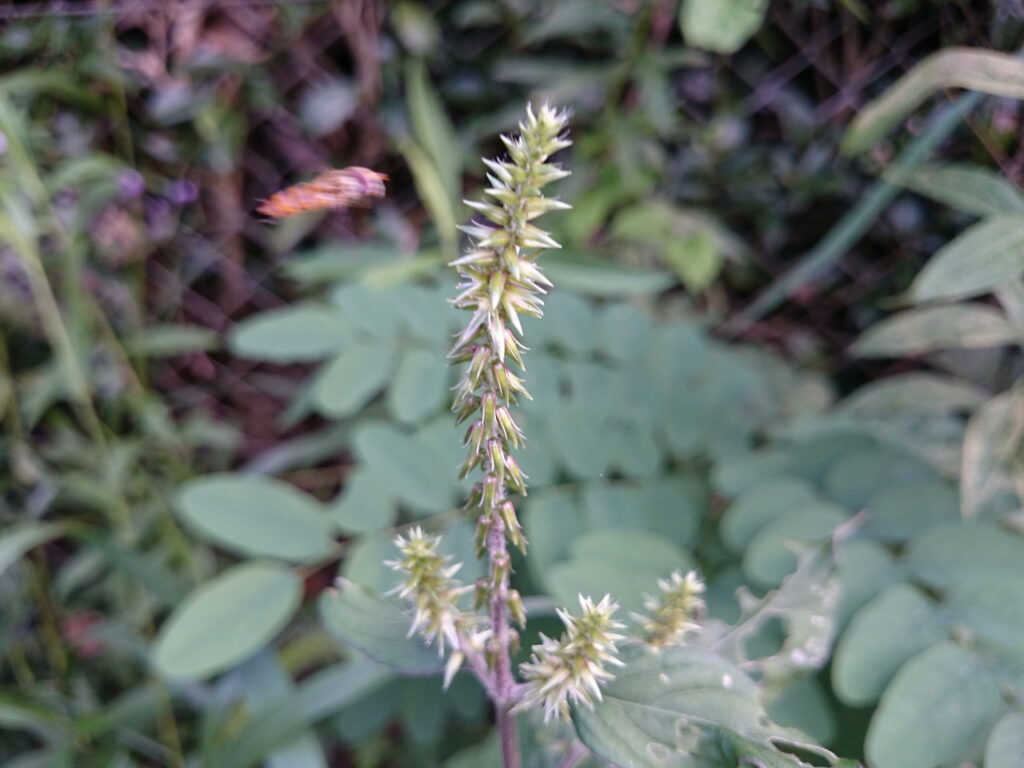
All of these plants belong to the genus Achyranthes in the Amaranthaceae family and are fairly common perennial herbs in Japan. Their opposite leaves and spike-like inflorescences are key distinguishing features that differentiate them from other members of the Amaranthaceae family.
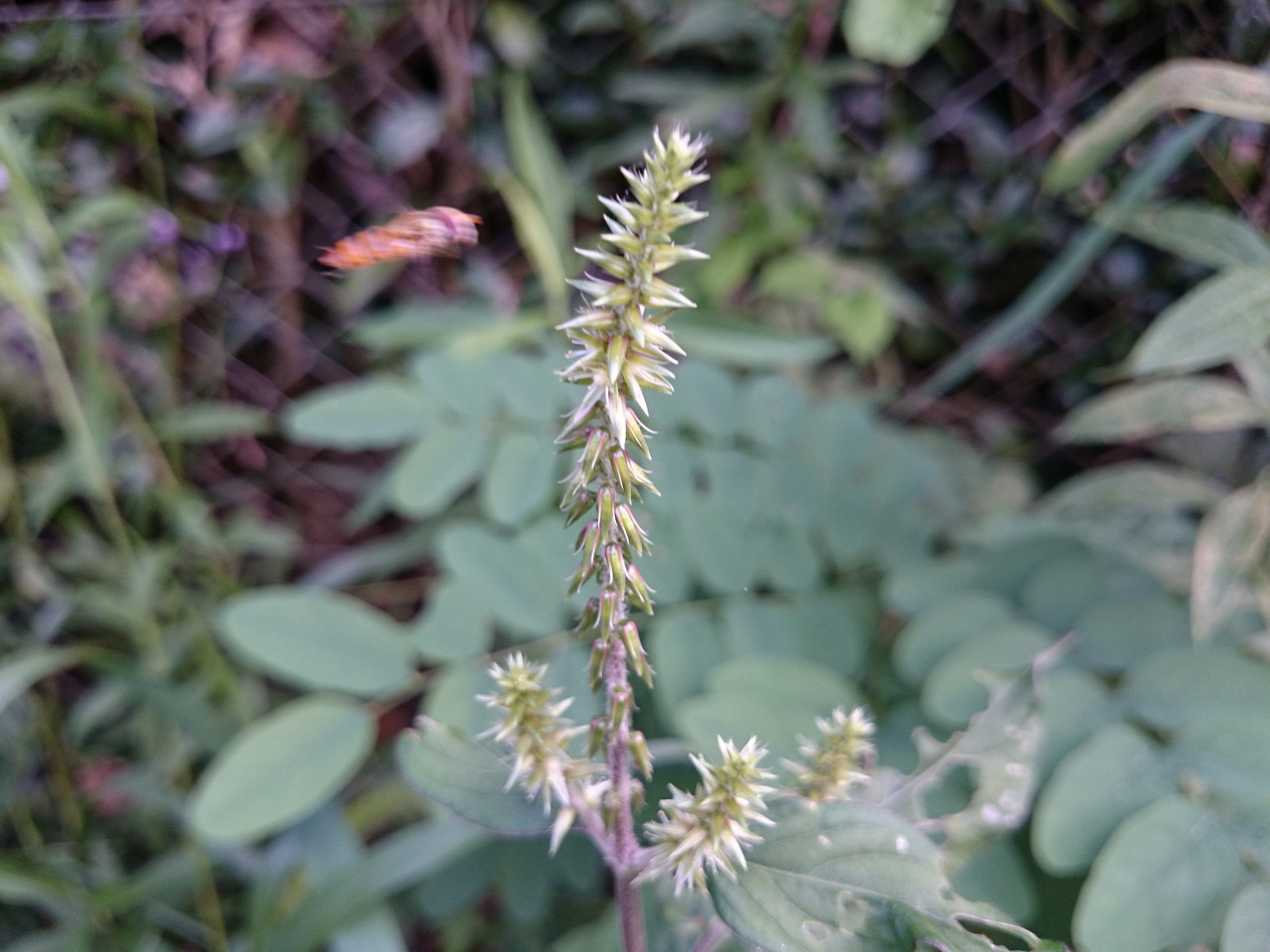
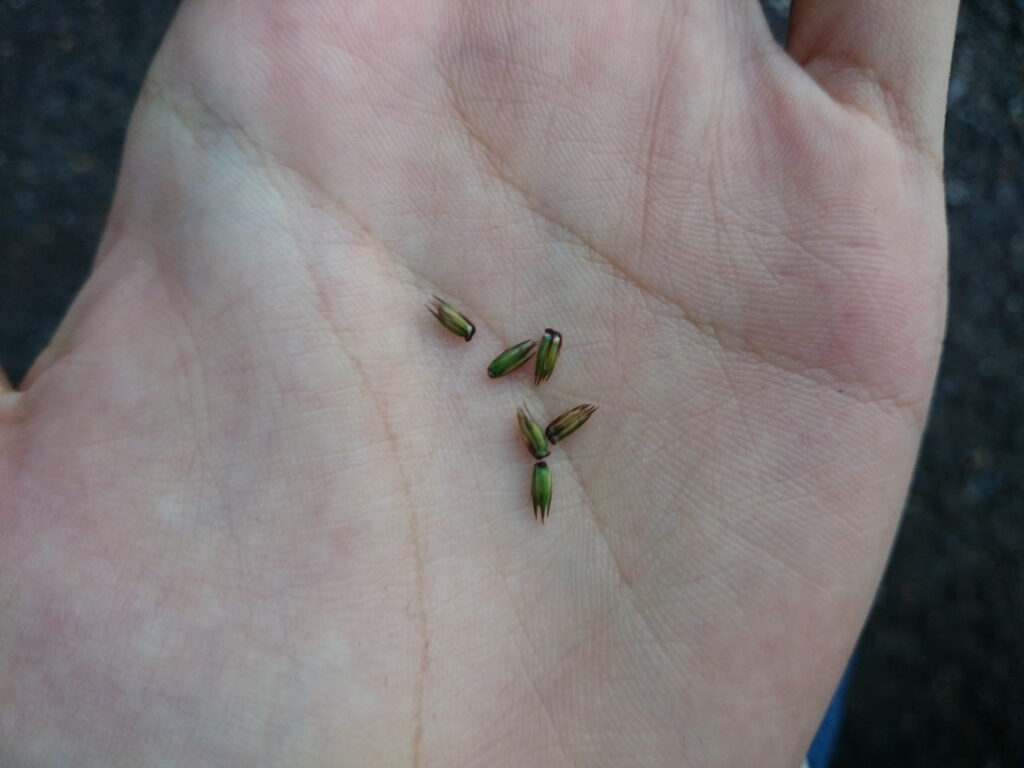
Perhaps the most distinctive feature of this plant in relation to humans is that its fruit is a "burr" that sticks to things. Many people walking along the edge of a forest may have had the unpleasant experience of their clothes getting caught on the fruit.
These characteristics are common to both *Achyranthes japonica* and *Achyranthes bidentata*, so some people may have trouble distinguishing between them.
What is the difference between Inokozuchi and Hinatainokozuchi?
First and foremost, it's important to understand that "Inokozuchi" is the same as "Hikageinokozuchi."
Various differences in morphology and ecology have been observed between *Achyranthes japonica* and *Achyranthes bidentata*.
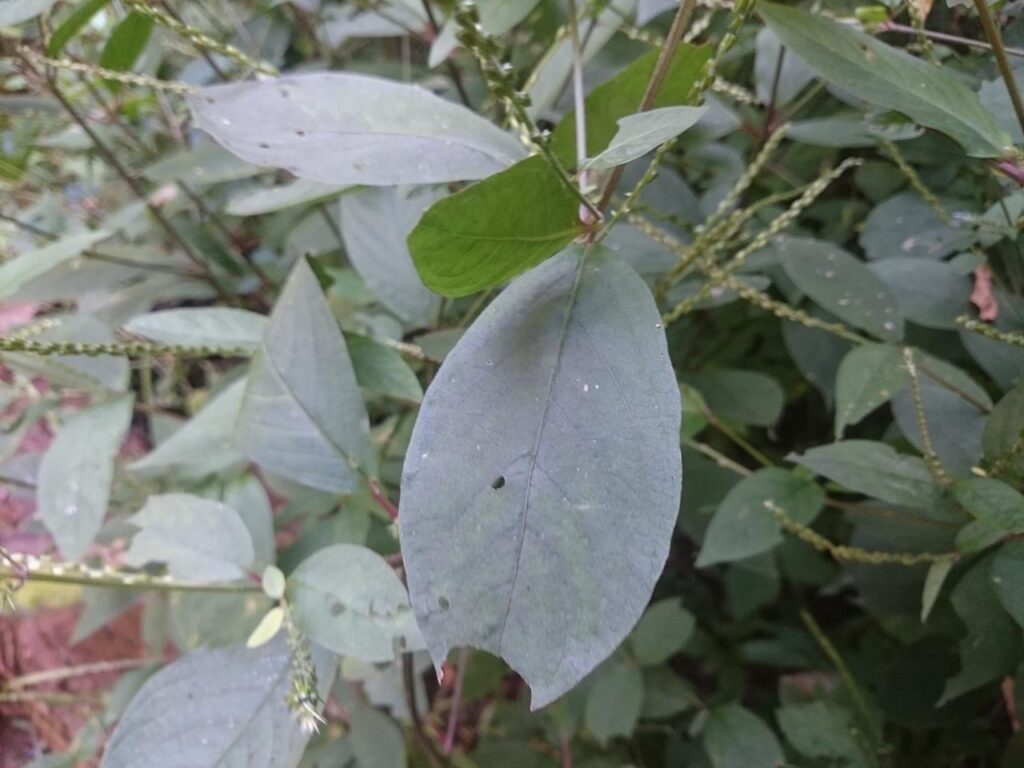
I think the easiest way to tell is by the shape of the leaves.
In *Achyranthes japonica*, the leaves are thin and the edges are not wavy, whereas in *Achyranthes japonica*, the leaves are thick and the edges are wavy.
I think this is obvious at a glance.
Another difference is that in Achyranthes japonica, the appendages of the bracteoles are large, measuring 0.6 to 1 mm, while in Achyranthes bracteoles, they are small, measuring 0.3 to 0.5 mm.
The expression "appendage of the bracteole" is very difficult to understand, but in other words, it refers to the thin, rounded, white, plate-like structure at the base of the pointed part of the fruit that is attached to the surface.
If you look at the opposite side of the pointed part of the fruit that catches on clothing, you'll notice that it's covered with a slightly larger white plate.
That said, while checking this part is important for studying plants, for the average person, simply looking at the shape of the leaves should suffice.
In terms of ecology, as their names suggest, Achyranthes japonica (also known as Achyranthes japonica var. spp.) tends to prefer shady areas, while Achyranthes japonica var. spp. prefers sunny areas.
In addition, there is a species called Achyranthes longifolia, but its leaves are lanceolate with long, pointed tips (unlike Achyranthes japonica and Achyranthes hinataensis, which have elliptical or oblong leaves with obtuse or short, pointed tips).
Achyranthes aspera is distributed in the Ryukyu Islands south of Oshima Island and rarely naturalizes temporarily in warm regions of Honshu and Kyushu. Its leaves are obovate or obovate-elliptic, with a rounded or obtuse apex, and the appendages at the base of the bracteoles are semicircular and attached along the needle-like midrib (unlike other species).
References
Kanagawa Prefecture Flora Survey Association. 2018. Kanagawa Prefecture Flora 2018 (Electronic Edition). Kanagawa Prefecture Flora Survey Association, Odawara. 1803pp. ISBN: 9784991053726