Both *Melo serrulata* and *Melo okinawaensis* belong to the Cucurbitaceae family and are climbing annual plants. Morphologically, they share similarities, such as small flowers and smooth, hairless fruit surfaces. Furthermore , Google search suggestions are sometimes incorrect, making it difficult to distinguish them from each other without seeing them. They can be distinguished from *Trichosanthes cucumeroides*, another member of the Cucurbitaceae family native to Japan, by observing their flowers, fruits, and leaves. *Melo serrulata* and *Melo okinawaensis* belong to different genera and have different distributions. Morphological differences are most notably in the pattern and color of the fruit, but differences are also clearly evident in the tendrils, leaves, and flowers. The flowers are white, star-shaped, and hairy, and their shape suggests they attract insects, although no specific insects have been investigated. The fruits of both species are spherical, with *Melo serrulata* being white and *Melo okinawaensis* being red. The color change suggests that they are eaten by animals, especially birds, for seed dispersal, but again, no specific bird species have been investigated. Only the Japanese cucumber (Melon mollis) is edible. This article will explain the classification, morphology, pollination ecology, and seed dispersal of Japanese cucumber (Melon mollis) and Okinawa cucumber (Melon okinawaense).
- What are the Japanese sparrow gourd and Okinawa sparrow gourd?
- What are the differences between *Cucurbita japonica* and *Tricholoma cucumeroides* species?
- What are the differences between the Japanese sparrow gourd and the Okinawa sparrow gourd?
- What is the structure of a flower?
- How is pollination done?
- What is the structure of the fruit?
- What are the seed dispersal methods? Is it toxic?
- References
What are the Japanese sparrow gourd and Okinawa sparrow gourd?
Zehneria japonica, also known as sparrow gourd, is a climbing annual plant distributed in Honshu, Shikoku, and Kyushu in Japan, as well as in Korea (Jeju Island), growing in fields and near water (Hayashi et al., 2013; Kanagawa Prefecture Flora Survey Association, 2018). Its Japanese name is said to originate from the fact that its fruit is smaller than that of the Japanese snake gourd, or from the resemblance of the fruit to a sparrow's egg.
Diplocyclos palmatus, also known as Okinawa gourd, is a climbing annual plant distributed in the Ryukyu Islands south of Kuchinoshima in the Tokara Islands of Japan; Taiwan, southern China, India, Malaysia, Australia, and tropical Africa. It grows outdoors in lowlands and is common in limestone areas (Hatsushima, 1975). Although it is not commonly found on the Japanese mainland, it is favored in Hokkaido, Honshu, Shikoku, and Kyushu as a source of shade, and its red, striped fruit is popular. In recent years, it has been sold under the name Ryukyu toy gourd and is sometimes cultivated as a garden plant in private homes (Kanagawa Prefecture Flora Survey Association, 2018).
Both are annual climbing plants belonging to the Cucurbitaceae family, and they also share similarities in morphology, such as small flowers, three stamens, and smooth, hairless fruit surfaces. Therefore, it may be difficult to distinguish them by name alone. In particular, there is a possibility of confusion on the internet due to incorrect suggestions in Google search (as of June 1, 2023).
While Okinawa gourd (Okinawa suzumeuri) is typically found growing wild in the Ryukyu Islands, it is also cultivated in Hokkaido and Kyushu, so it's possible to find both on the mainland.
What are the differences between *Cucurbita japonica* and *Tricholoma cucumeroides* species?
Other wild plants in the Cucurbitaceae family include members of the Trichosanthes genus, such as Trichosanthes cucumeroides and Trichosanthes japonica. What are the differences between these and the Trichosanthes cucumeroides?
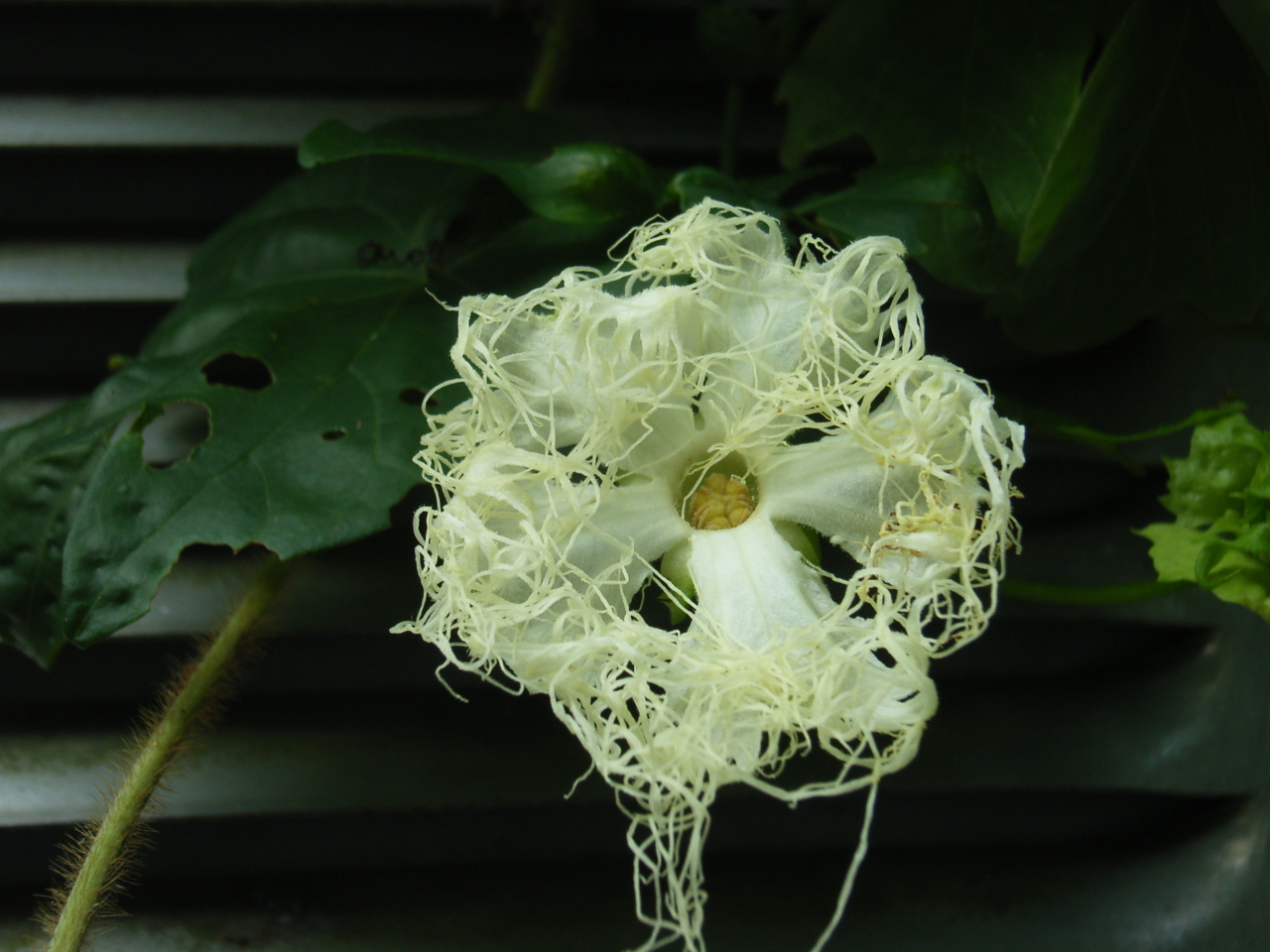
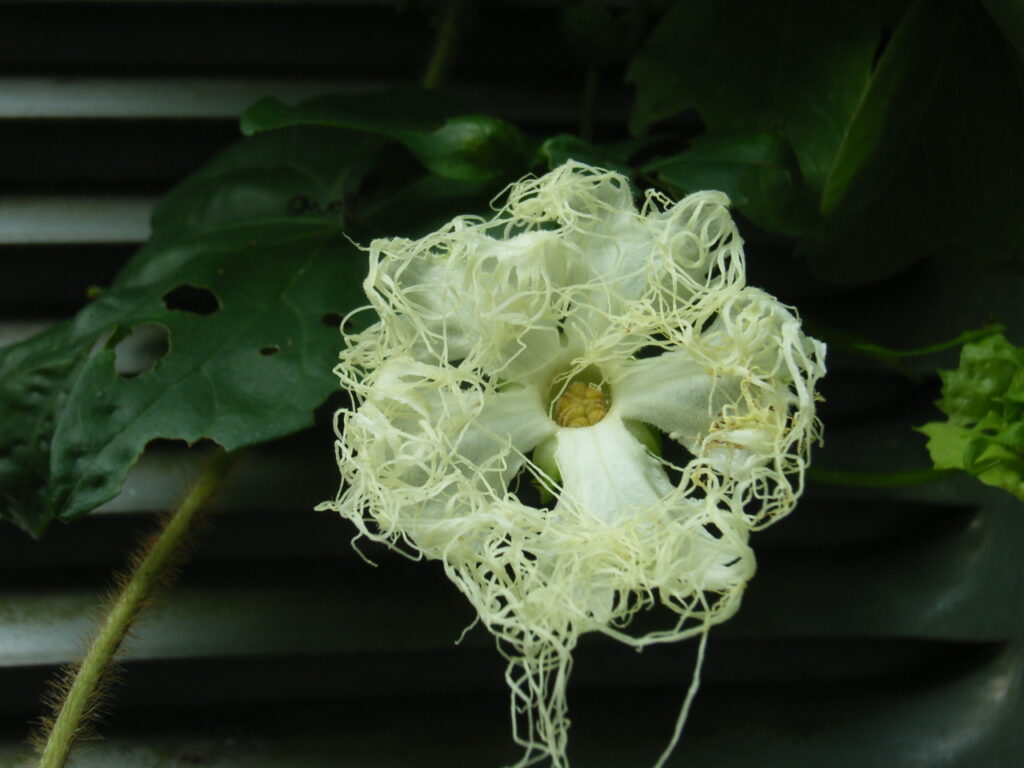
A major common difference is that in *Tricholoma erythrorhizon* and *Tricholoma okinawae*, the flowers and fruits are small and unadorned, and the tendrils are single or bifurcated, while in the *Tricholoma* genus, the flowers are large, the edges of the corolla are finely divided into threads, the fruits are somewhat larger, and the tendrils are 1 to 5-branched.
The thread-like structure on the edge of the corolla of the Trichosanthes genus is a special feature that attracts a type of moth called the hawk moth, as will be explained later, and it is found only in the Trichosanthes genus.
Furthermore, the fact that the Japanese name for sparrow gourd is said to come from the fact that its fruit is smaller than that of the snake gourd clearly shows the relative size of the fruits of the sparrow gourd and the snake gourd.
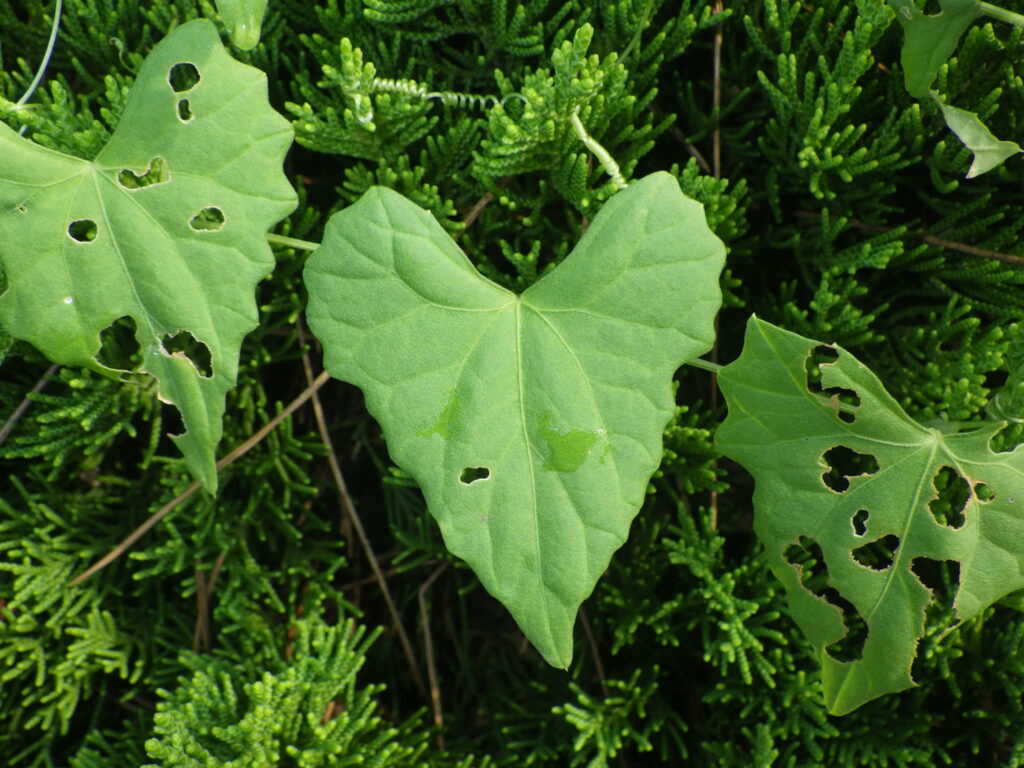
In addition, regarding leaf shape, in the genus Trichosanthes, the leaves are shallowly to deeply lobed into 3 to 5 sections and have serrated edges, but in Trichosanthes cucumeroides, the leaves are not lobed, and in Trichosanthes okinawaensis, the leaves are not serrated.
For those who want to learn about the differences between species in the Trichosanthes genus, please see our other article.
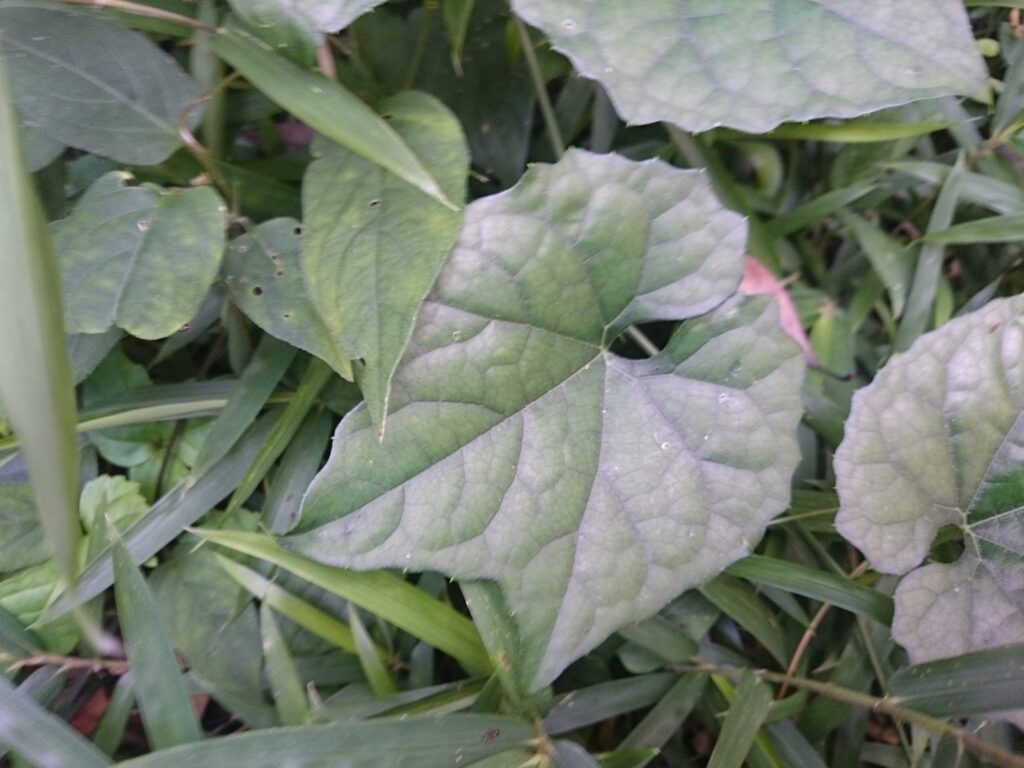
What are the differences between the Japanese sparrow gourd and the Okinawa sparrow gourd?
The main difference between *Zehneria cucumeroides* and *Diplocyclos okinawaensis* lies in the fact that *Zehneria cucumeroides* belongs to the genus *Zehneria*, while * Diplocyclos okinawaensis* belongs to the genus *Diplocyclos *. Therefore, there are various morphological differences (Kanagawa Prefecture Flora Survey Association, 2018).
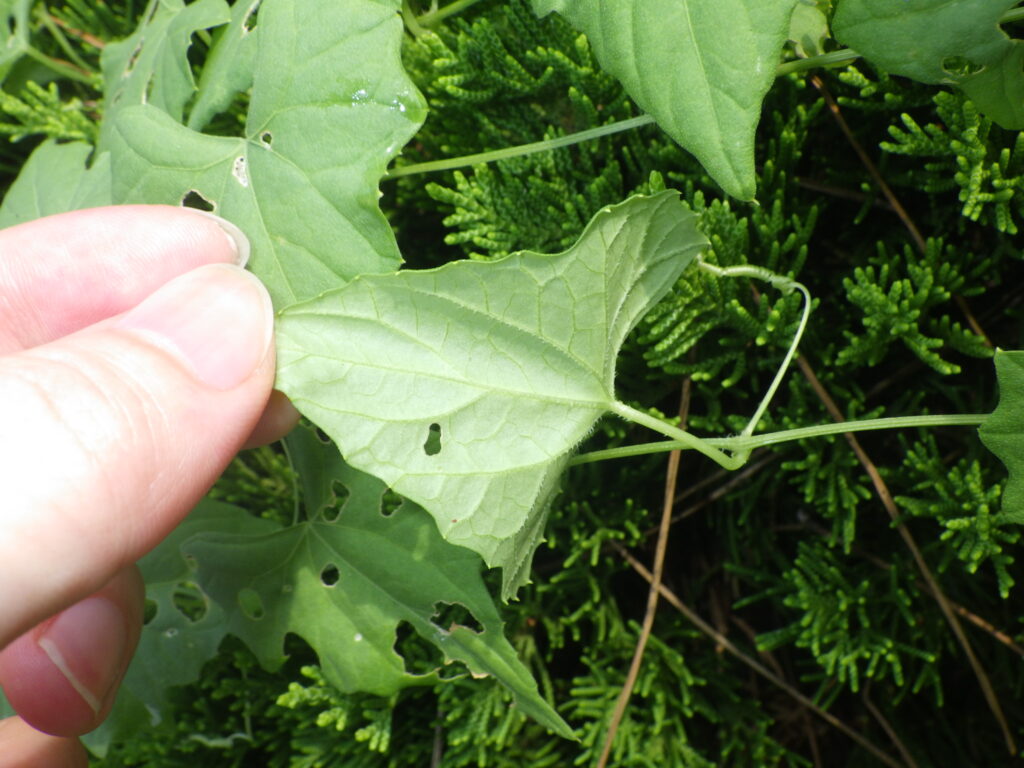
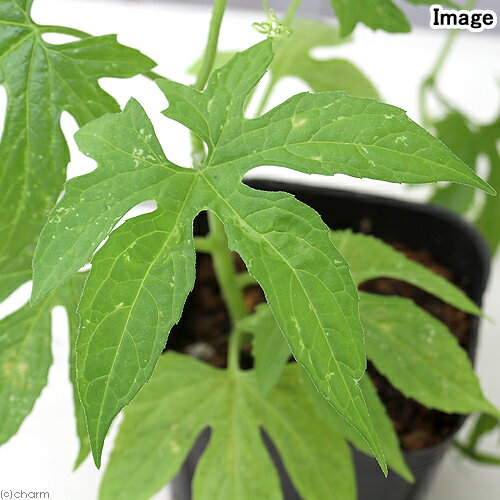
Specifically, in *Melophyllum rupestris*, the tendrils are single or rarely bifurcated, and the leaves are triangular-ovate-cordate with distinct serrations, whereas in *Melophyllum okinawaense*, the tendrils are bifurcated, the leaves are 5-7 lobed, and the margins are entire or have low, inconspicuous serrations. The lobes of the leaves of *Melophyllum okinawaense* vary from shallow to deep.
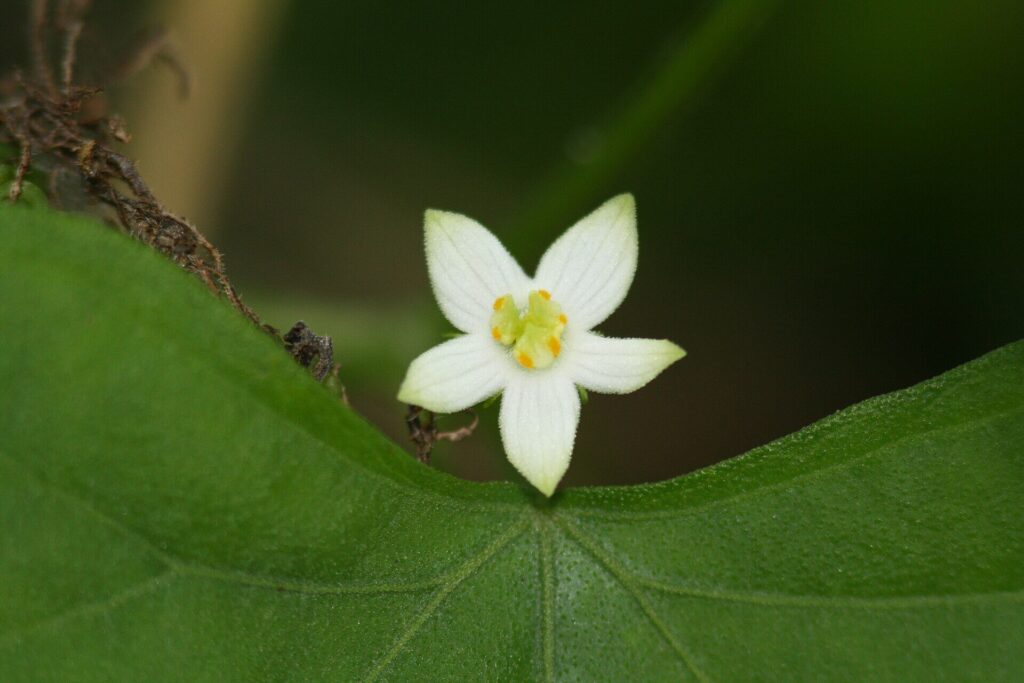
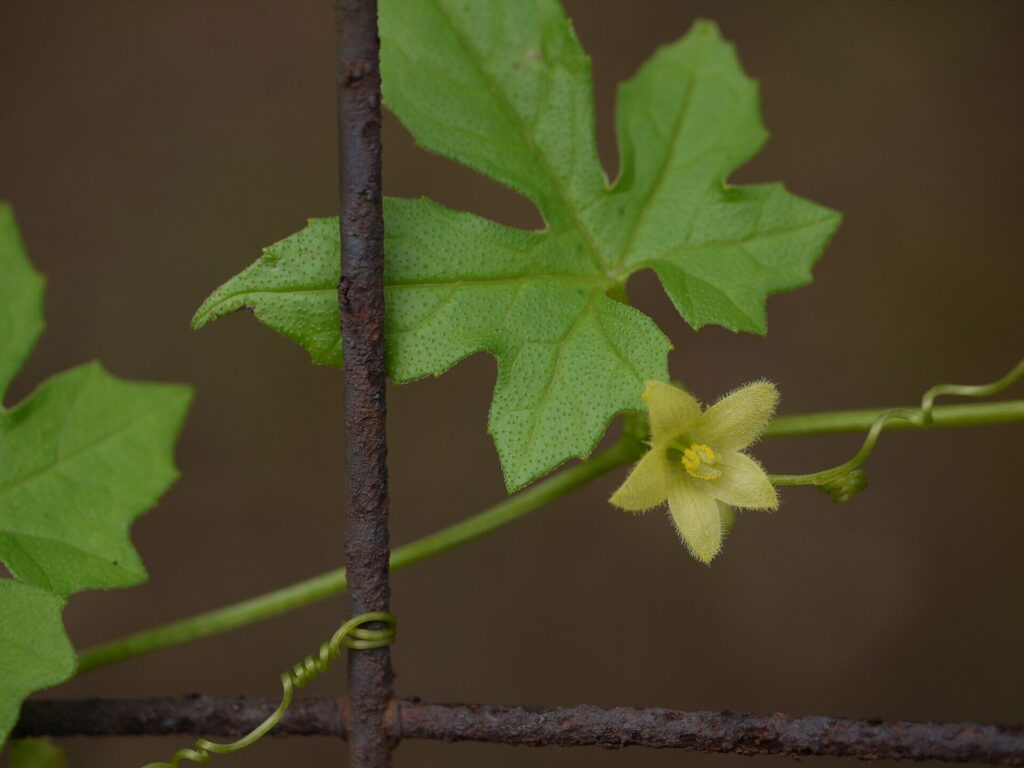
Regarding the flowers, both *Melophyllum spp.* and *Melophyllum okinawaense* have hairy corollas, but *Melophyllum okinawaense* has longer hairs.
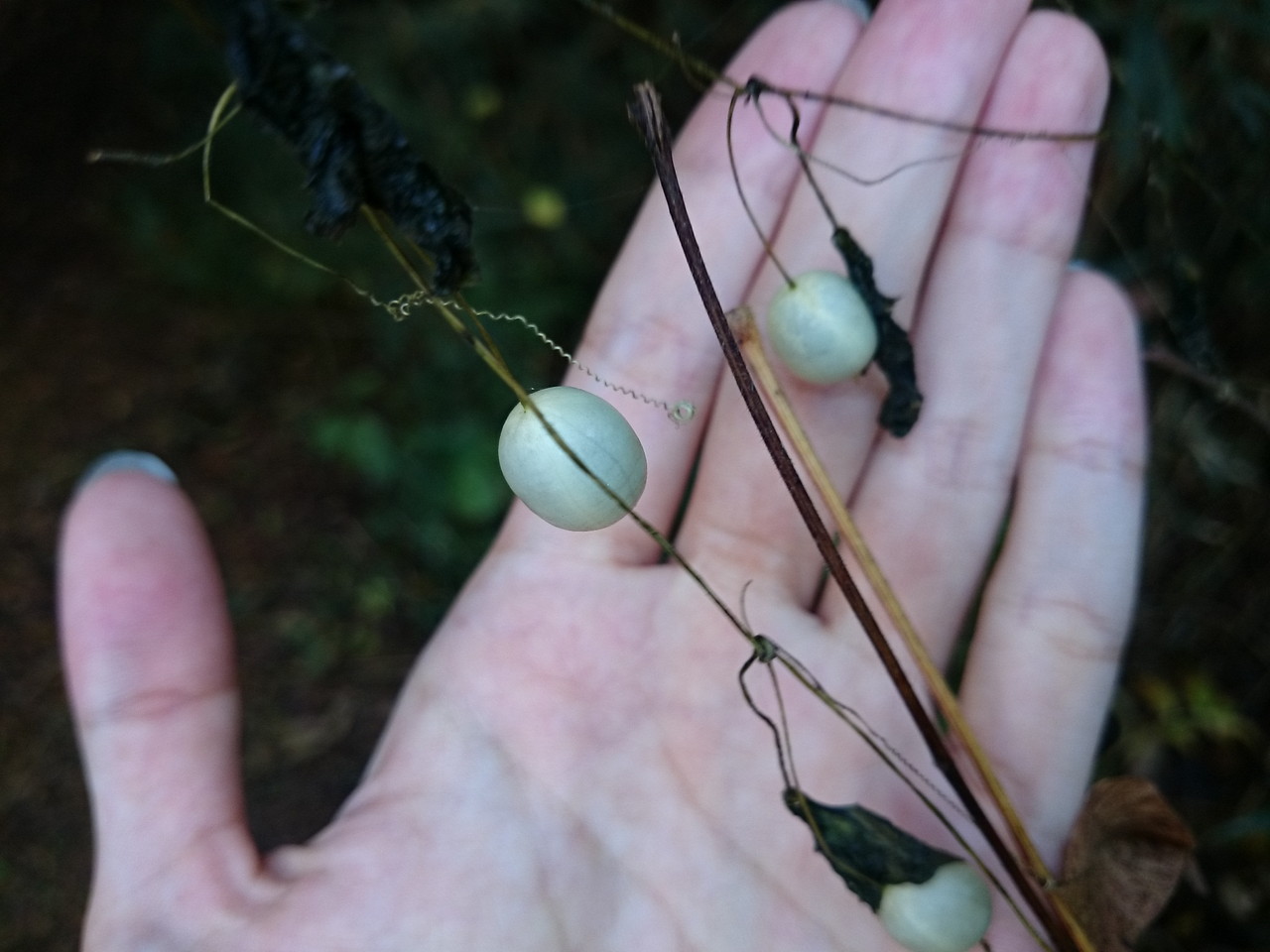
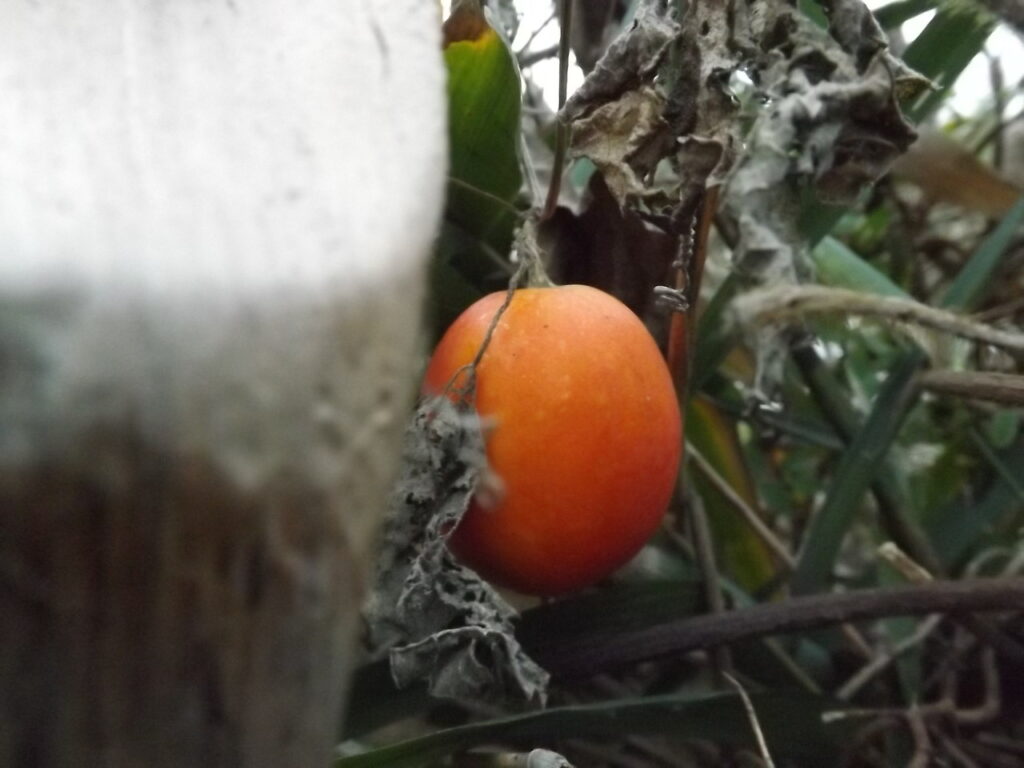
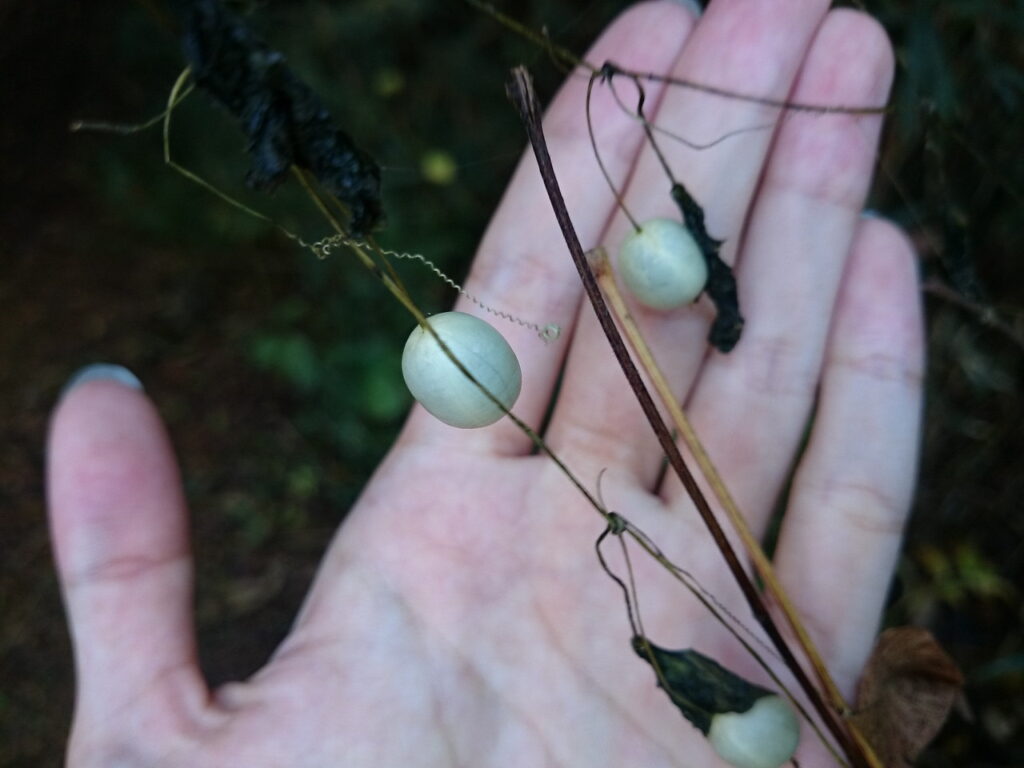
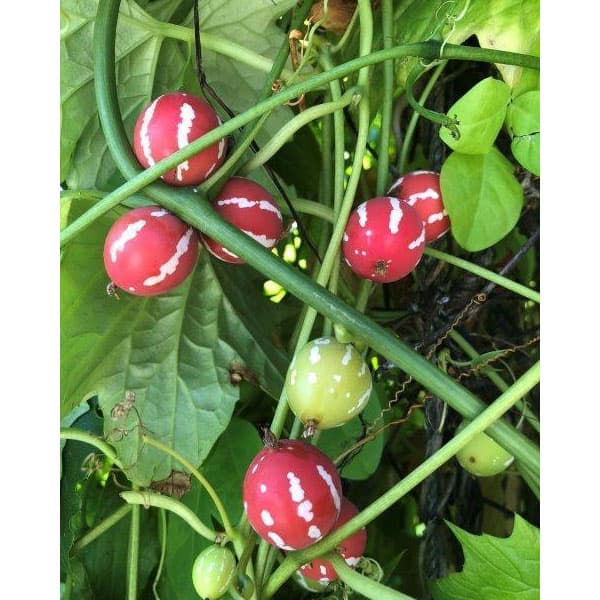
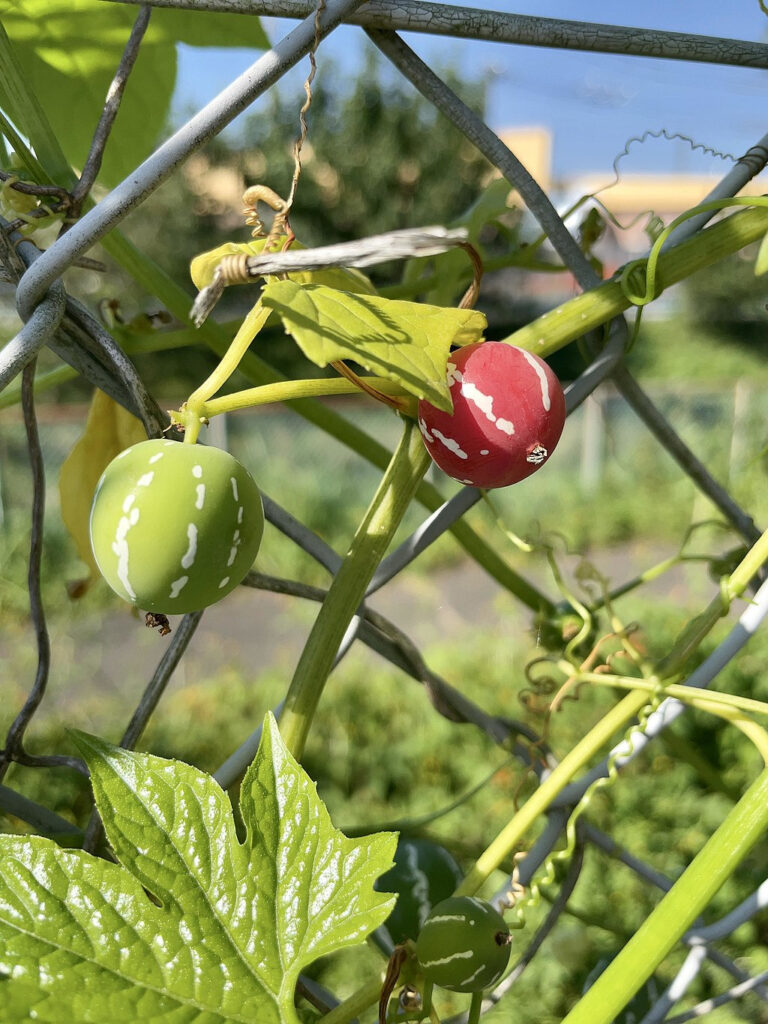
Regarding the fruit, the Japanese sparrow gourd has no markings and turns grayish-white when ripe, while the Okinawa sparrow gourd has white vertical stripes and turns red when ripe.
This should allow you to distinguish them definitively. Note that Zehneria liukiuensis, which has black fruit, is a completely different species and, although a bit confusing, is included in the genus Zehneria.

What is the structure of a flower?
Like many other members of the Cucurbitaceae family, the Japanese gourd (Melon mollis) and the Okinawa gourd (Melon okinawaense) are monoecious. Monoecious plants are those that produce unisexual flowers (flowers with either stamens or pistils) but have both male and female flowers on the same plant.
The Japanese gourd (Cucurbita sulphureus) blooms from August to September. Both male and female flowers grow solitarily in the leaf axils, although male flowers sometimes grow in racemes at the tips of branches. The flowers are about 6-7 mm in diameter, deeply divided into five lobes, white and star-shaped, with the corolla densely covered with transparent, minute hairs. The ovary at the base of the female flower is conspicuous.
Okinawa gourd flowers bloom from July to August. Male and female flowers grow in clusters from the same leaf axil. Both male and female flowers are small and white, about 1 cm in diameter, with five-lobed calyx and corolla, the lobes broadly bell-shaped, and the edges smooth. The filaments of the male flowers are short. The female flowers have three staminodes, and the stigma has three lobes, each divided into two.
How is pollination done?
While *Melophyllum uliginosum* and *Melophyllum okinawaense* clearly have structures that make them conspicuous to insects and are thought to be insect-pollinated, there are no records of specific pollinating insects at the genus level (Dwivedi et al., 2018). In fact, there is a lack of research on the pollination methods of wild cucurbits in general (de Wilde & Duyfjes, 2010). It is well known that *Trichosanthes cucumeroides* blooms at night and attracts hawk moths for pollination with filamentous structures on the edges of its corolla (Tanaka, 2001), but *Melophyllum uliginosum* and *Melophyllum okinawaense* do not have such structures and are likely not the same in terms of ecology. When you see the flowers of *Melophyllum uliginosum* and *Melophyllum okinawaense* in the future, observe them carefully and you may make new discoveries.
What is the structure of the fruit?
Like many other members of the Cucurbitaceae family, the Japanese gourd (Pepomorpha japonica) and Okinawa gourd (Pepomorpha japonica var. japonica) are berries, and berries in the Cucurbitaceae family are specifically called "pepo." They consist of three carpels, with the exocarp fused to the receptacle and hardened, while the mesocarp and endocarp are fleshy and contain a broad, spongy placenta with numerous seeds (Shimizu, 2001). It's easiest to imagine them as similar to watermelons or cucumbers. However, the edible portion is not as well-developed as in those plants.
The fruit of the Japanese gourd is spherical or oval-shaped, 1-2 cm in diameter, and turns grayish-white when ripe.
The fruit of the Okinawa gourd is spherical, about 2 cm in diameter, with white vertical lines, and turns red when ripe.
What are the seed dispersal methods? Is it toxic?
The fruits of *Melophyllum uliginosum* and *Melophyllum okinawaense* are also clearly conspicuous and have a succulent texture, so it is certain that they are dispersed by animal means. Among the animals, birds are thought to be the primary dispersal method (Dwivedi et al., 2018).
In fact, recent studies have confirmed the presence of gourd seeds in bird droppings (Takatsuki, 2023).
Although the specific bird species is unknown, the fruits of the Japanese honeysuckle, along with those of the snake gourd, are particularly large, and their shortest diameter is close to the width of a brown-eared bulbul's beak (15.4 mm), leading to the speculation that brown-eared bulbuls may peck at them.
The fruit of the Okinawa gourd may look delicious at first glance, but it is known to be poisonous, at least to humans (Hotta, 2002). Its Chinese name is "poisonous gourd," and it is said that both the fruit and the roots contain toxic components. However, no reliable research on the specific components could be found. The Chinese Wikipedia states that the cause is cucurbitacin, a bitter component widely found in the gourd family, and that consuming large amounts can cause abdominal pain, vomiting, and diarrhea. If this is true, it would support the fact that the seeds are dispersed only by birds. On the other hand, there is a report from a hunting and gathering enthusiast's blog that they have actually eaten it, and commented that the unripe fruit tastes bad, but the ripe fruit is "a little sweet!? The bitterness is mild" (Tomo, 2024). We do not recommend actually eating it here, but it is an interesting comment.
It should be noted that the toxicity of the fruit of the Japanese gourd is not generally known, and there are books that describe using the unripe fruit in salads (Kisamori, 2010). As for the ripe fruit, there is a report of someone actually eating it on a wild food researcher's blog, and they commented that "it's not strong, but it has a refreshing sweetness somewhere between a persimmon and a watermelon" (Takemoto, 2015).
Considering all of this, it might not be entirely true that mammals don't eat the Japanese gourd (Eriocheir japonica). Furthermore, there is currently no data on which specific birds eat it. This, too, is an area where research is lacking. It would be interesting to understand the evolutionary differences between the fruits of the Japanese gourd and the Okinawa gourd.
References
de Wilde, WJJO, & Duyfjes, B. 2010. Cucurbitaceae. Flora Malesiana-Series 1, Spermatophyta 19(1): 1-333. ISSN: 0374-7778, https://repository.naturalis.nl/pub/579350
Dwivedi, MD, Barfield, S., Pandey, AK, & Schaefer, H. 2018. Phylogeny of Zehneria (Cucurbitaceae) with special focus on Asia. Taxon 67(1): 55-65. https://doi.org/10.12705/671.4
Hatsushima, Sumihiko. 1975. Flora of the Ryukyu Islands. Okinawa Biological Education Research Association, Naha. 1002pp.
Hayashi, Yasaka, Kadota, Yuichi, and Hirano, Takahisa. 2013. Yamakei Handy Illustrated Guide 1: Wildflowers (Revised and Expanded New Edition). Yama-kei Publishers, Tokyo. 664pp. ISBN: 9784635070195
Hotta, Mitsuru. 2002. Encyclopedia of Useful Plants of the World. Heibonsha, Tokyo. 1499pp. ISBN: 9784582910599
Kanagawa Prefecture Flora Survey Association. 2018. Kanagawa Prefecture Flora 2018 (Electronic Edition). Kanagawa Prefecture Flora Survey Association, Odawara. 1803pp. ISBN: 9784991053726
Kisamori, Chisako. 2010. How to Make the Most of Wild Plants, Vegetables, and Fruits: Kisamori-style Frugal and Eco-Friendly Living. Hoken, Tokyo. 127pp. ISBN: 9784879547927
Shimizu, Takemi. 2001. Illustrated Dictionary of Botanical Terms. Yasaka Shobo, Tokyo. xii, 323pp. ISBN: 9784896944792
Takatsuki, Seiki. 2023. Fruiting patterns of isolated urban trees and seed dispersal by birds: An attempt at seed recovery using pavement. Conservation Ecology Research 28(1): 165-176. https://doi.org/10.18960/hozen.2130
Akira Takemoto. October 9, 2015. I tried eating the fruits of the Japanese snake gourd and the sparrow gourd. Wild Food Hammer Price. https://www.outdoorfoodgathering.jp/outdoorfood/karasusuzumeuri/
Tanaka, Hajime. 2001. Flowers and Insects: A Collection of Discoveries of Mysterious Deception. Kodansha, Tokyo. 262pp. ISBN: 9784062691437
Tomo. May 19, 2024. I tried tasting the Okinawa gourd despite its poison. It was no good. A life of foraging and eating in Tokyo. https://totte-taberu.com/kiroku/yasou/okinawasuzumeuri