Tricyrtis macropoda, Tricyrtis hirsuta, Tricyrtis japonica, and Tricyrtis taiwanensis are popular species of toad lilies that grow in Japanese forests and are also widely cultivated for ornamental purposes. However, because there are few differences in their leaves and their flowers are similar, misidentification is common even when using Google Image Search. The main difference lies in the inflorescence, which can be broadly divided into two groups. After that, they can be distinguished by carefully observing the degree of opening of the perianth segments and the hairs on the stem. These toad lilies also have several interesting ecological features. Their flowers are protandrous, meaning that the sexes are separated over time to prevent self-pollination. The flowers, which have evolved to resemble fountains, seem to be adapted to attract a specific insect, and various studies have shown that this is the bumblebee. The shape and size of the flowers are adjusted so that pollination can only occur by the bumblebee. This characteristic is found to be common to many species. However, Tricyrtis macropoda has a slightly different appearance, with its flowers slanting downwards. The spots are concentrated on the part that curves diagonally downwards, making it conspicuous, and pollination by bumblebees is possible, but the reason why this is the case is not well understood at present. The fruit is a capsule and is dispersed by wind. This article will explain the classification, pollination ecology, and seed dispersal of major species in the genus *Tricyrtis*.
- It is a species endemic to Japan and inhabits mountainous areas.
- What are the differences between the common toad lily (Tricyrtis macropoda), the Japanese var. japonica), and the Taiwanese toad lily (Tricyrtis macropoda var. japonica)?
- What are the shapes of the flowers in the *Tricyrtis* genus?
- Do species of the *Tricyrtis* genus differentiate sexes based on time of day?
- The flowers were almost exclusively for bumblebees!?
- Were the flowers adjusted so that they would fit only bees of a certain size?
- Why do the same insects visit different flower shapes?
- The fruit is a capsule and is dispersed by wind.
- References
- Source
It is a species endemic to Japan and inhabits mountainous areas.
Toad lily (Tricyrtis hirta) is a species endemic to Japan, distributed in southwestern Hokkaido, west of the Kanto region in Honshu, south of Fukui Prefecture, Shikoku, and Kyushu. It is a perennial herb that grows in semi-shaded areas in mountainous regions (Ohashi et al., 2017). In Japan, it is also cultivated for ornamental purposes.
Tricyrtis macropoda, also known as mountain toad lily, is a perennial herb distributed in Hokkaido (southwestern part), Honshu, Shikoku, Kyushu, Korea, and China, growing in forests, forest edges, and grasslands.
Tricyrtis affinis, also known as mountain toad lily, is a perennial herb that grows in mountainous and wild areas, distributed from southwestern Hokkaido to Kyushu.
Taiwanese toad lily (Tricyrtis formosana) is a perennial plant distributed in Iriomote Island (Okinawa Prefecture) and Taiwan, growing in forests, thickets, shady areas, and roadsides. In Japan, it is also cultivated for ornamental purposes.
All of these species belong to the genus Tricyrtis in the family Liliaceae. Wild specimens can be found in forests, and they are also popular as ornamental plants. They are very difficult to distinguish because they all have ovate-oblong to narrowly oblong leaves that are covered in hairs. The flowers are white or pink with reddish-purple spots, and the stems are hairy. Although there are differences in flower shape and color when examined closely, many have been cultivated and improved as ornamental varieties, and misidentification is common even on top-ranking websites on the internet. Misidentification is also frequent in Google Image Search. Unfortunately, this does not mean that we are treating living things correctly.
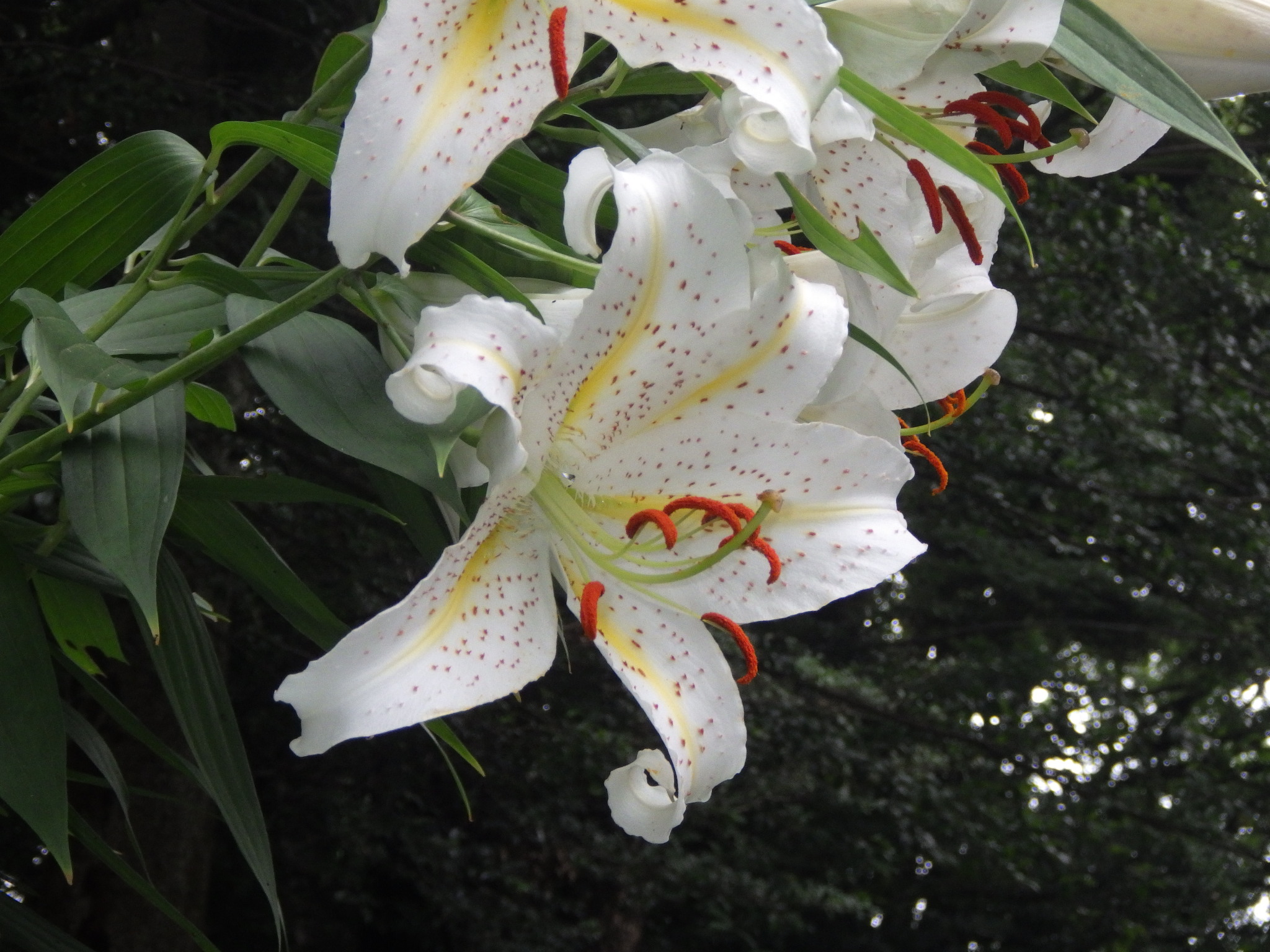
What are the differences between the common toad lily (Tricyrtis macropoda), the Japanese var. japonica), and the Taiwanese toad lily (Tricyrtis macropoda var. japonica)?
Here, I will thoroughly describe the methods of distinction and correct any misunderstandings.
First, by looking at the inflorescence, they can be broadly divided into two groups.
While *Tricyrtis macropoda* and *Tricyrtis hirsuta* have only one to two (or up to three) flowers each in the leaf axils or stem tips, *Tricyrtis macropoda* and *Tricyrtis formosanus* have three or more flowers, forming a corymb inflorescence. *Tricyrtis macropoda*, in particular, often has only one flower (solo).
The difference between *Tricyrtis macropoda* and *Tricyrtis hirsuta* is that in *Tricyrtis macropoda*, the stem is covered with many spreading to upward-pointing hairs, and the perianth segments always open diagonally upwards (oblique-opening), while in *Tricyrtis hirsuta*, the stem has downward-pointing hairs, and the perianth segments open diagonally upwards and parallel (oblique-opening to flat-opening).
The difference between Tricyrtis macropoda and Tricyrtis taiwanensis is that in Tricyrtis macropoda, the perianth segments are about 1.5 cm long, white with reddish-purple spots, and open from parallel to diagonally downward (flat to inverted), and the stem has sparse, short, stiff, downward-pointing hairs like thorns. In contrast, in Tricyrtis taiwanensis, the perianth segments are about 3 cm long, pink with reddish-purple spots, and open diagonally upward (oblique), and the stem has sparse, spreading hairs.
The above points should help distinguish between them, but the inflorescence is poorly developed, which might cause confusion between Tricyrtis macropoda and Tricyrtis japonica. Therefore, I will also describe the differences between these two species.
Aside from the inflorescence, the differences between *Tricyrtis macropoda* and *Tricyrtis hirsuta* are that in *Tricyrtis macropoda*, the perianth segments are parallel when the flower is just beginning to bloom, and open diagonally downwards as it matures, and there are no purple spots on the inner surface near the base of the perianth segments. In contrast, in *Tricyrtis hirsuta*, the perianth segments are basically parallel and do not open diagonally downwards to an extreme degree, and there are purple spots on the inner surface near the base of the perianth segments. In addition, in *Tricyrtis macropoda* and *Tricyrtis formosanus*, the inner surface near the base of the perianth segments is yellowish-orange.
I haven't been able to find any differences between *Tricyrtis hirsuta* and *Tricyrtis formosanus* other than the inflorescence. However, as a general trend in horticultural varieties, *Tricyrtis hirsuta* seems to have purple perianth segments with smaller spots, while *Tricyrtis formosanus* has reddish-purple perianth segments with larger spots. However, there are many differences between varieties, and the flower colors of wild *Tricyrtis formosanus* populations also vary, so I think distinguishing them by the inflorescence is the most accurate method.
While there are several other rare species of the *Tricyrtis* genus in Japan with different flower shapes and colors, these are quite different and will be omitted from this article.
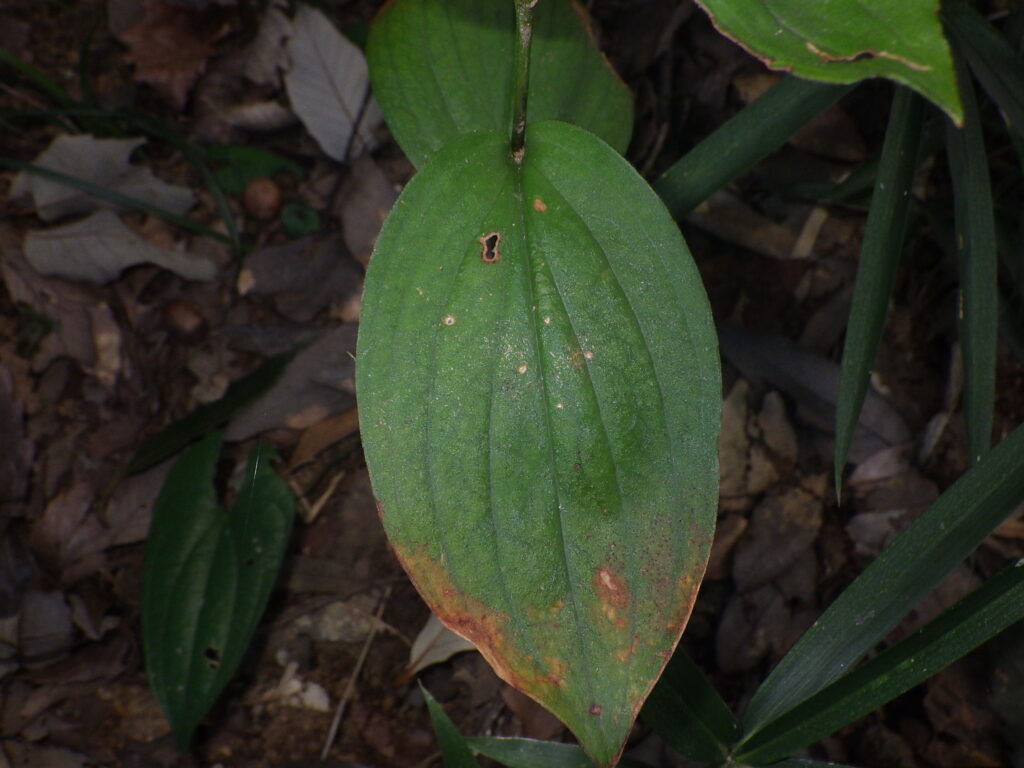
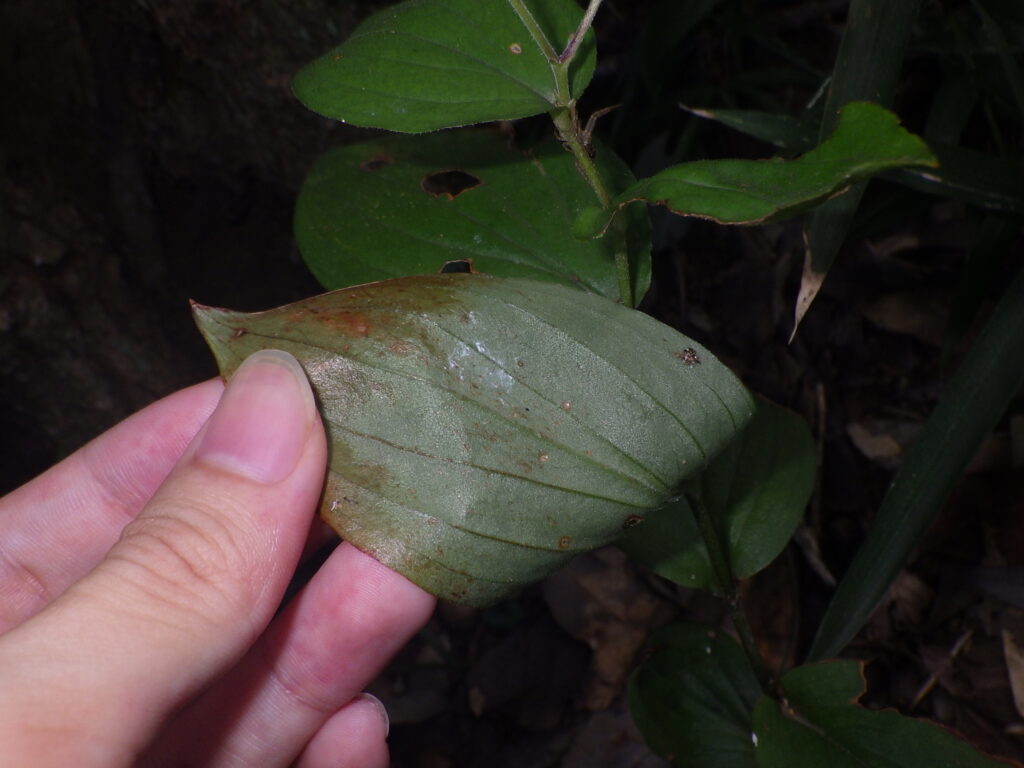
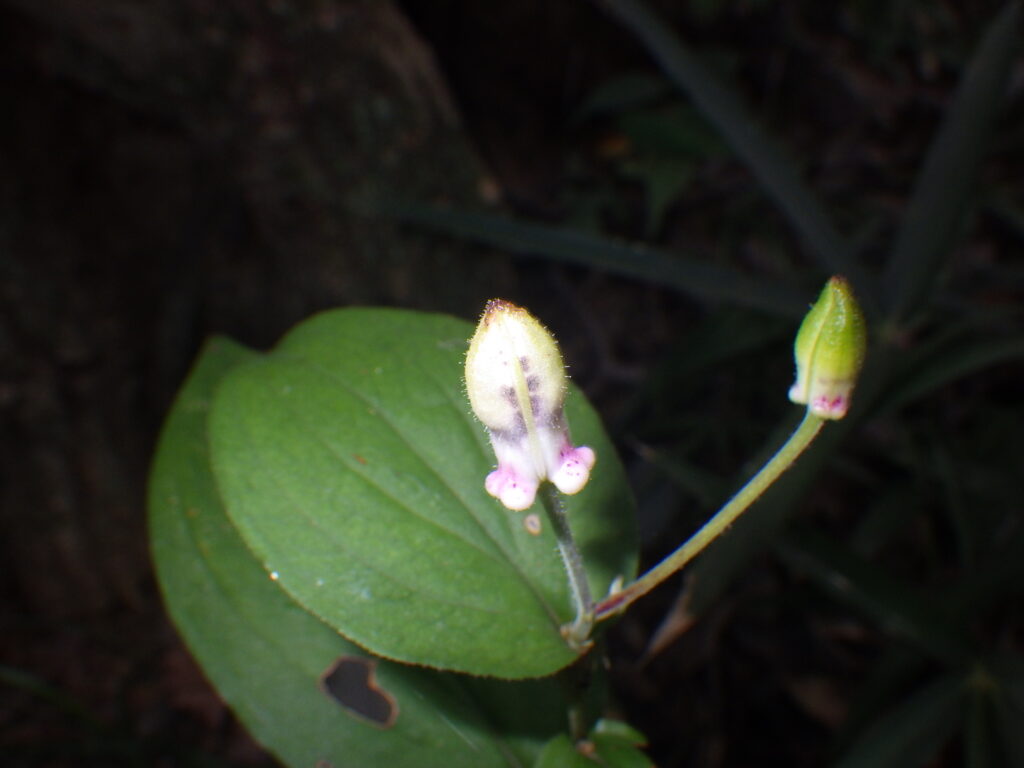
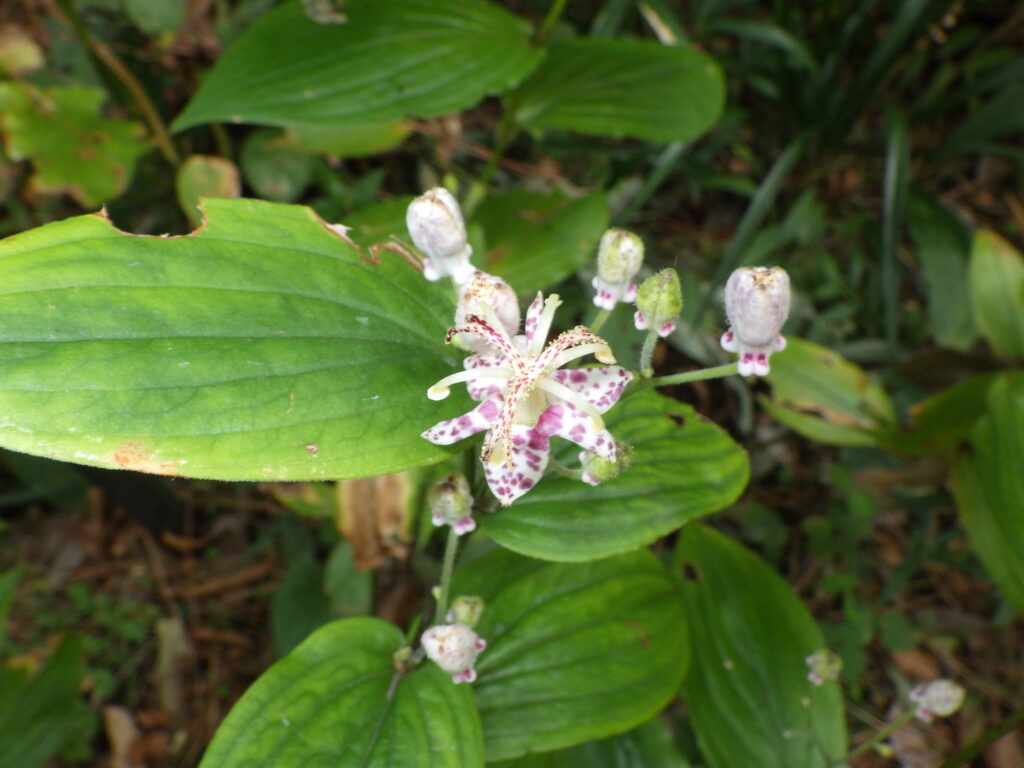
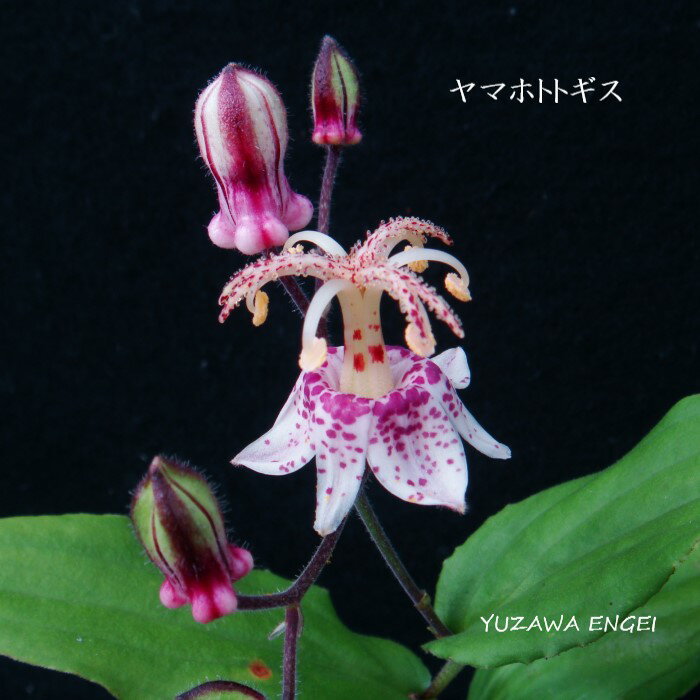
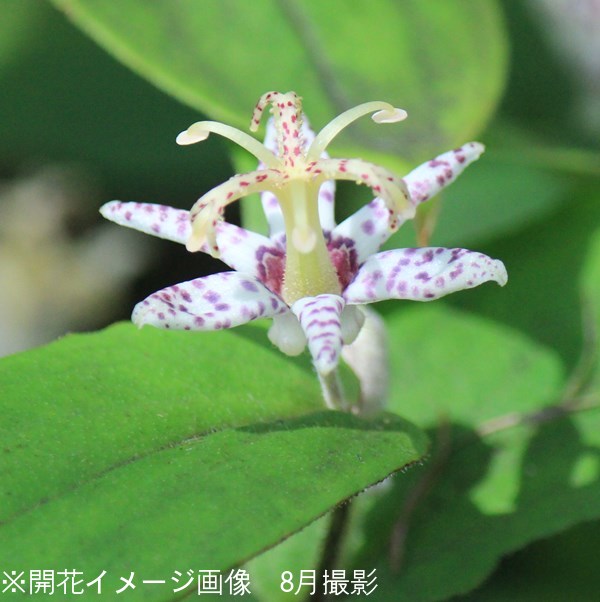
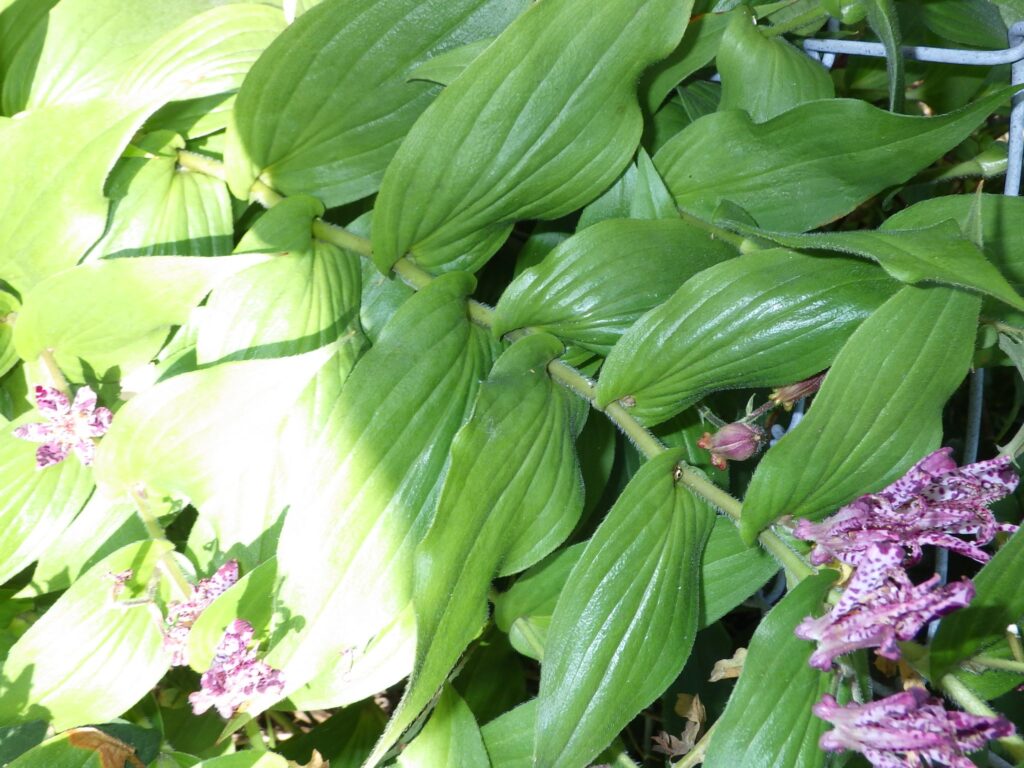
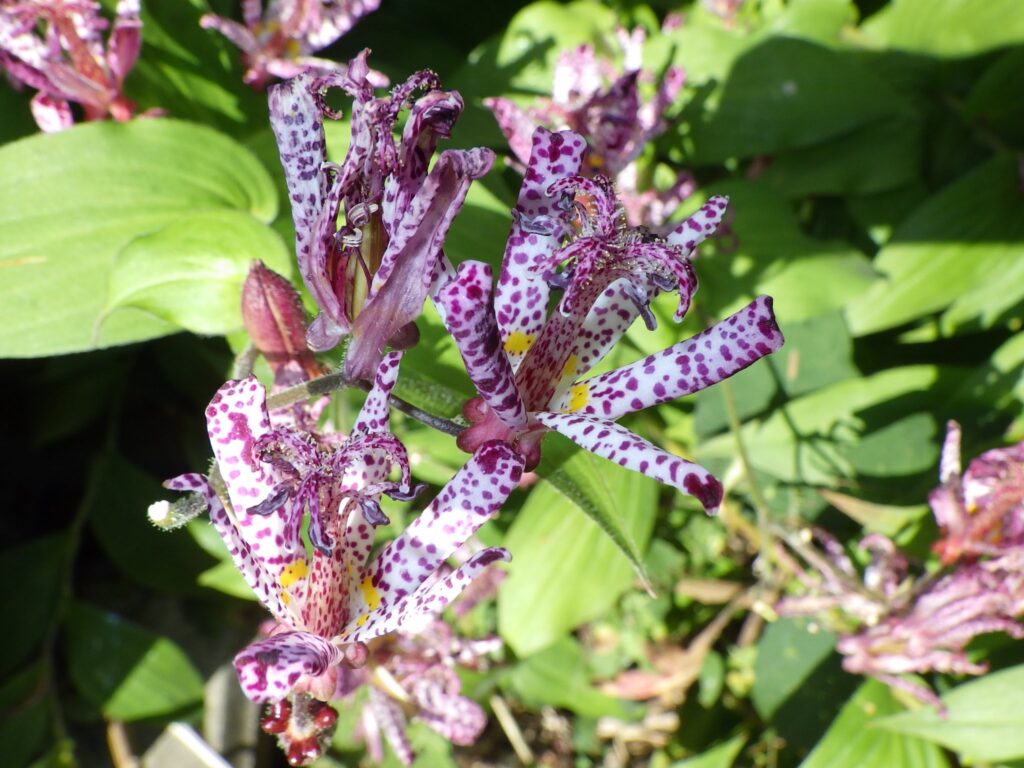
What are the shapes of the flowers in the *Tricyrtis* genus?
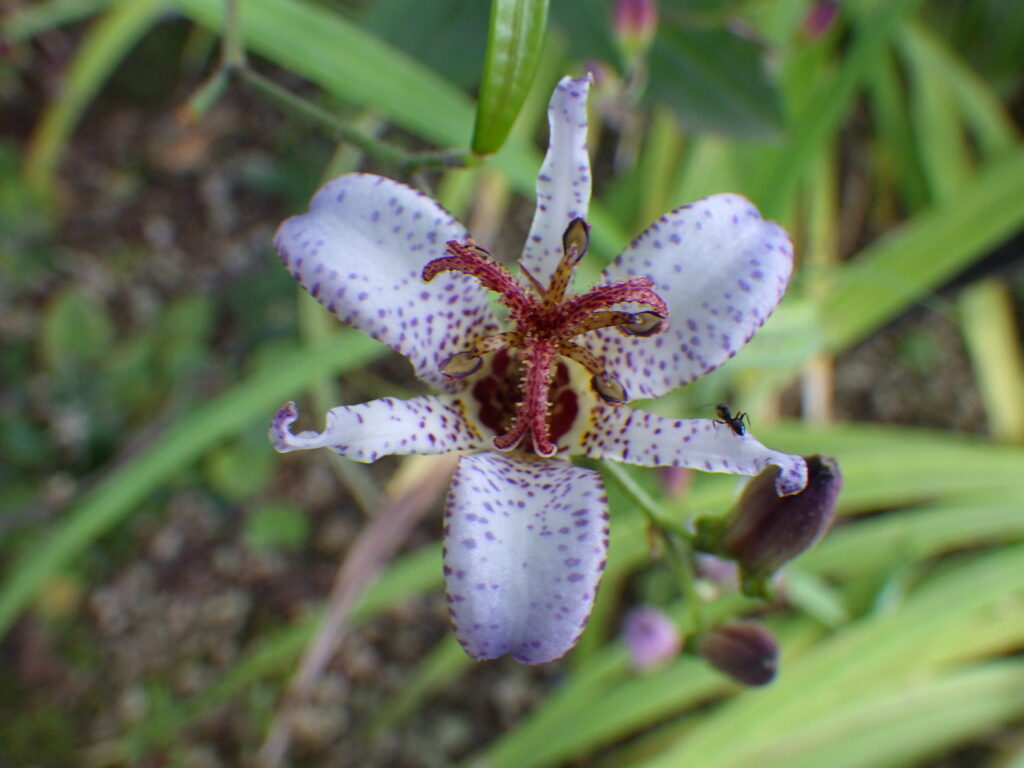
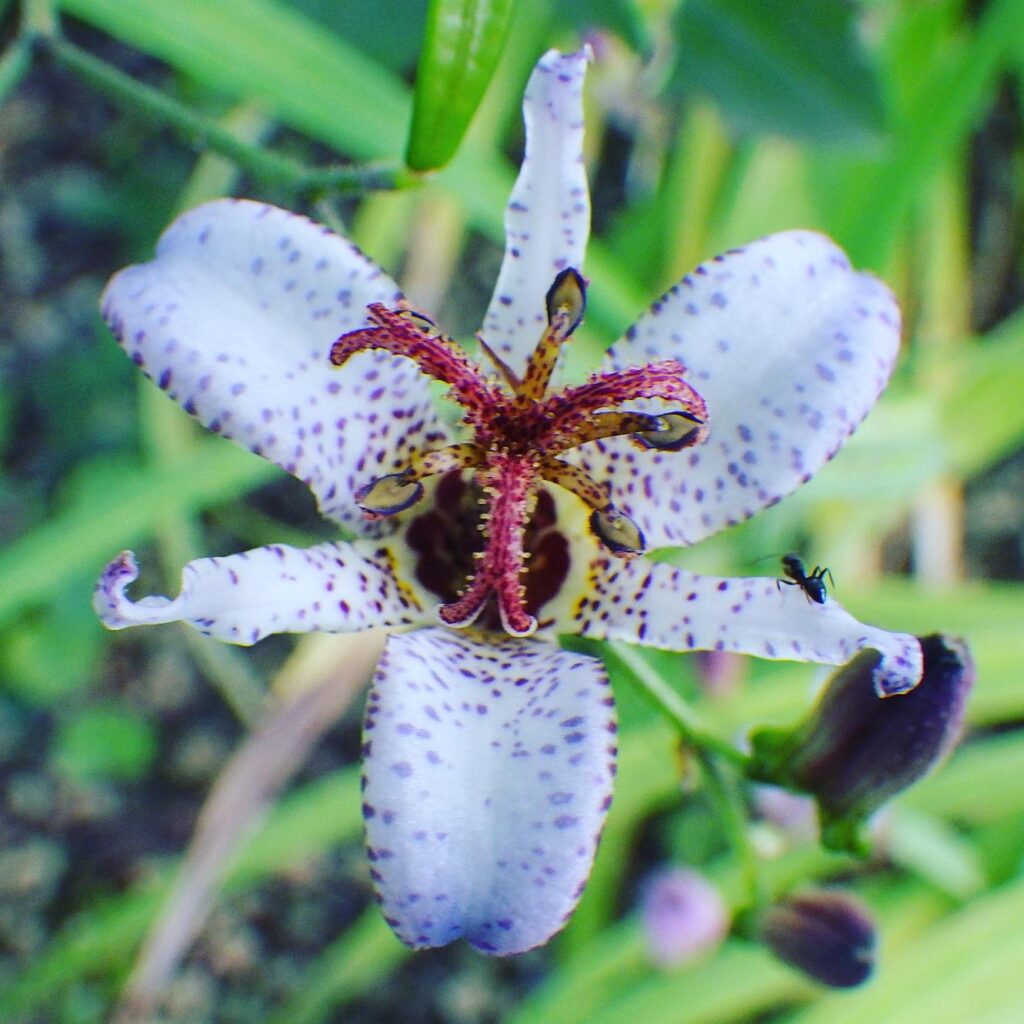
The basic structure of the *Tricyrtis* genus is common to all species. The perianth consists of six segments: three inner segments and three outer segments, which open radially and evenly, ranging from diagonally downwards to diagonally upwards.
The tips of the six stamens and the six-part pistil extend outwards from the center of the flower like a fountain, with their tips pointing downwards and curving backward (Tanaka, 2009).
The flowering period for the toad lily is from August to September. Two to three flowers bloom upwards in the leaf axils. The perianth segments spread obliquely, and the inside is white to pale reddish-purple with many purple spots, and there are yellow-orange spots at the base.
The flowering period for Tricyrtis macropoda is from July to September. It has many flowers, three or more in number, forming a corymbose inflorescence. The perianth segments are flat to retractable, and the inside is white with many pale reddish-purple spots. There are no spots at the base, but instead, pale reddish-purple spots are concentrated on the ridges that curve diagonally downwards.
The flowering period for Tricyrtis macropoda is from August to October. The flowers typically bloom in clusters of one or two in the leaf axils, facing upwards. The perianth segments are oblique to flat, with many dark purple spots on a white background on the inside, and purple spots at the base.
The Taiwanese toad lily (Tricyrtis formosana) blooms from September to October. It produces corymbose inflorescences with three or more flowers. The perianth segments spread obliquely, with a bluish-purple-white interior and darker edges, dark purple spots on the surface, and yellow-orange spots at the base. However, this description pertains to wild populations.
The Japanese name "Hototogisu" is said to originate from its resemblance to the coloring of the chest of the cuckoo bird.
The cuckoo bird has a white chest and belly with black horizontal stripes, and while the toad lily plant does sometimes appear to have stripes like the bird, it is basically composed of spots, so personally I find the name a little confusing... However, forcing an association with the plant might make it easier to remember.
Do species of the *Tricyrtis* genus differentiate sexes based on time of day?
While it is unclear for Tricyrtis macropoda, Tricyrtis japonica, Tricyrtis yamaensis, and Tricyrtis macropoda exhibit the characteristic of "protandry" (Tanaka, 1997).
This is because, after the stamens are initially established, the pistil grows beyond the stamens, so that in the first half it is dedicated to dispersing pollen to other individuals as a male, and in the second half it is dedicated to receiving pollen from other individuals as a female (Tanaka and Hirano, 2000).
This can be seen as separating genders based on time.
This method is thought to prevent self-pollination, which occurs when the same insect visits multiple of the same flower at the same time, and to ensure the stable production of seeds carrying the genes of other individuals.
Since artificial self-pollination is possible (Takahashi, 1989), self-pollination may be used as a last resort.
The flowers were almost exclusively for bumblebees!?
Wouldn't you agree that the highly three-dimensional flowers of the *Tricyrtis* genus would limit the number of insects that can effectively pollinate them?
In fact, several studies are being conducted in Japan to determine what kinds of insects visit these sites.
The results showed that the only recorded instances of the cuckoo flower being visited by a bumblebee with a long tongue, * Bombus diversus diversus* (Miyamoto, 1961; Kato et al., 1990).
In addition, in research on the Japanese toad lily (Takahashi, 1994), bees such as Eucera sp. (a species of the genus Eucera) and Lasioglossum sp. (a species of the genus Lasioglossum) also visited the flowers, but they rarely produced pollen. In fact, the majority of bees that produced pollen and contributed to pollination were bumblebees (Bombus ignitus) (Takahashi, 1994).
In research on *Tricyrtis macropoda*, insects from multiple taxonomic groups, including the families Apidae, Syrphidae, Syrphidae, and Papilionidae, visited the flowers, but the vast majority of those that actually contributed to pollination were *Bombus scoparius* (Takahashi, 1989). However, a small number of * Amegilla * sp. also contributed.
All of these species were pollinated primarily by bumblebees.
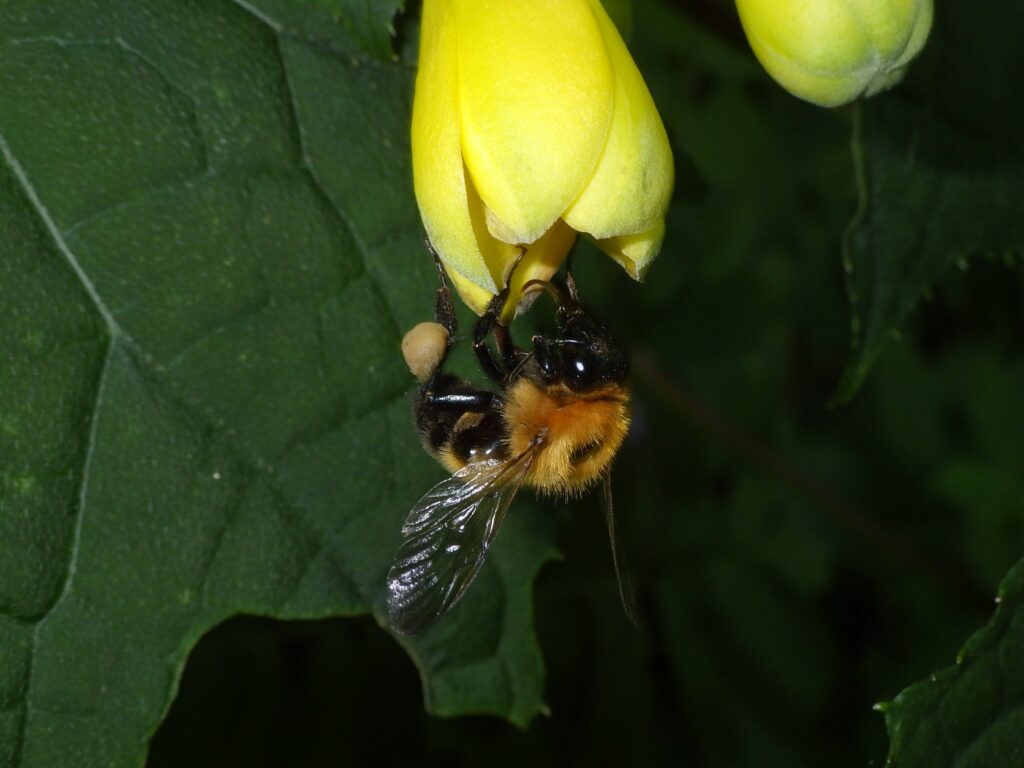
In fact, it is believed that many other species of the Tricyrtis genus, such as Tricyrtis latifolia, Tricyrtis nana, and Tricyrtis ohsumiensis, are also pollinated by bumblebees (Takahashi, 1978; Takahashi, 1987; 1989). Furthermore, Tricyrtis flava and Tricyrtis takakuma are also pollinated by bumblebees of the genus Caranax.
Were the flowers adjusted so that they would fit only bees of a certain size?
Nectar is secreted in a round urn beneath the perianth segments, and yellow or purple spots at the base of the perianth segments act as nectar guides. When bumblebees are attracted to these guides and climb onto the perianth segments, extending their mouthparts downwards to drink the nectar, the six stamens or the six-part pistil touch their backs, and pollination occurs (Tanaka and Hirano, 2000).
Pollen sticks to your back because it's harder to reach with your legs, reducing the risk of it being brushed off.
In this way, insects whose backs touch the stamens and pistils need to be of a certain size; if they are too small, they won't be tall enough, and if they are too large, they won't be able to get in at all. It seems that the genus *Tricyrtis* is specialized in pollination by bumblebees (or other bees) of a certain size. In the *Tricyrtis* species introduced, the target was the tiger bumblebee.
Why do the same insects visit different flower shapes?
However, there are considerable differences in the perianth segments of the *Tricyrtis* genus.
In particular, the perianth segments of the Japanese toad lily (Tricyrtis macropoda) open diagonally downwards, and the base of the perianth segments is colorless. This is an exceptional flower within the Tricyrtis genus. Is there any problem with this shape?
In the case of *Tricyrtis macropoda*, instead of having color at the base, pale reddish-purple spots are concentrated on the ridges (the parts that curve diagonally downwards). Therefore, bumblebees can spot the pale reddish-purple spots from a distance, and since the places where they can land are narrow, it is easy to find the nectar glands, so it is considered not to be a problem (Takahashi, 1994).
But there's a more fundamental question: Why did the Japanese toad lily need to change the shape of its flower if the same insects were visiting it?
Unfortunately, this has not yet been studied and is not well understood.
It's possible that there are other insects that visit besides those discovered in the research, and the degree to which the opening is adjusted based on subtle differences in their presence.
Also, if the insects that visit are the same, it's possible that they discover the flowers from different angles.
For example, in the case of Tricyrtis macropoda and Tricyrtis japonica, the flowers grow in locations where they can be found directly above by bumblebees, so the perianth segments bloom diagonally upwards or parallel to the ground. In contrast, Tricyrtis macropoda grows in locations where it can be found from the side, so the flowers bloom diagonally downwards.
However, this remains purely speculative and is an unresolved issue.
The fruit is a capsule and is dispersed by wind.
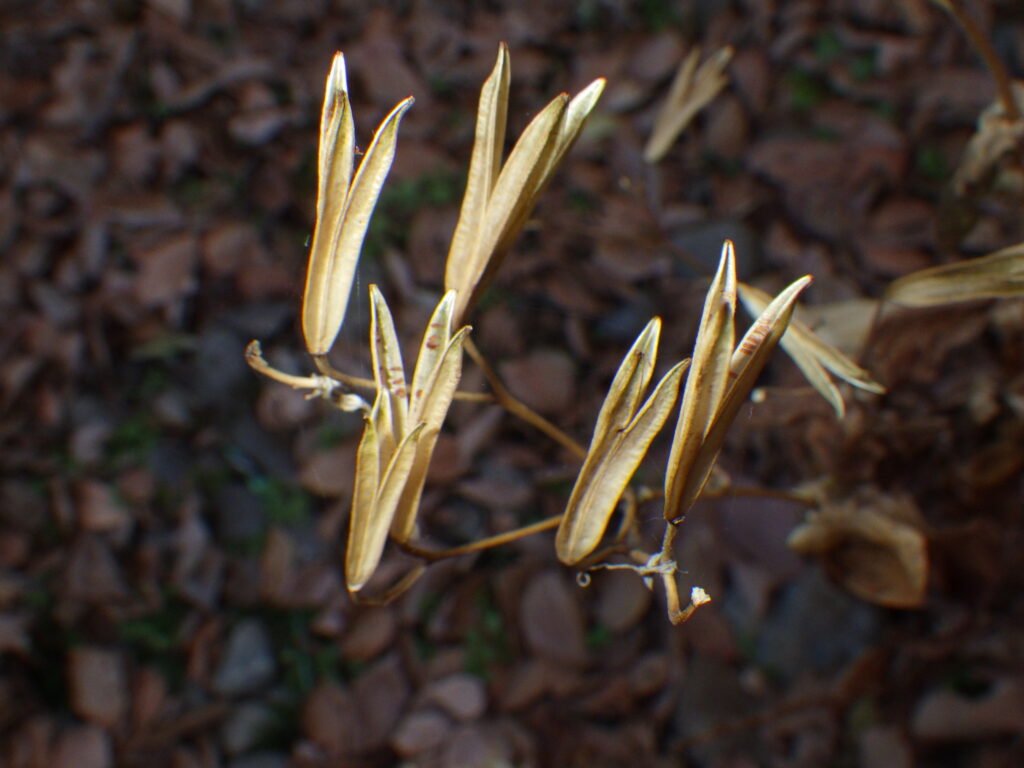
As is common with the genus *Tricyrtis*, the fruit is a capsule. It is elongated, triangular in shape with a pointed tip, and when ripe, the tip splits into three small sections. It contains numerous seeds, which are small, flattened, and ovate to circular in shape.
Seeds of the genus *Tricyrtis* are thought to be dispersed by wind (Suzuki, 2000).
References
Kato, M., Kakutani, T., Inoue, T., & Itino, T. 1990. Insect-flower relationship in the primary beech forest of Ashu, Kyoto: an overview of the flowering phenology and the seasonal pattern of insect visits. Contributions from the Biological Laboratory, Kyoto University 27(4): 309-376. ISSN: 0452-9987,
http://hdl.handle.net/10091/13206
Miyamoto, S. 1961. Flower-visiting behavior of bumblebees. Ecological studies of Japanese flower bees. XIX. Journal of the Japanese Society of Applied Entomology and Zoology 5(1): 28-39. ISSN: 0021-4914, https://doi.org/10.1303/jjaez.5.28
Ohashi, Hiroyoshi; Kadota, Yuichi; Murata, Hitoshi; Yonekura, Koji; and Kihara, Hiroshi. 2017. Wild Plants of Japan (Revised New Edition, Vol. 5: Convolvulaceae to Caprifoliaceae). Heibonsha, Tokyo. 760pp. ISBN: 9784582535358
Suzuki, Kojiro. 2000. Differences in photoresponsiveness during seed germination of two species of the genus *Tricyrtis* and *Scilla scilloides* (Liliaceae). Bulletin of Agriculture, Tokyo University of Agriculture 45(3): 210-216. https://agriknowledge.affrc.go.jp/RN/2010621308
Takahashi, Hiroshi. 1987. Distribution and phytogeographical issues of the genus *Tricyrtis*. Plant Taxonomy, Geography 38: 123-132. ISSN: 0001-6799, https://doi.org/10.18942/bunruichiri.KJ00002992245
Takahashi, H. 1987. A Comparative Floral and Pollination Biology of Tricyrtis flava Maxim., T. nana Yatabe and T. ohsumiensis Masamune (Liliaceae). The Botanical Magazine 100: 185-203. https://doi.org/10.1007/BF02488323
Takahashi, H. 1989. The Floral Biology of Tricyrtis affinis Makino (Liliaceae). Plant Species Biology 4(1) 61-68. https://doi.org/10.1111/j.1442-1984.1989.tb00048.x, https://dl.ndl.go.jp/pid/10484907
Takahashi, H. 1994. Floral biology of Tricyrtis macropoda Miq.(Liliaceae). Acta Phytotaxonomica et Geobotanica 45(1): 33-40. ISSN: 0001-6799, https://doi.org/10.18942/bunruichiri.KJ00001079028
Tanaka, Hajime. 1997. Ecology Guide: Nature Created by Flowers and Insects. Hoikusha, Tokyo. 197pp. ISBN: 9784586312054
Tanaka, Hajime. 2009. Handbook of Flowers Attracting Insects. Bun-ichi Sogo Shuppan, Tokyo. 80pp. ISBN: 9784829901397
Tanaka, Hajime & Hirano, Takahisa. 2000. The Face of Flowers: Wisdom for Bearing Fruit. Yama-kei Publishers, Tokyo. 191pp. ISBN: 9784635063043
Source
This article is a significantly expanded version of a piece originally published in the following book.