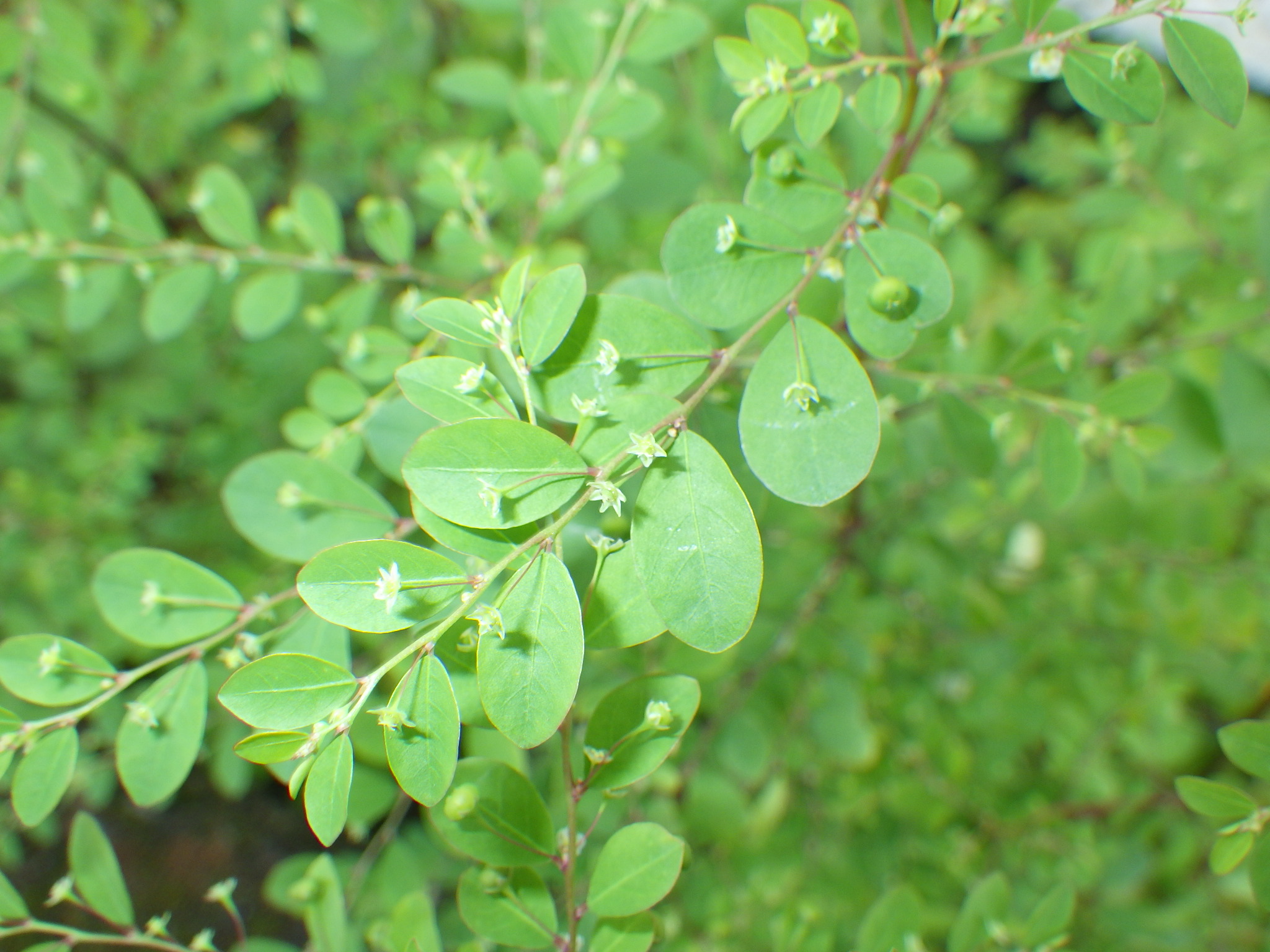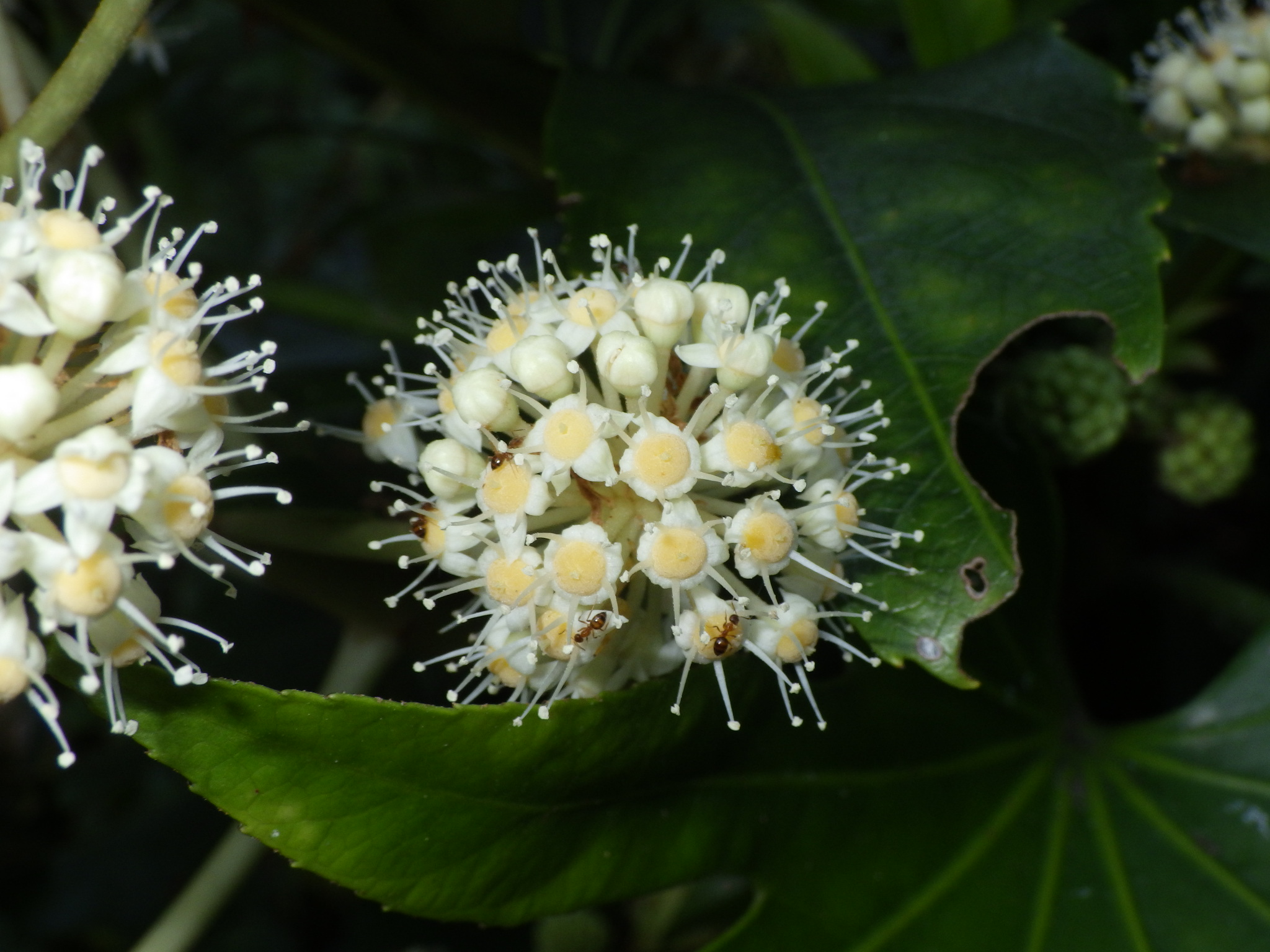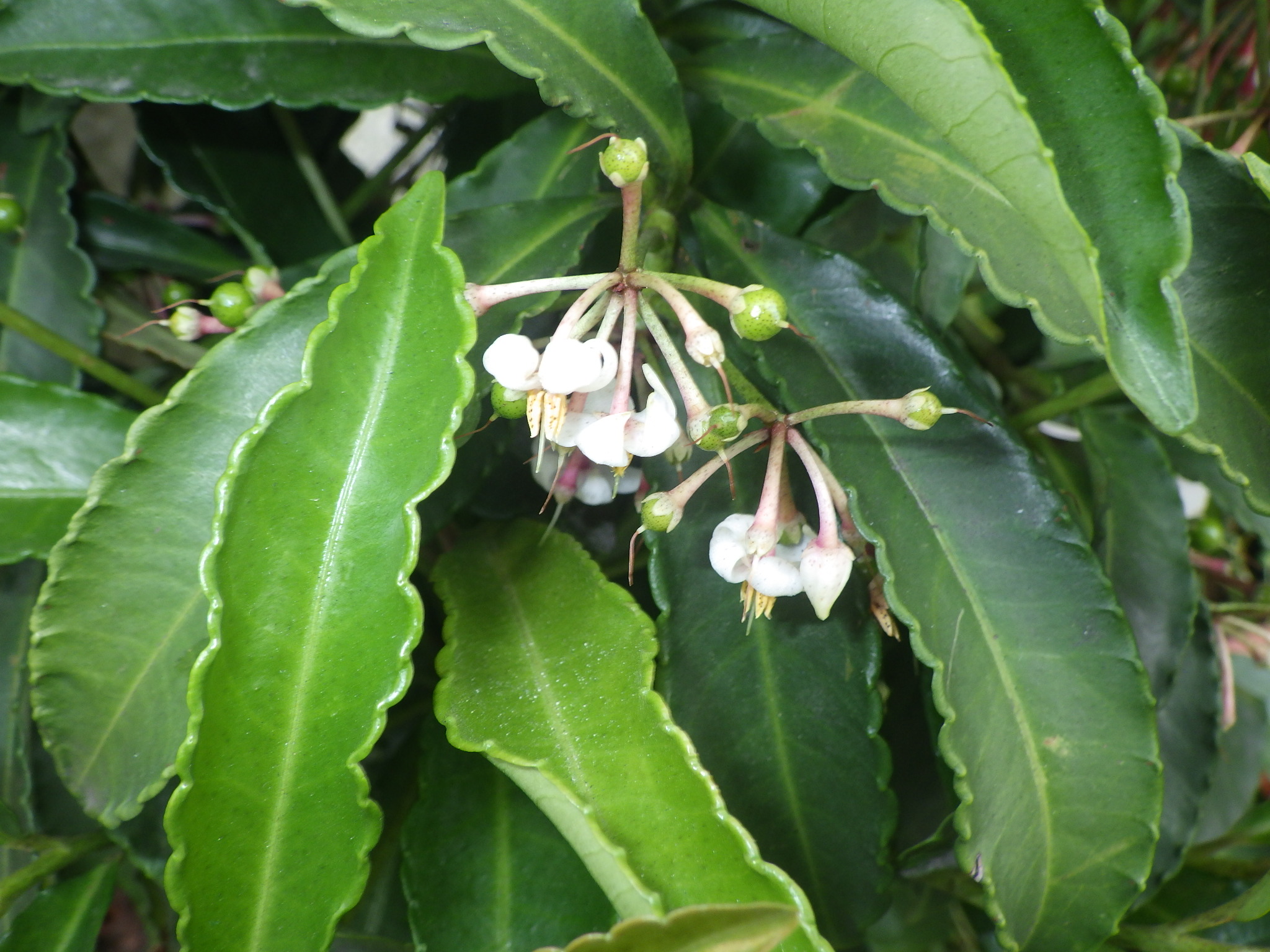
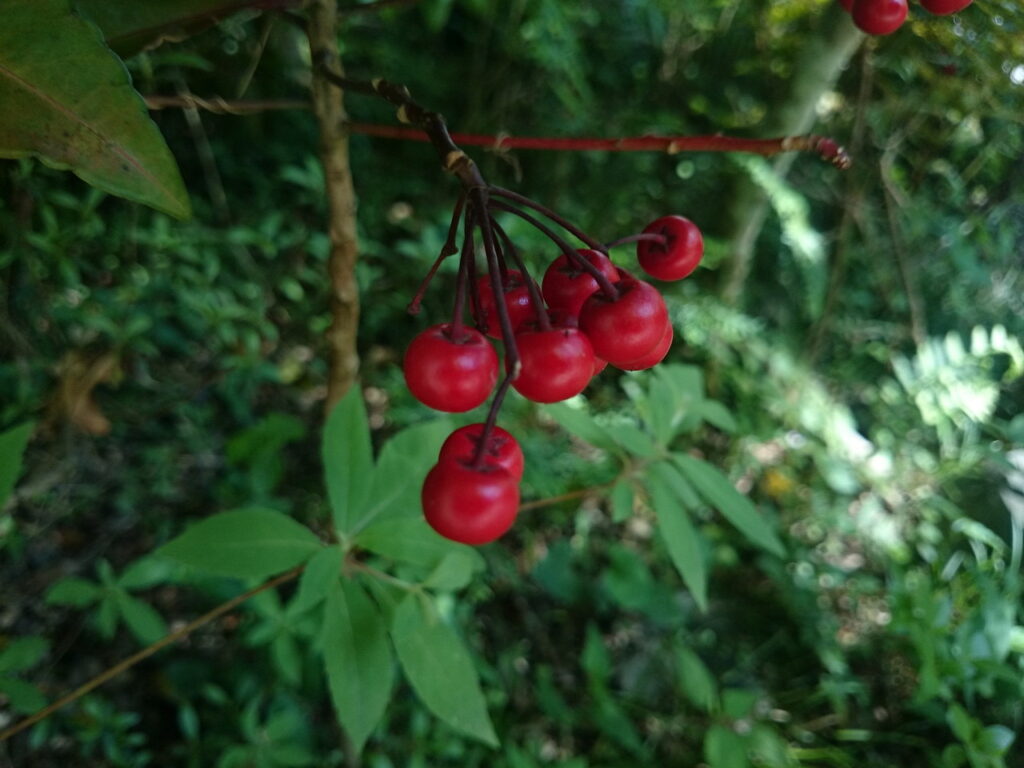
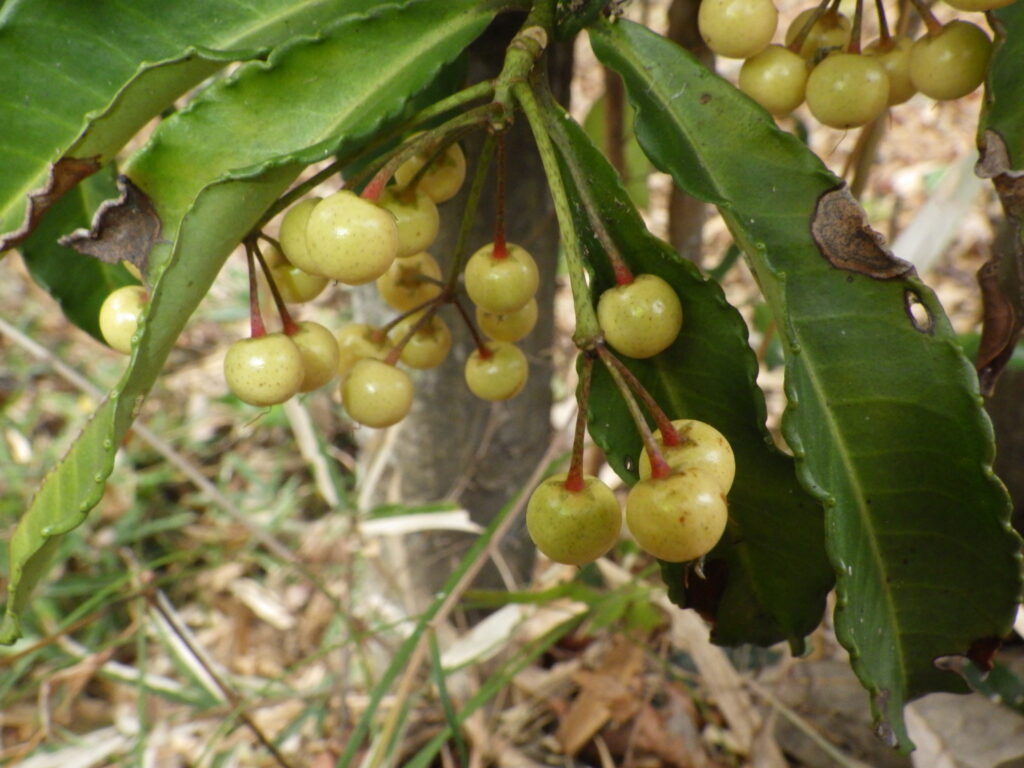
Ardisia japonica, Ardisia crenata, Ardisia japonica, and Ardisia trifoliata all belong to the genus Ardisia in the family Primulaceae. They grow wild in evergreen broad-leaved forests, but are also widely cultivated as ornamental shrubs, along with Ardisia crenata of the family Chloranthaceae, because they bear red, spherical fruits in autumn and winter. They are particularly popular in Japan. However, since the fruits of all these plants are almost identical in shape, some people may not be able to tell the difference. However, if you pay close attention to the size of the trees and the shape of the leaves, they are relatively easy to distinguish. The serrations on the leaf margins of Ardisia crenata are enlarged, forming a state called "leaf nodules," which are in symbiosis with bacteria. While it was once thought that this role was for nitrogen fixation, it is now believed that it is to supply defensive secondary metabolites and growth factors. This article will explain the classification of the genus Ardisia.
What are Ardisia japonica, Ardisia crenata, Ardisia crenata, and Citrus tachibana?
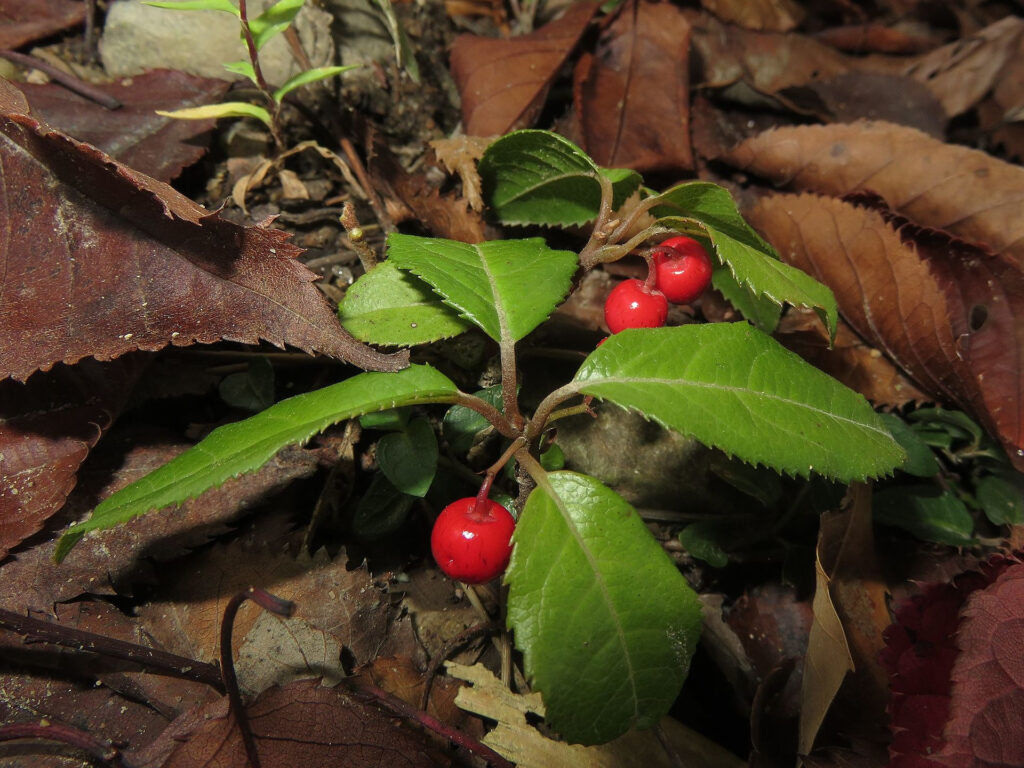
Ardisia japonica, also known as Japanese laurel, is an evergreen shrub distributed in Hokkaido (southwestern part), Honshu, Shikoku, Kyushu, and the Tokara Islands in Japan; as well as in Korea and southern China, mainly growing on the forest floor of evergreen broad-leaved forests (Kanagawa Prefecture Flora Survey Association, 2018).
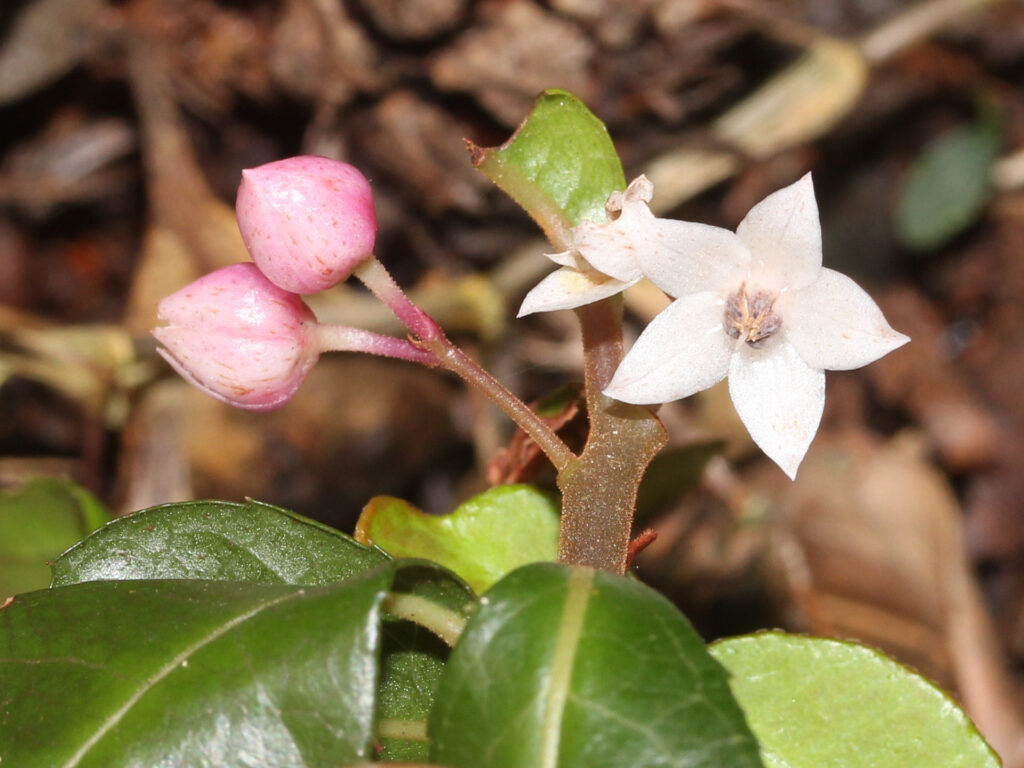
Ardisia pusilla, also known as vine jasmine, is distributed in southern Hokkaido to Kyushu in Japan, as well as in Korea, China, Taiwan, the Philippines, and Thailand. It is an evergreen shrub that grows in evergreen broad-leaved forests (Hayashi, 2019).
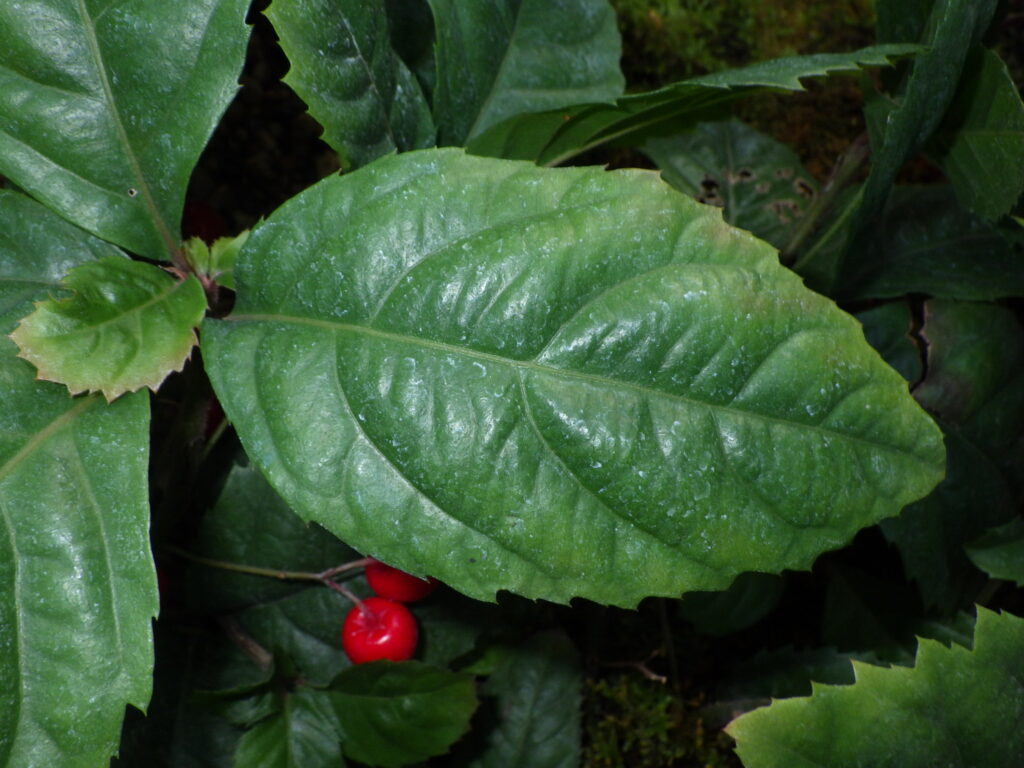
Ardisia crenata, also known as Manryo, is an evergreen shrub distributed throughout Japan (west of the Kanto region), Shikoku, Kyushu, and the Ryukyu Islands; and East Asia, mainly growing in evergreen broad-leaved forests.
Ardisia crispa, also known as the Chinese orange tree, is an evergreen shrub distributed in Honshu (west of the Kanto region), Shikoku, Kyushu, and the Ryukyu Islands in Japan; as well as in China and Taiwan, growing in evergreen broad-leaved forests.
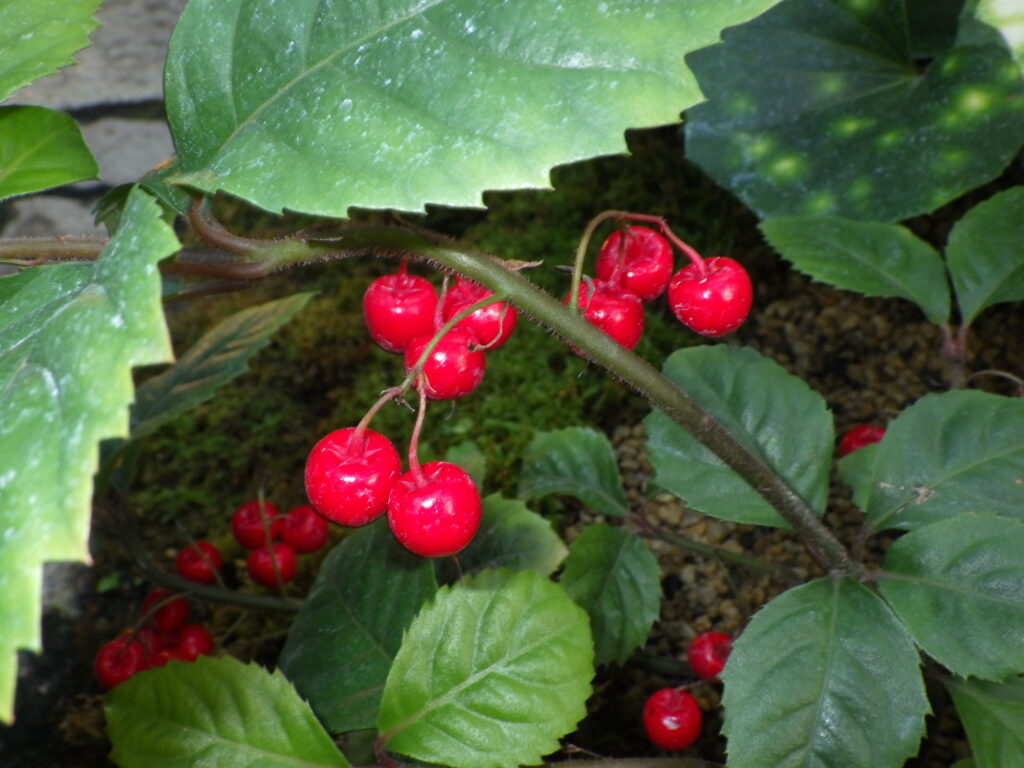
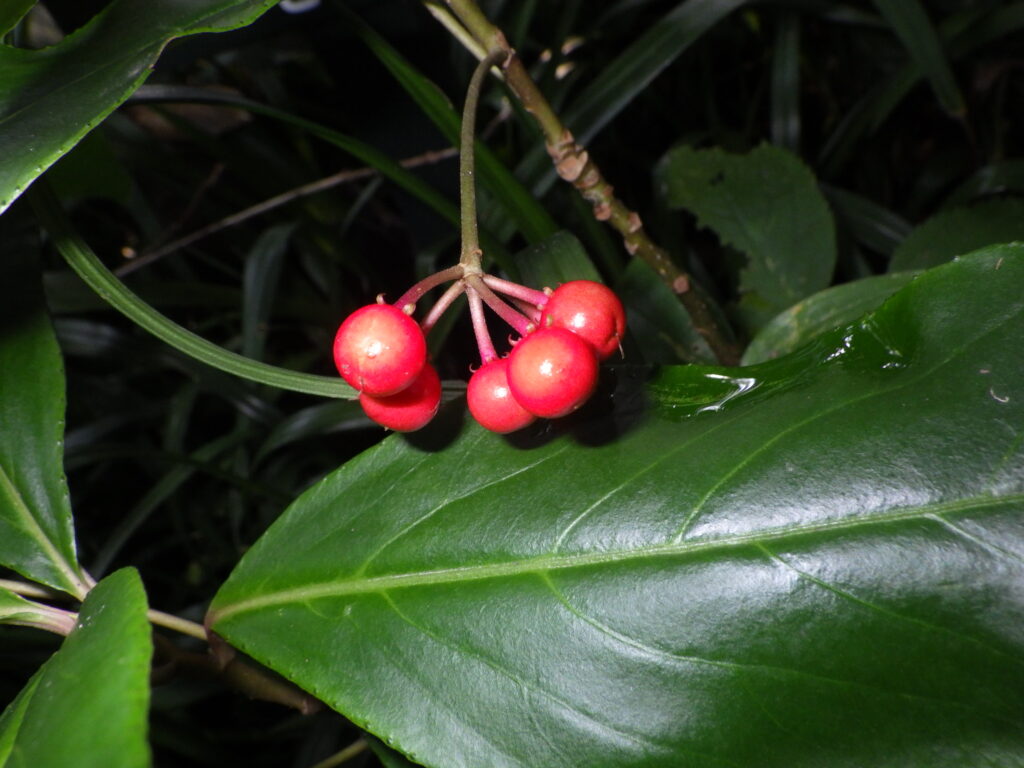
Both belong to the genus Ardisia in the family Primulaceae, and are evergreen shrubs that are widely cultivated for ornamental purposes, along with plants like Ardisia crenata (a member of the Chloranthaceae family), because they bear red, spherical fruits from autumn to winter. They are especially often seen at Shinto shrines and Buddhist temples.
Taxonomically, the genus Ardisia is distinguished from other genera in the Primulaceae family by its terminal or axillary inflorescence, saucer-shaped and deeply lobed corolla with spirally overlapping corolla lobes, superior ovary, and single, spherical seed.
However, distinguishing between the four types mentioned above may be difficult without close observation.
What are the differences between Ardisia japonica, Ardisia crenata, Ardisia crenata, and Citrus tachibana?
There are eight species of Ardisia genus in Japan, but this time we will focus on four of the most common species found on the mainland.
These four species are difficult to distinguish if you only look at their red, spherical fruits, but they are relatively easy to differentiate if you pay close attention to the size of the trees and the shape of the leaves (Kanagawa Prefecture Flora Survey Association, 2018; Hayashi, 2019).
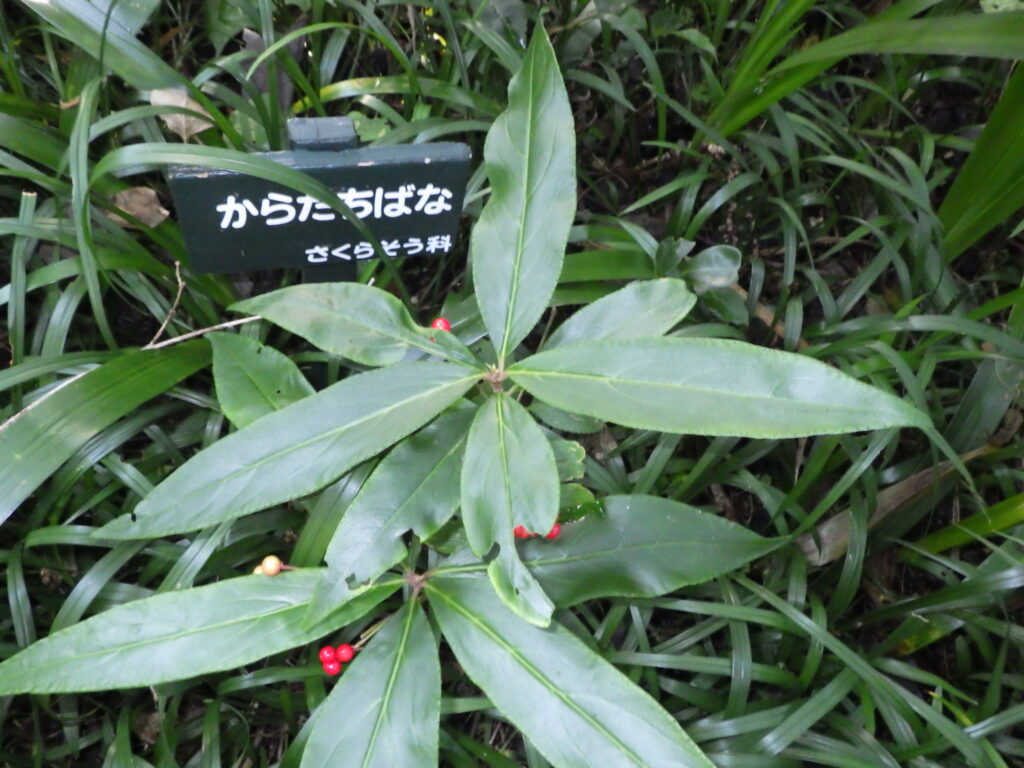
First, Ardisia japonica and Ardisia crenata grow to a height of 5-30 cm, have stolons, and their above-ground parts are unbranched, with leaves arranged somewhat whorled at the top of the stem. In contrast, Ardisia crenata and Citrus tachibana grow to a height of over 30 cm, lack stolons, have upright above-ground parts, and their leaves are arranged alternately.
To put it simply, Ardisia japonica and Ardisia crenata only grow to be quite small.
Furthermore, the leaves also exhibit distinctive characteristics: Ardisia japonica and Ardisia crenata lack internal glandular dots on the leaf margins, while Ardisia crenata and Citrus tachibana also lack internal glandular dots on the leaf margins.
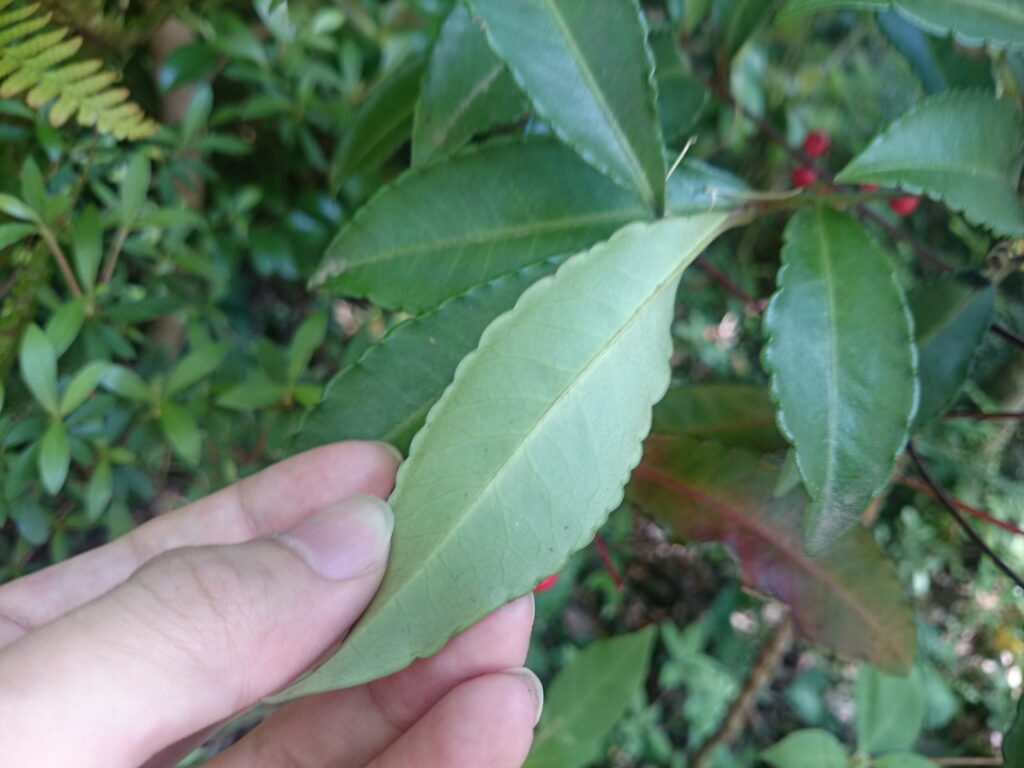
The term "internal glandular dots" might be confusing, but in Ardisia crenata and Citrus tachibana, you can observe tiny, dot-like holes on the leaf margins. These are the holes that are being referred to.
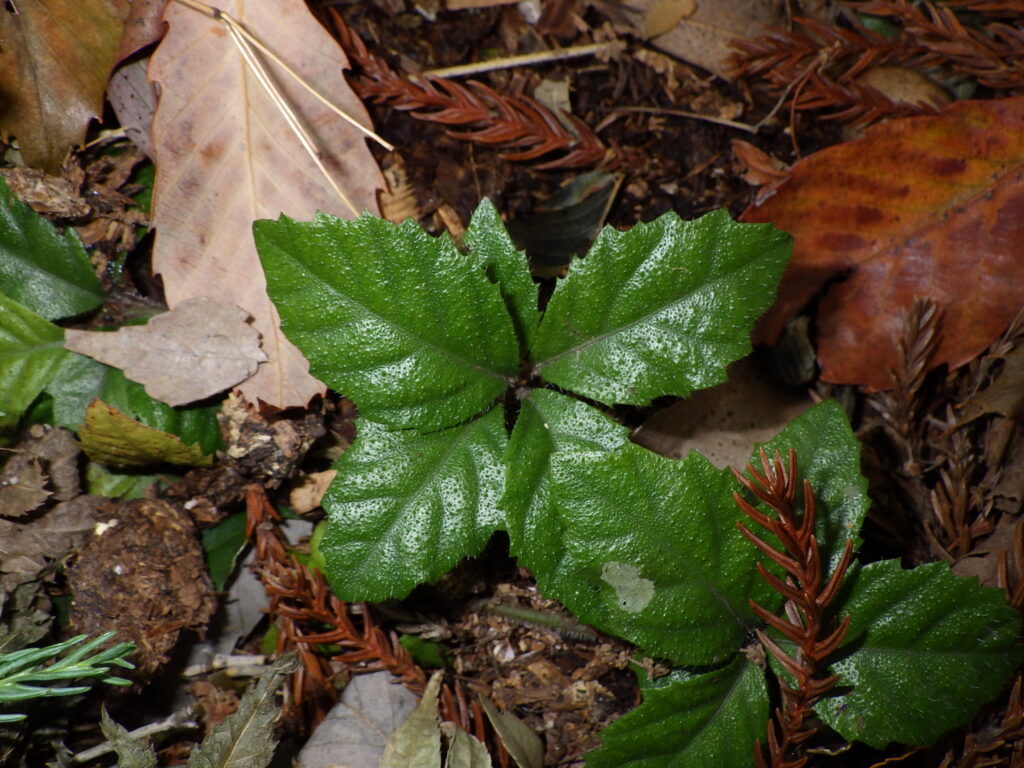
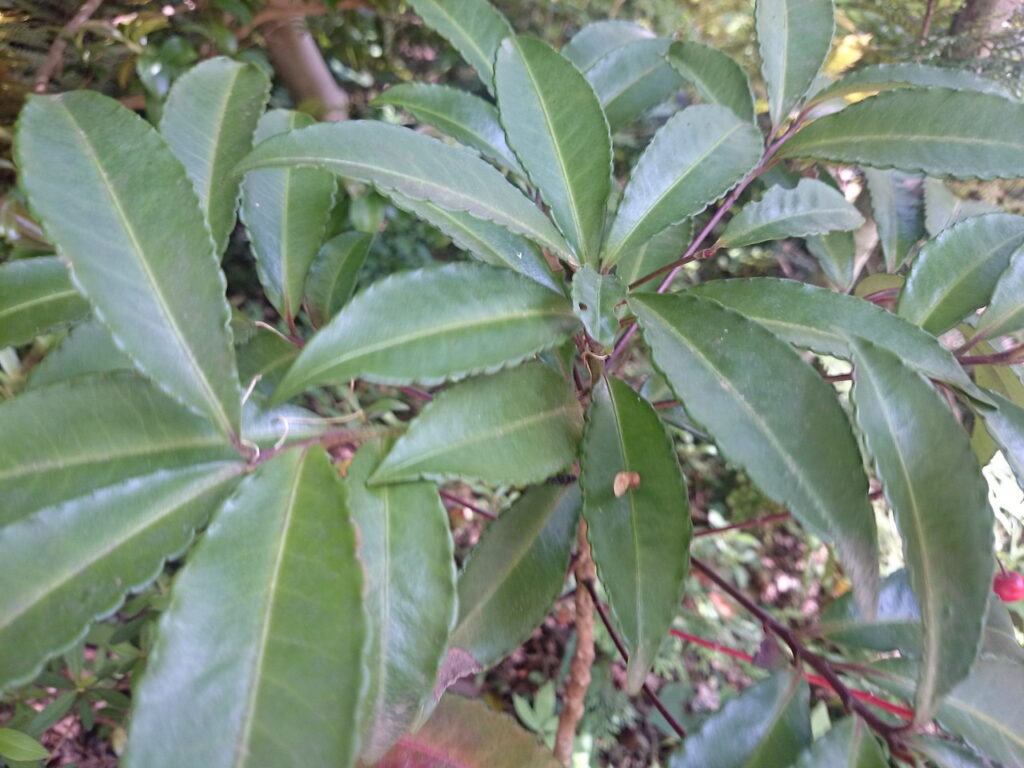
Regarding Ardisia japonica and Ardisia crenata, Ardisia japonica has no long hairs on its leaves and stems, its serrations are fine, and its stolons do not have leaves, while Ardisia crenata has long hairs on its leaves and stems, its serrations are coarse, and its stolons do have leaves.
The shape of the leaves makes it obvious.
Ardisia walkeri, which is distributed from southern Kanto to the Chugoku and Kyushu regions, has long hairs but many serrations.
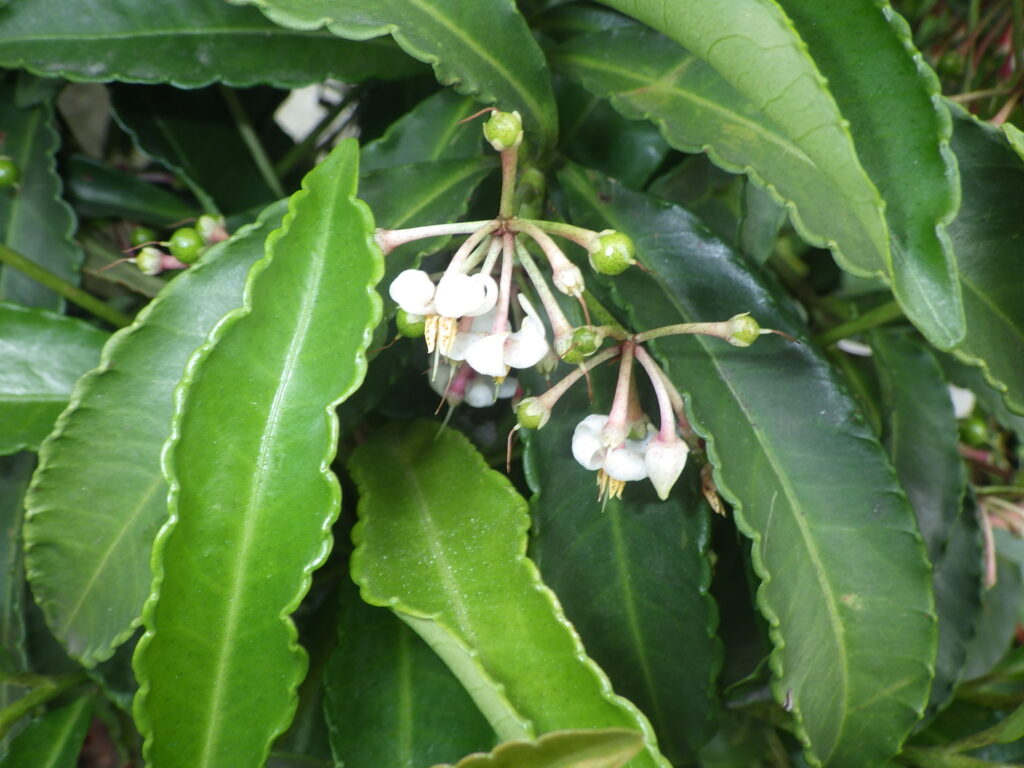
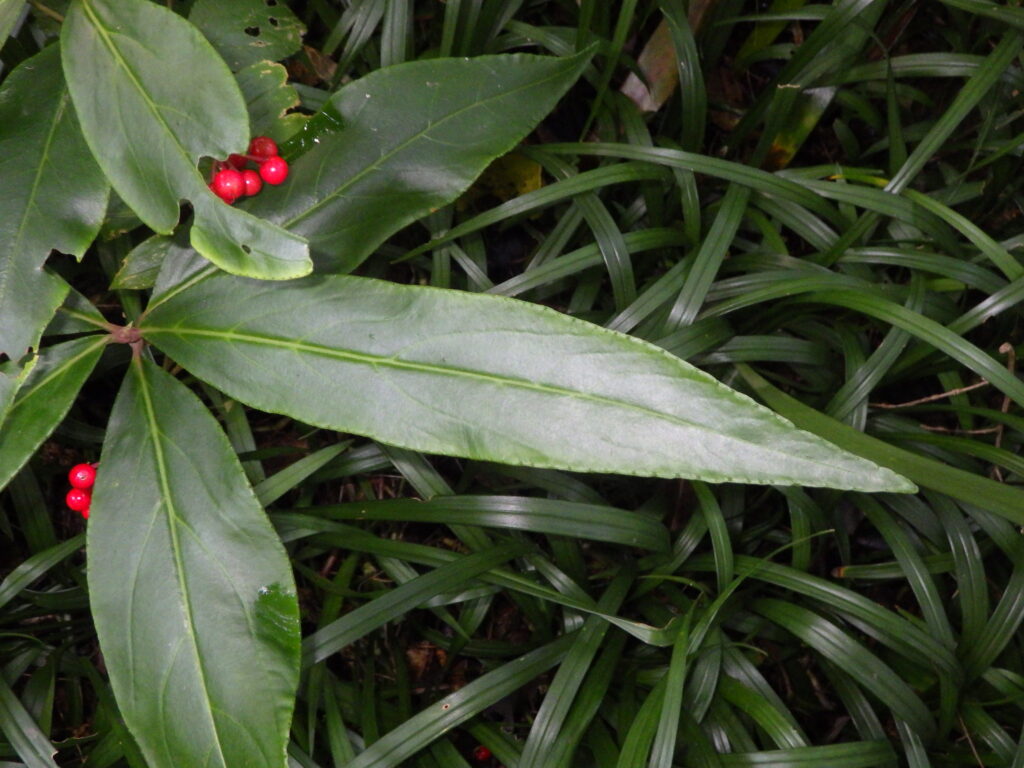
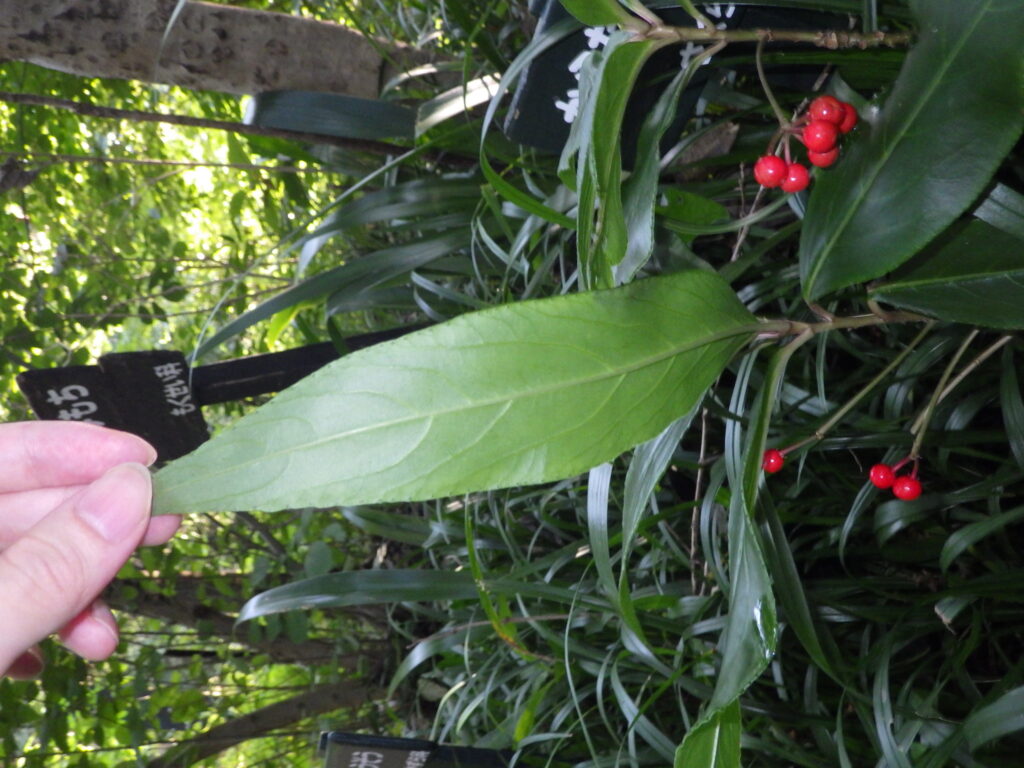
Regarding Ardisia crenata and Citrus tachibana, Ardisia crenata has oblong leaves, a stem that branches at the top, and terminal, sessile inflorescences on the branches, while Citrus tachibana has broadly lanceolate leaves that gradually taper to a point, a stem that hardly branches, and stalked inflorescences that emerge from the leaf axils.
However, this is a strict distinction, and you don't need to look that closely to distinguish between them, as only Ardisia crenata has thick, finely serrated edges on its leaves, so you shouldn't get confused.
What kinds of varieties and cultivars are there?
Varieties and cultivars also exist for Ardisia japonica, Ardisia crenata, Ardisia crenata, and Citrus tachibana (Ohashi et al., 2017).
Ardisia japonica f. albifructa is a variety of Ardisia japonica with white fruits.
Ardisia japonica var. angusta is a variety of Ardisia japonica with narrow, oval leaves, distributed in Izu Oshima, Yakushima, and Taiwan.
Ardisia japonica var. angusta f. leucocarpa is a variety of Ardisia japonica distributed on Izu Oshima Island, characterized by its narrowly oval leaves and white fruits.
Ardisia pusilla var. liukiuensis is a variety of Ardisia pusilla distributed in Okinawa, and is generally larger, reaching a height of nearly 30 cm.
Ardisia crenata f. leucocarpa is a variety of Ardisia crenata with white fruits.
Ardisia crenata f. xanthocarpa, also known as "Kimino Manryo," is a variety of Ardisia crenata with yellow fruits.
Ardisia crispa f. leucocarpa is a variety of Ardisia crispa with white fruit.
Ardisia crispa f. xanthocarpa is a variety of Ardisia crispa with yellow fruit.
Ardisia crispa var. caducipila is a variety of Ardisia crenata that is distributed in Honshu (Wakayama Prefecture) and Kyushu (Yakushima Island) and has small bristles on the petioles and underside of the leaves when young.
Is it a lie that Ardisia crenata fixes nitrogen?
Ecologically, the genus Ardisia is known to harbor the genus Burkholderia, a type of eubacteria, on the leaf margins (Yang & Hu, 2022).
This is particularly noticeable with Ardisia crenata; the edges of its leaves are serrated and wavy, but these serrated parts become enlarged, forming what is called a "leaf nodule."
This contains Burkholderia, and this relationship is thought to be one-to-one, having co-evolved. In the case of Ardisia crenata, it contains the species Burkholderia crenata.
Previously, due to low identification accuracy, it was thought that a completely different species of bacteria was present. Because this bacteria was a nitrogen-fixing bacterium capable of utilizing nitrogen from the air, the idea that "Ardisia crenata can fix nitrogen from its leaves" was temporarily established. Since nitrogen is an essential element for protein formation, the ability to fix nitrogen is considered a special characteristic.
However, it has now been identified as belonging to the genus Burkholderia, and while some species in this genus are capable of nitrogen fixation, it has become clear that species that live in symbiosis with the genus Ardisia do not perform nitrogen fixation.
Therefore, it is believed that species in the Ardisia genus, including Ardisia crenata, are unable to fix nitrogen from their leaves.
Instead, the genus Burkholderia has been shown to supply defensive secondary metabolites and growth factors to the genus Ardisia, which cannot grow beyond the seedling stage without Burkholderia (Carlier et al., 2016).
Although they don't fix nitrogen, the genus Burkholderia is still considered essential for the genus Ardisia.
References
Carlier, A., Fehr, L., Pinto-Carbó, M., Schäberle, T., Reher, R., Dessein, S., … & Eberl, L. 2016. The genome analysis of Candidatus Burkholderia crenata reveals that secondary metabolism may be a key function of the Ardisia crenata leaf nodule symbiosis. Environmental Microbiology 18(8): 2507-2522. https://doi.org/10.1111/1462-2920.13184
Hayashi, Masayuki. 2019. Tree Leaves: Expanded and Revised Edition - Identifying 1300 Species Through Real-Life Scans. Yama-kei Publishers, Tokyo. 824pp. ISBN: 9784635070447
Kanagawa Prefecture Flora Survey Association. 2018. Kanagawa Prefecture Flora 2018 (Electronic Edition). Kanagawa Prefecture Flora Survey Association, Odawara. 1803pp. ISBN: 9784991053726
Ohashi, Hiroyoshi; Kadota, Yuichi; Murata, Hitoshi; Yonekura, Koji; and Kihara, Hiroshi. 2017. Wild Plants of Japan (Revised New Edition, Vol. 4 Malvaceae to Apocynaceae). Heibonsha, Tokyo. 608pp. ISBN: 9784582535341
Yang, CJ, & Hu, JM 2022. Molecular phylogeny of Asian Ardisia (Myrsinoideae, Primulaceae) and their leaf-nodulated endosymbionts, Burkholderia sl (Burkholderiaceae). PloS One 17(1): e0261188. https://doi.org/10.1371/journal.pone.0261188