Both Campanula punctata and Campanula punctata are annual plants native to North America, belonging to the Campanulaceae family and Campanula genus. In Japan today, they are naturalized species and are frequently seen in urban areas. Since they grow in almost the same places and both have purple flowers with five deep lobes at the top, it may be difficult to distinguish them in the wild. However, there are differences in their leaves, flowers, and fruits, and the leaves in particular can be distinguished regardless of the season. The size of the flowers differs from that of Campanula punctata. There are two types of flowers: open flowers and cleistogamous flowers. Open flowers are purple flowers with five deep lobes in a star shape. Cleistogamous flowers do not have a corolla. Cleistogamous flowers do not open their interiors to the outside and are self-pollinating, while open flowers are cross-pollinating by bees, etc. These two types of pollination methods are probably the secret to their ability to grow even in urban areas of foreign countries. The fruit is a capsule, and the seeds are dispersed by the wind through a hole in the ovary. This article will explain the classification, morphology, pollination ecology, and seed dispersal of the genus Campanula.
- What are Campanula punctata and Campanula punctata?
- What is the difference between bellflower and balloon flower?
- What is the difference between Campanula punctata and Campanula punctata?
- What is the structure of a flower?
- How is pollination done?
- What is the structure of the fruit?
- What are the seed dispersal methods?
- References
What are Campanula punctata and Campanula punctata?
Triodanis perfoliata, also known as bellflower, is native to North America and in Japan it is an annual plant that grows in sunny locations such as hedges and plantings in parks and along roadsides (Kanagawa Prefecture Flora Survey Association, 2018). It has also become naturalized in China.
Triodanis biflora, also known as dwarf bellflower, is native to North America and is an annual plant that grows in Japan in dry, bare areas such as roadsides and construction sites. The first recorded instance of its presence in Japan was in Yokohama in 1931. It has also become naturalized in China.
Both are annual plants native to North America, belonging to the genus Campanula in the family Campanulaceae. In present-day Japan, they are frequently seen in urban areas, and they grow in almost the same locations. They both have purple flowers with five deeply lobed corollas at the top. They also both produce cleistogamous flowers from the stems and leaves below the middle section, so it may be difficult to distinguish them in the wild.
What is the difference between bellflower and balloon flower?
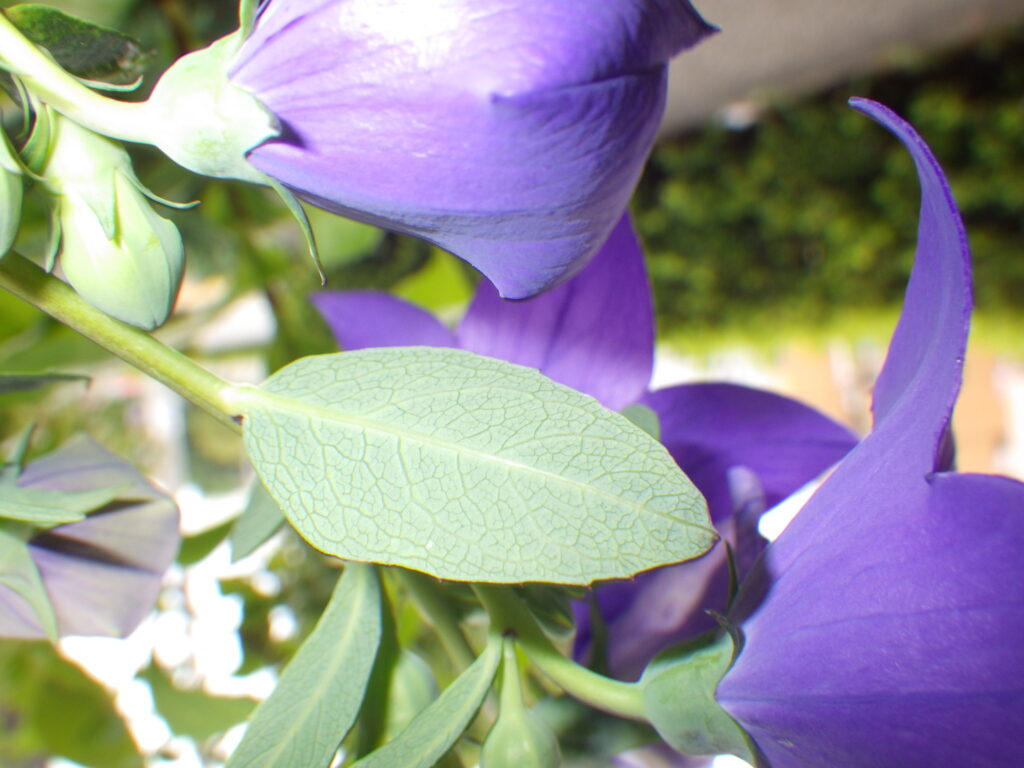
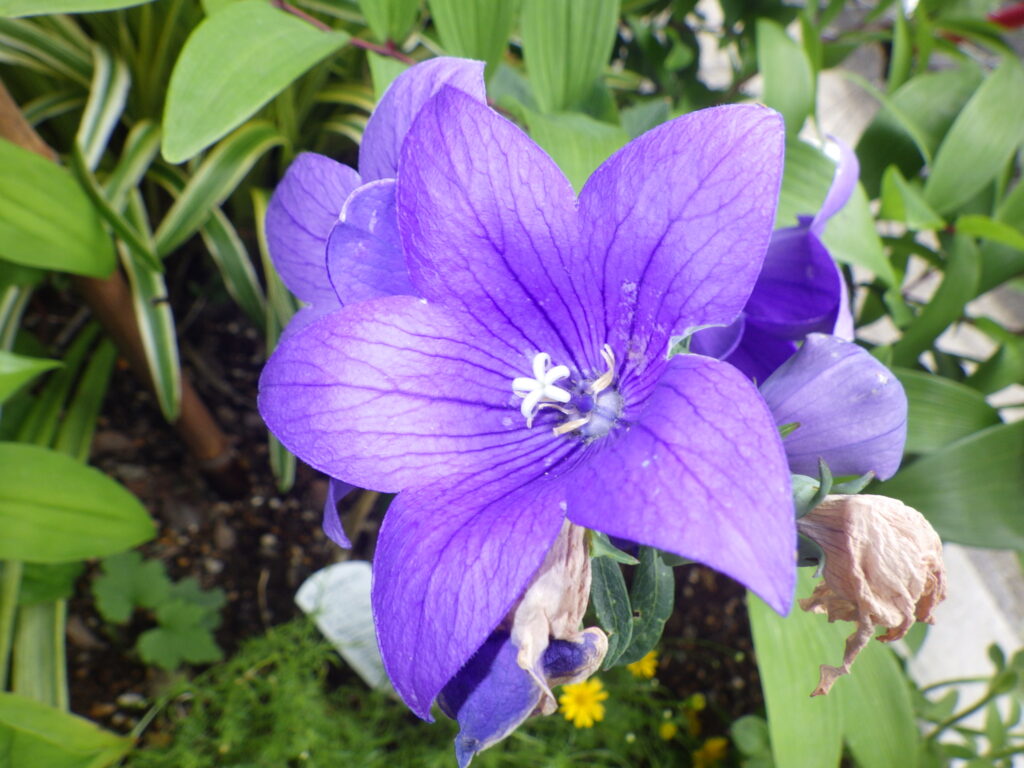
Some people may not even know the difference between this plant and the bellflower (kikyo), from which it gets its name.
Balloon flower (Platycodon grandiflorus) is a perennial herb that grows in bright grasslands in mountainous areas and fields, distributed throughout Japan (Hokkaido, Honshu, Shikoku, Kyushu, and Ryukyu Islands), as well as Korea, China, and Ussuri.
However, wild specimens are now extremely rare, and most are cultivated for ornamental purposes. Therefore, unlike other types of bellflowers, you'll likely only see bellflowers in towns in gardens or flowerbeds.
There are many differences between bellflowers and balloon flowers, but the most notable is their size.
In the Campanula genus, the upright stems are 20-80 cm tall, while in the balloon flower (Platycodon grandiflorus), the stems are 40-100 cm tall, although balloon flowers are generally larger.
The flower sizes are completely different; the corolla of Campanula species is only 1-1.8 cm in diameter, while that of balloon flowers is 3-5 cm in diameter.
From a taxonomic perspective, the presence or absence of cleistogamous flowers is important. While the genus Campanula has flowers called "cleistogamous flowers" that do not have a corolla above the leaf, this is not the case with balloon flowers (Platycodon grandiflorus).
What is the difference between Campanula punctata and Campanula punctata?
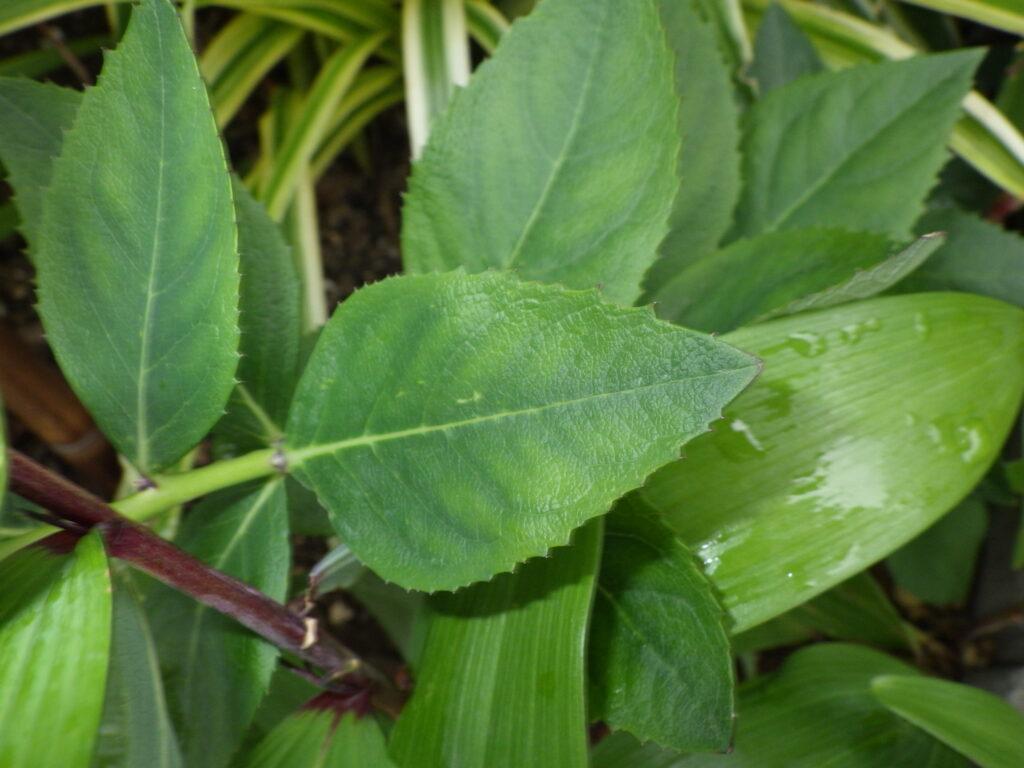
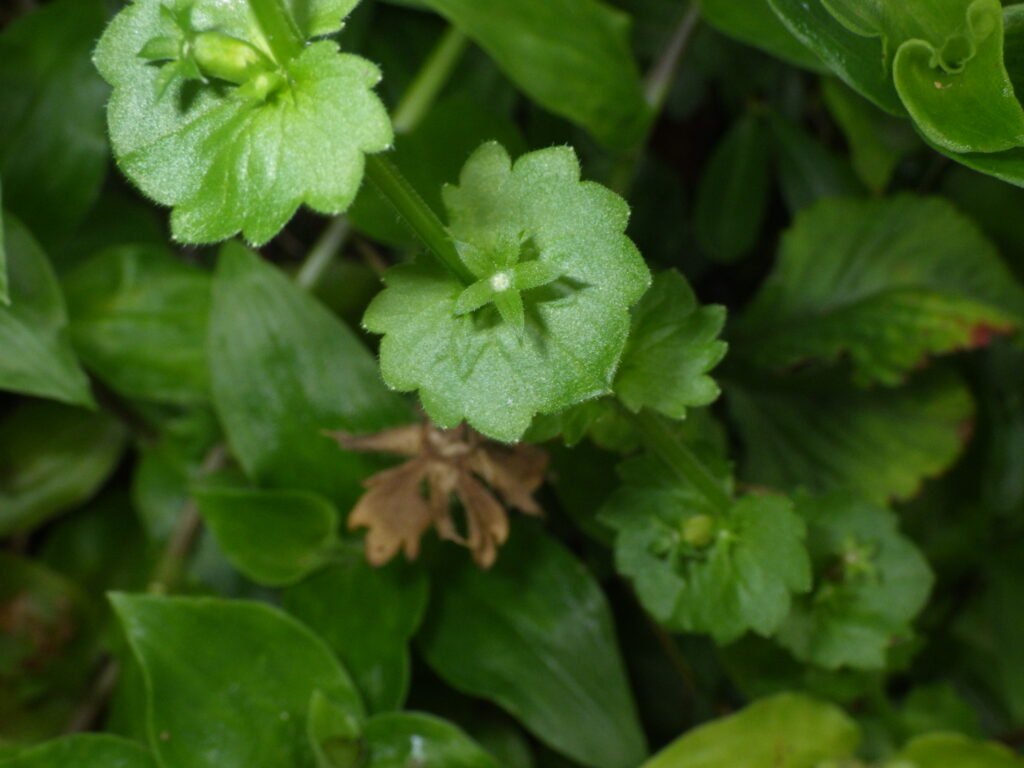
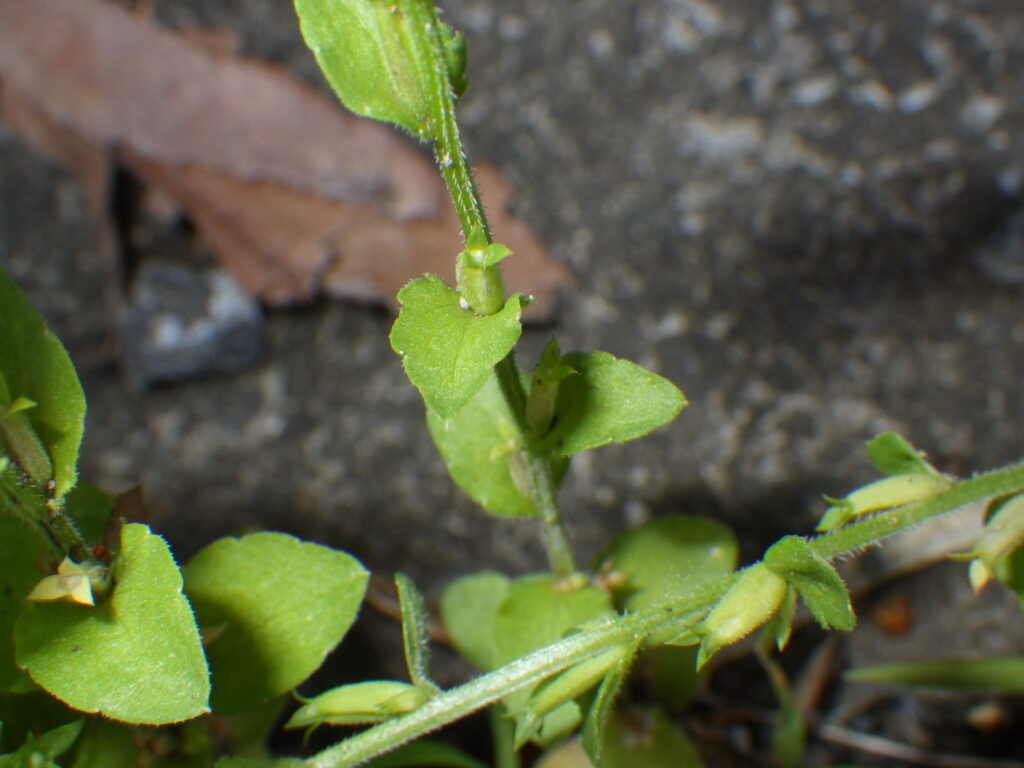
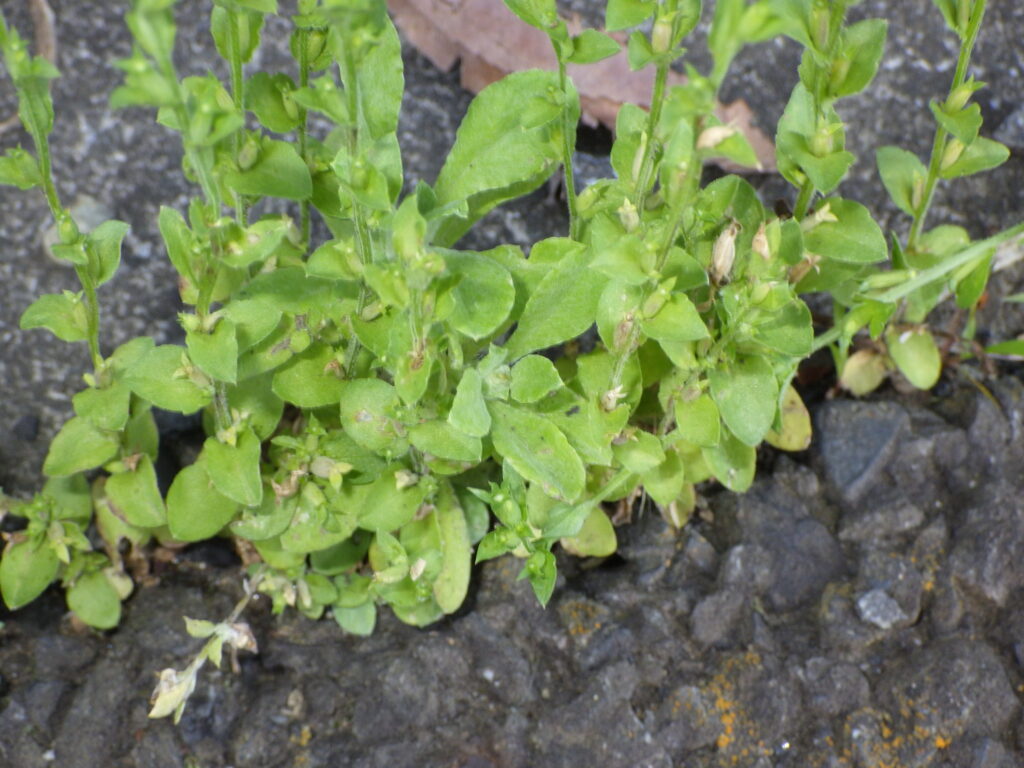
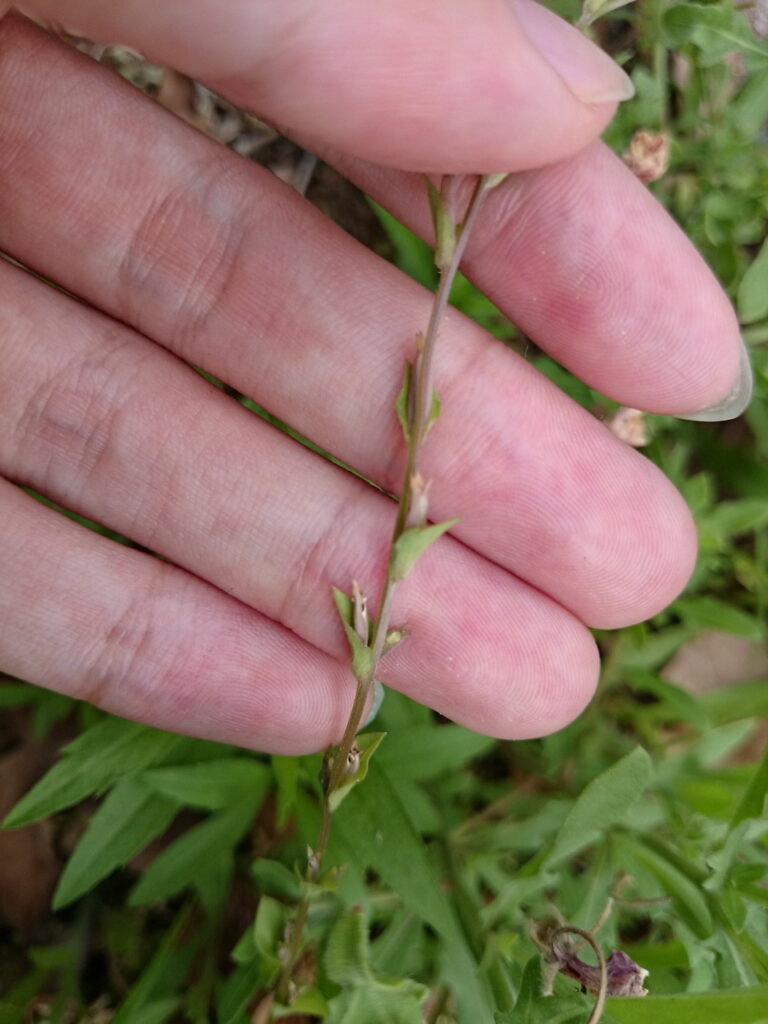
There are many differences between Campanula punctata and Campanula japonica, but I think the leaves are the easiest way to distinguish them regardless of the season or individual variation. The leaves on the middle and upper parts of the stems of both Campanula punctata and Campanula japonica are sessile, but they differ considerably in shape.
In Campanula punctata, the leaves above the middle of the stem are elliptical with heart-shaped stems, their length is equal to or shorter than their width, their serrations are prominent, and their base clasps the stem. In contrast, in Campanula punctata, the leaves above the middle of the stem are ovate, their length is clearly longer than their width, their serrations are shallow, and they do not clasp the stem.
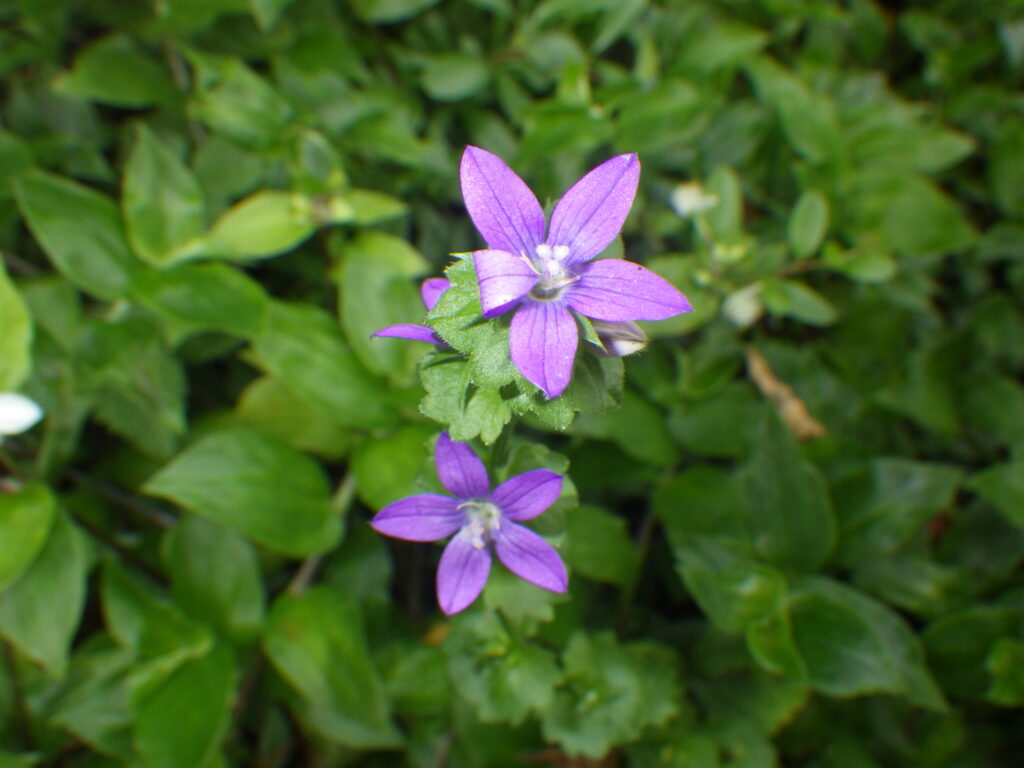
The next easy way to distinguish them is by their flowers. In Campanula punctata, open flowers grow in groups of 1-2 (or up to 3) in the leaf axils, with a corolla diameter of 1.5-1.8 cm, whereas in Campanula punctata, open flowers usually grow only 1 (or up to 2) at the top, with a corolla diameter of only 1-1.3 cm.
There are also differences in the fruits: in Campanula punctata, the pore of the capsule is located 1-1.5 mm from the top (excluding the calyx lobes) (in the center of the capsule), whereas in Campanula punctata, the pore is located about 0.5 mm from the top (excluding the calyx lobes) (at the top of the capsule). Many publications mention this difference, but it may be difficult to observe it conveniently in the field.
What is the structure of a flower?
The genus Campanula produces two types of flowers: open flowers and closed flowers.
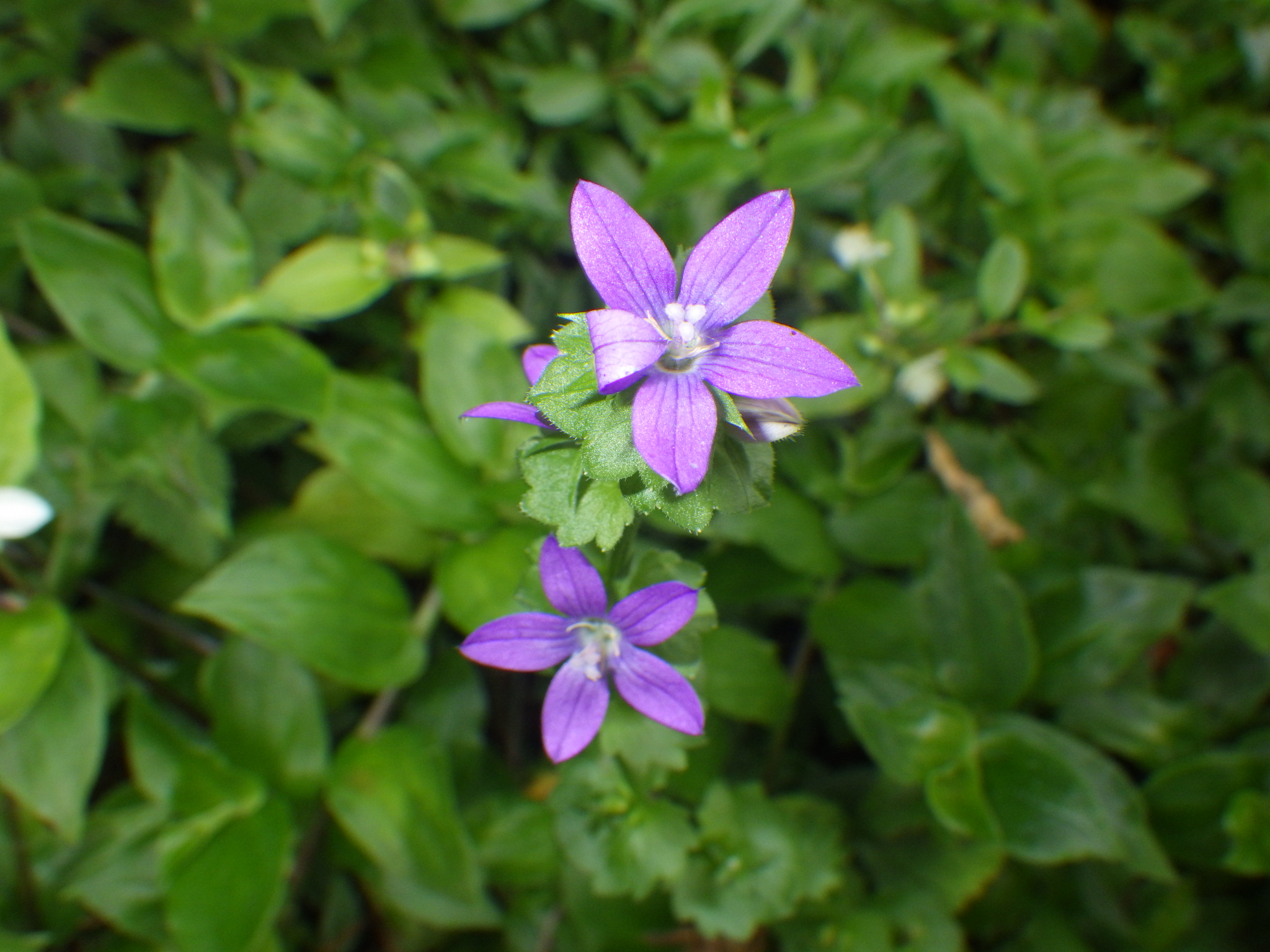
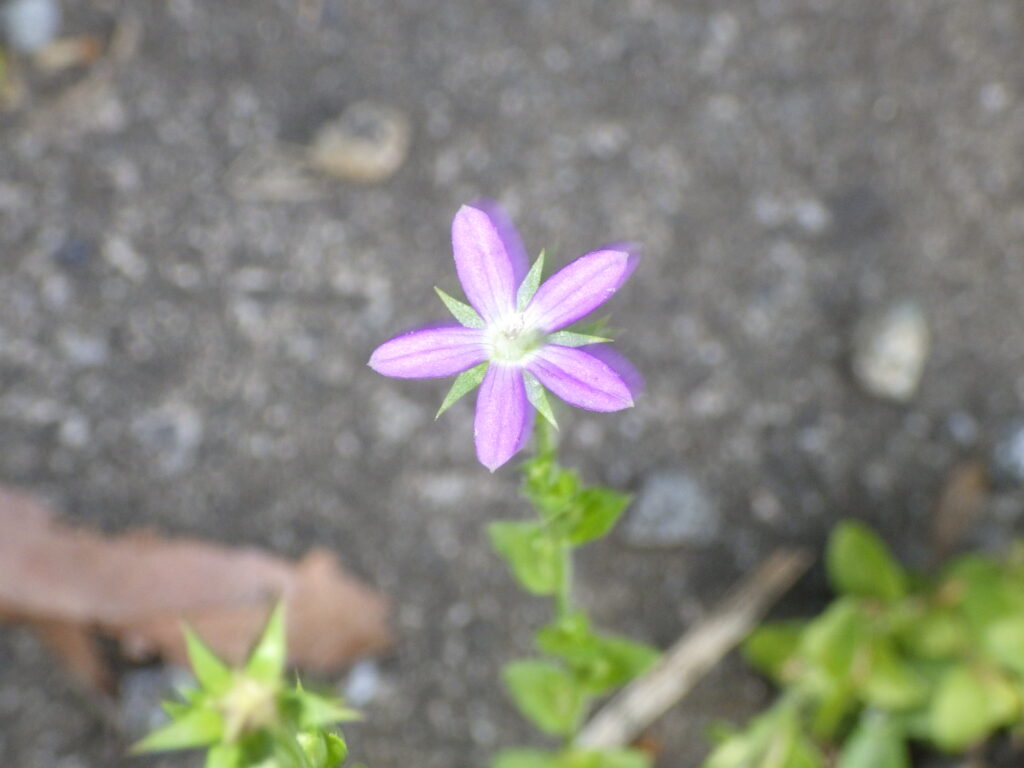
The open flowers of the Campanula genus are common to all plants in the Campanulaceae family, with purple corollas that are deeply five-lobed and star-shaped, and they bloom facing upwards. However, there are also species in the Campanulaceae family, such as Campanula and Adenophora, whose flowers face downwards.
On the other hand, cleistogamous flowers do not have a corolla and their interiors do not open. They grow singly on each stem and leaf.
Campanula punctata flowers from May to July. The flowers are sessile or have short stalks and grow in clusters of 1-2 (up to 3) in the leaf axils. As the plant elongates, it produces cleistogamous flowers in the lower to middle sections and open flowers at the top. Open flowers have 5 sepals and a 5-lobed corolla, are purple, and 1.5-1.8 cm in diameter. Cleistogamous flowers have 3-4 sepals and a nearly vestigial corolla.
Campanula punctata flowers from April to July. It typically produces only one (or two) flowers at the top of the stem. The open flowers are purple and star-shaped, with a corolla 1-1.3 cm in diameter. Most flowers other than the one at the top are cleistogamous. The calyx usually has five lobes, but cleistogamous flowers often have three or four.
How is pollination done?
Cleistogamous flowers do not open their interiors to the outside, and self-pollination occurs through contact between the stamens and pistils within the flower. This is called cleistogamous fertilization. As a result, a certain number of seeds can be produced without relying on insects, and since the corolla does not need to be formed, the plant can allocate more energy to seed production.
However, self-pollination alone may result in insufficient genetic diversity to cope with changes in the natural environment and parasites. Furthermore, research has shown that seeds produced from open flowers develop more easily and grow stronger after germination (Gara & Muenchow, 1990). Therefore, cross-pollination by pollinating insects is likely essential.
According to research in the United States, Campanula plants are visited by bees of the families Sphecidae, Sphecidae, and Cantharidae, with occasional visits from the families Halictidae and Bumblebees (Gara & Muenchow, 1990; Stewart, 2013).
However, these species are relatively large among pollinating insects, and it is questionable whether individuals of the Campanula genus found in urban areas of Japan are pollinated by these insects. It is possible that there are differences, such as a higher proportion of self-pollination or a higher proportion of bee species, but there is insufficient research on this in Japan.
The ability to utilize both cleistogamous and open flowers is a major factor in its survival as a naturalized species that can grow even in urban areas.
The fact that Campanula punctata has fewer flowers than Campanula punctata suggests that it has more cleistogamous flowers and relies on self-pollination. This might be advantageous in urban areas where there are fewer insects and the environment is stable, but it is unclear whether this difference is significant. The insects that visit Campanula punctata are unknown, and the differences in the ecology of these two species are not understood.
What is the structure of the fruit?
The fruit is a capsule, common to all species in the genus Campanula (Wu et al., 2011). A capsule is a type of dry fruit, consisting of multiple fused sac-like pericarps. Capsules can develop from both open and closed flowers.
The capsules of Campanula are 4-6 mm long, cylindrical, and when mature, the ovary wall curls back in a tongue-like manner, opening a hole. The hole in the capsule is located 1-1.5 mm from the top (excluding the calyx lobes) (in the center of the capsule). Seeds fall out from the hole. The seeds are about 0.5 mm long, brown, lenticular, and flattened oval.
The capsule of Campanula punctata is 6-10 mm long, oblong-cylindrical in shape, and divided into three chambers. When mature, the ovary wall curls up in a tongue-like manner, opening a pore. The pore is located about 0.5 mm from the top (excluding the calyx lobes) of the capsule. Seeds fall out through the pore. The seeds are glossy brown, flattened oval in shape, and about 0.5 mm long.
What are the seed dispersal methods?
While most capsules dry out and release their seeds when ripe, the Campanula genus is unique in that the entire capsule does not open; instead, a part of the ovary wall curls up, creating a pore from which the seeds spill out.
This is thought to facilitate both gravity and wind dispersal (Tackett, 2021). While the advantages of this method, where part of the ovary wall flips up to release the seeds, haven't been specifically considered, it seems that wind would pass through the opening more efficiently than if the top were open, thus dispersing the seeds. The flattened elliptical shape would also be ideal for catching the wind.
There is a difference in the height of the holes between Campanula punctata and Campanula punctata, but it is unclear whether this difference is ecologically significant.
References
Gara, B., & Muenchow, G. 1990. Chasmogamy/cleistogamy in Triodanis perfoliata (Campanulaceae): some CH/CL comparisons in fitness parameters. American Journal of Botany 77(1): 1-6. https://doi.org/10.1002/j.1537-2197.1990.tb13521.x
Kanagawa Prefecture Flora Survey Association. 2018. Kanagawa Prefecture Flora 2018 (Electronic Edition). Kanagawa Prefecture Flora Survey Association, Odawara. 1803pp. ISBN: 9784991053726
Stewart, ER 2013. Hybridization in two subspecies of Triodanis perfoliata, a cleistogamous annual plant (Campanulaceae) [Master's thesis, East Carolina University]. http://hdl.handle.net/10342/4196
Tackett, M. 2021. Understanding Dispersal Corridors and Population Structure in a Widespread Annual Plant [Master's thesis, Southeast Missouri State University]. https://www.proquest.com/openview/5a9449a97a8f42d7c5d400a5422fc0d0/
Wu, ZY, Raven, PH, & Hong, DY (Eds.). 2011. Flora of China (Vol. 19 Cucurbitaceae through Valerianaceae, with Annonaceae and Berberidaceae). Science Press, Beijing, and Missouri Botanical Garden Press, St. Louis. ISBN: 9781935641049