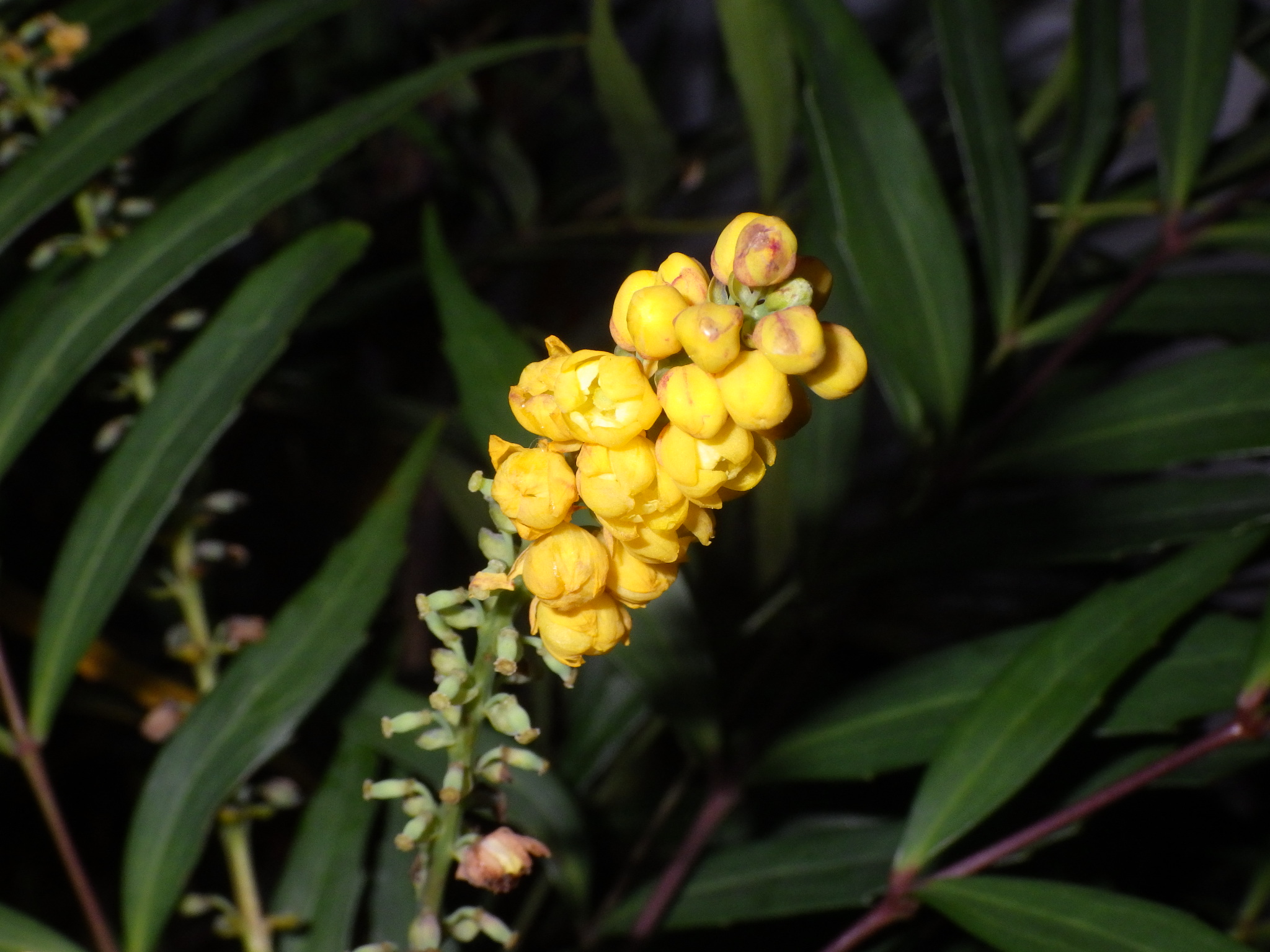
The Berberidaceae family consists of perennial herbs or shrubs. The leaves are alternate and can be simple or compound. The sepals are arranged in whorls of 3 to 4, or 2 to 4, with the outer 1-2 whorls being smaller and falling off early during flowering, while the inner 2 whorls are larger and petal-like. The petals are arranged in whorls of 2 or 3. Nectaries are located at the base of the petals. The ovary is superior and consists of one carpel. The fruit is a berry or follicle. Approximately 650 species in 16 genera are known, mainly in the temperate regions of the Northern Hemisphere, with the genus Berberis extending as far south as the southern tip of South America. In Japan, 14 species in 7 genera are distributed.
This article provides a comprehensive, illustrated guide to plants belonging to the Berberidaceae family.
The basic information is based on the Kanagawa Prefecture Flora Survey Association (2018). Photos are replaced as better ones become available. While the identification is done by the author, please note that misidentifications may be corrected without notice.
- No.1166.a Dysosma versipellis
- No.1169 Berberis thunbergii
- No. 1169.1 Berberis thunbergii 'Rose Glow'‘
- No. 1173 Mahonia japonica
- No. 1174 Narrow-leaved holly (Berberis fortunei)
- No.1174.a Narihirahiiragi Mahonia (Berberis eurybracteata subsp. eurybracteata)
- No.1175 Epimedium grandiflorum var. thunbergianum f. violaceum
- No. 1177 Epimedium sempervirens
- No. 1181 Epimedium x setosum
- No. 1183 Epimedium sagittatum var. sagittatum
- No. 1185 Nandina domestica
- No.1185.1 Otafuku Nandina domestica 'Otafukunanten'‘
- References
No.1166.a Dysosma versipellis
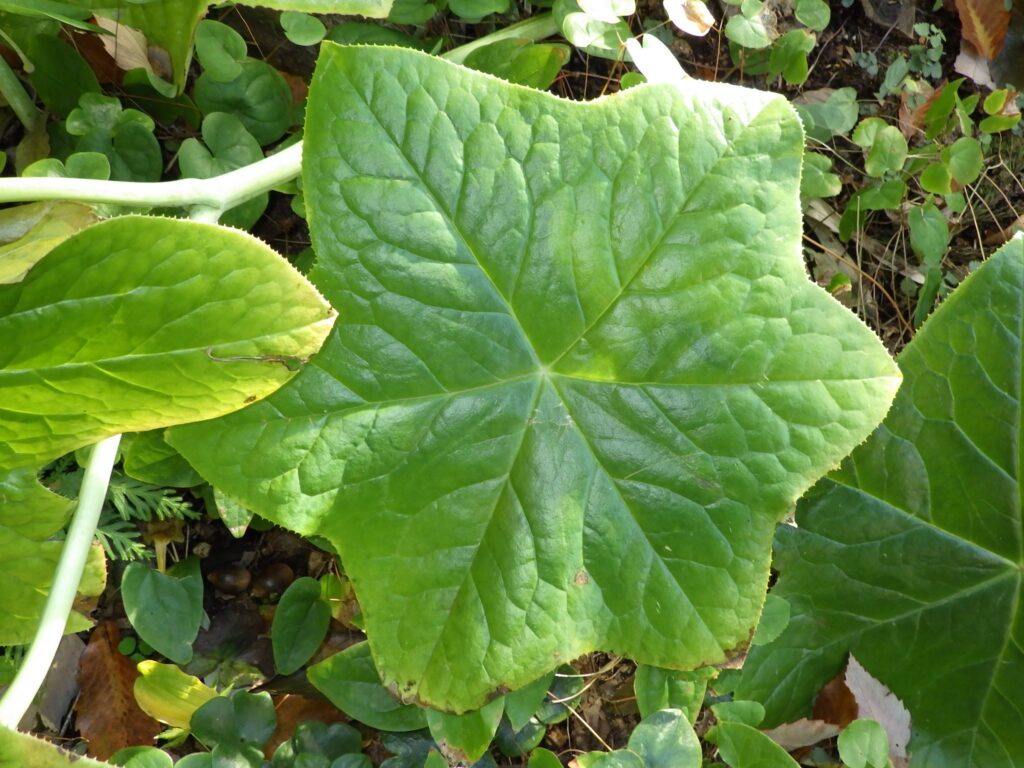
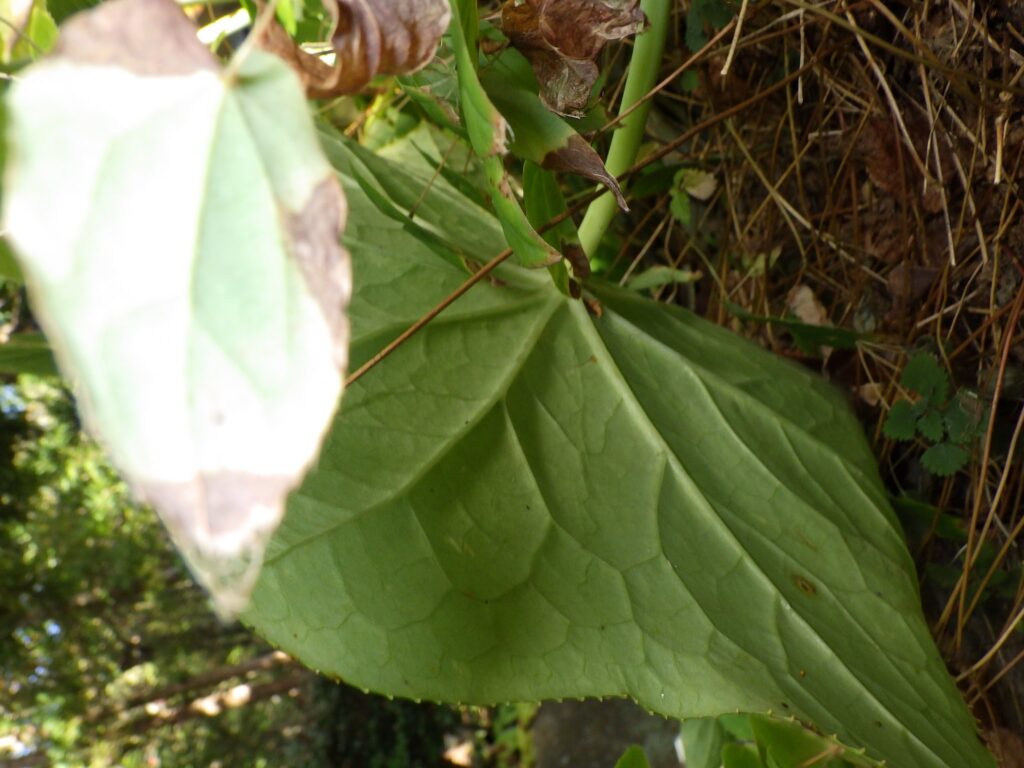
Deciduous perennial herb (Flora of China). Height 40–150 cm. The above-ground stem is erect, pale green, unbranched, and glossy. Leaves are alternate, with petioles 12–25 cm long for lower leaves and 1–3 cm long for upper leaves. The leaf blade is semi-circular, 30 cm in diameter, thin and papery, glossy on the outside, with clearly raised veins, glossy on the outside, 4–9 lobed, with lobes broadly triangular, ovate or oblong-elliptic, 2.5–4 cm long, base 5–7 cm, slightly serrated margins, and abrupt, undivided apex. Flowering period is March to June. Inflorescence is 5–8 lobed, with petals extending vertically. Pedicels are drooping, slender, and covered with soft hairs. Flowers are red and borne near the base of the leaf blade. The sepals are oblong, 0.6–1.8 cm long and 3–8 mm long, with a cottony outer surface and a glossy inner surface, and a sharply pointed tip. The petals are spatulate-elliptic, about 2.5 × 0.8 cm long, and glossy. The stamens are about 1.8 cm long, with filaments shorter than the anthers, and the anther junction is somewhat long, glossy, and sharply pointed. The ovary is elliptical and glossy, with short, shield-shaped stamens. The fruiting period is from May to September. The fruit is elliptical or ovate, about 4 × 3.5 cm long. There are many seeds. Native to China, it is cultivated as an ornamental plant in Japan and other countries. It grows in forests, woodlands, damp places in the shade of streams, and bamboo groves.
No.1169 Berberis thunbergii
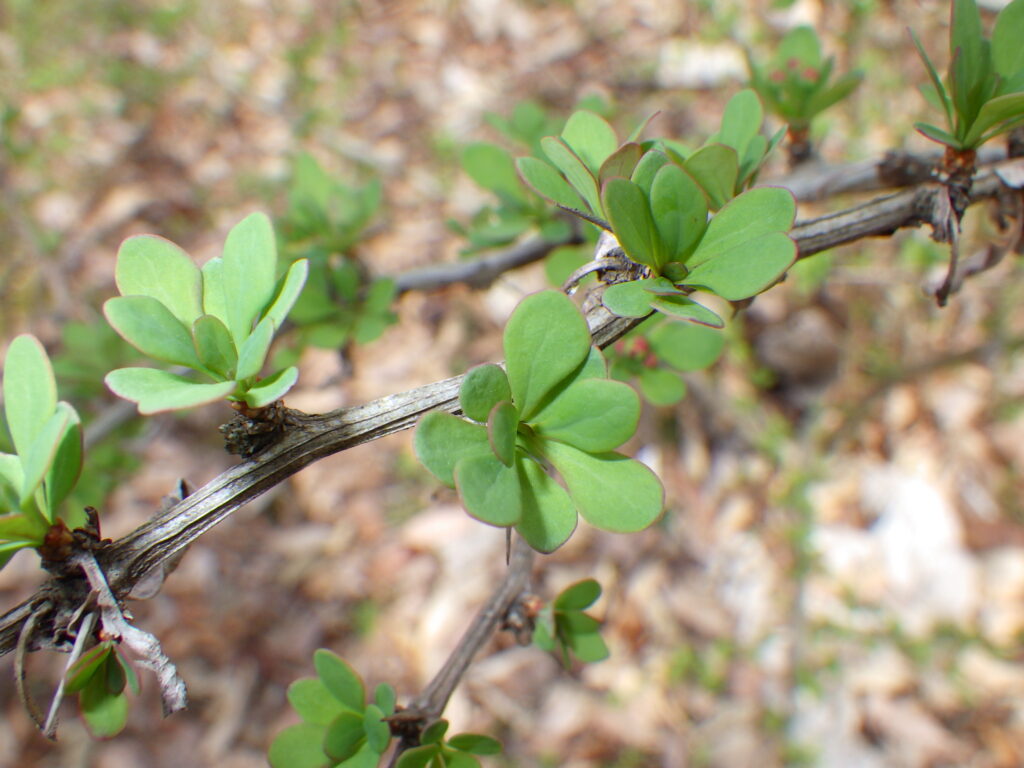
Also known as Kotori-noborazu, it is a deciduous shrub. The trunk has prominent longitudinal grooves and ridges, and the leaves are modified thorns. The inner bark and wood are yellow. The leaves are clustered, obovate or elliptical with entire margins, and the underside is whitish. It flowers from April to May. The flowers are yellow, and 2 to 4 flowers hang down from the ends of short branches. The fruit is a berry that ripens to red. It is native to Japan and distributed in Honshu (west of the Kanto region), Shikoku, and Kyushu. It is cultivated as an ornamental plant in Japan and overseas, and has become naturalized in North America and Europe (CABI, 2019). It is common in mixed forests on hillsides and in windy areas in mountainous regions. The red fruit is an adaptation for bird dispersal, and it is known to be eaten by at least brown-eared bulbuls, thrushes, and azure-winged magpies (Kanouchi, 2021).
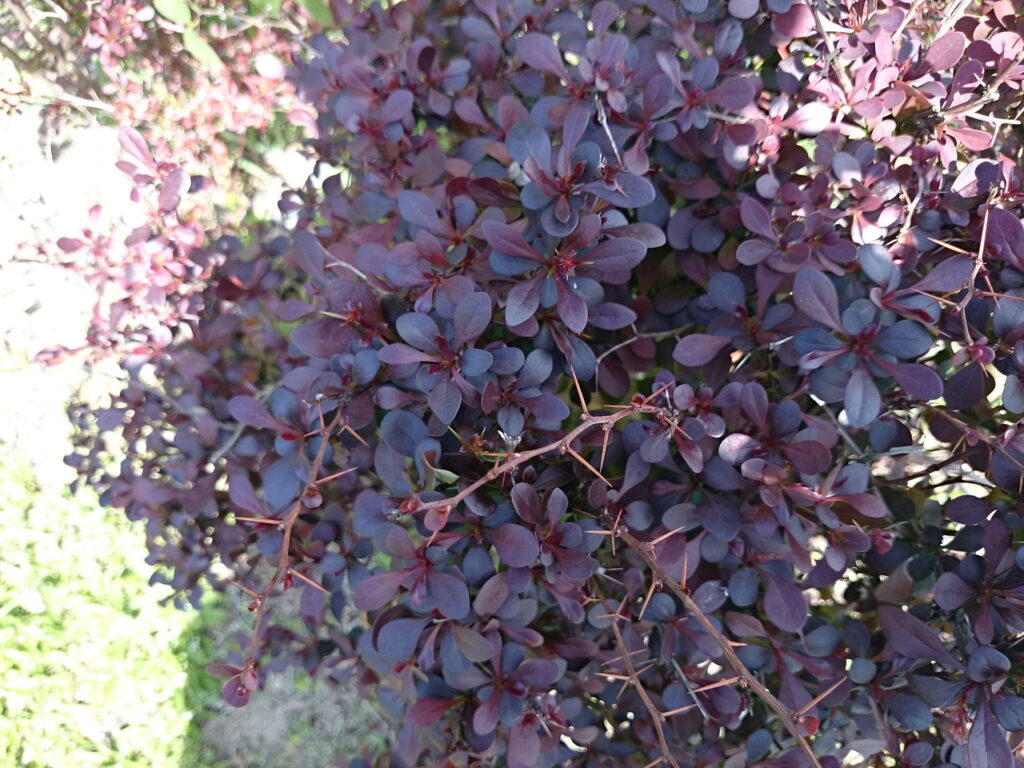
No. 1169.1 Berberis thunbergii 'Rose Glow'‘
This is a cultivated variety of barberry whose young leaves have irregular pink variegation, and as it matures, its leaves become almost entirely pink and black (to reddish-purple).
No. 1173 Mahonia japonica
This is an evergreen shrub. The pinnately compound leaves are 30-40 cm long, with sessile leaflets 4-9 cm long and 2.5-5 cm wide, bearing large, coarse, sharply pointed serrations. The leaves are leathery and glossy on the upper surface. The flowers are yellow, somewhat sparsely arranged in racemes, and mostly drooping. The berries are oval or nearly spherical and ripen to a dark purple color. Native to the Himalayas, China, and Taiwan, it is believed to have been introduced to Japan in the early Edo period. This species is the most common among those planted in parks and gardens in Japan, and escaped plants can sometimes be found in woodlands in plains, although many of these are young plants that have not yet bloomed. There is a horticultural variety that is a hybrid with B. lomariifolia, which is native to China, and has somewhat erect inflorescences that bloom earlier than Mahonia japonica (January-February). As the number of cultivated varieties increases, there is a possibility of interbreeding. When a honeybee touches a stamen while trying to drink nectar, a reflex movement occurs in the stamen, resulting in pollination (Tanaka and Hirano, 2000).
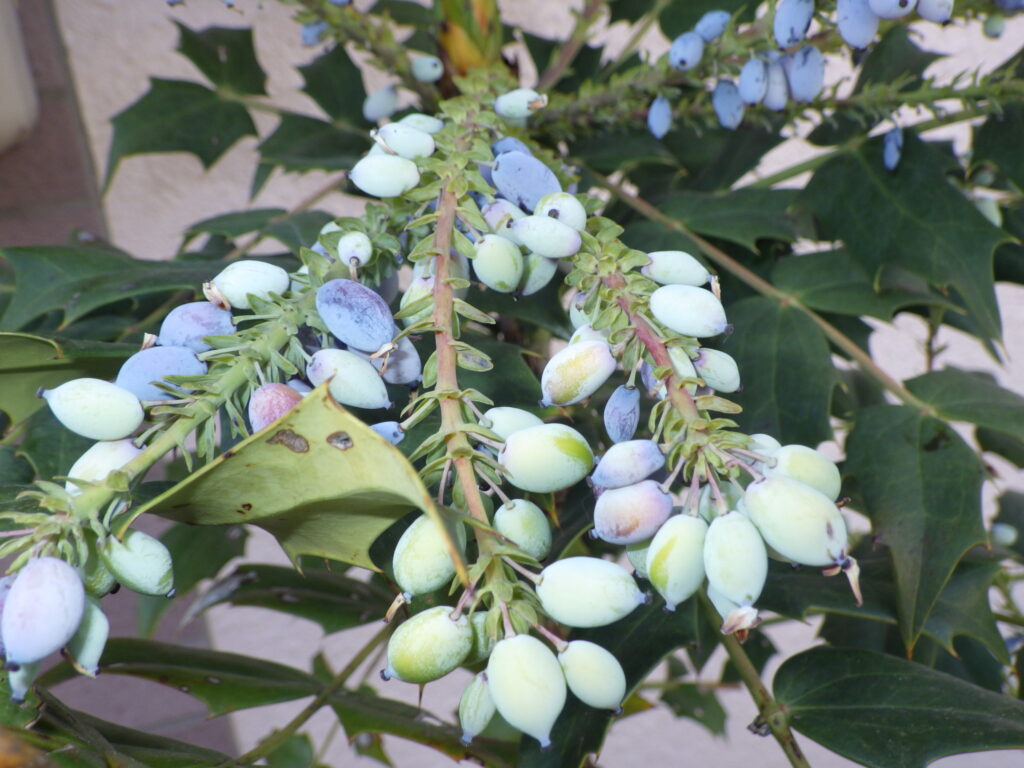
No. 1174 Narrow-leaved holly (Berberis fortunei)
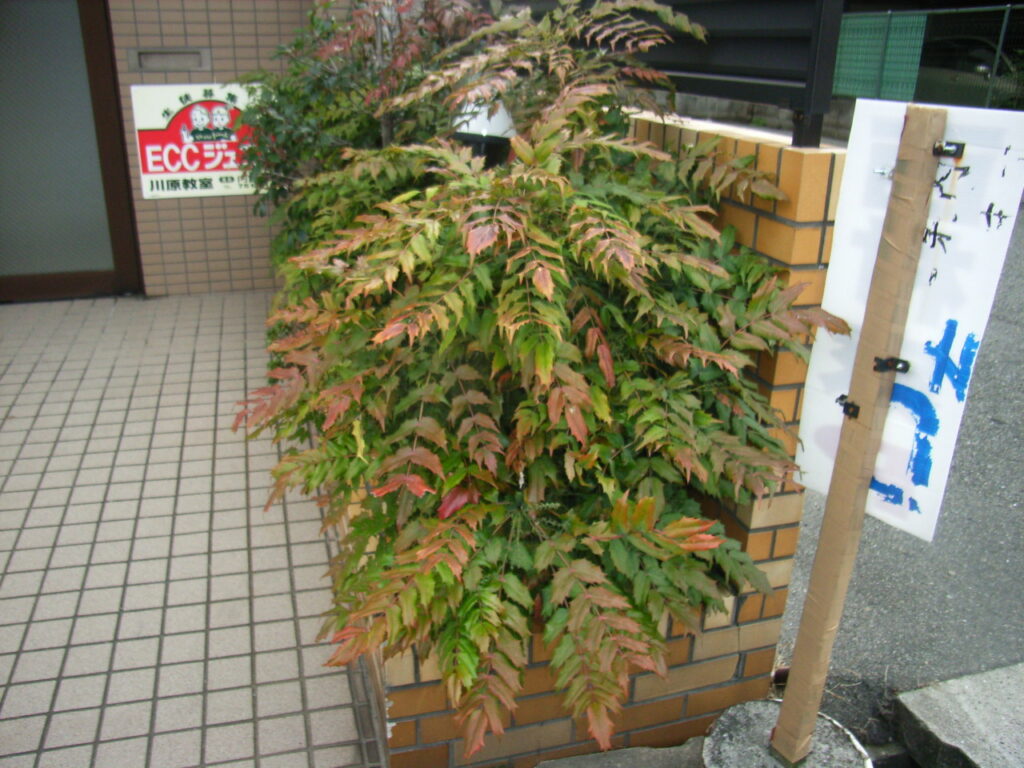
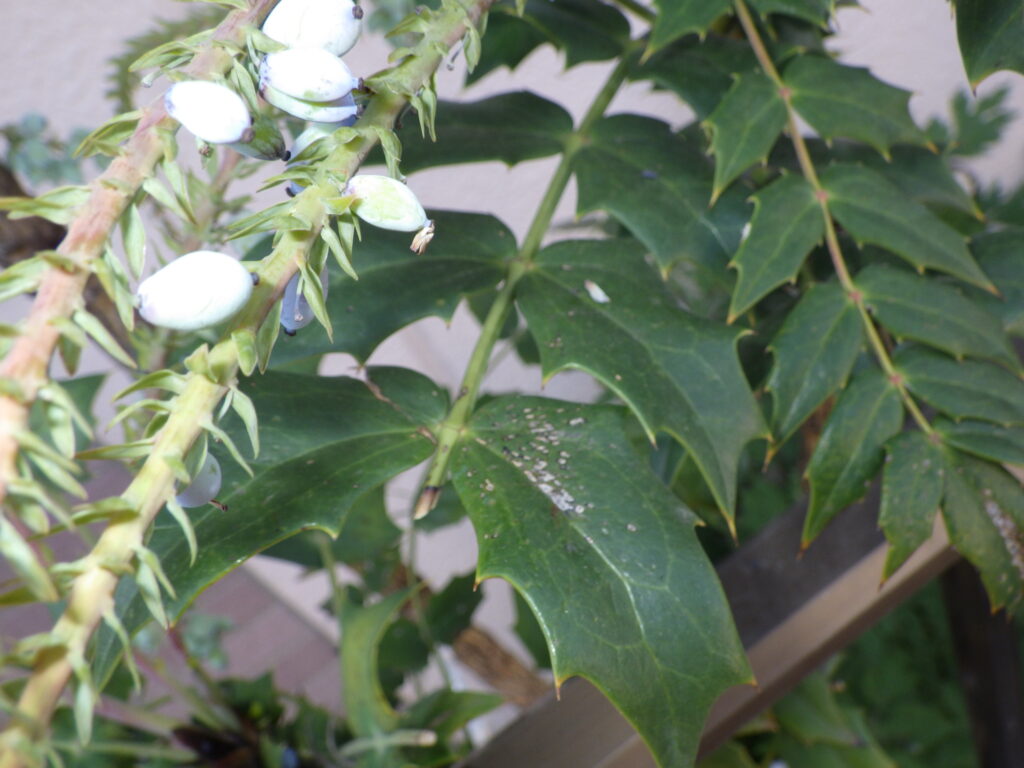
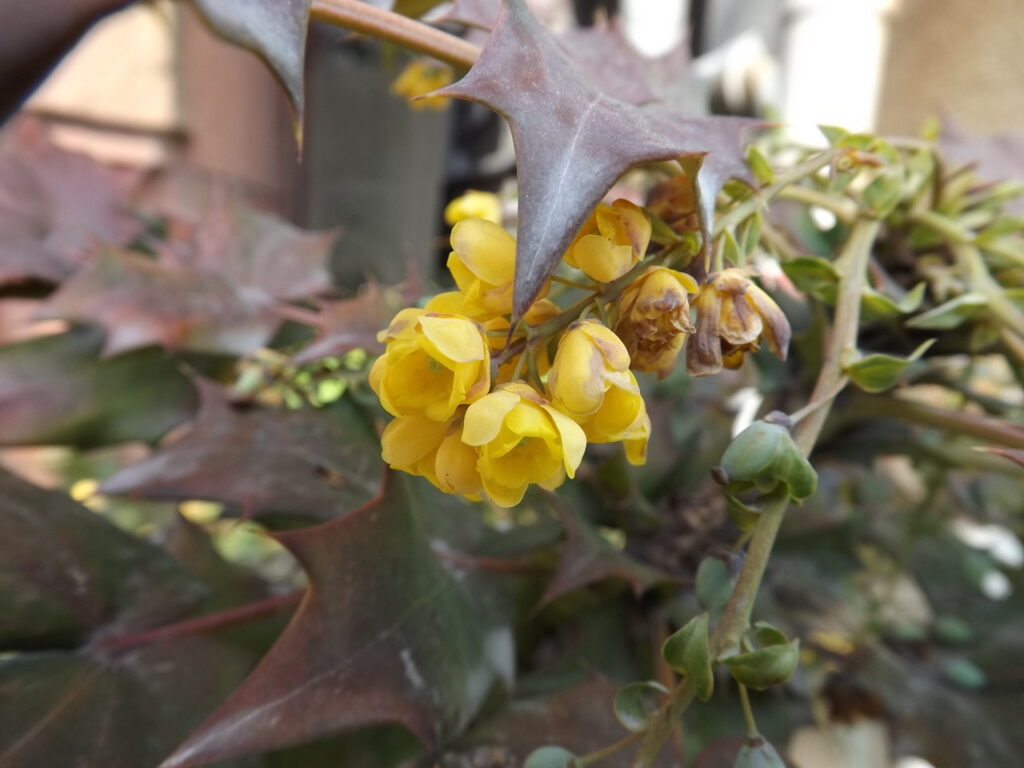
This evergreen shrub has pinnately compound leaves 15-30 cm long, with sessile leaflets 7-14 cm long and 1-2 cm wide, sparsely serrated with low teeth, leathery in texture, and slightly glossy on the upper surface. The racemes are mostly ascending, and the yellow flowers are somewhat densely packed. The berries are nearly spherical and ripen to a dark purple color. Native to China, it was introduced to Japan in the early Meiji era. It is commonly planted in parks and private gardens.
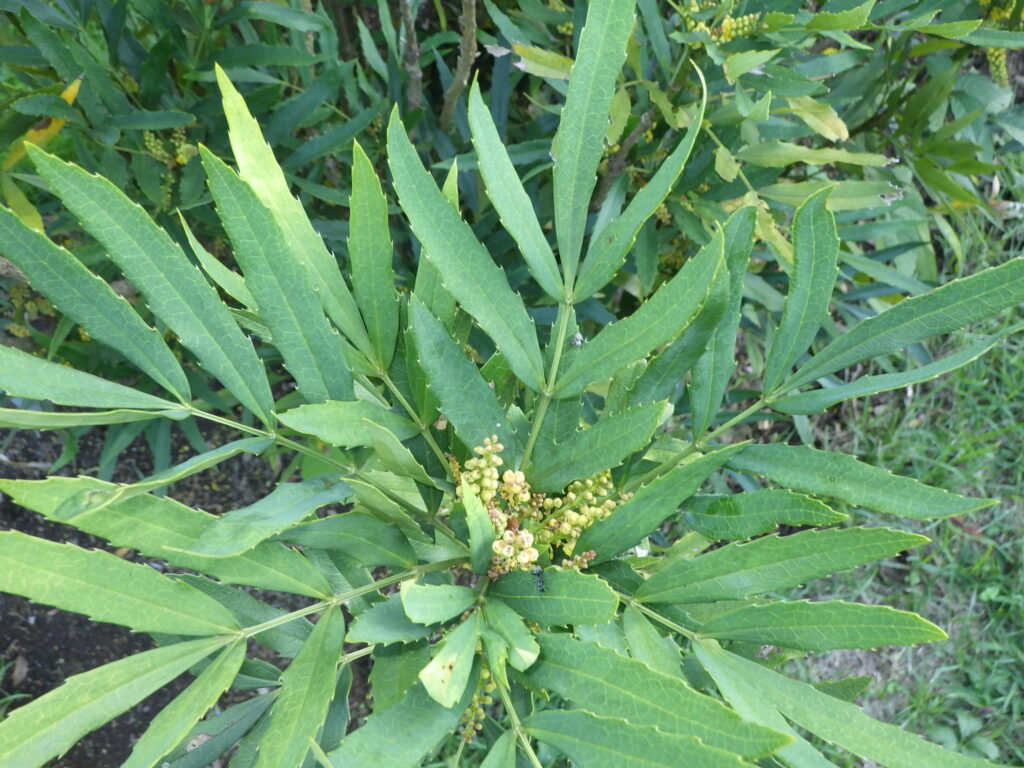
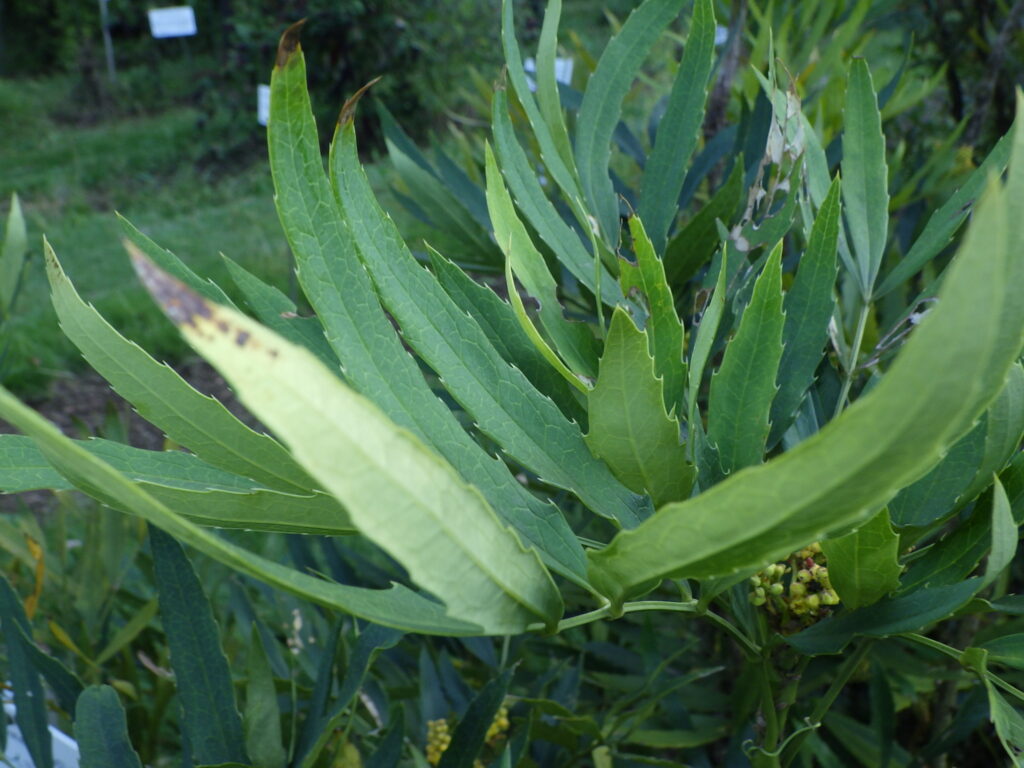
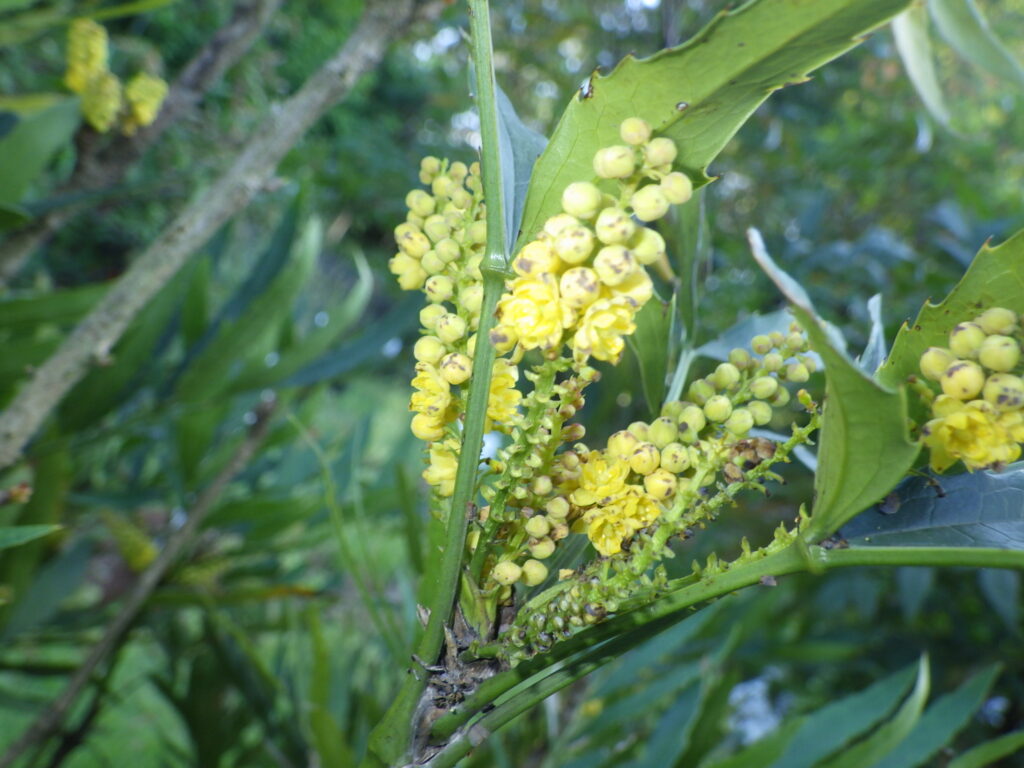
No.1174.a Narihirahiiragi Mahonia (Berberis eurybracteata subsp. eurybracteata)
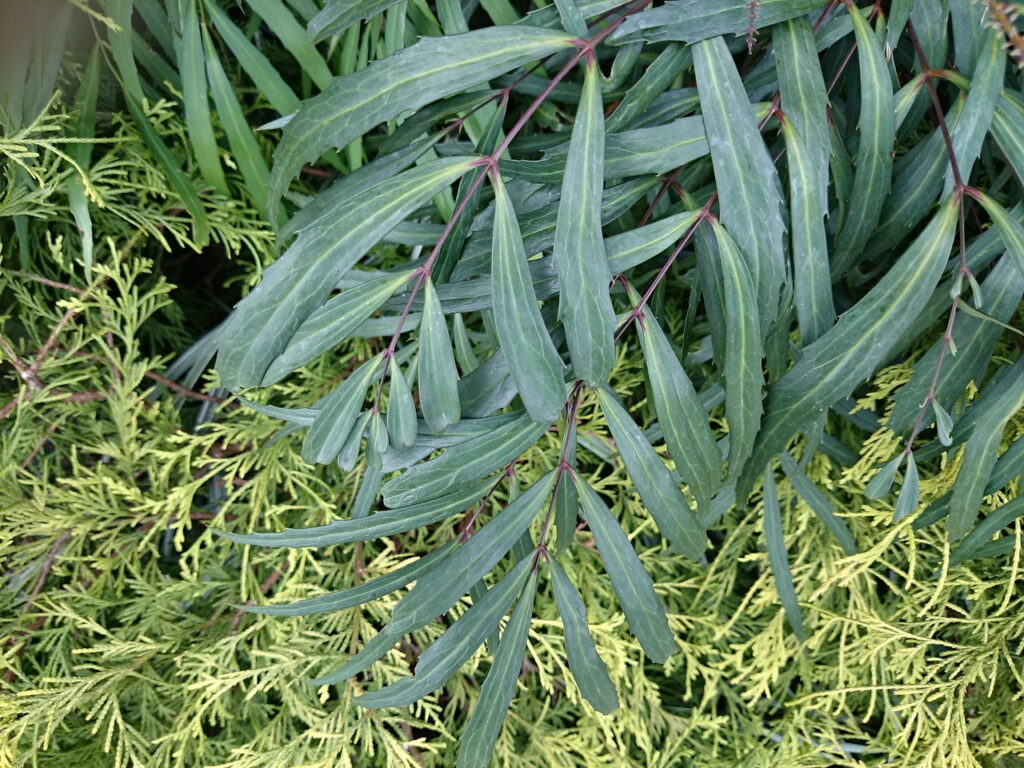
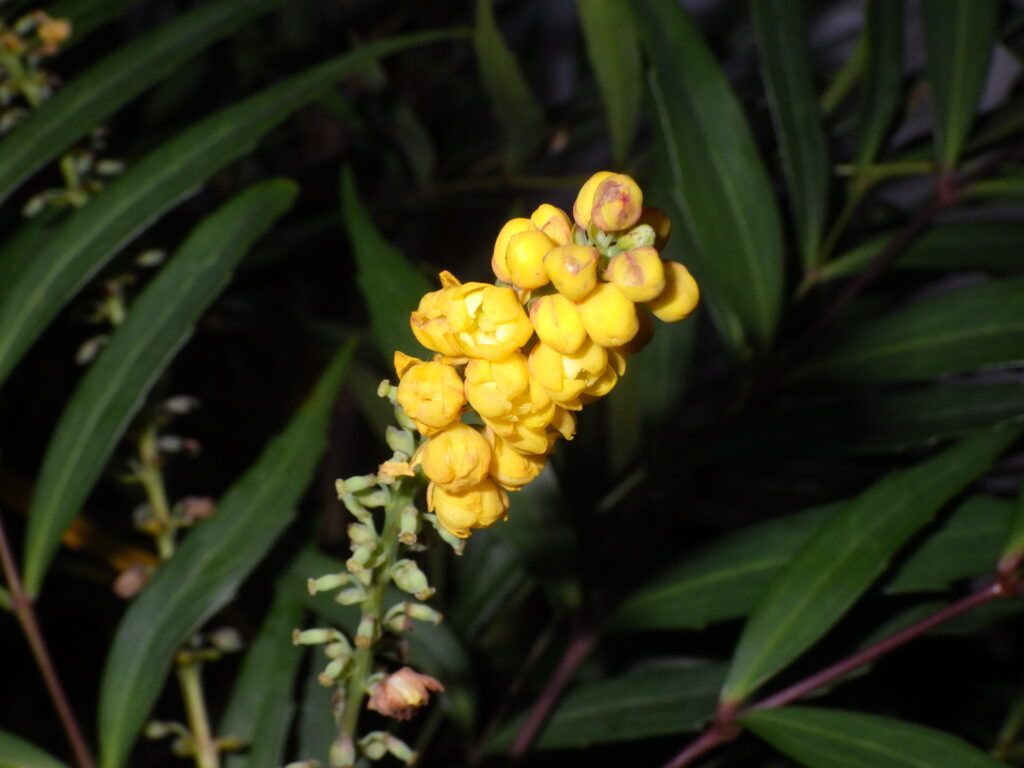
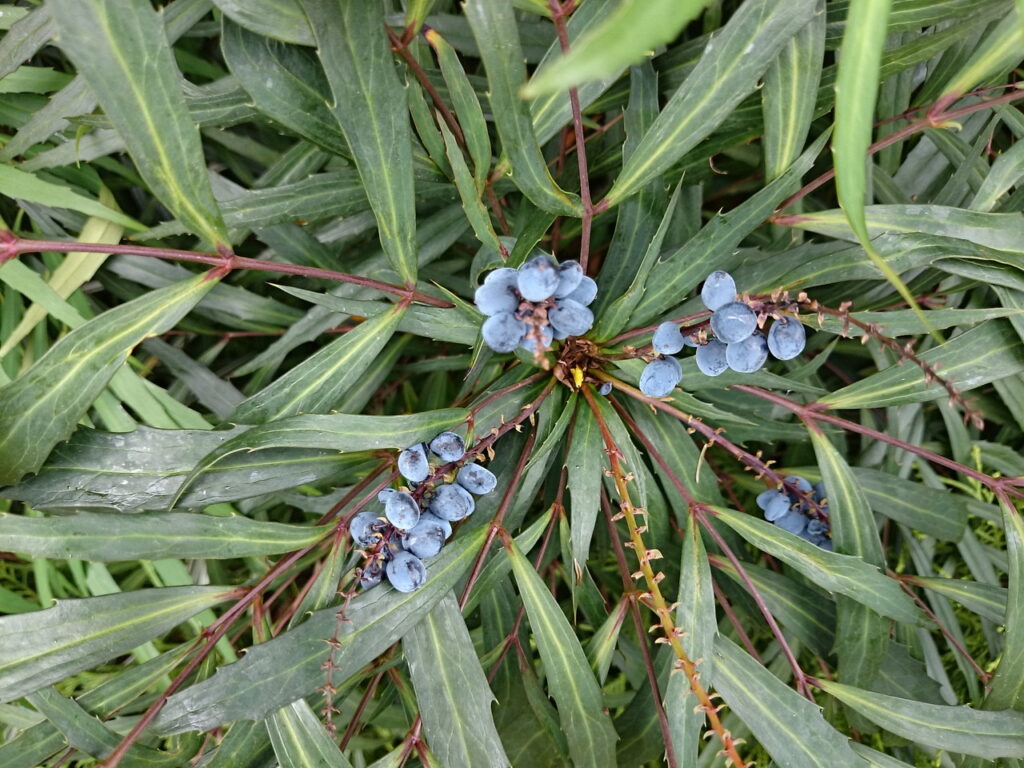
Evergreen shrub (Hayashi, 2014). Odd-pinnately compound leaves 20-40 cm long. Leaflets are in 5-10 pairs, 5-15 cm long. Similar to Mahonia japonica, but differs in that the leaflets are narrower and usually in more than 5 pairs. The width of the leaflets varies considerably, but in subsp. eurybracteata they are 2 cm or wider. Flowers bloom from late summer to early winter. In subsp. eurybracteata, the pedicels are 3-5 mm long. Tree height 1-2 m. Native to China, it is cultivated in Japan for ornamental purposes and can be seen as a garden tree and park tree. It grows wild in evergreen broadleaf forests, bamboo groves, forest edges, mixed forests, slopes overgrown with weeds, and open rocky areas (Flora of China). In subsp. ganpinensis, the leaflets are less than 1.5 cm wide and the pedicels are 1.5-2 mm long.
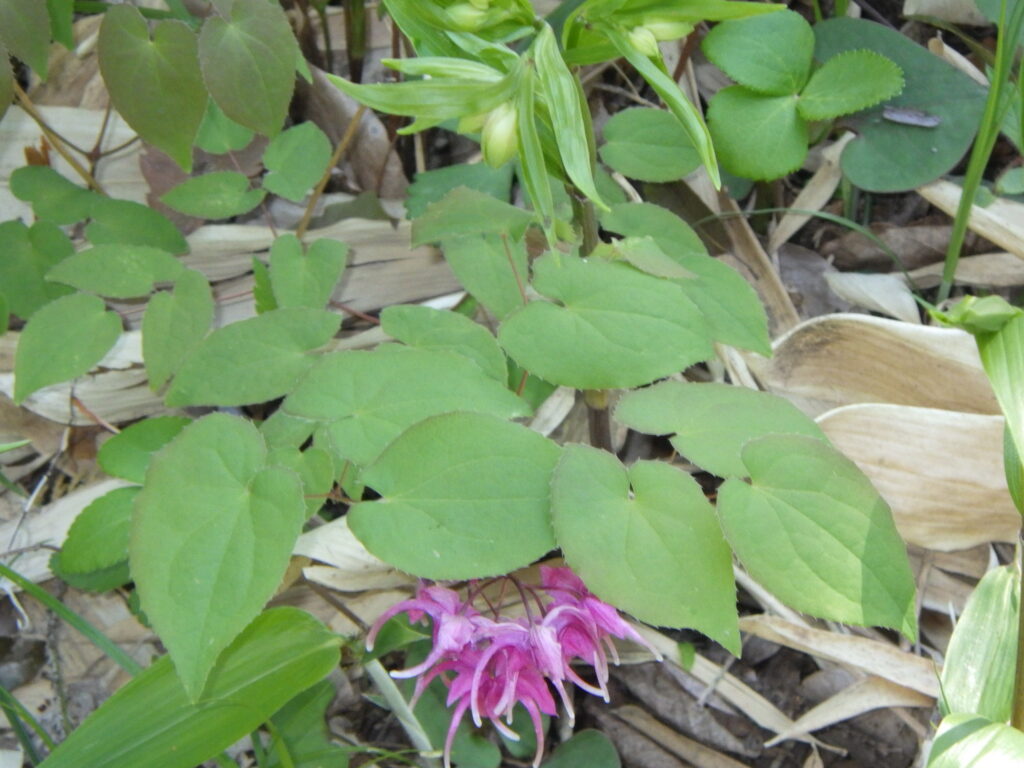
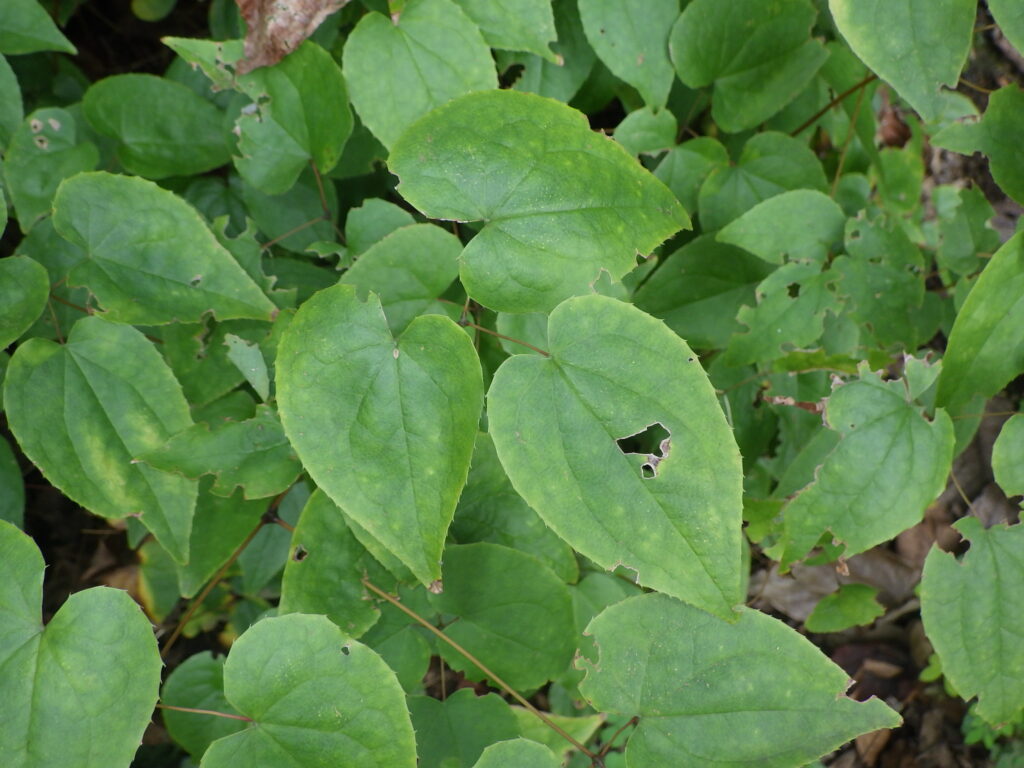
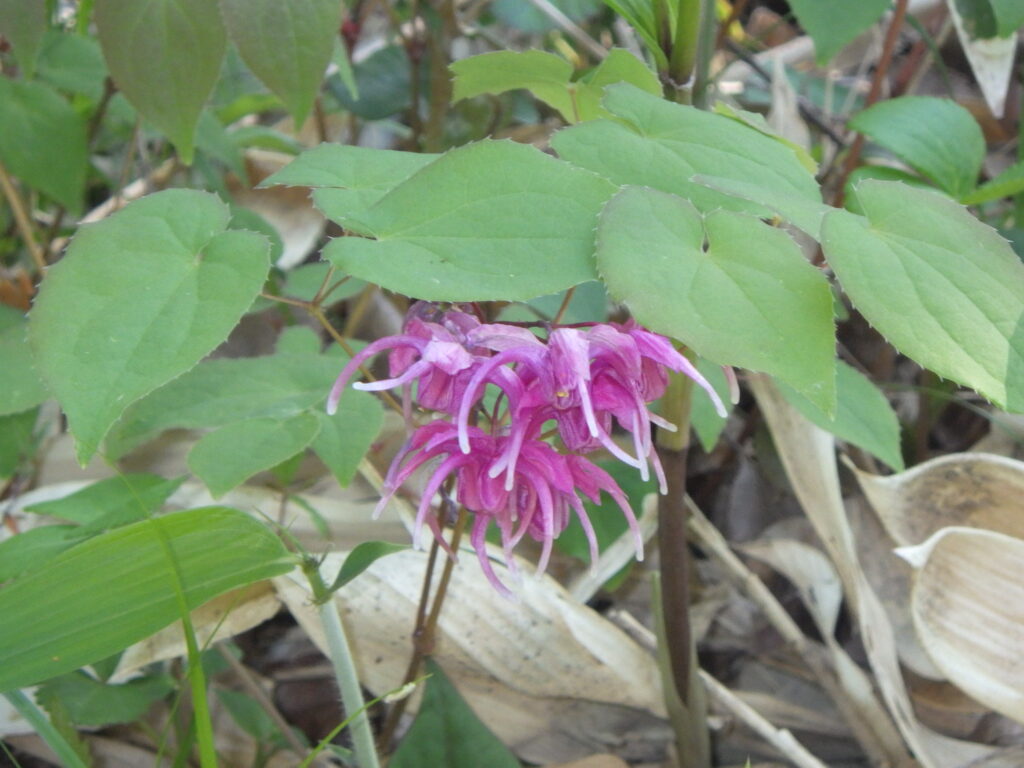
No.1175 Epimedium grandiflorum var. thunbergianum f. violaceum
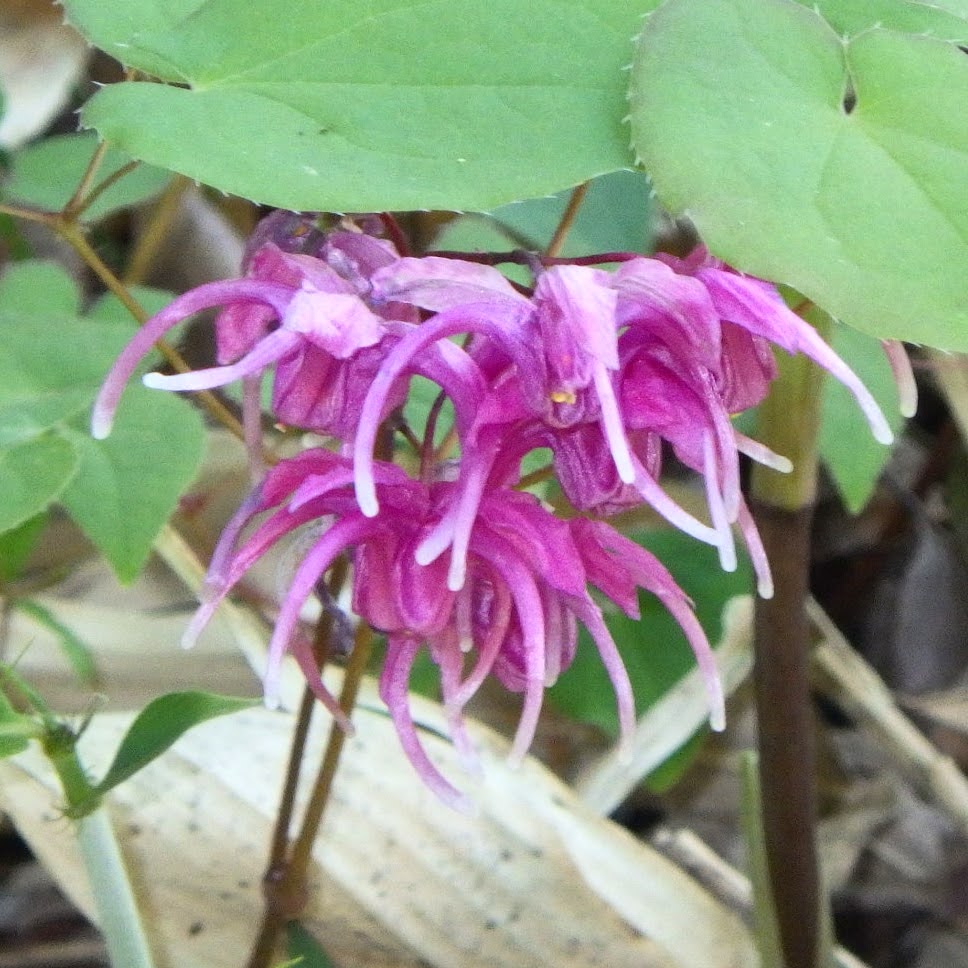
This is a deciduous perennial herb. The leaves are twice-ternate compound leaves, and most wither in winter. The leaflets have an irregularly heart-shaped base, needle-like serrations along the margins, and short, spreading hairs on the underside. The flowers are reddish-purple and bloom facing downwards, with long spurs on the petals. It is distributed in Hokkaido (Oshima Peninsula) and Honshu (mostly on the Pacific side). It grows in forest edges on hillsides and in bright mixed forests. The basic variety, var. grandiflorum, is known as Yachimataikarisou and is distributed in the Kinki region and Shikoku.
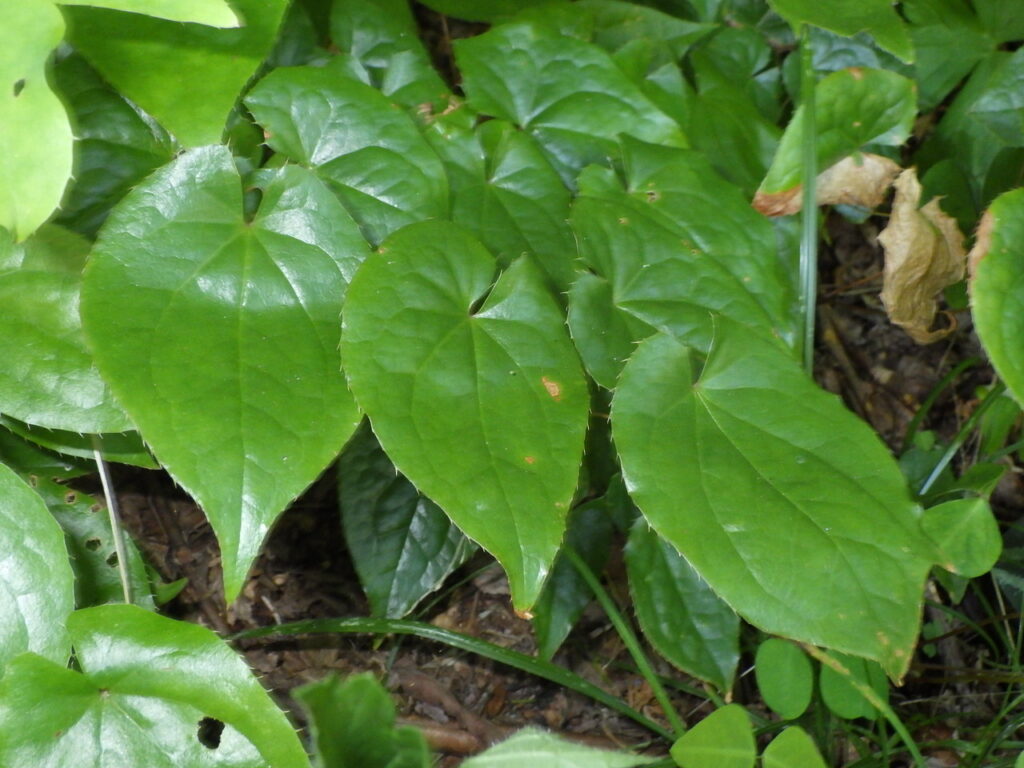
No. 1177 Epimedium sempervirens
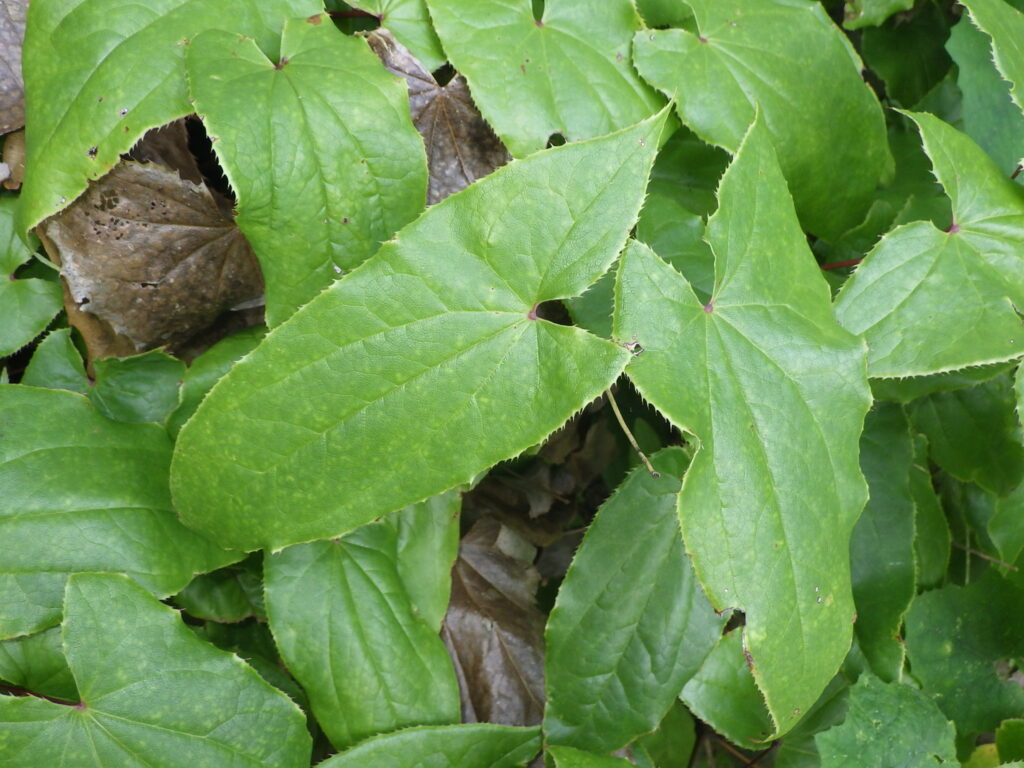
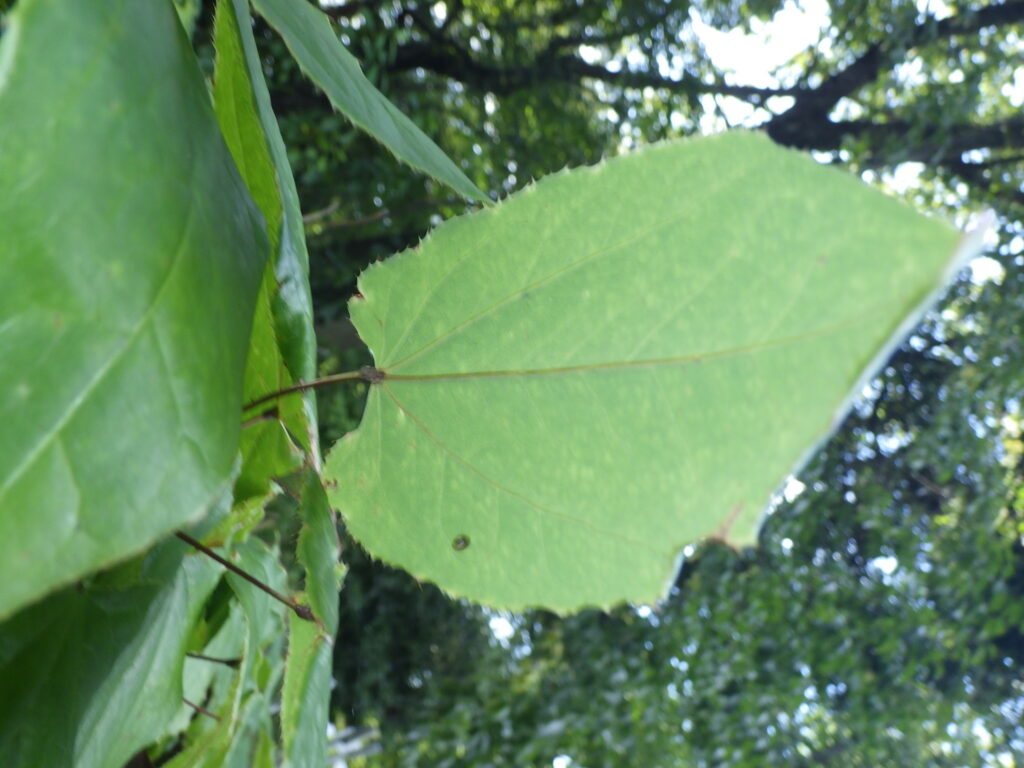
This evergreen perennial herb (a mountain flower) grows to a height of 30-60 cm. The leaves are twice-ternate compound leaves. The leaflets are stiff, distorted ovate with a tail-like tip and a deeply heart-shaped base, 5-10 cm long, with bristles along the edges. It flowers from April to May. The flowers are 3-4 cm in diameter, white to reddish-purple. The petals are four in number and have a spur. The calyx is petal-like and consists of eight parts. The four inner parts are larger, while the four outer parts are deciduous. It grows in forests in mountainous areas of Honshu (the Japan Sea side from the Tohoku region to the San'in region) in areas with heavy snowfall.
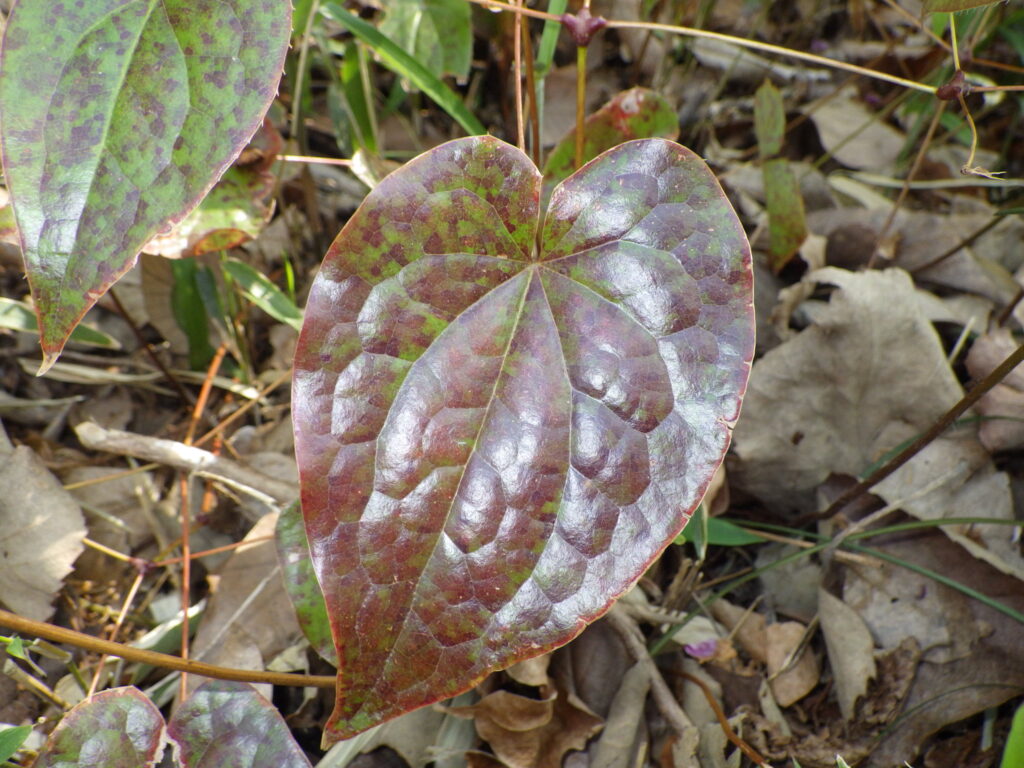
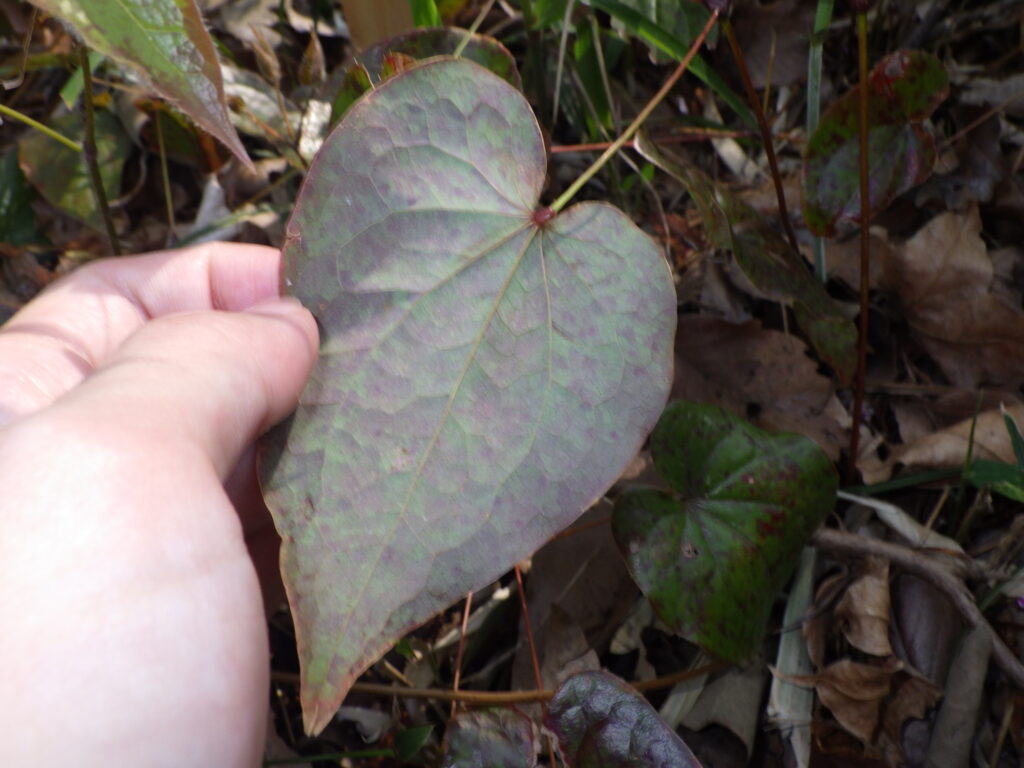
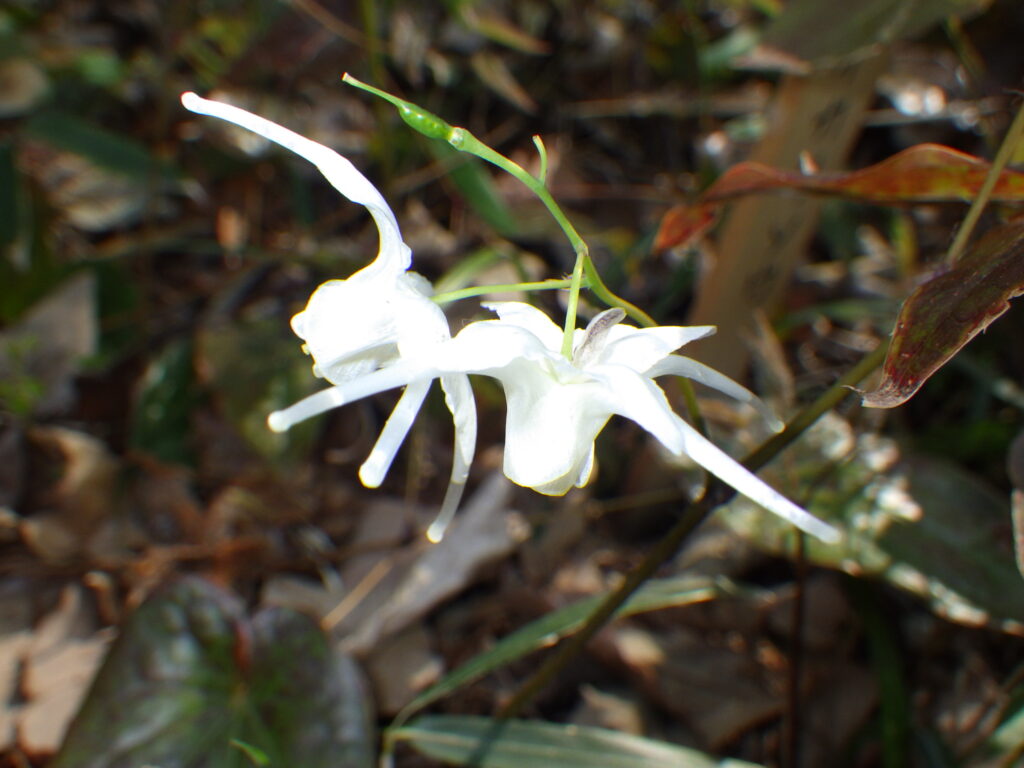
No. 1181 Epimedium x setosum
A perennial herb (a mountain flower). It grows to a height of 25-40 cm. The leaves are 1-2 times compound, with ovate-elliptic leaflets 6-10 cm long and with bristles along the edges. The flowers are white and lack spurs. It is distributed in Honshu (Chubu region) and grows in mountain forests.
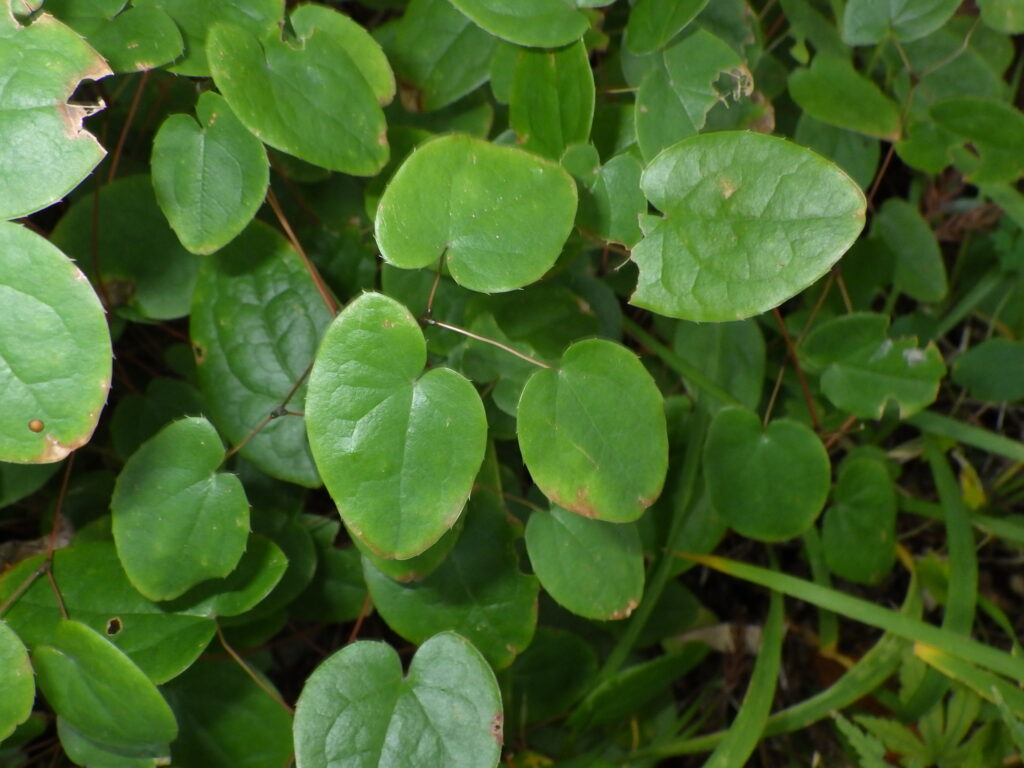
No. 1183 Epimedium sagittatum var. sagittatum
Herbaceous plant (Flora of China). 30-50 cm tall. The rhizome is short, sturdy, node-like, and has numerous fibrous roots. The leaves have a base and petiole, are trifoliate compound leaves, ovate to ovate-lanceolate, 5-19 x 3-8 cm, leathery, sparsely striped on the underside, deeply or shallowly notched at the base, pointed or acuminate at the apex, the terminal leaflet has evenly rounded or oblong lobes, the lateral leaflets are oblique, the outer leaves are large and triangular and pointed, the inner leaves are small and rounded, and the margins have dense, spindle-shaped lower spines. Flowering occurs from April to May. The flower stalk has two opposite trifoliate compound leaves. The pedicels are 10-20 (up to 30) x 2-4 cm, with 20-60 whorls, sometimes 3 whorls on the lower pedicels, usually glossy, sometimes with sparse glandular hairs. The pedicels are about 1 cm long and glossy. The flowers are white, about 8 mm or less in diameter. The outer sepals are four in number, with purple spots, and have blunt tips. The outer pair are narrowly ovate, about 3.5 × 1.5 mm, while the inner pair are oblong, about 4.5 × 2 mm. The inner sepals are white, ovate, about 4 × 2 mm, and have acute tips. The petals are brownish-yellow, sac-like, 1.5–4 mm, and blunt. The stamens are long, 3–5 mm, with anthers 2–3 mm. The pistil is about 3 mm, and the stamens are longer than the ovary. Fruiting occurs from May to July. The capsule is about 1 cm, and the pedicel is about 6 mm. In var. glabratum, the underside of the leaflets is glabrous, the terminal leaflet is oblong, and the flowers are yellow.
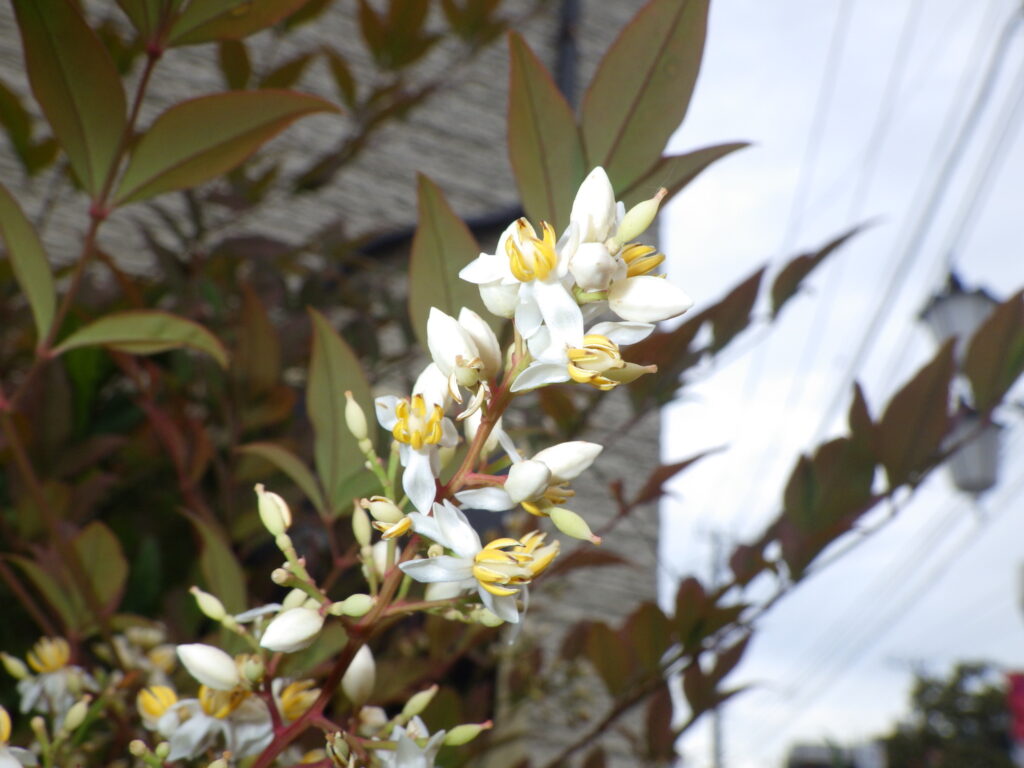
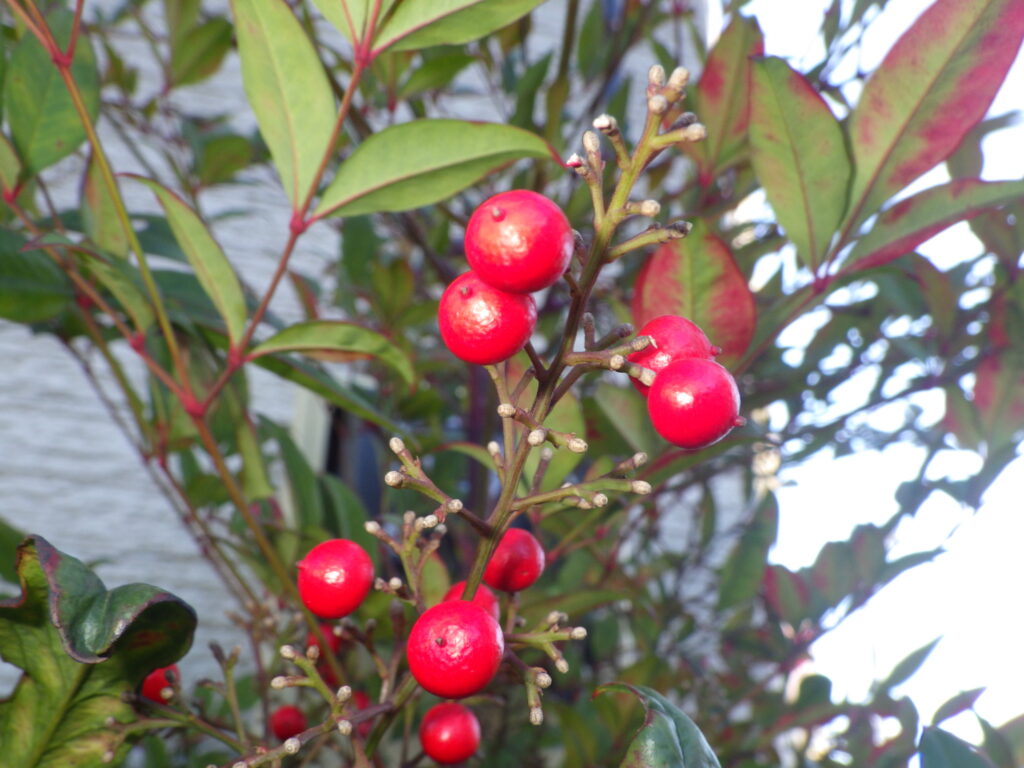
No. 1185 Nandina domestica
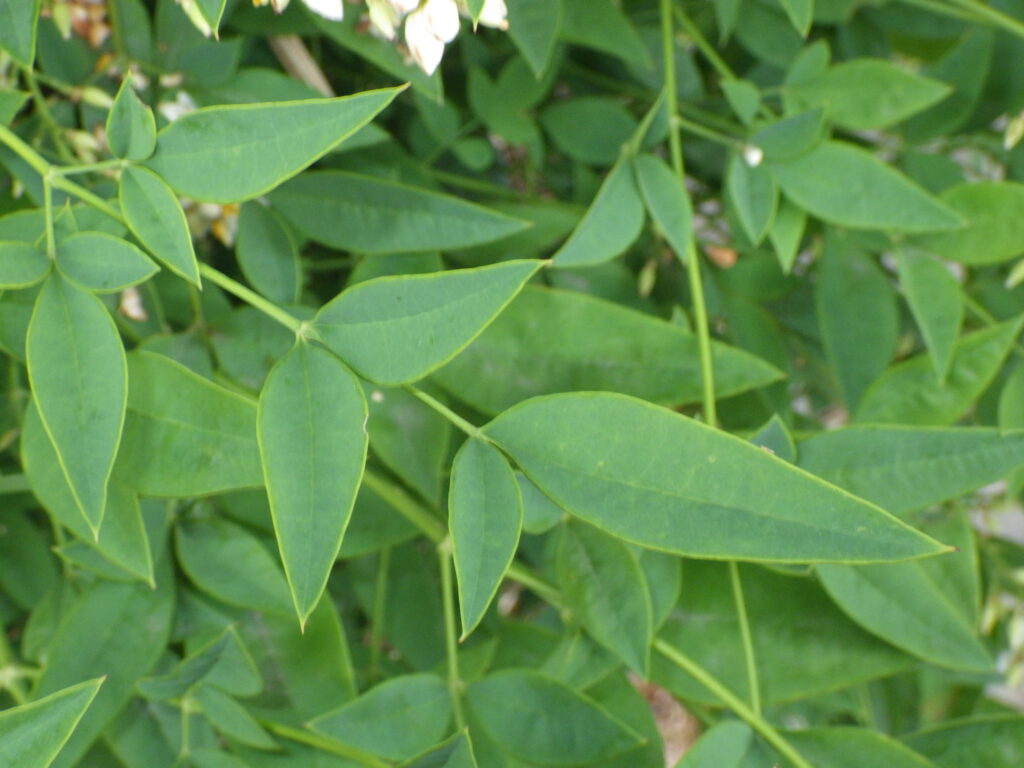
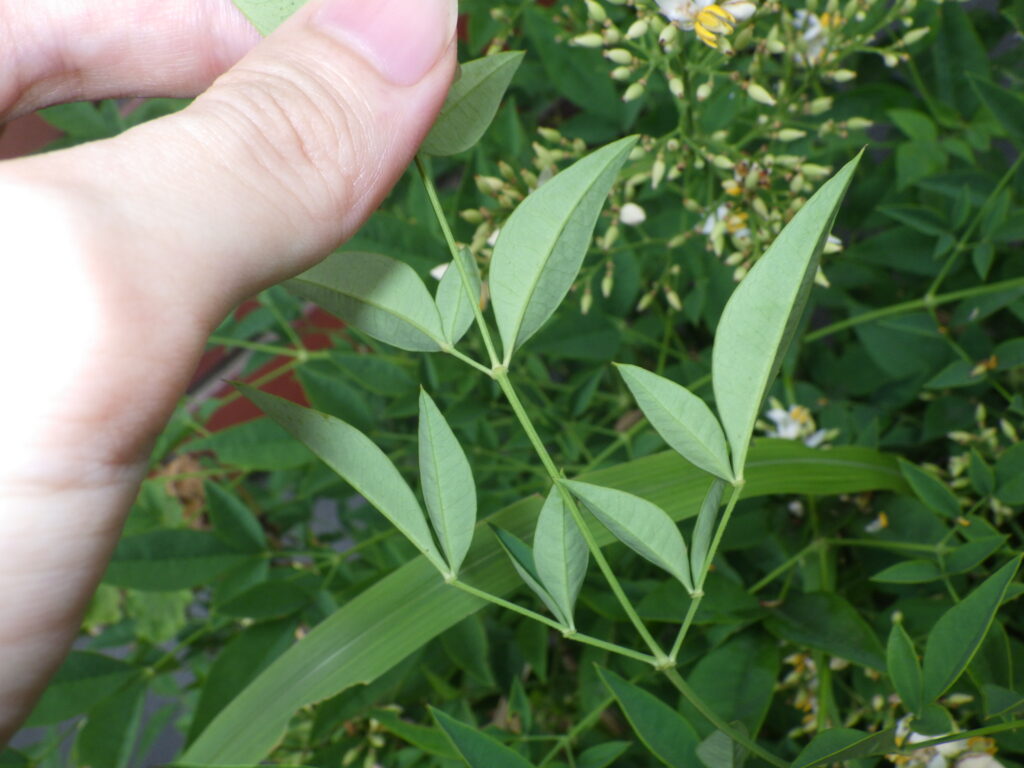
This is an evergreen shrub that grows to a height of about 3 meters. The bark is brown, with vertical grooves and the bases of withered leaves remaining at the top. The leaves are alternate, 3-pinnately compound. The leaflets are lanceolate, 3-7 cm long and 1-2.5 cm wide, with sharply pointed tips and entire margins. They are leathery and glossy on the surface. It flowers from May to June. Large, conical inflorescences emerge from the tips of the branches, bearing numerous white flowers 6-7 mm in diameter. The perianth segments are arranged in whorls of three, becoming larger towards the inside, with the innermost six being petal-like. There are six stamens with short filaments. The fruit is a berry, spherical, 6-7 mm in diameter, ripening red in October and November. The seeds are nearly spherical, 5-6 mm in diameter, usually two per fruit. While it can grow wild in the mountains and fields of warm regions from Ibaraki Prefecture westward to Kyushu, it is mostly cultivated as a garden tree. It is distributed in Japan, China, and India, and has been introduced to southeastern North America, the West Indies, and South America (Peru) (Flora of China). Most of the plants growing in the mountains and fields are rare specimens, and some believe that it was originally introduced from China, and that its natural habitat in Japan is questionable. Because the Japanese name for Nandina (Nanten) sounds similar to "turning misfortune into fortune," it is considered an auspicious tree and is especially used for warding off evil, purification, and fire prevention, placed near the northeast and southwest corners of the country, near toilets, and as a potted plant for New Year's. There are records in literature of honeybees visiting the flowers (Negoro, 2009), and several photographs of Japanese honeybees visiting the flowers can be found on the internet. Morphologically, although it is a berry, the relatively dry red fruit is an adaptation for bird dispersal, and it is known to be eaten by starlings at least (Ueda, 1999).
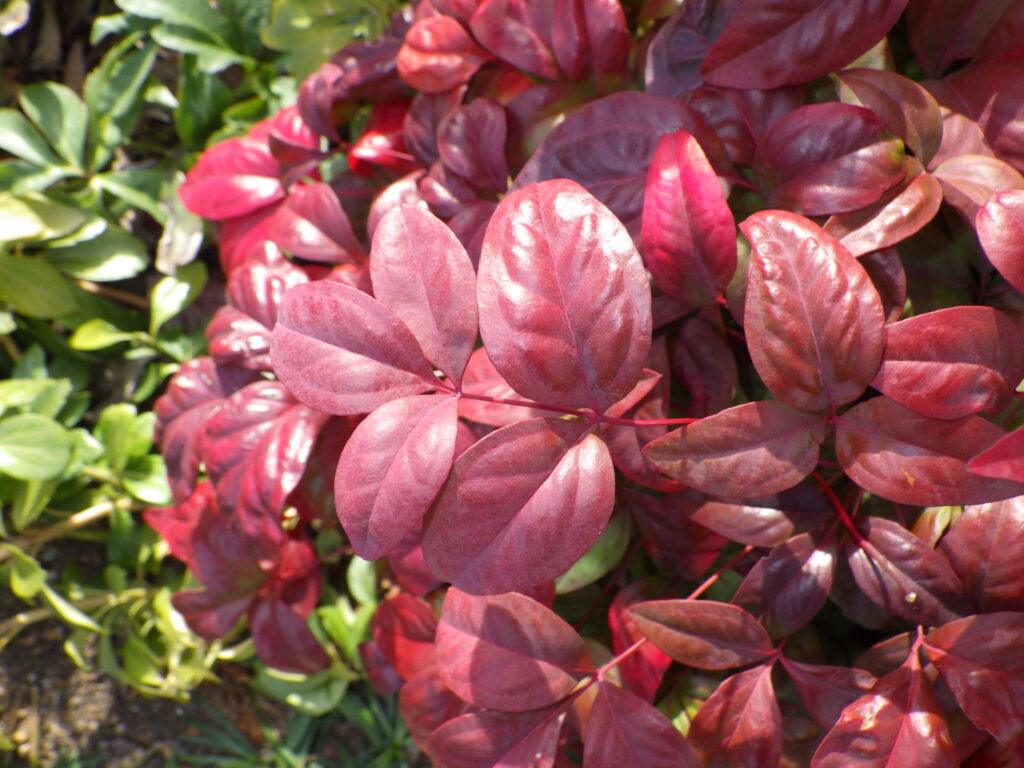
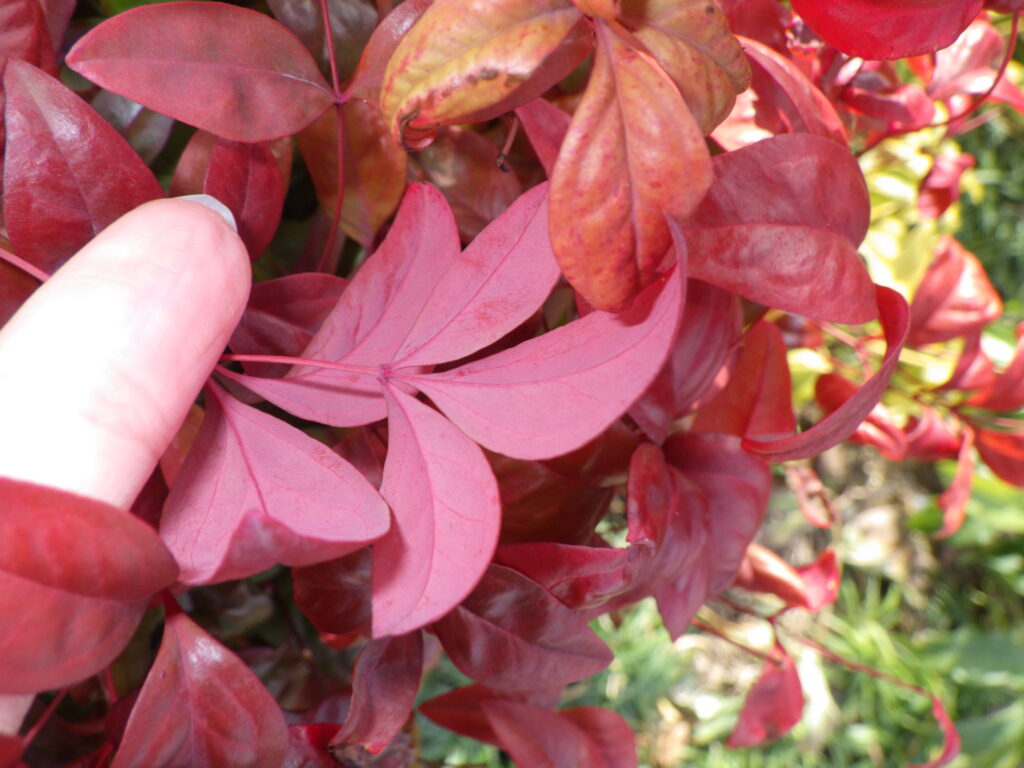
No.1185.1 Otafuku Nandina domestica 'Otafukunanten'‘
This dwarf variety of Nandina has a height of approximately 30 cm and leaves that are slightly wider and rounder than those of the common Nandina. Its beautiful autumn foliage makes it popular for planting along streets and in flowerbeds.
References
CABI. 2019. Berberis thunbergii (Japanese barberry). CABI Compendium. https://doi.org/10.1079/cabicompendium.8808
Hayashi, Masayuki. 2014. 1100 Tree Leaves Identified Through Real-Life Scans. Yama-kei Publishers, Tokyo. 759pp. ISBN: 9784635070324
Kanagawa Prefecture Flora Survey Association. 2018. Kanagawa Prefecture Flora 2018 (Electronic Edition). Kanagawa Prefecture Flora Survey Association, Odawara. 1803pp. ISBN: 9784991053726
Kanouchi, Takuya. 2021. Handbook of Wild Birds and Tree Nuts (Revised and Expanded Edition). Bun-ichi Sogo Shuppan, Tokyo. 104pp. ISBN: 9784829981672
Negoro, Takashi. 2009. Survey of flower-visiting insects at Kojō Park in Takaoka City, and comparison of survey results at 11 locations in Toyama Prefecture. Research Report of the Toyama City Science Museum 32: 39-60. https://www.tsm.toyama.toyama.jp/_ex/exfiles/bull/32/2009_04.pdf
Tanaka, Hajime & Hirano, Takahisa. 2000. The Face of Flowers: Wisdom for Bearing Fruit. Yama-kei Publishers, Tokyo. 191pp. ISBN: 9784635063043
Ueda, Keisuke. 1999. Unexpected Birds' Unexpected Preferences: Who Eats the Inconspicuous "Dry Fruit"?. In: Ueda, Keisuke (Ed.), Seed Dispersal: The Evolution of Mutual Aid Vol. 1: Seeds Carried by Birds (pp. 64-75). Tsukiji Shokan. ISBN: 9784806711926