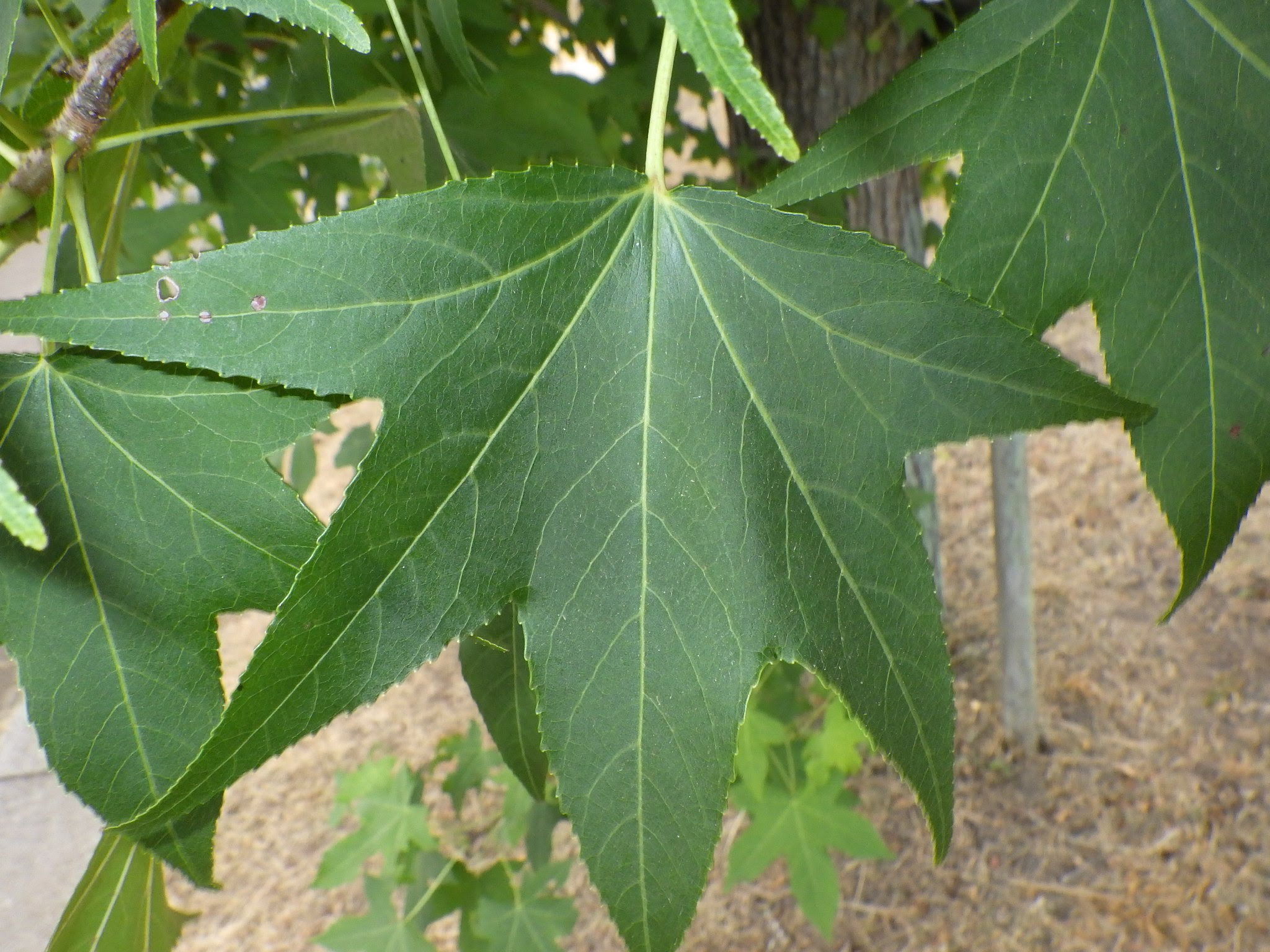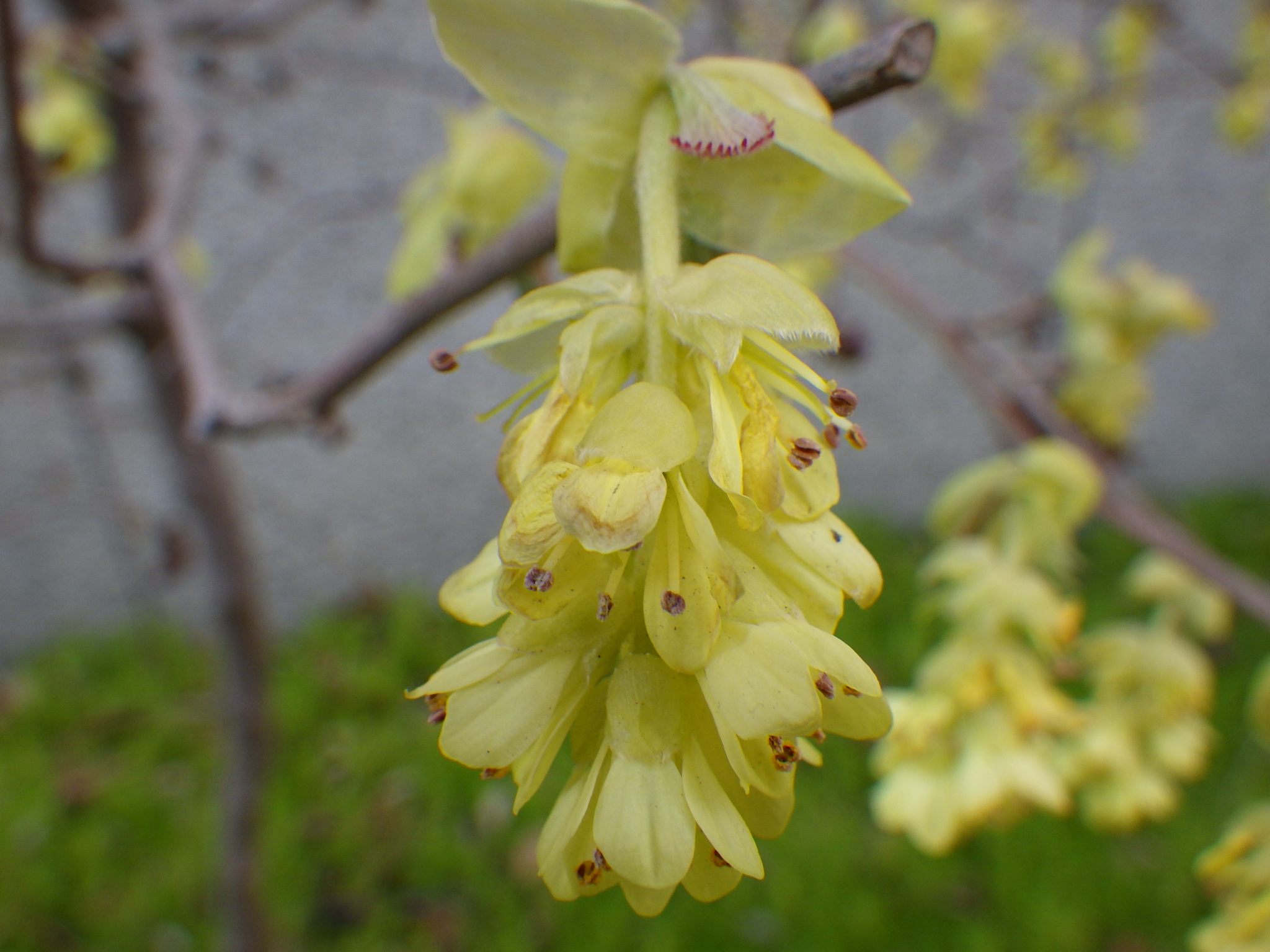
Hamamelidaceae are deciduous or evergreen trees or shrubs, often covered with stellate hairs. Leaves are alternate, simple or palmate, and petiolate. Deciduous stipules are present. Flowers are bisexual or unisexual, radially symmetrical, rarely bilateral, axillary, capitate, or conchoidal. Perianth is absent (petalless or nude). Calyx is often 4-5, fused to the petals at the base. Corolla is 4-5, tile-like or cobblestone-like. Stamens are 2-8 in a single whorl, anthers 2-lobed, longitudinally lobed. Pistil is 1, ovary mezzograde, inferior, rarely superior, 2 carpels, 2-lobed, axial placenta, each with 1-2 pendulous ovules, style and 2 stigmas. Capsule is 2-lobed, fusiform or wall-lobed. Embryo is adnate. Seeds are sometimes winged, with a small amount of endosperm. Approximately 27 genera and 110 species are known worldwide in the warm temperate to subtropical regions. Many are found in Asia, especially East Asia, with the remainder in Africa, Australia, Northeast America, India, northern Iran, and Madagascar. Japan has 5 genera, about 8 species, and 6 varieties. In the APG system, it belongs to the Saxifragales order along with families such as Paeoniaceae, Cercidiphyllum, Ilex crenata, and Grossulaceae. The genus Liquidambar was separated from the Hamamelidaceae family into the Altingiaceae family, which is also in the Saxifragales order.
This article provides a comprehensive, illustrated guide to plants belonging to the Hamamelidaceae family.
The photos are replaced as soon as better ones are taken. Also, while the identification is done by the author, please note that if there are any misidentifications, they may be changed without notice.
- No. 1337 Loropetalum chinense var. chinense
- No.1337.1 Loropetalum chinense var. rubrum
- No. 1338 Disanthus cercidifolius
- No. 1341 Hyuga-mizuki (Corylopsis pauciflora)
- No. 1342 Corylopsis spicata
- No.1342.a Corylopsis sinensis
- No. 1345 Distylium racemosum
- No.1346.a Rhodoleia championii (False Rhododendron)
- References
No. 1337 Loropetalum chinense var. chinense
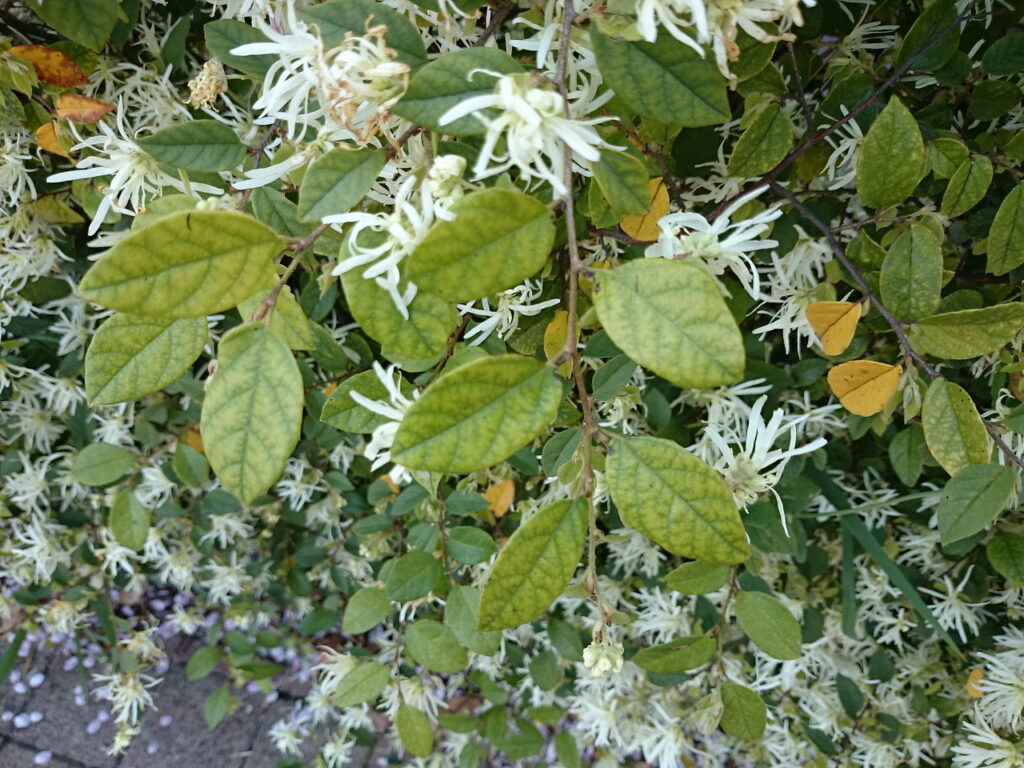
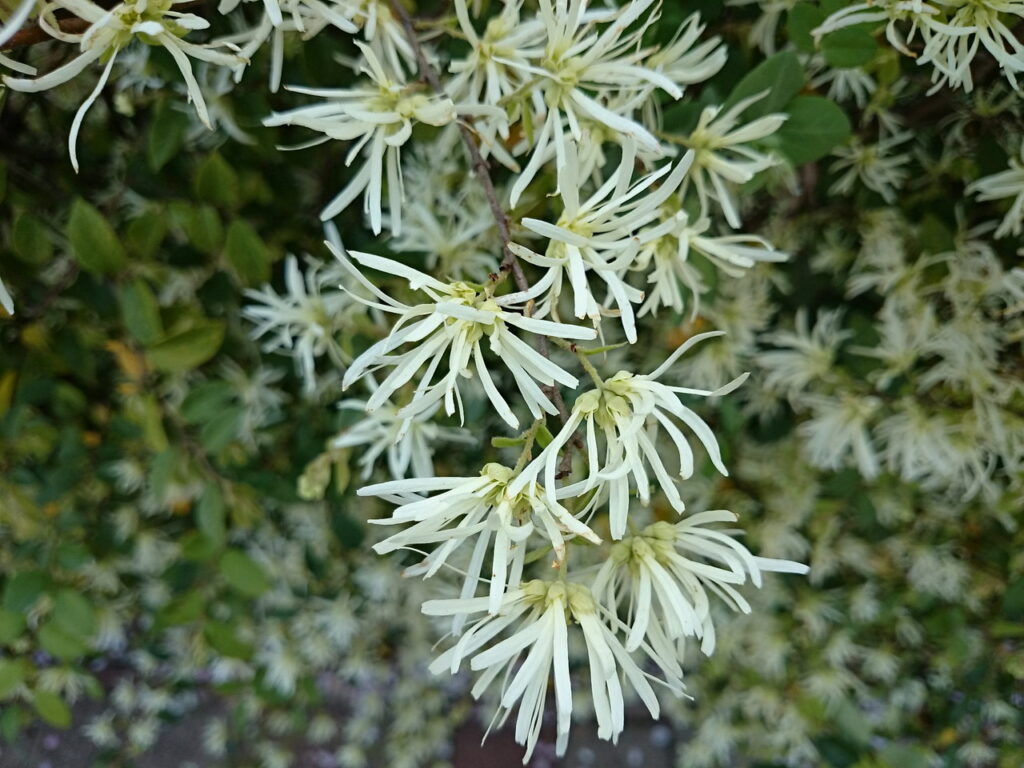
Evergreen small tree (flowers that bloom on trees, polypetalous flowers 2). Usually about 3m tall, but some can reach 8m. The bark is dark brown. Young branches are densely covered with pale brown stellate hairs. Leaves are alternate. Leaf blades are elliptic to ovate-oblong, 2-6cm long and 1-3cm wide. They are asymmetrical and have entire margins. Both surfaces are covered with stellate hairs, densely on the veins on the underside and on the petioles. Petioles are 2-4mm long. Flowering period is April to May. White flowers bloom in clusters at the tips of the branches. There are 4 petals, broadly linear, about 1.5cm long. The outer surface of the sepals is covered with stellate hairs. The fruit is a capsule. It is ovoid, about 7mm long, and covered with stellate hairs. When ripe, it splits into two, releasing seeds about 5mm long. Flowering period is April to May. It is distributed in Honshu (Shizuoka and Mie prefectures), Kyushu (Kumamoto prefecture), and from central and southern China to the eastern Himalayas. It is commonly cultivated. Self-pollination has been confirmed, but based on chloroplast DNA analysis and the observation of thrips inside the petals, the possibility of cross-pollination cannot be ruled out, and outbreeding via insects or wind is suggested (Gong et al., 2016). Seeds are dispersed by gravity.
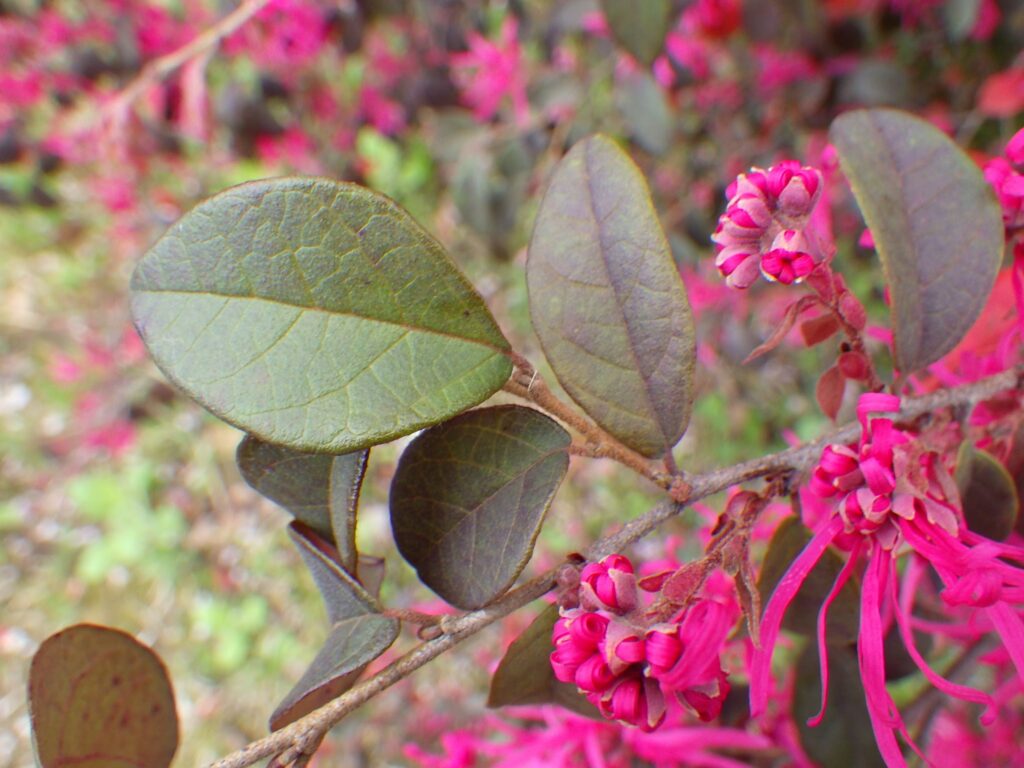
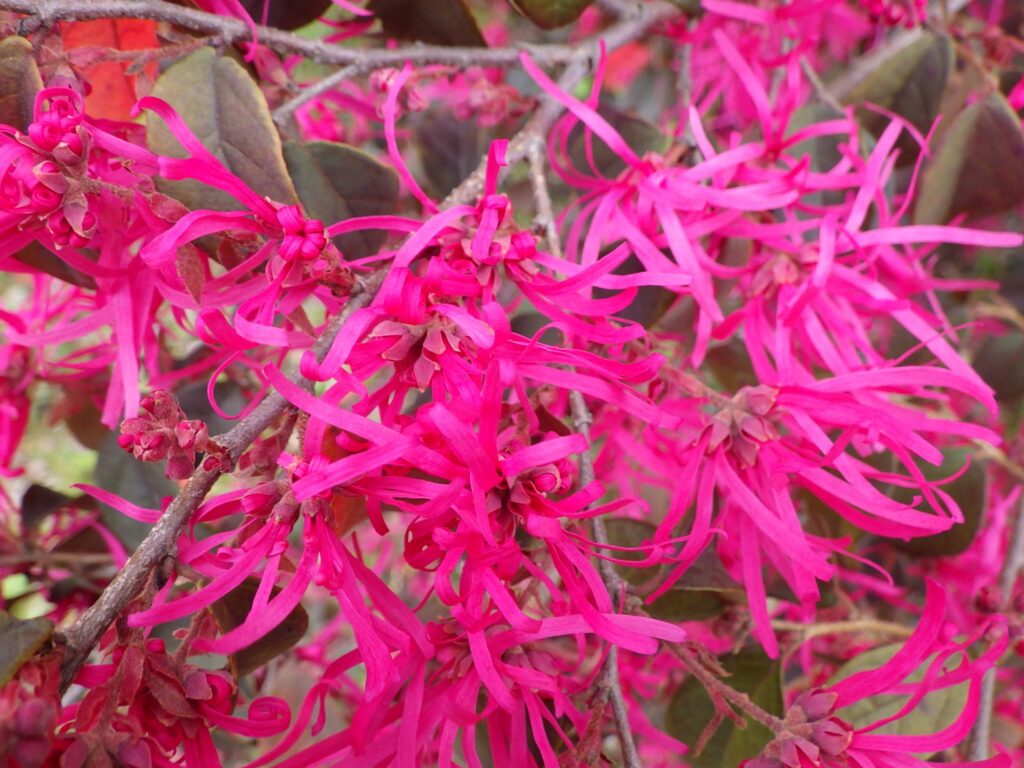
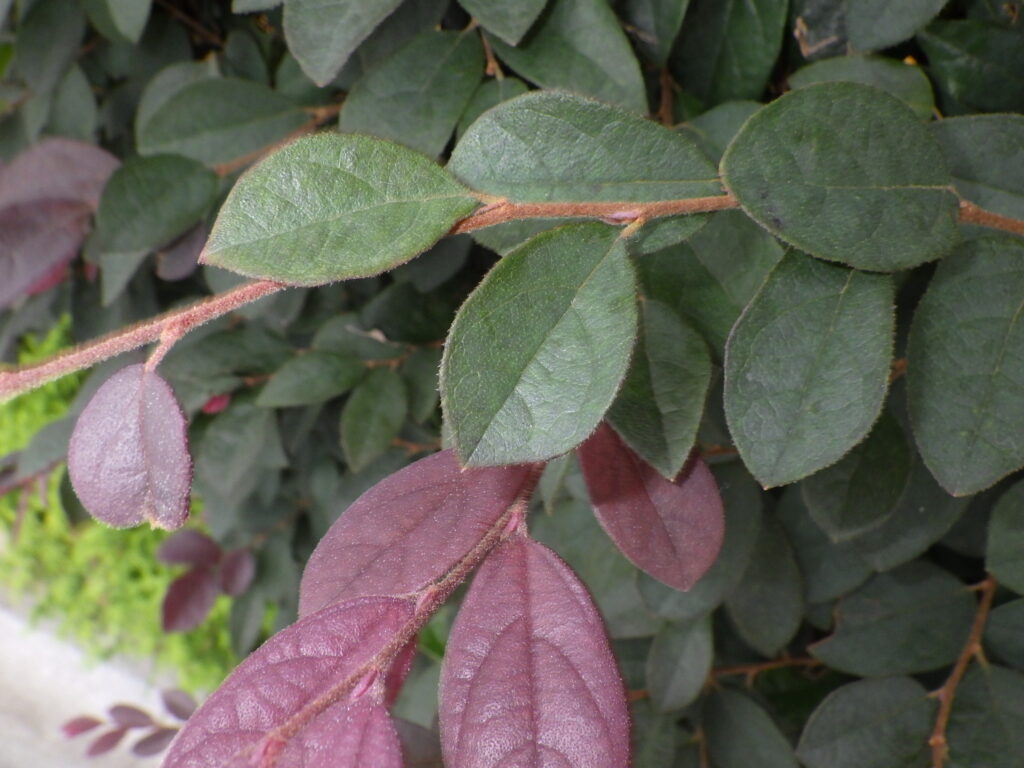
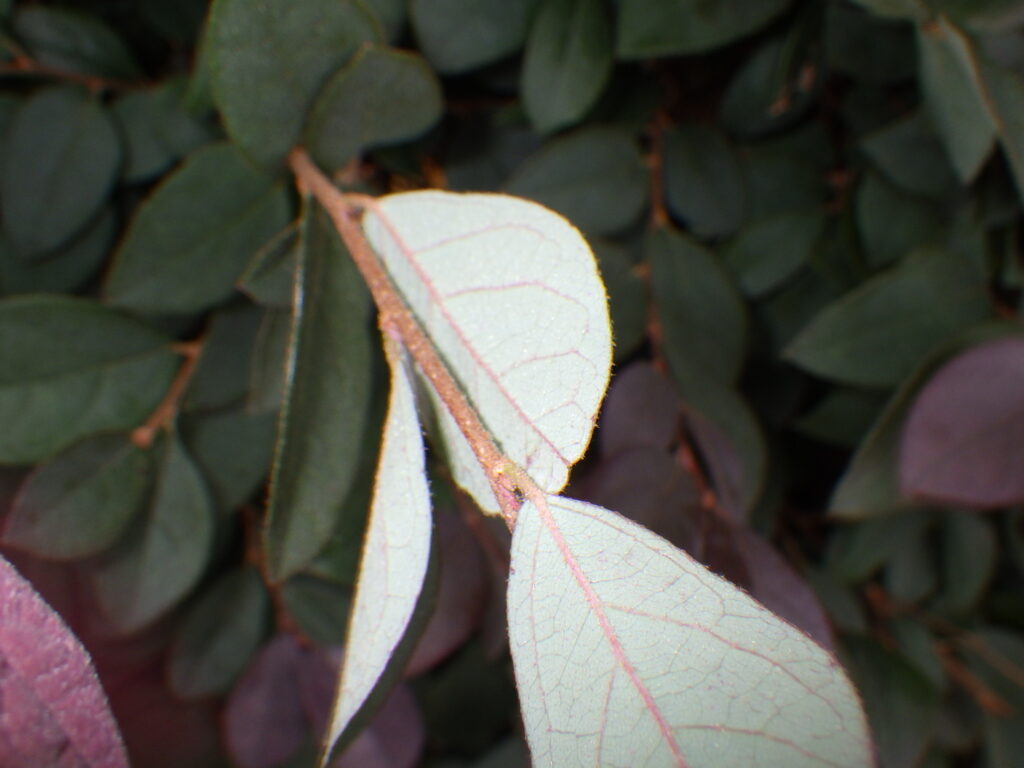
No.1337.1 Loropetalum chinense var. rubrum
This is a variety of Loropetalum chinense (Flora of China) that bears deep red flowers. The designation "var. rubra" is also seen in Japan, but its validity has not been confirmed. It is cultivated for ornamental purposes and is widely grown in southern China. It is also cultivated in Japan.
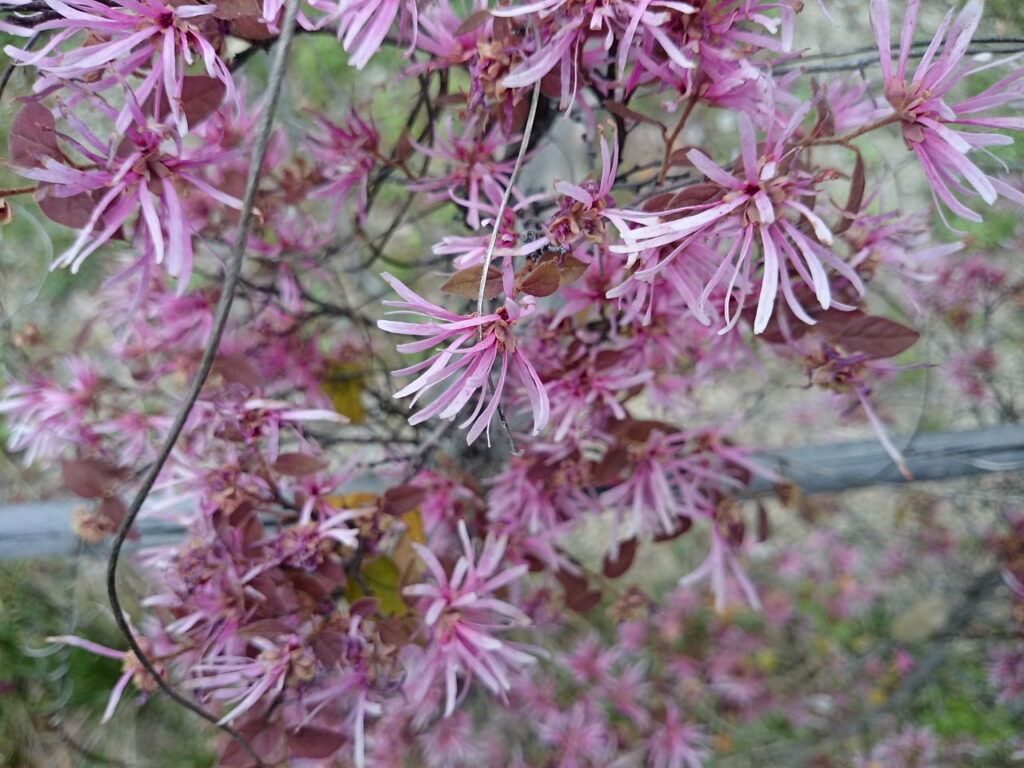
No. 1338 Disanthus cercidifolius
Deciduous shrub or small tree (Hayashi, 2011; Hishiyama, 2011; Hayashi, 2014). The tree reaches a height of 2-4m and has an ovate shape. The bark of young trees is grayish-white, smooth, and has many lenticels. Young branches are reddish-brown and hairless, while the bark of mature trees is grayish-brown, smooth, and has prominent horizontally arranged lenticels. The leaves have petioles 3-6cm long, are often reddish, and are simple and alternate. The leaves are ovate or circular, 5-11cm long and 4.5-10cm wide (widest point near the base), with a short pointed tip, entire margin, and heart-shaped base. The upper surface is green and hairless, while the underside is whitish-green and hairless, revealing the reticulated veins. The leaves turn a vivid red in autumn. Young leaves are often reddish-purple. Flowering occurs from October to November. The flowers are hermaphroditic, with two dark reddish-purple flowers borne back-to-back on very short pedicels in the leaf axils. The petals are five in number, linear-lanceolate, 7-8 mm long, and spread flat in a star shape. The sepals are about 2 mm long. The fruit is a capsule, inverted heart-shaped, about 1.5 cm long. It ripens to a dark brown color in the autumn of the year following flowering, splitting into four sections to release the seeds. The seeds are 4-5 mm long, black, and glossy. It is a remnant species from the last glacial period and is locally distributed in Honshu (Chubu to Kinki regions, Okayama and Hiroshima prefectures), Shikoku (Kochi prefecture) in Japan, and in temperate regions of China. It grows in mountain valleys and sunny rocky areas. It is used as an ornamental garden tree, park tree, seedling, and cut flower. The flat, radial flowers with exposed nectaries, short stamens, and dark red flowers are adaptations for fungus gnat pollination (Mochizuki & Kawakita, 2018). Chinese studies have shown that while flies such as Syrphidae, Drosophilidae, Schizophragmidae, and Tachinidae visit flowers during the day, they generally carry small amounts of pollen despite their large size. In contrast, a study conducted in Japan over 18.5 hours around sunset recorded 80 insects of 22 species across 11 families and 4 orders. Of these, mainly Fungus gnats (especially Boletina) visited flowers and attached a considerable amount of pollen to the thighs of their forelegs and the underside of their heads, demonstrating a significant difference in pollen production.
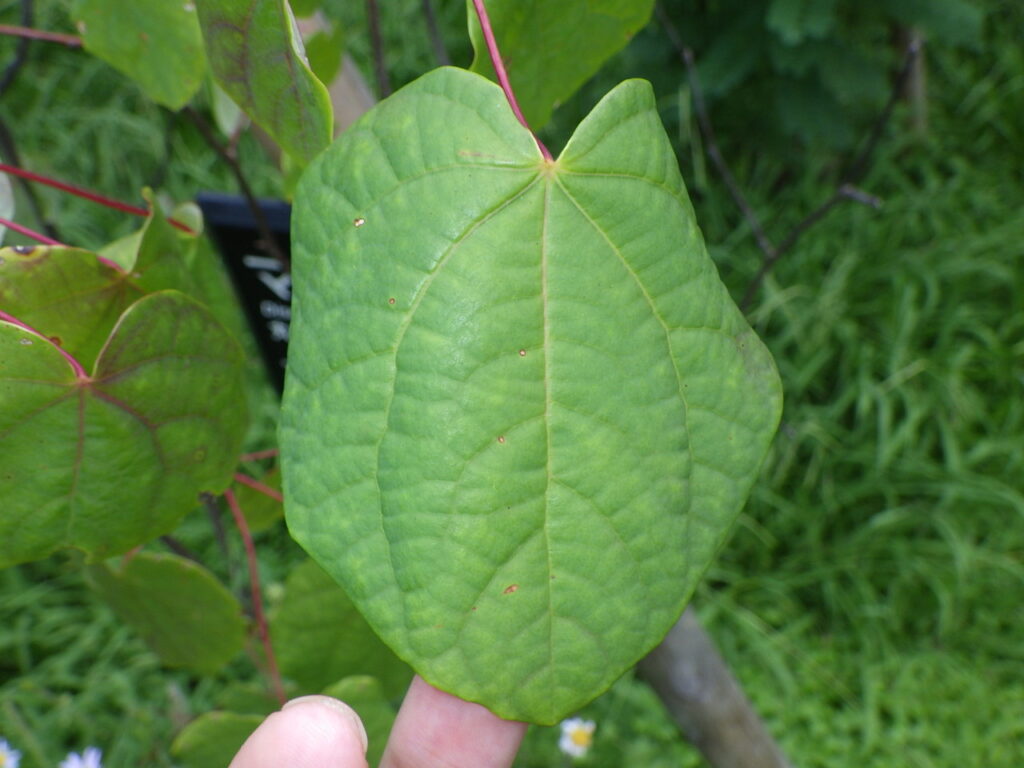
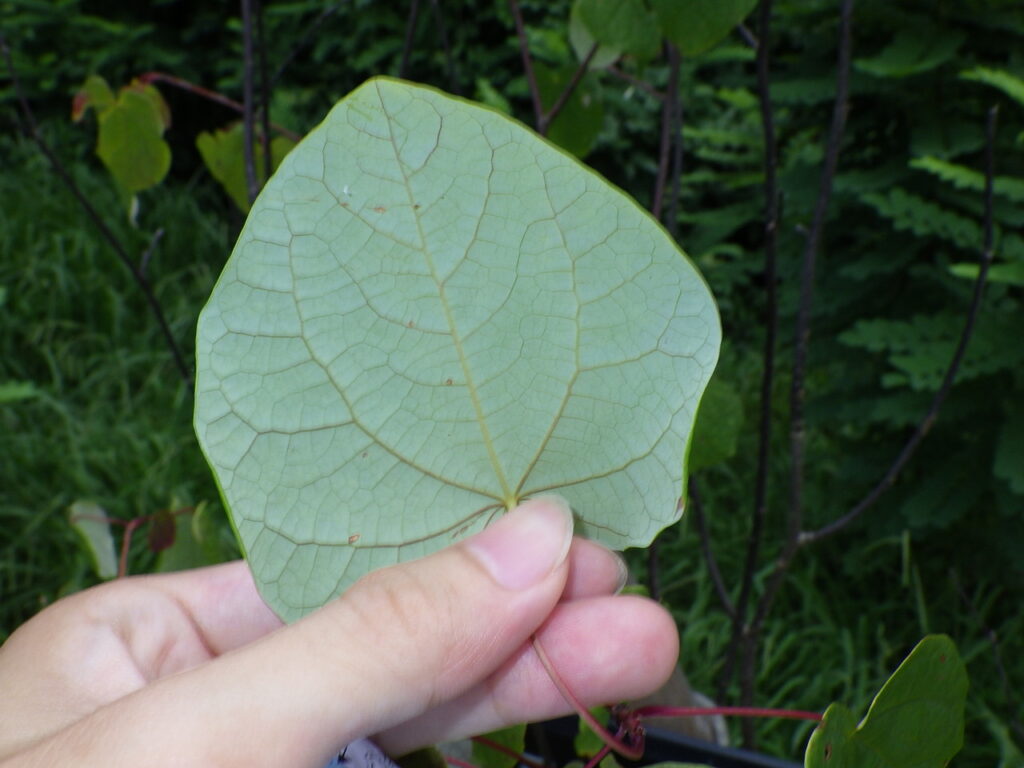
No. 1341 Hyuga-mizuki (Corylopsis pauciflora)
Deciduous shrub (flowers on trees, polypetalous flowers 2). Height 1-3m. Bark is grayish-brown and branches are reddish-brown. Leaves are alternate, broadly ovate with a shallow heart-shaped base. Leaf blades are 2-3cm long and 1.5-2.5cm wide, with petioles 5-15mm long. The underside of the leaves is powdery white with scattered long hairs on the veins. The leaf margins are wavy with awn-like teeth. Flowering occurs from March to April, before the leaves unfold. Spike-like inflorescences consisting of 1-3 flowers are borne in the leaf axils of the previous year. Flowers are about 1.5cm long. There are 5 sepals and 5 yellow petals. There are 5 stamens, slightly shorter than the petals, with yellow anthers. There is 1 pistil. The fruit is a capsule, obovate, about 6mm in diameter. This species is distributed in limited areas along the Sea of Japan coast of Honshu (Ishikawa to Hyogo prefectures), Shikoku (Kochi prefecture), Kyushu (Miyazaki prefecture), and Taiwan, growing in barren, rocky areas. It is planted in gardens and parks for ornamental purposes. It has been shown, though unpublished, that the most frequent and dominant pollinating insect is the velvet fly, Bombylius major (Wong Sato & Kato, 2017). The appearance of the velvet fly coincides with the flowering of the genus Corylopsis in Japan, and it has been suggested that pollination by the family Bombylidae may be possible for Corylopsis, which flowers in early spring (March-April) when many insects are less active. However, the characteristics of Corylopsis flowers (yellow color, morphology, etc.) are not generally considered attractive to the family Bombylidae.
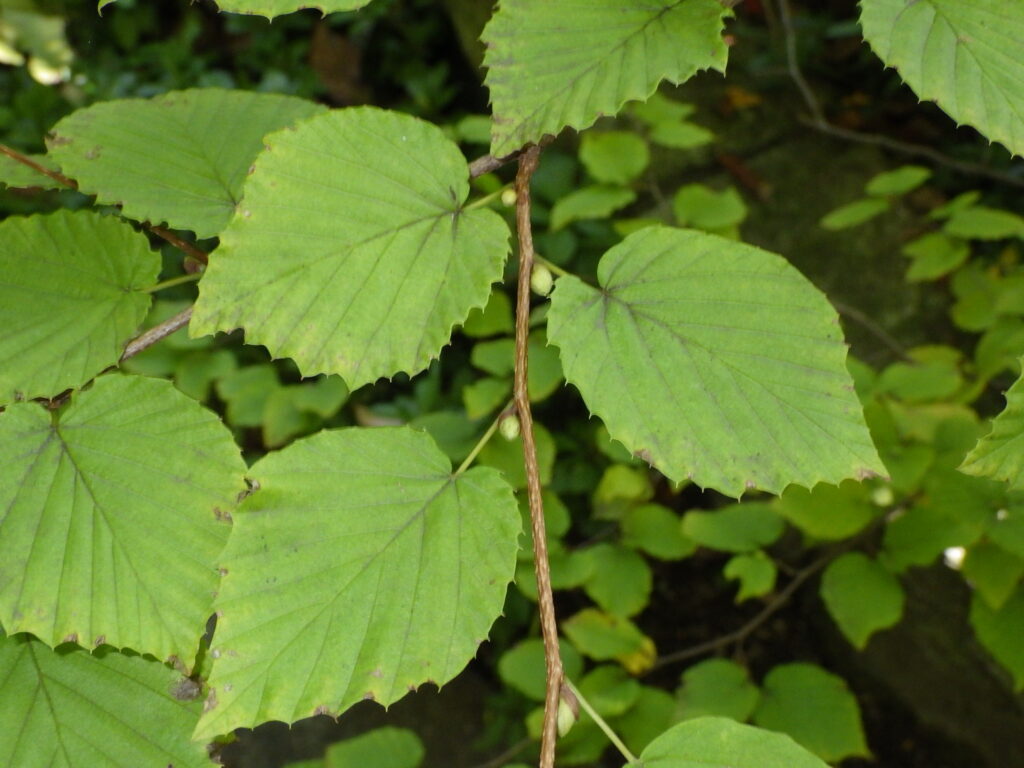
No. 1342 Corylopsis spicata
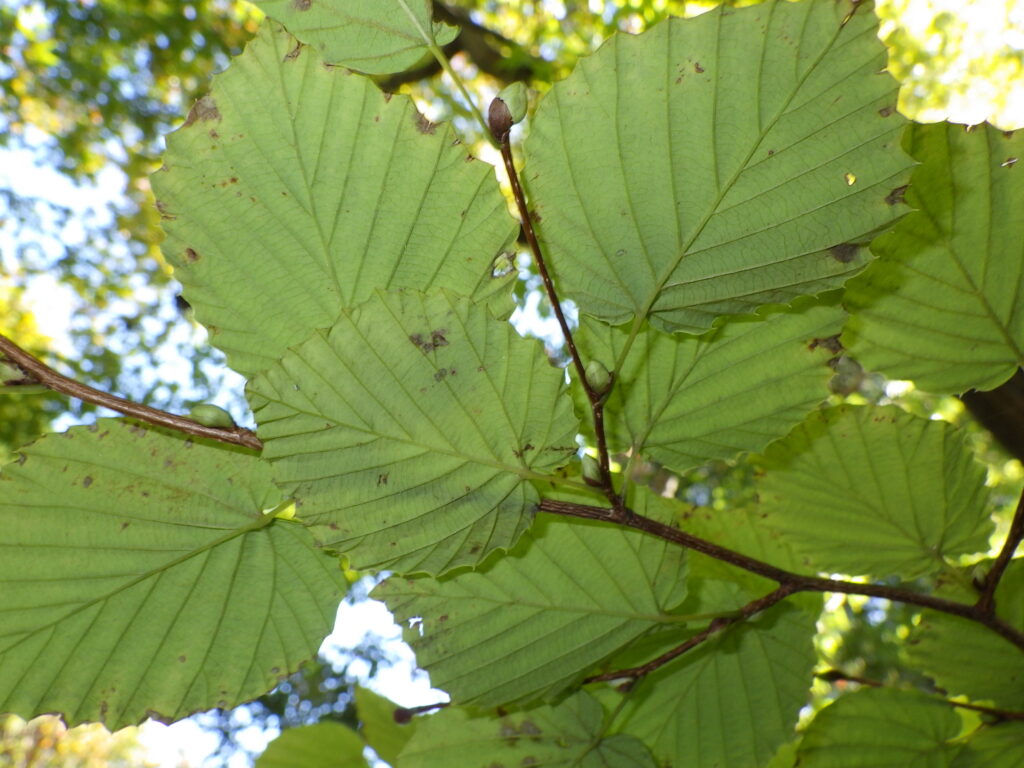
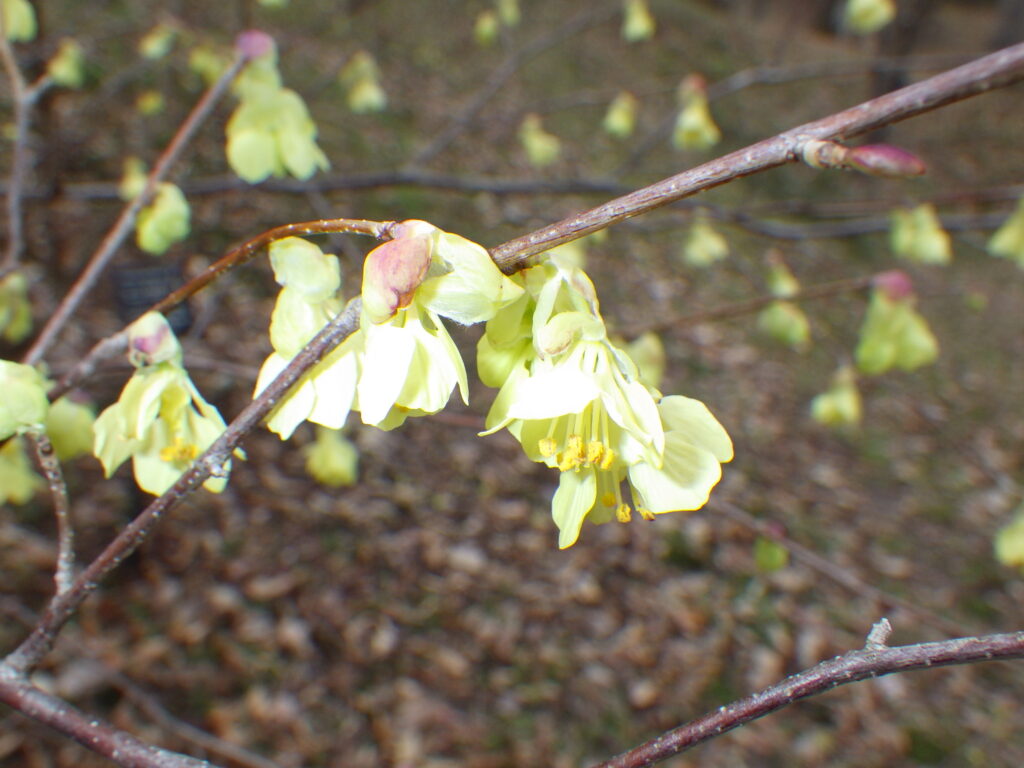
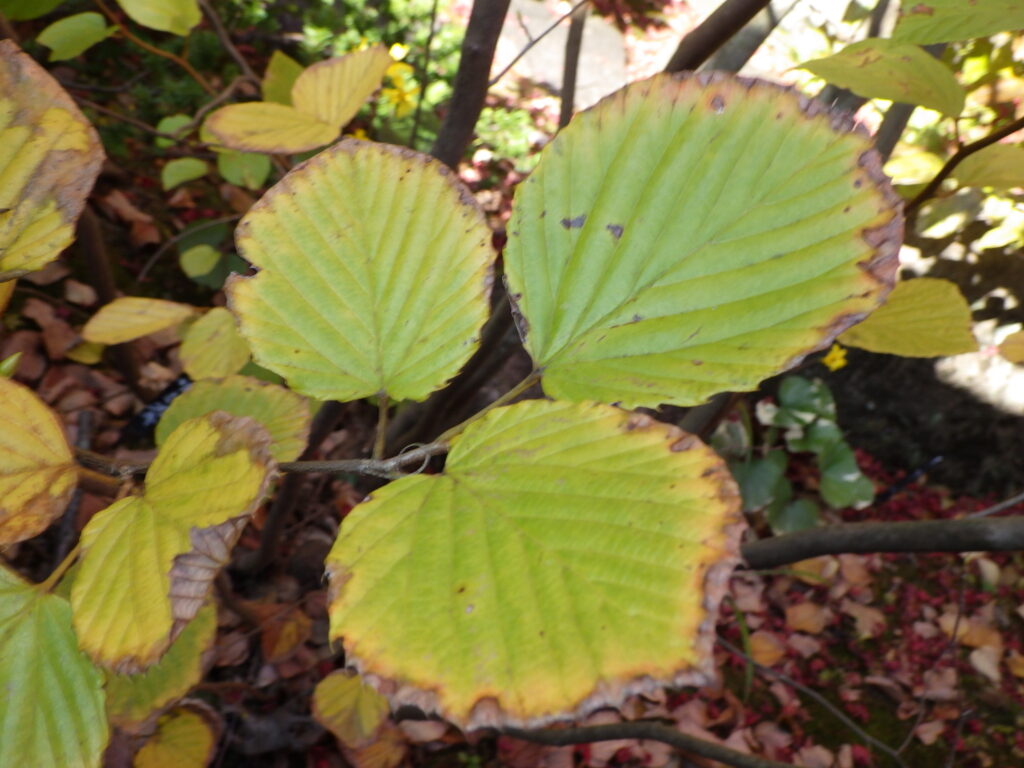
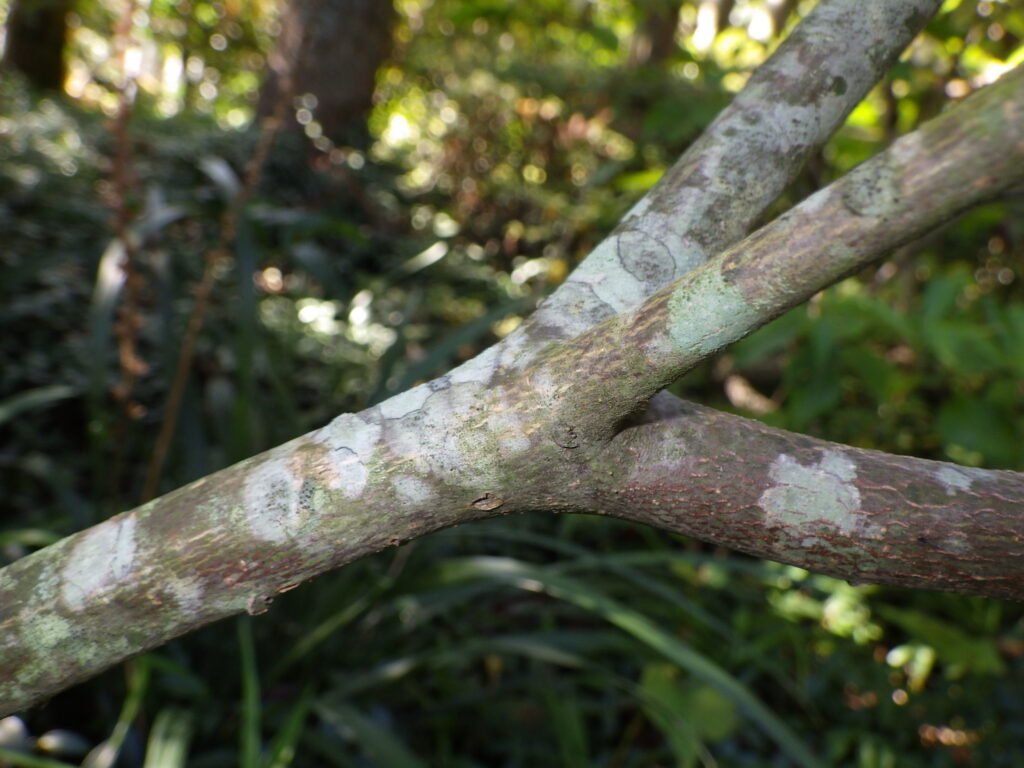
Deciduous shrub (Uehara, 1959; Yamanaka, 1986; Mogi et al., 2008; Kato et al., 2011). The "Tosa" in Tosa-mizuki comes from Kochi (Tosa Province), where it is native. It grows in clumps to a height of about 4m. The leaves are heart-shaped, 5-11cm long, and some are asymmetrical. The upper half has wavy serrations. There are 6-8 pairs of lateral veins, but veins branching from the basal lateral veins towards the edge are clearly visible. The bark is grayish-brown with fine lenticels. The flowers bloom in March and April, before the leaves unfold. Seven to ten yellow flowers are borne on drooping inflorescences, and they are larger than those of the related Hyuga-mizuki. Each flower is about 1cm in size. This species is endemic to Japan and is distributed in certain areas of Kochi Prefecture on Honshu Island (central Kochi Prefecture: Hidaka Village to Kochi City to Nankoku City). It grows on serpentine rocky mountains at an altitude of approximately 300m or less. It can be easily propagated by sowing seeds or dividing clumps, and because it produces lovely flowers in early spring, it has been commonly planted as a garden tree since the mid-Edo period.
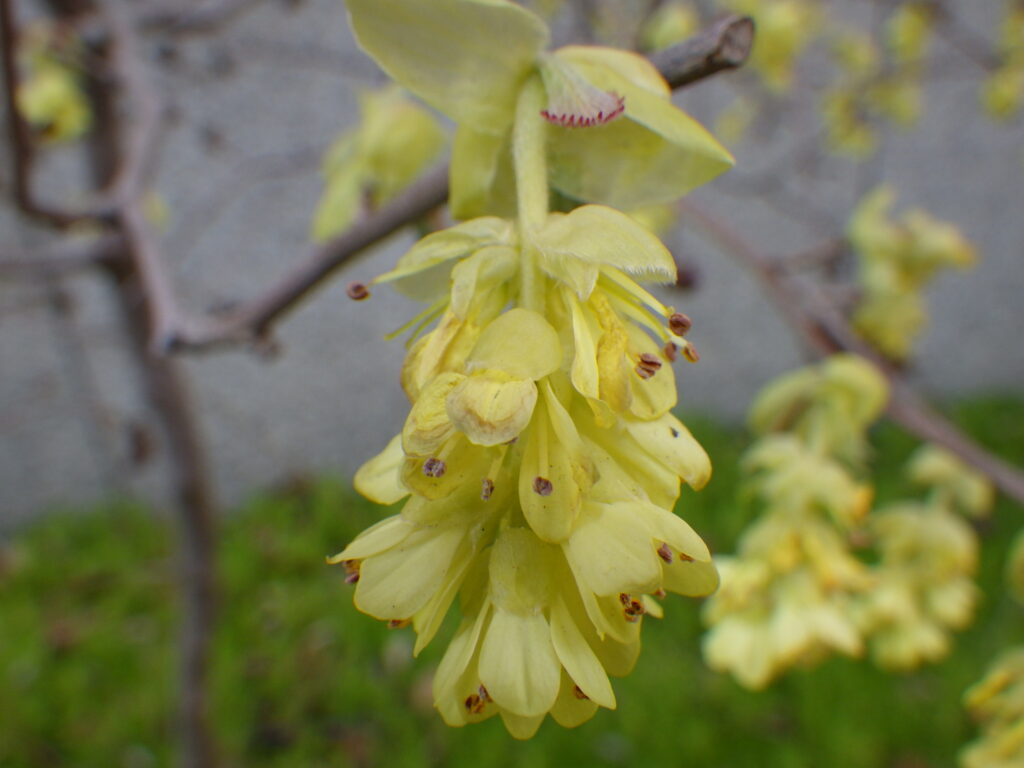
No.1342.a Corylopsis sinensis
Shrub (Flora of China). Young branches and buds are hairy or glabrous. Stipules are narrowly oblong, about 20 mm long, sparsely hairy. Petioles are 5–10 mm long, with stellate downy hairs. Leaf blades are obovate, obovate-orbicular to broadly ovate to oblong-obovate, 3–9 cm long × 2–6 cm wide, the underside is covered with grayish-brown stellate hairs or glabrous, the upper side is glabrous or hairy on the veins, the base is asymmetrical, cordate or subtruncate, the margin is serrated, the teeth are mucronate, the apex is obtuse, acute or acute, there are 7–9 lateral veins on each side, the two lowest veins having indistinct tertiary veins. Inflorescences are 3–4 cm long, 3–6 cm long in fruit. Peduncles are 1.2–1.5 cm long, hairy. The bracts at the base of the inflorescence are ovate-circular, 0.8–1 cm long, hairy on the outside and pubescent on the inside. The flower bracts are ovate, 4–5 mm long, and hairy. The bracteoles are oblong, 2–3 mm long. The flower cup has stellate hairs. The sepals are ovate, glabrous, and subobtuse at the apex. The petals are spatulate, 5–6 mm long × 3–4 mm wide. The stamens are 4–5 mm long, and the scales of the disc are 2-lobed, acute at the apex, and nearly equal in length to the sepals. The ovary has stellate hairs. The style is 6–7 mm long and hairy at the base. The capsule is 10–14 mm long × 7–9 mm wide and has stellate hairs. The seeds are 4–5 mm long. It is distributed in China and grows in forests and mountains at altitudes of 1000–1500 m.
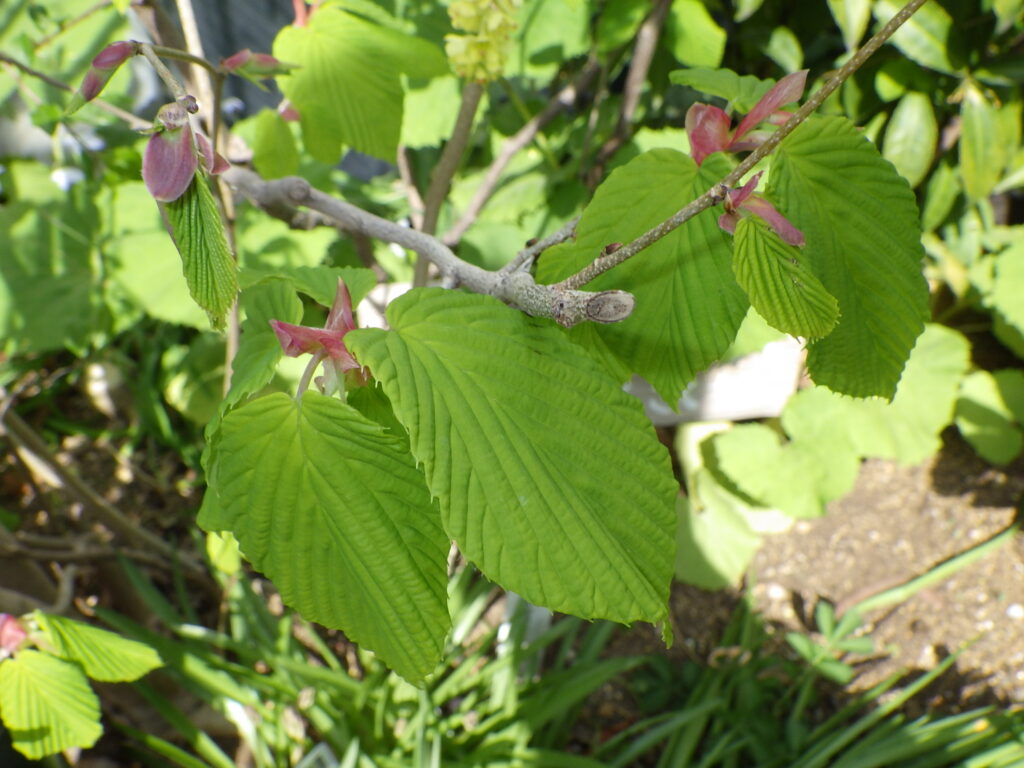
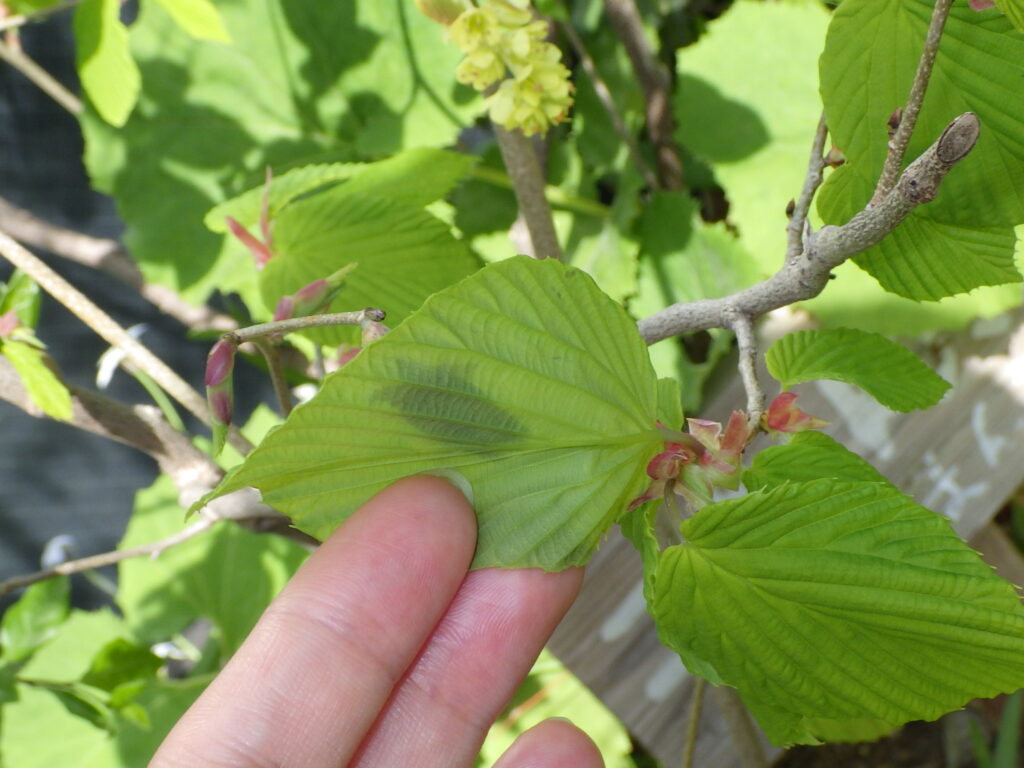
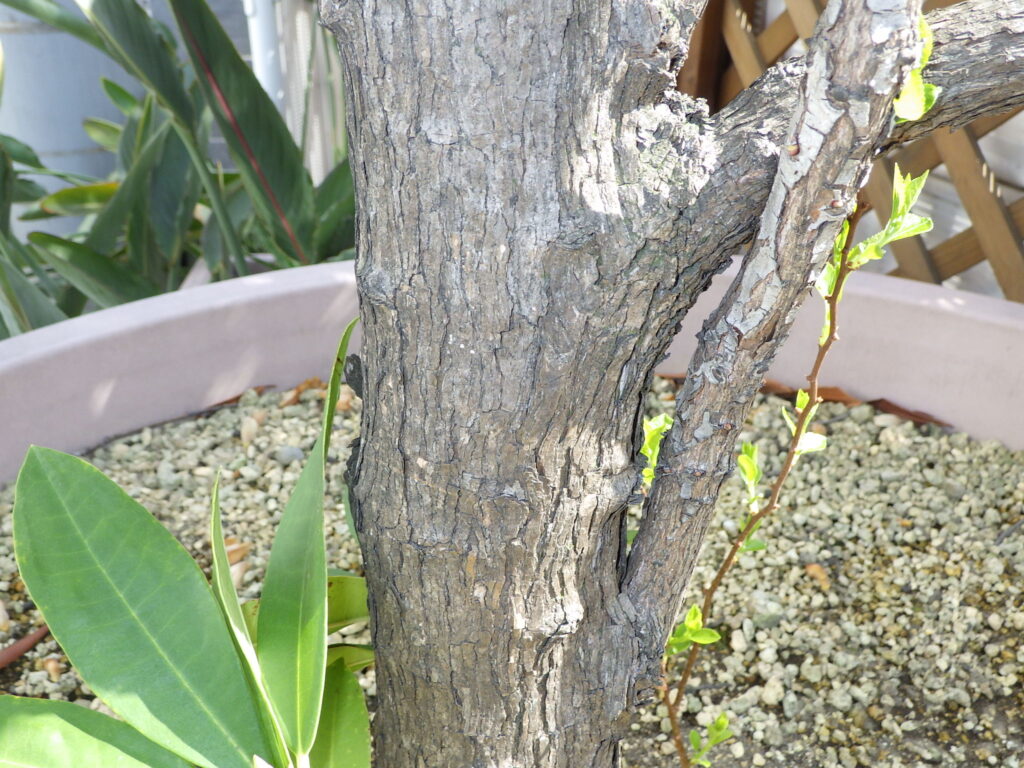
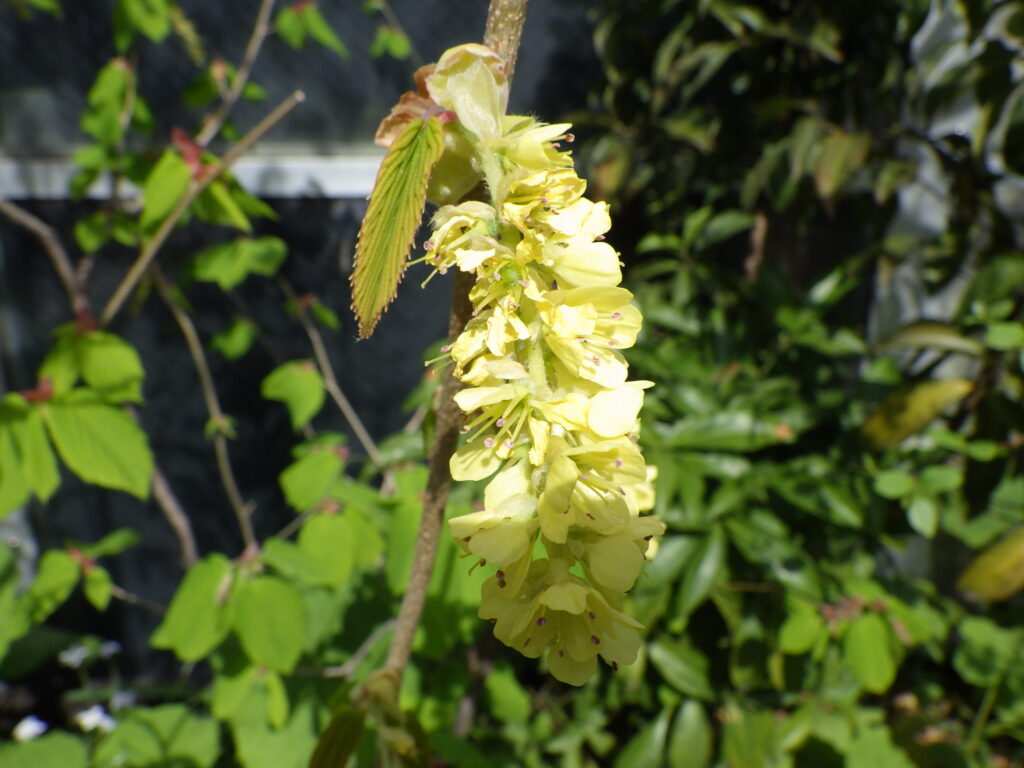
No. 1345 Distylium racemosum
An evergreen tree (a tree with flowers). Also known as Hyonoki. The trunk is erect, reaching a height of 20m and a diameter of about 80cm. The bark is dark gray. In older trees, it peels off in scales. The current year's branches have brownish stellate hairs. The leaves are alternate. The leaf blade is oblong, 4-9cm long and 2-3.5cm wide. The base is wedge-shaped, and the margin is entire. It is leathery and smooth on the surface. Both surfaces are hairless. The petiole is 5-10mm long. It is usually monoecious. The flowering period is from April to May. It produces panicles in the leaf axils, with hermaphrodite flowers at the top and male flowers at the bottom. The hermaphrodite flowers have pistils covered with brownish hairs, and the upper part is 2-lobed. There are 5-8 stamens, and the anthers are reddish. In male flowers, the pistil is reduced, and the filaments of the stamens are short. The fruit is a capsule, broadly ovate, 7-10 mm long, with a retained style at the tip and dense yellowish-brown hairs on the surface. When ripe, it splits into two, releasing oval seeds 5-7 mm long. The seeds are black and glossy. It is distributed in Japan from Shizuoka Prefecture westward to Okinawa, growing in evergreen forests. There is little information on its pollination system, but since several genera of the Hamamelidaceae family are petalless and wind-pollinated, it is thought that this species is also wind-pollinated (Yagi et al., 2019). On the other hand, *Dracaena lepidotum * is considered to be insect-pollinated. Galls (*Dracaena yanoensis* aphid galls) often form on the leaves. The wood is hard and is prized for chopsticks and rice paddles, and its ash is used as glaze for pottery.
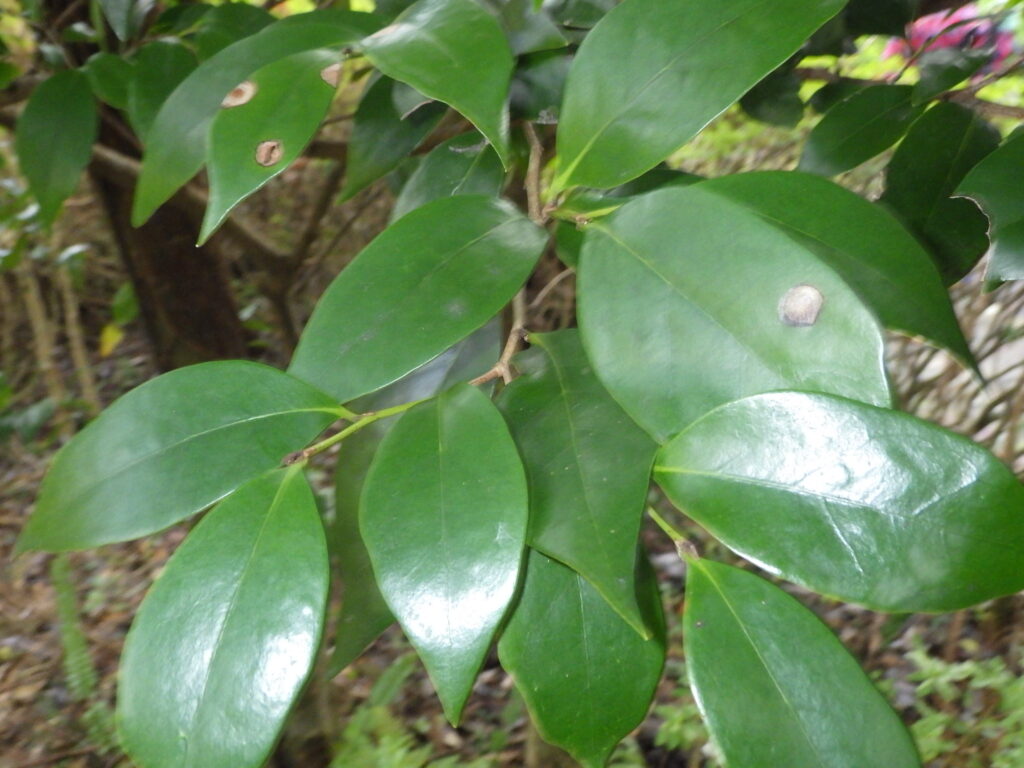
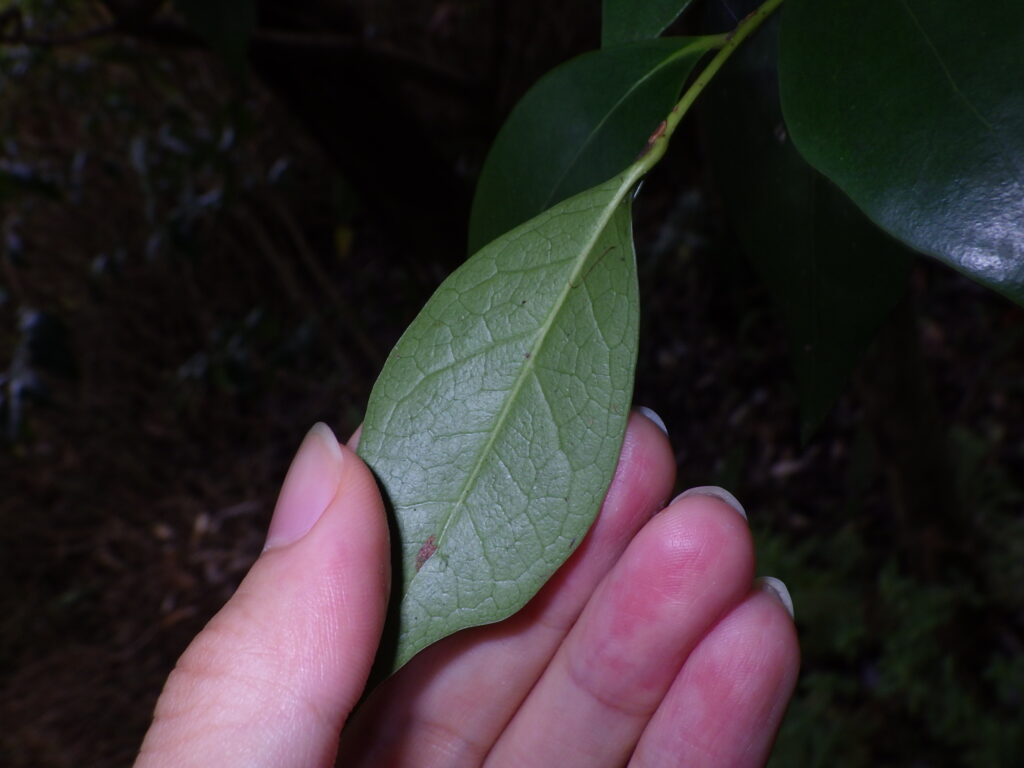
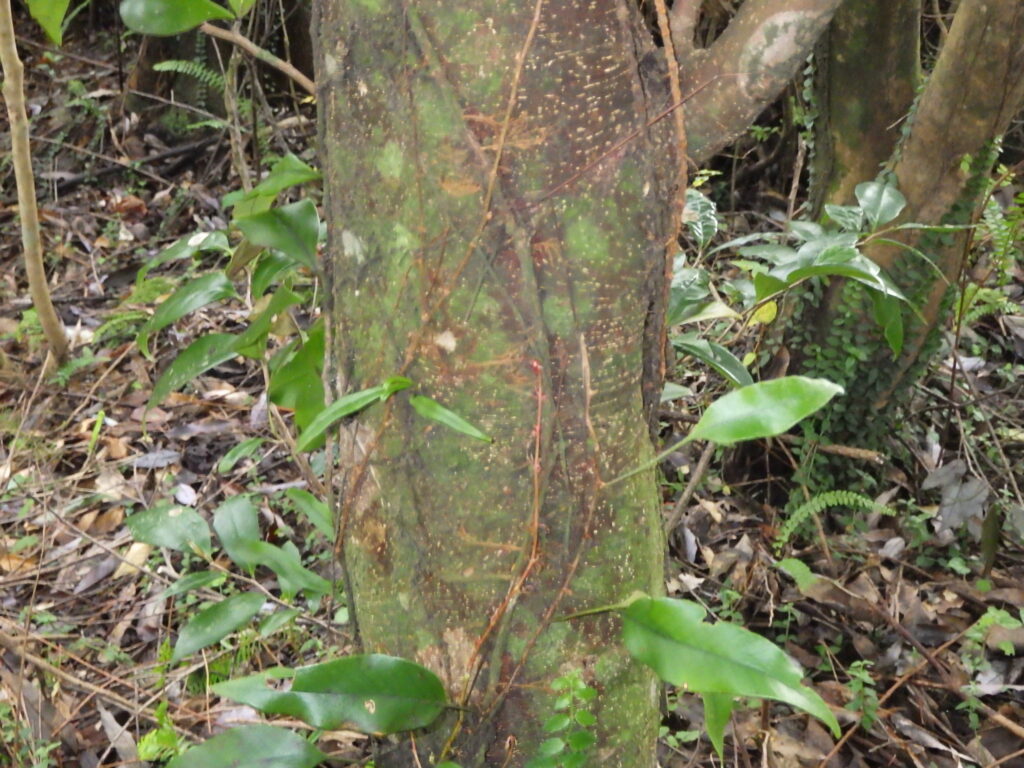
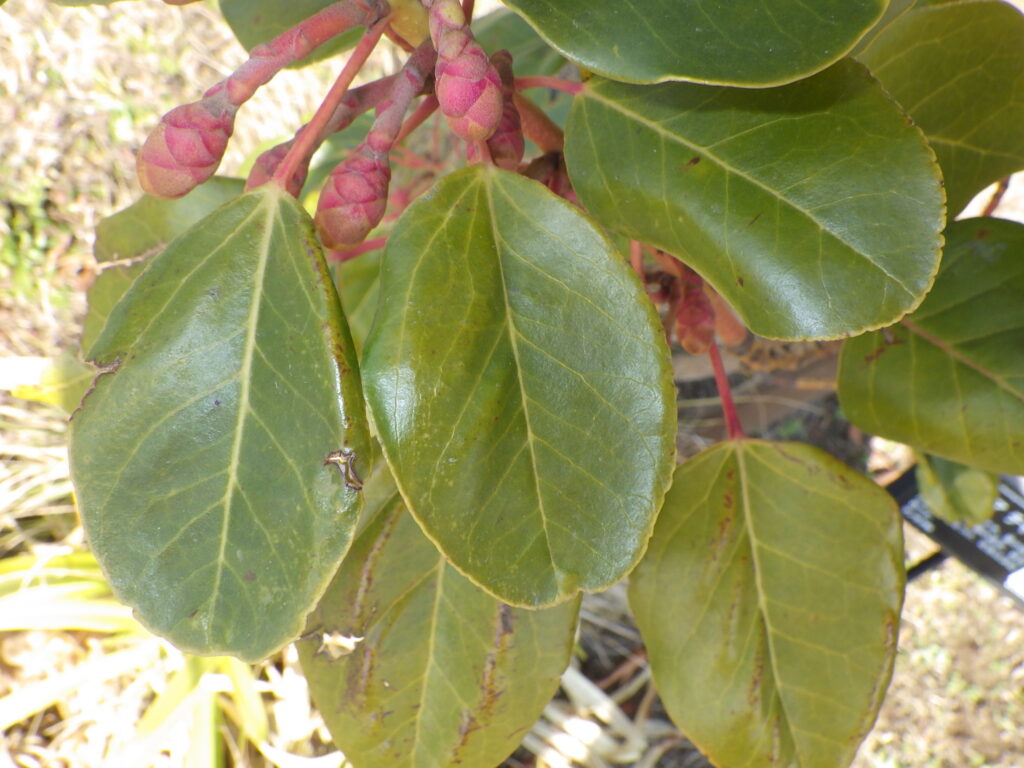
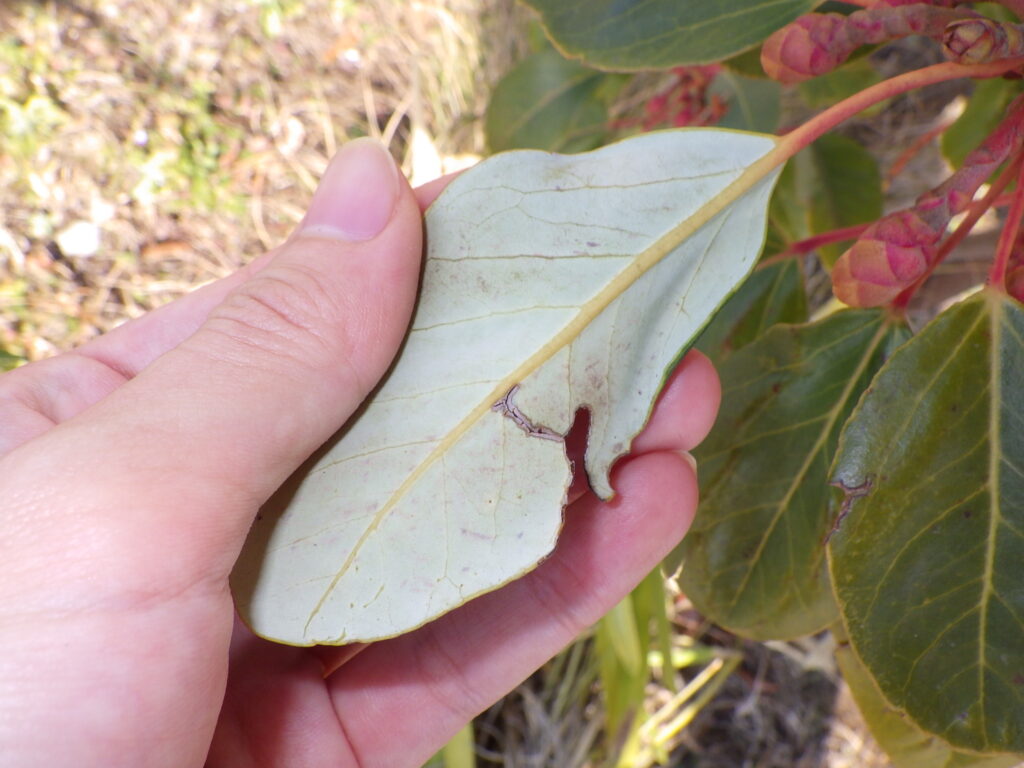
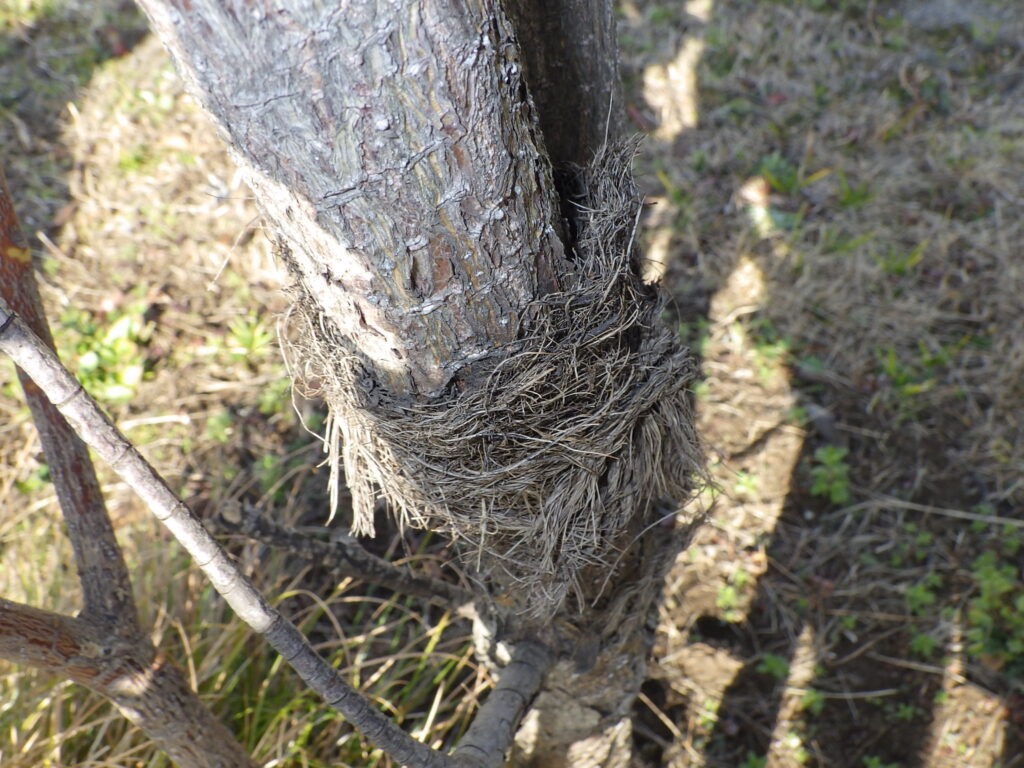
No.1346.a Rhodoleia championii (False Rhododendron)
Evergreen tree (Flora of China). Reaches a height of less than 12m. Young branches are sturdy, dark brown when dry, and glabrous. Petioles are 3–5.5cm long. Leaf blades are ovate to broadly ovate, 7–16cm long × 4.5–10.5cm wide, hard and leathery, fading when dry, the underside is whitish-gray, usually glabrous, sometimes with brownish stellate scales or stellate hairs remaining, becoming warty when dry, the base is broadly cuneate, the apex is obtuse or subacute, with three indistinct veins at the base, 7–9 lateral veins on each side, attached to the midrib at about 60 degrees, distinct on both surfaces, reticulate venation indistinct. Flowering occurs from February to March. Inflorescences are 3–4cm long, 2.5–3.5cm wide when in fruit. Peduncles are 2–3.8cm long, with several scale-like bracts. Involucral bracts are numerous, ovate-circular, and covered with brownish hairs. The bracteoles are 5 or 6 in number and scale-like. The petals are spatulate, 25–35 (–40) mm long and 4–8 mm wide. The stamens are the same length as the petals. The filaments are glabrous, 1.5–2 cm long. The anthers are 4–6 mm long. The ovary is glabrous. The style is slightly shorter than the stamens. Fruiting occurs from May to August. The capsules are 5 in number, ovoid-spherical, about 1.2–1.5 cm long, with non-persistent styles. The pericarp is thin and woody. The seeds are yellowish-brown and flattened. Native to China, Indonesia, Malaysia, Myanmar, and Vietnam. It grows in forests.
References
Gong, W., Liu, W., Gu, L., Kaneko, S., Koch, MA, & Zhang, D. 2016. From glacial refugia to wide distribution range: demographic expansion of Loropetalum chinense (Hamamelidaceae) in Chinese subtropical evergreen broadleaved forest. Organisms Diversity & Evolution 16(1): 23-38. https://doi.org/10.1007/s13127-015-0252-4
Hayashi, Yasaka. 2011. Trees of Japan, Revised and Enlarged Edition. Yama-kei Publishers, Tokyo. 767pp. ISBN: 9784635090438
Hayashi, Masayuki. 2014. 1100 Tree Leaves Identified Through Real-Life Scans. Yama-kei Publishers, Tokyo. 759pp. ISBN: 9784635070324
Hishiyama, Chuzaburo. 2011. Tree Identification Guide by Bark and Leaves. Seibido Publishing, Tokyo. 303pp. ISBN: 9784415310183
Kato, Masahiro & Ebihara, Jun. 2011. Endemic Plants of Japan. Tokai University Press, Hadano. 503pp. ISBN: 9784486018971
Mochizuki, K., & Kawakita, A. 2018. Pollination by fungus gnats and associated floral characteristics in five families of the Japanese flora. Annals of Botany 121(4): 651-663. ISSN: 0305-7364, https://doi.org/10.1093/aob/mcx196
Uehara, Keiji. 1959. A Comprehensive Illustrated Guide to Trees, Volume 1. Ariake Shobo, Tokyo. 1300pp. https://doi.org/10.11501/2489315
Yagi, H., Xu, J., Moriguchi, N., Miyagi, R., Moritsuka, E., Sato, E., … & Kusumi, J. 2019. Population genetic analysis of two species of Distylium: D. racemosum growing in East Asian evergreen broad-leaved forests and D. lepidotum endemic to the Ogasawara (Bonin) Islands. Tree Genetics & Genomes 15(6): 1-12. https://doi.org/10.1007/s11295-019-1386-x
Yamanaka, Tsutomu. 1986. *Corylopsis* species in Japan and Korea. Plant Classification, Geography 37(4-6): 97-105. https://doi.org/10.18942/bunruichiri.KJ00001078588
Wong Sato, AA, & Kato, M. 2017. Pollination system of Corylopsis gotoana (Hamamelidaceae) and its stonefly (Plecoptera) co-pollinator. Plant Species Biology 32(4): 440-447. https://doi.org/10.1111/1442-1984.12178