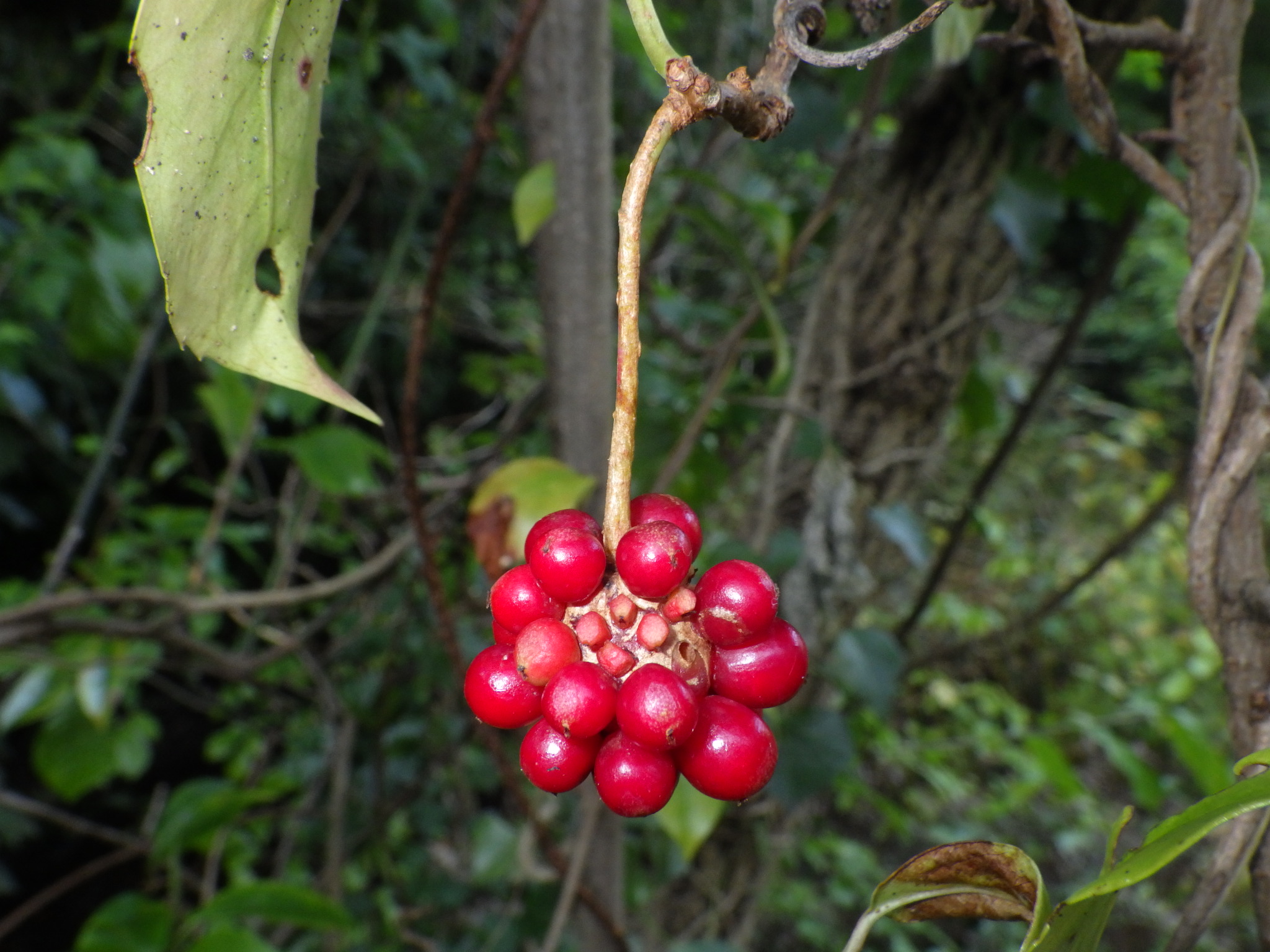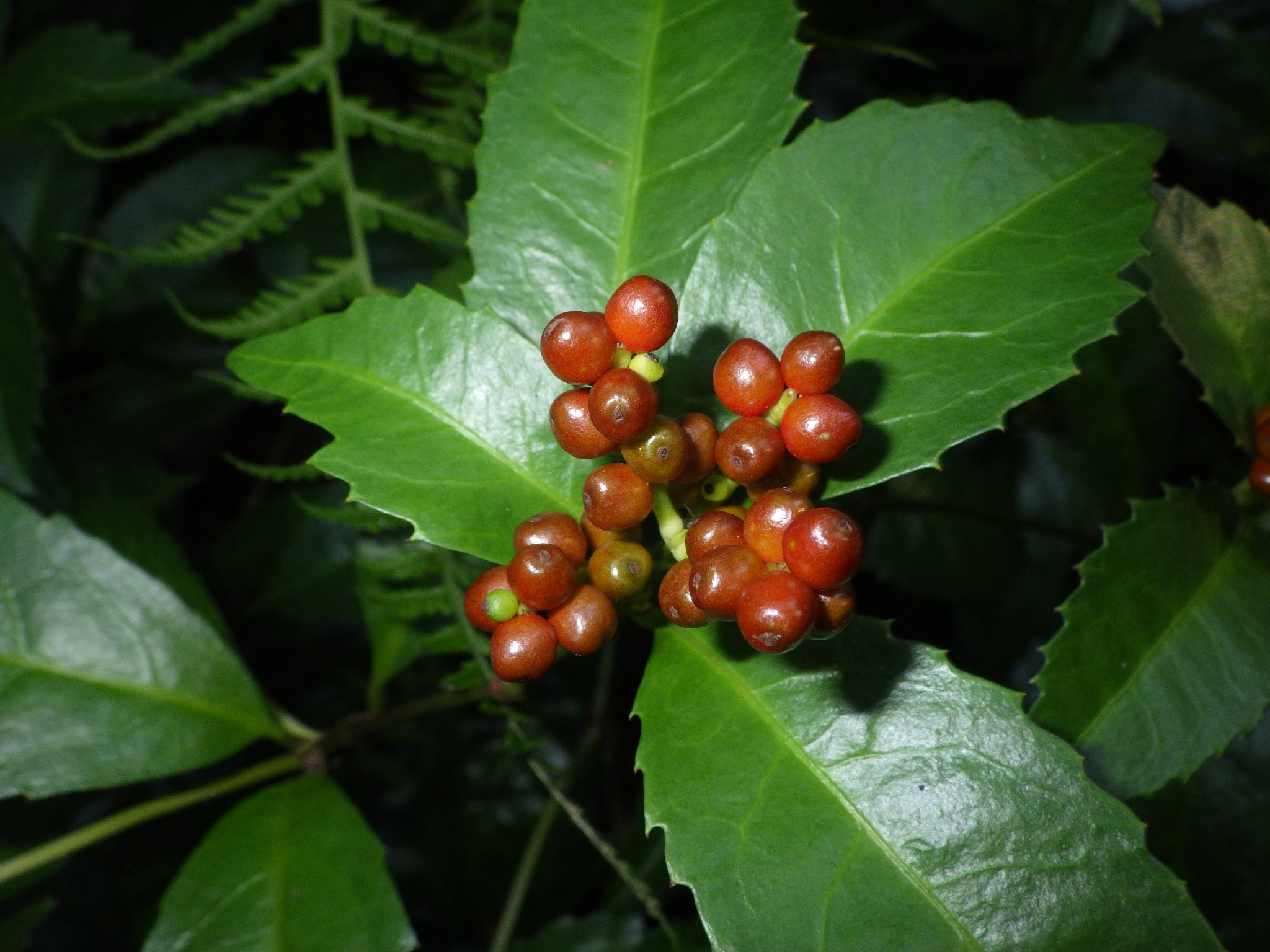
The Chloranthaceae family consists of herbs or shrubs. The leaves are opposite, simple, serrated, and have stipules at the base of the petiole. The inflorescences are spike-like, terminal or axillary. The flowers are unisexual or bisexual, with bisexual flowers lacking a perianth. There are one or three stamens. In bisexual flowers, the stamens are located on the dorsal side of the ovary, which is unichorbic, with a sessile stigma, and rarely a short style. The fruit is a drupe, with seeds that are ovate to spherical and have abundant endosperm. There are 5 genera and 75 species in East Asia, New Guinea, South America, and Madagascar, and 2 genera and 4 species in Japan.
This article provides a comprehensive, field guide-style introduction to plants belonging to the Chloranthaceae family.
The basic information is based on the Kanagawa Prefecture Flora Survey Association (2018). Photos are replaced as better ones become available. While the identification is done by the author, please note that misidentifications may be corrected without notice.
No.0077 *Chloranthus quadrifolius*
This is a perennial herb. The stem is usually unbranched and erect, reaching a height of 20-30 cm. The leaves are circular to elliptical, 3-10 cm long and 3-5 cm wide, with an acute apex and a rounded to acute base, and the upper surface is glossy. It flowers from April to May. The inflorescence is usually solitary and terminal, 2-4 cm long, and densely covered with white flowers. The fruit is spherical to broadly ovate, 2.5-3 mm long. It is distributed in Hokkaido, Honshu, Shikoku, Kyushu; Korea, China (central and northern, northeastern); Sakhalin; and Amur. It is widely found in hilly to mountainous areas. Previously, *Chloranthus japonicus* was considered to be *Chloranthus japonicus *, but the specimen in the Siebold Collection was found to be *Chloranthus japonicus*, and the specimen selected as the lectotype was also *Chloranthus japonicus*.
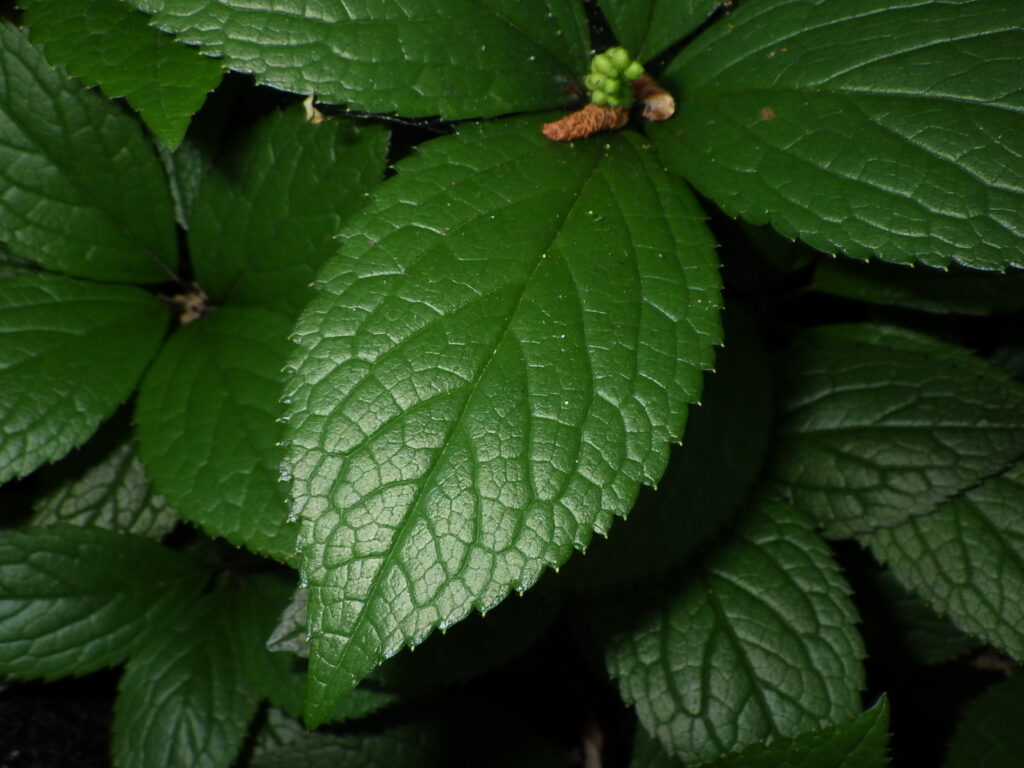
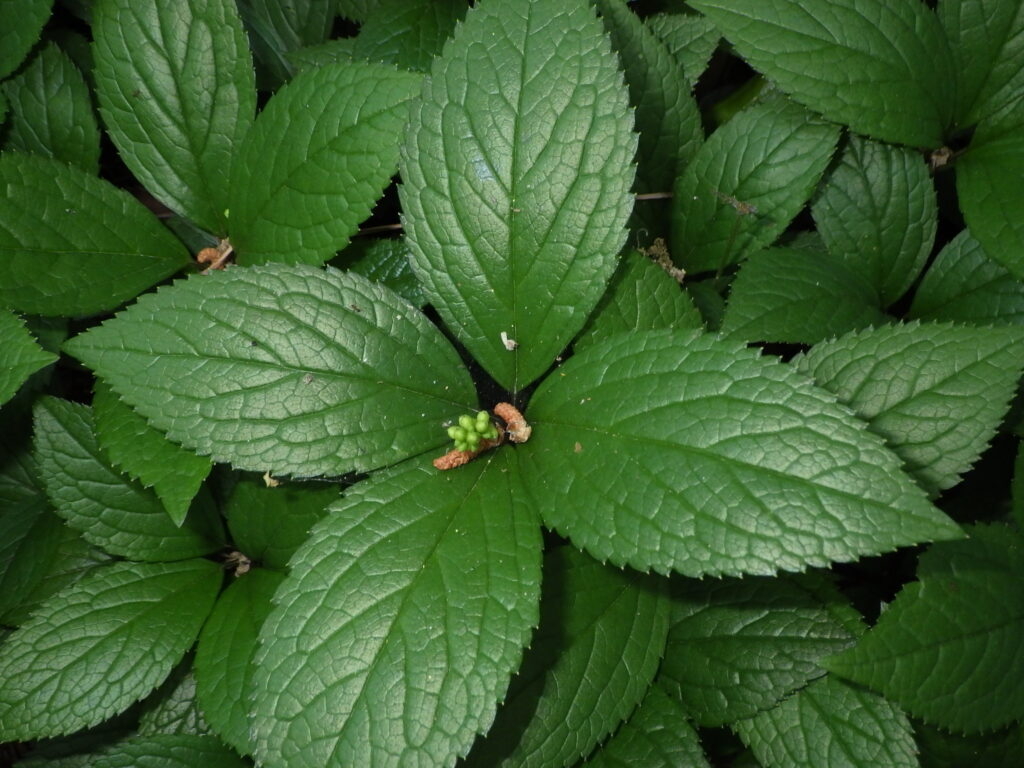
No.0079 Chloranthus serratus
Perennial herb. Stems are usually erect, 30-50 cm tall, and hairless. Leaves are arranged in two pairs, sometimes three, but not as closely spaced as in *Chloranthus japonicus*, so they do not appear whorled. Leaf blades are oval, 8-15 cm long and 2-8 cm wide, with serrated edges, thin in texture, and hairless on both sides. Flowering occurs in May. Inflorescences are usually terminal, producing two or three, sometimes several, inflorescences. Cleistogamous flowers may appear from the axils of the scale leaves in summer. Found in Hokkaido, Honshu, Shikoku, Kyushu; Korea, China, and Sakhalin. Grows in forests. Commonly found throughout the area from the oak/castus zone to the beech zone.
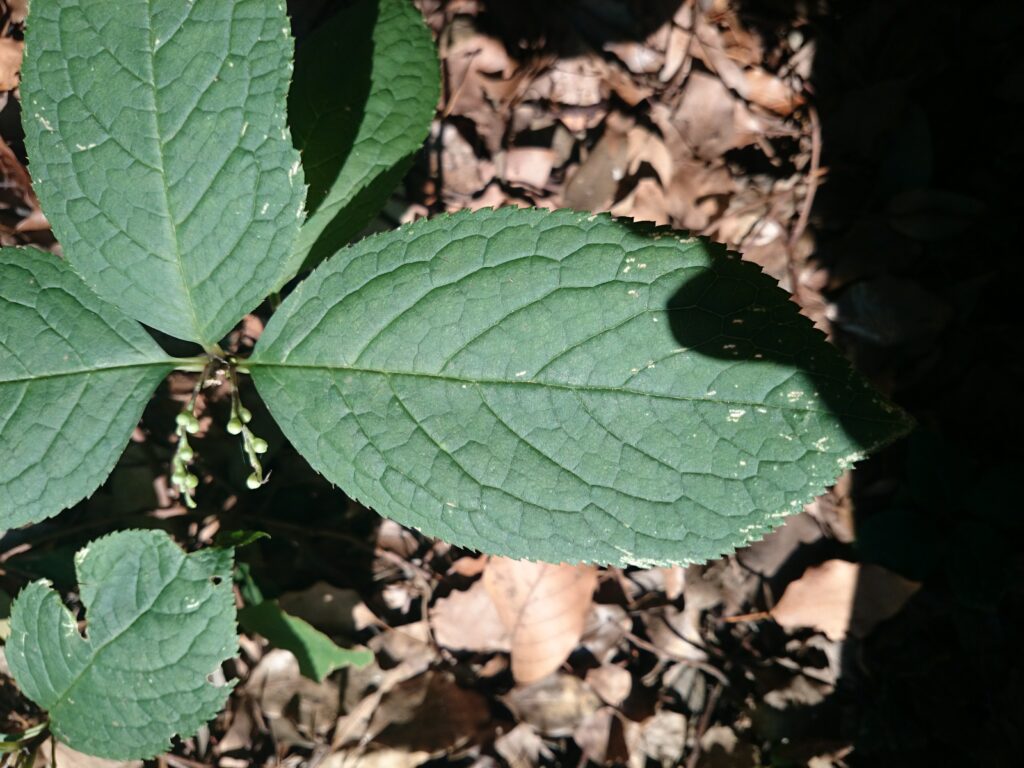
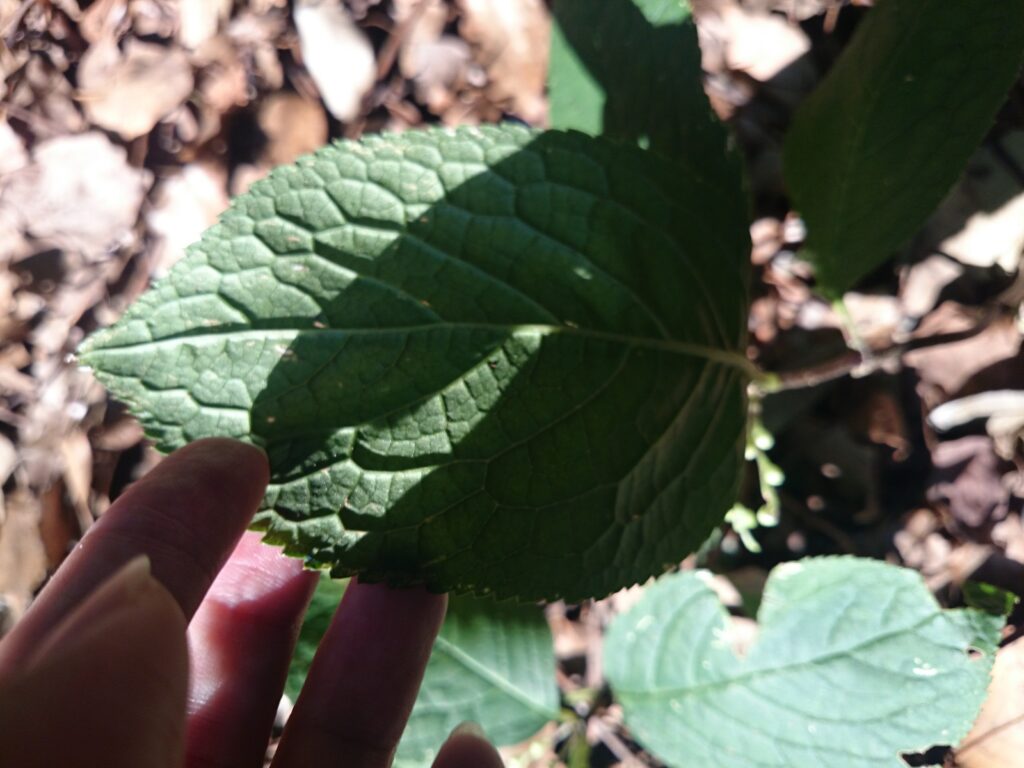
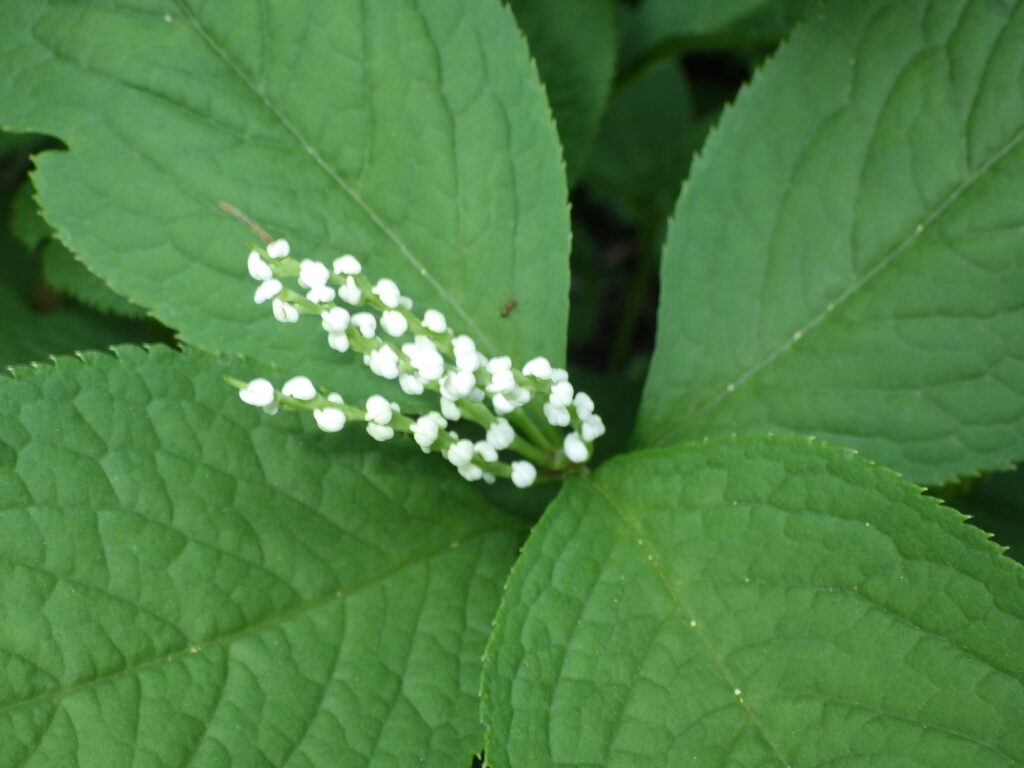
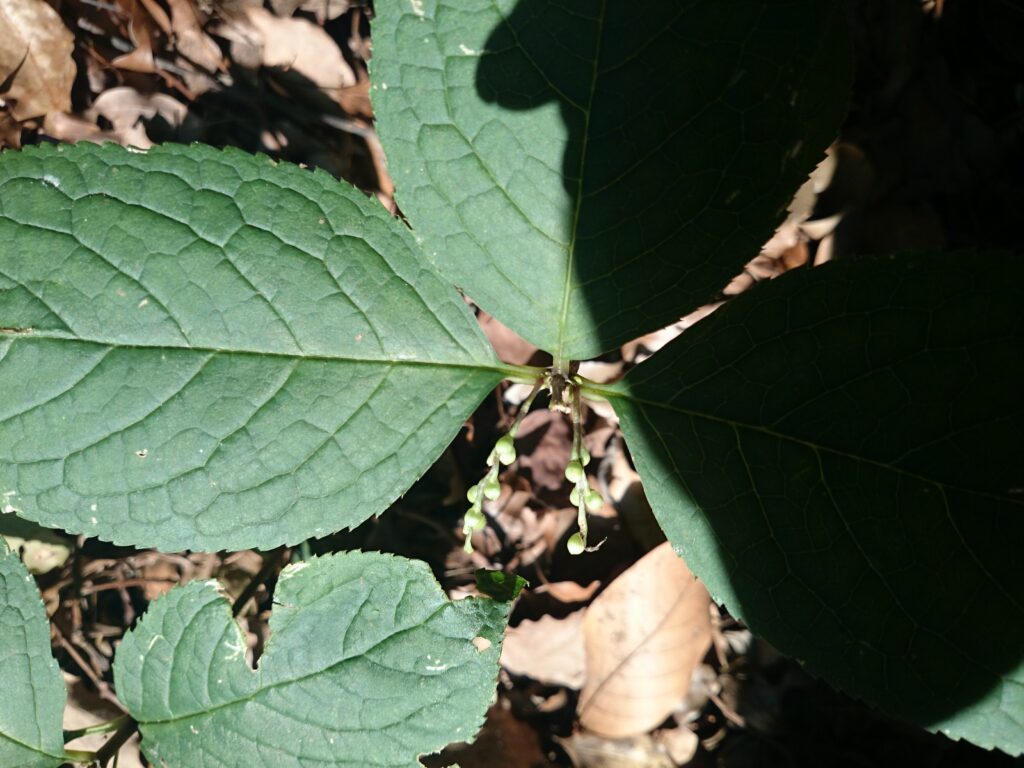
No.0080 Chloranthus spicatus
This is an erect or slightly creeping evergreen shrub, reaching a height of 30–150 cm. The stems are slender, green, cylindrical, glabrous, and the nodes are slightly swollen. The leaves are opposite, with petioles 0.4–1.8 cm long, and leaf blades elliptic to ovate-elliptic, 4–13.5 × 2–8.5 cm long. The upper surface is dark green and glossy, while the underside is pale yellowish-green. Both surfaces are glabrous, with an acute or obtuse apex and a wedge-shaped base. The margins have low, wavy serrations. The veins are pinnate, with 4–8 pairs of lateral veins. The stipules are membranous, mucronate, and 2–3 mm long. Flowering occurs from April to July, with inflorescences bearing numerous fragrant flowers, usually terminal, sometimes axillary. The inflorescences are 2–5 cm long, branching into 10–20 sections to form a conical compound spike. The flowers are hermaphroditic, emit a strong fragrance, and are axillary in triangular bracts, lacking a perianth. The stamens are attached to the dorsal side (abaxial side) of the pistil's ovary. The stamens are yellowish-green to yellow, three fused together (or one with three lobes), hemispherical-ovate, enclosing the upper part of the pistil. The central lobe has two anthers, sometimes further divided into three at the tip, with one anther on each of the two lobes. The pistil's ovary is ovate. Fruiting occurs from August to September; the fruit is green to yellow, oval, and about 4 mm in length. It is native to southern China, but is widely cultivated in Southeast Asia and other regions, and has naturalized in many areas. It was introduced to Japan during the Edo period and cultivated for ornamental purposes, but in Okinawa, escaped plants that have become wild can sometimes be found in mixed forests near human settlements.
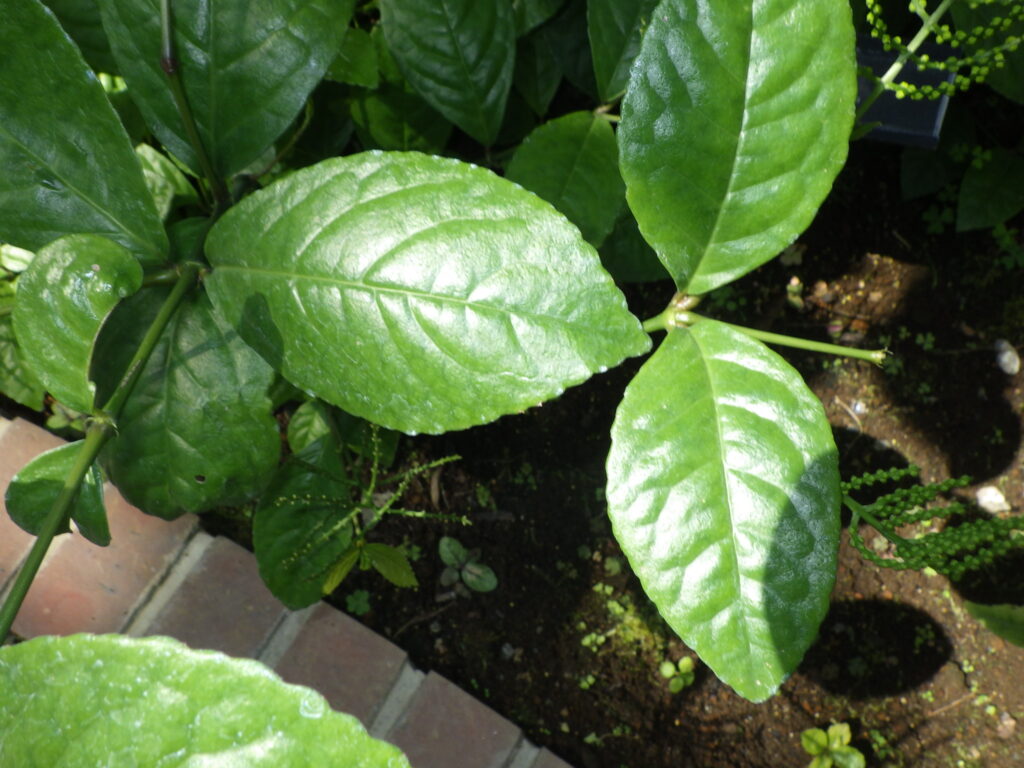
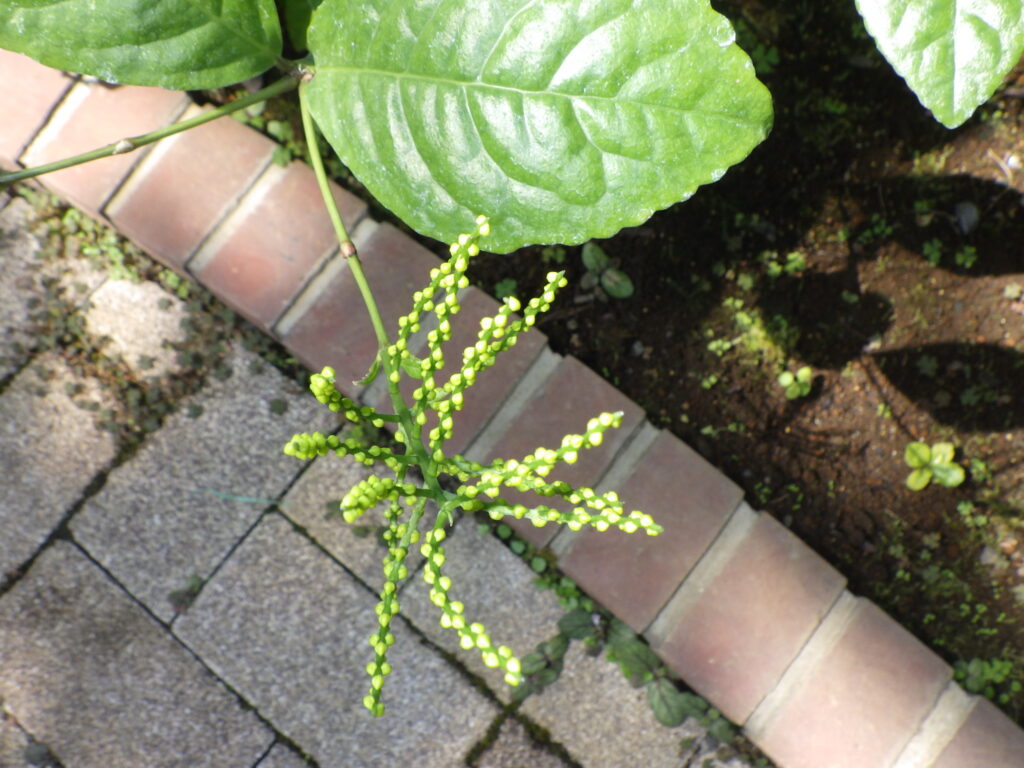
No.0081 Sarcandra glabra
This evergreen shrub grows to a height of 50cm to 1.2m. The entire plant is hairless and green. The leaves are smooth, glossy on the upper surface, elliptic to ovate-lanceolate, 6-15cm long and 2-6cm wide, with an acute apex, a wedge-shaped base, and coarsely serrated edges. The bases of the opposite petioles spread out to clasp the stem. It flowers from June to July. The inflorescence is terminal, bearing 2-3 spike-like inflorescences with yellowish-green flowers. There is one stamen, fused to the ovary and protruding laterally. The fruit turns red in winter and is 3-5mm in diameter. It is distributed in Honshu (south of southern Kanto region), Shikoku, Kyushu, the Ryukyu Islands, Korea, China, and Southeast Asia. It grows in evergreen broad-leaved forests. It is also cultivated in gardens, so escaped cultivation is possible.
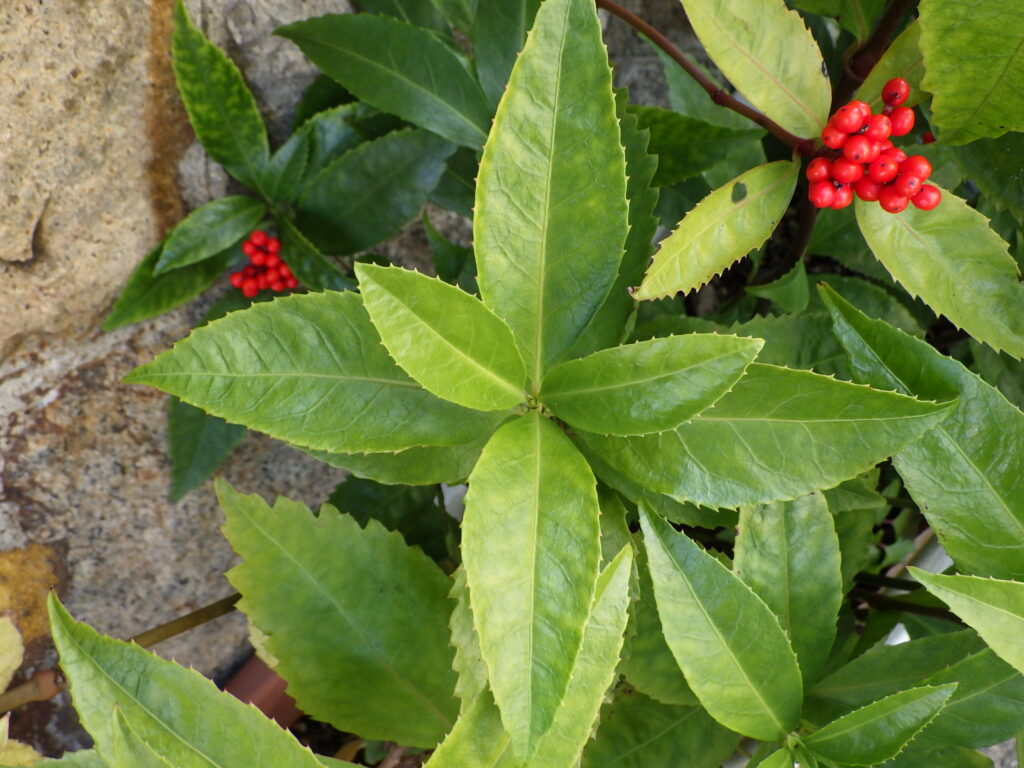
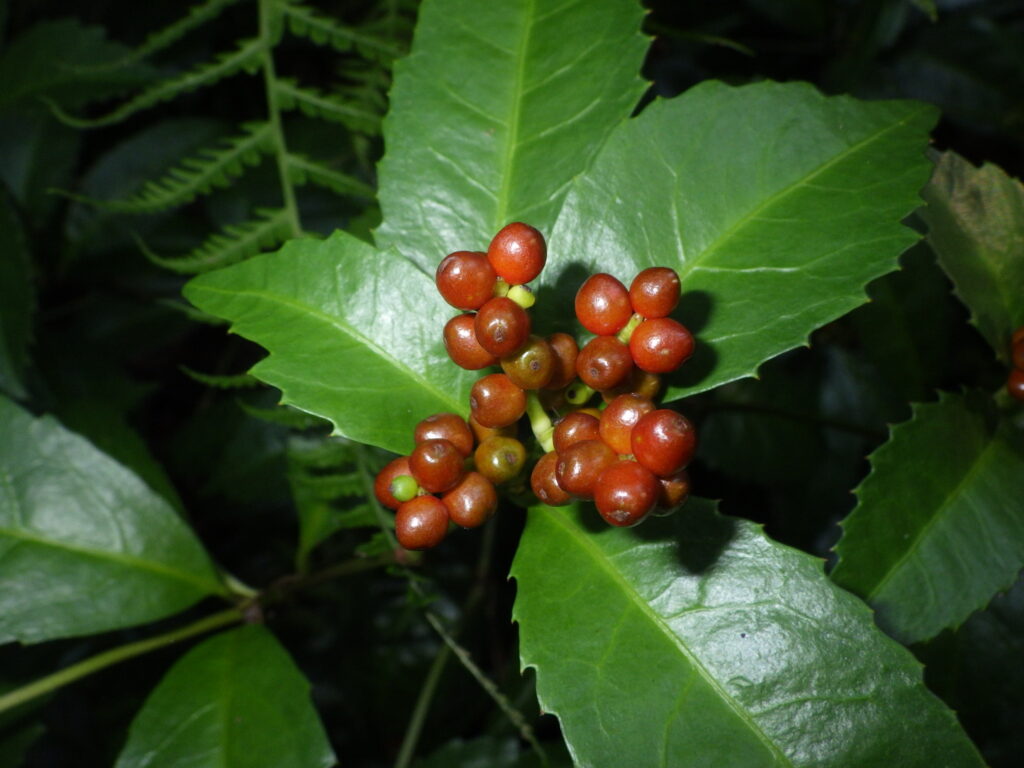
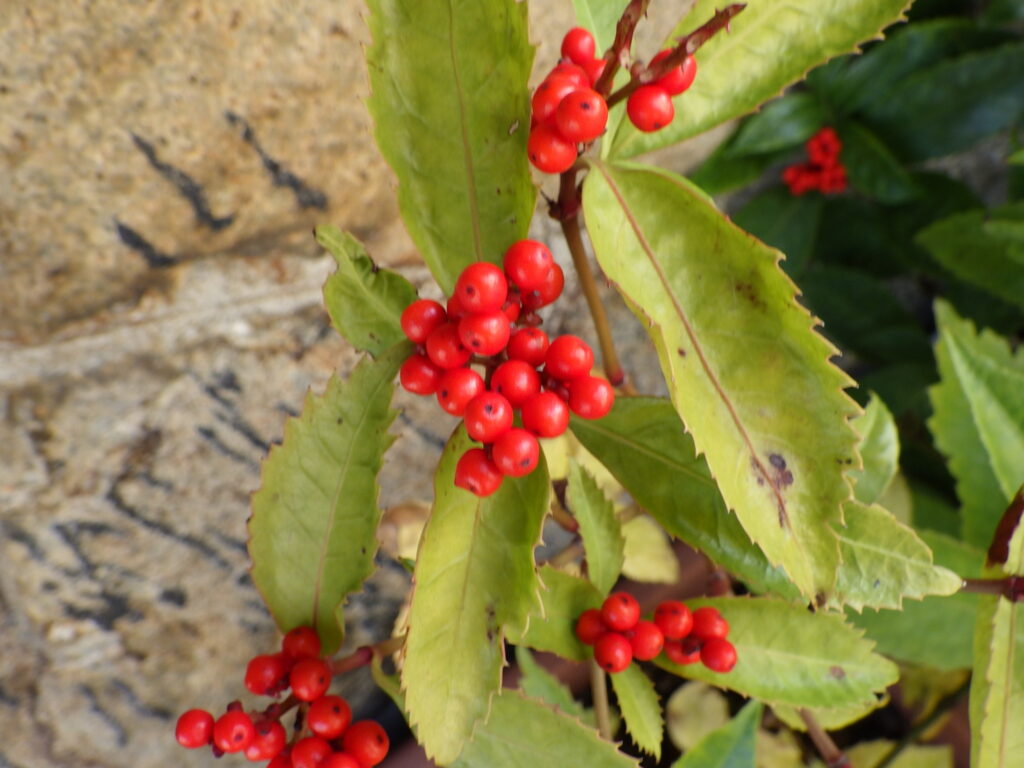
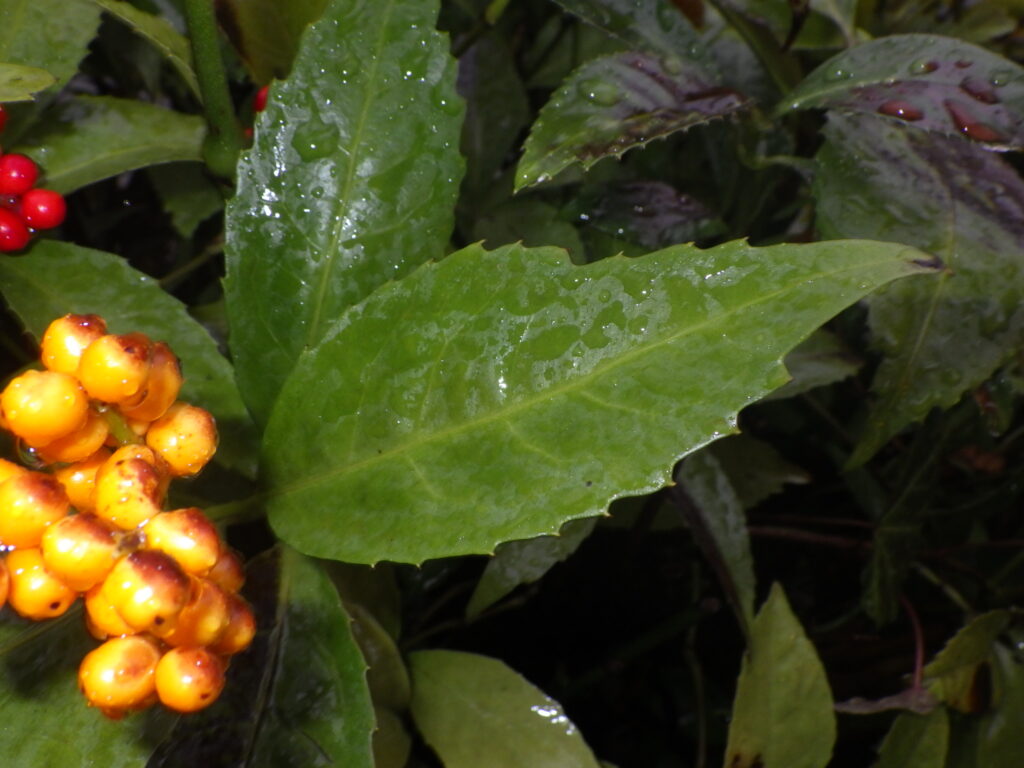
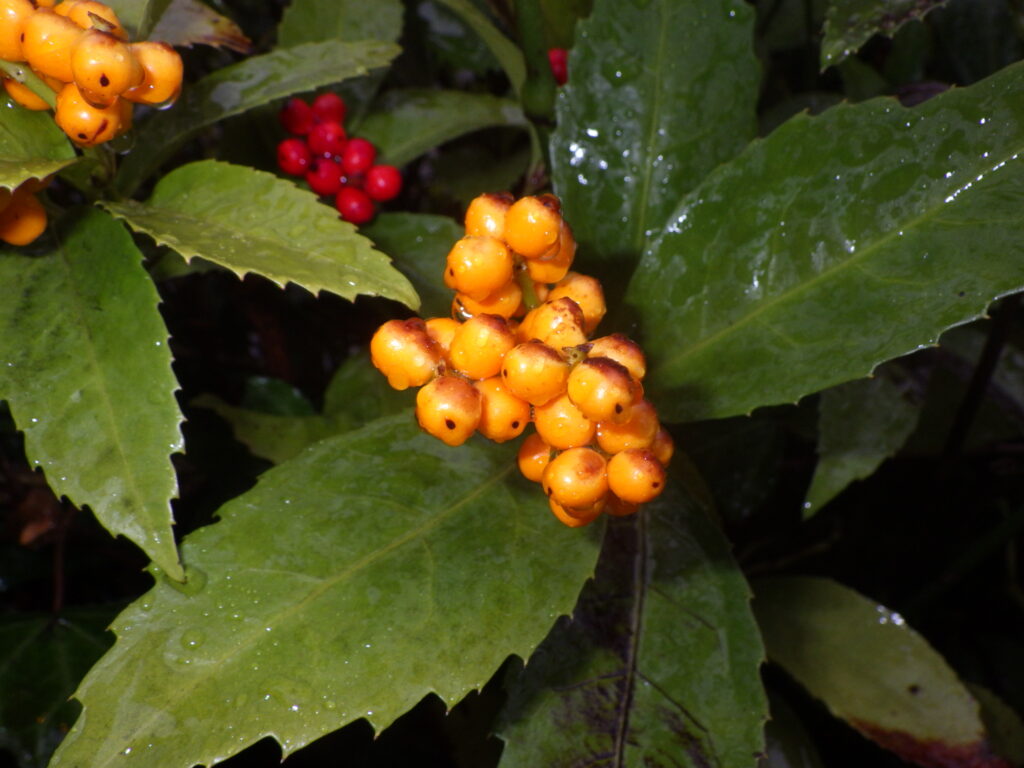
No.0081.1 Kiminosenryo (Sarcandra glabra f. flava)
A variety of Ardisia crenata whose berries turn yellow.
References
Kanagawa Prefecture Flora Survey Association. 2018. Kanagawa Prefecture Flora 2018 (Electronic Edition). Kanagawa Prefecture Flora Survey Association, Odawara. 1803pp. ISBN: 9784991053726