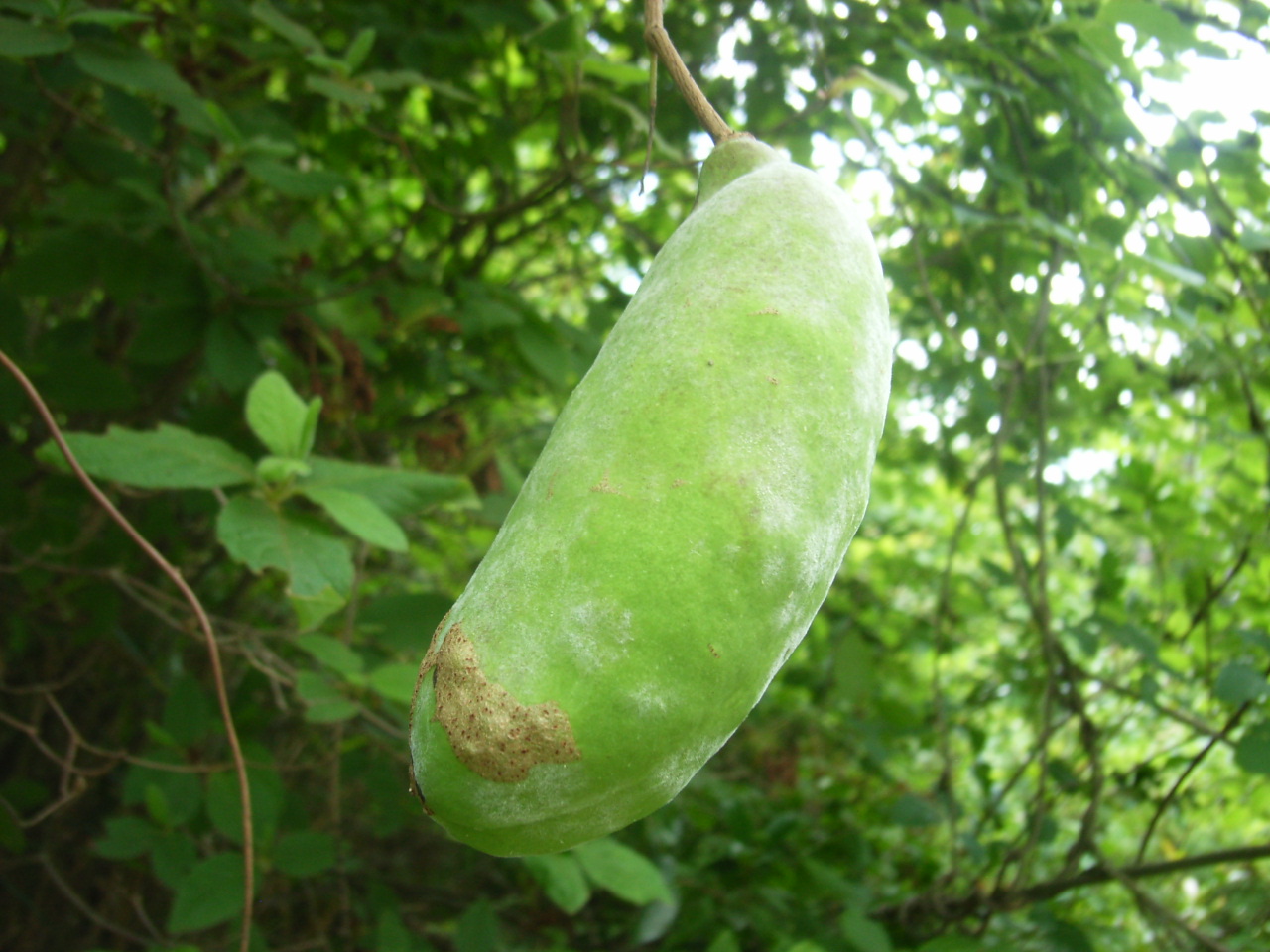
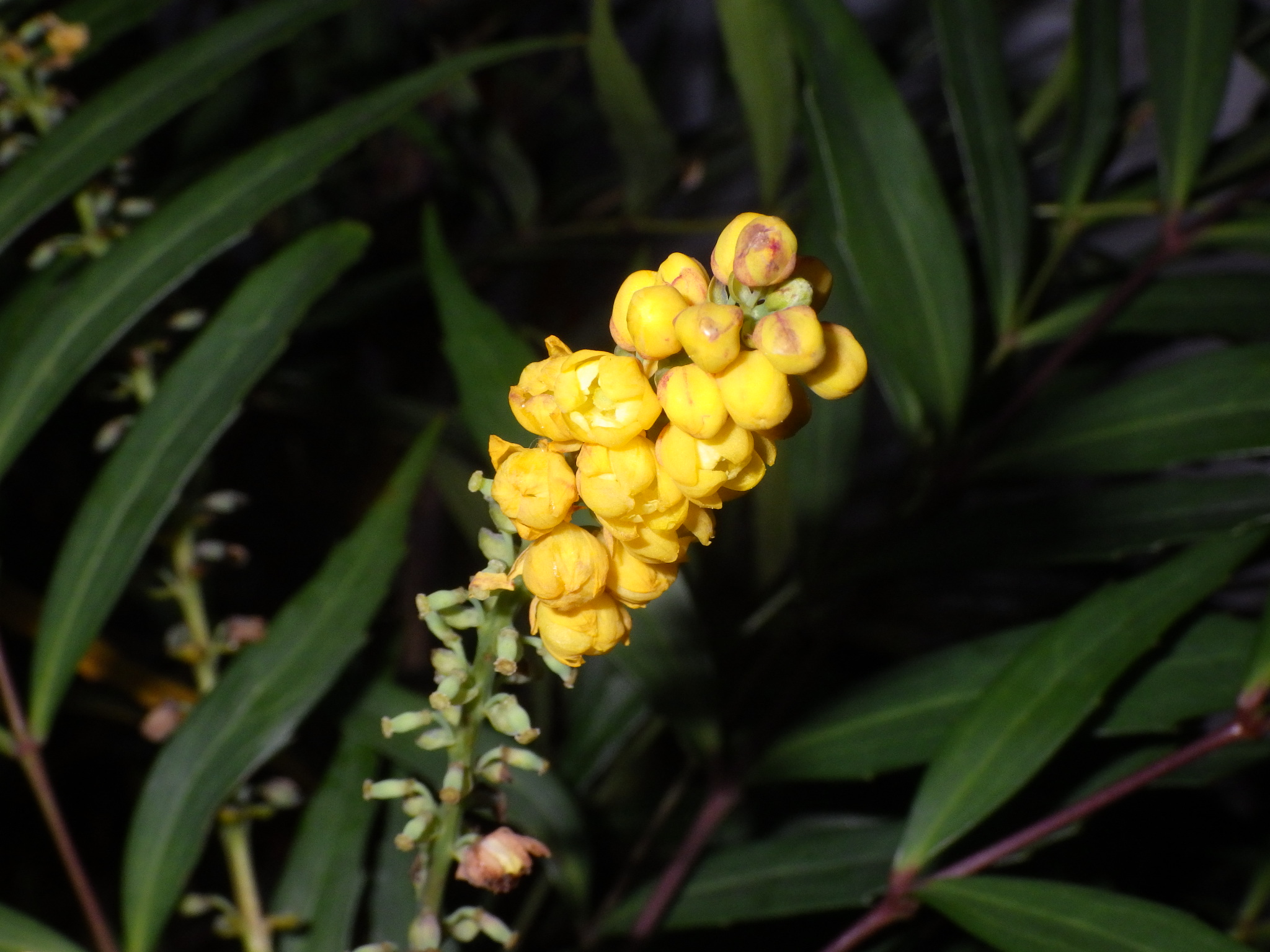
The family Menispermaceae consists of evergreen or deciduous climbing woody plants, and rarely, erect shrubs. The leaves are alternate, simple, and palmately venate. There are no stipules. Inflorescences are mostly axillary. They are usually dioecious. The fruit is a drupe. They are abundant in tropical regions, and 71 genera and approximately 450 species are known. Six genera and eight species are distributed in Japan.
This article provides a comprehensive, field guide-style introduction to plants belonging to the Menispermaceae family.
The basic information is based on the Kanagawa Prefecture Flora Survey Association (2018). Photos are replaced as better ones become available. While the identification is done by the author, please note that misidentifications may be corrected without notice.
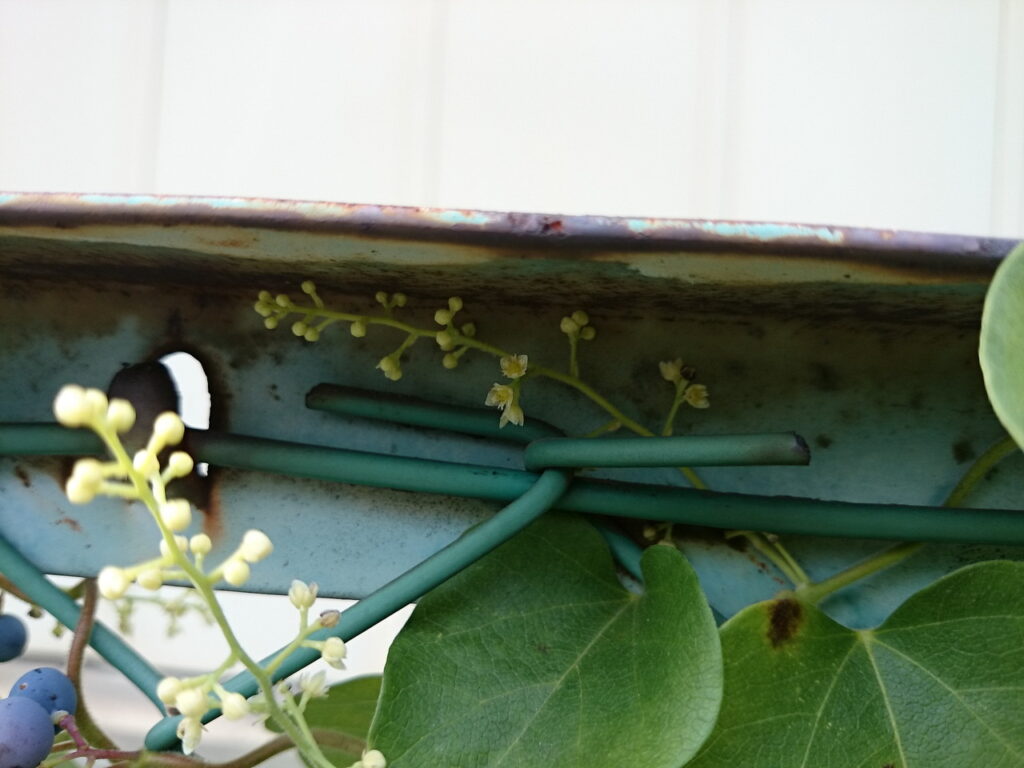
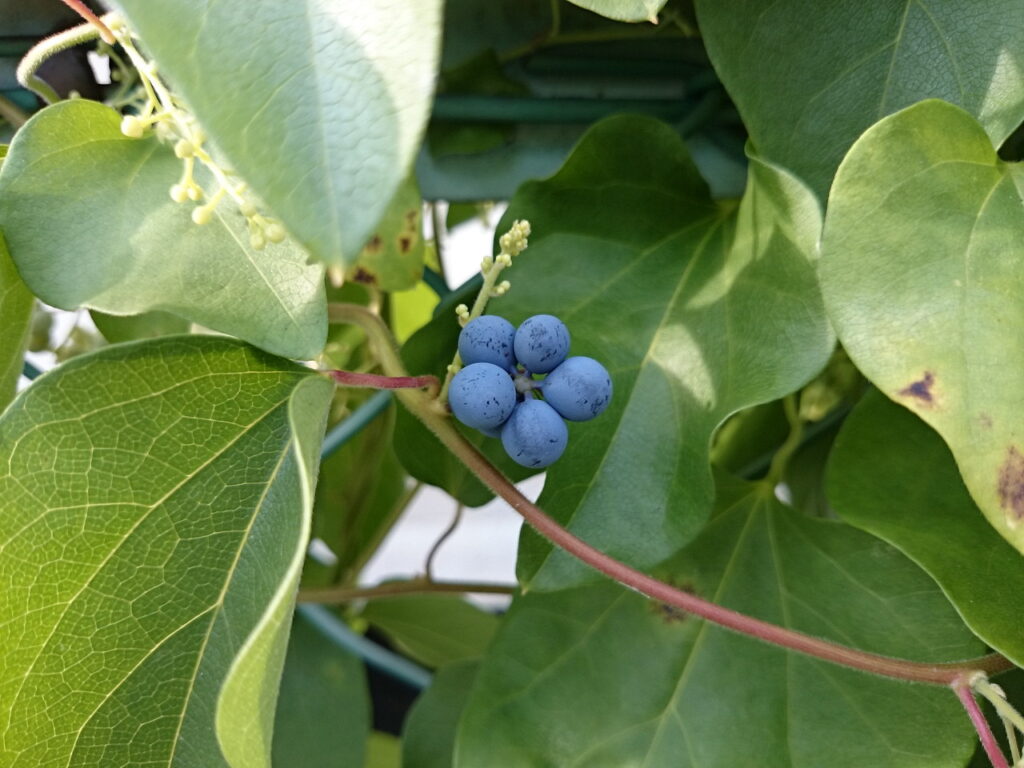
No. 1159 Cocculus trilobus
This is a deciduous climbing woody plant. It is also known as Kami-ebi or Houzan-tsuzura-fuji. The stems and leaves are covered with short, soft hairs. The leaves are usually ovate or lanceolate with three shallow lobes, but they are also heart-shaped, round, and vary in the way they are lobed. It flowers from July to August. The inflorescence is a raceme or a conical shape with few flowers. The flowers are small and yellowish-greenish-white, with six sepals (three small and three petal-like), and six petals with two lobes at the tip. Male flowers have six stamens, while female flowers have six pistils and six staminodes. The drupe is nearly spherical, ripens to a bluish-black color, and is covered with a white powder. The seed is about 5 mm in diameter and resembles an ammonite. It is distributed in Hokkaido, Honshu, Shikoku, Kyushu, the Ryukyu Islands, the Korean Peninsula, China, Taiwan, the Philippines, and India. It grows in lowland grasslands, roadsides, and forest edges.
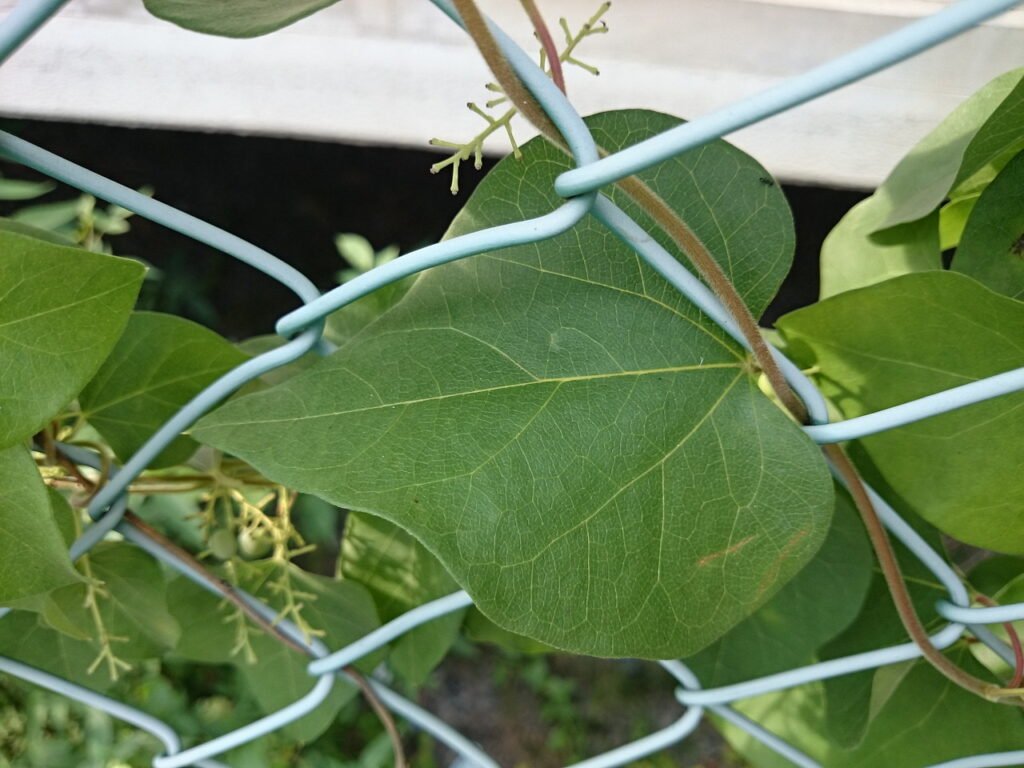
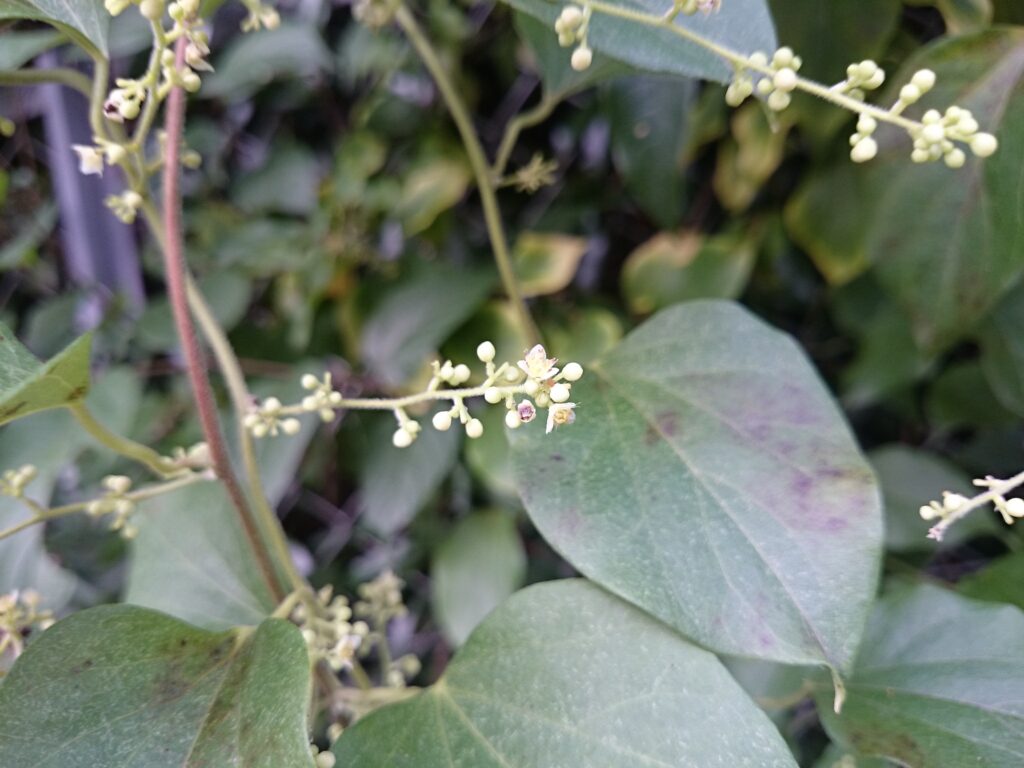
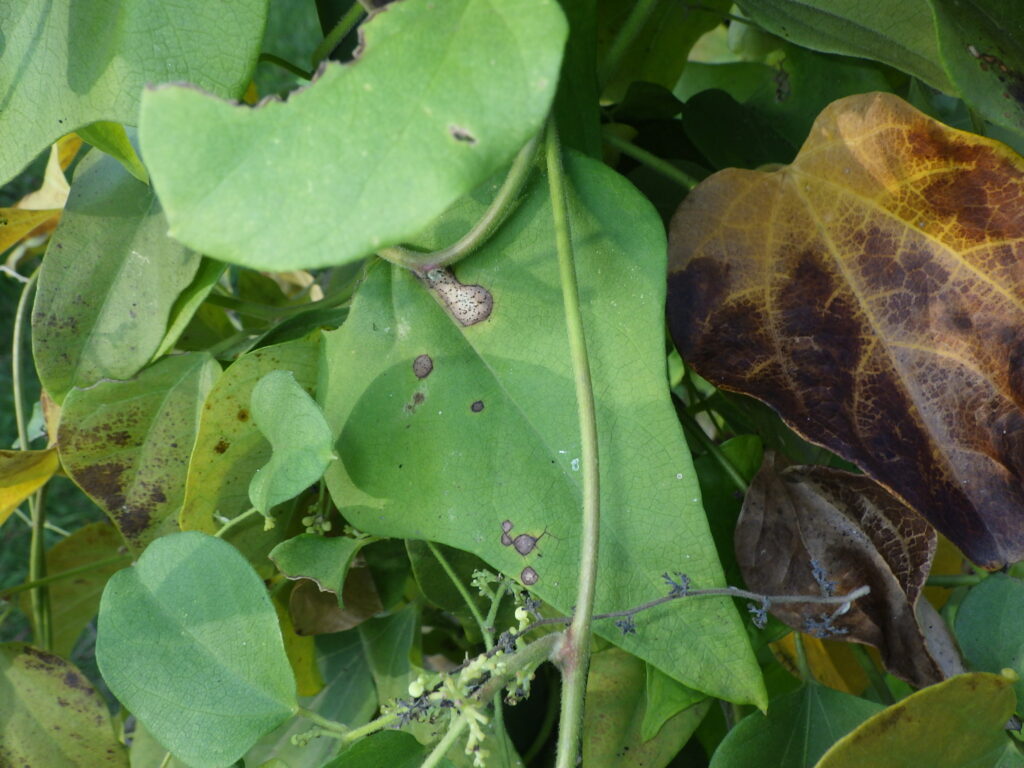
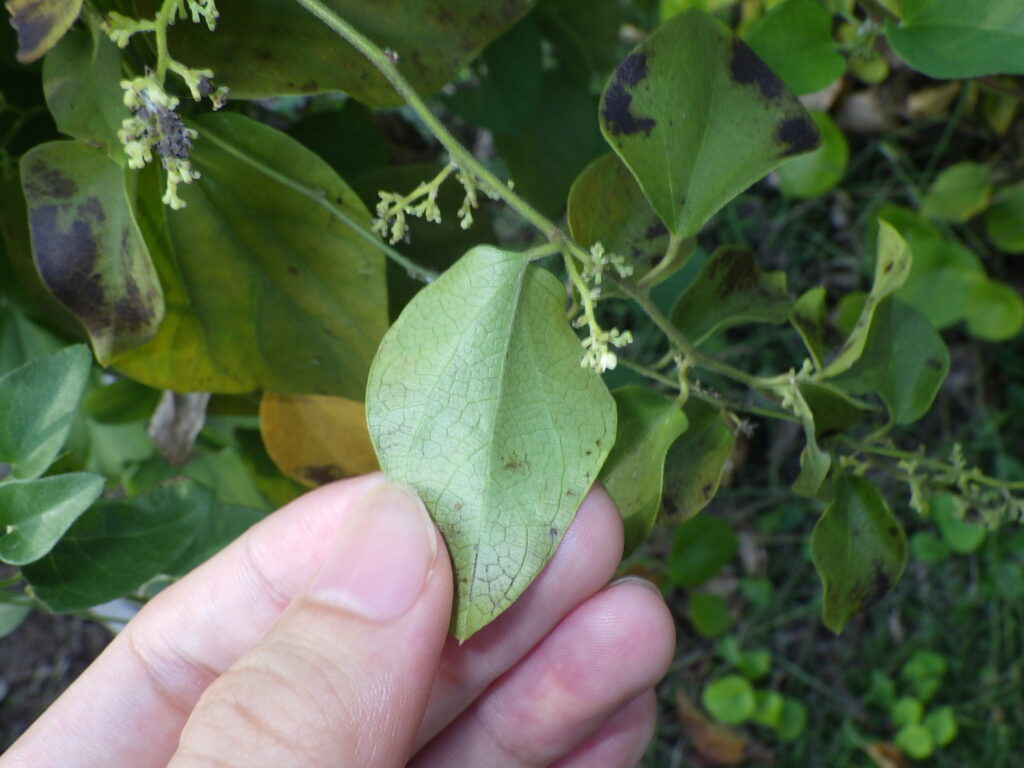
No. 1164 Menispermum dauricum (Bat Vine)
This is a deciduous woody vine. The vines are not very woody and sometimes become herbaceous. The leaves are usually pentagonal-ovate, but vary greatly in shape from heart-shaped to shallowly or deeply lobed. The petiole is attached to the middle of the leaf blade and is shield-shaped. It flowers from May to June. Numerous small, pale yellowish-green flowers are borne in axillary panicles. The drupe is nearly spherical, ripening to a bluish-black color and covered with a white powdery coating. It is distributed in Hokkaido, Honshu, Shikoku, Kyushu; the Korean Peninsula; China (northern and northeastern); and eastern Siberia. It can be found in forest edges in mountainous and hilly areas.
No. 1165 Stephania japonica (Lotus Leaf Vine)
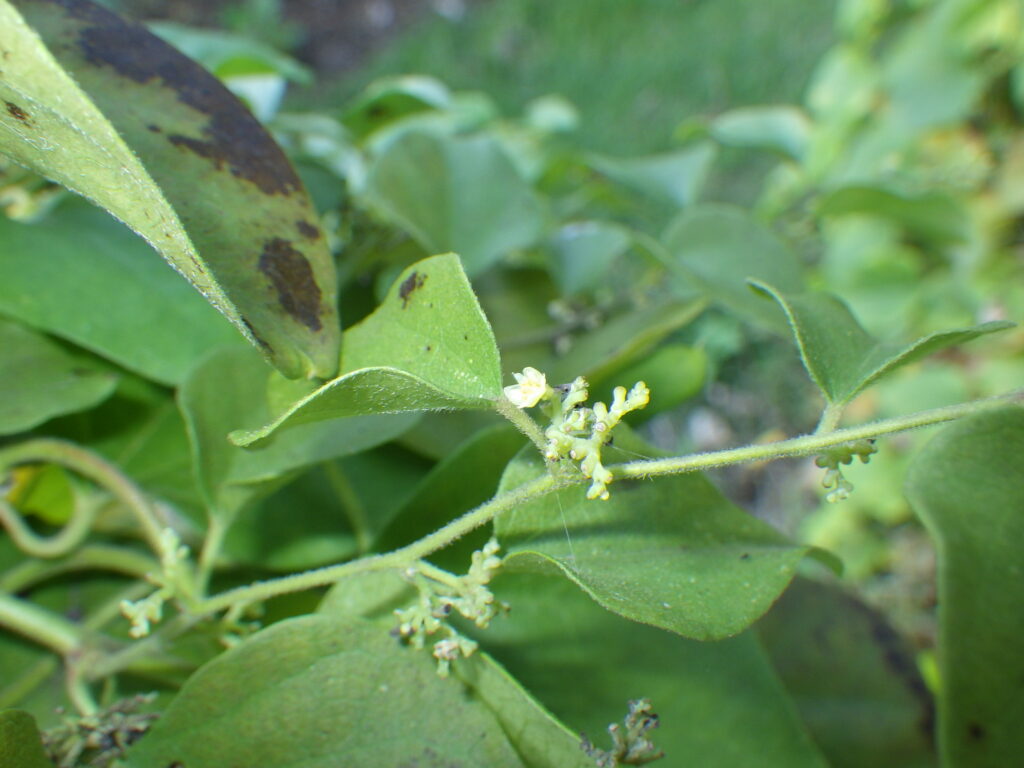
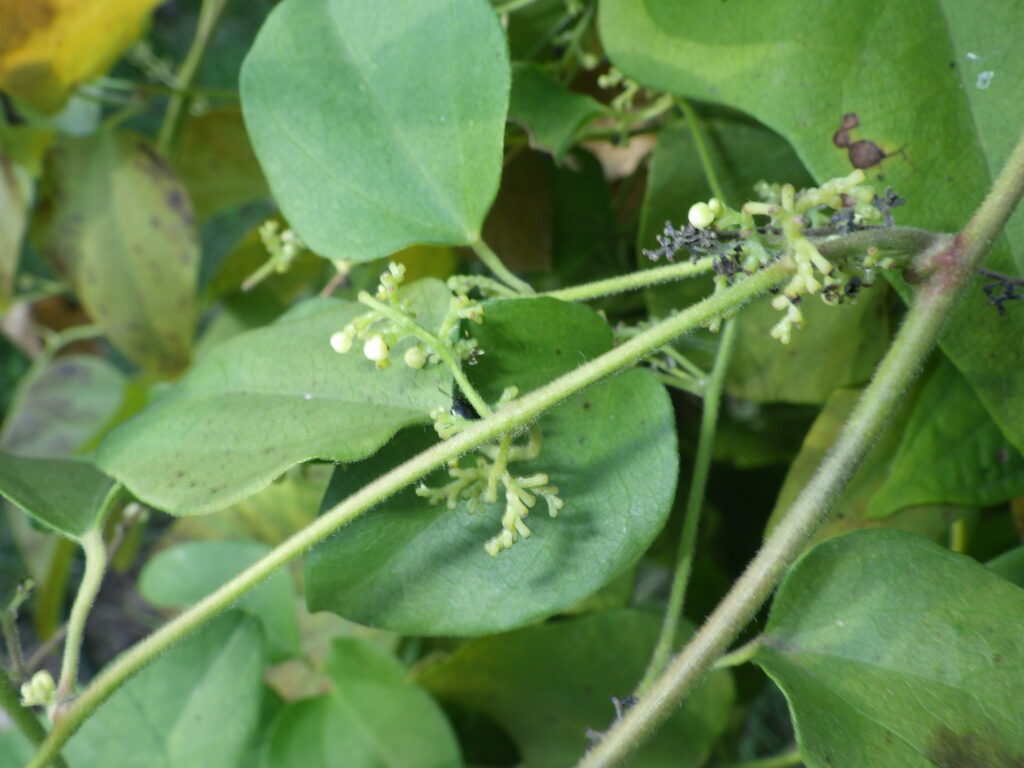
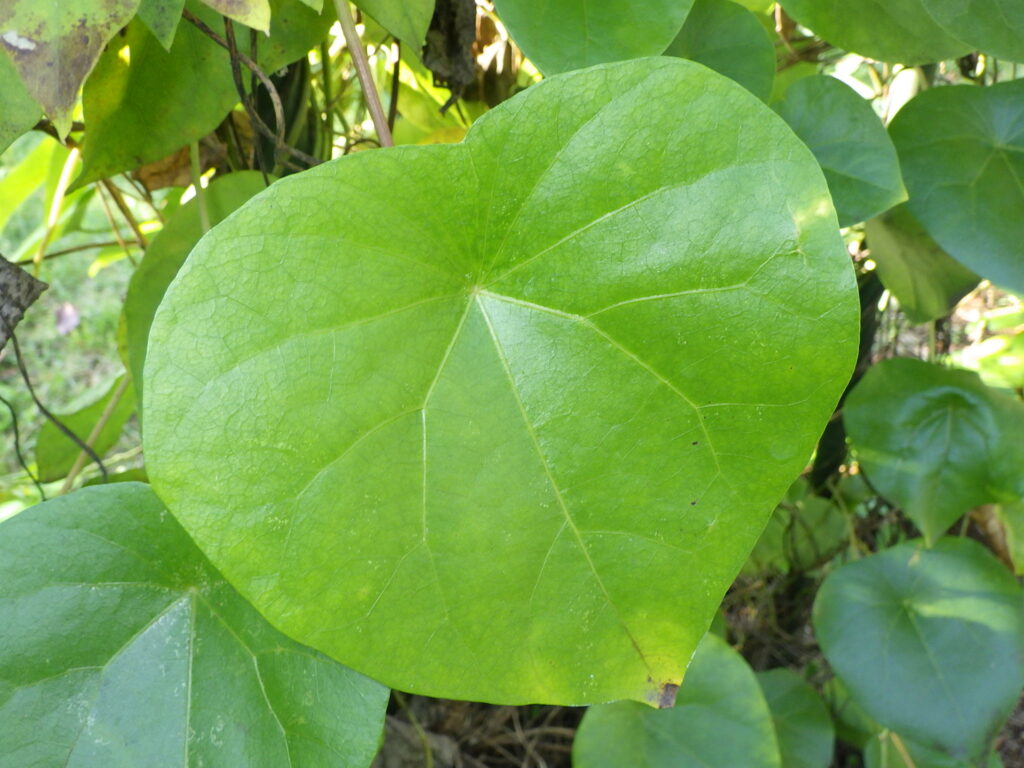
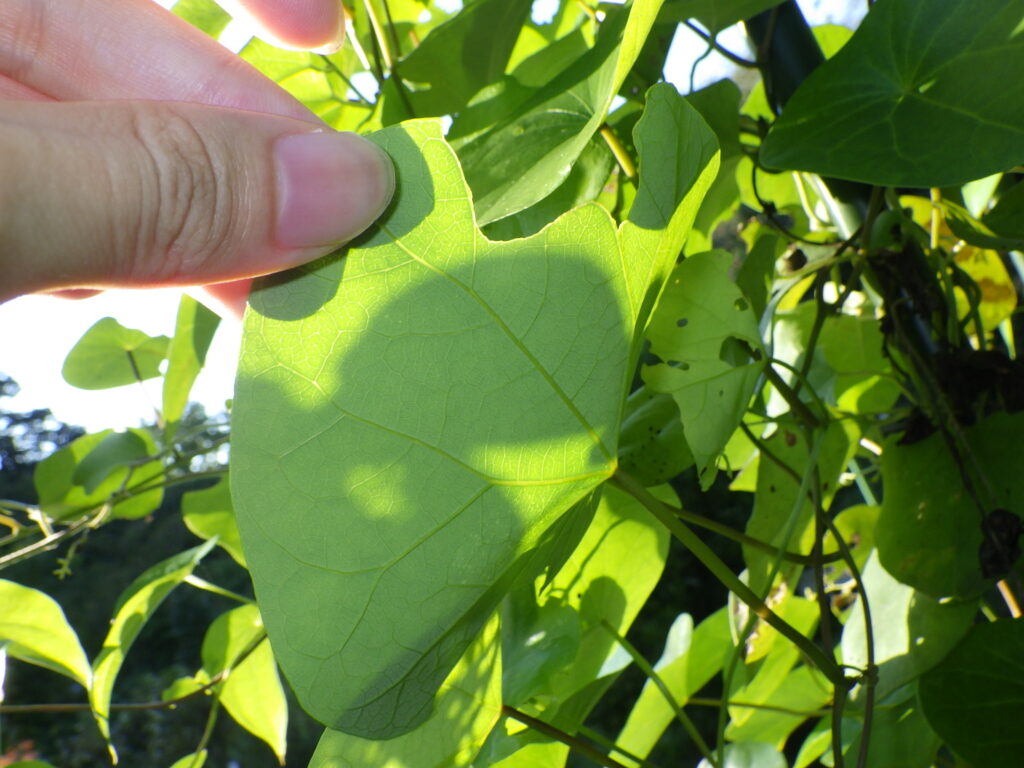
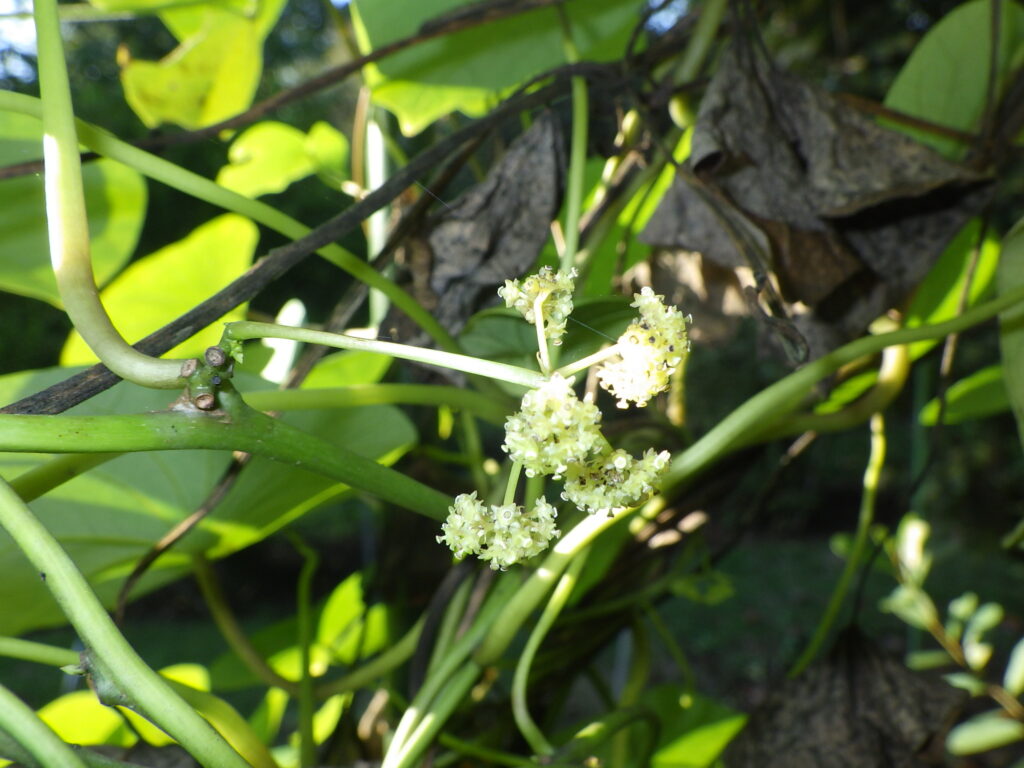
An evergreen climbing woody plant. Also known as Inutsuzurafuji. The leaves are alternate. The leaf blade is triangular-ovate, 5-12 cm long and 4-10 cm wide. The margin is entire. Both surfaces are hairless, and the underside is slightly whitish. The petiole is 4-12 cm long and attached to the leaf blade in a shield-like manner. It is dioecious. The flowering period is from July to September. The flowers are in compound umbels. Numerous small, pale green flowers are borne on inflorescences that emerge from the leaf axils. There are 3-4 petals. Male flowers have 6-8 sepals. Female flowers have fewer sepals, 3-4. The 6 stamens of male flowers are fused together to form a column, and the anthers are also fused together to form a disc. Female flowers have one pistil. The fruit is a drupe. It is spherical, 6 mm in diameter, and ripens red around November. The nucleus is somewhat flattened with concave sides and has chain-like ridges around its periphery. It is distributed from Honshu (west of the Tokai region) to Shikoku, Kyushu, the Ryukyu Islands, as well as Korea, China, Taiwan, and Southeast Asia. It grows in mountainous areas along the coast.
References
Kanagawa Prefecture Flora Survey Association. 2018. Kanagawa Prefecture Flora 2018 (Electronic Edition). Kanagawa Prefecture Flora Survey Association, Odawara. 1803pp. ISBN: 9784991053726