The Daphniphyllaceae family consists of evergreen trees or shrubs. The leaves are densely arranged alternately at the tips of branches, narrowly oblong with entire margins. The flowers are unisexual and dioecious, arranged in axillary racemes. They lack petals, have 3-6 sepals, and 6-12 stamens. Because they have 2 carpels instead of 3, they were separated from the Euphorbiaceae family. The fruit is a drupe containing one seed. There are 30 species in this genus worldwide, with 2 species found in Japan.
This article provides a comprehensive, field guide-style introduction to plants belonging to the Daphniphyllaceae family.
The photos are replaced as soon as better ones are taken. Also, while the identification is done by the author, please note that if there are any misidentifications, they may be changed without notice.
No.1349 Daphniphyllum macropodum subsp. macropodum
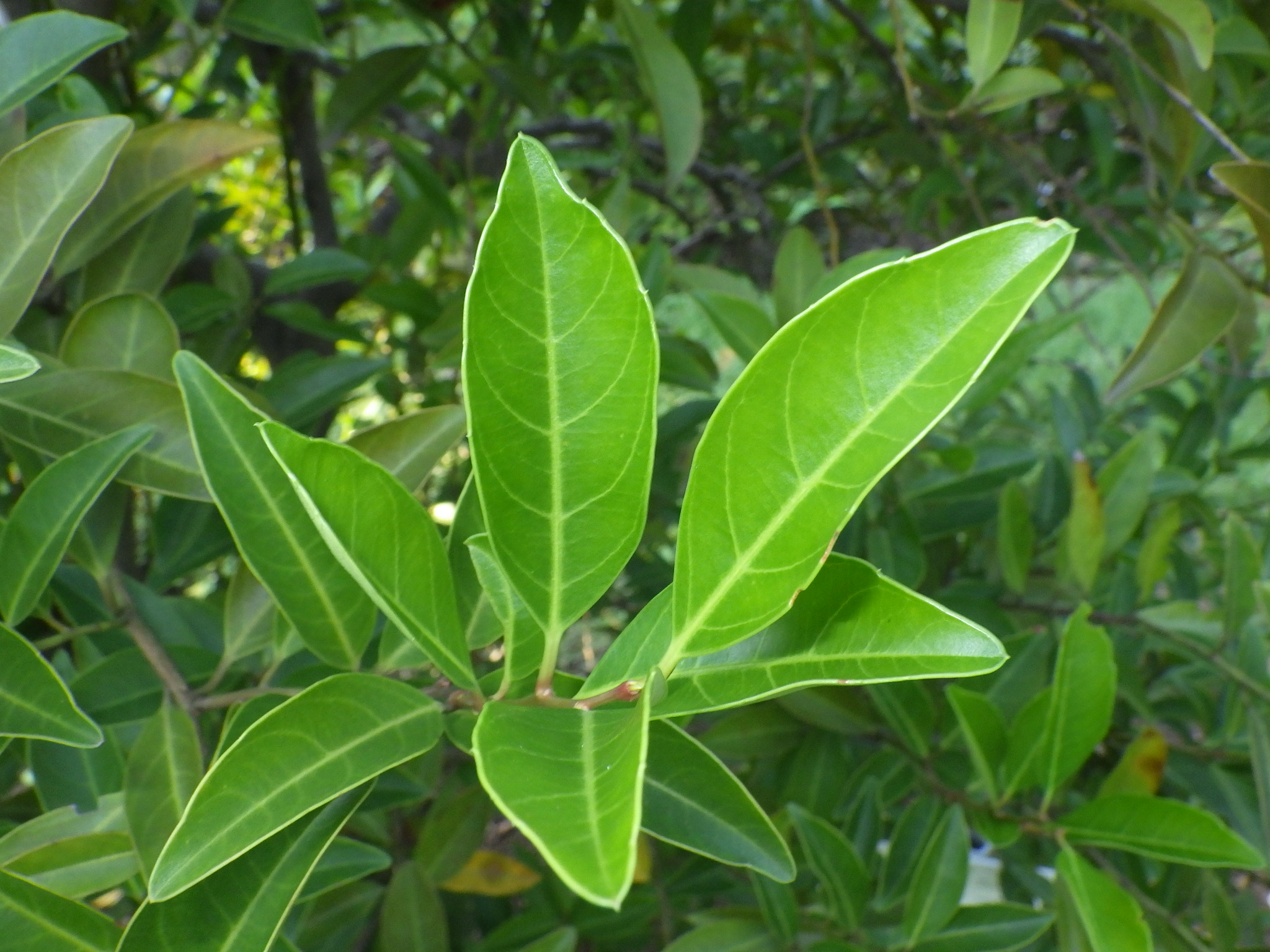
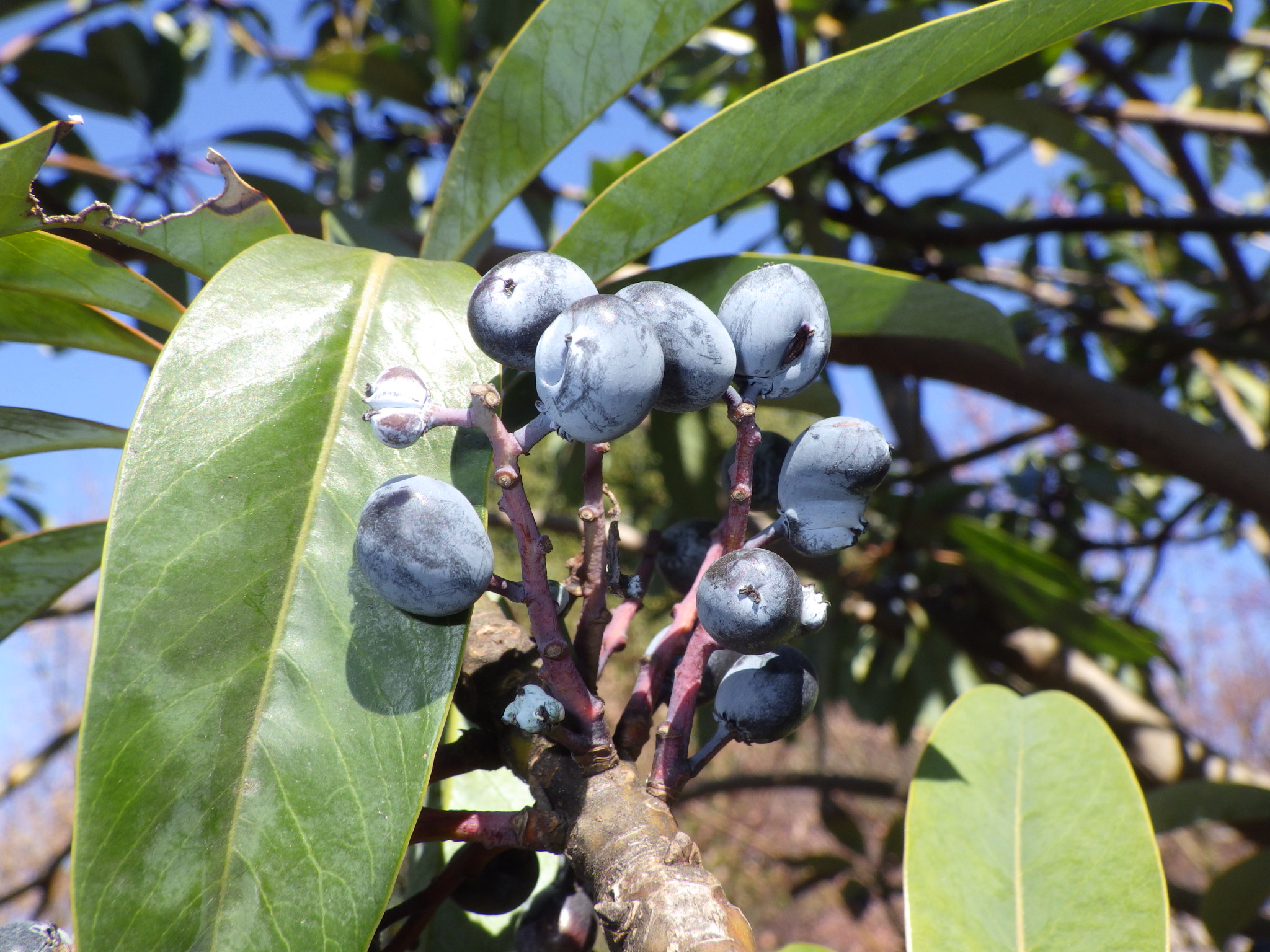
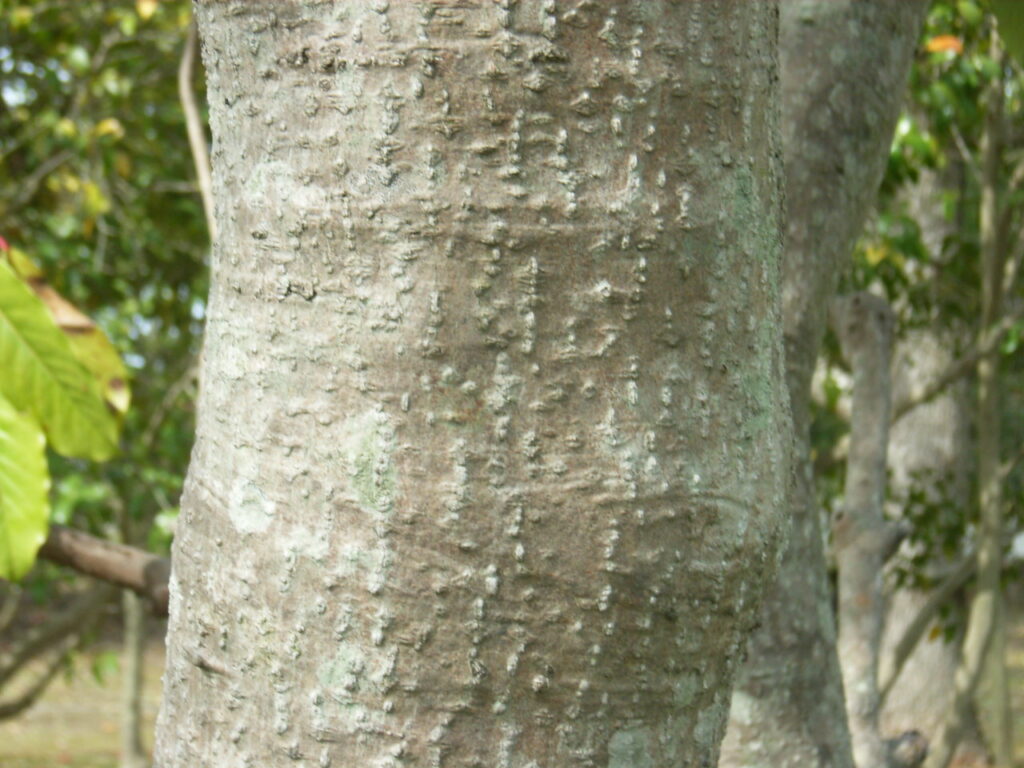
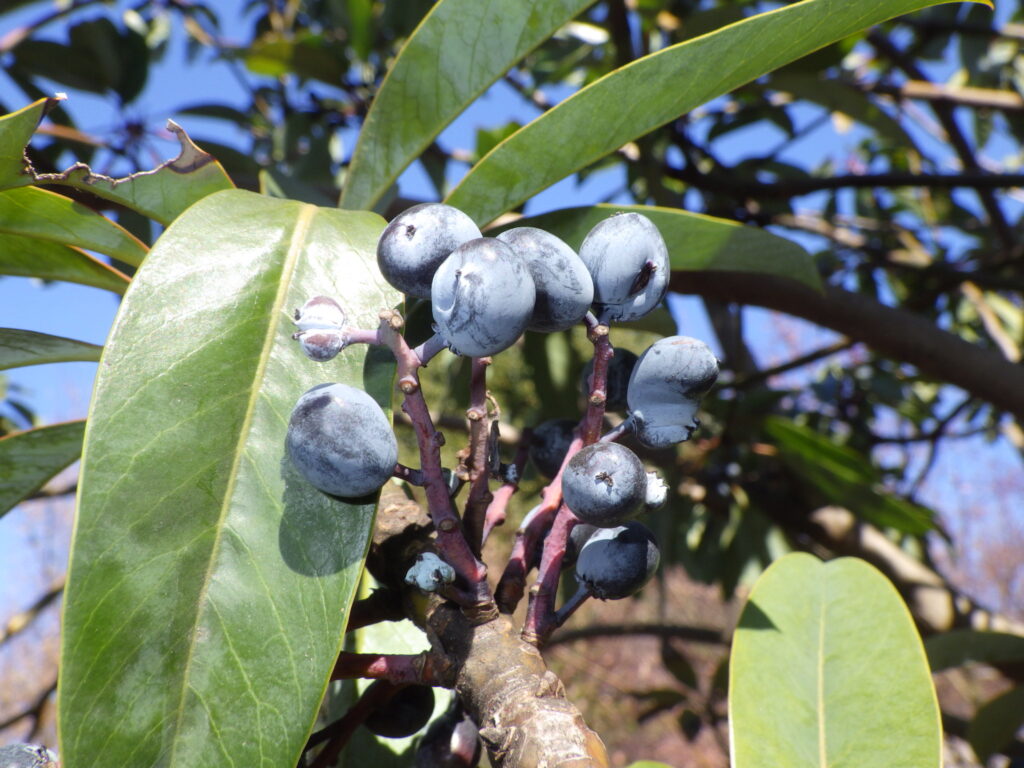
This is an evergreen tree (a tree with flowers). The bark is grayish-brown with vertical stripes and oval lenticels. Young branches are reddish in color. Older branches have prominent leaf scars. The leaves are alternate, clustered in whorls at the tips of the branches. The leaf blade is oblong to oblanceolate, 8-20 cm long and 3-7 cm wide. The tip is short and pointed, and the base is wedge-shaped. The margin is entire. There are 10-19 pairs of lateral veins. The leaves are leathery and glabrous on both sides. The upper surface is glossy, and the underside is whitish. The petiole is 3-6 cm long and often reddish. The flowering period is from May to June. Racemes 4-12 cm long emerge from the leaf axils of the previous year's branches. Male flowers lack petals and sepals, and have 6-12 stamens. The filaments are free, and the brownish-purple anthers are conspicuous. The female flowers have small or absent sepals. The ovary is narrowly ovate, 1-2 mm long. The stigma is brownish-purple, with 2-4 segments curving outwards. The fruit is a drupe, 8-9 mm long, ovate-elliptic, ripening to a bluish-black color in November-December, with a powdery surface. The style is persistent. The terminal bud of the winter bud is narrowly ovate, tinged with red, and enclosed in numerous bud scales that are modified petioles. The leaf scar is obovate and large, with three vascular bundle scars. Flowering branches have inflorescence branch scars. The small, round buds in the leaf axils are flower buds. It is distributed in Honshu (west of Fukushima Prefecture), Shikoku, Kyushu, the Ryukyu Islands, Korea, and China. It grows in warm-climate evergreen forests. Because the old leaves fall after the new leaves emerge, it is called "yuzuri-ba" (yuzuri leaves), likened to a parent yielding to its offspring after it has grown (Kanagawa Prefecture Flora Survey Association, 2018). It is sometimes cultivated for ornamental purposes and is used in New Year's decorations. Pollination is carried out by bees (superfamily Apoidea, order Diptera, family Scarabaeidae) (Yumoto, 1988), and seeds are dispersed by birds (Kominami, 1999).
No. 1350 Daphniphyllum macropodum subsp. humile
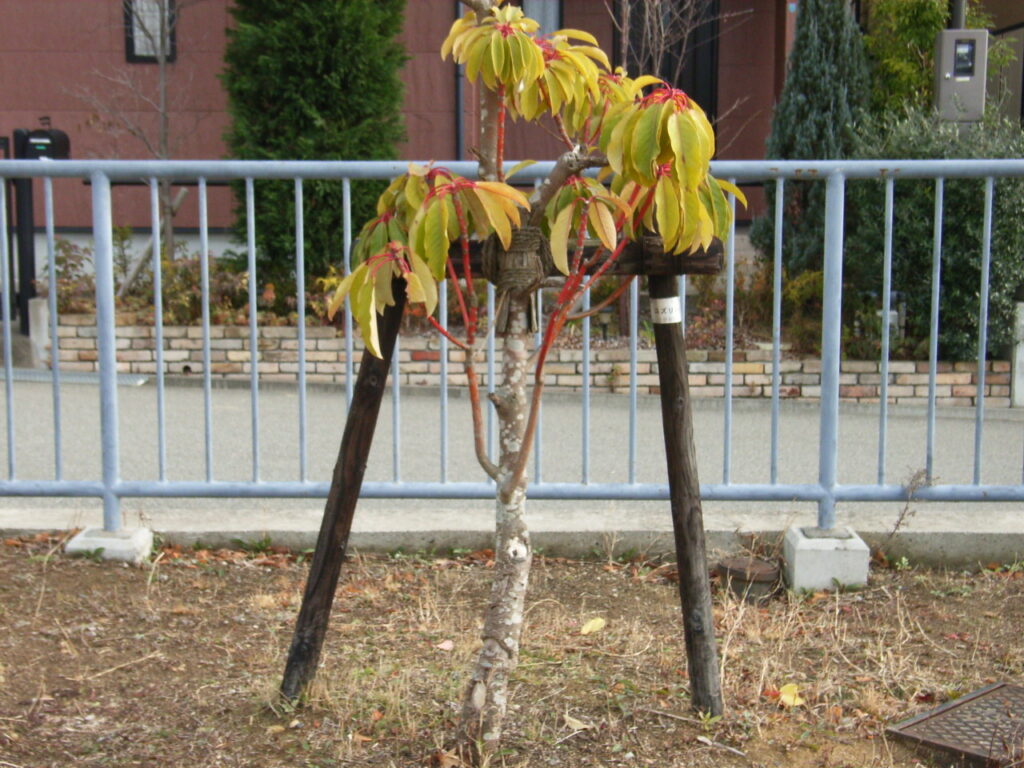
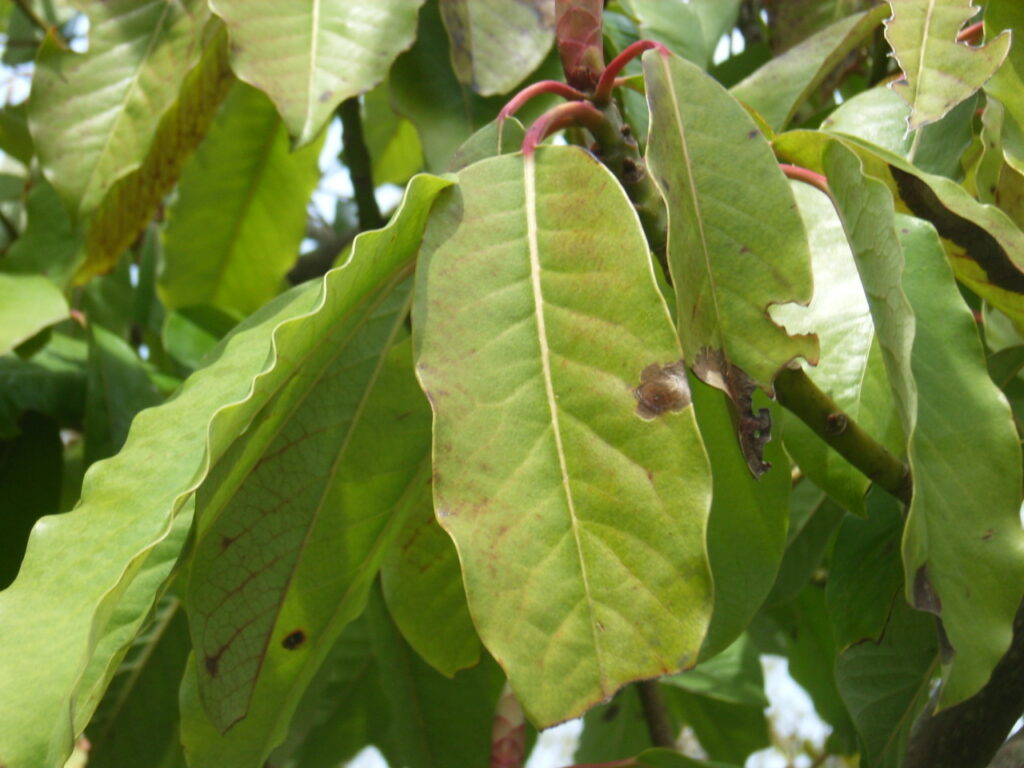
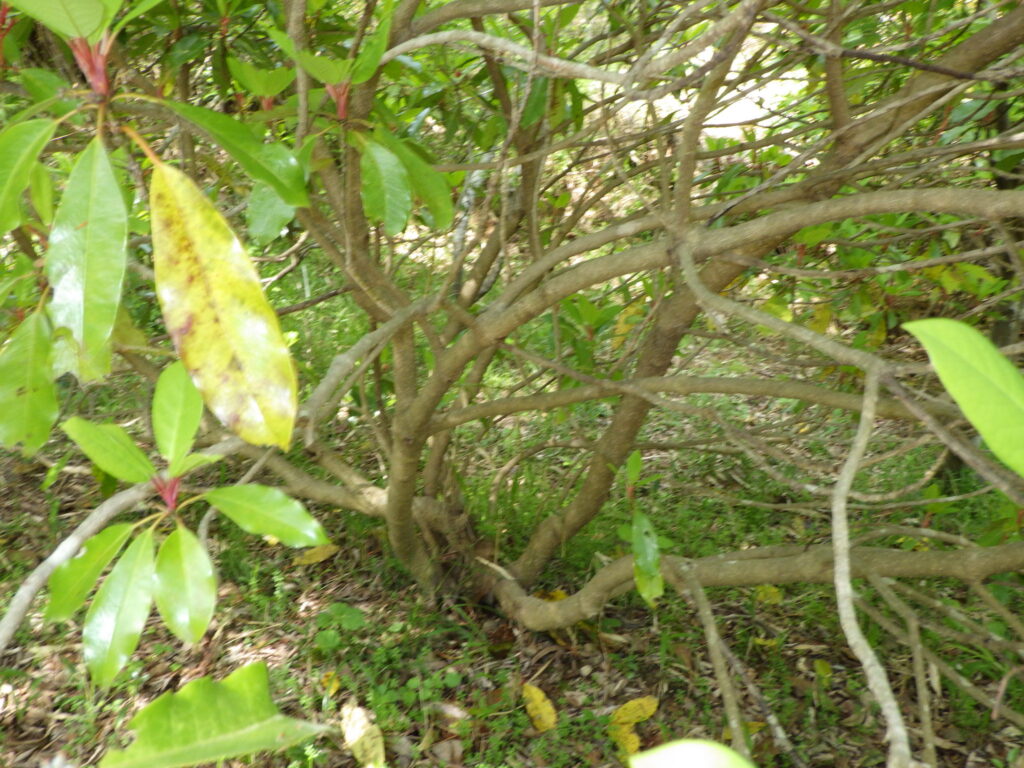
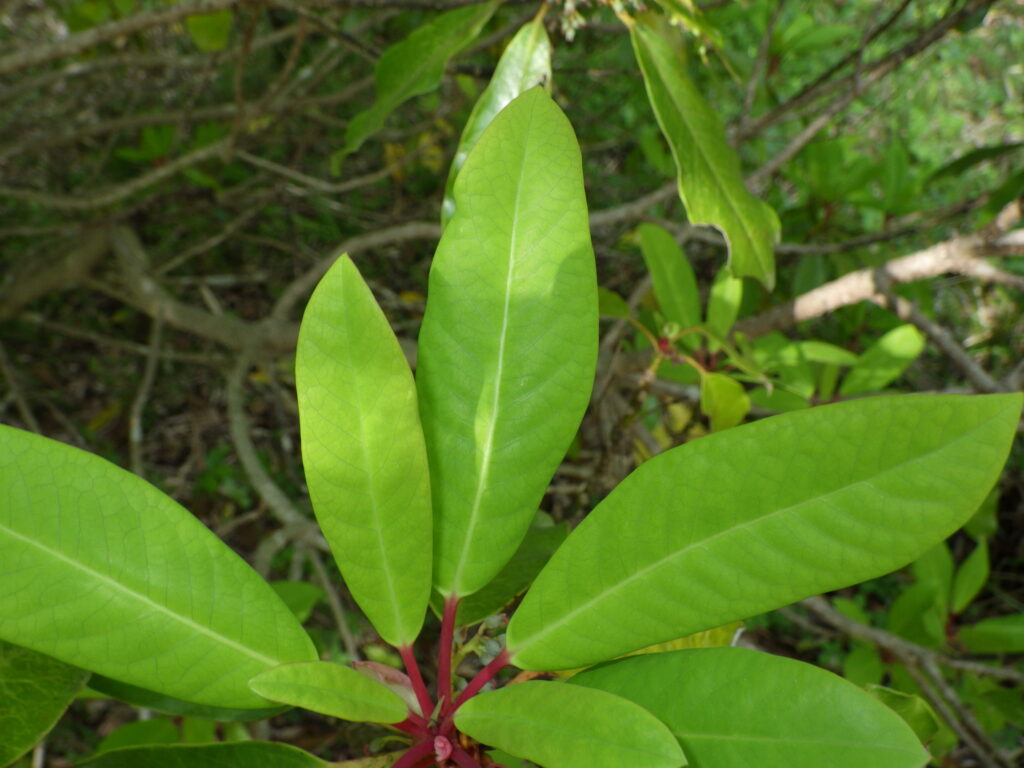
This subspecies of Daphniphyllum macropodum, which is distributed in warm regions on the Pacific side of Japan, has adapted to the heavy snowfall areas on the Sea of Japan side of Honshu (Satake, 1999). It is an evergreen shrub. It is dioecious. It grows to a height of 1-3m, and its branches are flexible and resistant to breakage. The leaves are alternate on the branches, with petioles 3-5cm long. The leaves are elliptic to obovate-oblong in shape, 9-20cm long and 5-6cm wide, with a rounded or wedge-shaped base and a short, pointed tip. The leaf margins are entire, the upper surface is glossy, and the underside is slightly greenish-white. It flowers from May to June, and the flowers lack a perianth, with racemes emerging from the leaf axils. It bears oval fruits with long pedicels from October to November. It can be distinguished from Daphniphyllum macropodum by its curved trunk, which makes it a shrub-like tree 1-2m tall, and its leaf length of 10-17cm. It is distributed along the Sea of Japan coast of Hokkaido and the central and northern parts of Honshu, and grows naturally on the forest floor in areas with heavy snowfall. It is found on the forest floor of beech forests and other areas, along with evergreen creeping plants that are characteristic of the Sea of Japan, such as Camellia japonica, Ilex crenata, Aucuba japonica, Skimmia japonica, and Taxus cuspidata (Fukushima, 2017).
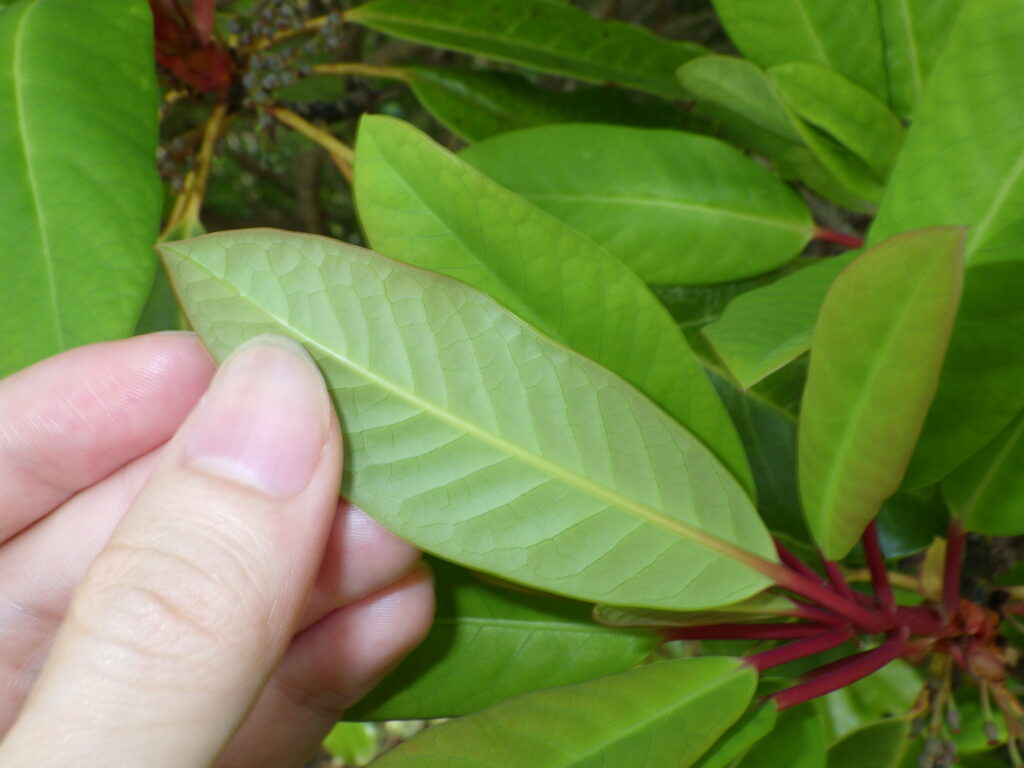
No. 1351 Daphniphyllum teijsmannii
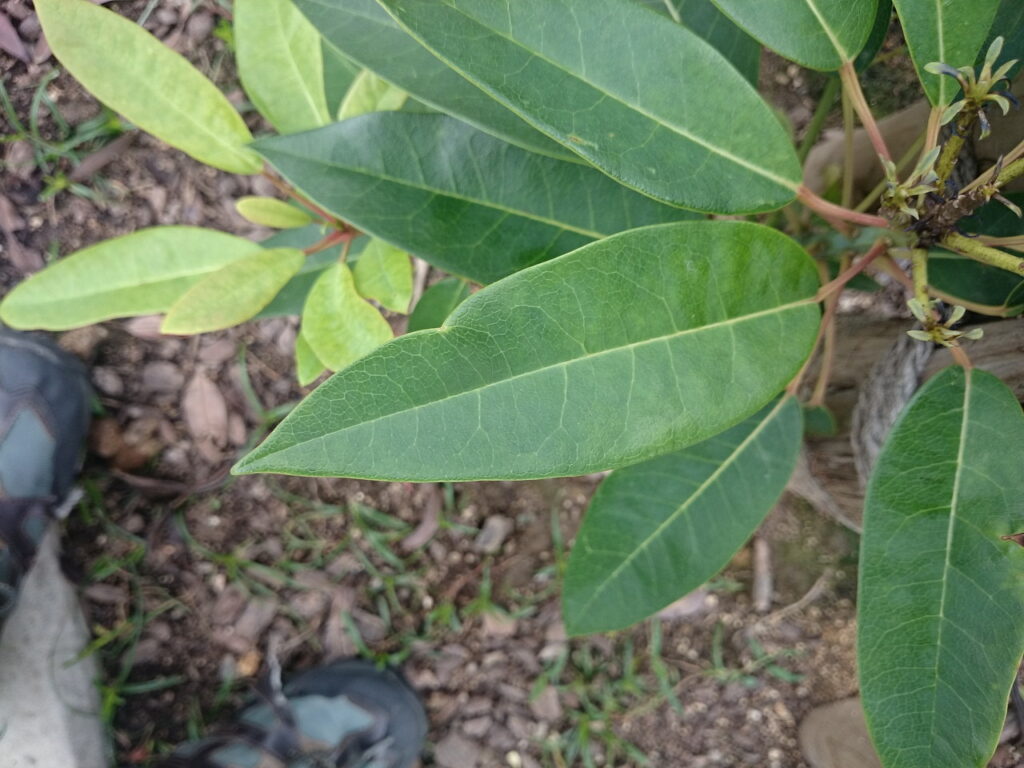
This evergreen tree (a tree with flowers) grows in evergreen broad-leaved forests from southern Tohoku to Okinawa. It reaches a height of about 10 meters. The bark is grayish-brown with scattered lenticels. Young branches are green, while older branches have noticeable leaf scars. The leaves are alternate and clustered at the tips of the branches. The leaf blade is 4-15 cm long and 2-6 cm wide, narrowly elliptic to oblanceolate, with an entire margin. There are 8-10 pairs of lateral veins, and the reticulate venation is clearly visible. The leaves are leathery, glossy on the surface, and hairless on both sides. The petiole is 1.5-5 cm long, usually green, rarely tinged with red. It is dioecious (having separate male and female plants). Racemes 1.5-6 cm long emerge from the leaf axils of the previous year's branches. The flowering period is from May to June. The flowers tend to cluster at the top of the inflorescence branches. Male flowers have stalks about 3 mm long, lack petals, and have 3-6 small sepals and 4-12 stamens. Female flowers have 3-6 small sepals about 0.5 mm long. The ovary is narrowly ovate, 1-1.5 mm long. The stigma has 3-4 segments, is pale yellow, and curves outward. The fruit is a drupe, elliptical, 8-9 mm long, and ripens to a bluish-black color in December-January. The surface is powdery. The inflorescence does not droop. The stone is 6-7 mm in diameter. The terminal bud of the winter bud is narrowly ovate and enclosed by numerous bud scales that are modified petioles. The leaf scar is large, with 3 vascular bundle scars. Small flower buds are borne in the leaf axils. This species can be distinguished from Daphniphyllum macropodum by its relatively small leaves, 8 to 10 pairs of lateral veins, and reticulate venation visible when held up to the light. Even if not visible through the light, the presence of prominent reticulate venation in a specimen indicates this species. It is distributed in Honshu (west of Fukushima Prefecture), Shikoku, Kyushu, and the Ryukyu Islands. It grows near the coast and is sometimes planted in parks and along streets.
References
Fukushima, Tsutomu. 2017. Illustrated Guide to Japanese Vegetation (2nd edition). Asakura Shoten, Tokyo. 186pp. ISBN: 9784254171631
Kanagawa Prefecture Flora Survey Association. 2018. Kanagawa Prefecture Flora 2018 (Electronic Edition). Kanagawa Prefecture Flora Survey Association, Odawara. 1803pp. ISBN: 9784991053726
Kominami, Yosuke. 1999. Spatial distribution of seeds carried by birds. In: Ueda, Keisuke (Ed.), Seed Dispersal: The Evolution of Mutual Aid Vol. 1 Seeds Carried by Birds (pp. 17-25). Tsukiji Shokan. ISBN: 9784806711926
Satake, Yoshisuke. 1999. Wild Plants of Japan (New Edition, Woody Plants 1). Heibonsha, Tokyo. 321pp. ISBN: 9784582535044
Yumoto, T. 1988. Pollination systems in the cool temperate mixed coniferous and broad-leaved forest zone of Yakushima Island. Ecological Research 3(2): 117-129. https://doi.org/10.1007/BF02346934