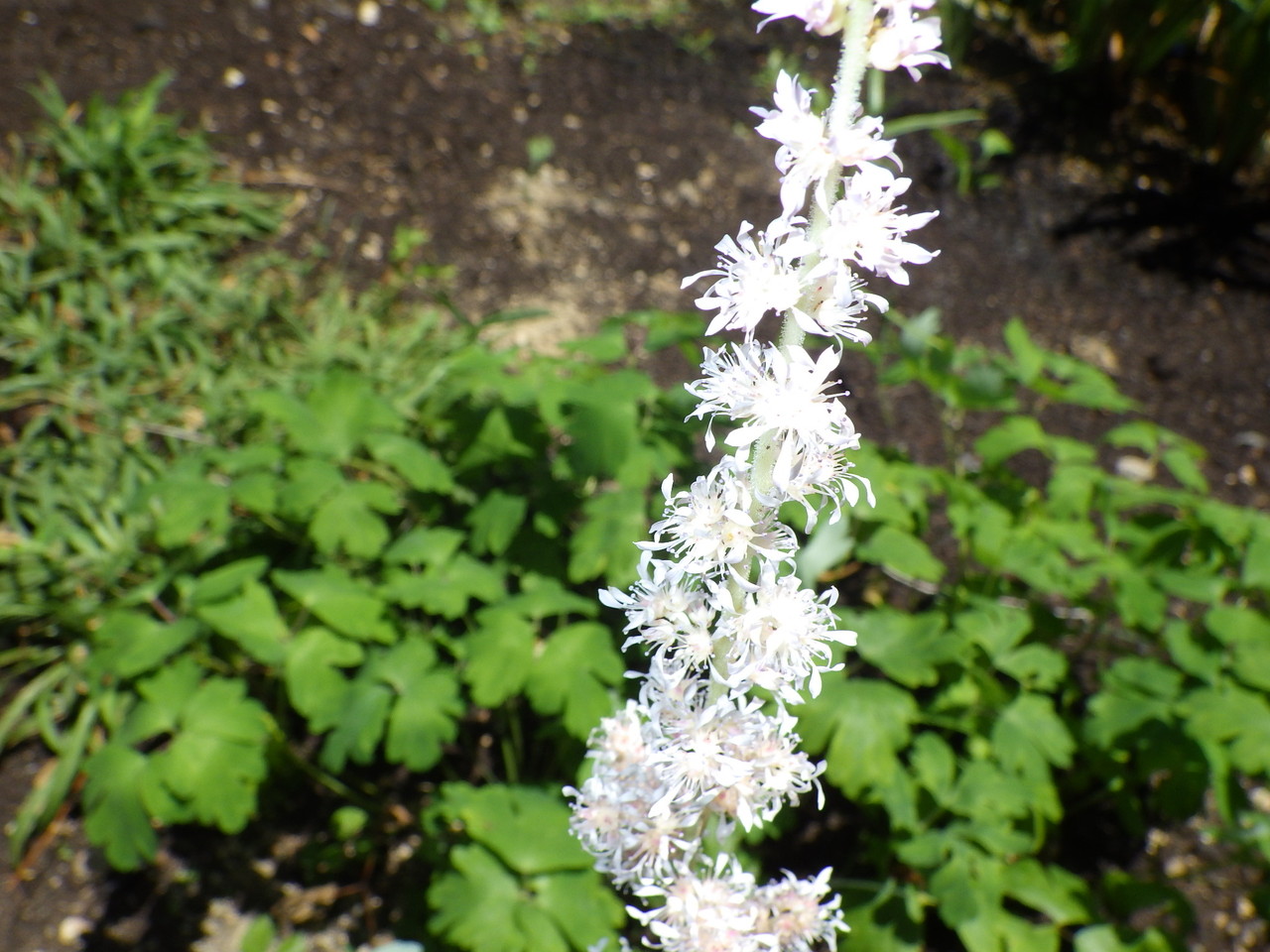
The family Iteaceae consists of evergreen to semi-evergreen (or deciduous) shrubs (or subshrubs, trees, or vines) (Flora of North America). The leaves are alternate, simple, spiny, petiolate, and the margins of the leaf blade are not lobed, but glandular and serrated (or entirely). The inflorescence is a terminal or axillary raceme (or panicle). The flowers are bisexual, and the perianth segments and inflorescence grow almost low (3/4 of the ovary is inferior). The perianth segments are attached to the ovary at the base and free distally, with 5 sepals fused proximally, 5 petals, and a nectary. There are 5 stamens, located in front of the calyx and inserted into the receptacle margin. The pistil is single and bifurcated, the ovary has two parts almost on the upper side (up to the lower 3/4), with a central placenta, the ovules are anatropous, dichocarpic, and the styles are two, either separated or fused at the tip. The stigma is two, becoming capitate at the terminal. The fruit is pod-like, and when dehisced it is septate. The seeds number 20-30, are dark brown or yellowish-brown, tufted or ovate, and the endosperm is sparse and fleshy. Currently, there are two genera, Itea and Pterostemon, with a total of 18 known species, scattered across southeastern North America, southeastern Asia, and southeastern Africa.
This article provides a comprehensive, field guide-style introduction to plants belonging to the Ilex genus.
The photos are replaced as soon as better ones are taken. Also, while the identification is done by the author, please note that if there are any misidentifications, they may be changed without notice.
No. 1353 Itea oldhamii
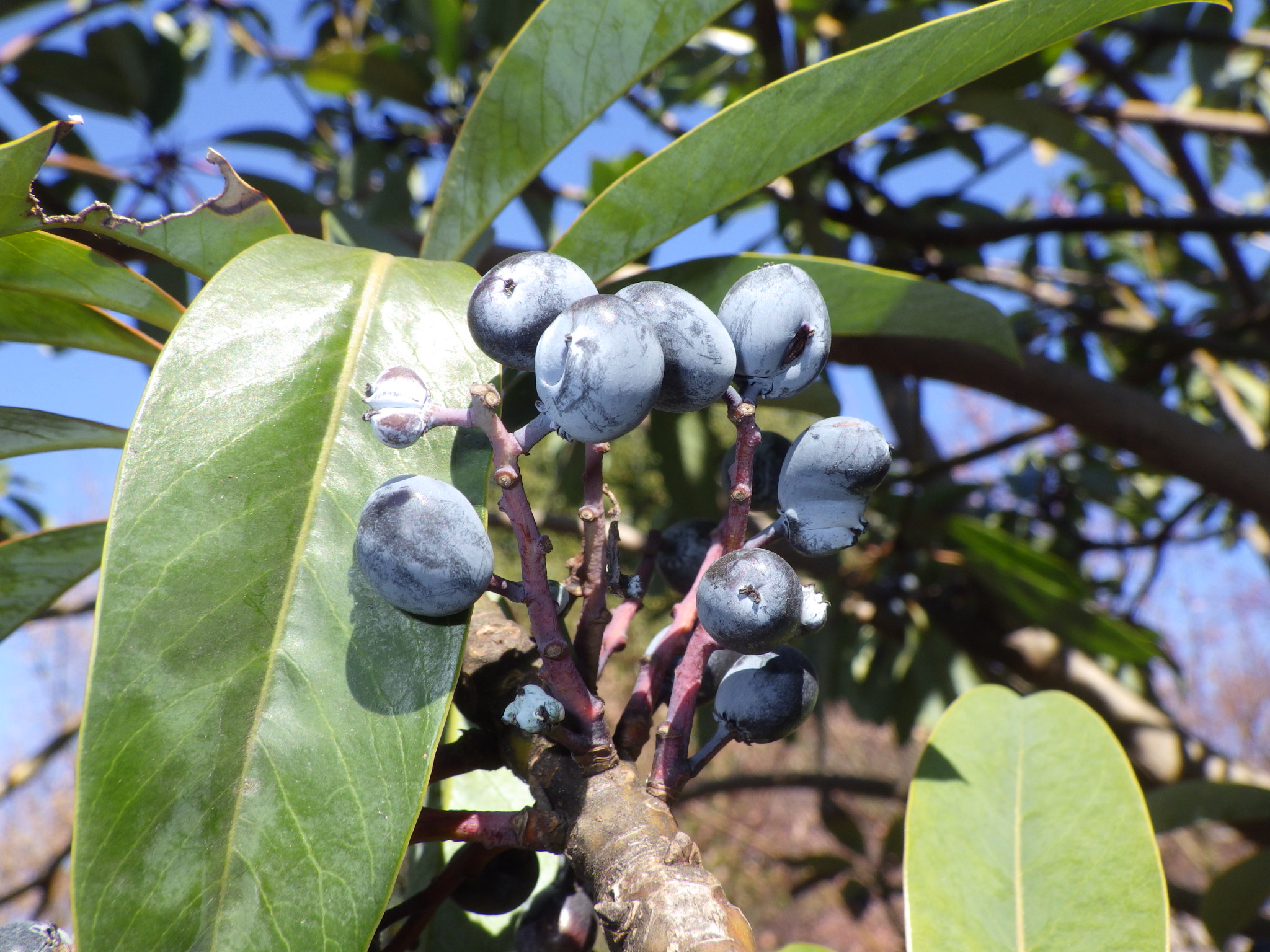
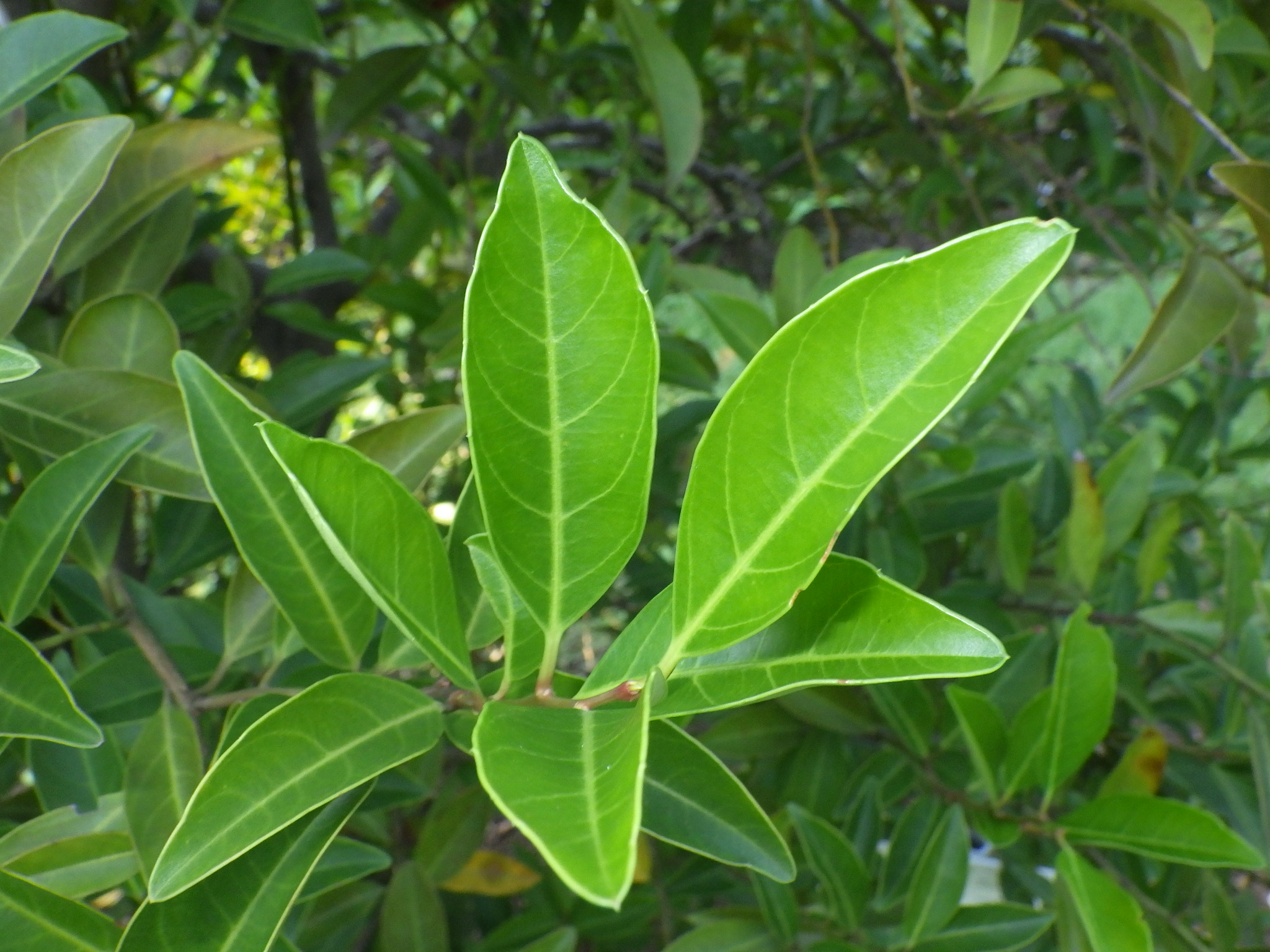
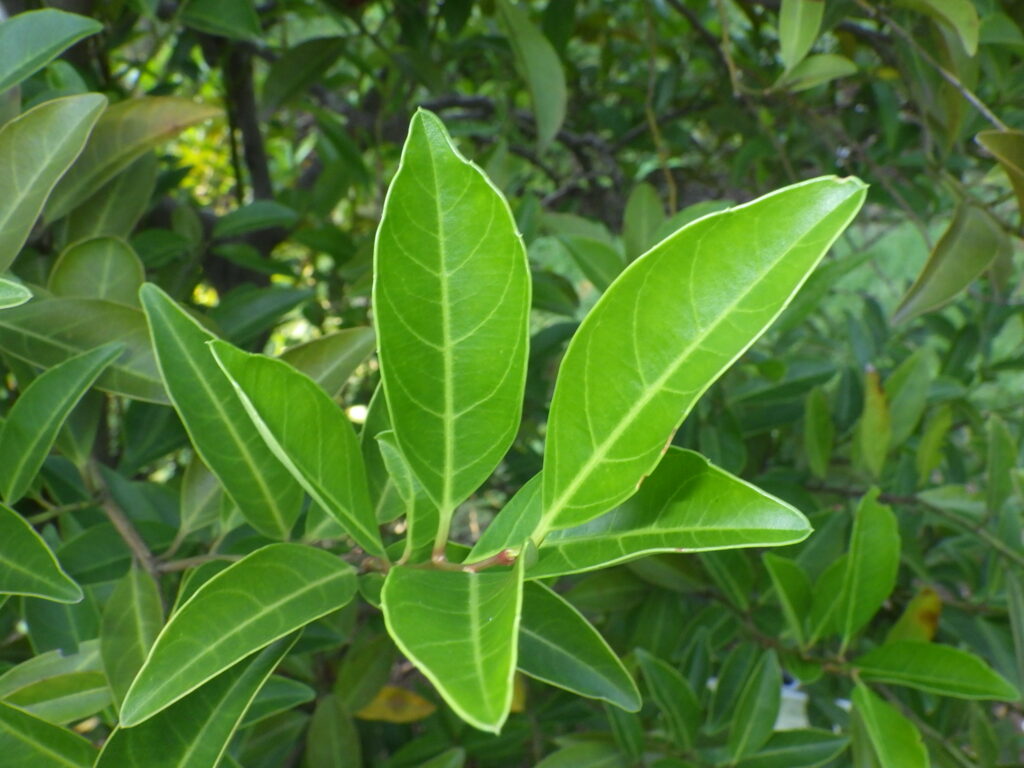
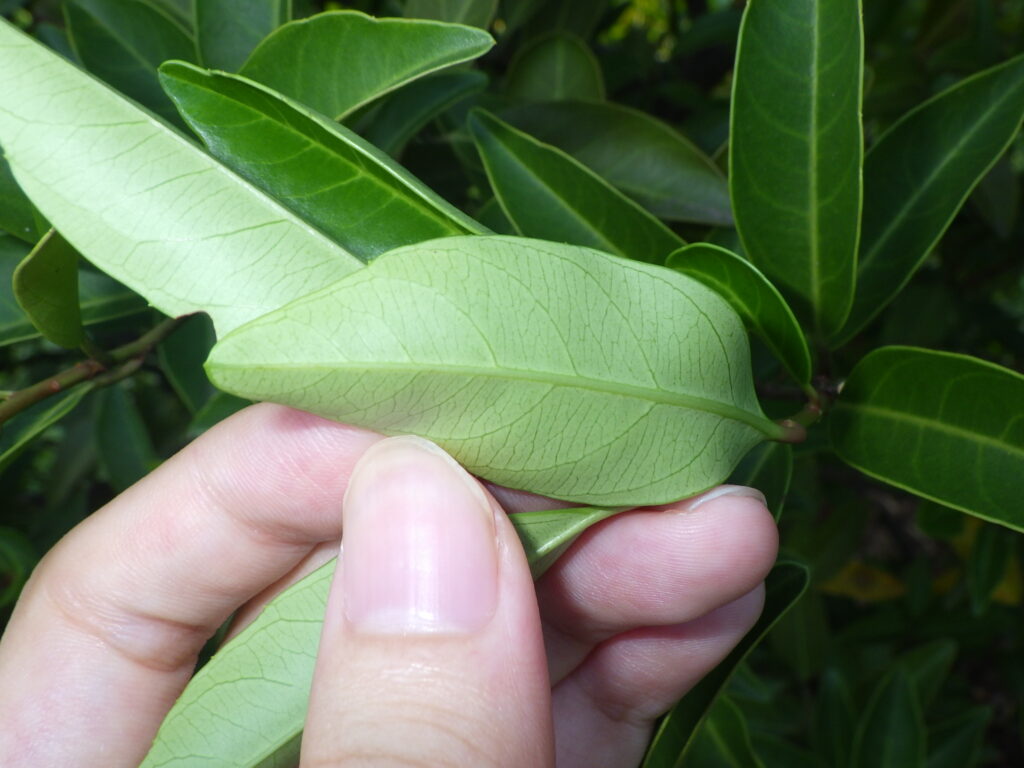
This is an evergreen small tree (Satake, 1999). It can grow to a height of 6-10m. Young branches are pale green and initially covered with fine hairs. The leaves are alternate, leathery, hard, thick, and hairless. The petioles are 8-15mm long, and the leaf blade is obovate-oblong to elliptic, with a pointed or slightly protruding tip that gradually narrows towards the base. In mature trees, the margins are entire, meaning they form a smooth curve, but in young trees, there are 4-6 sharply pointed serrations that clearly protrude on both sides. On the upper surface, the midrib is slightly indented, while on the lower surface, it is clearly raised along with the lateral veins. There are 5-7 pairs of lateral veins, and the tips of the veins curve towards the tip of the leaf. The flowering period is from March to May. Numerous flowers are attached to 3-5cm long flower stalks that emerge from the leaf axils and branch tips, forming racemes. The flower stalks are 3-5 mm long, with narrow triangular bracts, and the outer surface is covered with fine hairs. The flower tube is cup-shaped, and the petals are five in number, white, and small, measuring 2.5-3 mm in length. The capsule is urn-shaped and 6-10 mm long. It is known to grow in Amami Oshima, Tokunoshima, Okinawa Island, Ishigaki Island, Iriomote Island, and Yonaguni Island in Japan, and is also distributed in Taiwan. It grows in forests.
References
Satake, Yoshisuke. 1999. Wild Plants of Japan (New Edition, Woody Plants 1). Heibonsha, Tokyo. 321pp. ISBN: 9784582535044