The Aristolochiaceae family consists of perennial herbs or shrubs, some of which are climbing plants. Their leaves are alternate and lack stipules. Flowers are generally bisexual, with petals usually reduced and three petal-like sepals, often fused at their bases into a tubular structure. The family comprises approximately 8 genera and 660 species found in tropical to temperate regions worldwide, with 2 genera and about 64 species distributed in Japan.
This article provides a comprehensive, illustrated guide to plants belonging to the Aristolochiaceae family.
The basic information is based on the Kanagawa Prefecture Flora Survey Association (2018). Photos are replaced as better ones become available. While the identification is done by the author, please note that misidentifications may be corrected without notice.
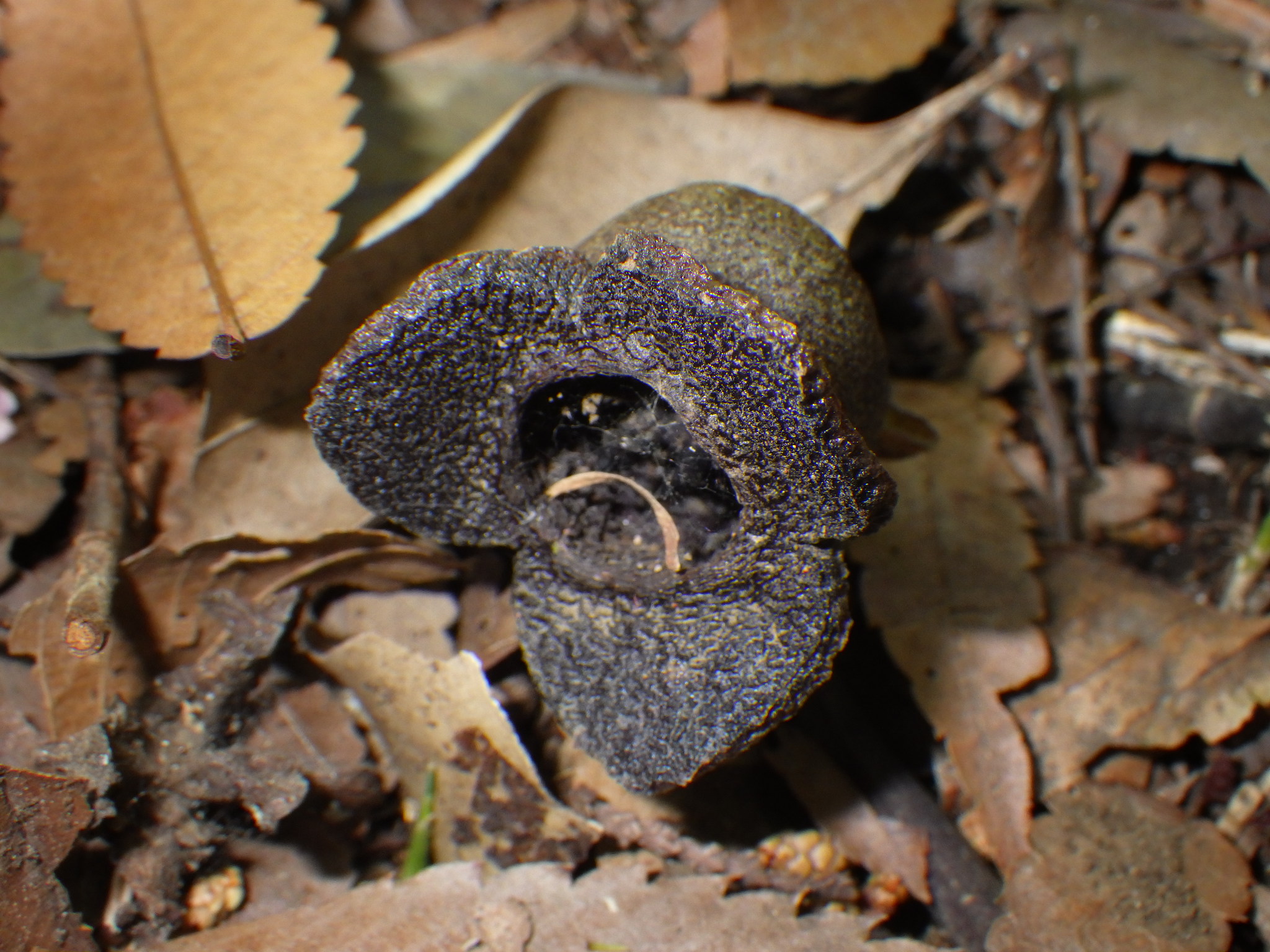
No.0088 Asarum nipponicum var. nipponicum
Also known as Kanto Kan-aoi, its leaves are ovate, about 10 cm long, with a deeply heart-shaped base. It flowers in October and November, overwintering and developing into a fruit while retaining the flower shape. The calyx tube is dark purple, tubular and bell-shaped, not constricted at the top, and about 1 cm long. There are 9 to 12 longitudinal ridges inside the calyx tube, and the calyx lobes are pointed triangular with slightly wavy tips that often curve slightly outward. The inner surface is rough and has short hairs. The area around the opening of the calyx tube at the base of the calyx lobes is bordered with a whitish color. This characteristic allows for easy identification if the flower is present. The pistil has two shallow rows at the tip, with the stigma at its base. It is distributed from southern Kanto to Shizuoka Prefecture and further to the Shima Peninsula in Mie Prefecture.
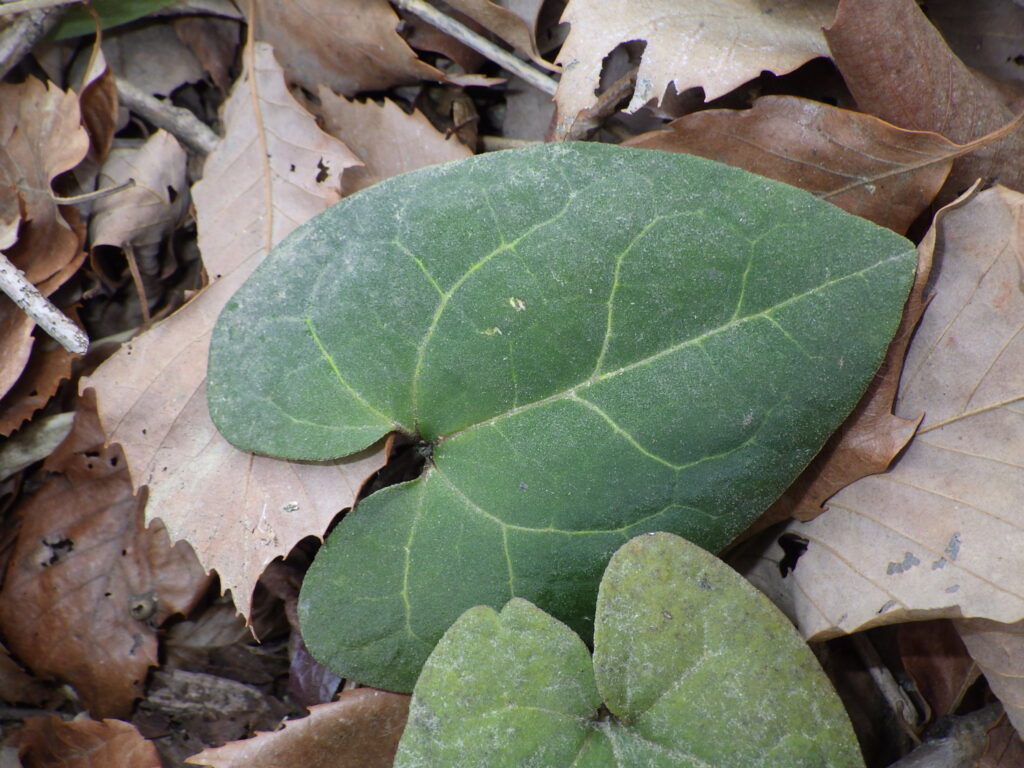
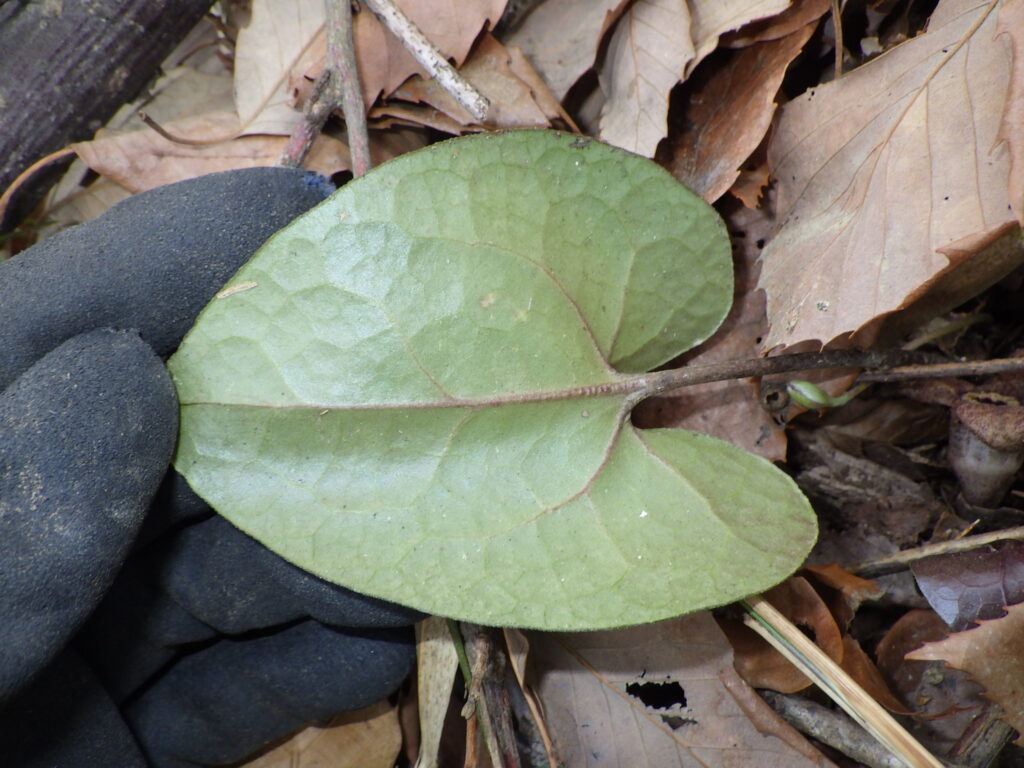
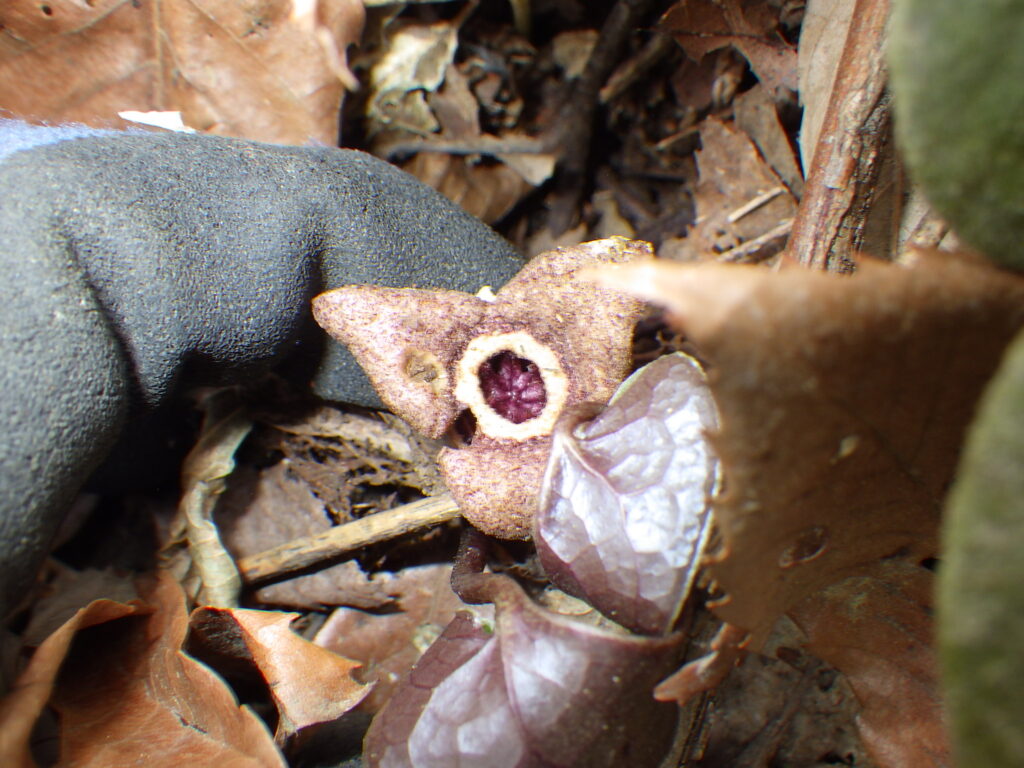
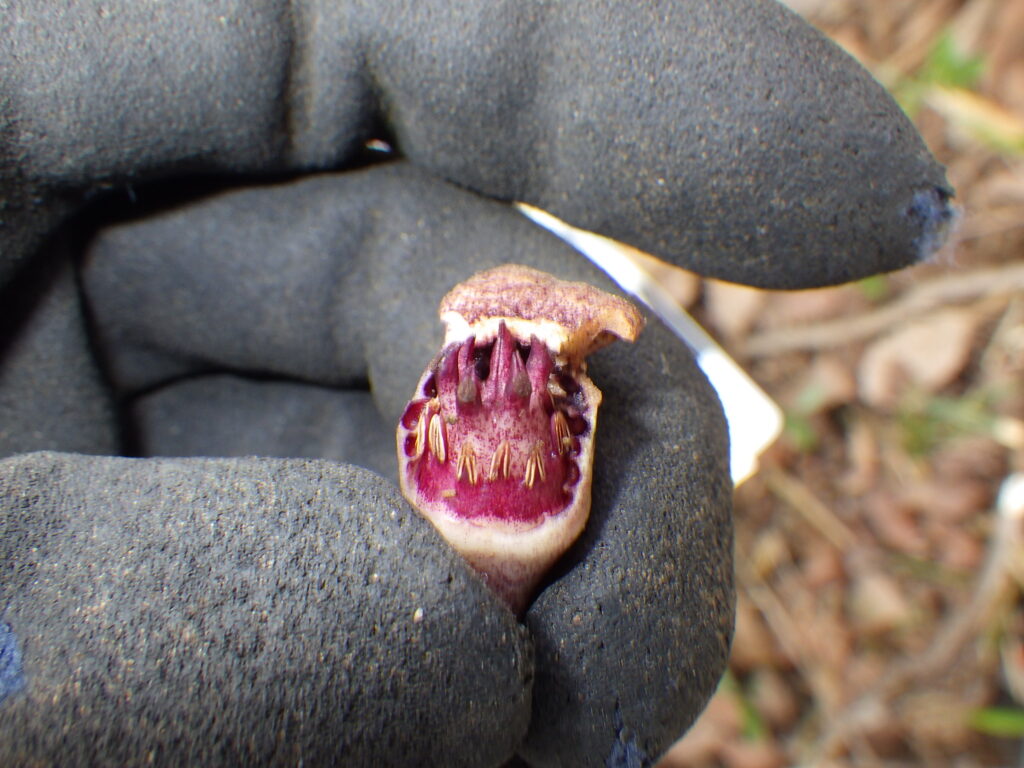
No. 0093 Asarum megacalyx
This is an evergreen perennial herb. The rhizome is dark purple, short but thick, and creeps along the ground. The internodes of the rhizome are usually short and compact, but sometimes they are elongated, reaching 1.5 cm. Petioles emerge from the tip of the stem, and these petioles can be long, reaching 20 cm, and are usually dark purple. The leaves are somewhat thick, with ovate-broadly elliptical or ovate-lanceolate blades, 9-12 cm long and 6-8 cm wide, with an acute apex and a heart-shaped base. The upper surface of the leaves is dark green and dull, with or without markings, and scattered with short hairs. The underside is pale and hairless, with purplish veins. The flowering period is from March to May. A single flower, entirely dark purple or pale purple, blooms at the tip of the stem. The flower has no petals; the calyx lobes are petal-like. The calyx tube is thick and large, without any constriction at the top, measuring 15-20 mm in length and 14-24 mm in diameter. The inner wall of the calyx tube has a lattice-like pattern of raised folds, with 9-15 longitudinal folds and about 7 transverse folds. The calyx lobes are broadly ovate, thick and glabrous, about 12 mm long and 14 mm wide, spreading flat and smooth on the surface. There are 12 dark purple stamens, attached to the ovary wall in two whorls, inner and outer, with short filaments, and the anthers facing outwards. The ovary is superior and rises high within the calyx tube. There are 6 styles, each erect and not fused, with their dorsal ends elongated into long, horn-like structures reaching near the entrance of the calyx tube. The stigma is elliptical and lateral to the outside of the horn-like projections of the styles. This species is endemic to Japan and is distributed along the Sea of Japan coast of Honshu, in southern Akita Prefecture, Yamagata Prefecture, Niigata Prefecture, western Fukushima Prefecture, and northern Nagano Prefecture. It grows mainly in the undergrowth of deciduous broad-leaved forests from lowlands to mountainous areas. It is a species adapted to the heavy snowfall areas along the Sea of Japan coast.
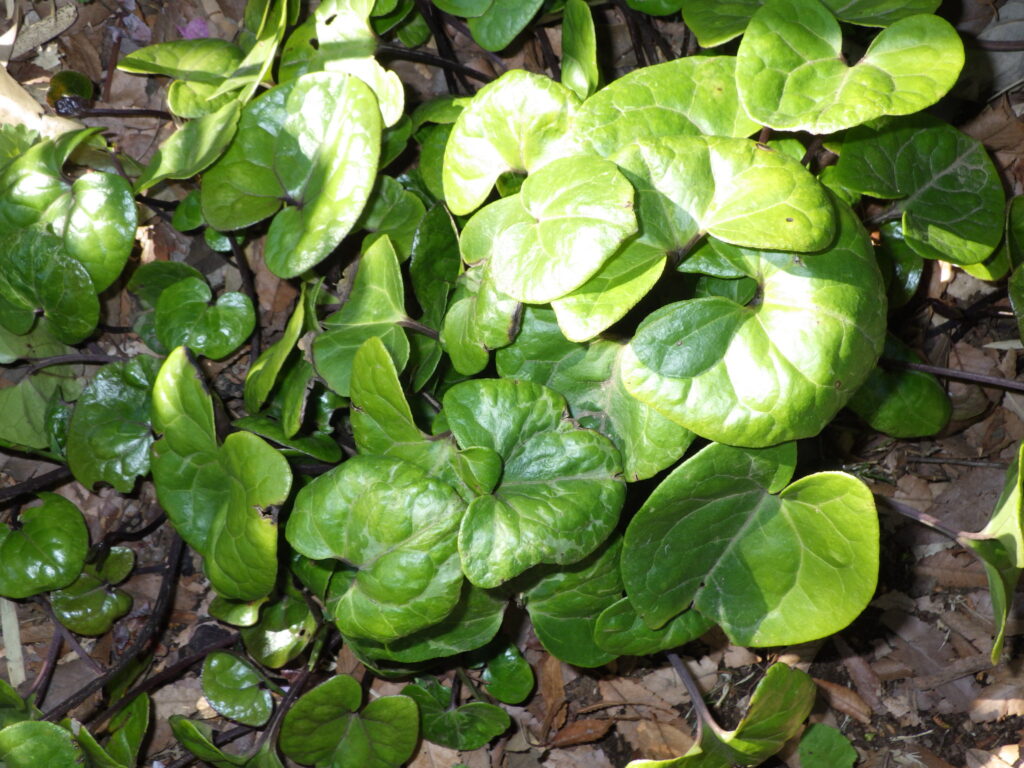
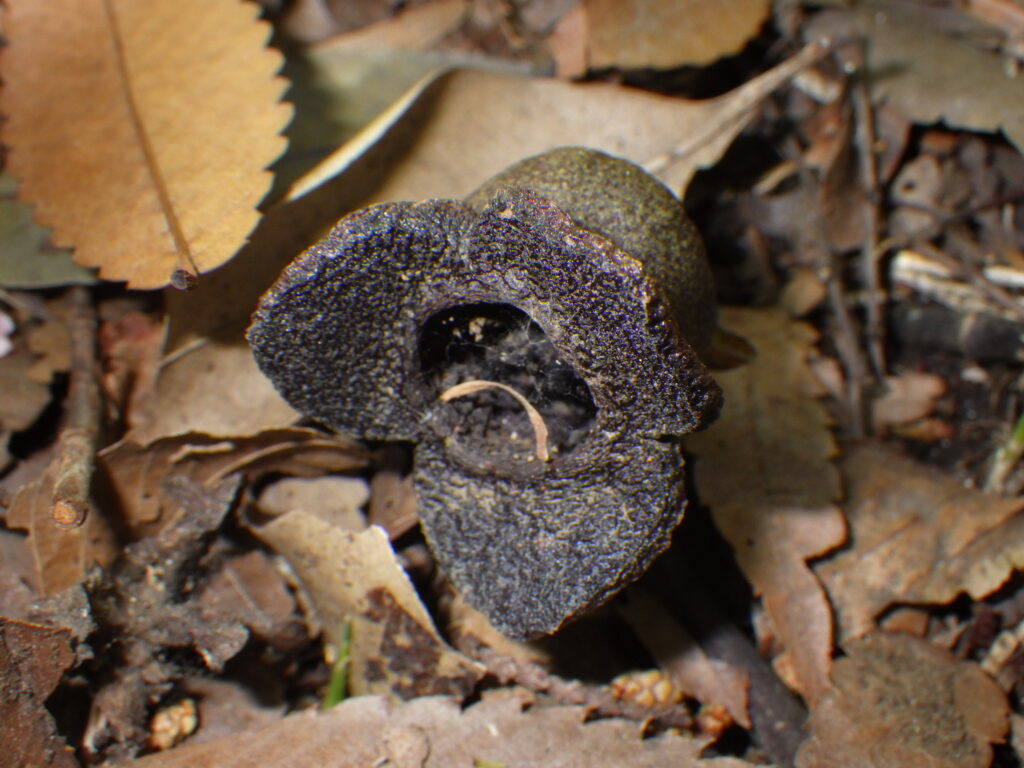
No.0095 Asarum blumei
This is an evergreen perennial herb. The leaves are broadly ovate, about 10 cm long, with a deeply heart-shaped base and a strong tendency for the sides to spread outwards. The upper surface is bright green and glossy, and the texture is somewhat thin. It flowers in April and May. The flowers are pale purplish-brown, the calyx tube is obtusely quadrangular with a slight constriction at the top, and the lobes spread out with their tips slightly curved inward. The flower diameter is about 2 cm, the calyx tube diameter is about 1 cm, and the lattice-like ridges on the inner surface are slightly concave on the outside. There are 17 to 20 longitudinal lines. The tip of the style is shallowly two-lobed, and there is a dotted stigma on the outside of its base. It grows on the forest floor of deciduous forests. It is distributed in Honshu (southern Kanto region to southern Tokai region).
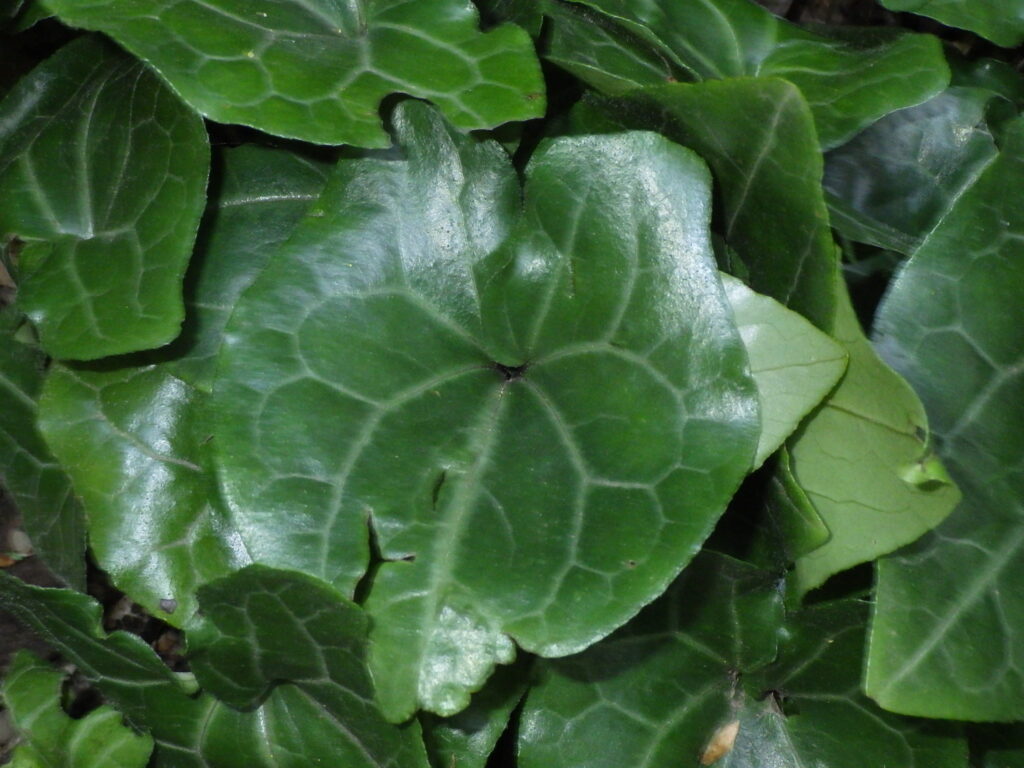
No.0097 Tamanokan'aoi (Asarum tamaense)
This is an evergreen perennial herb. The leaves are ovate to broadly elliptical, about 10 cm long, dark green on the upper surface with a dull sheen, and the veins are slightly recessed. It flowers in April and bears fruit in the spring. The flowers are 3-4 cm in diameter, the calyx tube is thick and fleshy, slightly flared at the tip, and dark purple. The calyx lobes are broadly ovate and wavy, densely covered with short hairs on the inner surface, and have a white, plate-like ridge at the base of the inner surface. The style is short, with an inverted boot-shaped tip and a linear stigma at the upper end. It grows on the forest floor of deciduous forests. It is distributed in southwestern Kanto. It occurs only in limited areas, and its habitat is being lost. Fungus gnats are known to visit the flowers (Sugawara, 2009).
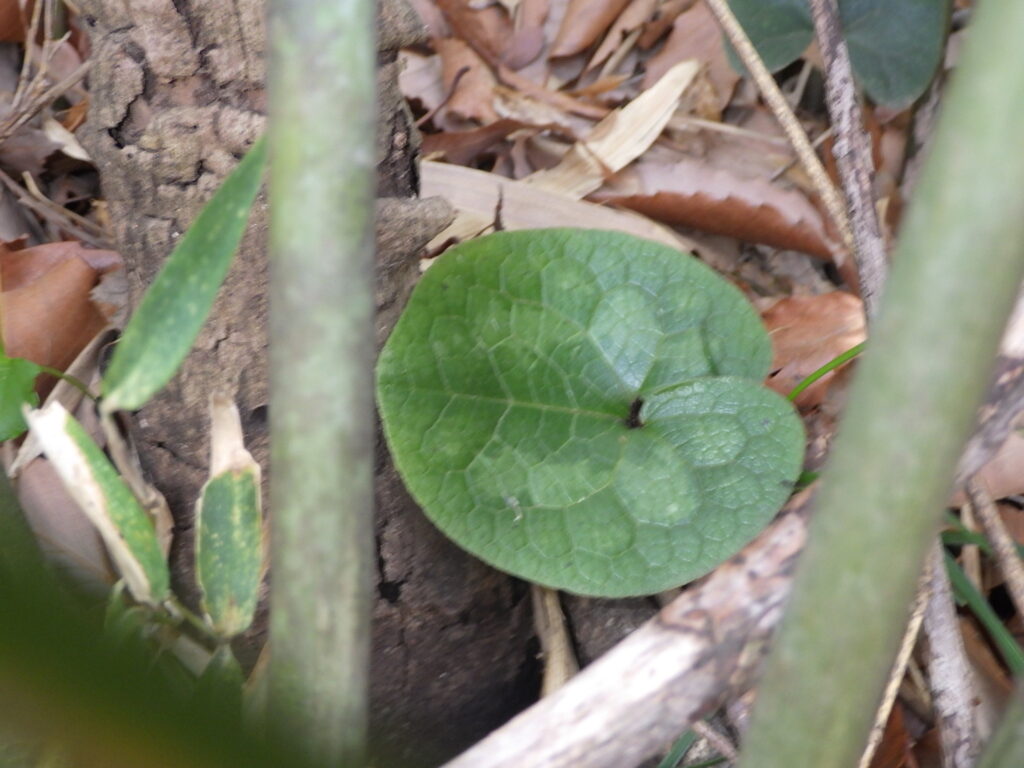
No.0108.a Asarum senkakuinsulare
This is a perennial herb. The leaves are opposite, ovate-cordate to broadly ovate-circular, with slightly rounded tips, about 10-17 cm long, dark green on the upper surface and light green on the underside, and glossy. It flowers from February to April. What appears to be a flower is not petals but three sepals. The sepals are broadly ovate, with edges that do not curl back, and are greenish-purple in color. The calyx tube at the base of the sepals is cylindrical, about 15 mm long. A distinctive feature is the presence of wart-like projections at the base of the sepals (the ring of the mouth), which are yellowish in color. There are 12 stamens and 6 pistils. It is endemic to Japan and is distributed only on Uotsuri Island in the Ryukyu Islands. Its habitat and population are decreasing due to factors such as collection for horticultural purposes and disruption of the forest vegetation, which is its habitat, by goats released on Uotsuri Island. It is listed as Critically Endangered (CR) on the Ministry of the Environment's Red List.
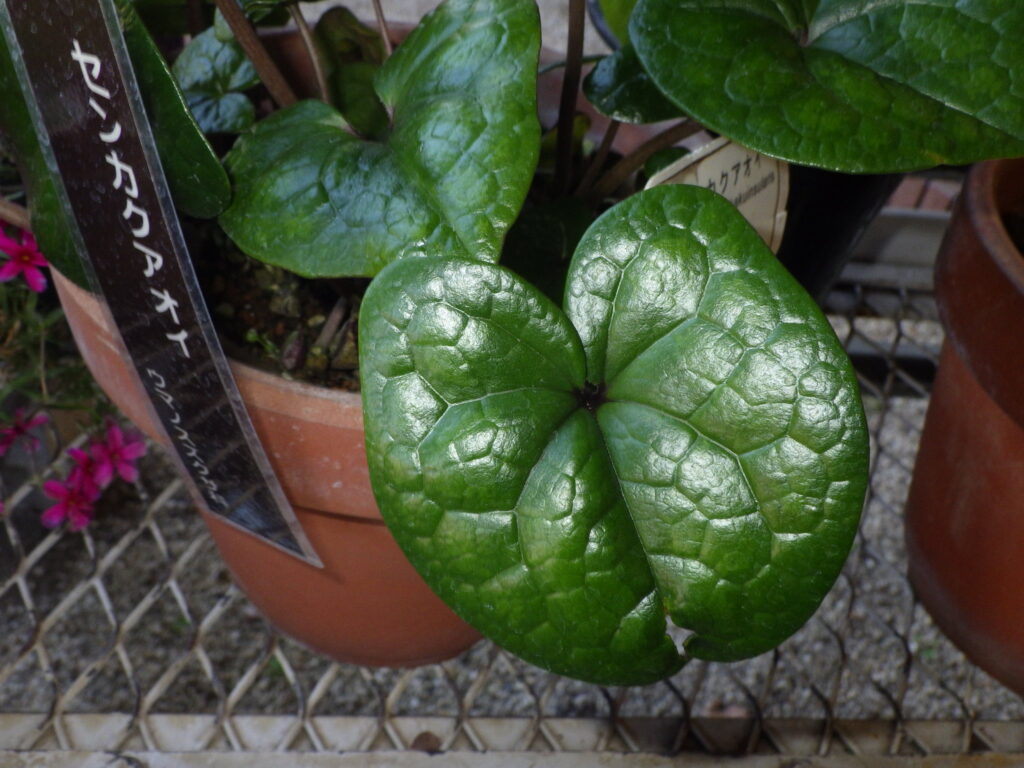
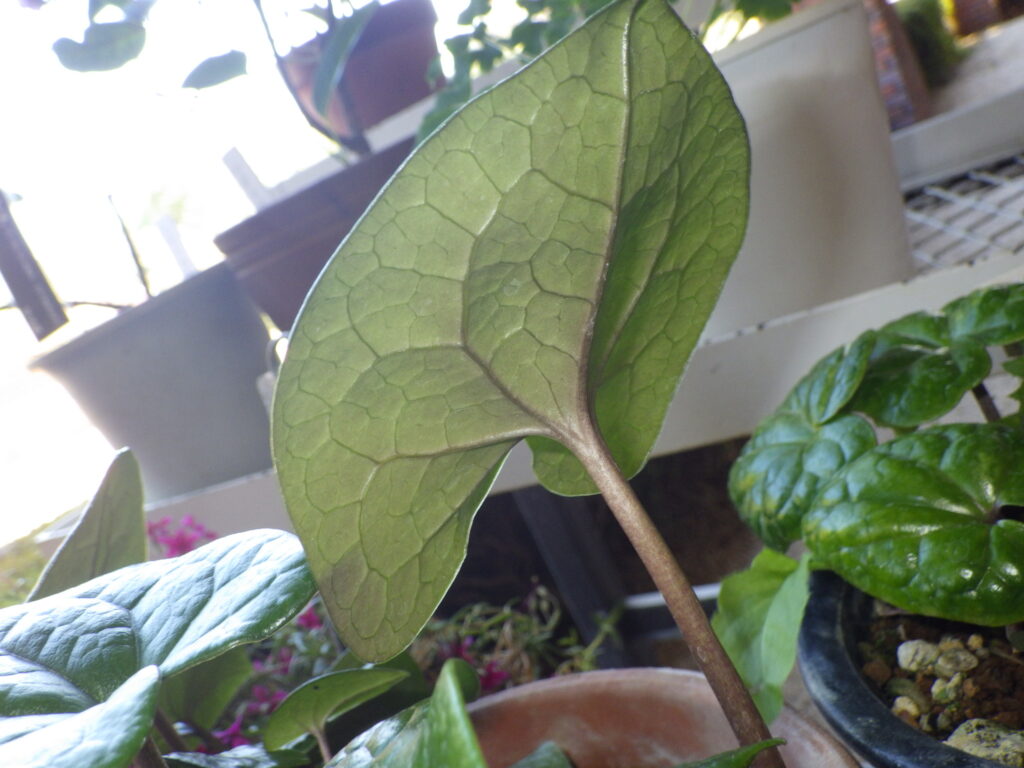
No. 0113 Asarum caulescens
This is a low-growing perennial herb. The stems creep horizontally along the ground, are succulent and purplish-brown, with long internodes and branching, bearing alternate scale leaves at the tips. Leaves grow at the tips of the stems, in pairs (sometimes just one) opposite each other. The leaves are annuals with long petioles. The leaf blade is thin and ovate-cordate, with a pointed tip and a deeply cordate base with semicircular lateral lobes. The leaf surface is initially covered with short, white hairs, especially on the veins, and similar hairs line the leaf margins. The flowering period is from March to May. Only one flower grows from the base of a pair of petioles, and the pedicels are hairy. There are no petals; the petal-like sepals are pale purple, fused in the lower half to form a cup shape, and their outer surface is covered with many hairs. The triangular lobes at the tip of the sepals are recurved and touch the base of the sepals. The pollinating insects are unknown (Kono, 2007). It grows in broadleaf forests or mixed coniferous forests in temperate regions, and in the dark forest floor. It is endemic to Japan, distributed from Fukushima Prefecture southward on Honshu to Kyushu.
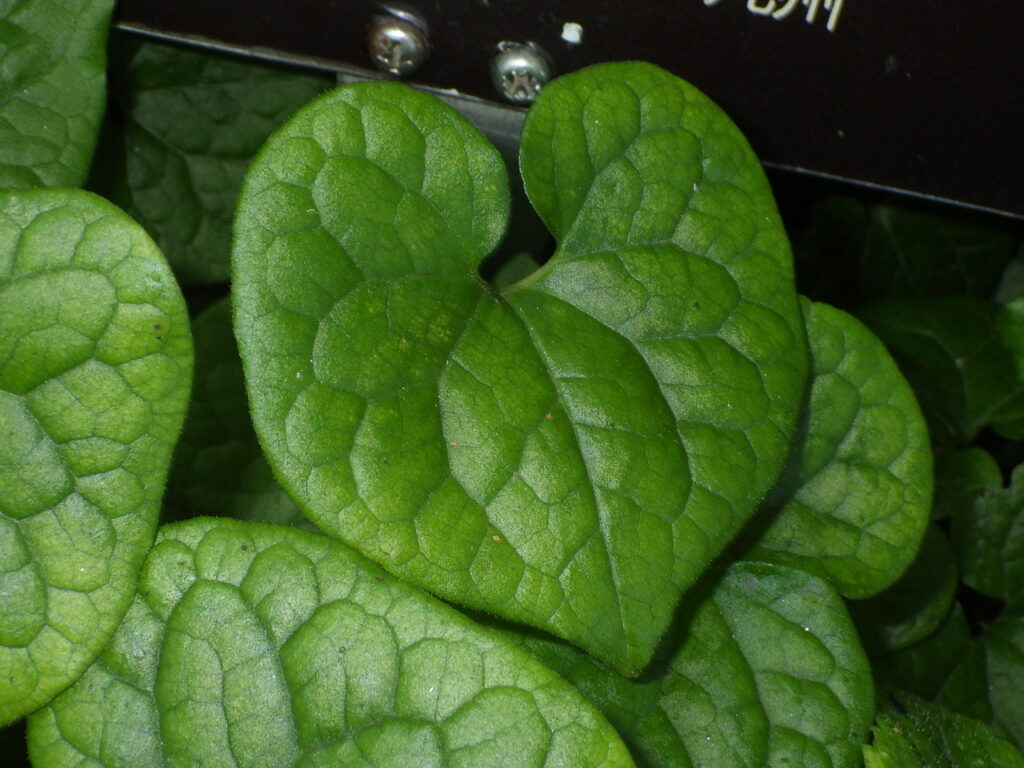
No.0113.a Asarum yakusimense
This is a perennial herb. The leaves are broadly ovate, 7-15 cm long and 7-12 cm wide. The leaf tips are acute to obtuse, and the base is heart-shaped. The upper surface is glossy bright green, usually without white spots, with a few hairs on the midrib, and the underside is glabrous. The petioles are also glabrous. It flowers from March to April. The flowers are large, dark purple or yellowish, and the calyx tube is short and tubular, 13-15 mm long and 12-15 mm in diameter, with the upper part hardly constricted. There is an orbicular opening to the calyx tube, surrounded by raised white plate-like projections. The calyx lobes spread flat, ovate-triangular, 10-15 mm long, with a yellowish surface covered in short blackish-purple hairs, and the tips are strongly recurved. The inner wall of the calyx tube has a lattice-like pattern of folds. There are 12 stamens and 6 styles. It is endemic to Japan and inhabits the granite areas of the highlands of Yakushima Island.
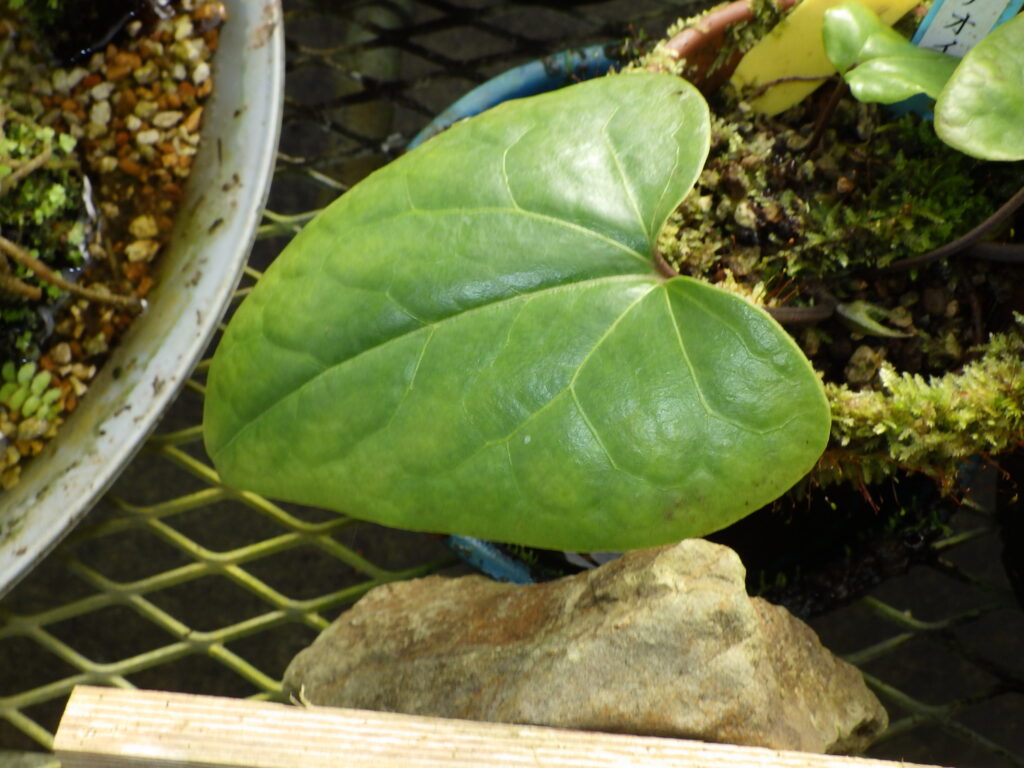
No.0113.b Asarum kumageanum
This perennial herb has leaves about 10 cm long. The leaves are ovate-triangular, thick, glossy, and have sunken veins. The tip is acute, and the base is heart-shaped. The lateral lobes at the base are truncate, giving it an arrowhead shape. Young leaves have hairs on both sides of the veins, margins, and petioles. The flowers are dark purple, and the calyx tube is cylindrical, about 1 cm long, with scattered hairs on the outside. The calyx lobes are ovate-triangular, with wavy margins. There are 12 stamens and 6 pistils. It is endemic to Japan and inhabits the granite areas of the highlands of Yakushima Island.
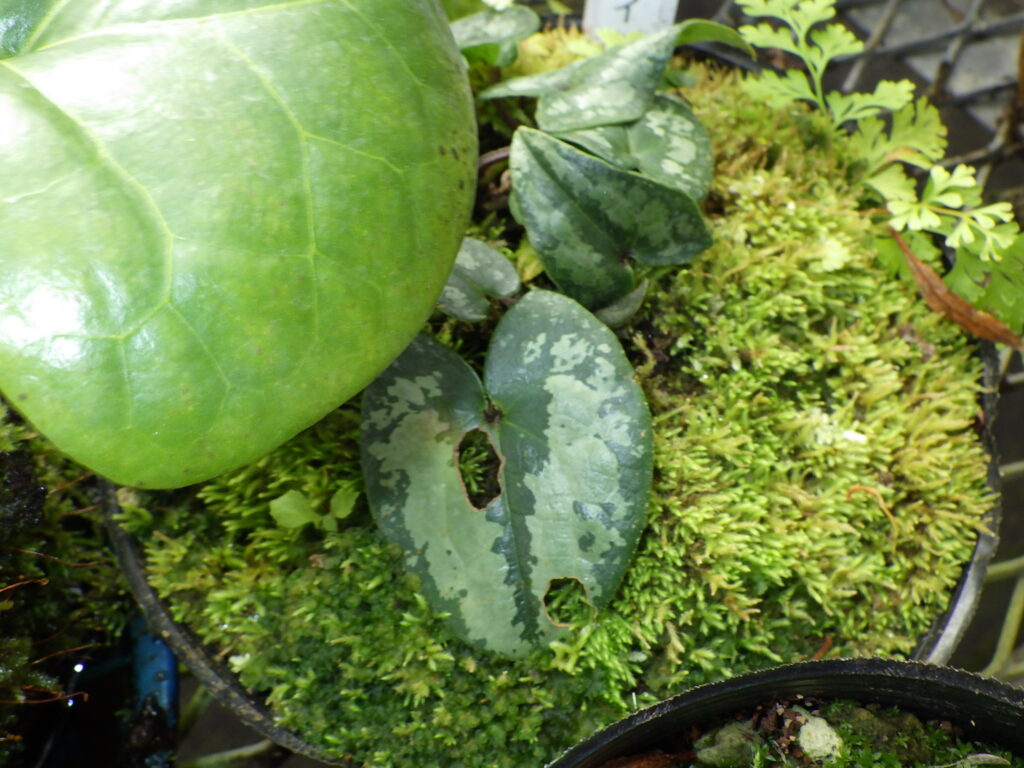
No. 0114 Aristolochia debilis
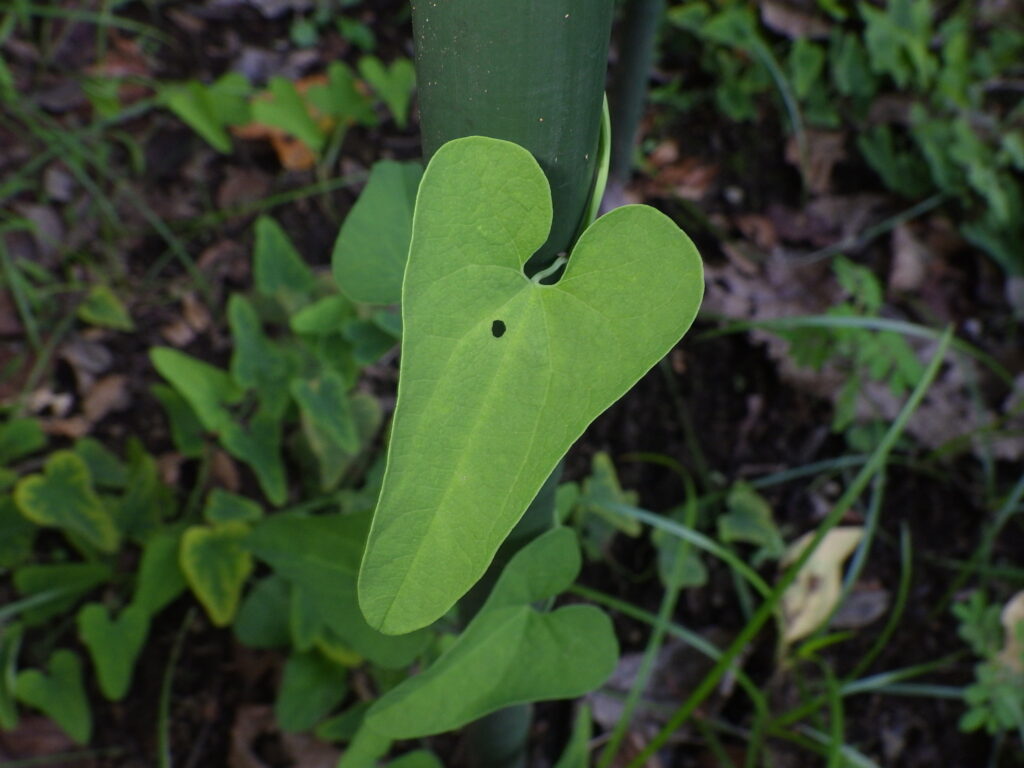
This is a perennial climbing herb. The entire plant is hairless, and the leaves are powdery green. The flowers are about 3 cm long with a spherical base. It grows on riverbanks and in poorly maintained hedges. It is distributed in Honshu (south of the Oshu region), Shikoku, Kyushu, the Ryukyu Islands, and China. The trumpet-shaped flowers emit a foul odor, attracting flies of the families Milichiidae and Chloropidae for pollination (Sugawara et al., 2016).
References
Kanagawa Prefecture Flora Survey Association. 2018. Kanagawa Prefecture Flora 2018 (Electronic Edition). Kanagawa Prefecture Flora Survey Association, Odawara. 1803pp. ISBN: 9784991053726
Sugawara, Takashi. 2009. Asarum species, also studied by Dr. Tomitaro Makino—their peculiar flowers and reproduction—. Classification 9(1): 19-26. https://doi.org/10.18942/bunrui.KJ00005379907
Sugawara, T., Hiroki, S., Shirai, T., Nakaji, M., Oguri, E., Sueyoshi, M., & Shimizu, A. 2016. Morphological change of trapping flower trichomes and flowering phenology associated with pollination of Aristolochia debilis (Aristolochiaceae) in central Japan. Journal of Japanese Botany 91(2): 88-96. https://doi.org/10.51033/jjapbot.91_2_10648

