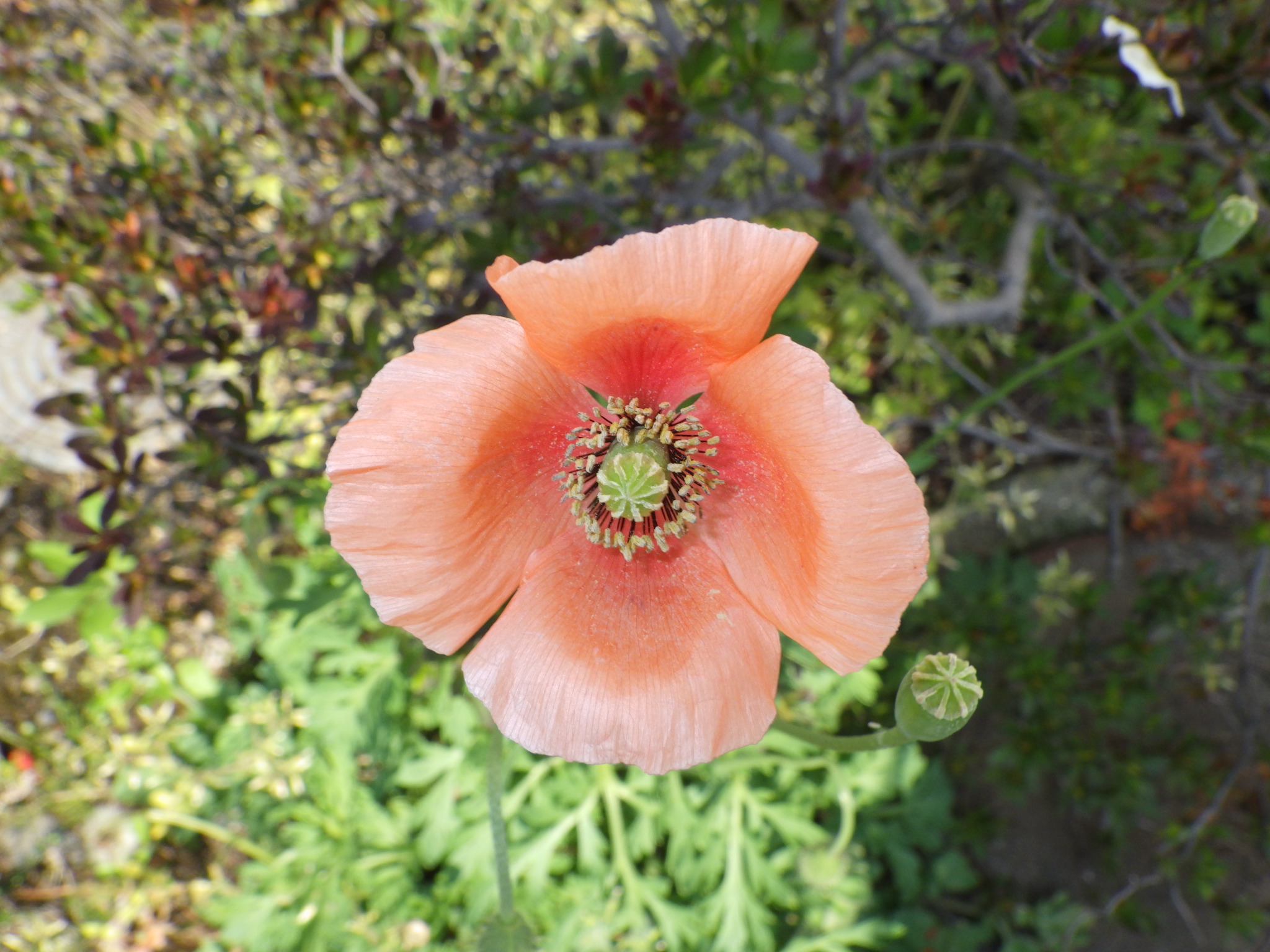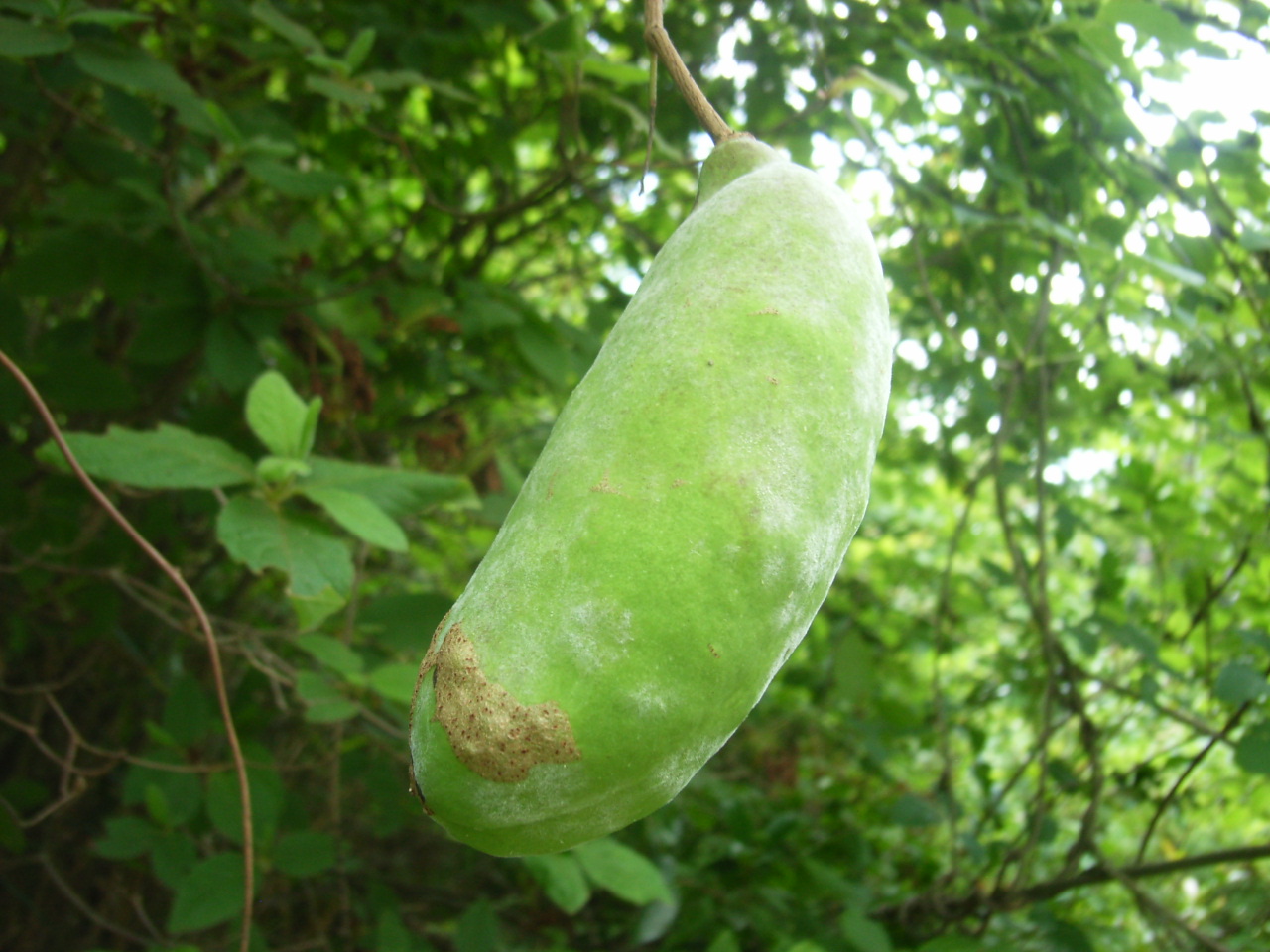
The Lardizabalaceae family consists mainly of climbing woody plants, with rare instances of shrubs. The leaves are trifoliate or palmately compound with five leaflets. The flowers are unisexual, monoecious, and borne in racemes, radially symmetrical and trimeral. The sepals are petal-like. The fruit is an ellipsoidal berry with a fleshy pericarp. Nine genera and approximately 35 species are known in East Asia, India, and South America. Two genera and three species are found in Japan.
This article provides a comprehensive, field guide-style introduction to plants belonging to the Akebia family.
The basic information is based on the Kanagawa Prefecture Flora Survey Association (2018). Photos are replaced as better ones become available. While the identification is done by the author, please note that misidentifications may be corrected without notice.
No. 1155 Akebia quinata
This is a deciduous climbing woody plant. The leaves are usually palmate, with five leaflets. The leaves of young trees and young leaves at the tips of the vines often have wavy edges, making them easily mistaken for Akebia trifoliata. It flowers from April to May. Male flowers are about half the size of female flowers, with purplish-yellowish-white sepals and pedicels 1-2 cm long. Female flowers have whitish-reddish-purple sepals and drooping pedicels 4-6 cm long. The berries are oval to oblong, 5-10 cm long and 3-4 cm in diameter, purplish, and dehiscent. The flesh is white, sweet, and edible (flowers that bloom on trees). It is distributed in Honshu, Shikoku, Kyushu, the Korean Peninsula, and China. It is commonly found in forest edges in hills and mountainous areas. Female flowers exhibit "hermaphroditism," mimicking male flowers (Kawagoe & Suzuki, 2002; 2003). Female flowers offer no reward to pollinators, but they are larger than male flowers to appear more attractive to pollinators. Hoverflies can distinguish between male and female flowers and visit only male flowers, resulting in nectar robbing. Solitary bees, however, visit the more attractive female flowers first, and then the male flowers. This prevents self-pollination within the same individual by preventing pollen from male flowers from touching the stigma of female flowers, thus promoting cross-pollination. Because Akebia is self-incompatible, this cross-pollination is thought to be for the purpose of avoiding reproductive interference (by its own pollen), rather than suppressing inbreeding (Kawagoe & Suzuki, 2005). The fruits are utilized by at least martens and raccoons (Takatsuki, 2017; 2018). The slimy seed coat is thought to be adapted to slip through animal teeth (Okamoto, 1999). The seeds have elaiosomes, and there have been observations of brown garden ants gathering around them in the wild (Kusui & Kusui, 1999). In experiments where seeds were placed directly near ant nests, black garden ants and brown ants carried them away (Fujii et al., 2012). The fruit has long been a popular snack for children playing in the mountains. It is still sold today, and when eaten, the white gelatinous substance (placenta) is eaten as is, the pulp is tasted, and then the seeds inside are spat out.
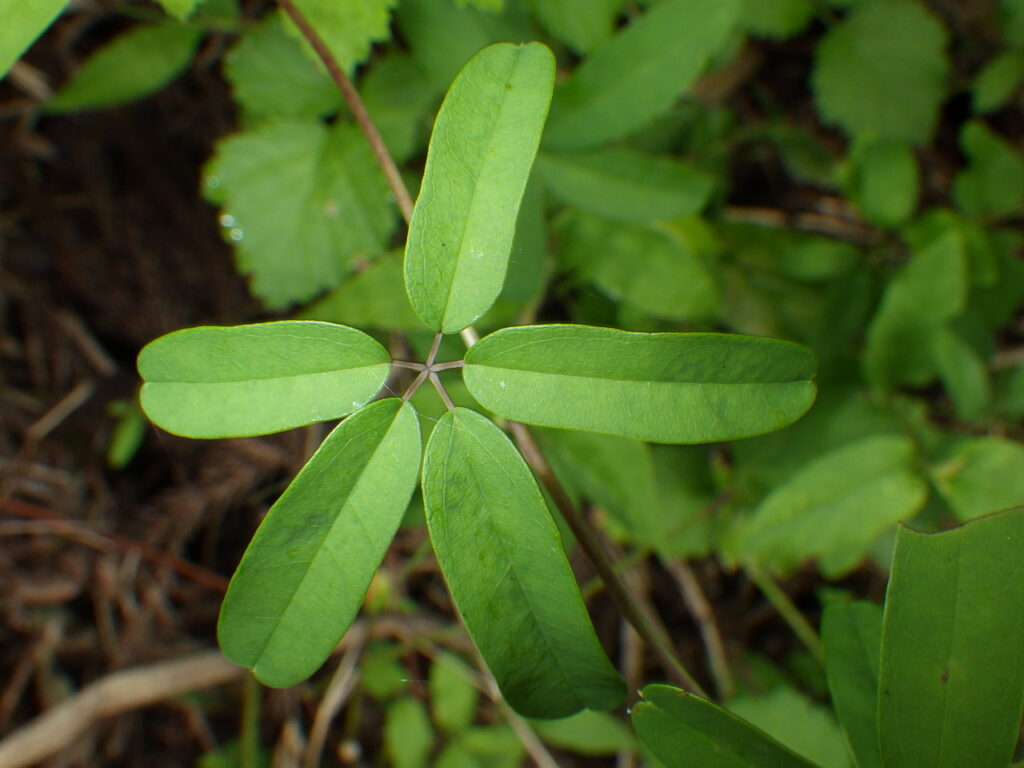
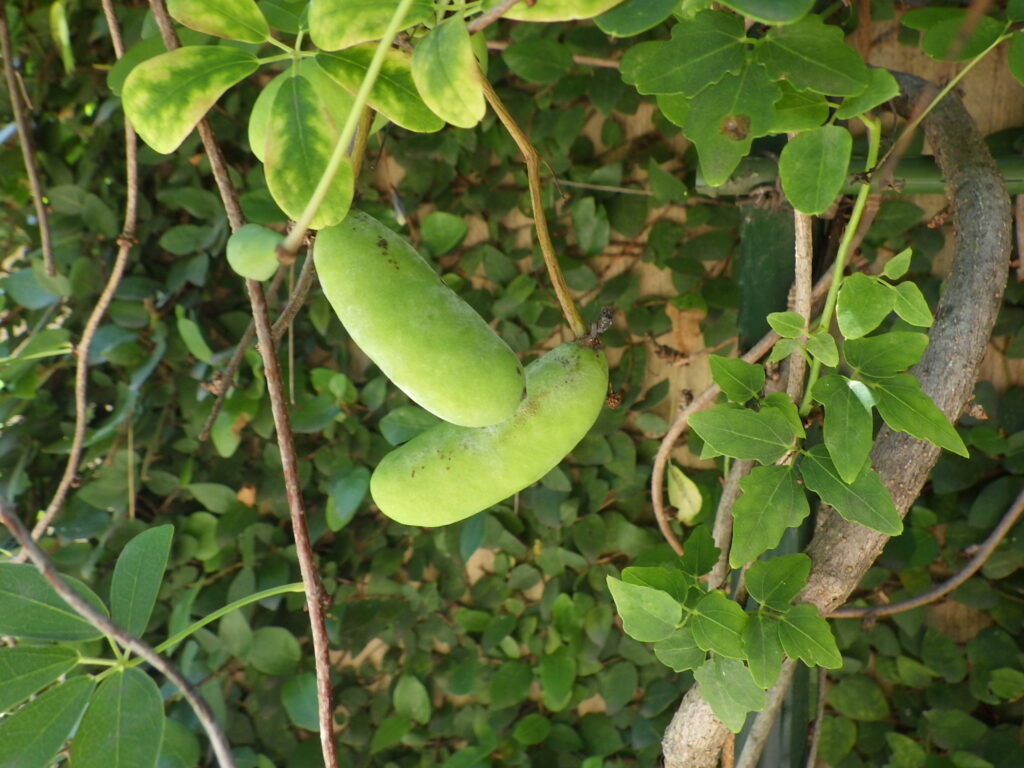
No. 1155.1 White-flowered Akebia quinata 'leucantha'‘
A white-flowered cultivar of Akebia.
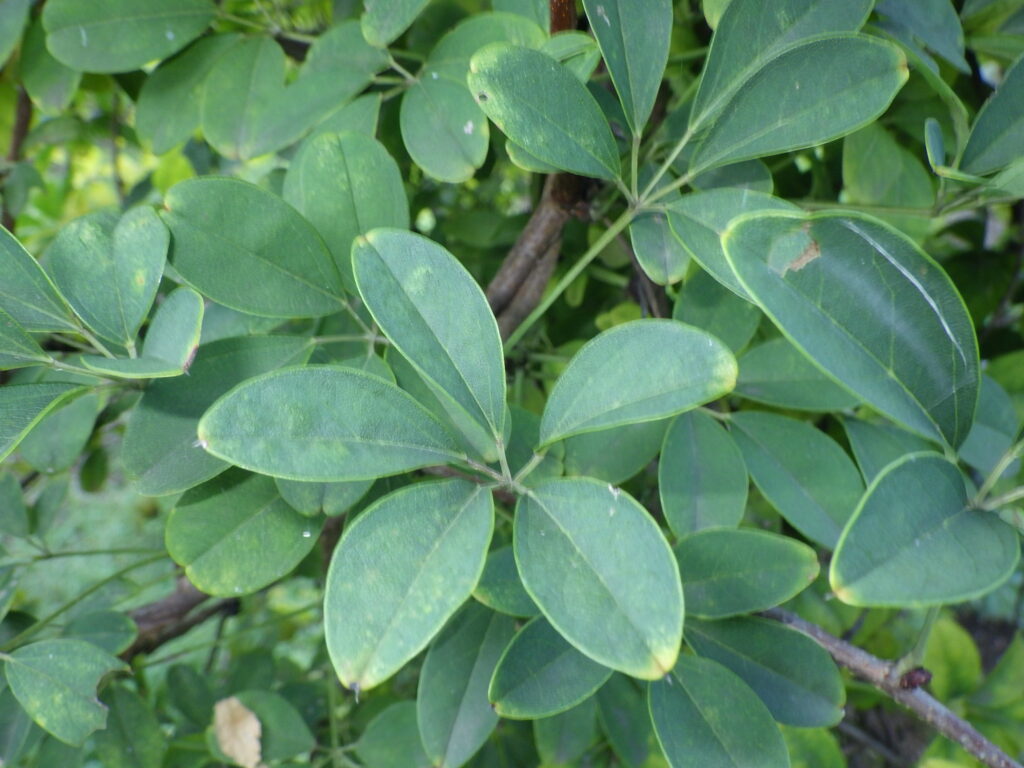
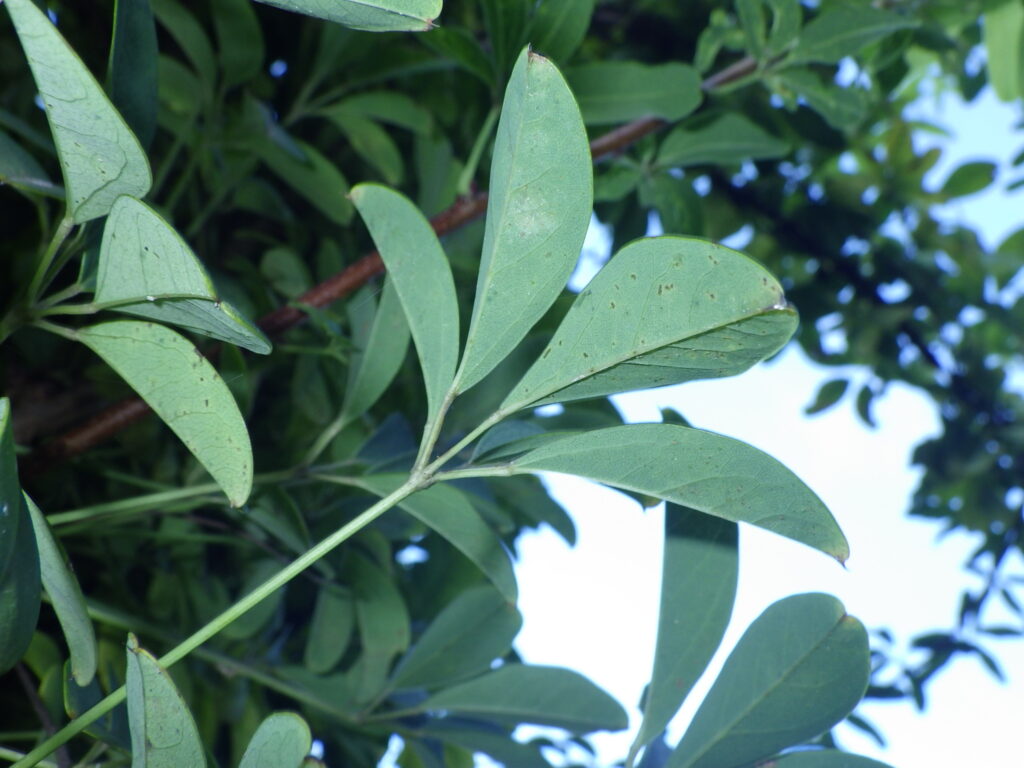
No. 1157 Akebia trifoliata
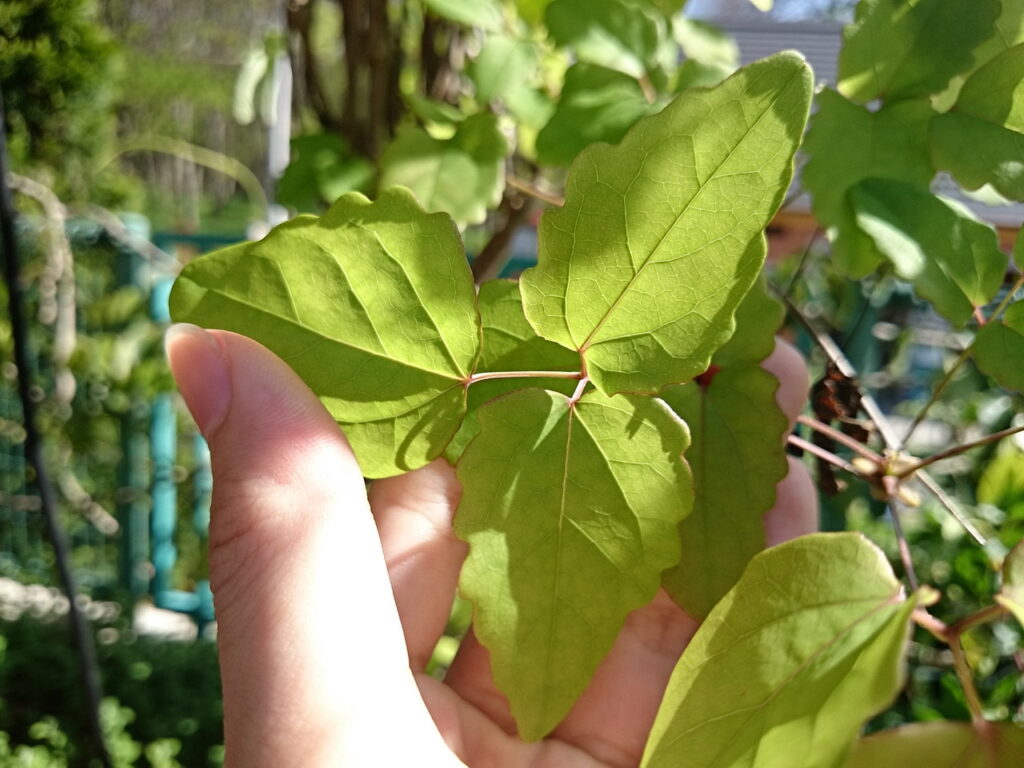
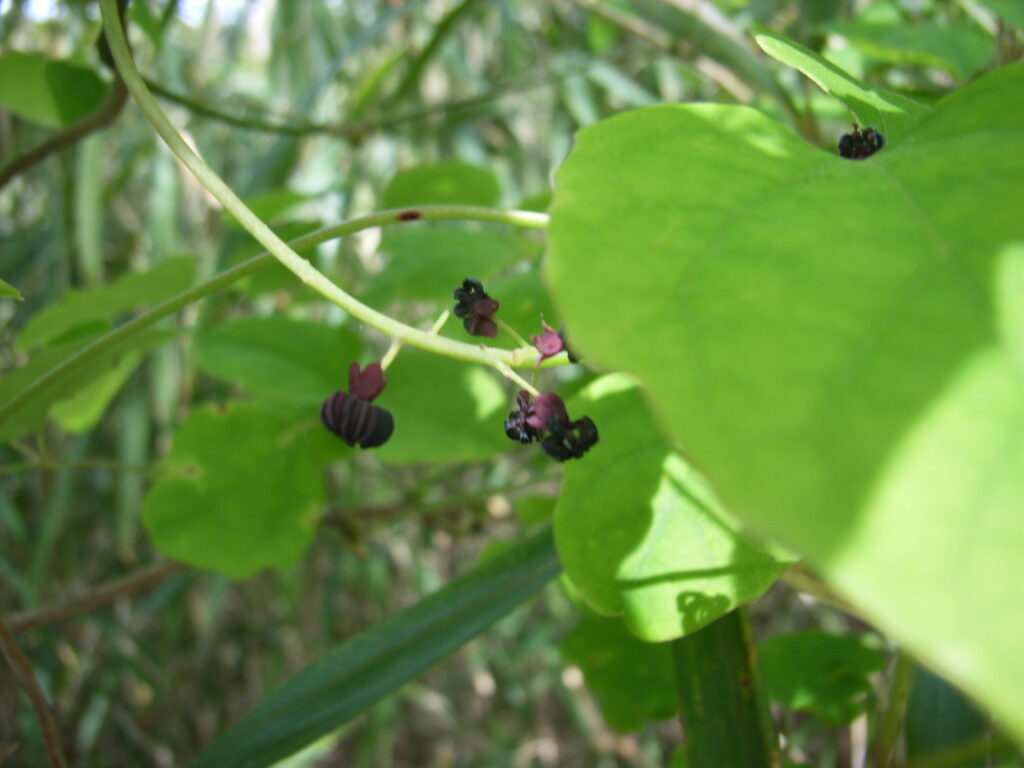
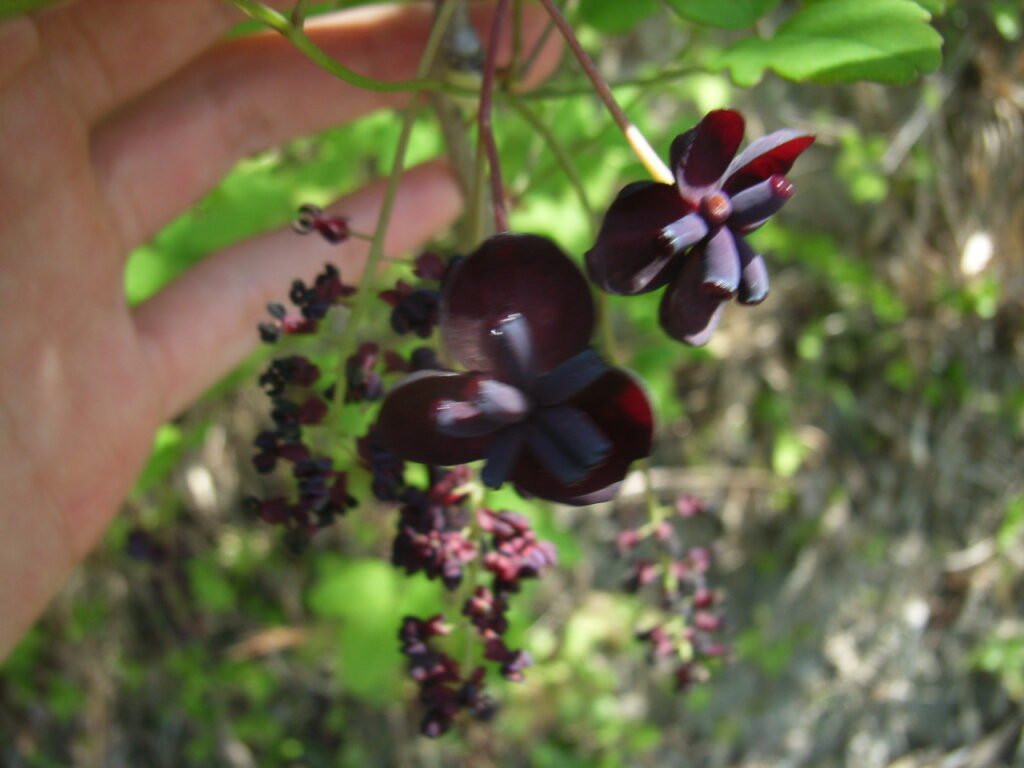
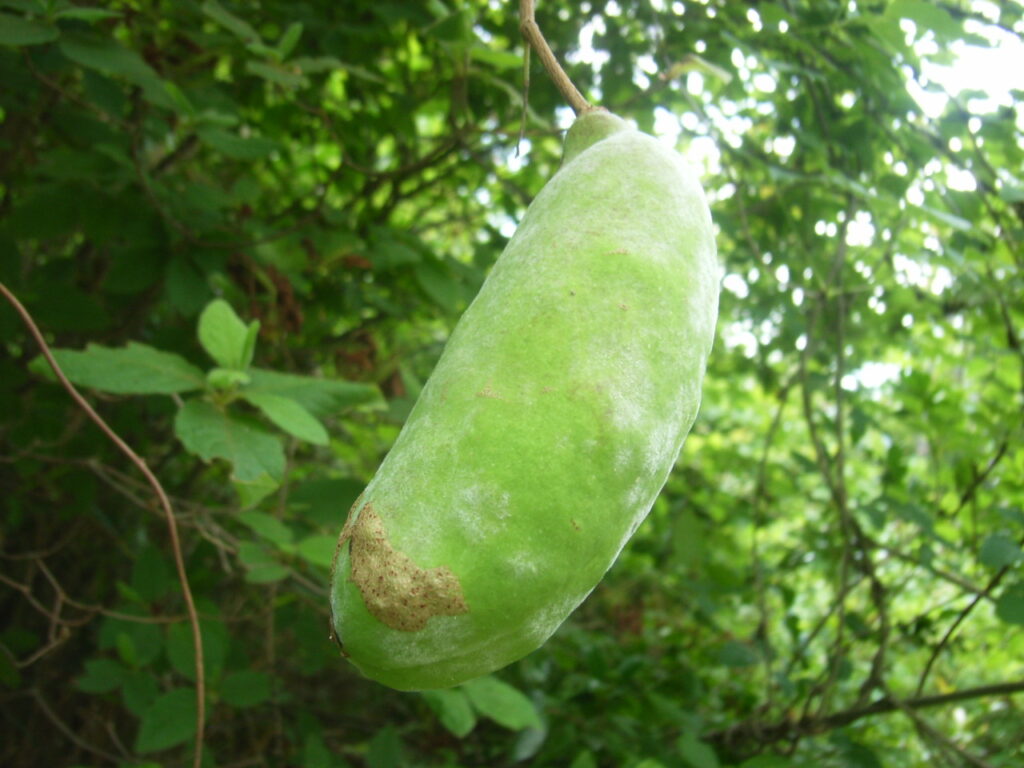
This is a deciduous climbing woody plant. It has three leaflets, and the margins of mature leaves are wavy, but young leaves at the tip of the vine are often entire. It flowers from April to May. Male flowers have dark reddish-purple sepals that are smaller than those of female flowers, and the pedicels are less than 1 cm long. Female flowers have reddish-purple sepals and are slightly drooping on straight stalks 2-4 cm long. The fruit is a berry, oblong about 10 cm long, and ripens in October. When ripe, it turns purplish and dehisces. The seeds are dark brown and 4-5 mm long. It is distributed in Hokkaido, Honshu, Shikoku, Kyushu, and China. It is commonly found in forest edges on hills and mountainous areas.
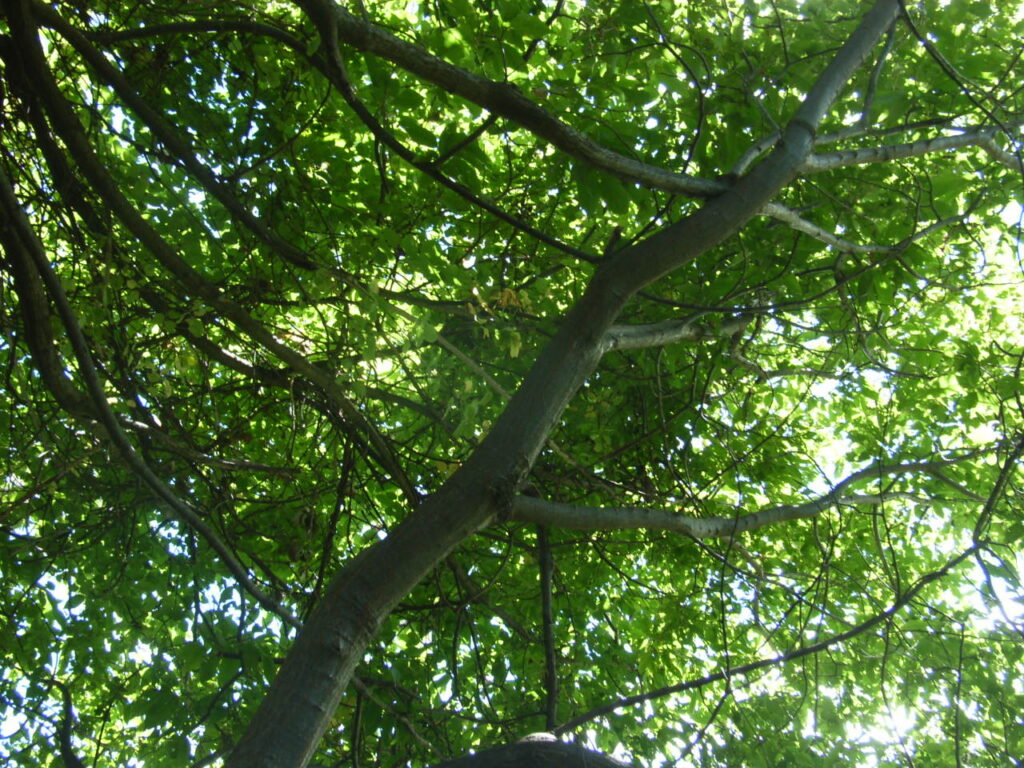
No.1158 Mbe Stauntonia hexaphylla
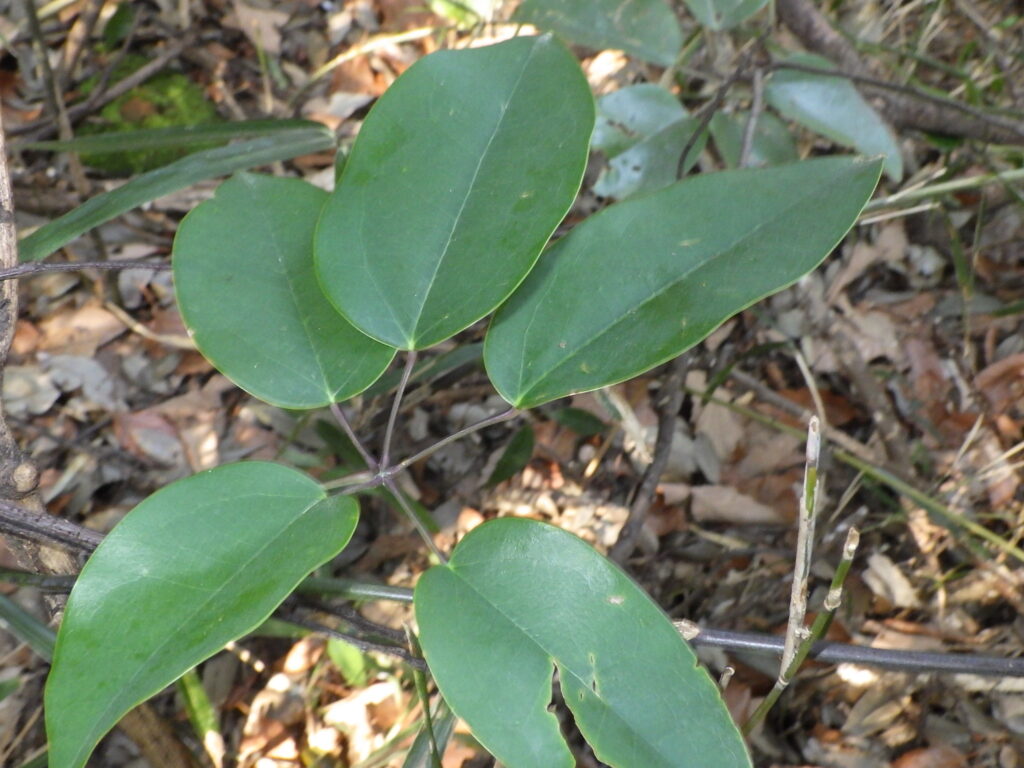
This is a deciduous climbing woody plant, also known as Tokiwaakebi. The petioles are long, and the leaflets are oval with long petioles, leathery in texture, glossy on the upper surface, and pale green on the lower surface with prominent fine reticulate veins. Young plants have 3-4 leaflets, while mature plants have 5-7. Male and female flowers are similar; the petal-like sepals are arranged in two whorls of 6, with the outer 3 being lanceolate and the inner 3 needle-shaped, slightly curved outwards at the tip, pale yellowish-white with purple streaks, and a pale purple inner surface. There are 6 stamens that are fused together. Female flowers have 3 carpels, which are vase-shaped with 6 vestigial stamens on the outside. The fruit is a berry, ovate, 5-8 cm long, ripening purple in October-November. The flesh is white, and it contains numerous black seeds 5-8 mm long (flowers on the tree). Unlike Akebia quinata, it does not dehisce. It is distributed in Honshu (west of southern Kanto region), Shikoku, Kyushu, the Ryukyu Islands, the Korean Peninsula, and China. It grows in evergreen forests along the coast and at the forest edges (its flowers bloom on the trees). It is often planted as a hedge in parks and private homes. Originally a warm-climate coastal plant, in the forest edges of coastal areas of the Kii Peninsula, Shikoku, and Kyushu, the leaflets are often thicker and larger than those found in the Kanto region. The fruit is used by at least martens and raccoons (Takatsuki, 2017; 2019). Unlike Akebia quinata, it does not have an elaiosome (Kusui & Kusui, 1999).
References
Fujii, M., Kosaka, A., & Masui, K. 2012. Plants that rely on ants to disperse their seeds. Kyosei no Hiroba 7: 63-68. ISSN: 1881-2147, https://www.hitohaku.jp/publication/book/kyousei7_063.pdf
Kanagawa Prefecture Flora Survey Association. 2018. Kanagawa Prefecture Flora 2018 (Electronic Edition). Kanagawa Prefecture Flora Survey Association, Odawara. 1803pp. ISBN: 9784991053726
Kawagoe, T., & Suzuki, N. 2002. Floral sexual dimorphism and flower choice by pollinators in a nectarless monoecious vine Akebia quinata (Lardizabalaceae). Ecological Research 17(3): 295-303. https://doi.org/10.1046/j.1440-1703.2002.00489.x
Kawagoe, T., & Suzuki, N. 2003. Flower-size dimorphism avoids geitonogamous pollination in a nectarless monoecious plant Akebia quinata. International Journal of Plant Sciences 164(6): 893-897. https://doi.org/10.1086/378659
Kawagoe, T., & Suzuki, N. 2005. Self-pollen on a stigma interferes with outcrossed seed production in a self-incompatible monoecious plant, Akebia quinata (Lardizabalaceae). Functional Ecology 19(1): 49-54. https://doi.org/10.1111/j.0269-8463.2005.00950.x
Kusui, Haruo & Kusui, Yoko. 1999. Tree seeds of temperate forests carried by martens. In: Ueda, Keisuke (Ed.), Seed Dispersal: The Evolution of Mutual Aid Vol. 2: Forests Created by Animals (pp. 37-50). Tsukiji Shokan. ISBN: 9784806711933
Takatsuki, Shigeki. 2017. Characteristics of fruits used by martens—a review. Mammalian Science 57(2): 337-347. https://doi.org/10.11238/mammalianscience.57.337
Takatsuki, Shigeki. 2018. Characteristics of fruits used by raccoons—a review. Mammalian Science 58(2): 237-246. https://doi.org/10.11238/mammalianscience.58.237
Okamoto, Motoharu. 1999. The mutually beneficial relationship between birds and succulents. In: Ueda, Keisuke (Ed.), Seed Dispersal: The Evolution of Mutual Aid Vol. 1: Seeds Carried by Birds (pp. 27-39). Tsukiji Shokan. ISBN: 9784806711926