PR

[Seed Plant Encyclopedia #033] What are the species of the Calycanthaceae family? Photo list

Chimonanthus praecox var. grandiflorus Seed Plant Encyclopedia
Chimonanthus praecox var. grandiflorus

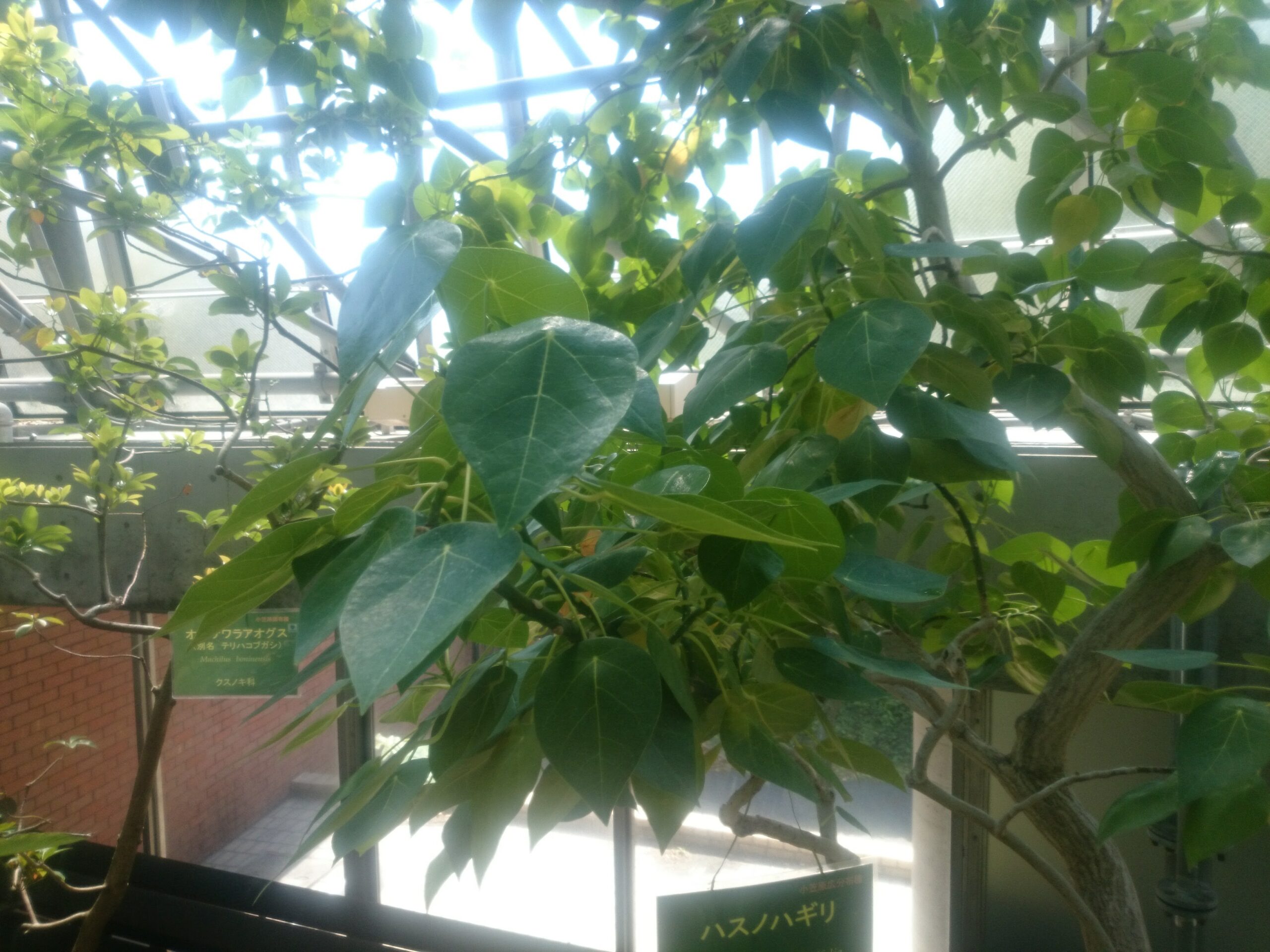
The Calycanthaceae family consists of fragrant, deciduous shrubs reaching 2-4 meters in height, with the exception of Idiospermum , which grows into a large evergreen tree. It comprises 3 genera and 10 species, and its distribution is limited to warm temperate and tropical regions. These include: Calycanthus (3 species; 1 species in western and southeastern North America and eastern Asia); Chimonanthus (6 species; East Asia); and Idiospermum (1 species; Queensland, Australia). The flowers range in color from white to red, with petals arranged spirally. Based on DNA phylogenetic trees, Calycanthus and Chimonanthus in the Northern Hemisphere diverged in the Middle Miocene, but Idiospermum in Australia had already diverged by the Upper Cretaceous. The discovery of Cretaceous Calycanthaceae fossils in Brazil suggests a likely remnant of a former Gondwanan distribution that included South America.

This article provides a comprehensive, field guide-style introduction to plants belonging to the Calycanthaceae family.

The basic information is based on Hayashi (2014). Photos are replaced as better ones become available. Also, while the identification is done by the author, please note that it may be changed without notice if there are any misidentifications.

Sponsored Link

*This website is originally in Japanese. Other languages are automatically translated and may contain errors in scientific names or technical terms.

No. 0136 Chimonanthus praecox

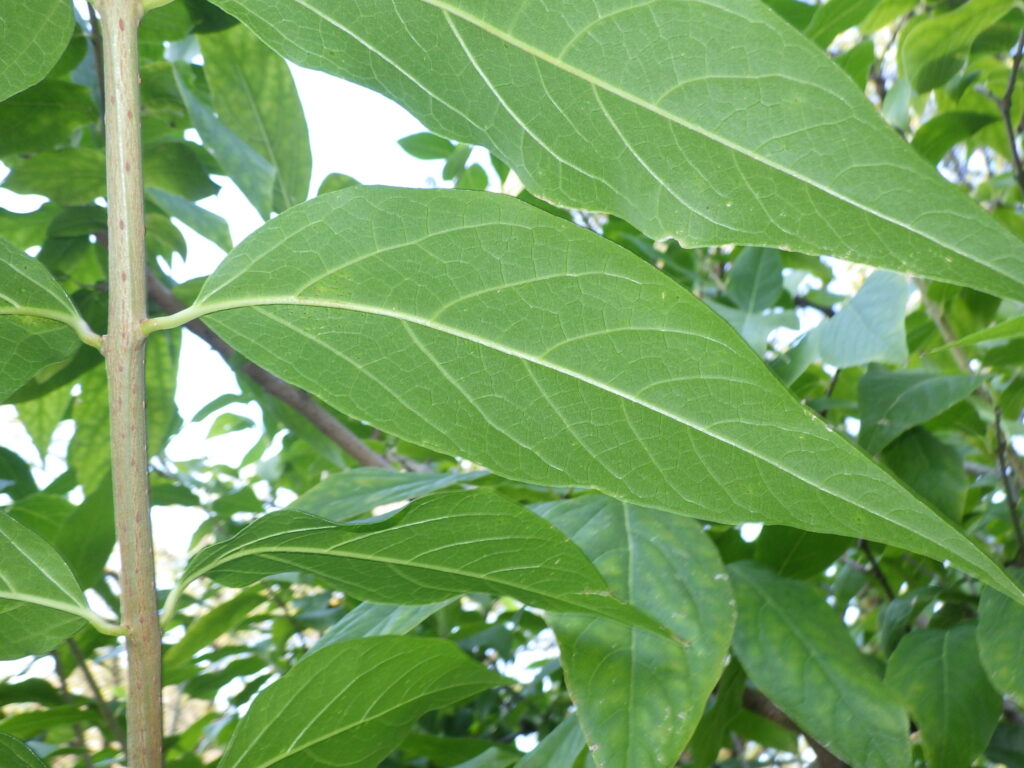
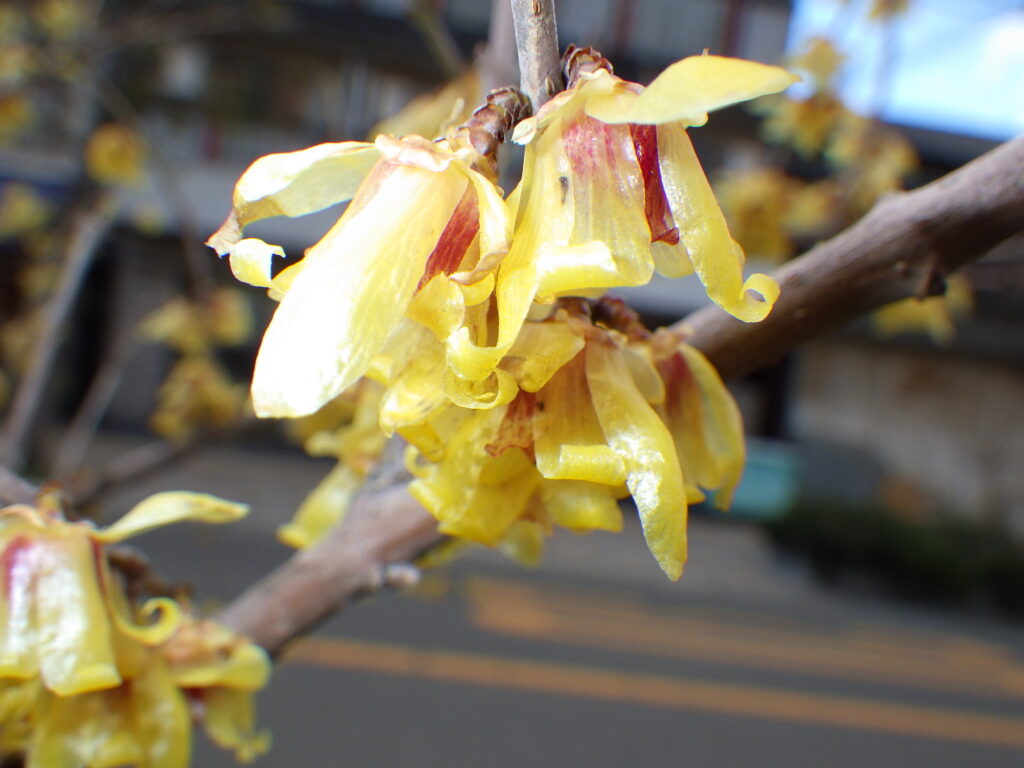
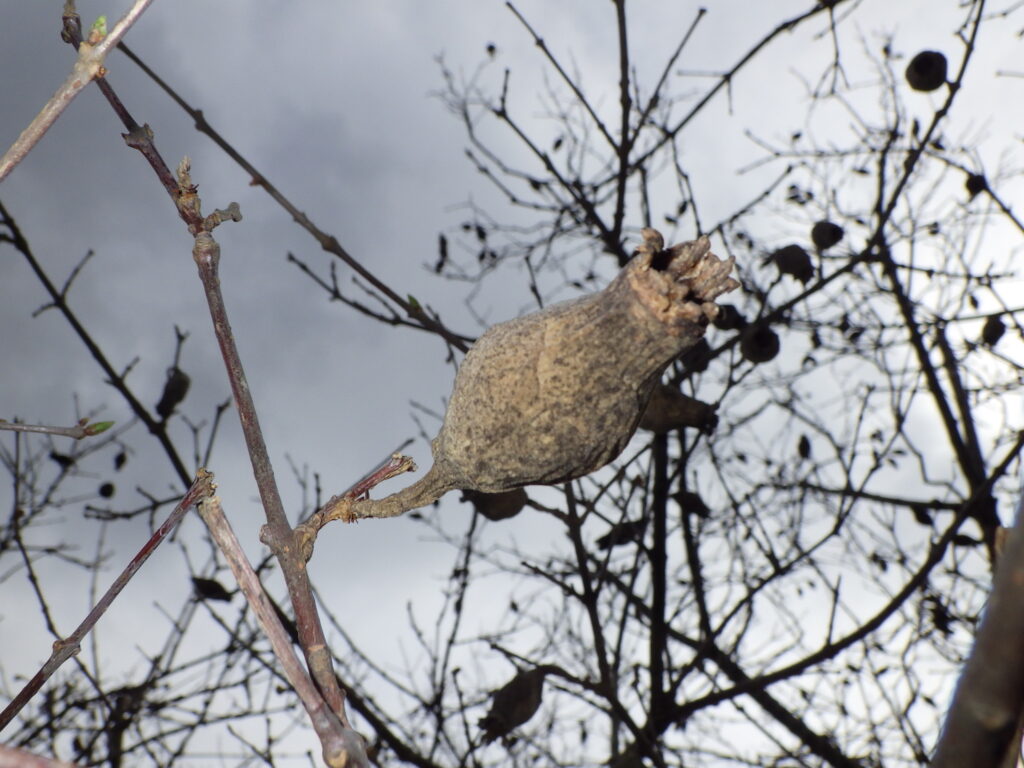
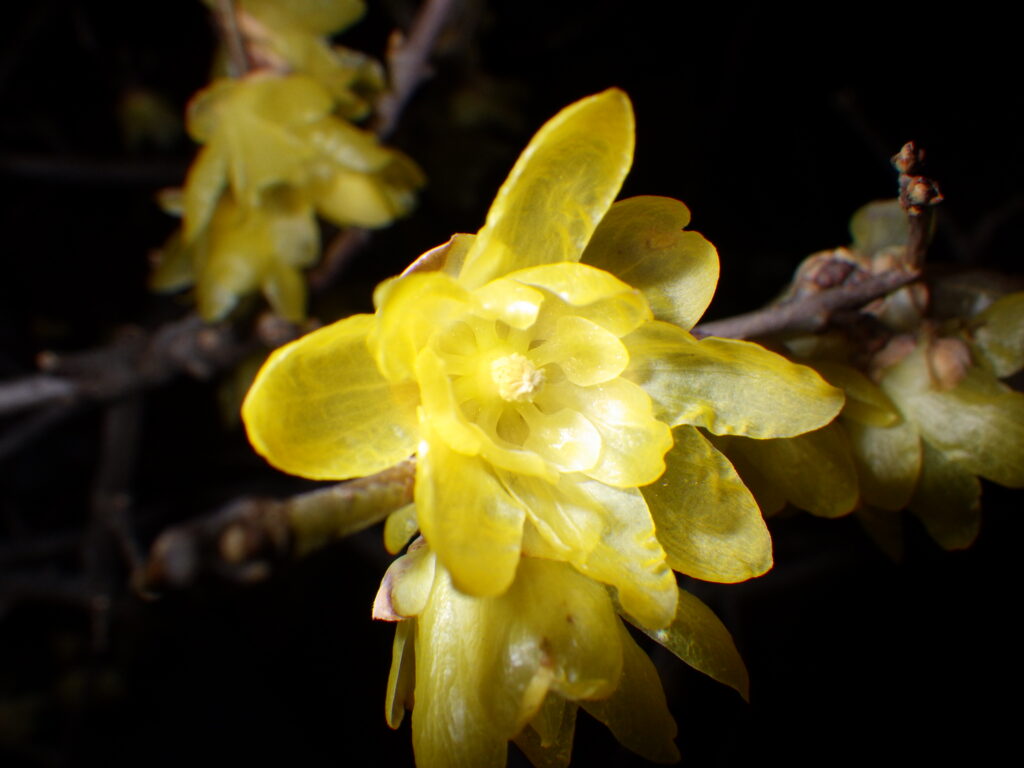
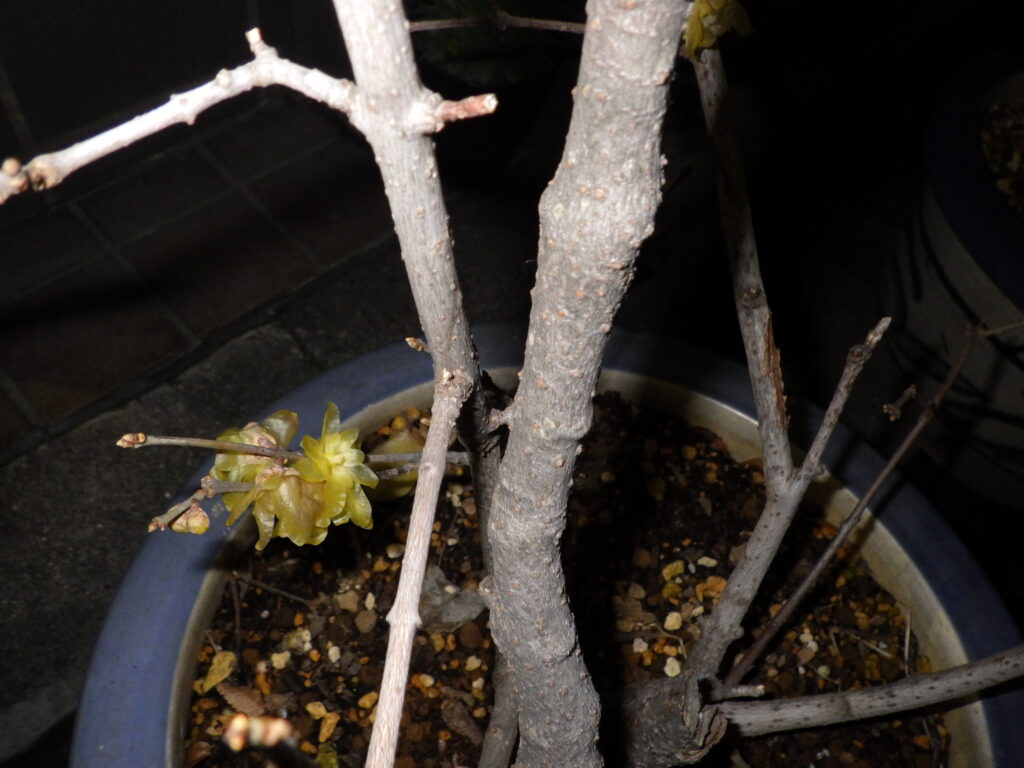
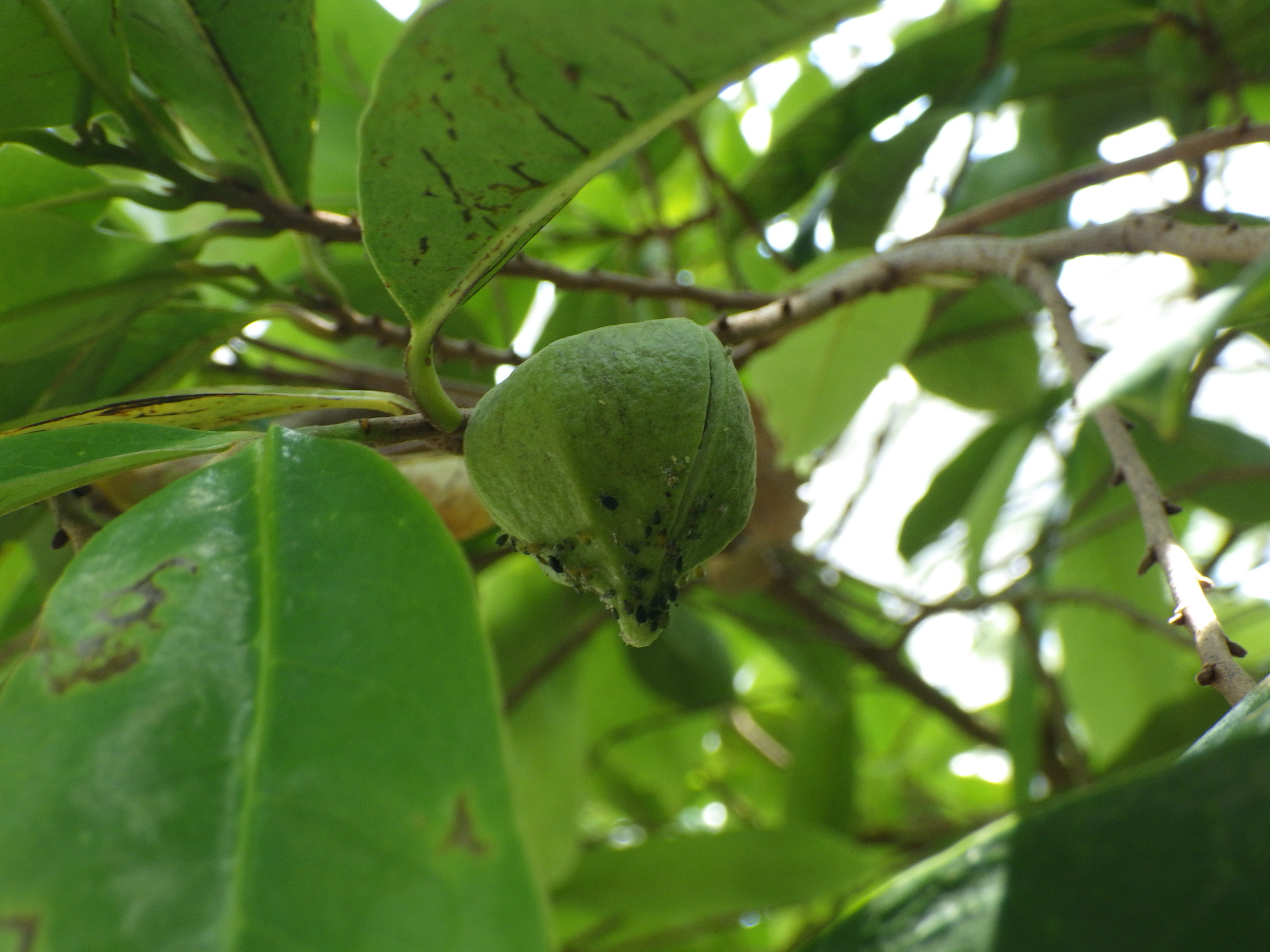
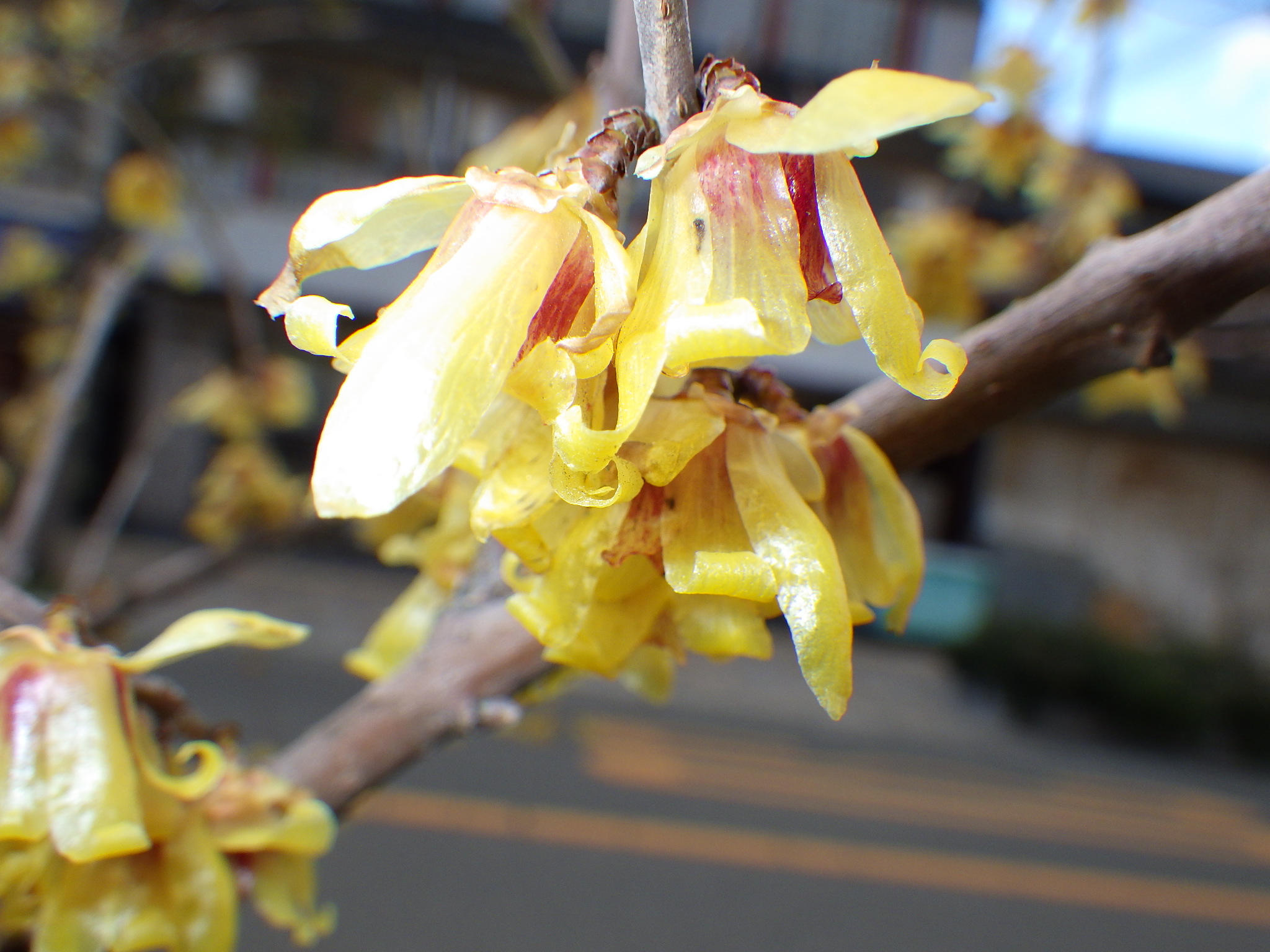
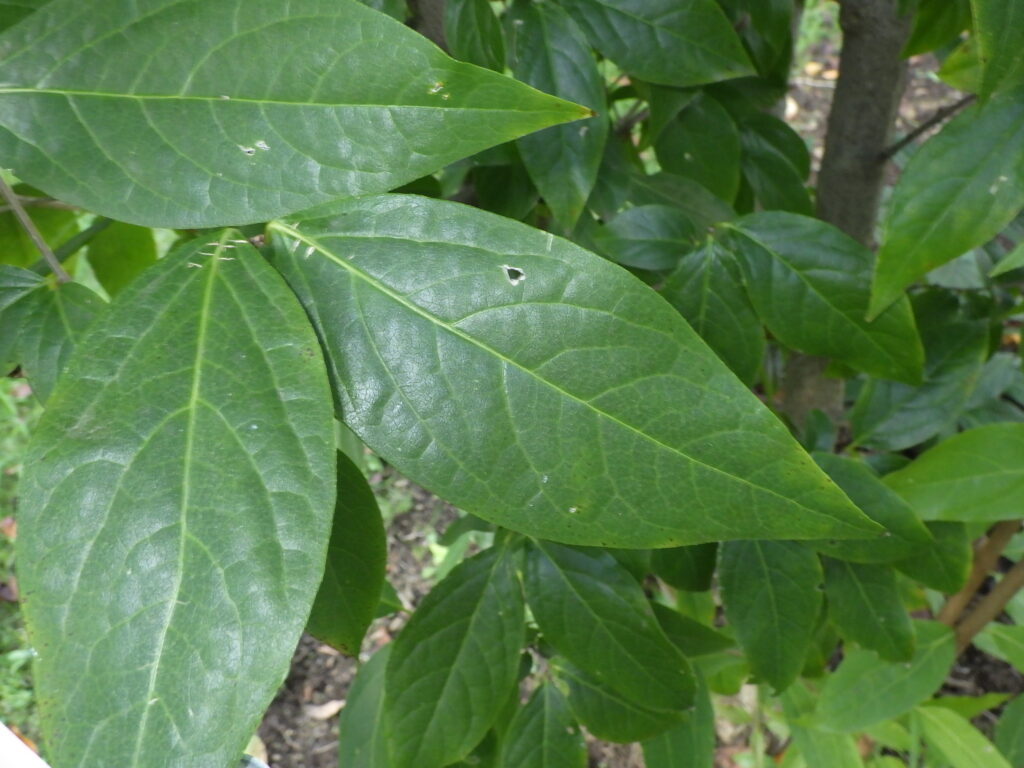
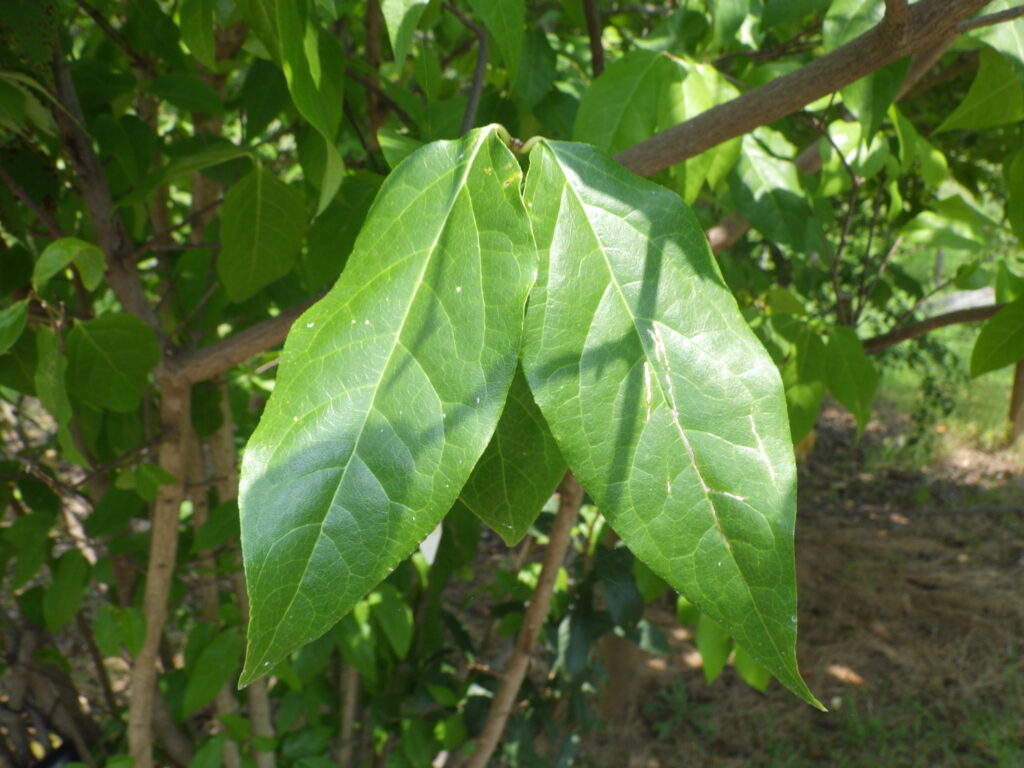
Deciduous shrub. Leaves are 8-20 cm long, with the widest part near the base to the middle. Petioles are 3-8 mm long. The leaves are large and long ovate, with a rough surface. It is easy to identify because there are few trees with large, entire leaves growing opposite each other. The sac-like fruits, about 4 cm long, that remain on the branches for a long time are also a good indicator. The flowers are yellow and bloom from December to February. The tree grows to a height of 2-5 m. Native to China. Commonly used as a garden tree and park tree.
What are the differences between wintersweet (Chimonanthus praecox) and wintersweet (Chimonanthus praecox var. japonica)? Is it poisonous? Is there a reason why wintersweet flowers bloom in the middle of winter? The wintersweet's minority strategy!
Wintersweet (Chimonanthus praecox) is native to China and is used as a garden tree in Japan. Although not widely known, its seeds and leaves are poisonous, so caution is necessary. Wintersweet and Chimonanthus praecox can be distinguished by the color of their flowers. Wintersweet blooms in the middle of winter, when other plants are not in bloom…
Upper surface of winter sweet leaves
Upper surface of a winter sweet leaf | © 2021-2026 Ecological Information Kenichi Ikeda
Underside of winter sweet leaves
Underside of a winter sweet leaf | © 2021-2026 Ecological Information Kenichi Ikeda
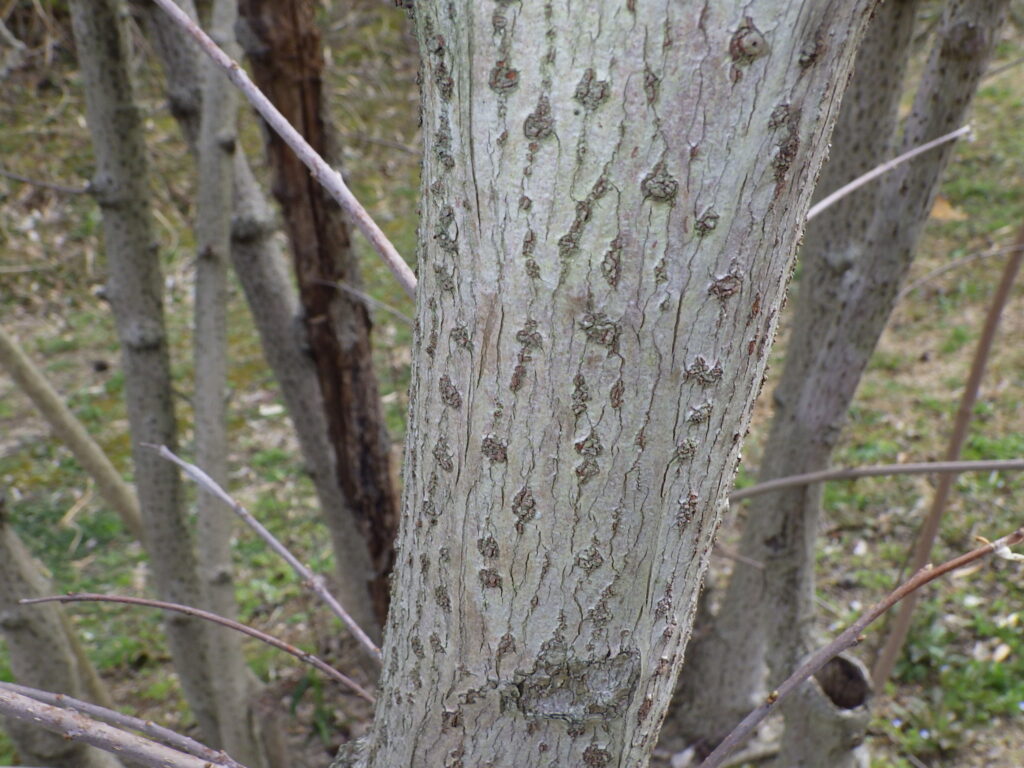
winter sweet bark
Wintersweet bark | © 2021-2026 Ecological Information Kenichi Ikeda
Wintersweet flowers
Wintersweet Flower | © 2021-2026 Ecological Information Kenichi Ikeda
Wintersweet fruit
Wintersweet fruit | © 2021-2026 Ecological Information Kenichi Ikeda

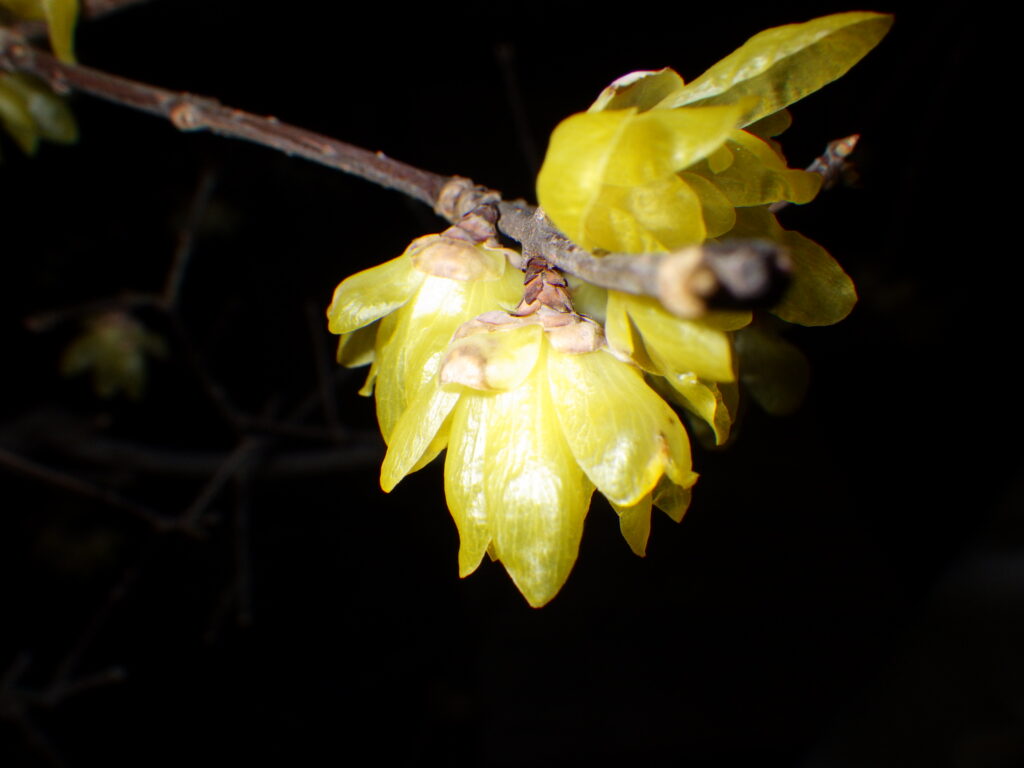
No.0136.1 Chimonanthus praecox f. concolor

This is a variety of winter sweet (Chimonanthus praecox) with yellow inner petals. It has become widely planted in recent years.
What are the differences between wintersweet (Chimonanthus praecox) and wintersweet (Chimonanthus praecox var. japonica)? Is it poisonous? Is there a reason why wintersweet flowers bloom in the middle of winter? The wintersweet's minority strategy!
Wintersweet (Chimonanthus praecox) is native to China and is used as a garden tree in Japan. Although not widely known, its seeds and leaves are poisonous, so caution is necessary. Wintersweet and Chimonanthus praecox can be distinguished by the color of their flowers. Wintersweet blooms in the middle of winter, when other plants are not in bloom…
leaves of winter sweet
Leaves of Chimonanthus praecox | © 2021-2026 Ecological Information Kenichi Ikeda
Wintersweet flowers
Wintersweet flower | © 2021-2026 Ecological Information Kenichi Ikeda
Inside the flower of the winter sweet
Inside the flower of Chimonanthus praecox | © 2021-2026 Ecological Information Kenichi Ikeda
Bark of winter sweet
Bark of Chimonanthus praecox | © 2021-2026 Ecological Information Kenichi Ikeda

References

Hayashi, Masayuki. 2014. 1100 Tree Leaves Identified Through Real-Life Scans. Yama-kei Publishers, Tokyo. 759pp. ISBN : 9784635070324

Copied title and URL