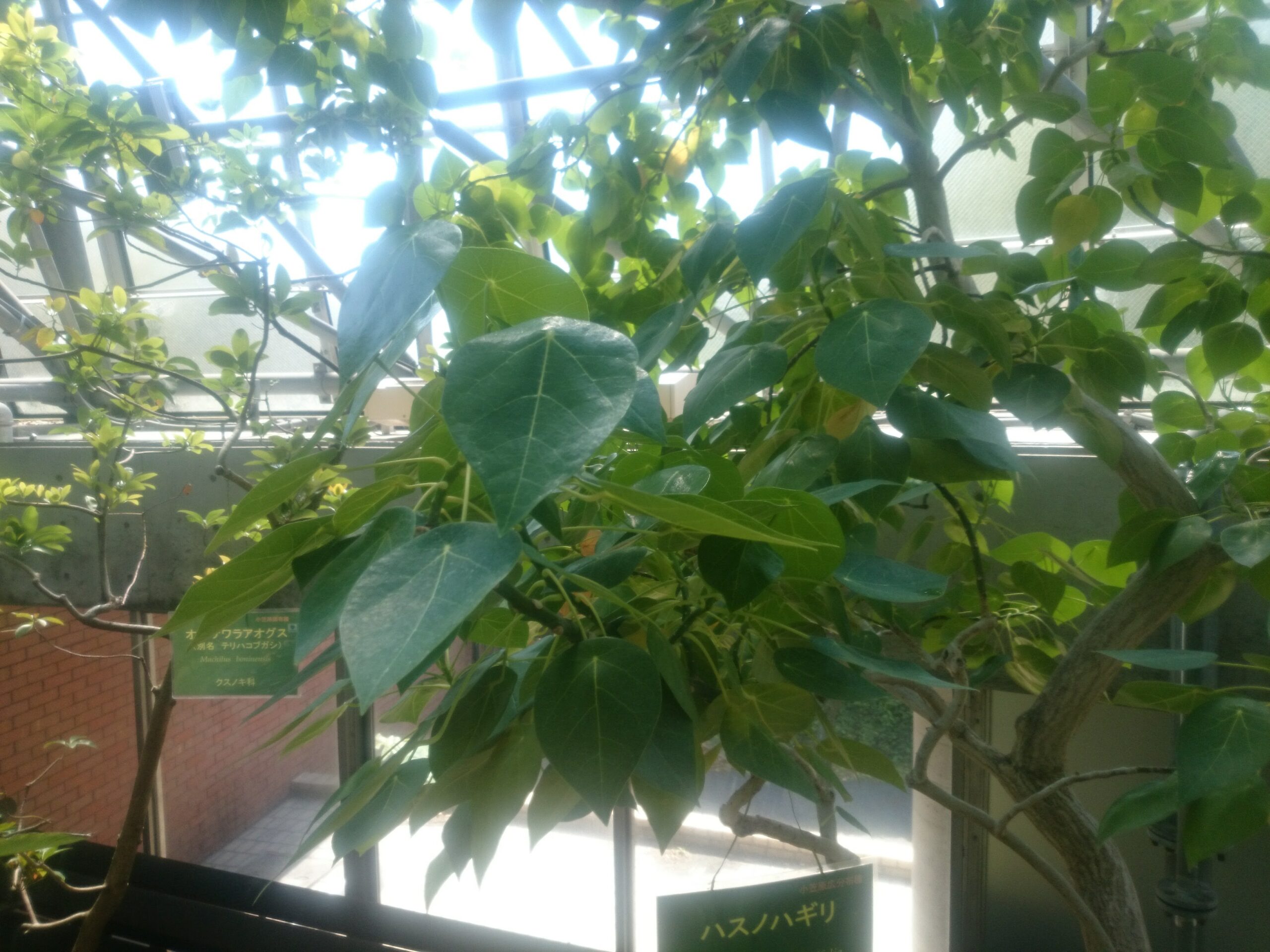
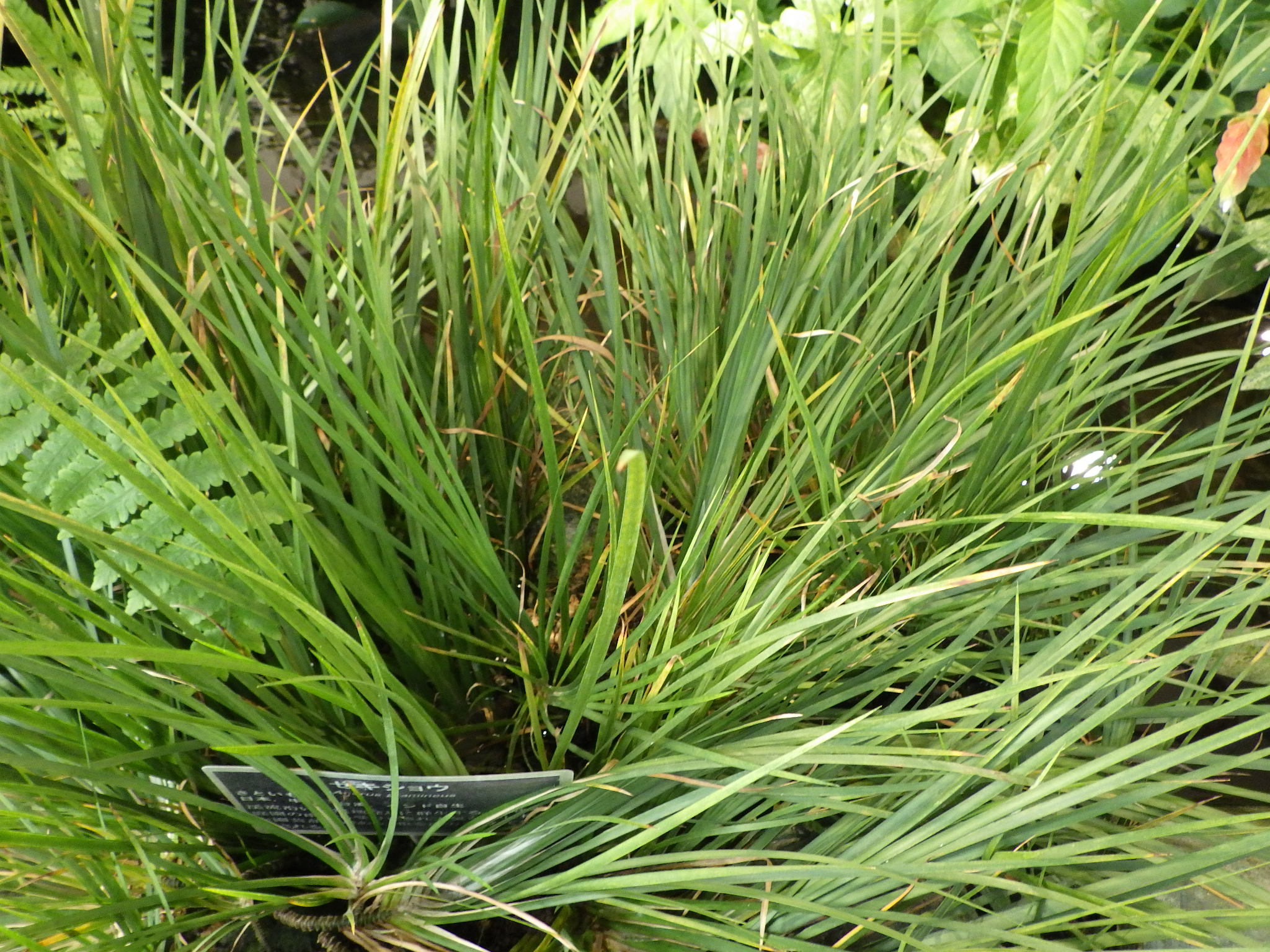
The Lauraceae family consists of evergreen or deciduous woody plants. Their leaves are arranged alternately or oppositely. Many species are fragrant. Approximately 31 genera and 2,000 species are known from tropical to temperate regions, with 9 genera and 29 species distributed in Japan. Several species are cultivated.
This article provides a comprehensive, illustrated guide to plants belonging to the Lauraceae family.
Basic information is based on Hayashi (2014) and the Kanagawa Prefectural Flora Survey Association (2018). Photos are replaced as better ones become available. While identification is done by the author, please note that misidentifications may be corrected without notice.
- No. 0140 Camphor tree (Cinnamomum camphora)
- No. 0141 Cinnamomum tenuifolium
- No. 0143 Cinnamomum daphnoides
- No.0143.a Ceylon Cinnamomum verum
- No. 0144 Machilus thunbergii
- No.0145 Blue Oak (Machilus japonica)
- No.0146.a Machilus boninensis (Ogasawara Blue Cactus)
- No. 0147 Persea americana
- No.0148 Neolitsea sericea
- No.0148.a Neolitsea boninensis
- No. 0149 Japanese evergreen oak (Neolitsea aciculata)
- No.0150 Litsea japonica
- No. 0152 Litsea coreana
- No. 0153 Actinodaphne acuminata
- No. 0154 Lindera umbellata
- No.0155 Lindera umbellata var. membranacea
- No. 0158 Lindera obtusiloba
- No. 0160 Lindera aggregata
- No. 0162 Lindera praecox
- No.0164 Laurus nobilis
- References
No. 0140 Camphor tree (Cinnamomum camphora)
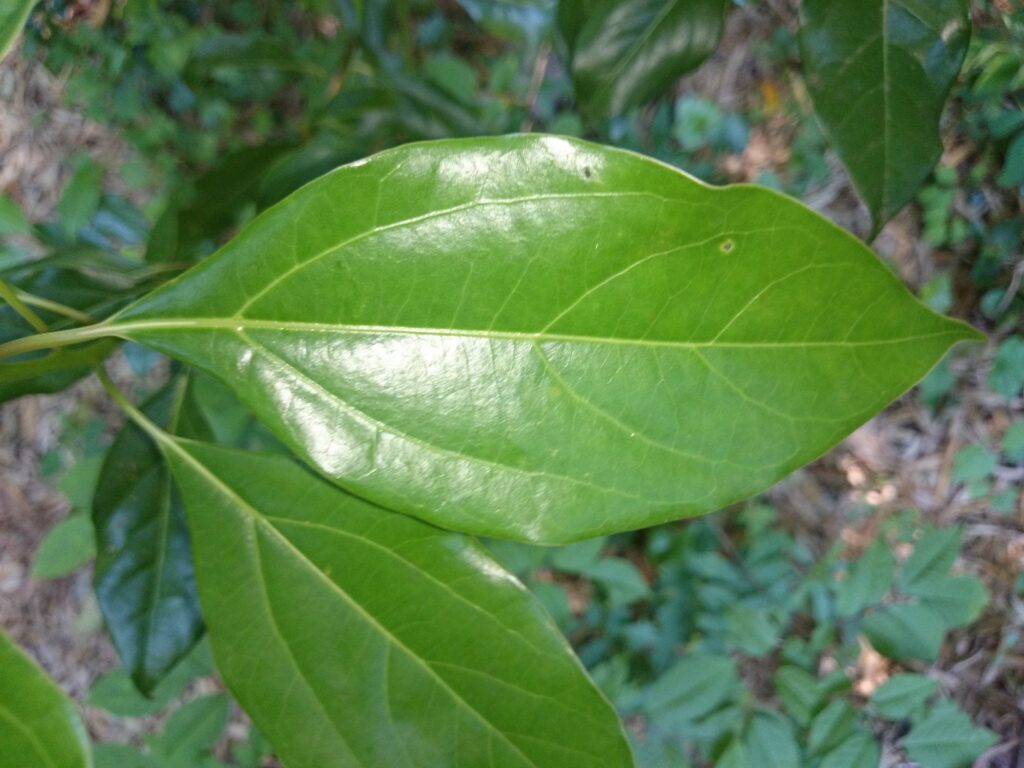
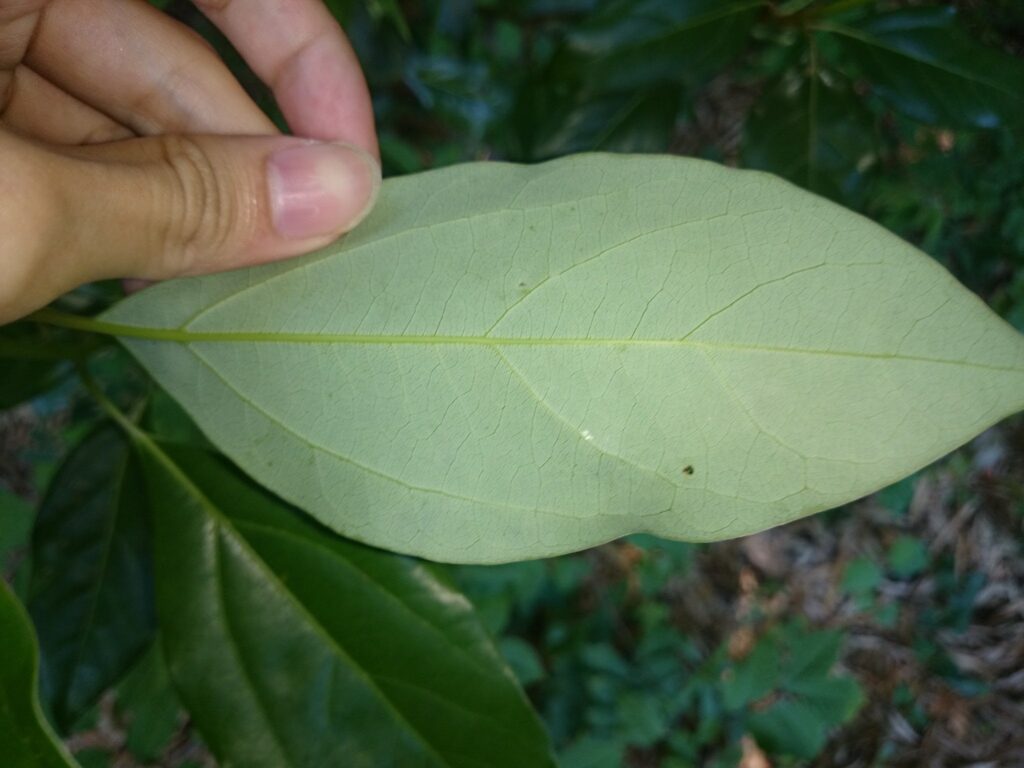
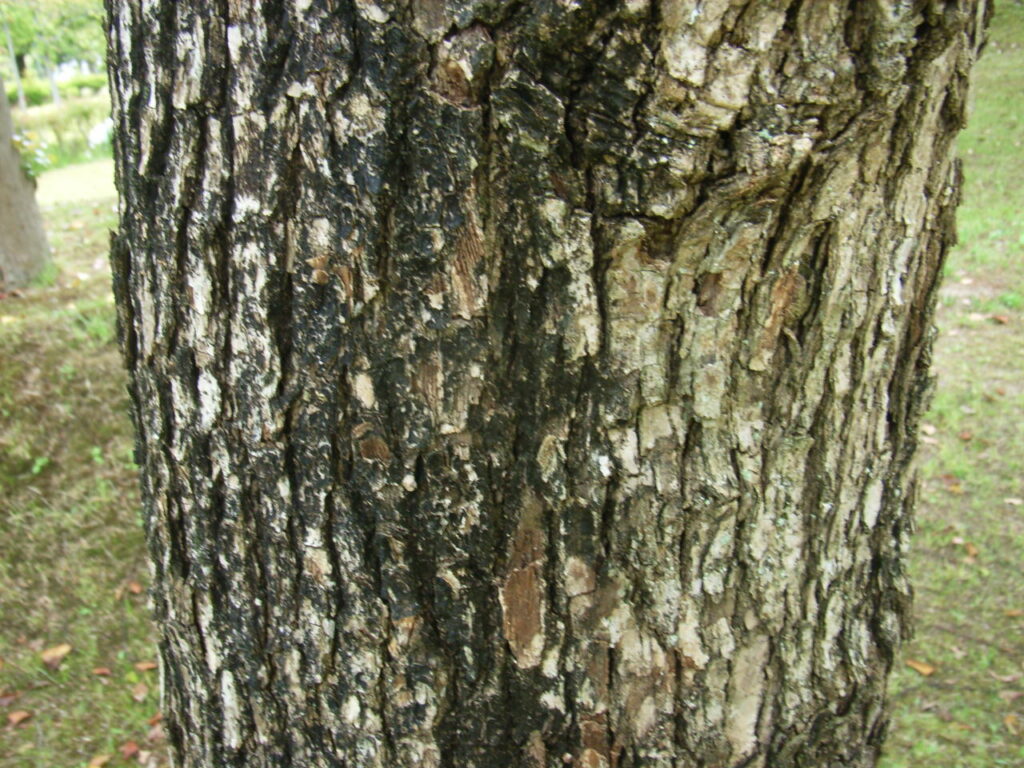
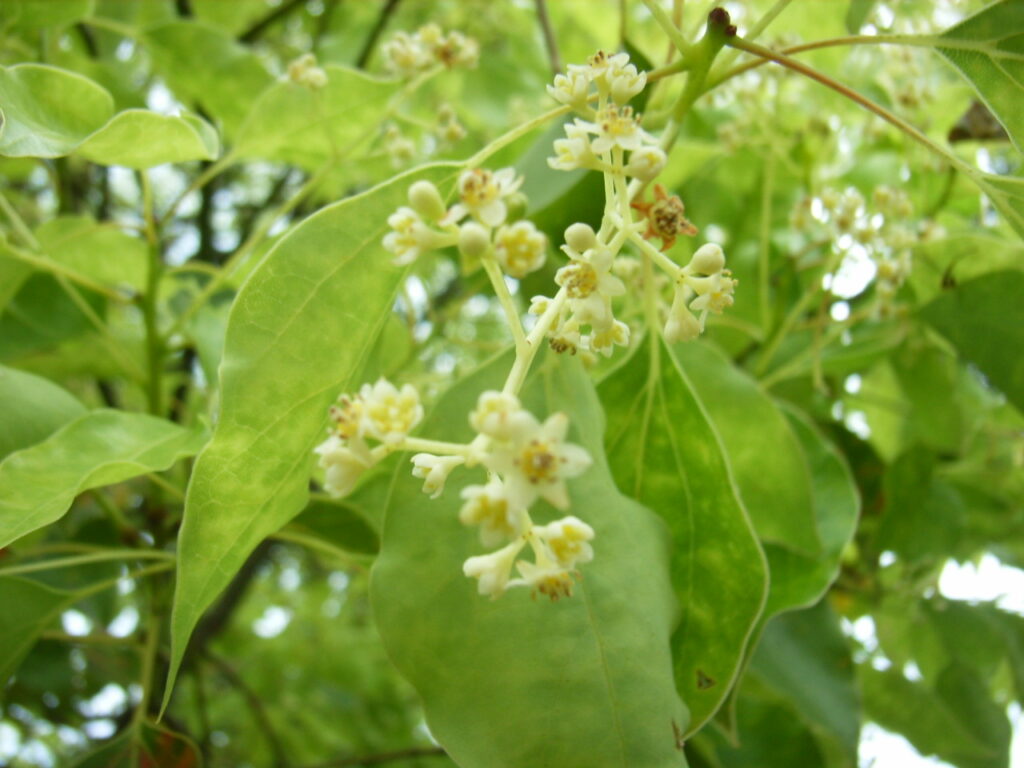
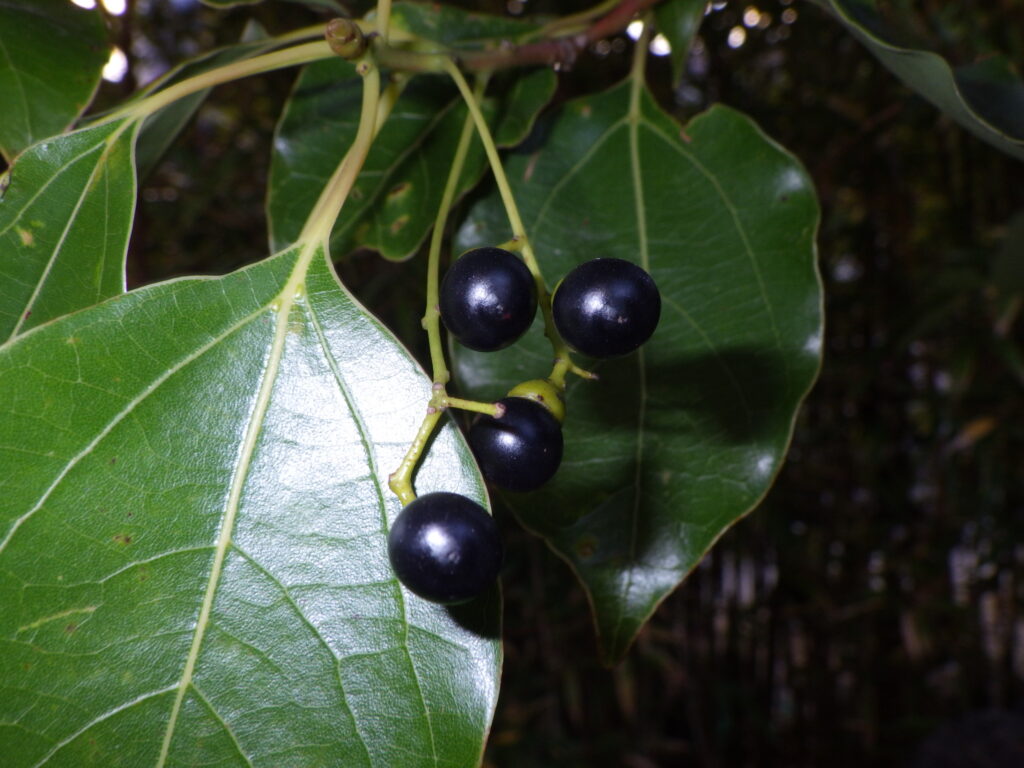
This is an evergreen tree. The leaves are ovate to elliptical, and usually have galls (mite chambers) at the base of the three rows of veins. Young leaves are reddish-orange to golden yellow. Older leaves turn red in autumn. The flowering period is from May to June. The flowers are axillary inflorescences in a panicle, branching out and bearing several flowers. The calyx is funnel-shaped and usually has six lobes, but the lobes fall off after flowering, leaving only the cup-shaped tube. The fruit is a berry enclosed in the cup-shaped calyx tube and ripens to a blackish-purple color. It is distributed in Honshu (west of the Kanto region), Shikoku, Kyushu, and Taiwan, but it is said that the Japanese variety is not originally native and may have been introduced from China a long time ago. Some have been cultivated since ancient times and have grown into large trees. While mite chambers were traditionally thought to be habitats for predatory mites (such as *Dorcus titanus*), it has been discovered that they also employ a complex symbiotic relationship where weaker herbivorous mites (such as *Dorcus galli*) are deliberately allowed to inhabit the chambers, thereby establishing predatory mites (such as *Predatory mites*) throughout the plant and protecting themselves from stronger herbivorous mites that subsequently emerge (Kasai et al., 2005; Kasai, 2006).
No. 0141 Cinnamomum tenuifolium
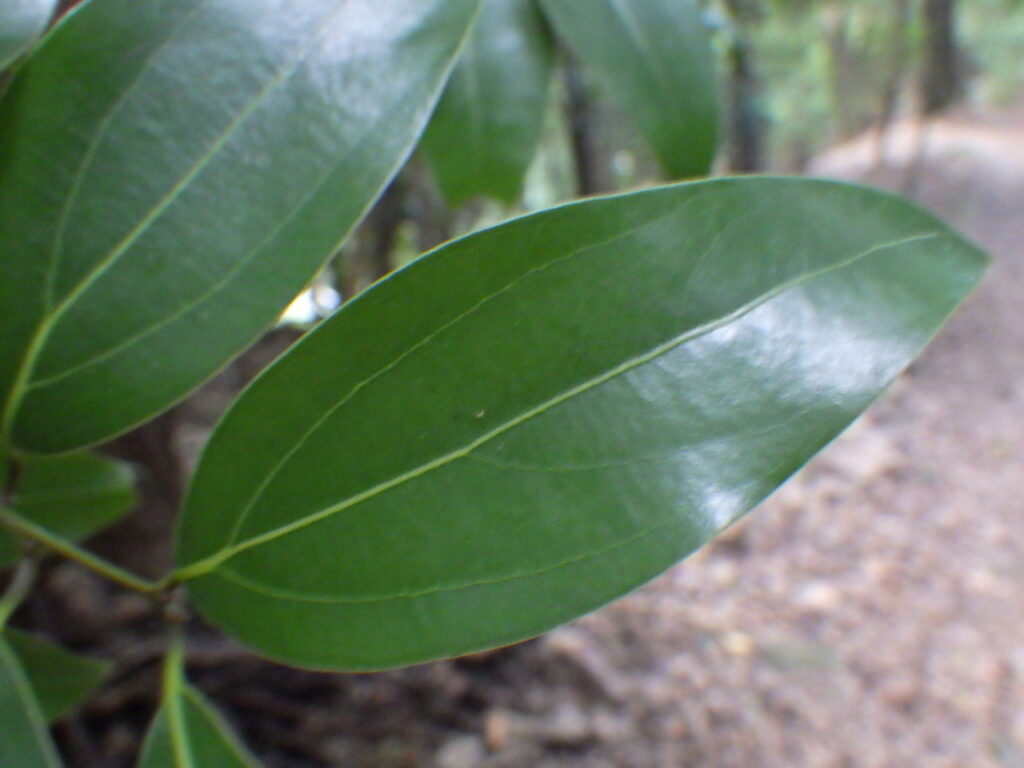
This is an evergreen tree. The leaves are narrowly ovate or oblong with a short, pointed tip, and the underside is grayish-white. The leaf veins are three in number, starting a short distance from the base, but become indistinct along the way. The leaves at the tips of the branches are often attached nearly horizontally, giving them a pinnate appearance. The fruit is a somewhat oval berry enclosed in a cup-shaped calyx tube, ripening to a dark purple color. It is distributed in Honshu (west of the Kanto region), Shikoku, Kyushu, the Ryukyu Islands, Taiwan, and China. It is commonly found in low mountains and coastal areas.
No. 0143 Cinnamomum daphnoides
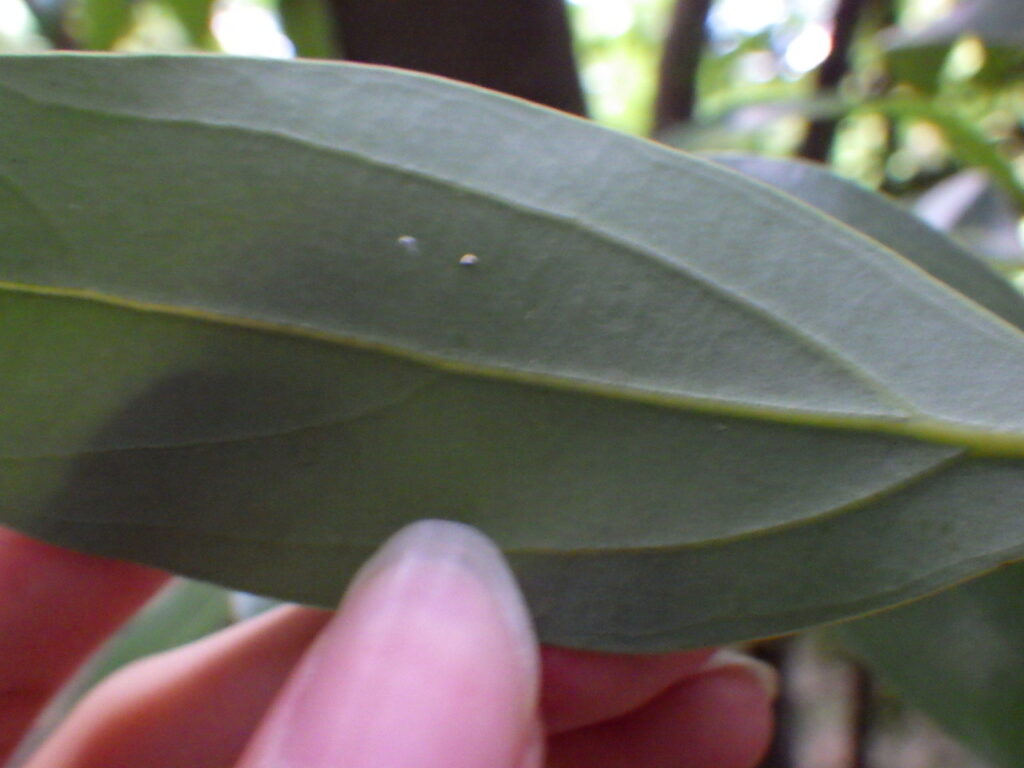
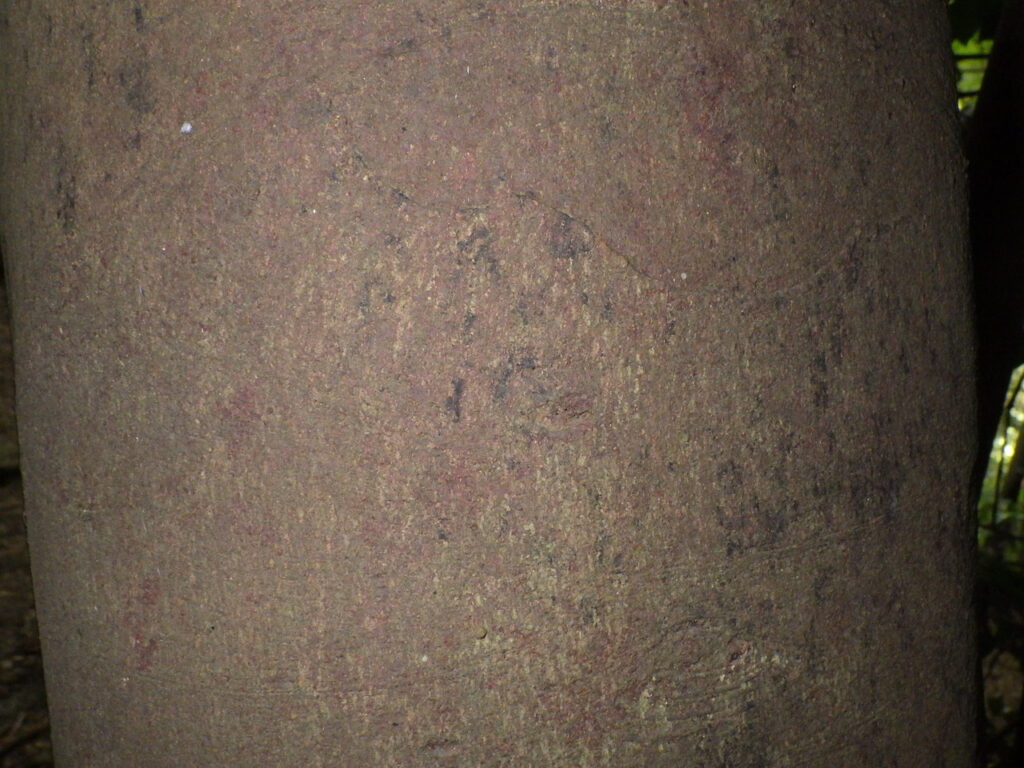
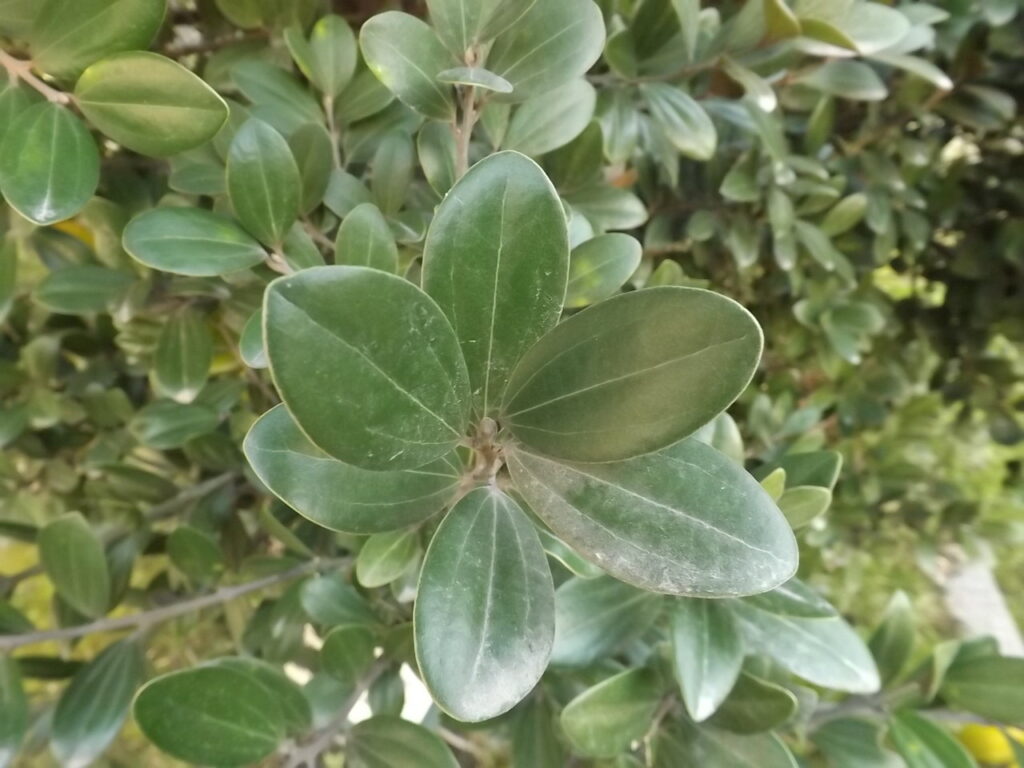
Evergreen small tree to shrub. Leaves are 3-7 cm long, with the widest point near the tip. Petioles are 0.5-1 cm long. It resembles a smaller version of Cinnamomum japonicum, with leaves that have prominent three-veined leaves and a rounded, obovate shape. Tree height 2-10 m. Rarely grows wild on the coasts of Fukuoka, Nagasaki, Kagoshima, and Okinawa. Sometimes used as a garden tree or hedge in warmer regions.
No.0143.a Ceylon Cinnamomum verum
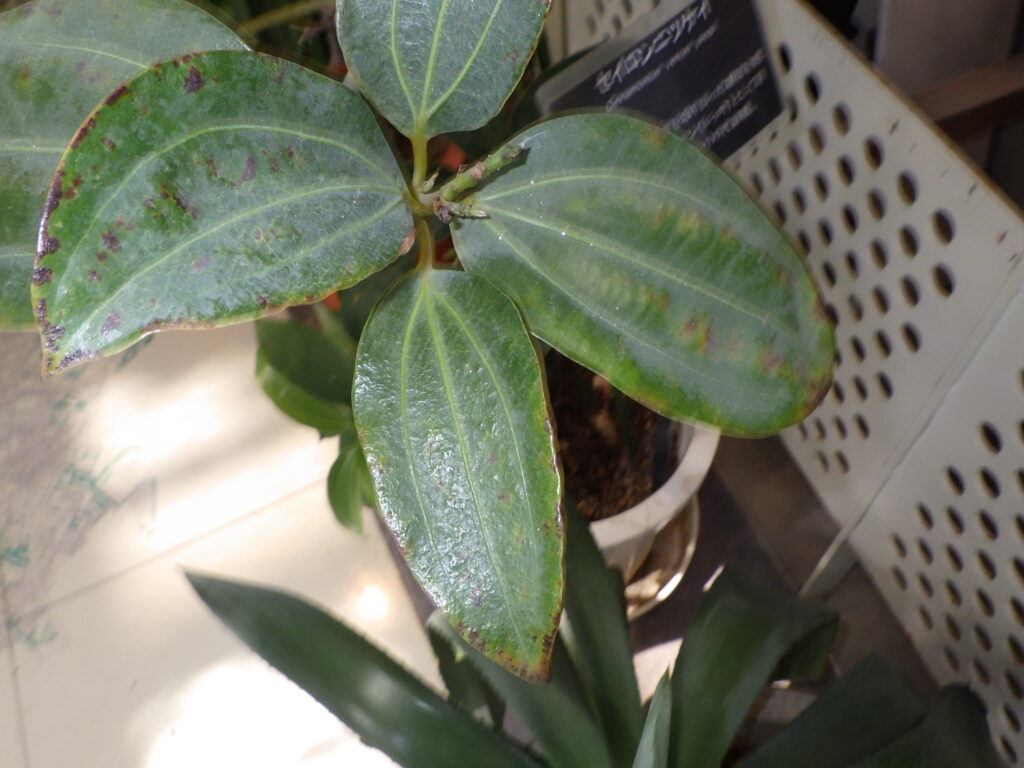
An evergreen tree, reaching a height of 10-15m. Its leaves are ovate-elliptical, 7-18cm long. The flowers, arranged in a conical inflorescence, are greenish in color and have a distinctive fragrance. The fruit is a 1cm purple drupe containing a single seed. Native to Sri Lanka. The inner bark is used to produce the spice cinnamon.
No. 0144 Machilus thunbergii
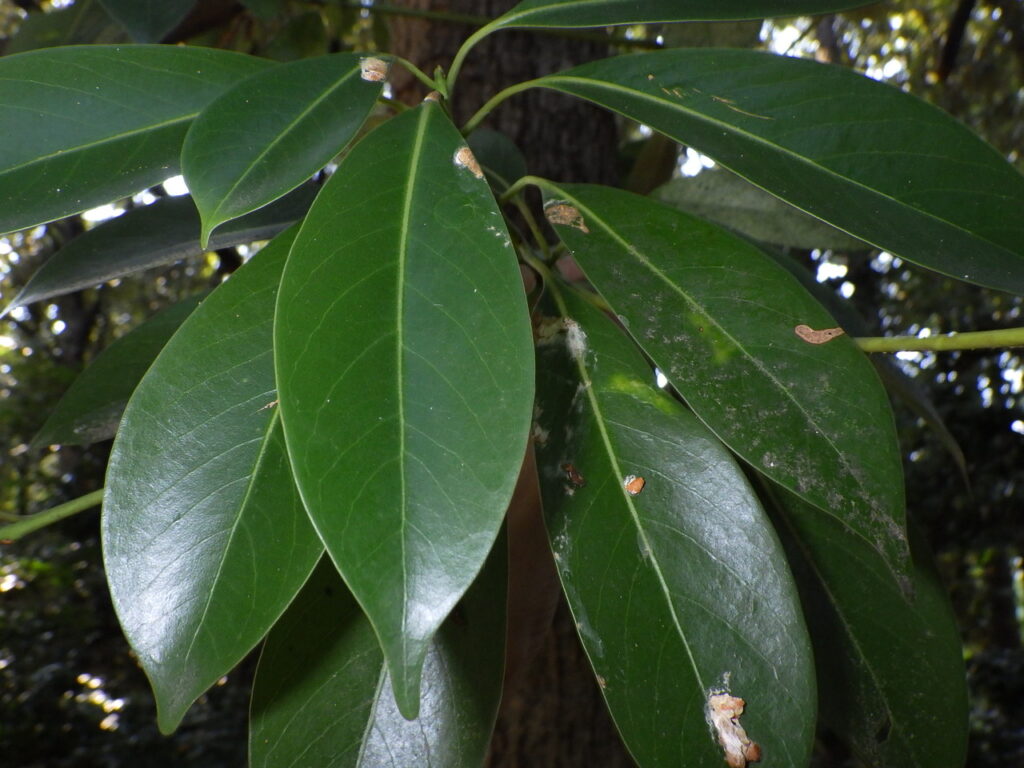
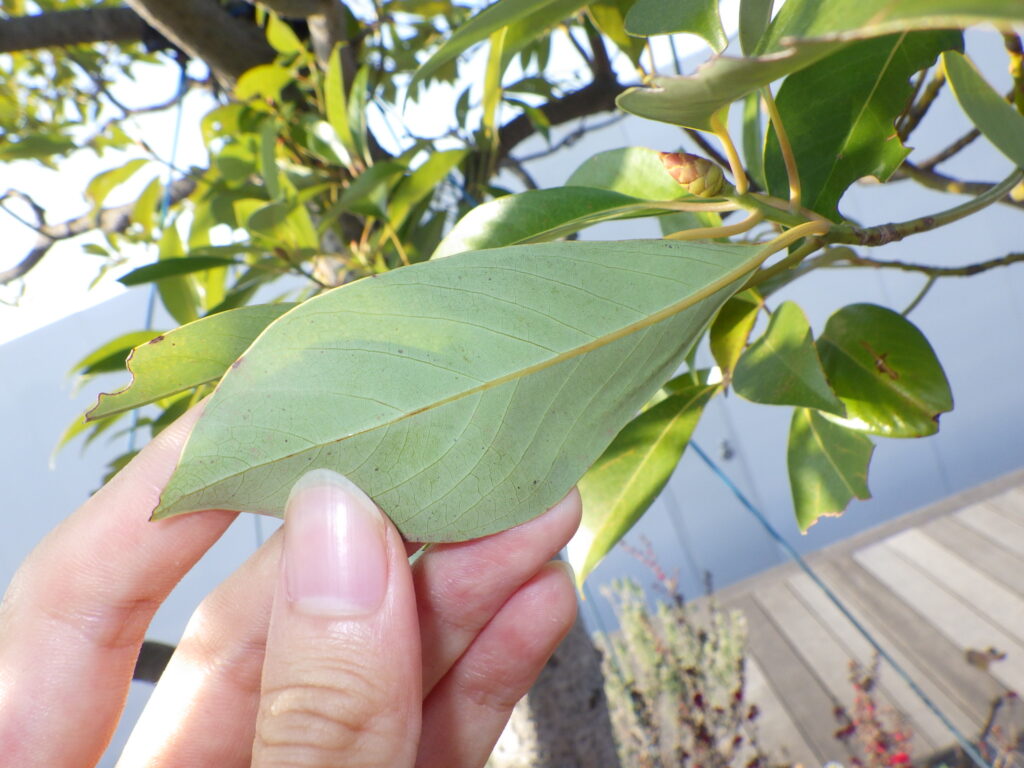
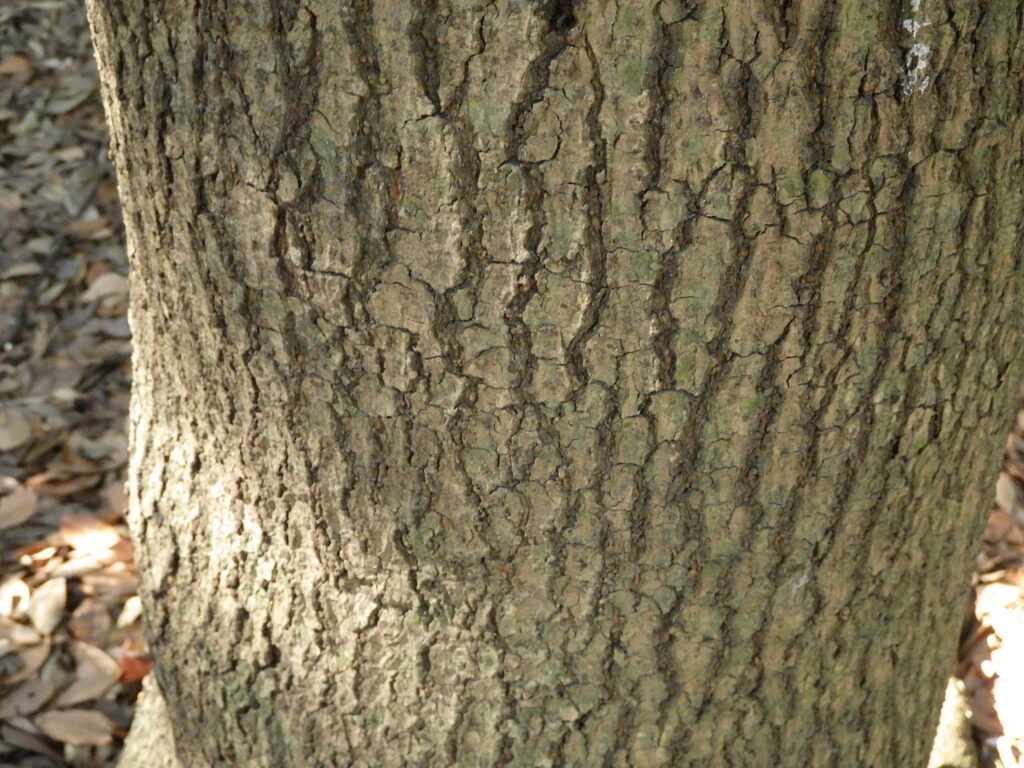
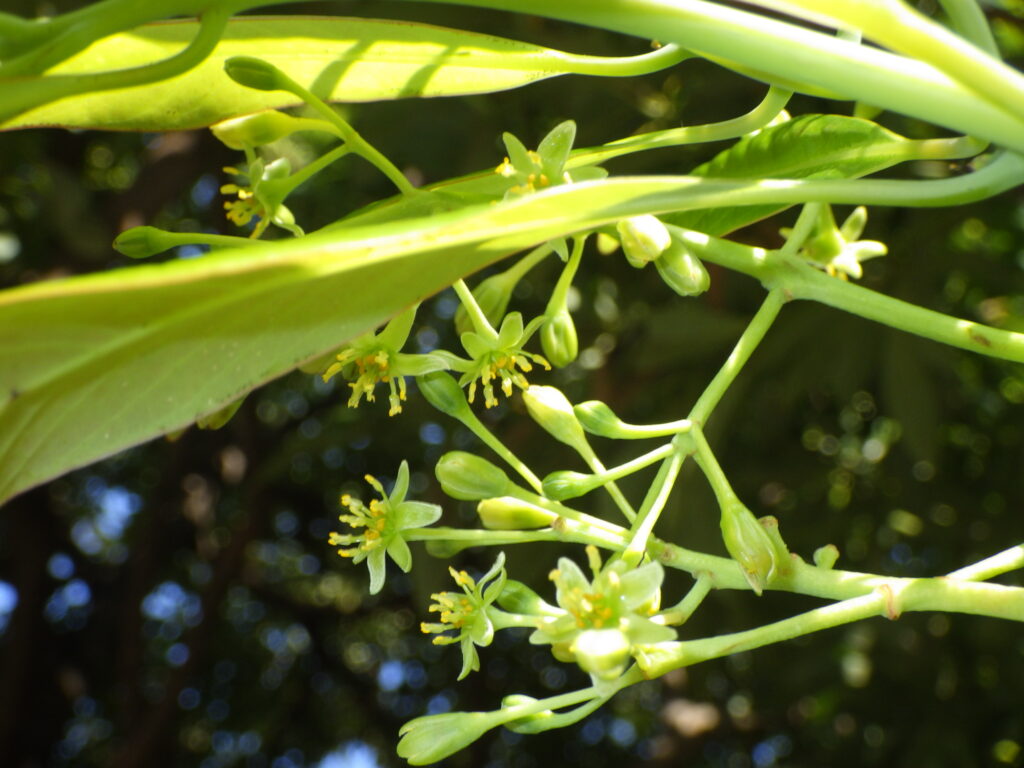
Also known as Inugusu. The winter buds are enclosed in tile-like scales, and the edges of the bud scales are covered with yellowish-brown, glossy hairs. The young leaves are reddish. The leaves are petiolate, obovate or elliptic, and pinnately venated, not trivenous. The flowering period is from April to May. The panicle inflorescence is branched and spreads in a corymbose inflorescence. The calyx is deeply 6-lobed, and the lobes unfold at the time of flowering. There are 9 stamens. The berry ripens to a purplish-black color in June to July, and the sepals remain, curving downwards. The fruit stalk is red. It is distributed in Honshu, Shikoku, Kyushu, the Ryukyu Islands, and the southern part of the Korean Peninsula, and is widely found from lowlands to low mountainous areas. It is a major constituent tree species of evergreen broad-leaved forests.
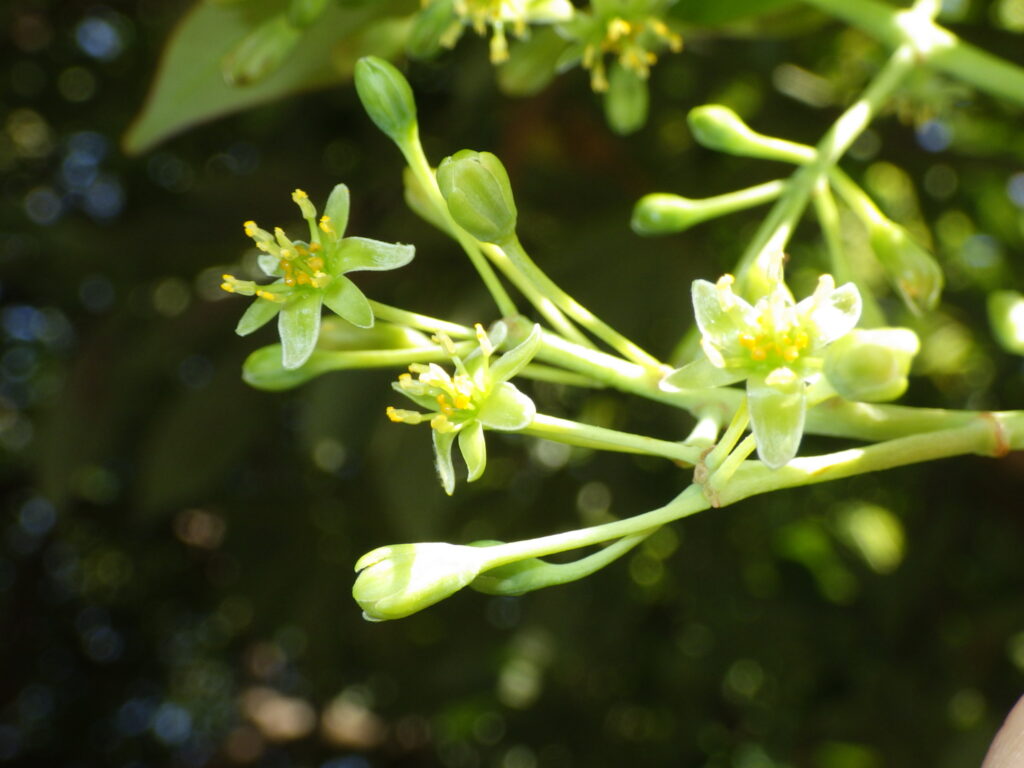
No.0145 Blue Oak (Machilus japonica)
Also known as Hosobata. The young leaves are green and not reddish. It flowers from April to May. The panicle has a long stalk and the branches spread horizontally. The berry is about 10 mm in diameter, ripening to a purplish-black color, with six unhardened sepals that curl downwards and persist. The fruit stalk is red. It is distributed in Honshu (west of the Kanto and Chubu regions), Shikoku, Kyushu, and the Korean Peninsula (southern part).
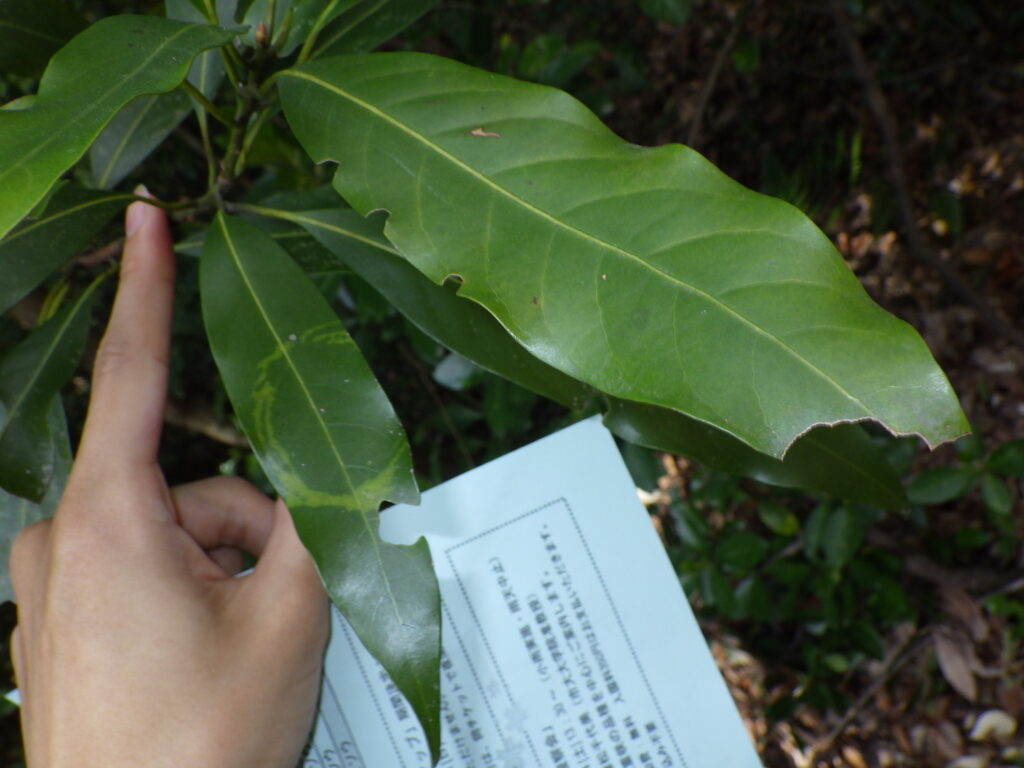
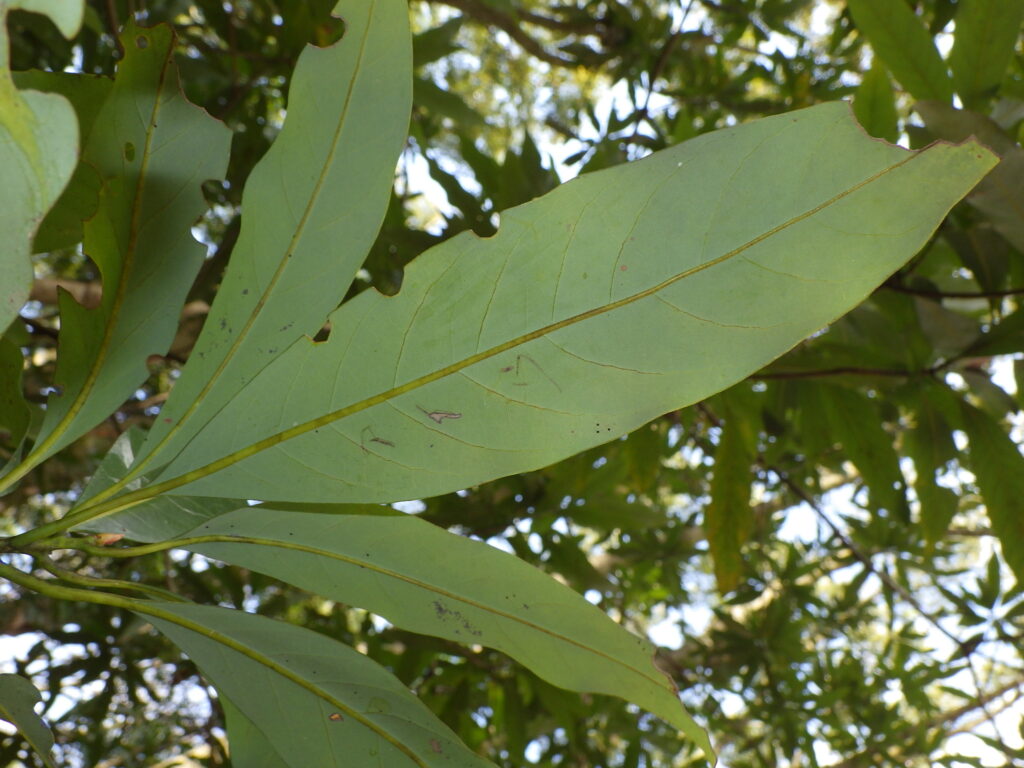
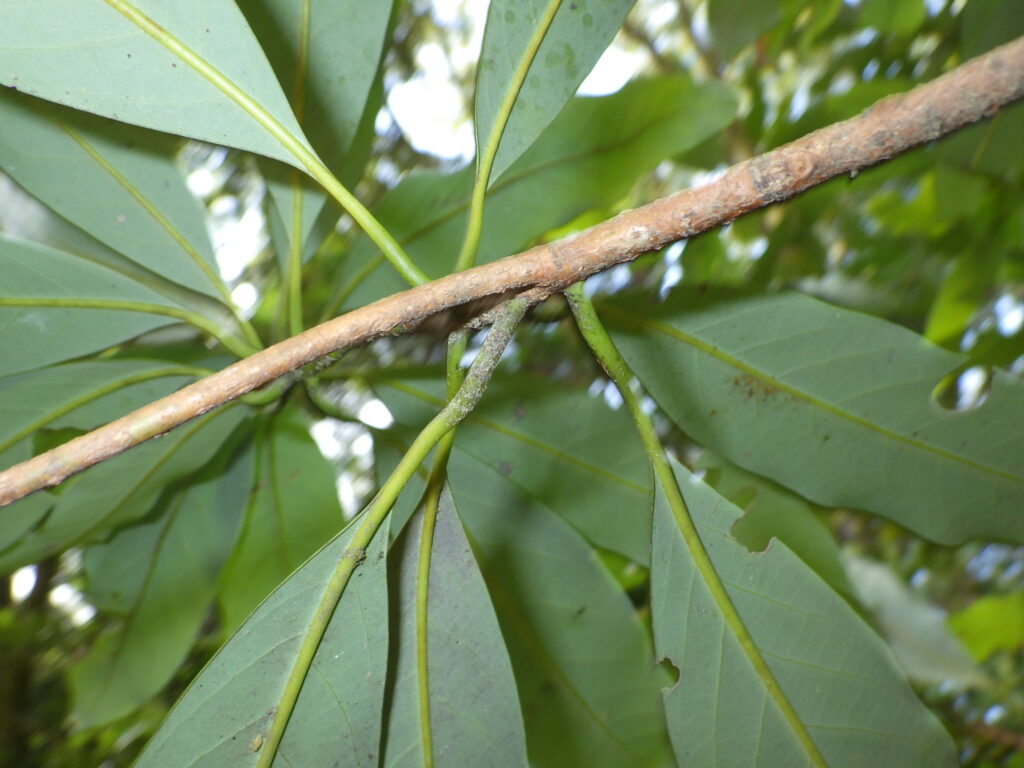
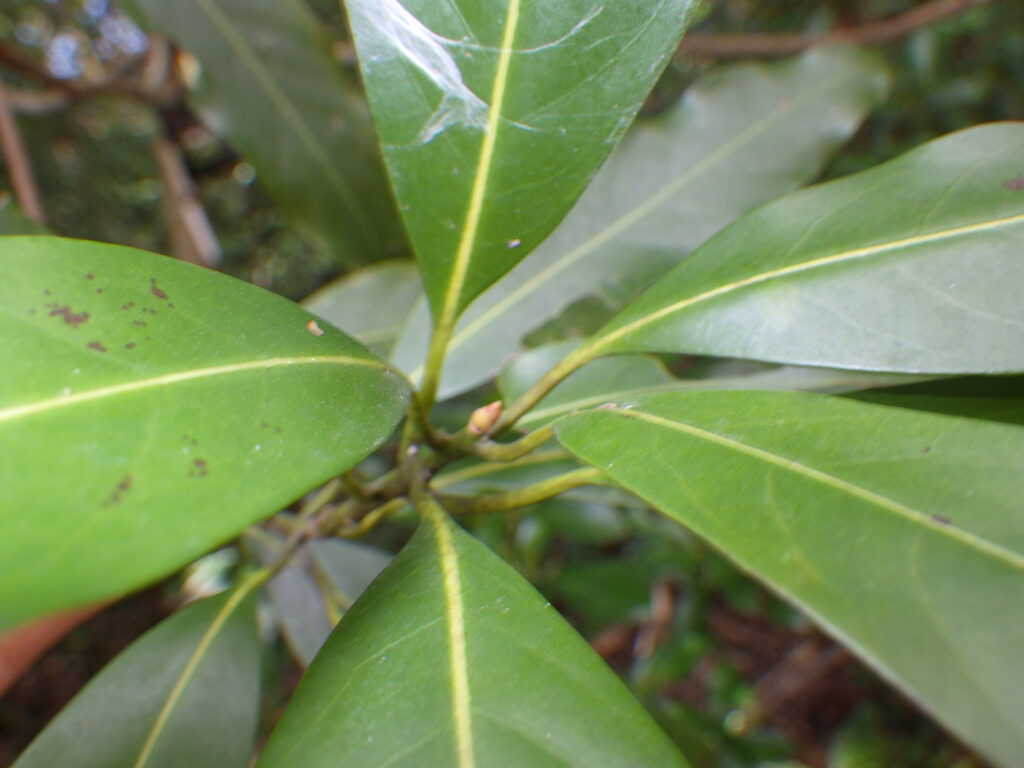
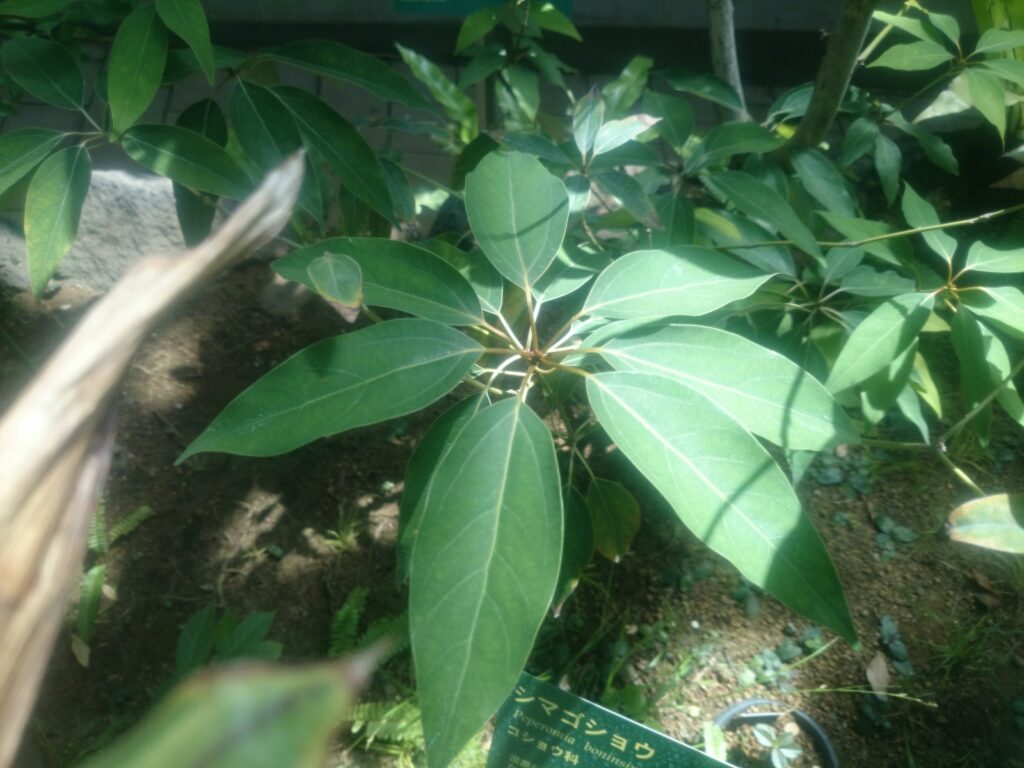
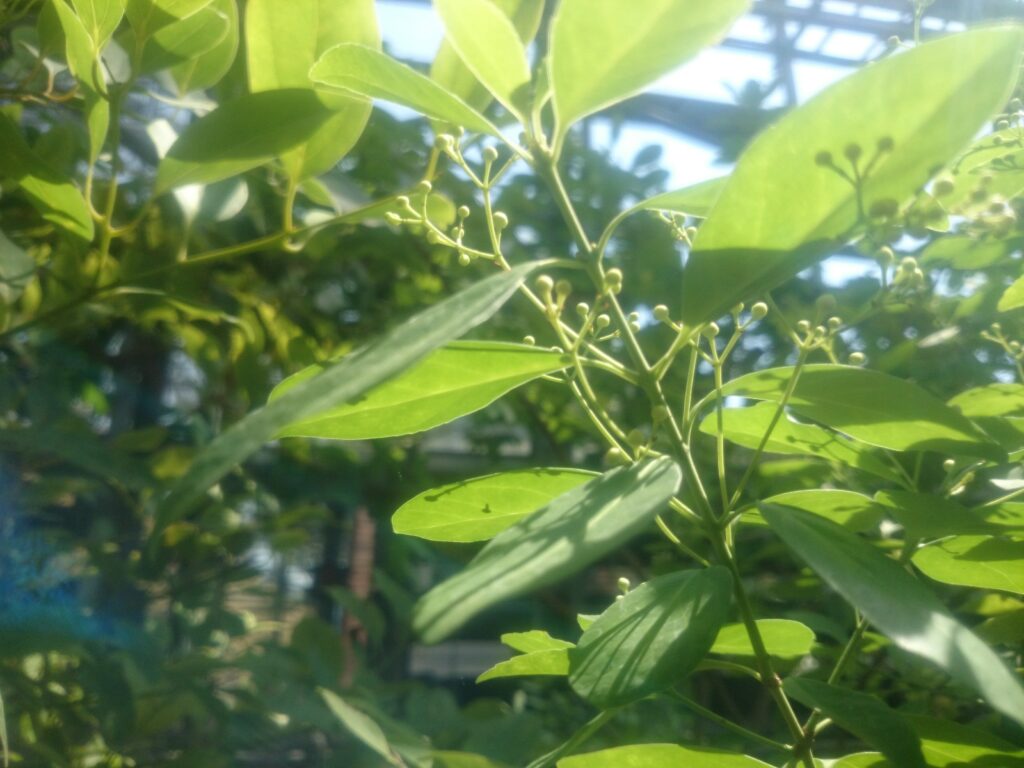
No.0146.a Machilus boninensis (Ogasawara Blue Cactus)
Also known as Munin-inugusu. An evergreen small to tall tree. The current year's branches are green, while the previous year's branches are reddish-brown. The leaves are alternate, leathery, and oblong. About 10 pale yellowish-green florets are borne in stalked panicles emerging from the leaf axils. The fruit is spherical and ripens to a purplish-black color. The entire plant is hairless. It is an endemic species that grows only on Chichijima and Hahajima in the Ogasawara Islands. It grows in bright woodlands and forest edges along the roots.
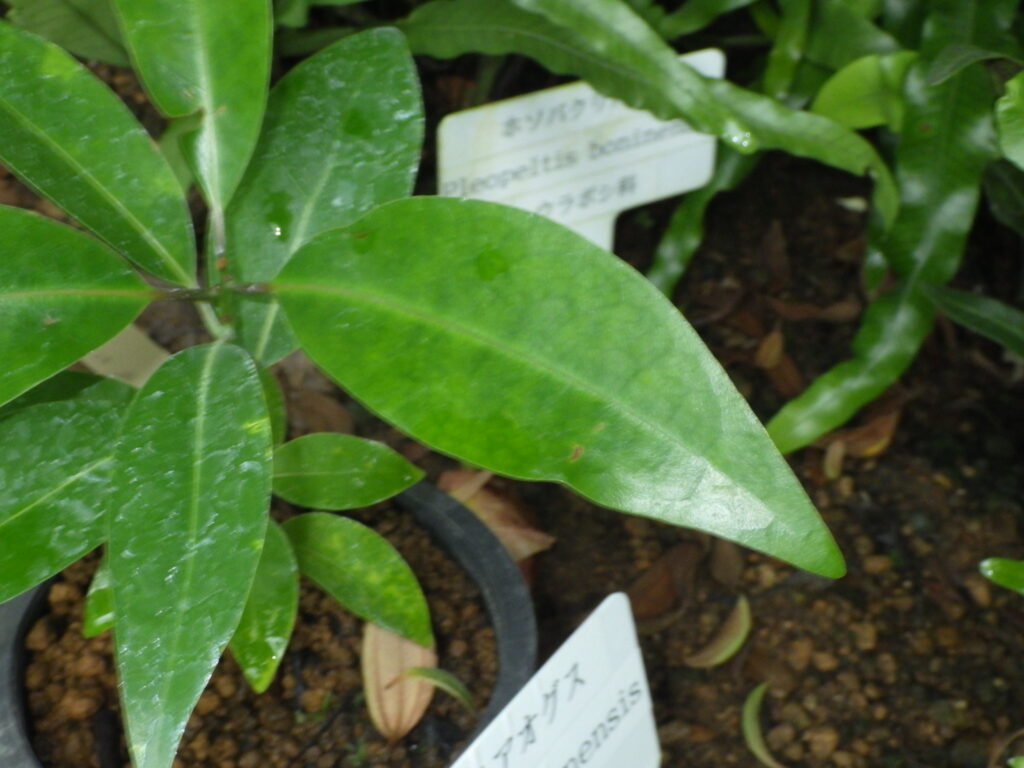
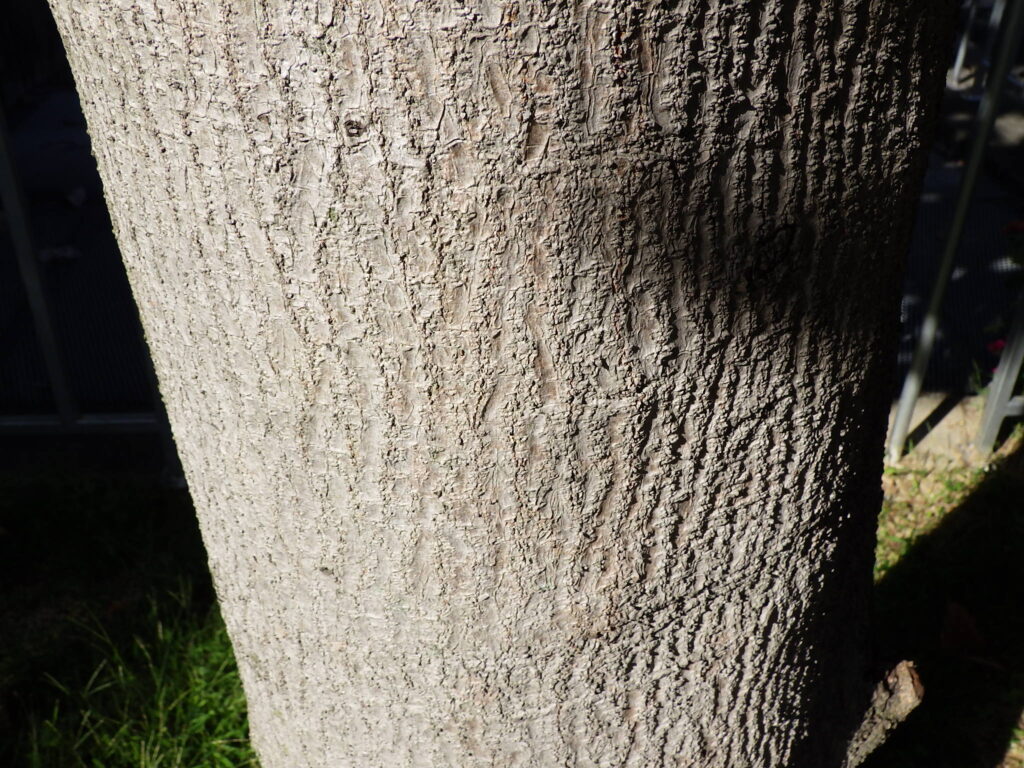
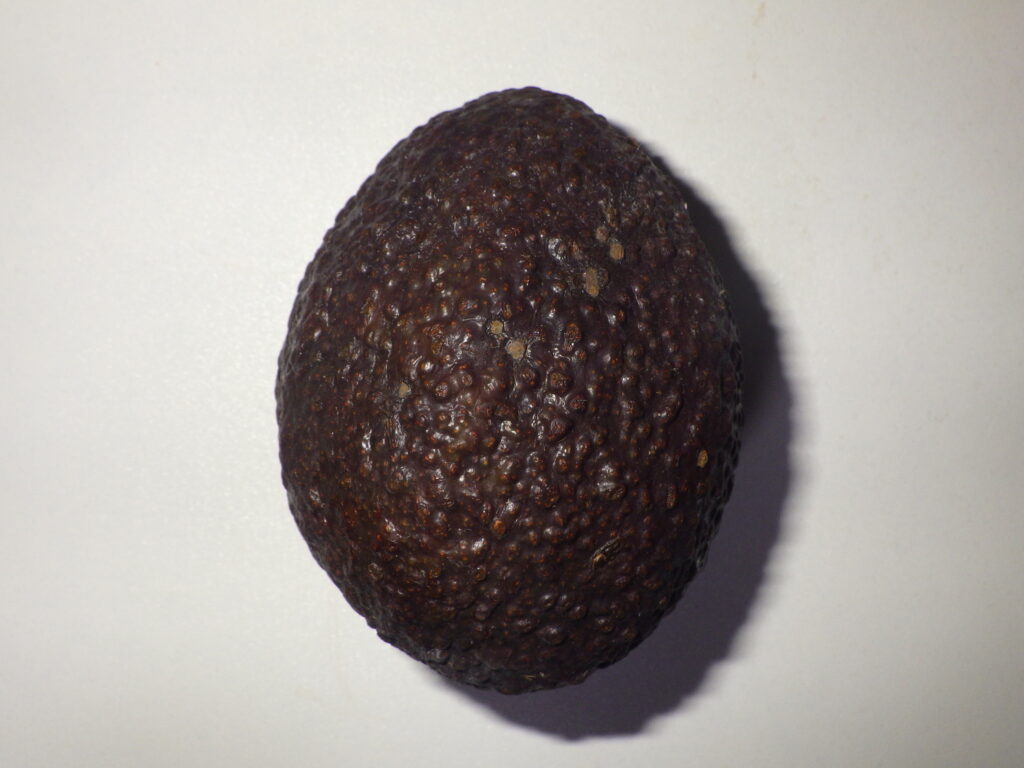
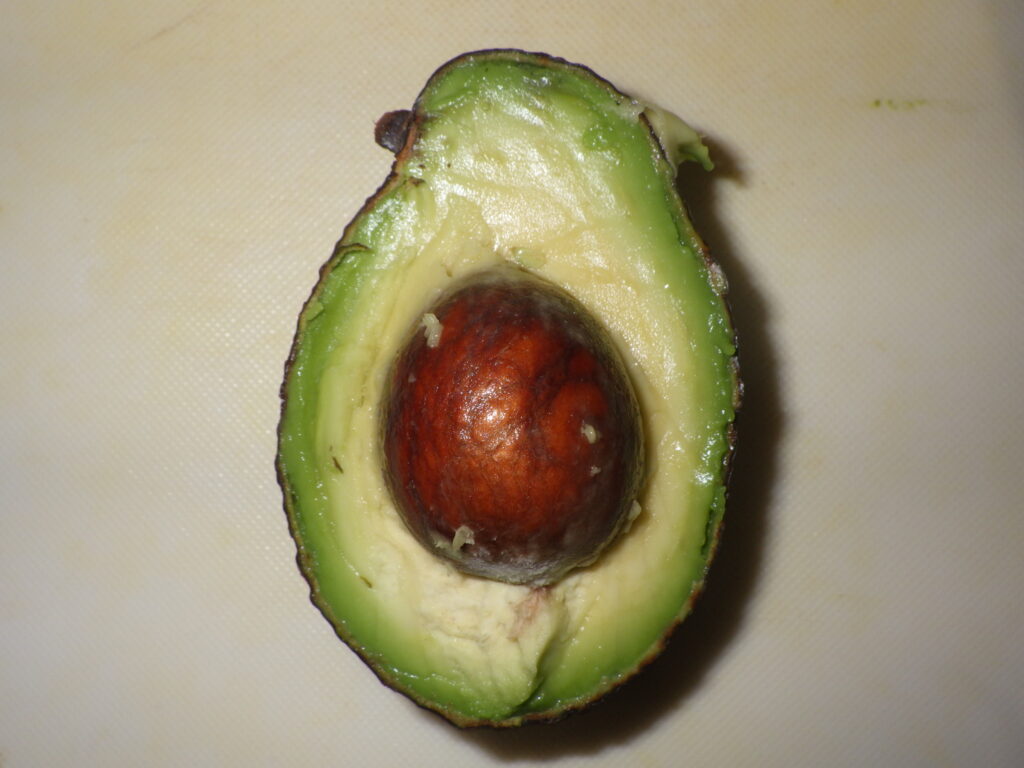
No. 0147 Persea americana
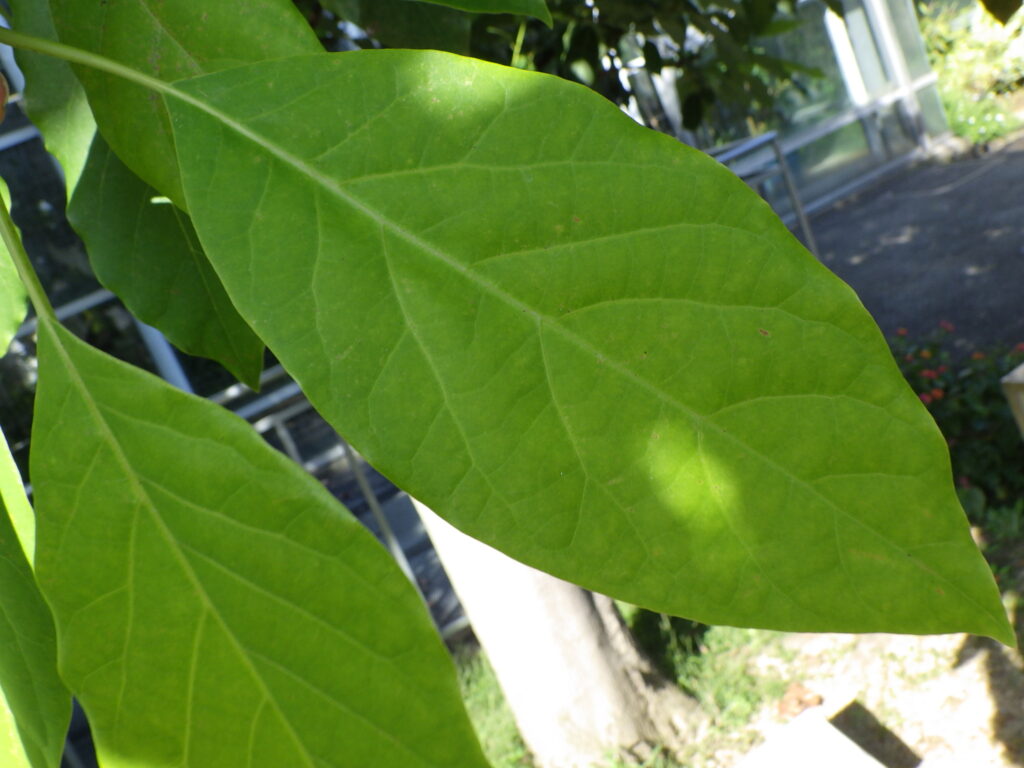
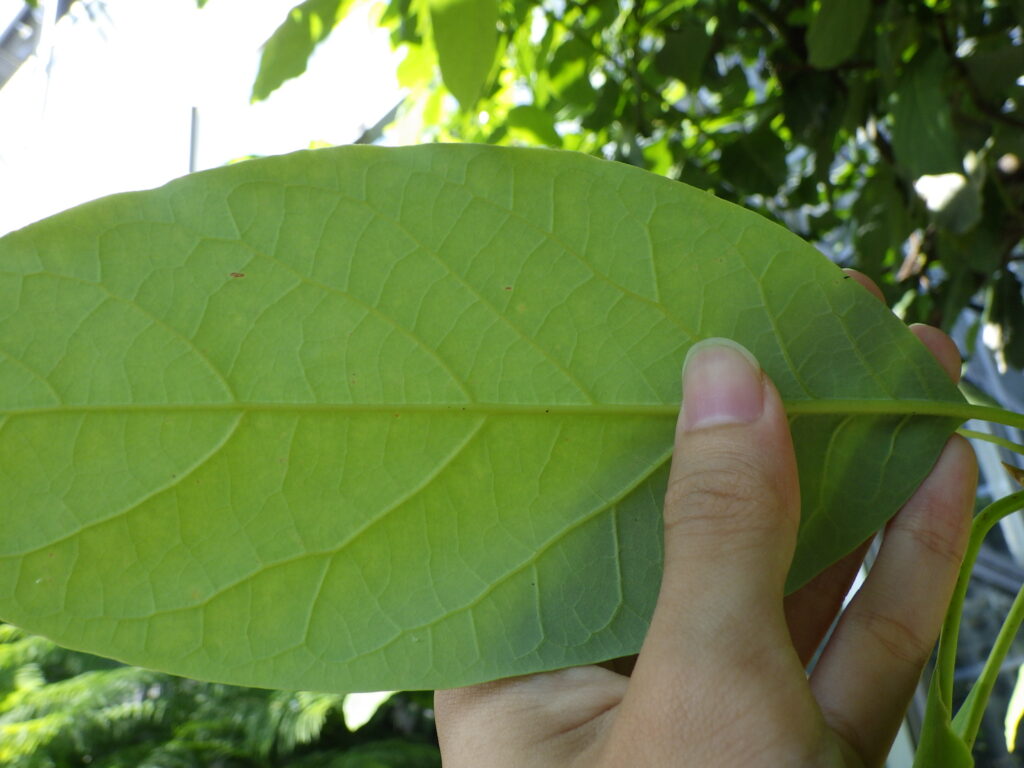
Also known as avocado, the leaves are 12-25 cm long and arranged alternately, reaching a height of 20 m. Deciduous inflorescences with bracts emerge from new shoots and leaf axils. The flowers are inconspicuous, greenish-yellow, and 5-10 mm wide. The exocarp is thin, a result of selective pressure by humans to produce larger, fleshier fruits. The fruit's inner skin covers the seed. The fruit is 7-20 cm long, weighs 100-1000 g, and has a large seed in the center measuring 5-6.4 cm long. It is native to Central America, from south-central Mexico to Guatemala, and grows wild in high-altitude areas. The fruit is rich in high-quality unsaturated fatty acids and is called "forest butter." Originally, its seeds were dispersed by being eaten by ground sloths (Folivora) and elephants (Gomphotheriidae) that inhabited the Pleistocene America, but after their extinction, it lost its dispersers. Currently, it is cultivated and propagated by humans instead (Janzen & Martin, 1982; Barlow, 2008). This is thought to be related to the fact that it contains persin and other substances that are toxic to pets and livestock. It was cultivated as early as 5000 BC.
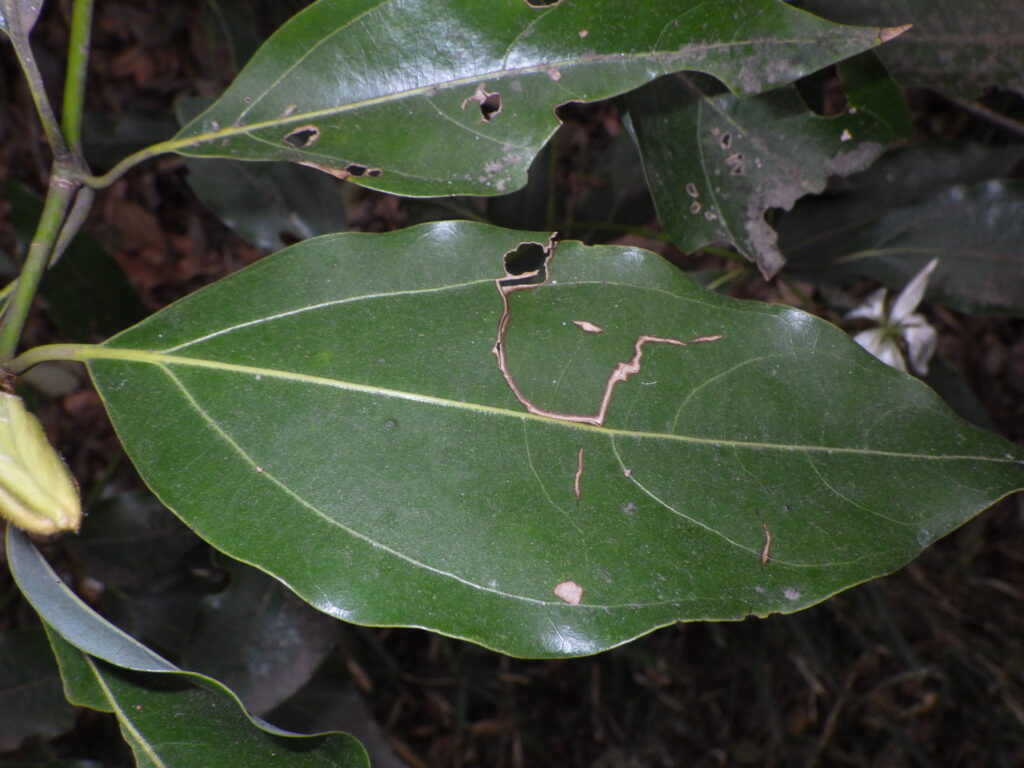
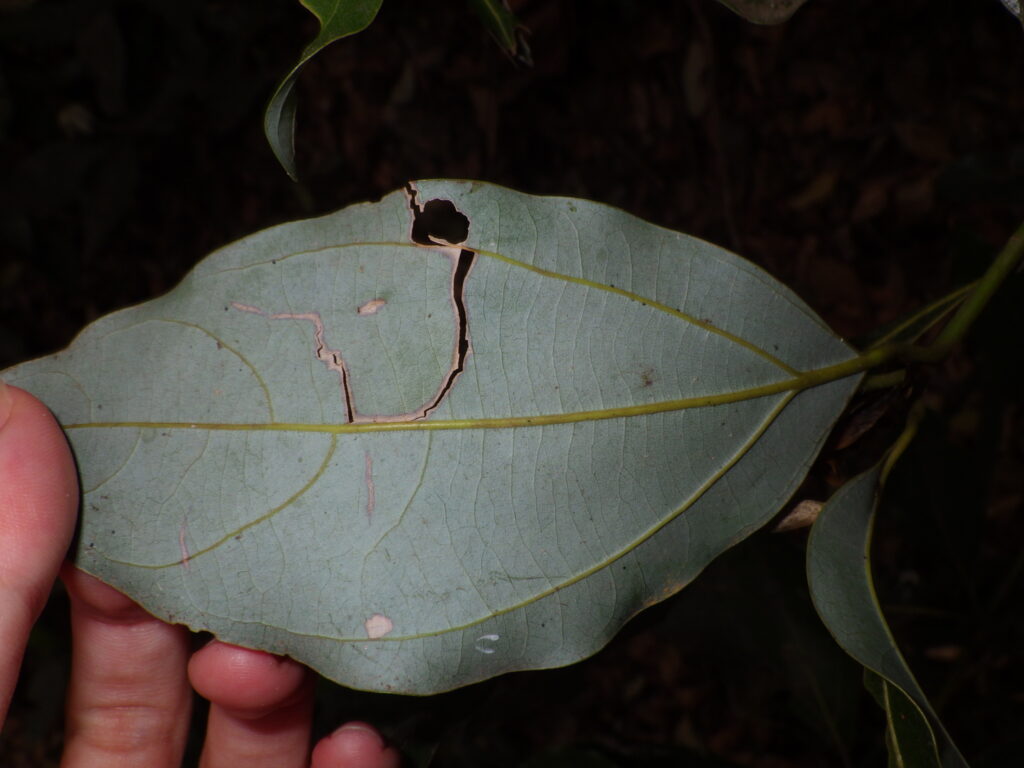
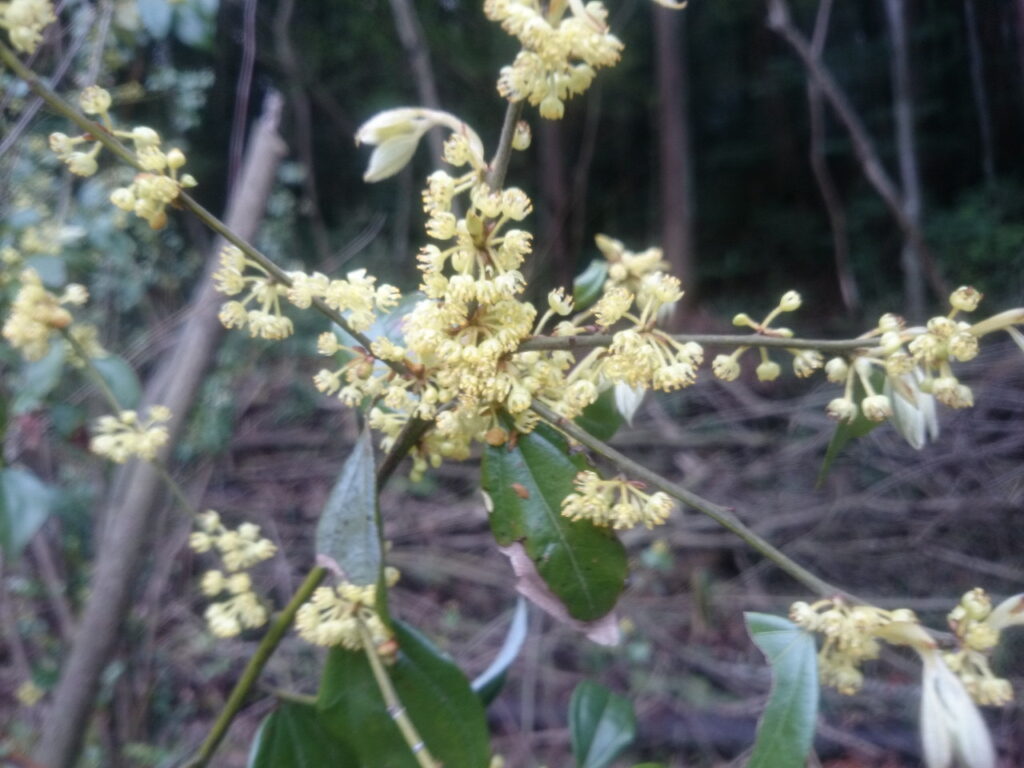
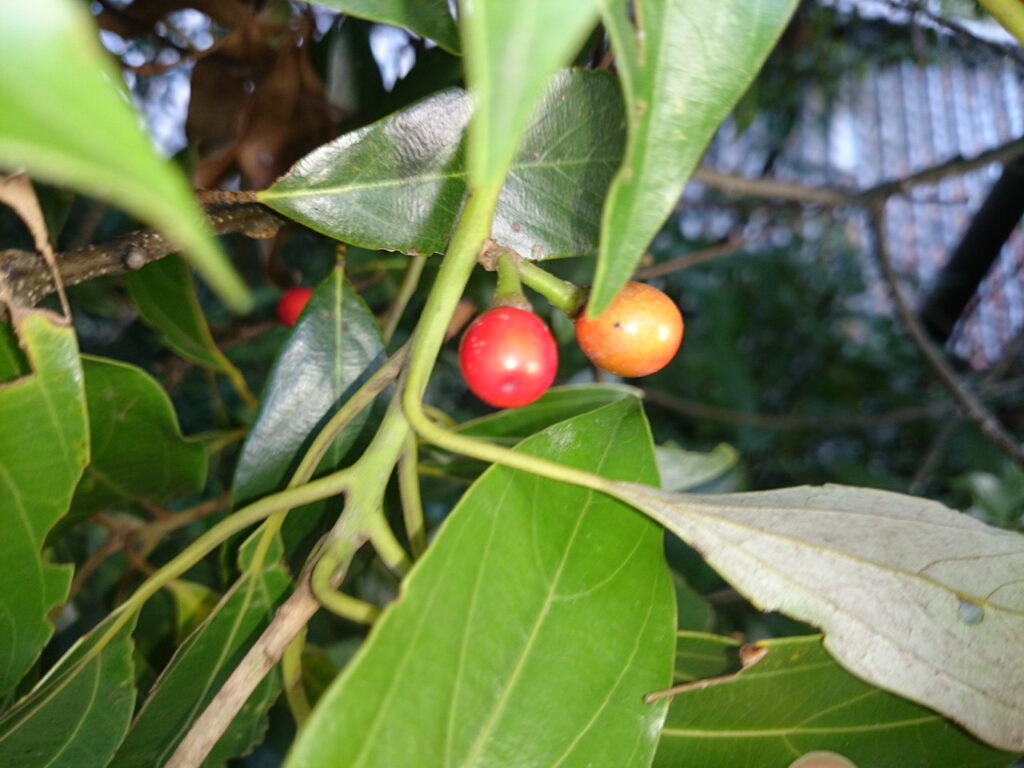
No.0148 Neolitsea sericea
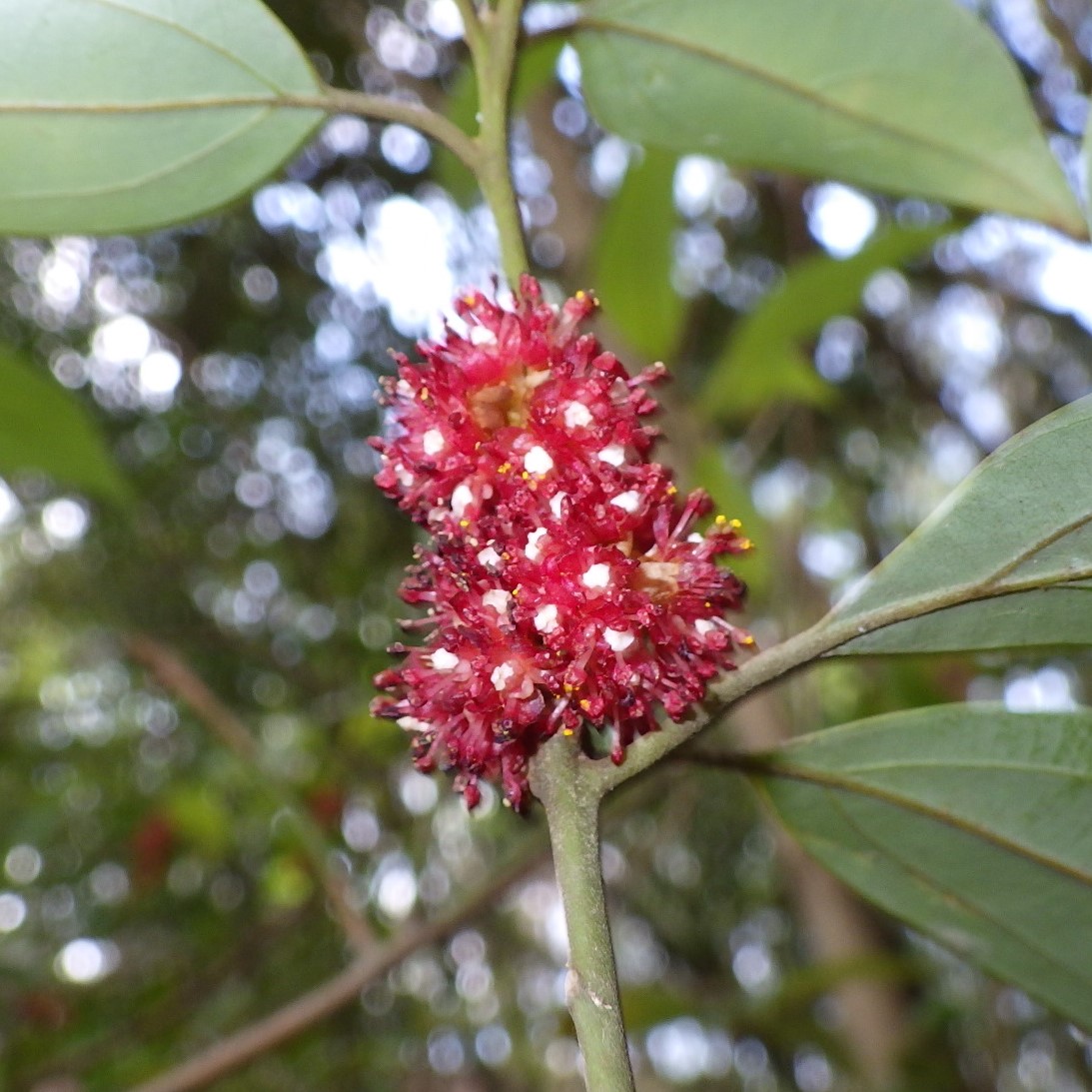
This is an evergreen shrub. The winter buds are enclosed in tile-like scales. The leaves are alternate, sometimes pseudo-whorled on the upper branches, with petioles 2-3 cm long, three-veined, and conspicuously white on the underside. Young leaves have golden, silky hairs on both sides. It flowers in October. The umbels are borne in the leaf axils and in the leaf scars midway along the branches. The fruit is a berry that ripens to red in the autumn of the following year, and in female plants, flowers and fruits can be seen simultaneously. It is distributed in Honshu, Shikoku, Kyushu, the Ryukyu Islands, and the southern part of the Korean Peninsula. It can be found in the Castanopsis and Quercus zones.
No.0148.a Neolitsea boninensis
An evergreen medium-sized tree. New leaves are covered with yellowish-brown soft hairs, and when fully unfolded they reach 4-9 cm in length and 2-4 cm in width. The flowers and fruits are generally small. It is endemic to the Ogasawara Islands.
No. 0149 Japanese evergreen oak (Neolitsea aciculata)
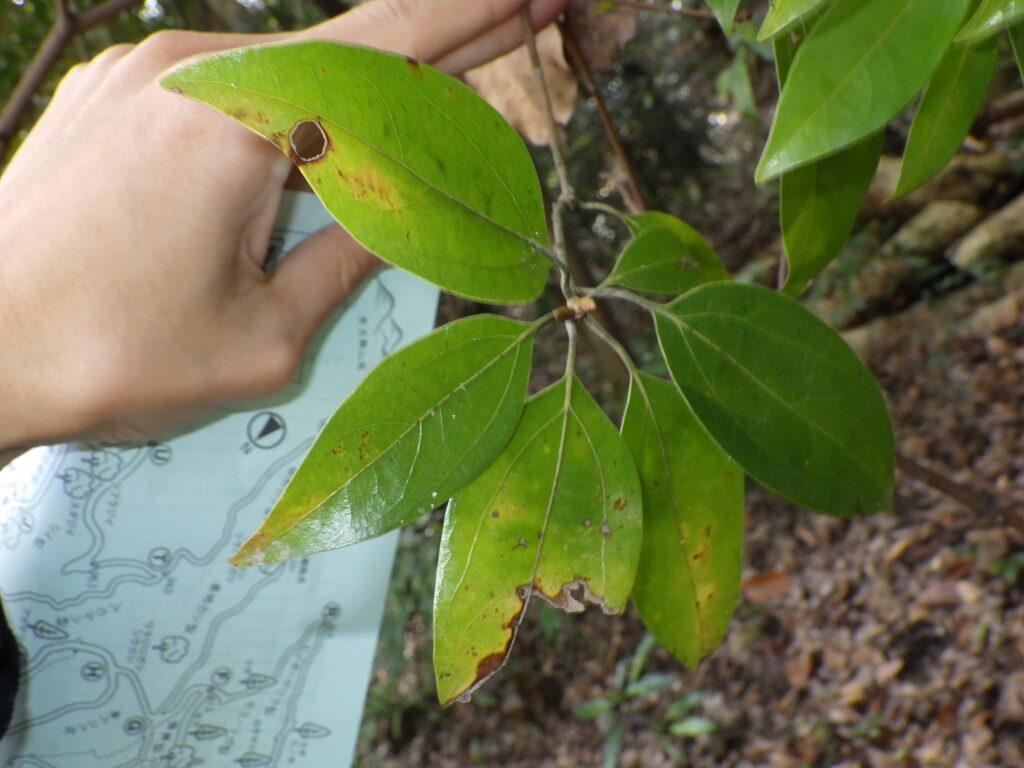
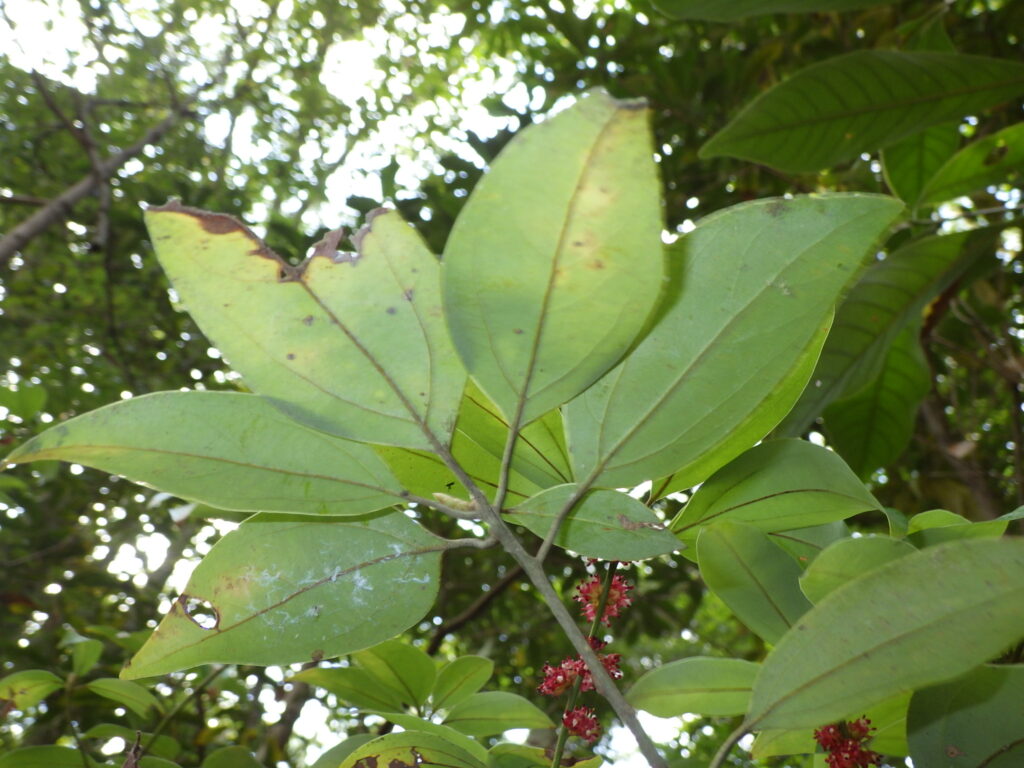
This is an evergreen tree. The leaves are alternate, becoming whorled in the upper branches, with petioles 2-3 cm long, having three veins, and the underside is somewhat grayish-white. Both sides of young leaves are covered with whitish to golden silky hairs. The flowering period is from March to April. The umbels are borne in the leaf axils and in the leaf scars in the middle of the branches. The fruit is a berry that ripens to black in the same year. It is distributed in Honshu (west of the southern Kanto region), Shikoku, Kyushu, the Ryukyu Islands, and the Korean Peninsula (southern part).
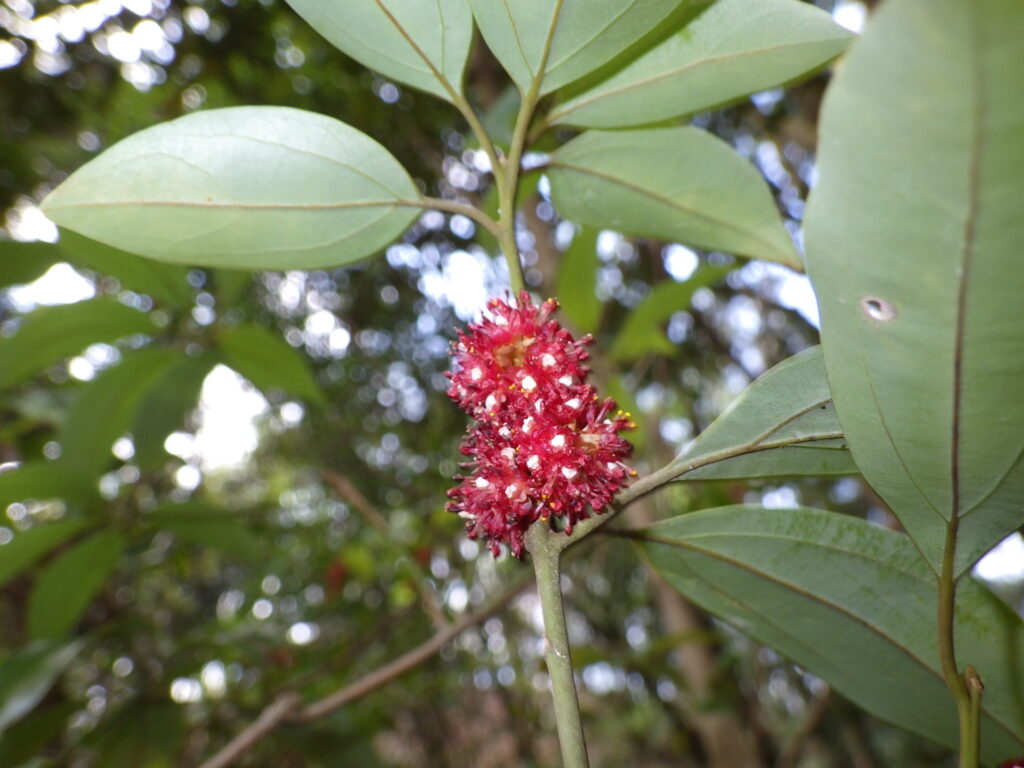
No.0150 Litsea japonica
This is an evergreen shrub. The leaves are somewhat clustered at the tips of the branches, with a glossy upper surface and noticeable yellowish-brown downy hairs on the underside. It is distributed in Honshu (Shimane and Yamaguchi prefectures), Shikoku, Kyushu, Okinawa, and the southern part of the Korean Peninsula. It is often planted in coastal parks. As it is a tree that prefers warm climates, it does not grow well in inland areas.
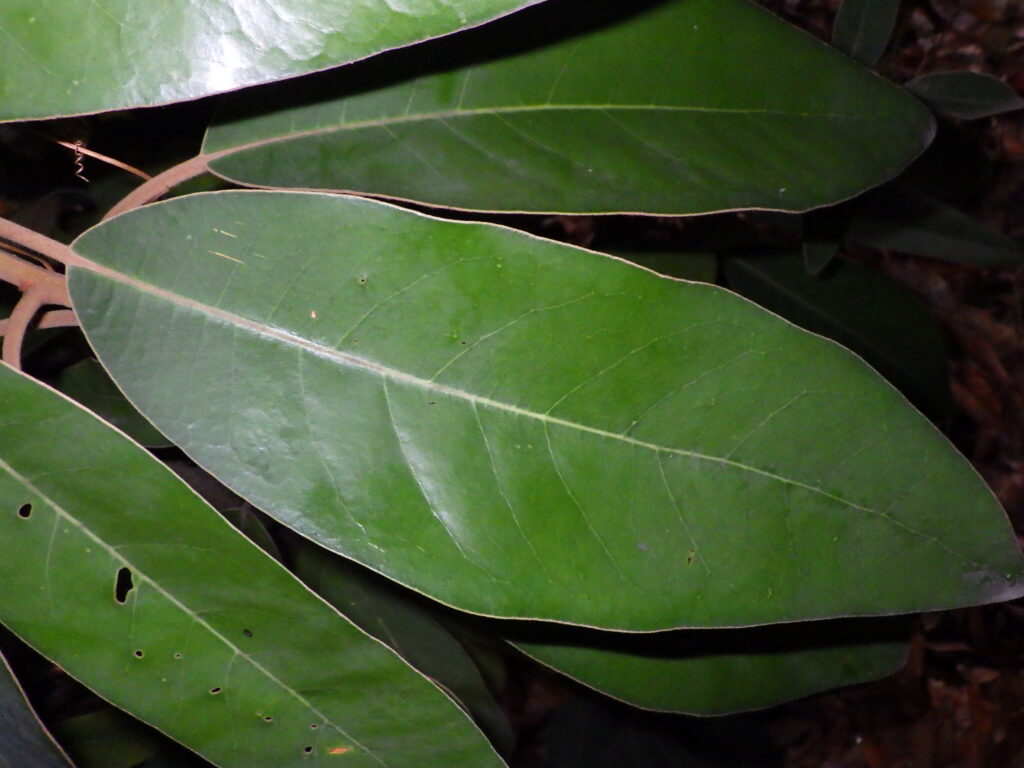
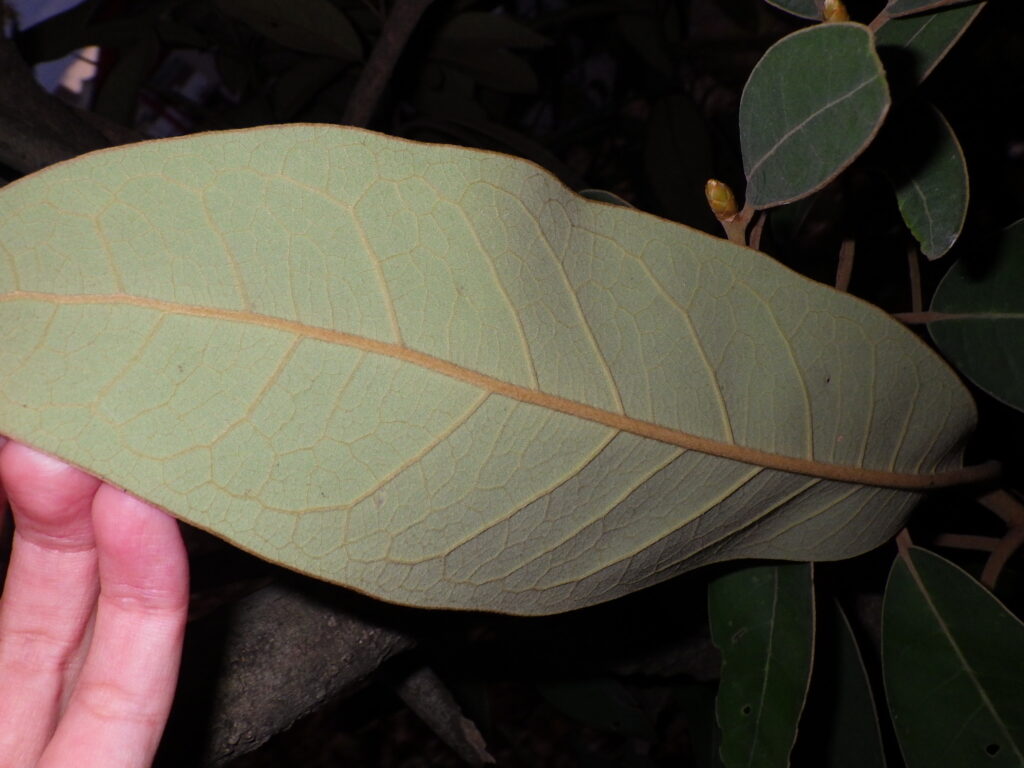
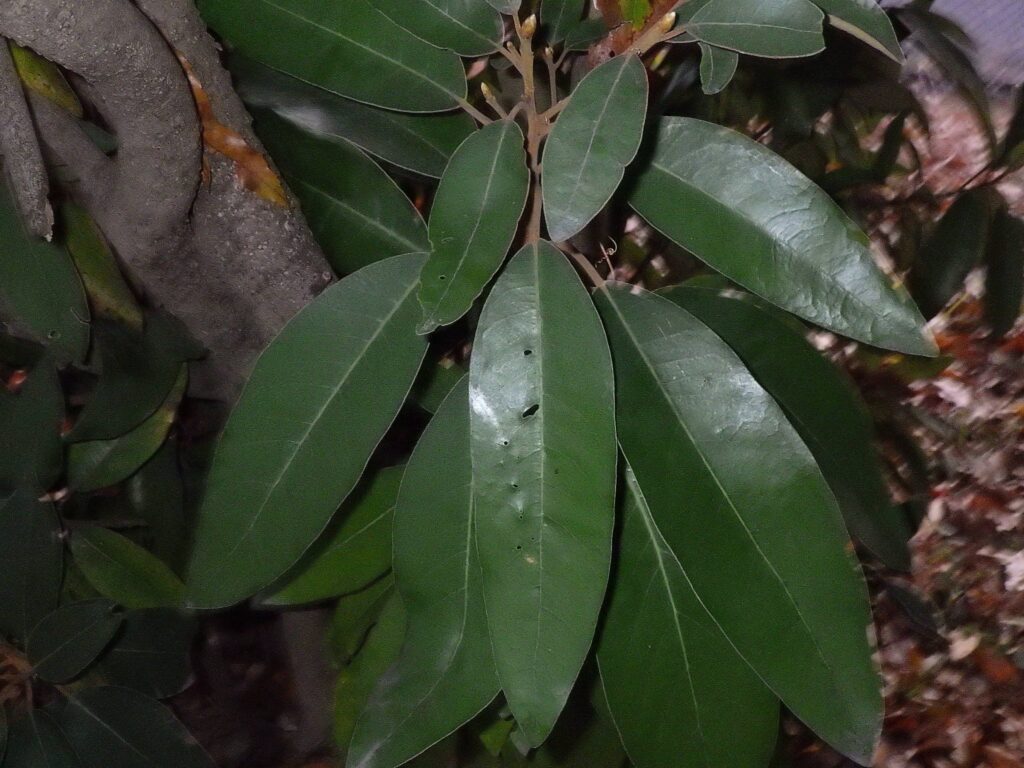
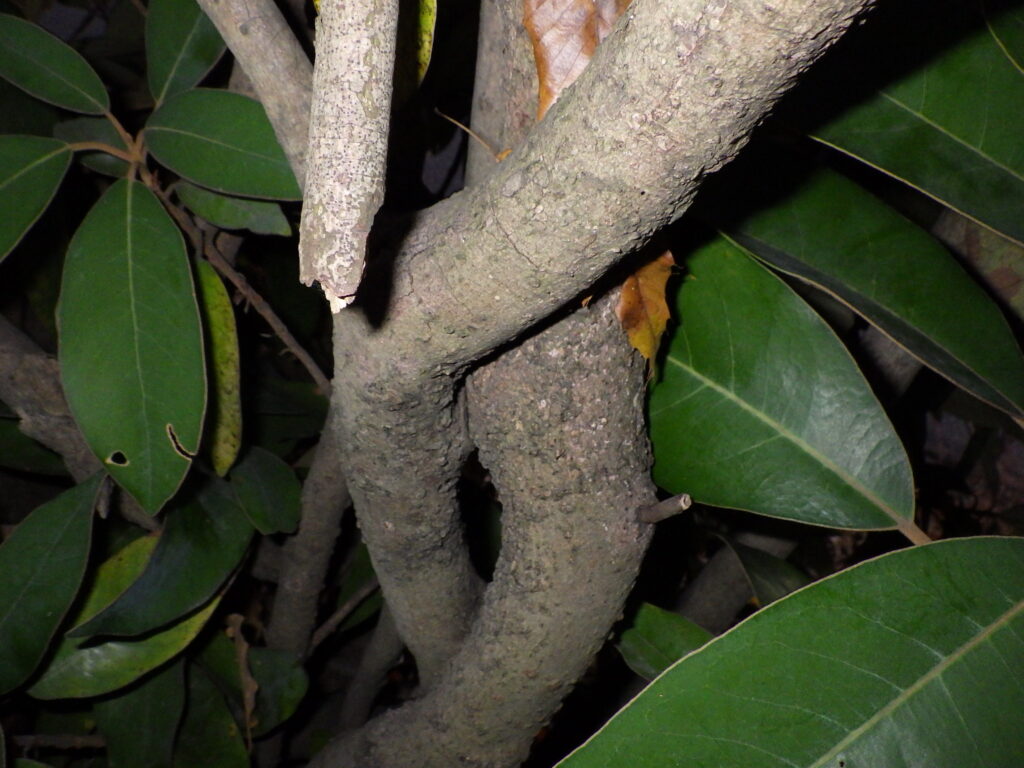
No. 0152 Litsea coreana
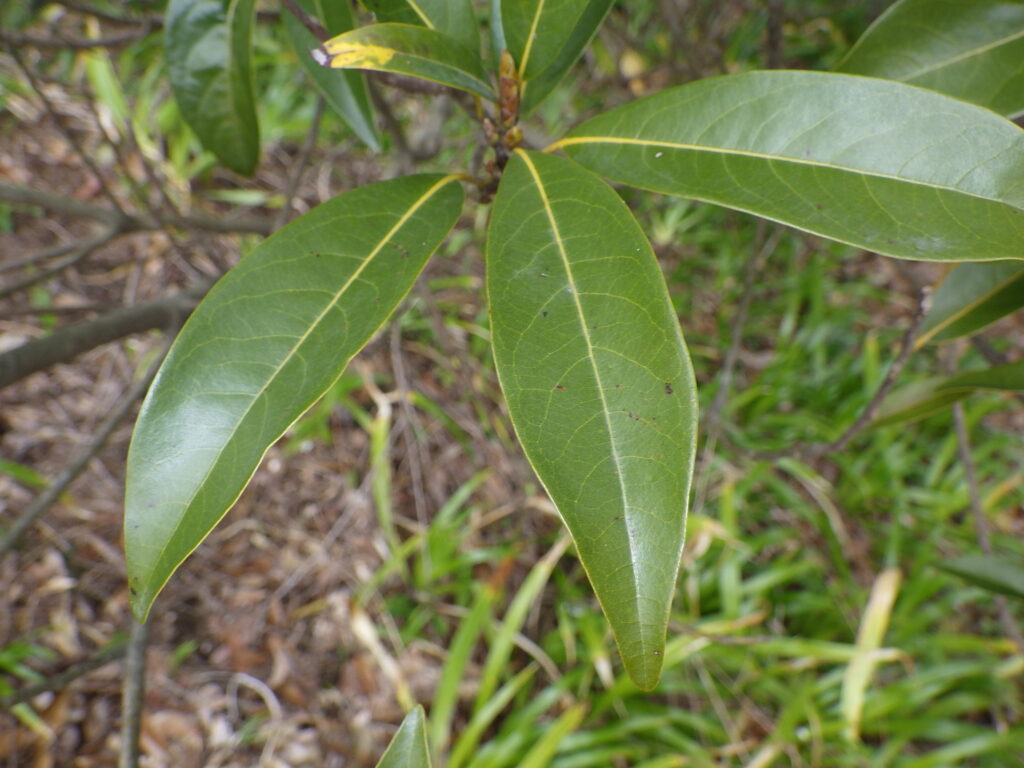
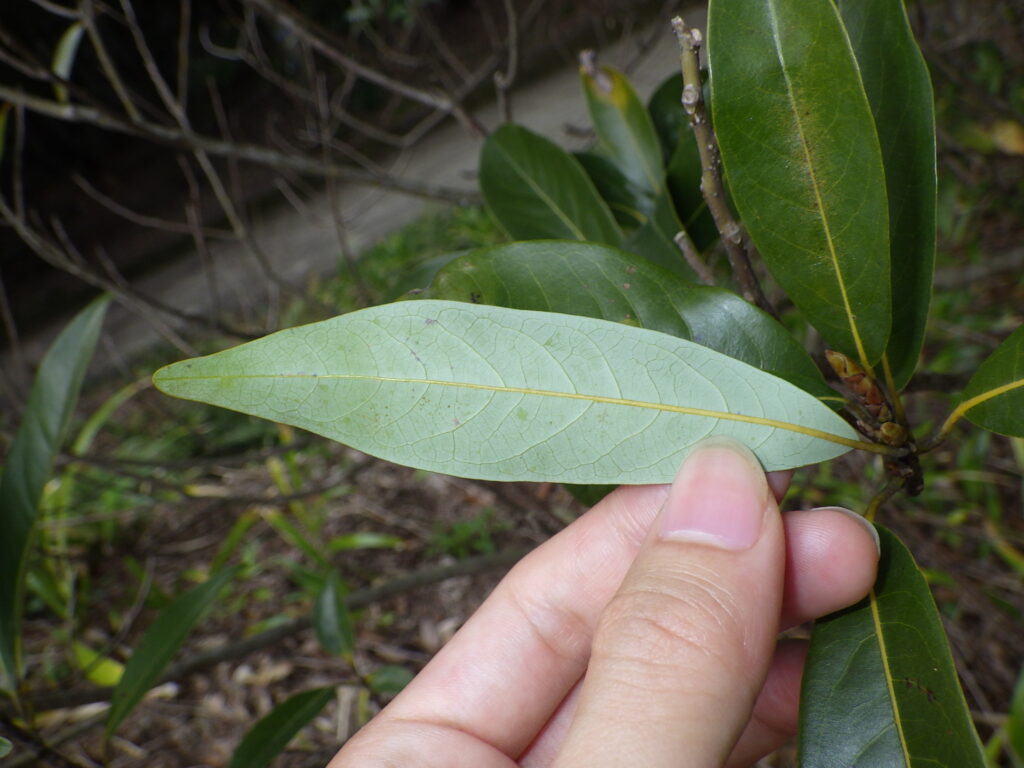
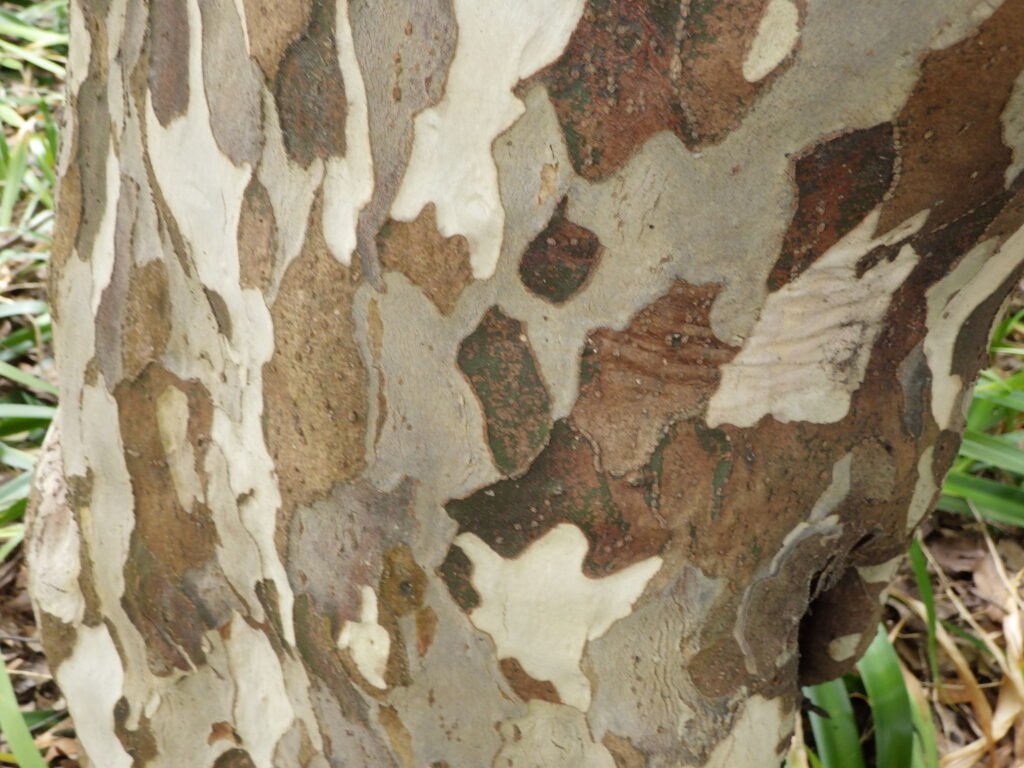
This is an evergreen tree. The bark of the trunk peels off in a dappled pattern. The branches are slender, and the previous year's branches are brown. The leaves are alternate and clustered in a whorl at the tips of the branches. It flowers from August to September. The inflorescence is sessile, with several flowers arranged in an umbel-like pattern from the leaf axils and below the leaves to about the middle of the twigs, and the pedicels are short. The fruit is obovate-spherical and ripens red in the autumn of the following year. The tip of the fruit stalk is swollen, and the six-lobed perianth segments persist. It is distributed in Honshu (Kanto region and west of Fukui Prefecture), Shikoku, Kyushu, Okinawa; Jeju Island, and the Korean Peninsula (southern part). It is common in coastal areas.
No. 0153 Actinodaphne acuminata
Also known as Aokagonoki. The twigs are thick, green, and hairless. The leaves are alternate, clustered in a whorl shape at the top of the branches, and droop slightly even when mature. It flowers in August. The inflorescences grow in the leaf axils. The fruit is an ellipsoid about 15 mm long, ripening to a dark purple color in June of the following year. It is distributed in Honshu (west of Chiba Prefecture), Shikoku, Kyushu, and the Ryukyu Islands.
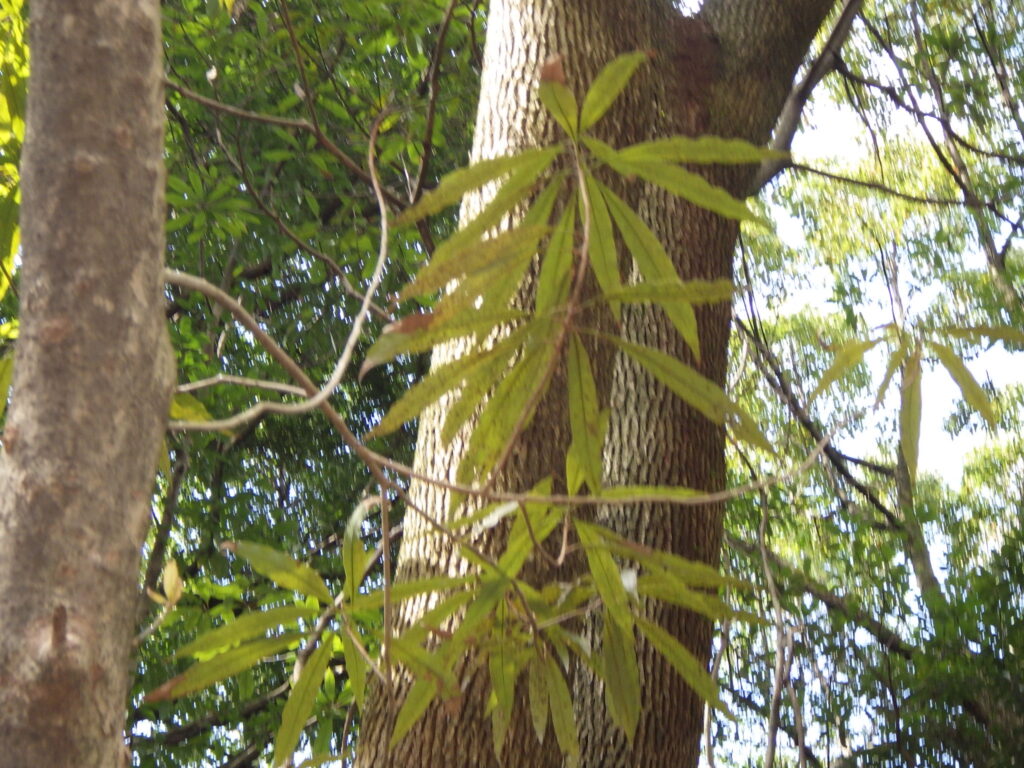
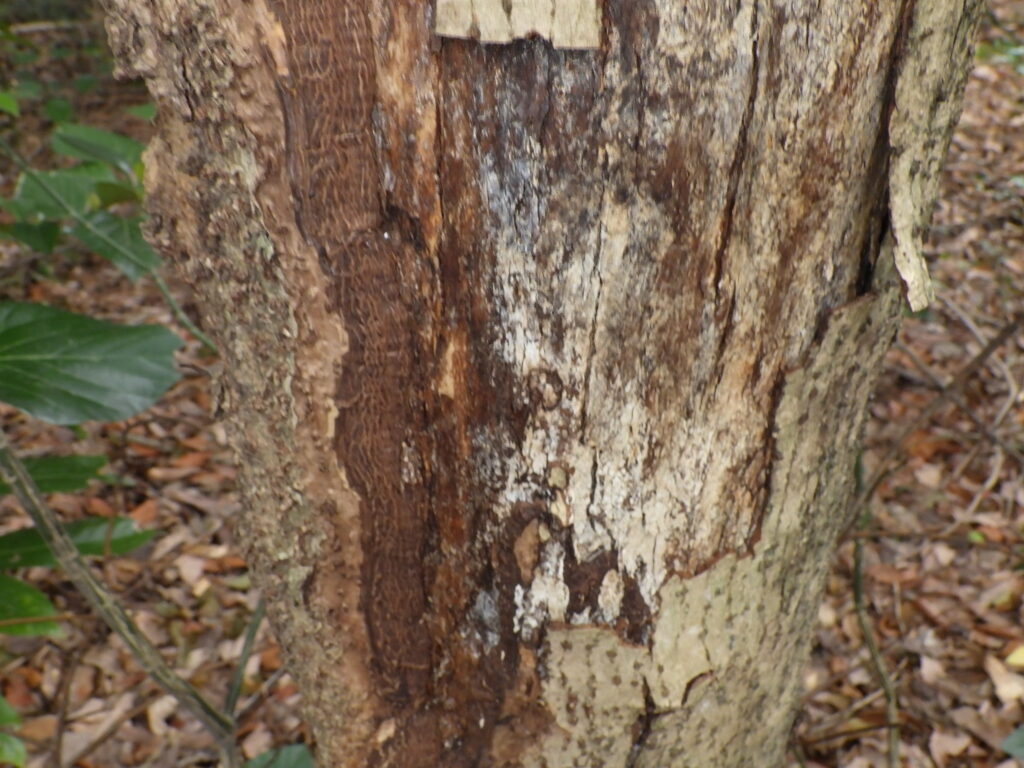
No. 0154 Lindera umbellata
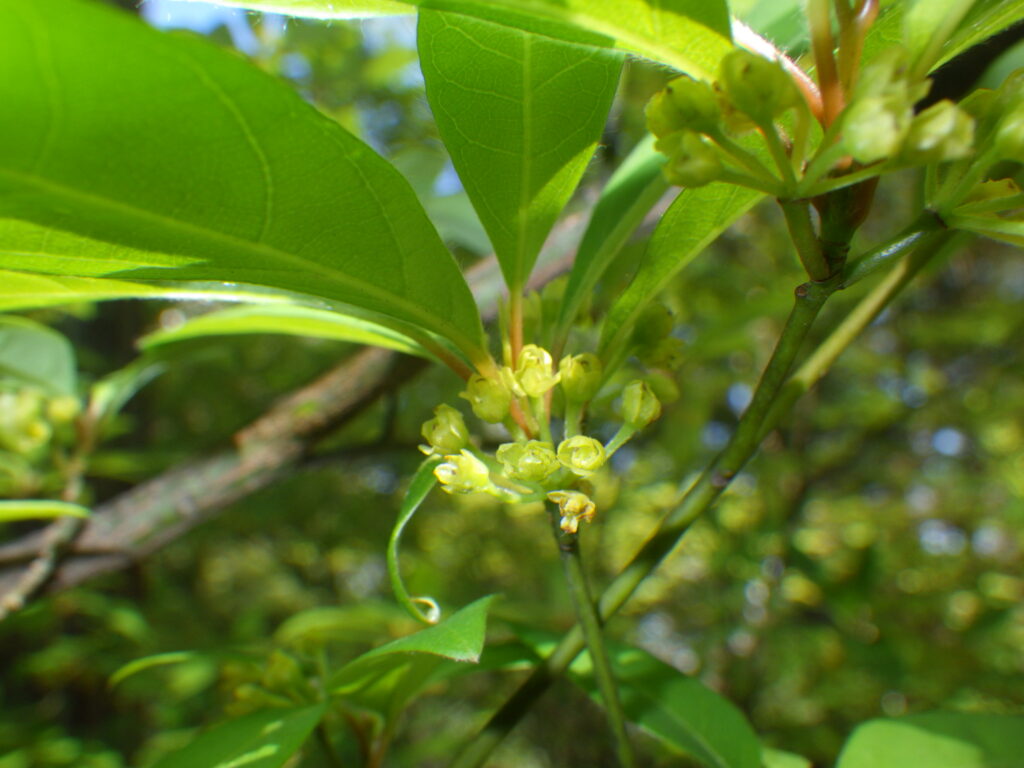
This is a deciduous shrub. Its branches and leaves are fragrant. The leaves are obovate-oblong, with a pointed or obtuse tip and a wedge-shaped base. The upper surface of the leaves is hairless, while the underside of young leaves is covered with hairs but becomes hairless as the leaves mature. It flowers in April. The inflorescence is solitary, growing in the axils of the bud scales at the base of the terminal bud, bearing several flowers in an umbel. The fruit is a spherical berry that ripens to black. It is distributed in Honshu (Pacific coast from Tohoku to Tokai regions, Kinki and Chugoku regions), Shikoku (partially), Kyushu (northern part), and China. It is common in forests in mountainous and hilly areas.
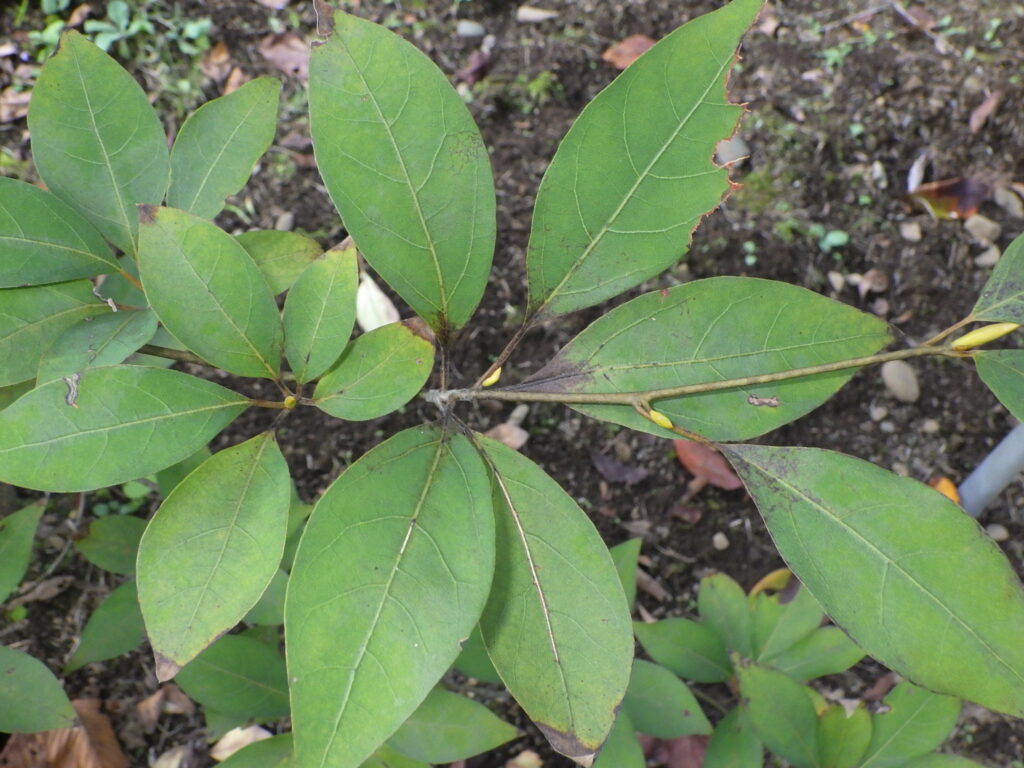
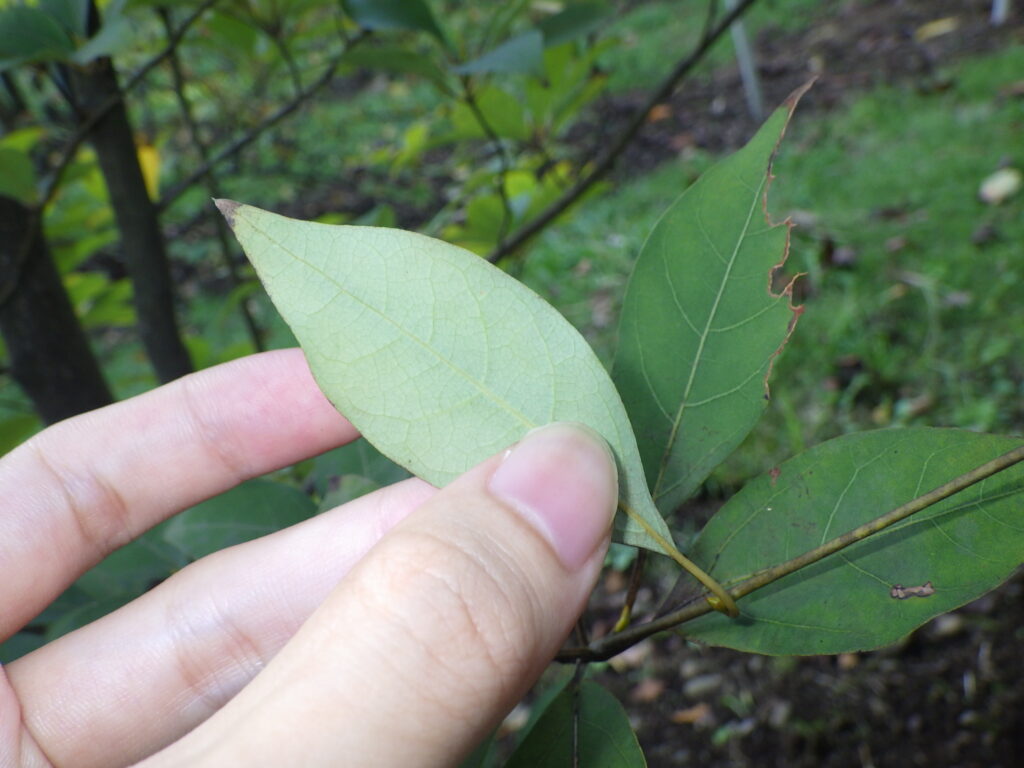
No.0155 Lindera umbellata var. membranacea
This is a variety of Lindera obtusiloba with large leaves measuring 7-14 cm in length. It is distributed along the Sea of Japan coast from Hokkaido and Tohoku to Kinki.
No. 0158 Lindera obtusiloba
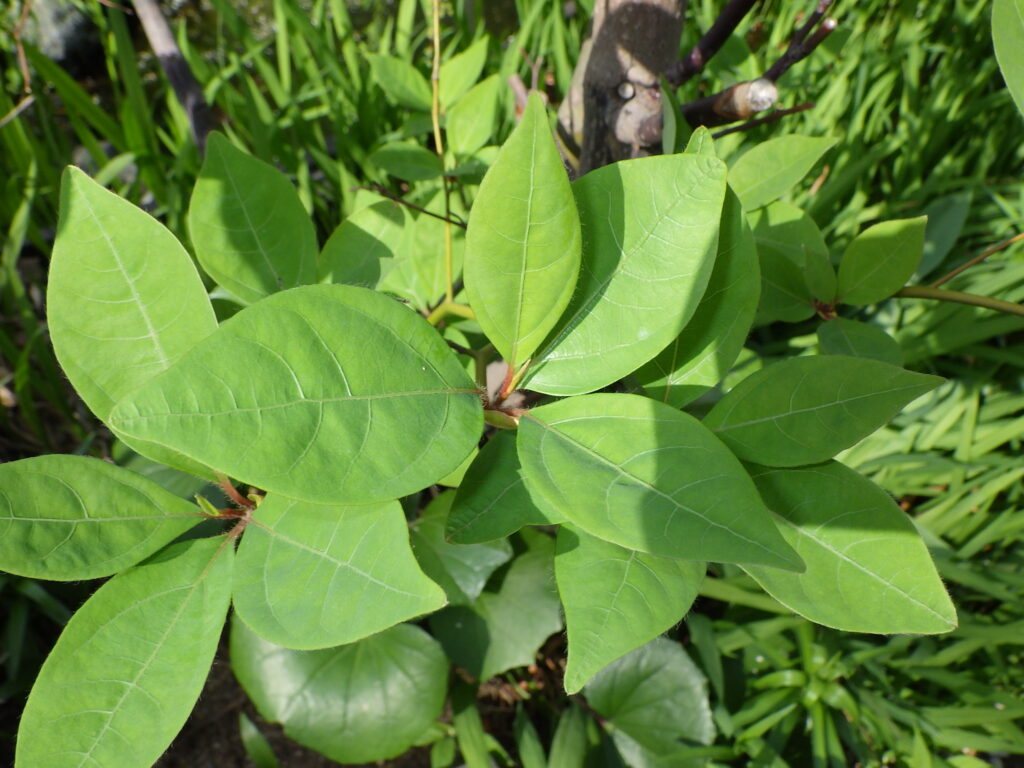
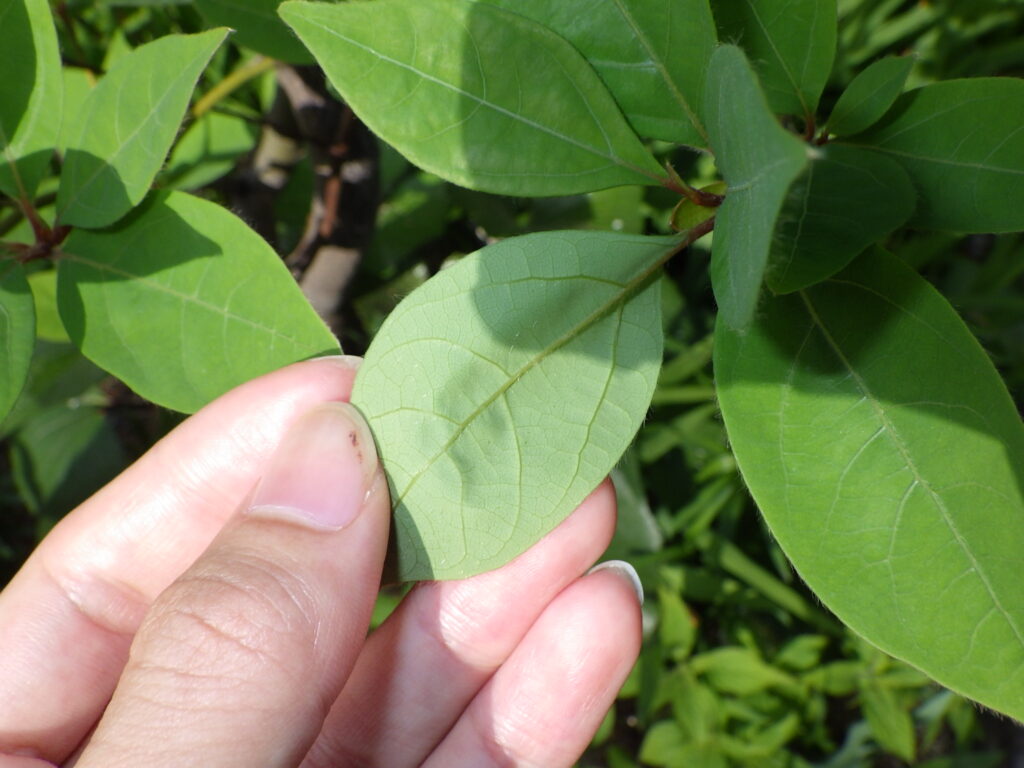
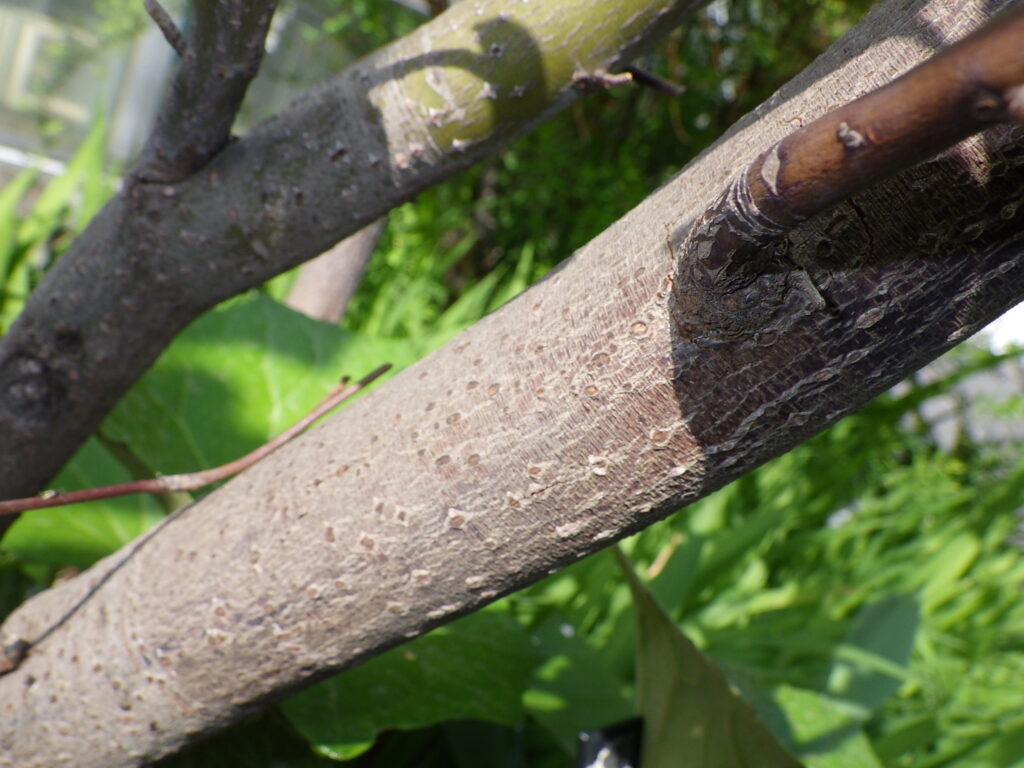
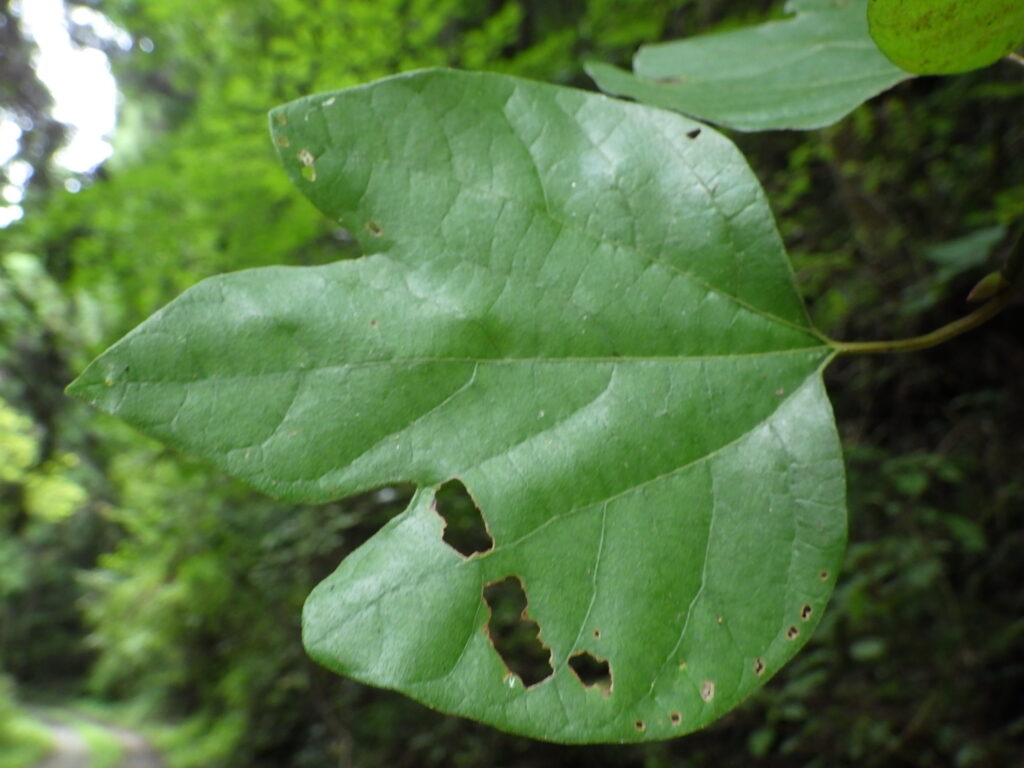
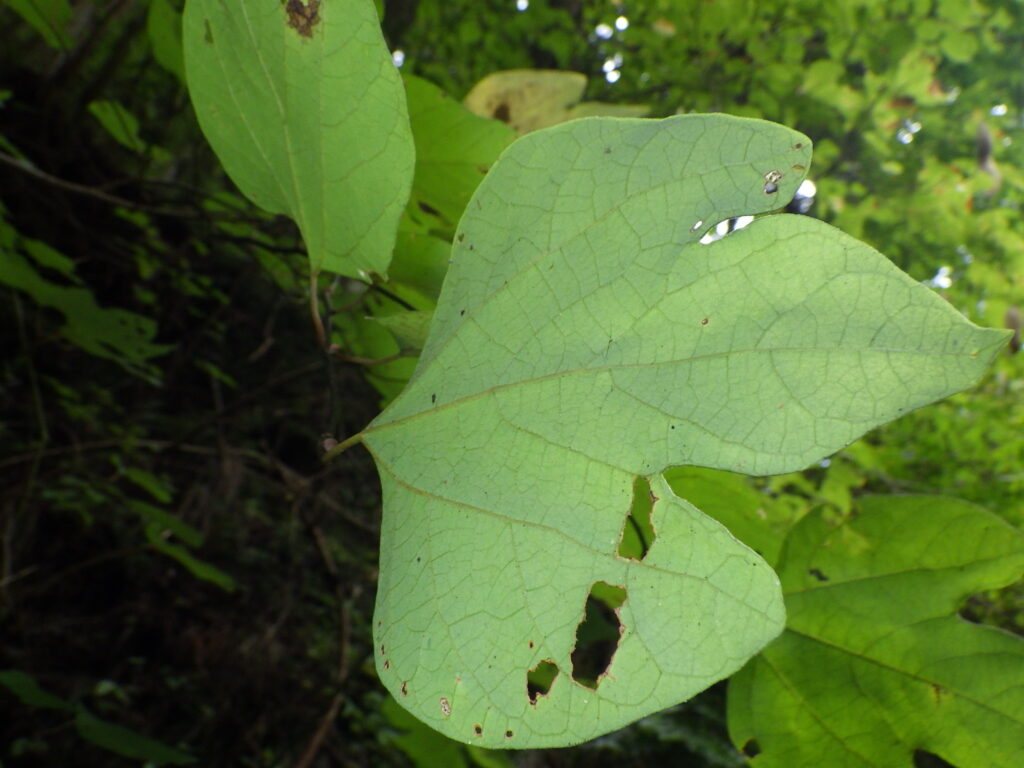
Deciduous shrub. Thick branches. Leaves are broadly ovate to ovate-circular, usually 3-lobed, with a truncate or shallowly cordate base. Petioles are 5-30 mm long and reddish. Flowering period is March to April. Flowers are small, yellow, and borne in umbels, blooming before the leaves. Fruits ripen to red to dark purple. Distributed in Honshu (Kanto region and west of Niigata Prefecture), Shikoku, Kyushu; Korean Peninsula; and northeastern China. Found in mountain forests (chestnut to beech zones).
No. 0160 Lindera aggregata
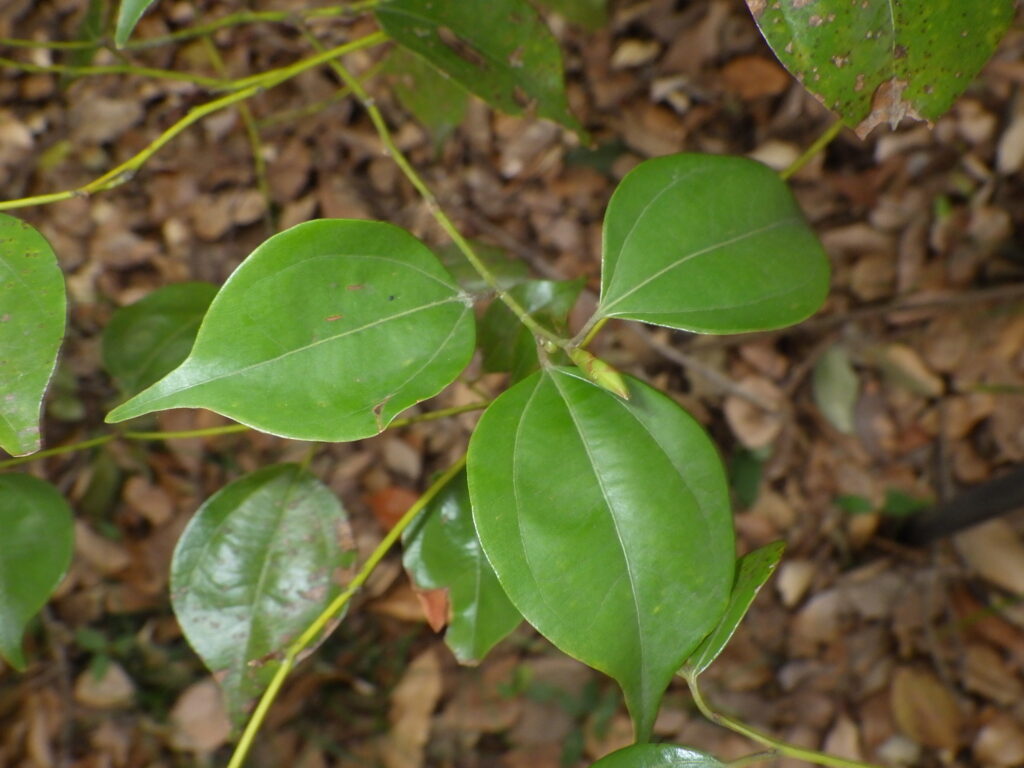
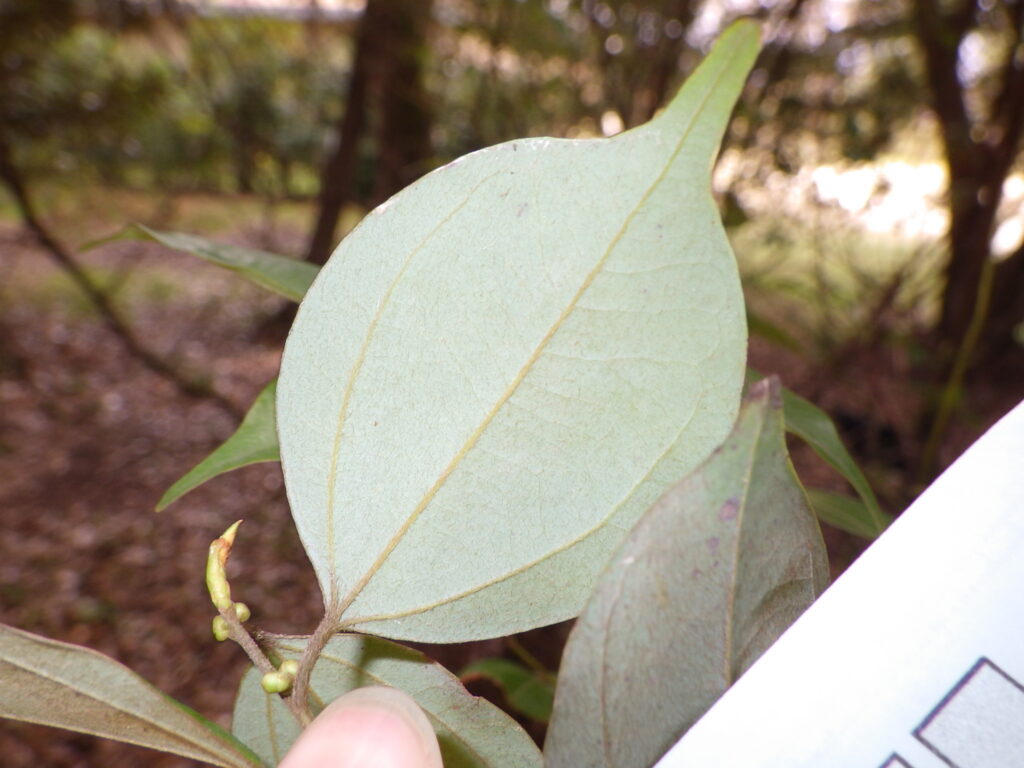
An evergreen shrub. Leaves are 4-8 cm long, with the widest point being in the center. Petioles are 0.4-1 cm long. The leaves are nearly circular to rounded at the top, with prominent three-veined ridges branching at the base, similar to Neolitsea sericea, and a distinctive pinch-like protrusion at the tip. It is easy to identify due to its small leaves. The tree grows to a height of 2-5 m. Small yellow flowers bloom in clusters in the leaf axils in spring. The fruit is nearly spherical, 7-8 mm in diameter, and ripens to black in autumn. Native to China. It was introduced in the first half of the 18th century for medicinal purposes and is cultivated as an ornamental tree. It rarely naturalizes in warm regions of western Japan.
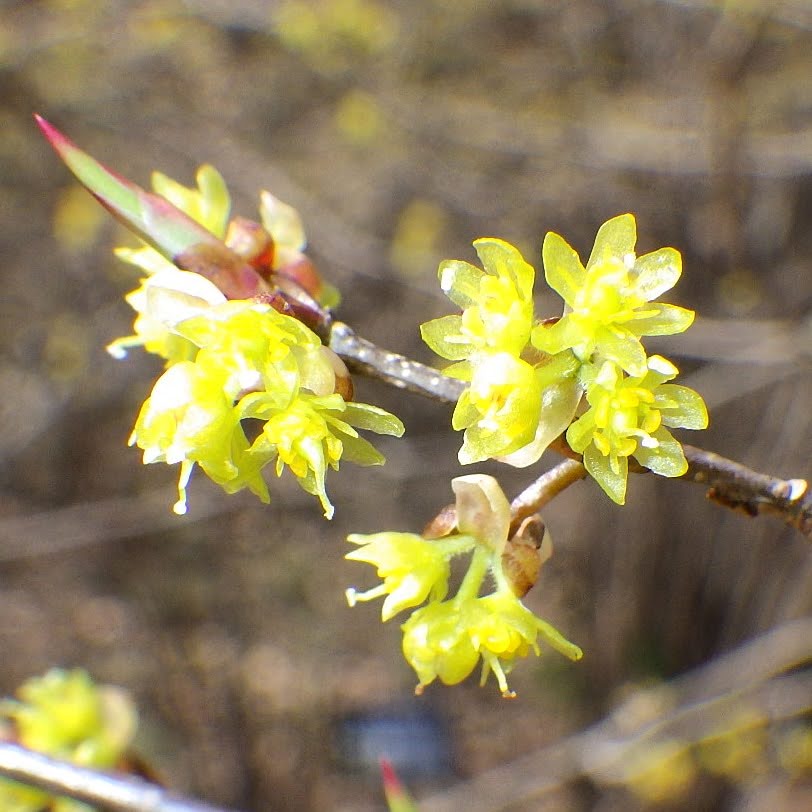
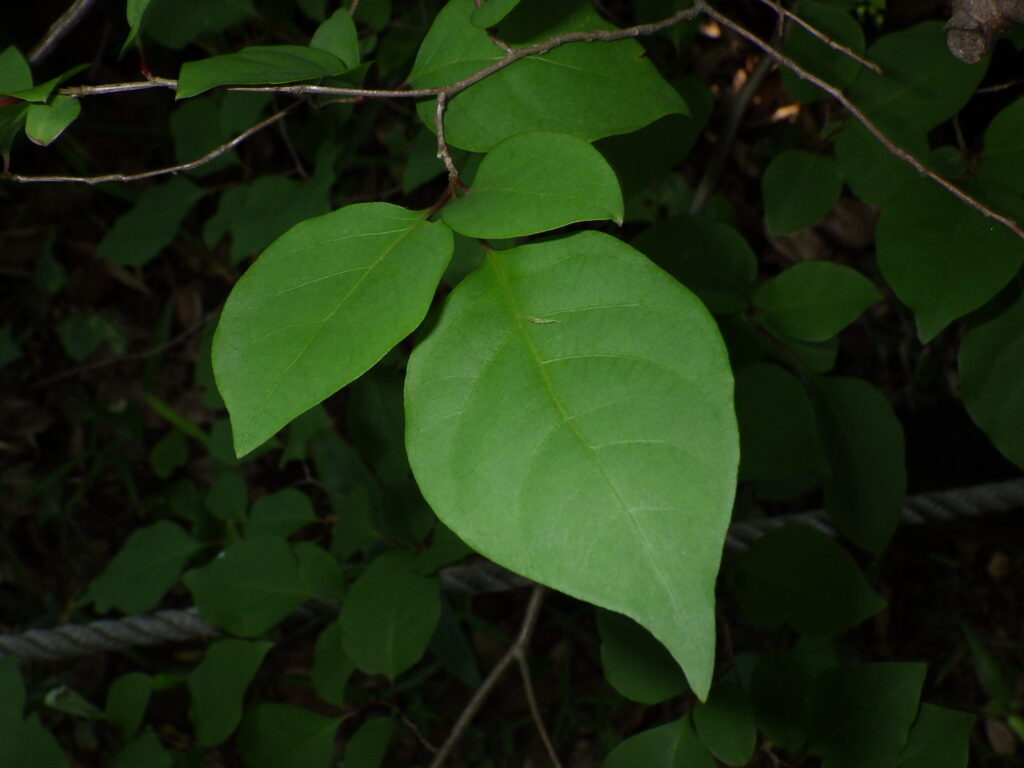
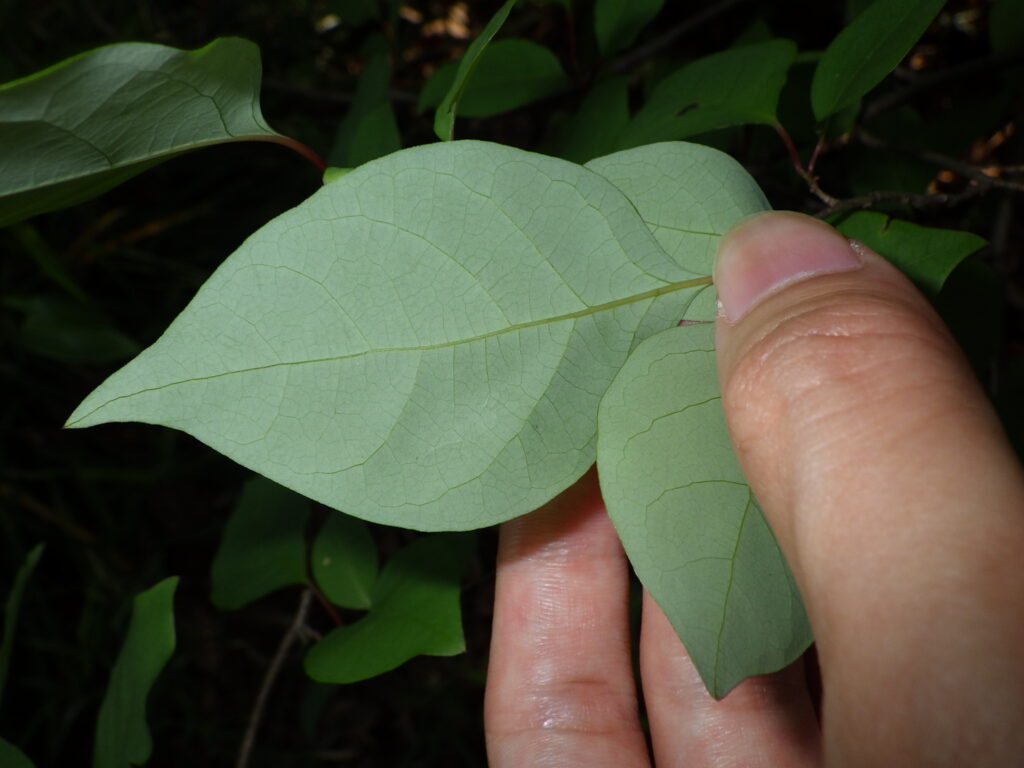
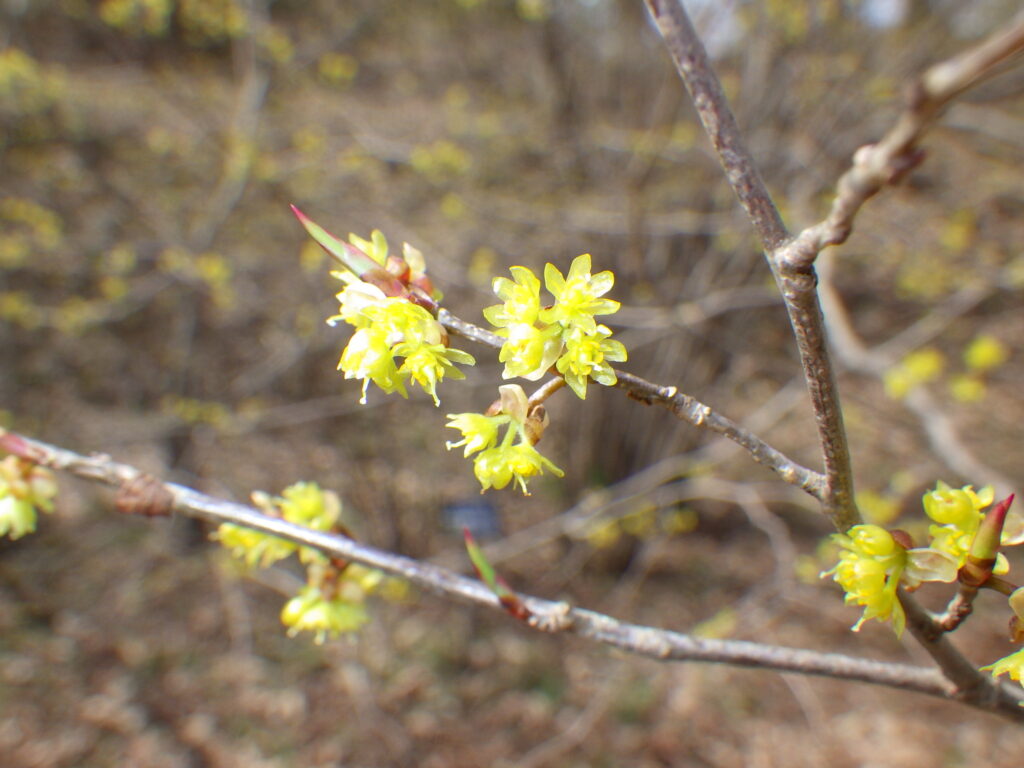
No. 0162 Lindera praecox
This is a deciduous shrub with slender branches. The leaves are narrowly ovate or elliptical with an acute apex, mostly glabrous but sometimes with soft hairs along the veins on the underside. It flowers from March to April. The flowers are small and yellow, blooming before the leaves appear. The fruit is spherical, about 15 mm in diameter, and ripens to a yellowish-brown color. After the pericarp dries and splits into several segments, releasing spherical seeds. It is distributed in Honshu, Shikoku, and Kyushu. It is commonly found in valley forests in mountainous and hilly areas.
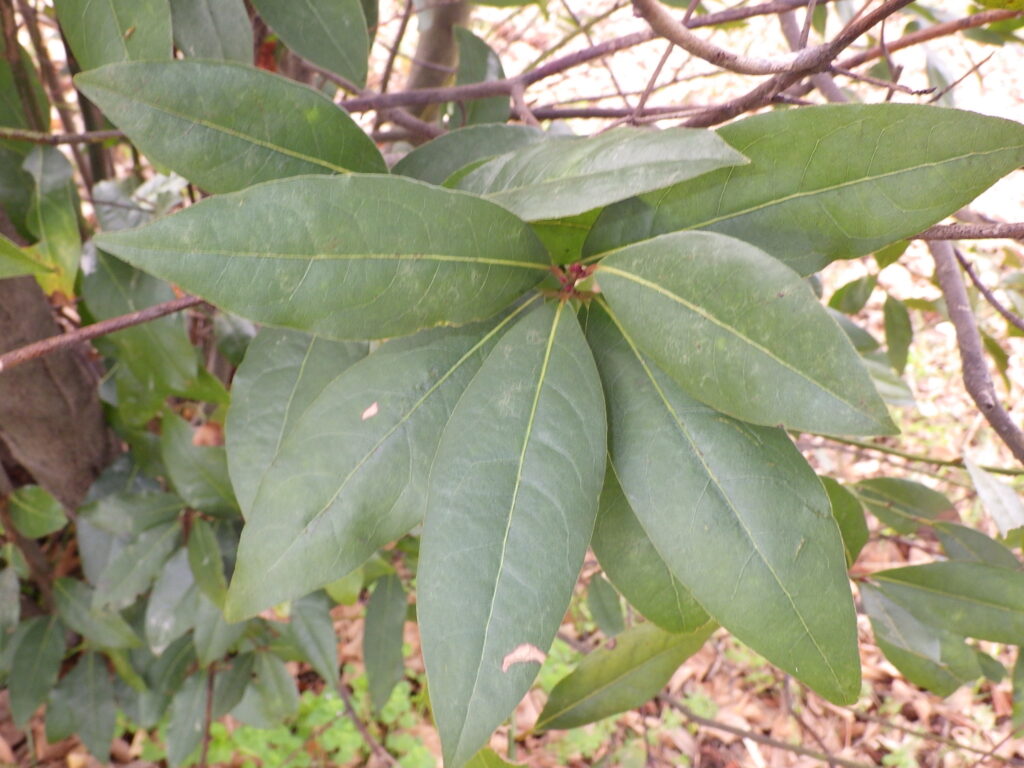
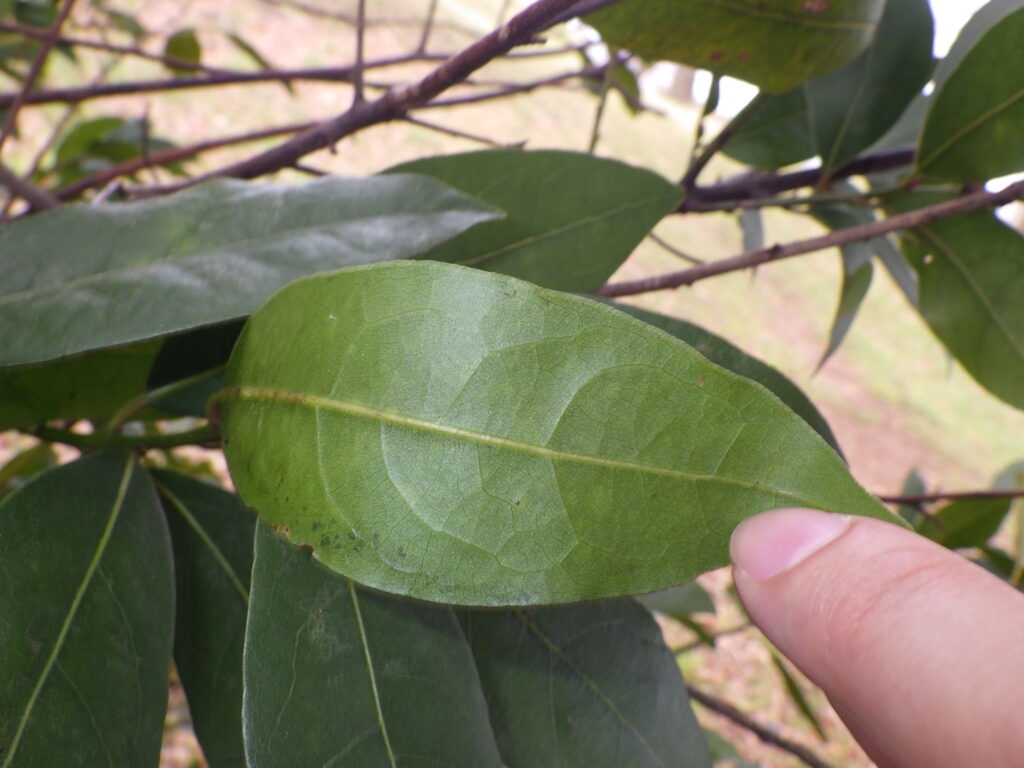
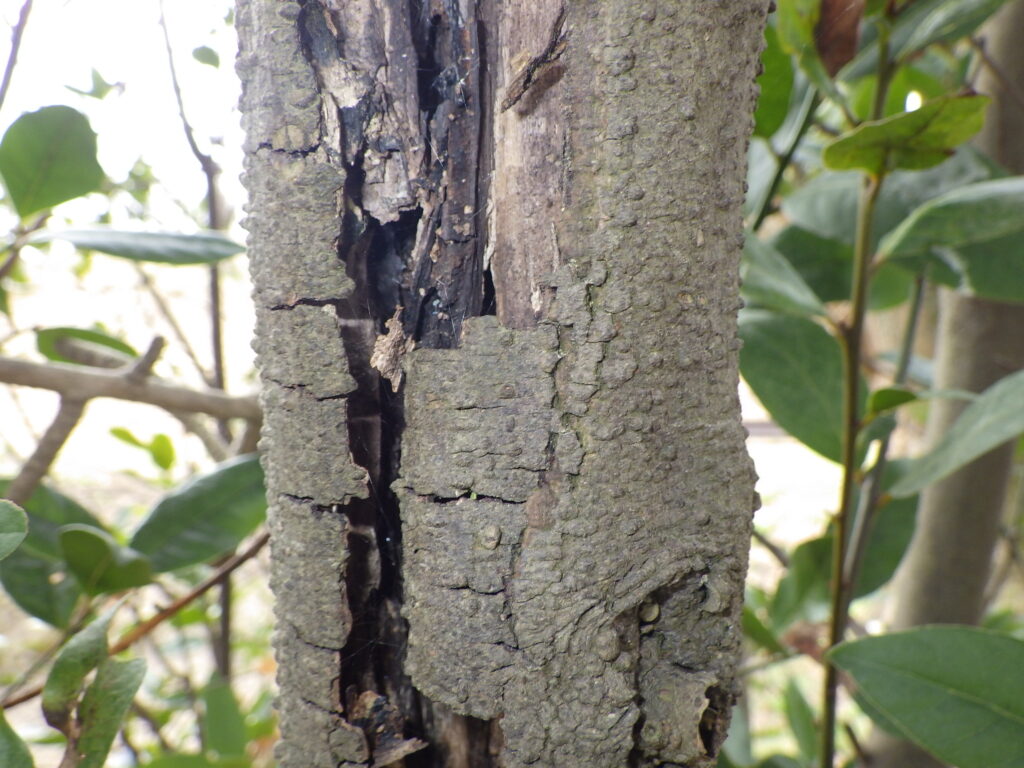
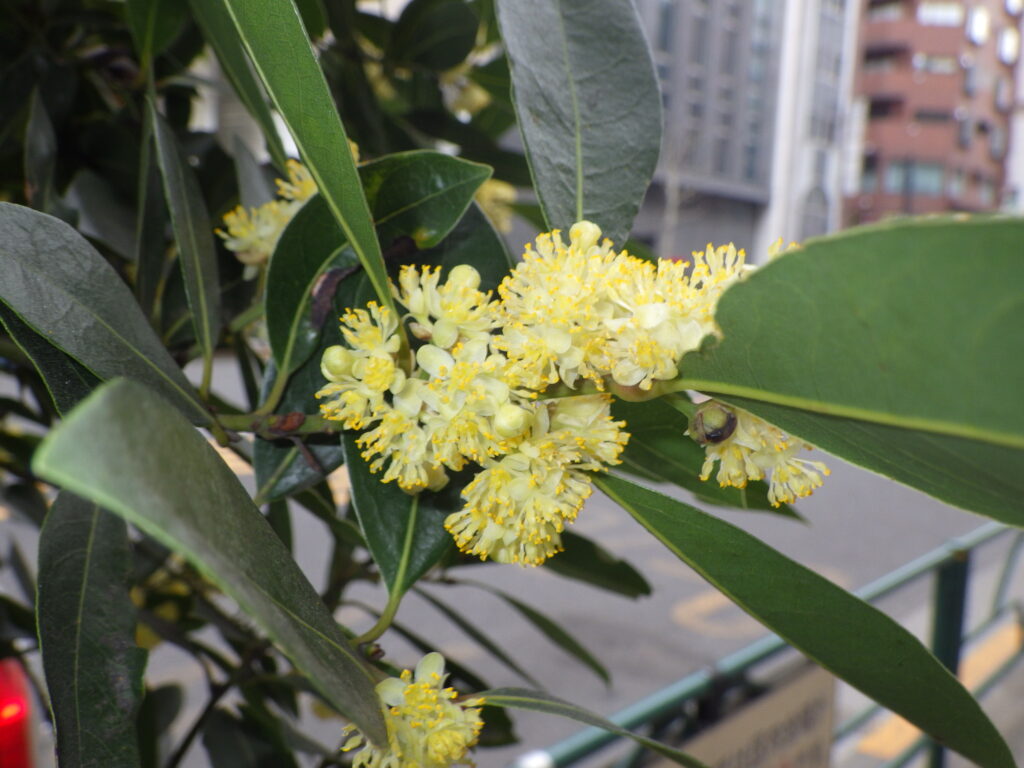
No.0164 Laurus nobilis
Also known as laurel (English) or laurel (French). It is an evergreen tree. The twigs are green. The leaves are alternate, oblong, leathery, and often have entire, wavy margins. They are aromatic, and the leaves are used as a herb in meat dishes. It is dioecious (having separate male and female plants). It flowers in April. The fruit is almost round and ripens to black. It was introduced to Japan during the Meiji era and is widely planted in private gardens and parks, but female plants are extremely rare compared to male plants and are rarely seen. Many are found that have been left unattended during cultivation, but there is also a possibility that they have escaped cultivation.
References
Barlow, C. 2008. The ghosts of evolution: nonsensical fruit, missing partners, and other ecological anachronisms. Basic Books, New York. 304pp. ISBN: 9780465005512
Hayashi, Masayuki. 2014. 1100 Tree Leaves Identified Through Real-Life Scans. Yama-kei Publishers, Tokyo. 759pp. ISBN: 9784635070324
Janzen, DH, & Martin, PS 1982. Neotropical anachronisms: the fruits the gomphotheres ate. Science 215(4528): 19-27. https://doi.org/10.1126/science.215.4528.19
Kanagawa Prefecture Flora Survey Association. 2018. Kanagawa Prefecture Flora 2018 (Electronic Edition). Kanagawa Prefecture Flora Survey Association, Odawara. 1803pp. ISBN: 9784991053726
Kasai, Atsushi. 2006. A study on the interaction of mites observed indoors and outdoors in camphor trees. [Doctoral dissertation, Kyoto University]. http://hdl.handle.net/2433/144106
Kasai, A., Yano, S., & Takafuji, A. 2005. Prey–predator mutualism in a tritrophic system on a camphor tree. Ecological Research 20(2): 163-166. https://doi.org/10.1007/s11284-004-0030-9