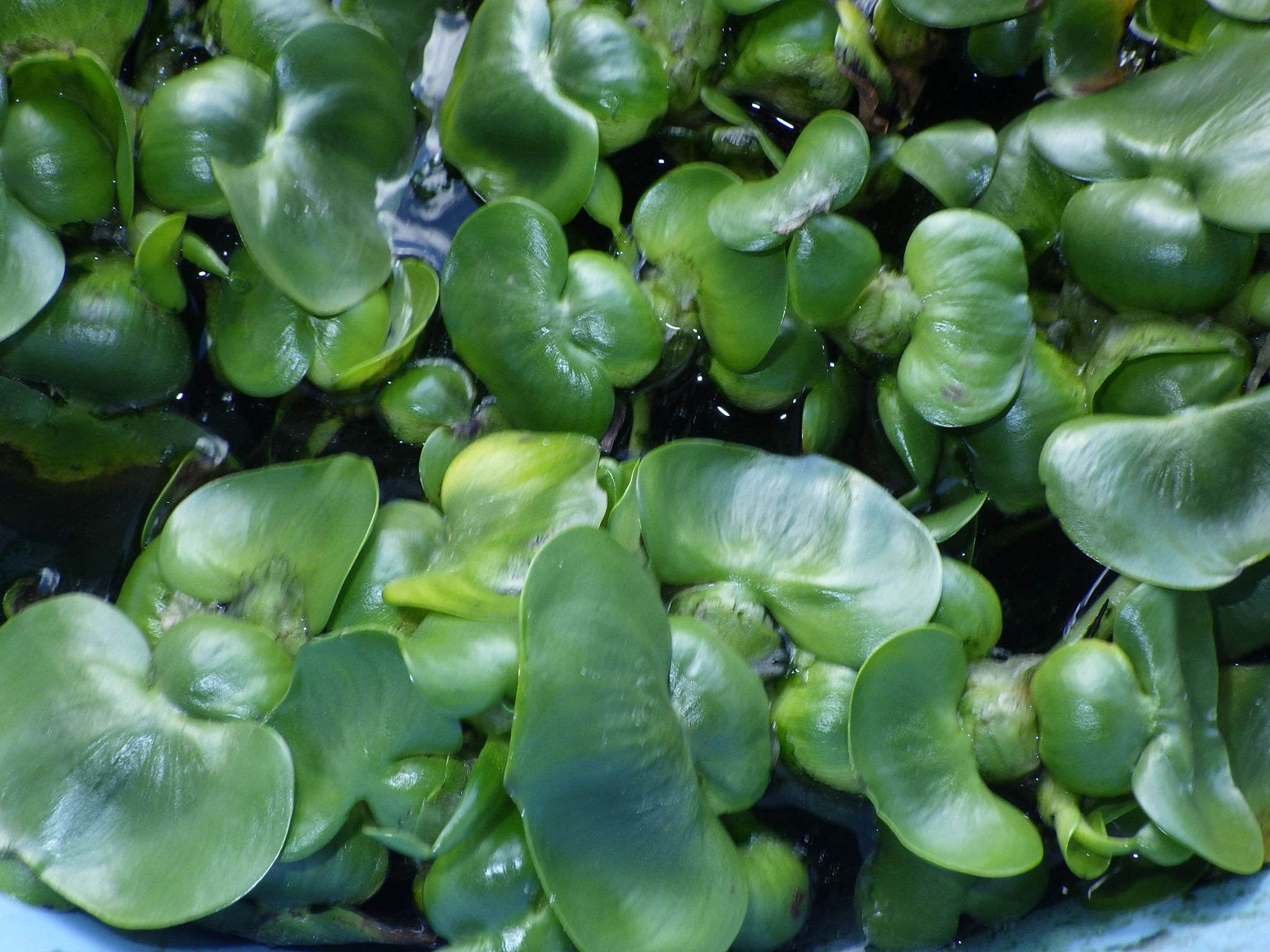
Commelinaceae are annual or perennial herbs, some of which are climbing plants. The leaves have parallel veins and the base forms a sheath. The central vein is somewhat thick and conspicuous. The flowers are bilaterally or radially symmetrical. Of the six perianth segments, the three outer segments are sepal-like, and the inner segments are petal-like. There are six stamens, and the pistil is superior in the ovary. The fruit is a capsule, and the seeds have ridges. There are 40 genera and 660 species worldwide, mainly distributed in the tropics, with a few found in temperate regions. There are 5 genera and 13 species native to Japan.
This article provides a comprehensive, illustrated guide to plants belonging to the Commelinaceae family.
The basic information is based on Tsukamoto (1994) and the Kanagawa Prefectural Flora Survey Association (2018). Photographs are replaced as better ones become available. While the identifications are made by the author, please note that they may be changed without notice if misidentifications are found.
No.0624 Pollia japonica
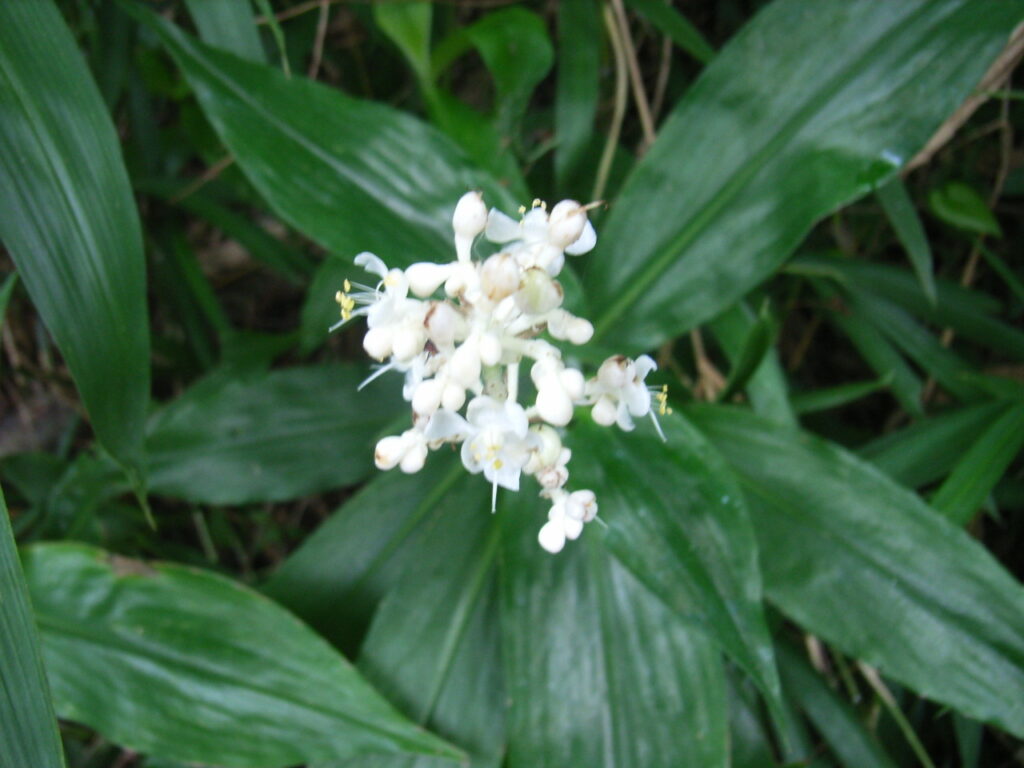
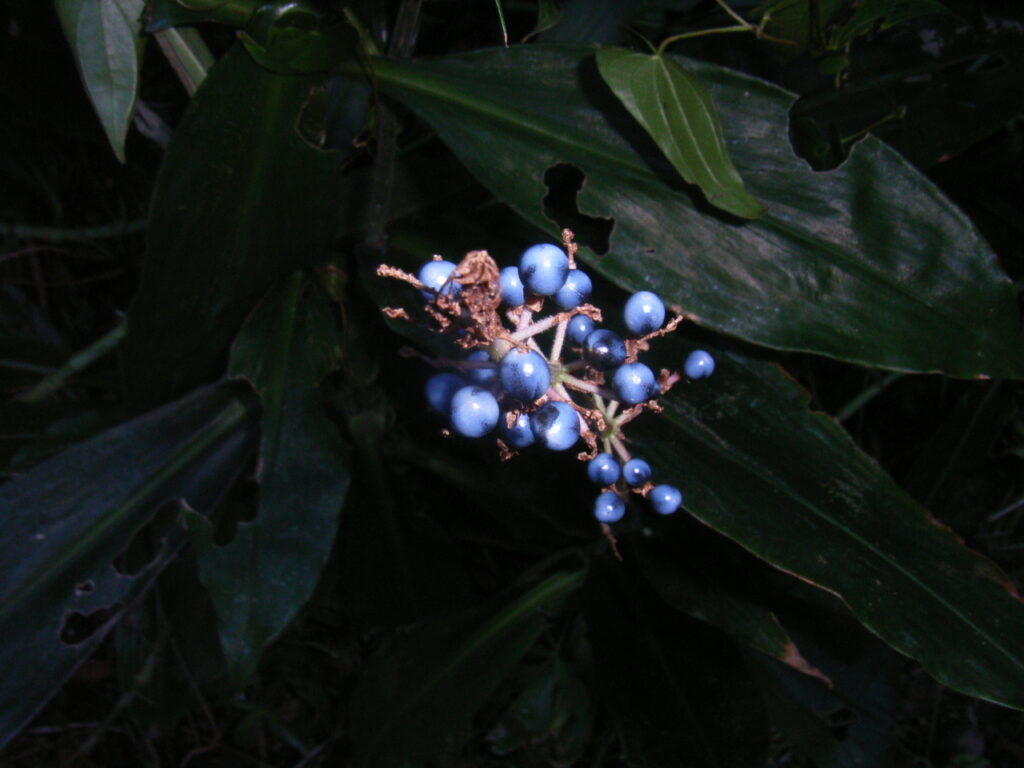
This perennial herb has slender rhizomes and erect stems that reach a height of 50-100 cm. The leaves are narrowly oblong with pointed tips, 20-30 cm long and 3-6 cm wide, with a dark green, rough upper surface and fine hairs on the lower surface. The lower leaves are reduced to a sheath-like structure. The conical cyme inflorescence is terminal and 20-30 cm long. It bears radially symmetrical, white flowers 7-10 mm in diameter in August and September. The outer perianth segments are 5 mm long, and the inner perianth segments are 7 mm long. The inner perianth segments wither within a day, but the outer perianth segments remain and enclose the fruit. There are six stamens. The capsule is 5 mm in diameter and does not dehisce. It grows in clusters under evergreen broad-leaved forests. It is distributed in Honshu (west of the Kanto region), Shikoku, Kyushu, the Ryukyu Islands, Taiwan, and southern China.
No.0626 Tradescantia ohiensis
This is a perennial herb, growing to a height of 50-90 cm. The leaves are linear-lanceolate, 30-45 cm long, and powdery greenish-white. The flowers are 2-2.5 cm in diameter and range in color from bluish-purple to pale pink. The sepals are hairless or have hairs at the tip. There are six stamens. The filaments are densely covered with purple hairs, which consist of a single row of cells arranged in a bead-like pattern and are used as material for observing living organisms such as cell division and protoplasmic streaming. It is native to North America and was introduced to Japan around 1870. It is cultivated in gardens and sometimes escapes cultivation. Its natural habitat is grasslands, forest edges, roadsides, and railway embankments.
No.0626.a Tradescantia paludosa
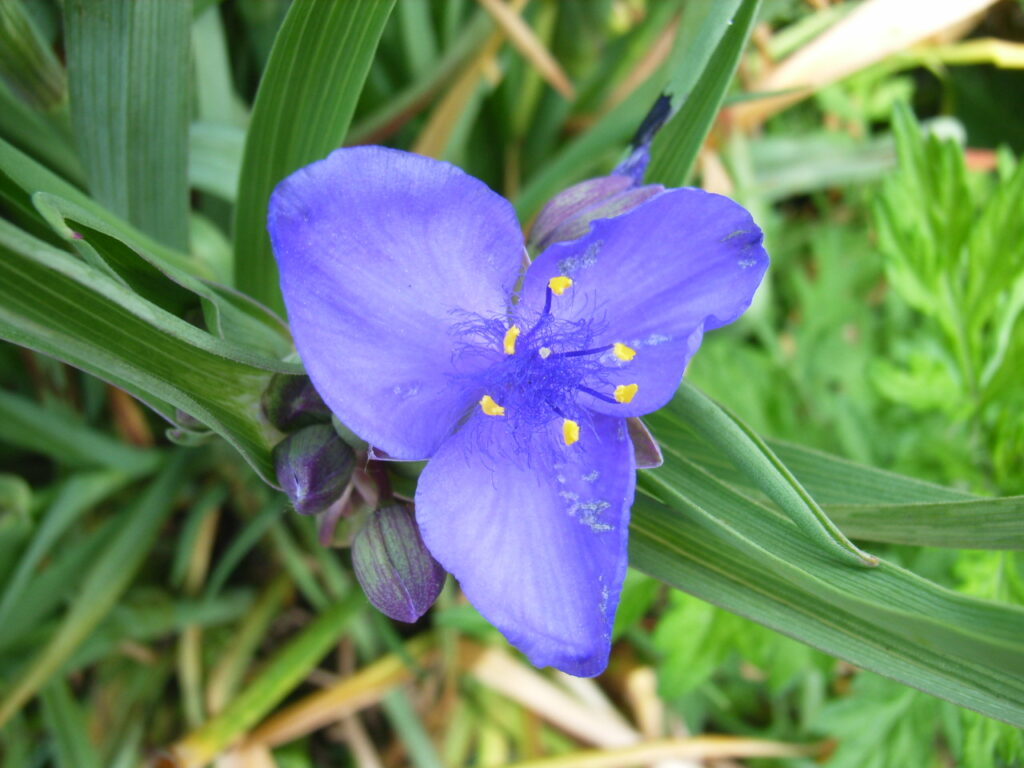
This perennial herb grows erect or climbing, rarely rooting at the nodes. Stems are 15–115 cm tall, with glossy or sometimes hairy and glossy internodes. Leaves are arranged spirally, sessile, at an acute angle to the stem, and arc-shaped. Leaf blades are linear to linear-lanceolate, 0.4–4.5 cm long (distal blades are the same length as or narrower than the sheath when open, and flat), pointed at the apex, usually glossy, and sometimes hairy near the sheath. Inflorescences are spreading, often axillary. Flowers have distinct stalks, 0.7–3 cm long, and glossy. Receptacles are glossy, 4–15 mm long, and glossy or with downy hairs at the tip. Pods are 4–6 mm long. Seeds are 2–3 mm long. It flowers from late winter to autumn, and in Florida from February to September. It grows along roadsides, railroads, fields, woodlands, forests, and sometimes along streams. In Japan, it is often confused with Tradescantia virginiana, but it can be distinguished by its slightly pale flowers, small leaves (4-11 cm), straight stems, and the fact that they form almost a right angle to the stem (Flora of North America).
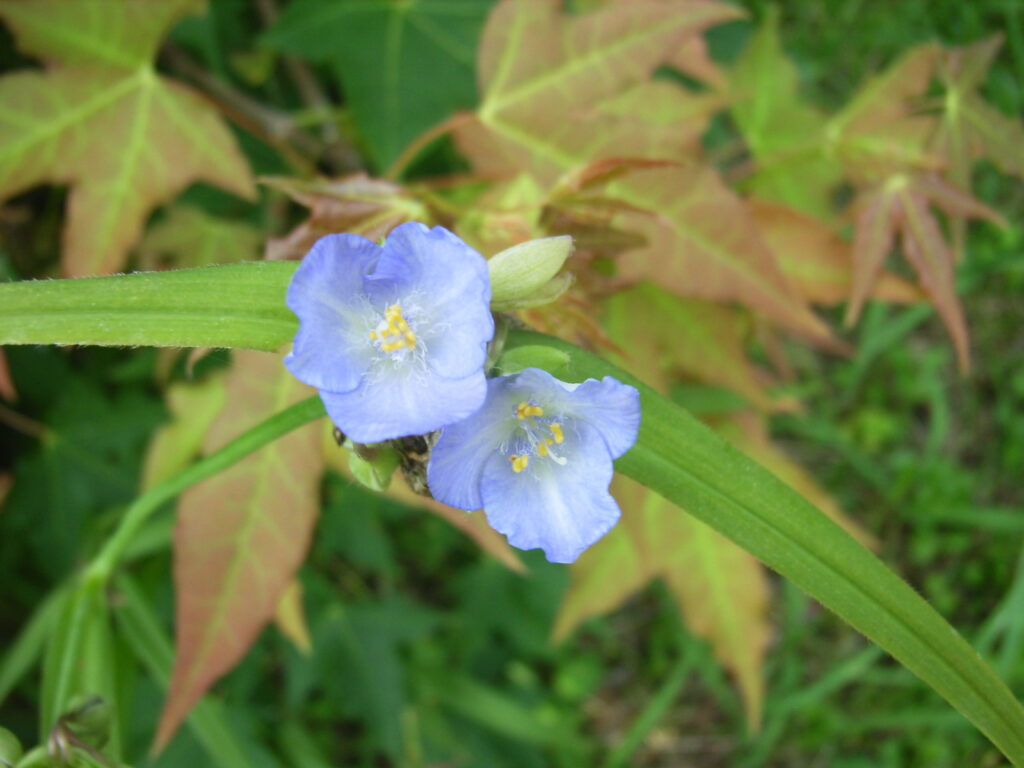
No.0627.a Tradescantia pallida 'Purpurea'‘
A perennial plant. Also known as purple heart. The entire above-ground part is purple, and the leaves are slightly succulent. Reddish-purple flowers bloom from June to September. It prefers a dry, sunny environment. Native to Mexico, it was introduced to Japan around 1955. The 'Purpurea' variety, with its deep purple color, is mainly cultivated, and the original species is rarely grown.
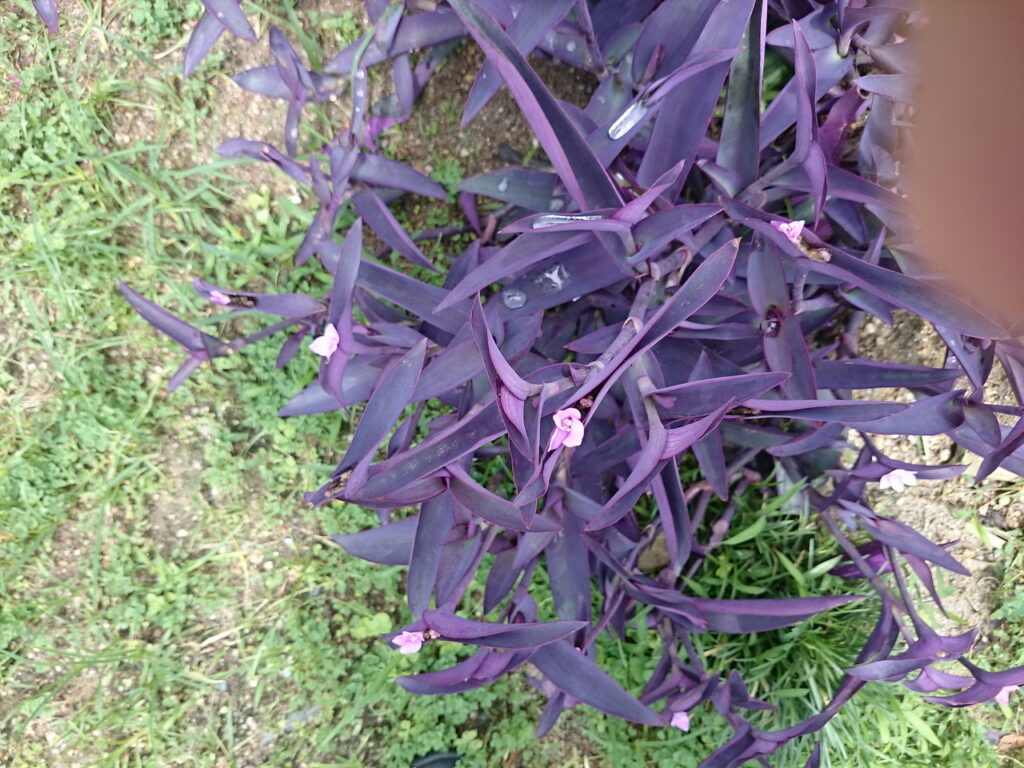
No.0628.a Tradescantia fluminensis
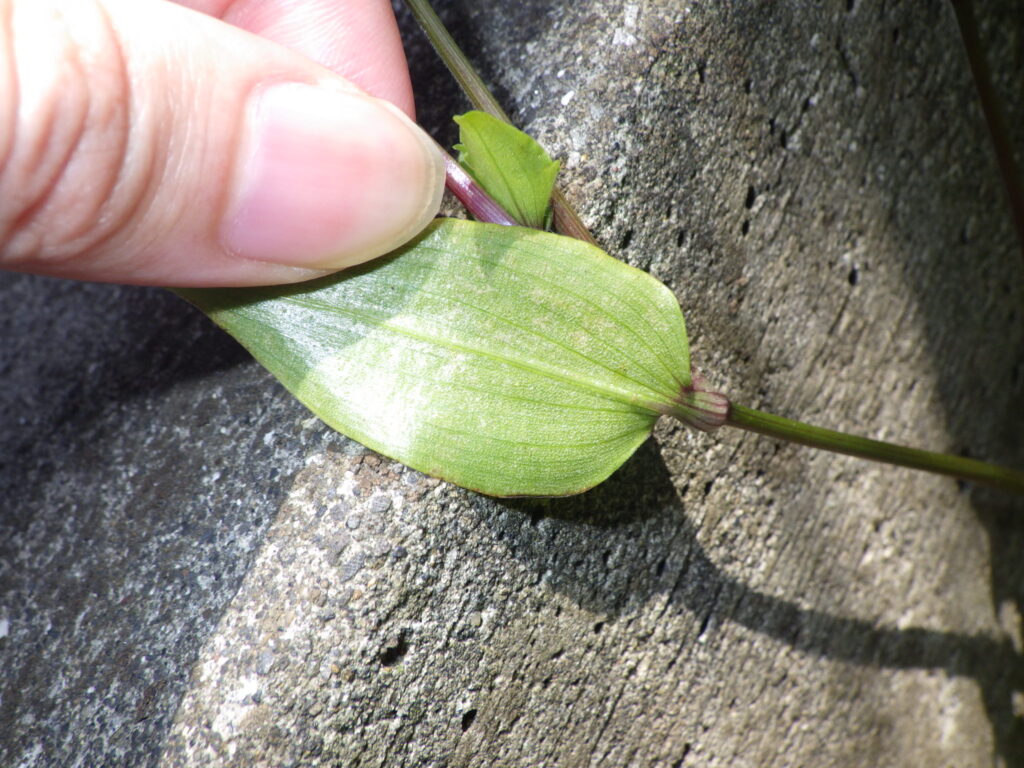
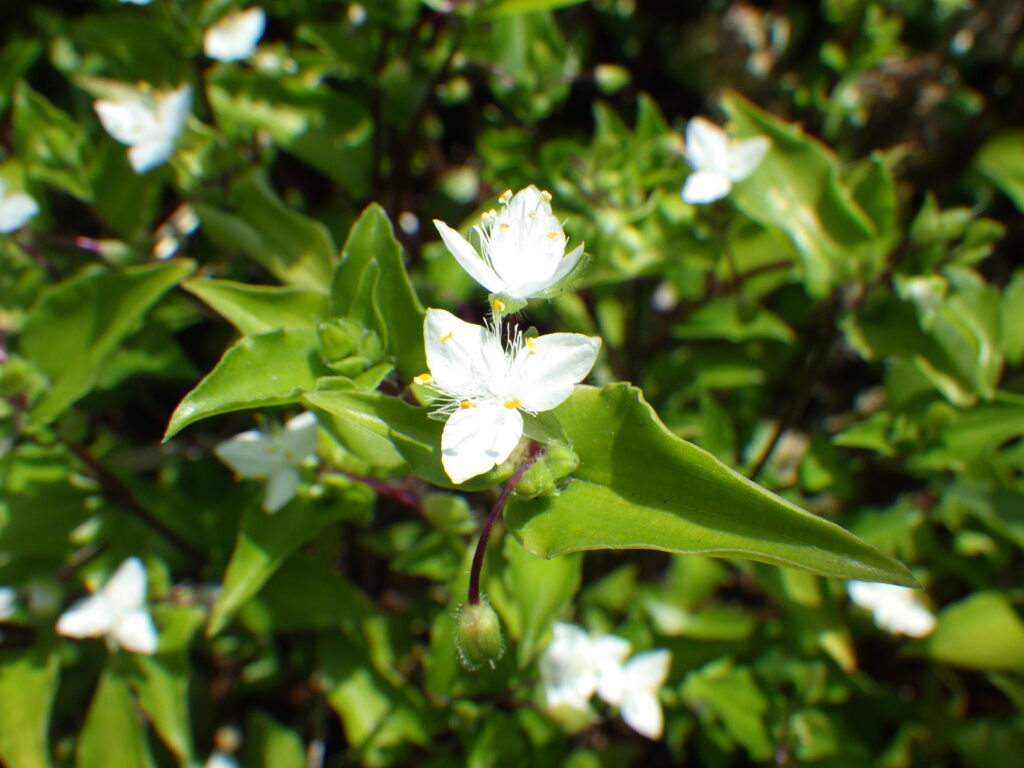
A perennial herb. Also known as Tradescantia virginiana. The stems grow obliquely upward or creeping, becoming long and producing adventitious roots from the nodes. The leaves are ovate, 3-6 cm long and 1.5-2 cm wide. It flowers from April to August. The inner perianth segments are white and 1.5 cm in diameter. The outer perianth segments are green and shorter than the inner ones. The filaments are white and densely covered with hairs arranged in a bell-shaped cell pattern. Native to South America, it was introduced to Japan in the early Showa period. It has naturalized in warm regions throughout the country. It is a priority invasive species for control. The type with ovate, slightly smaller leaves, a purplish tint on the underside of the leaves, and fruiting is presumed to be a green-leaved version of the horticultural varieties 'Tricolor' or 'Laekenensis', and is less likely to naturalize compared to Tradescantia virginiana.
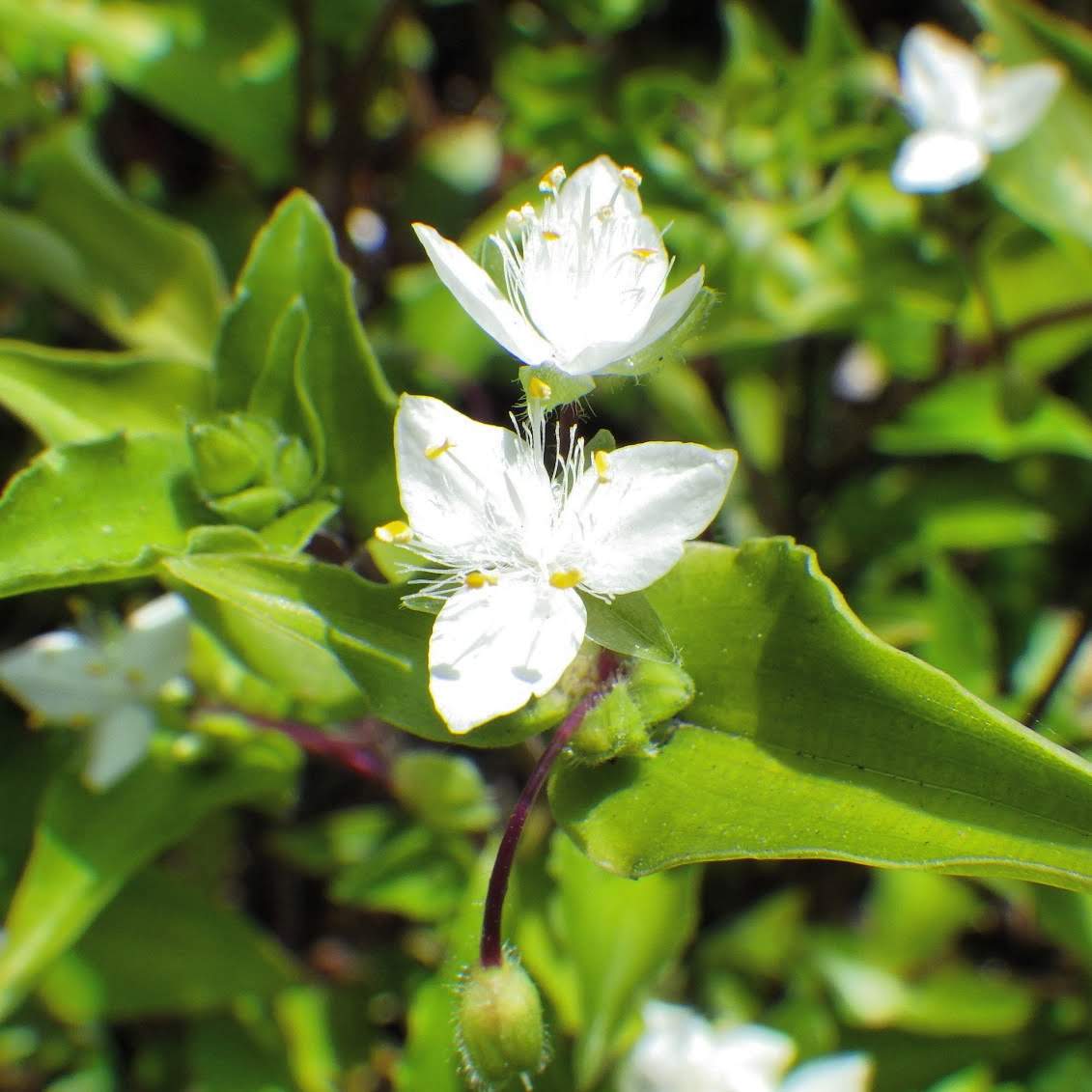
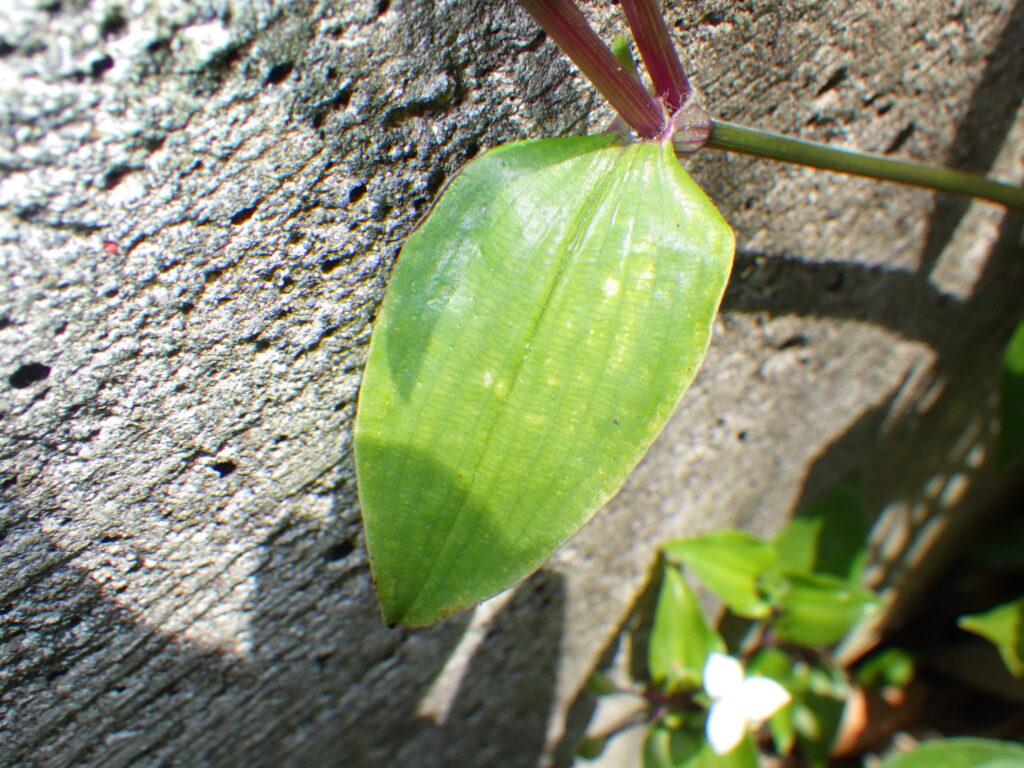
No.0628.b Tradescantia fluminensis cv. Viridis
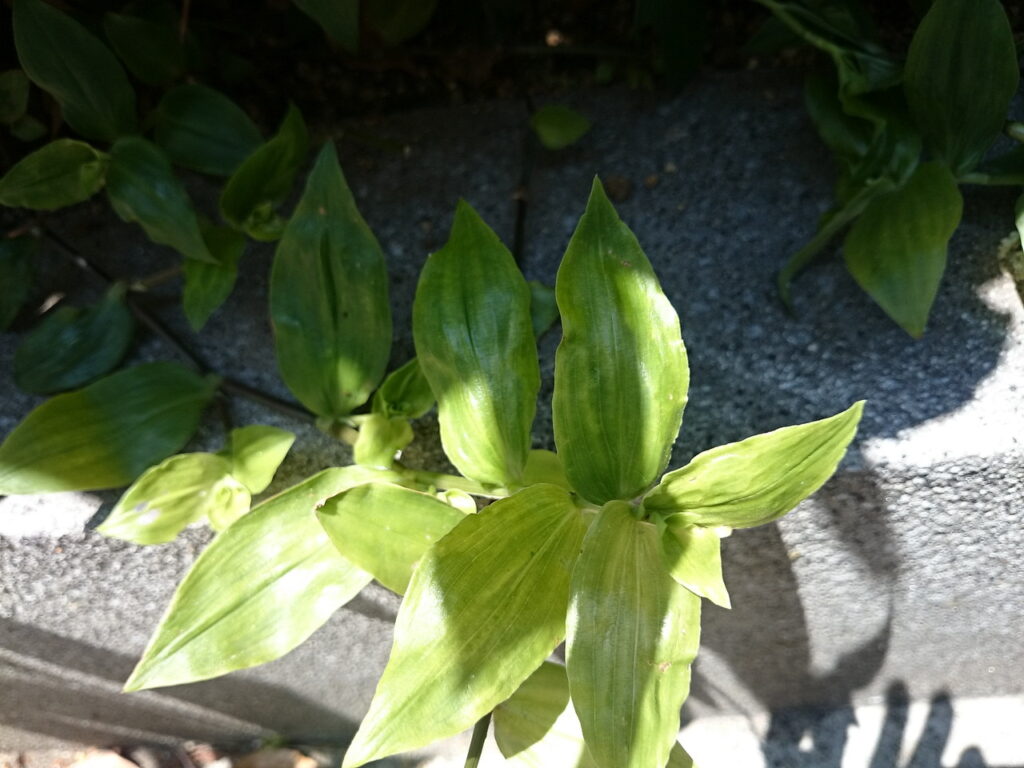
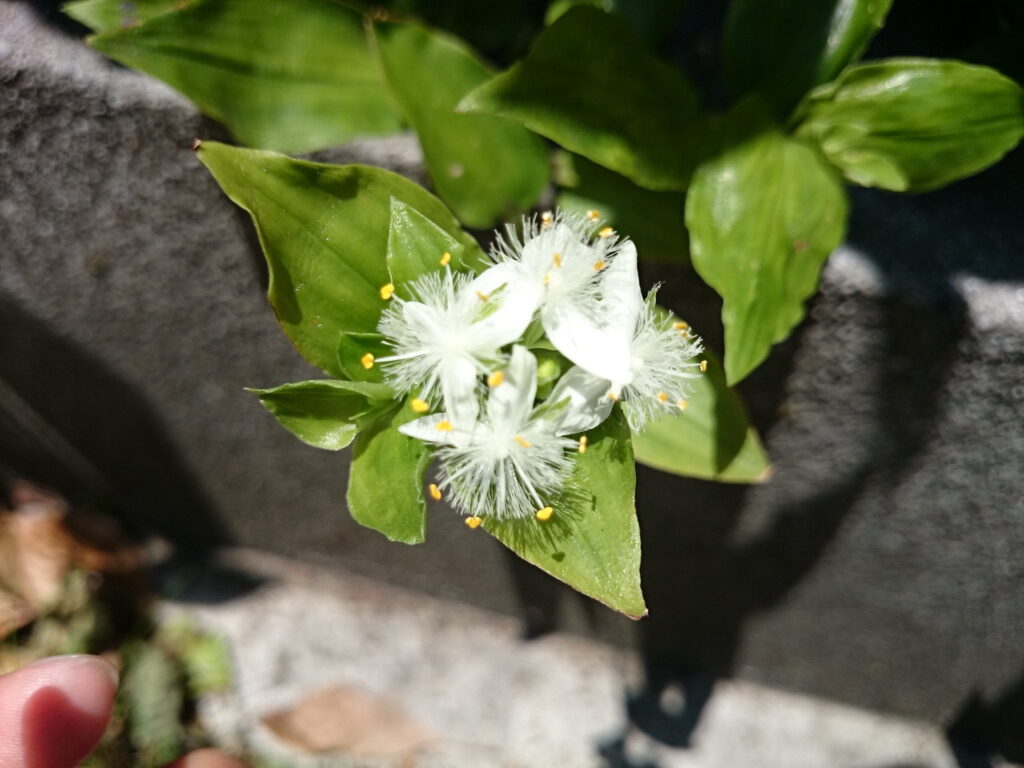
This is a horticultural variety of *Tradescantia pseudocamellia*, 'Variegata', which has white vertical stripes, but without the variegation. The leaves are slightly larger, the underside of the leaves is green, and it is a non-fruiting type.
No.0630 Commelina communis
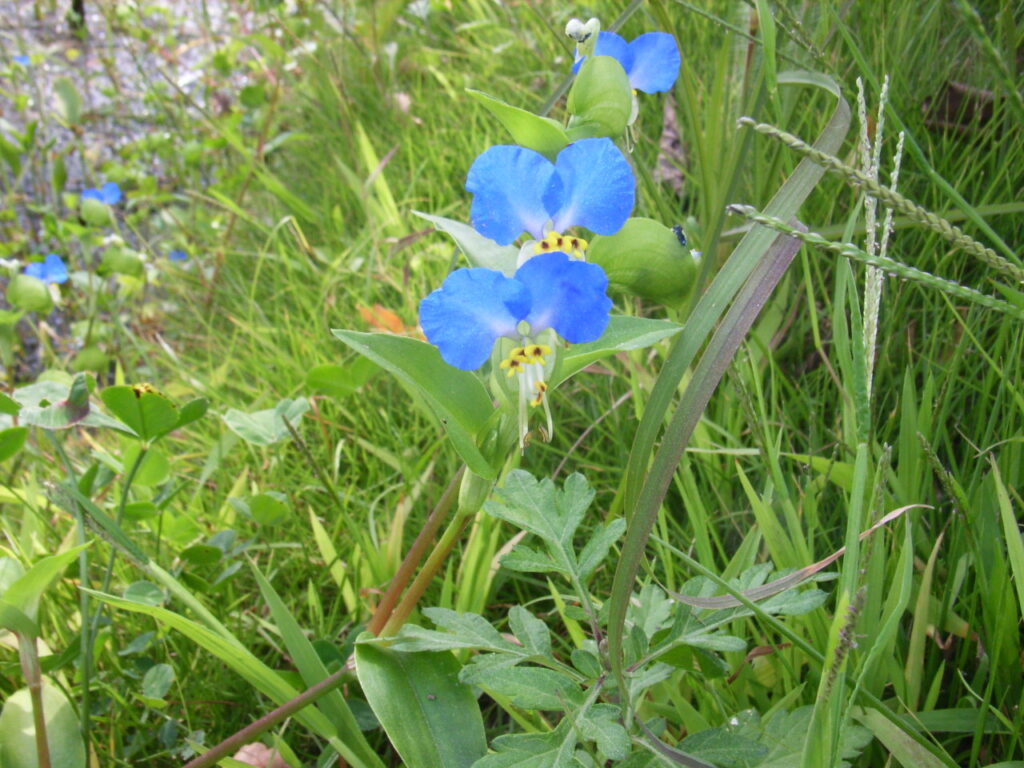
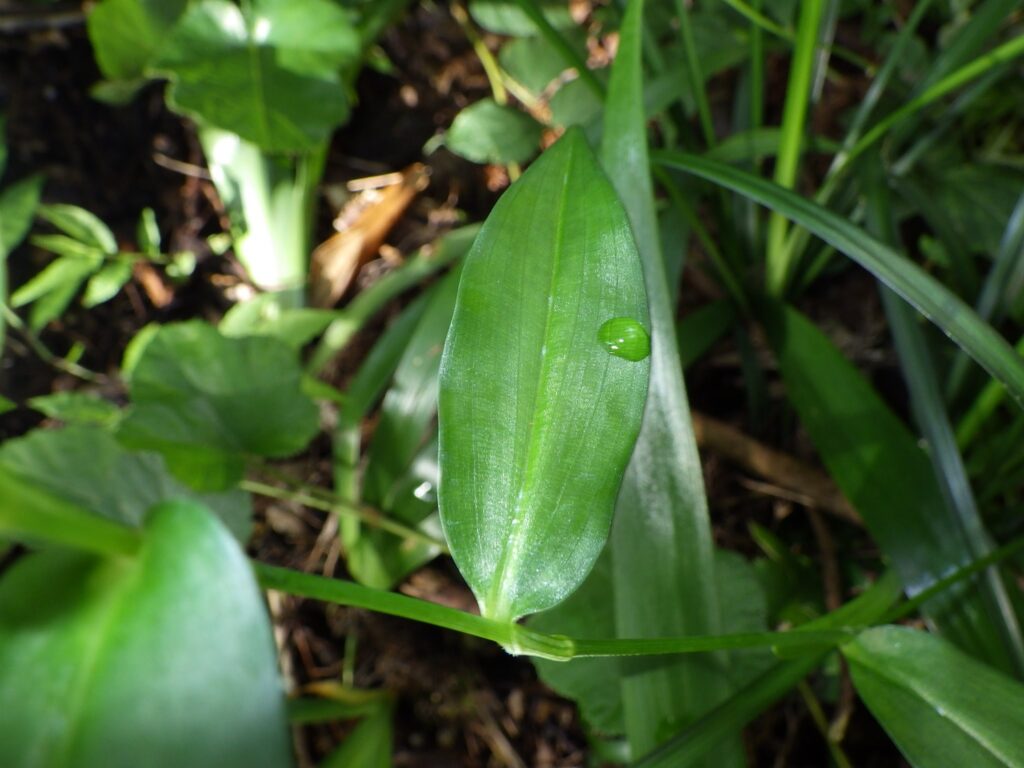
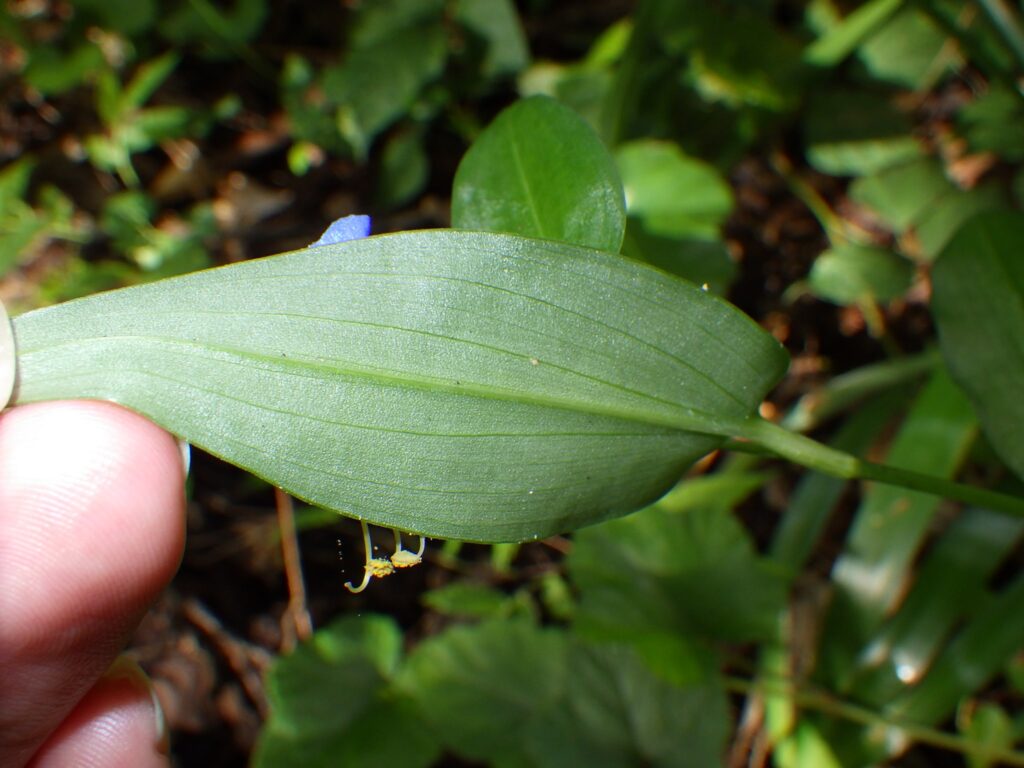
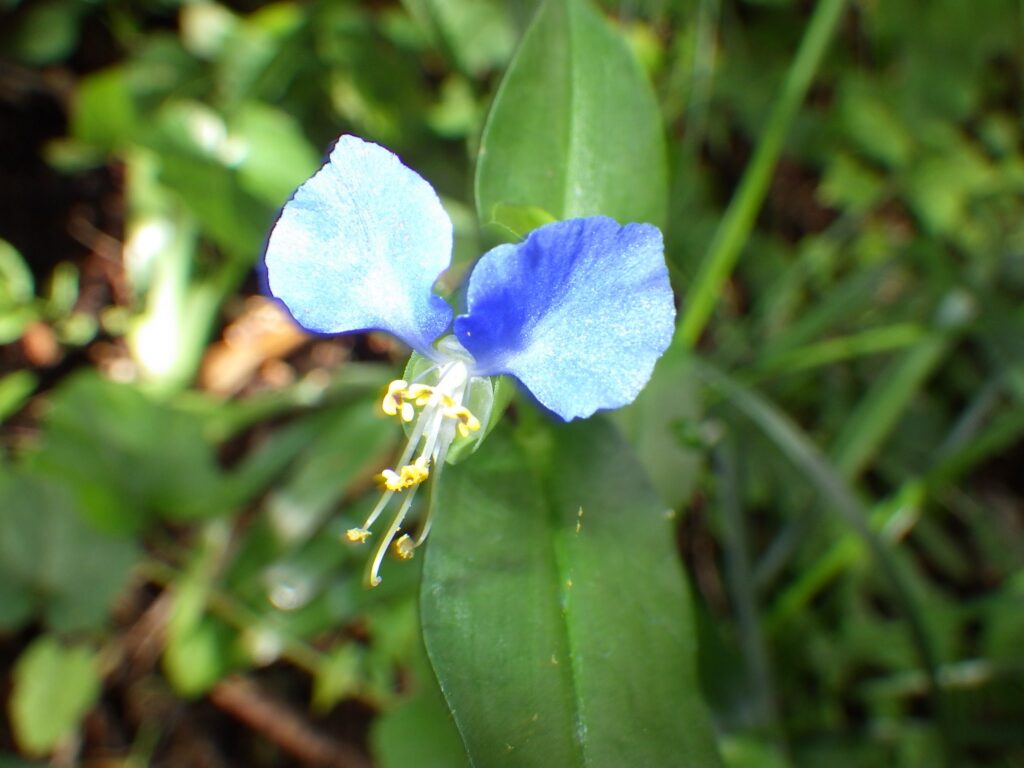
Also known as Boushibana, it is an annual plant. The stem branches at the base and creeps along the ground, while the upper part grows obliquely upward, reaching a height of 20-50 cm. The leaves are ovate-lanceolate, 5-8 cm long and 1-2.5 cm wide. The bracts are orbicular-cordate, about 2 cm in diameter, and fold in half to enclose the inflorescence. The flowers bloom one by one from June to September, emerging from the bracts and opening, wilting within a day. The outer perianth consists of three white, oval segments, 3-4 mm long. Two of the inner perianth segments are large, 1 cm in diameter, blue and circular, while one is white, lanceolate, and 4-5 mm long. Of the six stamens, three have short filaments (X-shaped stamens), one has medium-length filaments (Y-shaped stamen), and two have long filaments (O-shaped stamens). Only the two long stamens produce true pollen for pollination. The capsule contains four seeds. It is distributed in Hokkaido, Honshu, Shikoku, Kyushu, and the Ryukyu Islands; as well as in Korea, China, and Ussuri. It grows along roadsides, in fields, and in gardens. The variety with long white hairs on the outside of the bracts is called Commelina communis f. ciliat. Recent genetic studies have shown that the hairy type is a polyploid aneuploid with 2n=44 or 46, and the hairless type is a polyploid with 2n=88. In addition, the white-petaled variety is called Commelina communis f. albiflora, and the pale blue variety is called Commelina communis f. caeruleopurpurascens. The cultivated variety, Commelina communis var. hortensis, is large overall with a flower diameter of 4 cm. The green juice extracted from the petals is used to draw underpaintings for Yuzen dyeing. Commelina communis is said to be a prehistoric naturalized plant that arrived along with agricultural culture. The flowers self-pollinate even before flowering, and the self-pollination rate is high at 82.1%. However, cross-pollination is also possible (Morita & Nigorikawa, 1999). Although some sources state that X-shaped and Y-shaped stamens do not produce pollen, this is false; they do. In the case of X-shaped stamens, they do produce pollen, but they do not form fruit and are considered dummies used as food for visiting insects (Tanaka, 1978). Honeybees and hoverflies visit Commelina communis and cause reproductive interference, but self-pollination mitigates this interference (Katsuhara, & Ushimaru, 2019).
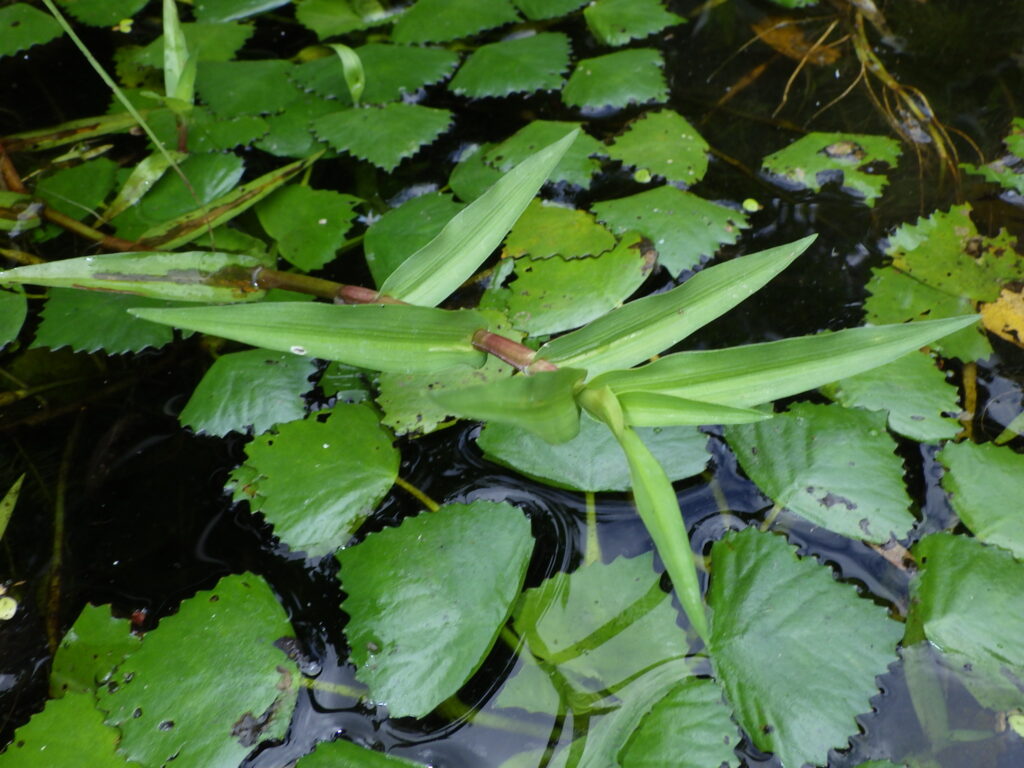
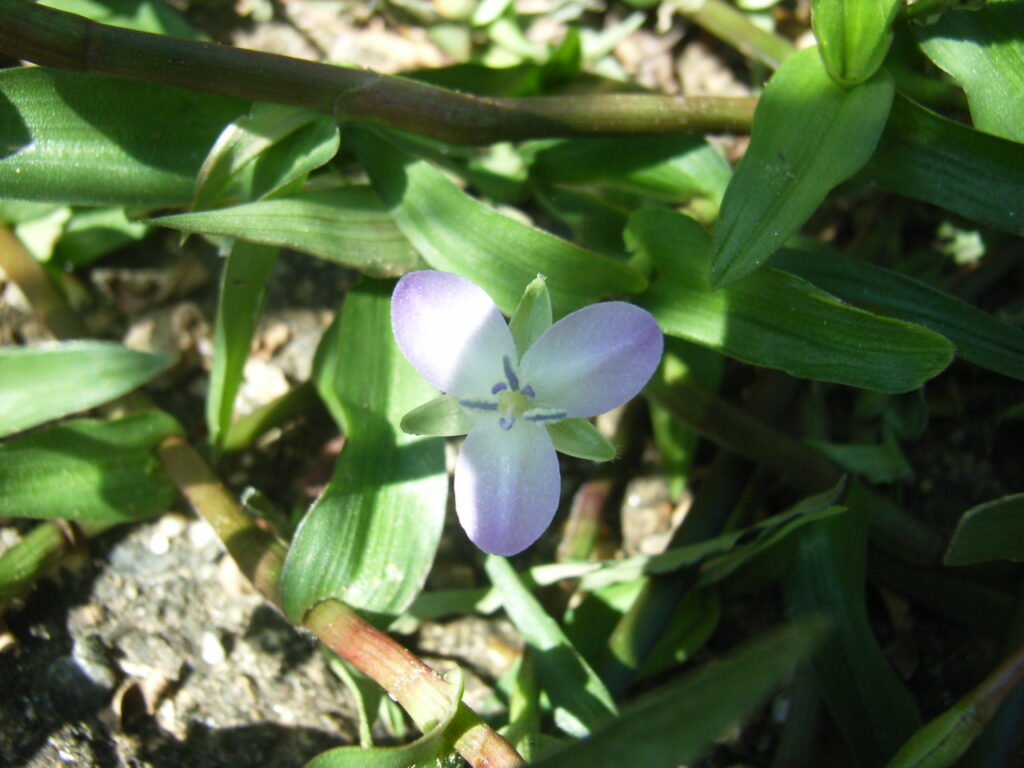
No.0632 Murdannia keisak
An annual plant. Also known as wart grass. The stem branches and creeps at the base, and grows obliquely upwards at the top, reaching a height of 20-30 cm. There are hairs on one side of the stem. The leaves are narrowly lanceolate, 3-7 cm long and 5-10 mm wide. The flowers bloom in September and October. The outer perianth segments are lanceolate, 4 mm long. The inner perianth segments are pale pink and ovate, 5 mm long. The inner perianth segments wilt in one day, but the outer perianth segments remain and enclose the fruit. There are six stamens, three of which are complete and three are staminodes. The capsule is elliptical, 8-10 mm long. It is distributed in Honshu, Shikoku, Kyushu, and the Ryukyu Islands; as well as Korea and China. It grows in wetlands. It is the characteristic species of the order Echinochloa and Barnyard grass.
References
Kanagawa Prefecture Flora Survey Association. 2018. Kanagawa Prefecture Flora 2018 (Electronic Edition). Kanagawa Prefecture Flora Survey Association, Odawara. 1803pp. ISBN: 9784991053726
Katsuhara, KR, & Ushimaru, A. 2019. Prior selfing can mitigate the negative effects of mutual reproductive interference between coexisting congeners. Functional Ecology 33(8): 1504-1513. https://doi.org/10.1111/1365-2435.13344
Morita, Tatsuyoshi & Nigorikawa, Tomoya. 1999. Plasticity of sexual type in flowers: The mysterious sexual expression of Commelina communis, which produces male flowers. In: Ohara, Masaru (Ed.), Natural History of Flowers (pp. 227-242). Hokkaido University Press. ISBN: 9784832997516
Tsukamoto, Yotaro. 1994. Encyclopedia of Horticultural Plants, Compact Edition. Shogakukan, Tokyo. 3710pp. ISBN: 9784093051118
Tanaka, Hajime. 1978. Pollination of Commelina communis. Collection and Rearing 40: 646-647. ISSN: 0036-3286