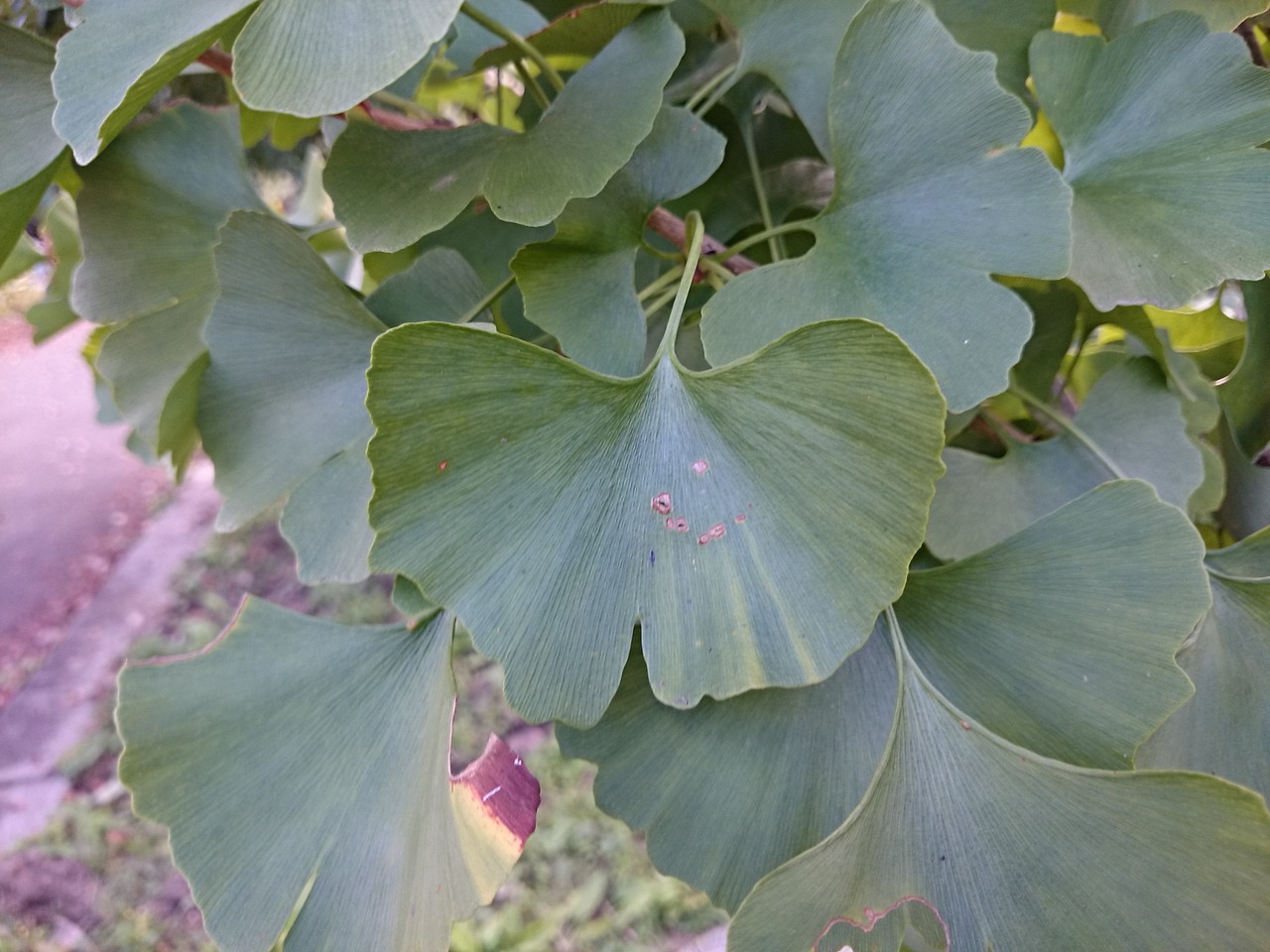
The Ginkgoaceae family consists of deciduous trees. The leaves are flattened and spread out, with veins repeatedly branching dichotomously from the base of the petiole, becoming parallel veins that reach the upper leaf margin. It is dioecious; male flowers bear numerous anthers on a slender stalk, while female flowers typically have two ovules facing upwards at the end of the pedicel. Fertilization occurs by sperm. The seeds are spherical, with a fleshy outer seed coat and a hard inner seed coat. It is a monotypic genus.
This article provides a comprehensive, illustrated guide to plants belonging to the Ginkgo family.
The basic information is based on the Kanagawa Prefecture Flora Survey Association (2018). Photos are replaced as better ones become available. While the identification is done by the author, please note that misidentifications may be corrected without notice.
No.0002 Ginkgo biloba
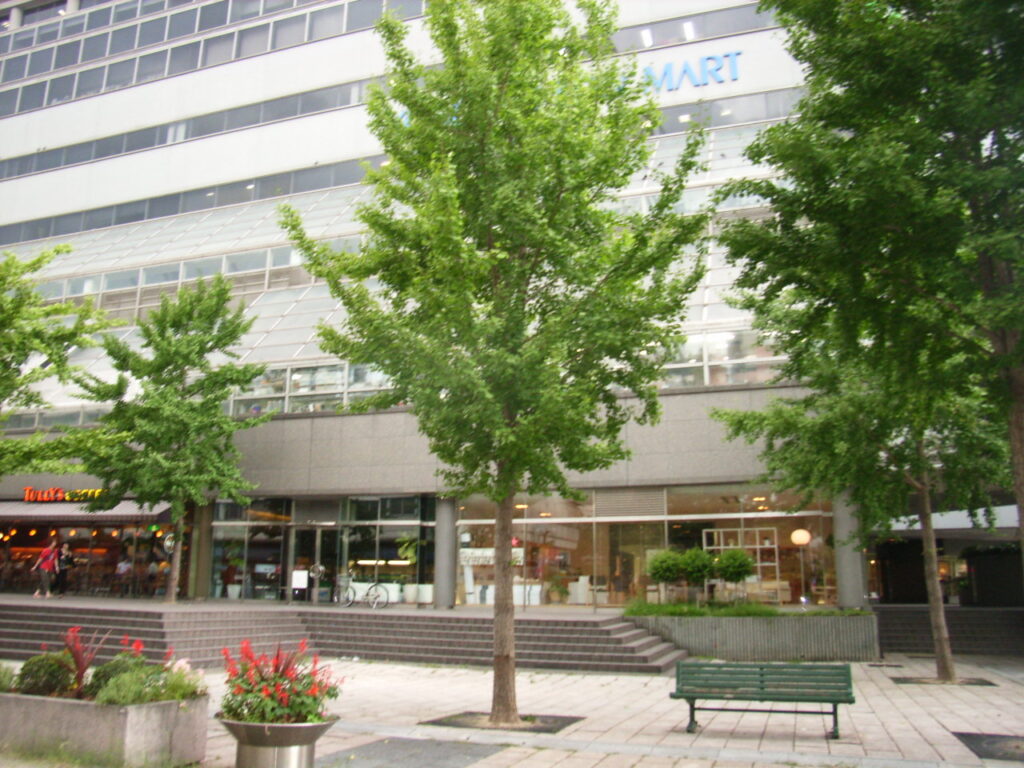
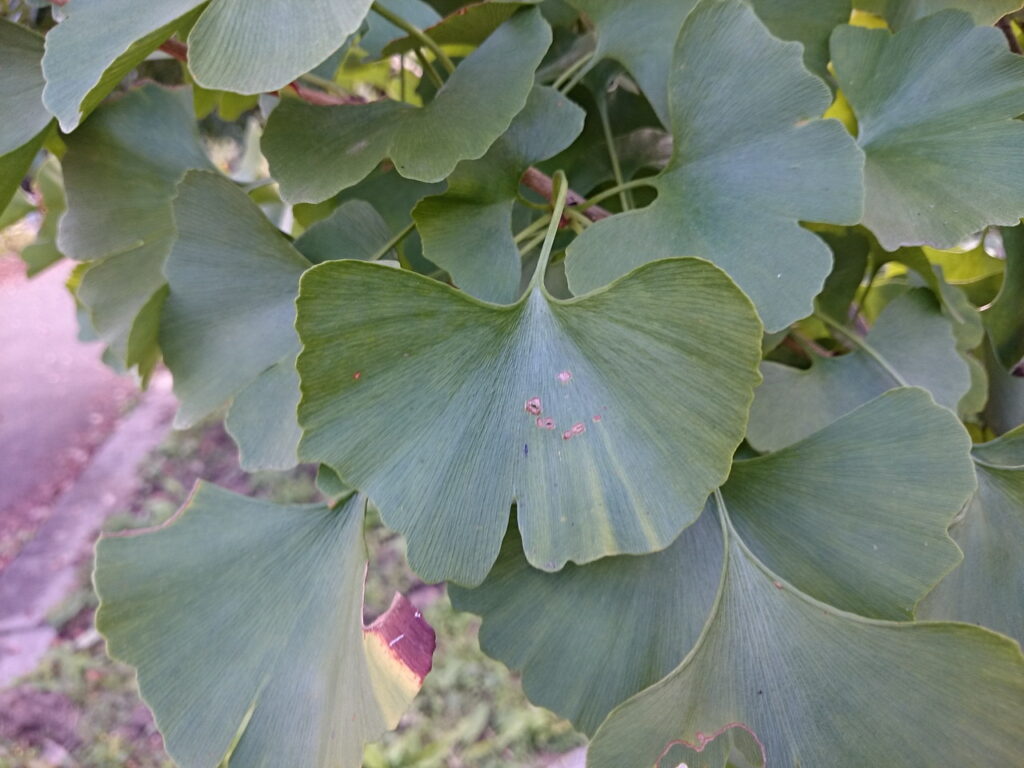
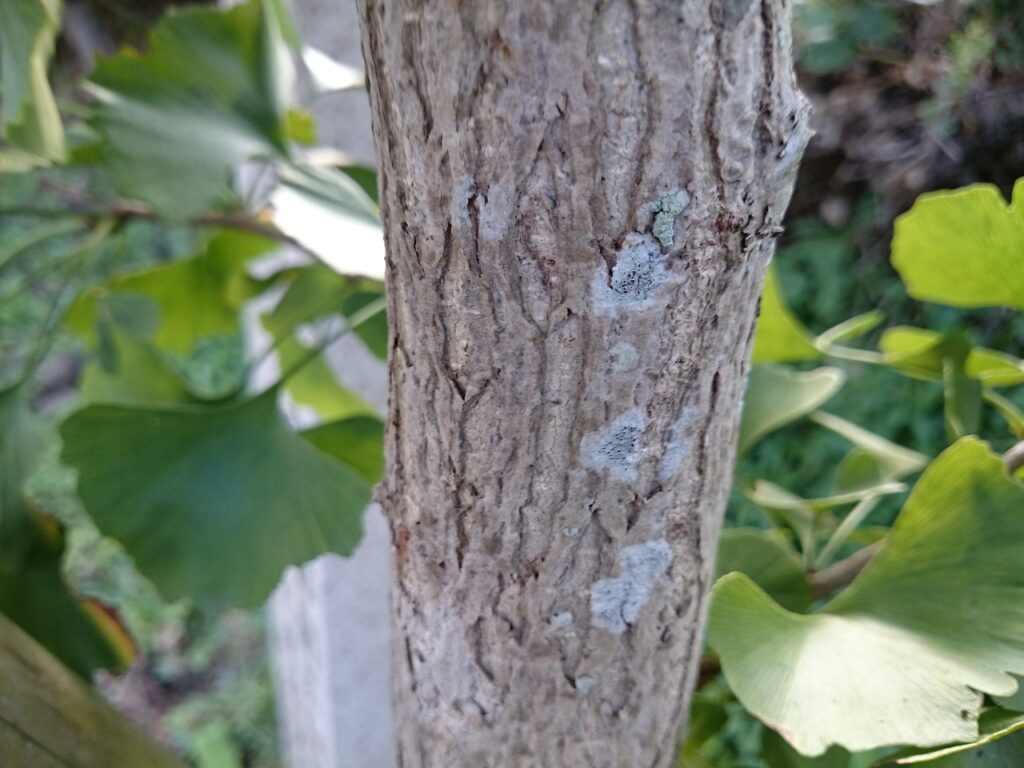
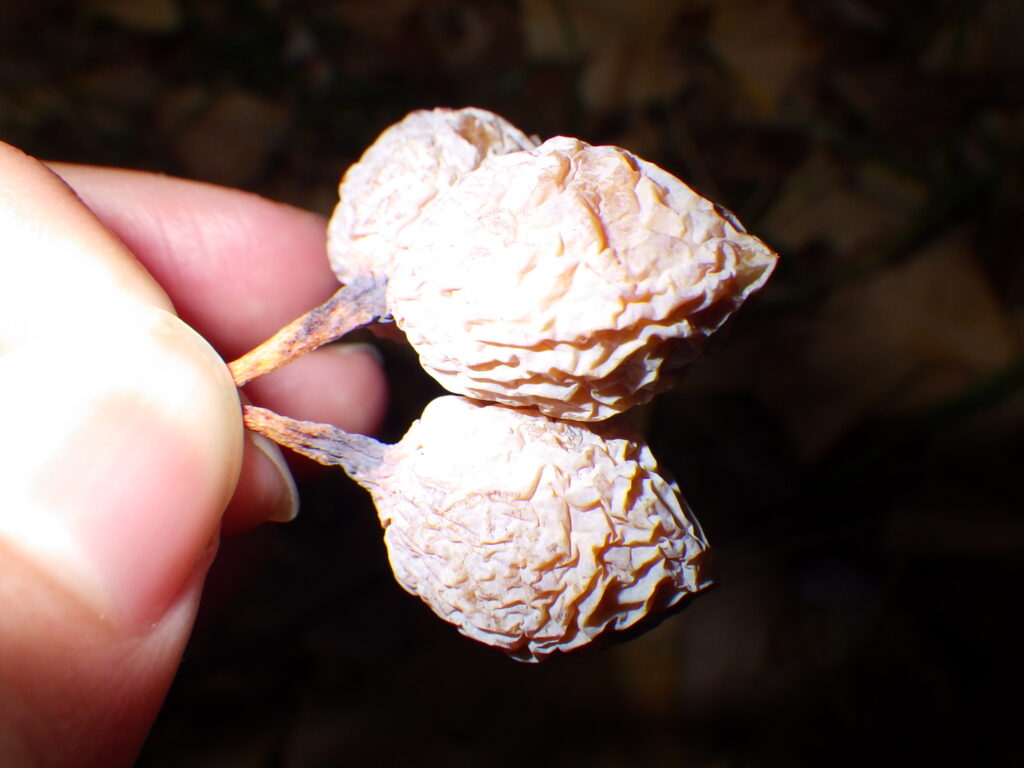
This is a deciduous tree. Large specimens can reach a height of 30 meters and a diameter of 2.5 meters. Older trees often have a type of aerial root called "nipples" on their branches. The bark is grayish-white and roughly splits vertically. A corky layer is well-developed and slightly elastic when pressed. The branches consist of long and short twigs. Leaves are arranged alternately on long twigs and in whorls on short twigs. The leaf blade is fan-shaped, 5-7 cm wide, and hairless. The way the leaves are lobed varies greatly. A distinctive feature is the presence of a dichotomous venation system. It is dioecious (having separate male and female plants). Flowering occurs simultaneously with the unfolding of the leaves. Both male and female flowers grow in clusters on short twigs. Male flowers are cylindrical, about 2 cm long. Female flowers are 2-3 cm long, with two ovules usually attached to the end of a slender stalk. Pollen carried by the wind enters the ovule, germinates in the pollen chamber, and produces sperm. Sperm are released from around late August and fertilize egg cells. The seeds are called ginkgo nuts (not fruits). When they ripen in October-November, the outer seed coat turns yellow and emits a foul odor. The inner seed coat is white and hard, with 2-3 ridges. They are spherical, about 2.5 cm in diameter, and mature around September (the flowers that bloom on the trees). The ginkgo tree is a "living fossil" that was widely distributed in the Northern Hemisphere for most of the Cenozoic era. However, due to the cooling and drying climate of the late Cenozoic era, it survived only in two locations in China: Xitianmu Mountain in Zhejiang Province and Jinfo Mountain in Nanzhou County, Chongqing Special Municipality, and has since spread through cultivation (Crane, 2019). In Japan, it once became extinct, but according to documentary records, individuals from China arrived at least during the Kamakura period, and cultivation began during the Muromachi period (Hori, 2001). However, there is also a theory that it arrived during the Heian period along with Buddhism (Katakura et al., 2019). In Japan, the ginkgo tree's distribution expanded not only through seeds but also through cuttings, resulting in the existence of cloned individuals. Its beautiful autumn foliage, ability to grow in various soil types, vigorous sprouting, resistance to diseases and pests, and tolerance to heavy pruning make it suitable for planting as a garden tree, park tree, street tree, windbreak tree, and firebreak tree. It is commonly planted in shrines, parks, and along streets, and occasionally escaped saplings can be found in hilly or flat areas. Furthermore, numerous sprouts can be found under ginkgo trees planted as street trees in early summer; most disappear, but very rarely, some grow into saplings. Ginkgo nuts, when heated and the inner outer layer of the seed coat is removed, allow the endosperm to be consumed. They are used as an ingredient in dishes such as chawanmushi (steamed egg custard) and okowa (sticky rice), and are also used in a wide range of dishes including stews, hot pots, fried foods, and stir-fries, as well as a snack to accompany alcoholic beverages. On the other hand, it is toxic, and the milky white sap on the outer surface of the seed coat contains decarboxylated alkylphenol compounds called ginkgolic acid, such as ginkgolic acid and bilobol, which can induce allergic dermatitis. Regarding consumption, the endosperm contains 4′-O-methylpyridoxine, an analog of vitamin B6, and it is said that consuming more than 7 seeds in children and more than 40 seeds in adults can cause food poisoning, but the symptoms vary depending on the amount of vitamin B6 intake, such as poor oral intake, unbalanced diet, and excessive alcohol consumption (Miyazaki et al., 2010). The source of the seed's odor is butyric acid, which is contained in the fleshy outer layer. Butyric acid is a characteristic odor of human vomit, and Crane proposes the hypothesis that the strong smell is intended to attract animals that prefer strong smells, thereby dispersing the seeds through excretion. You can learn a lot more about ginkgo in Crane (2013=2021).
References
Crane, PR 2013. Ginkgo: The Tree That Time Forgot. Yale University Press, New Haven. 384pp. ISBN: 9780300187519 [=2021. The Miraculous 200 Million Year History of the Ginkgo Tree. Kawade Shobo Shinsha, Tokyo. 504pp. ISBN: 9784309467412]
Crane, PR 2019. An evolutionary and cultural biography of ginkgo. Plants, People, Planet 1(1): 32-37. https://doi.org/10.1002/ppp3.7
Hori, Teruzo. 2001. When was the ginkgo tree introduced to Japan? A study based on classical sources. Plant Morphology 13(1): 31-40. https://doi.org/10.5685/plmorphol.13.31
Kanagawa Prefecture Flora Survey Association. 2018. Kanagawa Prefecture Flora 2018 (Electronic Edition). Kanagawa Prefecture Flora Survey Association, Odawara. 1803pp. ISBN: 9784991053726
Katakura, Keiko; Kawakami, Tomohiro; Watanabe, Yoichi; Fujii, Eijiro; and Uehara, Koichi. 2019. Regional characteristics of genetic variation in giant ginkgo trees in Japan. Journal of the Japanese Society of Landscape Architecture 44(4): 606-612. https://doi.org/10.7211/jjsrt.44.606
Miyazaki, Dai; Kubota, Tetsushi; Hayashishita, Hiroshi; Kaji, Yuto; Kobayashi, Daisuke; Yoshimura, Akiki; and Wada, Keiji. 2010. A case of ginkgo poisoning in a healthy adult. Japanese Journal of Emergency Medicine 21(12): 956-960. https://doi.org/10.3893/jjaam.21.956