The family Altingiaceae consists of trees. They are wind-pollinated (Ickert-Bond et al., 2007). They are native to Central America, Mexico, eastern North America, the eastern Mediterranean, China, and tropical Asia. They are often cultivated for ornamental purposes, and many produce valuable timber. Shared derived characteristics include capitulum inflorescences, stipules attached to the petiole, and the absence of petals.
This article provides a comprehensive, illustrated guide to plants belonging to the Alingandsiaceae family.
The photos are replaced as soon as better ones are taken. Also, while the identification is done by the author, please note that if there are any misidentifications, they may be changed without notice.
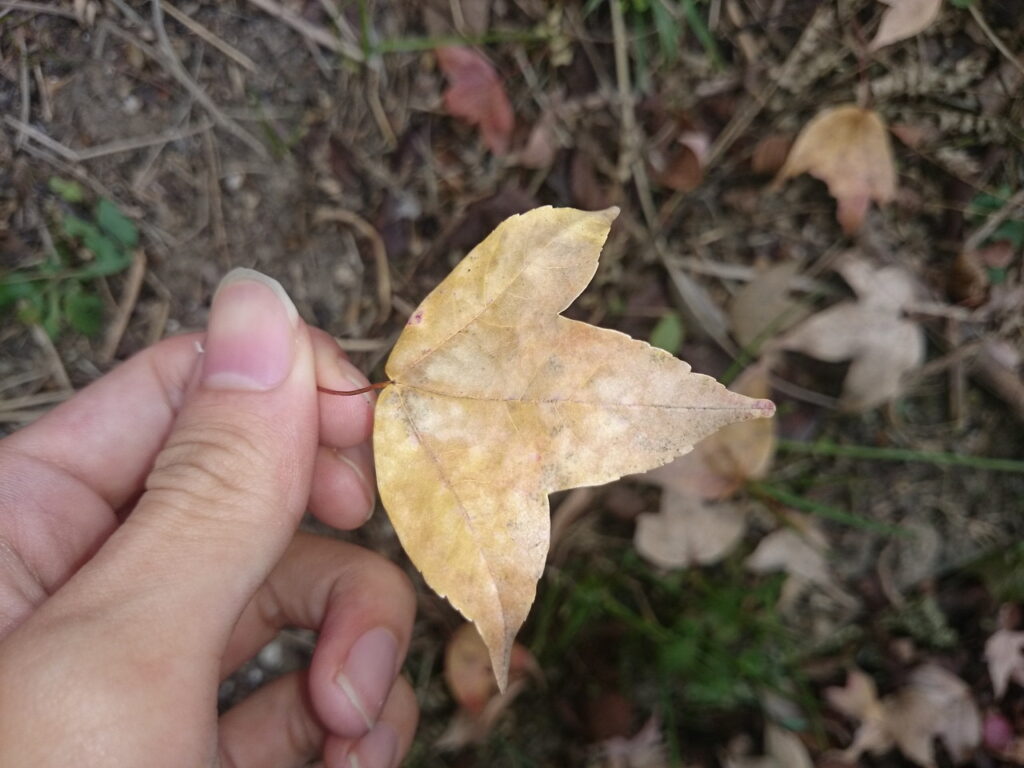
No.1335 Fuu Liquidambar formosana
A tall tree (Flora of China). It grows to a height of less than 30m, with a trunk sometimes reaching 1m in diameter. The bark is grayish-brown. The twigs are hairy or glabrous, sometimes with lenticels. The buds are ovate, 1cm long, and minutely pubescent. The stipules are red, almost separate or attached to the petiole, 1-1.4cm long, with petioles 8-12cm long and hairy. The leaf blade is broadly ovate, palmately 3-lobed, with 3 veins; the central lobe is large, the underside is usually dry grayish-white, hairy or glabrous, the base is rounded, the margin is glandular and serrated, the apex is caudate-acuminate to cordate to subcordate to truncate, and the veins are distinct on both sides. Flowering occurs from March to June. Male inflorescences are short spikes, sometimes in racemes. Female inflorescences have 24-43 flowers, the peduncle is 3-6cm long, sometimes with lenticels, and without glands. Male flowers have numerous stamens with unequal filaments and anthers slightly shorter than the filaments. Female flowers have 4-7 needle-shaped staminodes with teeth 4-8 mm long. The ovary is hairy. The style is 6-10 mm long and usually coils backward. Fruiting occurs from July to September. The inflorescence is spherical, 3-4 cm wide. The capsule retains the staminodes. The seeds are numerous and brown. It is distributed in Korea, China, Taiwan, Laos, and Vietnam, growing in sunny locations, near villages, and in mountain forests. It is cultivated as an ornamental plant in various countries, including Japan, and is somewhat common as a street tree and park tree, mainly in western Japan (Hayashi, 2014).
No. 1336 Liquidambar styraciflua
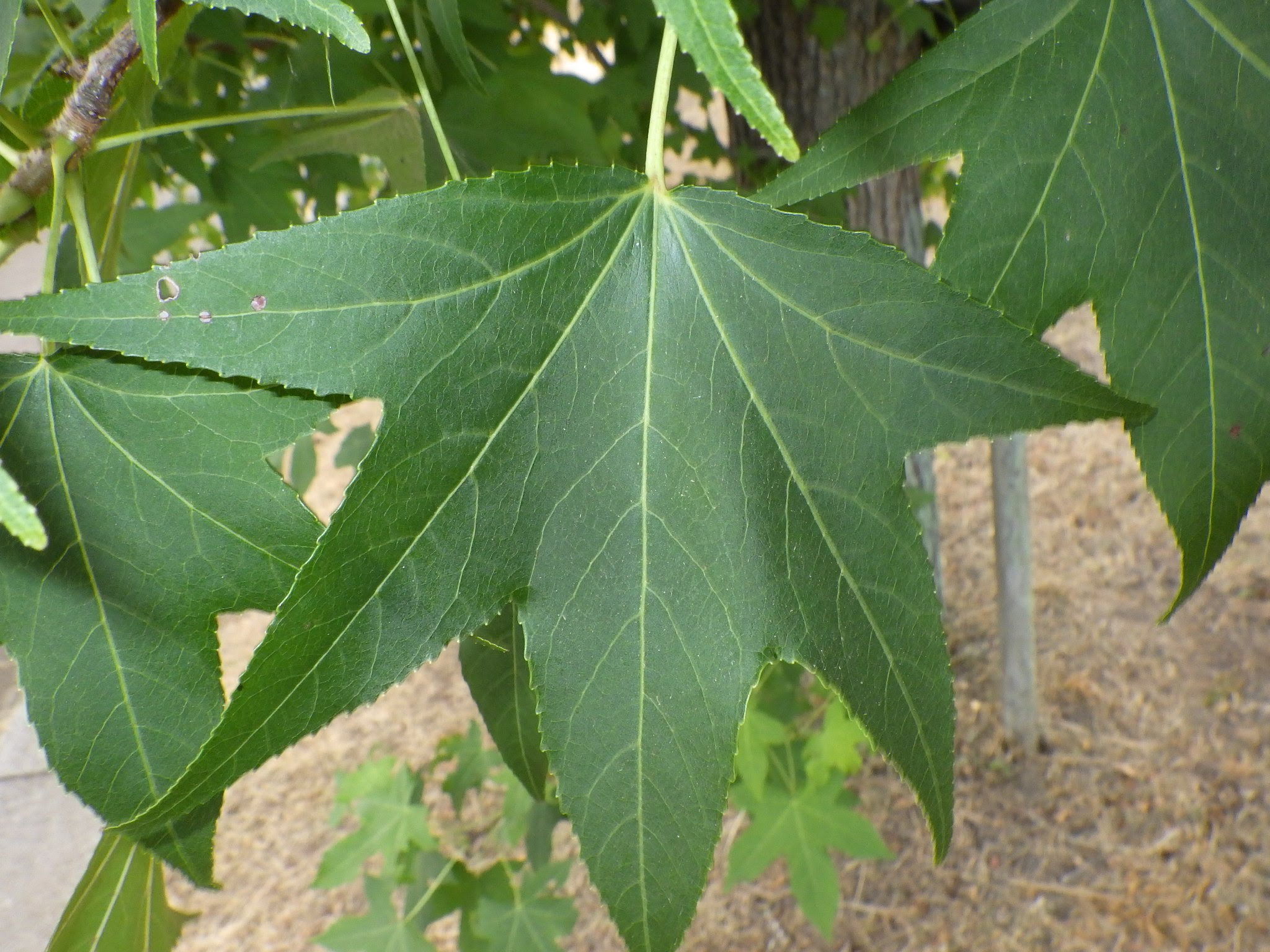
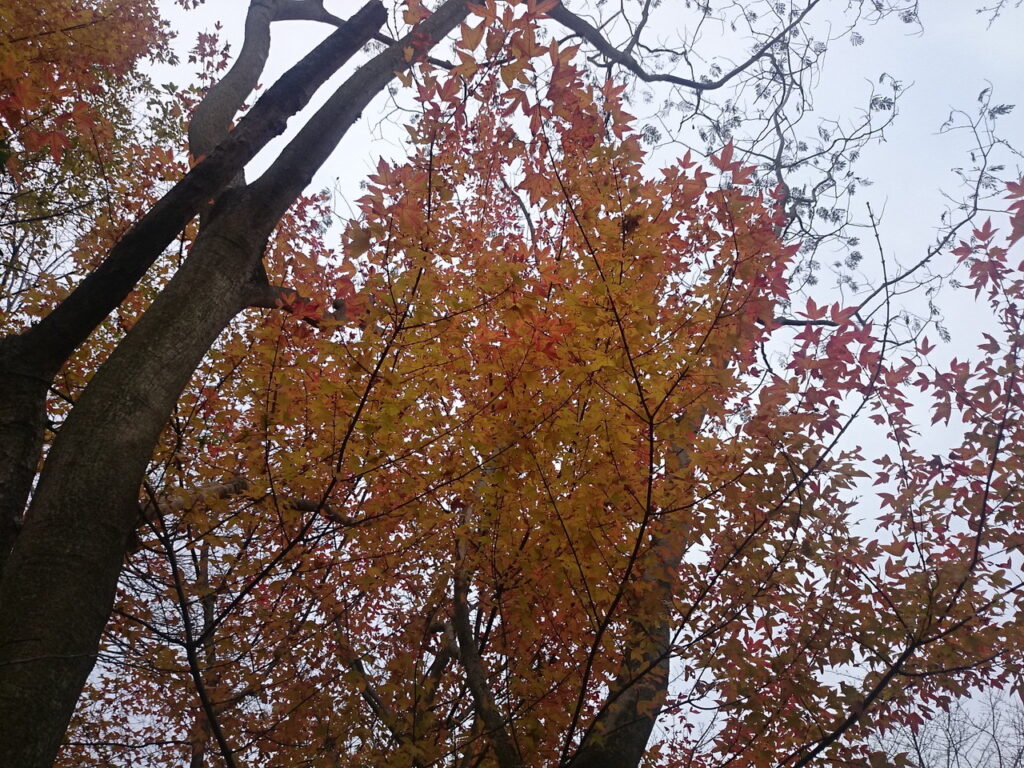
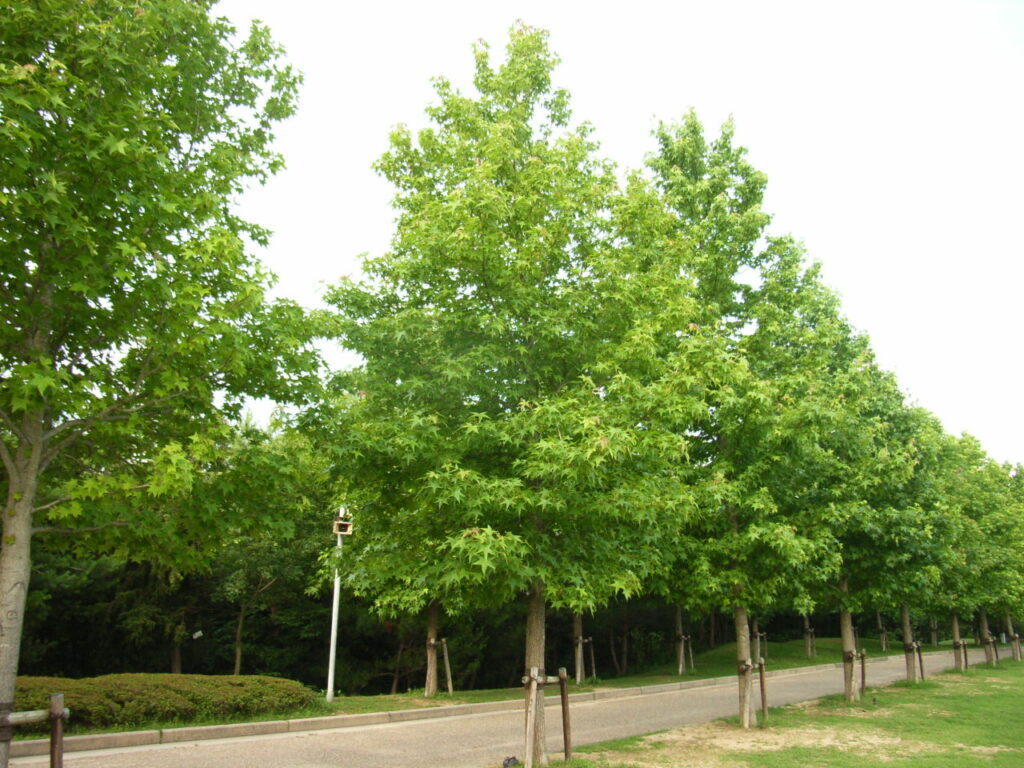
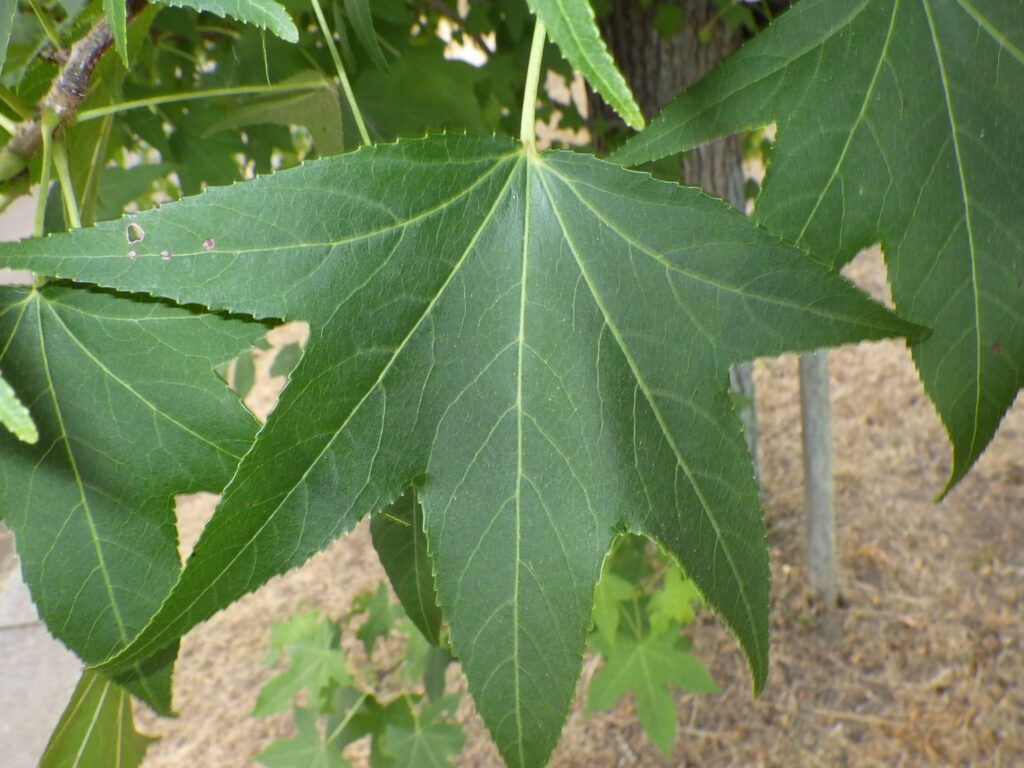
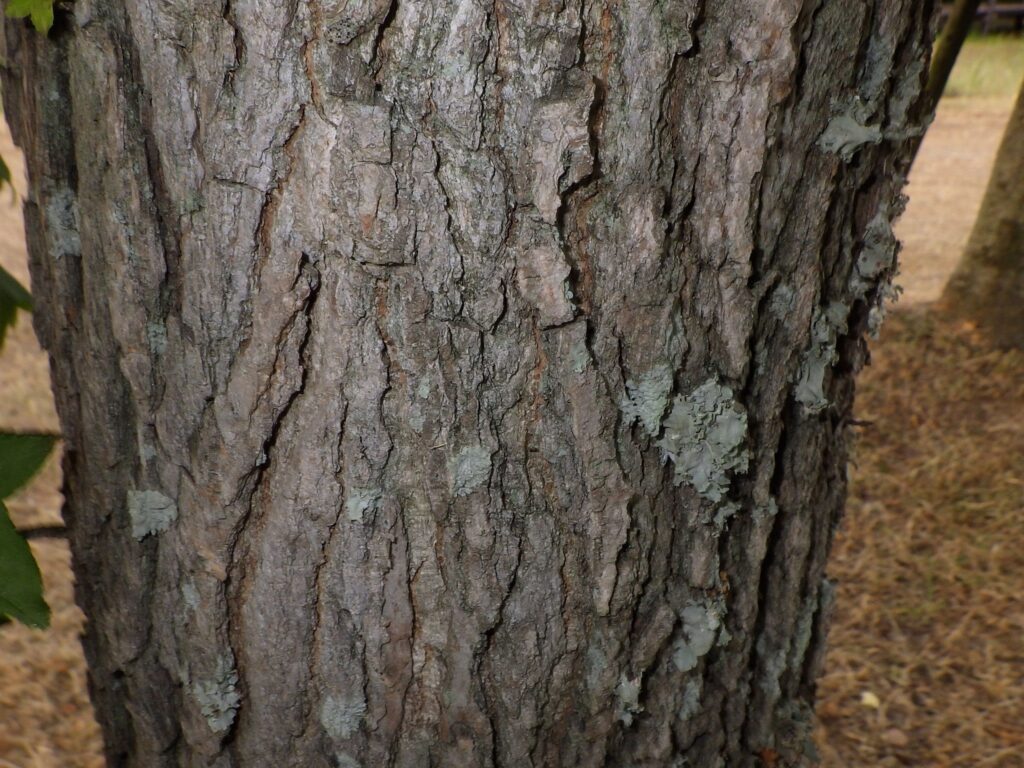
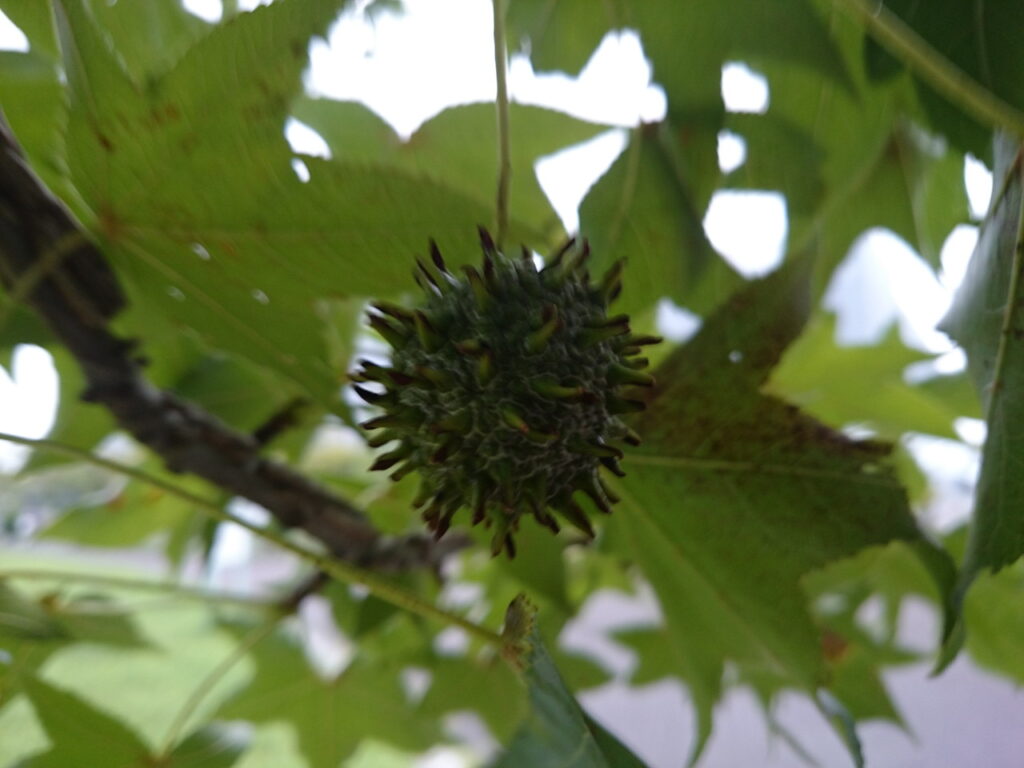
A tall tree (Flora of North America). Reaches a height of 41m or less. The stipules are linear-lanceolate, 3-4mm long, deciduous, and leave two stipule scars on the upper surface near the base of the petiole. The petiole is (44-)60-100 (-150)mm long. The leaf blade is palmately divided, with the main lobes sometimes again tooth-shaped, 7-19 (-25)cm long and 4.4-16cm wide. Young leaves have hairs on the veins and persistent reddish-brown simple hairs axils of the midrib at the base. Otherwise, the leaf surface is glabrous. Flowering occurs in spring (March-May). Male flowers are borne in dense cymes with peduncles, 3-6cm long, and lack a perianth. There are 4-8 (-10) stamens per flower, the hypanth is disc-shaped, and the disc has 5-8 staminodes around the circle of lobes. The ovary has (1-)2 chambers. There are two styles. The stigma curves inward. The capsule inflorescence turns brown when mature, is spherical, and 2.5-4 cm in diameter (including the hardened style). The seeds have wings at the tip, are 8-10 mm long, and have traces of resinous vessels. Immature seeds are brownish, 1-2 mm long, wingless, irregular, and resemble sawdust. It resembles maple trees, but the leaves are alternate and have fine serrations. It is distributed in North and South America. It is cultivated as an ornamental plant in various countries, including Japan, and is commonly seen in urban areas as a street tree and park tree (Hayashi, 2014). The hard, woody fruit containing numerous seeds is called a gumball; it has holes that allow the winged seeds to be dispersed by the wind, eaten by birds and arboreal squirrels such as Sciurini and Marmotini (Morris et al., 2008).
References
Ickert-Bond, SM, Pigg, KB, & Wen, J. 2007. Comparative infructescence morphology in Altingia (Altingiaceae) and discordance between morphological and molecular phylogenies. American Journal of Botany 94(7): 1094-1115. https://doi.org/10.3732/ajb.94.7.1094
Morris, AB, Ickert-Bond, SM, Brunson, DB, Soltis, DE, & Soltis, PS 2008. Phylogeographical structure and temporal complexity in American sweetgum (Liquidambar styraciflua ; Altingiaceae). Molecular Ecology 17(17): 3889-3900. https://doi.org/10.1111/j.1365-294X.2008.03875.x