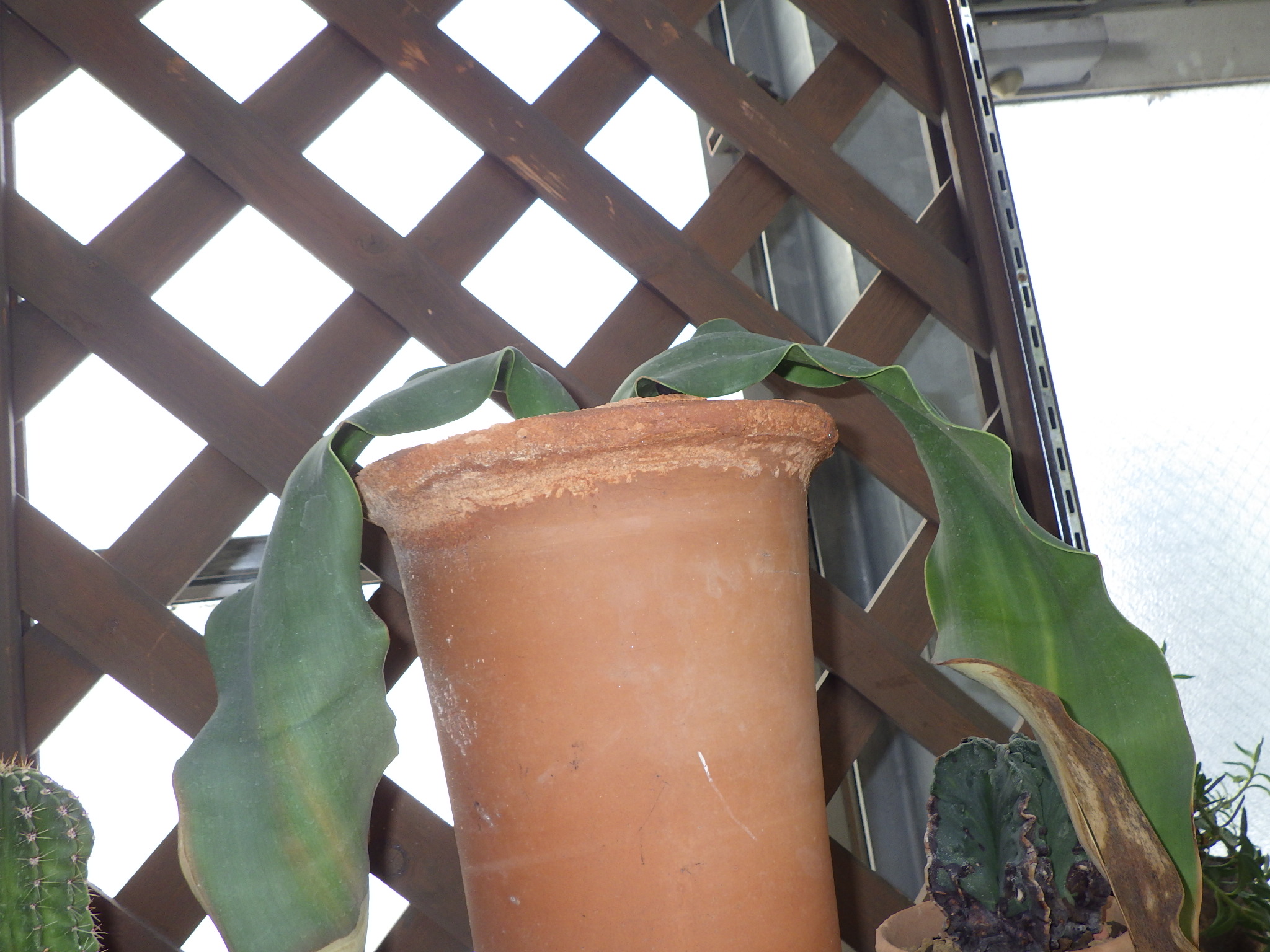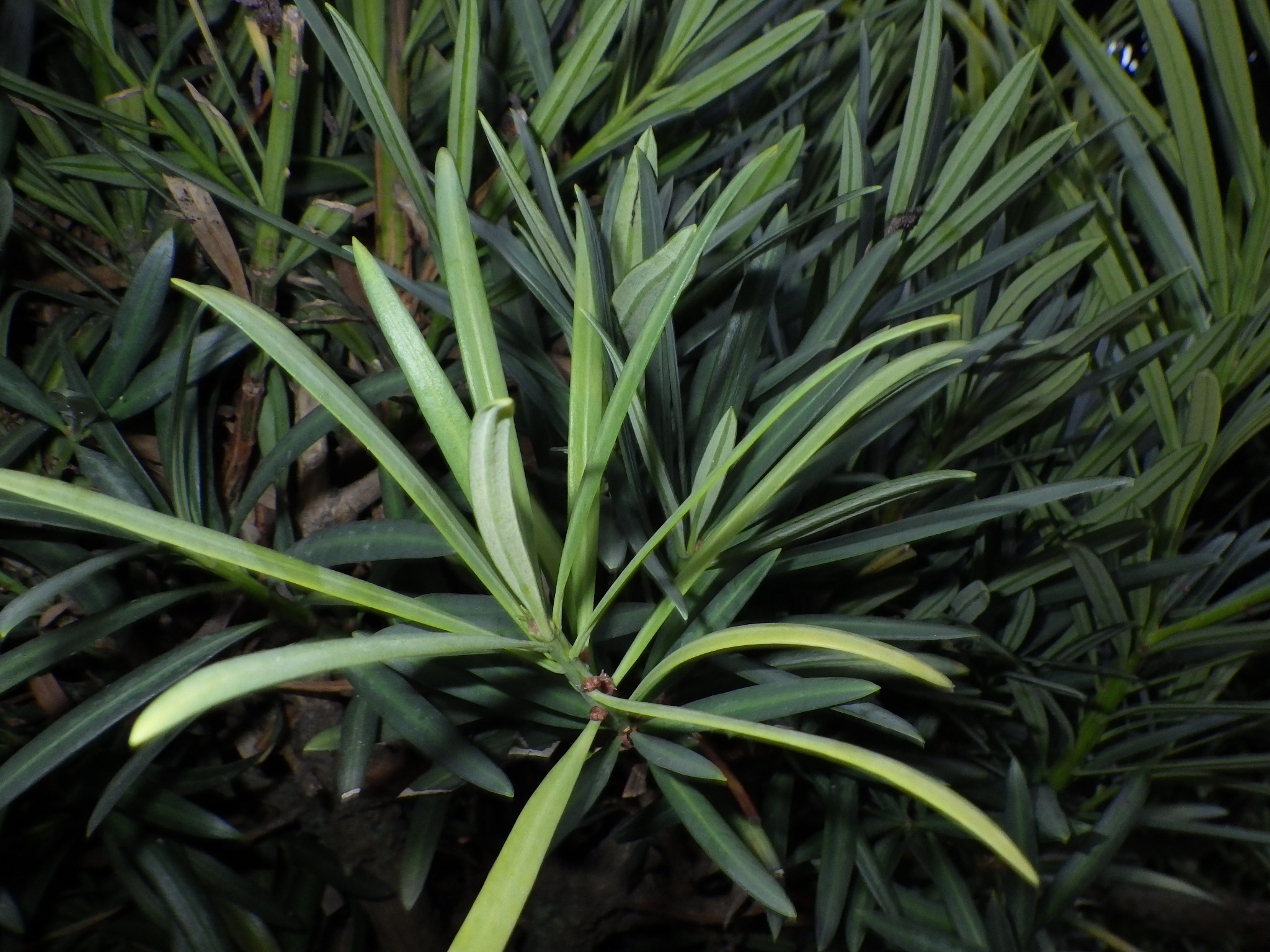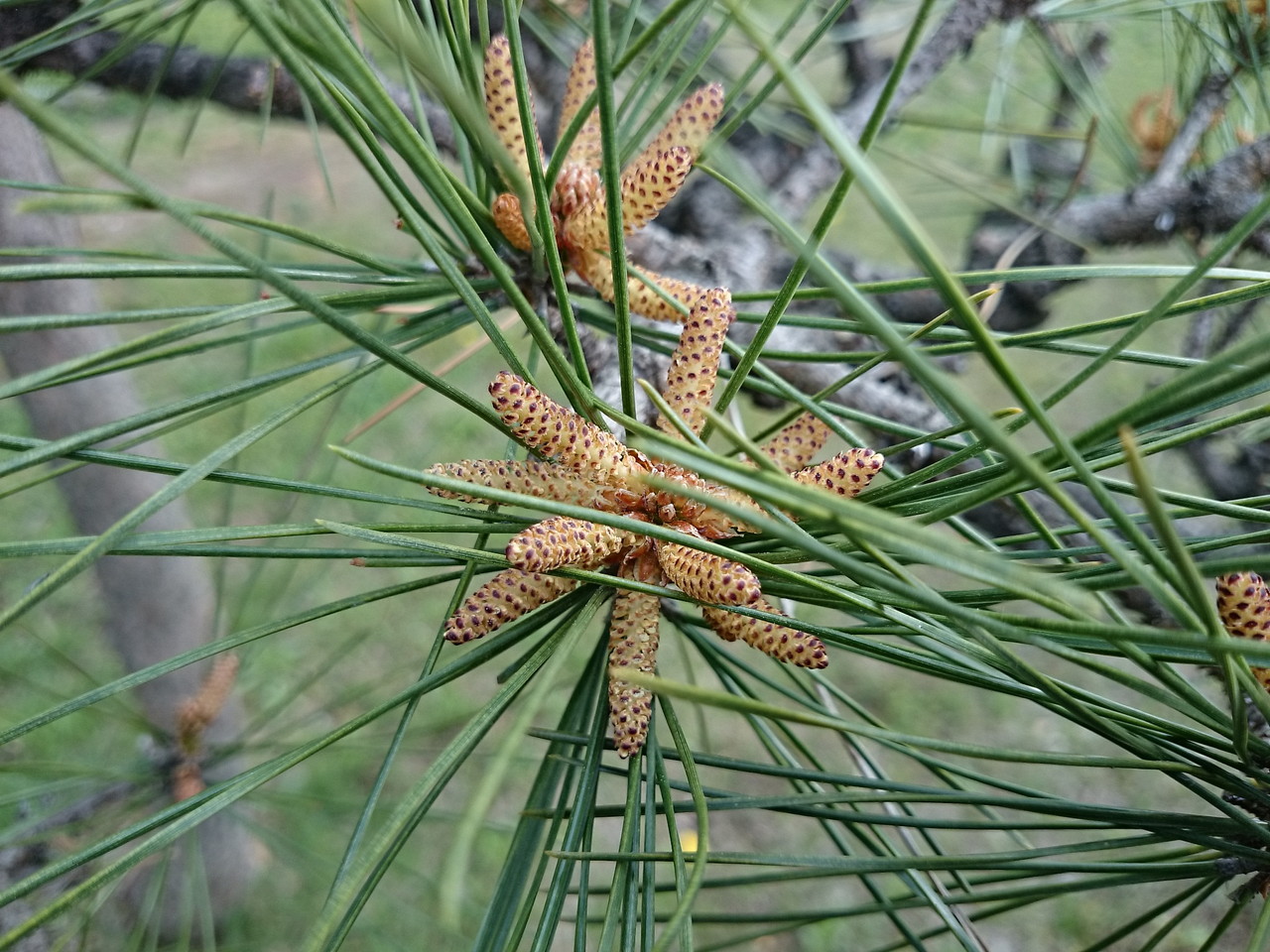
The Pinaceae family consists of evergreen, sometimes deciduous, trees or shrubs. The leaves are needle-shaped or linear. The flowers are unisexual and monoecious. Male flowers have numerous stamens arranged spirally. Female flowers consist of numerous scales arranged spirally. Each scale is paired with an outer bract scale and an inner seed scale, their bases fused, and two ovules attached to the adaxial base of the seed scale. At flowering, the bract scale is large and the seed scale is small. After flowering, as the seeds mature, the seed scale enlarges and becomes a cone commonly called a "pine cone." The bract scale does not develop after flowering and becomes like an appendage on the outside of the seed scale. Seeds are attached in pairs on the adaxial side of the seed scale, and most have a wing on one side. Eleven genera and 225 species are known, mainly in the Northern Hemisphere. Six genera and about 23 species are native to Japan.
This article provides a comprehensive, illustrated guide to plants belonging to the pine family.
The basic information is based on the Kanagawa Prefecture Flora Survey Association (2018). Photos are replaced as better ones become available. While the identification is done by the author, please note that misidentifications may be corrected without notice.
- No.0004 Picea jezoensis var. jezoensis
- No.0005.a Norway spruce (Picea abies)
- No.0006 Picea torano
- No.0009 Picea glehnii (Sakhalin Pine)
- No.0009.a Colorado Spruce (Picea pungens 'Globosa')‘
- No.0010 Tsuga sieboldii
- No.0013 Fir (Abies firma)
- No.0014 Abies homolepis
- No.0022 Himalayan Cedar (Cedrus deodara)
- No.0022.a Lebanese Cedar (Cedrus libani)
- No.0023 Japanese Red Pine (Pinus densiflora)
- No.0025 Japanese Black Pine (Pinus thunbergii)
- No.0028 Pinus parviflora var. parviflora
- No.0029 Pinus amamiana
- No.0030.a Ryukyu Pine (Pinus luchuensis)
- No. 0031 Dwarf Pine (Pinus pumila)
- No.0031.a Macedonian Pine (Pinus peuce)
- References
No.0004 Picea jezoensis var. jezoensis
Also known as black spruce. The bark is grayish-blackish brown and peels off in irregular, scaly flakes. The branches droop slightly. Young branches are light brown and slightly glossy. The leaves are 10-20 mm long, and the cones are oblong, 4-8 cm long. It is distributed in Hokkaido, the Southern Kuril Islands, Sakhalin, Kamchatka, Eastern Siberia, Korea, and Northeast China. It is sometimes planted in parks and other public spaces.
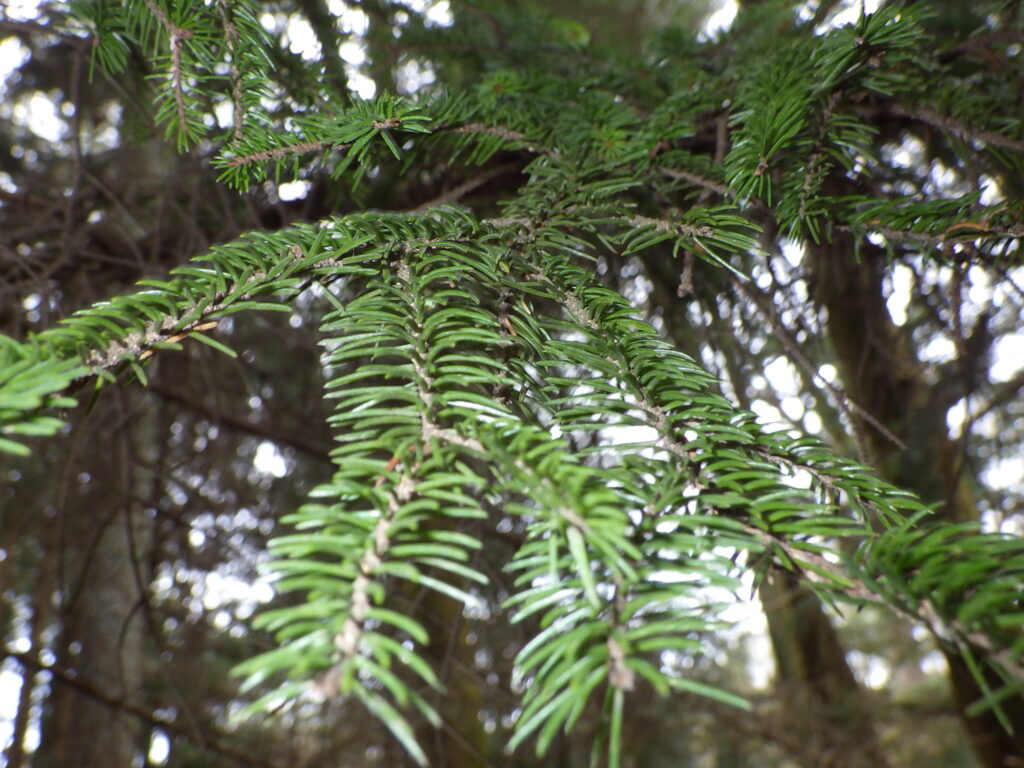
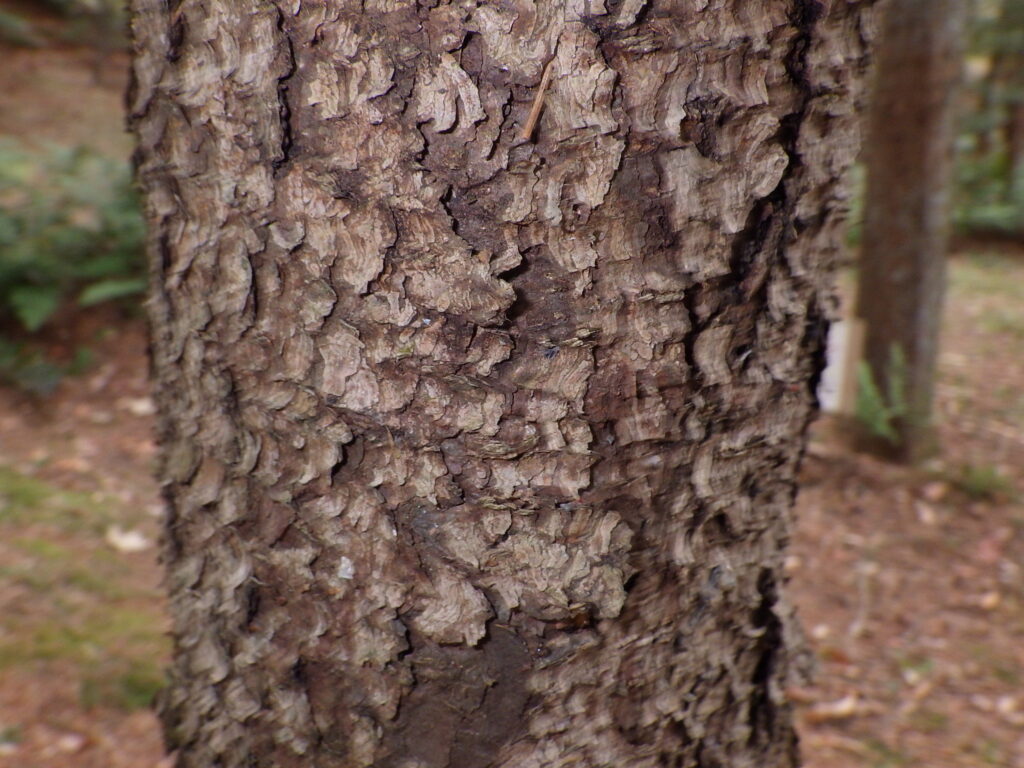
No.0005.a Norway spruce (Picea abies)
Also known as European spruce or European spruce, its bark is brown to grayish-brown and peels off in irregular, scaly flakes. The leaves are about 20mm long and slightly arched. The cones are cylindrical, 10-20cm long, and become conspicuously bright brown when ripe. Native to Europe, it was introduced to Japan in the mid-Meiji period. Many horticultural varieties exist, and it is widely planted in parks and private gardens.
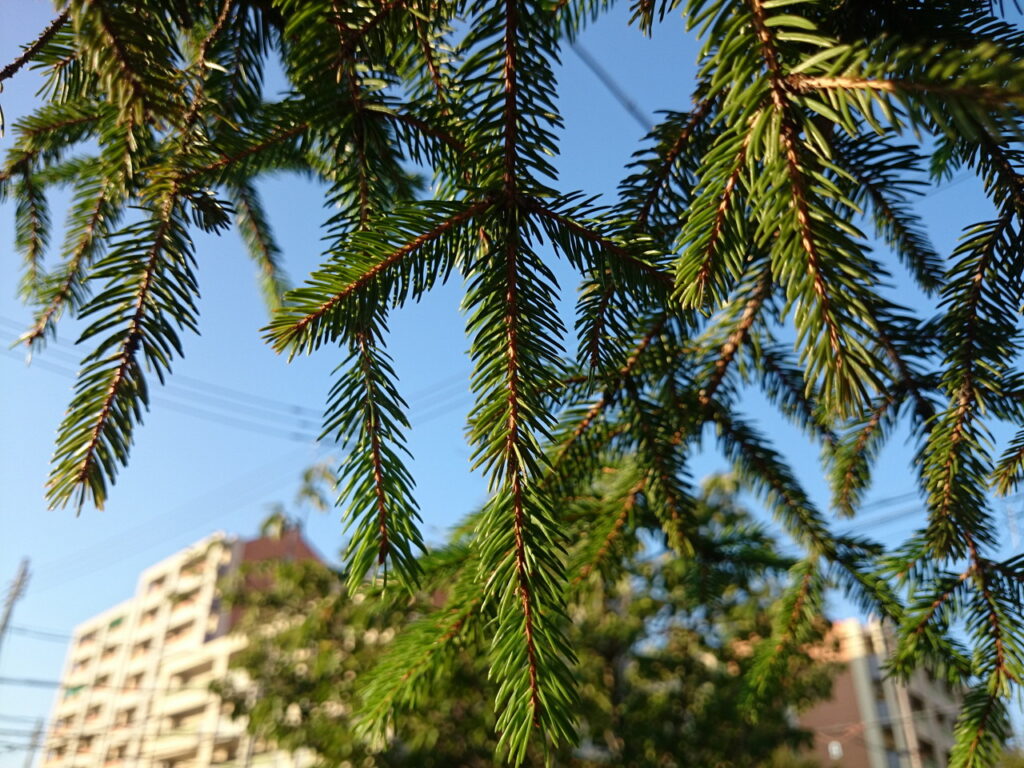
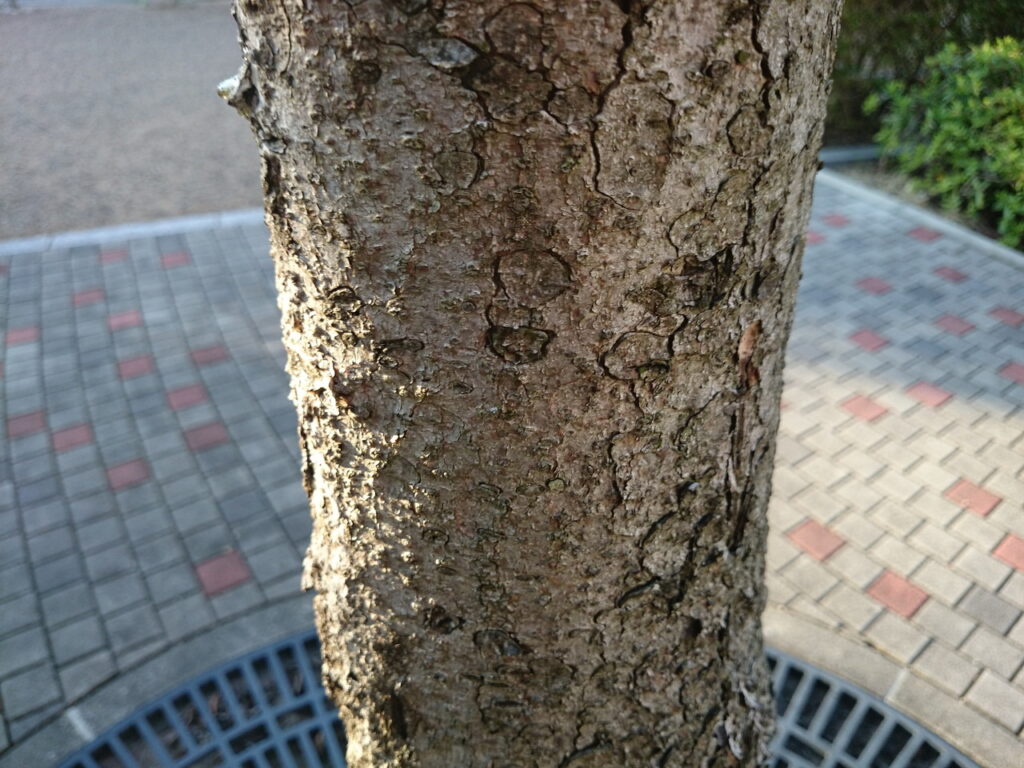
No.0006 Picea torano
Also known as rose fir. The bark is grayish-brown to grayish-black and peels off in thick, scaly flakes. Young branches are pale yellow to pale yellowish-brown and hairless. The leaves are 15-25 mm long, slightly curved, with a square cross-section and a sharply pointed tip that is painful to the touch. The cones are oblong-ovate, 5-10 cm long, and turn brown when mature. The seed scales are obovate, and the bract scales are extremely small. It is distributed in Honshu (south of Fukushima Prefecture), Shikoku, and Kyushu. The resin of the rose fir has been collected and used for lighting.
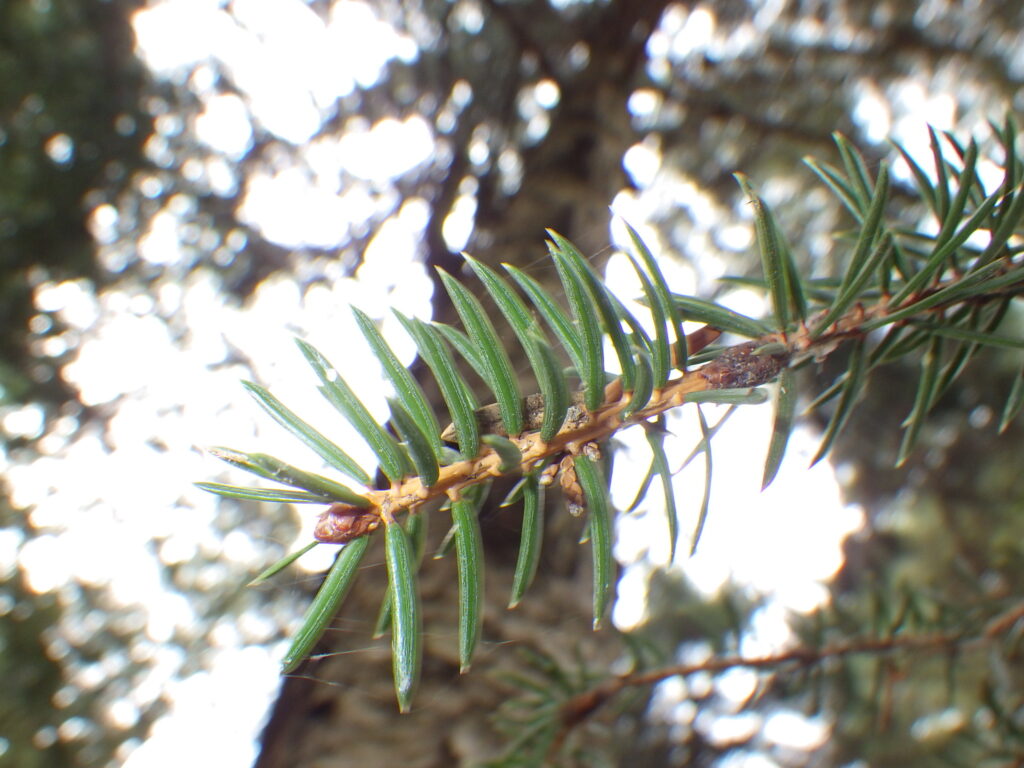
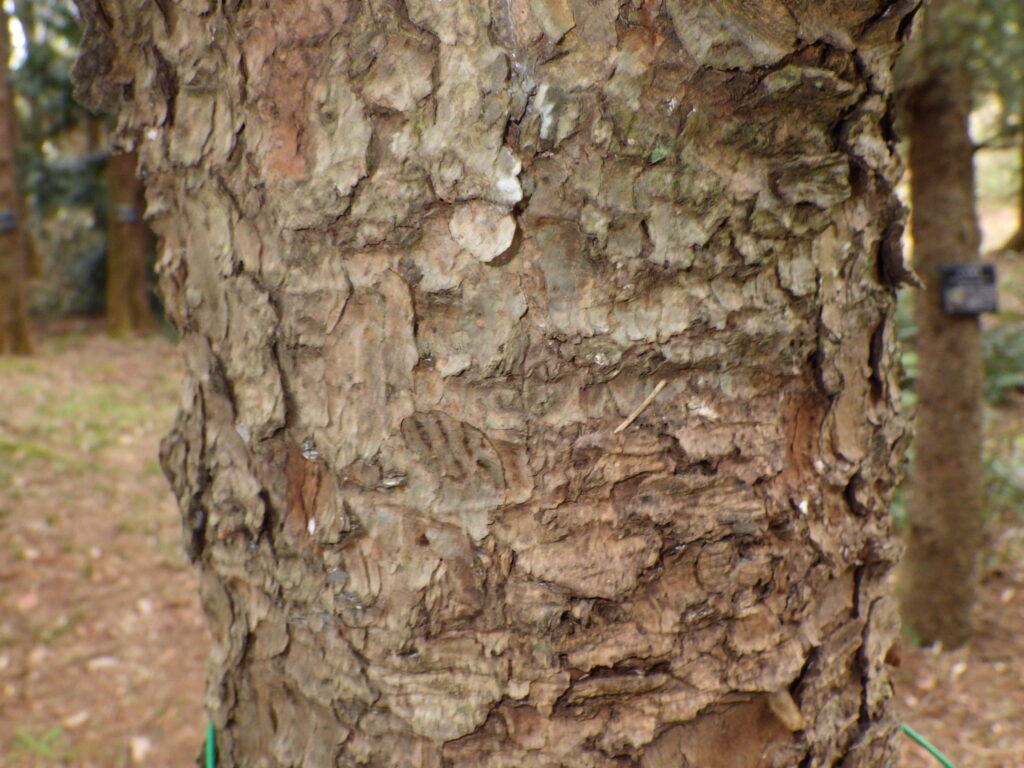
No.0009 Picea glehnii (Sakhalin Pine)
Also known as Shinkomatsu, its bark is reddish-brown and peels off in irregular, scaly flakes. Young branches are reddish-brown and densely covered with fine hairs, but branches bearing cones are almost hairless. The pulvinus protrudes. The cones are oblong, 5-9 cm long, and turn brown when ripe. It is distributed in Hokkaido and Honshu (north of Mt. Hayachine). It is sometimes planted in parks and other public spaces.
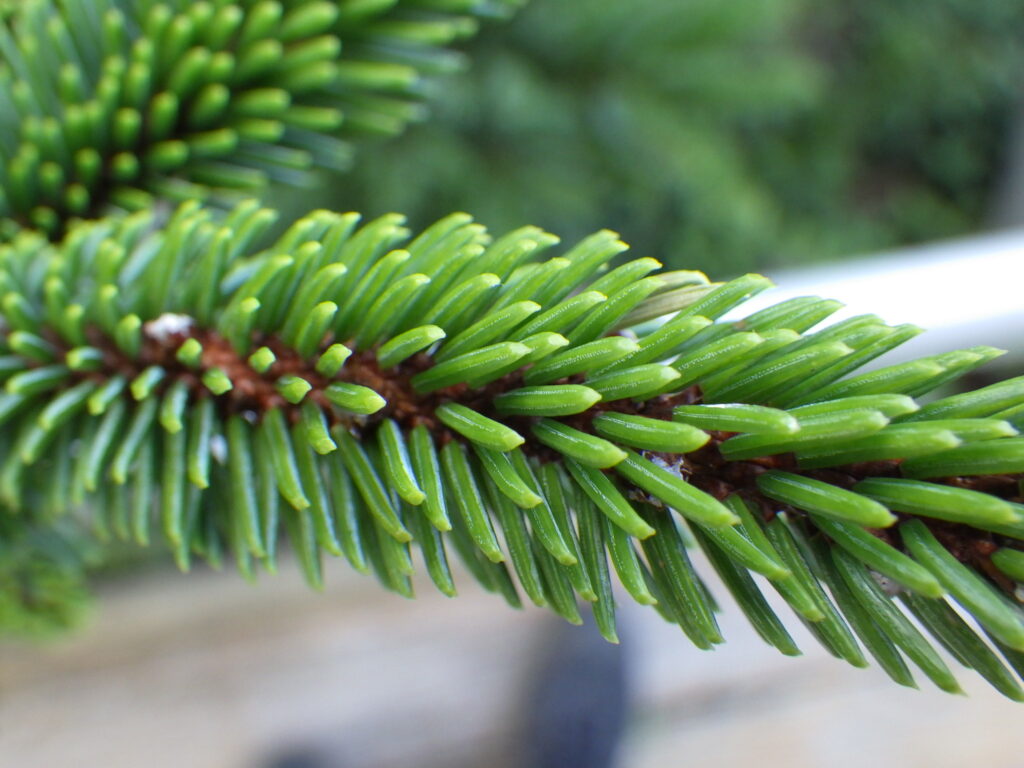
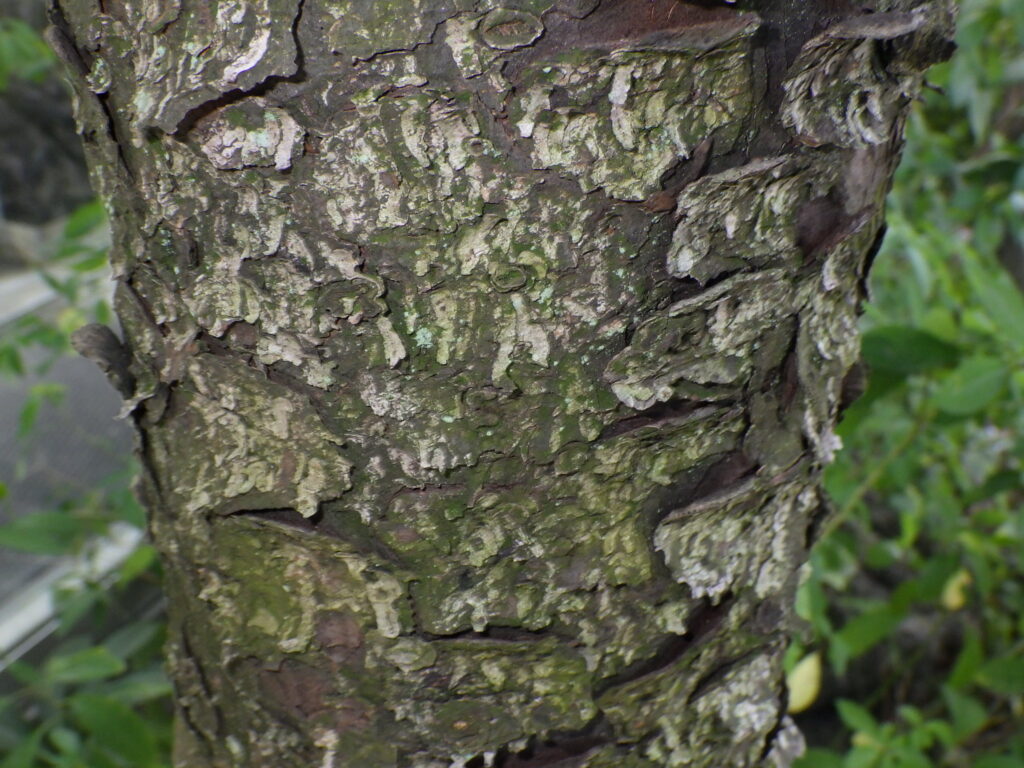
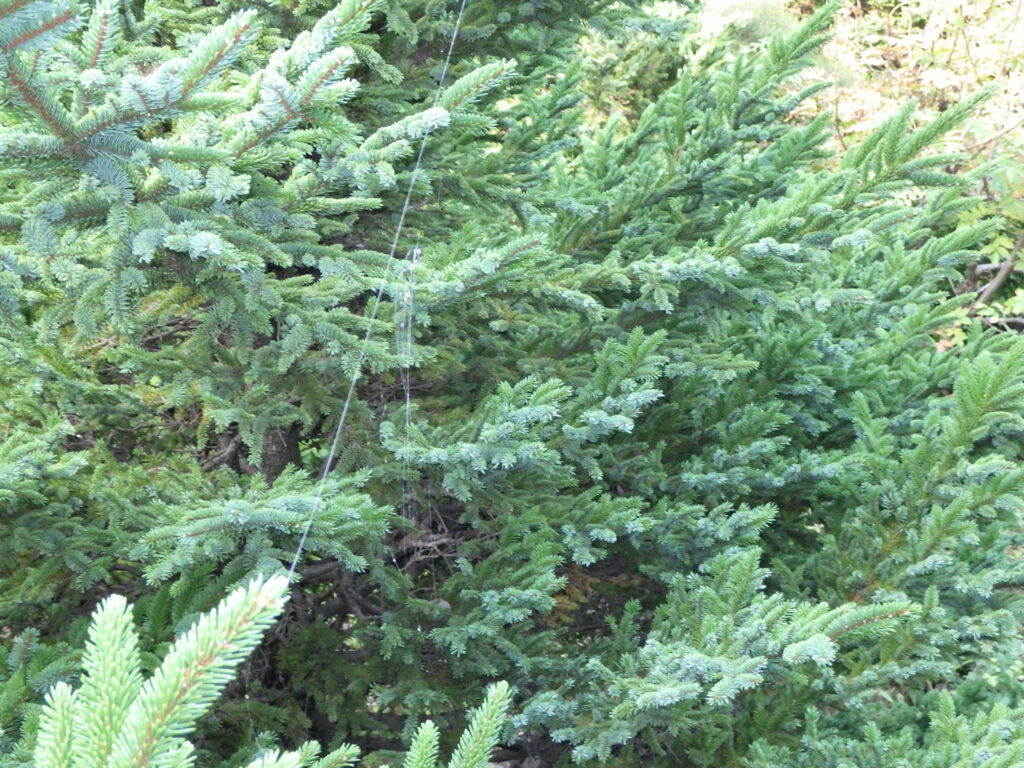
No.0009.a Colorado Spruce (Picea pungens 'Globosa')‘
Also known as Picea pungens, blue spruce, or green spruce, it is an evergreen tree. In the wild, it can grow to over 20 meters in height, but when planted in parks and gardens, it remains at a size of 5 to 15 meters. The tree has a basic cylindrical-conical shape, with branches branching horizontally. The branches are yellowish-brown, and the trunk is covered with gray, scaly bark. The leaves are needle-shaped, about 3 cm long, and are arranged all around or radially on the branches, with a blue, powdery waxy surface. The cones are light brown and about 10 cm long. Its native range is the Rocky Mountains from Colorado to Wyoming in the United States. The photo shows the variety 'Globosa'.
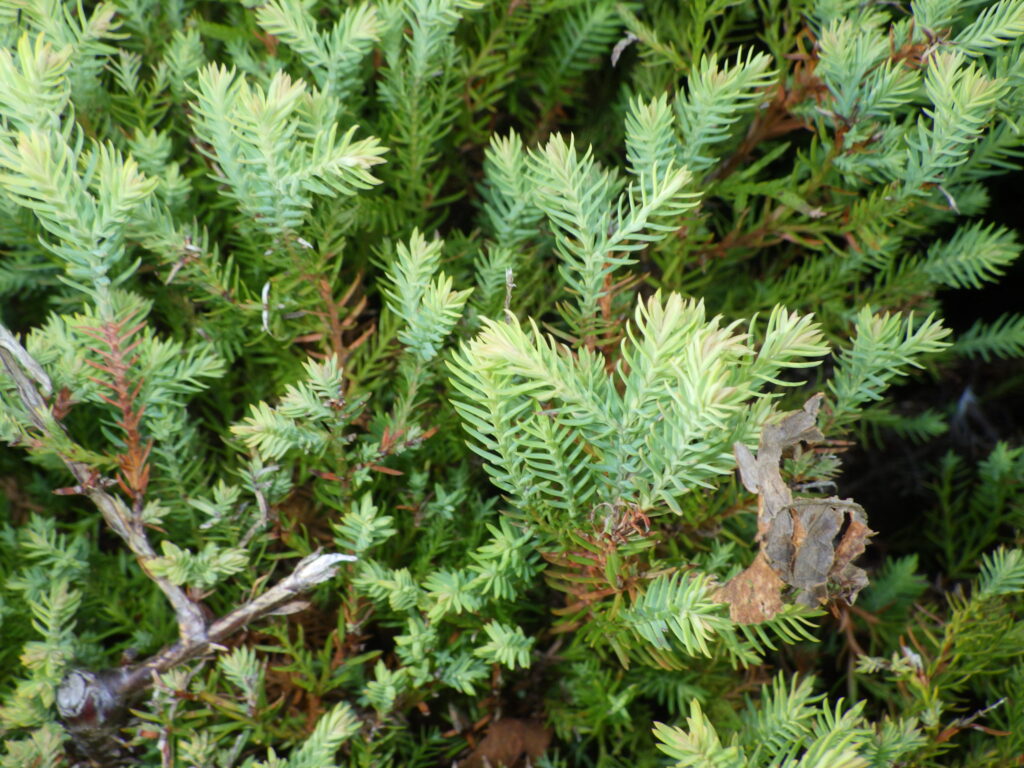
No.0010 Tsuga sieboldii
The bark is grayish-reddish-brown, deeply fissured longitudinally, and peels off in irregular, scaly flakes. Young branches are yellowish-brown, slightly glossy, and hairless. Leaves are 10-20 mm long. Flowers bloom in April-May, and cones mature around October. Cones have curved stalks and hang down. Seed scales are circular to obovate, about 1 cm long and wide. It is distributed in Honshu (west of Mt. Yamizo in Fukushima Prefecture), Shikoku, Kyushu (up to Yakushima), and Korea (Ulleungdo). It grows in rocky areas along streams and on steep slopes with poorly developed soil.
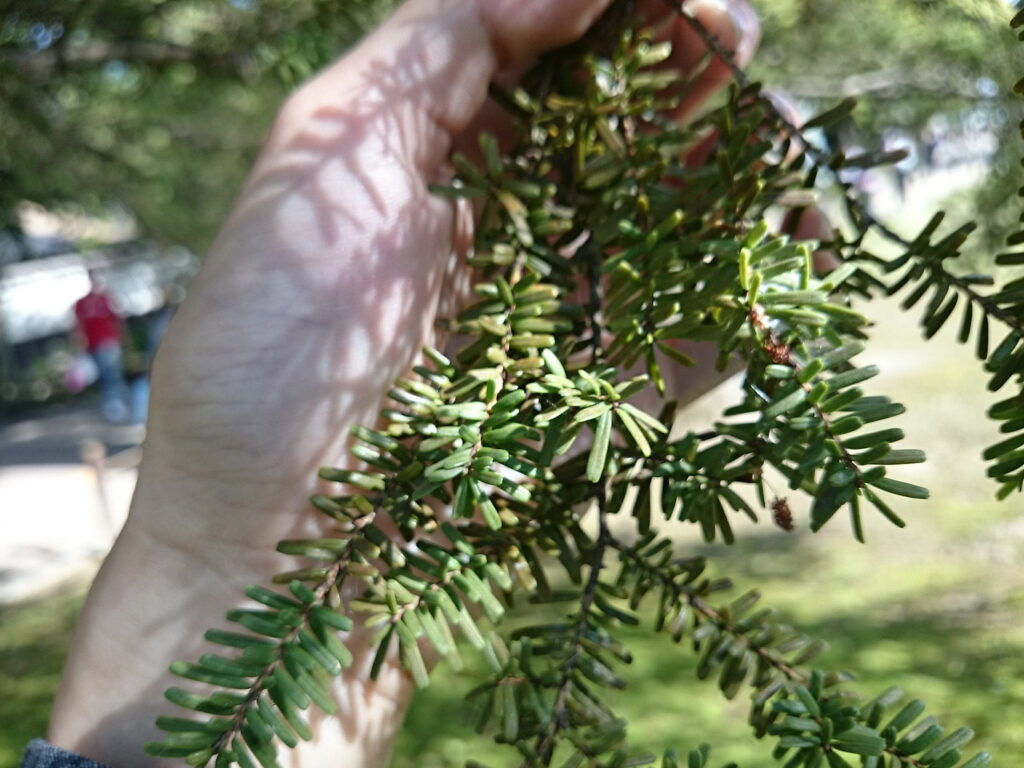
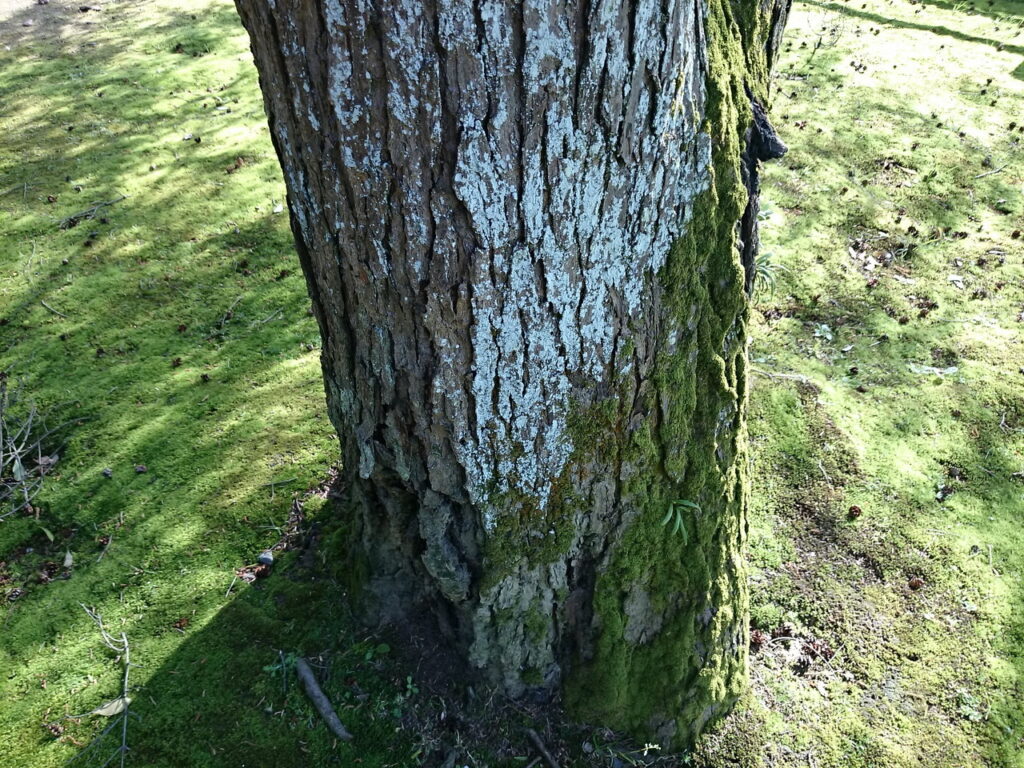
No.0013 Fir (Abies firma)
The bark is yellowish-gray and peels off in small, somewhat scaly flakes. In young trees, the leaves are sharply bifurcated at the tip, while in mature trees, the tip becomes slightly notched. It flowers in May. The female flowers are yellowish-green. The cones are cylindrical and grayish-green to yellowish-brown. The seed scales are fan-shaped and about 2 cm long. The tips of the bract scales are pointed and protrude straight out from the joint of the seed scales. It is distributed in Honshu (south of Akita and Iwate prefectures), Shikoku, and Kyushu (up to Yakushima).
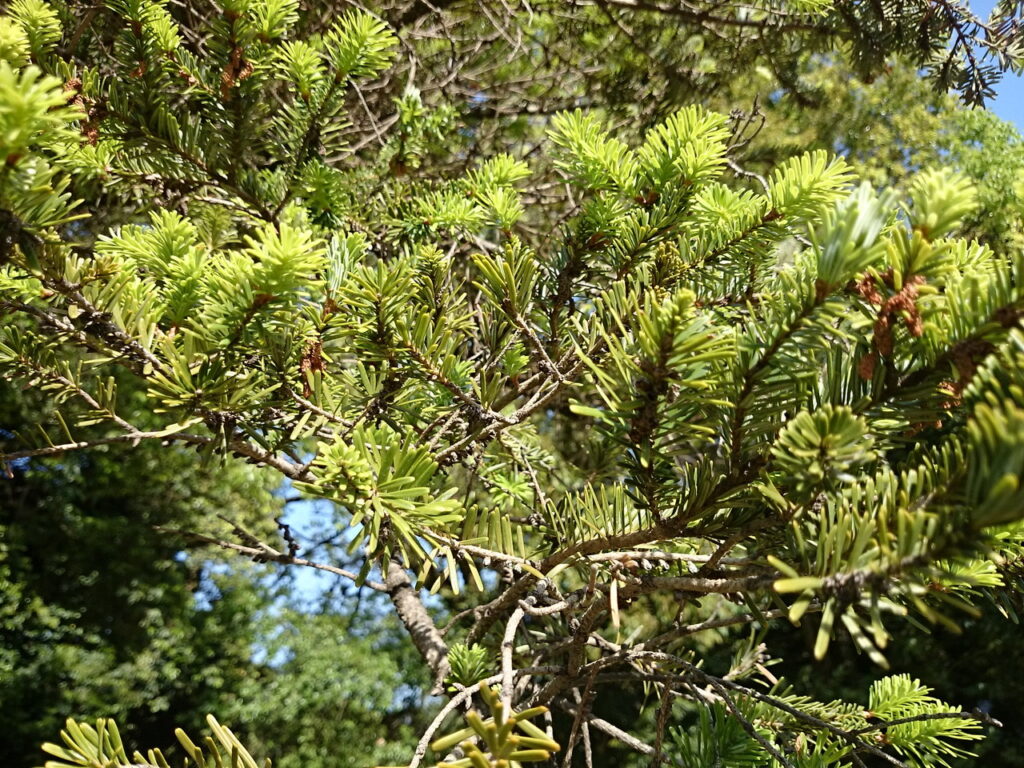
No.0014 Abies homolepis
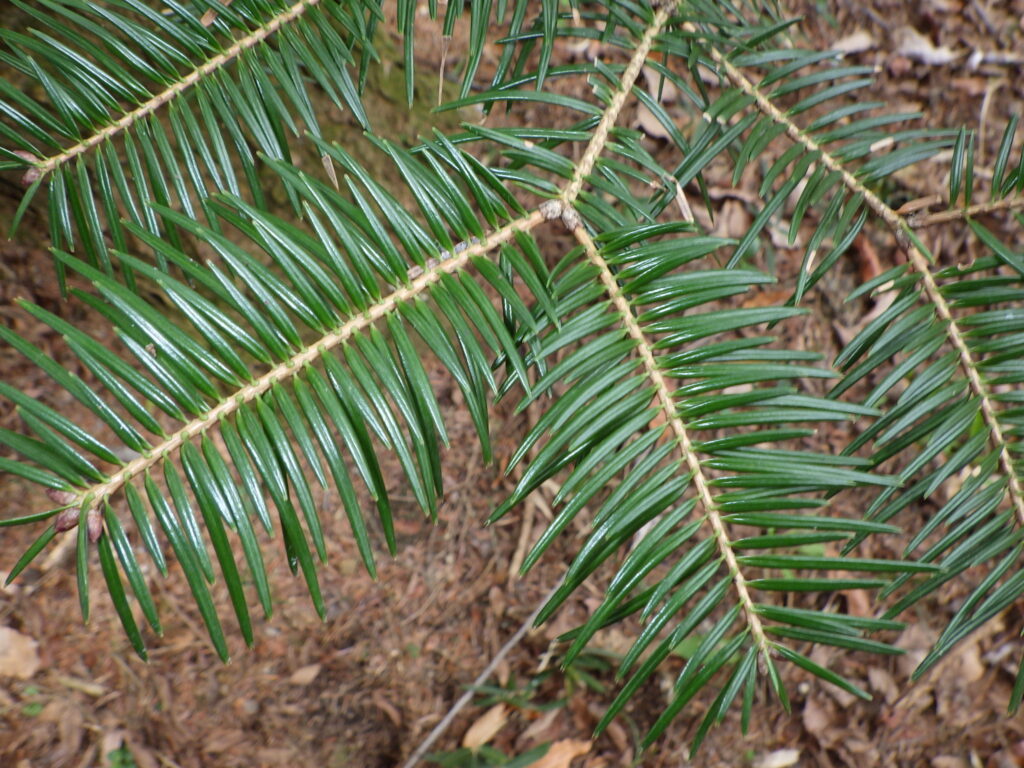
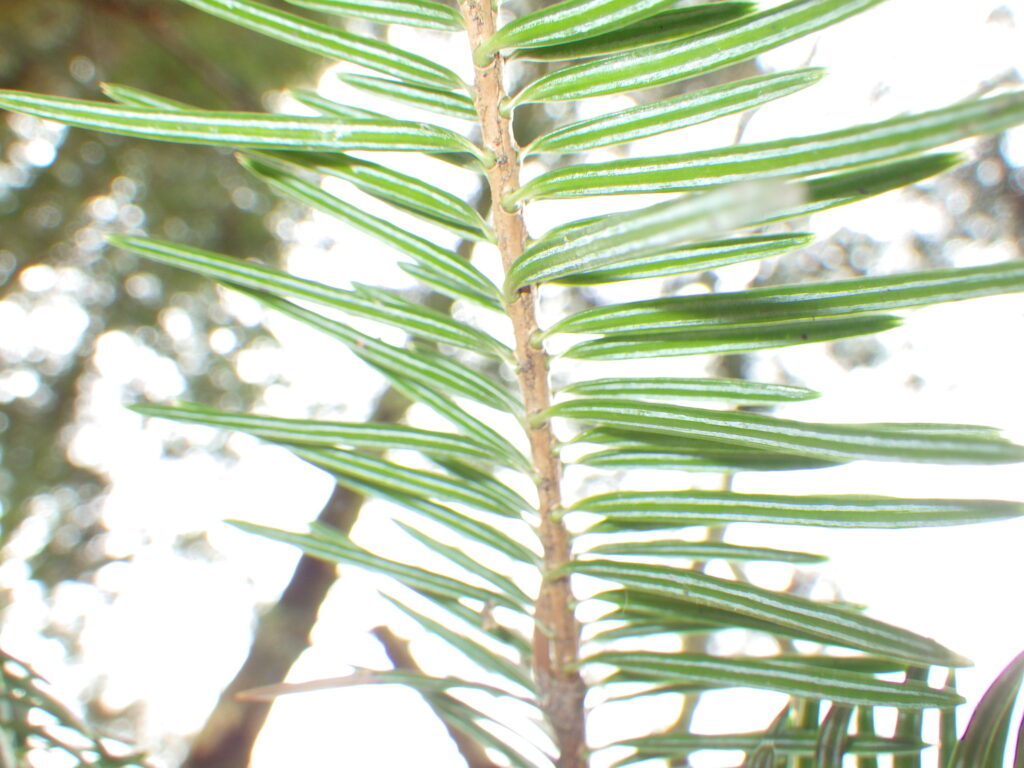
This is an evergreen tree. The bark is grayish-brown and peels off in somewhat coarse, scaly flakes. The leaves have prominent white stomatal bands on the underside, and the tips are obtuse to slightly notched. It flowers from May to June. The female flowers are reddish-purple. The cones are cylindrical, ripening to a dark purple color, 7-12 cm long and 3-4 cm wide. The seed scales are fan-shaped with a wedge-shaped base, 2-2.5 cm long. The bract scales are about half the length of the seed scales and have rounded tips. It is distributed in Honshu (Fukushima Prefecture to the Chubu region and the Kii Peninsula) and Shikoku at altitudes of 1,000-2,000 m.
No.0022 Himalayan Cedar (Cedrus deodara)
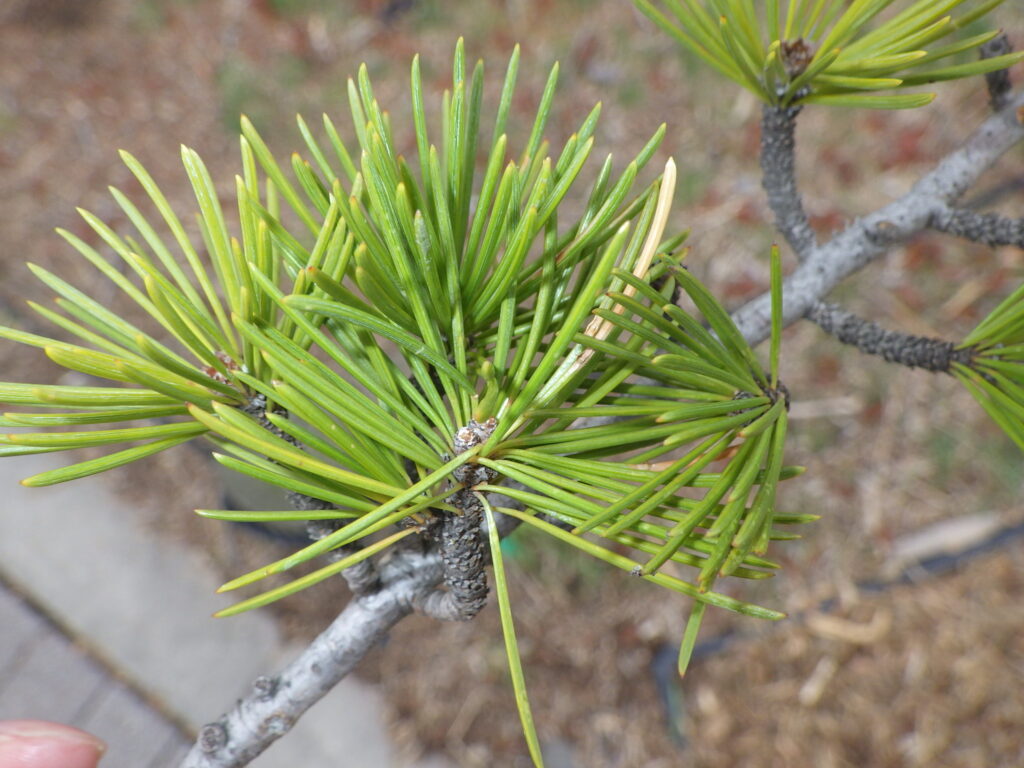
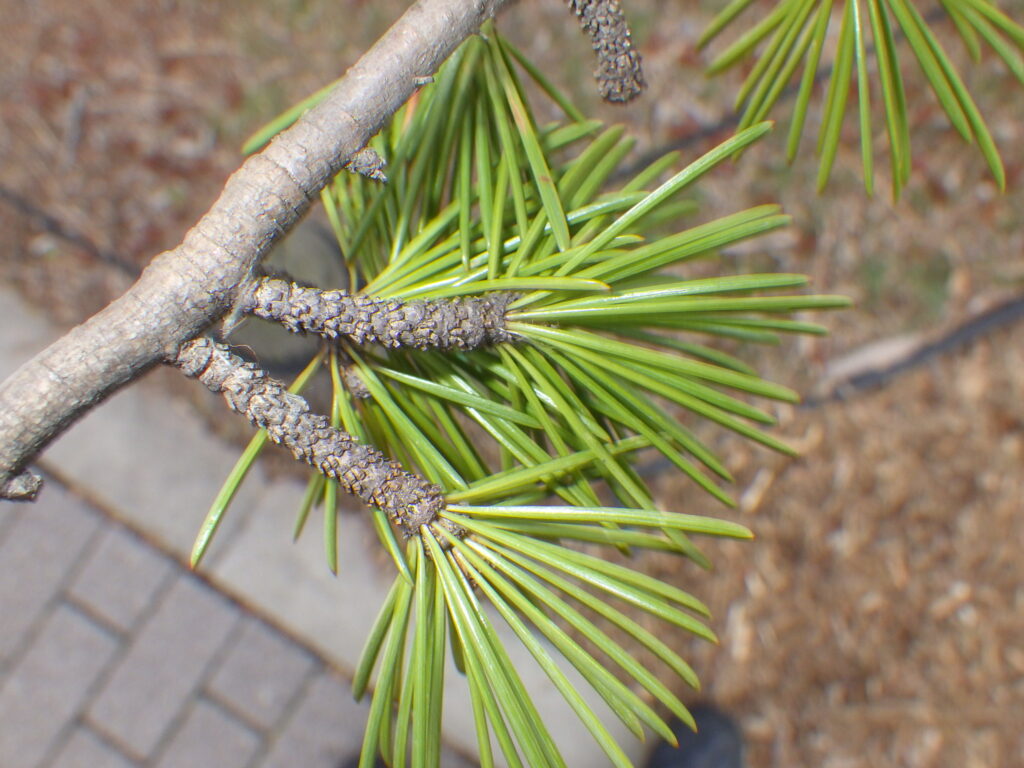
Also known as Himalayan cedar, it is an evergreen tree. Its leaves are needle-shaped, 3-5 cm long. The male flowers are oblong, 3-5 cm long, and grow at the tips of short branches. The cones are oval-shaped, 6-13 cm long, and when mature, the seed scales fall off, leaving only the stalk on the branch. It is distributed from the western Himalayas to Afghanistan. It is widely planted in schools, parks, and even private gardens. It is believed that the first Japanese tree to be introduced to Yokohama was the Englishman John Henry Brooke (1826-1902) in the early Meiji period, and his grave is located in the foreign cemetery in Yamate-cho, Naka-ku, Yokohama. It produces many seeds, but the germination rate is poor, so it is thought that few escapes from cultivation occur.
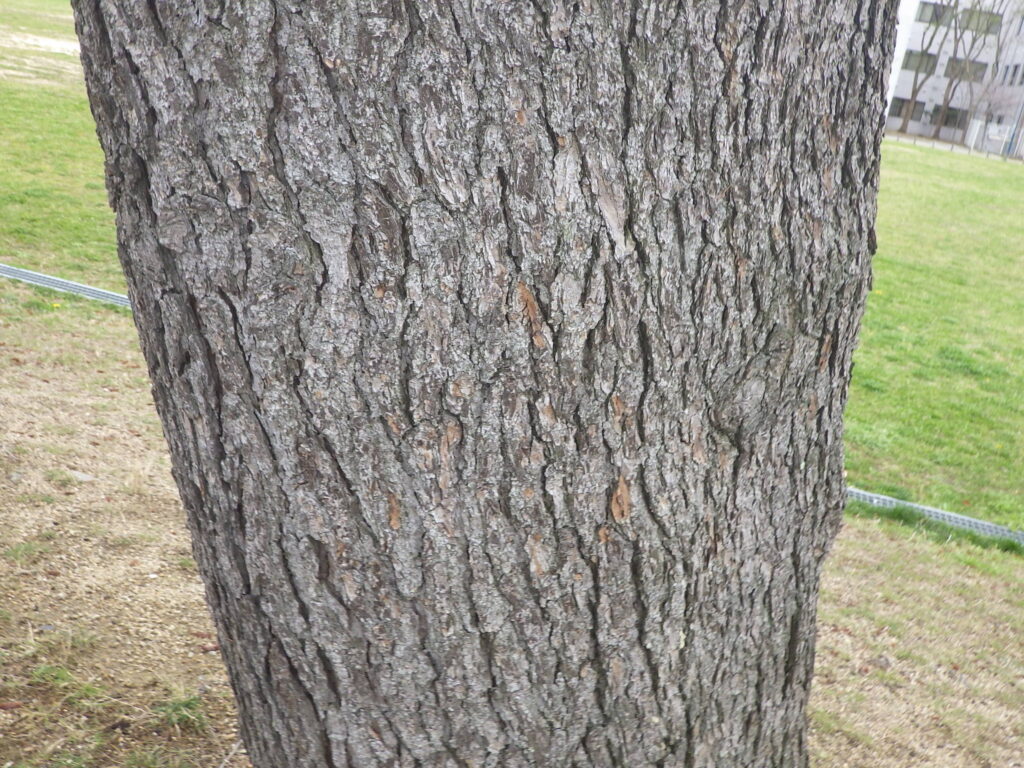
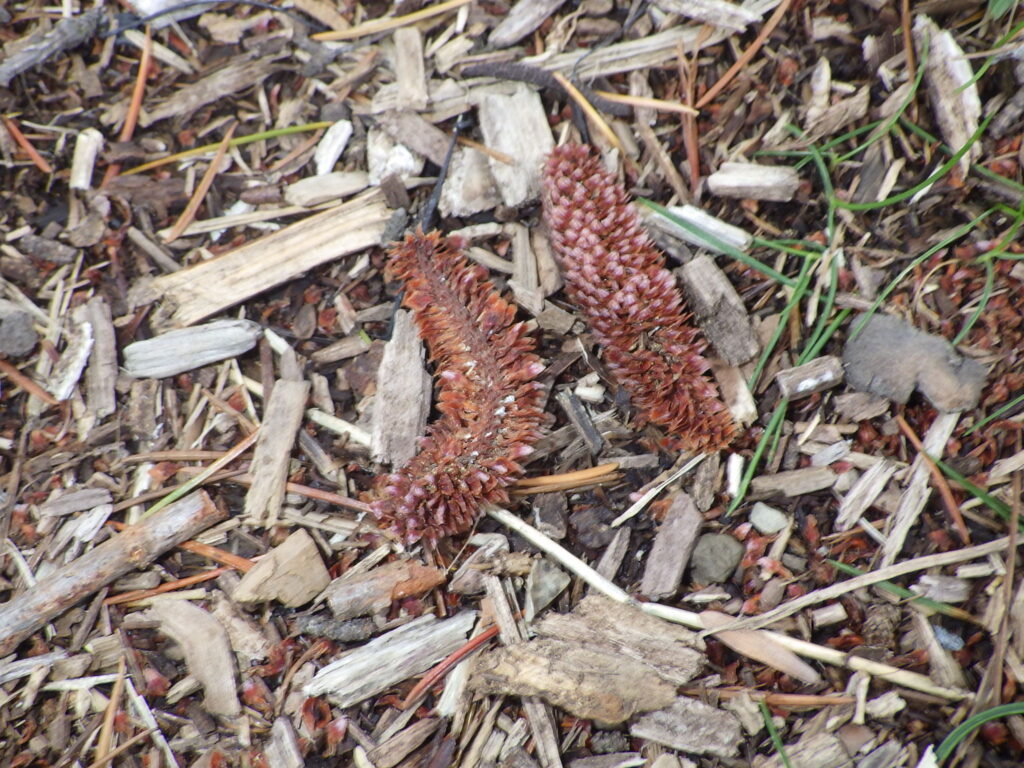
No.0022.a Lebanese Cedar (Cedrus libani)
A large evergreen tree, reaching a height of 40m. Its bark is grayish-black and fissured vertically. Branches grow horizontally. The leaves are dark green, growing in clusters of 30-40 on short branches. The seeds are triangular-ovate. It is distributed in Lebanon, Syria, and Turkey. It is cultivated in Japan.
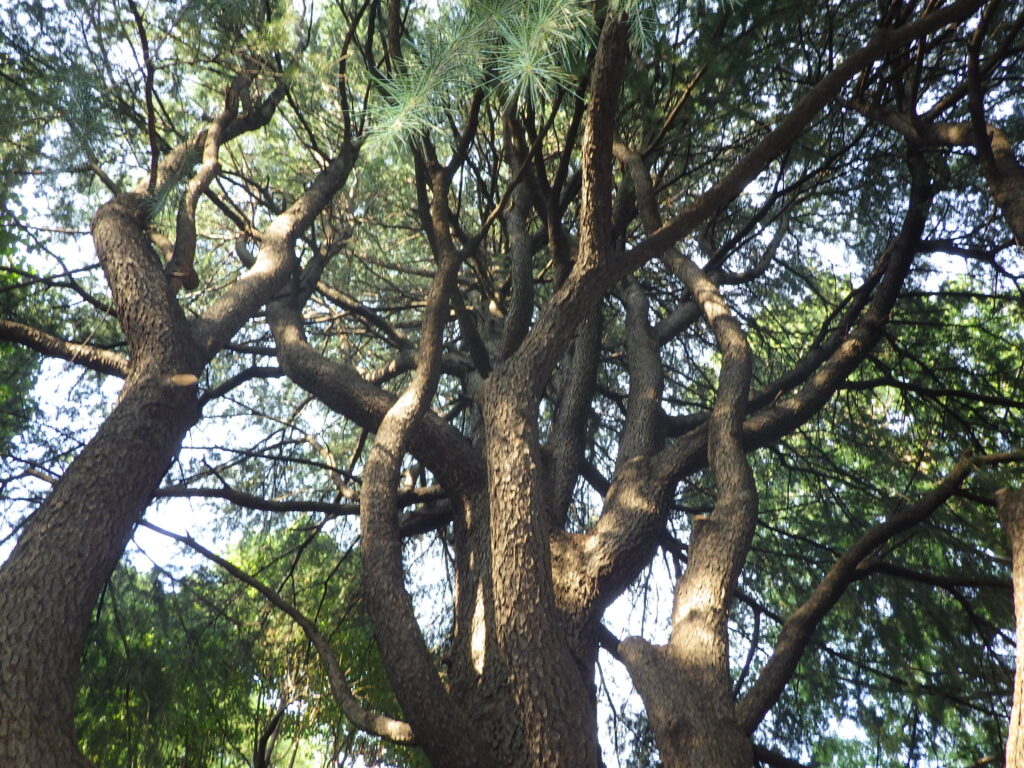
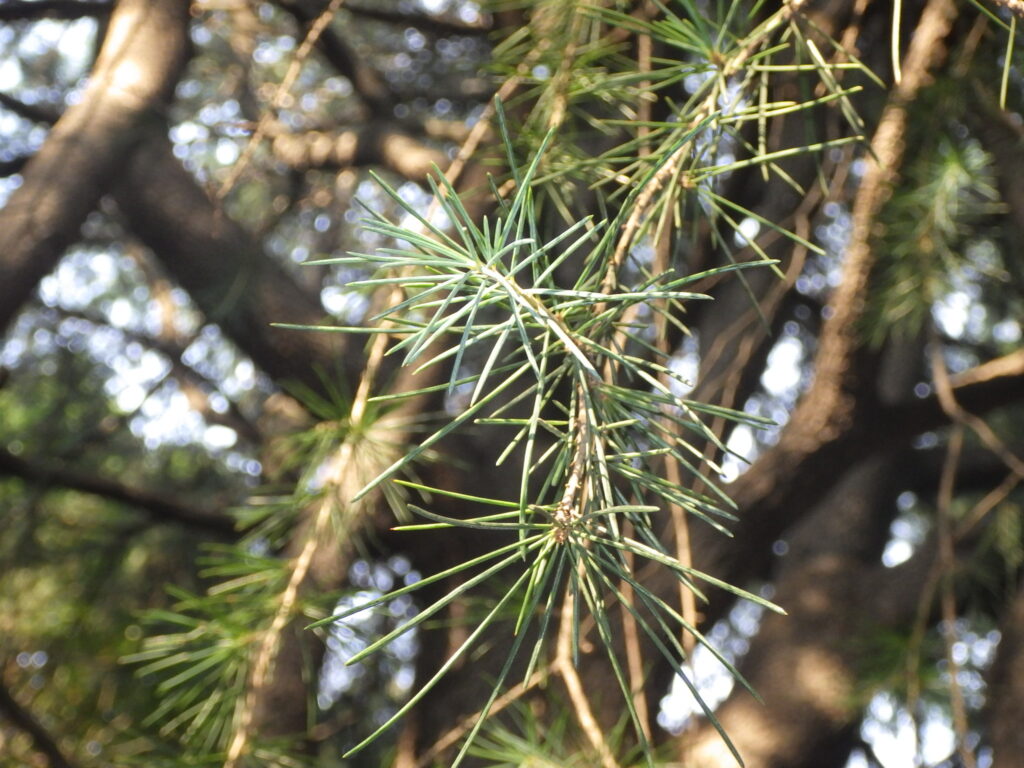
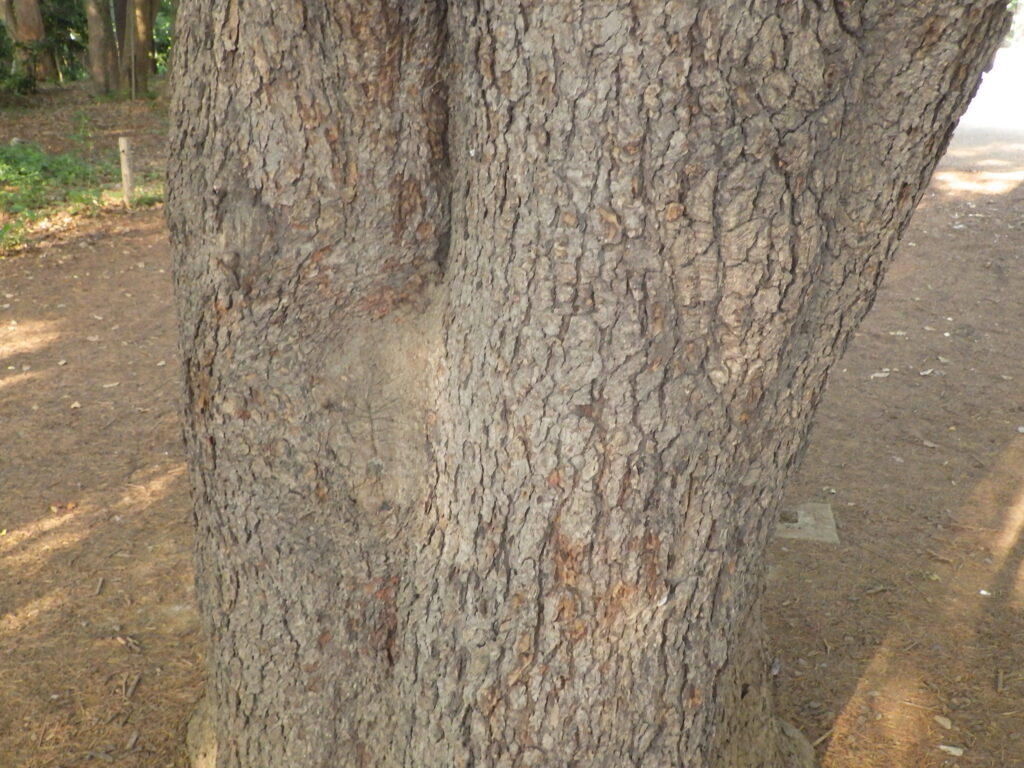
No.0023 Japanese Red Pine (Pinus densiflora)
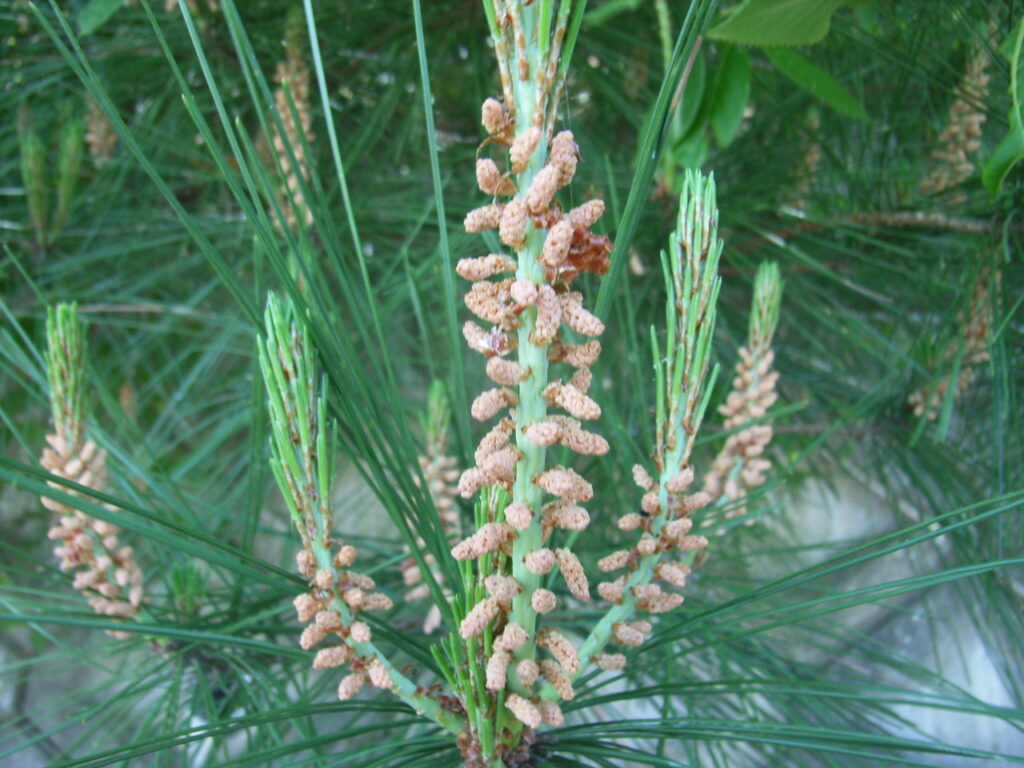
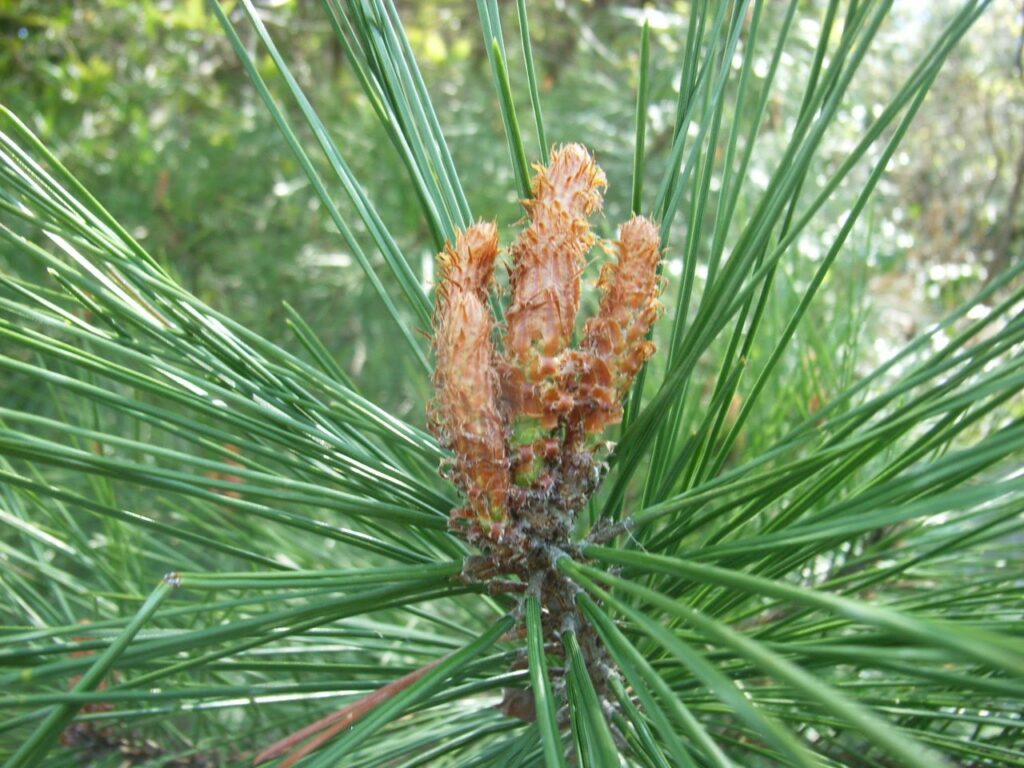
Also known as Mematsu, it is an evergreen tree. Its needle-like leaves are 7-10 cm long and about 1 mm wide (about 0.7 mm in specimens). The tips are pointed but not particularly painful to the touch. It flowers from April to May. The cones are oval-shaped, 4-5 cm long, and mature in the autumn of the following year. The seed scales are wedge-shaped, with an irregularly shaped 4-5-sided exposed tip and a short, spine-like beak in the center. The bracts are very small and attached to the base of the seed scales. It is distributed in Hokkaido (southern part), Honshu, Shikoku, Kyushu (up to Yakushima); Korea and China (northeastern part). It is widely distributed in relatively dry areas, but is somewhat less common in coastal areas. It grows naturally on rocky outcrops on ridges, on valley slopes, and in logged areas, but on ridges and plateaus, remnants of previously planted trees are often found, making it difficult to determine whether they are naturally occurring or not. The decline of Japanese red pine forests is significant, and trees often remain standing alone or in small numbers. Pine wilt caused by pine wood nematodes is also noticeable. There is a horticultural variety called Tagyosho (Utsukushimatsu) 'Umbraculifera', which branches out in a clump-like manner near the base of the trunk, and is occasionally planted in parks and other public spaces.
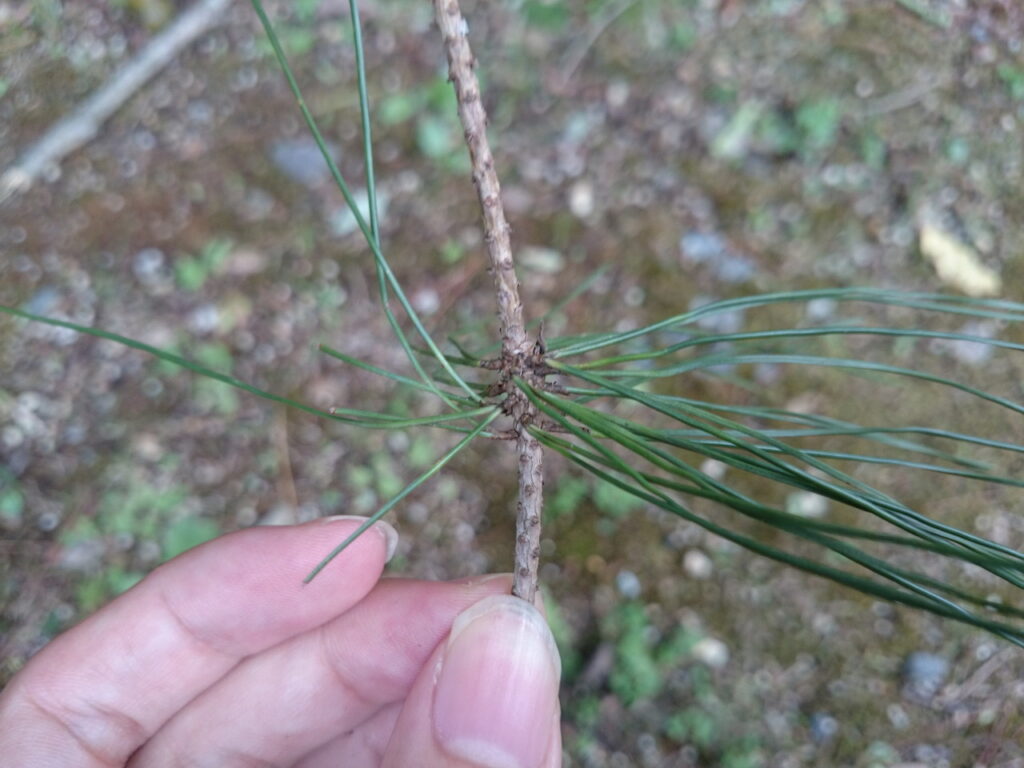
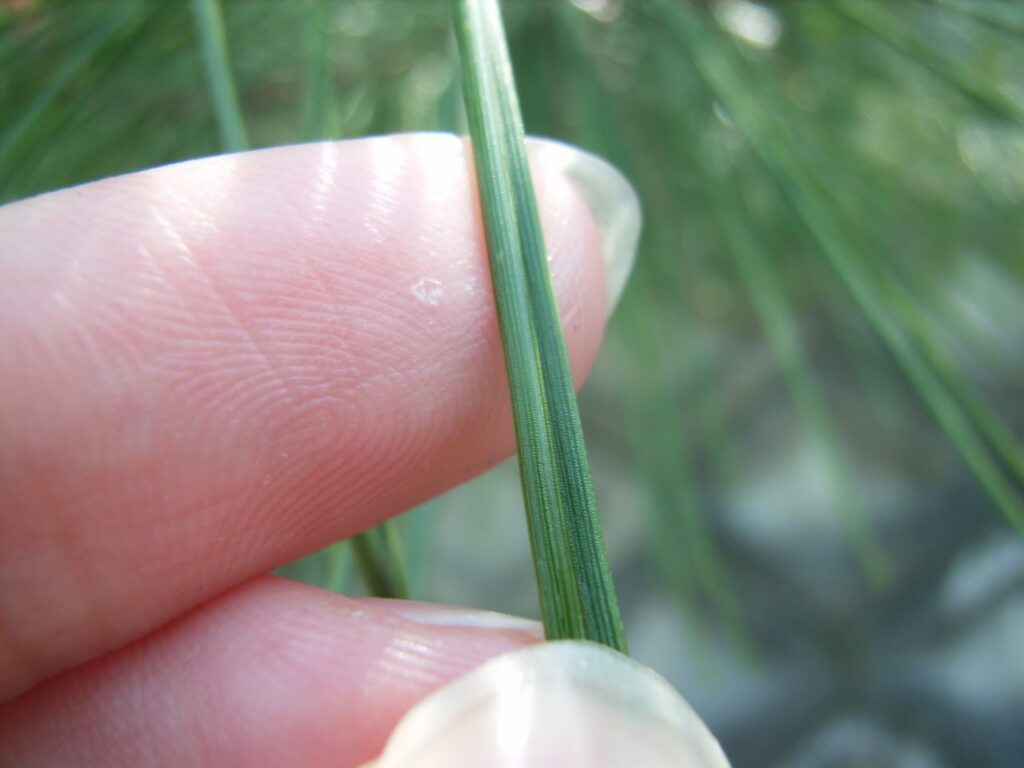
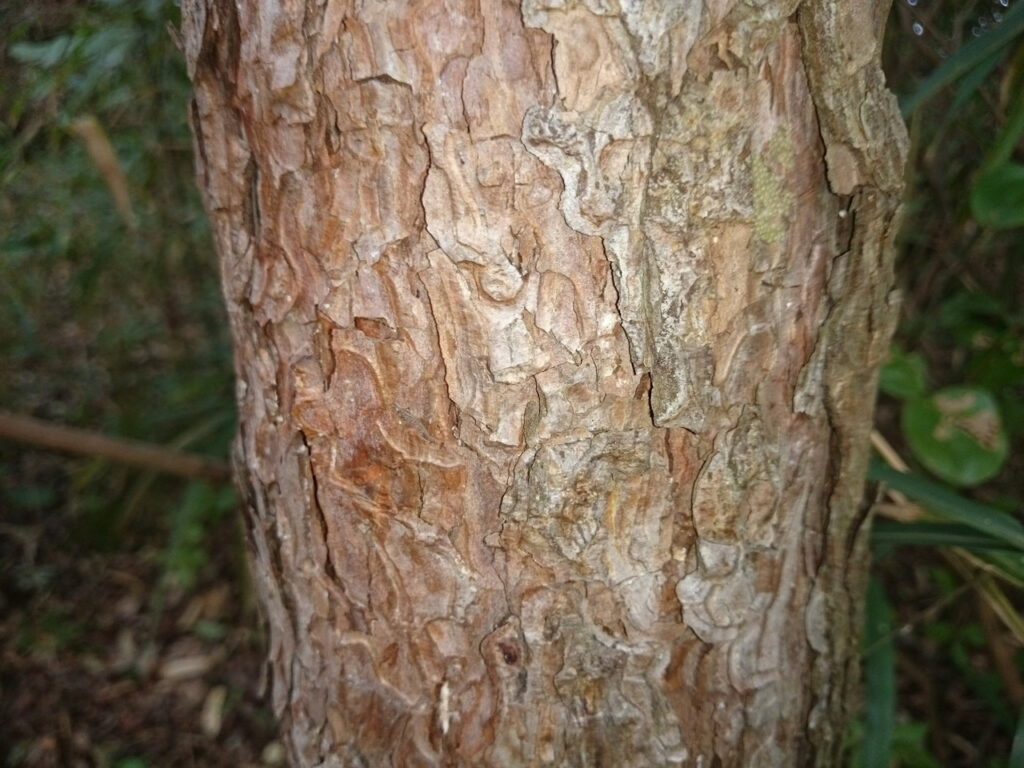
No.0025 Japanese Black Pine (Pinus thunbergii)
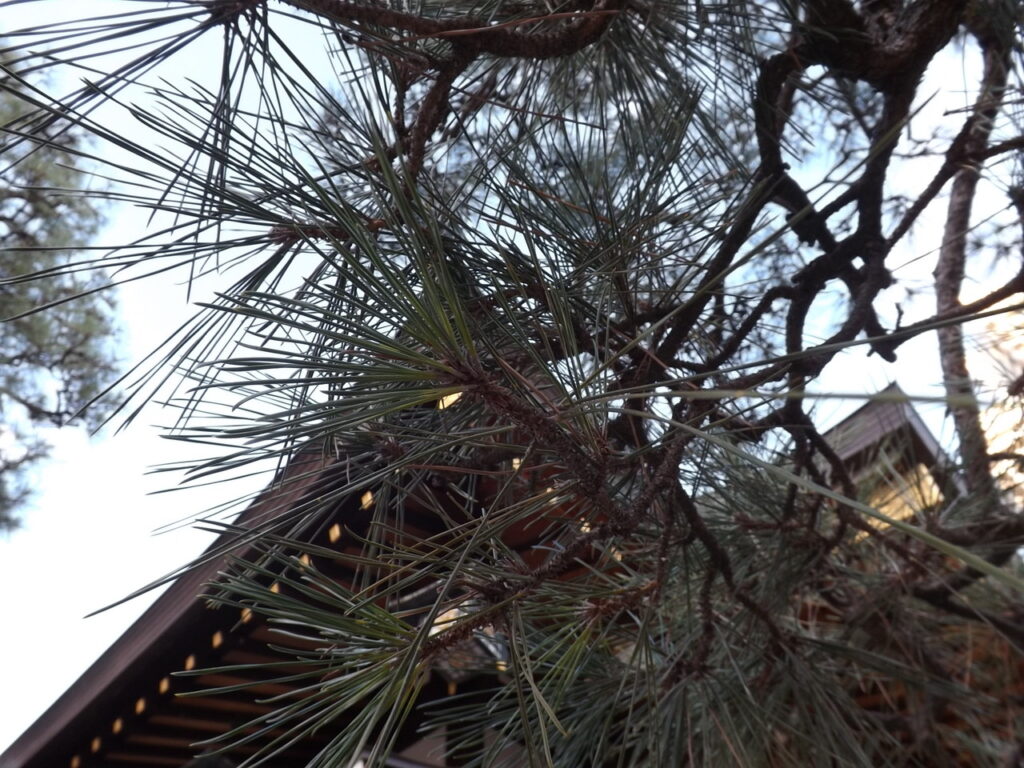
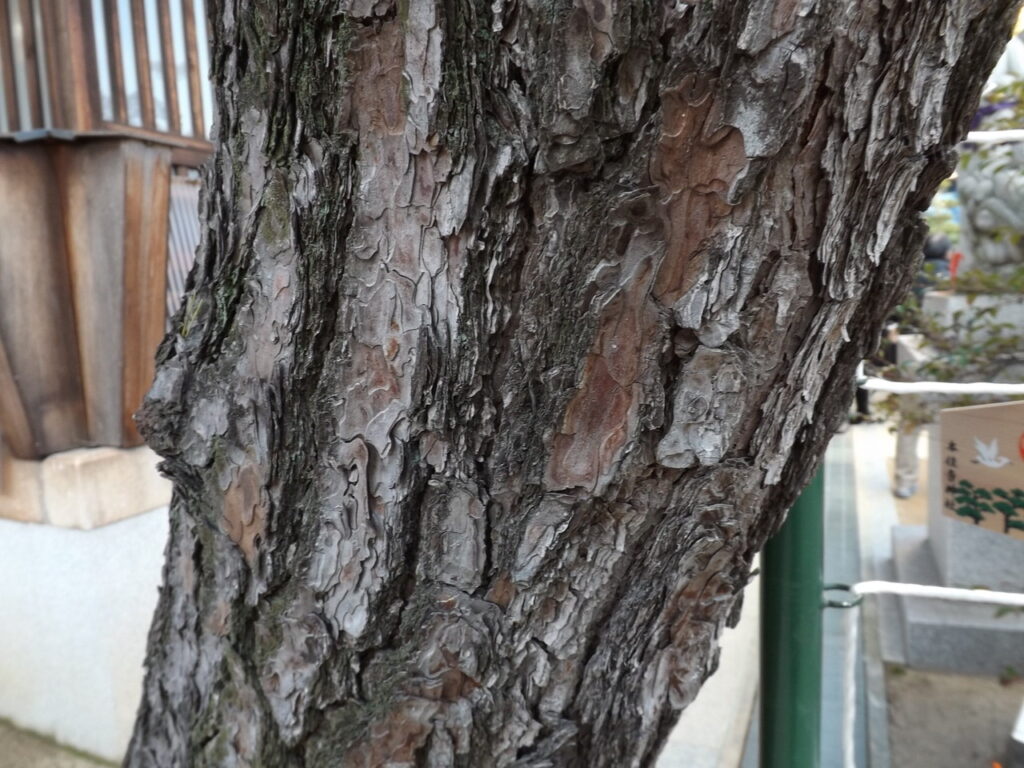
Also known as Omatsu. An evergreen tree. The needle-like leaves are 10-15 cm long and 1.5-2 mm wide (1-1.5 mm in specimens), with pointed tips that are painful to the touch. It flowers from April to May. The cones are oval-shaped, 4-6 cm long, and mature in the autumn of the following year. The seed scales are wedge-shaped, with an irregularly pentagonal exposed tip and a short, spine-like beak in the center. The bracts are small and attached to the base of the seed scales. Distributed in Honshu, Shikoku, Kyushu, the Ryukyu Islands (up to the Tokara Islands); and southern Korea. It is widely distributed in the Castanopsis and Quercus zone from the coast to inland areas, but it is believed that most of it is planted, with the exception of some areas such as coastal rocky areas. It was once planted on plateaus and upper hillsides, but many of these areas have already been wiped out and disappeared.
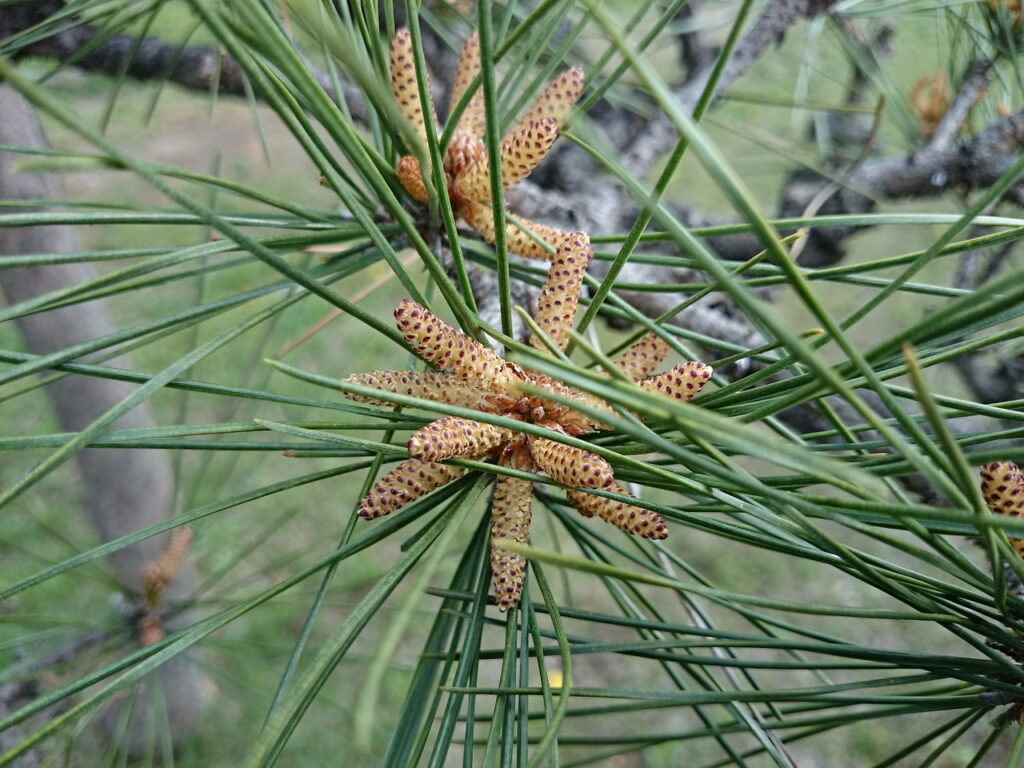
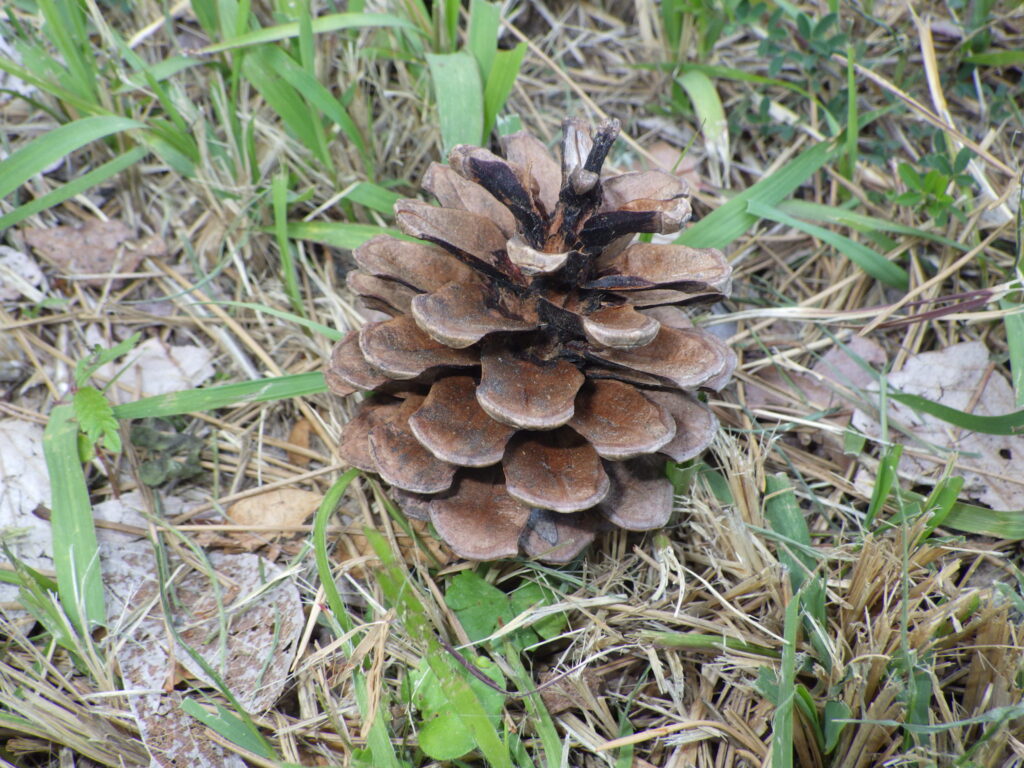
No.0028 Pinus parviflora var. parviflora
Also known as Goyōkomatsu, it is an evergreen tree. The bark is dark gray and peels off in thin, somewhat fine scales. The needle-like leaves are 3-6 cm long, slightly twisted, and whitish. It flowers in May. The cones are oval-shaped, 5-8 cm long, and mature in the autumn of the following year. The seed scales are wedge-shaped, fewer in number than those of Japanese black pine, and have pointed tips. The bracts are small and attached to the base of the seed scales. It is distributed in Hokkaido (southern part), Honshu, Shikoku, and Kyushu.
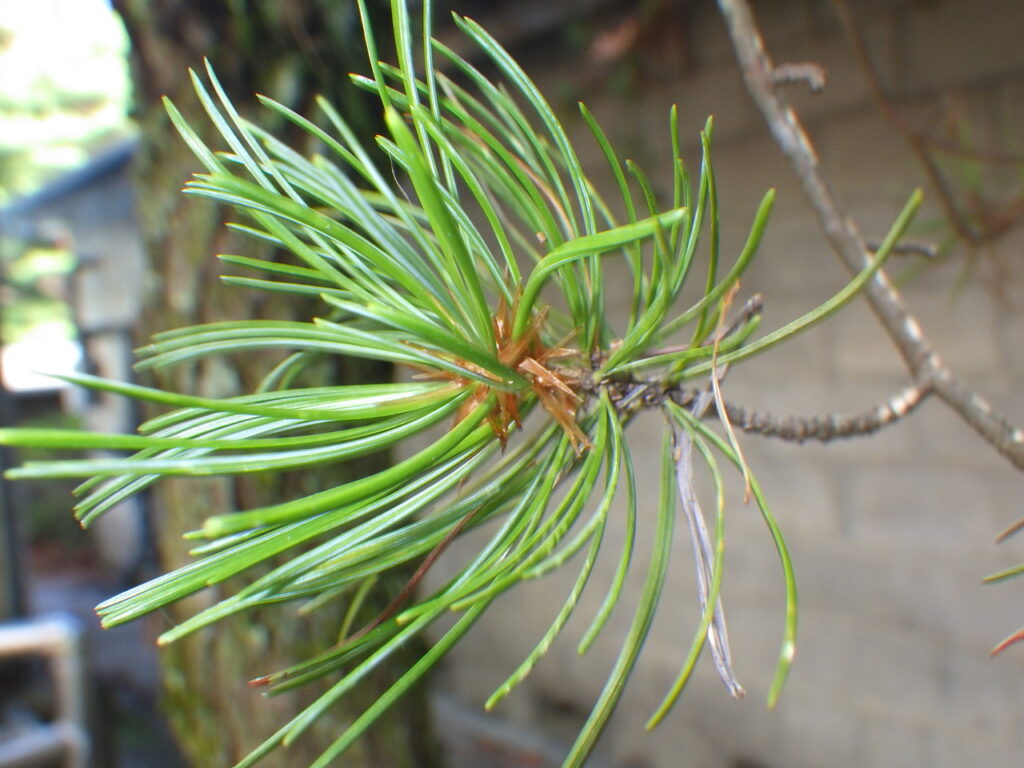
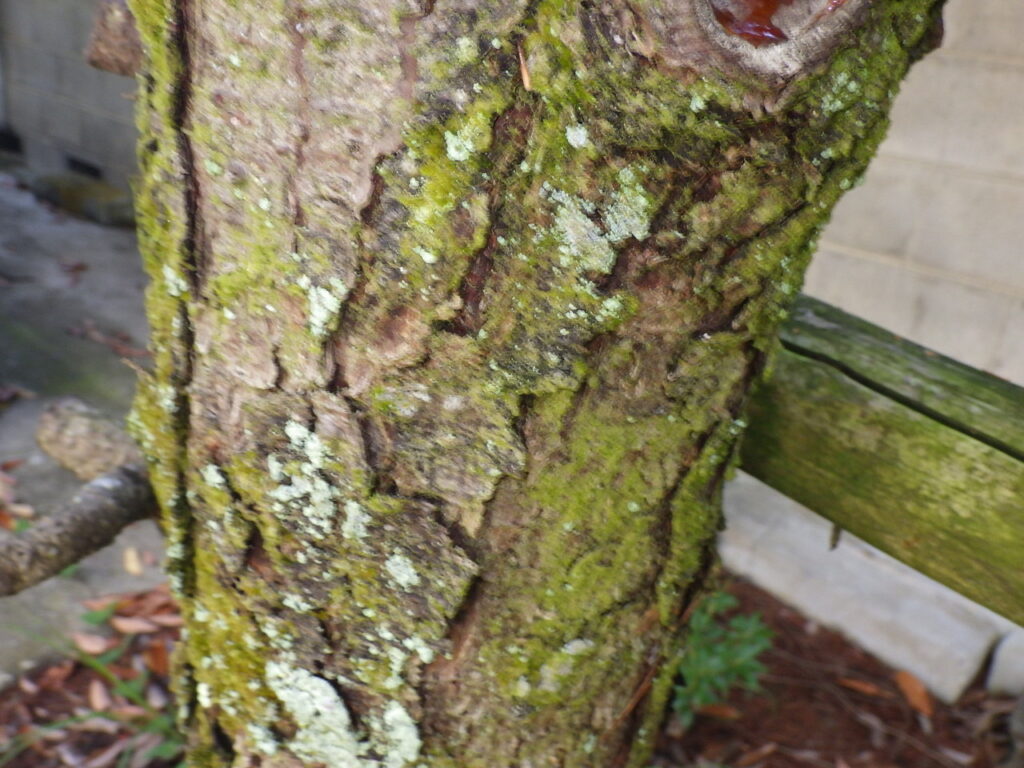
No.0029 Pinus amamiana
This evergreen tree has a diameter of over 2m at breast height and a height of over 30m. Its needles are 5-8cm long, its cones are 3-10cm long, and its seeds are 10-13mm long and wingless. Both its needles and cones are shorter than those of its close relatives in China and Taiwan. It flowers from mid-April to mid-May, and seeds are dispersed from early September to mid-November of the year following flowering. It grows only on Yakushima and Tanegashima islands. On Yakushima, three habitats have been confirmed: along the western forest road, around Mt. Hasadake, and Mt. Takahiradake. On Tanegashima, it is scattered in the mountainous forests of the central part of the island, from Nishinoomote City to Nakatane Town. Currently, the estimated number of surviving individuals is about 2000 on Yakushima and 300 on Tanegashima.
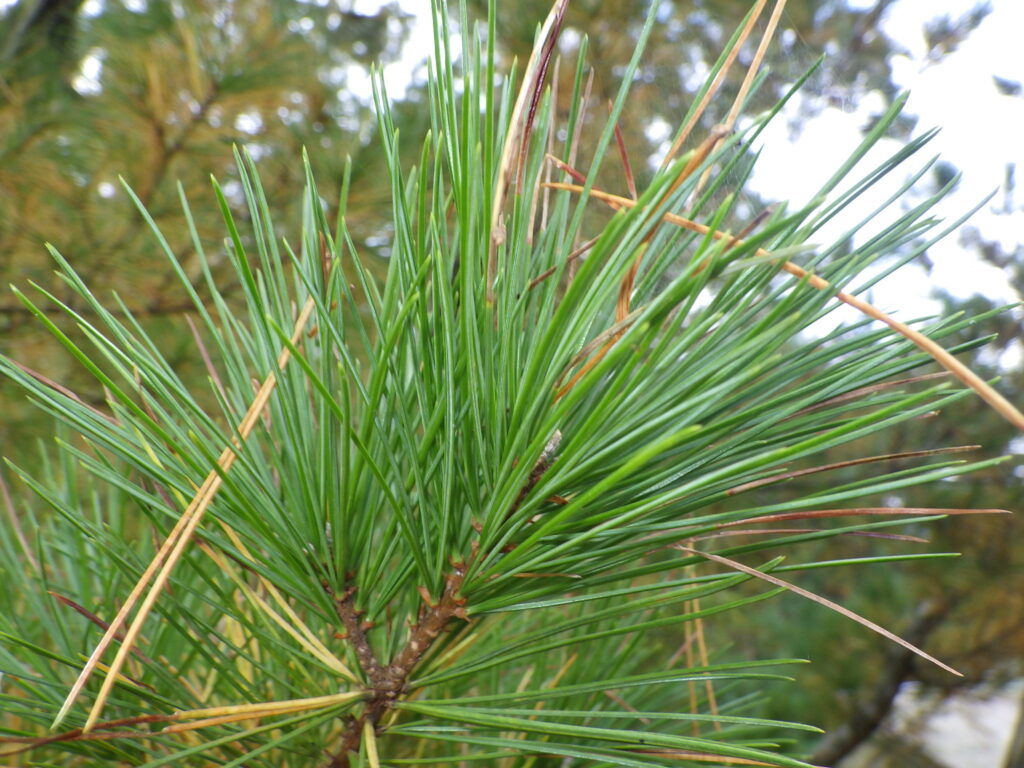
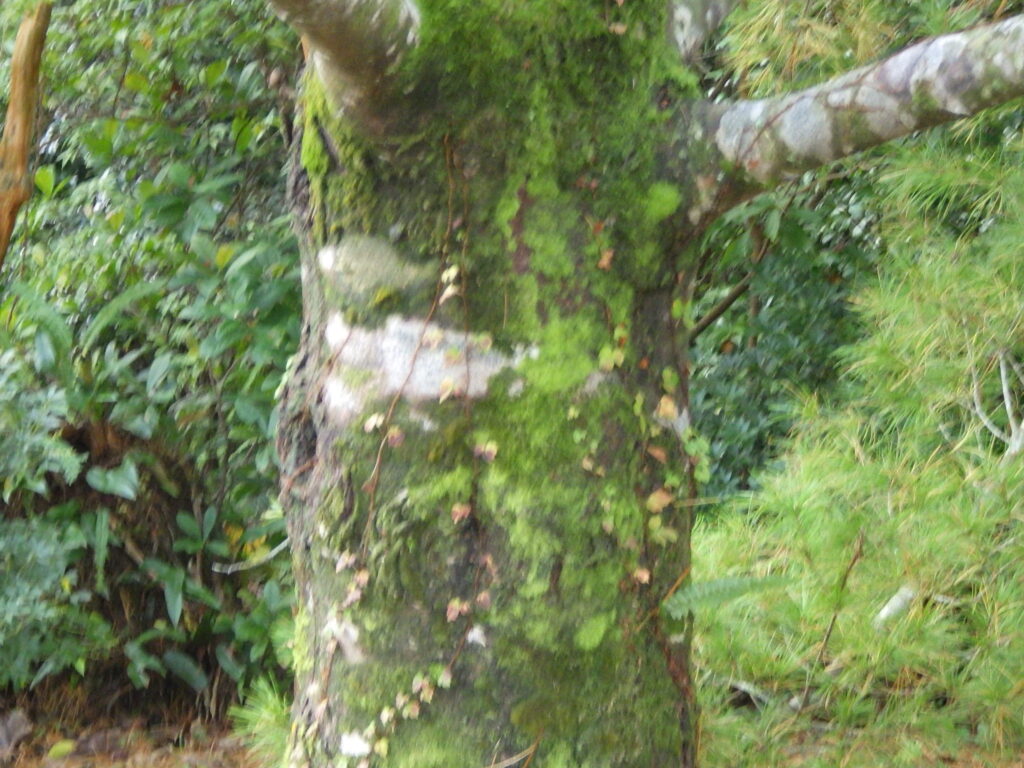
No.0030.a Ryukyu Pine (Pinus luchuensis)
This evergreen tree grows to a height of 25m and a diameter of 1m. The bark is grayish-black, and the winter buds are reddish-brown. The twigs are yellowish-brown, hairless, and glossy. The leaves grow in pairs on short branches, are linear, 10-20cm long and 1.2mm wide. The leaf cross-section is semicircular, with 2-6 resin canals, some adjacent to the lower epidermis and others within the leaf tissue. The fruit (cone) matures in the autumn of the year after next, and is ovate-cylindrical, 3.5-6.5cm long and 2-2.5cm wide. The seed scales are 1.8cm long, the seeds are 4-5mm long, and the wings are 8-10mm. It grows well even in shallow, poor soil. It flowers from March to April. It is distributed in the Ryukyu Islands (Tokara Islands, Amami Islands, Okinawa Islands, and Sakishima Islands). It has been introduced to the Ogasawara Islands for greening and as firewood.
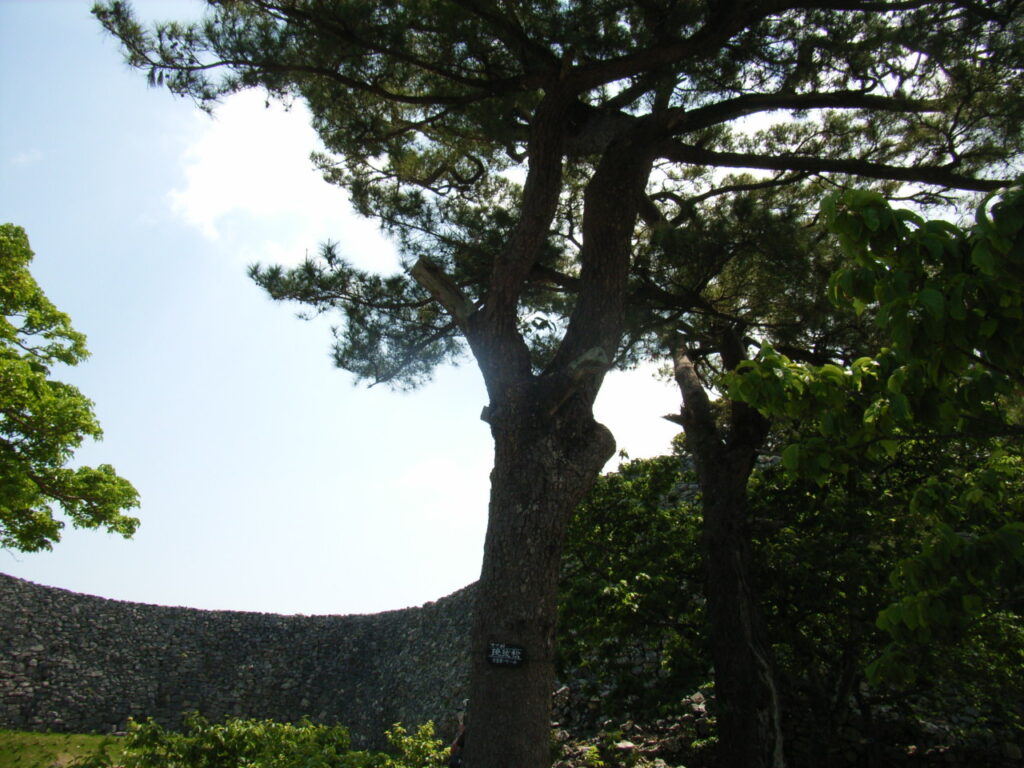
No. 0031 Dwarf Pine (Pinus pumila)
This is a monoecious evergreen shrub. The trunk branches profusely and grows horizontally, rooting in places and growing downwind. It reaches a length of 8-15m and a height of 0.3-1m, but in sheltered areas it stands upright, reaching a height of 2-3m. Growth is extremely slow; it is said to take a hundred years for the trunk to reach a diameter of 10cm. Young branches are densely covered with short reddish-brown hairs. The old bark is dark brown and peels off in thin layers. The leaves are needle-shaped with three ridges, 3-9cm long and 0.5-1mm in diameter, and grow in clusters of five on short branches. They have sparse, minute serrations and white stomatal bands on the sides. The upper surface is dark green, and the lower surface is whitish-green. Flowers bloom in June and July. The fruit is an ovate-elliptical cone 3-5cm long, initially green, then maturing in the summer or autumn of the following year, turning dark green to brown before falling. The seed scales do not open even when ripe. The seed scales are broadly ovate with two indentations on the inside, and two black seeds are arranged side by side. The seeds are obovate, 0.8–1.2 cm long, and wingless. It is distributed in cold regions from eastern Siberia and Kamchatka to Sakhalin, northeastern China, the Korean Peninsula, and Japan. It grows in colonies in dry, wind-exposed areas of alpine zones.
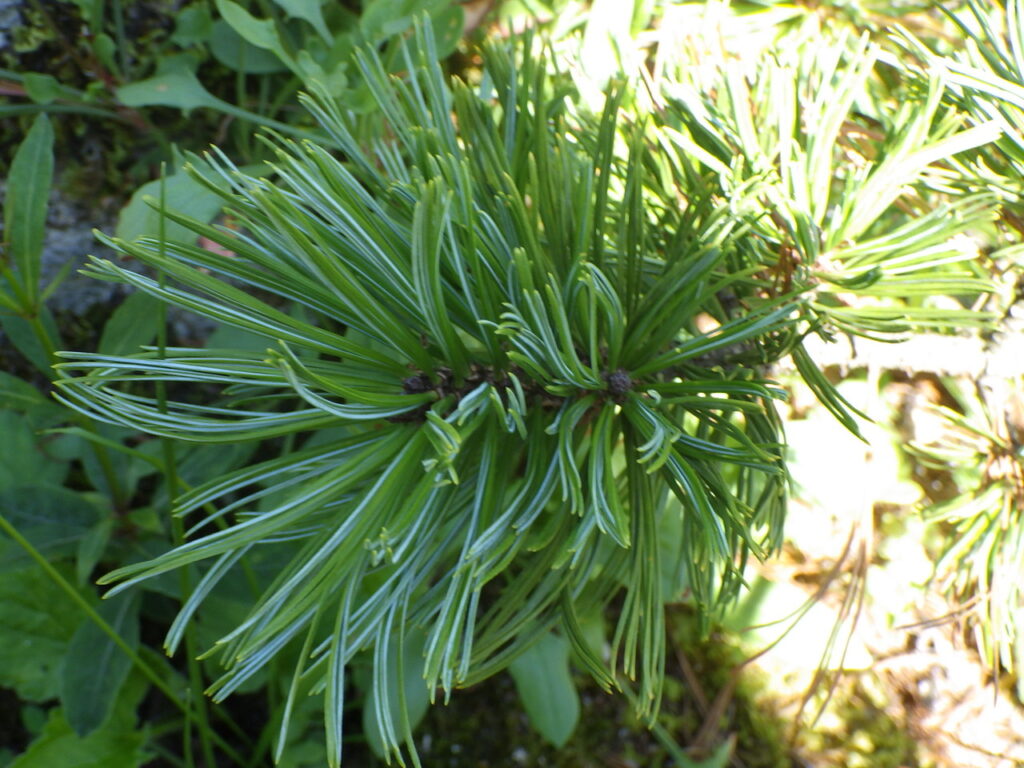
No.0031.a Macedonian Pine (Pinus peuce)
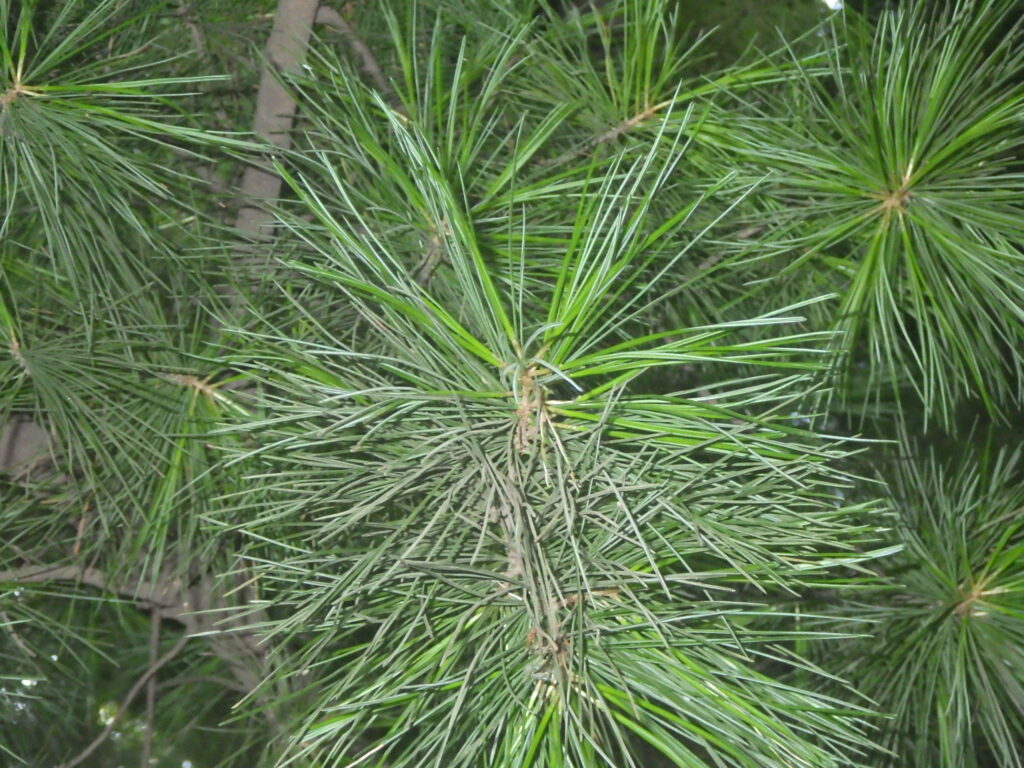
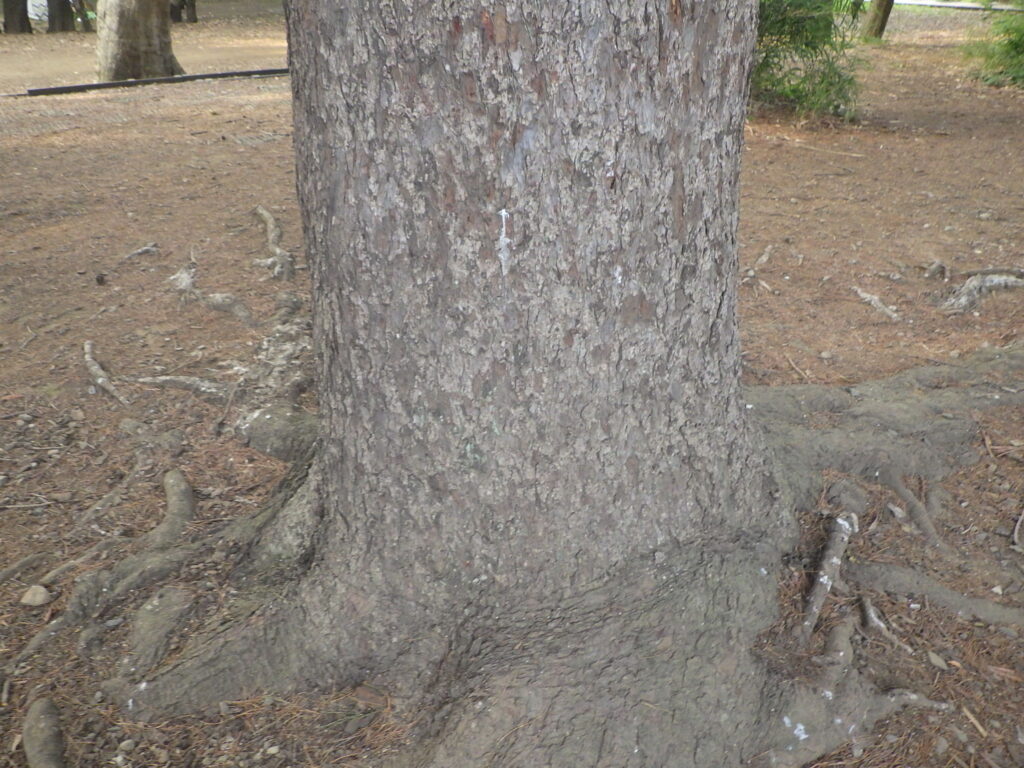
This is an evergreen tree, reaching a height of approximately 35-45 meters. Its leaves are needle-like, 6-10 cm long, and grow in clusters of five. It flowers from April to May, and its cones are broadly conical, 8-16 cm long, ripening from green to yellowish-brown. The seeds are 6-7 mm long with wings approximately 2 cm long on their sides. It is distributed in the Balkan Peninsula (Greece, Macedonia, Bulgaria, Albania, and Montenegro), growing wild in mountainous areas at altitudes of 1000-2000 meters. It is cultivated in Japan.
References
Kanagawa Prefecture Flora Survey Association. 2018. Kanagawa Prefecture Flora 2018 (Electronic Edition). Kanagawa Prefecture Flora Survey Association, Odawara. 1803pp. ISBN: 9784991053726