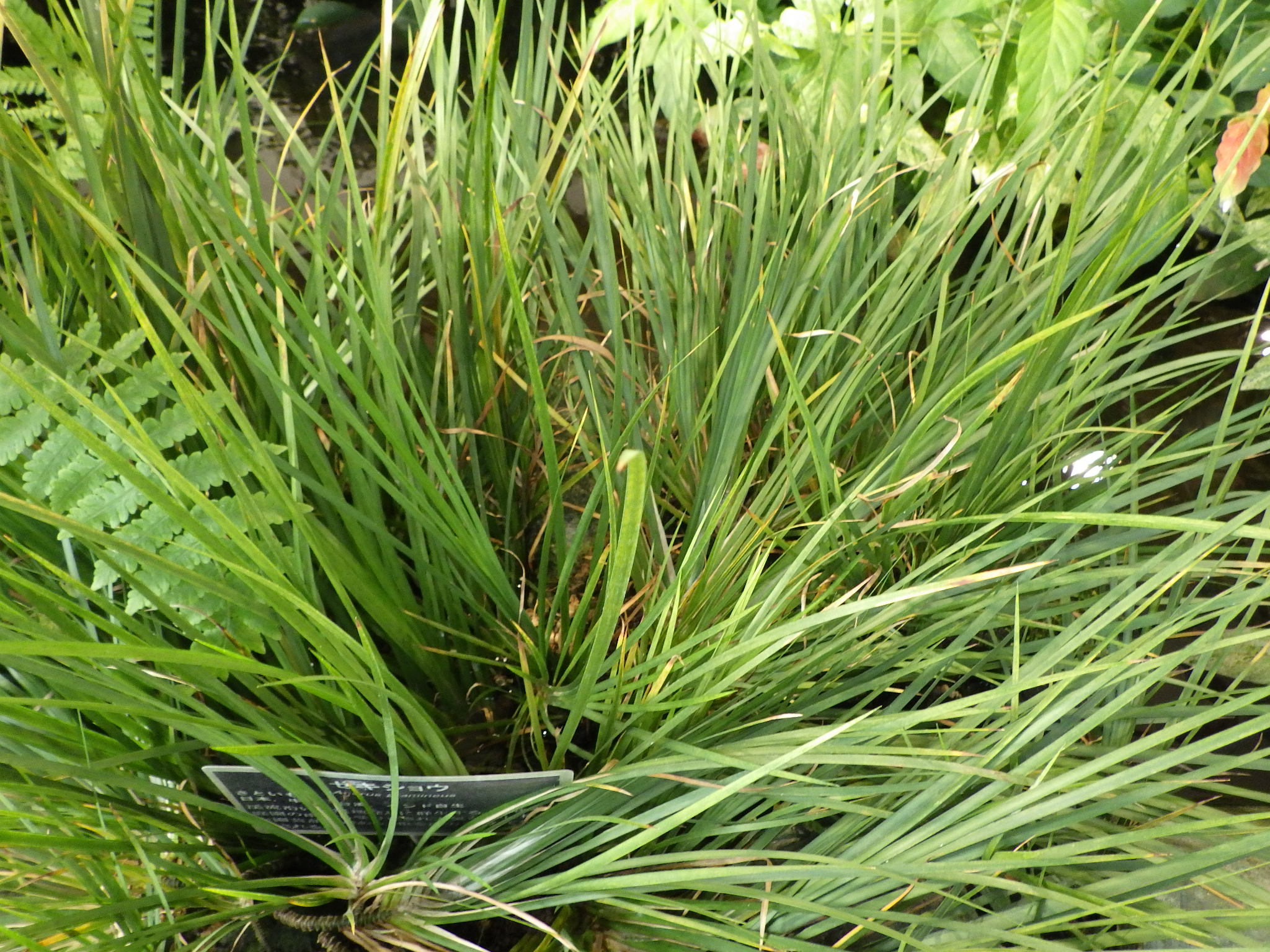
The Araceae family consists of perennial herbs, sometimes shrub-like, lilac-like, or floating aquatic plants. They often have tubers or thick rhizomes underground, and some have pseudostems formed by the tubular base of the petiole. The plant body is succulent and contains cells filled with bundles of needle-shaped calcium oxalate crystals, which, when ingested, cause a bitter taste as the crystals prick the tongue. The leaves are simple or compound, sometimes with membranous sheaths, and are alternate, entire, pinnate, or palmately lobed. The base is often sheath-like, enclosing the stem. The veins are parallel or reticulate. The flowers are unisexual or bisexual, numerous, on spadixes, and sessile or nearly sessile. The inflorescence has a spathe at the base that encloses the inflorescence. The flowers are triperous or dimerous. They are apetalous or have a small perianth. In unisexual flowers, males and females are borne on separate inflorescences or in different locations on the same inflorescence. Stamens number 1 to 8. Anthers have 2 to 4 locules. Ovary is sessile and has 1 to 3 locules. Ovules are 1 or numerous. Fruit is usually berry-like. Seeds are few. There are approximately 115 genera and 3,300 species, mainly distributed in tropical to subtropical regions. There are 14 genera and about 75 species in Japan. In the APG system, the duckweed family, which was previously considered closely related, has been merged into the Araceae family and is now classified under the Alismatales order.
This article provides a comprehensive, illustrated guide to plants belonging to the Araceae family.
The basic information is based on Tsukamoto (1994) and the Kanagawa Prefectural Flora Survey Association (2018). Photographs are replaced as better ones become available. While the identifications are made by the author, please note that they may be changed without notice if misidentifications are found.
- No. 0170 Lysichiton camtschatcensis
- No.0171 Duckweed (Spirodela polyrhiza)
- No. 0172 Blue duckweed (Lemna aoukikusa)
- No. 0173 Lemna minor
- No.0176.a Anthurium andraeanum
- No.0177.b Spathiphyllum patinii
- No. 0178 Calla Lily (Zantedeschia aethiopica)
- No.0179 Taro (Colocasia esculenta)
- No.0179.1 Taro (Coffee Cups) Colocasia esculenta 'Coffee Cups'‘
- No. 0180 Alocasia odora
- No.0189 Arisaema ringens
- No. 0198 Arisaema limbatum
- No. 0203 Arisaema japonicum
- No. 0211 Pinellia tripartita
- References
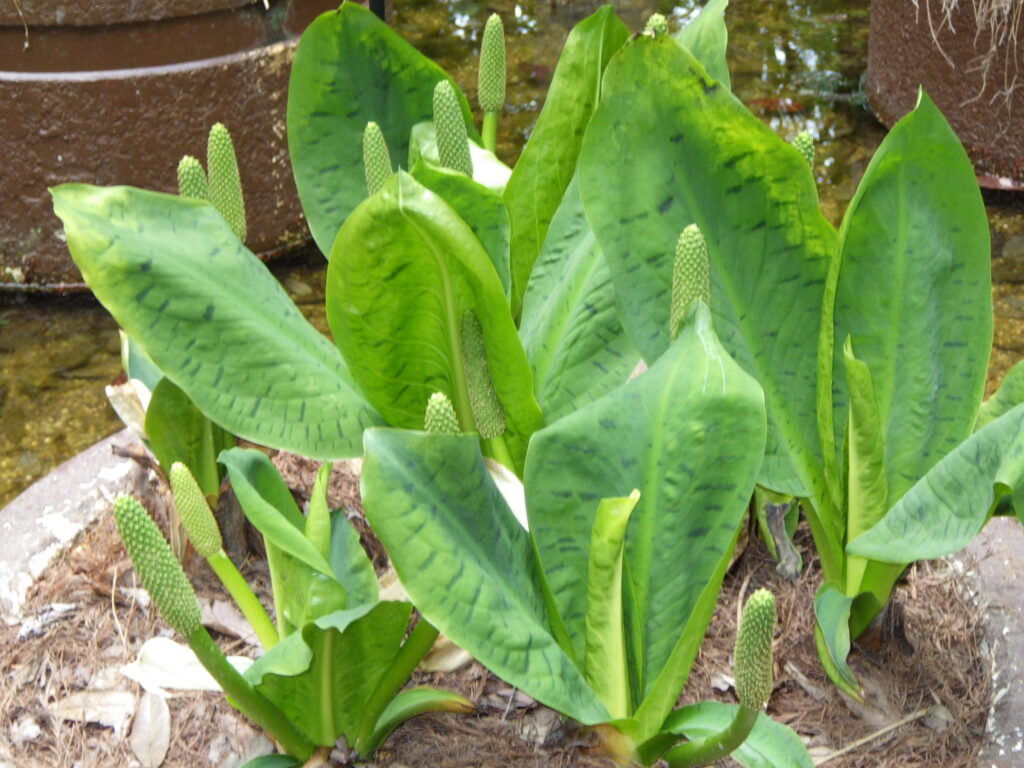
No. 0170 Lysichiton camtschatcensis
This is a perennial herb that grows to a height of 1 meter. It has a thick rhizome. The leaves are small when the plant is in bloom, but after flowering they grow into large, oval-shaped leaves about 80-100 cm long and 30 cm wide. It flowers from May to July. Immediately after the snow melts, it produces a flower stalk 10-30 cm tall, enclosed in a white spathe, bearing a club-shaped spadix. The flowers are pale green, four-petaled, 3.5-4 mm in diameter, and numerous on the surface of the spadix. The fruit is a green berry that falls into water when ripe and is dispersed by the water current. It is found in Japan (Hokkaido, the Sea of Japan side of central Honshu and northward, and Hyogo Prefecture), the Kuril Islands, Sakhalin, Kamchatka, and Ussuri. In Japan, it has a disjunct distribution. It often grows in clusters in wetlands such as mountain marshes and along the banks of streams in alder forests. Diptera with licking mouthparts pollinate flowers, and animal dispersal by Asiatic black bears also occurs (Chiba, Ozeki, 2017).
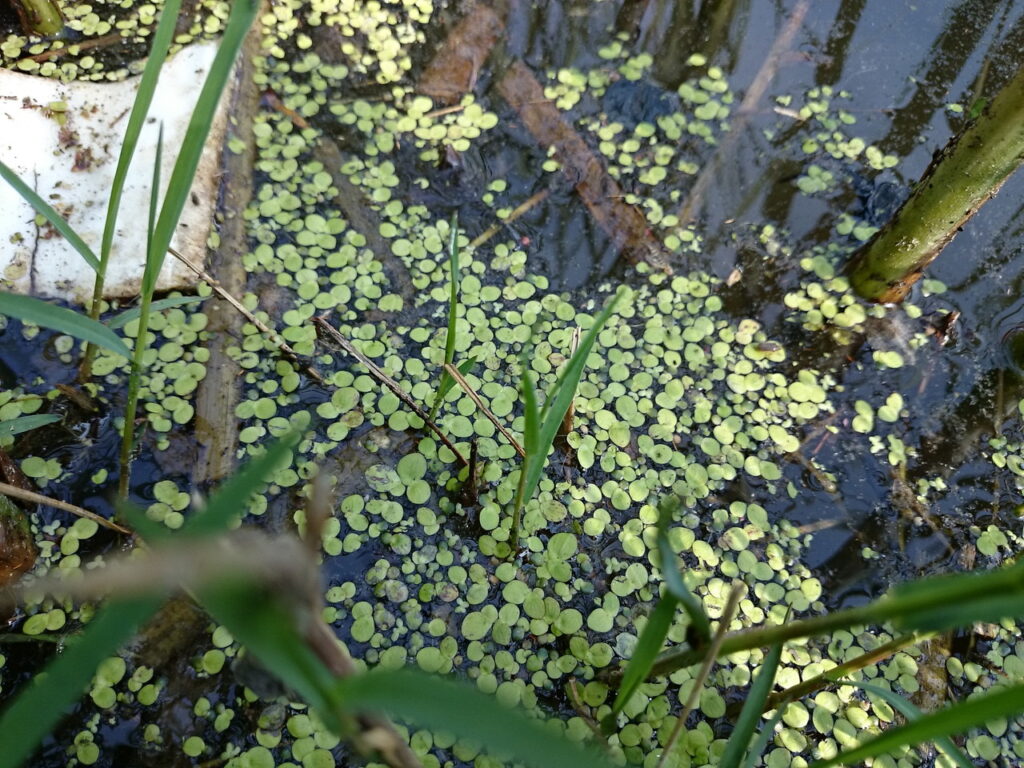
No.0171 Duckweed (Spirodela polyrhiza)
A floating plant. The thallus is broadly obovate, 3-10 mm long and 2-8 mm wide. 3-21 roots emerge from each thallus. It overwinters by forming replenishment buds. It is distributed throughout the world except for Hokkaido, Honshu, Shikoku, Kyushu, and the Ryukyu Islands, as well as South America and New Zealand. It is most commonly found in rice paddies and irrigation canals.
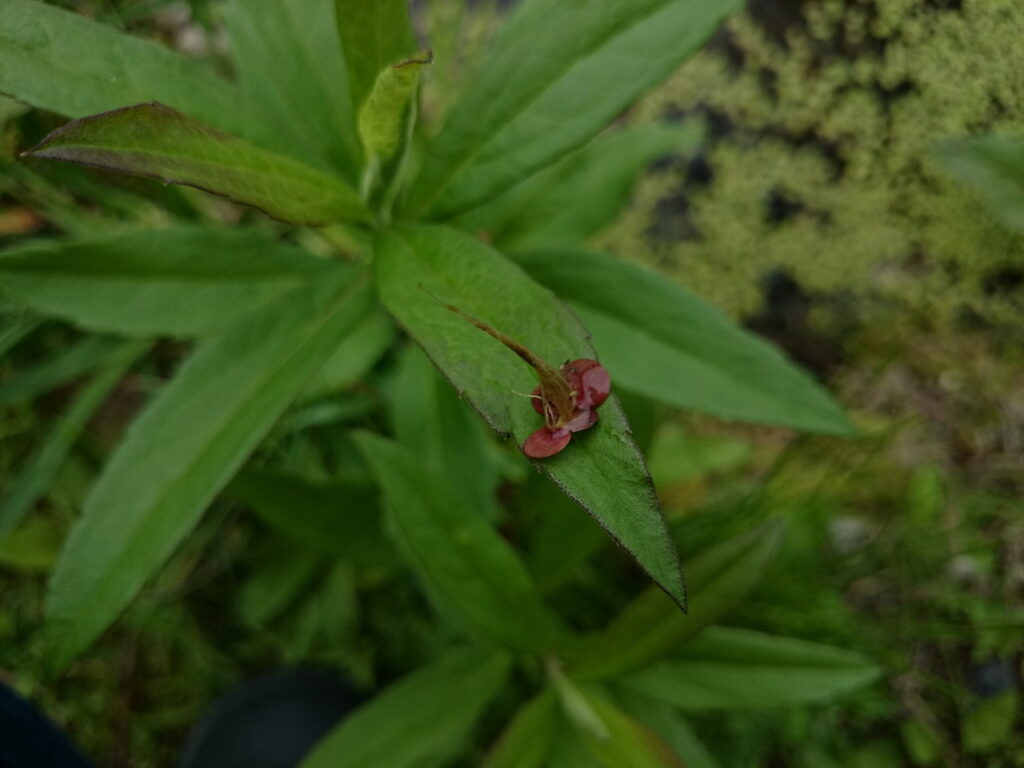
No. 0172 Blue duckweed (Lemna aoukikusa)
This is a floating plant. The thallus is bilaterally asymmetrical, obovate-elliptic, 2.5-5 mm long and 1.5-4 mm wide, with three veins. The root sheath has wings at its base, and the root tip is acute. It flowers and bears fruit frequently from summer to autumn. It overwinters as seeds. It is distributed in Hokkaido, Honshu, Shikoku, and Kyushu. It is most commonly found in rice paddies and waterways. Recent research sometimes identifies it as a synonym for L. aequinoctialis.

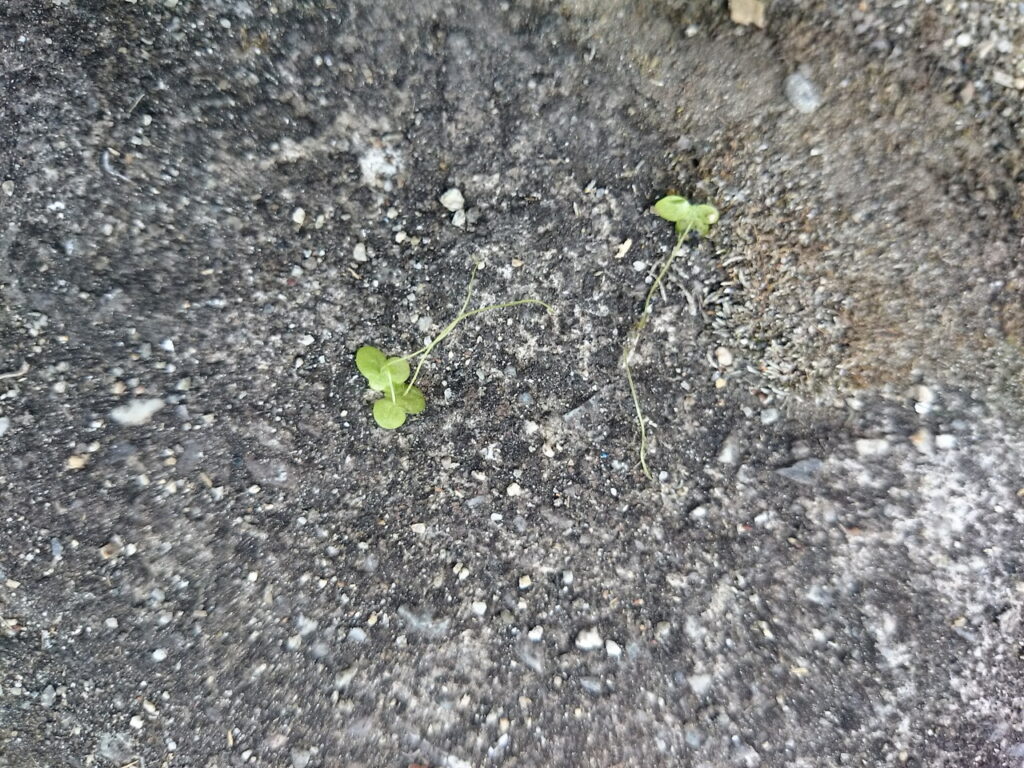
No. 0173 Lemna minor
Floating plant. The thallus is broadly elliptical, nearly bilaterally symmetrical, 2.5-5 mm long and 1.5-4 mm wide, with three indistinct veins. The root sheath base lacks wings, and the root tip is obtuse. Flowering is rare. It is evergreen and overwinters as a thallus. Distributed worldwide except for Hokkaido, Honshu, Shikoku, Kyushu, and the Ryukyu Islands, and South America. It grows in rice paddies and irrigation channels. Sometimes, a distinction is made between *Lycoperdon koukushi* (in the narrow sense) L. minor (ss) with a thin thallus and no reddish-purple coloration on the underside, and *Lycoperdon japonica* with a slightly thicker thallus and reddish-purple coloration on the underside, but since *Lycoperdon japonica* may not show coloration, morphological identification of the two is considered difficult.
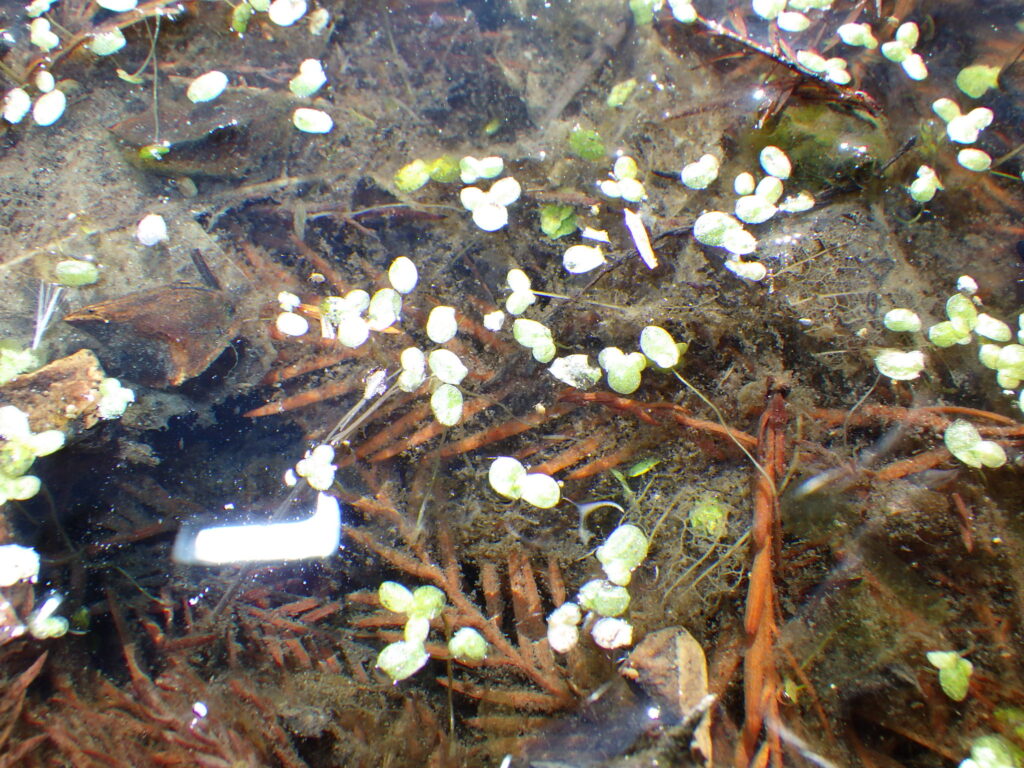
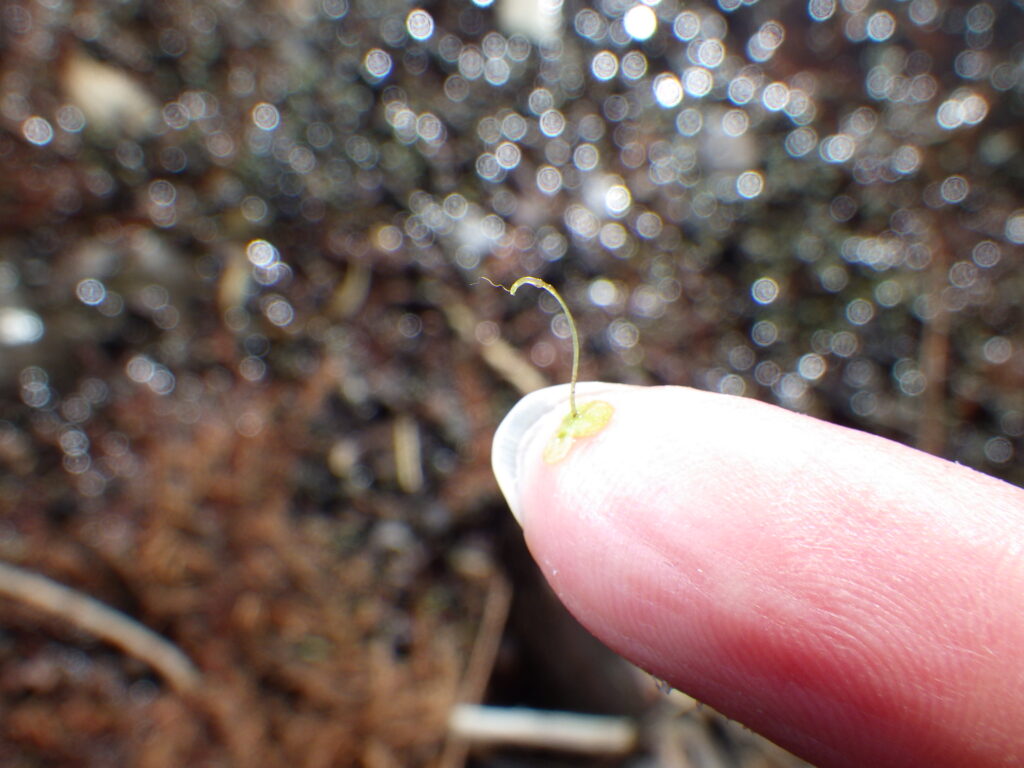
No.0176.a Anthurium andraeanum
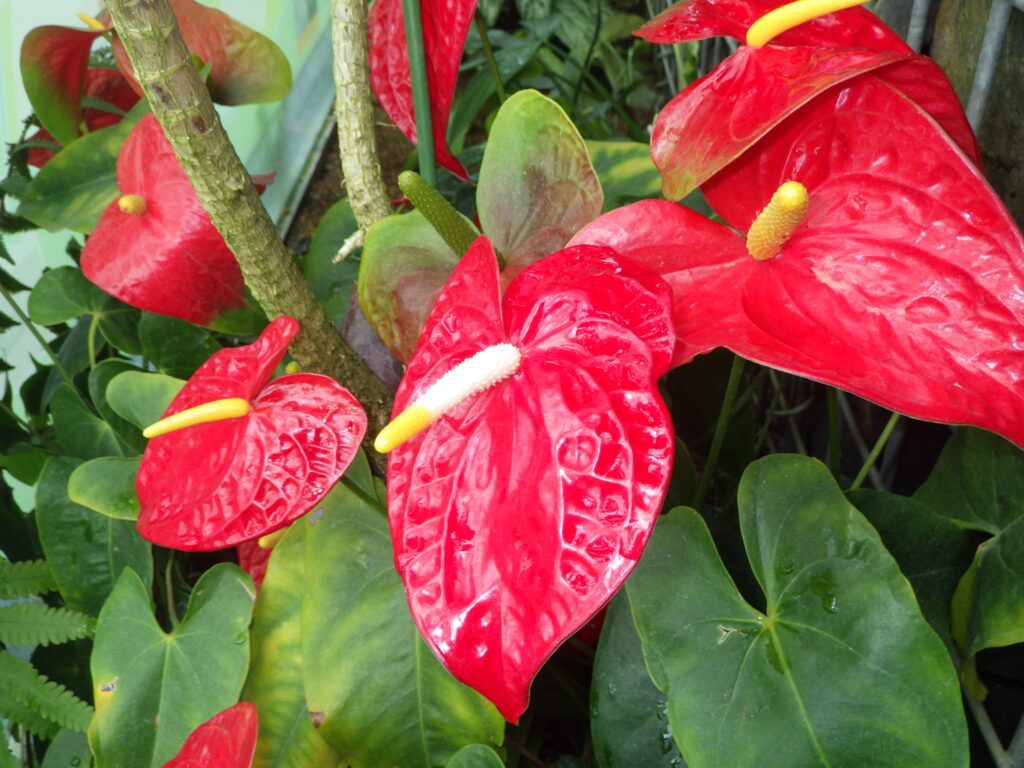
This is an evergreen perennial herb, an epiphytic species. The stem is erect with short internodes. The leaves are 20-40 cm long and 15-20 cm wide, long heart-shaped with an acute tip, leathery and glossy. The petioles are slender but stiff and strong, longer than the leaf blade. Flower stalks, longer than the petioles, grow erect from the upper leaf axils. The spathe is heart-shaped, 10-15 cm long, leathery, with a distinctive enamel-like sheen, and is vermilion in color. The spadix is cylindrical, 6-8 cm long, usually pale yellow at the top and white at the base, but there is considerable variation. It is native to Colombia and Ecuador. It was introduced to Japan in the mid-Meiji era.
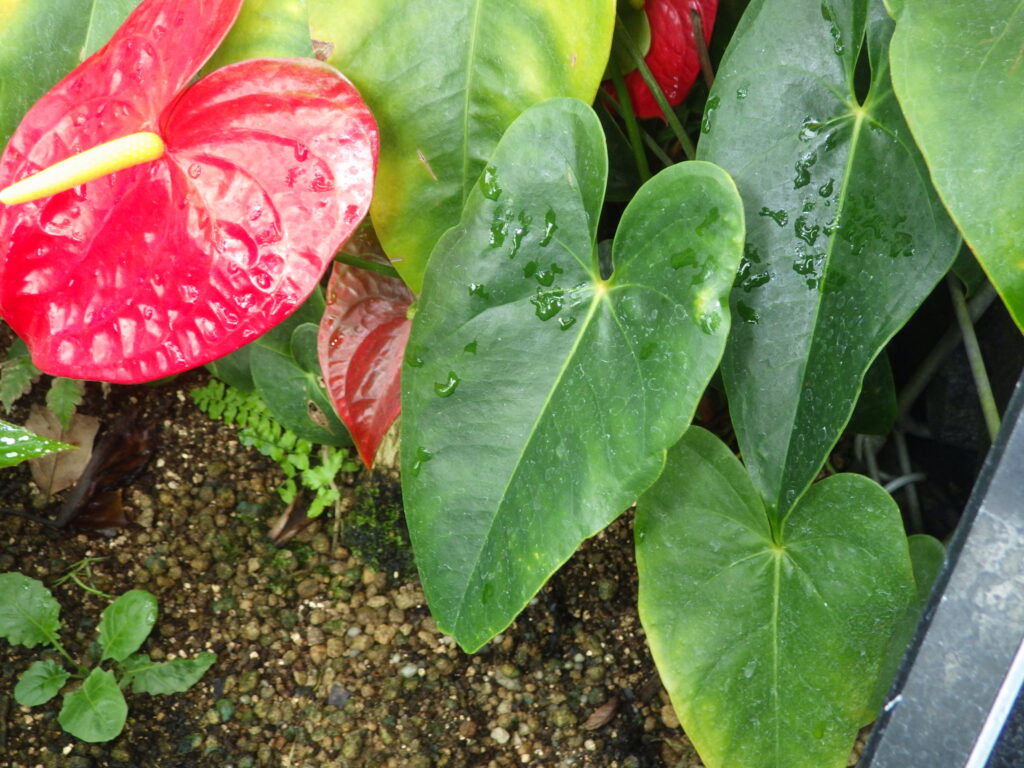
No.0177.b Spathiphyllum patinii
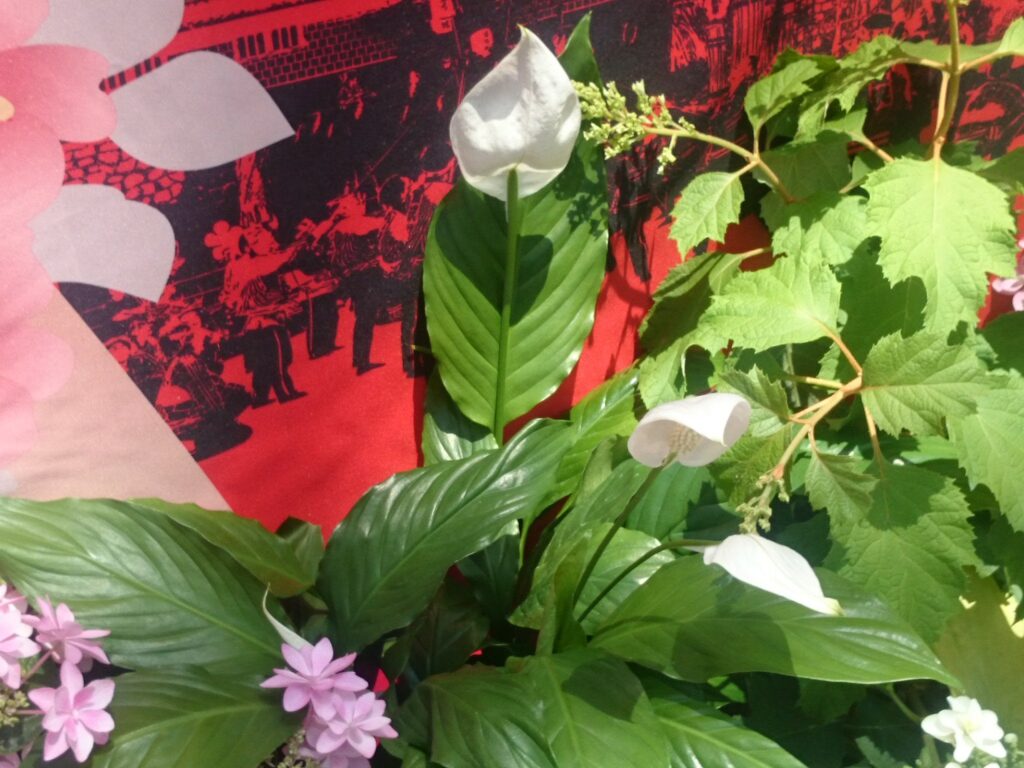
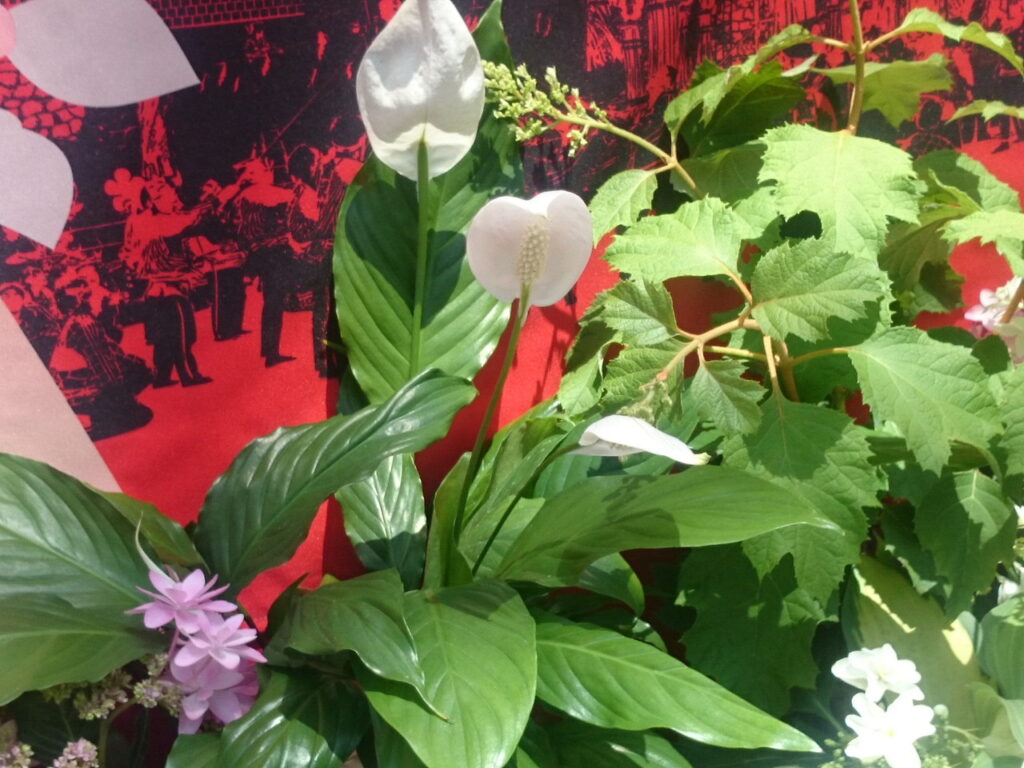
A perennial herb, also known as Spathiphyllum. It grows to a height of 30-40 cm. The petioles are 10-18 cm long. The leaf blades are 12-20 cm long, oblong to lanceolate, green, glossy, and acute to acuminate at the apex. The spathe is 10-15 cm long and white. The spadix is 3-6 cm long. The flowers are fragrant. Native to Colombia and Panama.
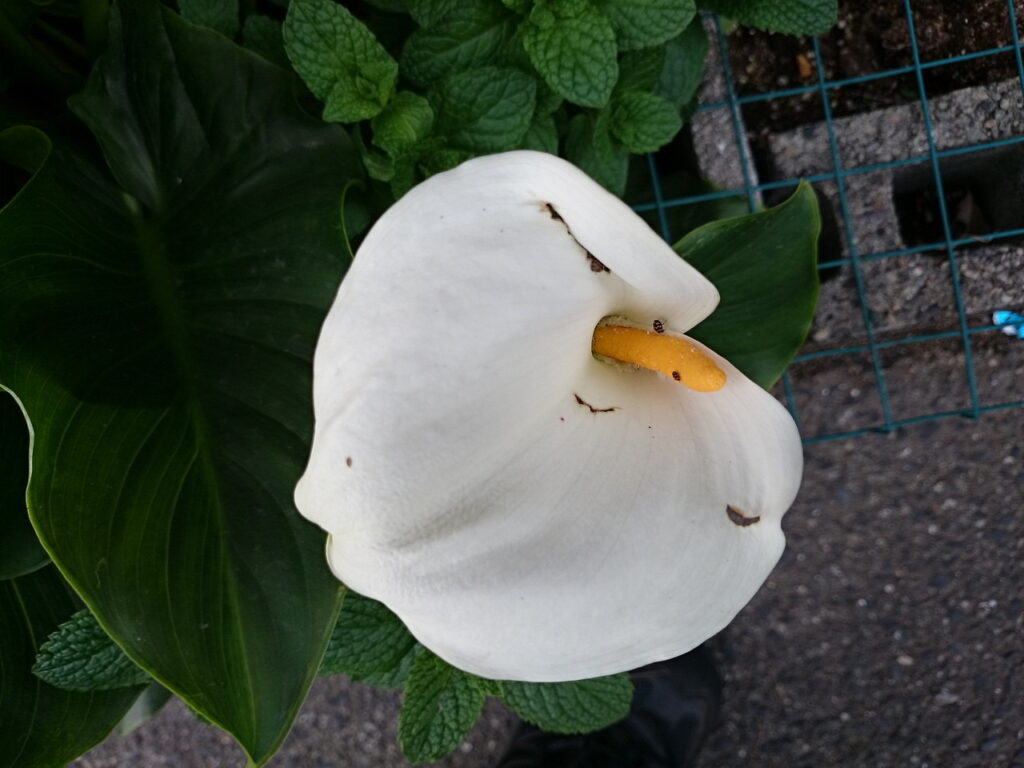
No. 0178 Calla Lily (Zantedeschia aethiopica)
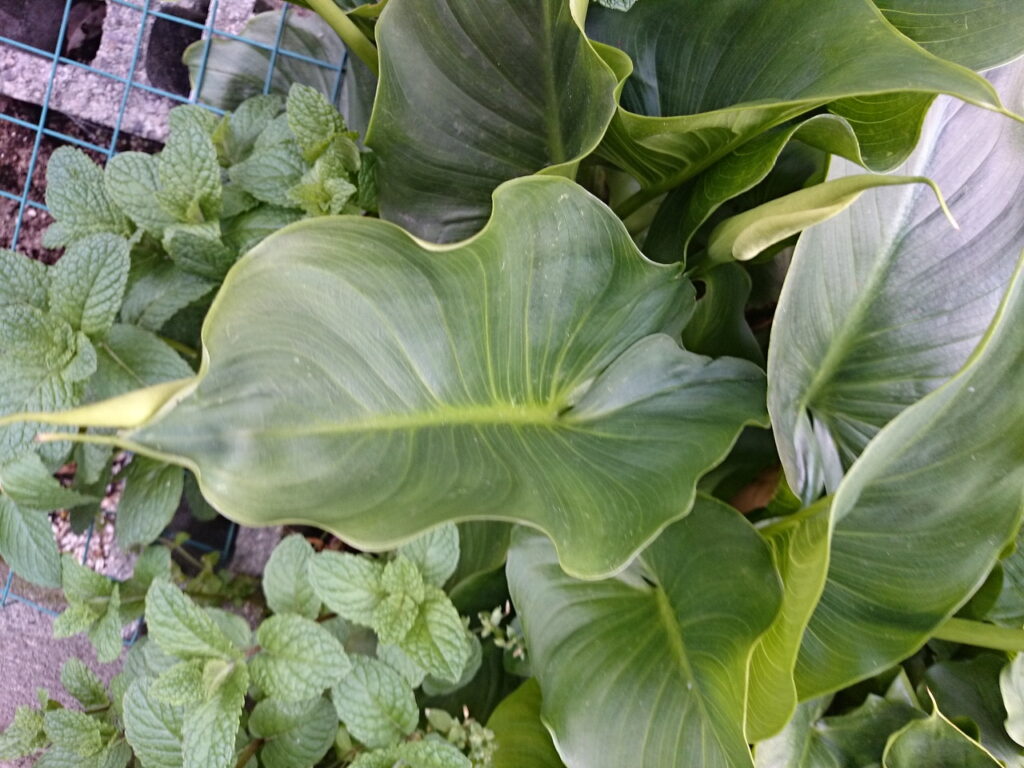
Also known as calla lily, it is a perennial herb. It has a wasabi-root-like rhizome, and the basic form has a flower stalk about 1m long, with a spathe 7-20cm long that is almost white with a creamy base. The leaves are bright green with long petioles, but there is considerable variation. The basic species flowers around May, but varieties that bloom throughout the seasons bloom concentrated in Japan around May-June and October. It is native to the Cape Transpaul region of South Africa, and was introduced to Europe in 1761 and to Japan in 1843. It grows from wetlands to mountainous areas.
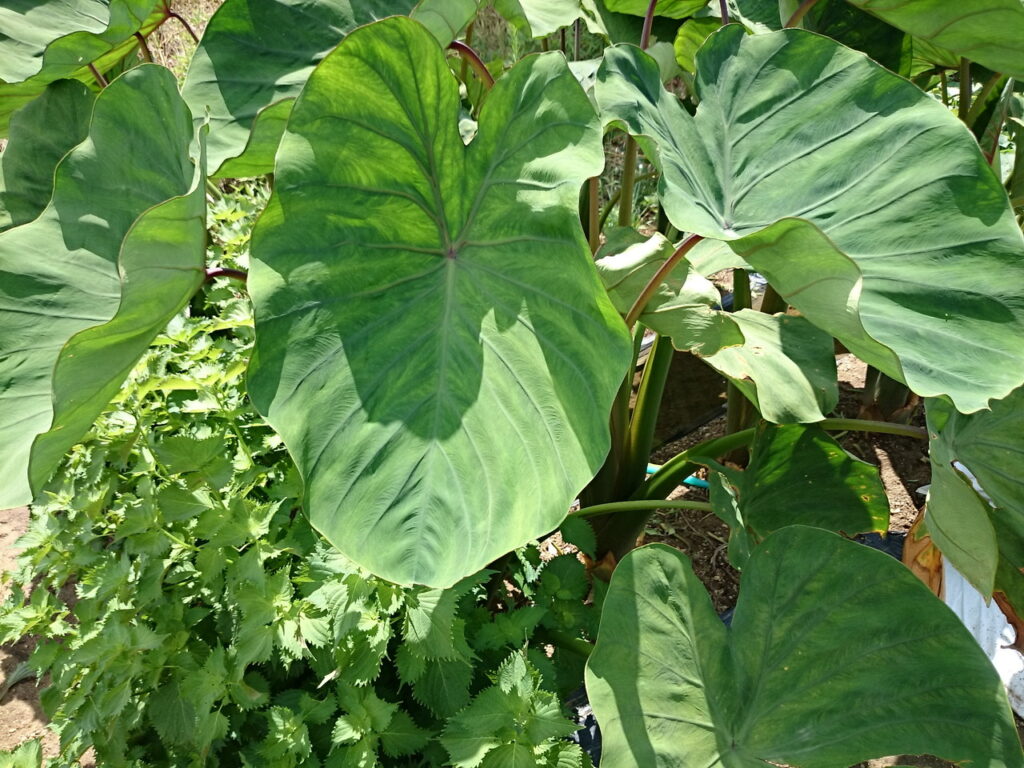
No.0179 Taro (Colocasia esculenta)
Also known as taro, it is a perennial plant. Large leaves grow from petioles above ground, reaching a height of 1.2 to 1.5 meters. Underground, there is an edible tuber (potato) with long, slender root hairs. Well-established plants produce flowers. The spathe is cream-colored, about 20 cm long, and has a fragrance when in bloom. It is thought to have been cultivated in Japan since the early stages of agricultural culture. Many cultivated varieties are known in Japan, differing in the color of different parts of the plant, cultivation location, cultivation method, and the parts used for food. Escaped plants can be found in fields and on the edges of forests, and varieties called "mizuimo" and "taimo," which are cultivated in wetlands, can escape to areas around ditches. Its origin is said to be tropical Asia, such as India, China, or the Malay Peninsula, but the theory that it originated from eastern India to the Indochina Peninsula is considered the most likely. It is believed to have been cultivated in India at least as early as 3000 BC.
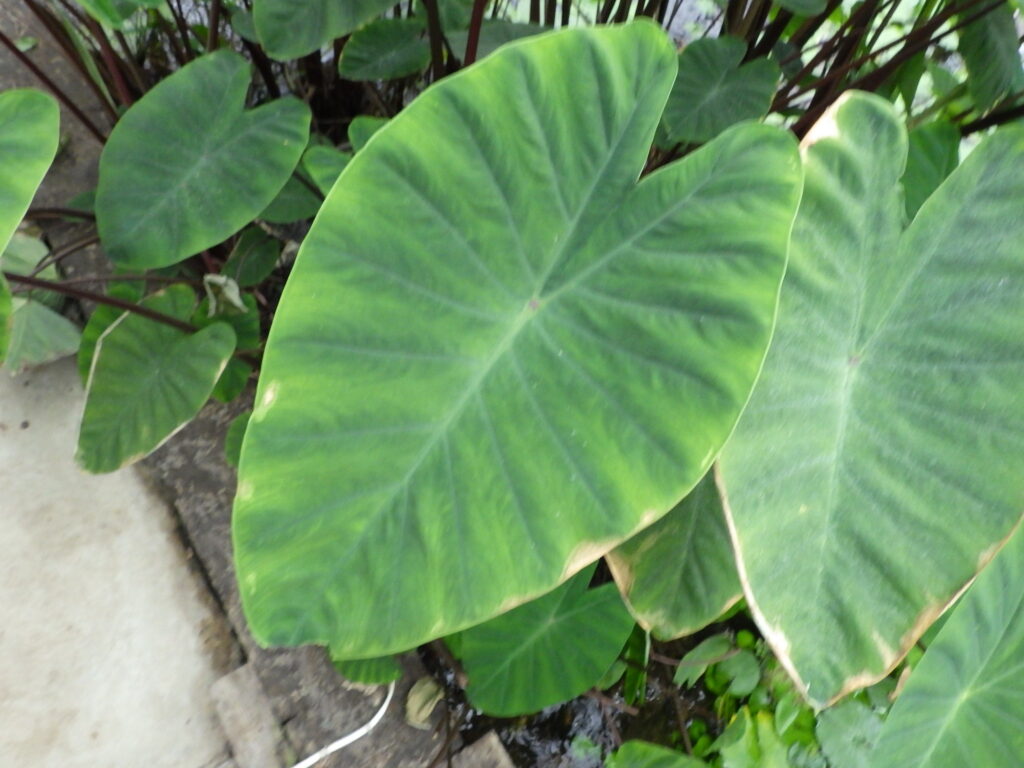
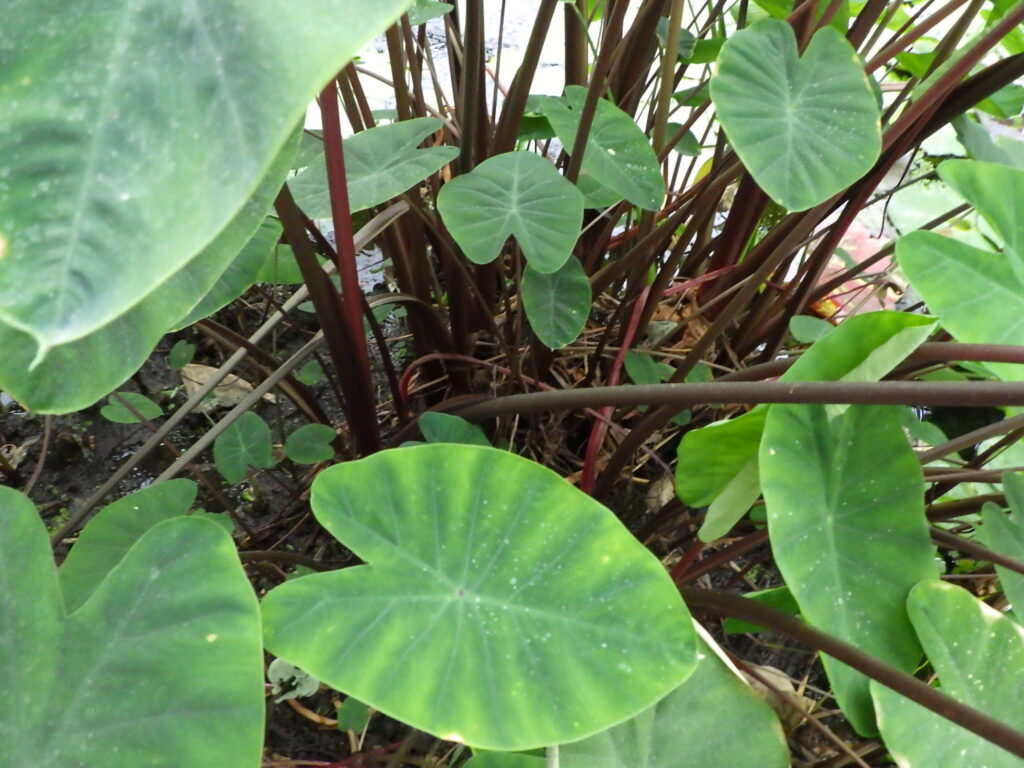
No.0179.1 Taro (Coffee Cups) Colocasia esculenta 'Coffee Cups'‘
Coffee Cup is a horticultural variety of taro with dark purple leaf stalks and leaves that narrow and become cup-shaped.
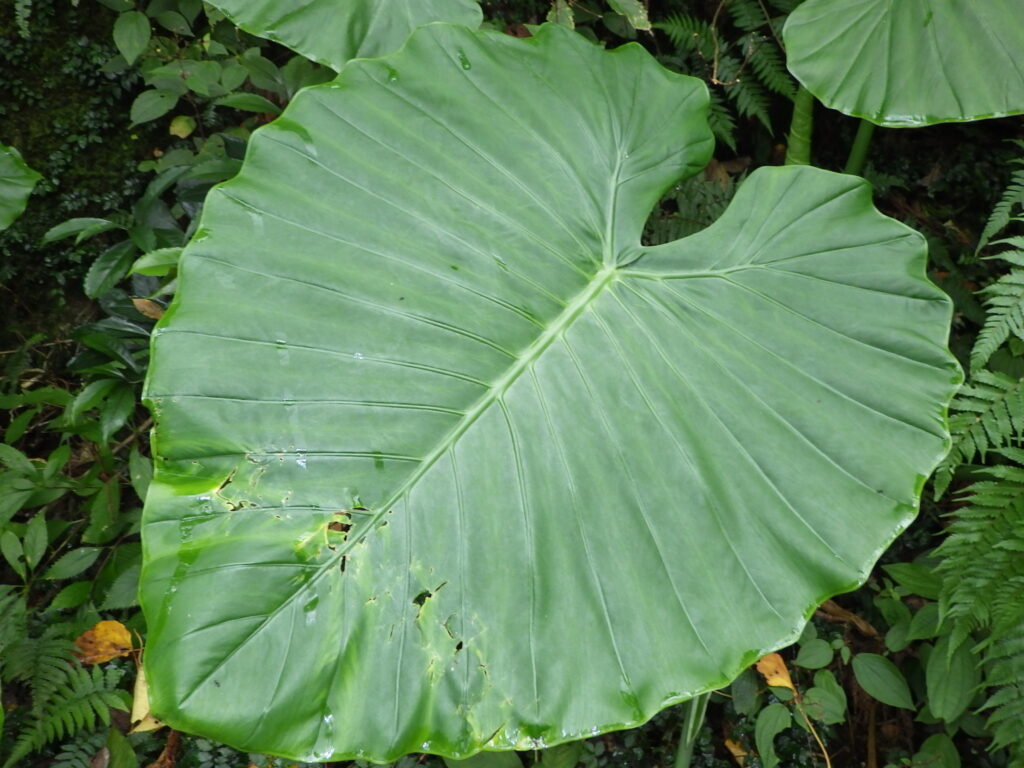
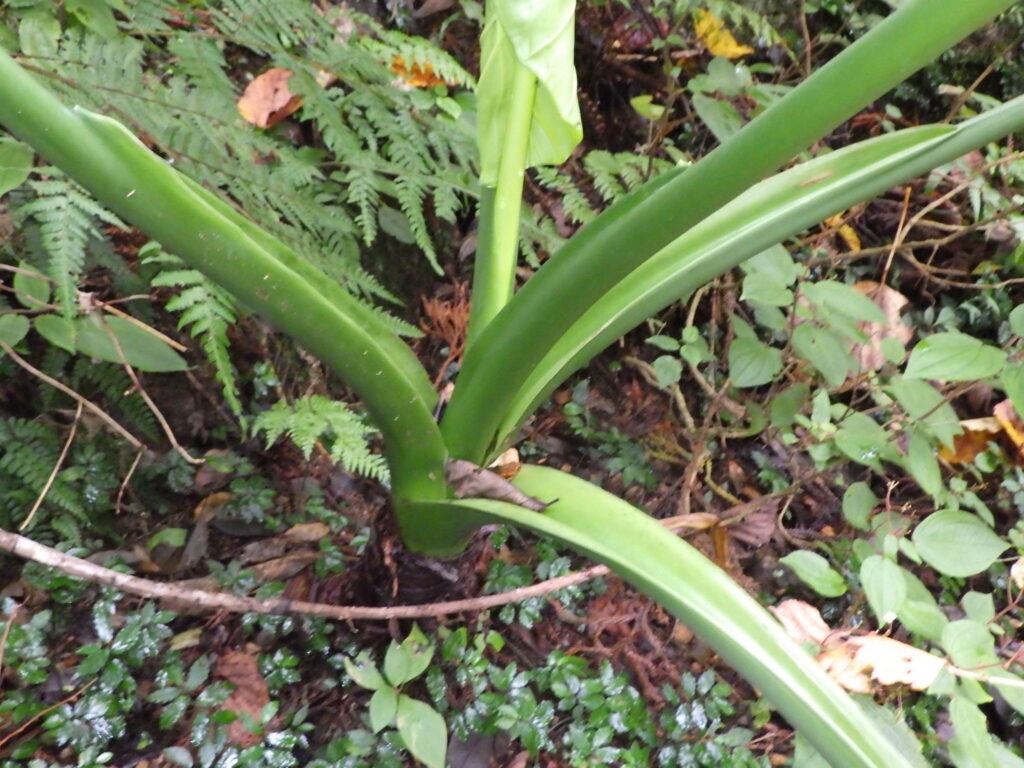
No. 0180 Alocasia odora
This is an evergreen perennial herb. Unlike taro, which grows in a tuberous form, it has a rod-shaped rhizome that creeps slightly along the ground, sometimes branching, with the tip rising slightly. Several leaves grow from the tip. There is considerable individual variation in size, ranging from knee-high to taller than a person. The leaves can reach 60 cm in length, are oval-shaped overall, and have wavy serrations. The base is deeply heart-shaped, but the petiole is attached slightly shield-like. The petiole is 60 cm to over 1 m long, green, and tapers towards the tip. Flowers appear in the shade of the leaves from early summer to summer. The spathe is tubular and green at the base, and slightly larger and oval-shaped at the tip, standing upright in a slightly inward-curving manner, ranging in color from green to whitish. The flower spike emerges from the tubular part and is yellowish-white. When the fruit ripens, the spathe falls off, and the fruit becomes more conspicuous. It is distributed in tropical and subtropical regions from southern China and Taiwan to Indochina and India, and in Japan from southern Shikoku through southern Kyushu to the Ryukyu Islands. In Okinawa Prefecture and the Amami Islands of Kagoshima Prefecture, it can be commonly found growing wild along roadsides, in gardens, and in hedges. In lowland forests, it can sometimes cover the forest floor. It is rich in calcium oxalate and is not edible.
No.0189 Arisaema ringens
This is a perennial herb. The pseudostem is low. It has two leaves. The leaflets are three in number, broadly rhombic-ovate, 8-20 cm long and 4-10 cm wide. The tip is abruptly pointed and thread-like. It flowers from March to May. The flower stalk is 3-10 cm long. The spathe is dark purple with prominent ears on the edge of the tubular opening, and the limb is sac-like, 3.5-4.5 cm high, with a short tail-like tip. The veins are transparent and conspicuous, and the inflorescence appendage is rod-shaped. It is distributed in Honshu (western part), Shikoku, and Kyushu. It grows in moist forests and bamboo groves in areas with Castanopsis and Quercus species.
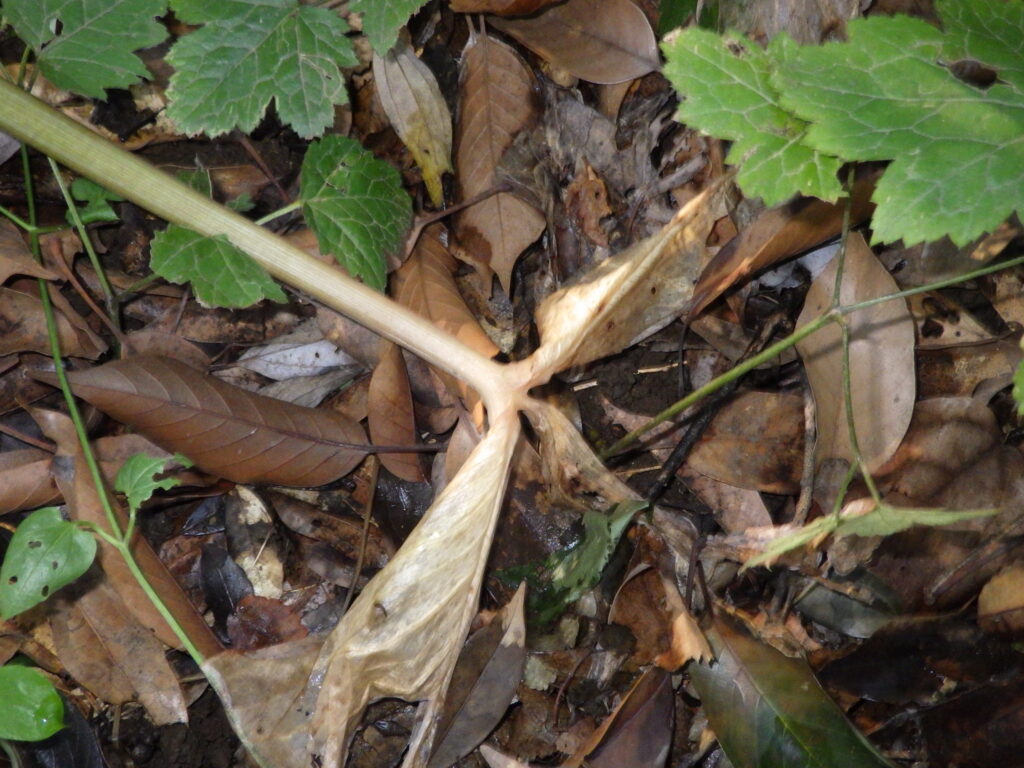
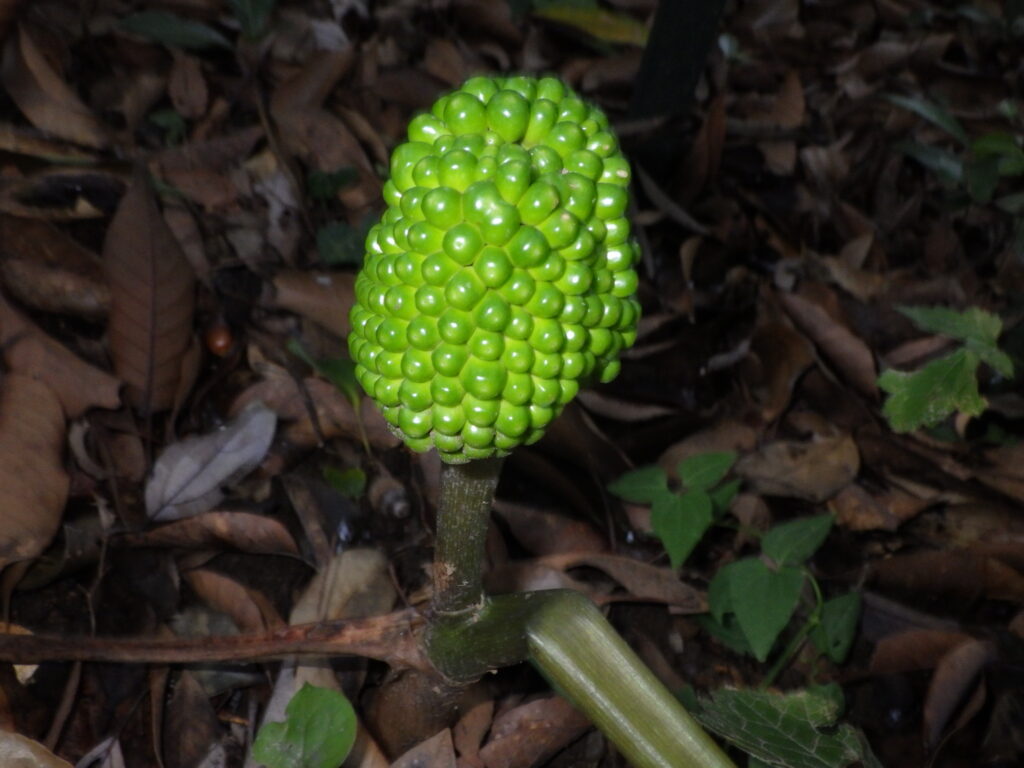
No. 0198 Arisaema limbatum
Perennial herb. The pseudostem is 20-50 cm tall. There are two leaves. The leaflets are 7-11 in number and are ovate-oblong to oblong. The largest leaflet is 10-20 cm long and 2.5-6 cm wide. The outermost leaflet is wider on the outside of the base. Flowers bloom from April to May. The flowers open earlier than the leaves. The flower stalk is 10-20 cm long. The spathe is brownish-purple to dark purple with a glossy interior. The tube is 4.5-6 cm long, and the opening has prominent ears 1-2 cm wide on the edge. The limb is 8-15 cm long, with an erect base that bends forward and then droops. The inflorescence appendage is rod-shaped and slightly curved forward. Distributed in the Kanto, Tohoku, and Shikoku regions. It is distributed in the Castanopsis/Oak zone to the Chestnut zone, but can also be found in the Beech zone in southern Tohoku.
No. 0203 Arisaema japonicum
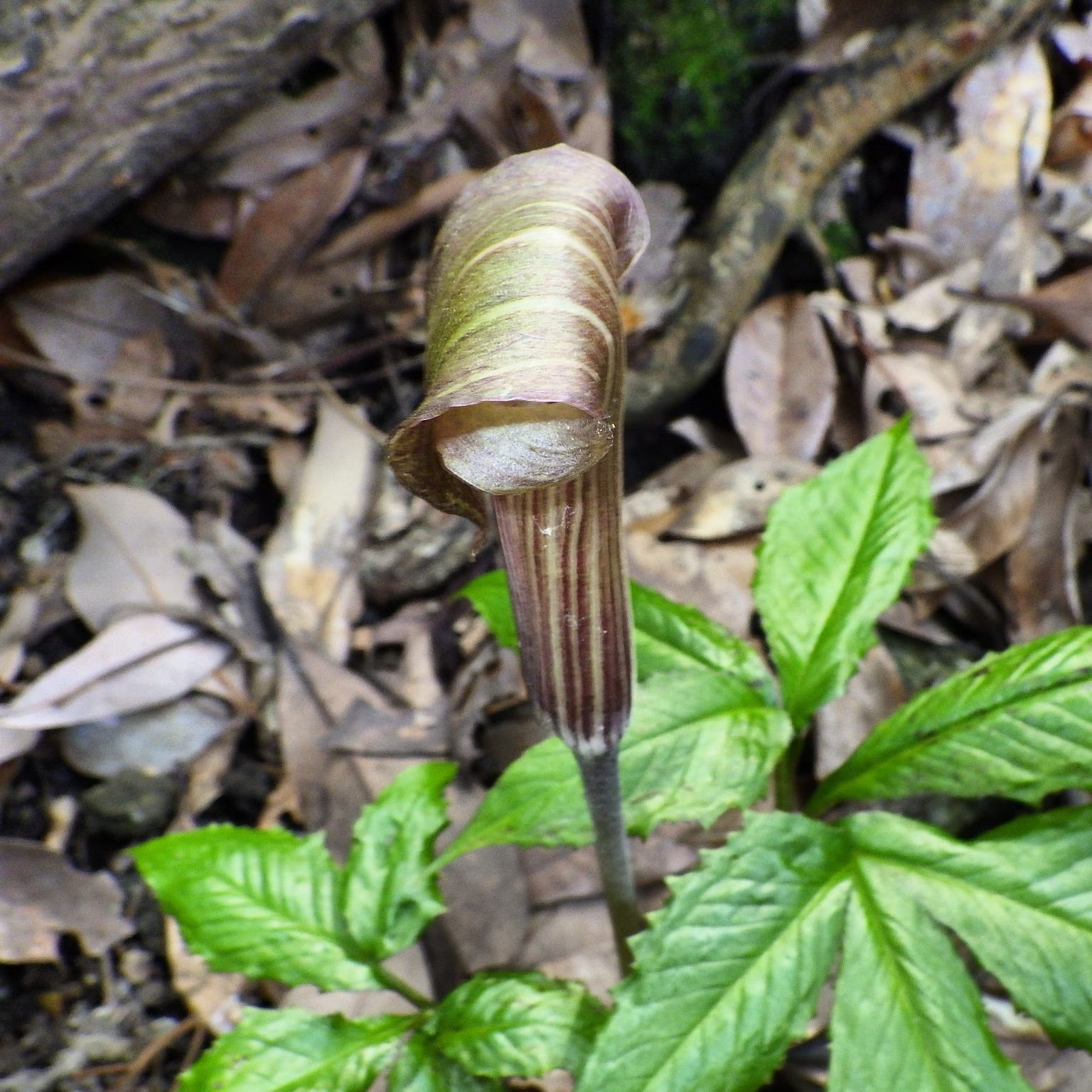
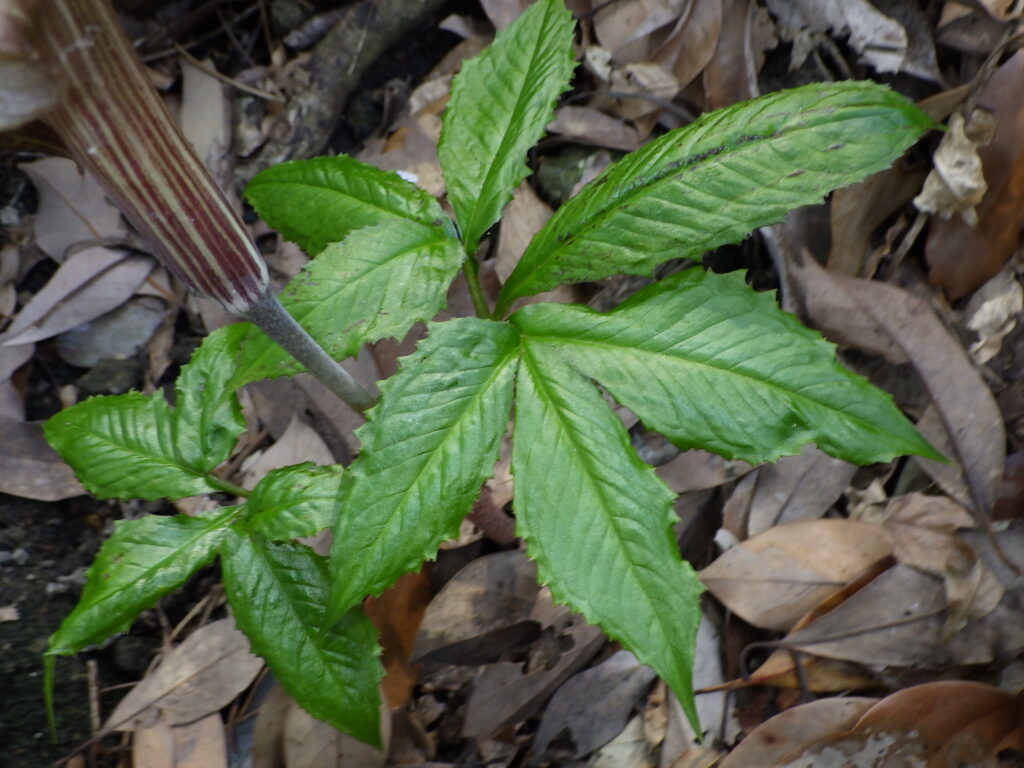
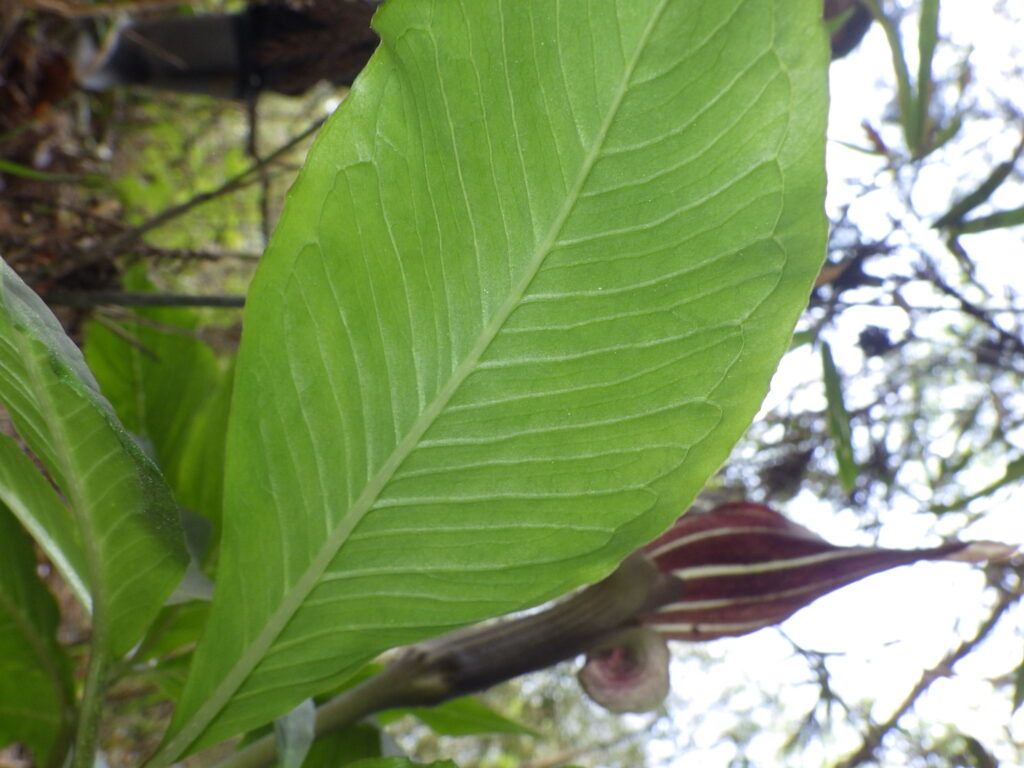
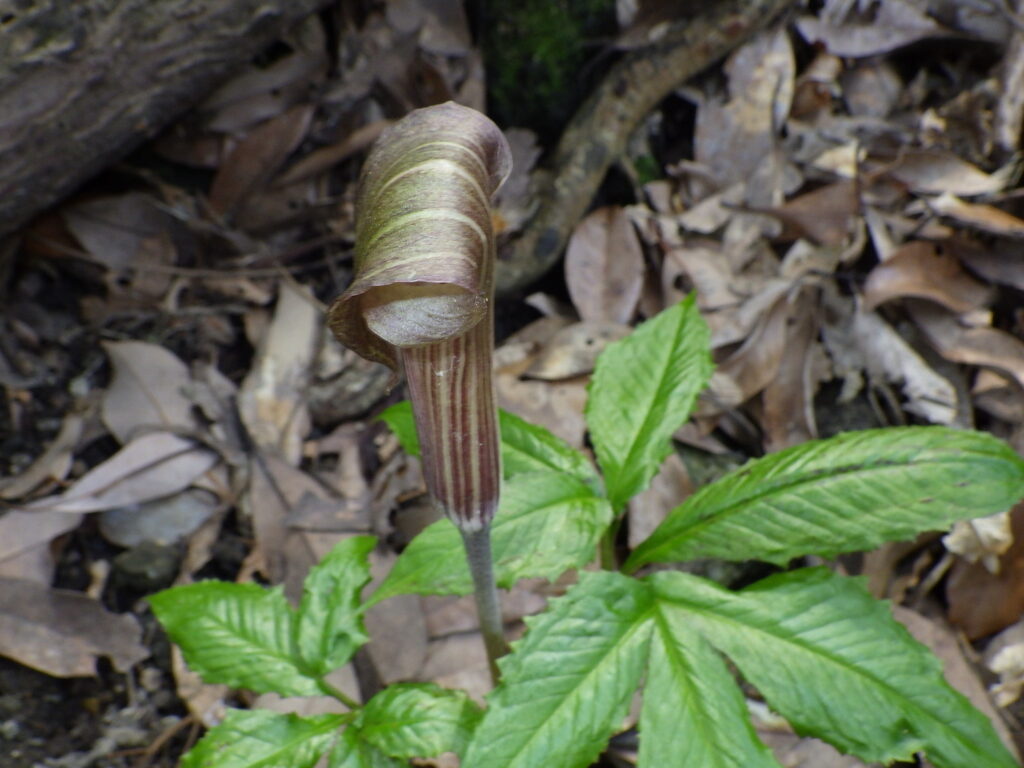
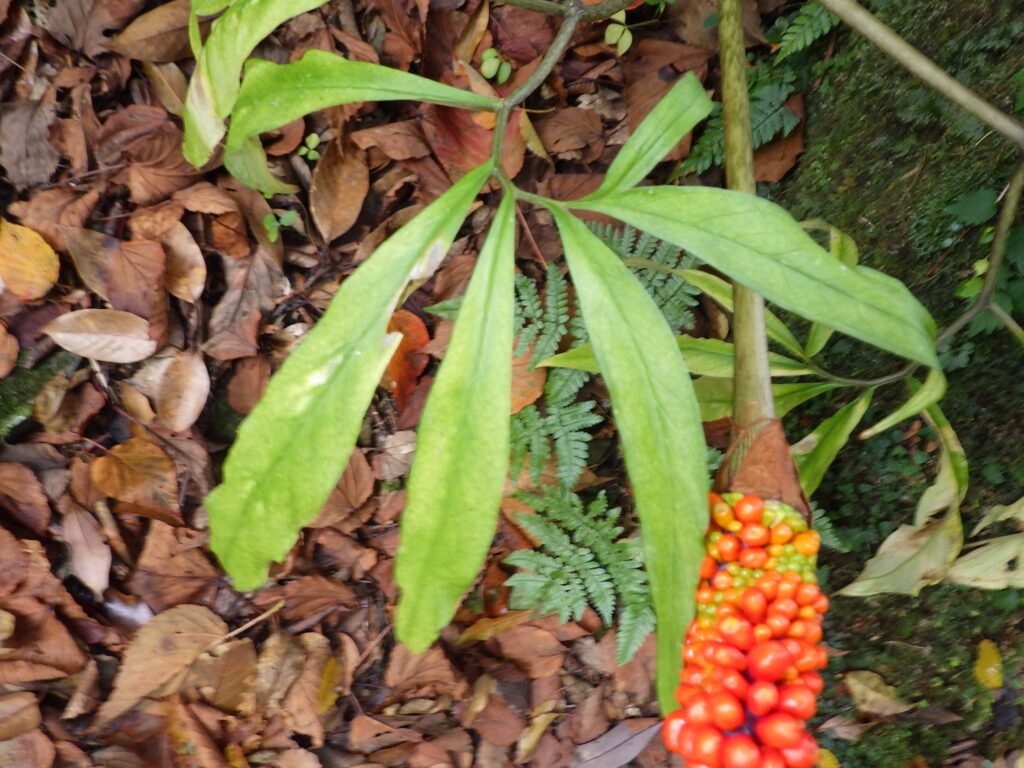
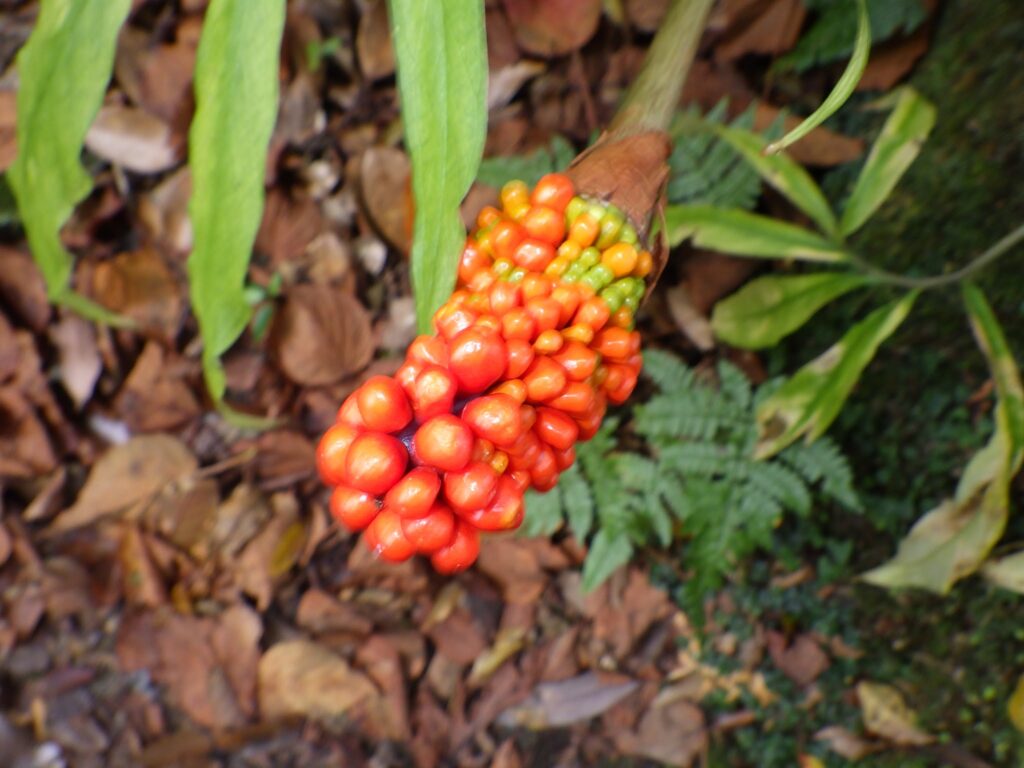
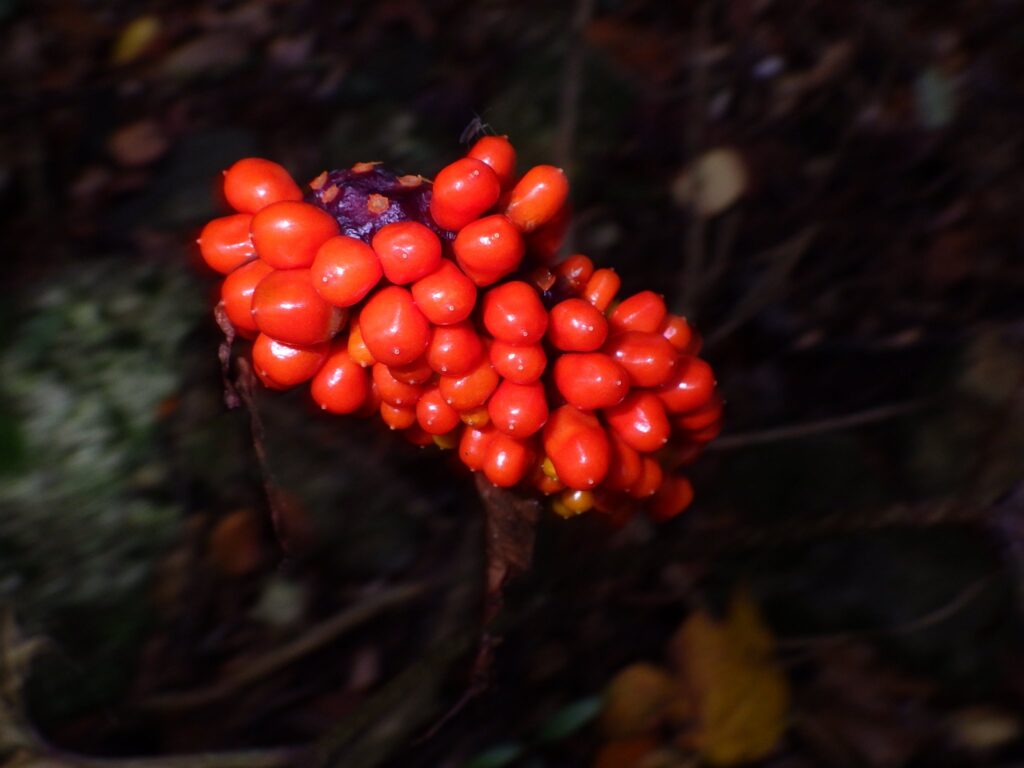
A perennial herb. The purple mottled pattern on the pseudostem resembles the pattern on the body of a pit viper, and the spathe can be green or purple, emerging above the leaves. It has a rod-shaped appendage. It is distributed in Shikoku and Kyushu. The photograph is from Yakushima. For details, see Murata et al. (2018).
No. 0211 Pinellia tripartita
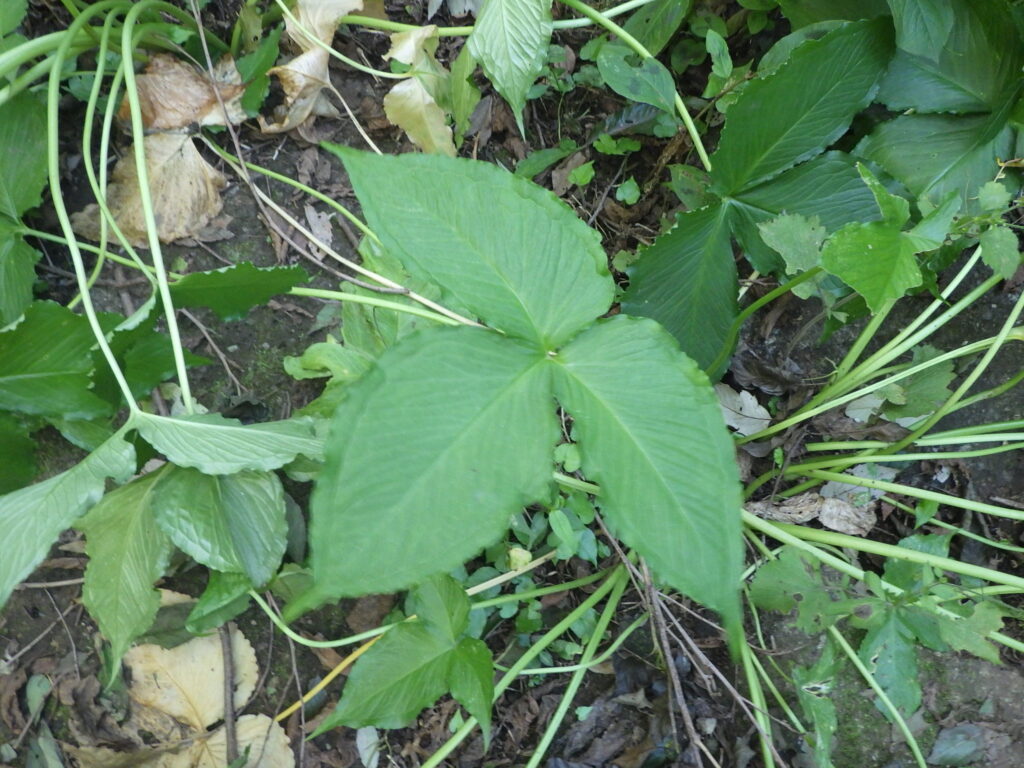
This is a perennial herb that grows to a height of 20-60 cm. The corm is oblate-spherical, 3-5 cm in diameter, and roots emerge from the top. It has 1-4 leaves with petioles 20-45 cm long, and unlike Arisaema heterophyllum, it does not produce bulbils along the petiole. The leaf blade is deeply 3-lobed, with lobes that are broadly elliptical to elliptical, 8-20 cm long and 3.5-12 cm wide, with the tip slightly elongated into a tail-like shape. The flowers bloom from June to August, and the spathe is green or purplish, 6-10 cm long. It is distributed from Honshu (central region) to the Ryukyu Islands. It can be found at the edges of forests and along shady streams. It is often found in areas close to bedrock with shallow soil. When the inside of the spathe is purplish-black, it is called Arisaema heterophyllum f. atropurpurea.
References
Chiba, Satoshi and Ozeki, Masaaki. 2017. On the life history of skunk cabbage in Itani-sato Marshland (Omachi City, Nagano Prefecture). Bulletin of the Omachi City Mountain Museum 2: 27-34. https://doi.org/10.34529/oam.2.0_27
Kanagawa Prefecture Flora Survey Association. 2018. Kanagawa Prefecture Flora 2018 (Electronic Edition). Kanagawa Prefecture Flora Survey Association, Odawara. 1803pp. ISBN: 9784991053726
Murata, J., Ohno, J., Kobayashi, Y., and Toma, T. 2018. Illustrated Guide to Arisaema species found in Japan. Hokuryukan, Tokyo. 360pp. ISBN: 9784832610057
Tsukamoto, Yotaro. 1994. Encyclopedia of Horticultural Plants, Compact Edition. Shogakukan, Tokyo. 3710pp. ISBN: 9784093051118