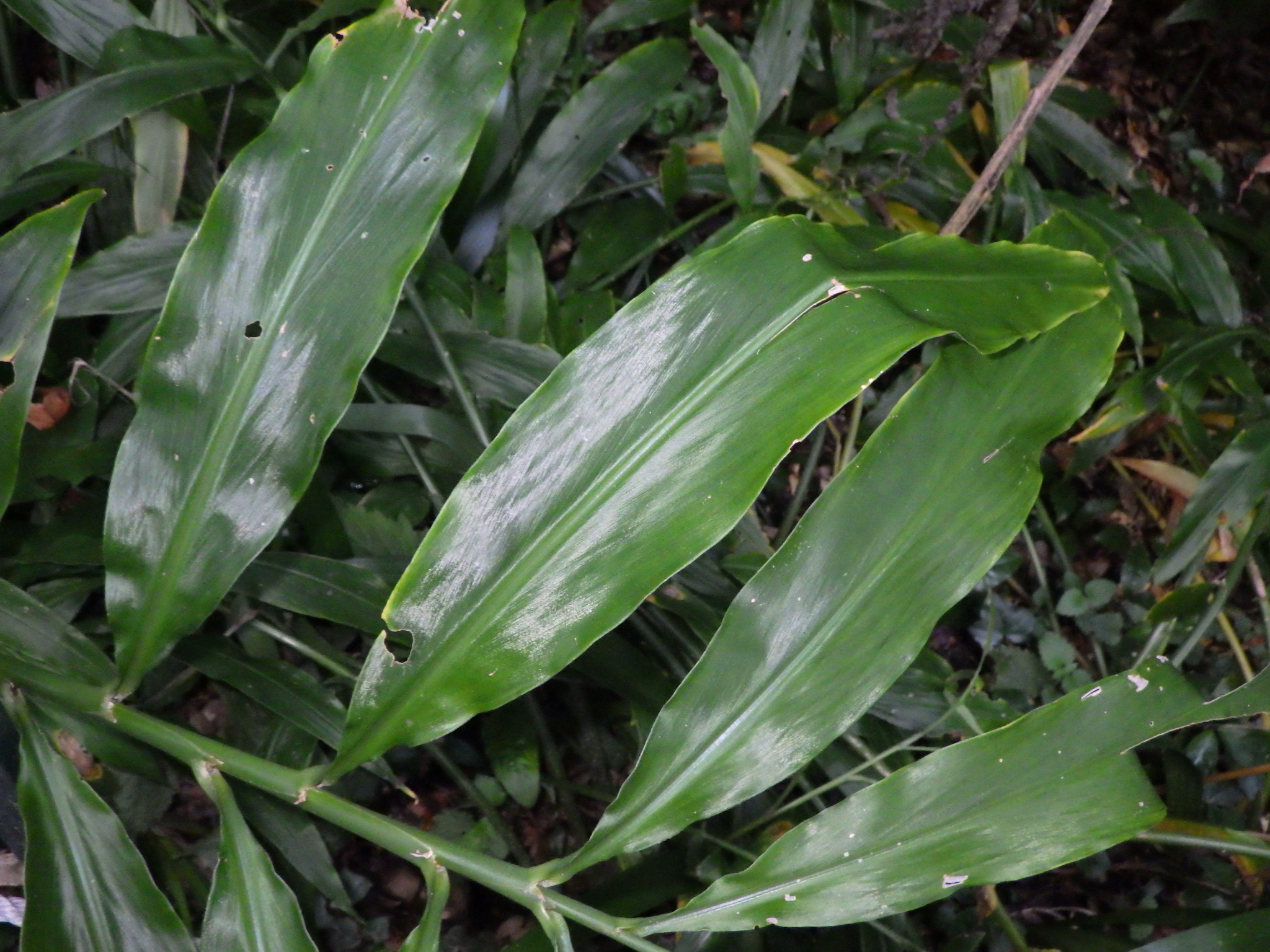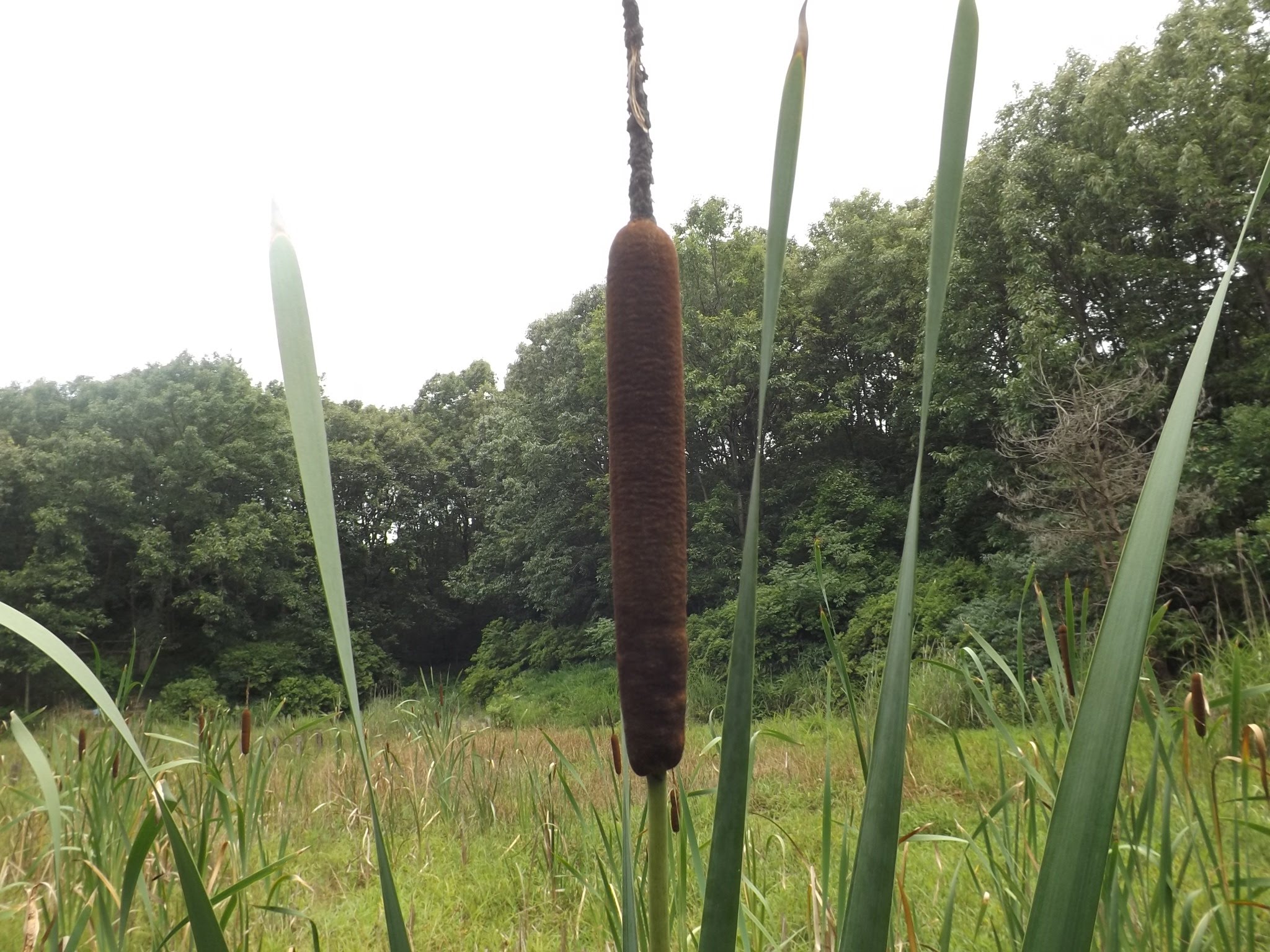
The Typhaceae family consists of perennial herbs that grow in ponds and wetlands. Their rhizomes are thick and creeping. The leaves are linear, erect, or float on the water's surface. The flowers are unisexual and monoecious. The inflorescence is terminal, cylindrical or spherical, with male inflorescences at the top and female inflorescences at the bottom. The perianth is filiform or scale-like. Male flowers have 1 to 8 stamens, with free or fused filaments. Female flowers have one pistil. In the APG system, the Sparganiaceae family has been merged into the Typhaceae family. There are approximately 35 species in 2 genera found in tropical to temperate regions worldwide, and 13 species in 2 genera found in Japan.
This article provides a comprehensive, field guide-style introduction to plants belonging to the Typha family.
The basic information is based on the Kanagawa Prefecture Flora Survey Association (2018). Photos are replaced as better ones become available. While the identification is done by the author, please note that misidentifications may be corrected without notice.
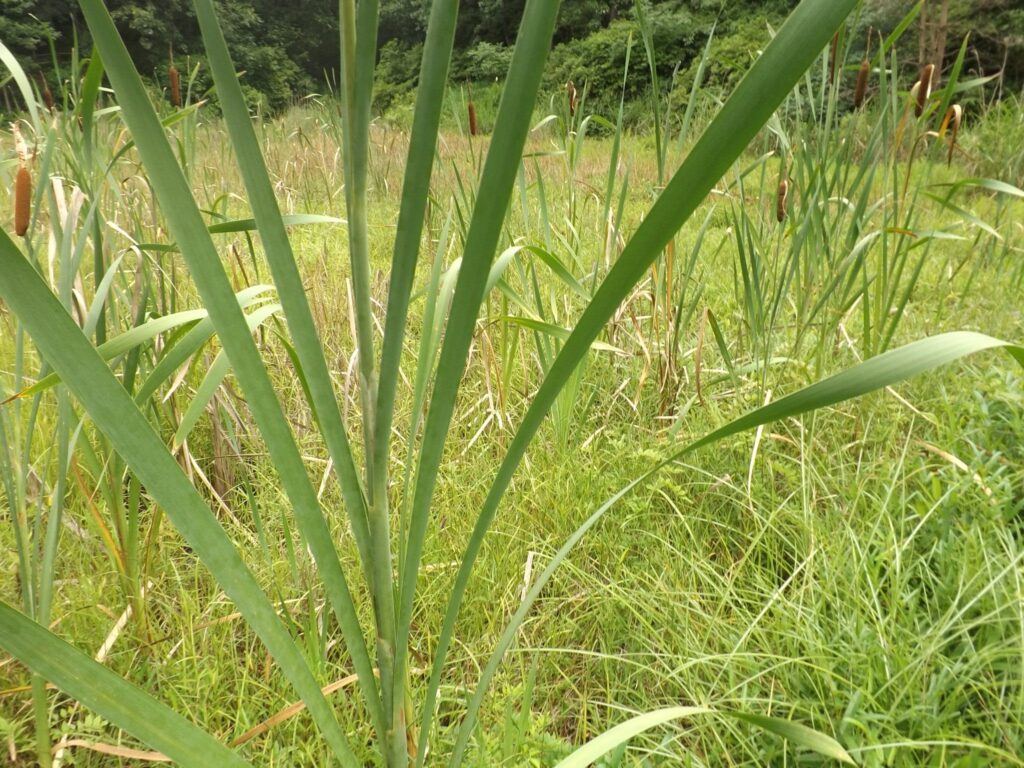
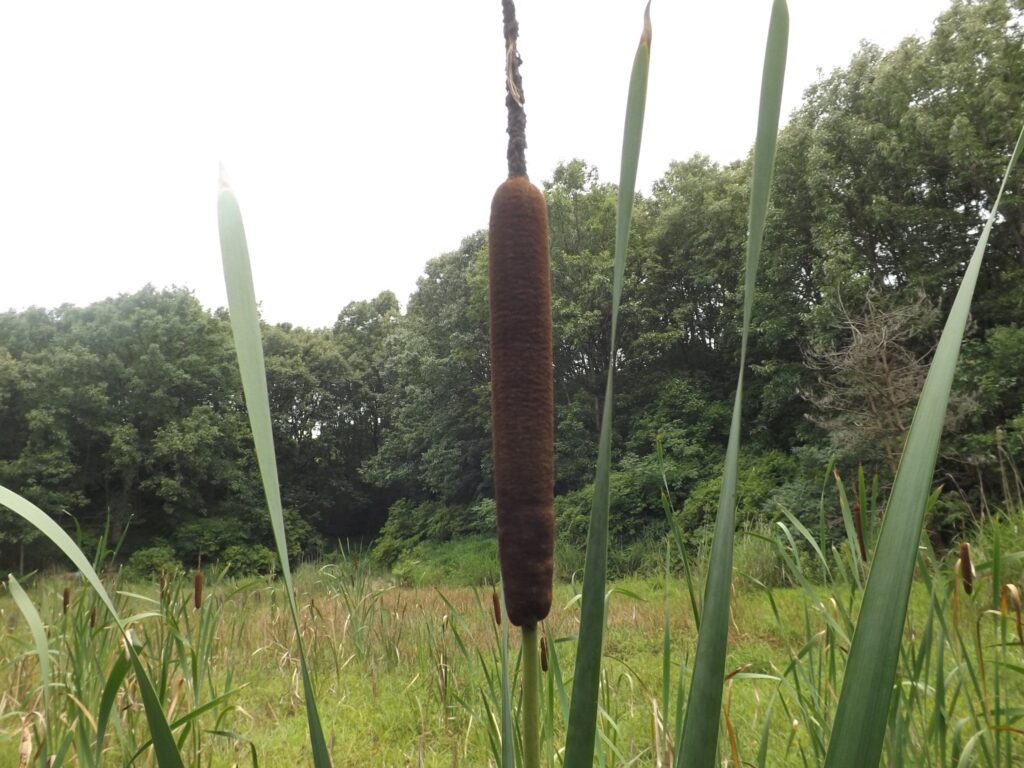
No.0656 Typha latifolia
This is a perennial herb that grows in clumps, forming large colonies. The stems are 1.5 to 2 meters tall, and the leaves are 1 to 2 meters long. It flowers from June to August. The male inflorescence is shorter than the female inflorescence, measuring 7 to 12 cm in length. During flowering, the yellow pollen is conspicuous, and after flowering, only the stalk remains. The pollen grains are connected in groups of four. The female inflorescence is about 6 mm wide when in flower, and reaches over 23 mm wide when mature. It is widely distributed in Hokkaido, Honshu, Shikoku, Kyushu, and the Ryukyu Islands; in temperate to tropical regions of the Northern Hemisphere; and in Australia. It grows in ponds, swamps, and wetlands in the Castanopsis and Quercus zones.
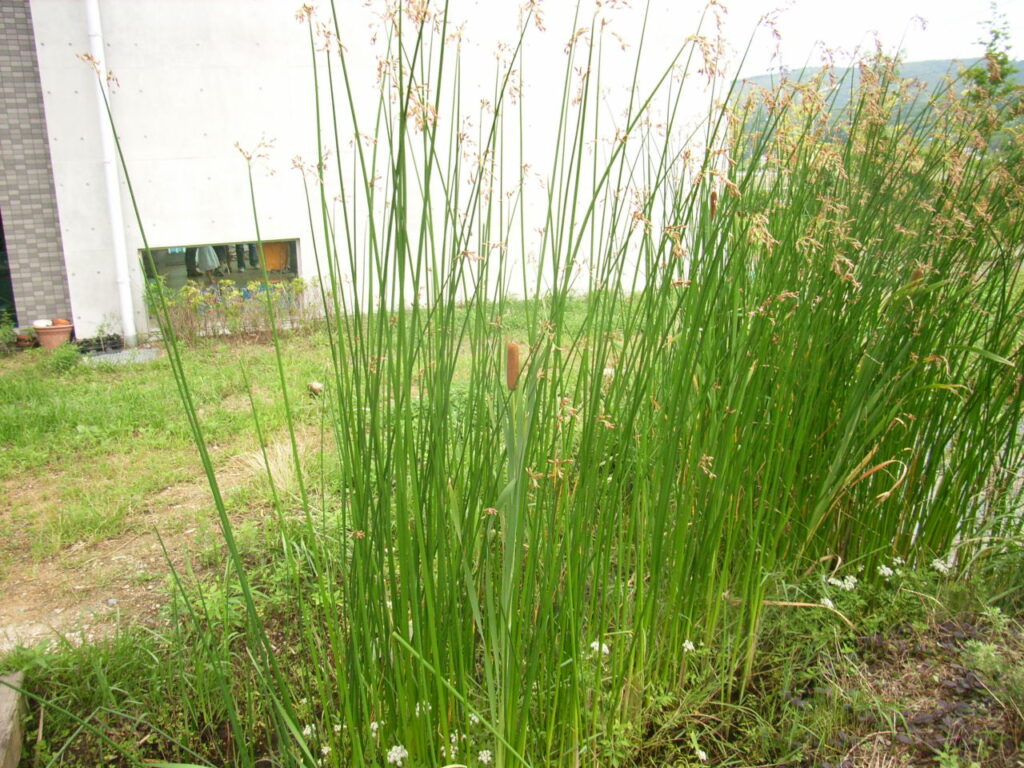
No.0658 Typha domingensis
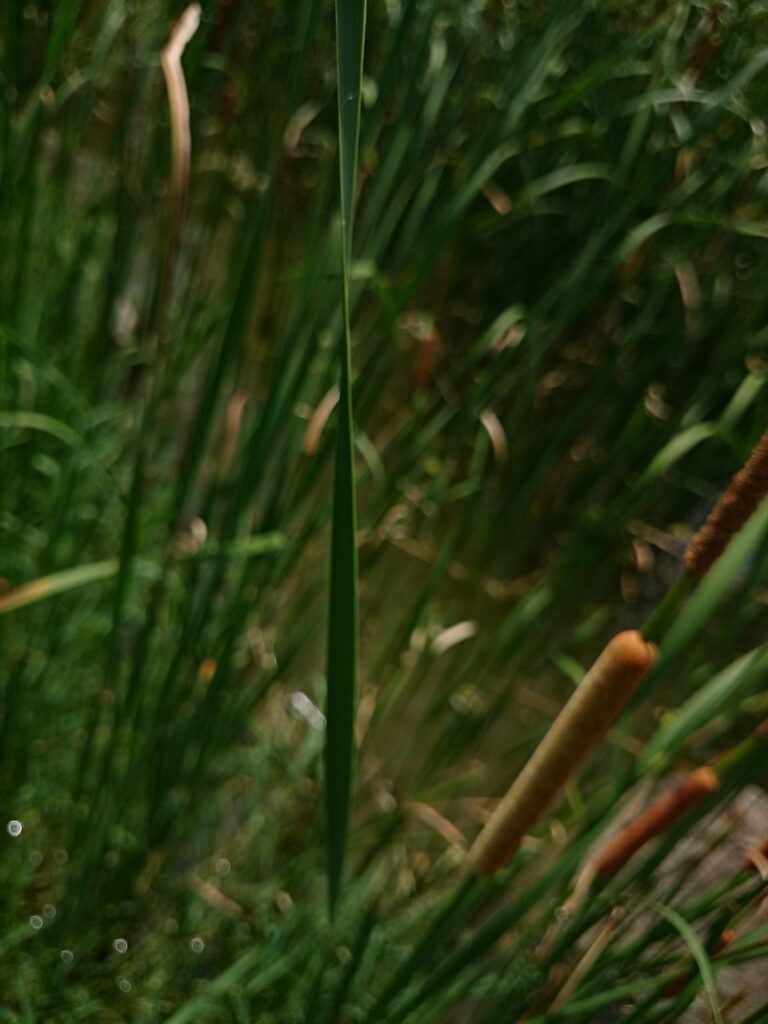
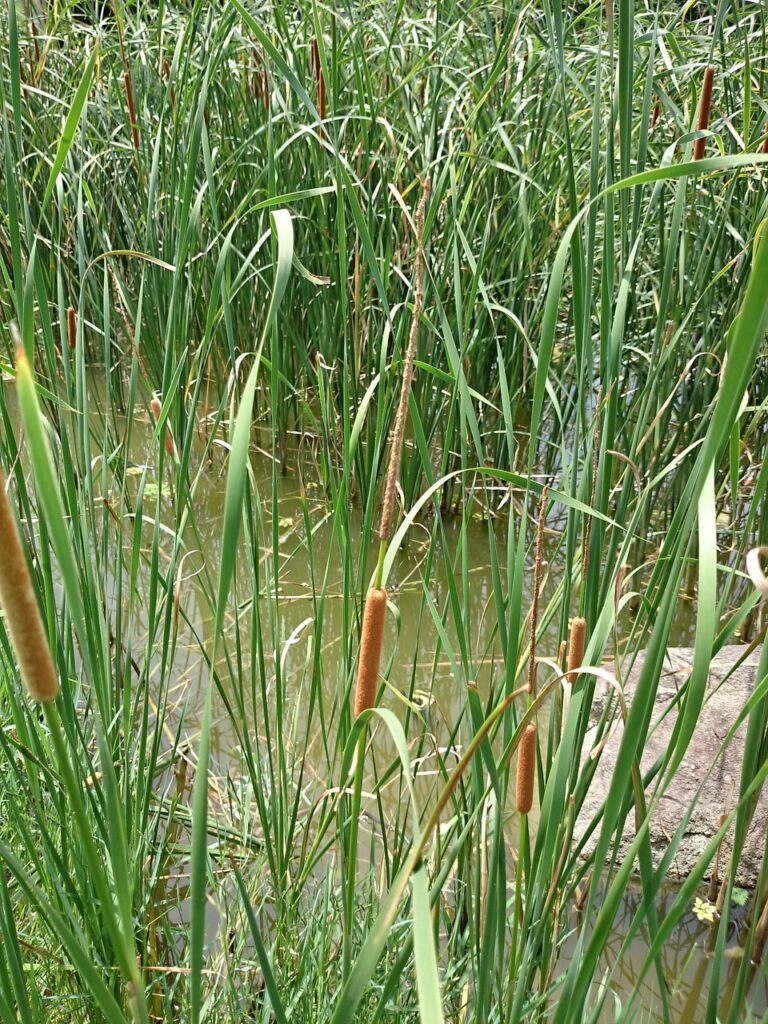
This is a perennial herb. The stems grow to a height of 1.5-2m. It flowers in July and August. It resembles other species, but the male and female inflorescences are separated, with a 2-3cm flowerless green stalk between them. The male inflorescence is the same length as or longer than the female inflorescence, 10-20cm long. The pollen is solitary. The female inflorescence is 6-20cm long, 4mm wide during flowering, and 15mm wide when fruiting. It grows in the deepest parts of the cattail family, and can be found in water deeper than 50cm. It is widely distributed in Hokkaido, Honshu, Shikoku, Kyushu, and the Ryukyu Islands; and throughout the temperate to tropical regions of the world. In North America, its distribution is concentrated in the southeastern part. It grows in ponds, swamps, and wetlands in the Castanopsis/Quercus zone (to the Abies zone). Until now, the scientific name T. angustifolia has been used, but this is a similar but different species, and the common Japanese cattail (Typha latifolia) corresponds to T. domingensisi. This scientific name is already being used in works such as the "Flora of the Ryukyu Islands."
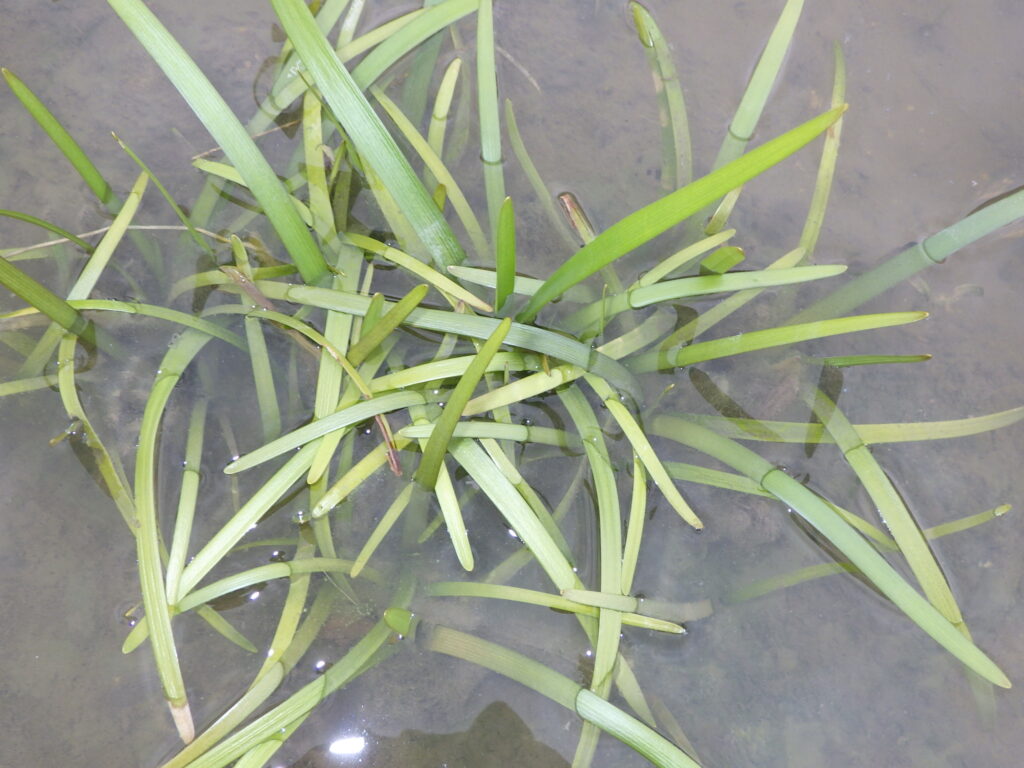
No.0663 Yamato Mikuri Sparganium fallax
This is a perennial herb, an emergent aquatic plant, and somewhat rare in flowing water. It propagates vegetatively by sending out stolons through the mud, producing new shoots at the tips. The stolons are sturdy, thicker and harder than those of *Sparganium erectum*. It grows to a total height of 50-120 cm. The leaves are 10-20 mm wide, with ridges on the back and a triangular cross-section. It flowers from June to September. The inflorescence is unbranched, with 4-8 male flower heads at the top and 3-6 female flower heads at the bottom, somewhat spaced apart. The female flower heads are axillary, with all or part of the pedicel fused to the main axis. If the fused pedicel is long, the fused part reaches the upper node, making it appear as if the flower head is attached to the opposite side of the bract. The male and female flower heads are spaced more than 1 cm apart. The main axis is often bent in a zigzag pattern where the female flower heads are attached. The diameter of the female flower heads during the fruiting stage is 15-20 mm, excluding the beak-shaped stigma. The fruit is spindle-shaped, 5-6 mm long, and constricted in the middle. It can be distinguished from other species by its unbranched inflorescence, the presence of stalks on the female flower heads (partially or entirely fused to the main axis), and its axillary orientation. It is distributed in Honshu (west of Kanto), Shikoku, and Kyushu in Japan; as well as in India and Myanmar, growing in lakes, ponds, rivers, slow-flowing waterways, and wetlands.
References
Kanagawa Prefecture Flora Survey Association. 2018. Kanagawa Prefecture Flora 2018 (Electronic Edition). Kanagawa Prefecture Flora Survey Association, Odawara. 1803pp. ISBN: 9784991053726