The family Cycadaceae is a family of plants belonging to the order Cycadales in the class Cycadiformes. All extant species are evergreen woody plants. The leaves are pinnately compound, with long, pointed leaflets. Numerous leaves grow at the tip of the stem, with the base remaining on the stem. They are dioecious, with flowers borne terminally or laterally on the stem. The stamens (microsporophylls) are scale-like, with numerous microsporangia (anthers) on the underside. The pistil (megasporophylls) is leaf-shaped, with several ovules on the edge. The pollen contains one prothallus cell. It germinates in the pollen chamber within the ovule, attaches to the pollen tube, and releases sperm. There are several archegonia within the embryo sac, and one egg cell is fertilized. Cyanobacteria live symbiotically on the roots and perform nitrogen fixation. There are about 100 extant species, distributed mainly in tropical and subtropical regions of Southeast Asia. In Japan, only the cycad (Sago palm) grows naturally in the southwestern islands and other areas.
This article provides a comprehensive, field guide-style introduction to plants belonging to the Cycadaceae family.
The photos are replaced as soon as better ones are taken. Also, while the identification is done by the author, please note that if there are any misidentifications, they may be changed without notice.
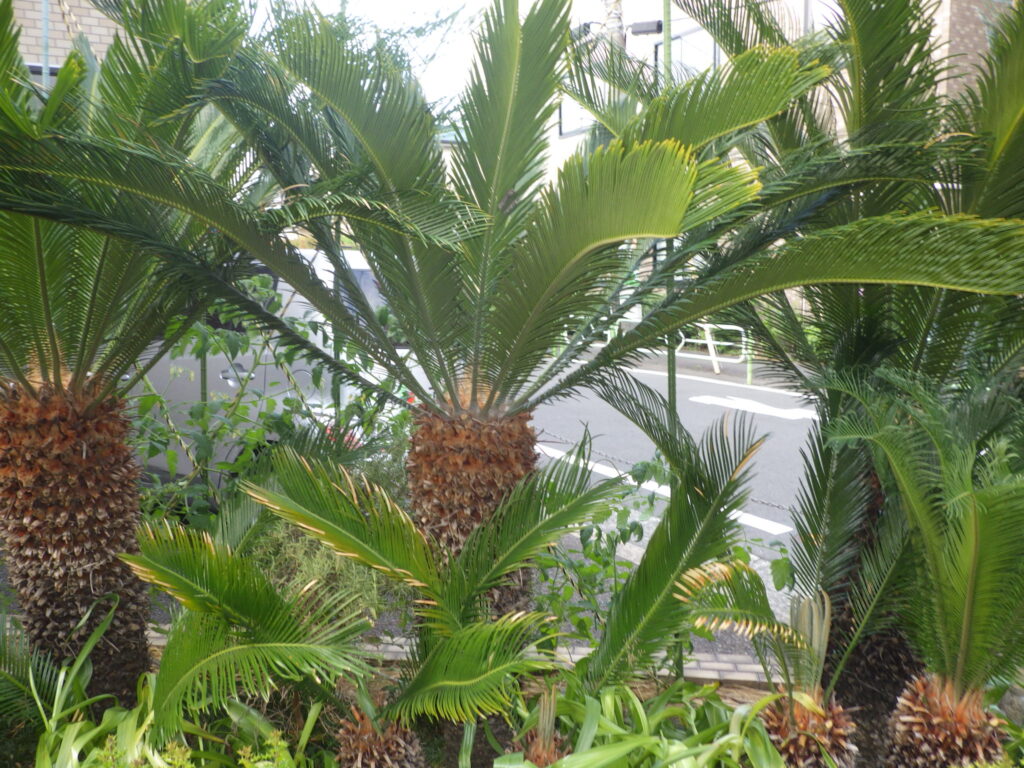
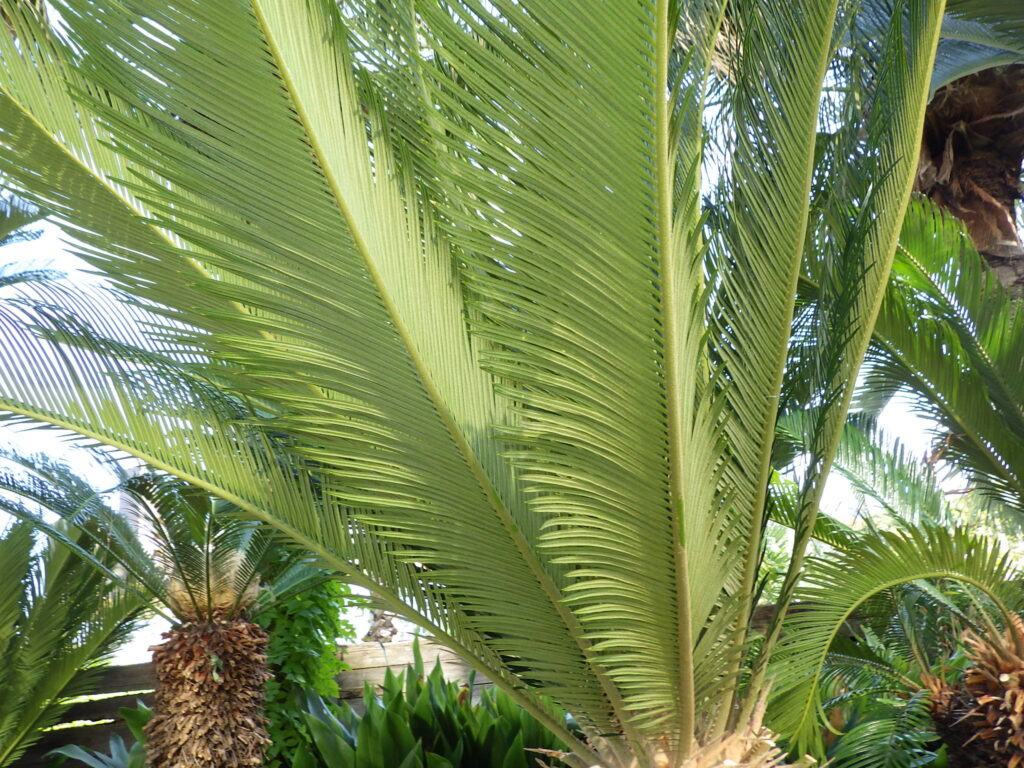
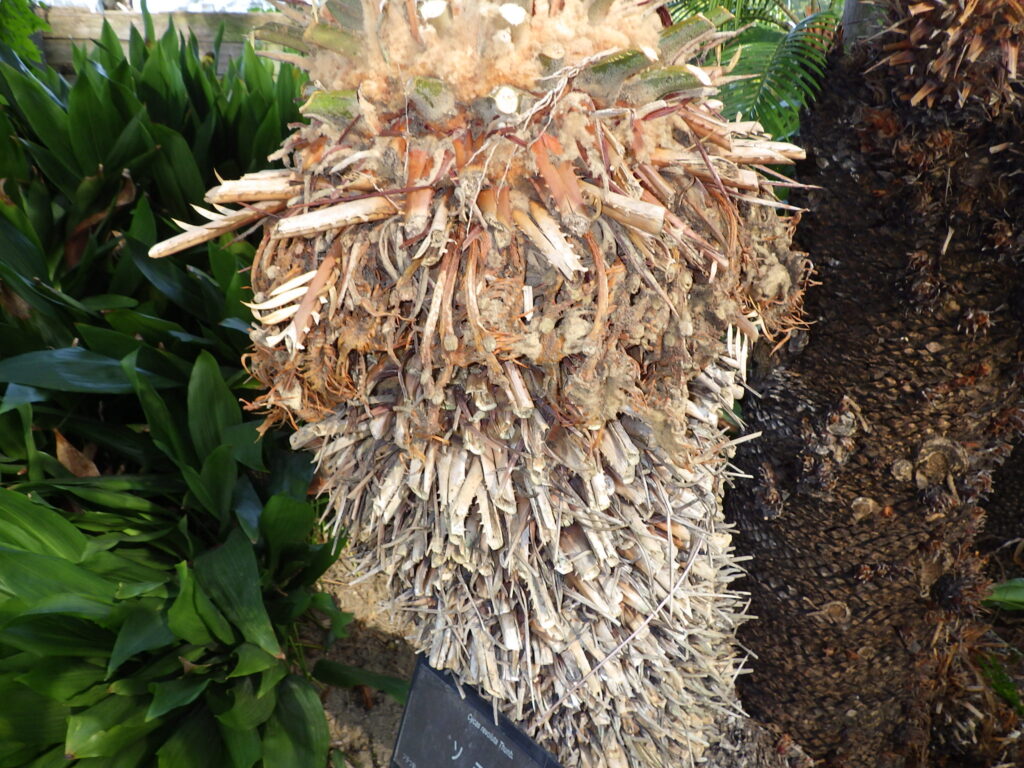
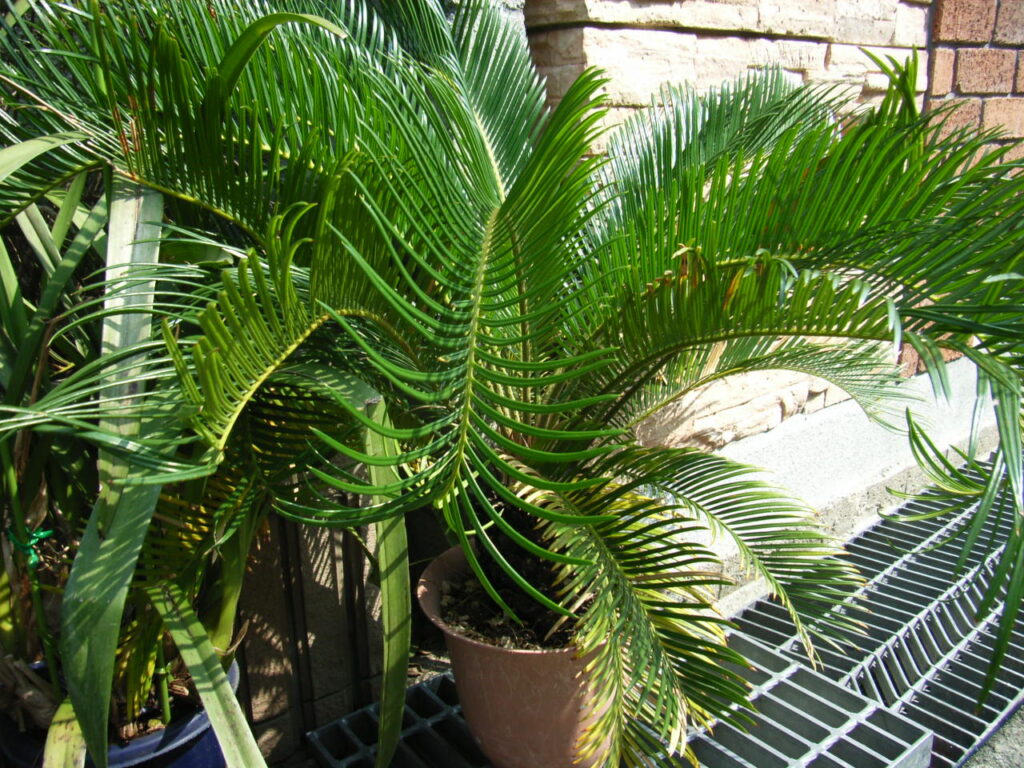
No.0001 Cycad (Cycas revoluta)
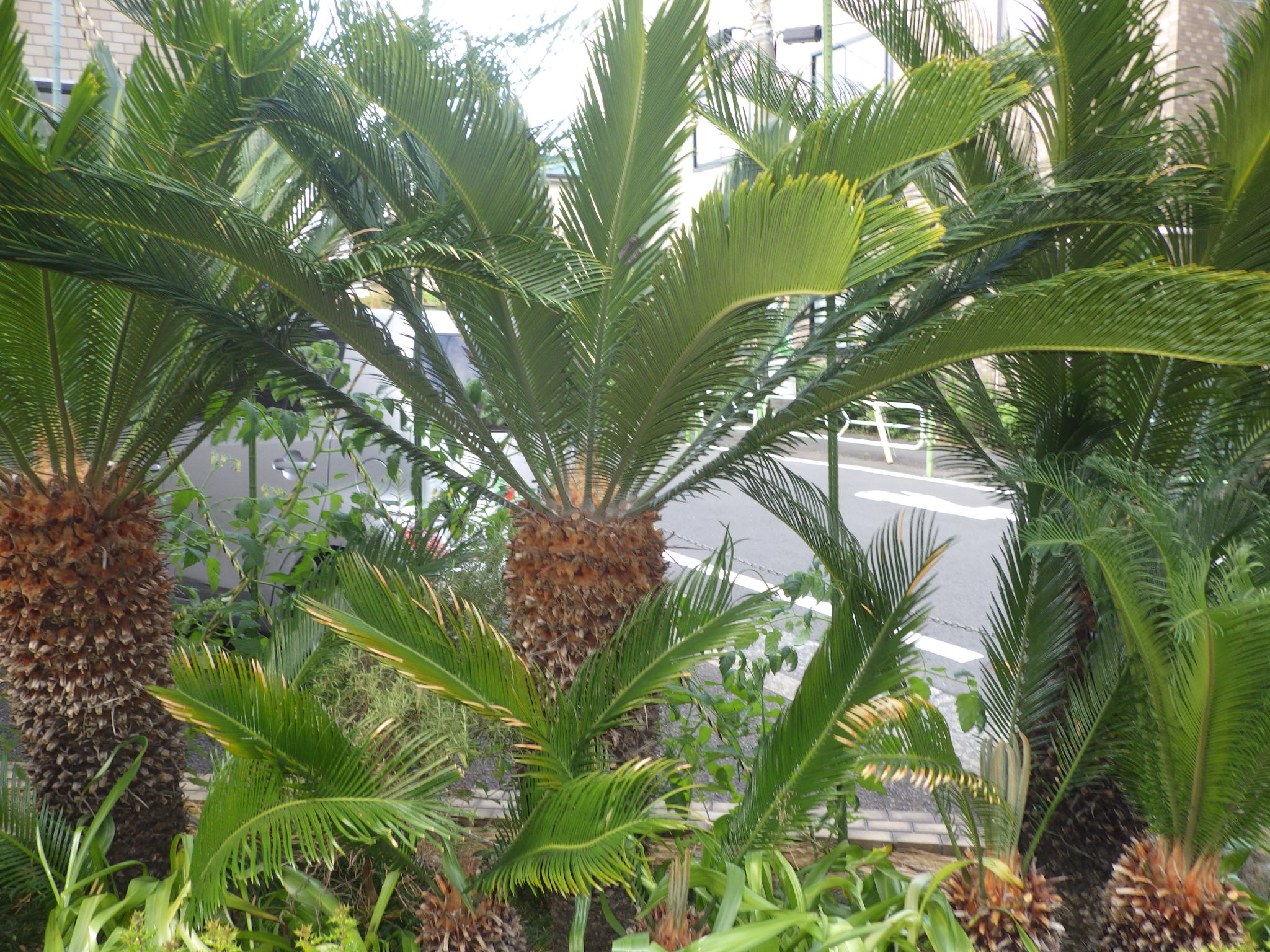
An evergreen shrub. Its Japanese name, "Sotetsu," comes from the fact that iron fertilizer increases its vigor, and that driving iron nails into it when it is dying will revive it. The roots have coral-like nodules. The trunk is 3 (up to 8) m tall and 45 (up to 95) cm wide, bearing many irregular lateral branches or bulbils at the base and sometimes at the tip, with the tips covered in downy hairs. The bark is grayish-black and scaly. The leaves are 40 to 100 or more, pinnately compound, 0.7 to 1.4 (up to 1.8) m long and 20 to 25 (up to 28) cm wide. The petioles are nearly square in cross-section, 10 to 20 cm long, with 6 to 18 spines on each side. The leaf blades are oblong-lanceolate to elliptic-lanceolate, strongly V-shaped in cross-section, recurved, and covered in brownish downy hairs when young. The leaflets number 60–150 pairs and are attached to the midrib at a 45-degree angle from the horizontal. When mature, they are not powdery white, but linear to subscythe-like, 10–20 cm long and 4–7 mm wide, leathery, with sparse short hairs on the underside, a decurrent base, strongly recurved margins, and an acute apex. The lower leaves are triangular, 4–5 cm long and 1.5–2.3 cm wide. Wind-pollinated. The pollen cone is pale yellow, ovate-cylindrical, 30–60 cm long and 8–15 cm wide. The microsporophylls are narrowly cuneate, 3.5–6 cm long and 1.7–2.5 cm wide, with a rounded-truncate apex that becomes sharply rigid. The megasporophylls are yellow to pale brown, 14–22 cm long, and densely covered with cottony hairs. The stalk is 7–12 cm long. The sterile leaf blades are ovate to narrowly ovate, 6-11 cm long and 4-7 cm wide, deeply lobed with 21-35 lobes, 1-3 cm long. The ovules are 2-3 on each side of the stalk, densely covered with light brown downy hairs. The seeds are 2 (up to 5) in number, orange to red, obovate to elliptical, somewhat flattened, (3-)4-5 cm long and 2.5-3.5 cm wide, sparsely hairy. The woody sclerotesta has no grooves on either side. The seeds ripen in September to October. Cycads have symbiotic cyanobacteria in their coral-like root nodules, which have nitrogen-fixing capabilities, allowing them to grow even in nitrogen-poor soil. The entire plant contains cycasin, which, if ingested, is converted to formaldehyde in the body, causing acute poisoning symptoms. It is distributed in the southern tip of Kyushu in the Japanese archipelago, the Ryukyu Islands, Taiwan, and southern mainland China, mainly growing on rocky areas near the coast. It is widely cultivated in various countries, mainly in Japan, for ornamental purposes. In China, it was once widely distributed in eastern Fujian Province, but has now declined significantly due to excessive collection by dealers and habitat destruction (Flora of China). Although it is toxic, cycasin is water-soluble, so it can be made edible by soaking it in water, fermenting it, and drying it. In the Ryukyu Kingdom era in Okinawa Prefecture, it was known as "narigai," and in the Amami Islands and Aguni Island in Okinawa Prefecture, it was known as "sotetsu miso," a famine food. However, if the processing is not done properly, it can easily lead to poisoning. In the late Taisho and early Showa periods, the Ryukyu Islands experienced economic stagnation due to monoculture economies and other factors, and further exacerbated by famine, leading to an economic depression known as the "sotetsu hell." During this time, there was no time to process the cycasin properly, and it was consumed as food, resulting in deaths and injuries from poisoning.