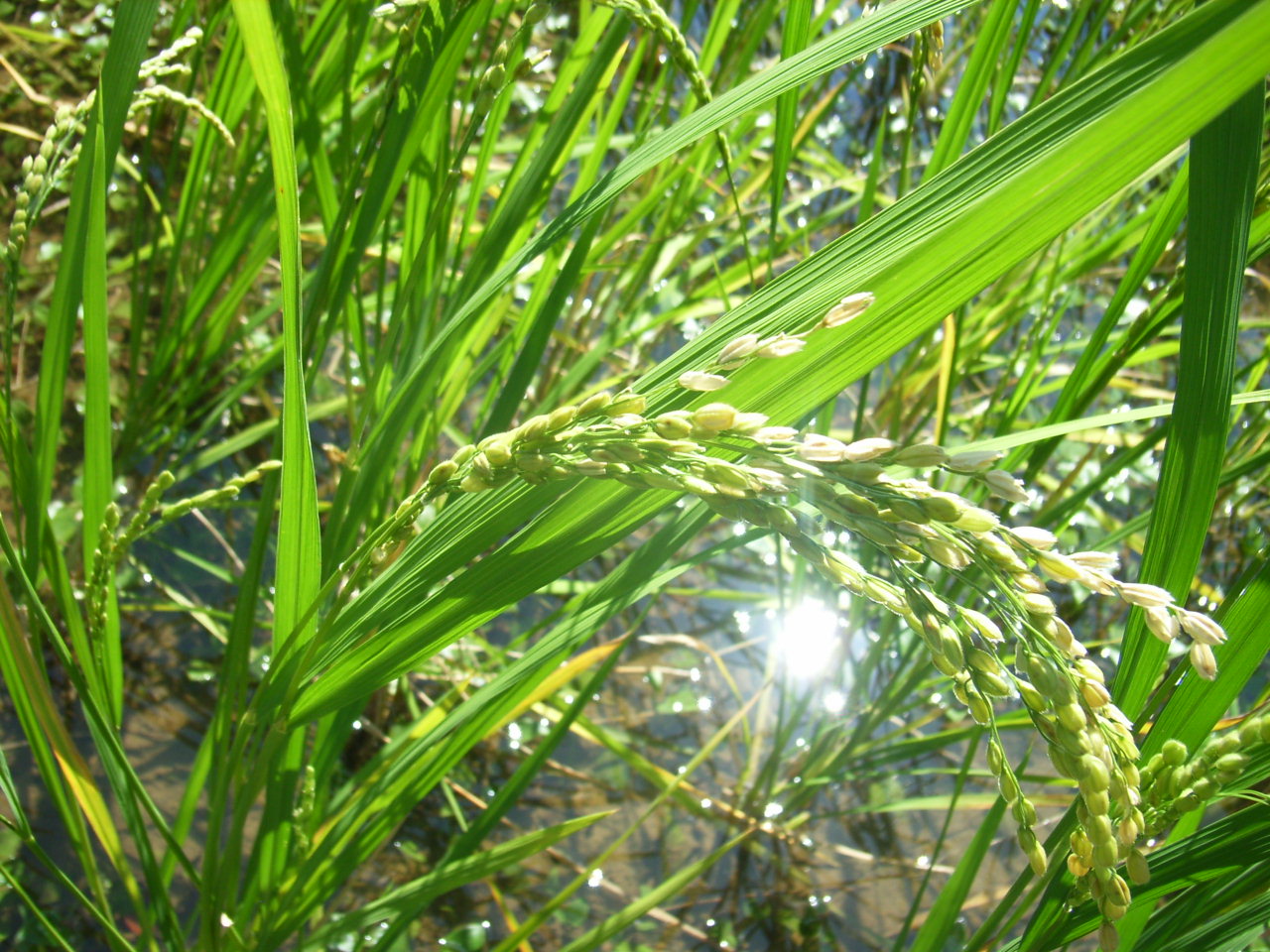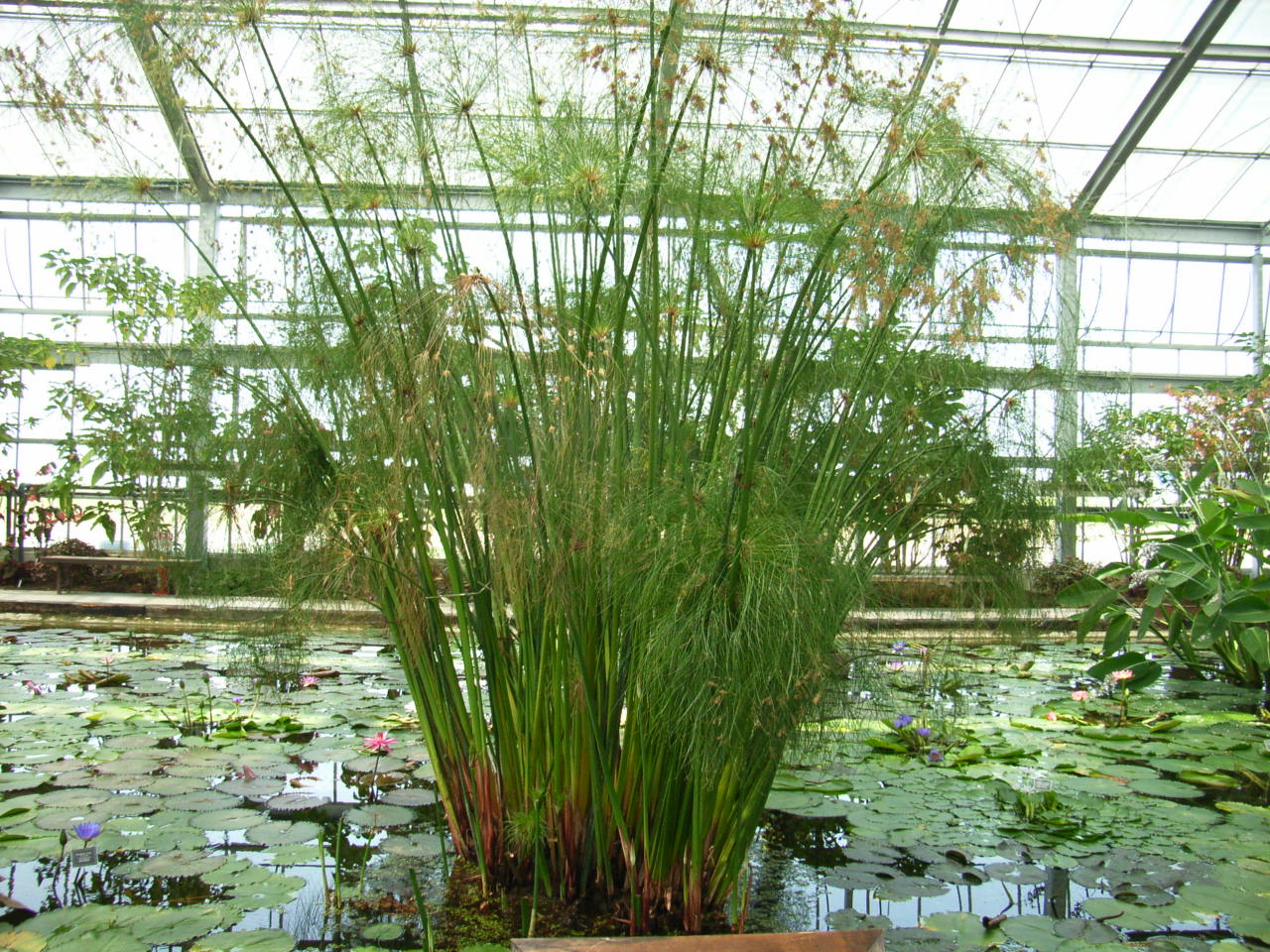
The Cyperaceae family consists of annual or perennial herbs. Most have solid, triangular stems. The leaves are linear, with the bases joining to form a tubular sheath. Some genera, such as *Erigeron annuus*, *Scirpus juncoides*, *Scutellaria*, and *Cyperus*, have reduced leaf blades, with only a sheath remaining. The flowers are solitary, growing in the axils of bracts called scales. The scales are arranged in two rows or spirally to form spikelets. The characteristics of these spikelets are key to classification, so it is easier to identify them when the fruit is mature enough not to fall off. The perianth is either reduced or lanceolate, and in some cases, it lengthens into a thread-like structure after flowering. There are 1 to 3 stamens. The fruit is a nut; those with a bifurcated stigma have a lenticular cross-section, while those with a trifurcated stigma have a triangular cross-section. There are said to be approximately 5,000 species worldwide. There are various interpretations regarding the scope of subfamilies and the size of genera, but Bruhl (1995) classifies them into 2 subfamilies, 12 divisions, and 122 genera, of which 9 divisions and 29 genera are found in Japan. This includes taxonomic groups that have diversified significantly in Japan, such as the genus *Carex*, and the number of species varies greatly depending on how species boundaries are treated, but there are at least 400 species in Japan. Generally, they are wind-pollinated (Tanaka, 1976), but there are exceptions (see *Cyperus serrata*).
This article provides a comprehensive, field guide-style introduction to plants belonging to the Cyperaceae family.
The basic information is based on the Kanagawa Prefecture Flora Survey Association (2018). Photos are replaced as better ones become available. While the identification is done by the author, please note that misidentifications may be corrected without notice.
- No. 0700 Cyperus microiria
- No.0701.1 Cyperus amuricus var. japonica
- No. 0704 Cyperus flavidus
- No. 0707 Cyperus difformis
- No.0717 Cyperus rotundus
- No.0720 Cyperus brevifolius var. leiolepis
- No.0720.1 Cyperus brevifolius var. brevifolius
- No.0721 Inukugu (Cyperus cyperoides)
- No.0722.a Cyperus papyrus
- No.0722.b American Cyperus eragrostis
- No.0722.c Cyperus alternifolius
- No. 0741 Scirpus wichurae f. wichurae
- No.0742 Scirpus wichurae f. concolor
- No.0752.1 Eleocharis acicularis var. acicularis
- No. 0761 Fimbristylis sieboldii
- No.0765 Yamai Fimbristylis subbispicata
- No.0779.a White Egret Cyperus (Rhynchospora colorata)
- No.0813.a Carex forficula
- No.0817 Carex maximowiczii
- No. 0821 Carex dimorpholepis
- No.0841 Carex lenta
- No. 0851 Carex leucochlora
- No. 0865 Carex oshimensis
- No.0865.1 Carex oshimensis 'Evergold' (Oshima sedge)‘
- No. 0897 Carex dispalata
- No. 0898 Carex persistens
- References
No. 0700 Cyperus microiria
Also known as yellow sedge. An annual herb. Stems are solitary or grow in clusters of several, reaching a height of 10-60 cm. Several leaves are attached to the base, shorter than the stem and 2-4 mm wide. Inflorescences are often compound, with 5-10 inflorescence branches, up to about 10 cm long, arranged in an umbel. Bracts are clustered together, with 3-4 longer than the inflorescence, and the lowest bracts can exceed 50 cm. Spikelets are linear, 5-12 mm long and 1.5-2 mm wide, and yellowish-brown. Scales are broadly obovate, 1.5 mm long, with a green midrib and a slightly elongated, pointed tip. Fruits are oblanceolate, about 1.2 mm long and about 0.5 mm wide. The style is about 0.1 mm long and inconspicuous, and the stigma is about 0.5 mm long. There are three stamens. Flowering (fruiting) occurs from August to October. It is distributed in the warm temperate regions of Honshu, Shikoku, Kyushu, and Southeast Asia. It grows in cultivated fields, grasslands, and roadsides.
No.0701.1 Cyperus amuricus var. japonica
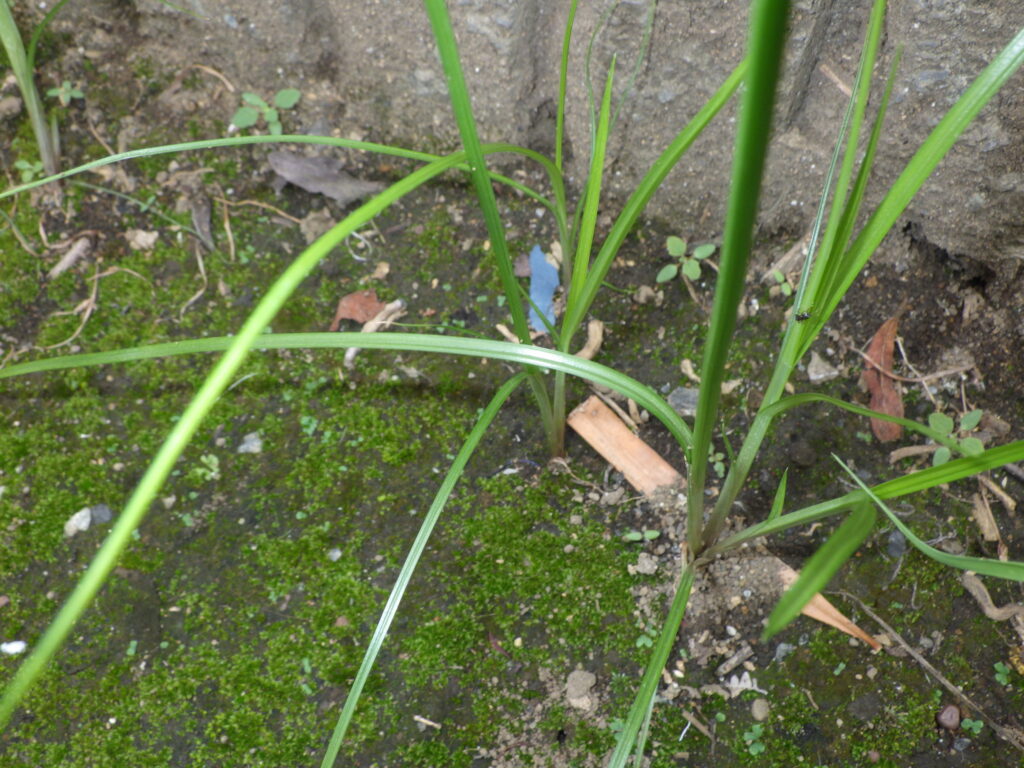
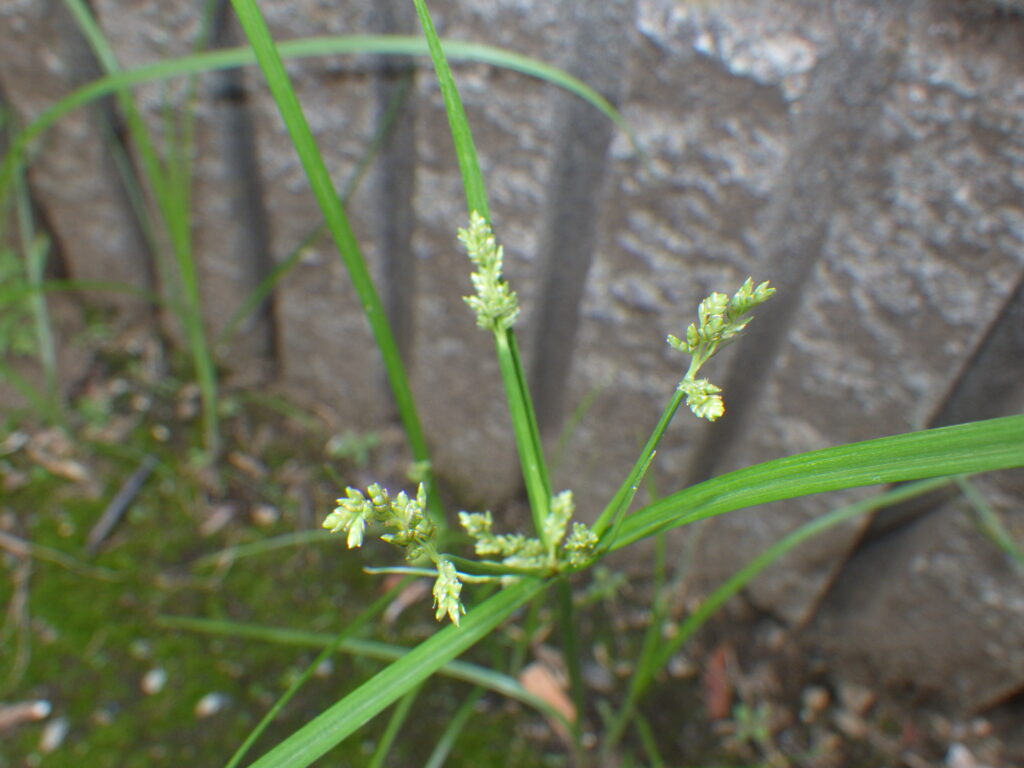
This is an annual plant. The inflorescence has 5 to 10 branches, ranging in length from very short to over 10 cm, arranged in an umbel, sometimes compound. The spikelets are linear, 5 to 15 mm long and 1.5 mm wide, reddish-brown, and have 10 to 30 florets. The scales are ovate with a pointed, recurved awn at the tip, 1.5 to 1.8 mm long and about 1 mm wide, of which the awn portion is 0.3 mm long, and the midrib is green. The fruit is oblanceolate, 0.8 to 1 mm long and 0.4 to 0.5 mm wide, turning dark brown when ripe. It is distributed in Honshu, Shikoku, Kyushu, Ryukyu Islands, and East Asia. Compared to Cyperus amuricu s var. amuricus (in the narrow sense), this variety is more common in artificial environments such as fields and roadsides, and is generally smaller, with shorter and narrower spikelets, scales, and fruits.
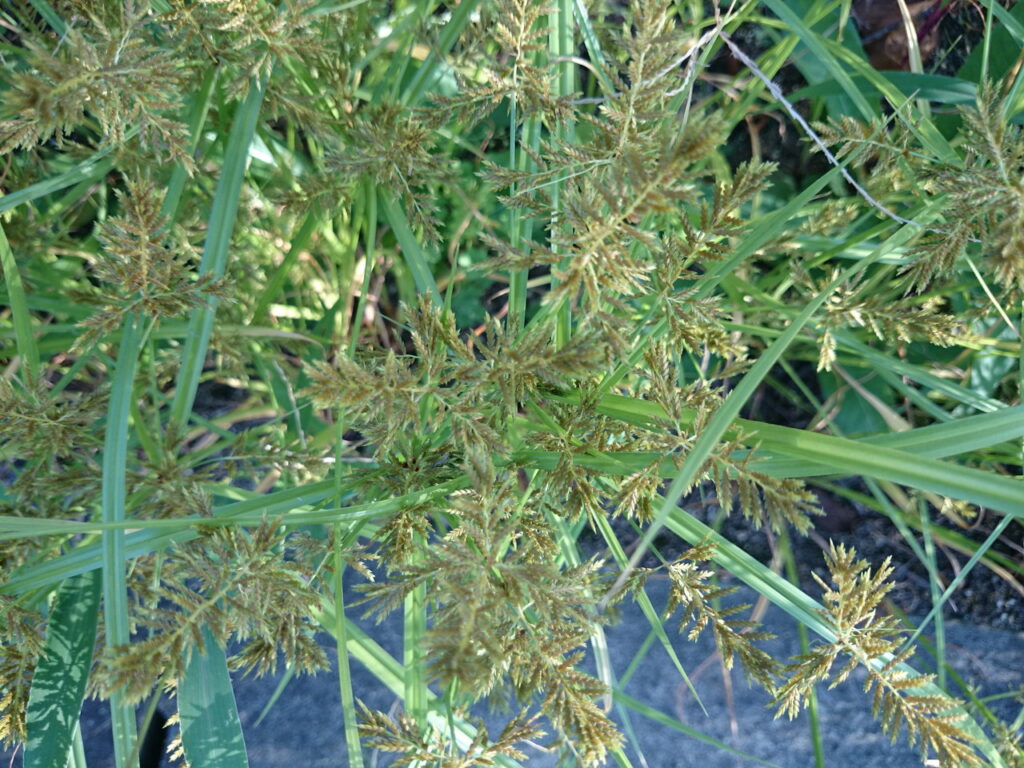
No. 0704 Cyperus flavidus
This is an annual plant. It grows to a height of 20-40 cm, with slender, stiff stems and a brownish base. The leaves are shorter than the flowering stalks, 1-1.5 mm wide. There are 4-6 bracts, the lower ones being 2-6 times the length of the inflorescence. The inflorescence is corymbose, about 5 cm wide. There are 6-7 inflorescence branches, the longest of which are about 10 cm long. The spikelets are flattened linear-lanceolate, 1-2.5 cm long and 1.5-2.5 mm wide, reddish-brown, bearing 20-50 florets. The scales are oblong with a blunt tip, about 2 mm long and 1 mm wide, with a green midrib. The fruit is obovate, about 0.8 mm long and 0.5 mm wide, turning pale yellowish-brown when ripe. The style is 0.2-0.3 mm long, and the stigma is 0.7-1 mm long. There are two stamens. The flowering (fruiting) period is from August to October. It is distributed in the warm temperate to tropical regions of Honshu, Shikoku, Kyushu, and Ryukyu Islands; Asia, Africa, and Australia. It grows in wetlands such as rice paddies, fallow fields, reclaimed land, and developed areas.
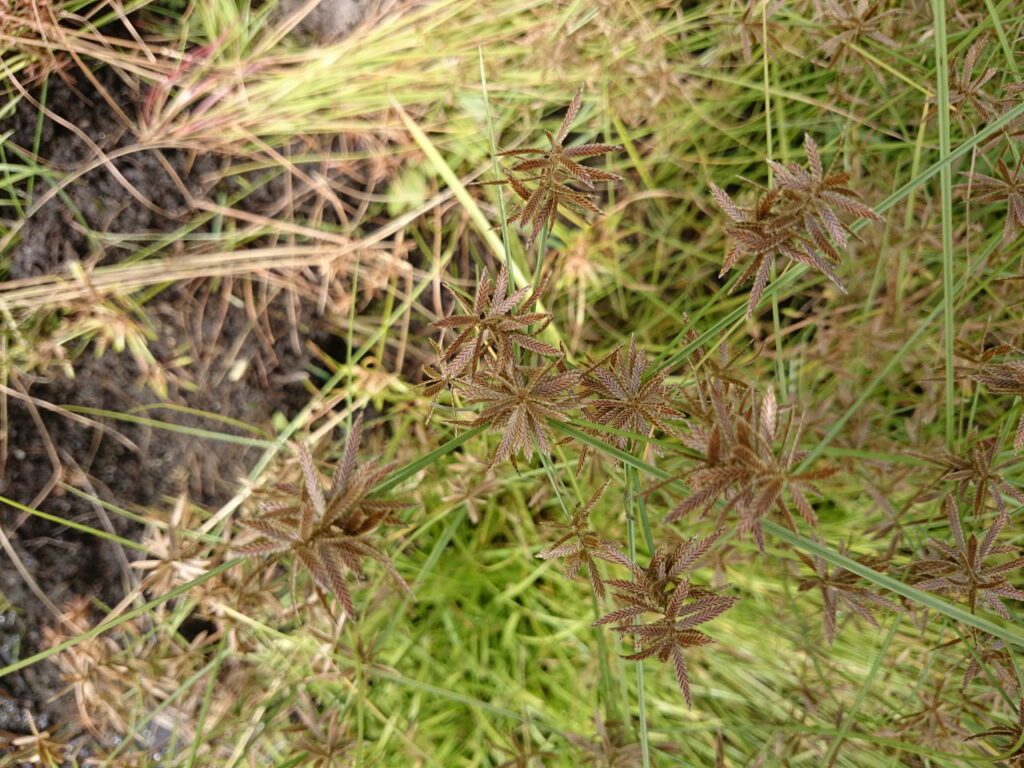
No. 0707 Cyperus difformis
This is an annual plant that grows in clumps, reaching a height of 10-50 cm. The stems are relatively thick and soft for their height, with a triangular cross-section, and a pressed leaf width of about 3 mm. The leaves emerge from the base, lower than the inflorescence, and are 3-5 mm wide. The bracts are clustered together, with 2-3 longer than the inflorescence. The inflorescence is often compound, with dense spikelets at the tips of the branches, forming capitulate inflorescences 5-10 mm in diameter. The approximately 5 inflorescence branches vary in length, with some being 0-5 cm long and arranged in an umbel. The spikelets are oval, 3-10 mm long and about 1 mm wide, turning blackish when mature, and bearing 10-20 florets. The scales are nearly circular, obovate, 0.5-0.7 mm long and wide, with a slightly notched upper end and a slightly pointed but inconspicuous midrib. The fruit is about 0.5 mm long and 0.3 mm wide. The style and stigma are both about 0.1 mm long. There are two stamens. The flowering (fruiting) period is from August to October. It is widely distributed throughout the world, from tropical to temperate regions, including Hokkaido, Honshu, Shikoku, Kyushu, and the Ryukyu Islands. It grows in rice paddies, fallow fields, and wetlands.
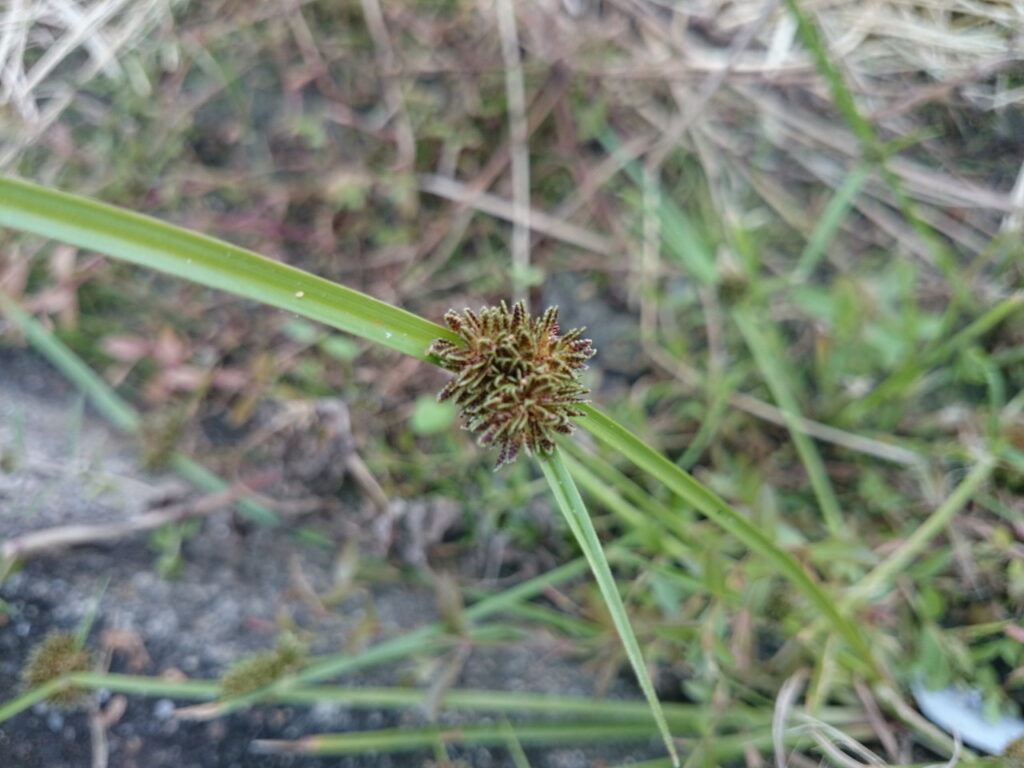
No.0717 Cyperus rotundus
Also known as Hamagayaturi or Koubushi, it is a perennial herb. It has a rhizome, and stolons extend from the base, bearing tubers or daughter plants at their ends. The stem is usually solitary, reaching a height of 15-40 cm. It bears several short leaves at the base. The leaves are slightly recurved, somewhat glossy on the upper surface, and 2-5 mm wide. There are 1-5 inflorescence branches, varying in length from very short to about 8 cm, and some are compound. There are 1-2 bracts, almost the same length as the inflorescence. The spikelets are linear, 1-4 cm long and 1.5-2 mm wide. They are reddish-brown and somewhat glossy, bearing 10-40 florets. The scales are oblong, 3-3.5 mm long. The fruit is oblong, 1-1.5 mm long and about half its length in width. The style is 1-1.5 mm long, and the stigma is about 2.5 mm long. It has three stamens. The flowering (fruiting) period is from June to October. It is distributed in Honshu (west of the Kanto region), Shikoku, Kyushu, and the Ryukyu Islands; and in tropical to temperate regions worldwide. It grows in grasslands, fields, and roadsides.
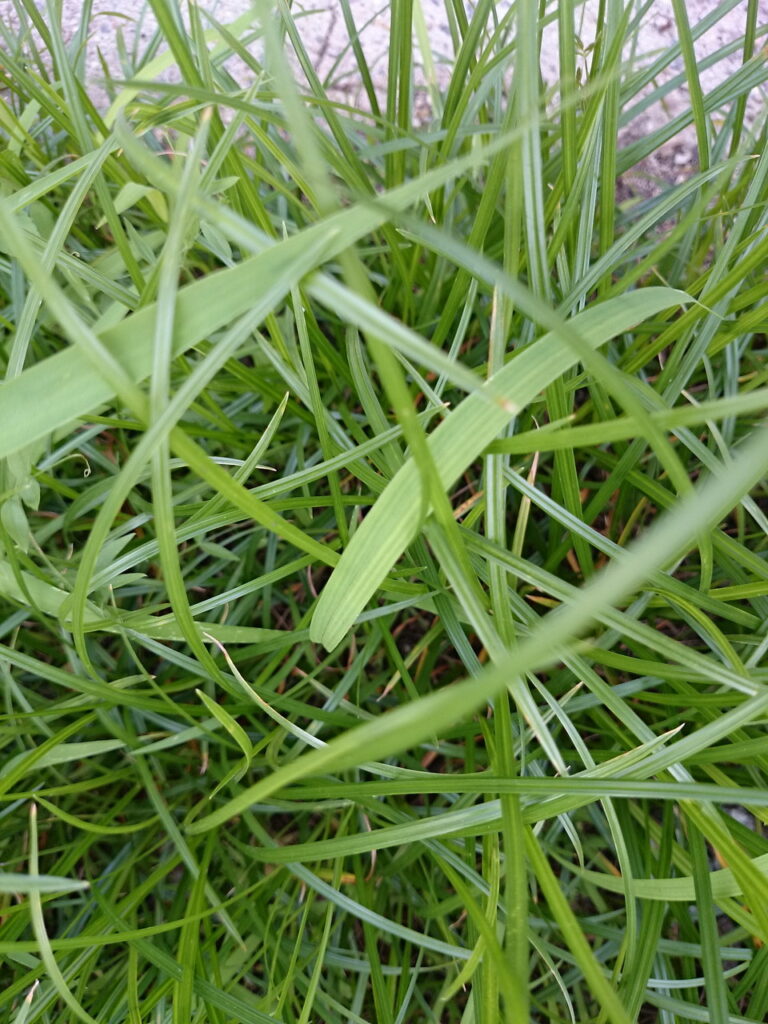
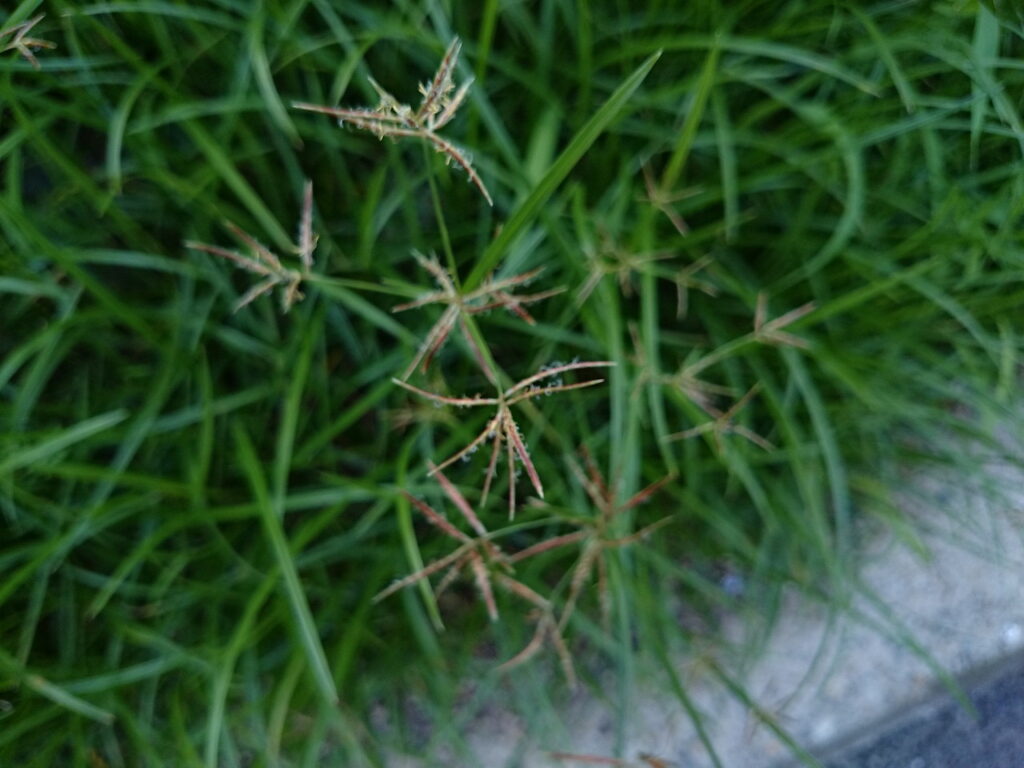
No.0720 Cyperus brevifolius var. leiolepis
This is a perennial herb. It has reddish rhizomes that spread horizontally. It grows to a height of 5-20 cm. The leaves are almost the same height as the stem and 2-3 mm wide. The capitulum is slightly larger than that of *Idagu*, spherical with a diameter of 7-10 mm. The spikelets are broadly lanceolate and about 4 mm long. The longest scale is about 4 mm long, and the second longest is about 3 mm long, with a smooth keel. The fruit is obovate, 1-1.5 mm long and 0.8-1 mm wide. The style is about 1.5 mm long, and the stigma is about 0.5 mm long. There are two stamens. The flowering (fruiting) period is from July to October. It is distributed in temperate to subtropical (rare) regions of Hokkaido, Honshu, Shikoku, Kyushu, and the Ryukyu Islands; Korea and northeastern China. It grows around rice paddies and in moist grasslands. Those with spikelets longer than 5 mm are sometimes distinguished as *Idagu* f. macrolepis.
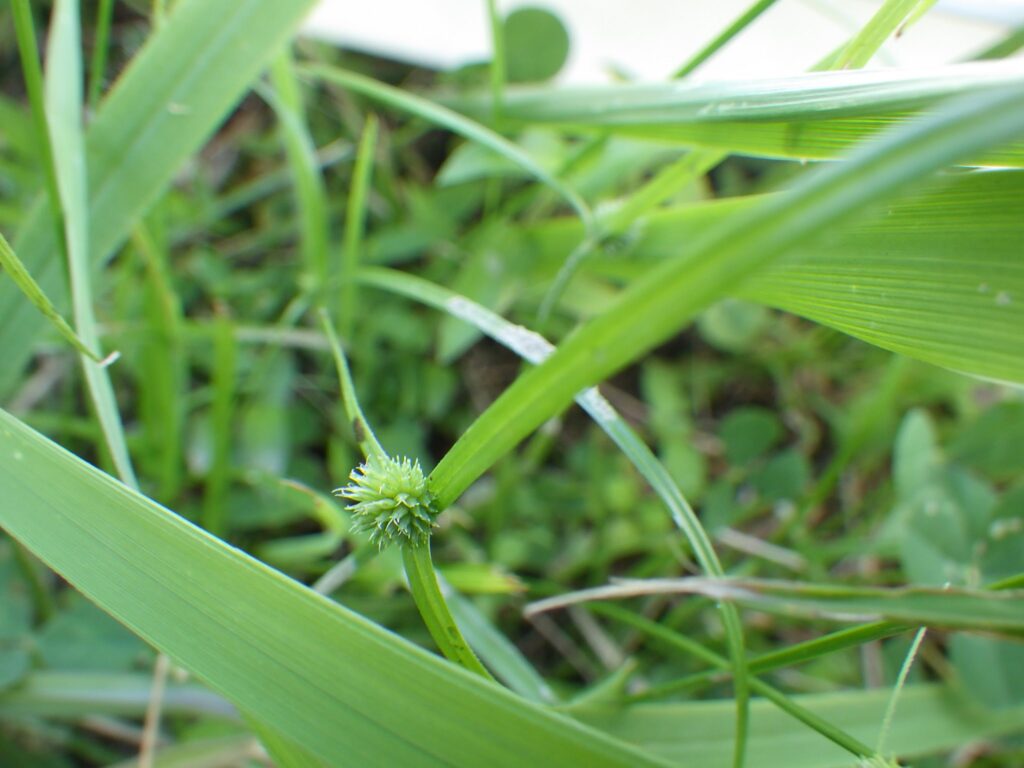
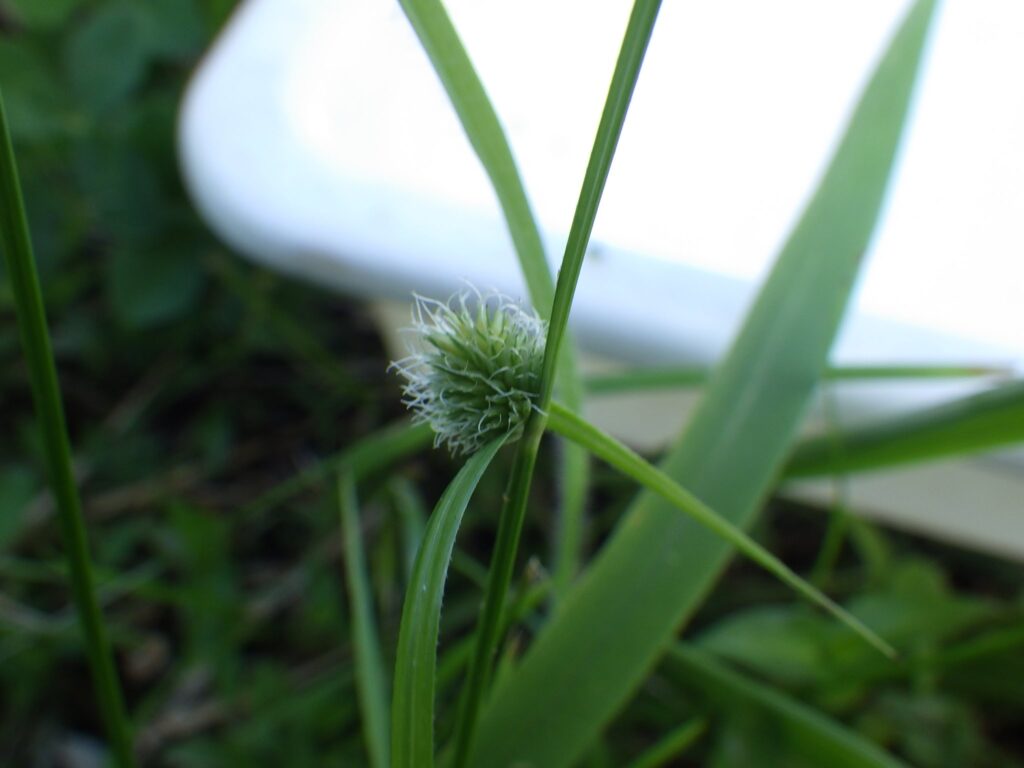
No.0720.1 Cyperus brevifolius var. brevifolius
Also known as Taiwan dwarf rhizome. A perennial herb. The rhizome is reddish and creeps horizontally. It grows to a height of 10-30 cm. The leaves are shorter than the stem and about 2 mm wide. There are 2-3 bracts, 1.5-6.5 cm long. The capitulum is somewhat elongated and 5-8 mm in diameter. The spikelets are elliptical, 3-3.5 mm long, with the two larger upper scales about 3 mm and 2.5 mm long. The keel of the scales has small, broad, triangular, obliquely ascending spines that are transparent but not membranous. The fruit is obovate, about 1 mm long and 0.8 mm wide. There are two stamens. The flowering (fruiting) period is from July to October. It is distributed in tropical to warm temperate regions worldwide, including Honshu (west of Chiba Prefecture), Shikoku, Kyushu, and the Ryukyu Islands. It grows in wetlands and moist grasslands. Because it grows sympatrically with dwarf rhizome, misidentification is possible.
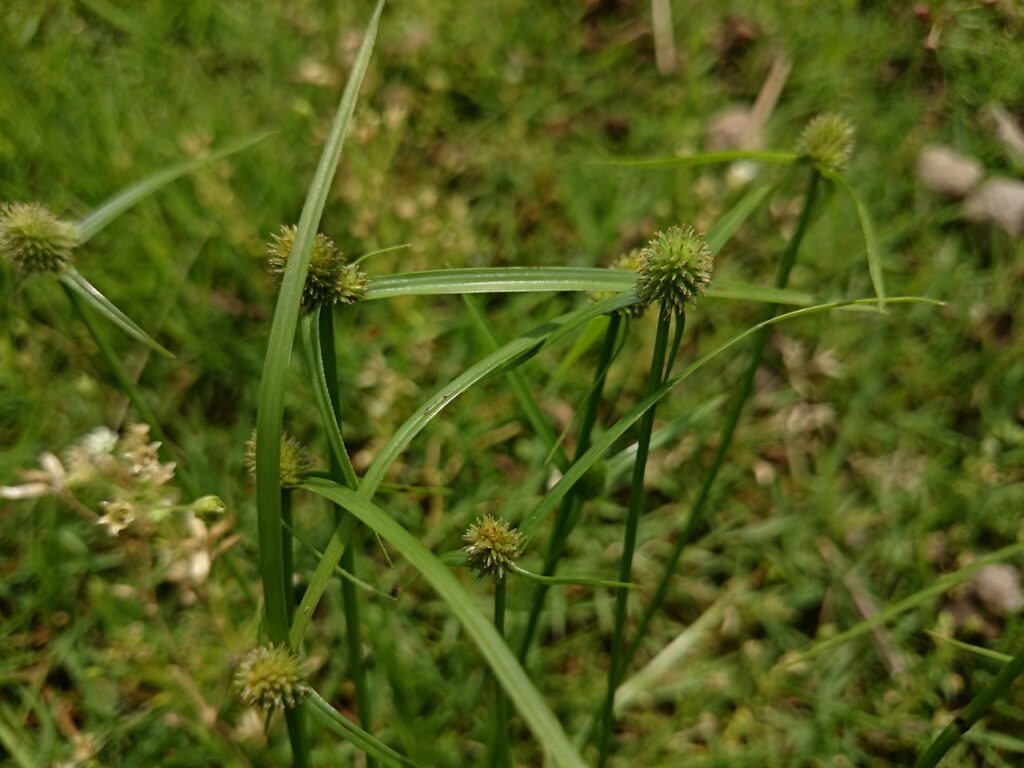
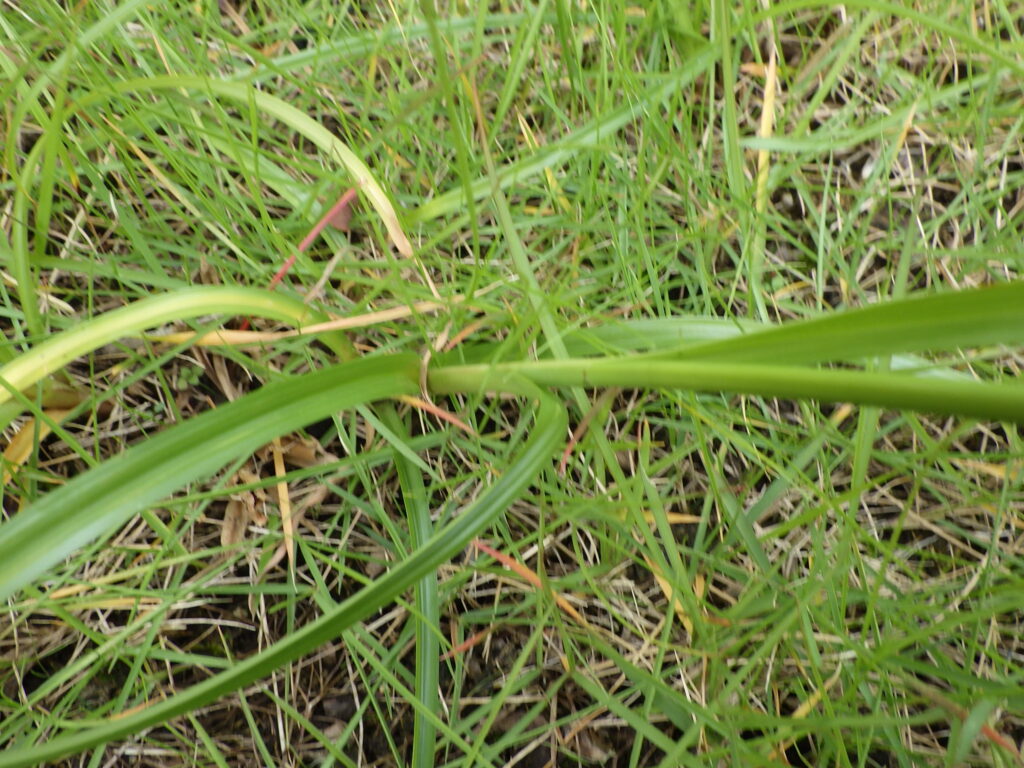
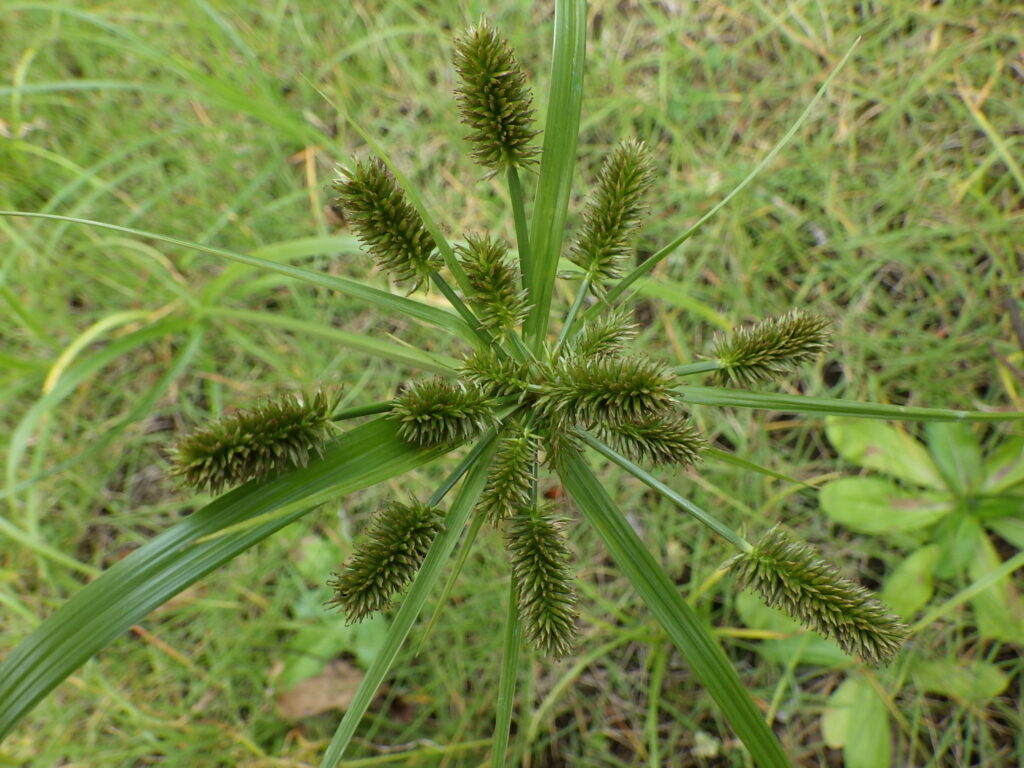
No.0721 Inukugu (Cyperus cyperoides)
Also known as Kugu. A perennial herb. The stems grow to a height of 20-60 cm. The leaves are 3-6 mm wide and shorter than the flowering stems, with a slightly swollen base to the leaf sheath and a reddish-brown color. The spikelets are linear, about 5 mm long and 0.7 mm wide, green, and only the florets on the upper 1-2 scales bear fruit. The scales are oblong, about 3 mm long. The fruit is linear-elliptic, about 2 mm long. The style is 0.5-0.7 mm long, and the stigma is slightly less than 1 mm long. There are 3 stamens. The flowering (fruiting) period is August to September. It is widely distributed in tropical to subtropical regions of the world, including Honshu (Pacific coast west of the Kanto region), Shikoku, Kyushu, and the Ryukyu Islands. It grows in sunny grasslands.
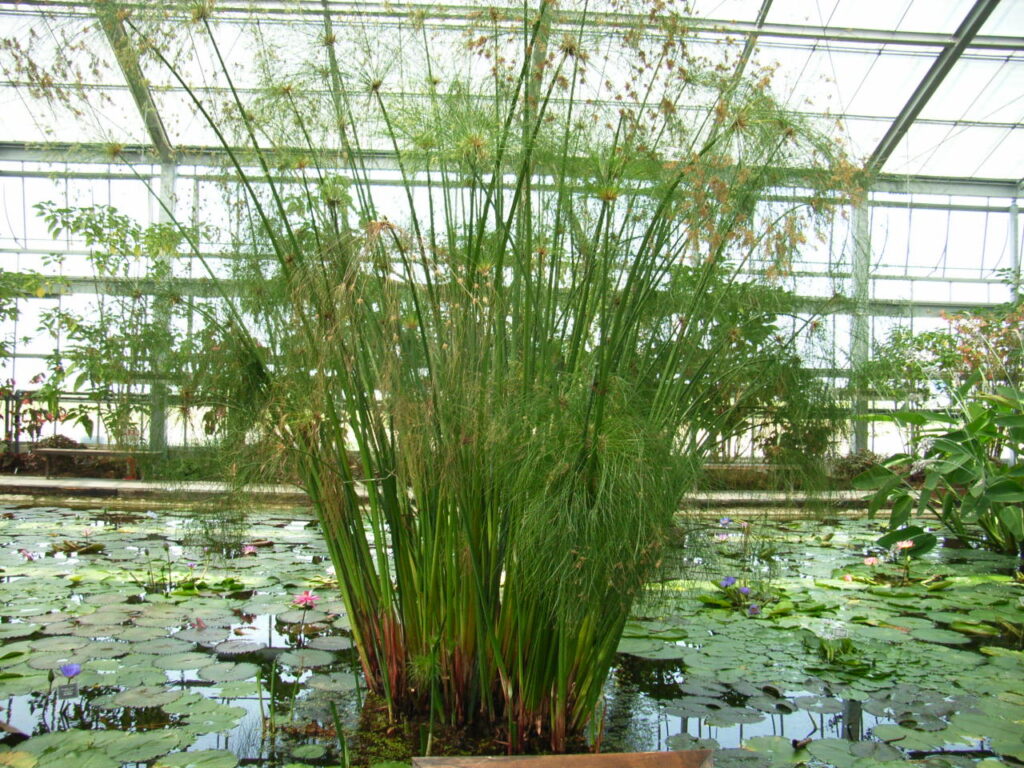
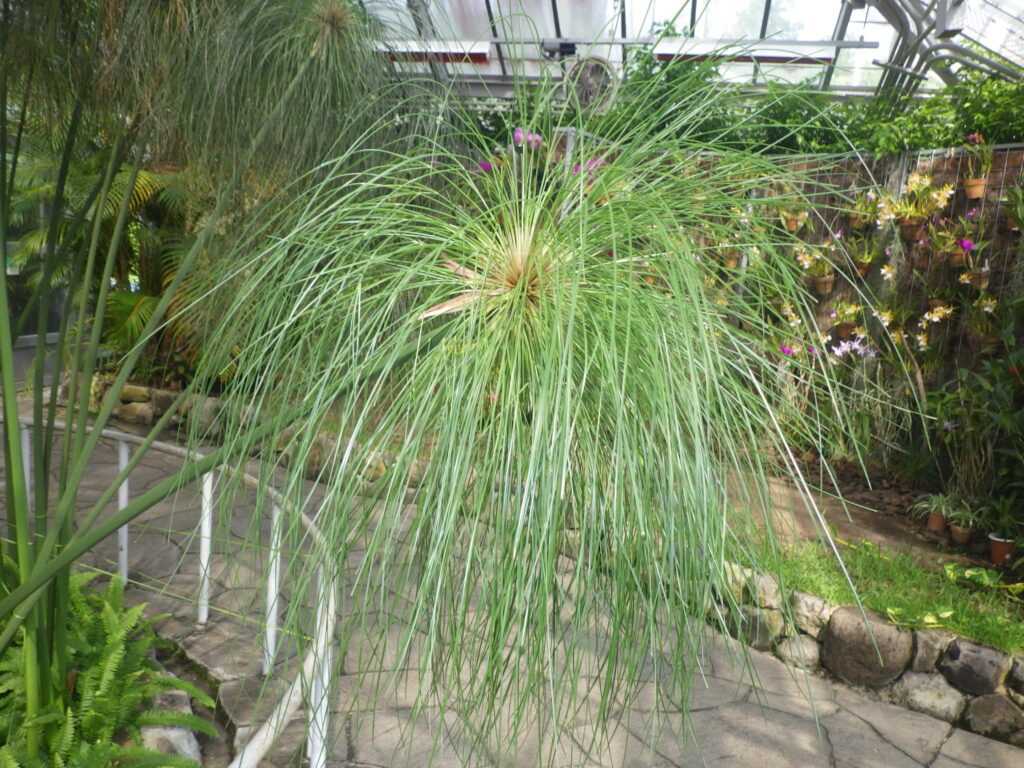
No.0722.a Cyperus papyrus
Perennial herb (Flora of North America). Also known as papyrus. Basal leaves are sturdy. Stems are rounded pyramidal, 300-500 cm x 15-45 mm, glossy. Leaves are not serrated. Inflorescence: Inflorescence spikes are loosely cylindrical, 10-20 x 6-10 mm, with 40-100 inflorescence branches, drooping or arching, slender, 10-30 cm, secondary inflorescence branches 8-20 cm, bracts 4-10, ± erect, V-shaped, 3-8 cm x 4-15 mm, secondary bracts 2-5 mm (1.5-4-16 cm x 0.5-2 mm, rachis persistent, lateral detachment, base firmly attached, wing width 0.3-0.4 mm). The receptacles consist of 6–30 slightly compressed linear to square-shaped segments, 6–10 × 0.8–1 mm; the receptacles consist of 6–16 segments, reddish on the inside with 5 transverse lobes, white to grayish-white margins, ovate-elliptic, 1.8–2.2 × 1.2–1.5 mm, with pointed or blunt apex. Flowers: Anthers are 0.8–1 mm (the connecting part extends beyond the anther as a small red, fragment-like appendage 0.2–0.5 mm, usually pointed at the tip); style is 0.2–0.4 mm; stigma is 0.8–1.2 mm. The pericarp is pale brown, sessile, oblong, 0.8–1 × 0.4 mm, with a nearly blunt apex and a rough surface. Fruiting occurs in summer. Its origin is believed to be the White Nile region of Sudan (Popay, 2014), from which it is thought to have spread westward to Central Africa and southward to Madagascar and Zimbabwe. Its natural range is considered to be between 13 degrees north and 26 degrees south latitude, encompassing most of sub-Saharan Africa. The extent to which its natural range extends westward in Africa is unknown, but there are records of it in Benin and Nigeria. Because it has been useful to humans for such a long time, people have carried it with them when they moved from place to place, so the true limits of its natural range are unknown. It was widely used in ancient Egypt, but it may now be extinct in that country. It is also widely distributed in wetlands of southern Africa, including South Africa, but there are disagreements about many claims of its natural distribution, and some believe it was introduced to the Okavango Delta in Botswana in the early 20th century. It inhabits stream banks and wetlands. It has been introduced to tropical, subtropical, and Mediterranean climate countries around the world, including Spain, Italy, the United States, South America, and Australia. In Egypt, there were plants of the papyrus plant that had been carried down from upstream to the Nile Delta during floods. These were cultivated by hand and used as a medium for record-keeping (papyrus paper, the origin of the word "paper"), as well as for everyday items such as ceremonial objects, footwear, ropes, boat sails, and boats themselves (reed boats). Because it was rich in sugar and oil, the soft parts, such as the young leaves, stems, and roots, were also used as food, either raw or cooked. Unlike modern paper, which is made by intertwining dispersed fibers, papyrus paper is made by soaking the cut stem bark in water to decompose it with bacteria, and then beating and shaping it. It was first produced in Egypt around 4000 BC, and during the Ptolemaic period (305 BC – 30 BC), although there were competing products such as parchment, its low cost made it a popular Egyptian export, and it spread to various regions, and was also used in the Greek and Roman states. However, modern papermaking techniques were invented in China during the Former Han dynasty more than 150 years before Christ, and improved upon during the Tang dynasty. It is believed that there were papermakers among the Tang prisoners of war during the Battle of Talas (751 AD) between the Tang and the Abbasid Caliphate, and a paper mill was opened in Samarkand, spreading papermaking techniques to the Islamic world and then to Europe, causing papyrus to decline around 800 AD.
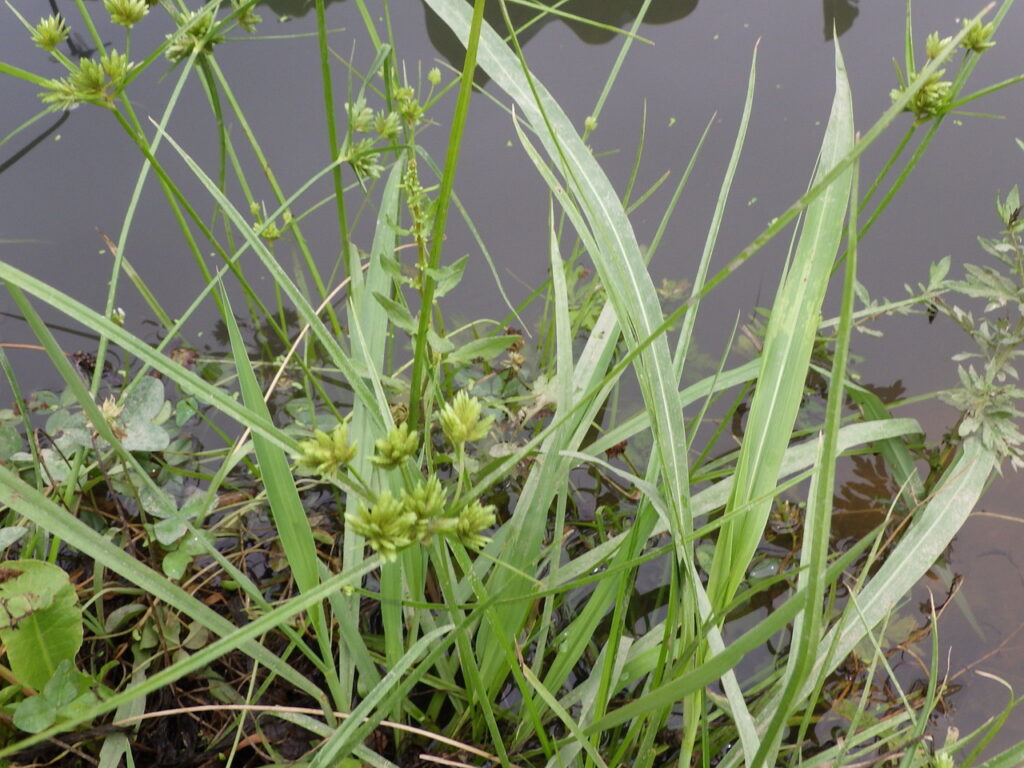
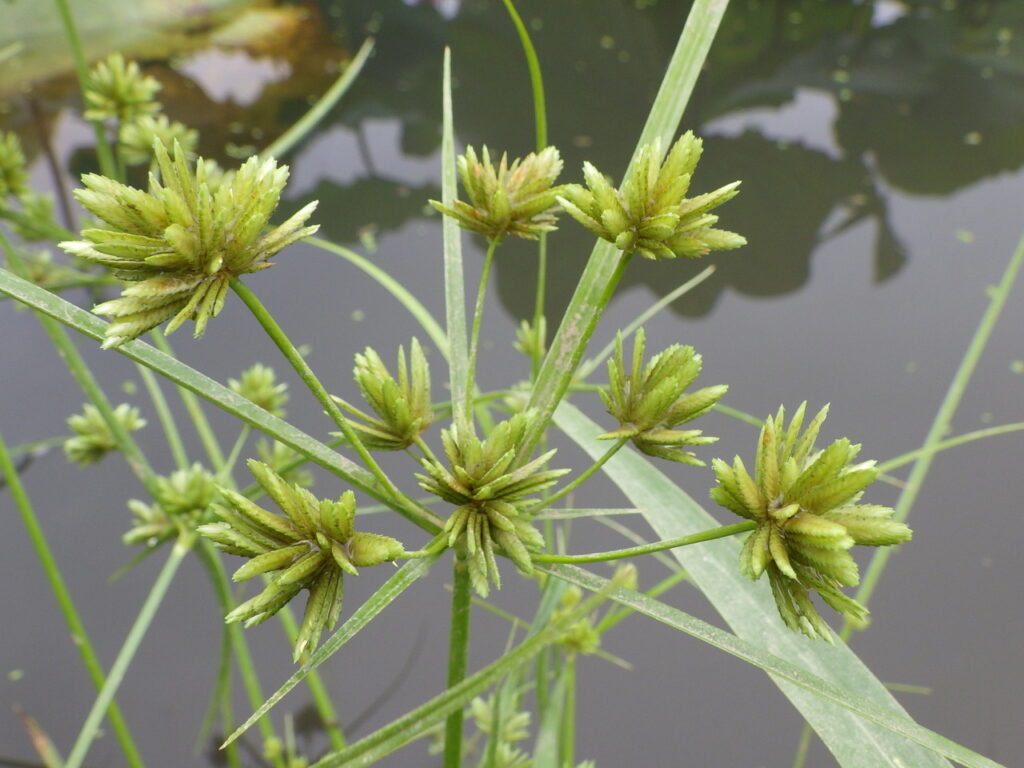
No.0722.b American Cyperus eragrostis
Also known as Cyperus rotundus, it is a perennial herb. It grows in clumps, but occasionally has very short, creeping rhizomes. The stems are 30-100 cm tall, relatively thick and sturdy, with a reddish base. The longest leaves are as long as the stem and 4-8 mm wide. Five to six of the bracts are longer than the inflorescence, with the lowest being over 50 cm long. There are about 5-10 inflorescence branches, the longest exceeding 10 cm, with 5-20 spikelets clustered in a spherical shape at the end of each branch. The spikelets are slightly swollen, flattened linear-oblong, 5-20 mm long and about 3 mm wide, yellowish-green to slightly whitish-green, turning brown in the center when mature, and bearing 10-40 florets. The scales are about 2 mm long, with a somewhat broad green midrib, membranous margins, and a rounded, folded back end. The fruit is obovate, with three distinct ridges, about 1 mm long and 0.5 mm wide. The style is about 0.5 mm long, and the stigma is about 0.5 mm long. There is one stamen. The flowering (fruiting) period is from June to November. Native to tropical America. Naturalized in Honshu (south of Miyagi Prefecture and the Kanto region), Australia, and warm temperate to tropical regions of Asia. It grows in wetlands such as rivers and ditches, and in reclaimed land.
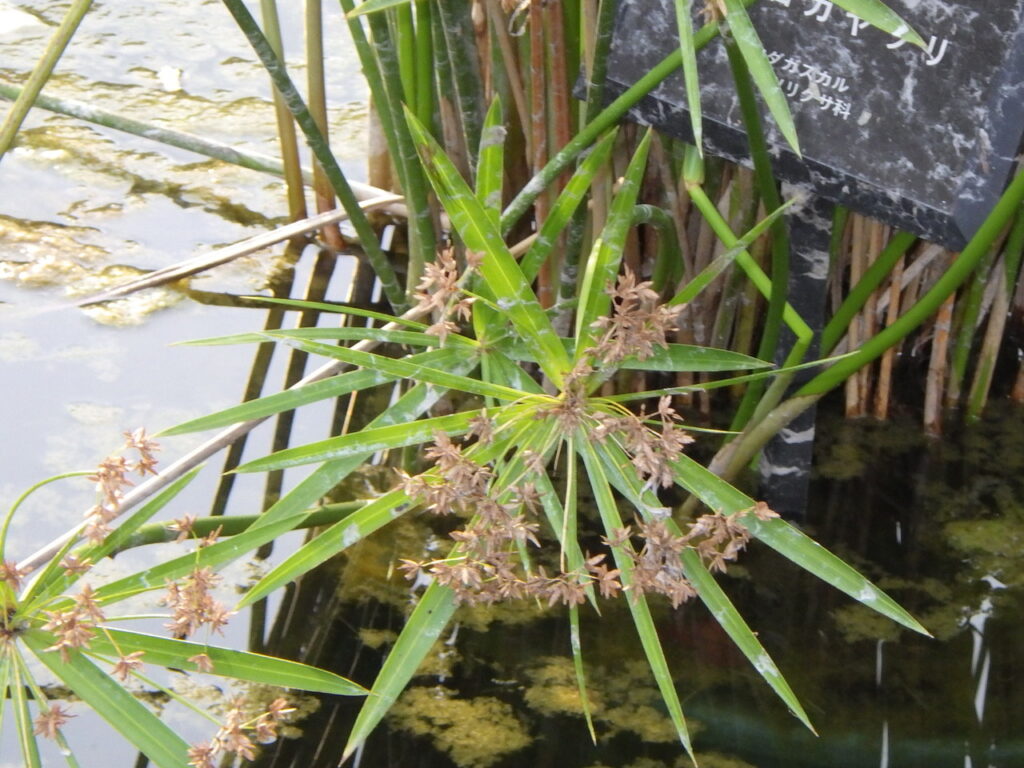
No.0722.c Cyperus alternifolius
This is a perennial herb. It grows in clumps or from short rhizomes, with solitary stems at each node. Stems can exceed 1 meter in height under favorable growing conditions. Leaves are sheath-like at the base of the flowering stems. Bracts are 10-15 cm long and 2-10 mm wide, with about a dozen arranged in a whorl at the base of the inflorescence. Inflorescence branches are compound, 5-7 cm long. Spikelets are oblong, 5-8 mm long and about 1.5 mm wide, whitish-green to straw-colored, bearing 6-10 florets. Scales are lanceolate, 1.5-1.8 mm long. Fruits are about 0.8 mm long and 0.5 mm wide, whitish-brown. Styles are 0.5-0.8 mm long, and stigmas are 1-1.5 mm long. There are three stamens. Flowering (fruiting) occurs from July to September. Native to Madagascar, it has naturalized in Honshu (south of the Kanto region), Shikoku, Kyushu, and the Ryukyu Islands; and in tropical, subtropical, and warm temperate regions worldwide. It grows in moist, bright grasslands and roadsides. It is often cultivated in greenhouses and gardens and is prone to escaping, and it is thought that the opportunities for it to overwinter are increasing due to recent global warming, the heat island effect, and rising river water temperatures caused by wastewater. As its English name, Umbrella plant, suggests, its bracts resemble an open umbrella.
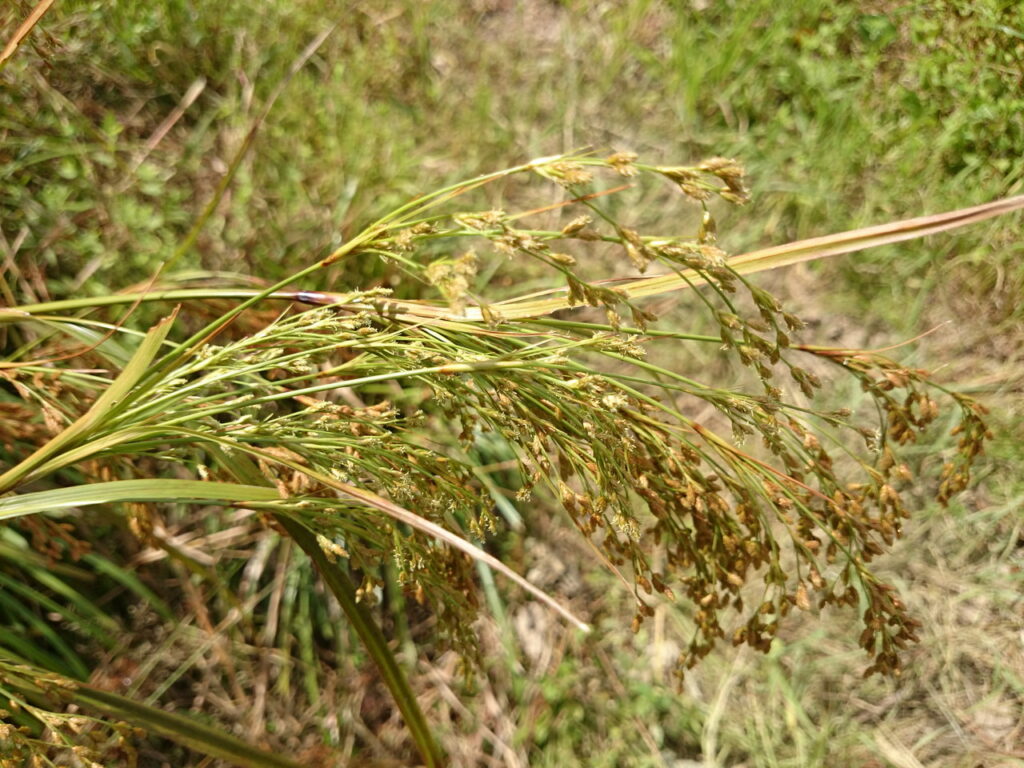
No. 0741 Scirpus wichurae f. wichurae
Perennial herb (Illustrated Flora of Cyperaceae, Okayama Prefecture). Culms are 1-1.5m tall, hard, and obtusely triangular in cross-section. The basal sheath densely encloses the culm. Leaves are long, 20-40cm long and 5-15mm wide. Flowering occurs from August to October. Inflorescences are 1-5 in number, terminal and lateral, branching several times and bearing numerous densely packed spikelets. Inflorescence branches are rough. Bracts have leaf-like blades. Spikelets are clustered in groups of 1-5, oblong, 4-8mm long and 3-4mm wide, reddish-brown. Scales are broadly obovate, about 2mm long. Achenes are about 1mm long and flattened triangular in cross-section. There are 6 lanceolate perianth segments, filiform, curved, long and curled, with sparsely upward-pointing roughness at the tip. There are 3 stigmas. The plant grows in clumps. Aibasou f. wichurae is a form with solitary spikelets. It is distributed in Hokkaido, Honshu, Shikoku, Kyushu, Korea, and China. It commonly grows in wetlands in plains and mountainous areas.
No.0742 Scirpus wichurae f. concolor
A perennial herb. A form of Scirpus wichurae that bears multiple spikelets. Distributed in Honshu, Shikoku, and Kyushu.
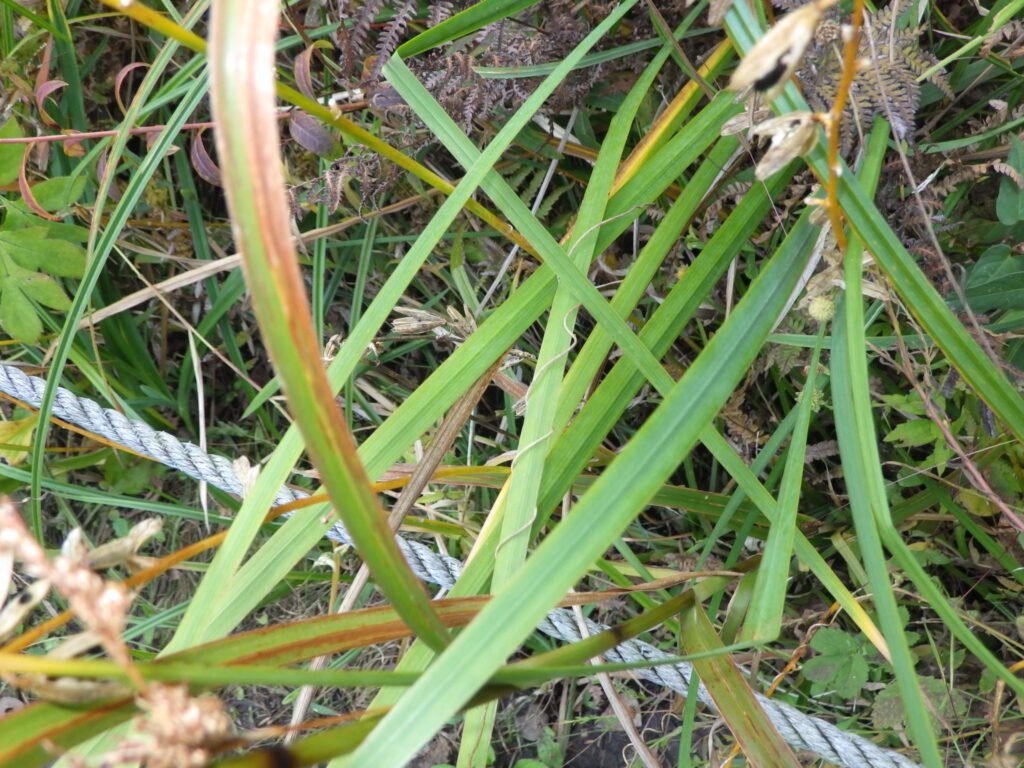
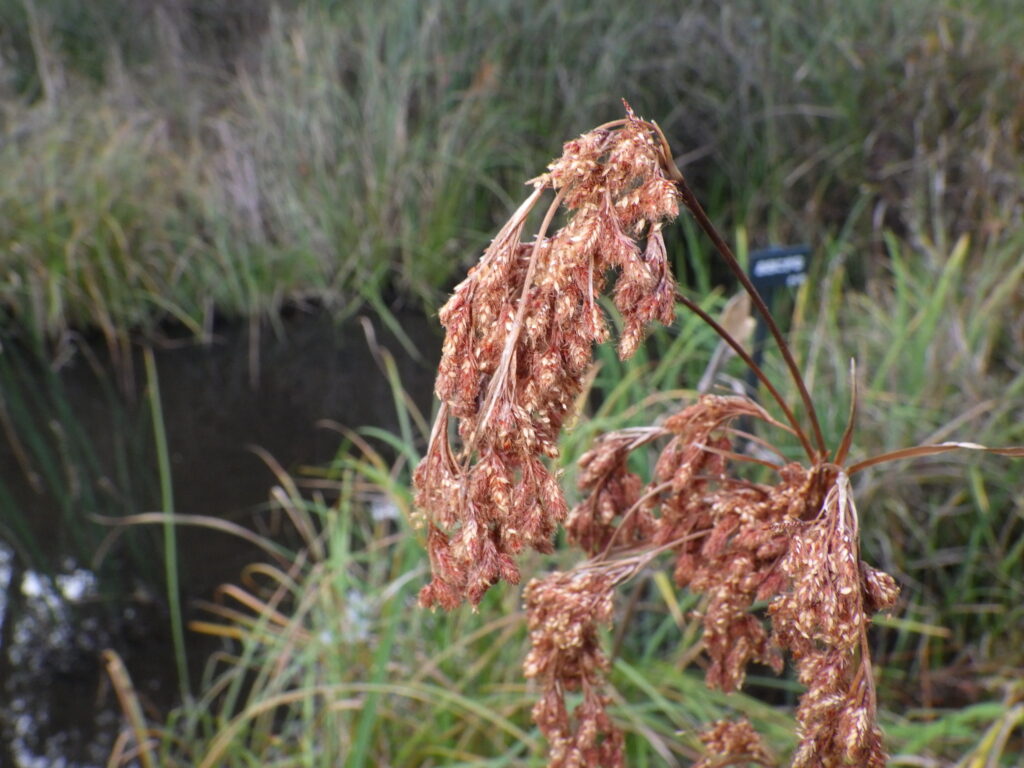
No.0752.1 Eleocharis acicularis var. acicularis
Eleocharis acicularis var. longiseta follows an annual or deciduous perennial life cycle in rice paddies and similar environments, but some specimens growing submerged in spring water areas can be seen throughout the year, suggesting that it is essentially an evergreen perennial. It has extremely slender creeping rhizomes that spread long in all directions, with multiple hairy stems growing in clusters from the nodes, forming patch-like to mat-like structures. The bristle-like perianth segments are 3-4 in number, each with small backward-pointing spines, and are of unequal length but significantly longer than the fruit. It is distributed in Hokkaido, Honshu, Shikoku, Kyushu, the Ryukyu Islands, Korea, Taiwan, China, and eastern Siberia. Eleocharis acicularis var. longiseta is a variety of Eleocharis acicularis, distinguished by its fewer bristle-like perianth segments (1-3), which are shorter than the fruit or completely vestigial. It is distributed in Taiwan, Russia, Kazakhstan, Vietnam, Indonesia, the Philippines, the Pacific Islands, Western Asia, Europe, Africa (Morocco), North America, South America, the Tohoku region of Japan, and Tokushima Prefecture.
No. 0761 Fimbristylis sieboldii
This is a perennial herb, growing to a height of 15-40 cm. The spikelets are 7-15 mm long and about 3 mm wide. The scales are brown with a slender midrib, 3.5 mm long, and have fine hairs visible under a stereomicroscope on the upper part of the scales, giving them a dull appearance. The fruit is obovate with a lenticular cross-section, 1-1.2 mm long, ripening to dark brown, and having a smooth surface. Those with a single spikelet are easily mistaken for *Cypripedium macranthum*, while those with multiple spikelets are easily mistaken for *Cypripedium macranthum*. *Cypripedium macranthum* can be distinguished by its slender, dark brown, dull spikelets and the fact that the base of the fruit does not have a distinct stalk. *Cypripedium macranthum* can be distinguished by its almost smooth fruit, slender midrib on the scales, and the horizontally cut membranous portion at the joint of the leaf sheath. It is distributed in Honshu (west of the Kanto and Hokuriku regions), Shikoku, Kyushu, and the Ryukyu Islands. It grows on coastlines. Although its scientific name is sometimes given as F. ferruginea var. sieboldii, F. ferruginea and Isoyamatentsuki are morphologically different and are considered to be separate species, so a separate scientific name is used for them.
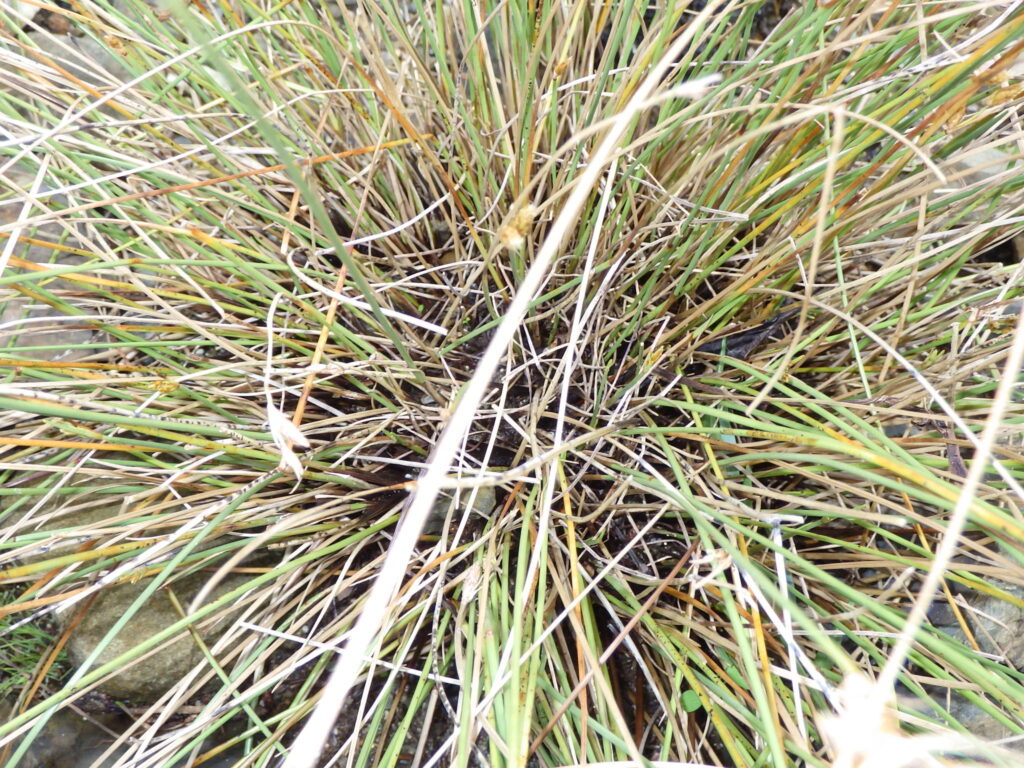
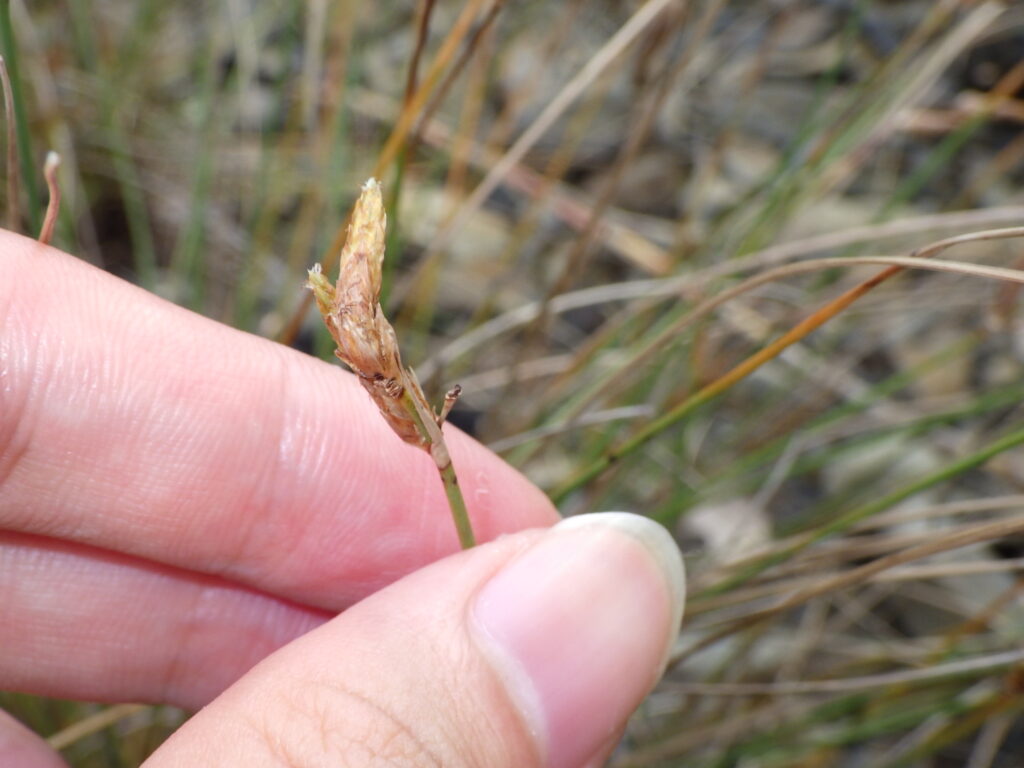
No.0765 Yamai Fimbristylis subbispicata
This is a perennial herb that grows in clumps, reaching a height of 15-50 cm. The leaves are 0.7-1 mm wide. It is easily confused with the genus *Erigeron annuus* because it usually has only one spikelet, but it can be identified as *Erigeron annuus* by the presence of a single bract at the base of the spikelet and the absence of lanceolate perianth segments. The way the spikelet scales open up and persist somewhat during seed dispersal is a characteristic not seen in *Erigeron annuus* or *Erigeron annuus*, making it easy to identify from a distance. The spikelets are 1-2 cm long and 4-7 mm wide. The scales are 4-6 mm long, with numerous veins, pale yellow, slightly glossy, and hairless. The fruit is obovate with a distinct stalk at the base, lenticular in cross-section, 1-1.2 mm long, ripening to dark brown, and has a smooth surface. It is distributed in Hokkaido, Honshu, Shikoku, Kyushu, and the Ryukyu Islands; and East Asia. It grows in wetlands.
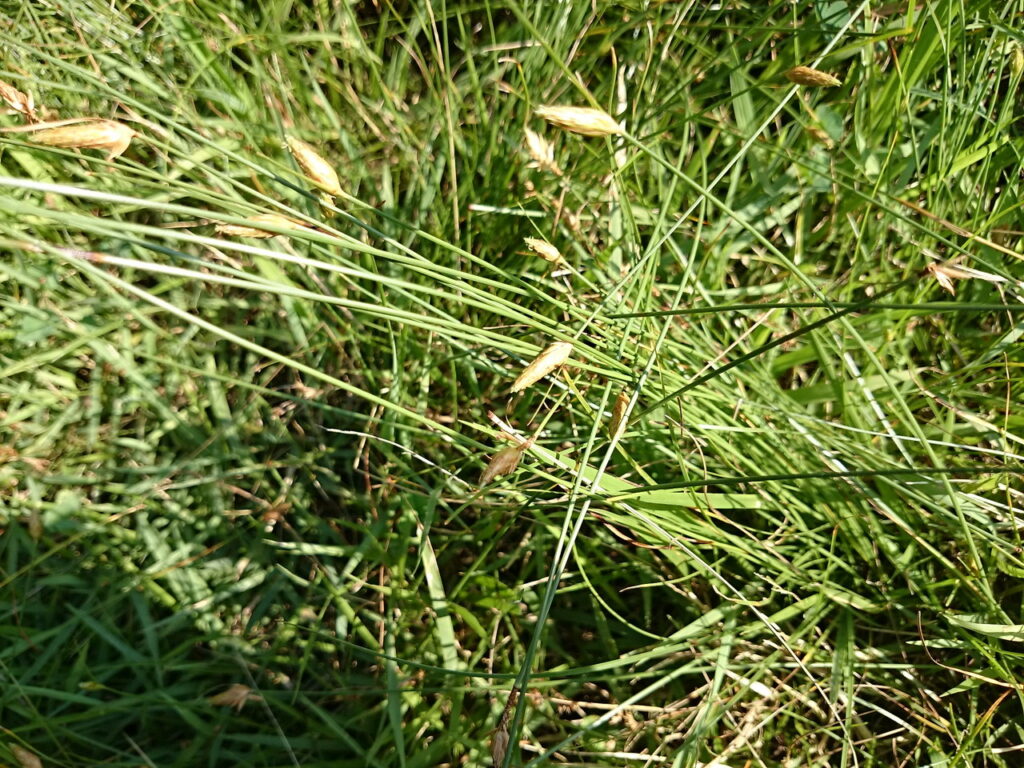
No.0779.a White Egret Cyperus (Rhynchospora colorata)
Perennial herb (Flora of North America). Growing in clumps or solitarily, up to 70 cm tall. Rhizomes are slender, scaly, and less than 2 mm thick. Culms are erect, slender, triangular, with leaves at the base, and several ridges. Leaves are spreading to erect, overhanging the culm, with narrowly linear blades, flattened at the base, 0.5–3 mm wide, tapering to a triangular apex. Inflorescences are terminal, solitary, capitate, densely covered with white, leaf-like involucral bracts. The involucral bracts are several, flared to recurved, white from the broad base to near the middle, and green from there to the tapering tip. Long bracts are 13 cm long and 2–7 mm wide. Spikelets are white, ovate, 5–7 mm long, and acute at the apex. Female scales are numerous, boat-shaped, with a sharply curved keel, 3–4 (–5) mm long, and acute or obtuse at the apex. Flowers lack a perianth. The fruits are arranged in spikelets, with several fruits per spikelet, 1.5–1.7 (–2) mm long. The fruit body, excluding the style base, is yellow to mahogany, broadly pear-shaped to obovate, thinly lenticular, about 1 mm long and 0.5–0.7 mm wide, widest at the apex, thickening at the margin, ending at the base of the apical wart, with transverse wavy wrinkles on the surface and short linear papillae on the ridges. The apical wart is broadly triangular, 0.5–0.6 mm, gray, crustaceous, and has a short, acute apex. Fruiting occurs from late spring to summer. It is distributed in North America, Mexico, the West Indies, Central America, and South America (French Guiana), and inhabits swamps, coasts, grasslands, sand, peat, silt at the edges of swamps, and sometimes swamps, usually on neutral substrates. It is cultivated in various countries, including Japan, for ornamental purposes. It is an exception to the Cyperaceae family in that it is insect-pollinated, and in North America, there are records of visits by the Bombus bee, Augochlorella (a member of the Halictidae family), Palpada (a member of the Syrphidae family), Physocephala (a member of the Physocephala family), and Scleiphron (a genus of mud dauber wasps) (Dow, 2019). The white, leaf-like involucre is thought to attract insects.
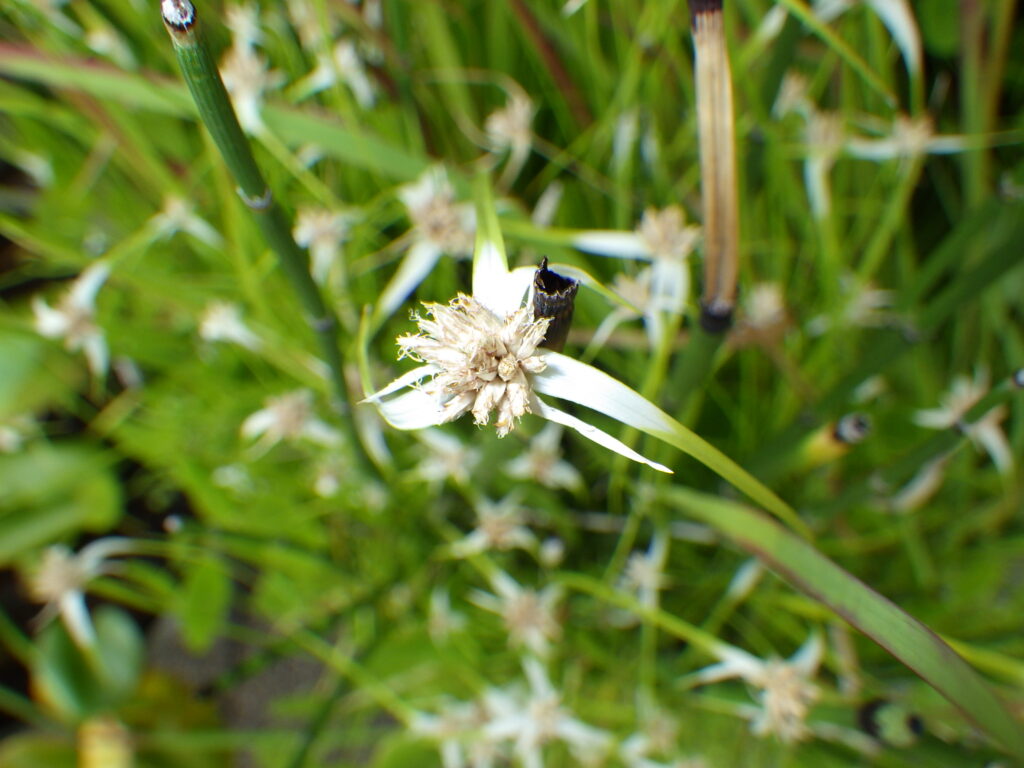
No.0813.a Carex forficula
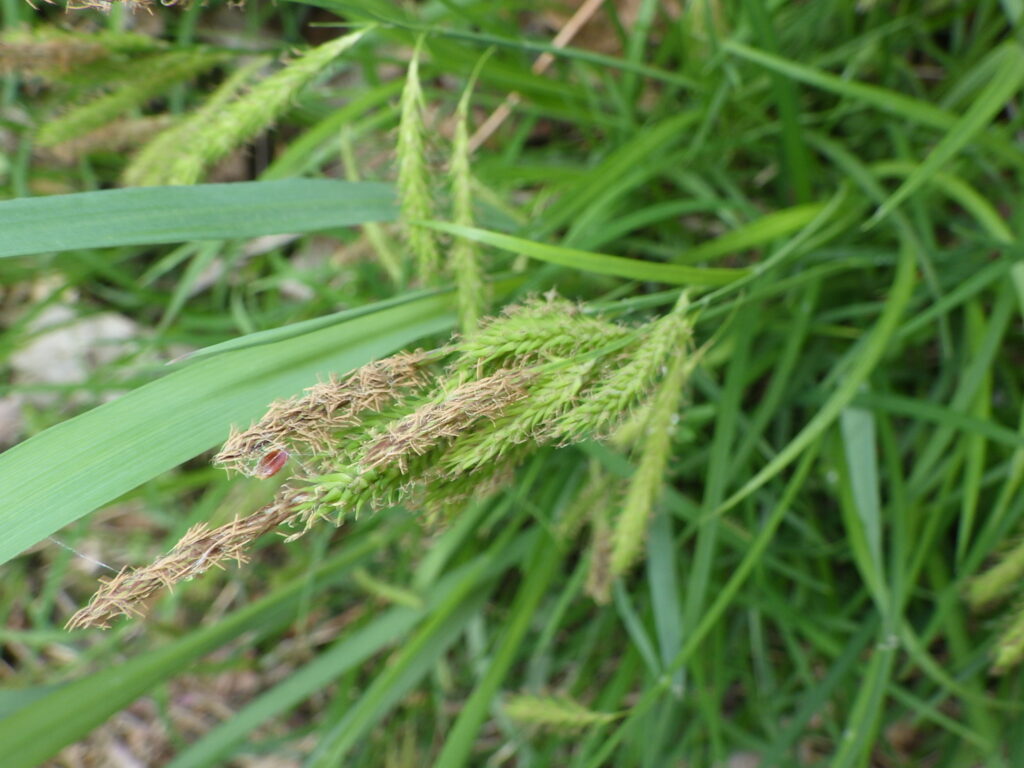
A perennial herb. The rhizome is short and grows in clumps. It reaches a height of 30-50 cm. The basal sheath lacks a leaf blade, is dark brown, and has a silky network. The leaves are 2-4 mm wide. The inflorescence has 3-6 inflorescences. The terminal inflorescence is male and 2-4 cm long. The lateral inflorescences are female, erect, 2-5 cm long and 2-4 mm wide. The scales of the female flowers are blackish-purple on the sides and have a green midrib. The utricle is longer than the scales, 3.5-4 mm long, with a long beak with small teeth on the margin, a sharply two-lobed mouth, and a smooth surface. It is distributed in Hokkaido, Honshu, Shikoku, Kyushu; Korea; and northern China. It grows in waterside areas of valleys.
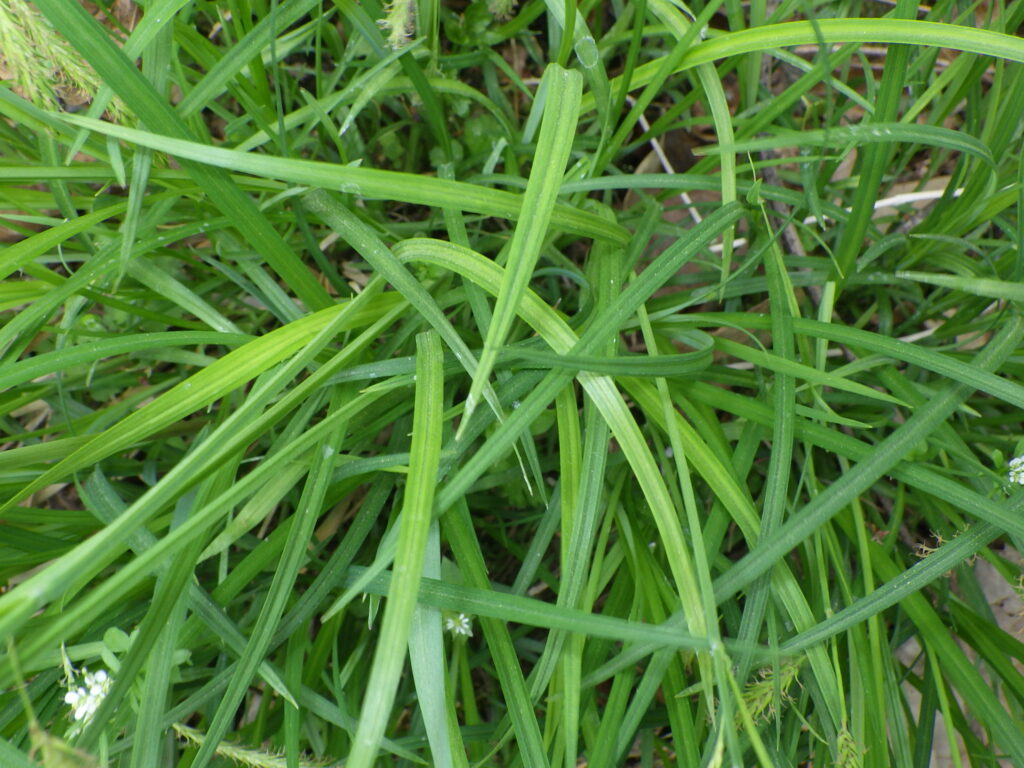
No.0817 Carex maximowiczii
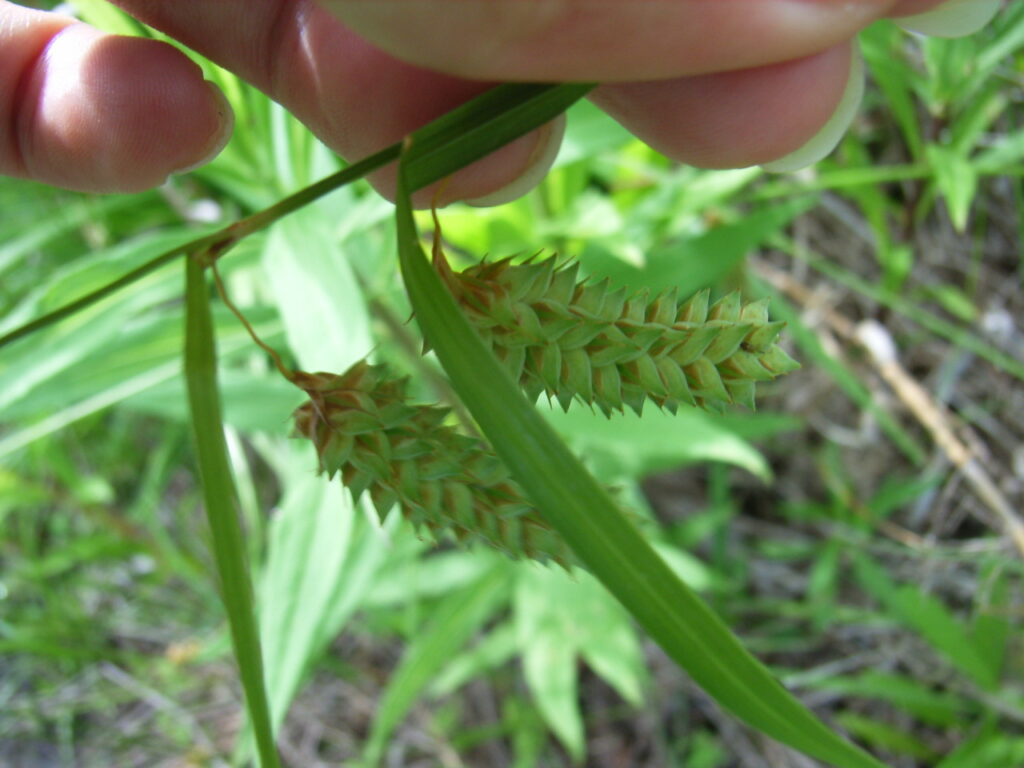
Perennial herb. The rhizome is short and grows in clumps. It grows to a height of 40-70 cm. The basal sheath lacks a leaf blade, is pale brown and soft, and does not produce a silky network. The leaves are 4-6 mm wide. There are 2-4 inflorescences. The terminal inflorescence is male, linear, and 2-4 cm long. The lateral inflorescences are female, 1.5-3.5 cm long and 5-7 mm wide, and drooping. The scales are brownish, with acute or obtuse awn tips. The utricles have papillate projections and are 3.5-5 mm long. Distributed in Hokkaido, Honshu, Shikoku, Kyushu, Ryukyu Islands; Kuril Islands, Korea, and China. It grows in wetlands.
No. 0821 Carex dimorpholepis
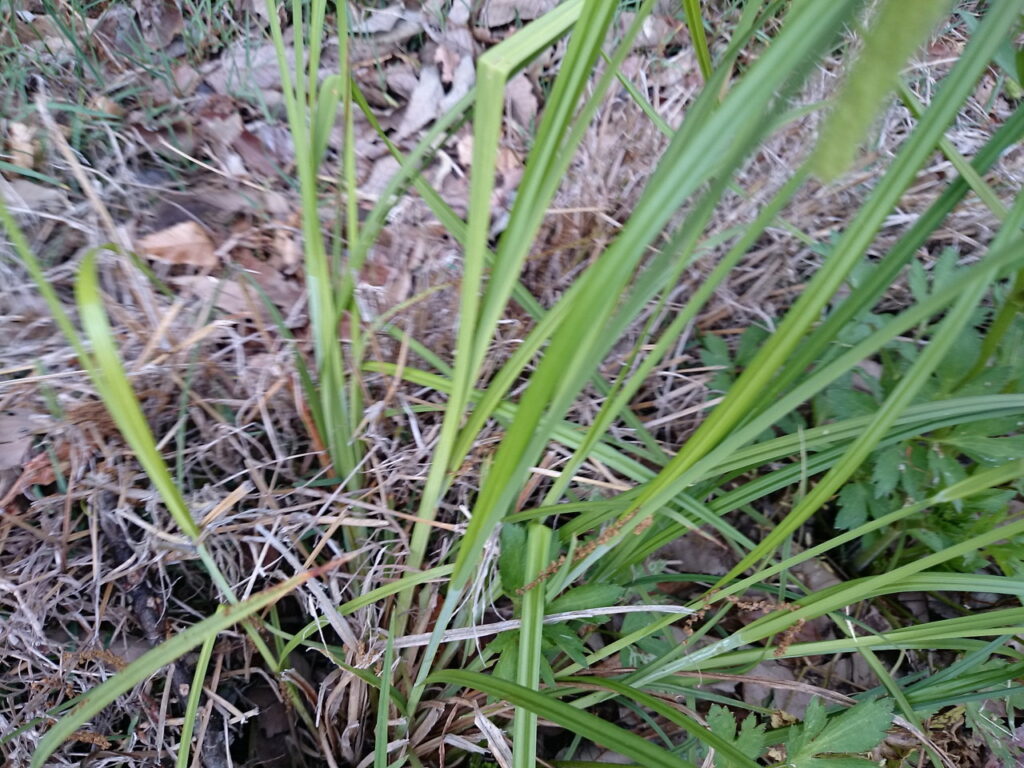
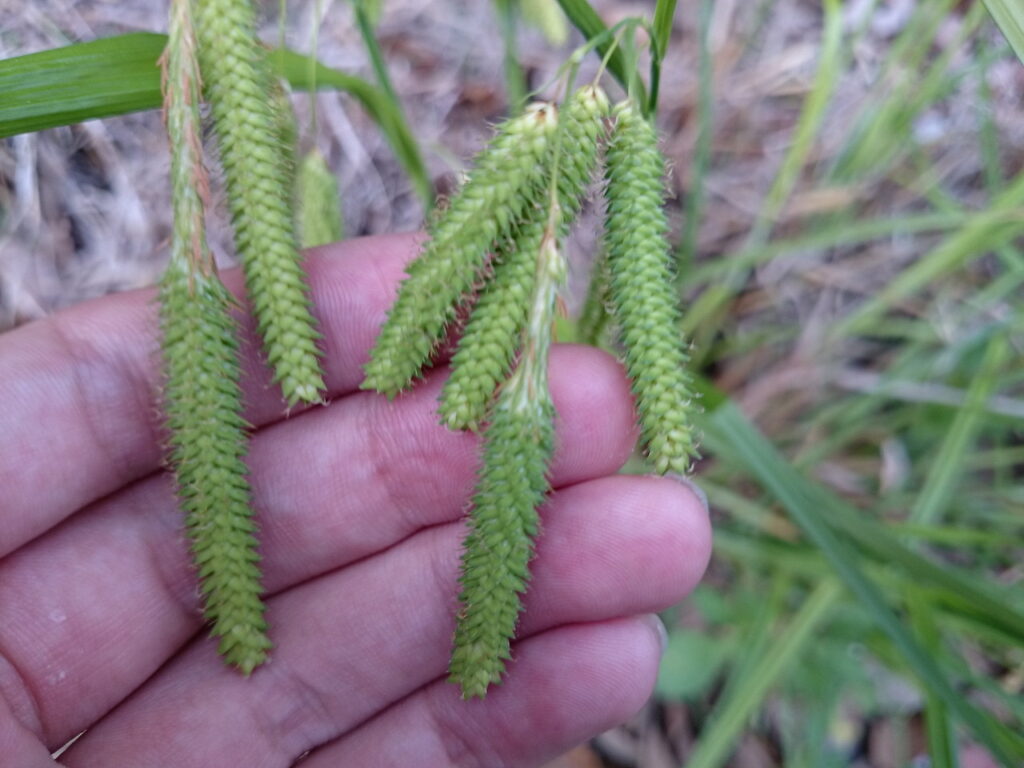
A perennial herb. The rhizome is short and grows in clumps. It reaches a height of 40-80 cm. The basal sheath lacks a leaf blade, is brown, has a keel, and is slightly covered with silk. The leaves are 4-10 mm wide. The inflorescence has 4-6 drooping flowers; the upper ones are unisexual, the lower ones are female, 3-6 cm long and 5 mm wide. The scales are 2.5 mm long, pale green with a brownish tint, and have a notched awn tip. It grows in wetlands. The utricle has papillary projections and is 2.5-3 mm long. It is distributed in Hokkaido, Honshu, Shikoku, Kyushu, the Ryukyu Islands, Korea, China, Indochina, and India.
No.0841 Carex lenta
A perennial herb. The rhizome is short, the clumps grow in clusters, and it does not produce stolons. It grows to a height of 40-80 cm. The leaves are 2-3 mm wide. The basal sheath is brown and decomposes into fibers. The utricles have prominent veins and are covered with slightly spreading short hairs. It is distributed in Honshu (south of Miyagi and Niigata prefectures), Shikoku, Kyushu, Korea, China, and India. It grows in woodlands and forest edges. Carex sendai f. simplex is a slightly elongated rhizome of Carex nakirisu.
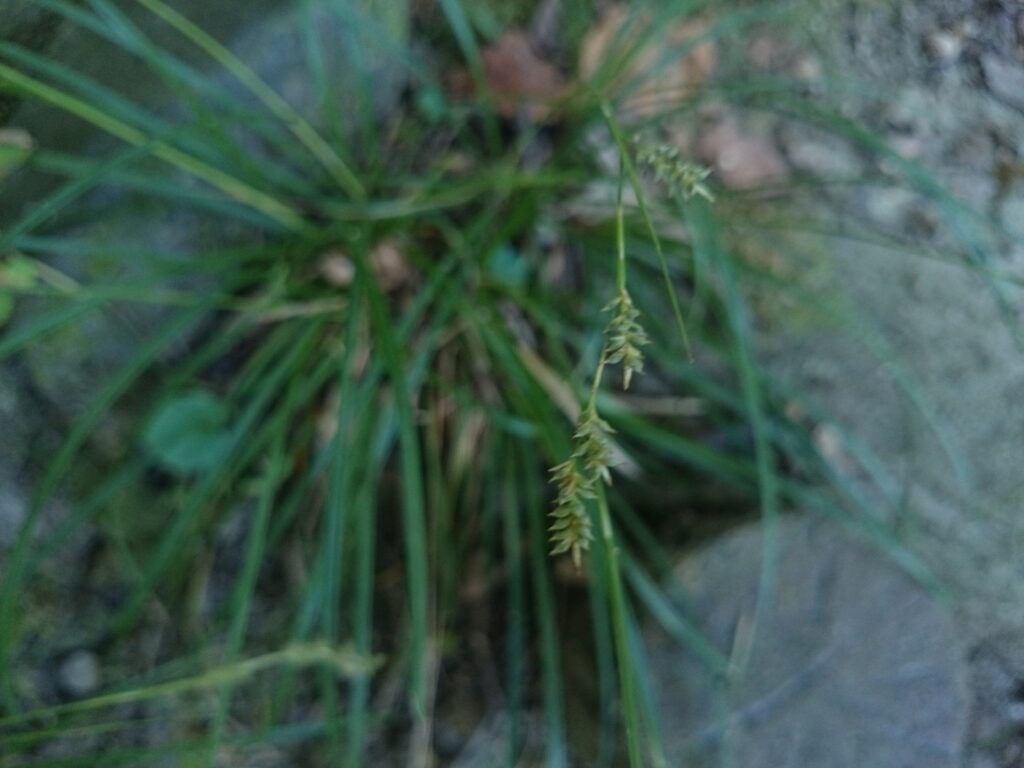
No. 0851 Carex leucochlora
This is a perennial herb. It grows densely in clumps and does not produce stolons. It reaches a height of 15-50 cm. The basal sheath is brown and slightly glossy, and decomposes into fibers when old. The leaves are almost the same length as the flowering stalks and 2-3 mm wide. The male inflorescences are club-shaped with numerous flowers and 1-2 cm long. The female inflorescences consist of 2-3 clusters, closely spaced together, densely packed with numerous flowers, 1-2 cm long and 3-4 mm wide. The bracts are mostly sheathless, and the leaf blades are the same height as or slightly taller than the flowering stalks. Female inflorescences are rarely found at the base of the stem. The scales of the female flowers have long awns. The utricles have indistinct veins, are 2.5-3 mm long, and sparsely hairy. It is distributed in Hokkaido, Honshu, Shikoku, Kyushu, the Ryukyu Islands, Korea, China, Taiwan, Ussuri, and the Himalayas. It commonly grows in grasslands. While "Kami-shoku-shi 88, " "Oi-shi," and "Hoiku Genshoku-so III" identify the Japanese sedge (Carex breviculmis) as *Carex breviculmis *, *Carex breviculmis * is native to Australia and differs in several ways, such as having flowering stems shorter than leaves, remarkably long bracts, and numerous thick veins on the fruit capsules. Therefore, it cannot be treated as the same species as the Japanese sedge. The Japanese sedge is thought to be *Carex leucochlora *, with China as its type locality.
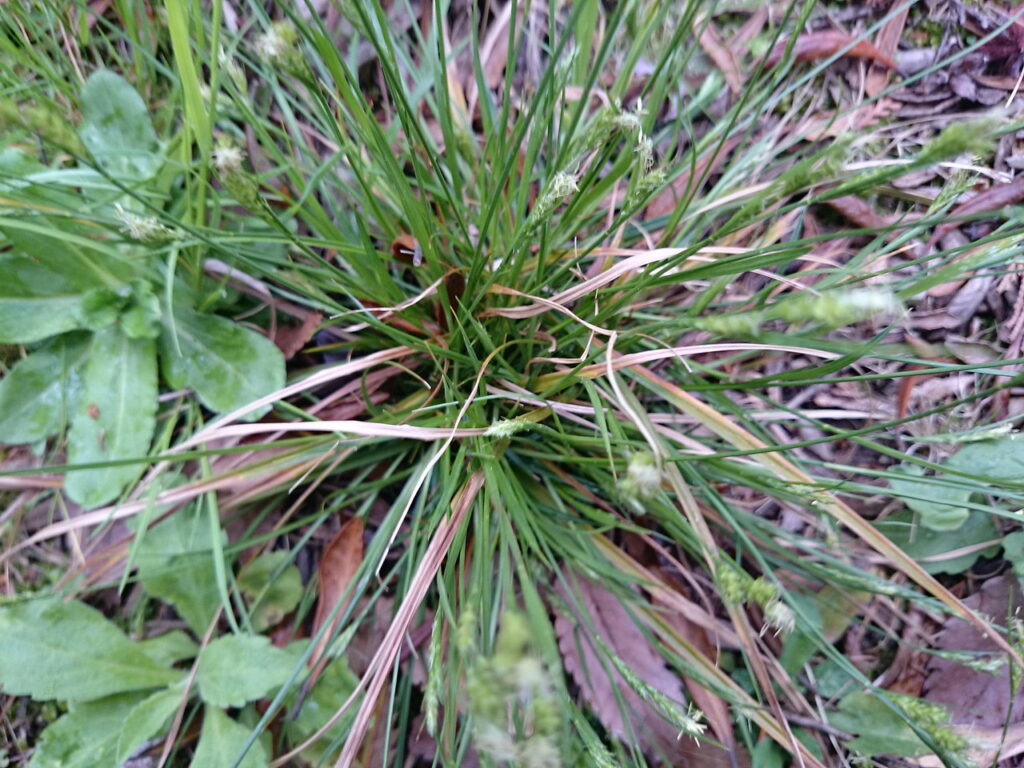
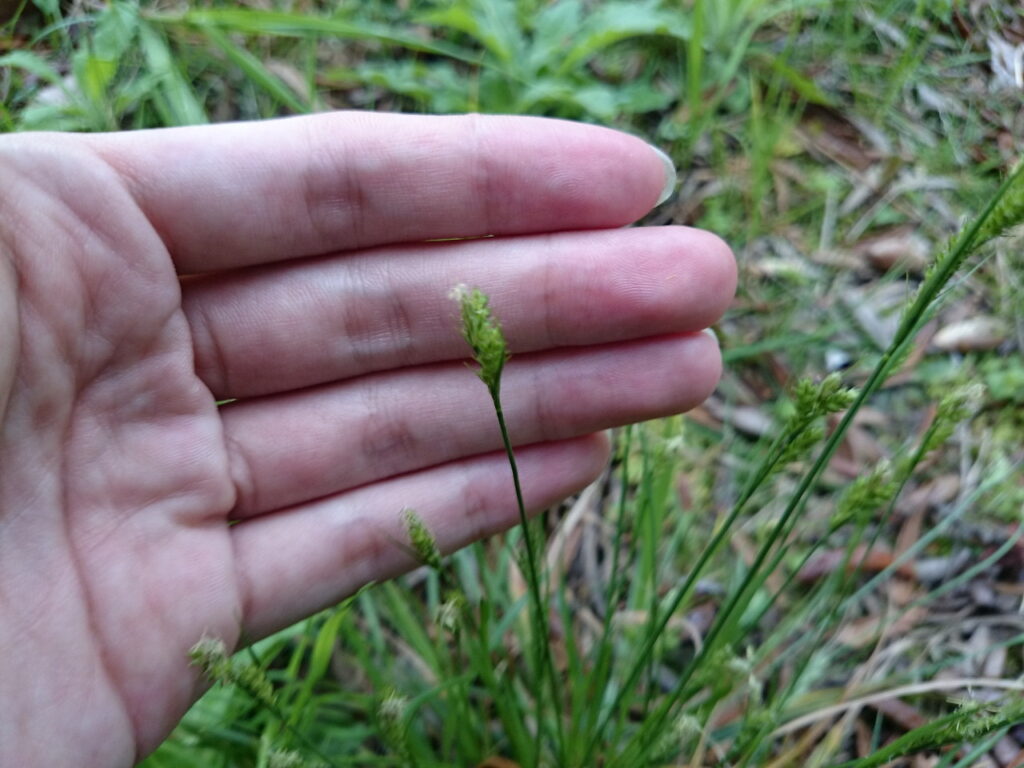
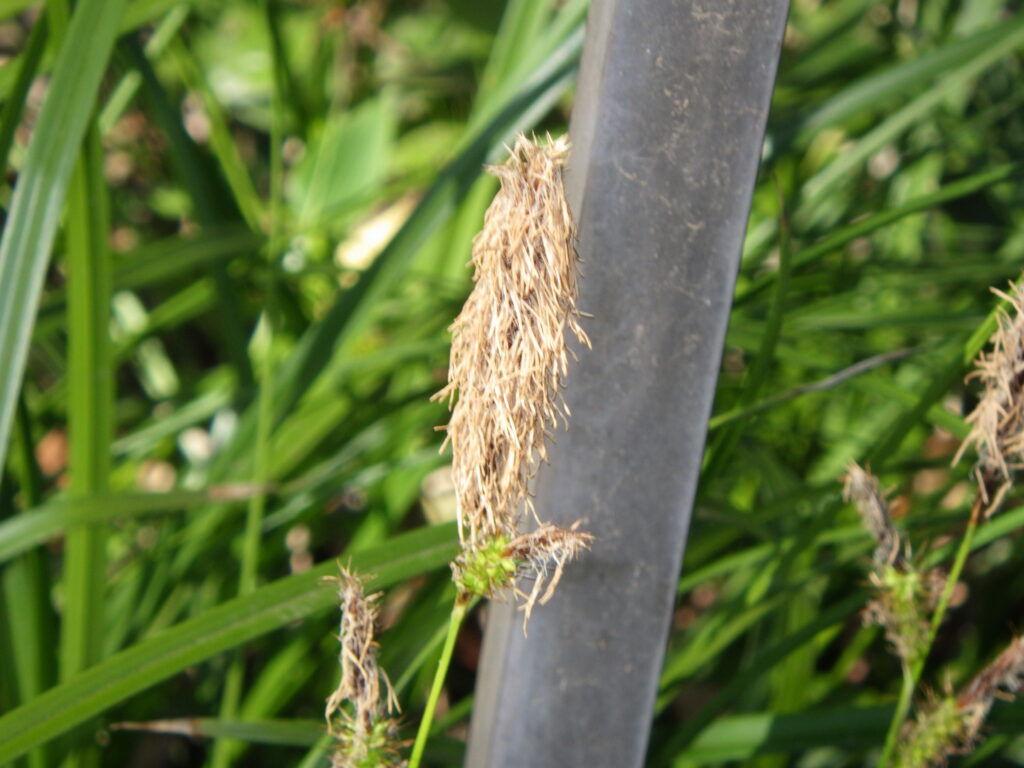
No. 0865 Carex oshimensis
This is a perennial herb. The rhizome is short, growing in clumps, and reaching a height of 20-50 cm. The basal sheath is dark brown and, as it ages, decomposes into fibrous material. The leaves are evergreen and stiff, 3-6 mm wide. The male inflorescence is dark brown and 2-5 cm long. The female inflorescence has 3-5 flowers, with a short male flower section at the top, 1.5-5 cm long and about 5 mm wide. The scales of the female flowers are brownish and have a notched awn tip. The utricle is shorter than the scales, about 3 mm long, and sparsely covered with short hairs. The fruit has a ring-shaped appendage at the top. It is distributed in the Izu Islands. It is planted in gardens and sometimes escapes cultivation.
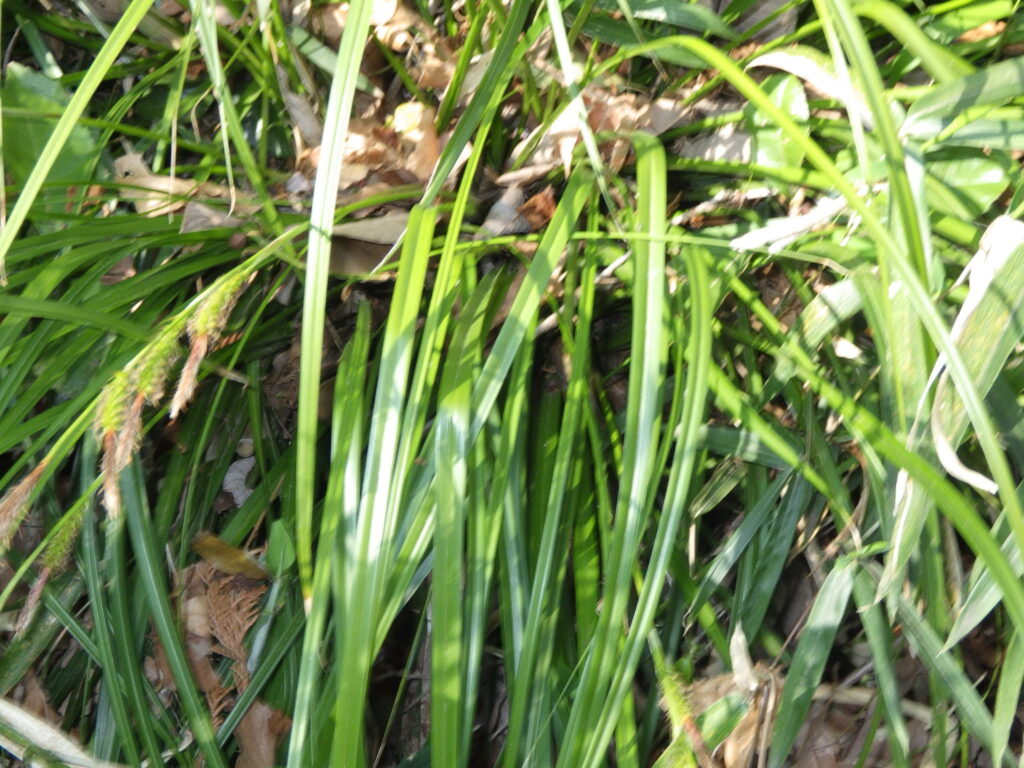
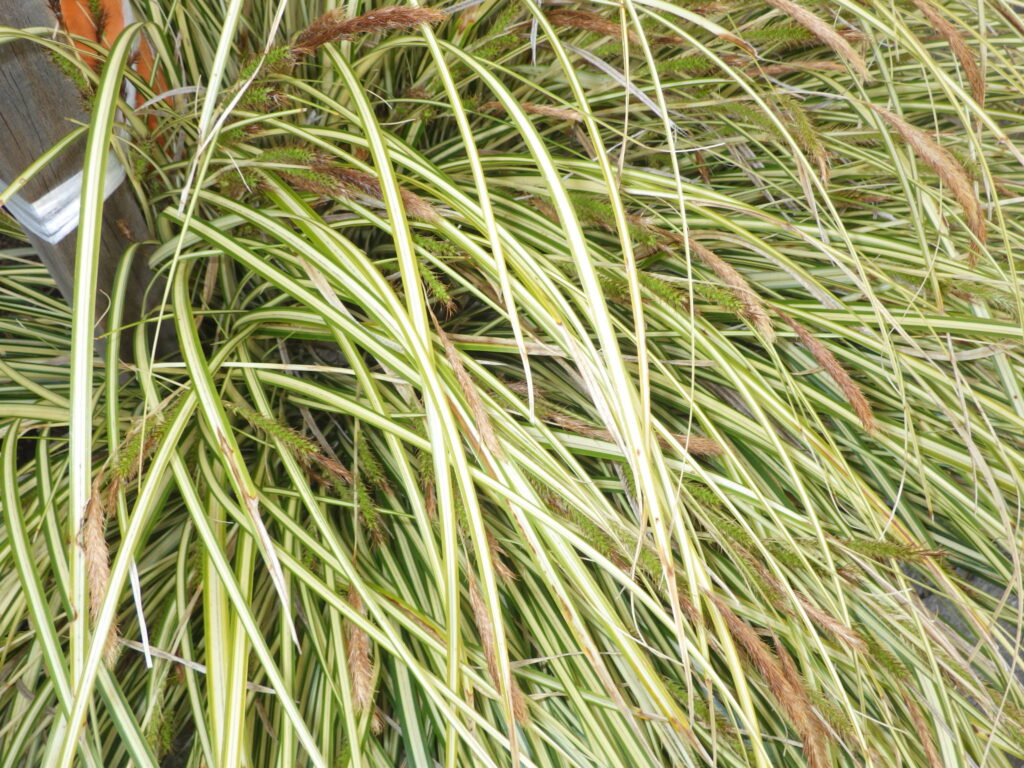
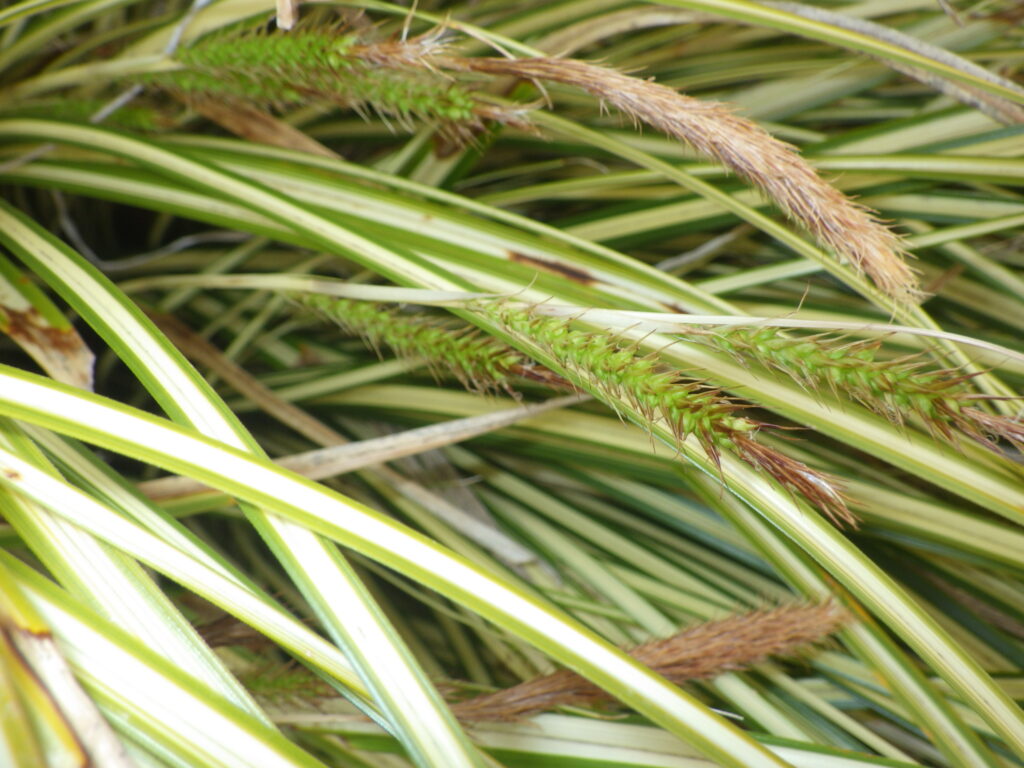
No.0865.1 Carex oshimensis 'Evergold' (Oshima sedge)‘
This is a horticultural variety of Carex oshimensis with variegated leaves. Occasionally, it is identified as Carex hachijoensis 'Evergold', but scientific literature has not confirmed which is correct. A search on Google Scholar yields 47 results for ""oshimensis" 'Evergold'" (latest: Sun et al., 2022) and 6 results for "'Evergold' "hachijoensis"" (latest: 2007), suggesting that the current consensus is that it is a variety of Carex oshimensis.
No. 0897 Carex dispalata
This perennial herb has creeping rhizomes and often grows in clumps. It reaches a height of 40-100 cm. The sheath at the base of the stem is reddish-purple. The leaves are 4-8 mm wide. The male inflorescence is linear-cylindrical, 4-7 cm long. The female inflorescence has 3-6 flowers, 3-10 cm long and 4-6 mm wide. The bracts are sheathless with well-developed leaf blades. The scales of both the male and female flowers have reddish-purple parts and are acutely pointed awns. The utricle does not swell even when mature, is 3-4 mm long, and turns slightly brown when dry. The stigma is trifid. It is distributed in Hokkaido, Honshu, Shikoku, Kyushu, and East Asia. It grows in ponds and wetlands.
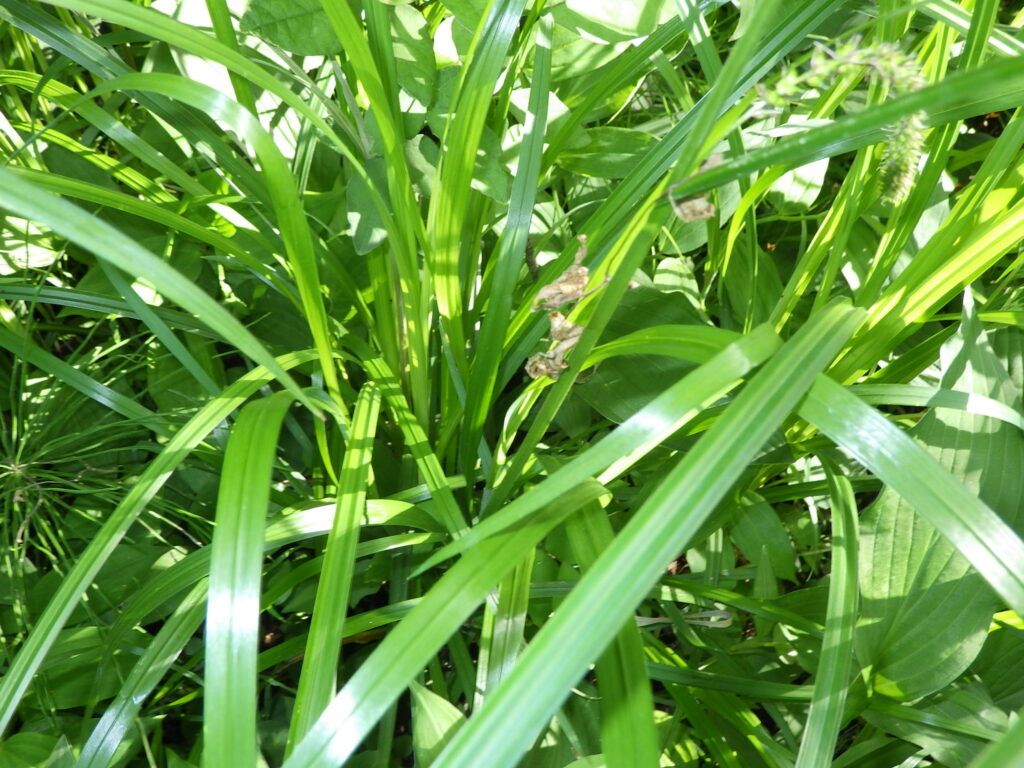
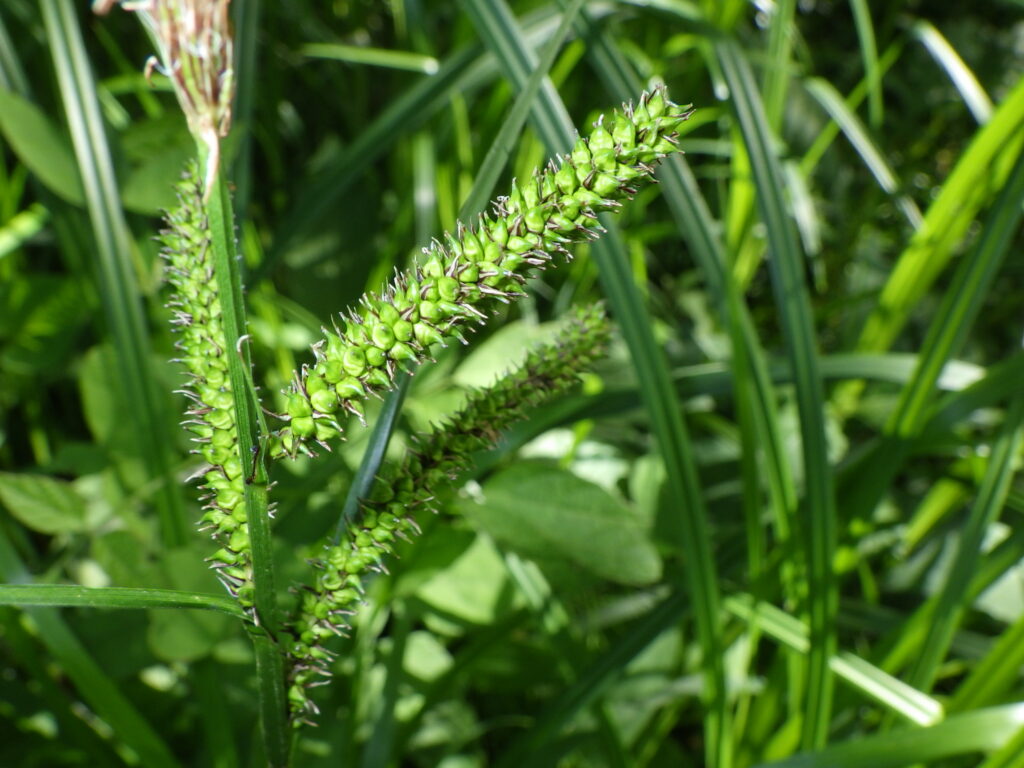
No. 0898 Carex persistens
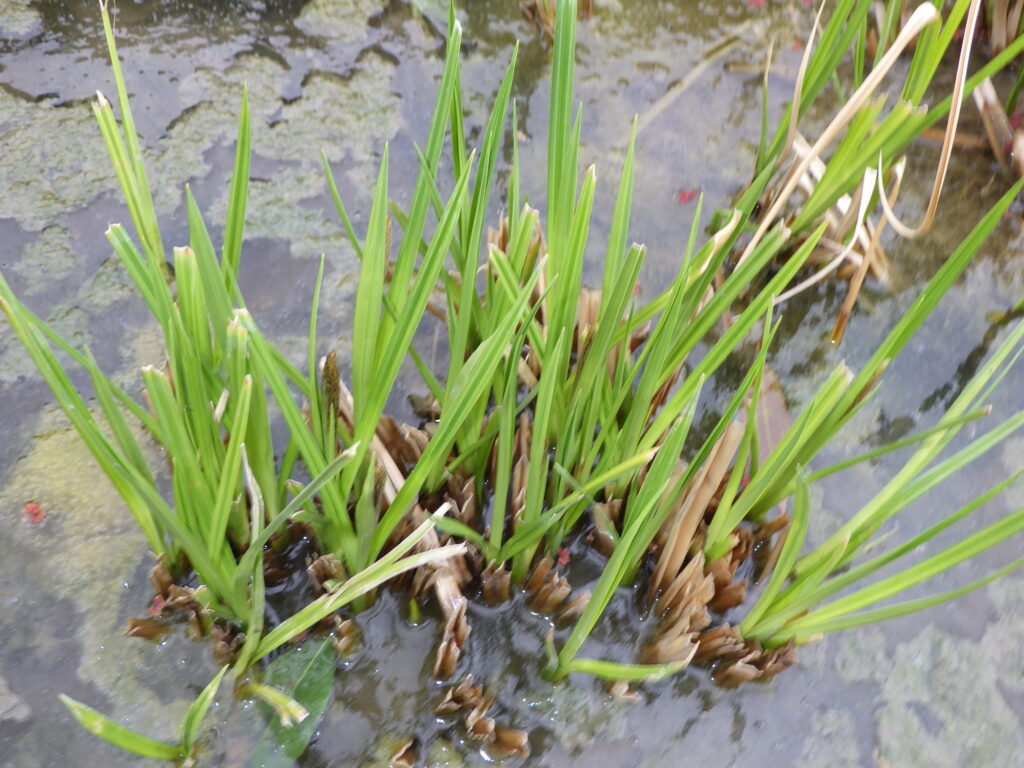
This perennial herb (Japanese sedge) has creeping rhizomes and grows in clumps. The basal sheath is pale in color, sometimes tinged with reddish-purple. The leaves are somewhat soft and 4-8 mm wide. The flowering stalks are 30-70 cm tall. The terminal spikelet is male, 3-7 cm long. The lateral spikelets are female, 3-12 cm long. The scales of both the female and male flowers have reddish-purple parts, with acute awn tips, and are longer than the utricle. The utricle is 3-4 mm long, glabrous, rarely hairy, does not swell when mature, and turns slightly brown when dry. The style is slender and persistent, and the stigma is trifurcated. Fruiting occurs from May to June. It grows in riverbanks and wetlands in mountainous areas of Honshu, Japan (west of the Kinki region).
References
Dow, AM 2019. Native Plant Landscaping for Pollinators on Eastern North Carolina Solar Farms [Master's Thesis, East Carolina University]. http://hdl.handle.net/10342/7468
Kanagawa Prefecture Flora Survey Association. 2018. Kanagawa Prefecture Flora 2018 (Electronic Edition). Kanagawa Prefecture Flora Survey Association, Odawara. 1803pp. ISBN: 9784991053726
Popay, I. 2014. Cyperus papyrus (papyrus). CABI Compendium. https://doi.org/10.1079/cabicompendium.17503
Tanaka, Hajime. 1976. Observation of insect-pollinated and wind-pollinated flowers. New Science Co., Ltd., Tokyo. 109pp. ISBN: 9784821600236
Sun, X., Zhou, Y., Tian, A., Kuang, J., Zhang, Z., & Tang, Q. 2022. Ecological Restoration of Construction and Demolition Waste Landfills by Plants: a Case Study in Suzhou, China. Polish Journal of Environmental Studies 31(5): 4873-4883. https://doi.org/10.15244/pjoes/150385