Grasses (Poaceae) are annual to perennial herbs, or have woody, perennial stems. The stem is called a "culm," and has septa at the nodes, with the rest being hollow or containing pith. Leaves are arranged alternately in two rows and consist of a leaf blade and a leaf sheath. The leaf blade is often linear, and the leaf sheath is broad, encircling the culm and overlapping edges, or the edges are fused to form a tube. Inside the uppermost part of the leaf sheath is a membranous or hair-like structure called a ligule. Inflorescences are composed of units called spikelets, which are arranged in panicles, racemes, or spikelets. At the base of the spikelet are scale-like structures called the first and second glumes, which enclose one to many florets. A floret is the smallest unit of a flower, consisting of a lemma and a glume, which encloses two or three scales, three or six stamens, and one pistil. These basic structures degenerate to varying degrees depending on the species. Most are wind-pollinated. The grass family (Poaceae) comprises approximately 760 genera and 11,000 species worldwide, with about 169 genera and 750 species in Japan. The subfamily Bambusoideae will follow Kobayashi (2017), but is still being revised. The history of cultivated species is also being revised.
This article provides a comprehensive, field guide-style introduction to grasses.
The basic information is based on the Kanagawa Prefecture Flora Survey Association (2018). Photos are replaced as better ones become available. While the identification is done by the author, please note that misidentifications may be corrected without notice.
- No. 0908 Oryza sativa subsp. japonica
- No.0910.a Leersia oryzoides
- No.0913 Bambusa multiplex
- No.0913.a Bambusa multiplex 'Fernleaf'‘
- No.0913.b Bambusa multiplex 'Alphonso-karr'‘
- No.0913.c Bambusa multiplex 'Alphonso-karr' (Green bamboo)‘
- No.0913.d Tootsik (Sinobambusa tootsik)
- No.0913.e Sinobambusa tootsik 'Suzukonarihira'‘
- No.0914 Madake Phyllostachys reticulata
- No.0915 Phyllostachys aurea
- No.0915.1 *Pyllostachys aurea f. koi*
- No.0915.2 Phyllostachys aurea f. albo-variegata
- No.0915.3 *Pyllostachys aurea var. flavescens-inversa*
- No.0916 Phyllostachys edulis
- No.0916.1 Golden Bamboo (Phyllostachys edulis 'Tao Kiang')‘
- No.0917 Phyllostachys nigra var. henonis
- No.0917.1 Phyllostachys nigra var. nigra
- No.0917.2 Tambahanchiku (Pyllostachys nigra f. boryana)
- No.0917.3 Phyllostachys nigra 'Punctata' (Sesame Mushroom)‘
- No.0917.a Phyllostachys flexuosa
- No.0917.b *Phyllostachys viridis*
- No.0917.c Golden Bamboo (Phyllostachys viridis 'Robert Young')‘
- No.0917.d Phyllostachys glauca
- No.0917.e Phyllostachys bambusoides 'Kashirodake'‘
- No.0917.f Phyllostachys bambusoides 'Marliacea'‘
- No.0917.g Kikko-chiku (Phyllostachys edulis 'Kikko-chiku')‘
- No.0917.h Phyllostachys makinoi (Taiwanese bamboo)
- No.0917.i *Pyllostachys sulphurea*
- No.0917.j Phyllostachys dulcis
- No.0917.k *Hibanobambusa tranquillans*
- No.0918 Shibataea kumasaca
- No.0919 Medake Pleioblastus simonii
- No. 0920 Pleioblastus chino var. chino
- No.0920.1 Pleioblastus chino f. elegantissimus
- No.0921.a Pleioblastus chino f. pumilis
- No. 0922 Pleioblastus gramineus (Tai Minchiku)
- No.0923.a Pleioblastus kongosanensis
- No.0923.b Shibuya bamboo (Pleioblastus shibuyanus)
- No.0924.1 Sasaella ramosa var. suwekoana
- No.0924.a Sasaella masamuneana
- No.0924.b Sasaella hidaensis
- No.0925 Sasa veitchii
- No. 0927 Sasa palmata
- No.0927.a Sasa yahikoensis var. oseana
- No.0927.b Sasa kurilensis
- No.0927.c *Sasa kurilensis-S. senanensis complex 'Nebulosa'*‘
- No.0927.d Ibukizasa (Sasa tsuboiana)
- No.0927.e Hakone Southern Bell (Neosasamorpha shimidzuana subsp. shimidzuana)
- No.0928.a Sasamorpha mollis
- No.0929.1 Pseudosasa japonica 'Tsutsumiana' (Japanese shallot mushroom)‘
- No.0929.a Indocalamus tesselatus
- No. 0930 Semiarundinaria fastuosa
- No.0930.a Semiarundinaria okuboi
- No.0931 Kanchiku (Chimonobambusa marmorea)
- No.0931.1 Chimonobambusa marmorea 'Variegata'‘
- No.0932 Chimonobambusa quadrangularis
- No.0932.1 Chimonobambusa quadrangularis f. nagamineus
- No.0947 Brachypodium sylvaticum var. miserum
- No. 0948 Bromus japonicus
- No. 0950 Dog Wheat (Bromus catharticus)
- No.0950.a Bromus carinatus (Yakunagainumugi)
- No.0951 Hordeum vulgare
- No.0952 Hordeum murinum
- No.0960 Elymus tsukushiensis var. transiens
- No.0961.1 Elymus racemifer var. japonensis
- No.0964 Hargaya Anthoxanthum odoratum subsp. odoratum
- No.0964.1 Anthoxanthum odoratum subsp. glabrescens
- No.0968 Oat Avena fatua var. fatua
- No.0969 Oat (Avena sativa)
- No.0975 Briza maxima
- No.0976 Briza minor
- No.0977 Calamagrostis epigeios
- No. 0979 Calamagrostis brachytricha
- No.0988 Agrostis clavata var. nukabo
- No. 0989 Agrostis gigantea
- No.0991 *Polypogon fugax*
- No.0993 Rabbit's Head (Lagurus ovatus)
- No.0995 Aira caryophyllea
- No.0995.a *Pampas Grass* (Aira elegantissima)
- No. 1001 Poa annua (Japanese Bluegrass)
- No.1001.a Poa trivialis (Large-leaved annual bluegrass)
- No.1004 Strawberry Connections Poa sphondylodes
- No. 1005 Poa pratensis
- No. 1009 Beckmannia syzigachne
- No.1010 Alopecurus aequalis var. aequalis
- No. 1011 Setogaya (Alopecurus japonicus)
- No.1013 Dactylis glomerata
- No.1017 Lolium multiflorum
- No.1017.a Lolium perenne
- No. 1018 Vulpia myuros
- No.1022.a Schedonorus phoenix
- No. 1025 Sasakusa (Lophatherum gracile)
- No. 1027 Pennisetum alopecuroides
- No. 1029 Foxtail grass (Setaria viridis var. minor)
- No. 1030 Purple Foxtail (Setaria viridis var. minor f. misera)
- No. 1032 Setaria x pycnocoma
- No. 1033 Setaria faberi
- No. 1034 Golden Foxtail Setaria pumila
- No.1034.a Setaria pallidefusca
- No.1035 Foxtail Setaria italica
- No. 1037.a Paspalidium distans
- No.1038 Digitaria ciliaris
- No. 1039 Digitaria radicosa
- No. 1041 Millet Panicum miliaceum
- No. 1042 Rice bran (Panicum bisulcatum)
- No.1045 Echinochloa crus-galli var. crus-galli
- No.1046.a Echinochloa crus-galli var. praticola
- No. 1047.a Echinochloa oryzicola (Thai barnyard grass)
- No.1050 Stingy wren Oplismenus undulatifolius var. undulatifolius f. undulatifolius
- No.1051 Oplismenus undulatifolius var. undulatifolius f. japonicus
- No. 1053 Paspalum thunbergii
- No.1055.a Paspalum dilatatum
- No.1055.b Paspalum urvillei
- No. 1055.c American Barnyard Grass (Paspalum notatum)
- No.1058.1 Arundinella hirta var. ciliata
- No.1060 Arthraxon hispidus
- No. 1065 Sorghum halepense
- No.1066.a Lemon Toad (Cymbopogon citratus)
- No. 1068 American Carrot (Andropogon virginicus)
- No. 1071 Platypus (Ischaemum aristatum var. crassipes)
- No.1075 Imperata cylindrica var. koenigii
- No. 1076 Miscanthus sinensis
- No.1076.a Miscanthus sinensis 'Zebrinus'‘
- No. 1077 Miscanthus sinensis f. gracillimus
- No. 1078 Miscanthus condensatus
- No.1078.a Miscanthus boninensis
- No.1080 Miscanthus tinctorius
- No.1082 Miscanthus sacchariflorus
- No. 1087 Eccoilopus cotulifer
- No. 1088.1 Microstegium vimineum f. willdenowianum
- No. 1093 Corn (Zea mays subsp. mays var. saccharata)
- No.1094 Juzdama Coix lacryma-jobi
- No. 1098 Phragmites australis
- No.1102 Arundo donax 'Versicolor'‘
- No. 1103 Cortaderia selloana
- No.1105 Isachne globosa
- No.1108 Eragrostis ferruginea
- No. 1114 Eleusine indica
- No. 1116 Cynodon dactylon
- No.1122 Sporobolus fertilis var. fertilis
- No. 1124 Zoysia japonica
- No. 1125 Zoysia macrostachya
- No.1125.a Zoysia pacifica
- References
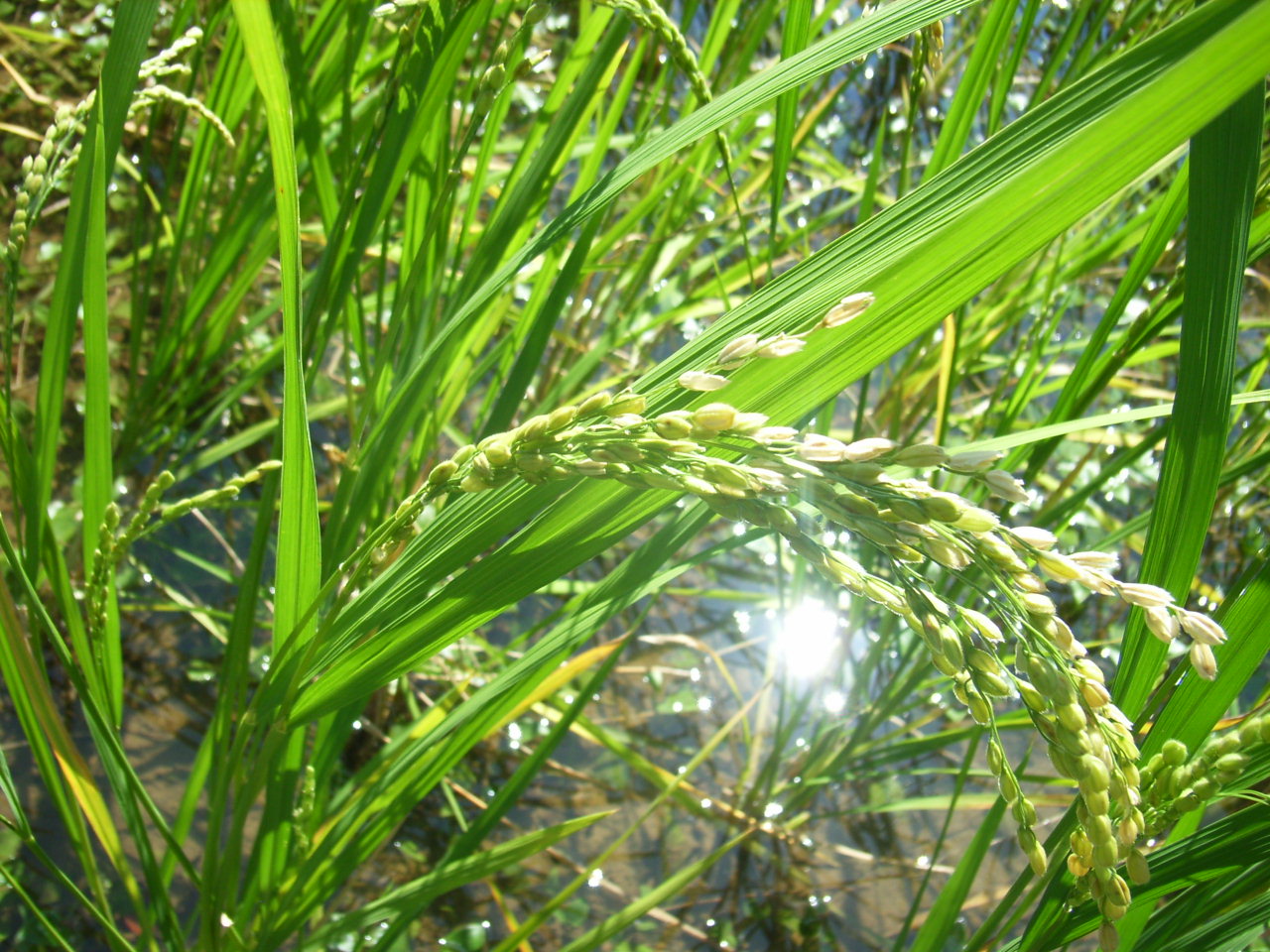
No. 0908 Oryza sativa subsp. japonica
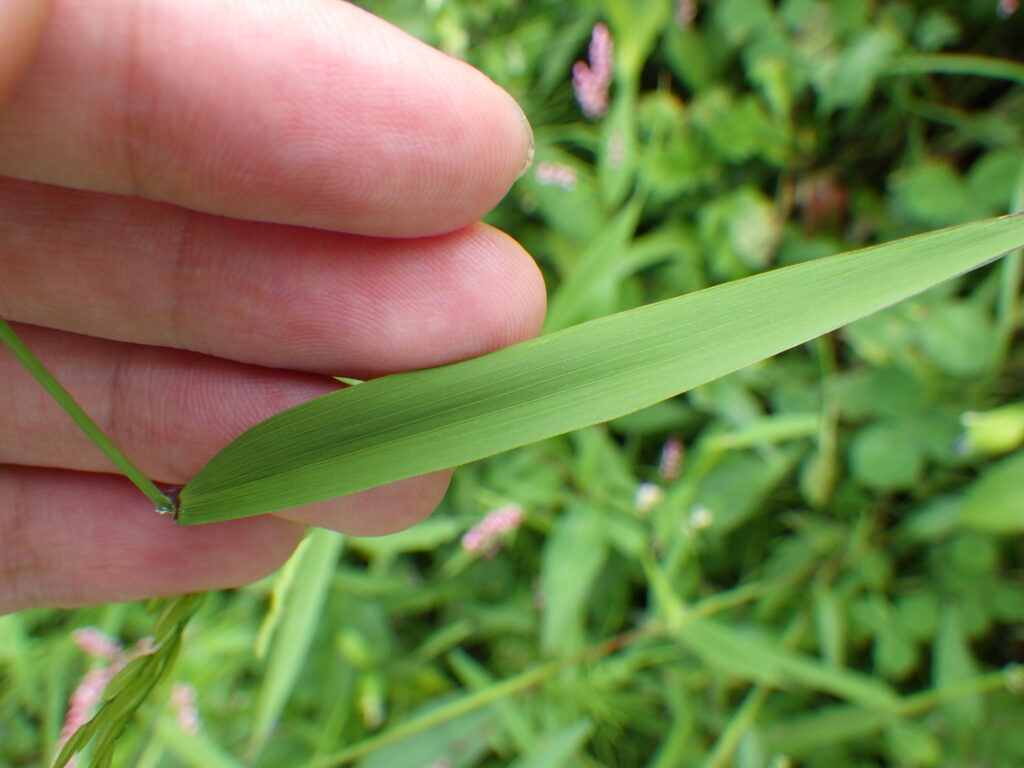
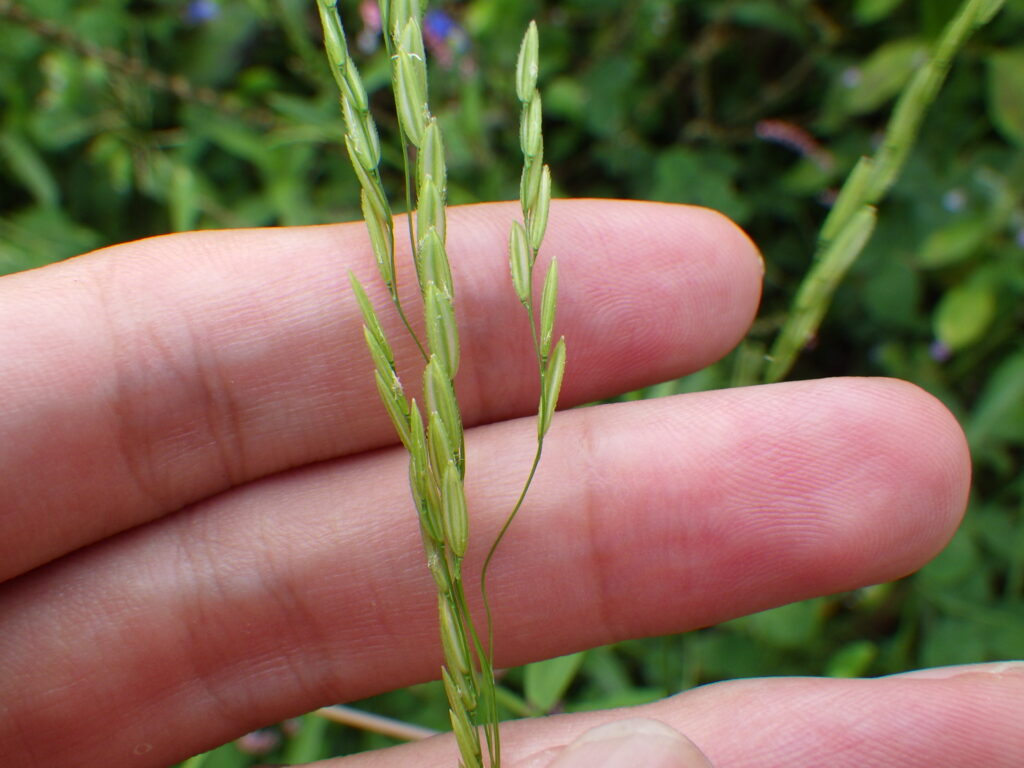
No.0910.a Leersia oryzoides
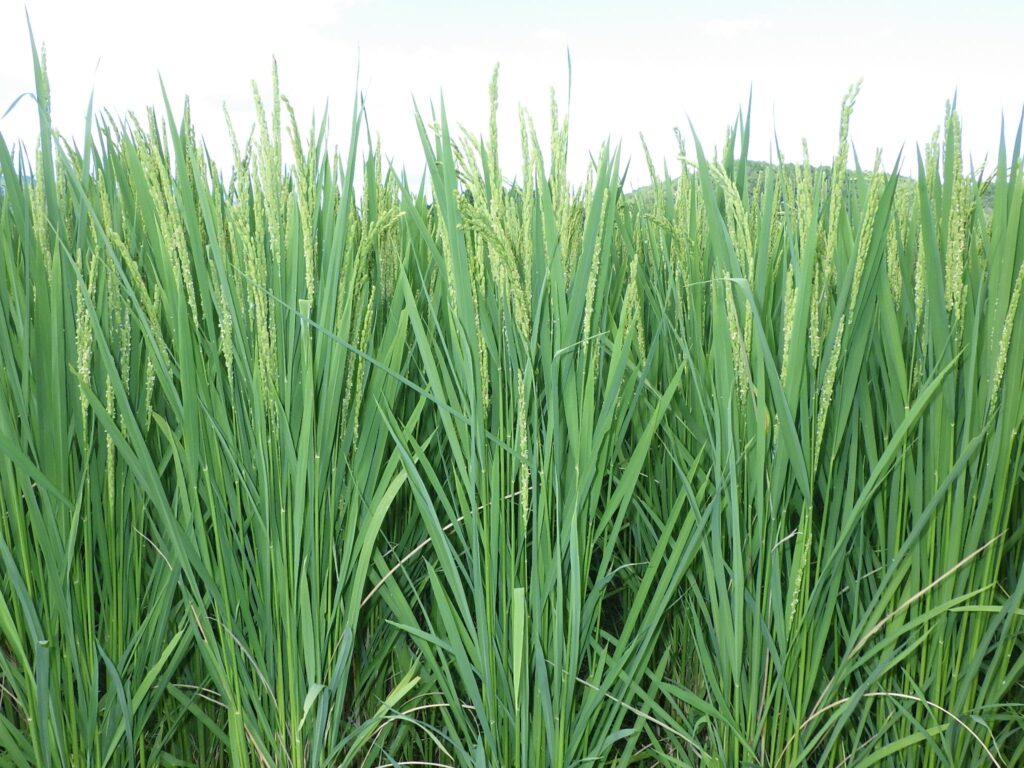
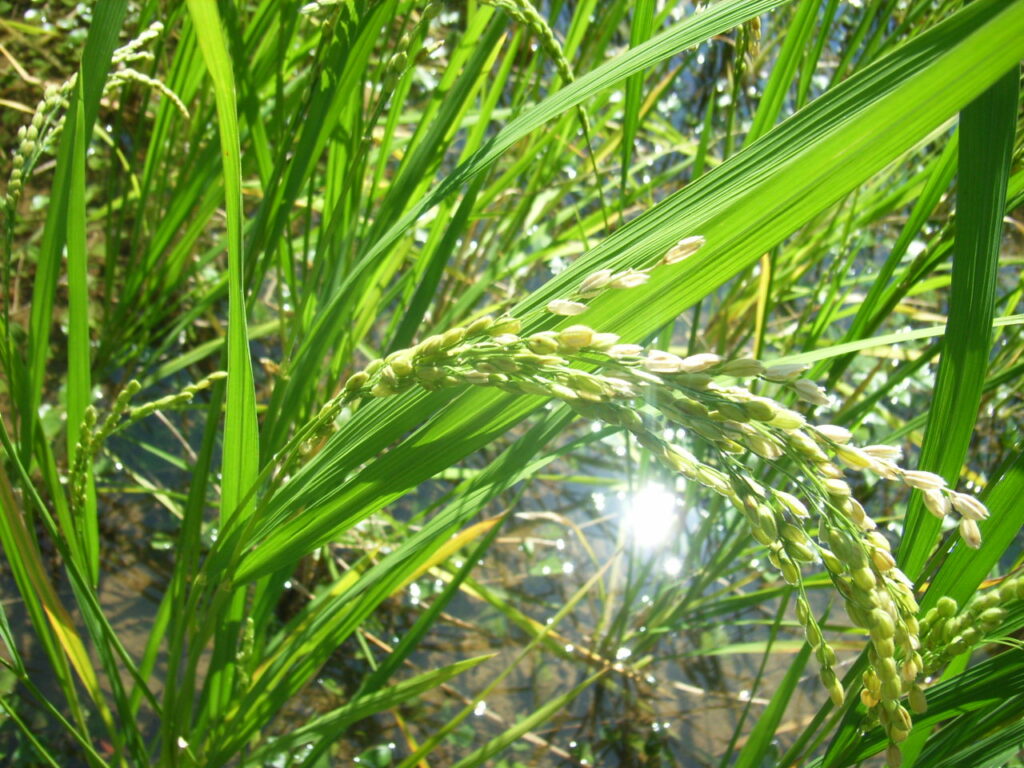
This is a perennial herb. The leaf blades are yellowish and stiff, 15-25 cm long. The inflorescence is large and spreading, 15-20 cm long. The lower part of the inflorescence is enclosed in a leaf sheath, and many plants bear cleistogamous flowers. The flowering period is from September to October. The spikelets are rounded and pale yellowish-green, but the parts along the veins are green. The keel is lined with bristles in bundles of long and short spines. There are also many stiff hairs growing on the sides of the glumes, but this varies greatly. It is distributed in Hokkaido, Honshu, Shikoku, and Kyushu; in the temperate zones of the Northern Hemisphere. It has a wider range of habitat than *Porphyra japonica*, and grows in wetlands such as rice paddies and irrigation canals.
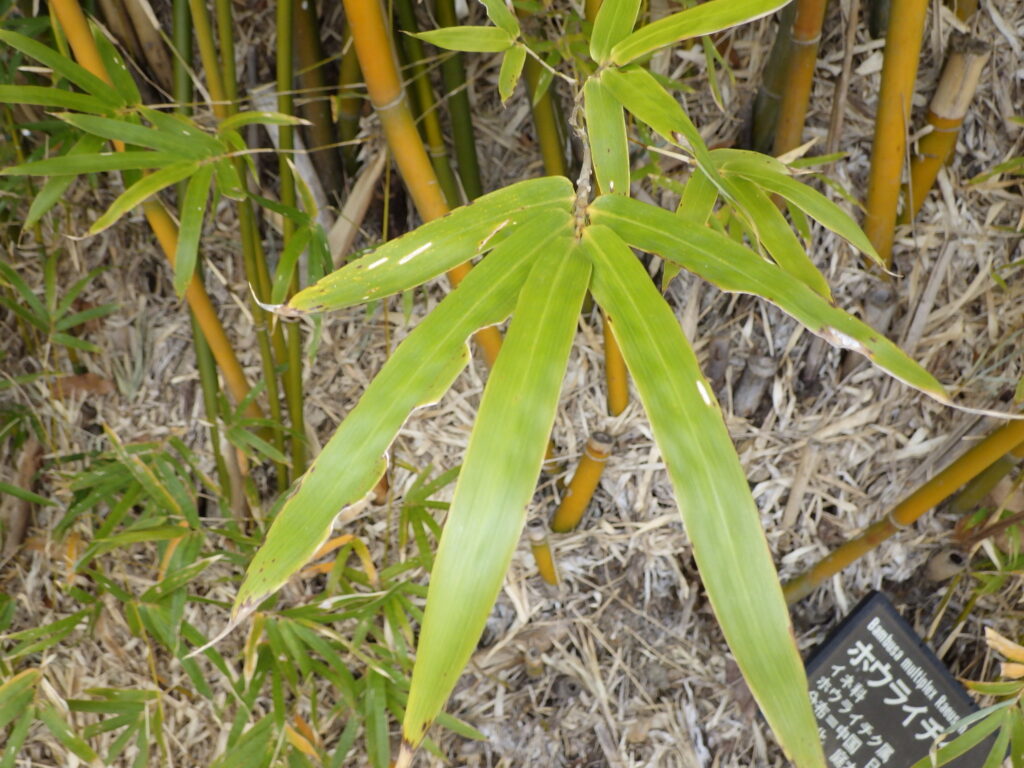
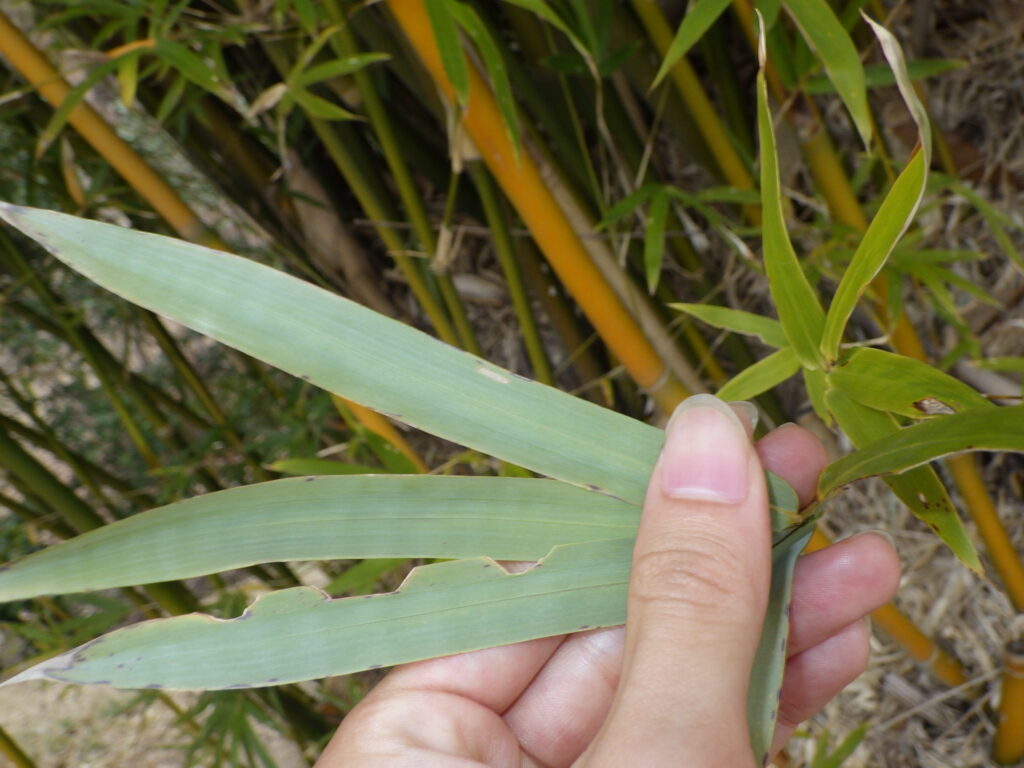
No.0913 Bambusa multiplex
It grows in clumps, reaching a height of 3-5 meters. Bamboo shoots sprout from summer to autumn. The culm sheath is initially green, then yellowish-brown. The leaf blade is hairless on the upper surface and densely covered with fine hairs on the lower surface. The leaf sheath is hairless, and the shoulder hairs are smooth, long, and erect. Native to southern China, it is sometimes cultivated in warm regions west of the Kanto area in Japan.
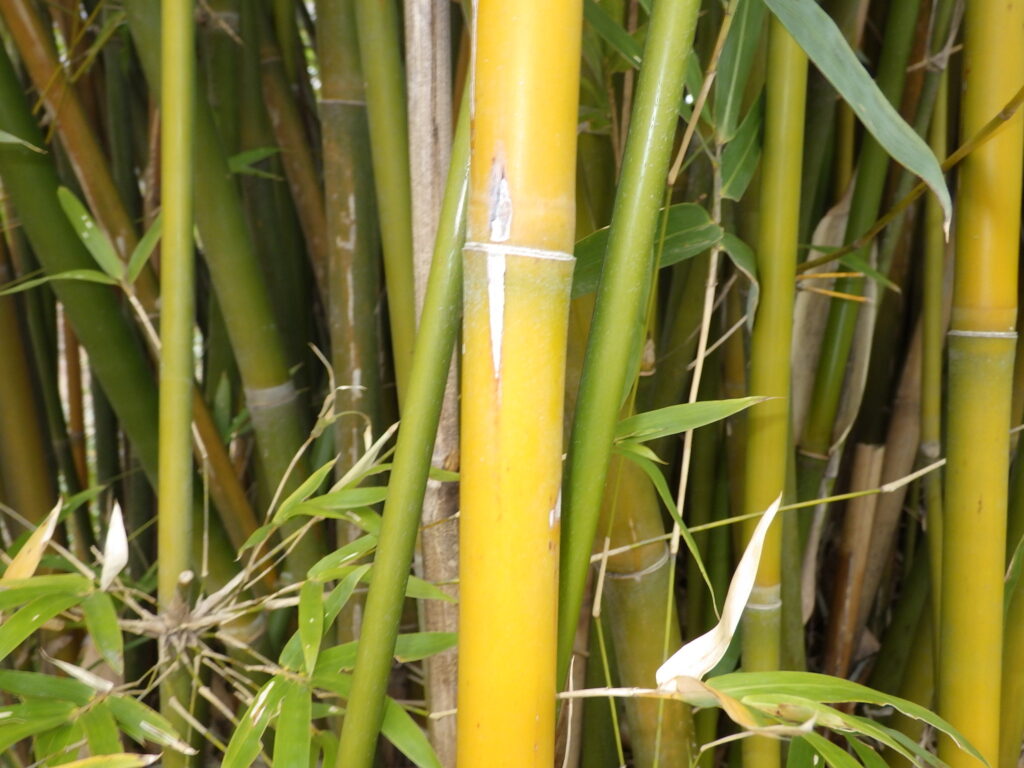
No.0913.a Bambusa multiplex 'Fernleaf'‘
A variety of *Bamboo maximowiczii* with small leaves. It grows to a height of 2-3 meters, forming clumps. Native to southern China, it is commonly planted in parks and gardens.
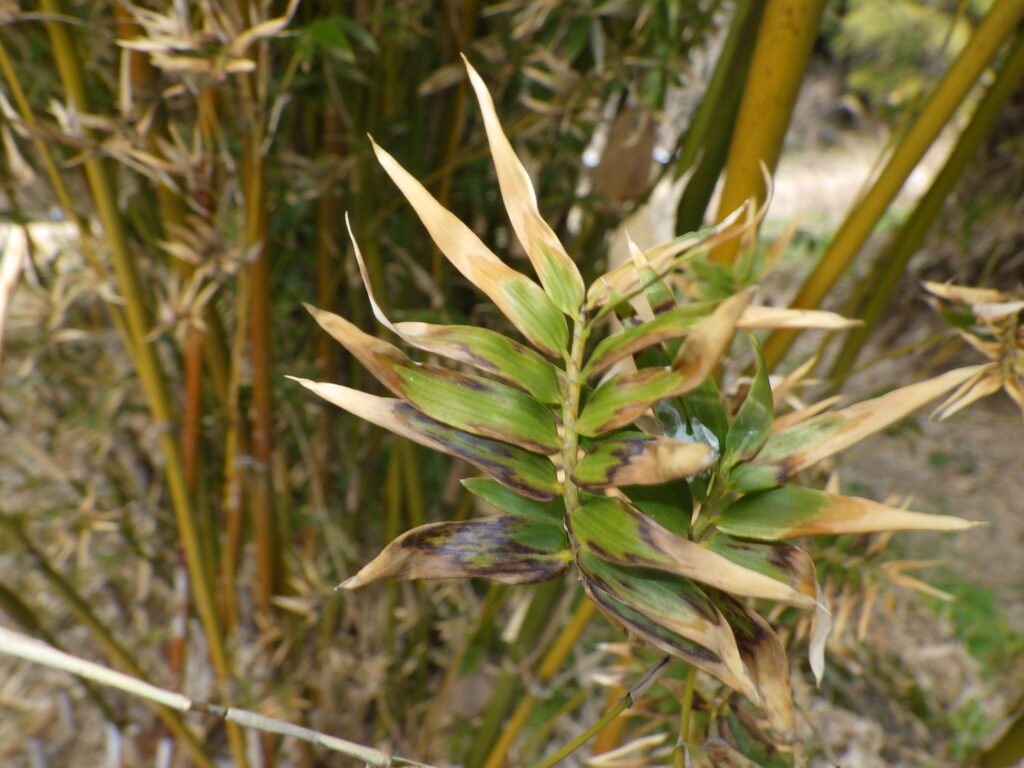
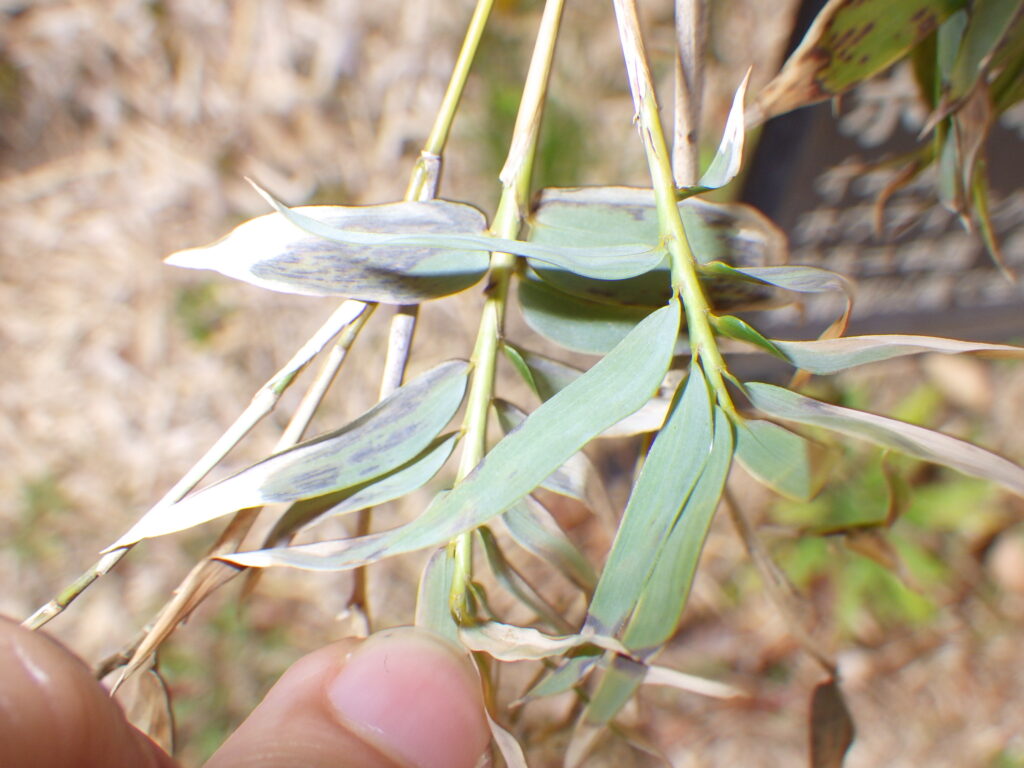
No.0913.b Bambusa multiplex 'Alphonso-karr'‘
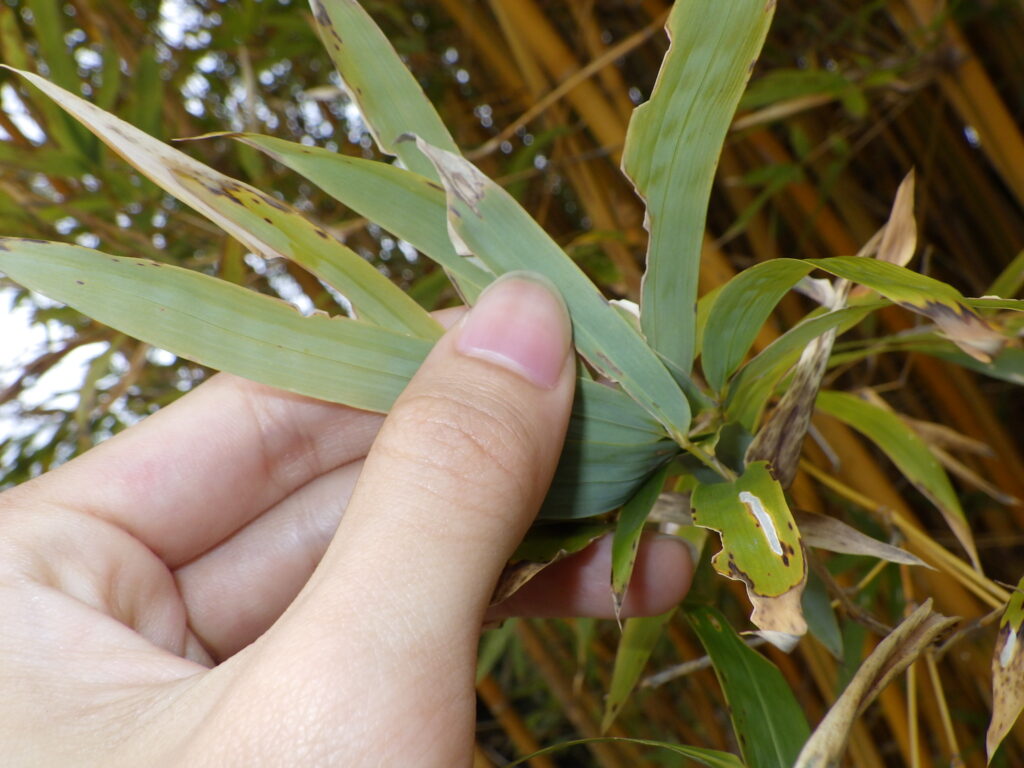
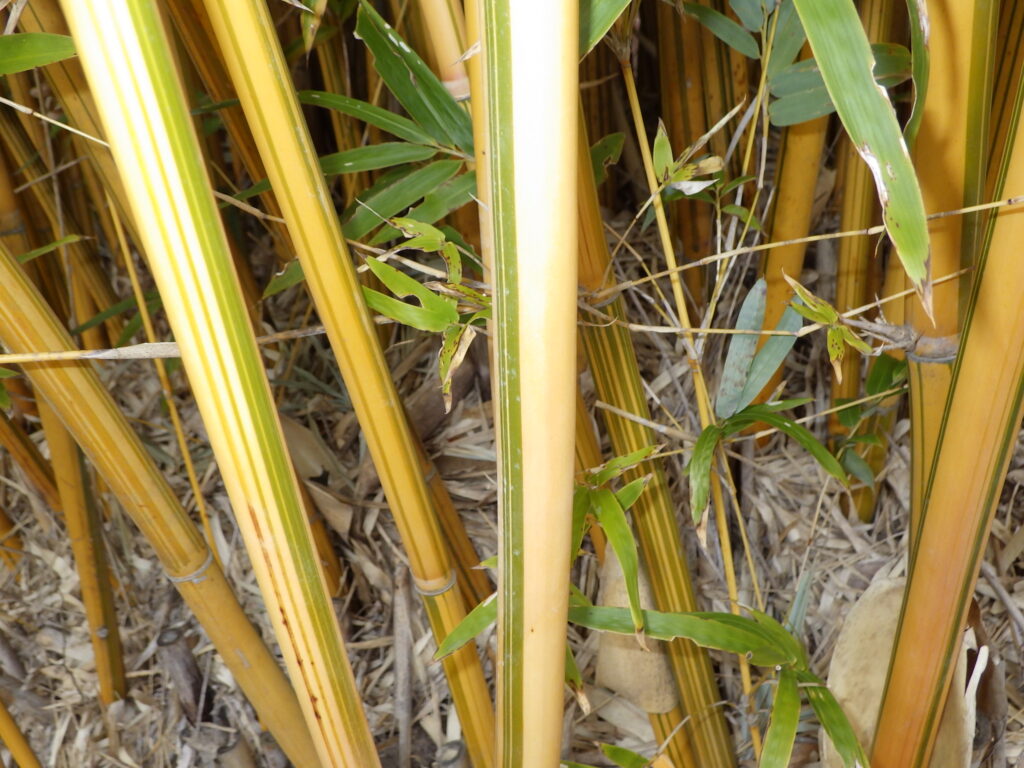
This is a variety of bamboo (Phyllostachys japonica) with yellow vertical stripes on its culms. It is rarely cultivated.
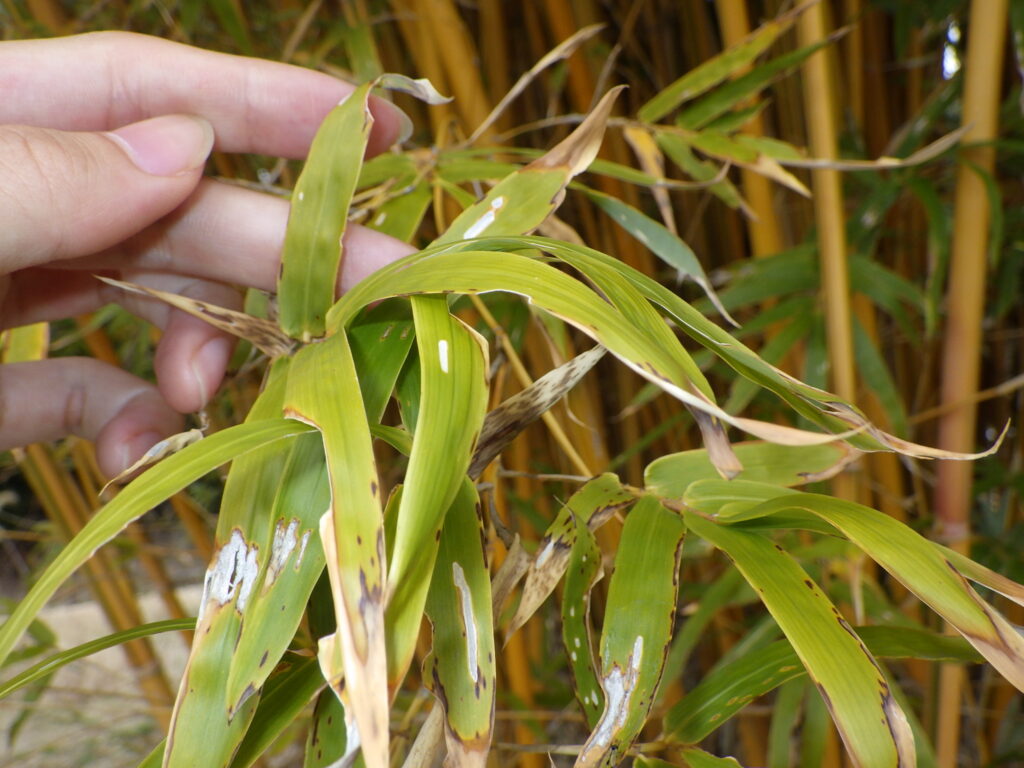
No.0913.c Bambusa multiplex 'Alphonso-karr' (Green bamboo)‘
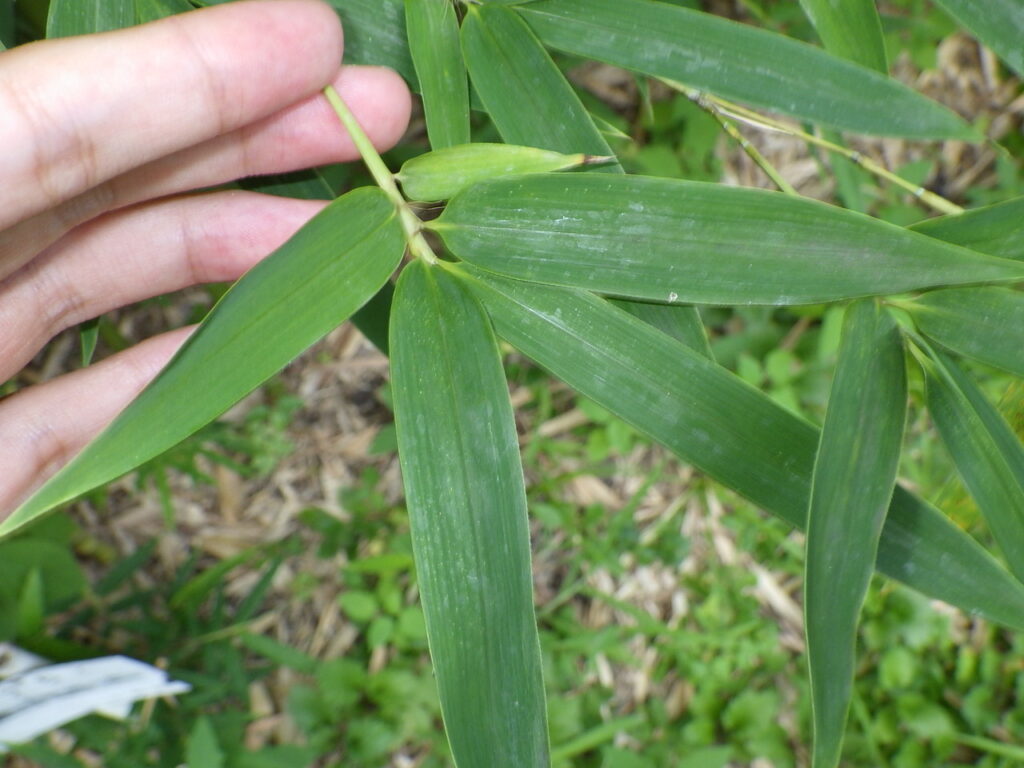
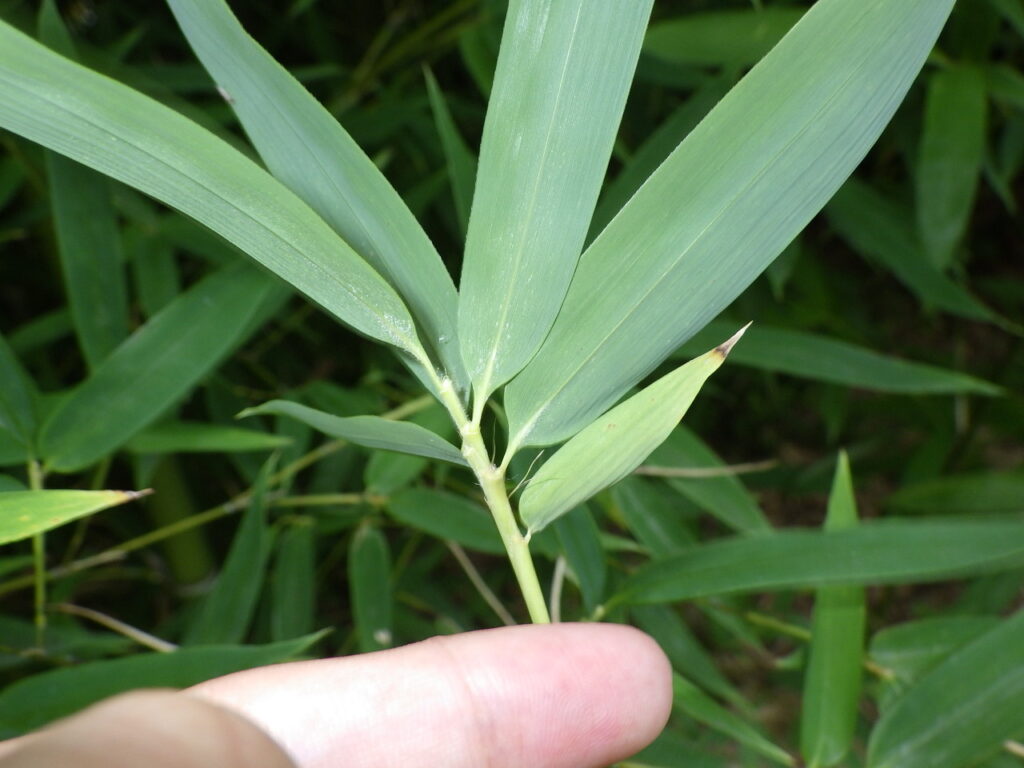
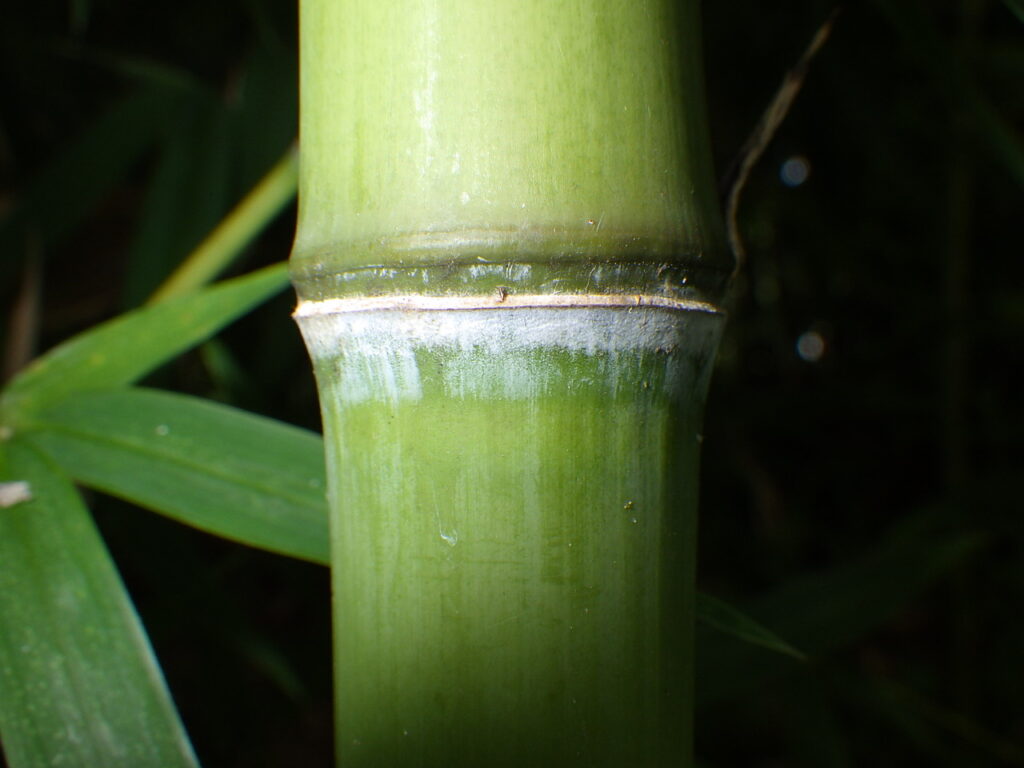
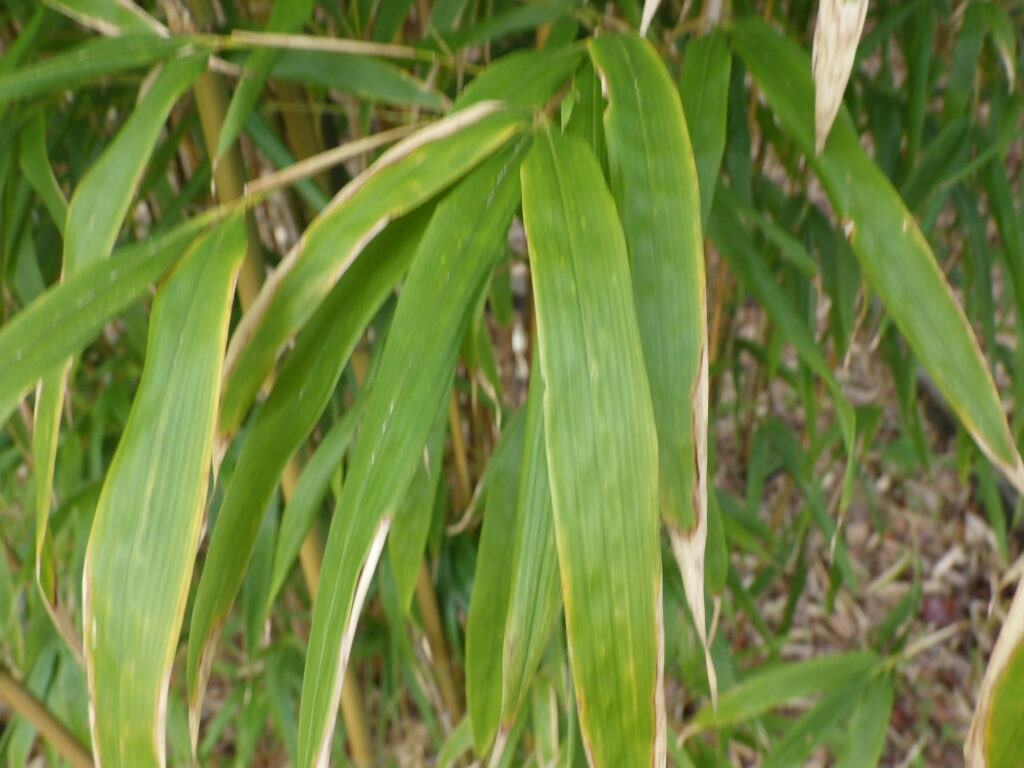
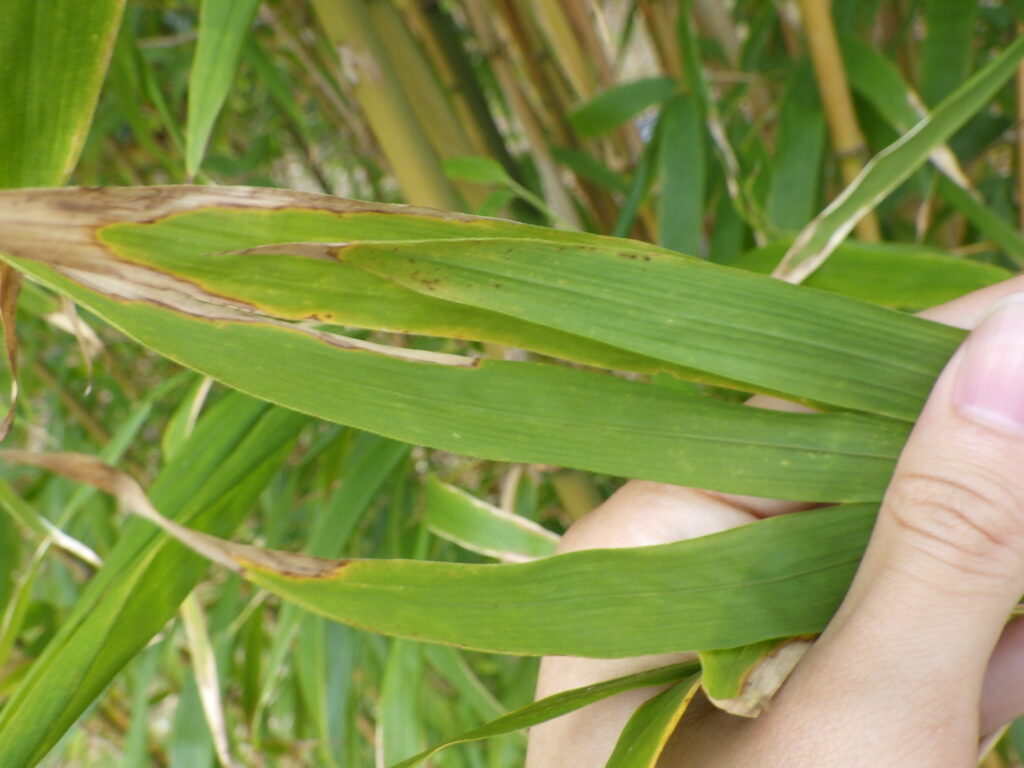
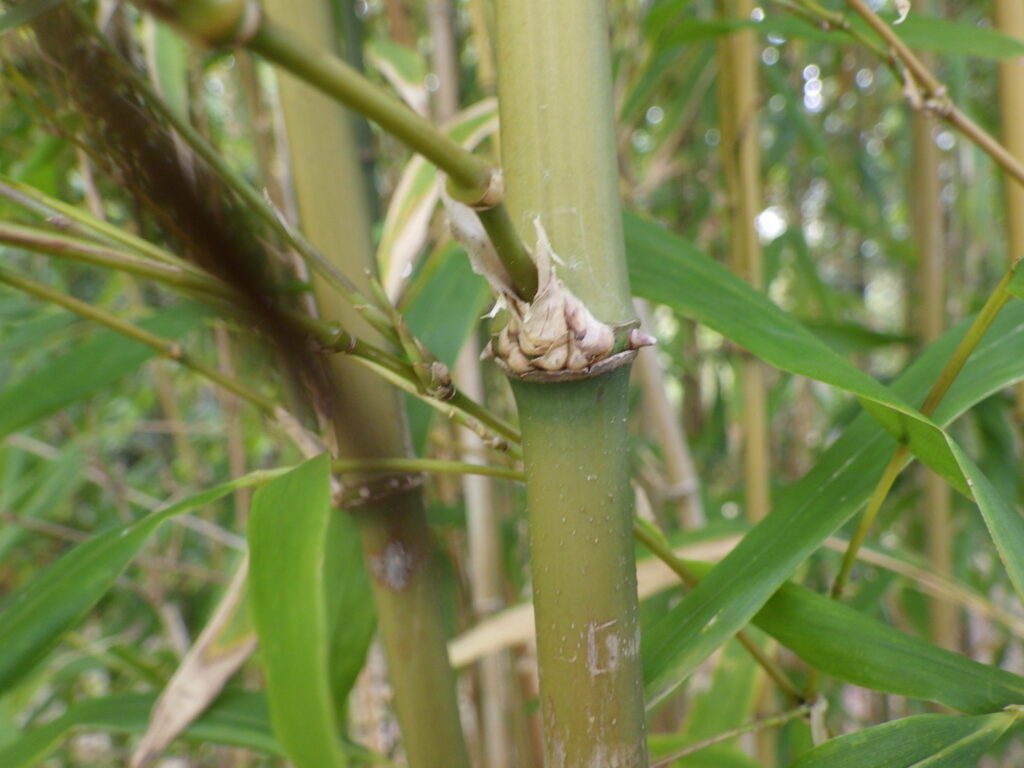
No.0913.d Tootsik (Sinobambusa tootsik)
The culms reach a height of 6-12m and a thickness of up to 10cm, are green with dense, fine vertical lines that are clearly raised in dried specimens. Internodes without branches are usually 30-40cm, but can reach 90cm. The nodes are whorl-shaped, with the lower culm sheath scar remaining densely covered with brown, hairy culm sheaths, and the area immediately above it bulges out into a horn. The culm sheath is scattered with deciduous coarse hairs. The leaf auricles of the culm sheath are well-developed, with long shoulder hairs along the margins. The upper surface of the leaf blade is glabrous, while the lower surface is densely covered with fine hairs, spreading near the midrib, but many of the hairs are spiky and adhere tightly to the leaf blade. The leaf sheath is glabrous, and the shoulder hairs spread radially and are smooth.
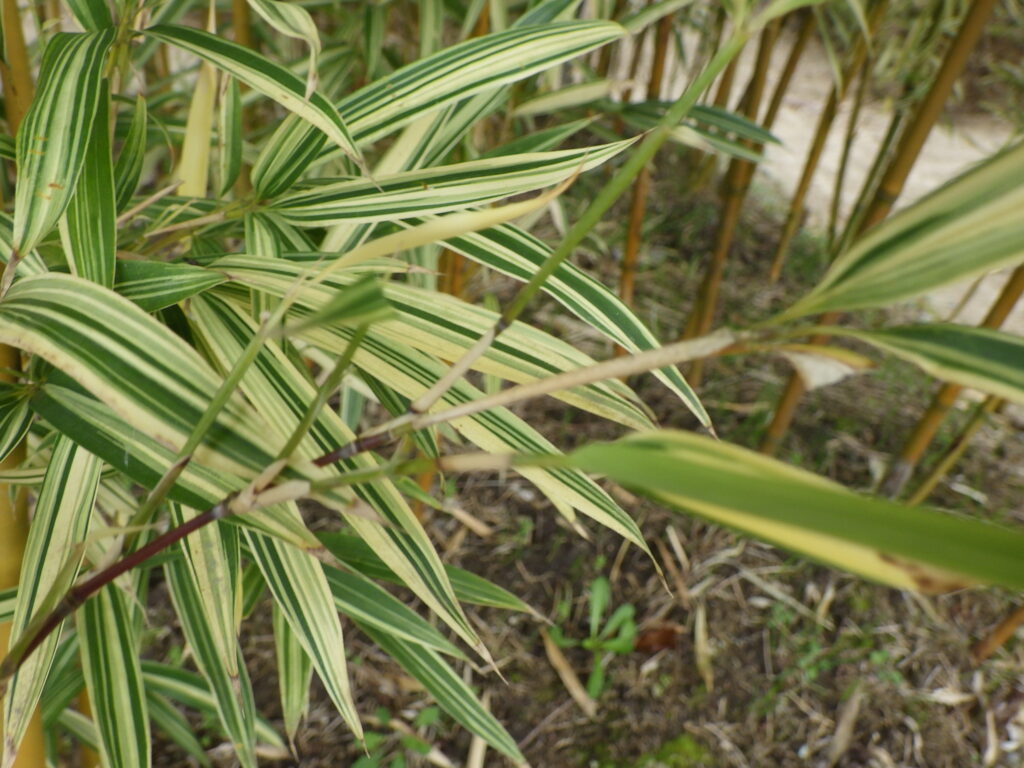
No.0913.e Sinobambusa tootsik 'Suzukonarihira'‘
This is a cultivated variety of bamboo (Phyllostachys japonica) with white or yellow vertical stripes on its leaves. It is commonly planted in gardens and occasionally escapes cultivation.
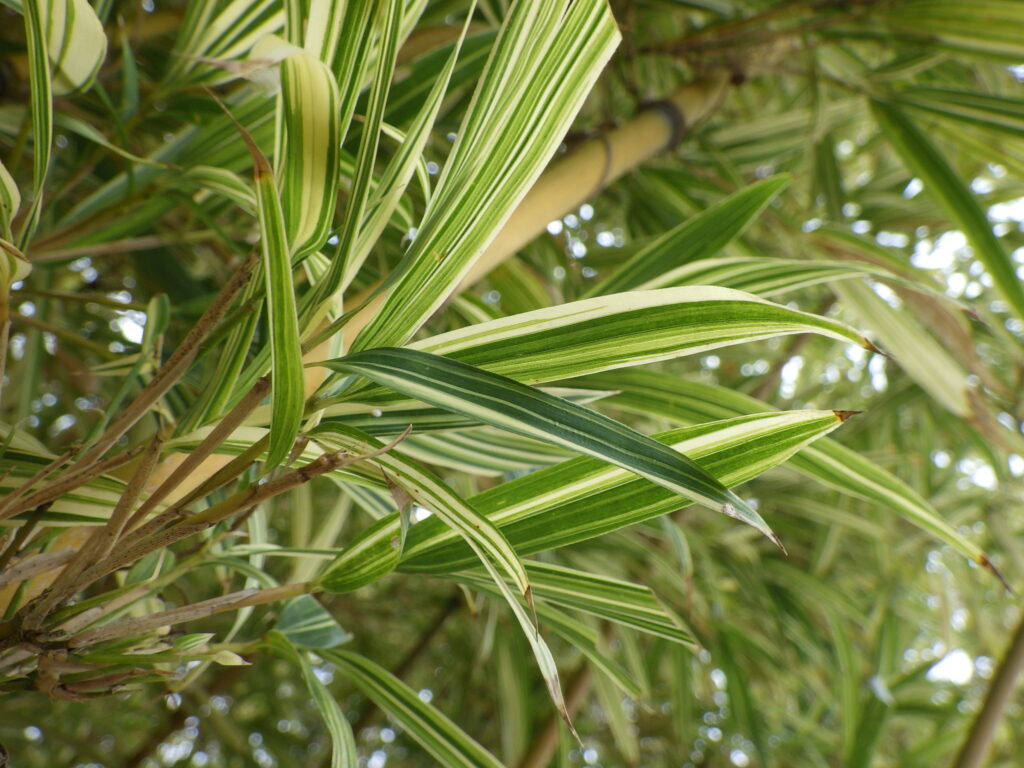
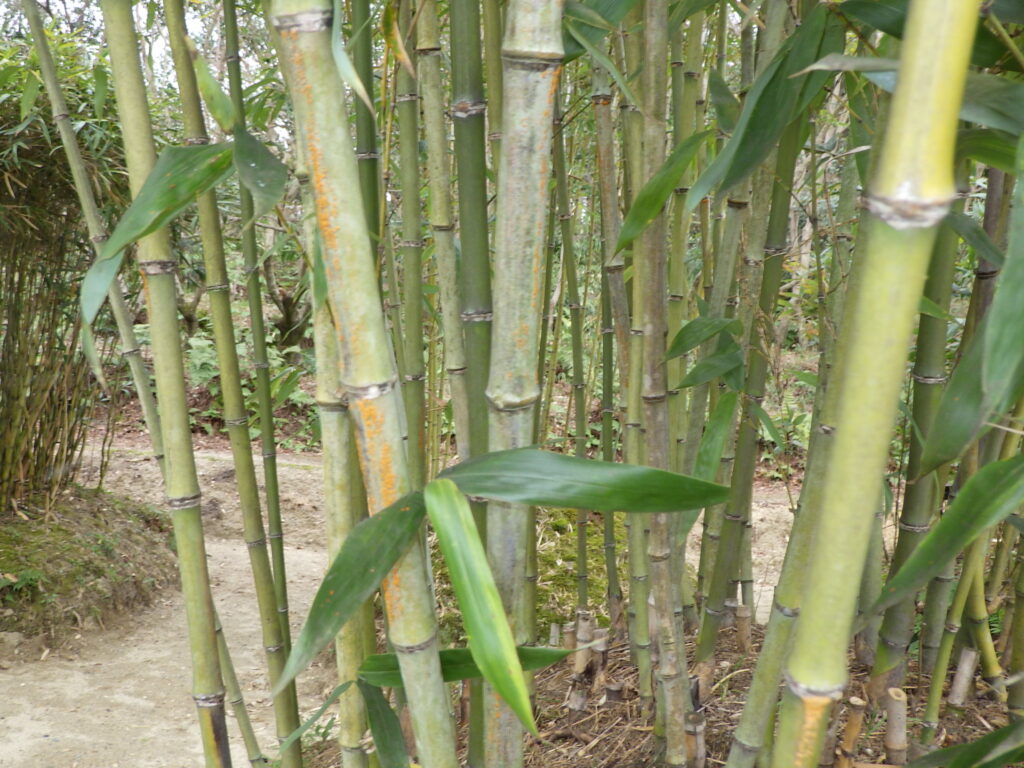
No.0914 Madake Phyllostachys reticulata
This is a large bamboo species, with culms reaching a height of 20m. The culm sheath has large, dark black markings. The leaf blade is glabrous on the upper surface and has fine hairs near the base on the lower surface. The leaf sheath is glabrous, sometimes with backward-pointing fine hairs. The auricles are prominent, and the shoulder hairs are well-developed, spreading radially and giving a rough texture. The ligule is 1-2mm high, rounded or slightly truncate, with a nearly glabrous margin. It is believed to be native to China, but in recent years it has also been said to grow wild in Japan. It is cultivated throughout the country, but in recent years there are many neglected bamboo groves.
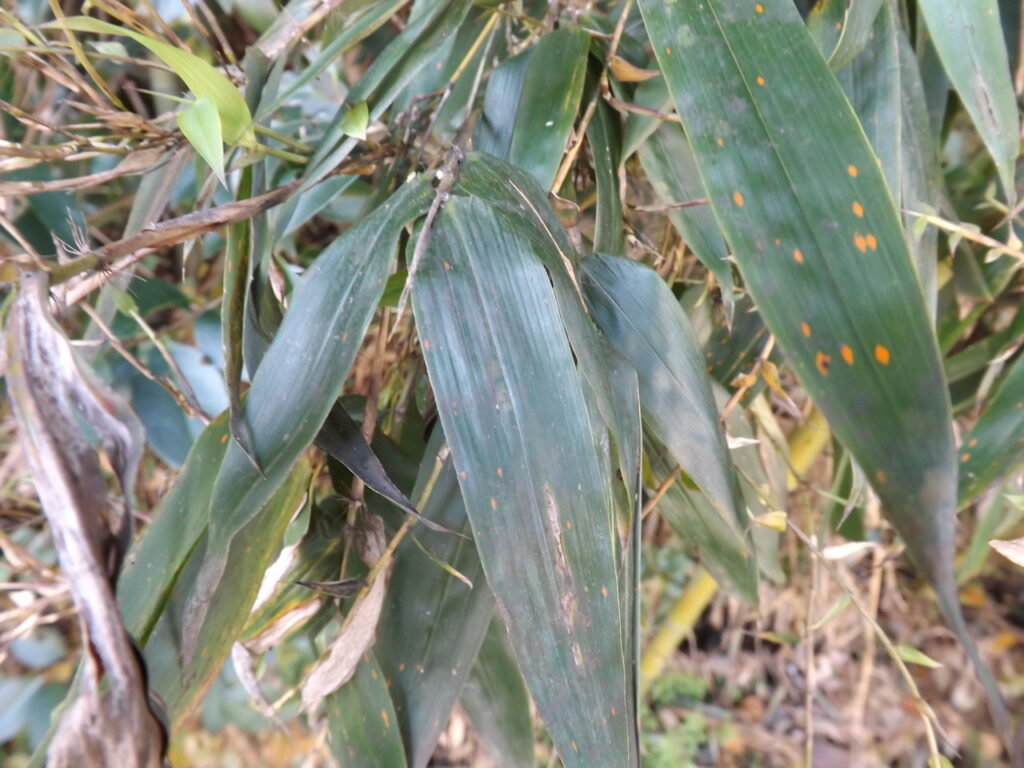
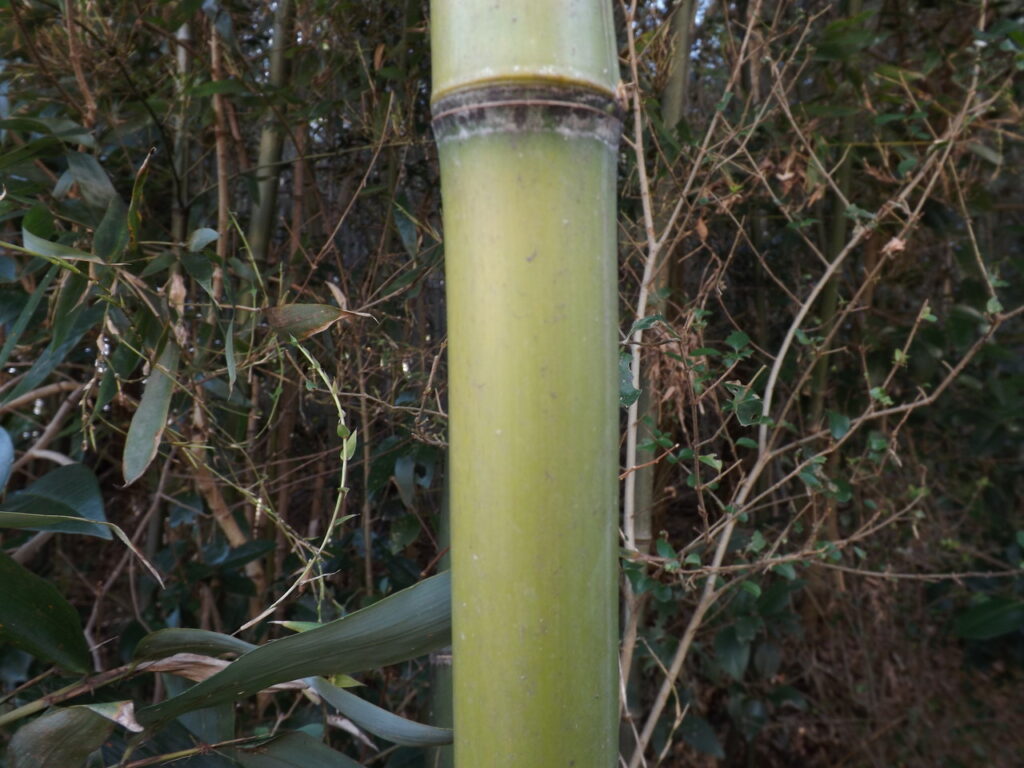
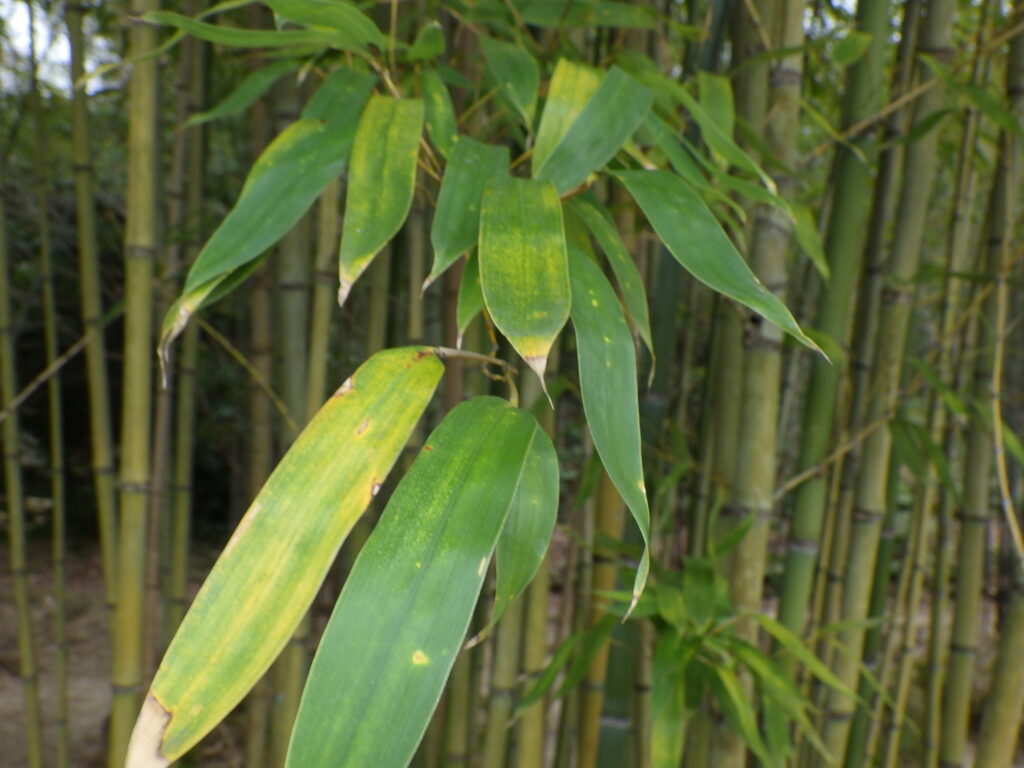
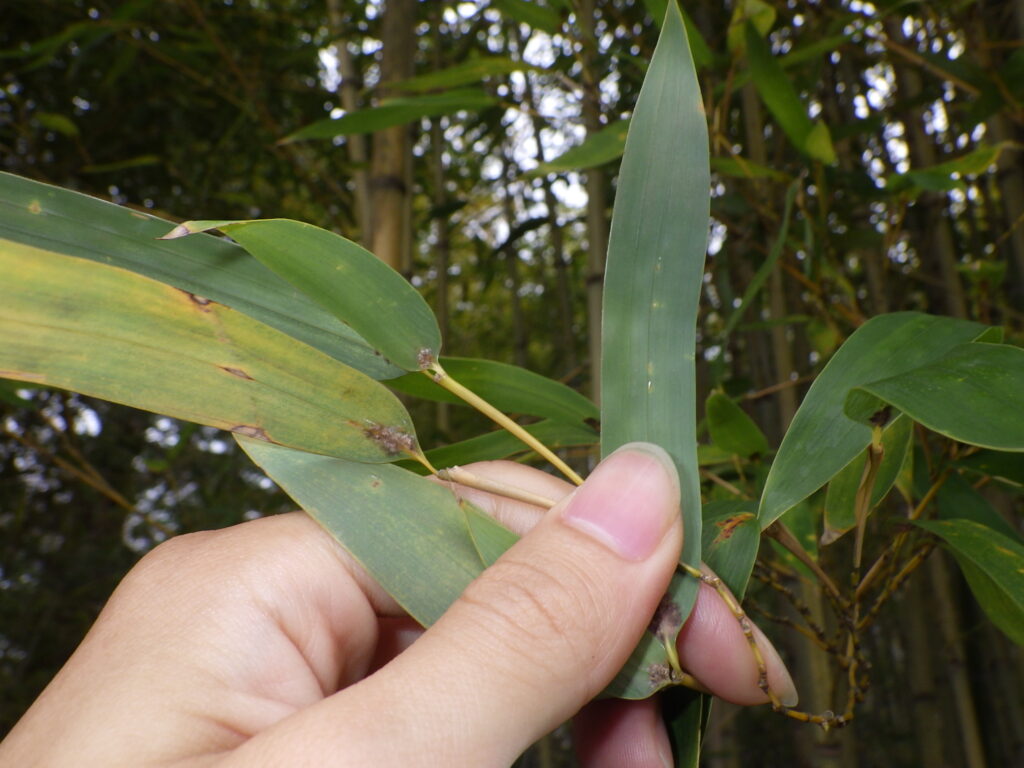
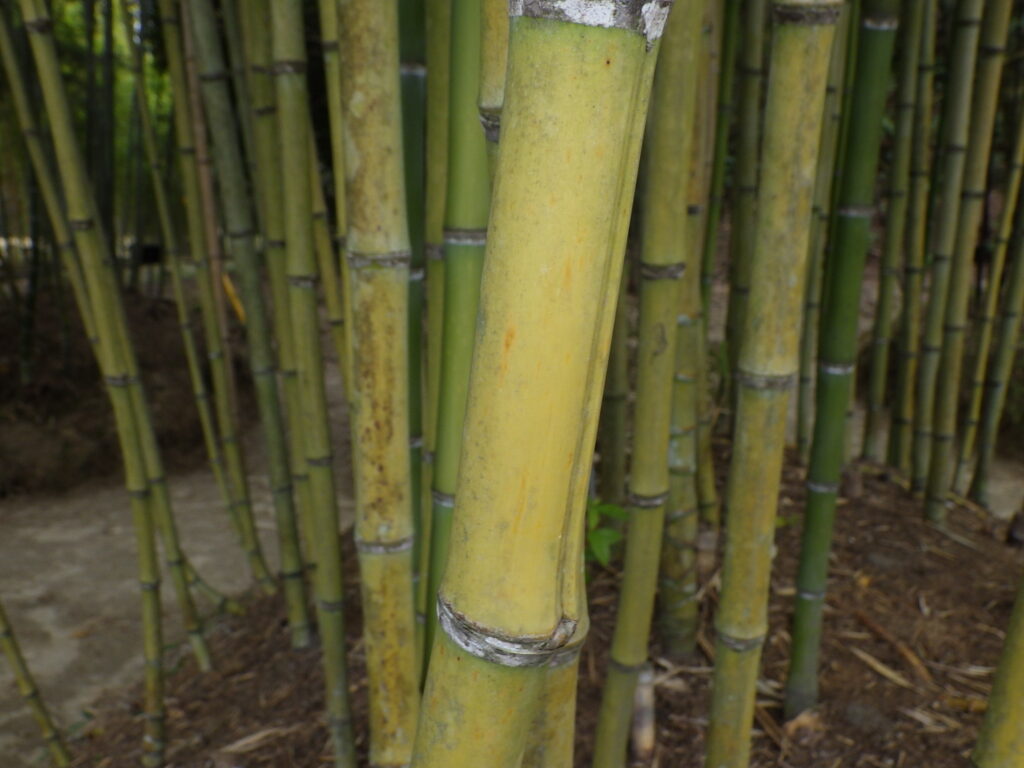
No.0915 Phyllostachys aurea
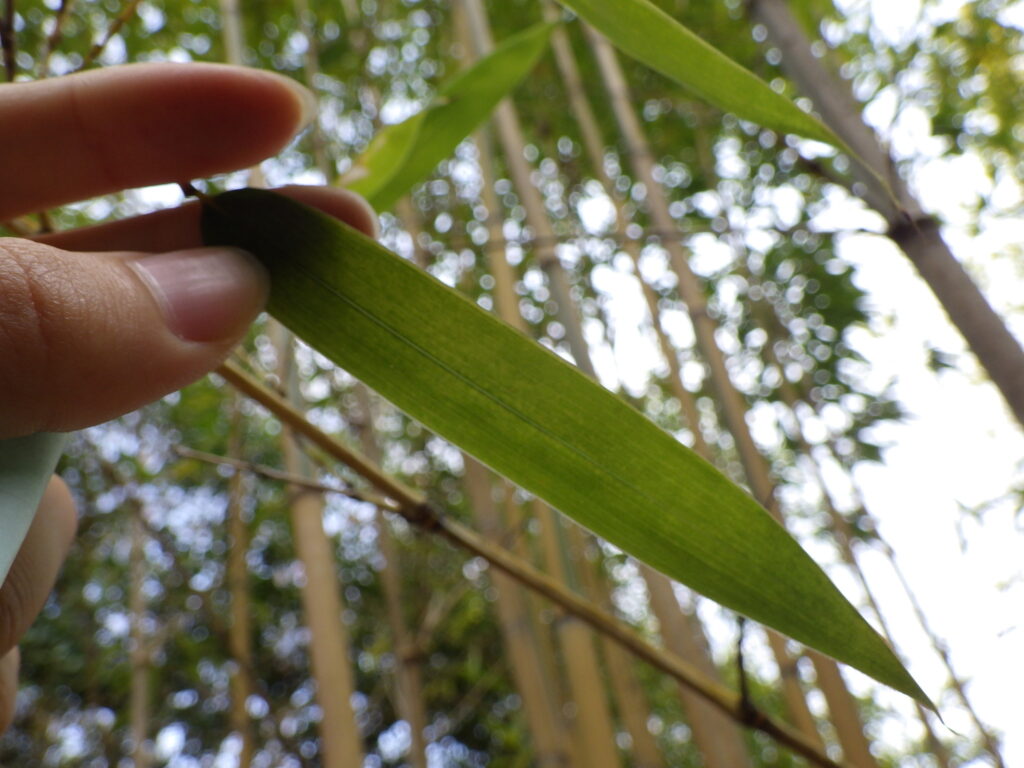
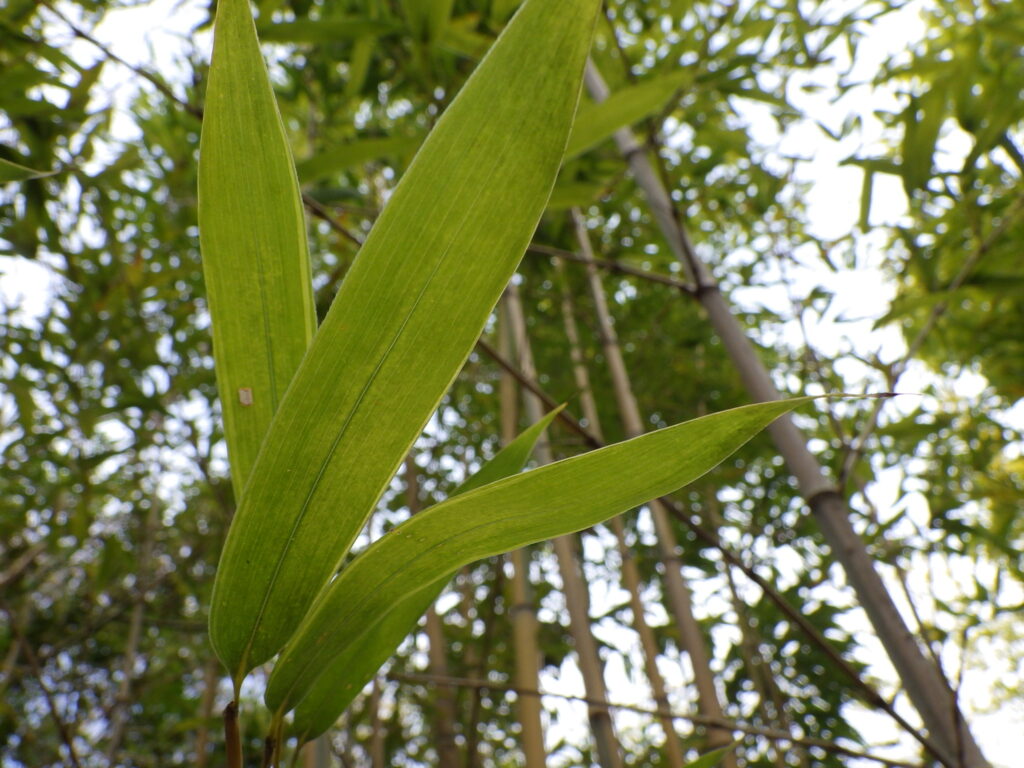
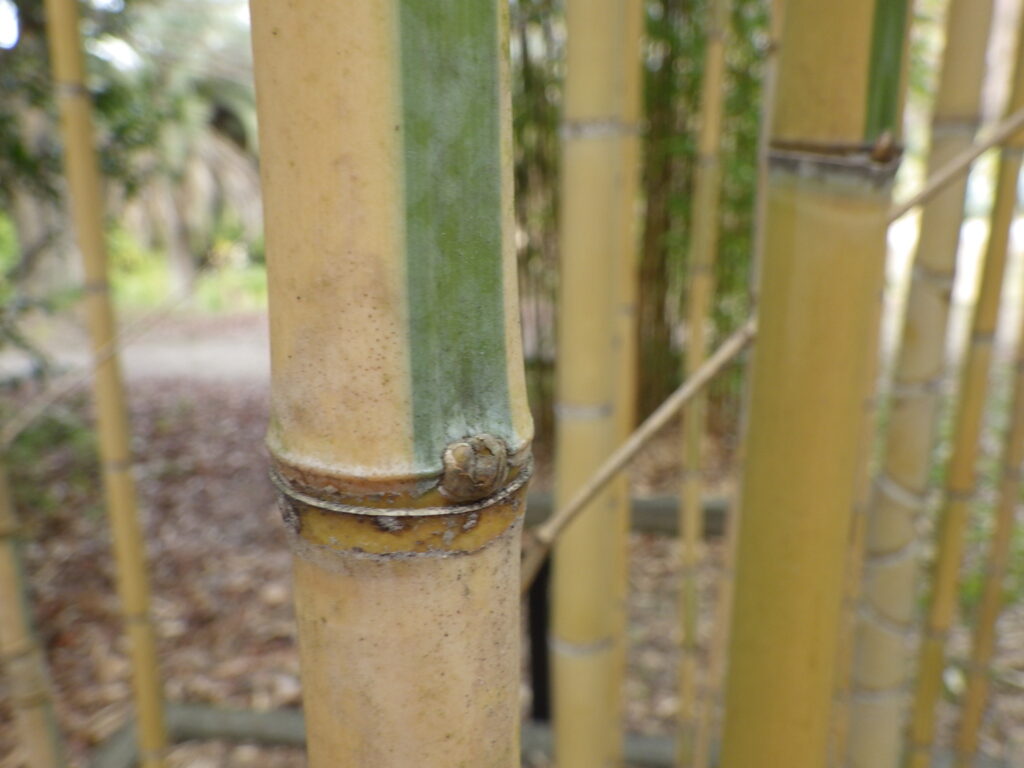
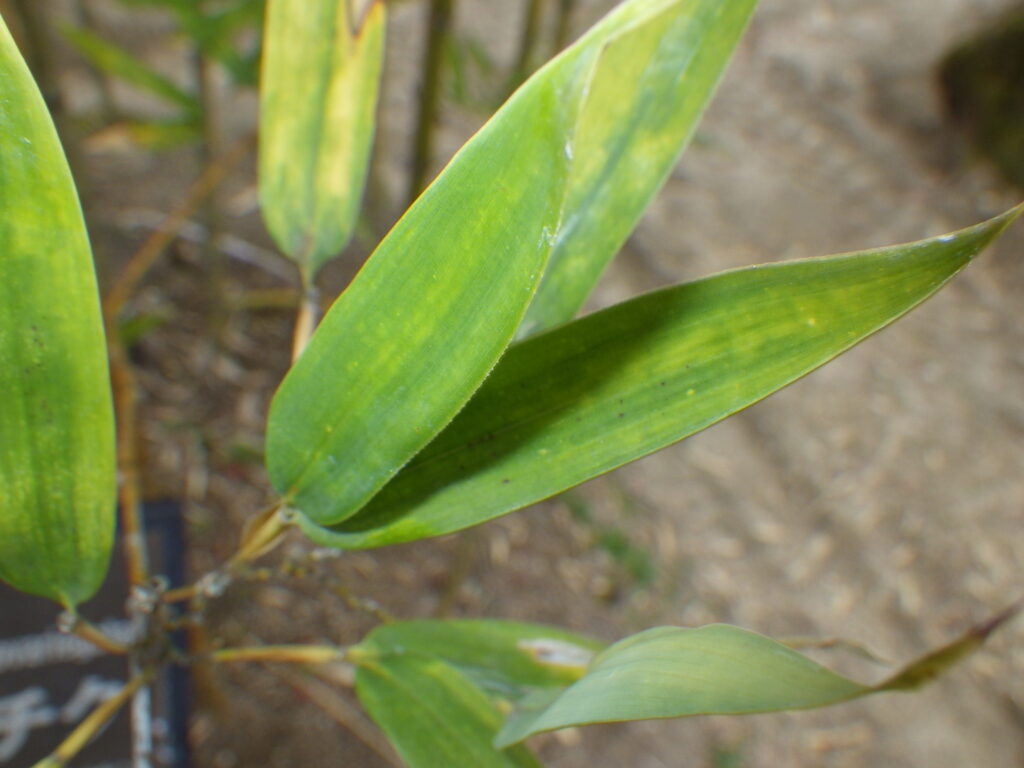
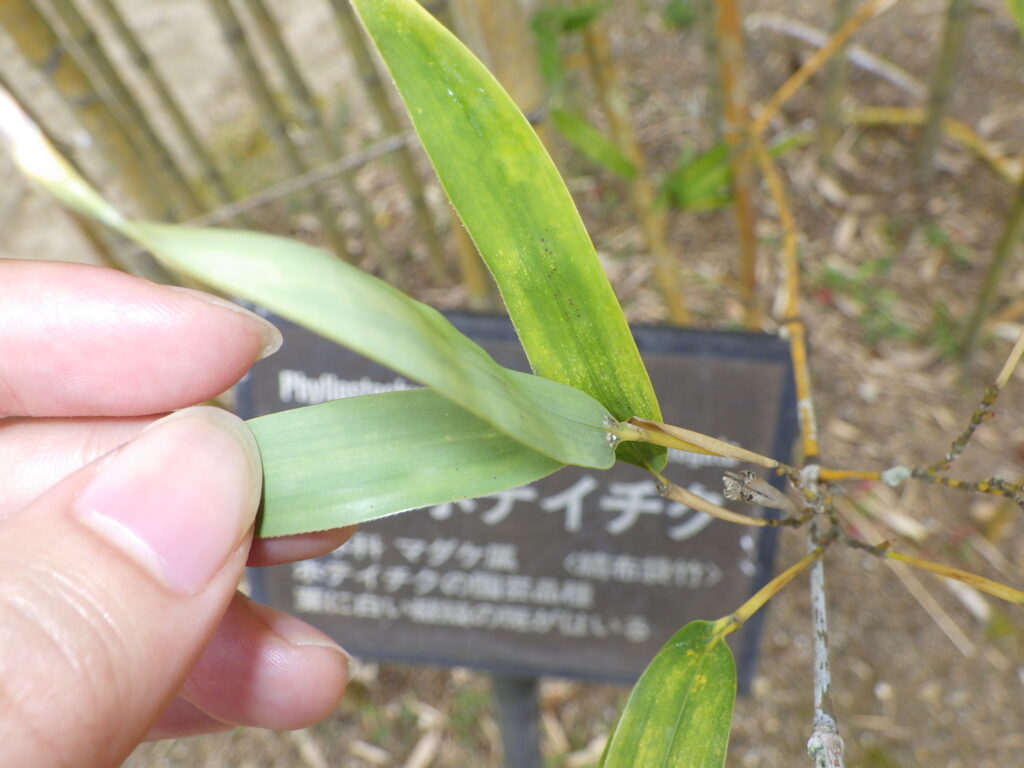
This is a medium-sized bamboo species with culms reaching a height of 8-10m. The internodes from the base to the first few nodes are shortened, and the upper part of the internodes is prone to malformation, although non-malformed and intermediate forms are also found within the same colony. The culm sheath has a few black spots. The upper surface of the leaf blade is glabrous, while the lower surface is covered with fine hairs. The leaf sheath is glabrous, sometimes with backward-pointing fine hairs. The shoulder hairs on the apical leaves are often parallel to the twigs, spreading obliquely to spreading, and coarsely rough. The ligule is short and truncate. Native to China, it is widely cultivated in Japan, but escaped plants can also be found in neglected areas, mountain foothills, hills, and along rivers in lowlands.
No.0915.1 *Pyllostachys aurea f. koi*
No.0915.2 Phyllostachys aurea f. albo-variegata
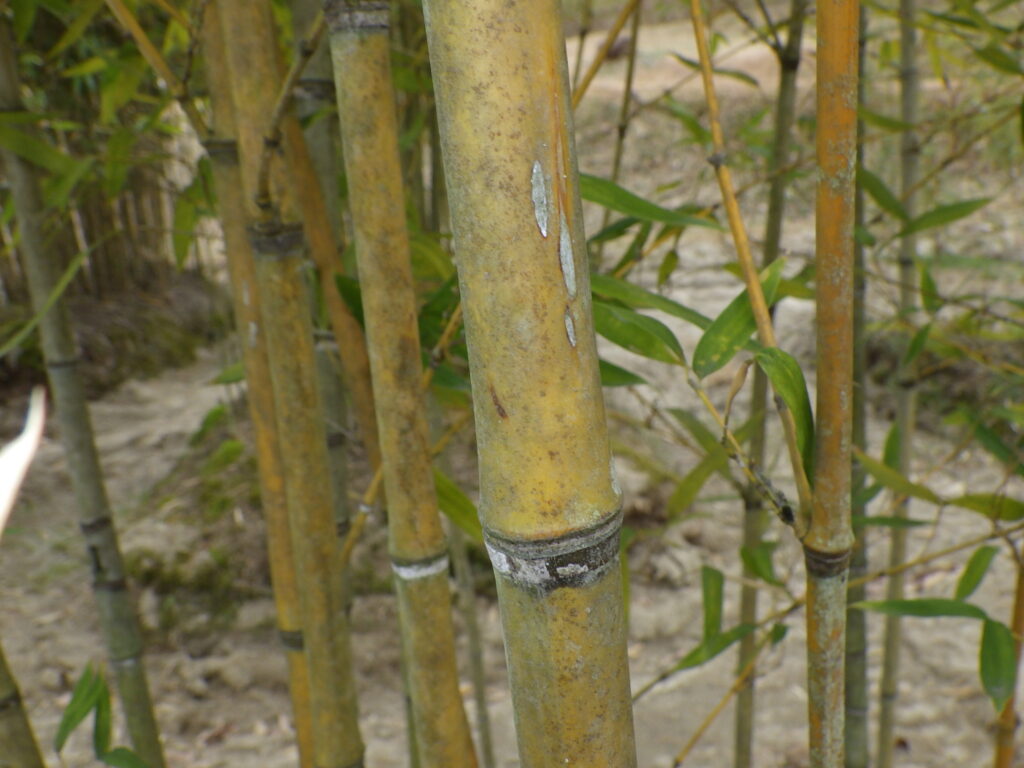
No.0915.3 *Pyllostachys aurea var. flavescens-inversa*
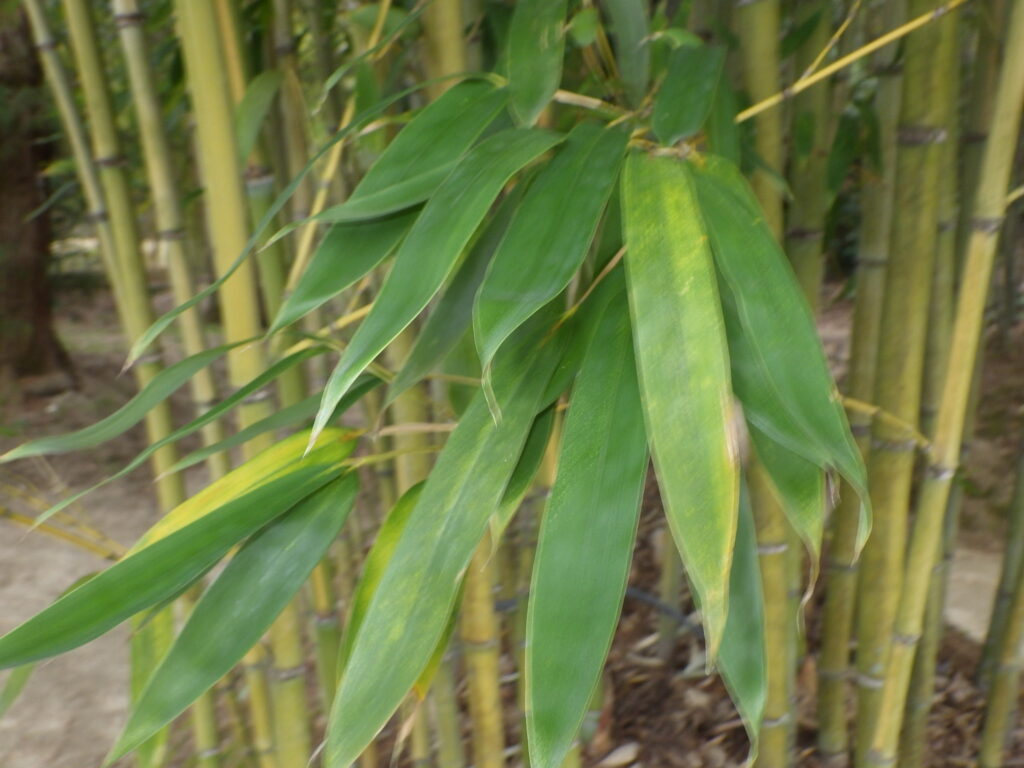
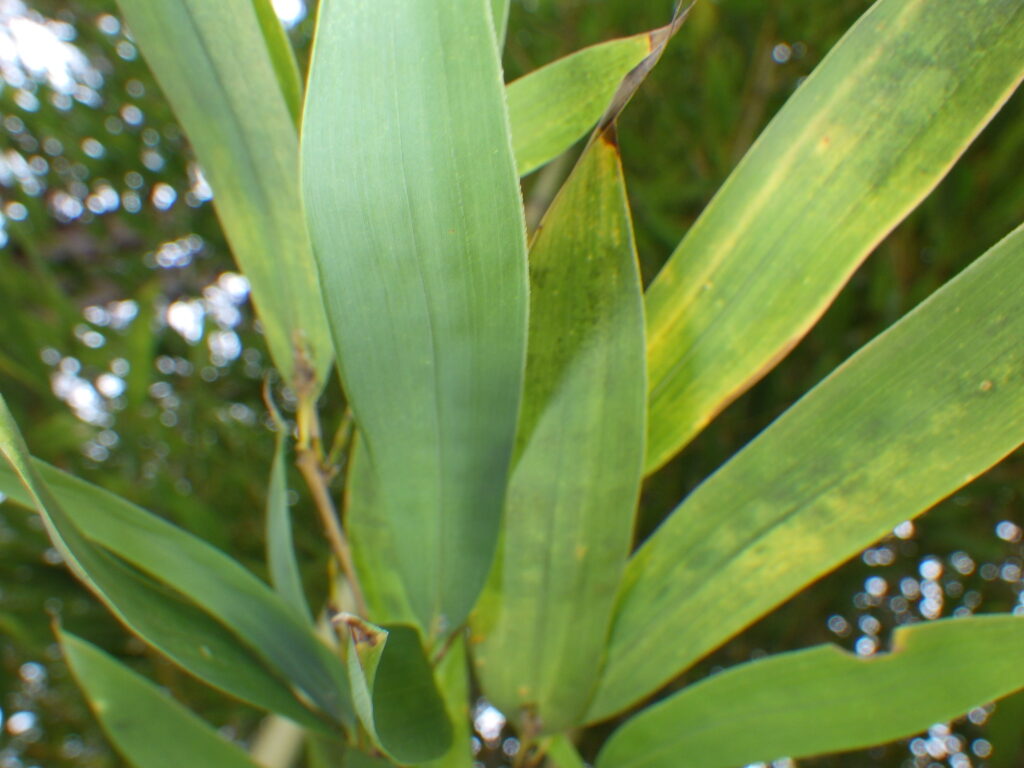
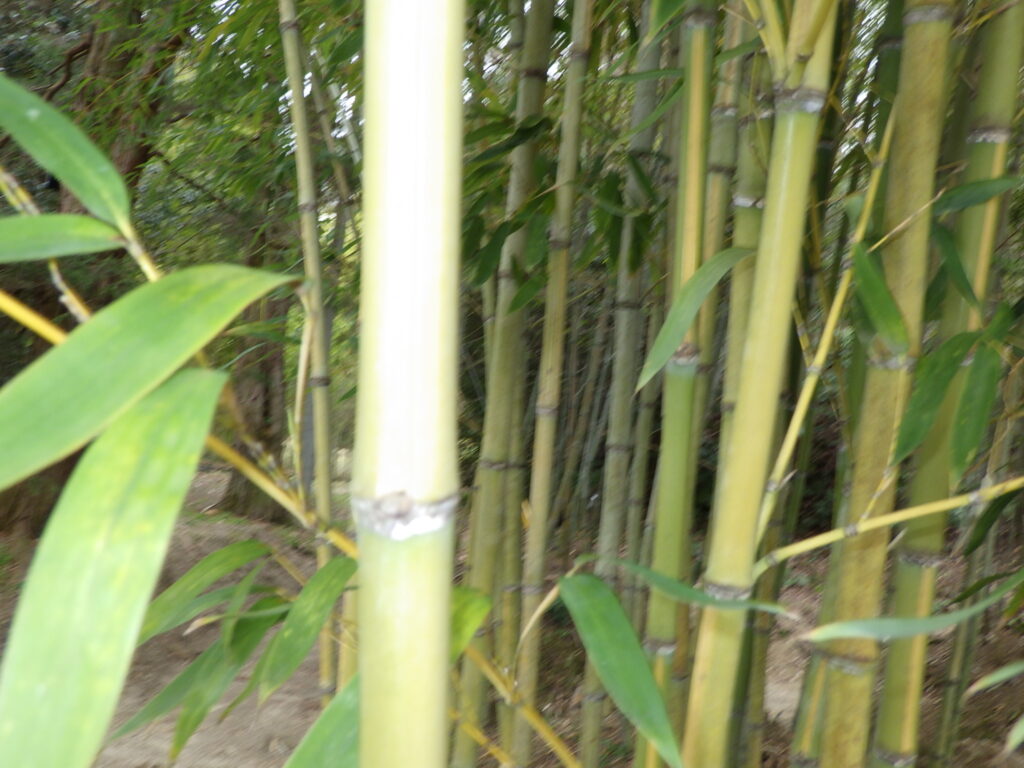
No.0916 Phyllostachys edulis
This is the largest of the bamboo species in Japan, reaching a height of 25m. The culm sheath has black markings. There is one raised line at nodes where branches do not emerge from the culm, and two lines at nodes where branches emerge or on thin culms. The leaf blade is hairless on the upper surface, has fine hairs near the base on the lower surface, and has minute hairs on the leaf sheath. There are few shoulder hairs, which are parallel to the twigs and smooth, but are often absent. The ligule is 2-3mm high and mountain-shaped. Originally from China, it was introduced to present-day Kagoshima Prefecture by the Satsuma Domain in 1746 and has spread rapidly throughout Japan in recent years. Bamboo groves consisting of long-term neglected or escaped plants can be found from the foothills to lowlands around houses. When the sides of several nodes at the base of the culm alternately fused with the upper node every other node, and the unfused side swells, it is called Kikkochiku, and when the upper and lower nodes are not completely fused, it is called Butsumenchiku.
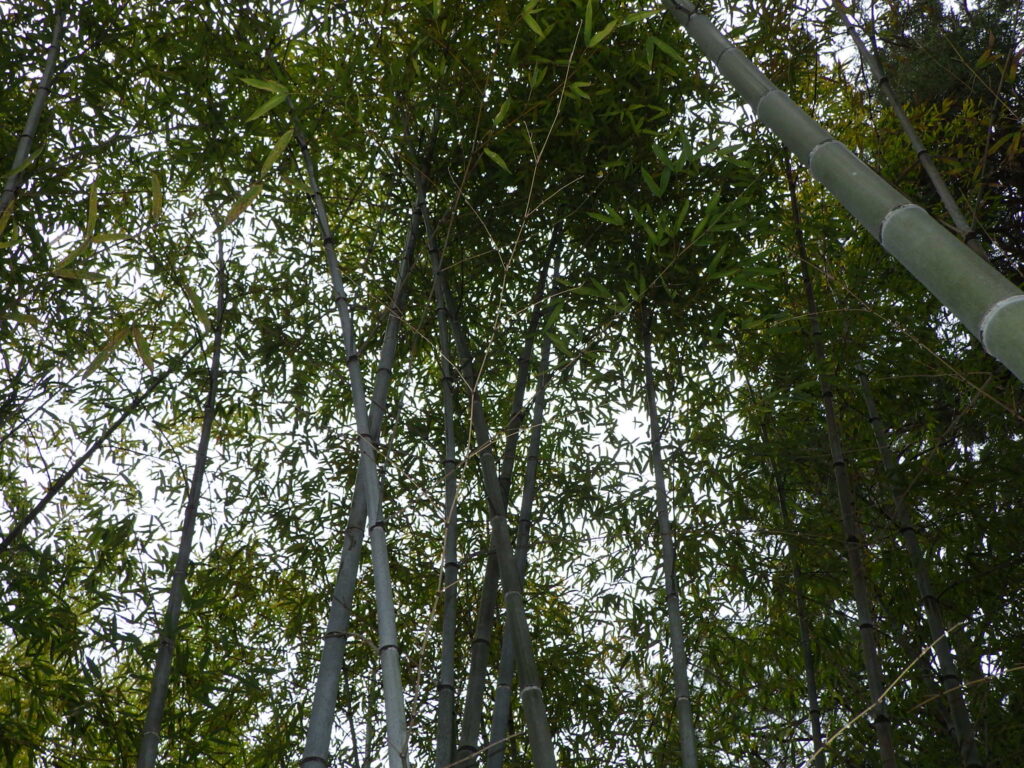
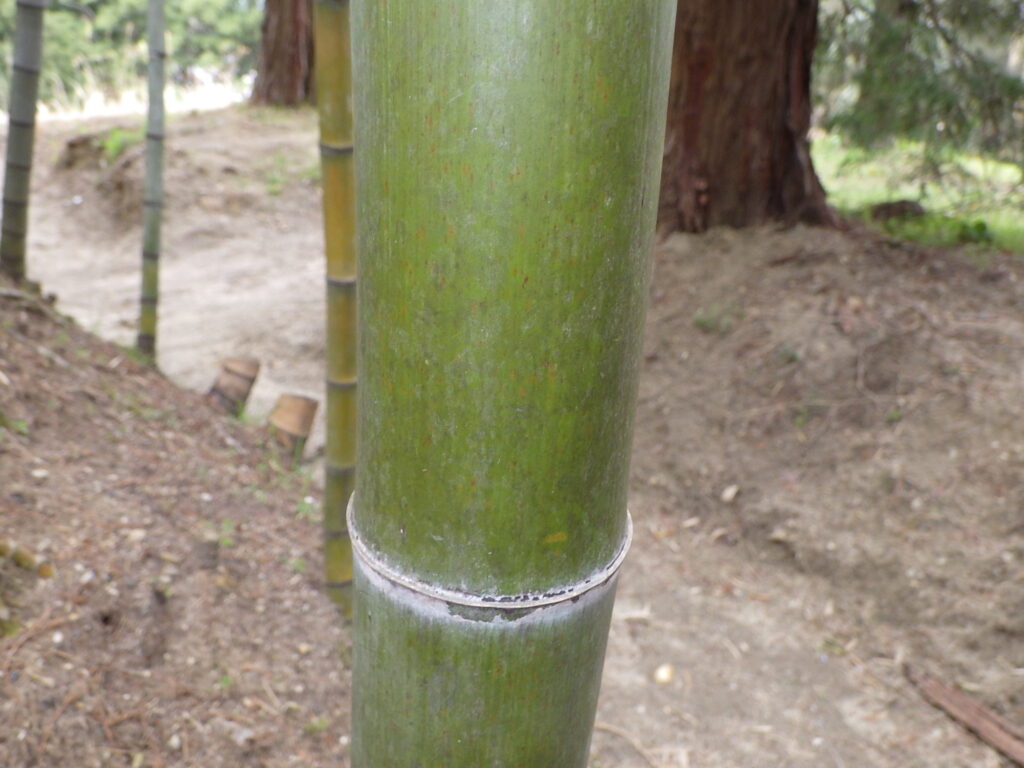
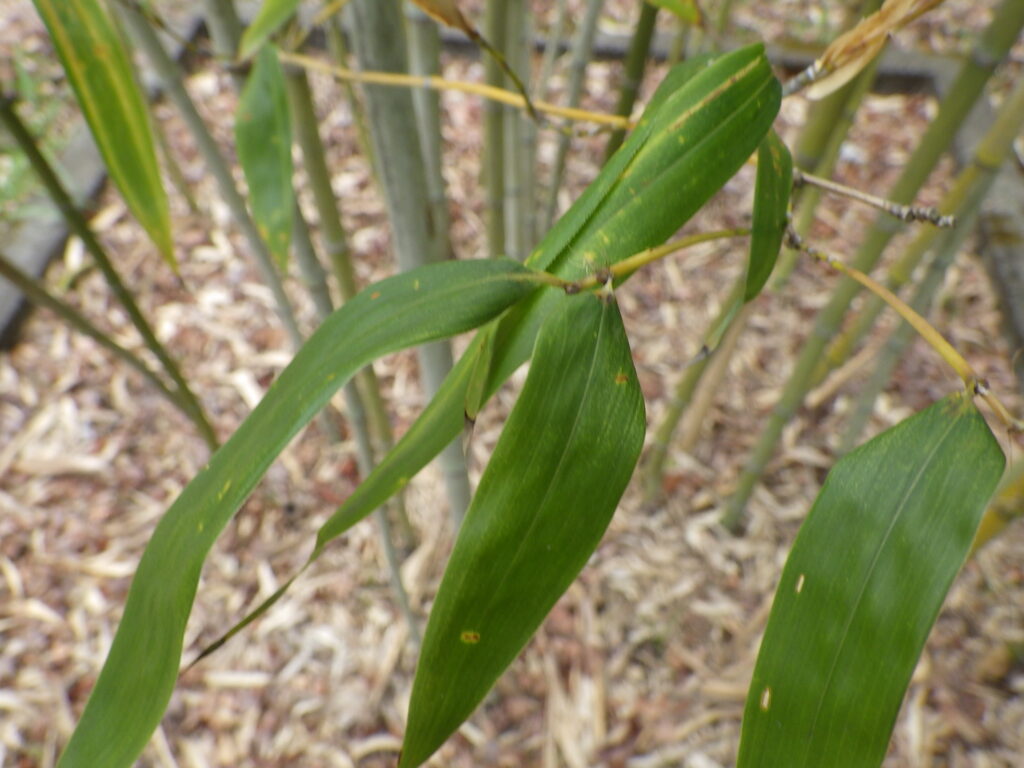
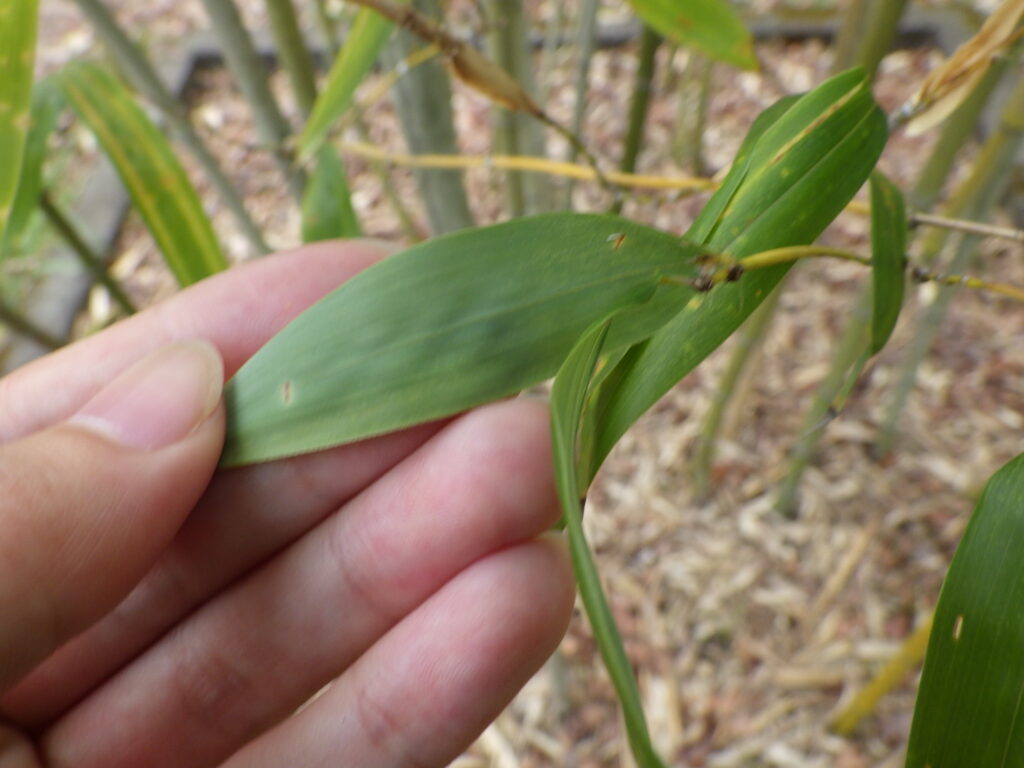
No.0916.1 Golden Bamboo (Phyllostachys edulis 'Tao Kiang')‘
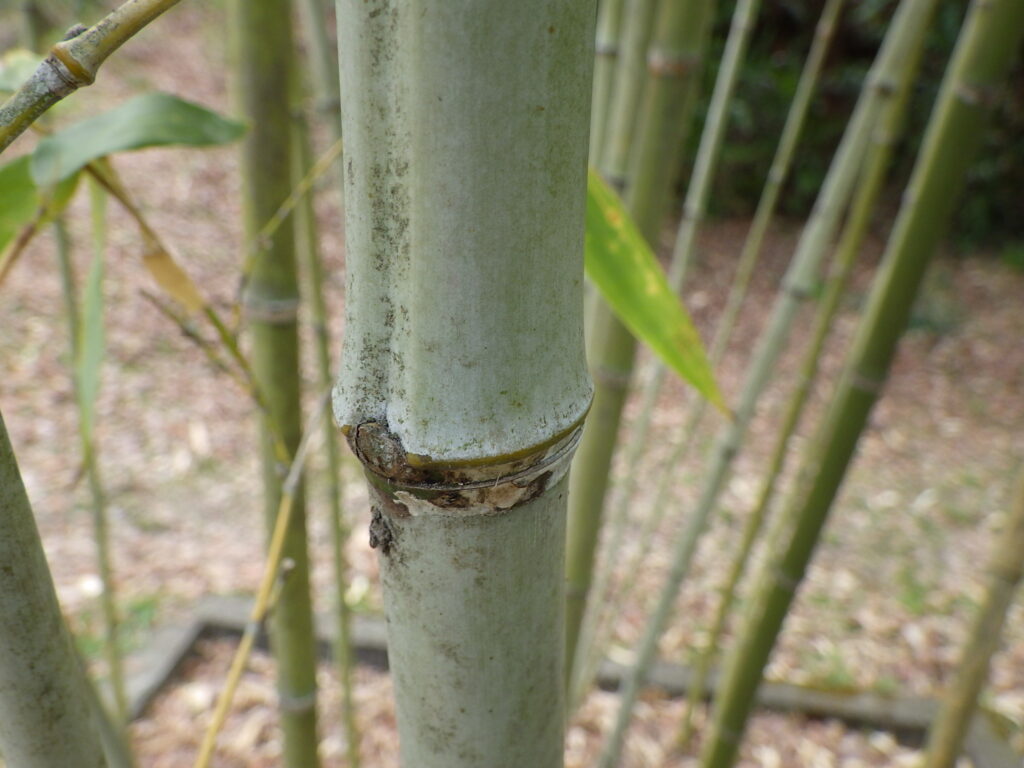
No.0917 Phyllostachys nigra var. henonis
This is a large type of bamboo, with culms reaching a height of 18-20m. The surface of the culm is usually a somewhat dull grayish-green. It is larger than black bamboo, and the surface of the culm does not turn black even with age. Native to China, it is widely found planted or escaped in foothills, hills, lowlands, around human settlements, and along rivers.
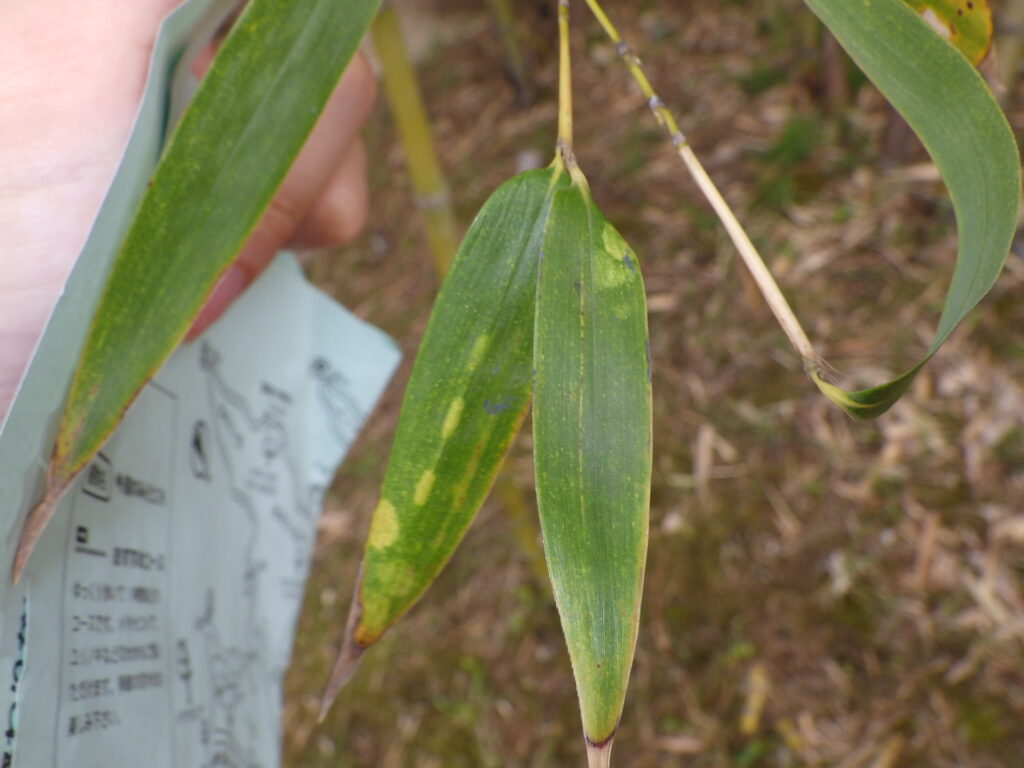
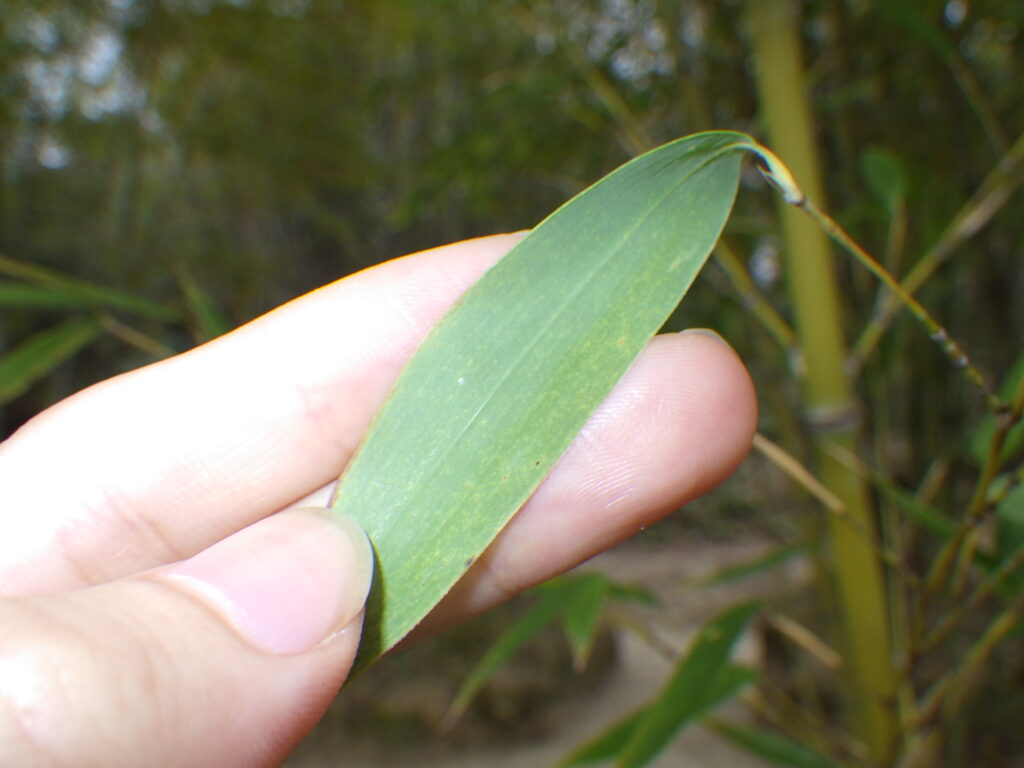
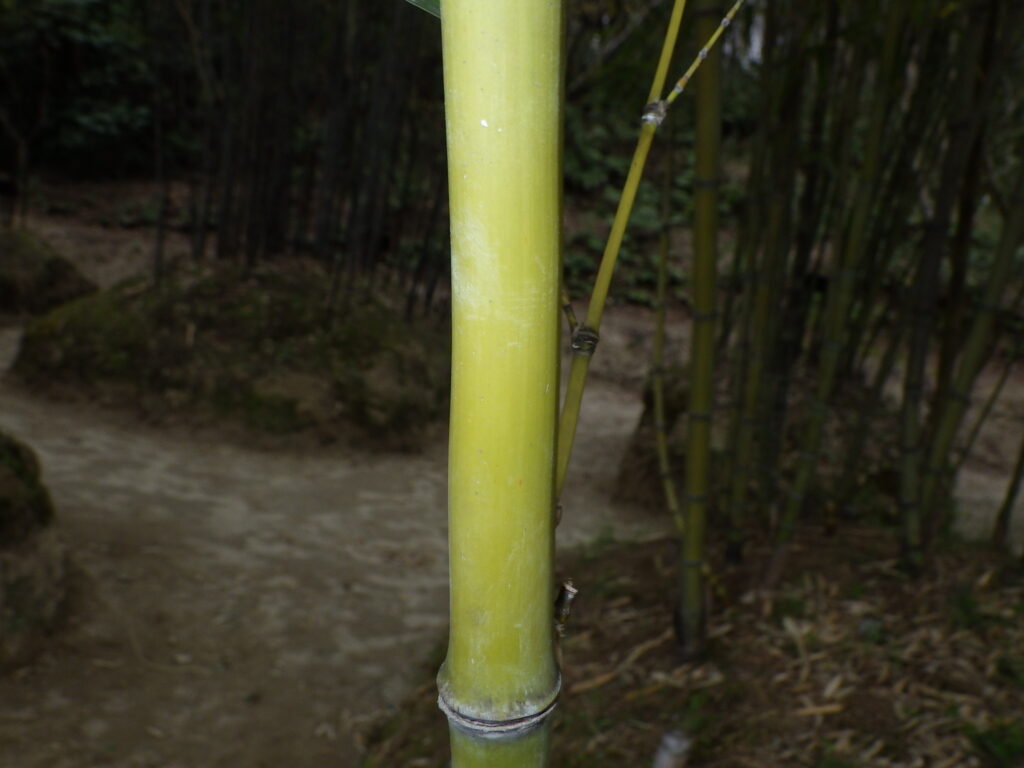
No.0917.1 Phyllostachys nigra var. nigra
This is a medium-sized bamboo with culms reaching a height of 3-5m. The surface of the culm is initially green, but becomes purplish-black or develops fine purplish-black spots the following year. The culm sheath is pale pink to pinkish-brown and has no markings. The leaf sheath is usually hairy at first, but later becomes almost hairless. The leaf blade is hairless on the upper surface, with fine hairs near the base on the lower surface. The auricles are underdeveloped, and the shoulder hairs are obliquely ascending or slightly spreading, and coarsely rough. The ligule is 1-2mm long, semi-circular, and has fine hairs along the margin. Native to China, it is cultivated, but sometimes neglected and escaped cultivation occurs.
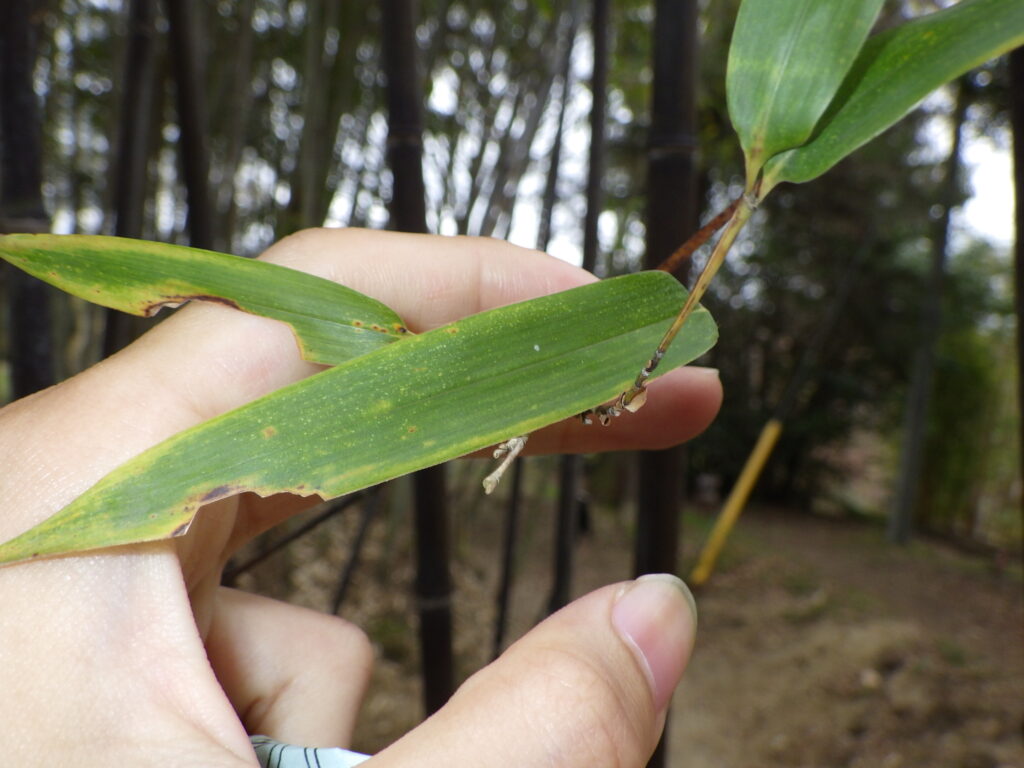
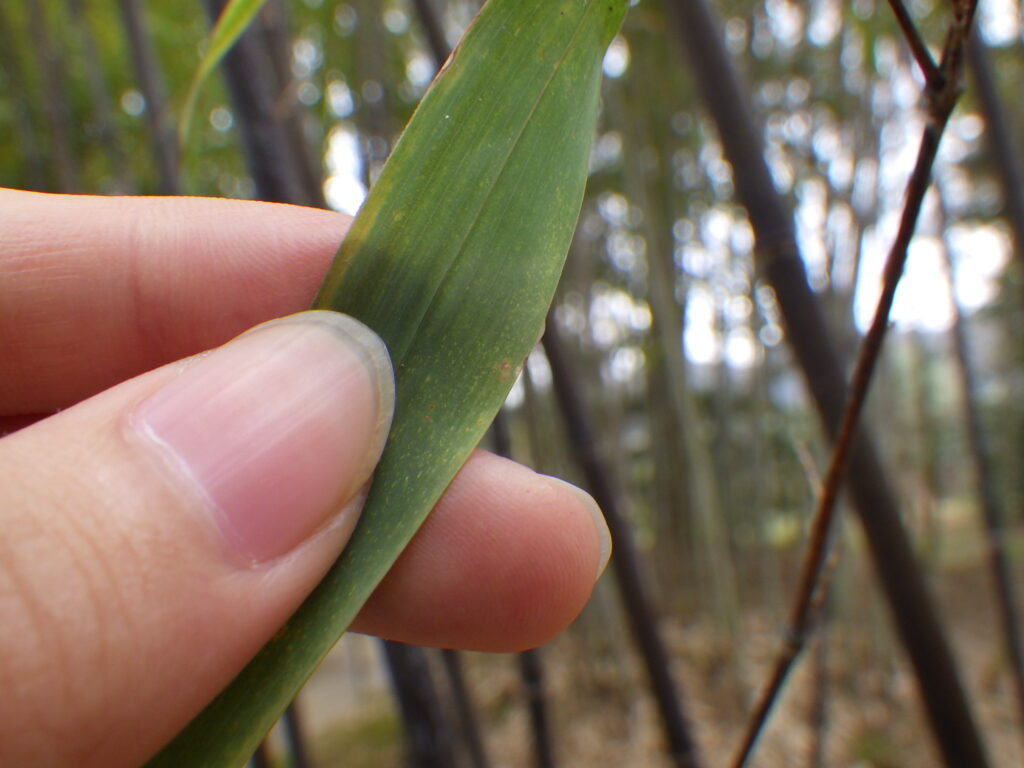
No.0917.2 Tambahanchiku (Pyllostachys nigra f. boryana)
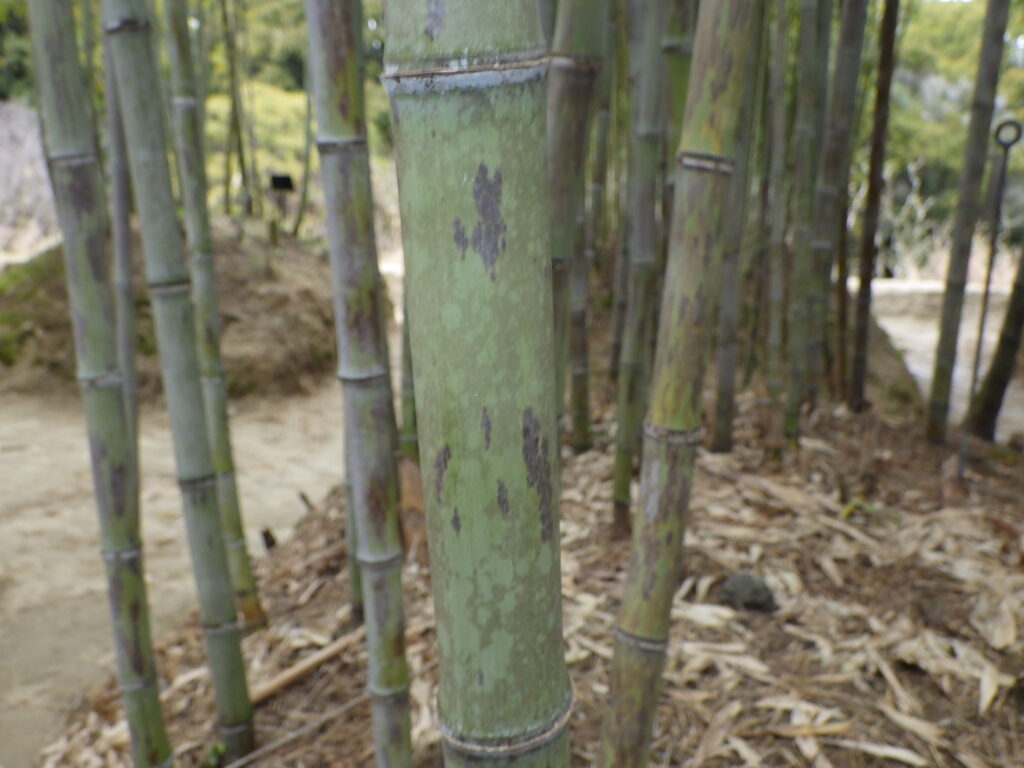
No.0917.3 Phyllostachys nigra 'Punctata' (Sesame Mushroom)‘
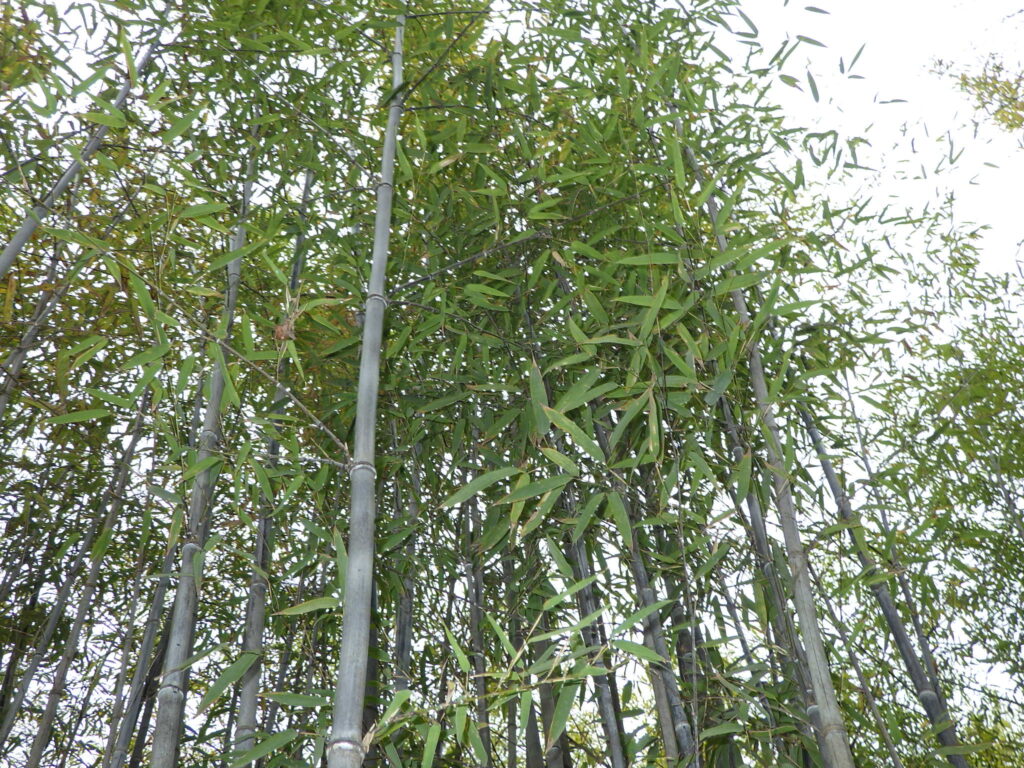
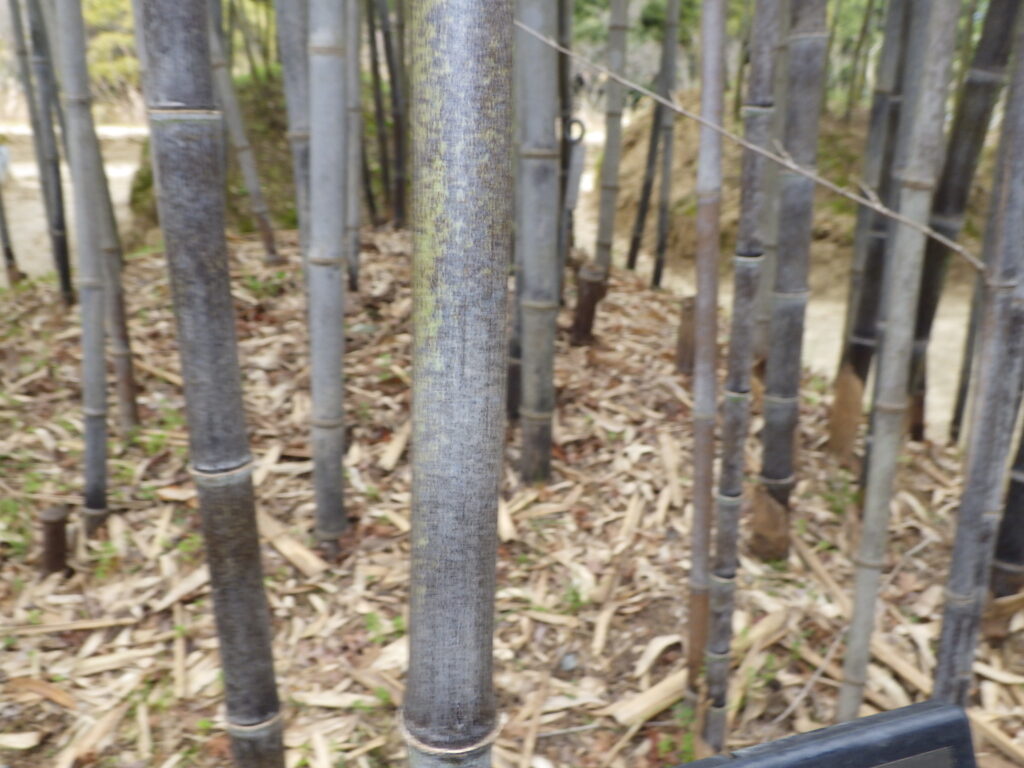
No.0917.a Phyllostachys flexuosa
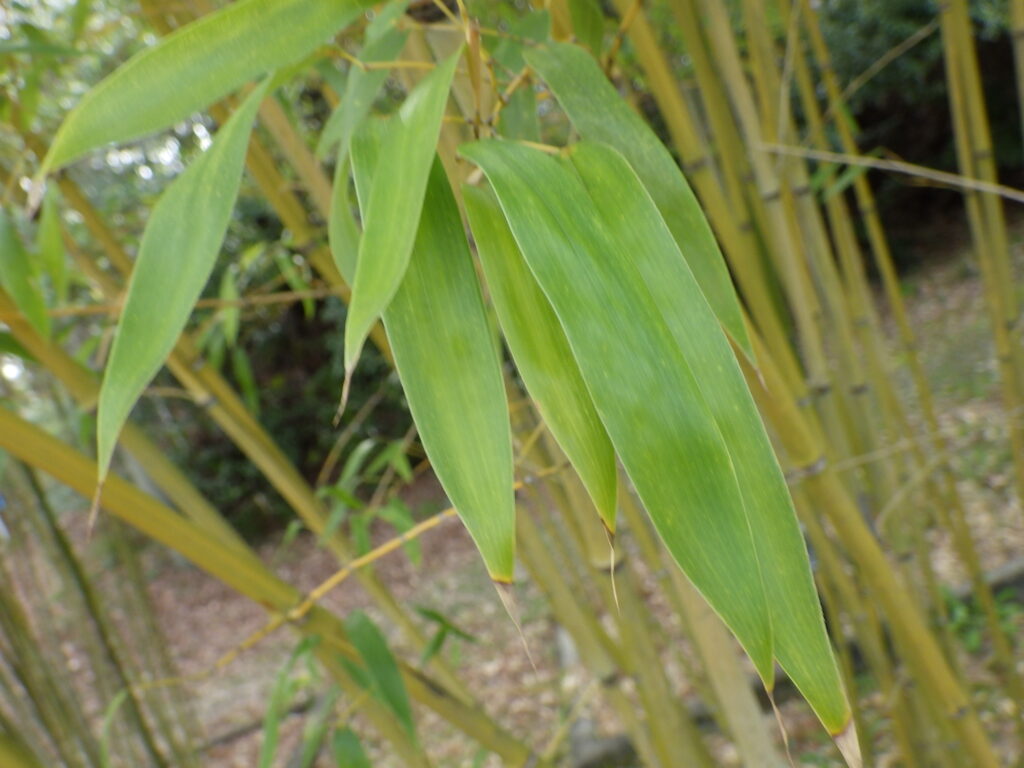
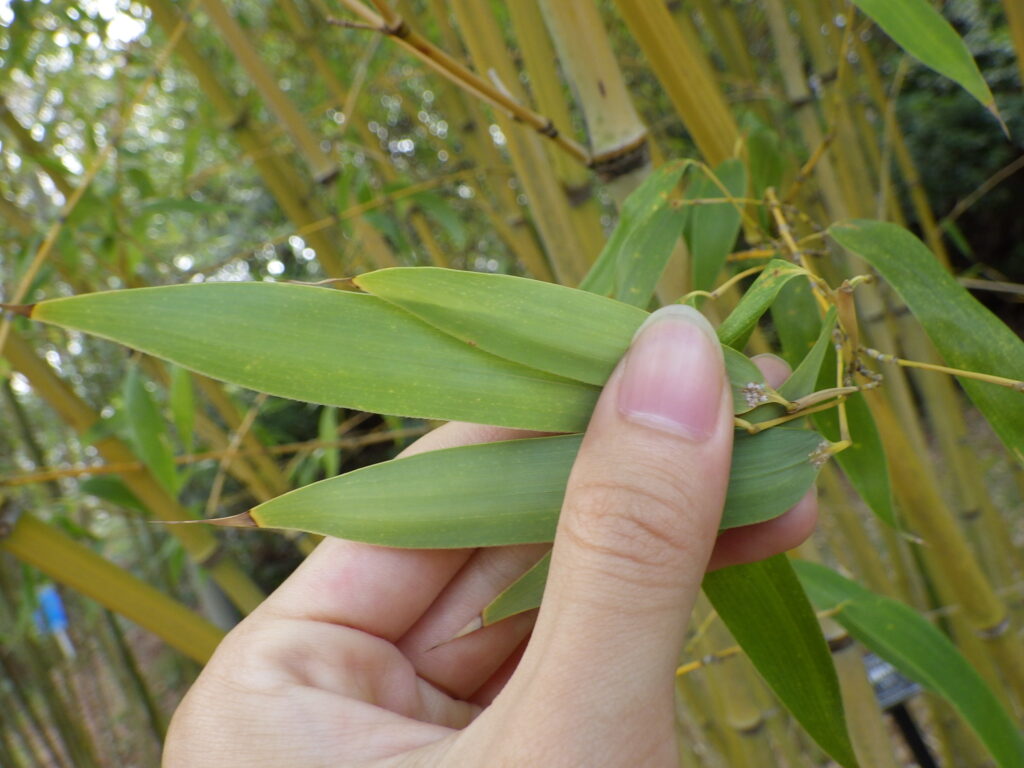
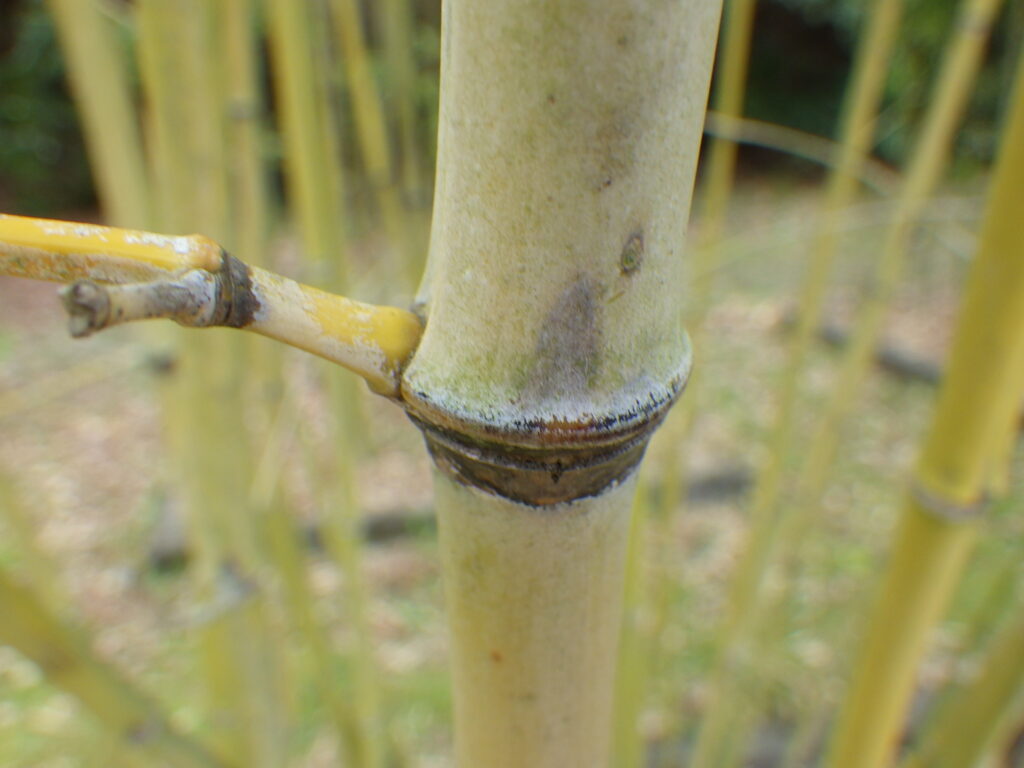
No.0917.b *Phyllostachys viridis*
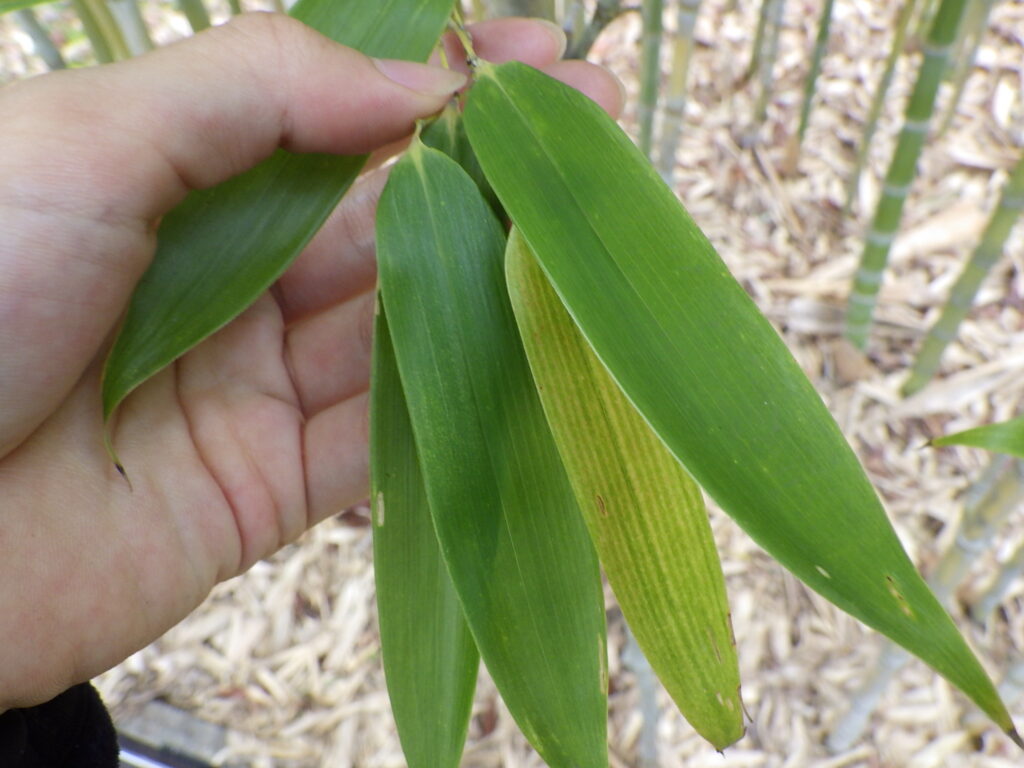
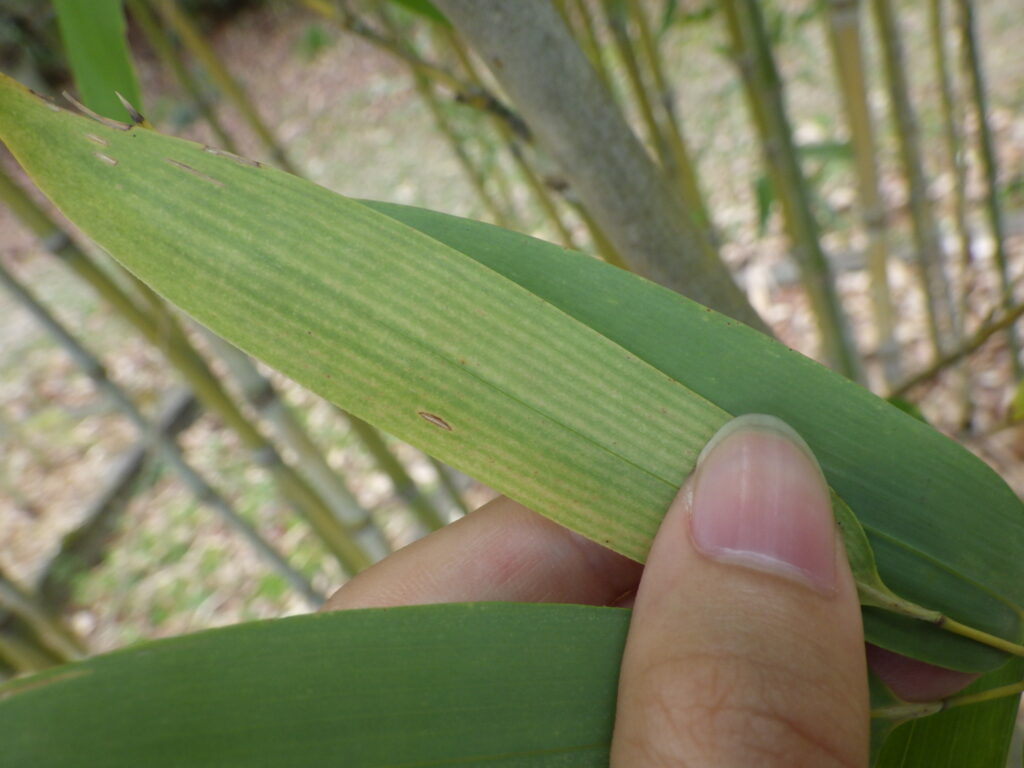
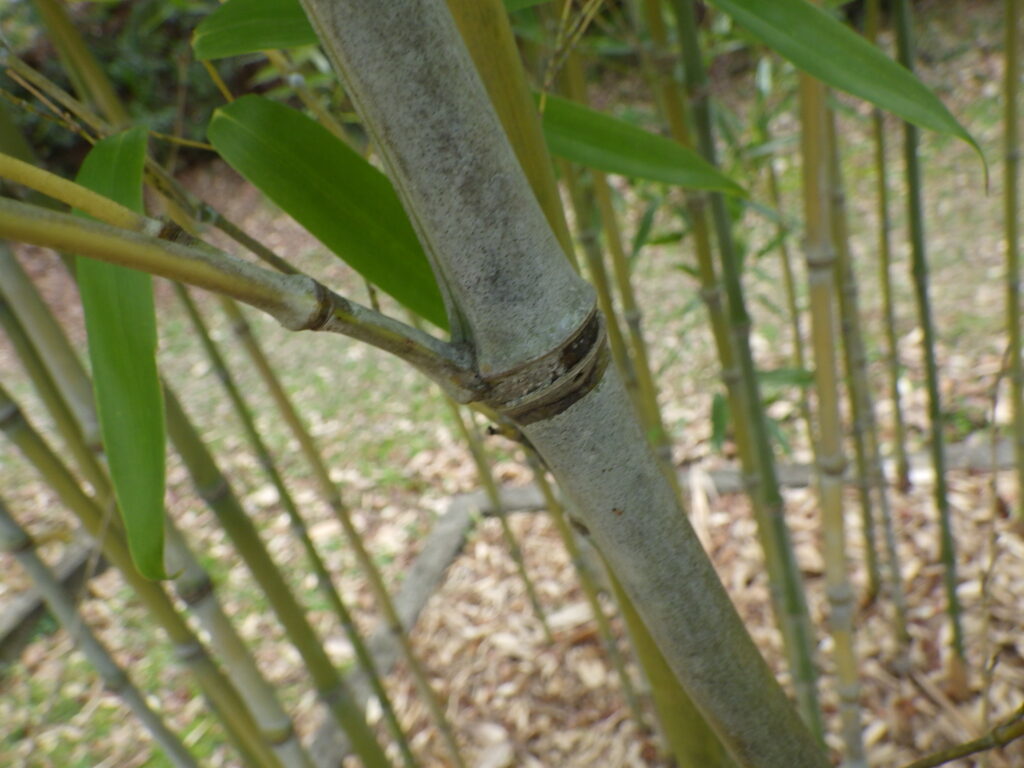
No.0917.c Golden Bamboo (Phyllostachys viridis 'Robert Young')‘
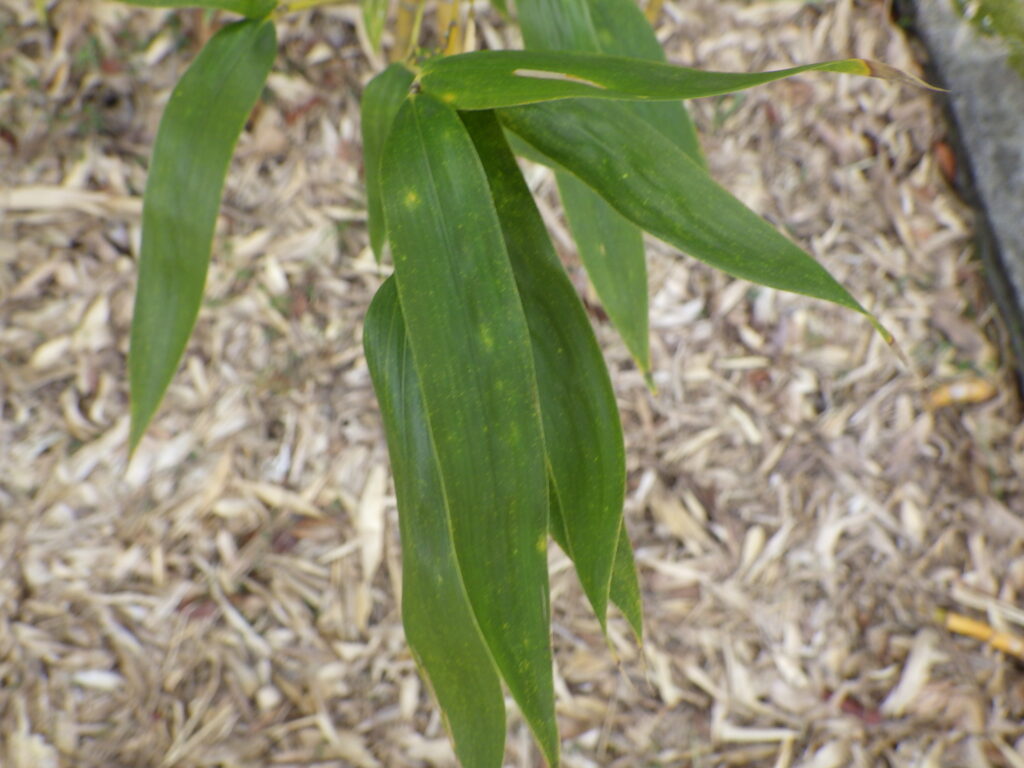
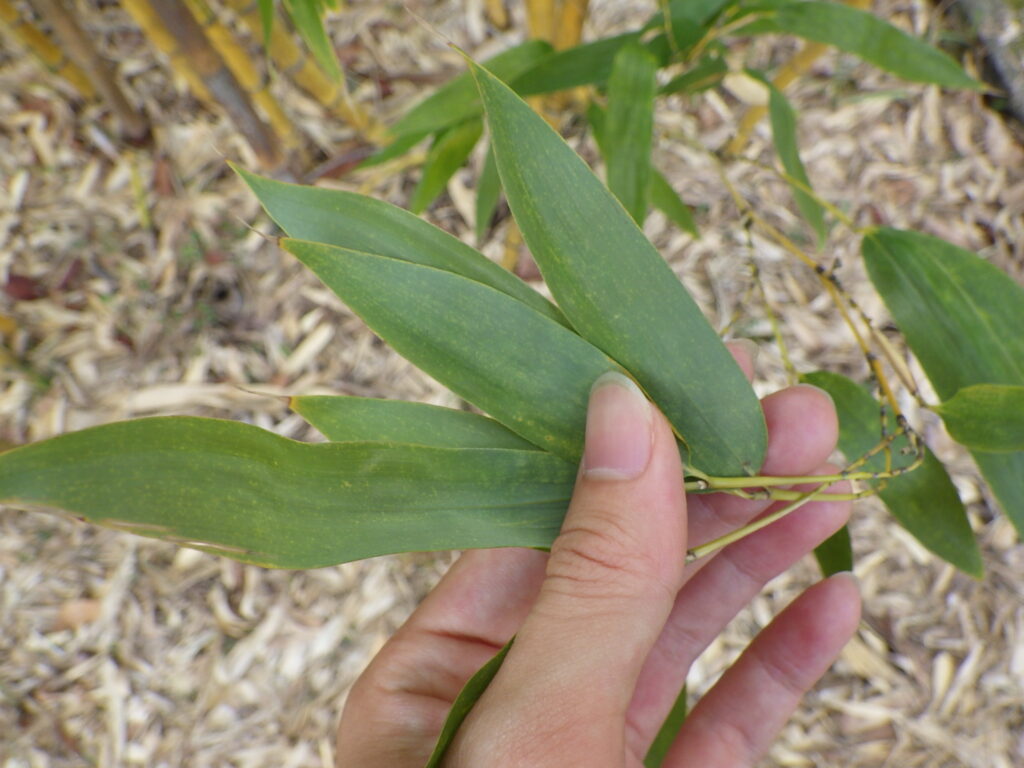
No.0917.d Phyllostachys glauca
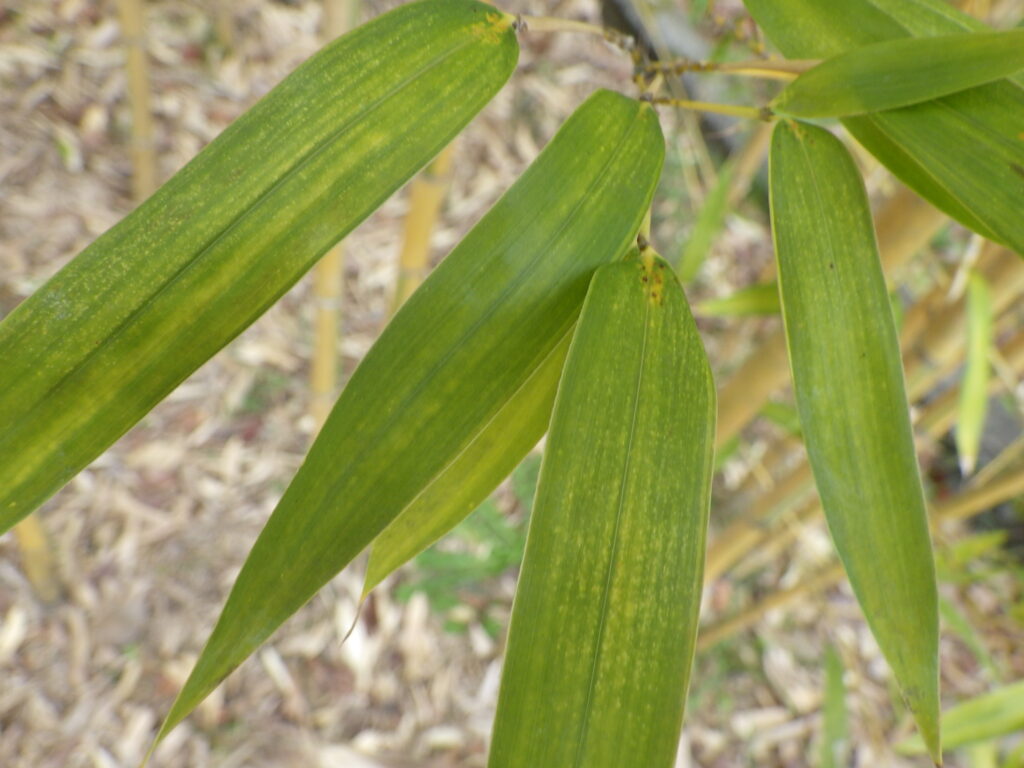
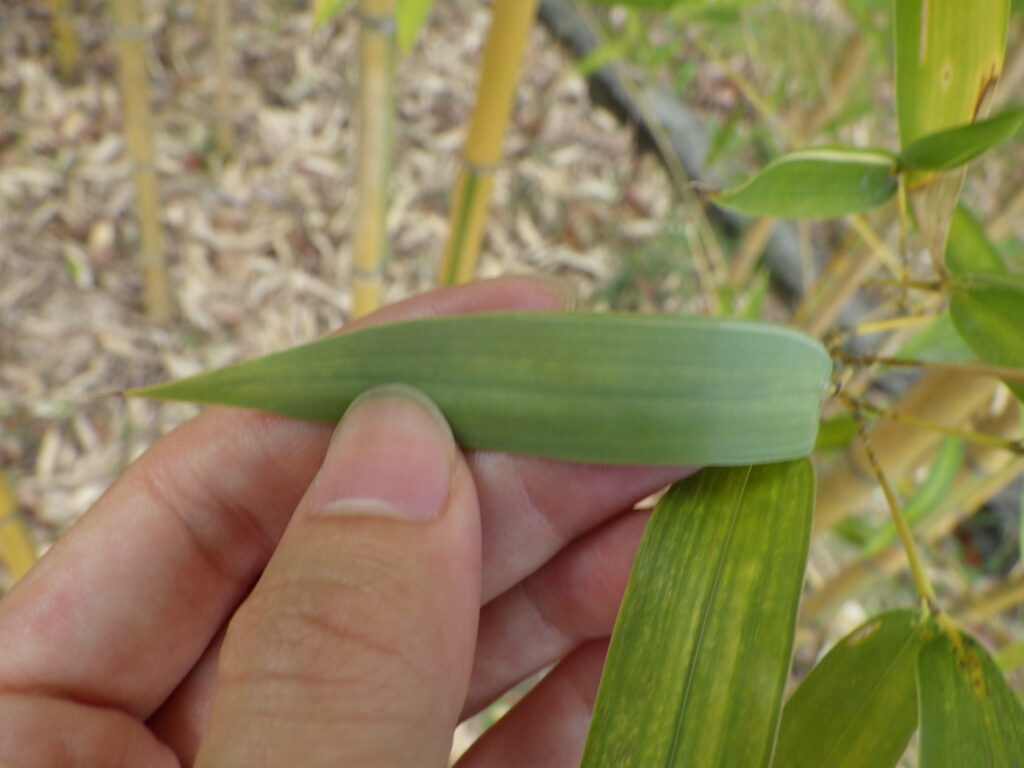
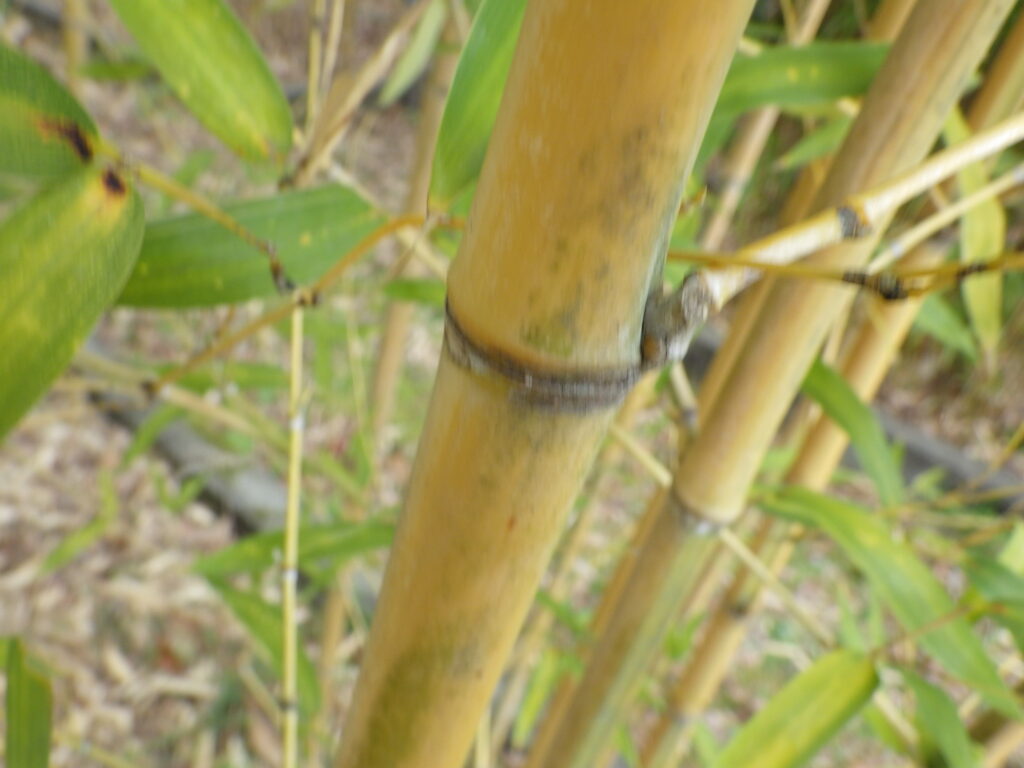
No.0917.e Phyllostachys bambusoides 'Kashirodake'‘
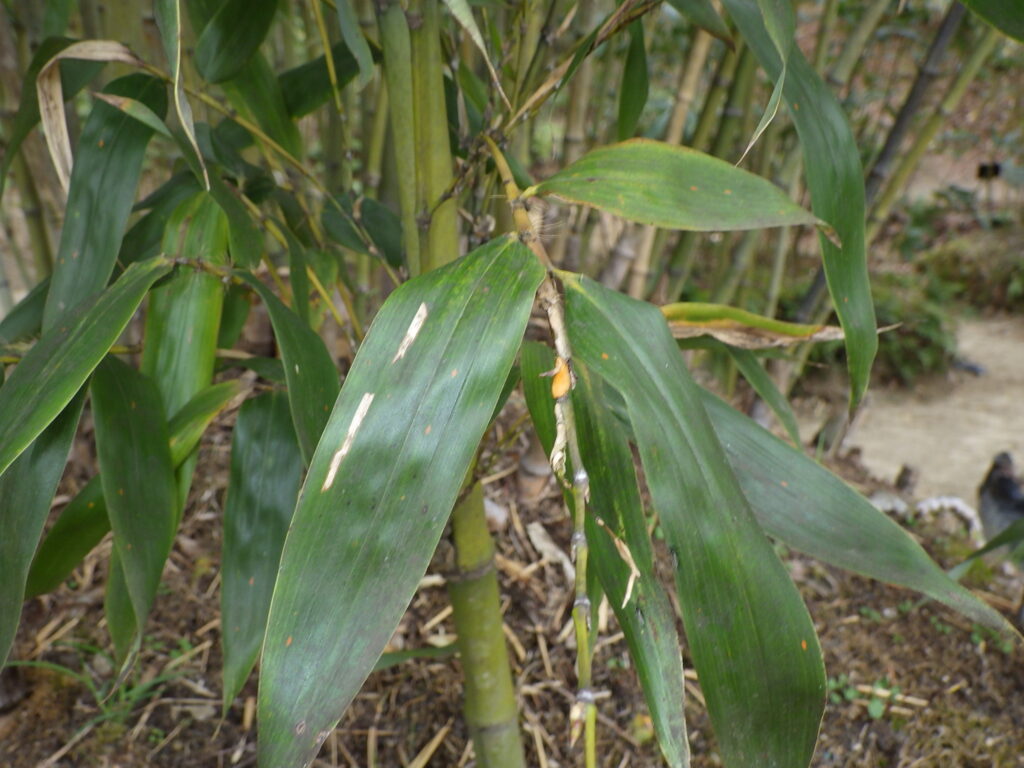
No.0917.f Phyllostachys bambusoides 'Marliacea'‘
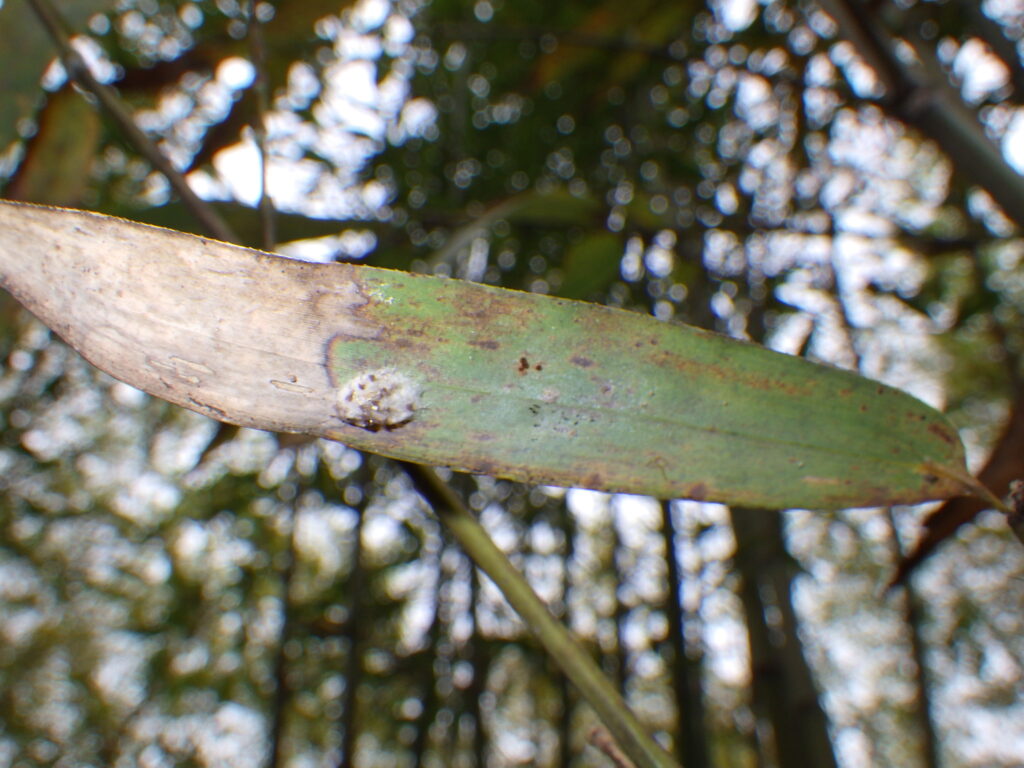
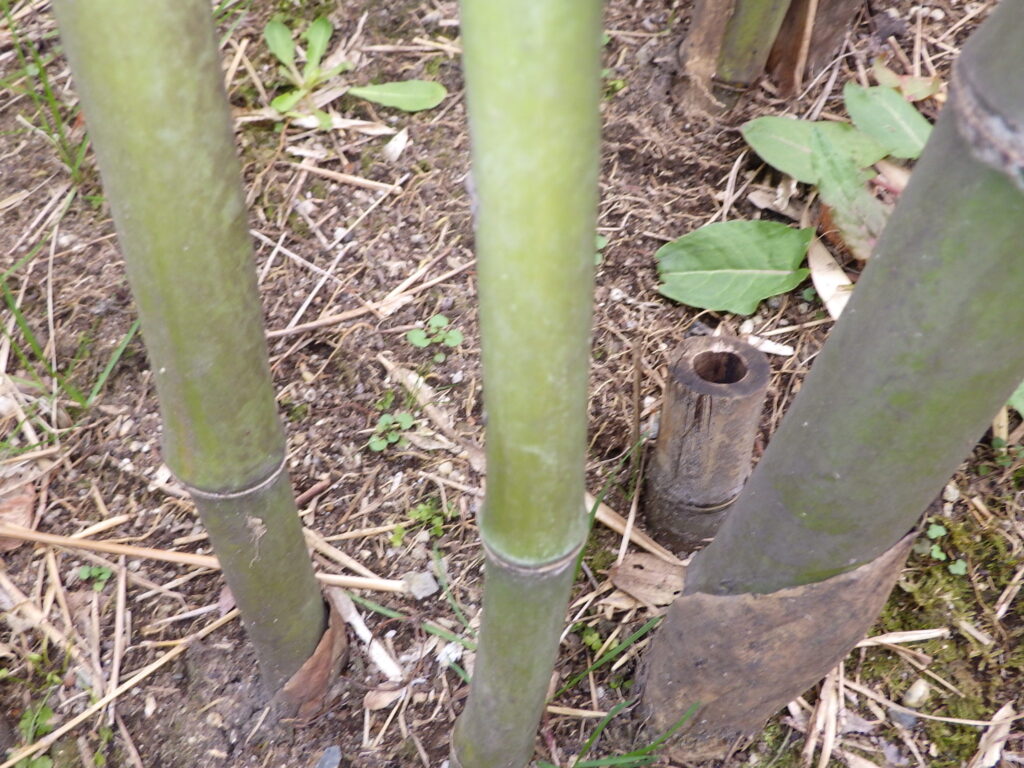
No.0917.g Kikko-chiku (Phyllostachys edulis 'Kikko-chiku')‘
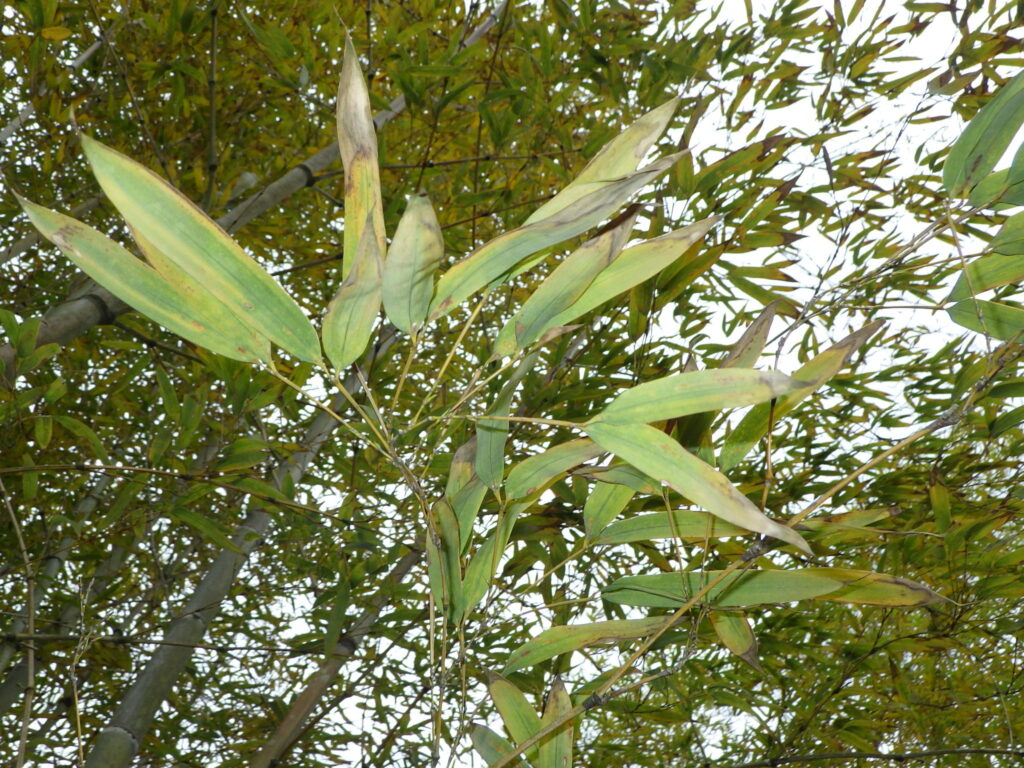
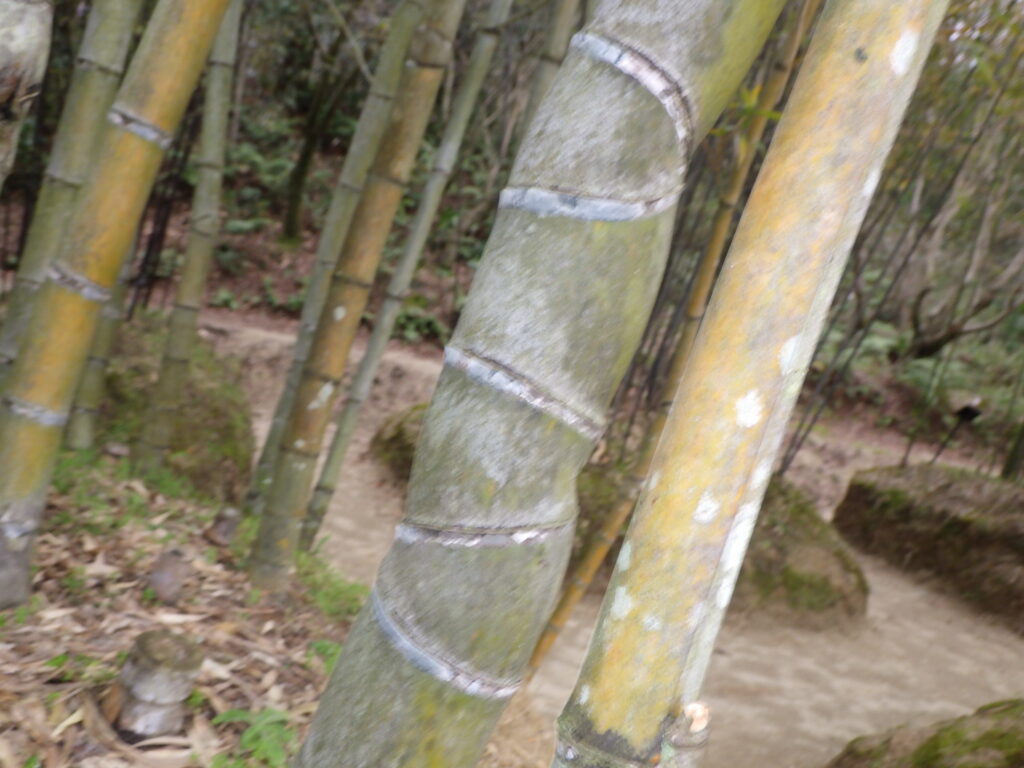
No.0917.h Phyllostachys makinoi (Taiwanese bamboo)
This is a relatively large type of bamboo, with culms reaching 15-18m in height. While it generally resembles *Phyllostachys bambusoides*, good distinguishing features include the culm sheath being lighter in color and having small black spots, and the long, comb-like hairs on the edges of the ligule of newly unfolded leaves. The leaf blade is glabrous on the upper surface and has short hairs near the base on the lower surface. The leaf sheath is glabrous, the auricles are semicircular, and the shoulder hairs are oblique to spreading and coarsely astringent. The ligule is 1-2mm tall and semicircular. It is native to China and Taiwan. In Japan, it can be found scattered in the wild in foothills and hilly areas.
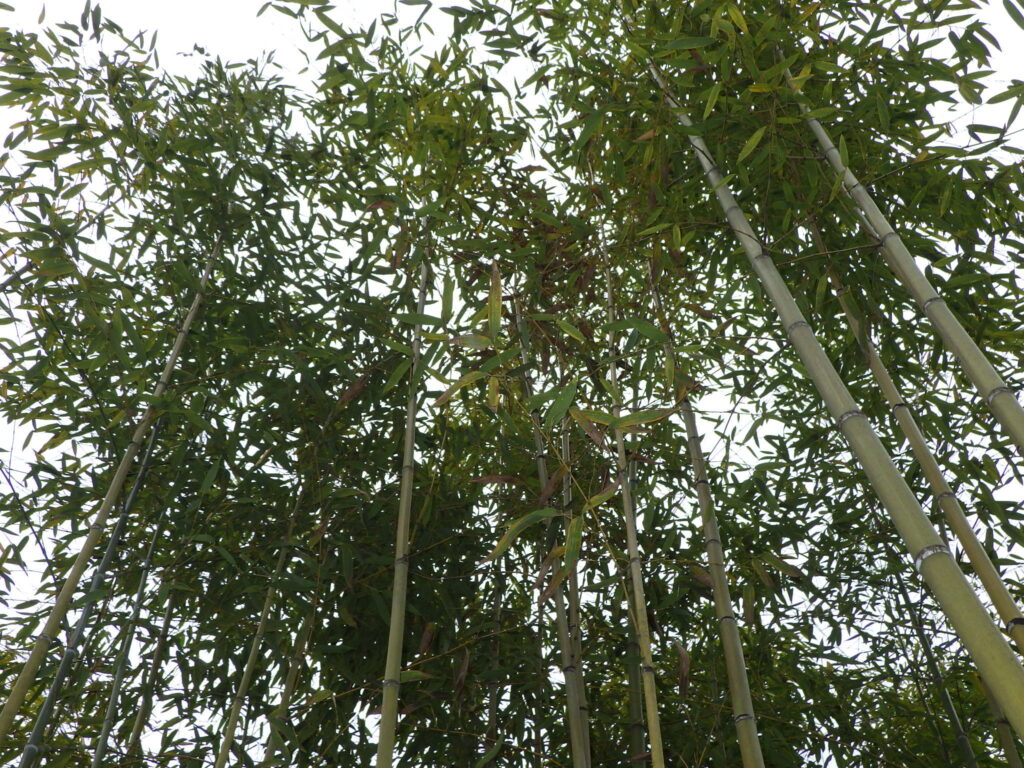
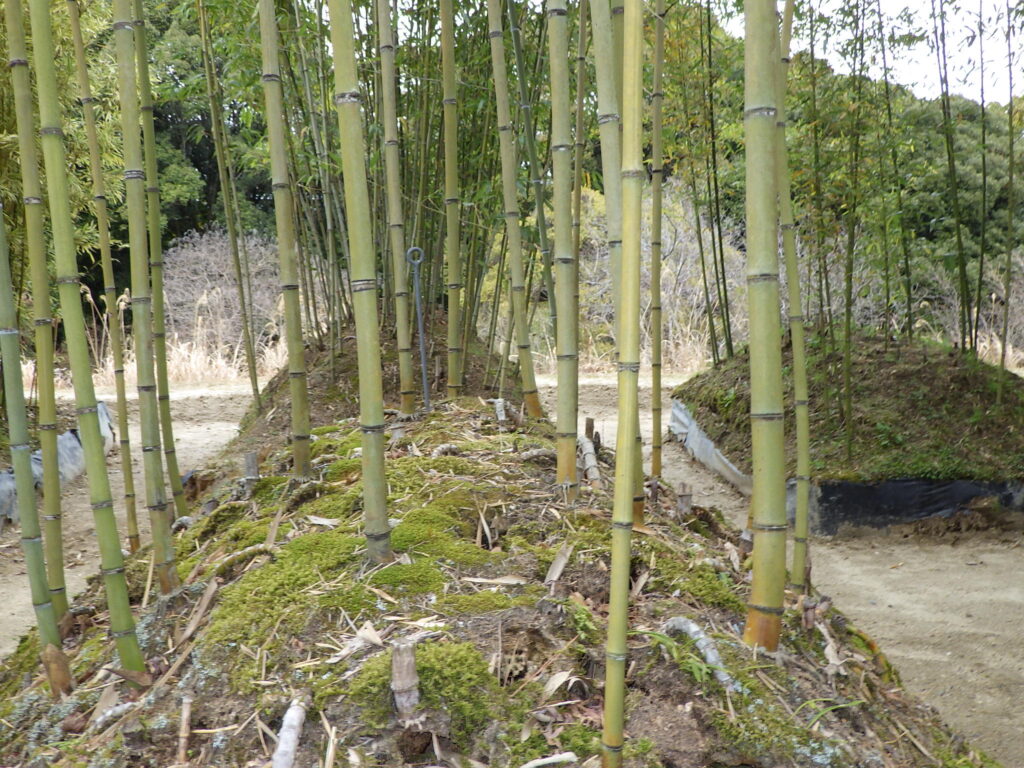
No.0917.i *Pyllostachys sulphurea*
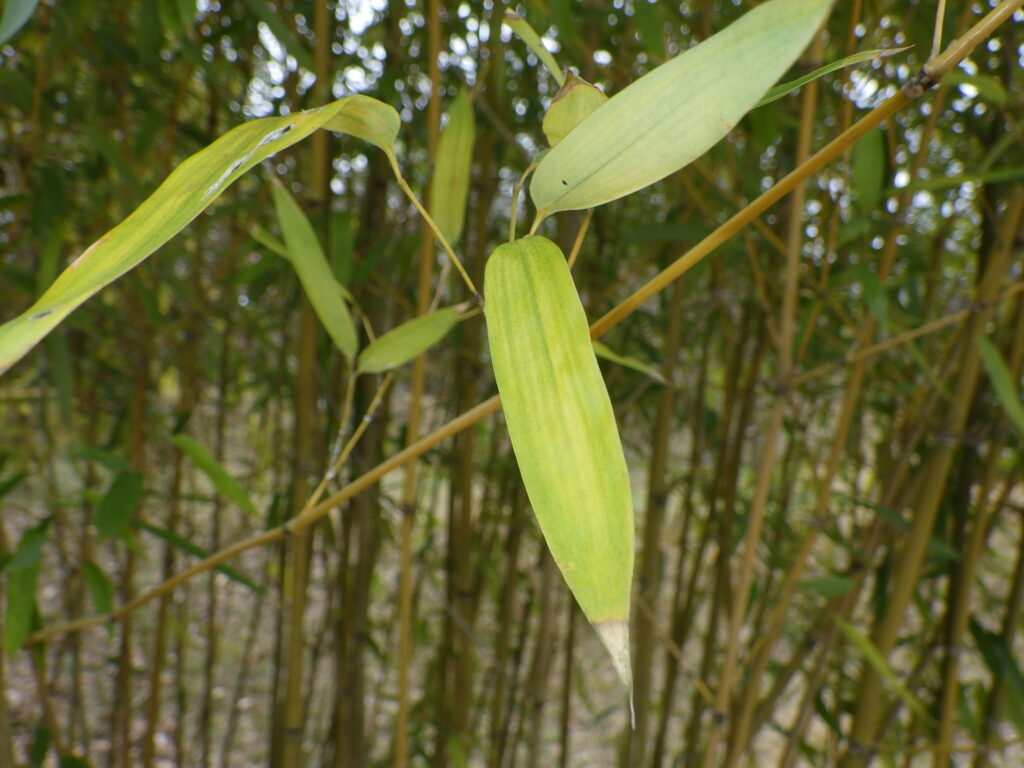
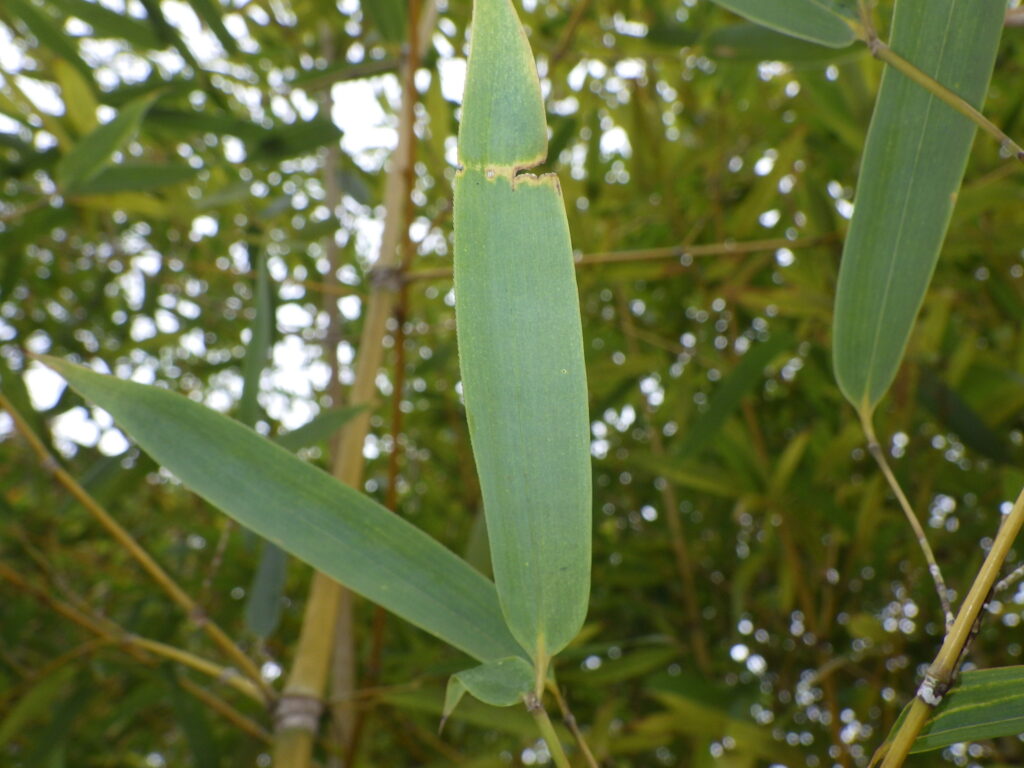
No.0917.j Phyllostachys dulcis
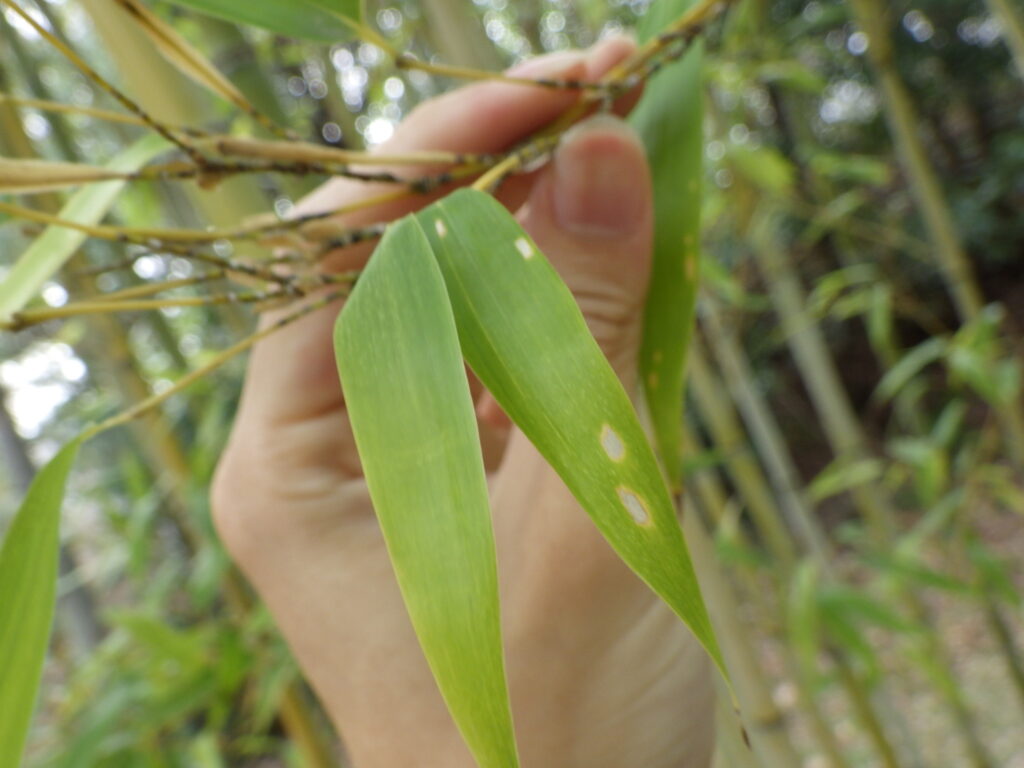
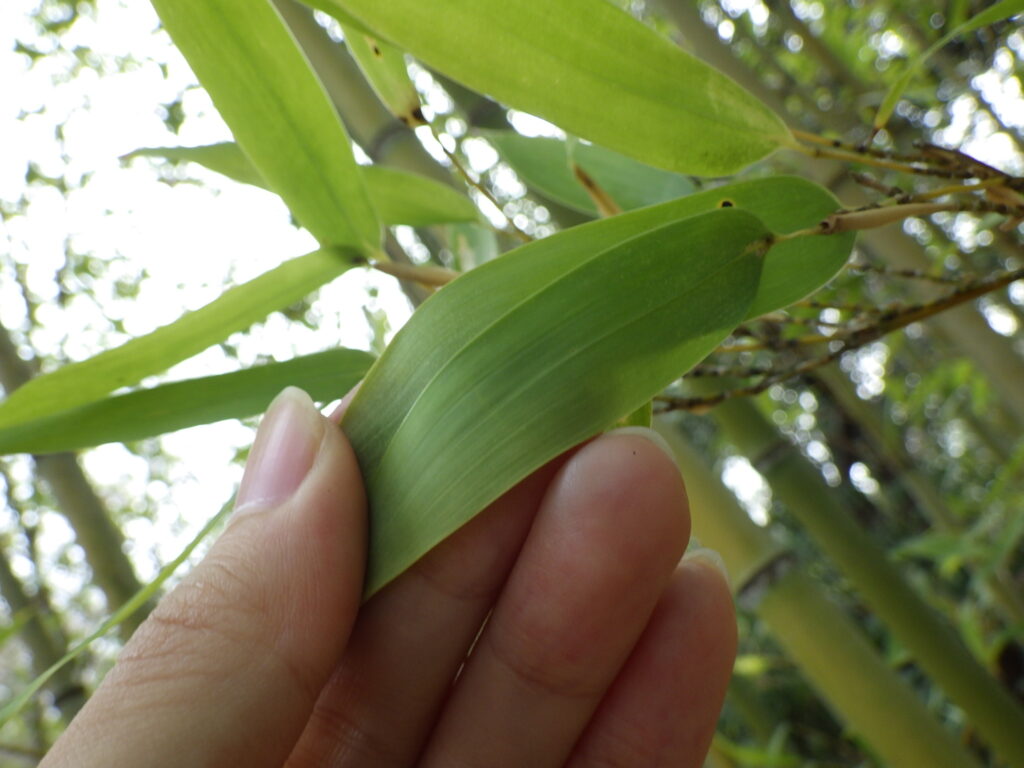
No.0917.k *Hibanobambusa tranquillans*
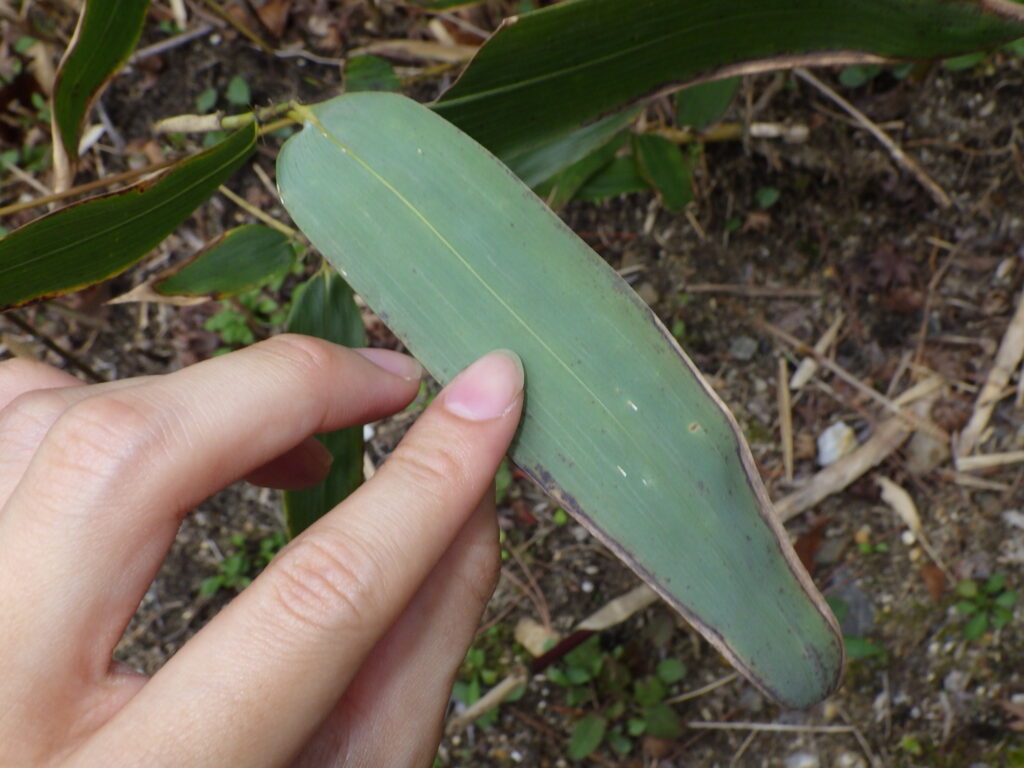
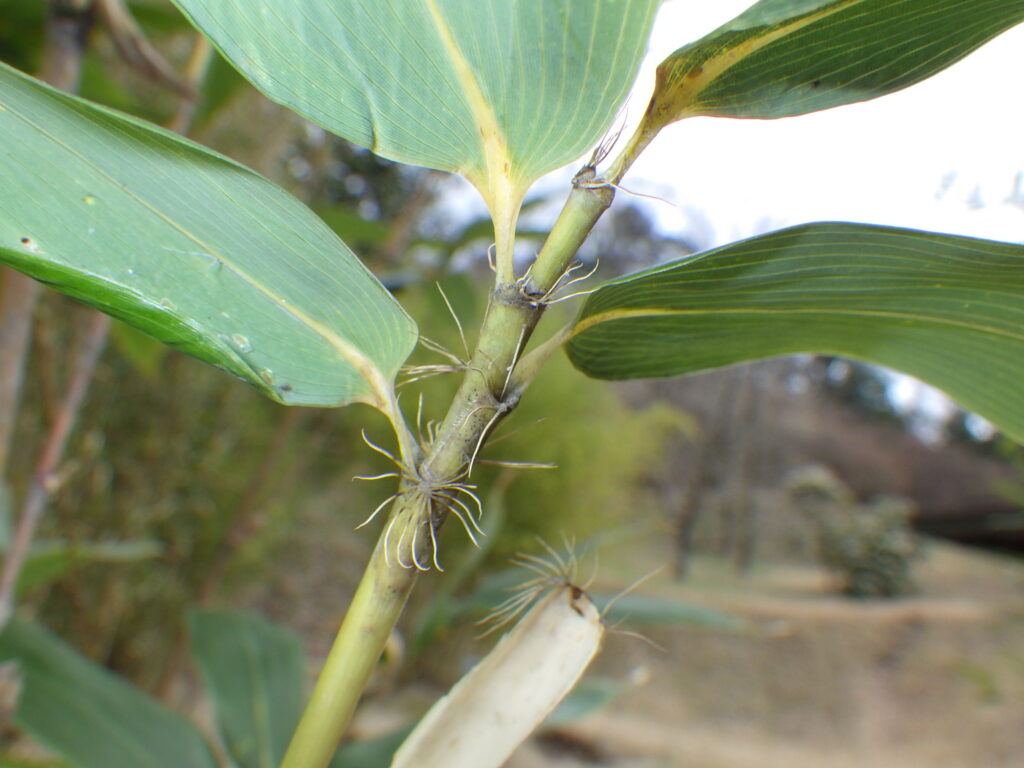
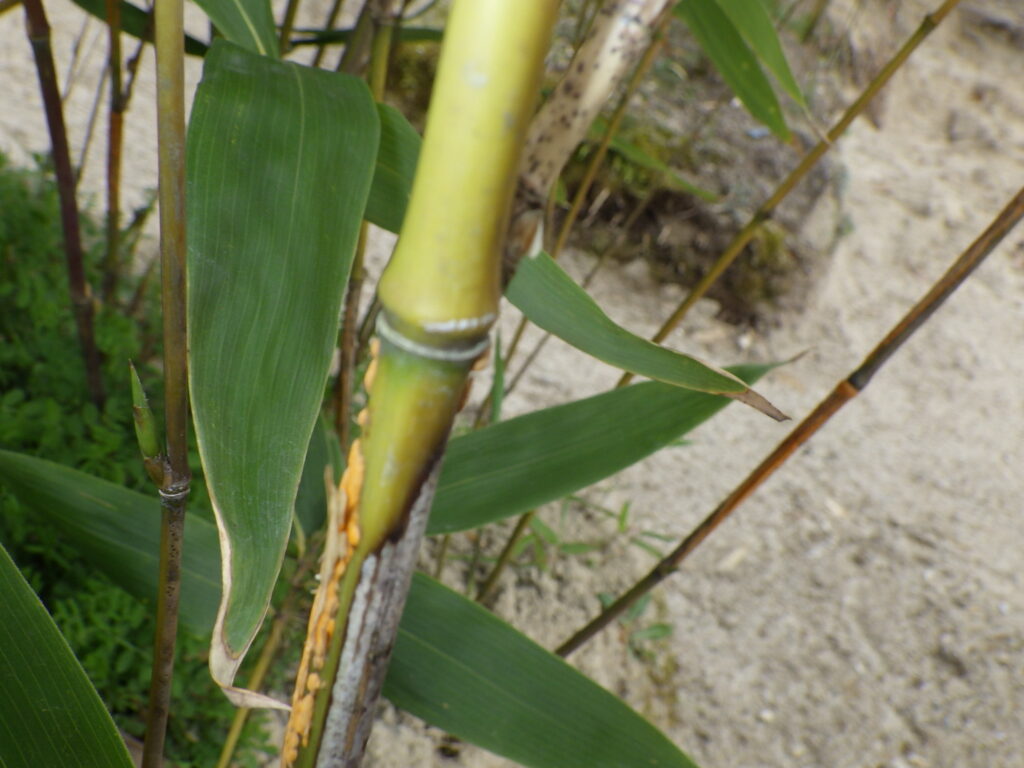
One to two branches emerge from each node. The culm sheath is brown and without markings. The leaf blade is larger than that of the genus *Phyllostachys*, resembling that of the genus *Sasa*. The leaf blade is glabrous on both sides, and the leaf sheath is glabrous. The shoulder hairs are well-developed, golden yellow when young, turning brown as they age, and appearing conspicuous in a radial pattern. The ligule is about 2 mm high, truncate, and has fine hairs along the margin. It has sometimes been considered an intergeneric hybrid of *Sasa* and the genus * Semiarundinaria *. Mount Hiba in Shimane Prefecture is the type locality, and it was once thought to be rarely cultivated, but in recent years it has been cultivated in botanical gardens, parks, shrines and temples in Shimane Prefecture and mainly in Tohoku and further south. In addition, like other bamboo subfamily plants, it spreads by rhizomes, so escaped specimens are occasionally seen. When a bamboo forest of *Phyllostachys* is cut down, slender culms about 1 to 3 m tall with broad leaf blades similar to those of the genus *Sasa* emerge from the ground. Because of this, it is sometimes misidentified as *Phyllostachys japonica* and collected, but this culm has distinct bud grooves and slightly woody, spreading shoulder hairs on the leaf sheath, which distinguishes it from *Phyllostachys japonica*.
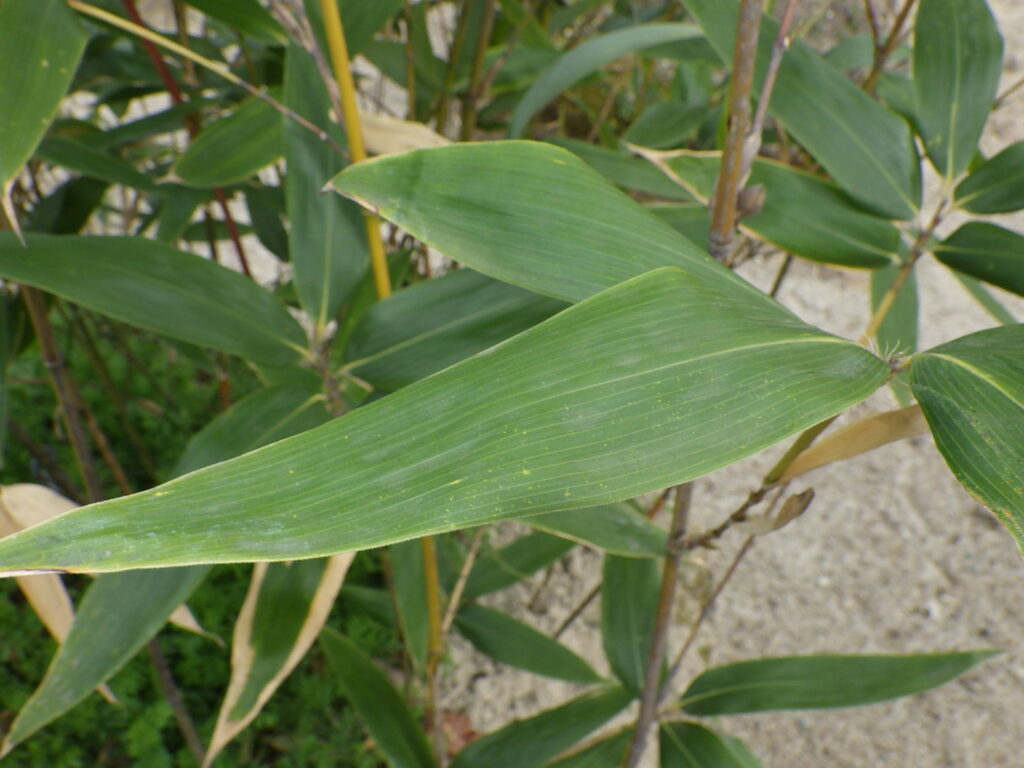
No.0918 Shibataea kumasaca
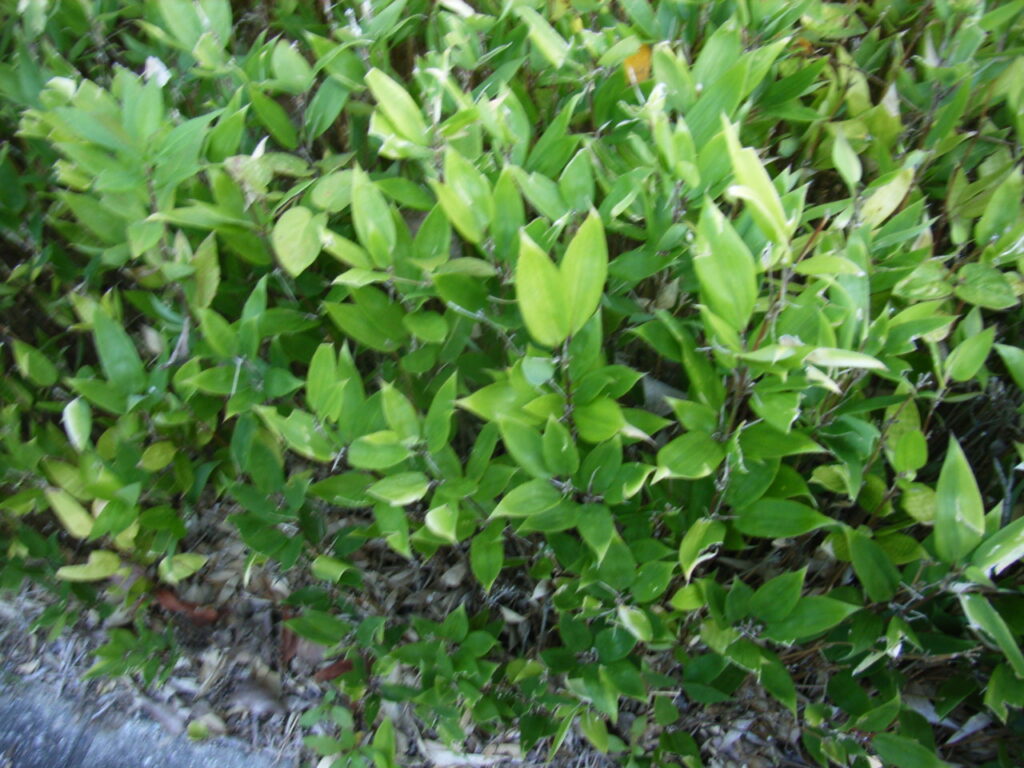
This is the smallest and most densely growing of the bamboo species native to Japan. The culm reaches a height of 1-2m, and usually produces five short branches from each node, each bearing a single leaf at its tip. The leaf blade is 7-10cm long and 20-25mm wide, with fine hairs on the underside. It is sometimes considered native to Japan, but its natural habitat is unknown. It is widely cultivated, and escaped plants growing wild are often seen. The Japanese name comes from the old custom of selling this bamboo with Okame masks attached during festivals.
No.0919 Medake Pleioblastus simonii
The culms are 3-4 m tall, and the culm sheaths and leaf sheaths are glabrous. The upper margin of the leaf sheath is obliquely ascending, and the end of the upper margin is slightly pointed. The ligule is about 1 mm tall, the leaf blade is papery, glabrous on both the upper and lower surfaces, drooping, and oblong-lanceolate in shape. The tip is somewhat elongated and tail-like, the base is generally broadly wedge-shaped, and the leaf color is dark green. It is distributed in Honshu (south of the southern Tohoku region), Shikoku, and Kyushu. Although it is widely distributed, it is often found in riverside areas and hills near human settlements.
No. 0920 Pleioblastus chino var. chino
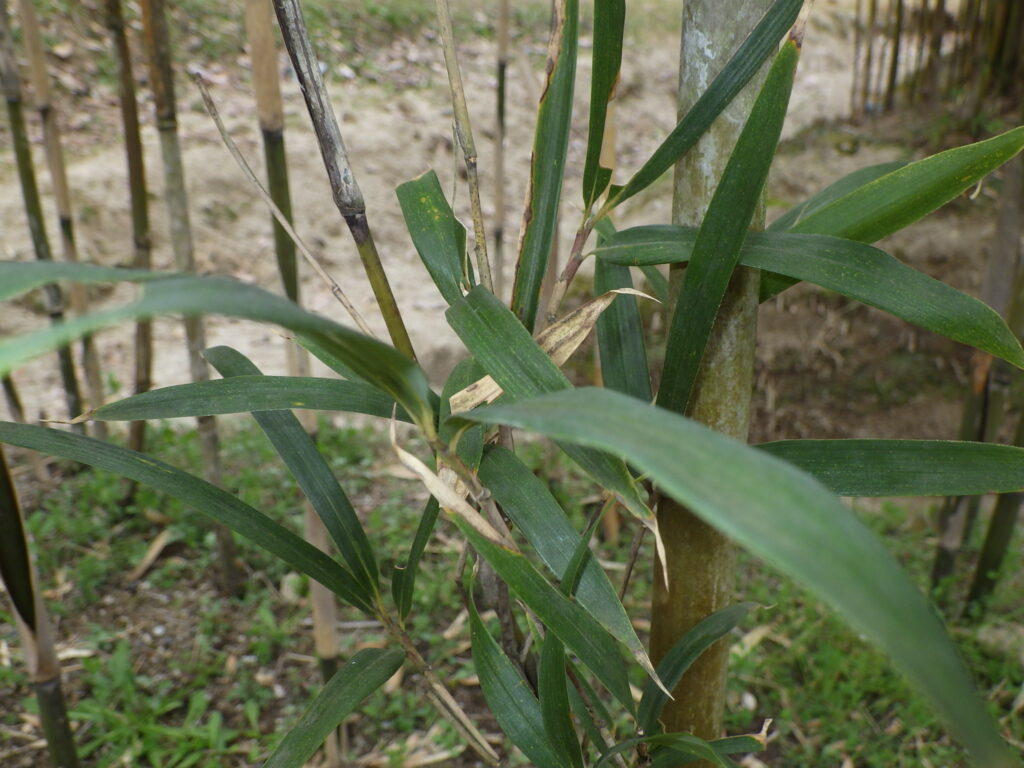
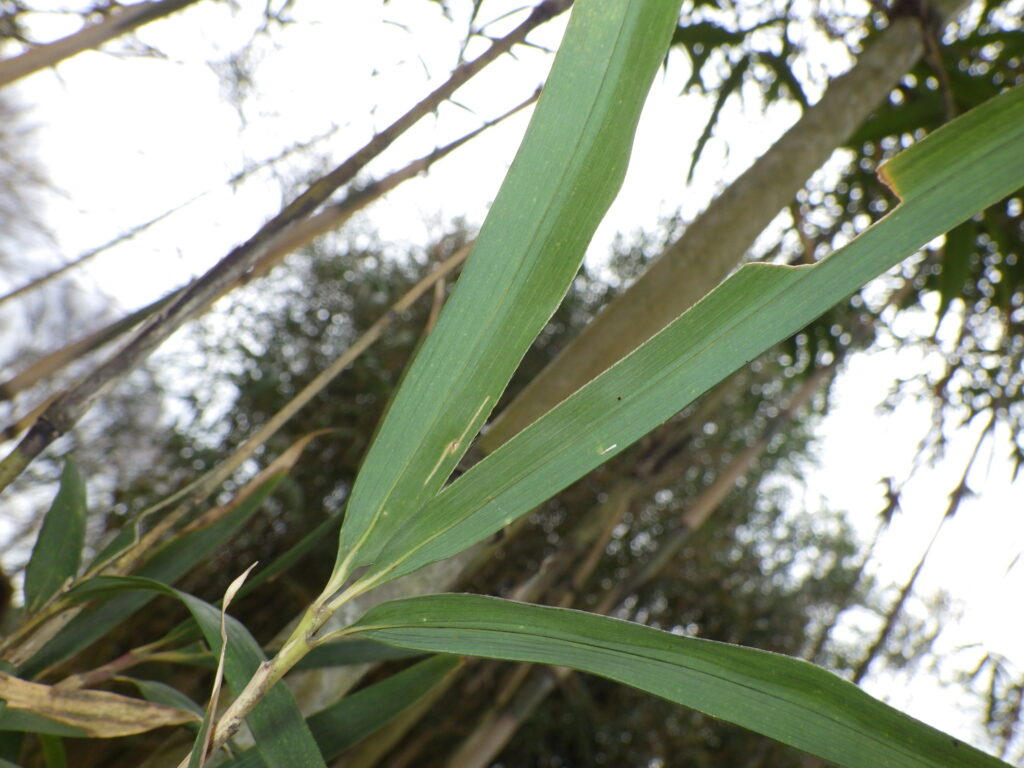
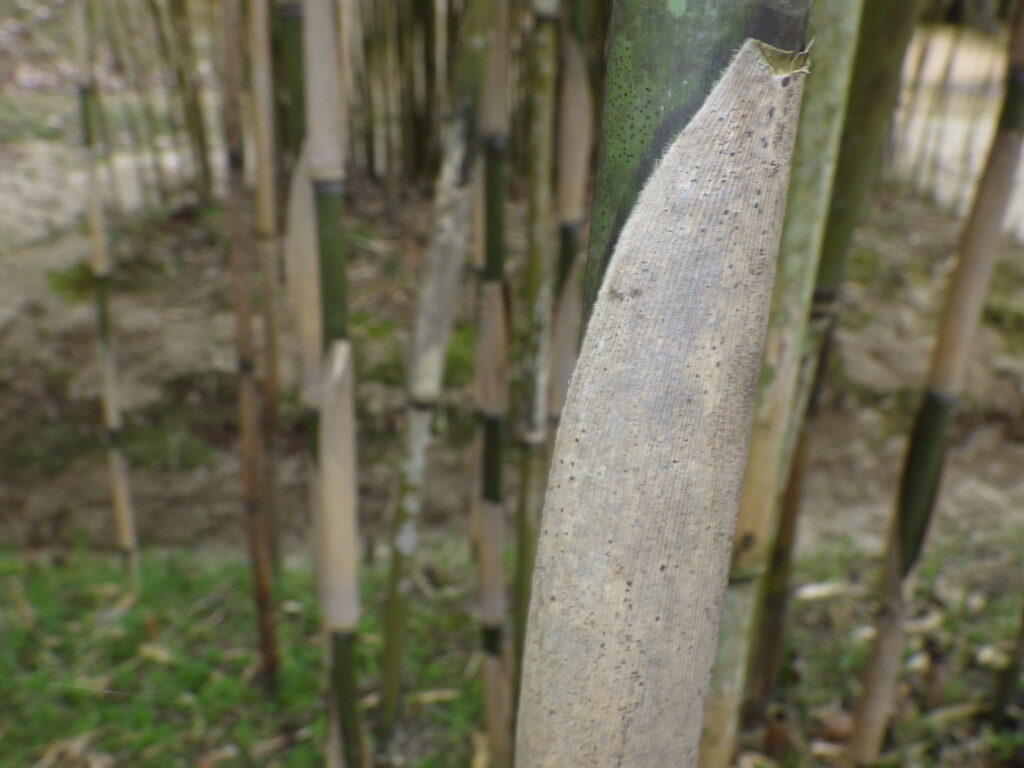
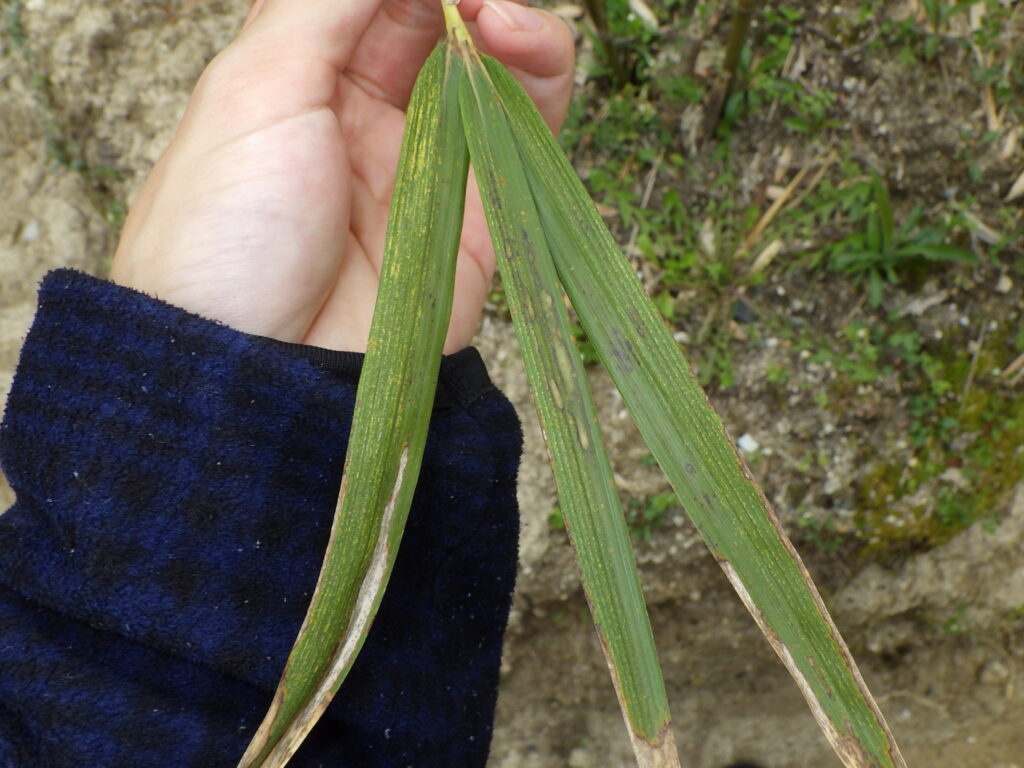
The culms are 3-4m tall, and the culm sheath, leaf sheath, and leaf blade are glabrous or have very few hairs on each part. The upper margin of the leaf sheath is almost horizontal. The ligule is about 1mm tall, the leaf blade is papery and shorter than that of *Pleioblastus simonii*, narrowly lanceolate, with a short, pointed tip that does not extend into a tail-like shape and a rounded base, and the leaf color is a slightly yellowish dark green. The leaf sheath is often tinged with purple. It can be distinguished from *Pleioblastus simonii* from a distance because the leaf tip does not droop much. The longitudinal half of the underside of the leaf is usually white and dull. It is mainly distributed in Honshu (north of the Chubu region). *Pleioblastus kansaiensis* f. lentigiosus is a variety with fine hairs on the leaf sheath.
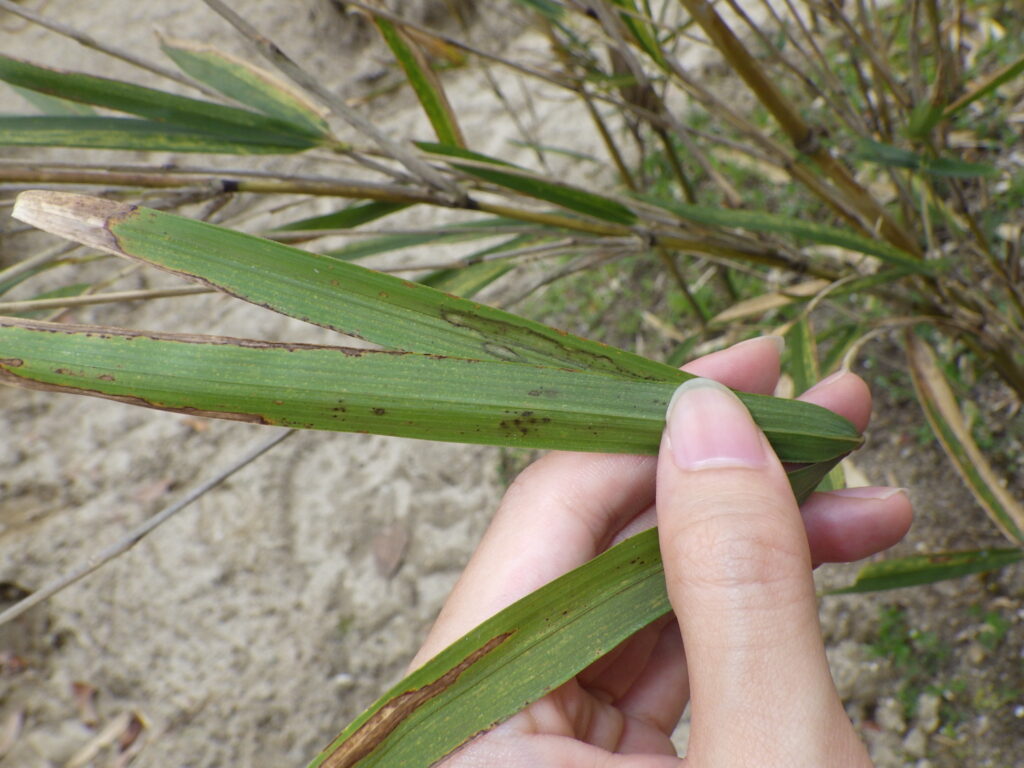
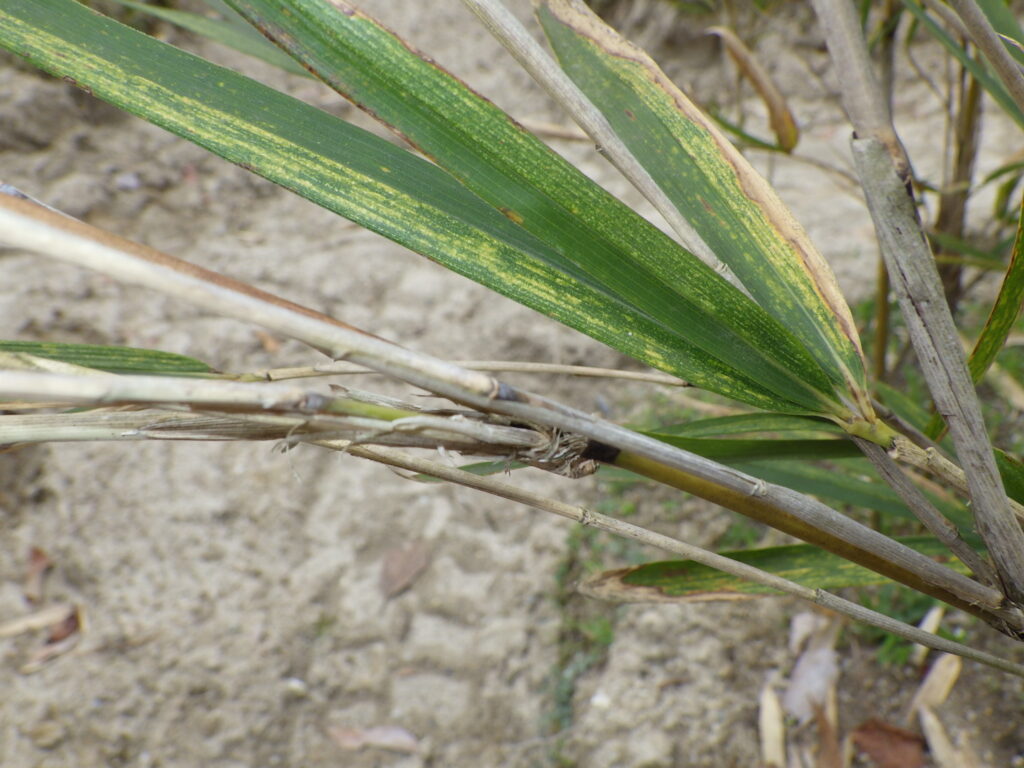
No.0920.1 Pleioblastus chino f. elegantissimus
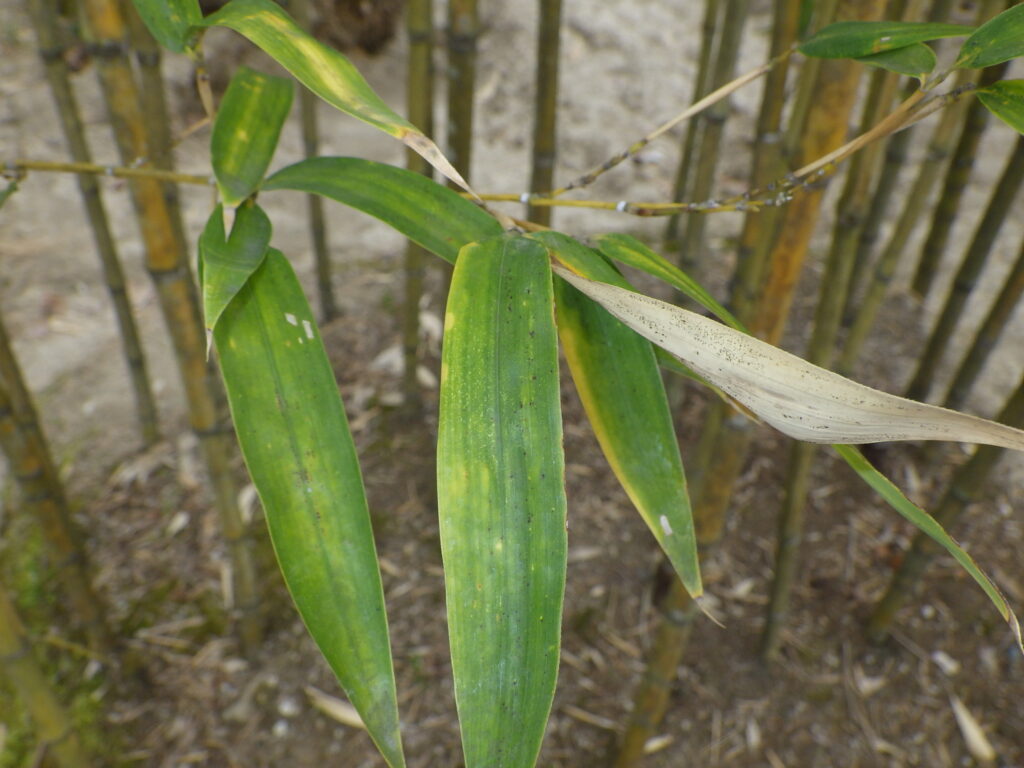
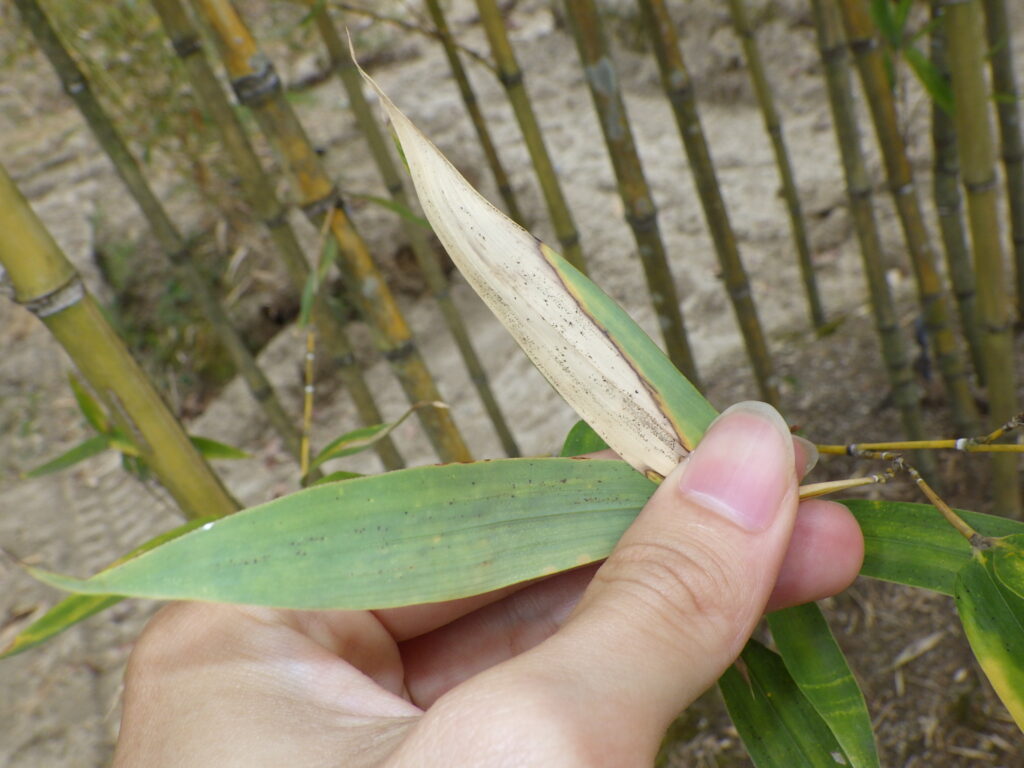
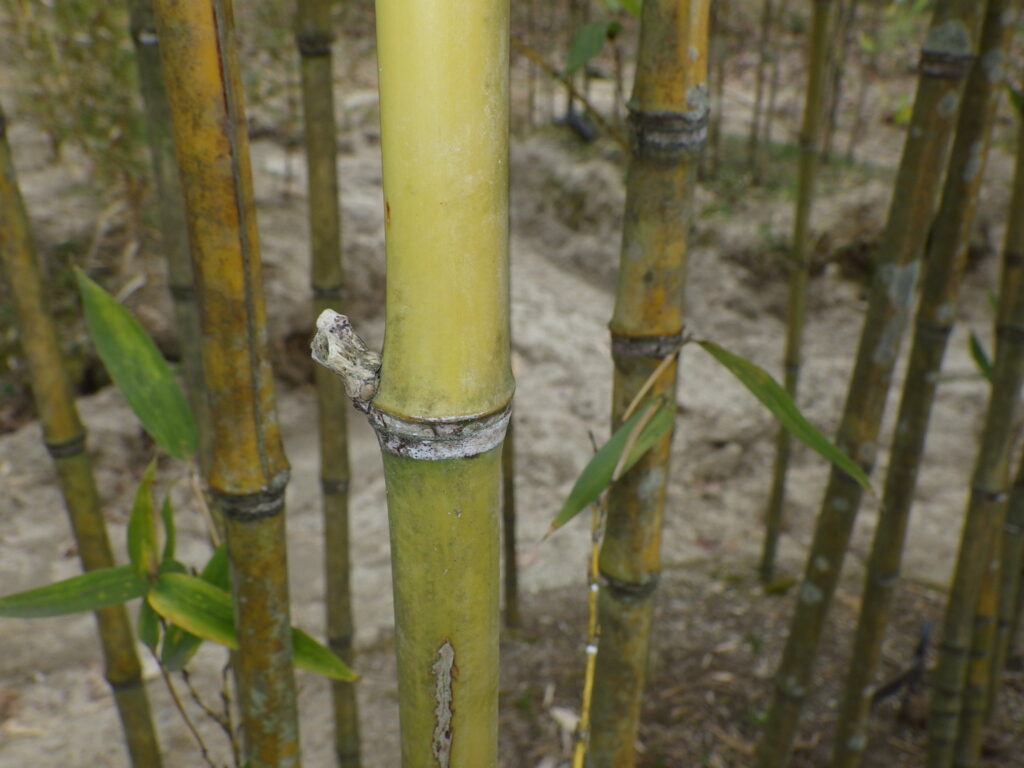
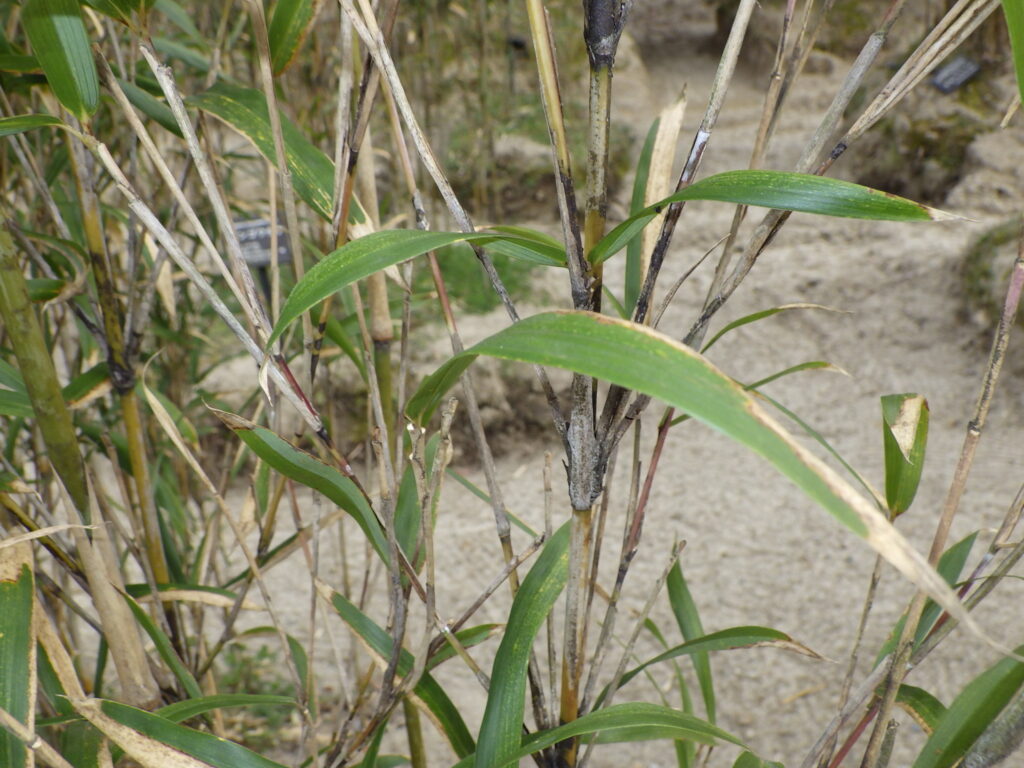
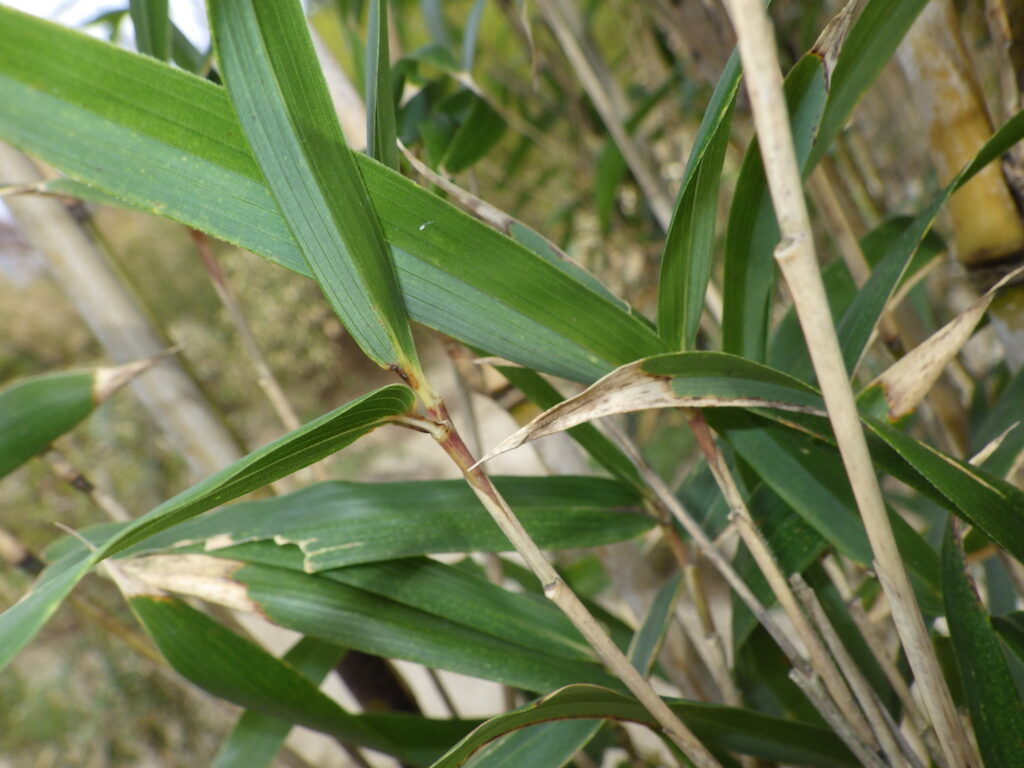
No.0921.a Pleioblastus chino f. pumilis
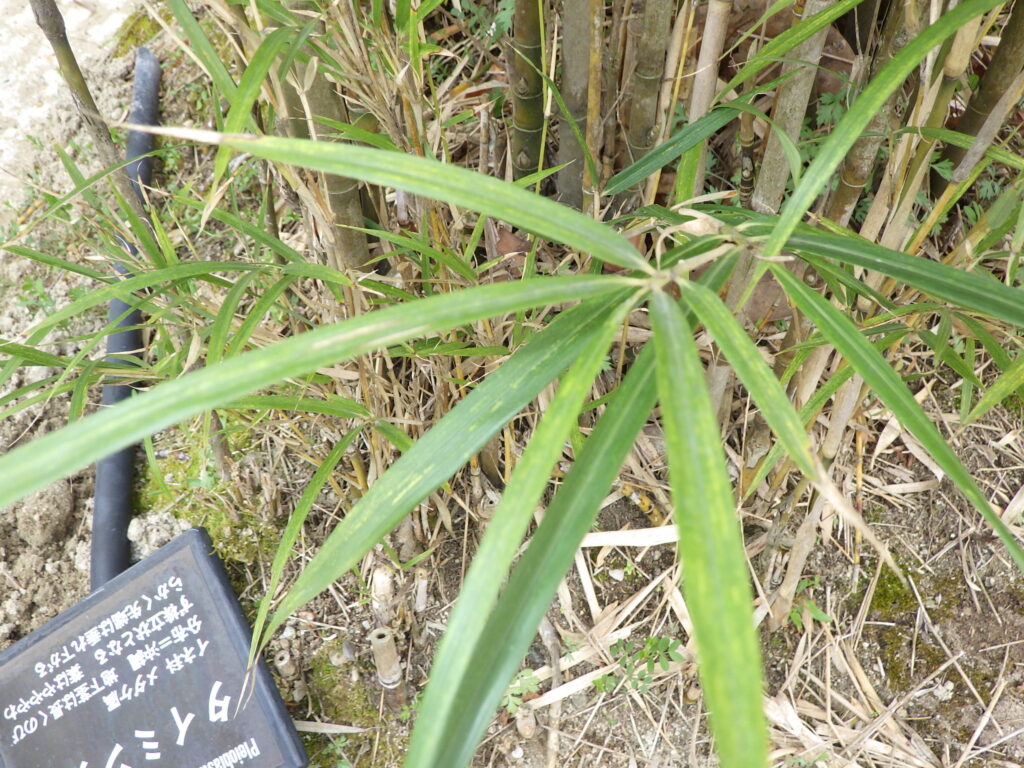
No. 0922 Pleioblastus gramineus (Tai Minchiku)
It closely resembles Ryukyu bamboo. It is characterized by hairless culm sheaths and slightly twisted, drooping leaf blade tips, but identification is difficult with specimens collected at the wrong time. It is necessary to check for the presence or absence of hairs on fresh culm sheaths. Native to the Ryukyu Islands. Compared to the previous species, cultivation and escape from the wild are less common.
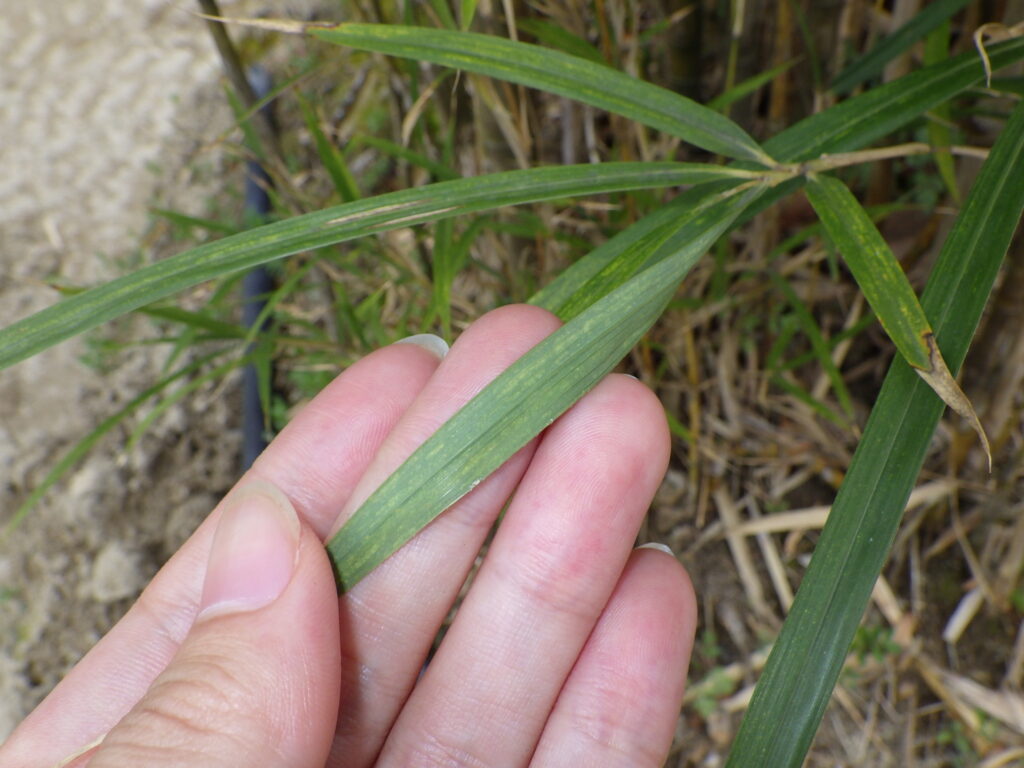
No.0923.a Pleioblastus kongosanensis
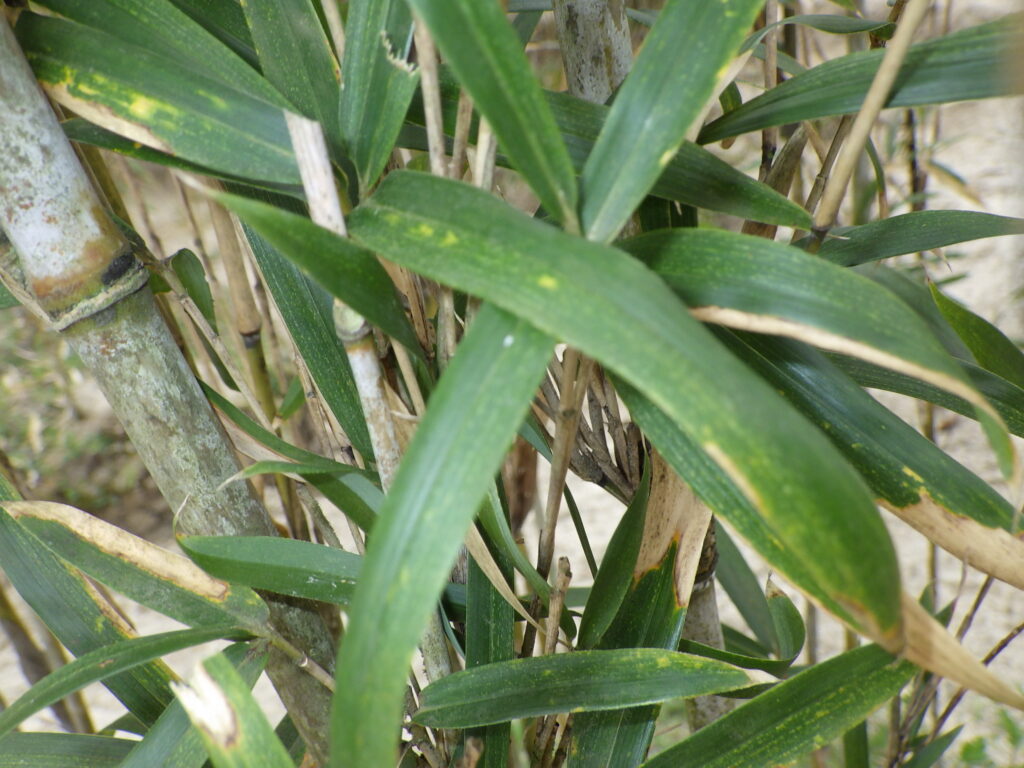
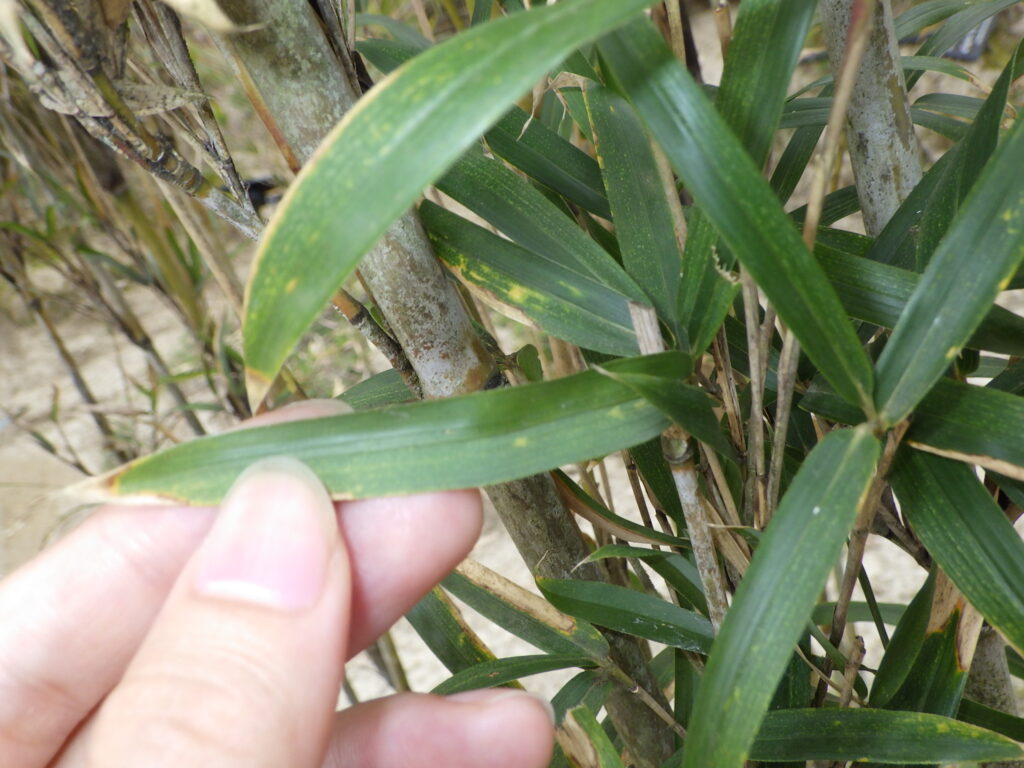
No.0923.b Shibuya bamboo (Pleioblastus shibuyanus)
Similar to Sasa japonica, it has dense hairs on the underside of the leaf blade. The culm is 1-2m tall, and the culm sheath and leaf sheath are hairless. The leaf blade has a short, pointed tip, and the upper surface is covered with fine hairs, short hairs, or is hairless. It is mainly distributed in Honshu (south of the Kanto region), Shikoku, and Kyushu.
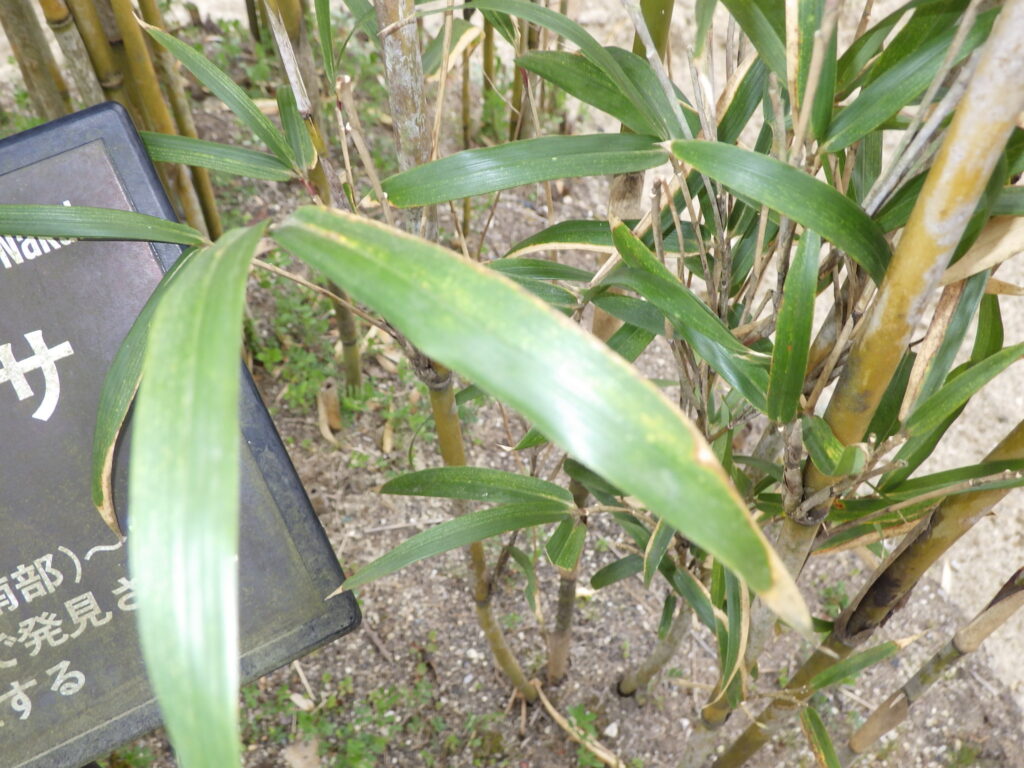
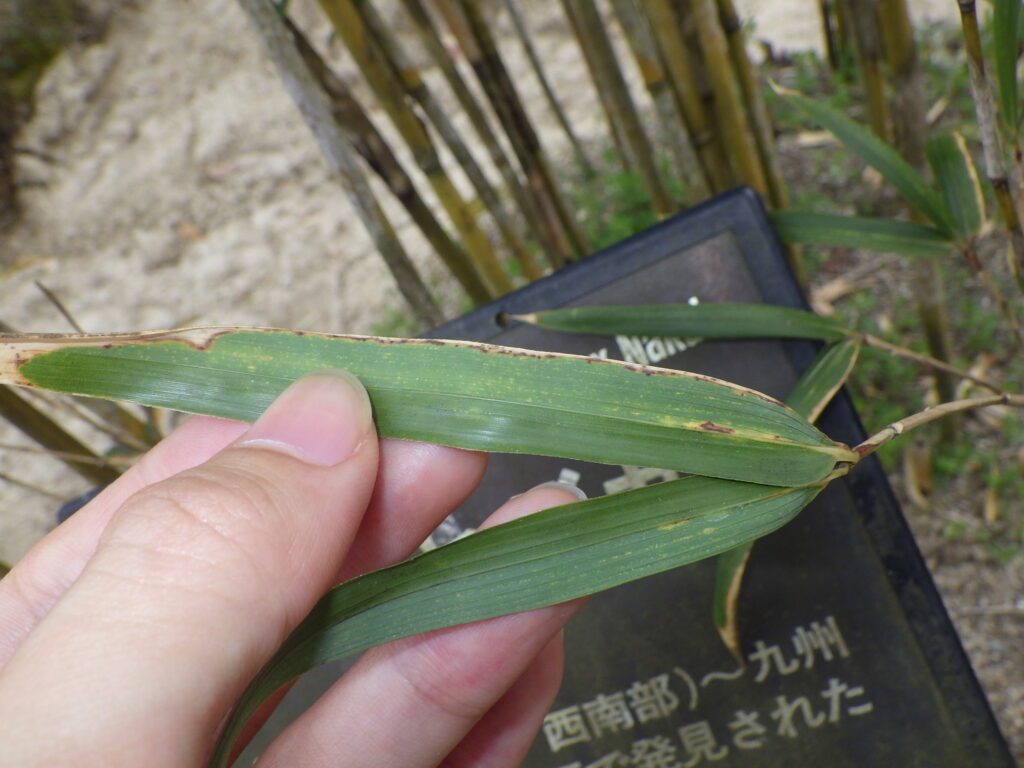
No.0924.1 Sasaella ramosa var. suwekoana
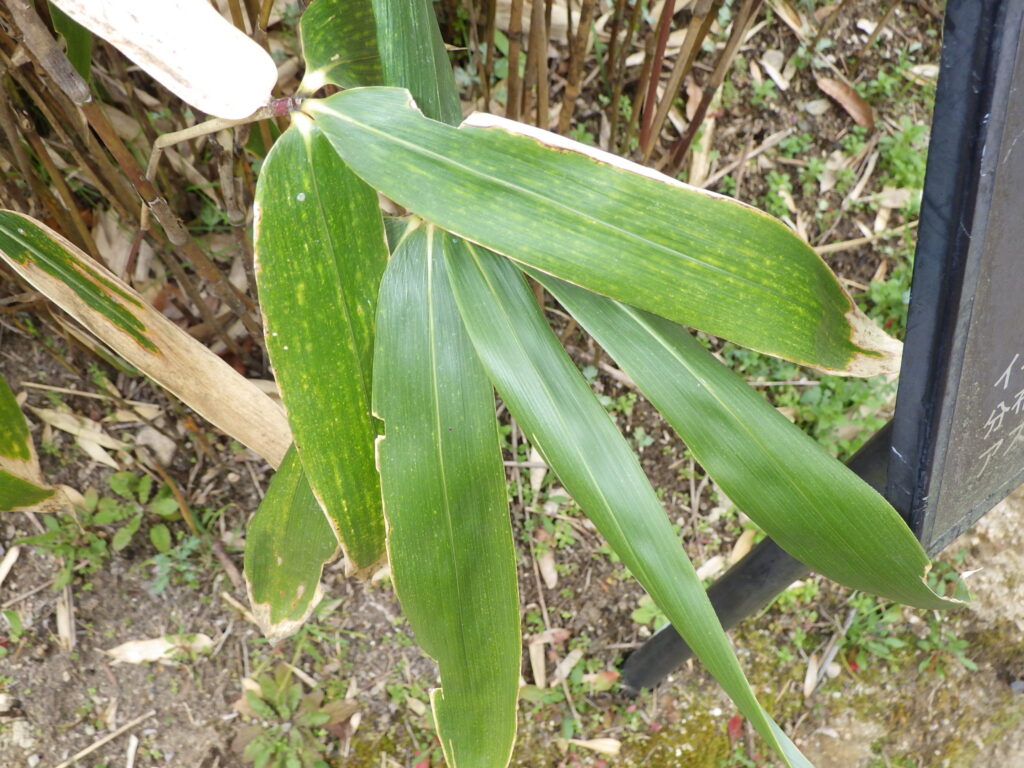
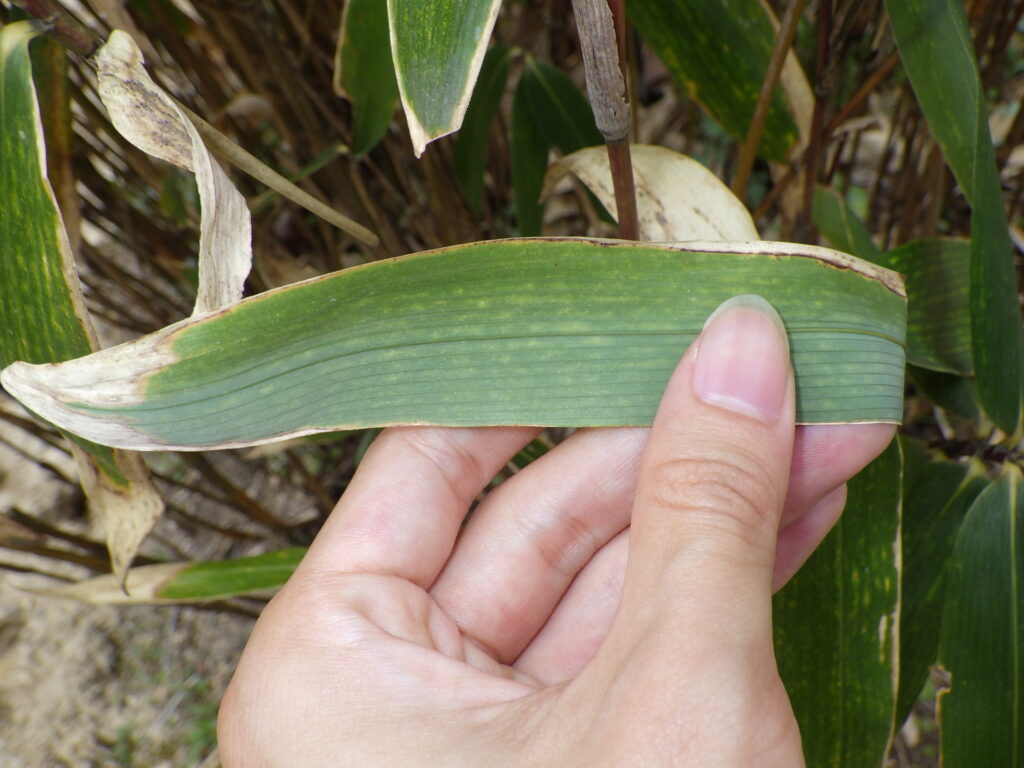
No.0924.a Sasaella masamuneana
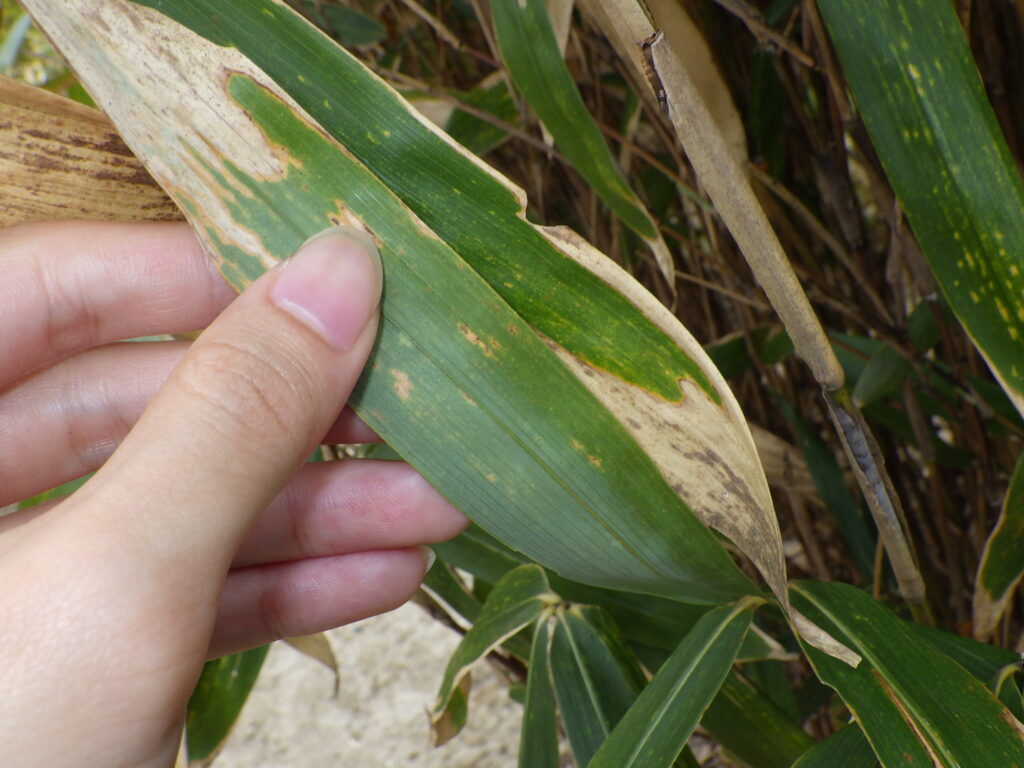
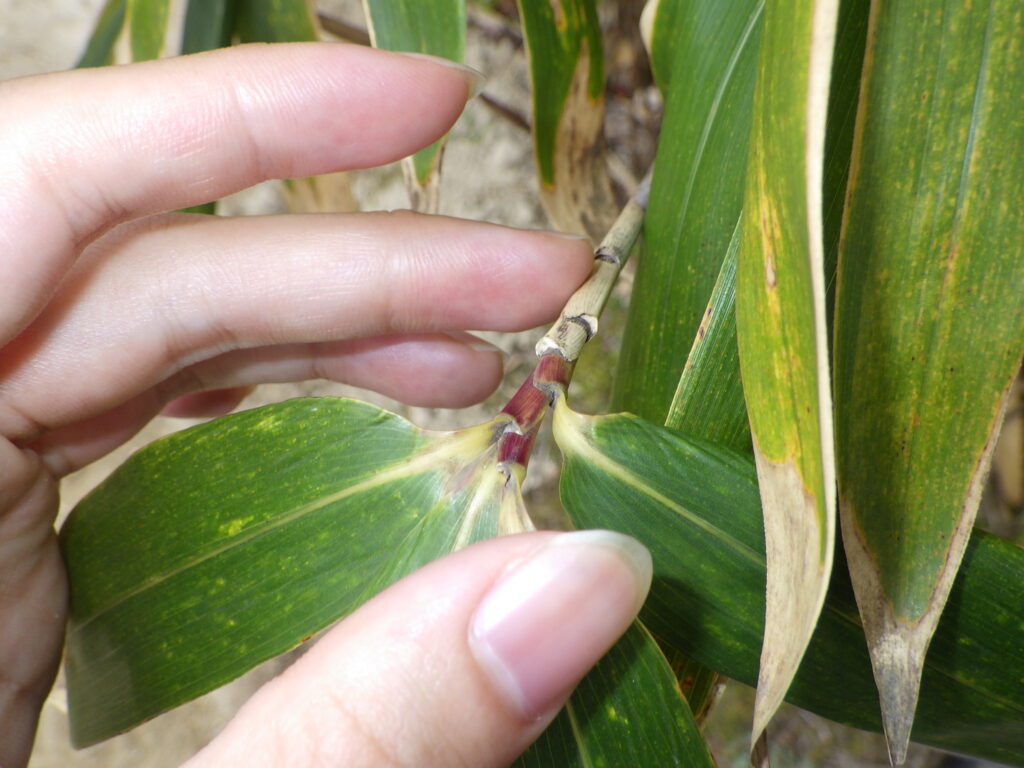
Also known as Genkeichiku. The culms are about 1-2m tall, and the culm sheath and leaf sheath are glabrous. The upper surface of the leaf blade is glabrous, sometimes with long or short hairs, and the lower surface is glabrous. It is distributed in Honshu and Kyushu. Even species of the Sasa genus that have hairs on the culm sheath, leaf sheath and the underside of the leaf blade are easily mistaken for this species if they have lost their hairs or have very few hairs.
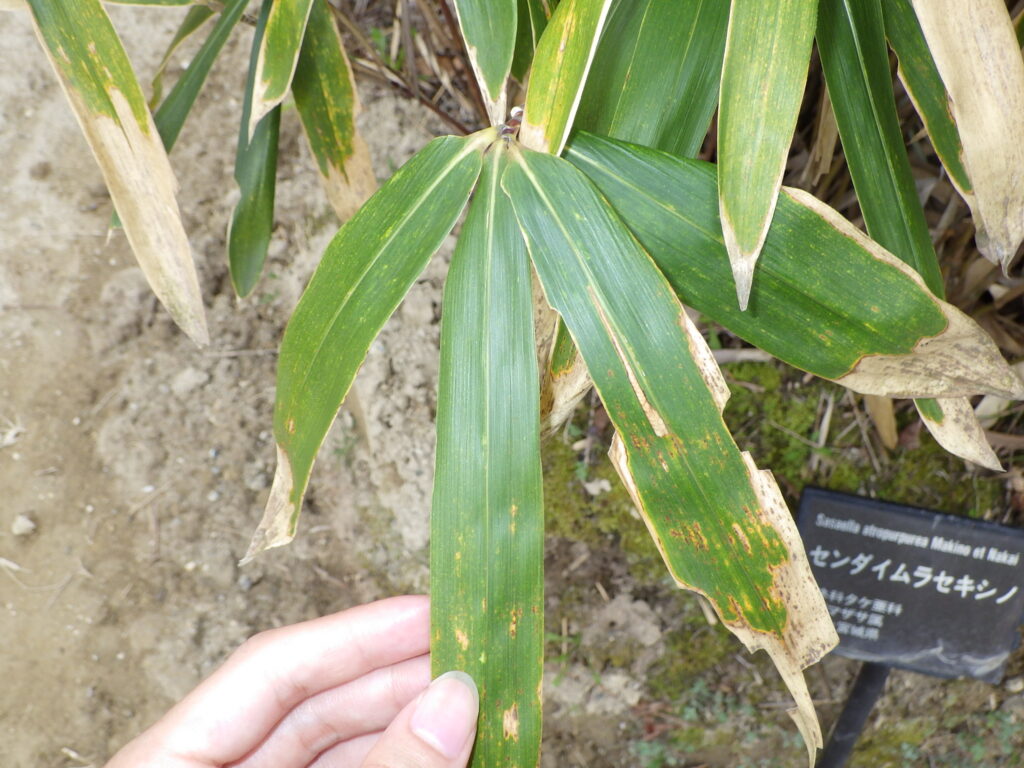
No.0924.b Sasaella hidaensis
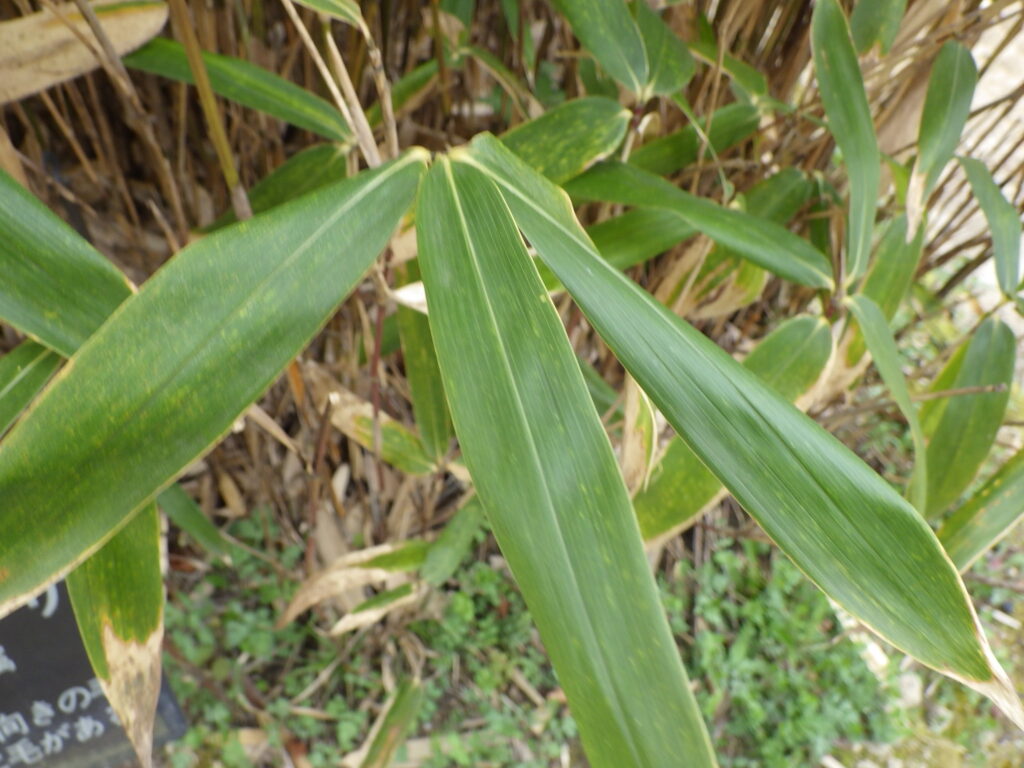
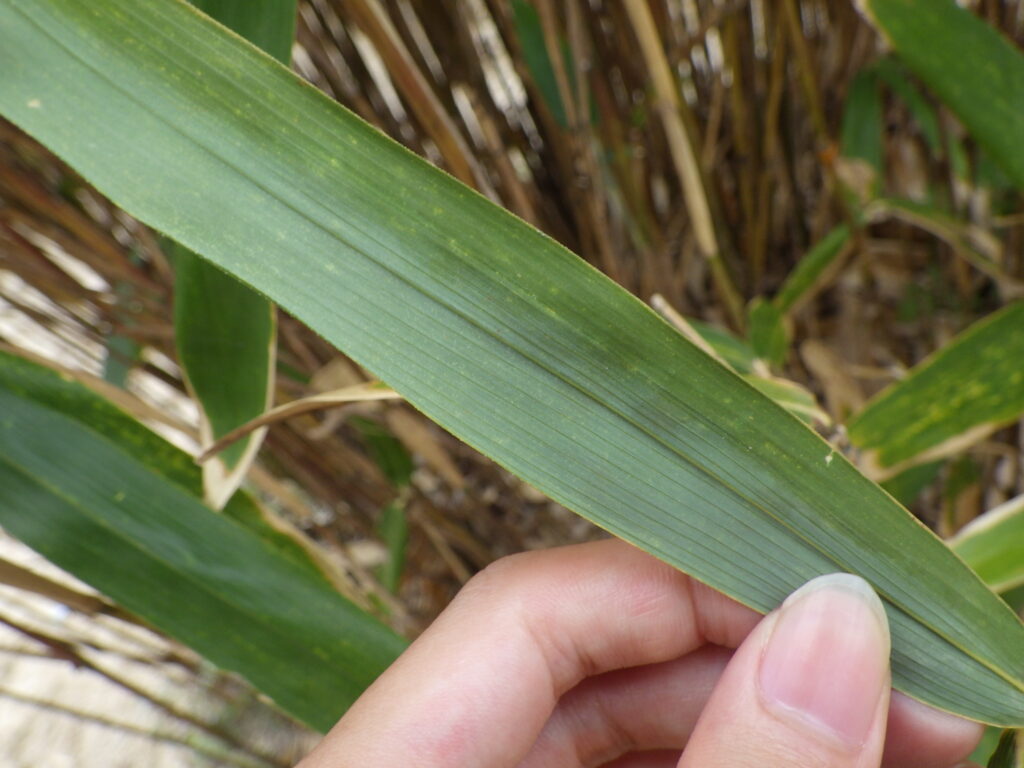
It is the parent species of *Sasa miyagii*, and its type locality is Takayama City, Gifu Prefecture. The underside of the leaves and the culm sheath are densely covered with fine hairs, but the leaf sheath is hairless. It is fairly common in northern and southwestern Honshu, and is said to be very rare in Shikoku and Kyushu.
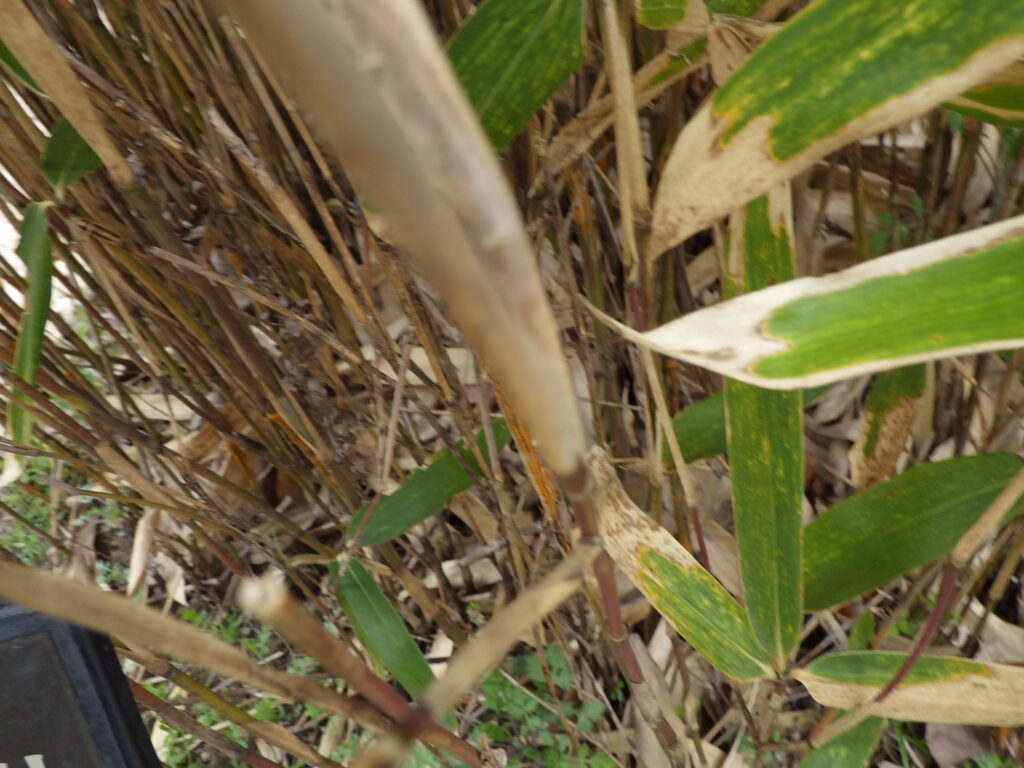
No.0925 Sasa veitchii
The culms are 50-150 cm tall, branching sparsely from the base. The culm sheath at the bottom of the culm is densely covered with coarse, spreading hairs for about two-thirds of the internode. The nodes are slightly swollen. The leaf sheaths are glabrous, and the shoulder hairs spread radially. The leaf blades are glabrous on both the upper and lower surfaces. The leaves are noticeably marked in winter. It is said to have been native to Kyoto, but it has been cultivated throughout Japan, and escaped cultivation has resulted in many wild-growing specimens in foothills and hilly areas.
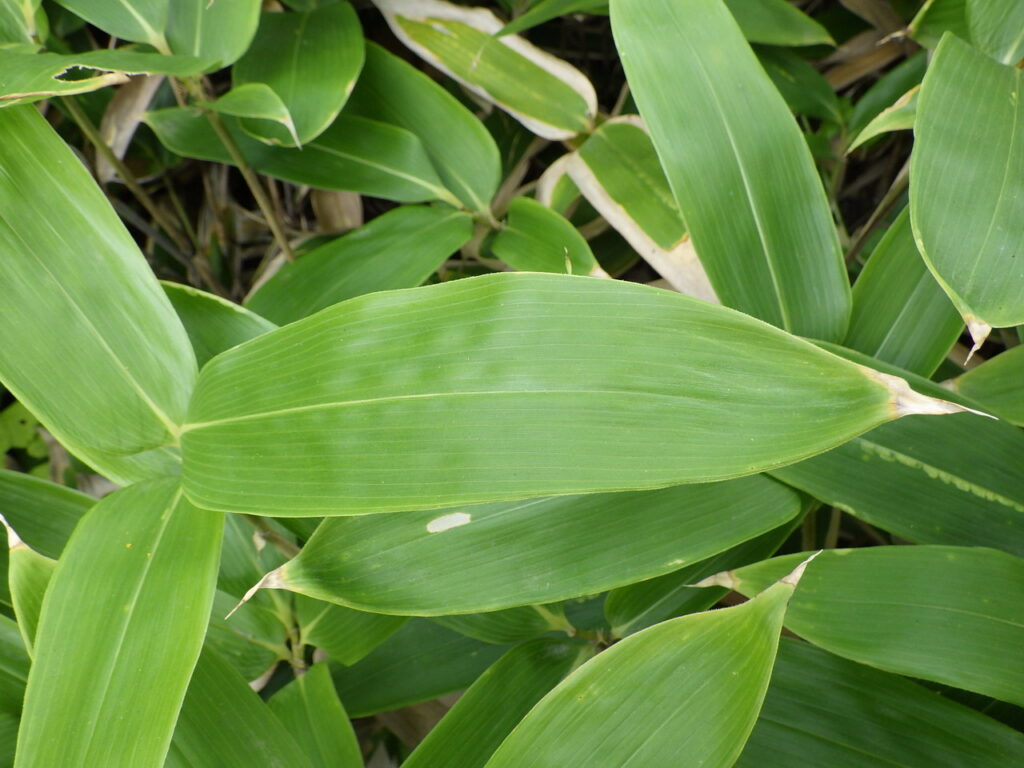
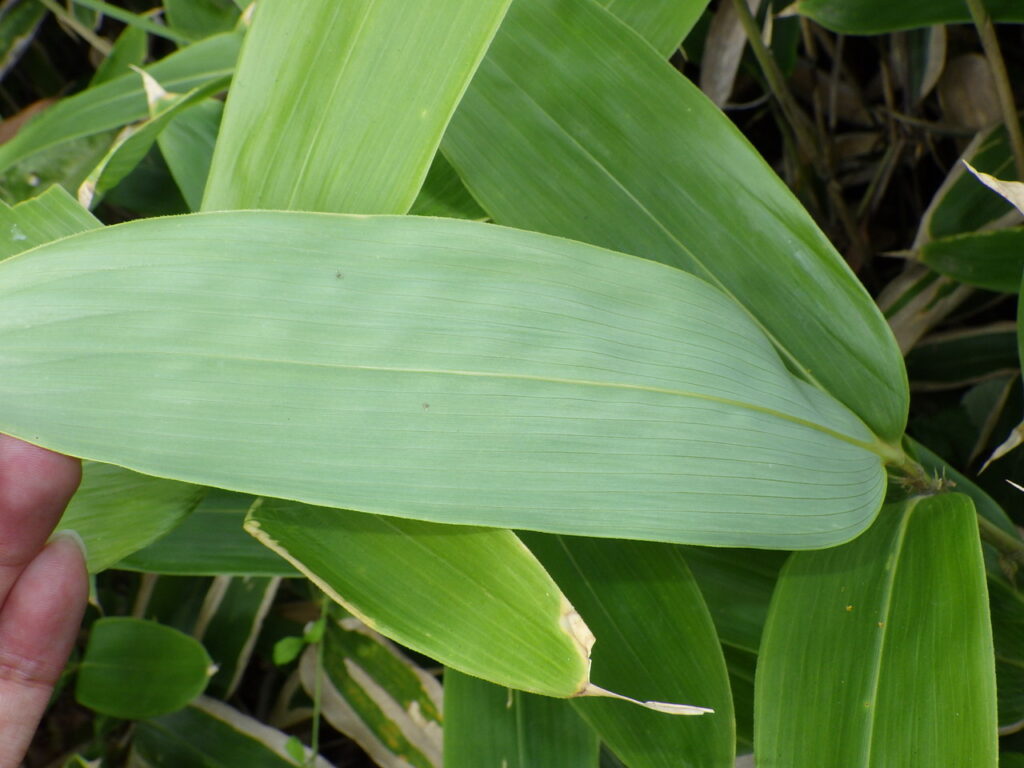
No. 0927 Sasa palmata
The culms are 150-200 cm tall, branching sparsely from the base. The culm sheath at the bottom of the culm is hairless for about two-thirds of the internode length. The nodes are slightly swollen. The leaf sheaths are hairless, and the shoulder hairs spread radially. The leaf blades are hairless on both the upper and lower surfaces. It is distributed in mountainous areas of Hokkaido, Honshu (Japan Sea side), Shikoku, and Kyushu.
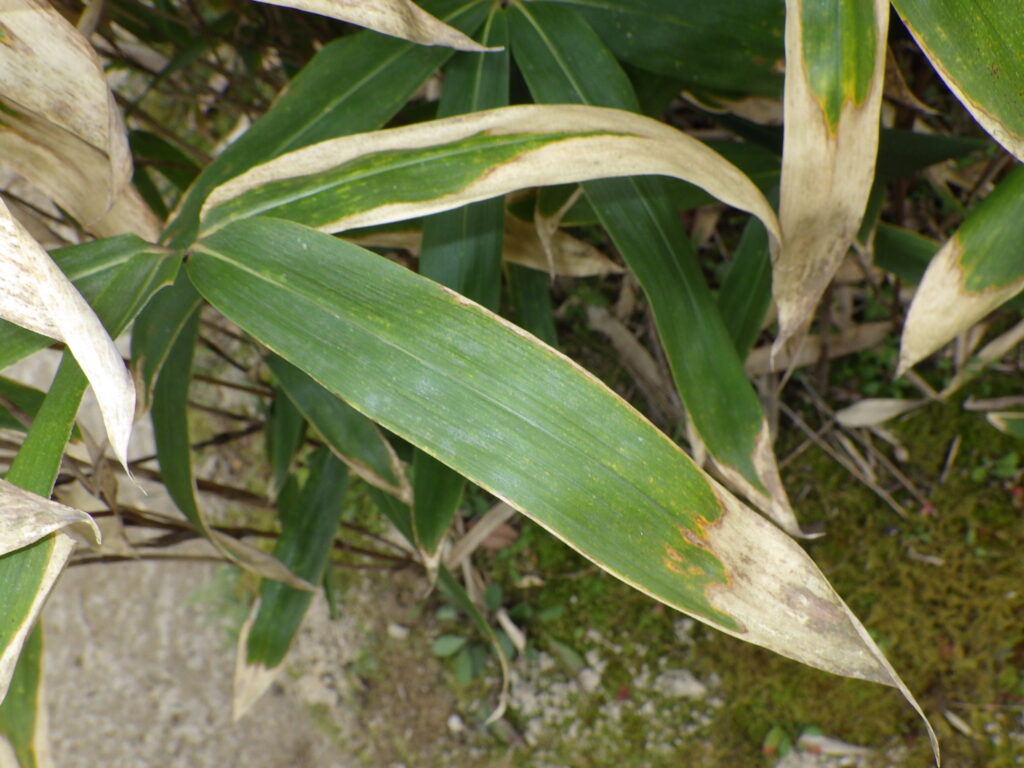
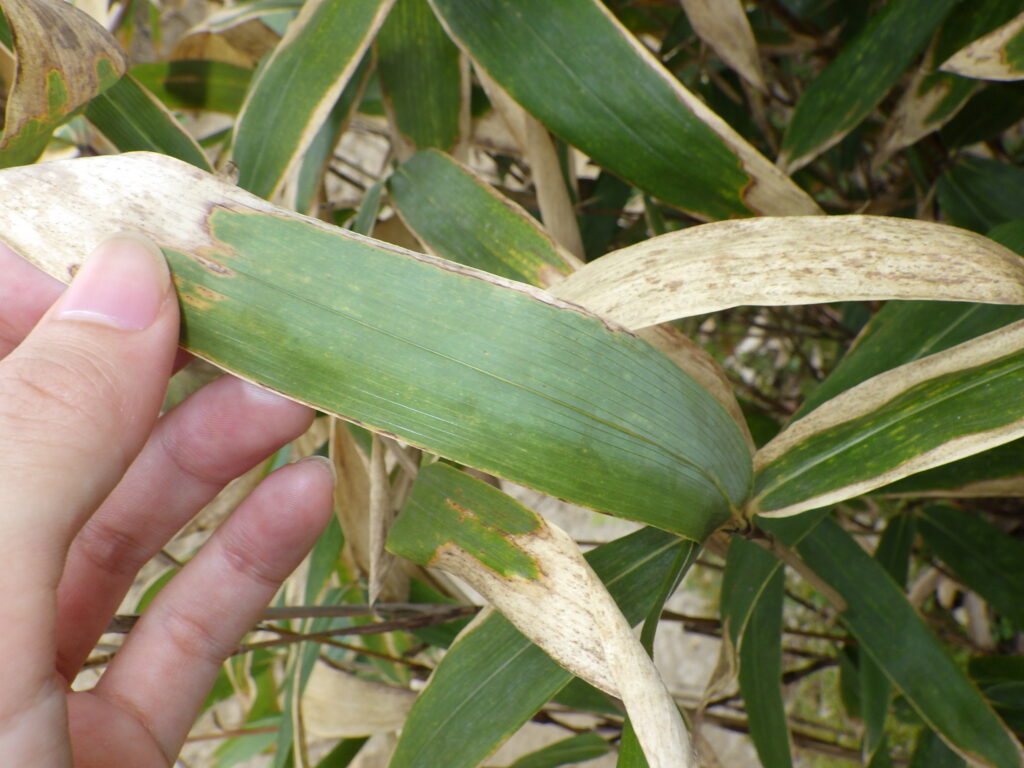
No.0927.a Sasa yahikoensis var. oseana
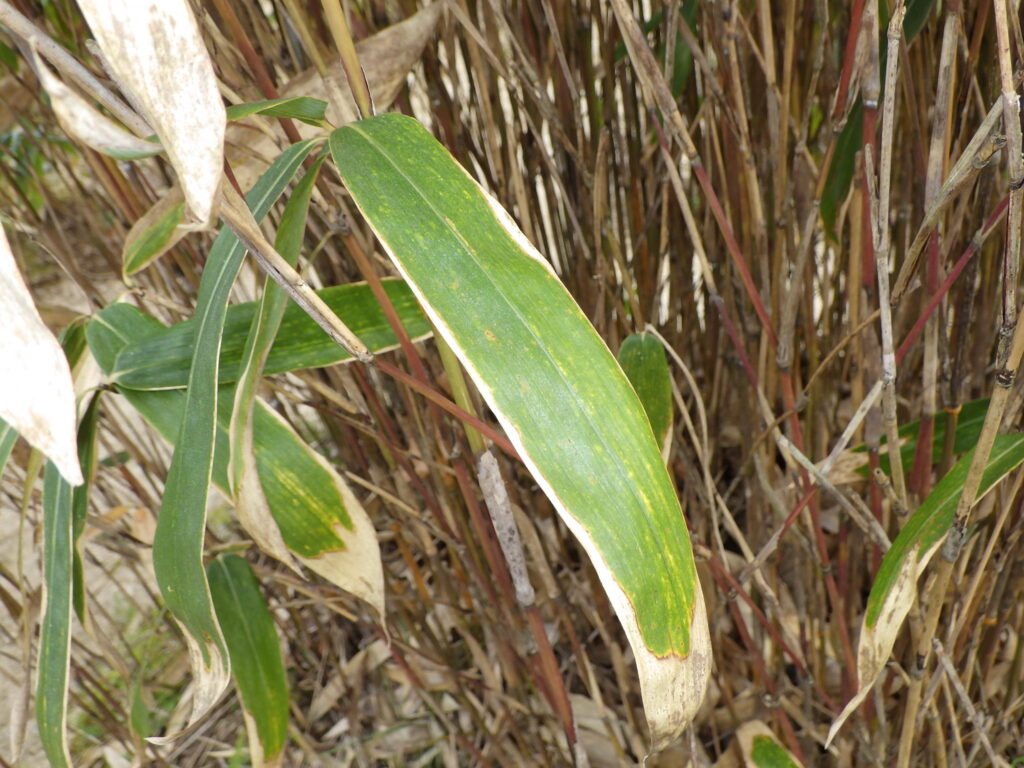
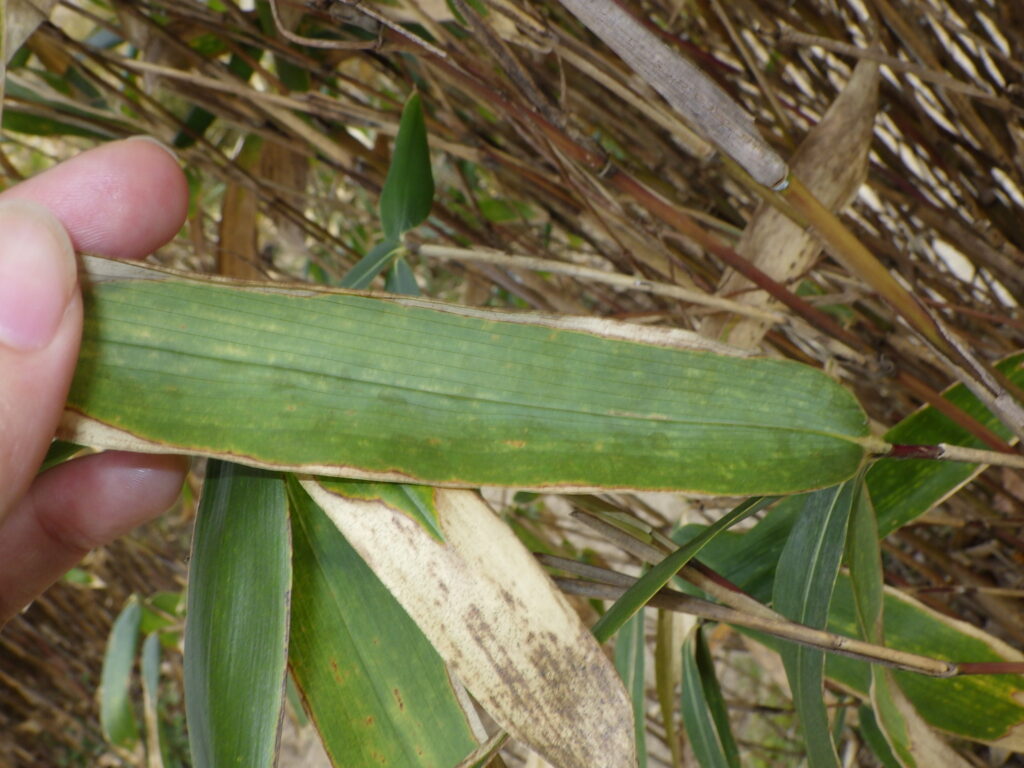
No.0927.b Sasa kurilensis
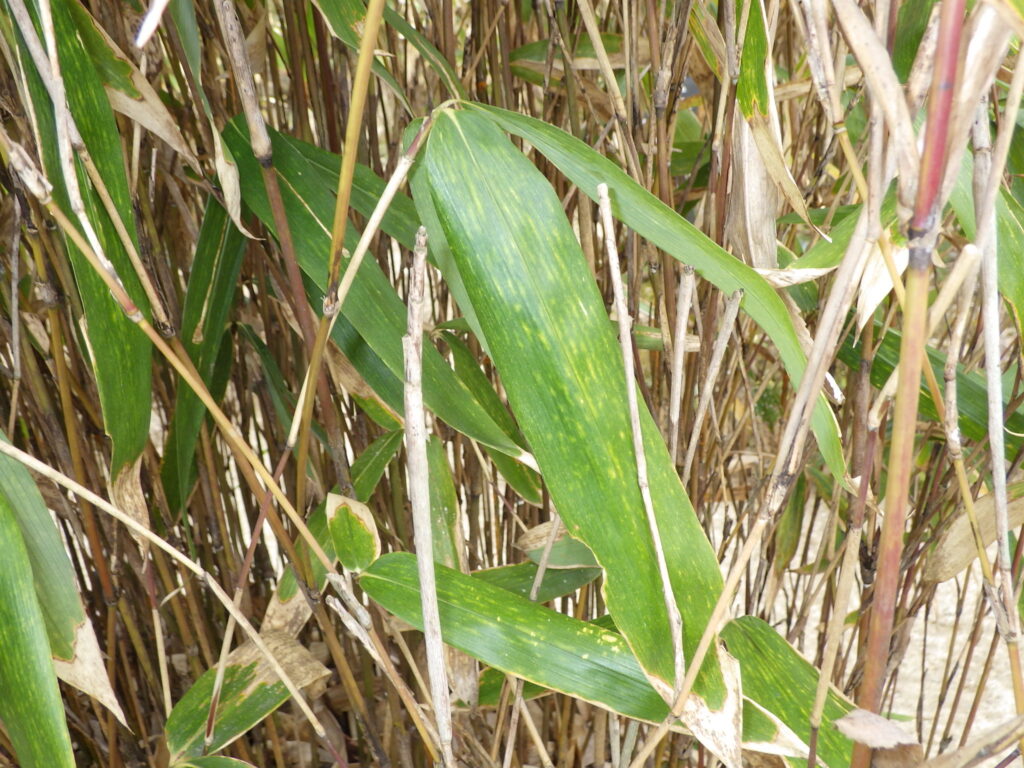
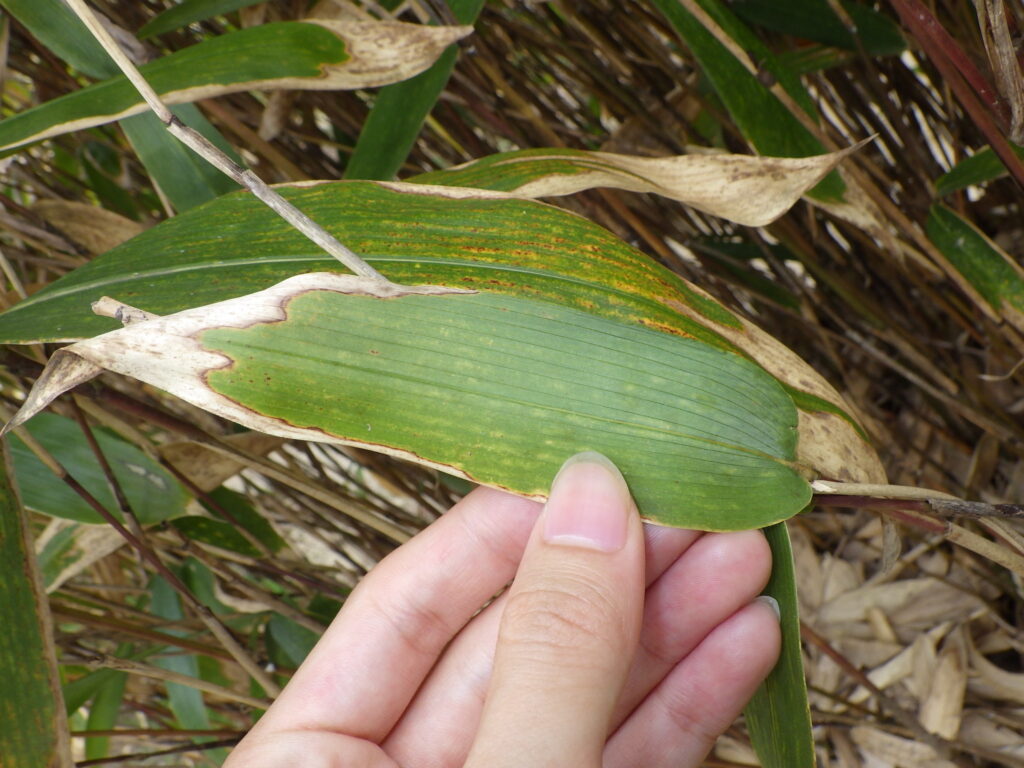
No.0927.c *Sasa kurilensis-S. senanensis complex 'Nebulosa'*‘
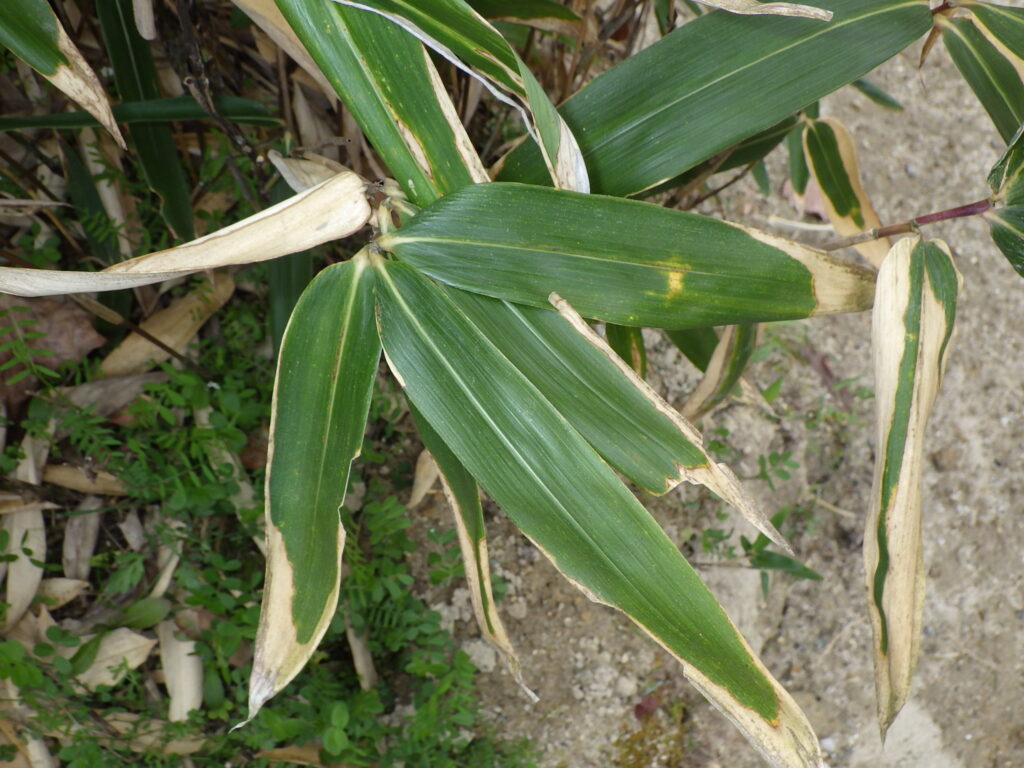
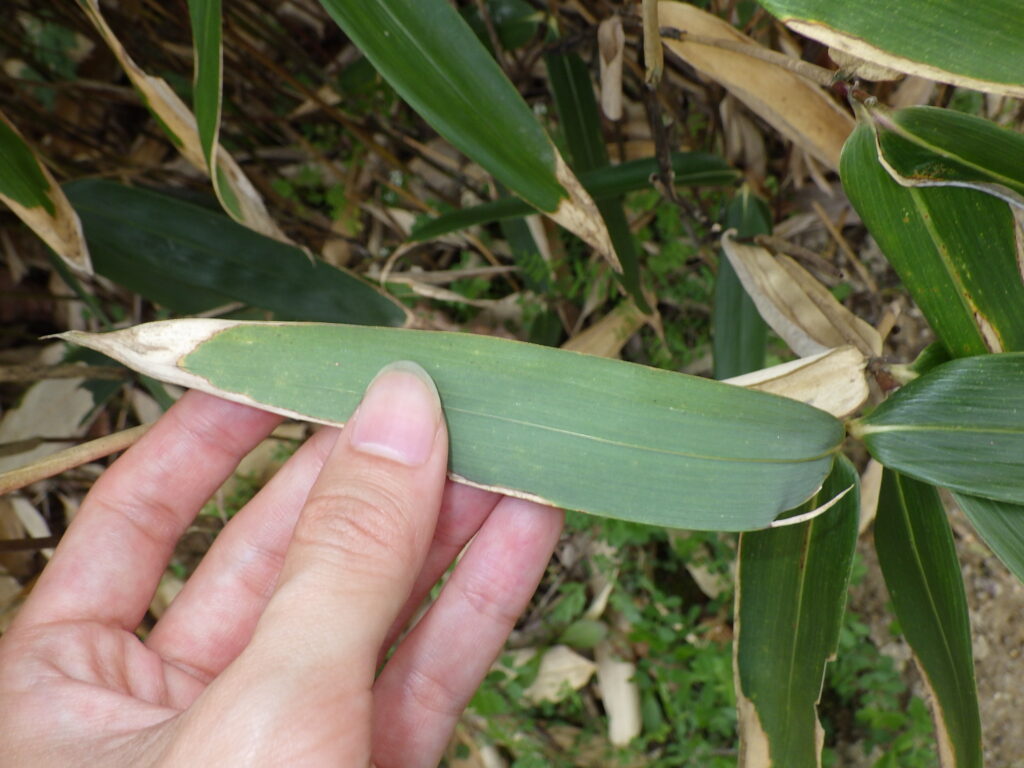
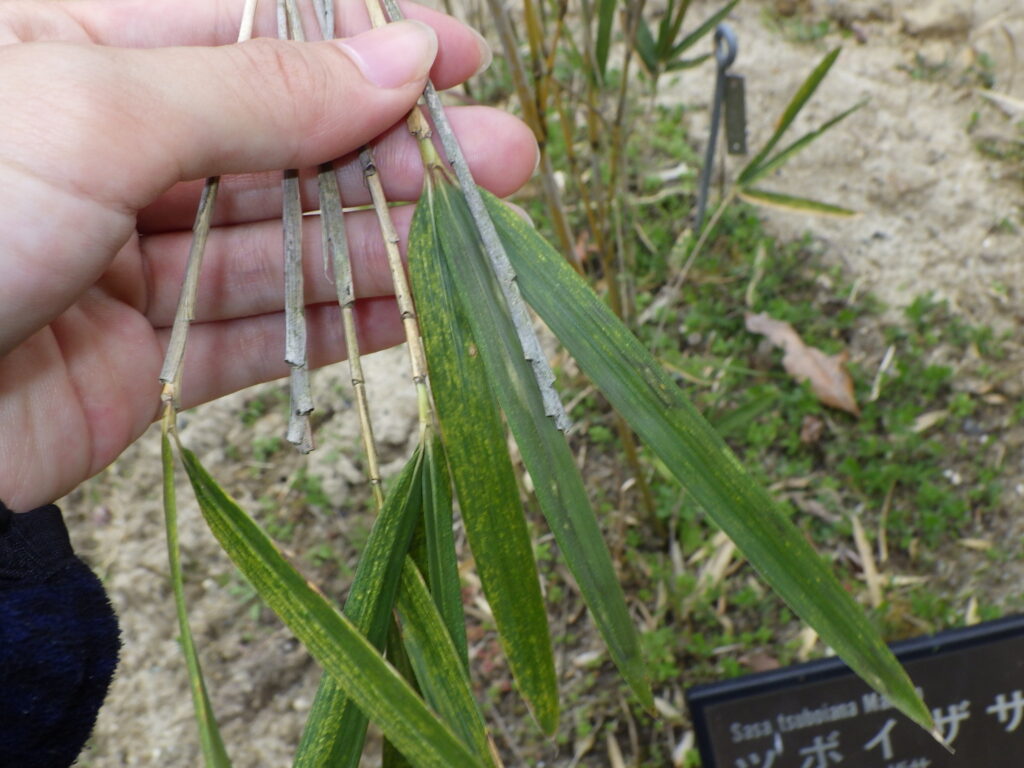
No.0927.d Ibukizasa (Sasa tsuboiana)
Also known as Amagizasa. The culms are 50-150 cm tall, branching sparsely at the lower part and densely at shortened nodes at the upper part, a pattern that repeats every few years. The nodes are swollen into a spherical shape. The culm sheath is hairless, and in the middle and lower parts of the culm, it is less than half the length of the internode. The leaf sheath is hairless. The leaf blade is hairless on both the upper and lower surfaces. The shoulder hairs spread radially. It is distributed in Honshu (central and southern Pacific coast), Shikoku, and Kyushu.
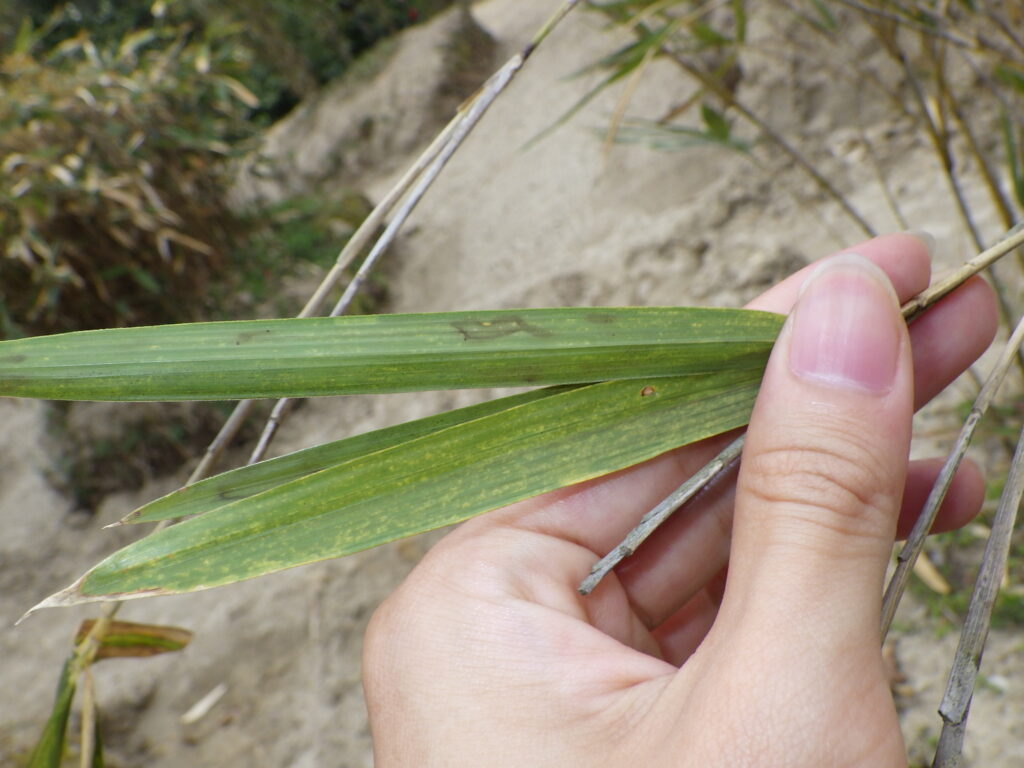
No.0927.e Hakone Southern Bell (Neosasamorpha shimidzuana subsp. shimidzuana)
The culms are 1-2m tall, and the culm sheaths are densely or sparsely covered with long, coarse, spreading hairs. The internodes have fine, backward-pointing hairs or are glabrous. The leaf sheaths are glabrous. The shoulder hairs are radial and coarse all over. The leaf blades are glabrous on the upper surface and usually densely covered with soft hairs on the lower surface. It is distributed in Honshu (Pacific side), Shikoku, and Kyushu.
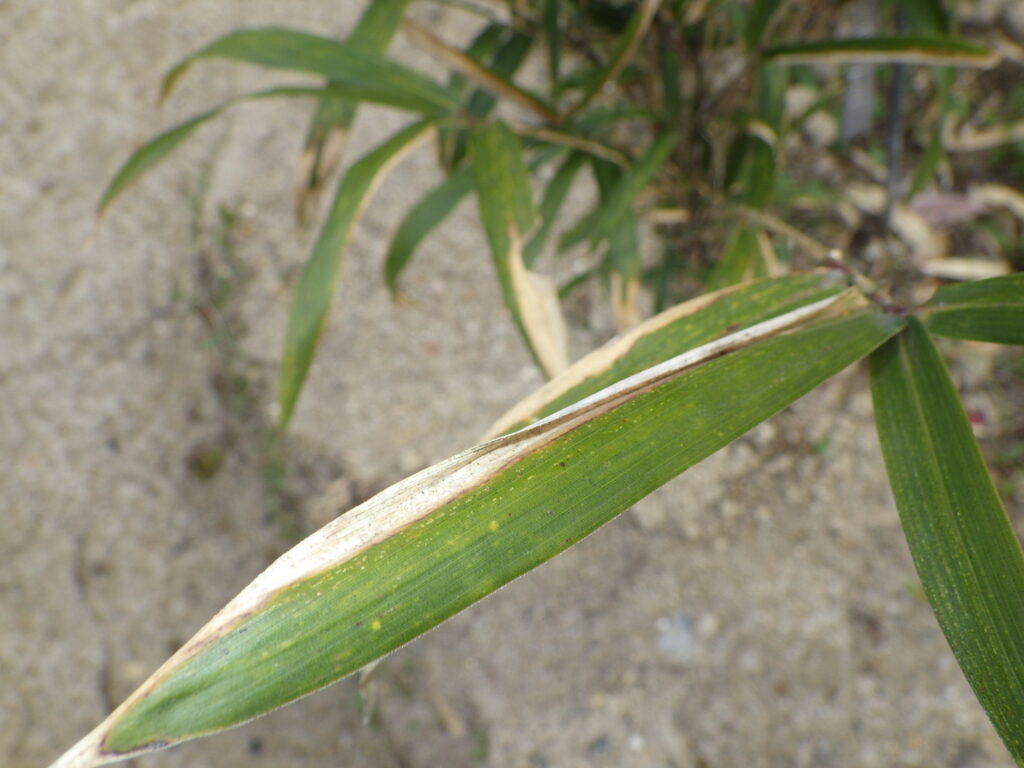
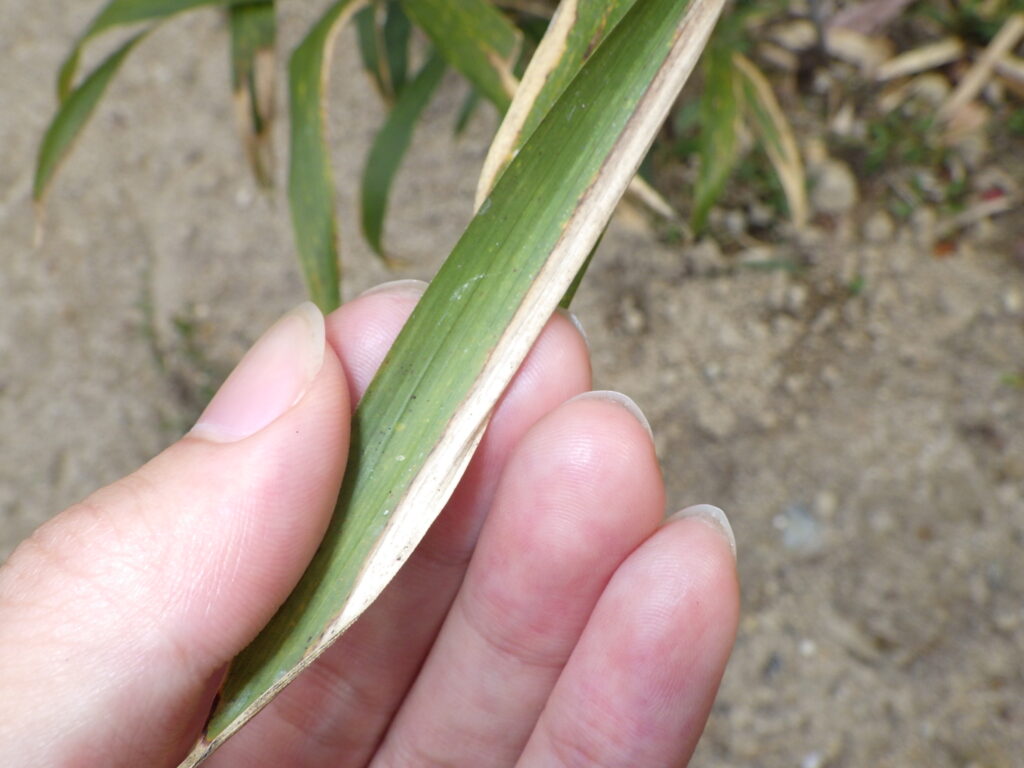
No.0928.a Sasamorpha mollis
The culms are 1-2m tall, with flat nodes. The culm sheath is longer than the internodes, densely covered with coarse hairs, sometimes mixed with fine, backward-pointing hairs. The internodes have backward-pointing fine hairs or are sometimes glabrous. The leaf sheath is densely covered with upward-pointing fine hairs or glabrous. There are no shoulder hairs. The upper surface of the leaf blade is glabrous, and the lower surface is densely covered with soft hairs, otherwise it is indistinguishable from *Dambusa sieboldiana*. It is distributed in Honshu (Pacific side) and Shikoku. *Dambusa sieboldiana* also has hairs at the base of the lower surface of the leaf blade, so this may be a difference at the variety level.
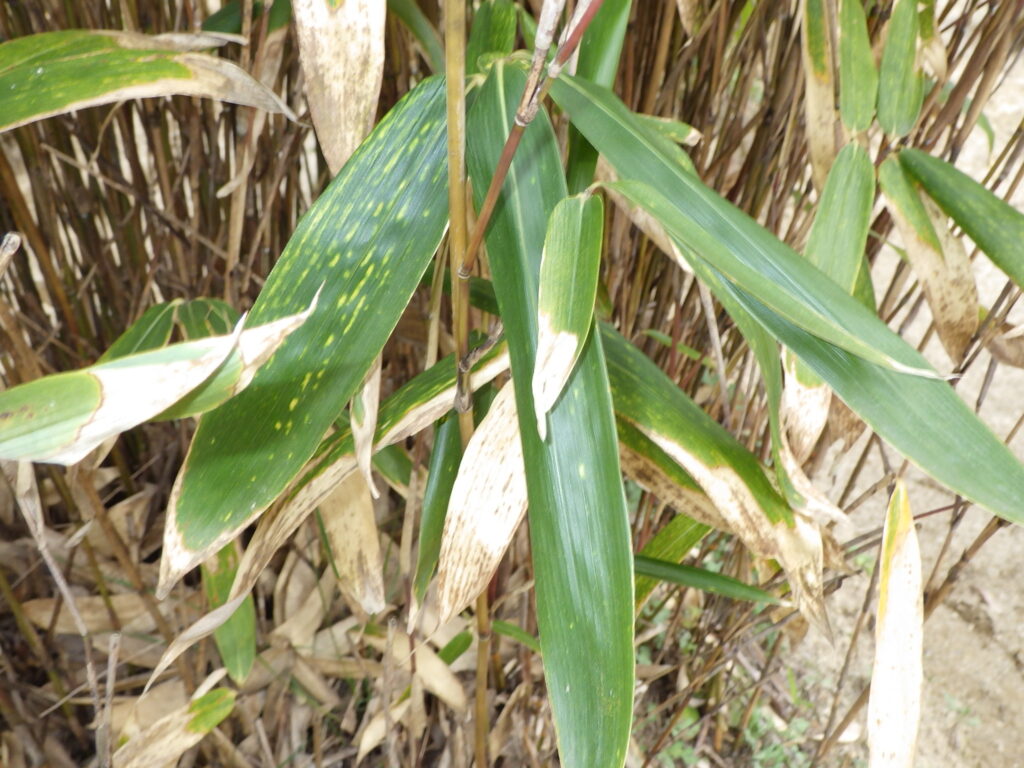
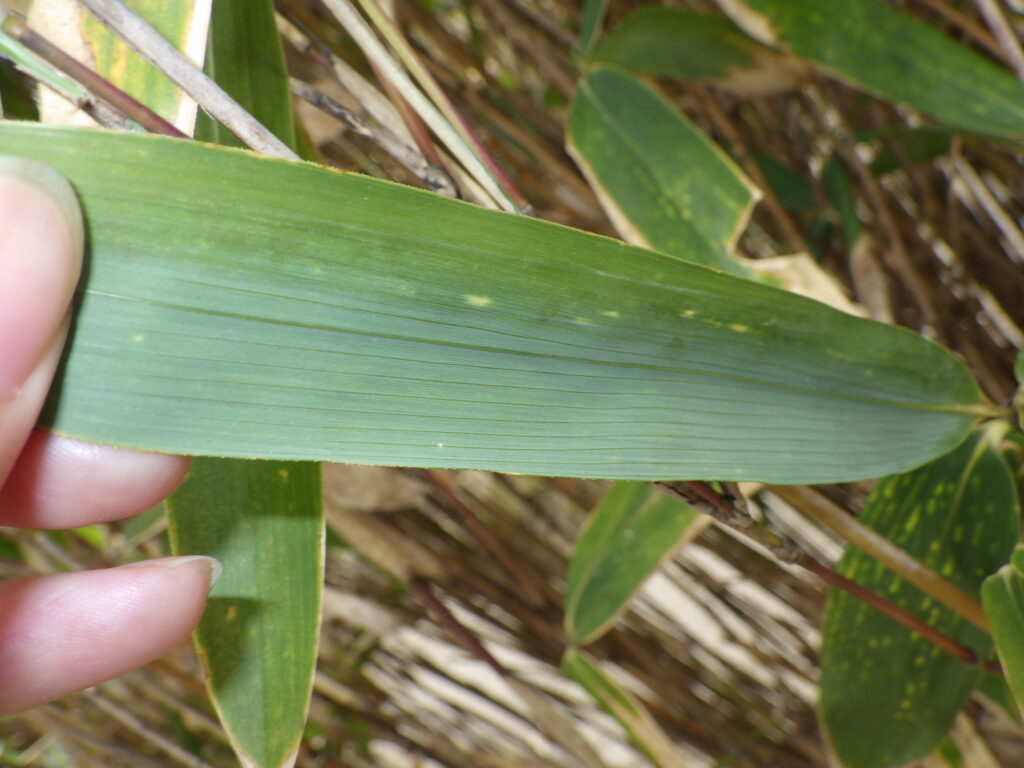
No.0929.1 Pseudosasa japonica 'Tsutsumiana' (Japanese shallot mushroom)‘
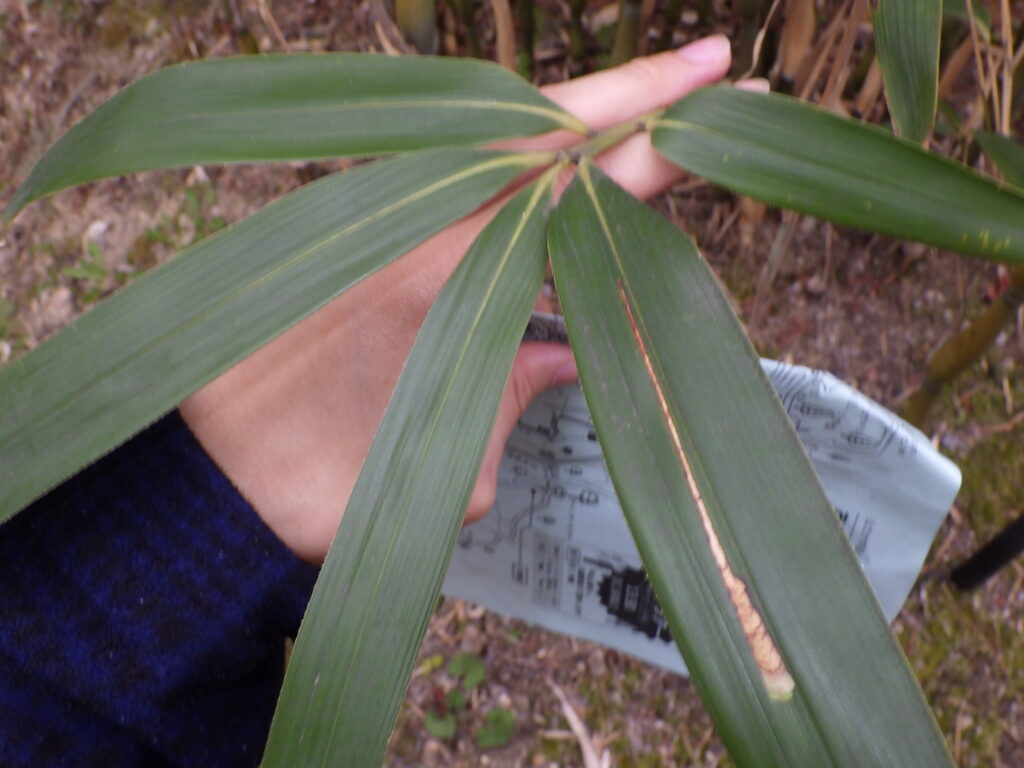
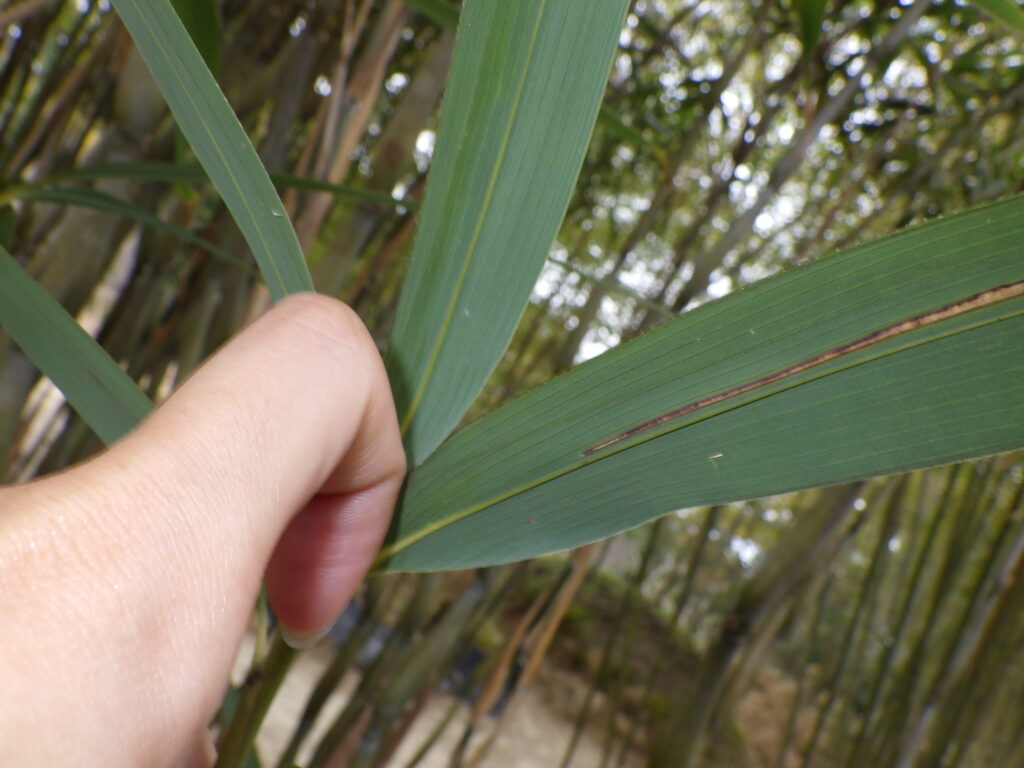
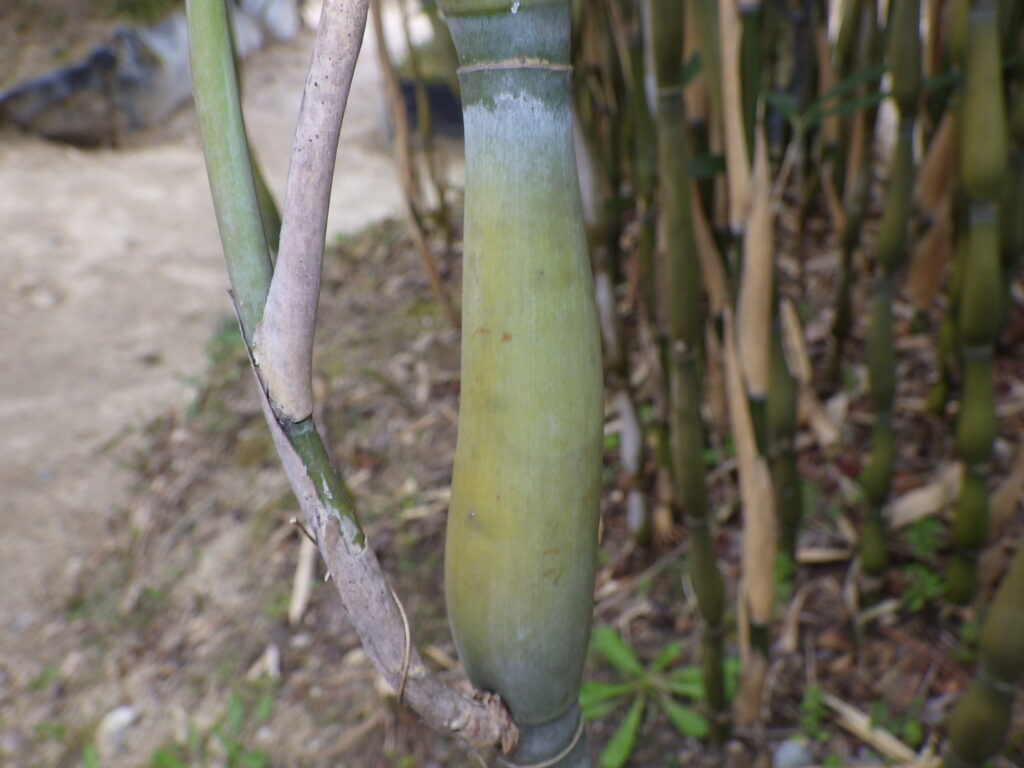
No.0929.a Indocalamus tesselatus
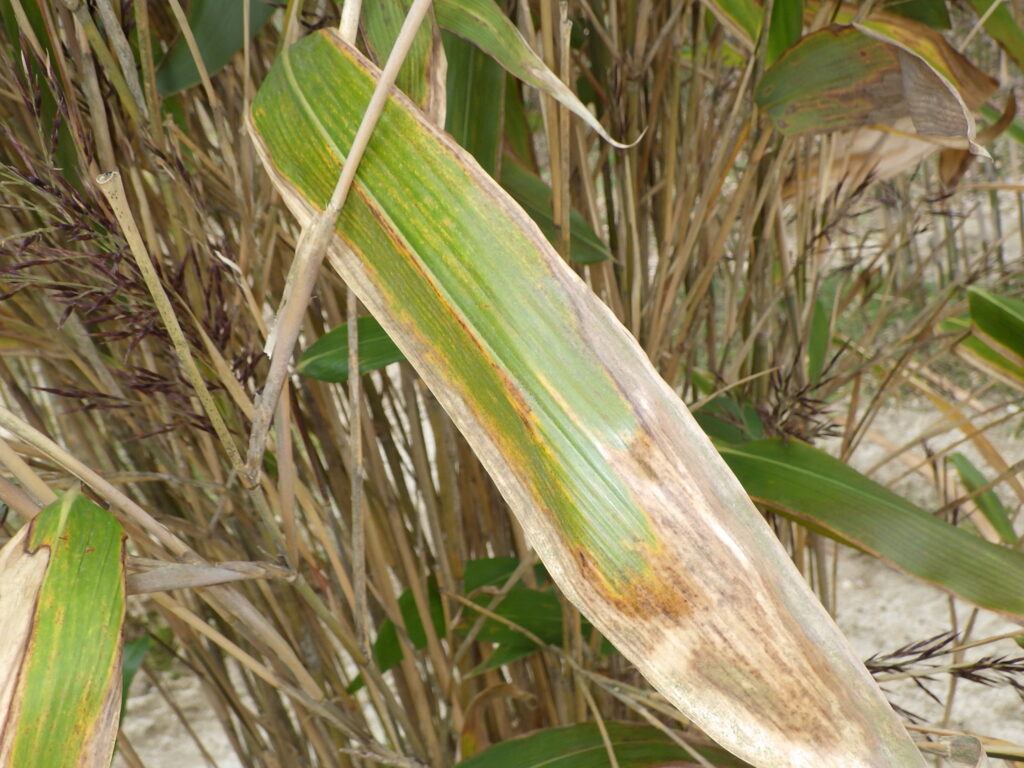
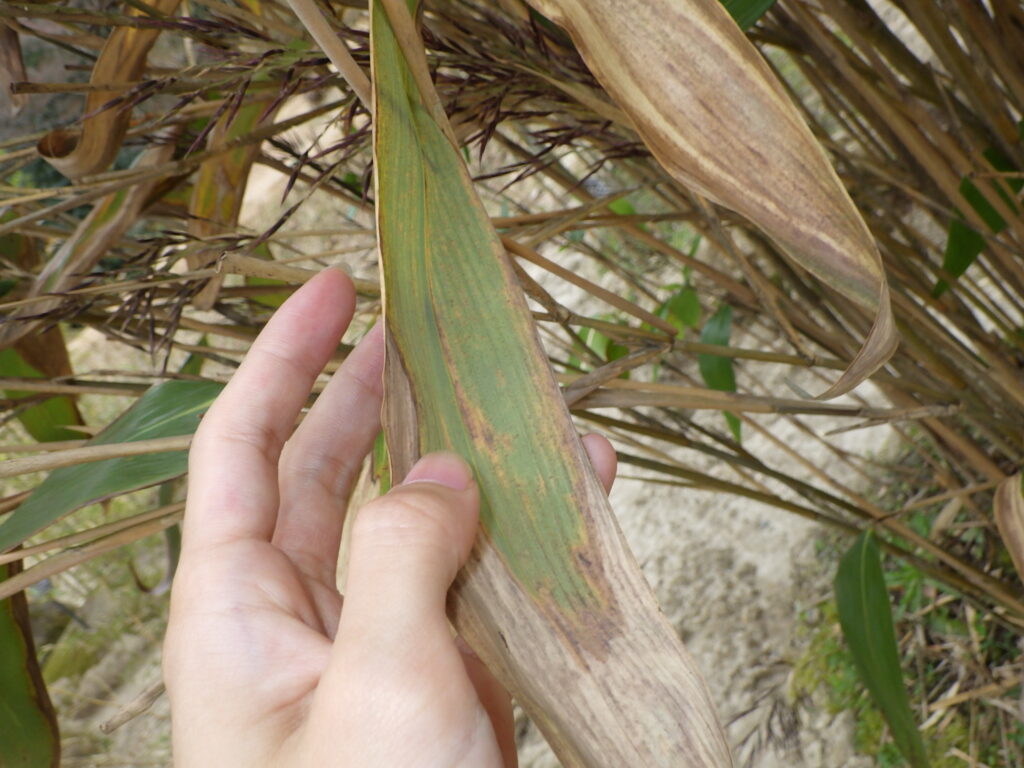
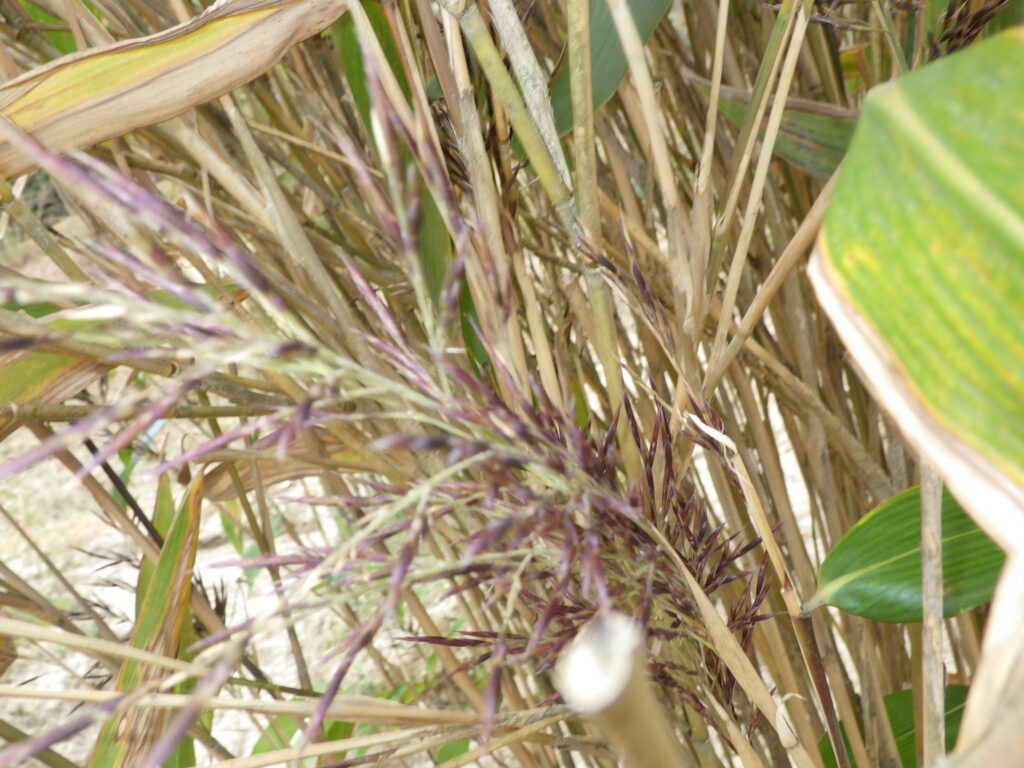
No. 0930 Semiarundinaria fastuosa
This is a medium-sized bamboo species, with culms reaching 7-8m in height. It is initially green, turning purplish-brown with age. The leaf blades are hairless on both sides, sometimes with hairs near the base on the underside. The shoulder hairs are well-developed, and the leaves are somewhat woody and coarse. The ligule is low and difficult to see. It is native to Honshu (southwestern part), but its natural habitat is unknown. It is cultivated in areas west of the Kanto region.
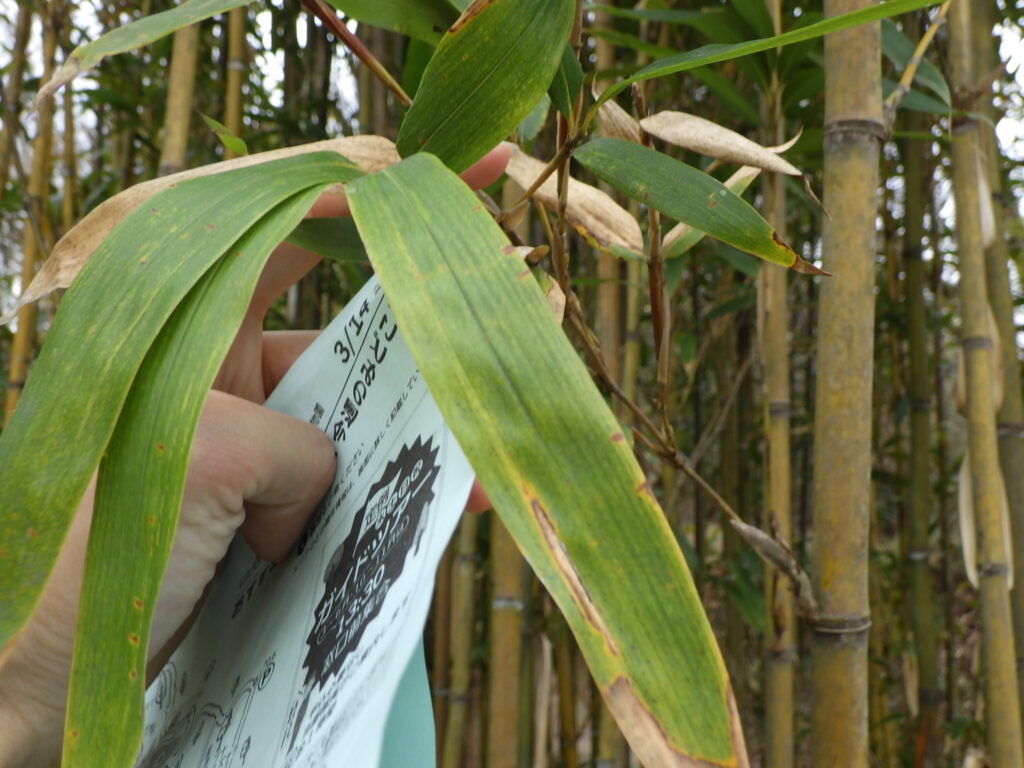
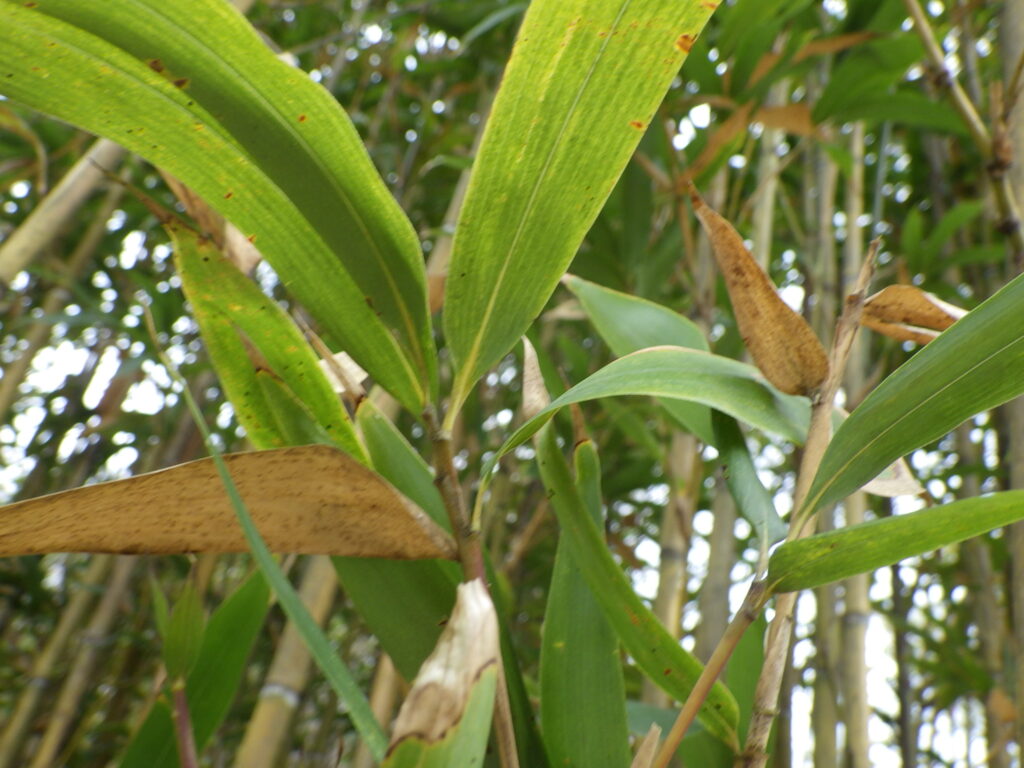
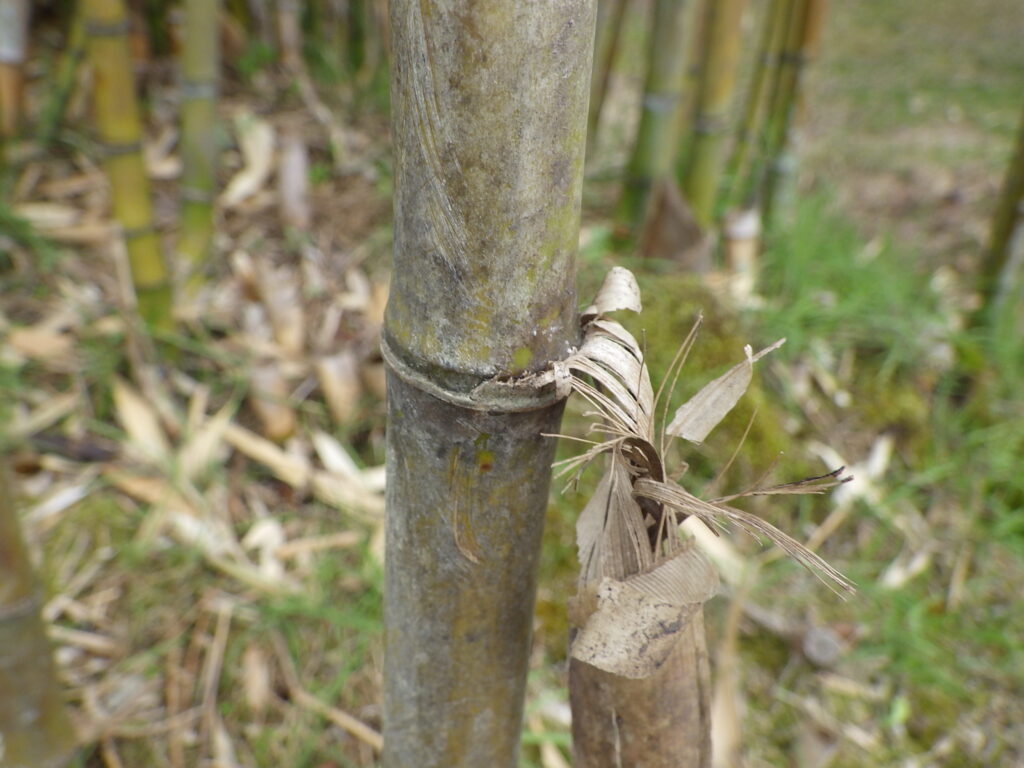
No.0930.a Semiarundinaria okuboi
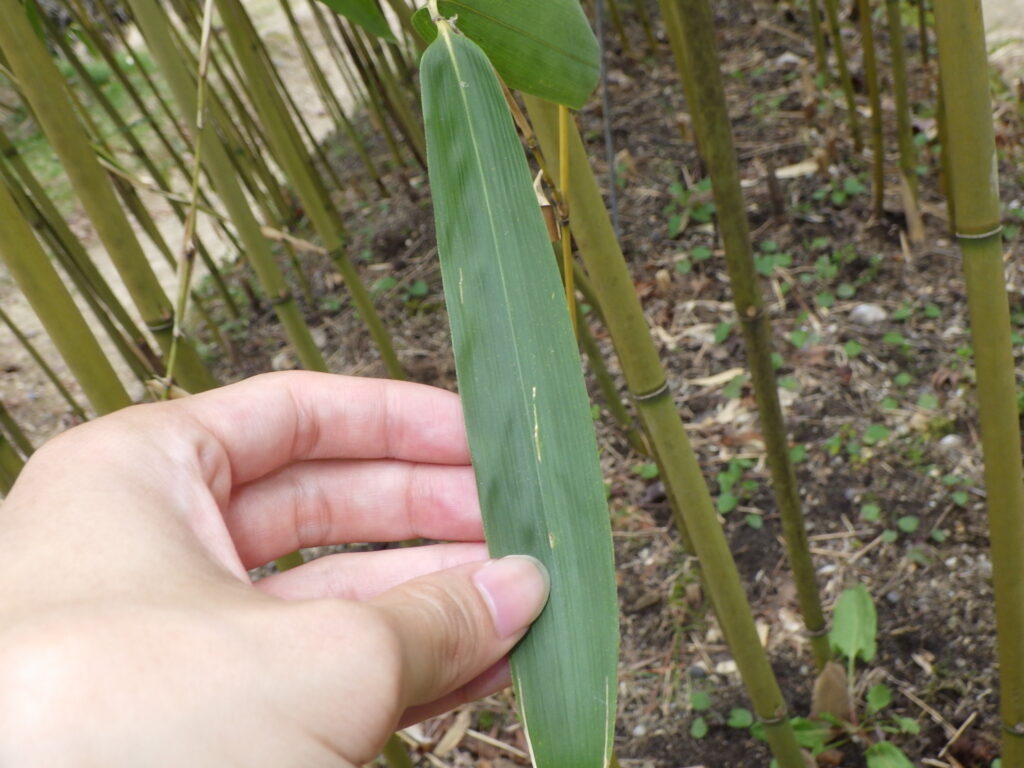
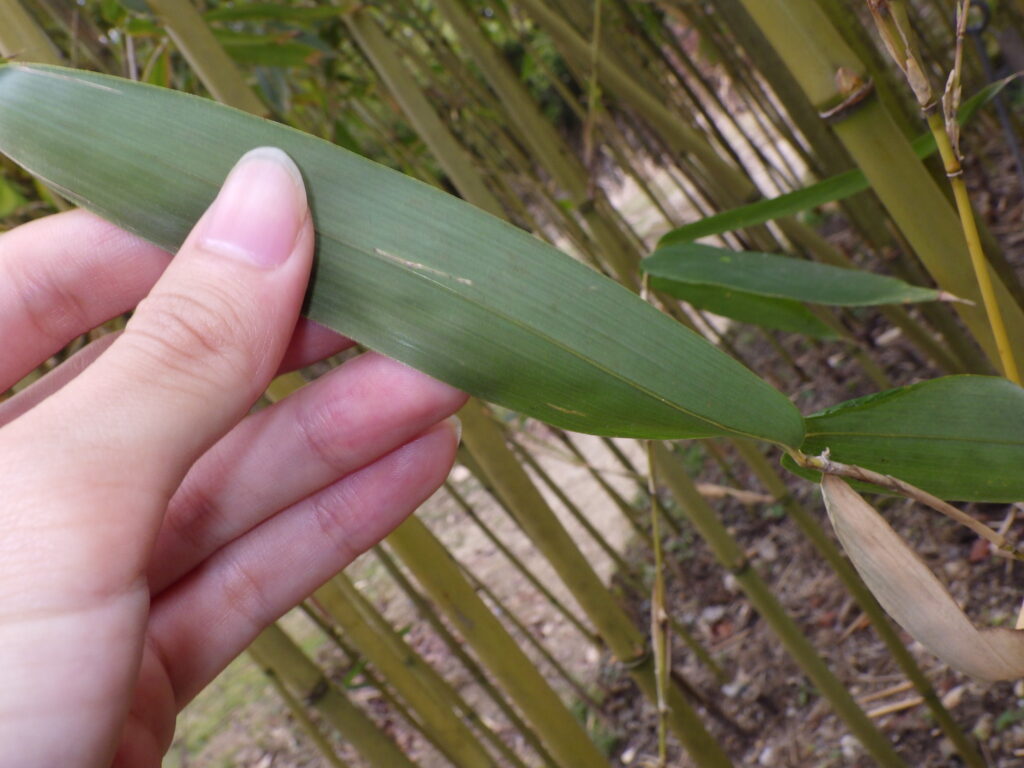
No.0931 Kanchiku (Chimonobambusa marmorea)
The culms are 2-3 meters tall, purplish-black, and glossy. Branches emerge from near the tip after the second summer, and as the years progress, the nodes from which branches emerge extend downwards. The culm sheath has irregular purplish-brown markings and initially has yellowish-brown bristles at the base. The leaf sheath is glabrous. The shoulder hairs are white, almost smooth, and curved. The ligule is low and not visible. The leaf blade is glabrous on both the upper and lower surfaces. It is said to be native to Japan, but this is not certain. It can be found in various locations as it has been cultivated and escaped from cultivation.
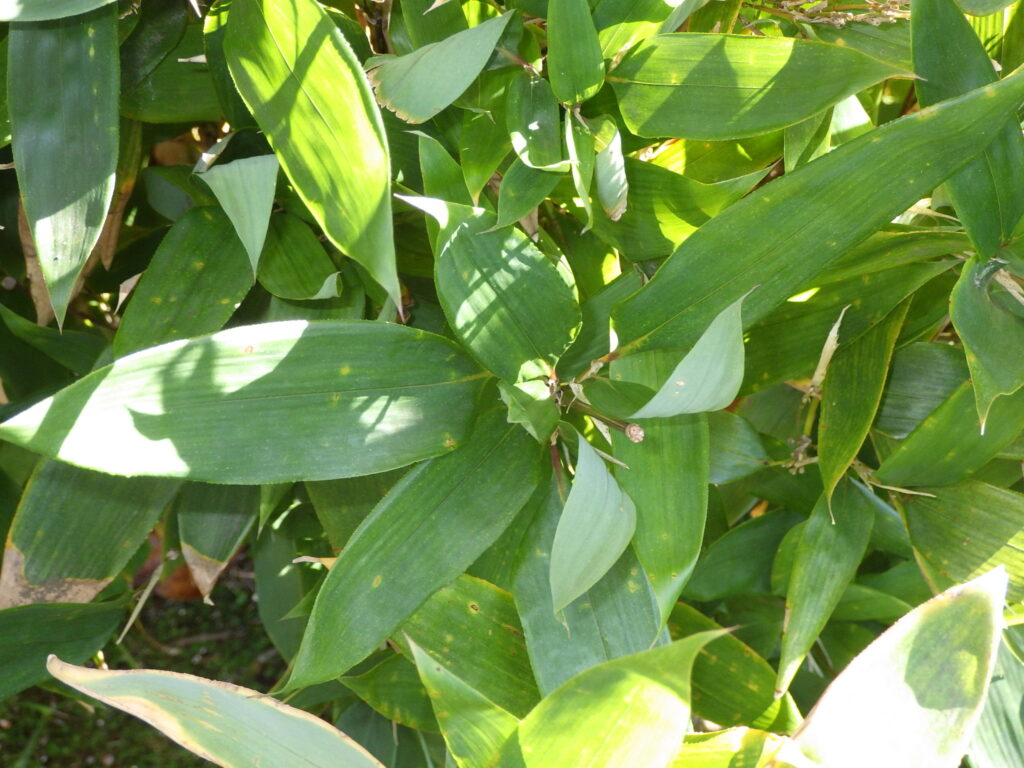
No.0931.1 Chimonobambusa marmorea 'Variegata'‘
This is a variety of bamboo with white vertical stripes on its leaf blades, and it occasionally escapes cultivation.
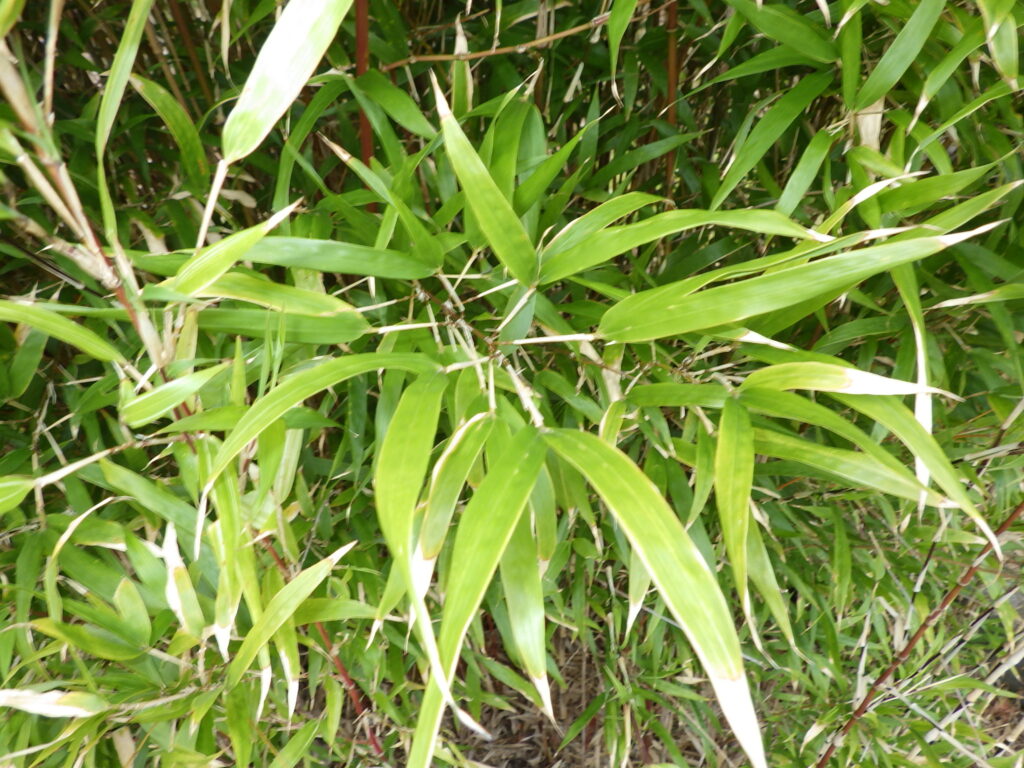
No.0932 Chimonobambusa quadrangularis
Also known as Shikakudake, this bamboo species is native to China and Taiwan. It is characterized by its culms, which reach a height of 5-7m, are square-shaped, have a rough surface, and are markedly raised at the nodes with wart-like projections around them. The spines on the surface of the culm are clearly visible in the first year. The shoulder hairs are erect and almost smooth. The ligule is low and not visible. It is widely planted and often left unattended, leading to overgrowth. Its slightly yellowish-dark green leaves with a glossy surface make it easily recognizable from a distance.
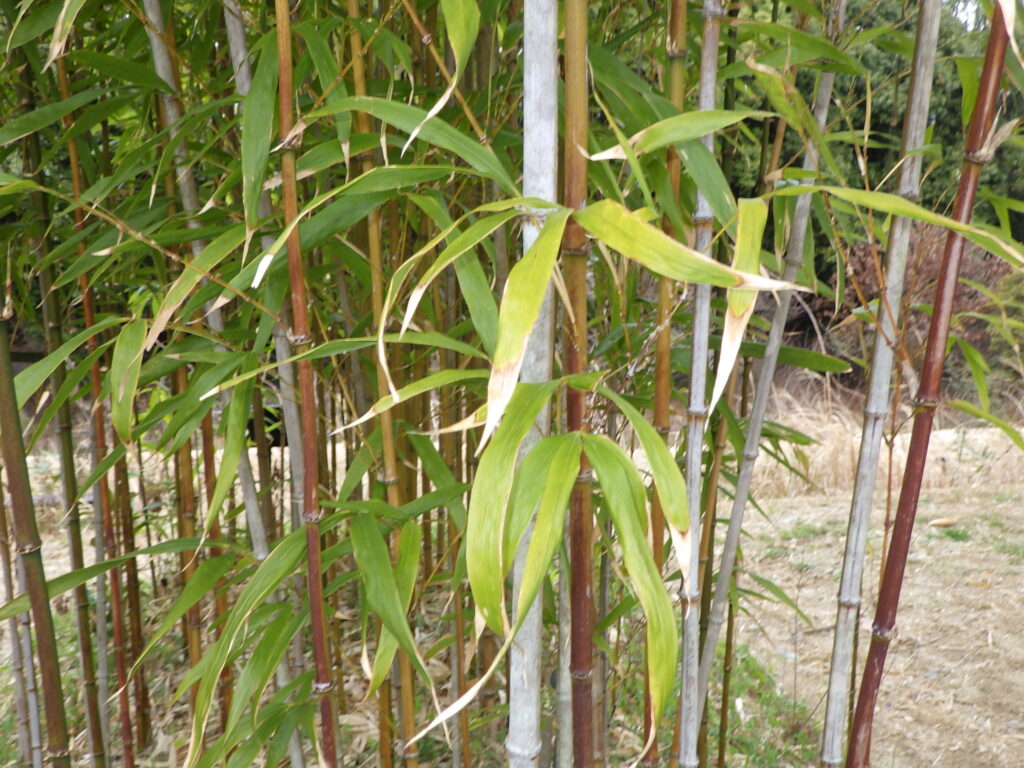
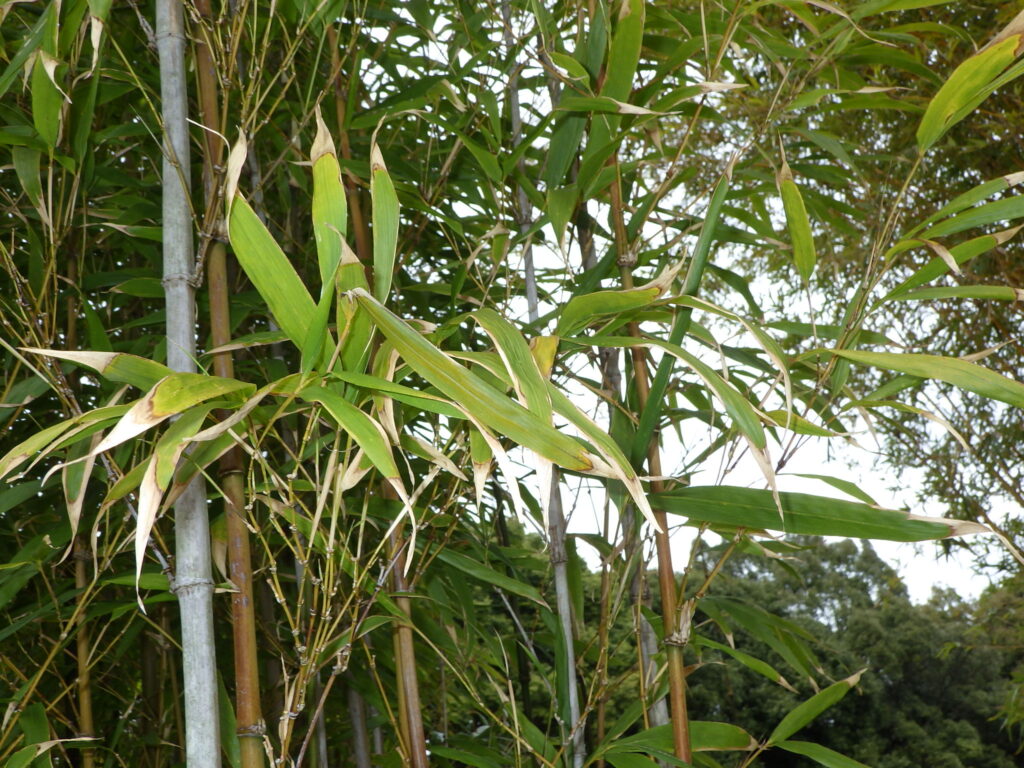
No.0932.1 Chimonobambusa quadrangularis f. nagamineus
No.0947 Brachypodium sylvaticum var. miserum
This is a perennial herb. The nodes of the culm are densely covered with hairs. The leaf sheath and leaf blade are often hairy, but there is considerable variation. The leaf blade is inverted, and the glossy underside faces upward, becoming an "underside leaf." The inflorescence is unbranched and the tip droops. It flowers from June to July. Each spikelet has about 10 florets. The short stalk at the base of the spikelet is about 1 mm long. It grows widely in dry forest edges and along mountain paths. It is widely distributed in Hokkaido, Honshu, Shikoku, Kyushu, and the temperate regions of Eurasia.
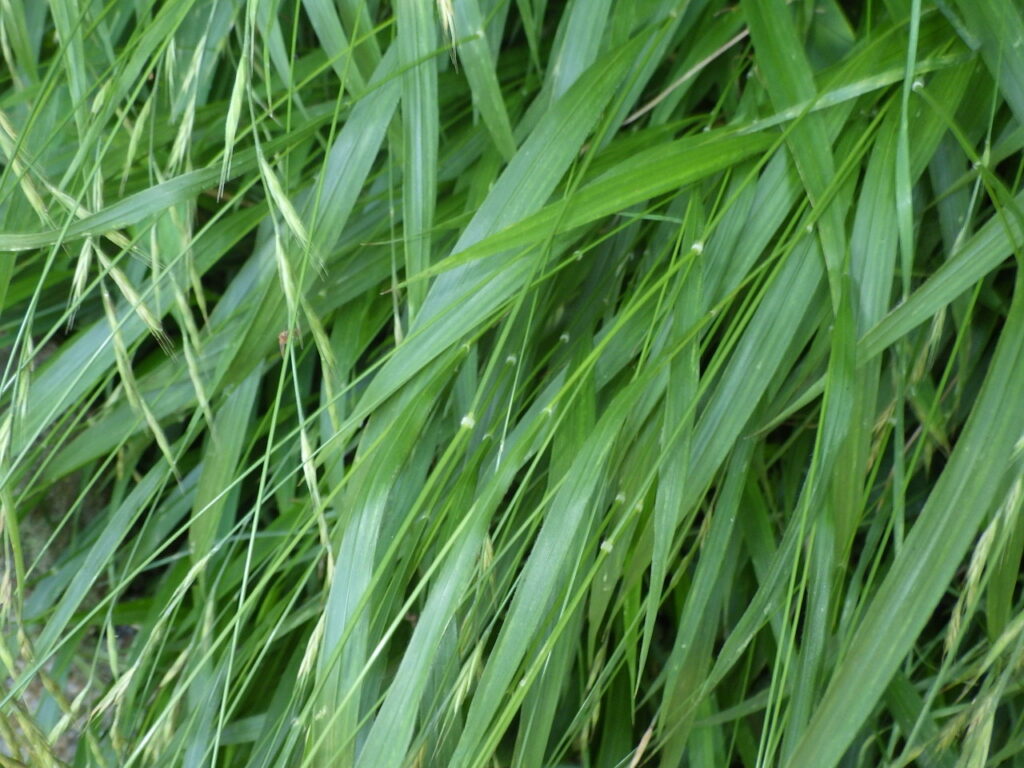
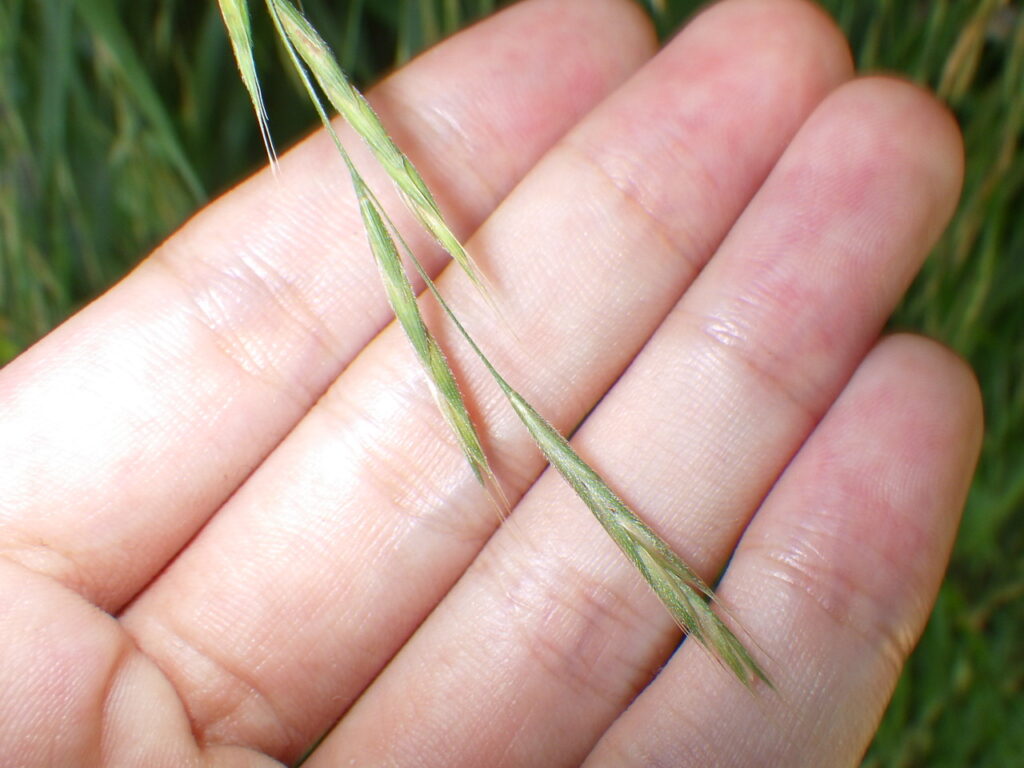
No. 0948 Bromus japonicus
This is an annual plant. Both the leaf blade and leaf sheath are densely hairy. The panicle has long branches that droop at the tips. It flowers from June to July. The spikelets consist of 6 to 10 florets, are 17 to 23 mm long, and are glabrous. The glumes are 9 to 11 mm long, with short, erect awns on the lower florets and awns on the upper florets reaching 10 mm in length, which curve slightly outward when dry. It grows in grasslands along roadsides and embankments. It is widely distributed in Hokkaido, Honshu, Shikoku, and Kyushu; in the temperate zones of the Eurasian continent; and has naturalized in North America.
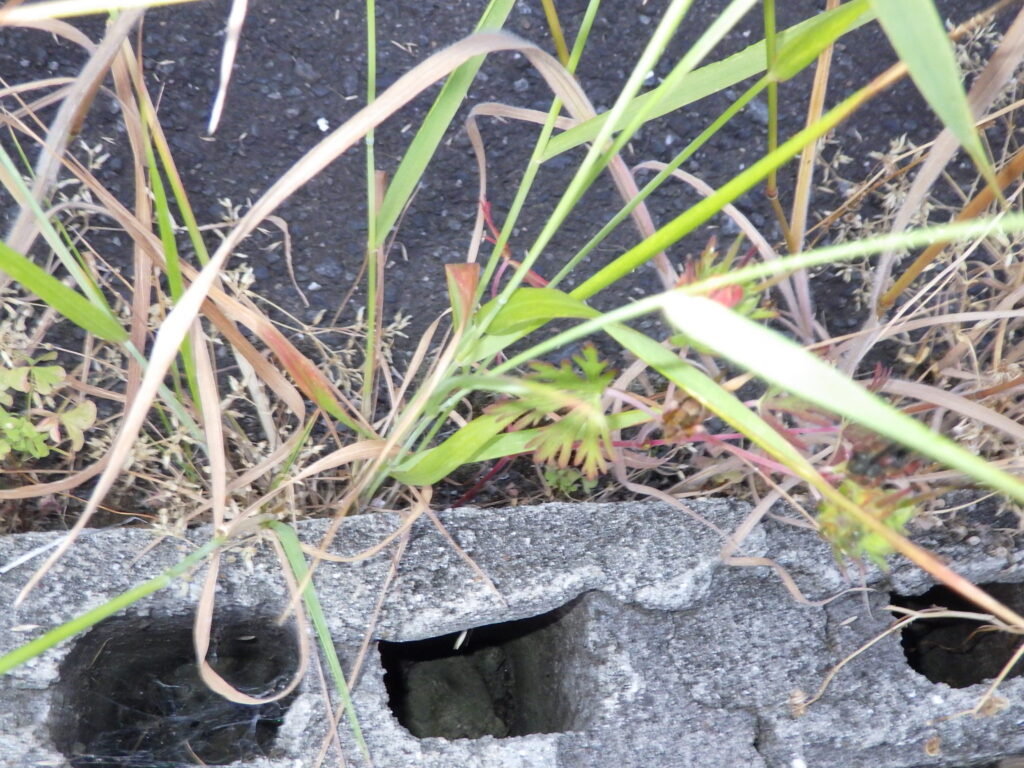
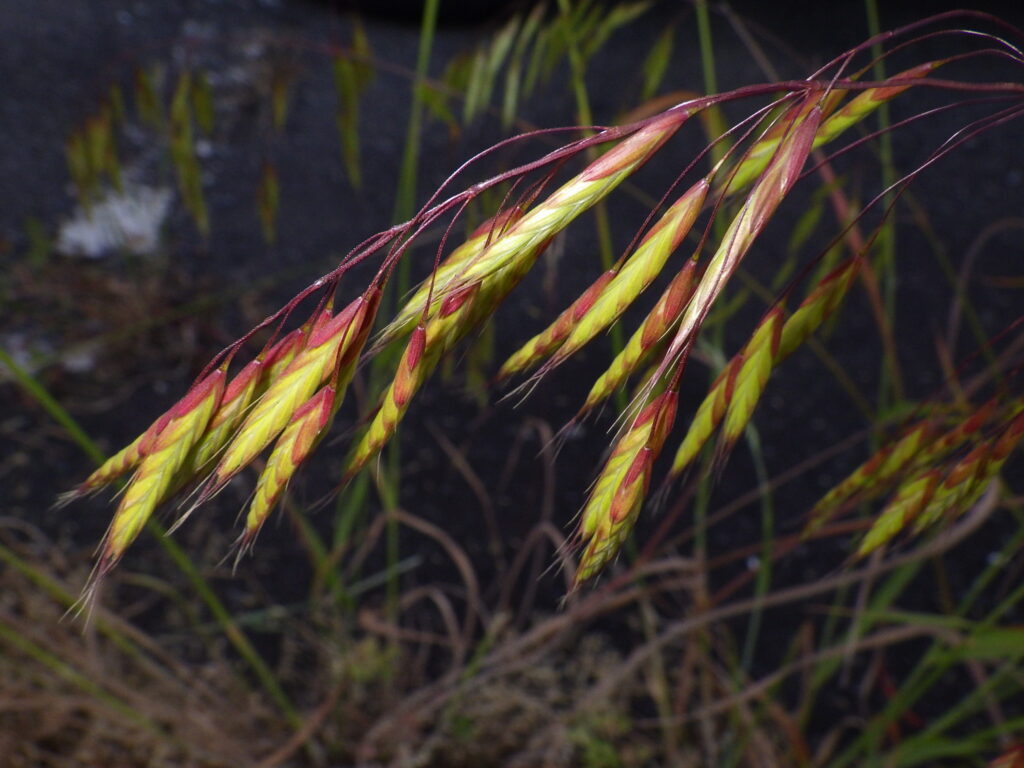
No. 0950 Dog Wheat (Bromus catharticus)
This is a biennial or short-lived perennial herb. It grows in clumps, reaching a height of 40-100 cm. The lower leaf sheaths are hairy. The spikelets consist of 6-12 florets, are flattened and glabrous, and 20-30 mm long. The glumes have 9-13 veins, are somewhat rough, 14-17 mm long, and have an awn about 1-2 mm long at the tip. The glumes are only 1/2 to 3/4 the length of the glumes. Some plants produce only cleistogamous flowers, while others flower. Flowering plants can be seen from April to May, and cleistogamous flowers until around July. The anthers of cleistogamous flowers are small, about 0.5 mm long, while the anthers of flowering florets are 3-5 mm long. Flowering plants have wide spaces between the florets, revealing the long anthers, which can easily lead to misidentification with *Rumex macranthos*. It is presumed that the first strain to be introduced to Japan was one that produces cleistogamous flowers, and that the more recently flowering strain has become naturalized. Native to South America, it is cultivated as pasture grass and has naturalized in various parts of the world. The first recorded sighting was in Tokyo in 1882 (Meiji 15). Since then, it has naturalized in various places from Hokkaido to the Ryukyu Islands and is commonly found. It is commonly found along roadsides, embankments, and around farmland.
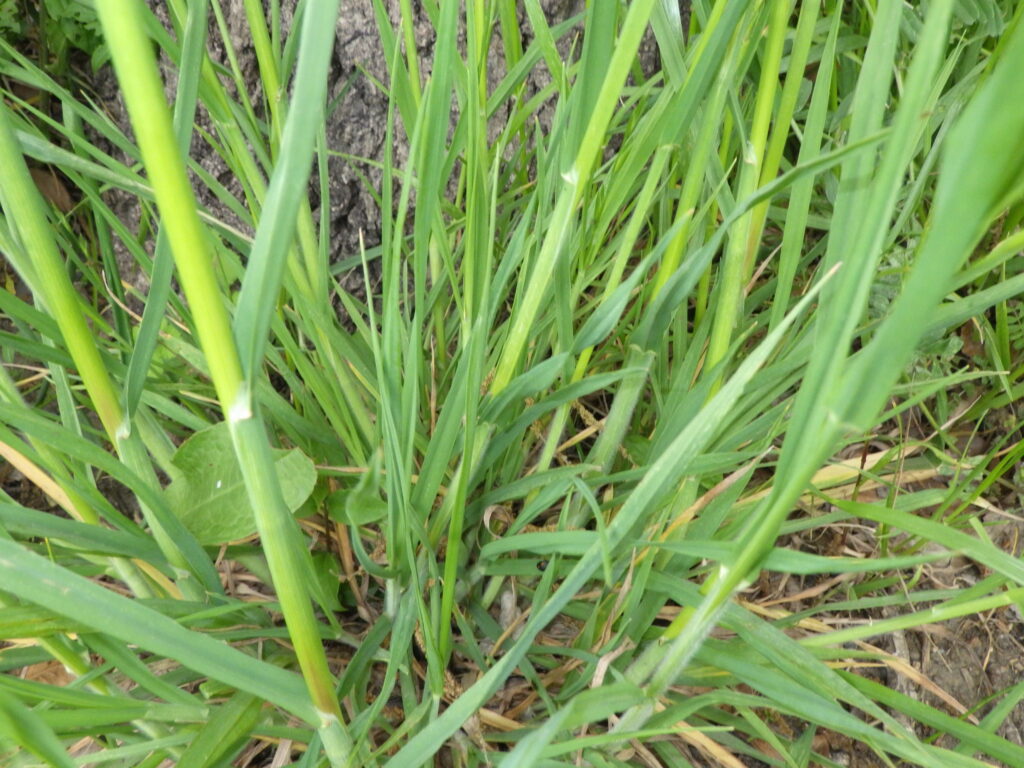
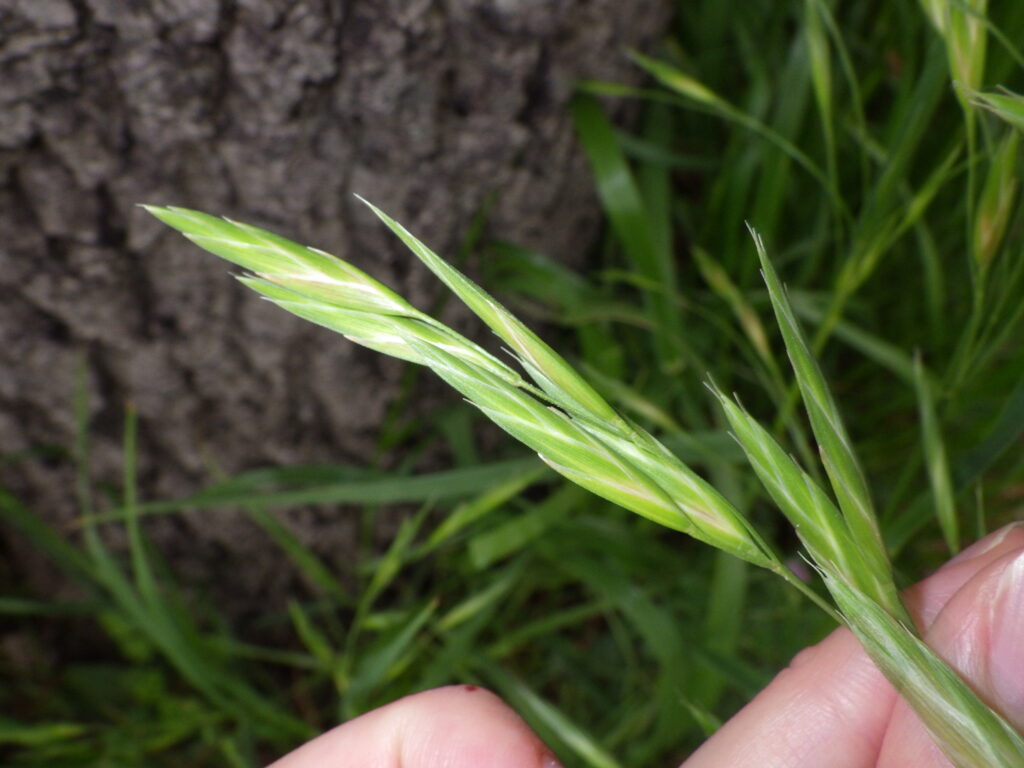
No.0950.a Bromus carinatus (Yakunagainumugi)
This is a biennial or short-lived perennial herb. It flowers from April to May (June). It resembles barley, but can be distinguished by its inner glume being more than 3/4 the length of the lemma and its long awns, 2-12 mm in length. The lower leaf sheath can be hairy or glabrous. The lemma is narrower than that of barley, with fewer veins, less gloss, and is either hairy or glabrous, with the edges tending to curl inward during fruiting. The anthers of the flowering florets are 4-5 mm long and hang down outside the florets when in bloom.
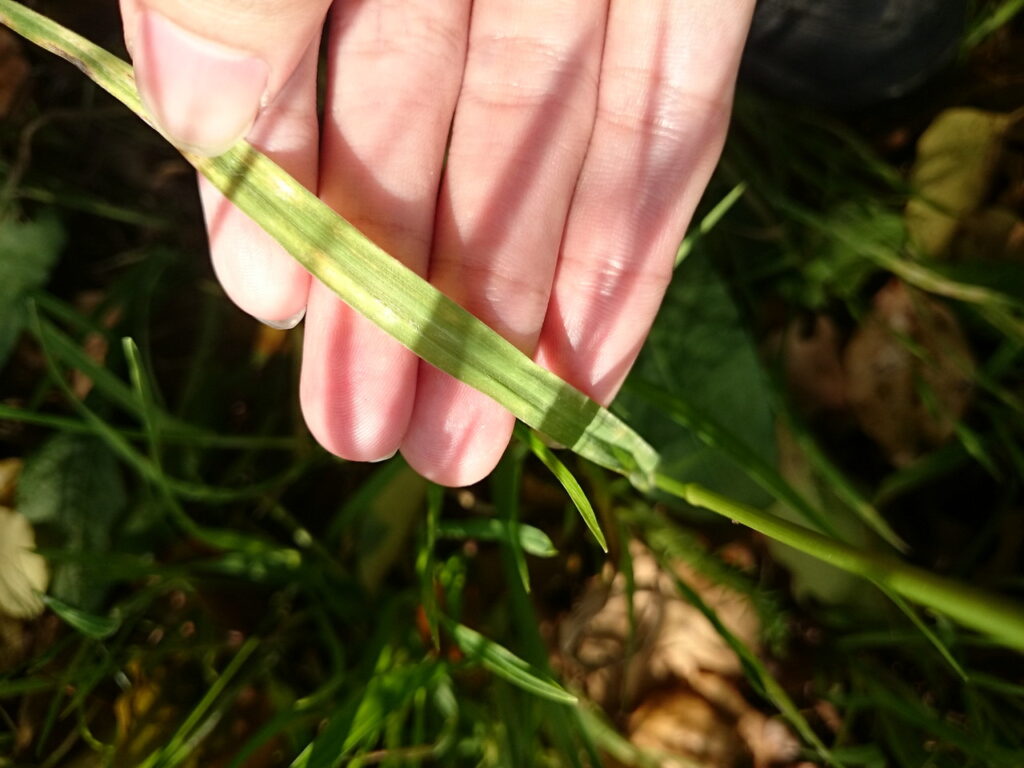
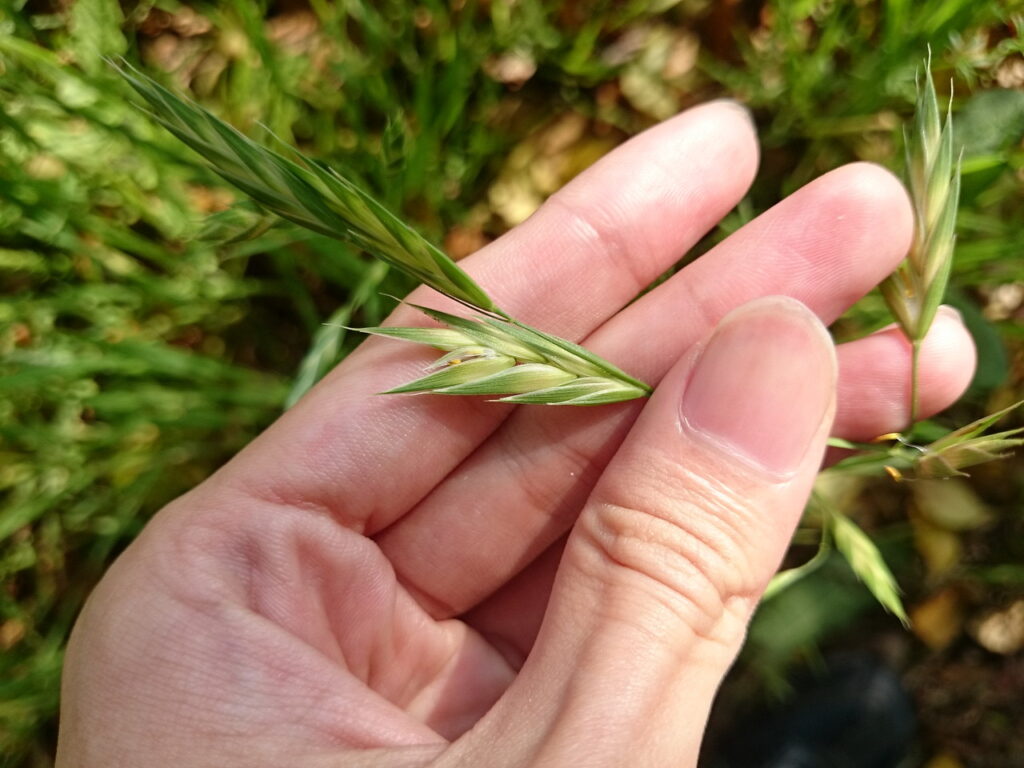
No.0951 Hordeum vulgare
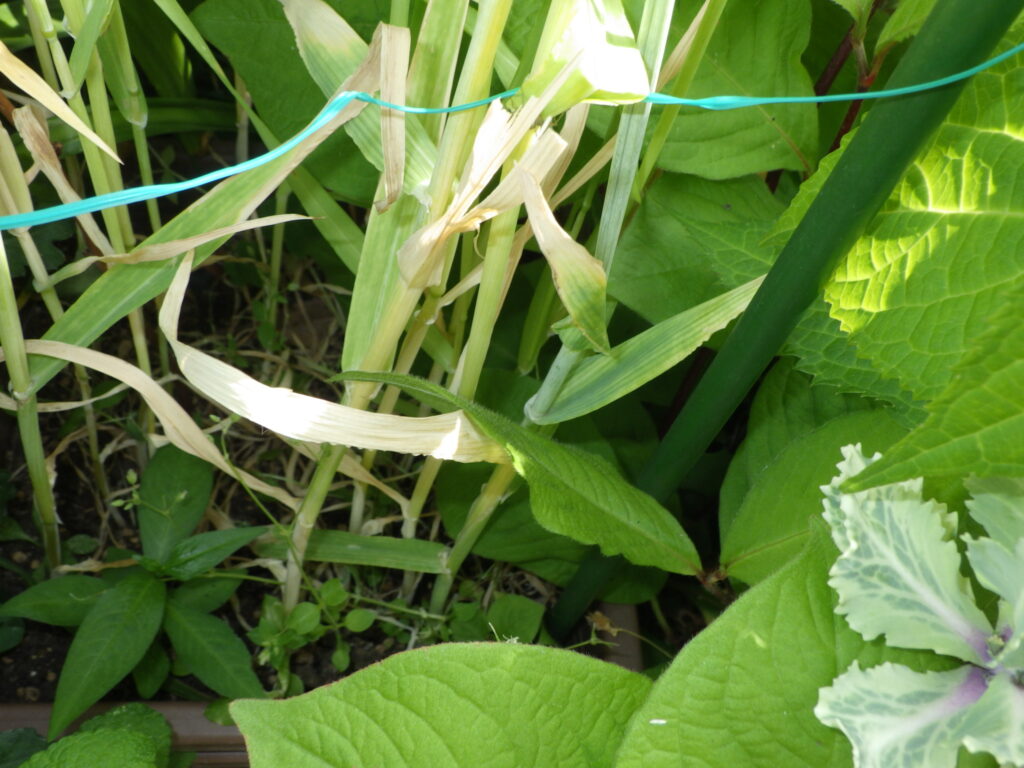
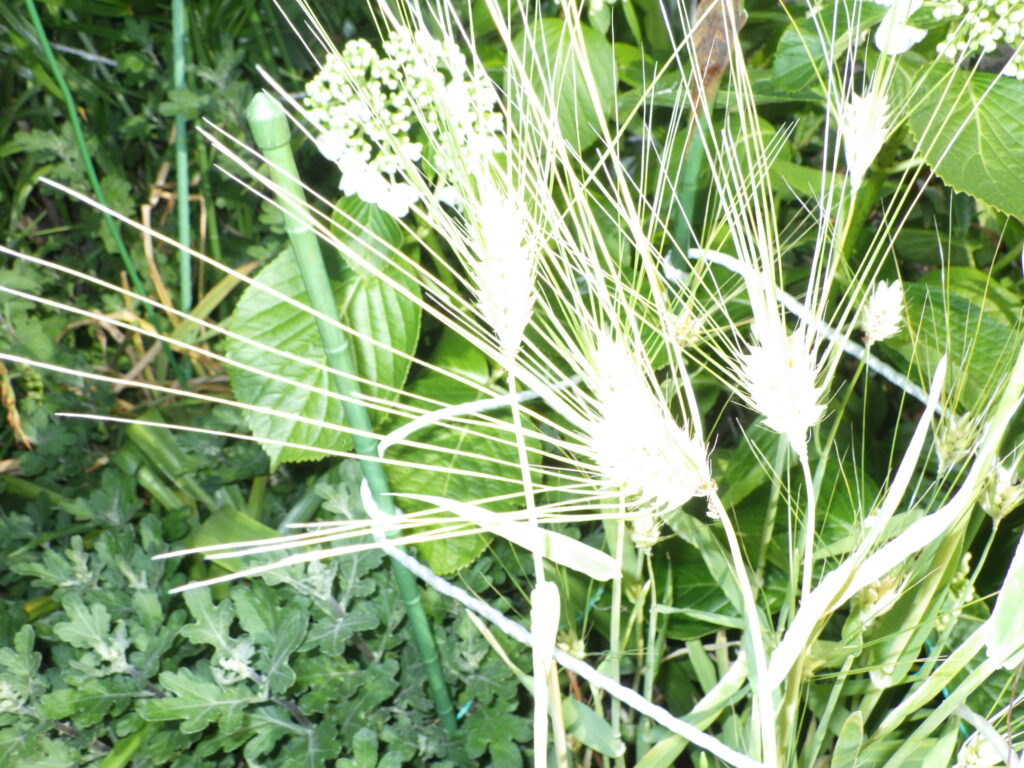
No.0952 Hordeum murinum
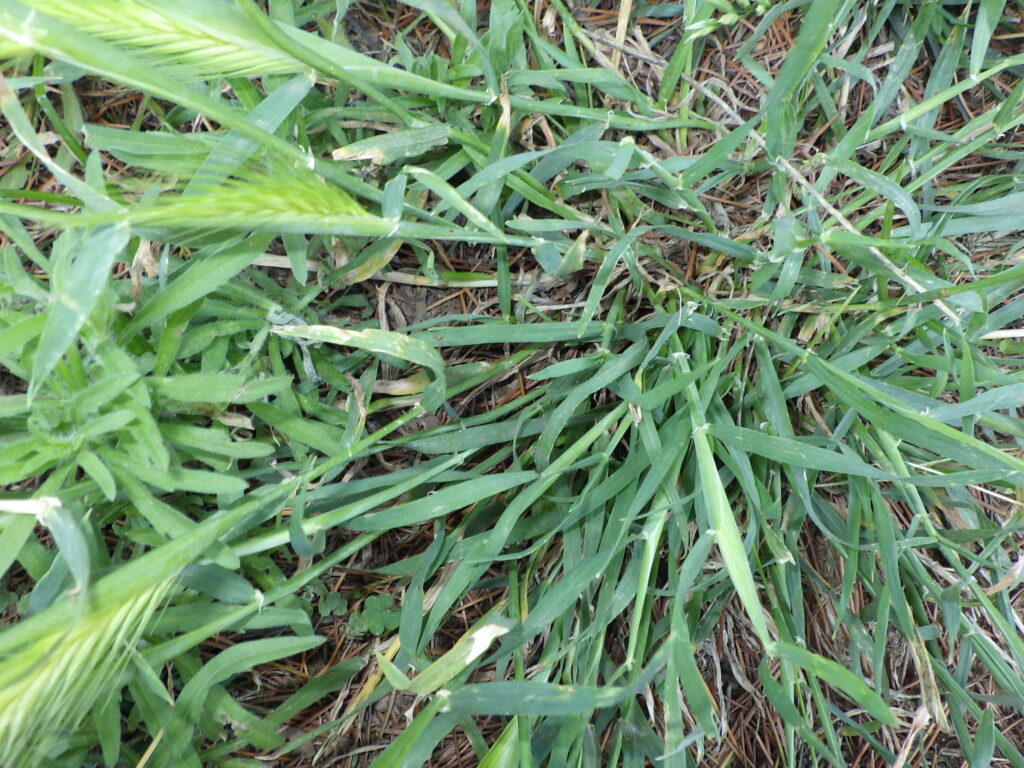
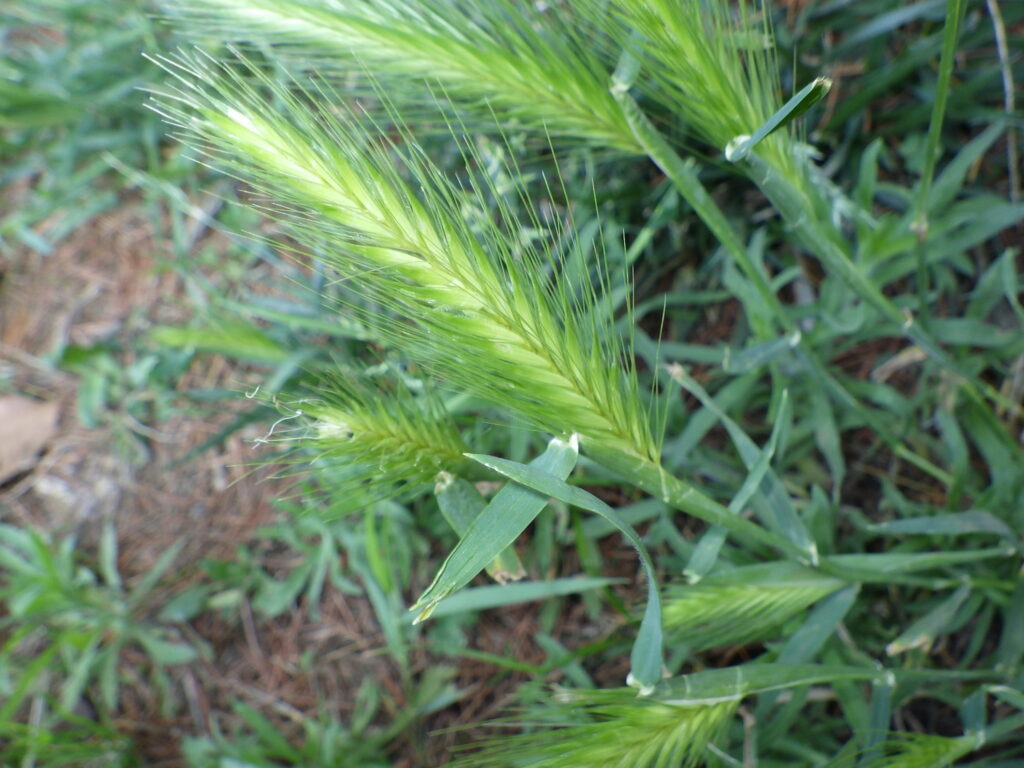
Annual to biennial herb. Culms are 15-50 cm tall, with a central spikelet in a cluster of three spikelets that is sessile, and its florets are sessile or have short stalks, with two glumes and long marginal ciliates. The glumes extend long awns. Lateral spikelets are stalked, and the florets do not bear fruit. Flowering period is from May to July. A naturalized plant native to Europe and West Asia. It was first collected by Savatier in Yokohama in 1868. Naturalized in Honshu, Shikoku, Kyushu, and the Ryukyu Islands; and in temperate regions worldwide. It grows along roadsides and in cultivated fields. Distinguishing it from barley grass subsp. leporinum is extremely difficult, and the Kanagawa Prefectural Flora Survey Association (2018) has tentatively labeled all of them as barley grass, with some individuals being indistinguishable, raising doubts about the clear distinction between the two subspecies (see main text for detailed examination).
No.0960 Elymus tsukushiensis var. transiens
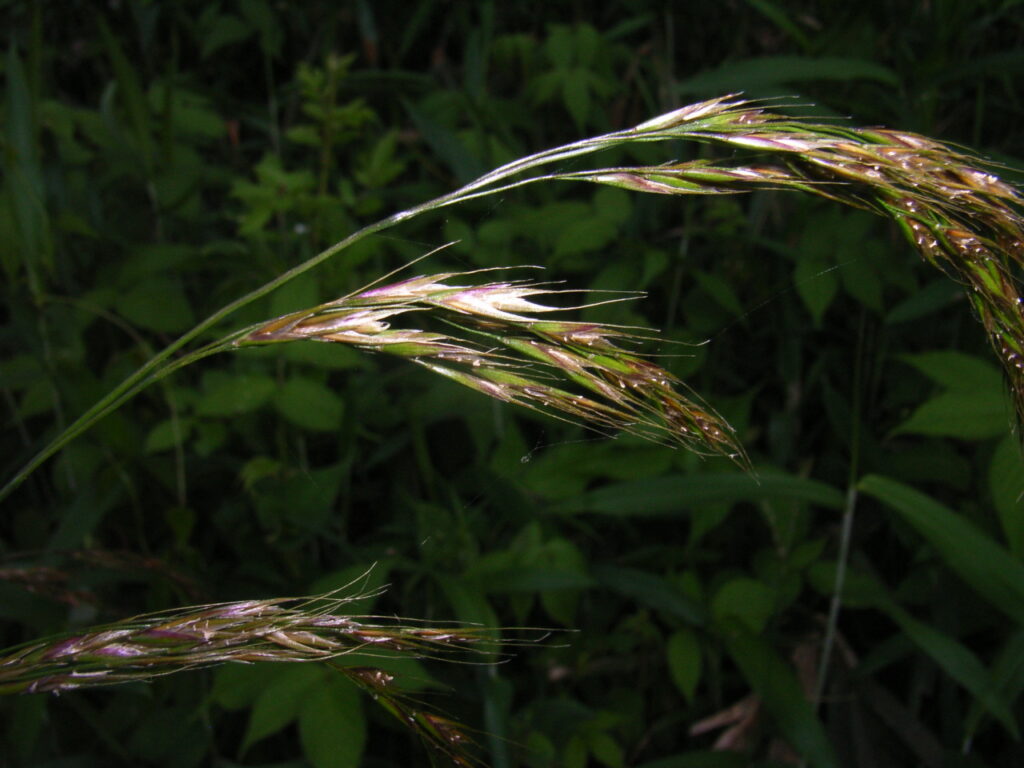
This is a perennial herb. The scientific name adopted is that of the Kanagawa Prefectural Flora Survey Association (2018), as listed in the 'Ylist '. As a synonym, Campeiostachys kamoji was proposed by Baum et al. (2011) and adopted in the 'NCBI Taxonomy'. There is no mention of this in the Kanagawa Prefectural Flora Survey Association (2018), 'Ylist', and we would like to hear the opinion of Japanese researchers on this matter. The spike inflorescence is often tinged with purple, but some are green. The flowering period is from May to June. The glumes are glabrous. It is distributed in Hokkaido, Honshu, Shikoku, Kyushu, Ryukyu Islands; Korea, and China. It grows along roadsides and in grasslands. The type locality for Campeiostachys semicostatum var. viridispicum, a type of Campeiostachys, is Yokohama.
No.0961.1 Elymus racemifer var. japonensis
This is a variety of *Epipogium aquilinum* with erect spike-like inflorescences and almost no hairs on the dorsal surface of the glumes. It is difficult to determine from specimens whether the inflorescence is erect or not, and the amount of hairs on the dorsal surface of the glumes changes continuously, so the boundary with *Epipogium aquilinum* is not clear. It flowers from May to June. It is distributed in Honshu, Shikoku, Kyushu, the Ryukyu Islands, and China. It grows along roadsides and in grasslands.
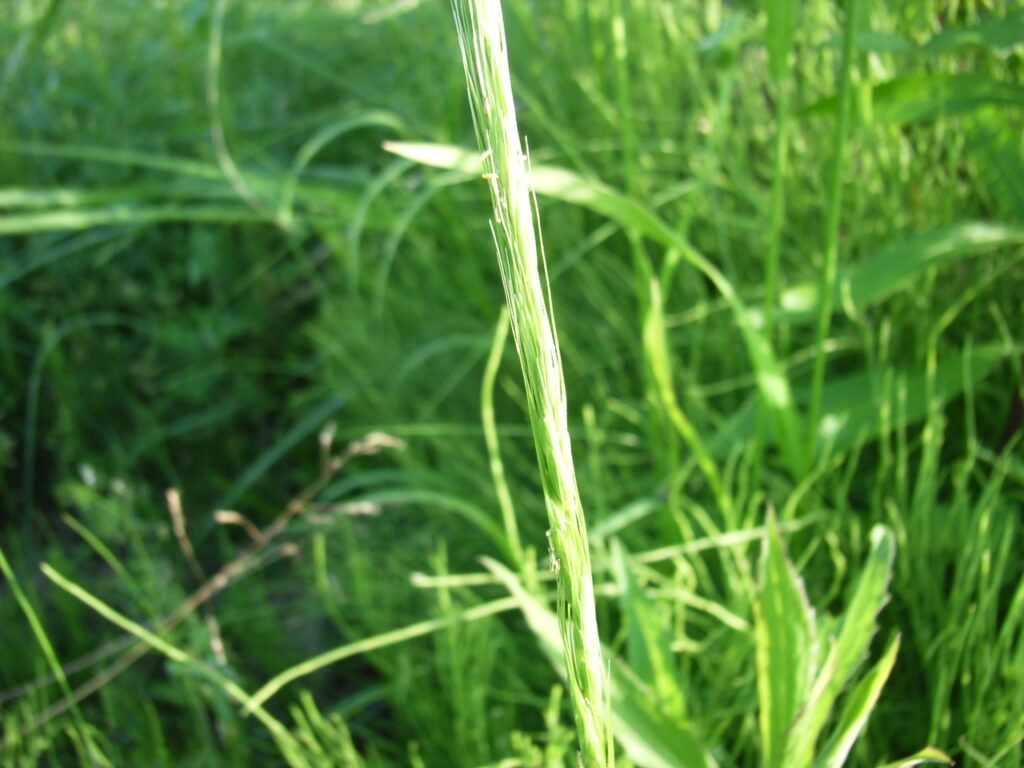
No.0964 Hargaya Anthoxanthum odoratum subsp. odoratum
This is a perennial herb. The culms are erect. The leaf blades, glumes, and lemmas are often covered with long hairs. The panicle is solitary at the top, 3-5 cm long. The spikelets are densely packed, giving it a spike-like appearance. It flowers from May to July. The spikelets are 7-9 mm long, with the first glume being ovate and short, and the second glume being broadly lanceolate and large. The awn of the first floret (neutral) is short and erect, while the awn of the second floret (neutral) is long and slightly bent midway. The awns hardly protrude outside the spikelet, or only about 1 mm. The third floret (bisexual) has two stamens. It is native to Europe. In Japan, it is cultivated as pasture grass and has naturalized in various places, found around farmland. When dry, it has a coumarin scent (also found in cherry leaves).
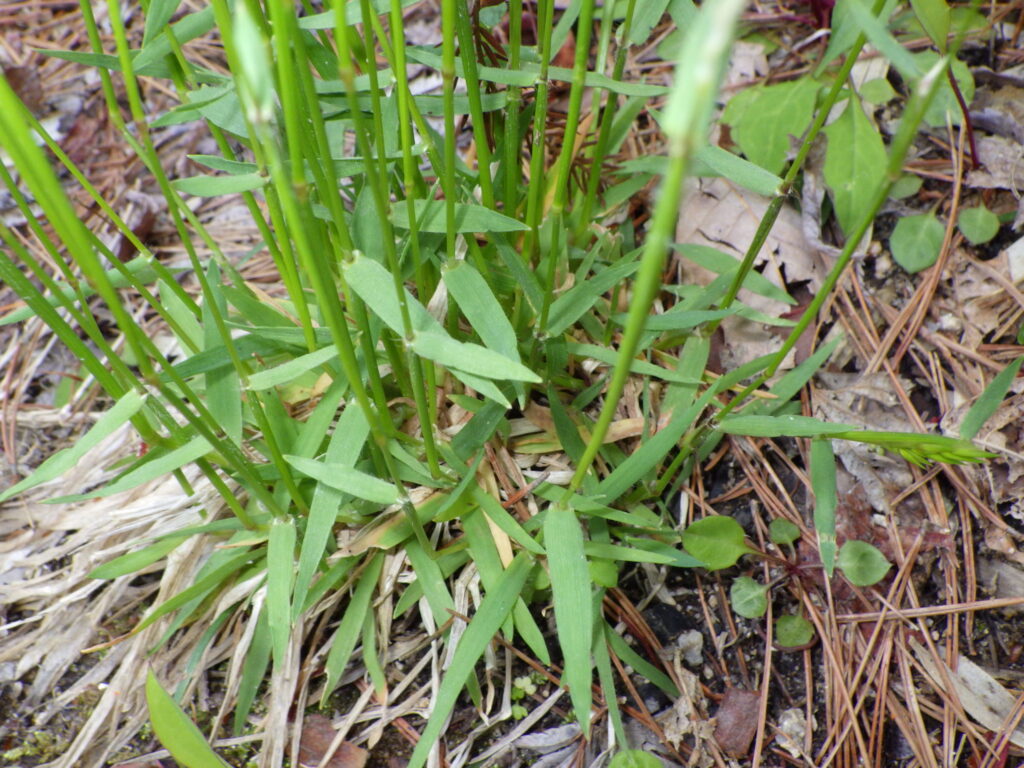
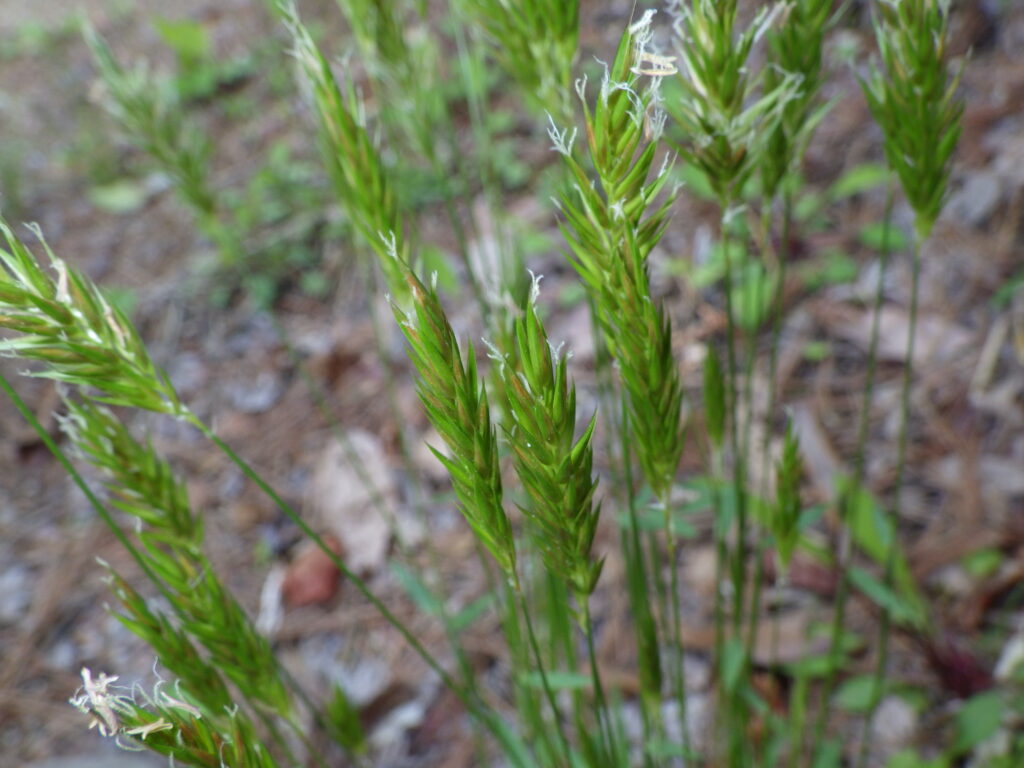
No.0964.1 Anthoxanthum odoratum subsp. glabrescens
A subspecies of sweet vernal grass with almost hairless leaf blades, glumes, and lemma.
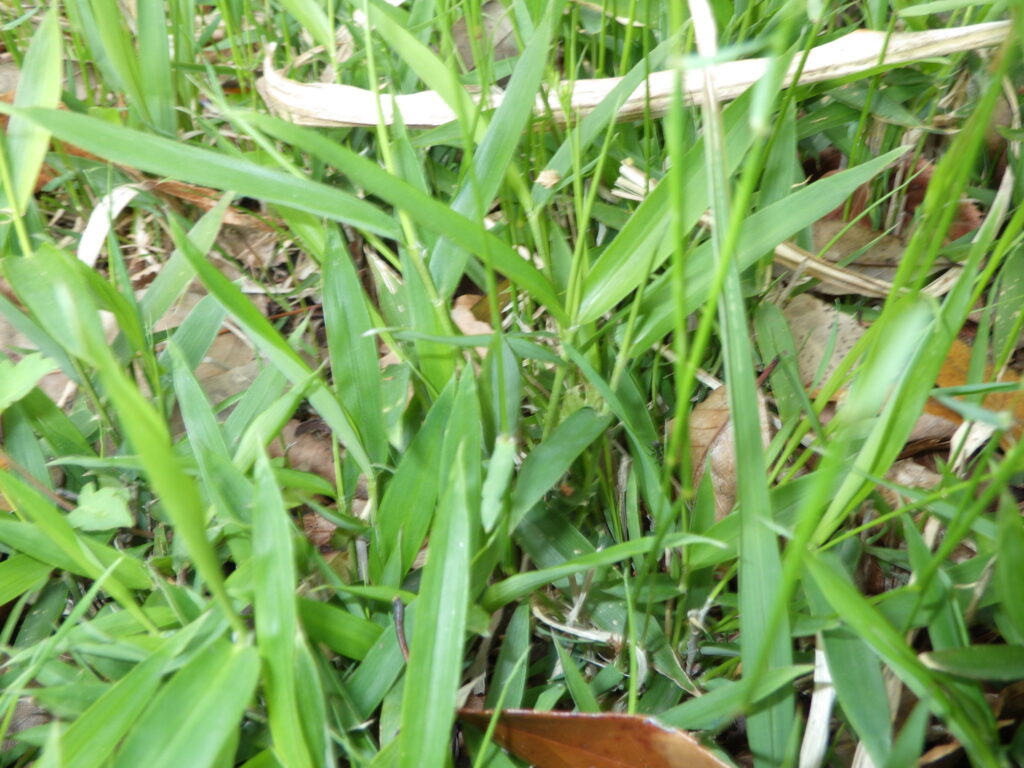
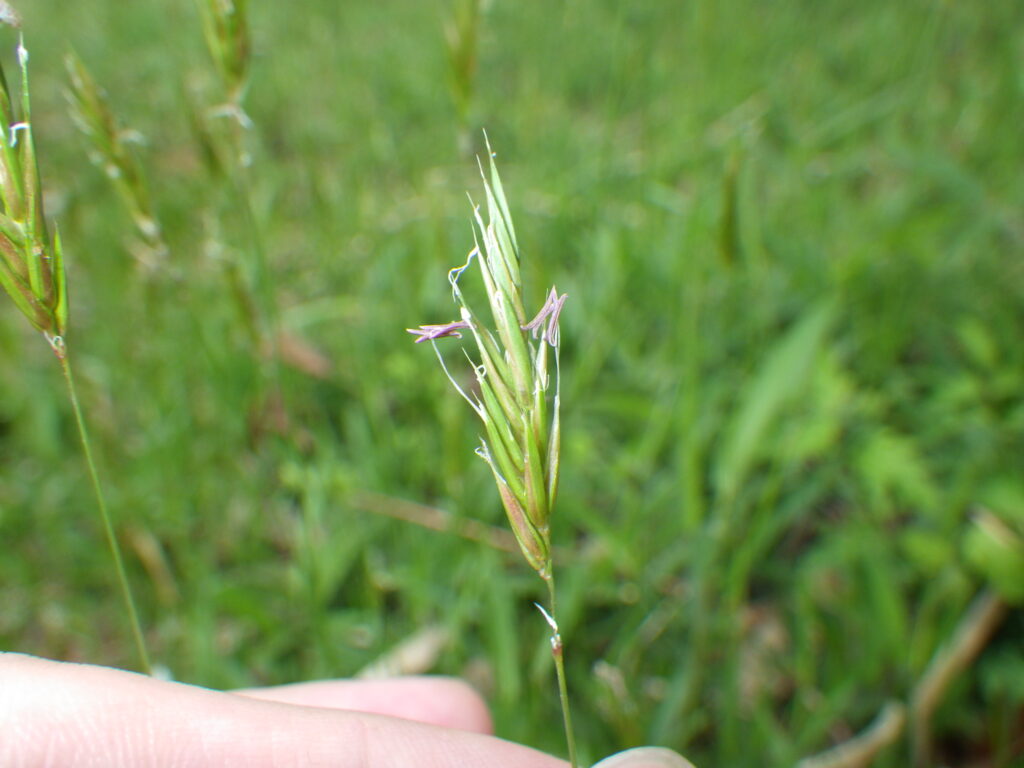
No.0968 Oat Avena fatua var. fatua
This is an annual or biennial herb, growing to a height of approximately 80 cm. It flowers from April to June. The panicle is 15-30 cm long, spreading outwards with downward-hanging spikelets. Each spikelet consists of 3 (or 4) florets, is green, and 20 mm long. The glume is leathery. A long awn extends from the center of the dorsal surface of the glume of two florets, twisting midway. The base of the glume is usually densely covered with long hairs. The caryopsis falls off still enclosed by the glume and glume, leaving the glume behind. It is said to be native to Europe, West Asia, and North Africa, and is believed to have naturalized in Japan in prehistoric times. It is common throughout Japan, growing along roadsides and in farmland. The twisted and bent awn on the dorsal surface of the seed's lemma plays a crucial role, rotating in response to changes in moisture (Stinson & Peterson, 1979; Raju, 1984). When it absorbs moisture, the twist unravels and the awn extends; when it dries, it bends again as if constricting, and this repeated process causes the seed to rotate itself using leverage, rolling across the soil surface and eventually becoming lodged in cracks or depressions. The lemma is densely covered with upward-pointing hairs, which act as props, fixing the seed in the depression. Furthermore, the twisting of the awn rotates the seed and pushes it into the soil, allowing it to burrow itself. It may be a little difficult to imagine, but the fact that the awn extends and contracts not just once, but multiple times, seems to be the key to enabling it to burrow into the ground. In the Japanese archipelago and the Korean Peninsula, dwarf, short-culm, and short-spike (club-shaped inflorescence) strains of East Asian wild oats are found accompanying short-stalked barley (spiral varieties) and mimicking them for agricultural purposes (Yamaguchi, 2016).
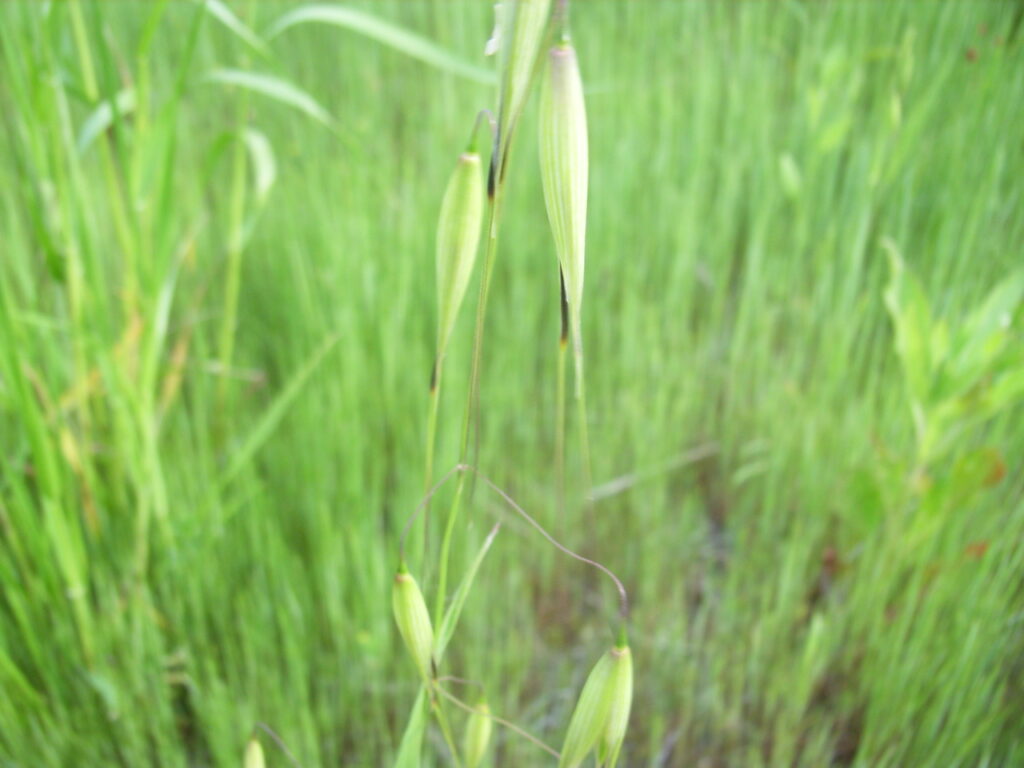
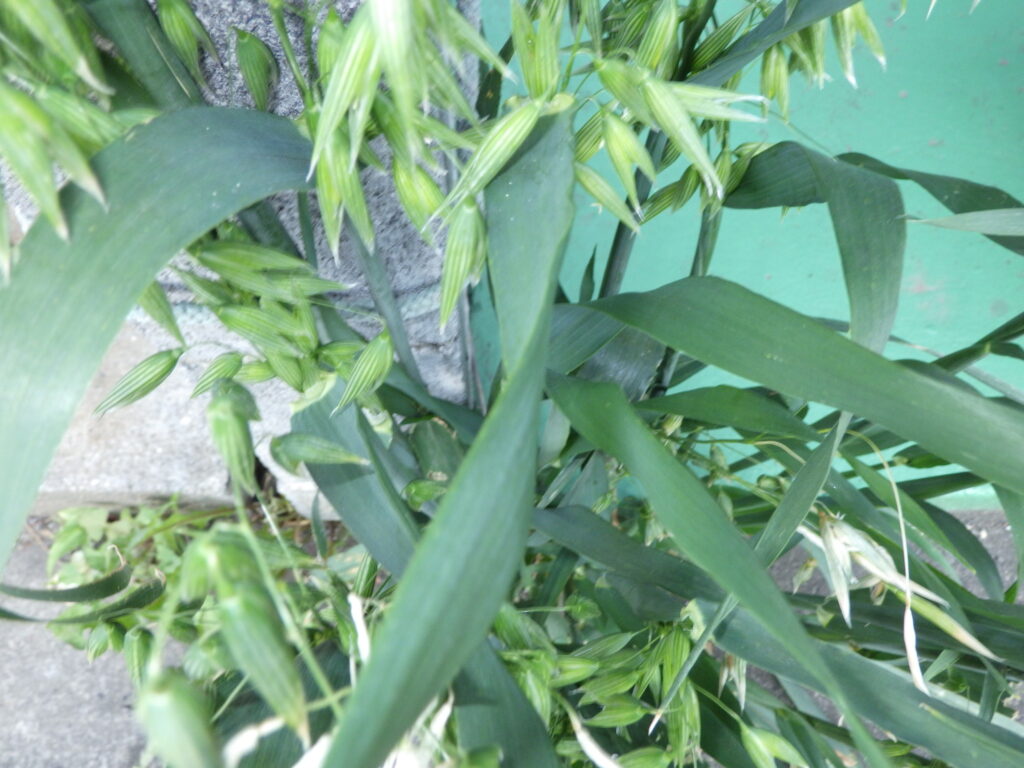
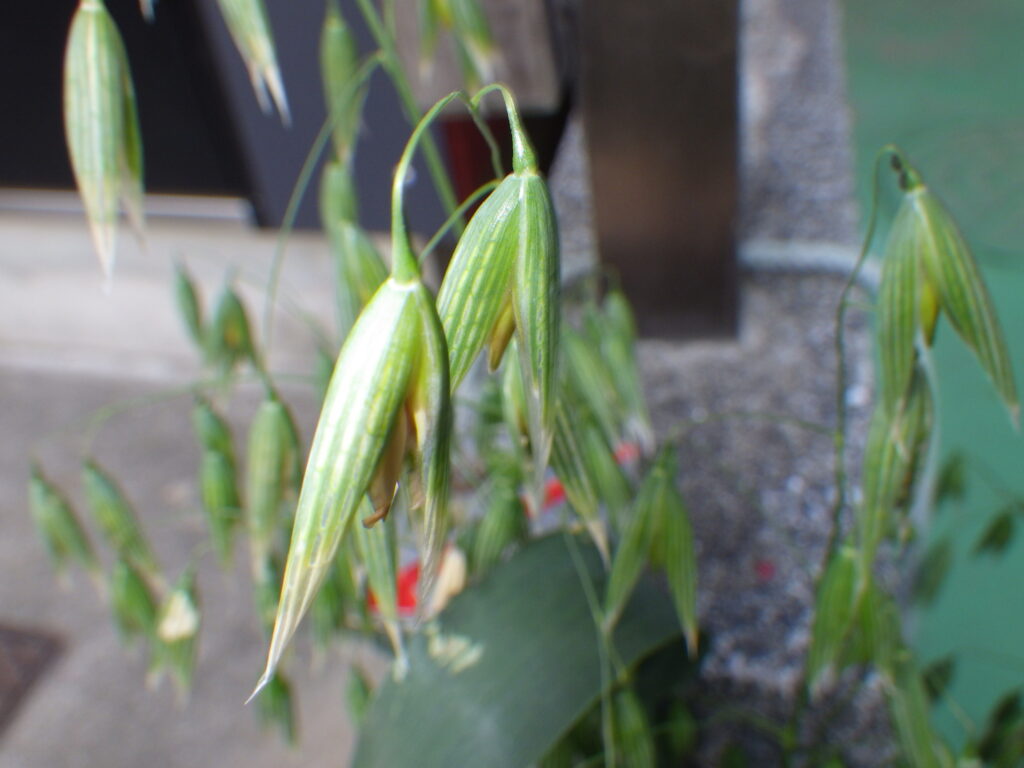
No.0969 Oat (Avena sativa)
An annual plant. Also known as wild oat. Native to Europe, it is cultivated for fodder and escaped cultivation can be found around farmland. This grain is called oat in English and swallow oats in Japanese. It is somewhat taller than wild oats and has softer grass. It flowers from (April) to May-June. The spikelets have two florets and are either awnless or have only one straight awn on the lower floret. The glumes are leathery and hairless, and there are no hairs on the base of the florets. There is variation in the size of the spikelets. The florets do not easily fall off even when mature. It is the raw material for oatmeal, granola, muesli, parkin, and oat milk.
No.0975 Briza maxima
This is an annual plant. The culms are 10-60 cm tall. The spikelets consist of about 10 florets and are 10-20 mm long. The glumes swell dorsally. The Japanese name comes from the resemblance of the spikelets to gold coins, but the florets do not look like gold coins before they open, which is confusing. It flowers from May to June. It is a naturalized plant native to the Mediterranean coast and was introduced to Japan during the Meiji era. It is distributed in Honshu, Shikoku, Kyushu, Europe, Africa, Asia, Oceania, and the temperate regions of North and South America. It grows on seashores, in grasslands, and along roadsides. It is cultivated for dried flowers and flowerbeds.
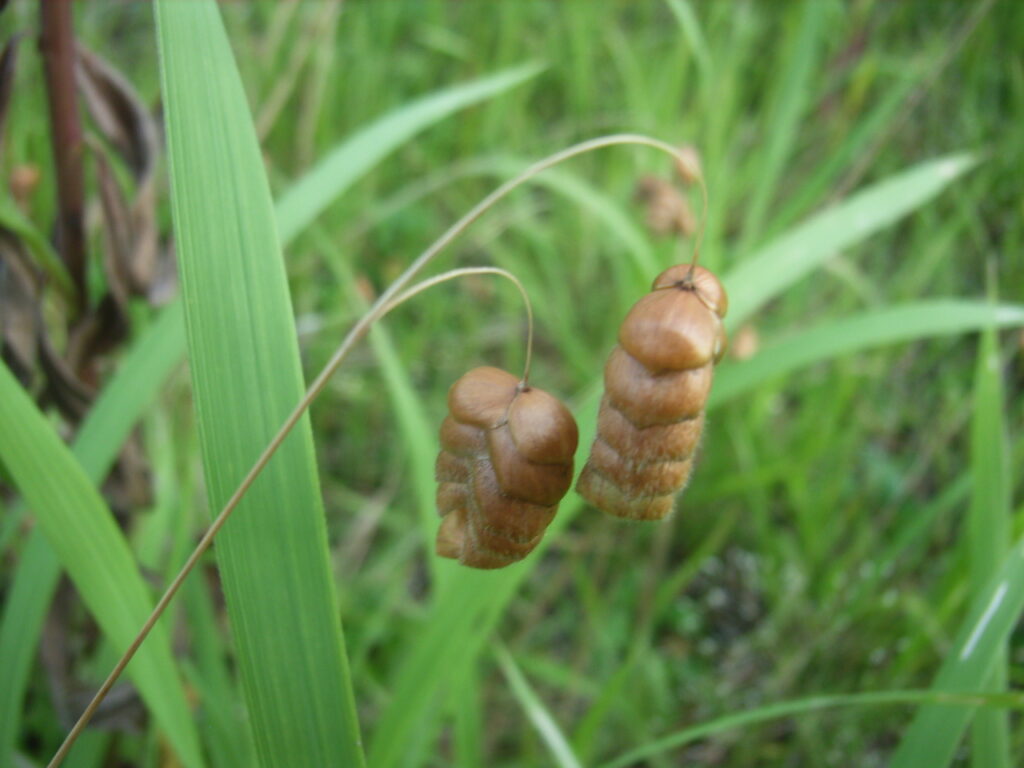
No.0976 Briza minor
This is an annual plant. The spikelets resemble a smaller version of bridging grass, consisting of 4 to 8 florets and measuring about 4 mm in length. It flowers from May to June. It is a naturalized plant said to be native to the Mediterranean coast. There are records of it in Kyushu from the late Edo period, and it is distributed in Honshu, Shikoku, Kyushu, and the Ryukyu Islands; as well as in temperate to warm temperate regions of Europe, Africa, Asia, Oceania, and North and South America. It grows on seashores, in grasslands, and along roadsides.
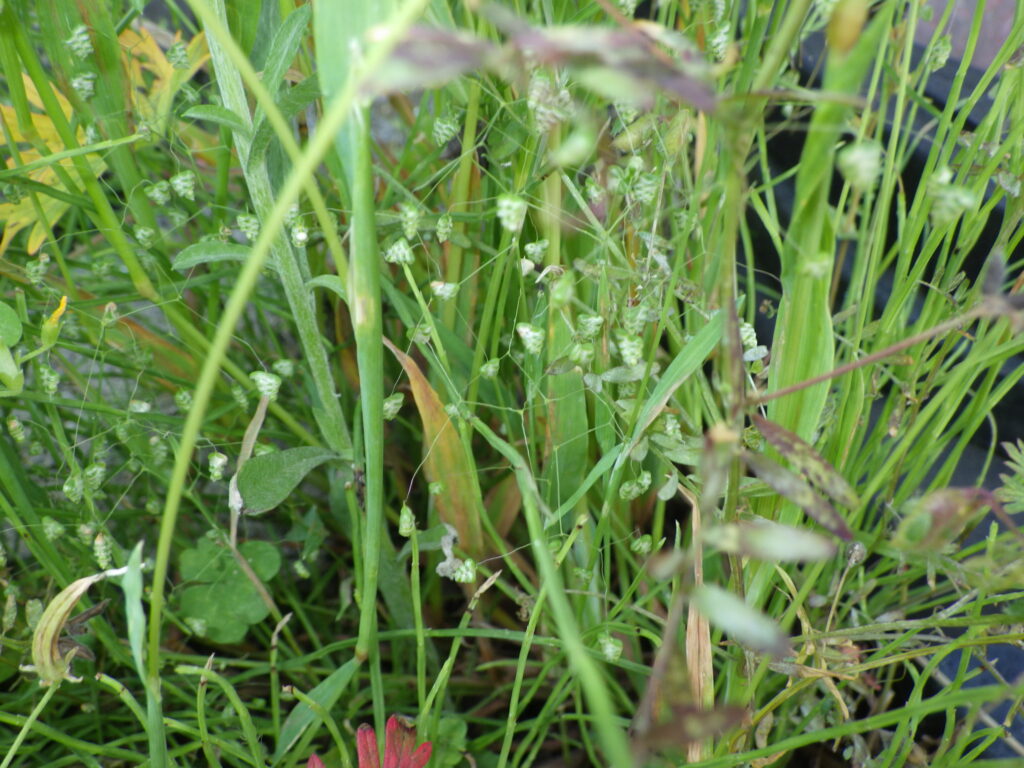
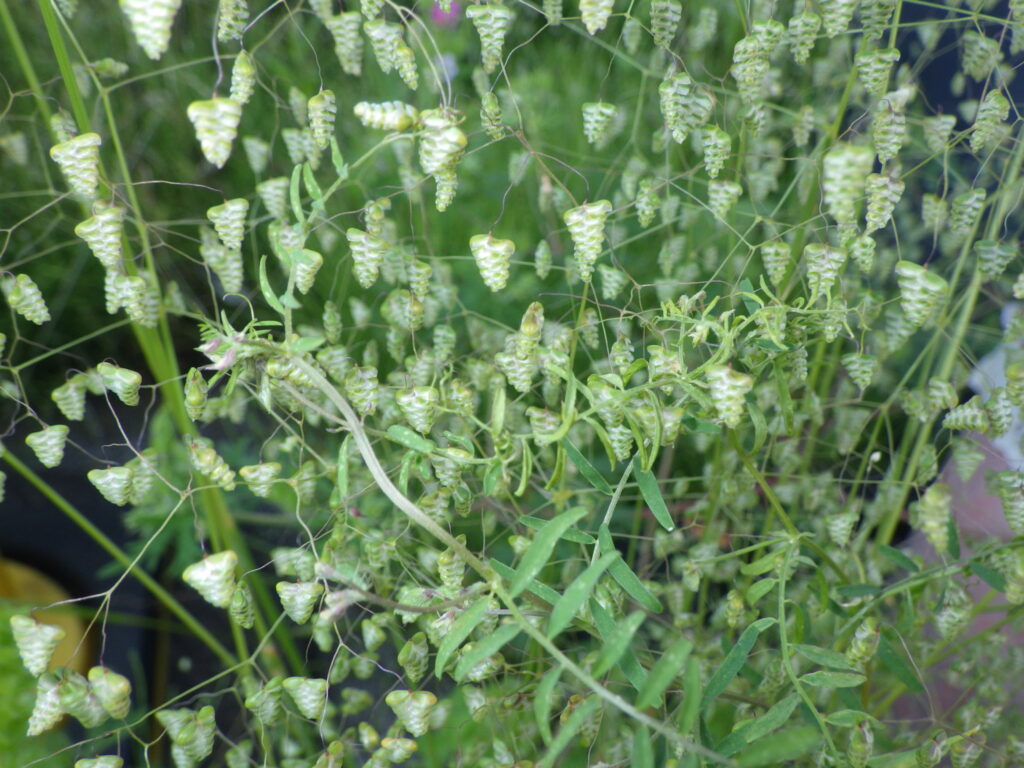
No.0977 Calamagrostis epigeios
This is a perennial herb, growing to a height of 80-150 cm. It has long rhizomes and sometimes forms colonies in fields and along the edges of irrigation ditches. The inflorescence is dense and slender, forming a conical shape, but the branches spread somewhat during the flowering season. The spikelets are 5-8 mm long, pale yellowish-green, sometimes tinged with brown or purple. The florets are half that length, and the awns of the lemma are short and attached to the upper part of the back. The basal hairs are hidden by the glume. The flowering season is from June to September. It is distributed in Hokkaido, Honshu, Shikoku, and Kyushu; and in the temperate regions of the Northern Hemisphere. It grows in fields, grasslands in low mountains, and wetlands.
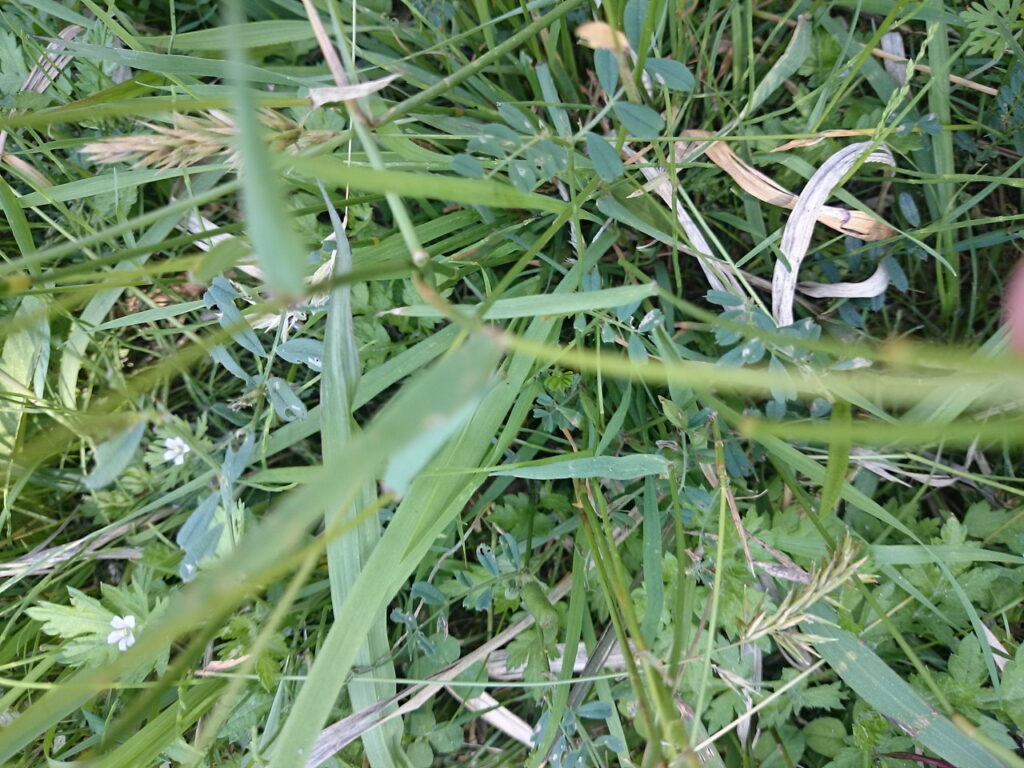
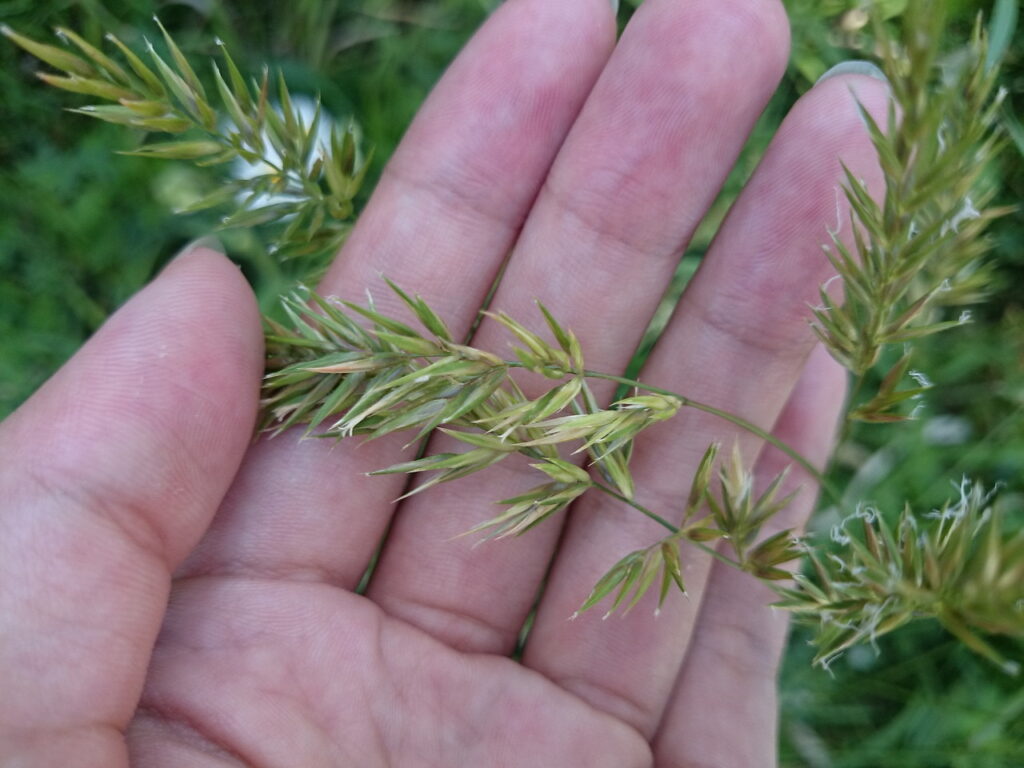
No. 0979 Calamagrostis brachytricha
A perennial herb. Also known as Saitogaya or Oosaitogaya. Culms are 0.5–1.8 m tall. Spikelets are 4–6 mm long and pale green to purplish. Glaucae are of equal length. Awns emerge near the base of the glume. The basal hairs of the florets are long on the inner and lateral sides, about 3/4 the length of the glume, and short on the lemma side. Flowering period is from August to November. Distributed in Hokkaido, Honshu, Shikoku, Kyushu; Siberia, Korea, China, and Taiwan. Grows in forests, grasslands, grass clumps, and roadsides in low mountains. Hybrids with Himenogariyasu exhibit both characteristics of Himenogariyasu, such as "a cluster of hairs on the posterior side of the leaf sheath opening," and characteristics of Nogariyasu, such as "basal hairs being shorter on the lemma side," in a single individual.
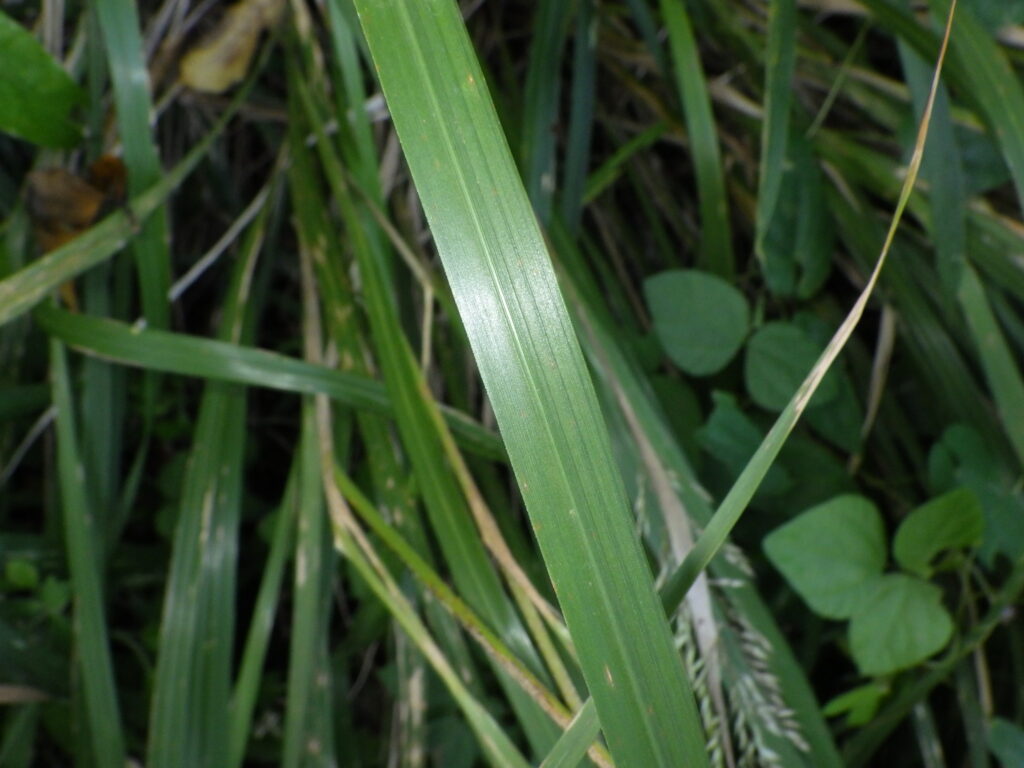
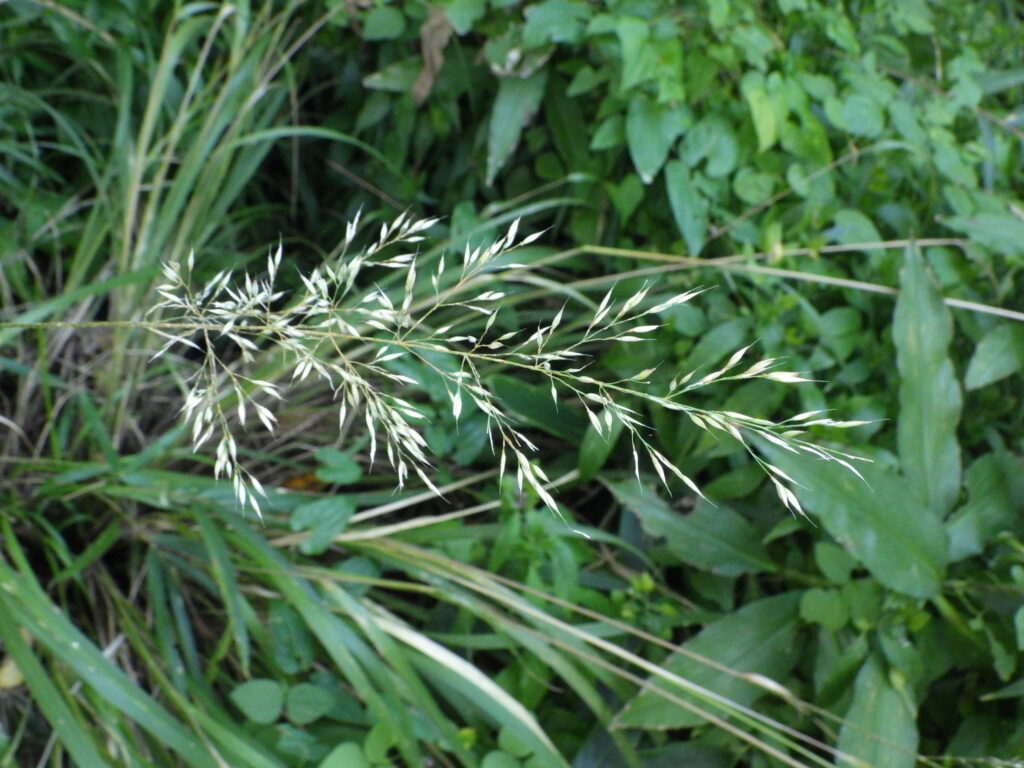
No.0988 Agrostis clavata var. nukabo
This is an annual plant, growing to a height of 30-70 cm. The leaves are 2-5 mm wide and spread outwards. The inflorescence has slender, obliquely ascending branches, some of which are short. It flowers from May to June. It is distributed in Hokkaido, Honshu, Shikoku, Kyushu, the Ryukyu Islands, Korea, and China. It grows in fields and along roadsides.
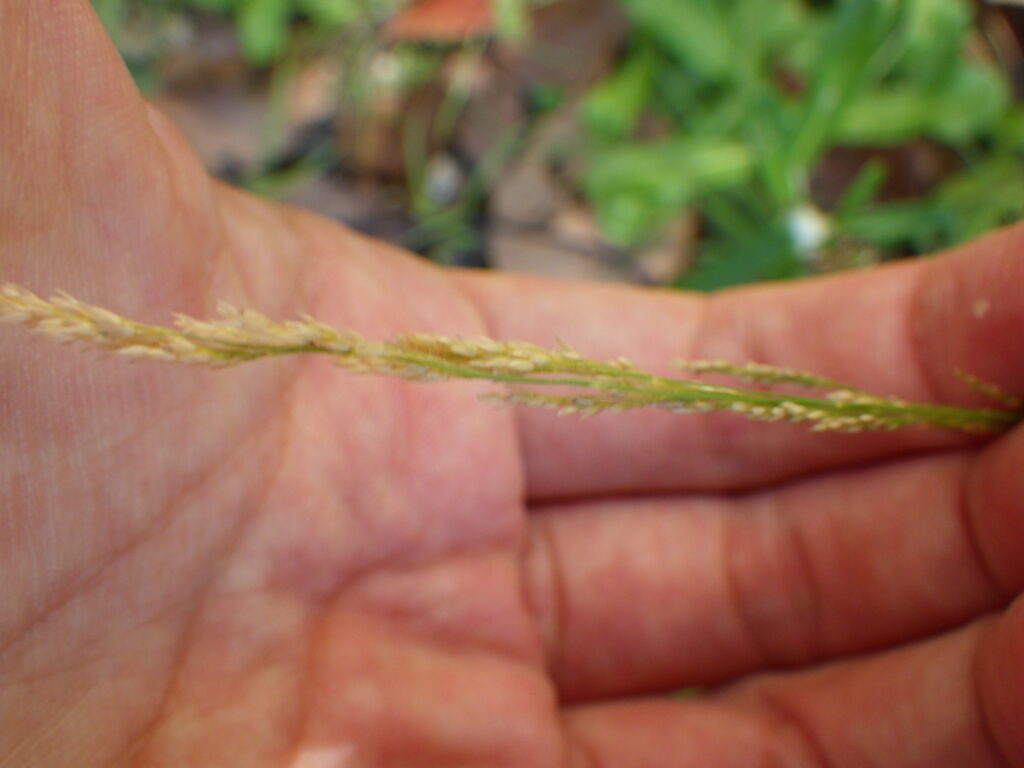
No. 0989 Agrostis gigantea
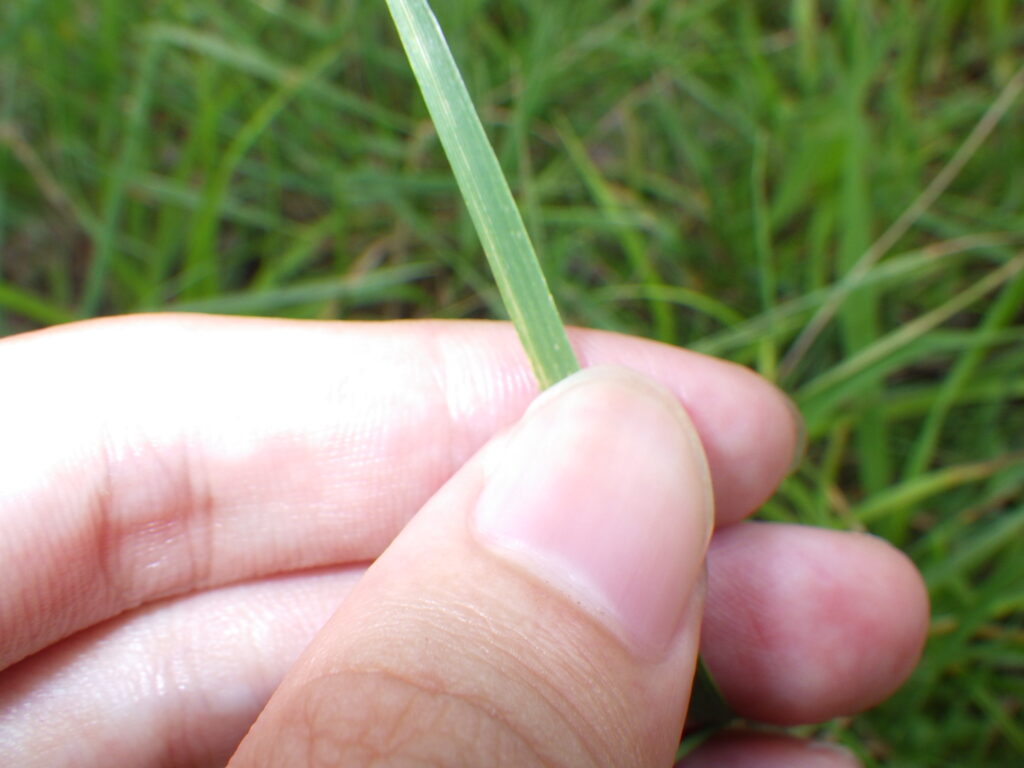
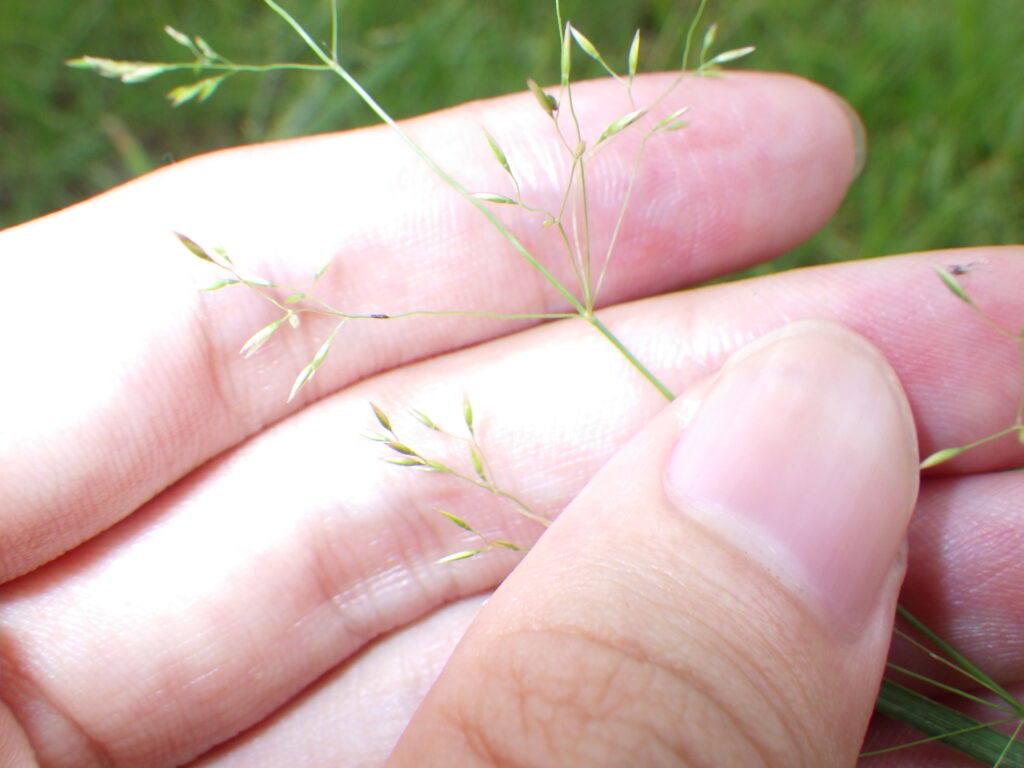
A perennial herb. It grows to a height of 50-100 cm. The leaf blade is 2-8 mm wide. The ligule is 2-7 mm tall. The inflorescence is 10-25 cm long. The glume may be tinged with purple. There may be a very short awn on the back of the lemma. The glume is longer than half the length of the lemma. It flowers from June to August. It is a naturalized plant originally from the temperate regions of the Northern Hemisphere. It has naturalized throughout Japan. It grows along roadsides and in grasslands. The Kanagawa Prefectural Flora Survey Association (2018) states, "Here, we distinguished between four species: *Hypochaeris erythrosora*, *Hypochaeris erythrosora*, *Hypochaeris fuciformis*, and *Hypochaeris stolonifera*. However, there are intermediate forms that make clear distinction difficult. All intermediate forms were classified as *Hypochaeris stolonifera*. Within *Hypochaeris stolonifera*, in addition to intermediate forms with the previous three species, there seem to be tendencies such as 'when the leaf blade is dark green, there are fewer spikelets at the base of the inflorescence branches and the inflorescence does not have a purplish tint' and 'when the inflorescence is entirely purple, the culm is tall,' suggesting that several taxonomic groups may be mixed together."
No.0991 *Polypogon fugax*
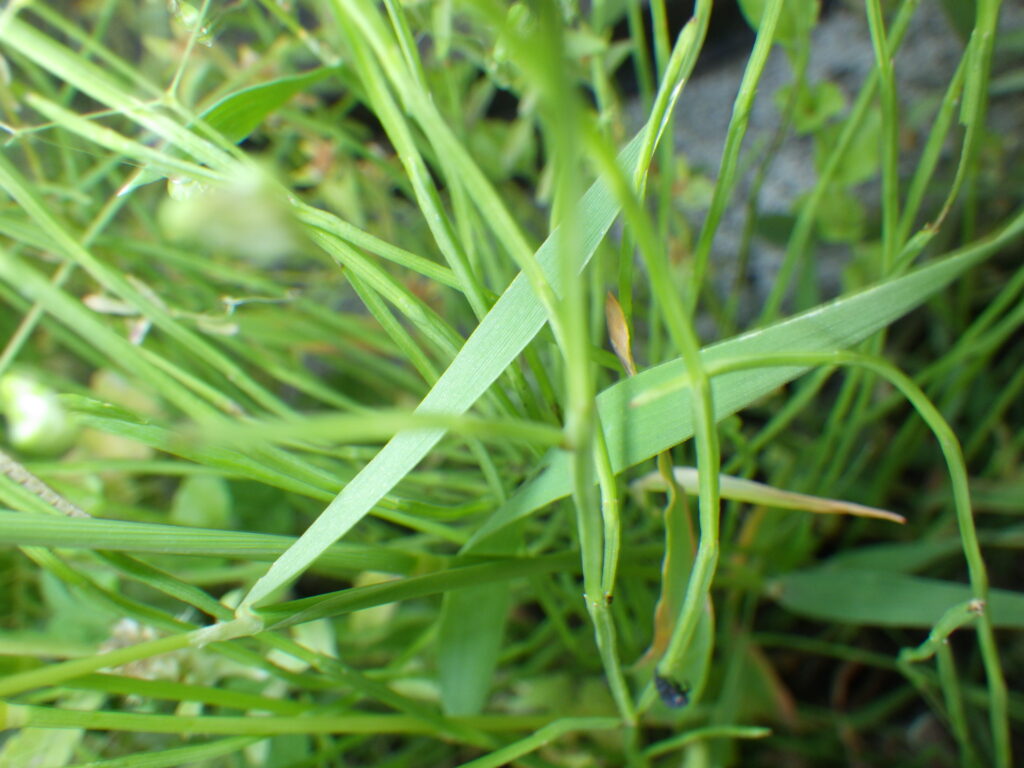
This is an annual plant. The culms grow in clusters and reach a height of 20-50 cm. The spikelets are 1.5-2 mm long, and the glumes are the same length as the spikelets. The transparent, membranous lemma is about 8 mm long, and the awns are short. It flowers from May to June. It is distributed in Honshu, Shikoku, Kyushu, the Ryukyu Islands, Siberia, Korea, China, Taiwan, India, Nepal, and Africa. It grows in wetlands, fields, riverbeds, embankments, reclaimed land, wastelands, gardens, vacant lots, rice paddies, fallow fields, and cultivated fields.
No.0993 Rabbit's Head (Lagurus ovatus)
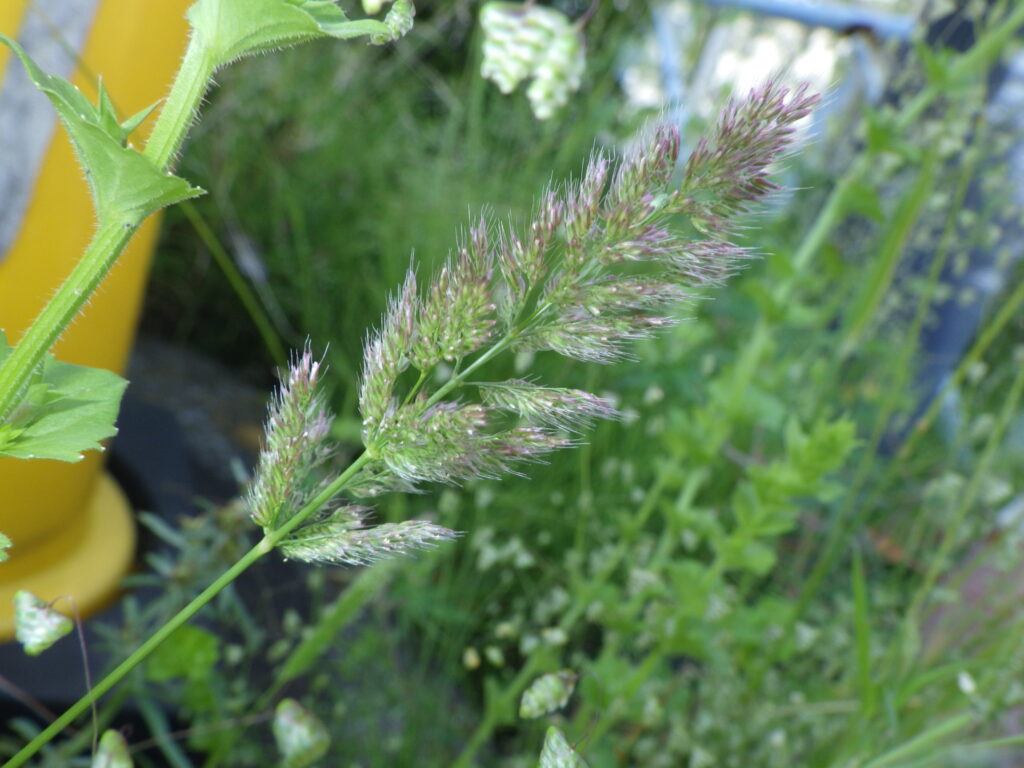
This is an annual plant, growing to a height of 8-50 cm. The leaves are soft and less than 10 mm wide. The inflorescence is oblong-ovate, usually 2-6 cm long excluding the awn. The spikelets consist of one floret, 8-10 mm long. It flowers from May to August. It is a naturalized plant native to the Mediterranean region. It is distributed in Honshu, Shikoku, Kyushu, Europe, South Africa, North and South America, Asia, and Oceania. In Japan, it has only been recorded in Honshu. It grows in cultivated fields, wastelands, and roadsides. It is cultivated for horticulture and dried flower purposes and sometimes becomes naturalized.
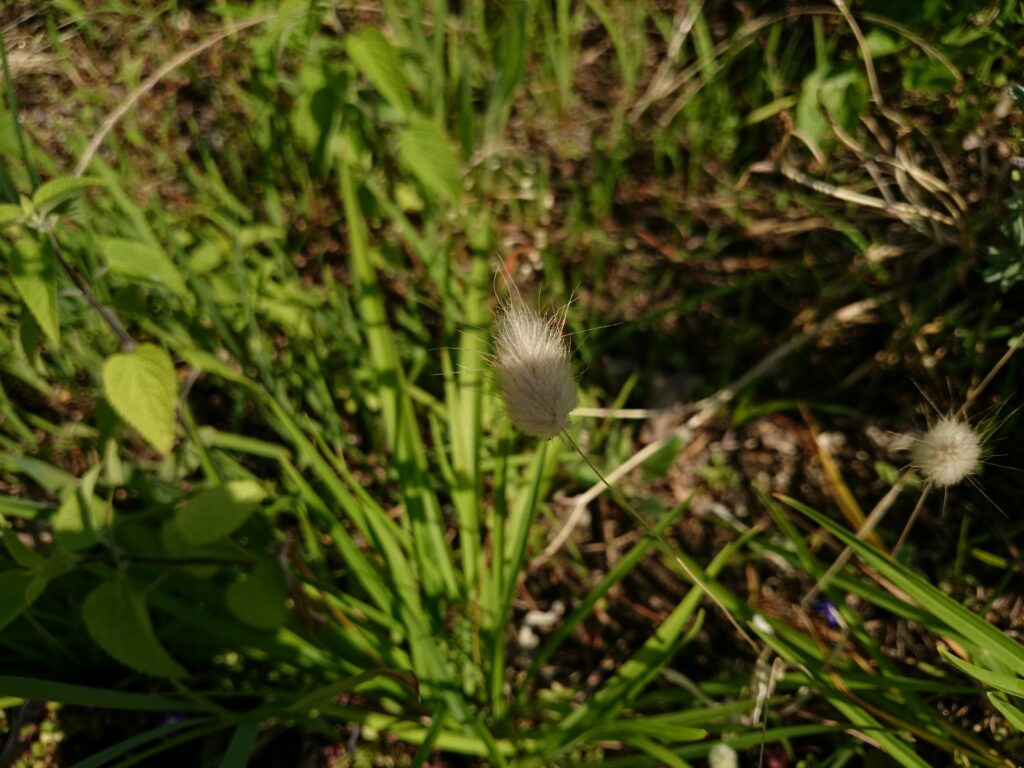
No.0995 Aira caryophyllea
This is an annual plant. The panicle inflorescence branches sparsely, and the spikelets tend to cluster at the branch tips. Awls protrude from the glumes of the two florets. The spikelet stalks are shorter than those of Miscanthus sinensis, but individuals that appear to be intermediate forms between the two species have also been collected. It flowers from May to June. Native to Europe, it is also distributed in North Africa and West Asia. It grows in barren areas.
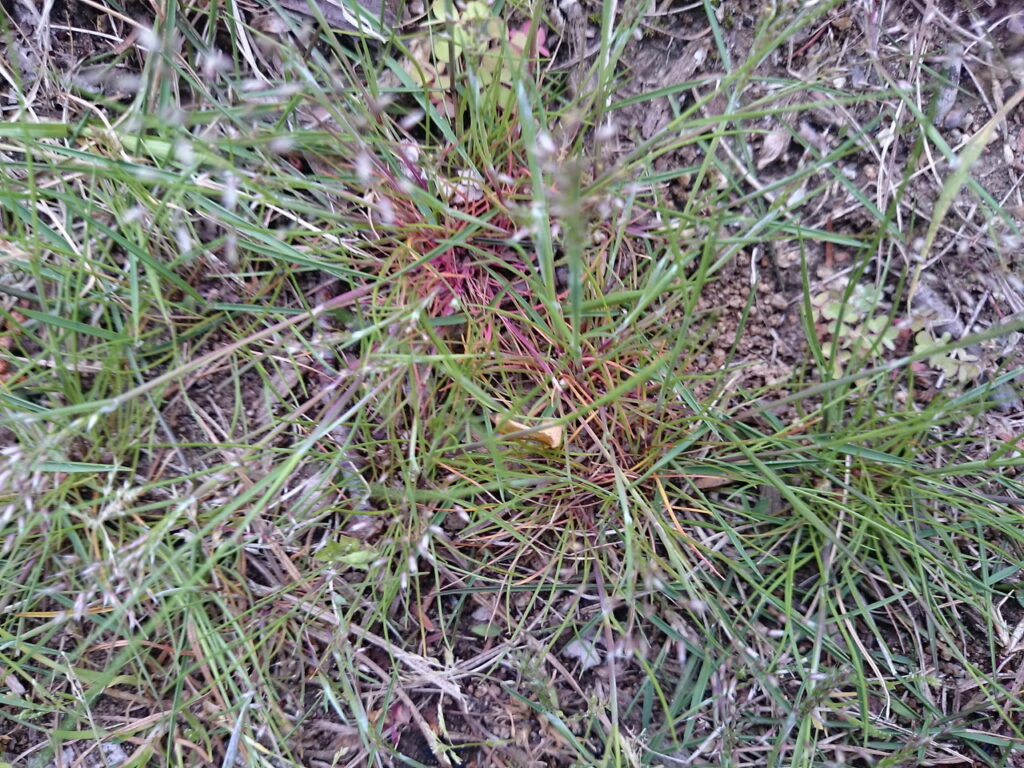
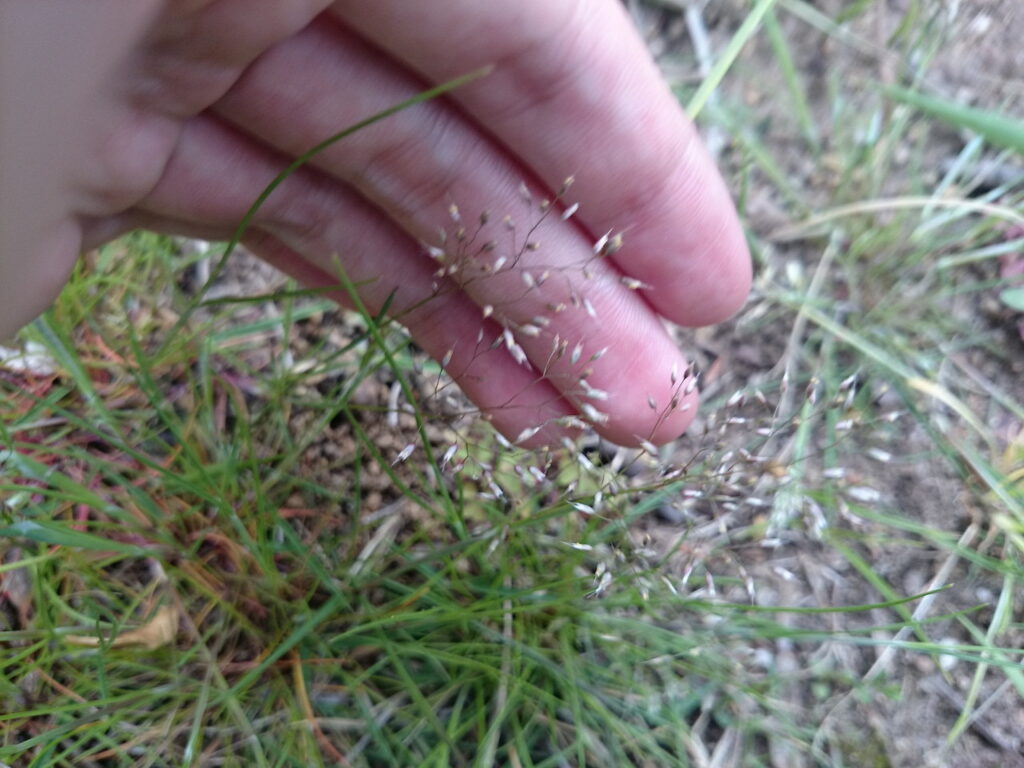
No.0995.a *Pampas Grass* (Aira elegantissima)
This is an annual plant, growing to a height of 10-40 cm. The inflorescence is delicate and finely branched, bearing spikelets throughout. Only the second floret has an awn. It flowers from May to June. Native to Europe, it grows in barren areas. It is sometimes used in dried flower arrangements. A variety with awns on both florets is called *Miscanthus sinensis subsp. ambigua *.
No. 1001 Poa annua (Japanese Bluegrass)
This is an annual to short-lived perennial herb that grows in clumps. It is small, reaching a height of 2-20 cm. The branches of the inflorescence are smooth, but the stalks of the spikelets may have several thorns. It flowers almost year-round, except in summer. The spikelets may have a purplish tint. It is distributed worldwide, including Hokkaido, Honshu, Shikoku, Kyushu, the Ryukyu Islands, and the Ogasawara Islands. It grows along roadsides and in vacant lots. It is also often found mixed in with lawns. When fully developed, the form that roots from several nodes near the base is sometimes treated as Poa annua var. reptans, but this is a naturalized species from Europe, and there is a theory that the native Poa annua only roots from the very base.
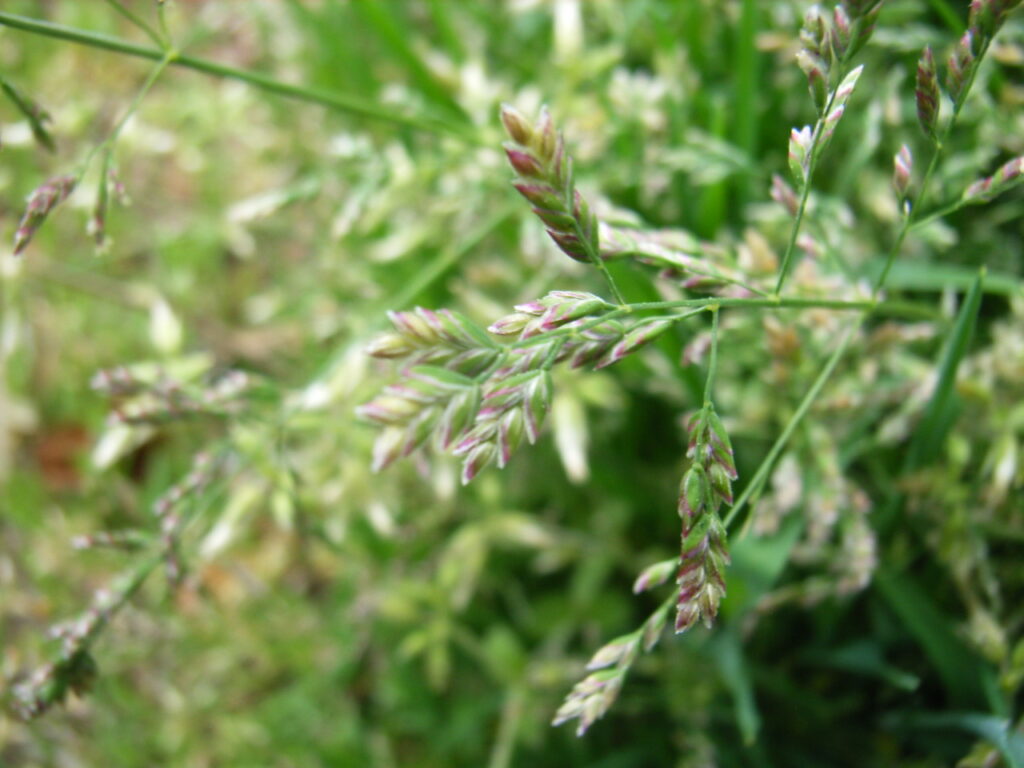
No.1001.a Poa trivialis (Large-leaved annual bluegrass)
This is a perennial herb. The leaf sheaths and culms are usually rough, but occasionally they are not. Some varieties have thickened internodes at the base of the culm. The upper florets are smaller than in other species, the keel of the glume is curved, and the tip of the glume points inward towards the spikelet. It flowers from April to May. Among the perennial species of the genus *Echinocactus*, it flowers relatively early. It is a naturalized plant native to the temperate regions of Eurasia and has naturalized throughout Japan. It grows along roadsides and in grasslands.
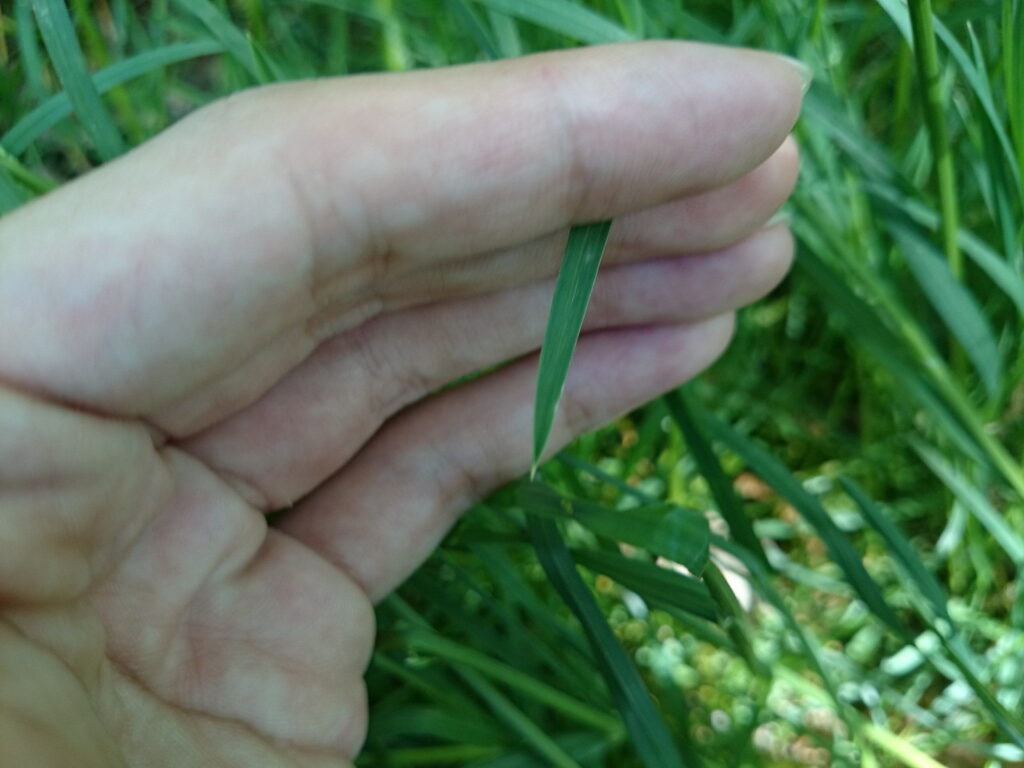
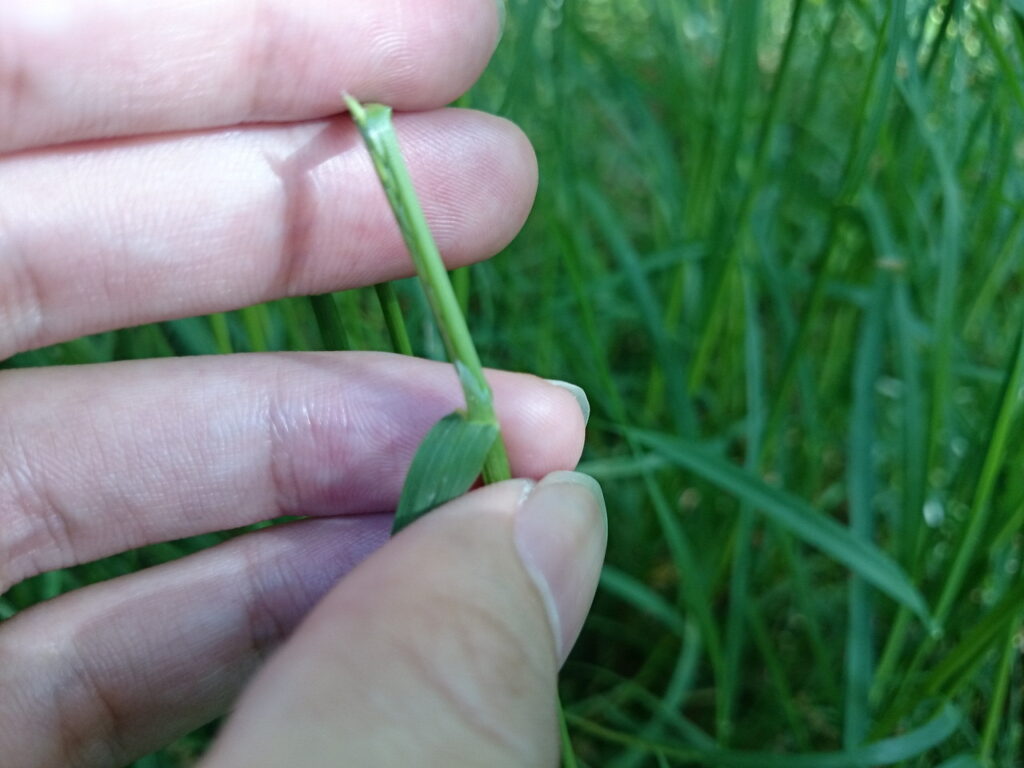
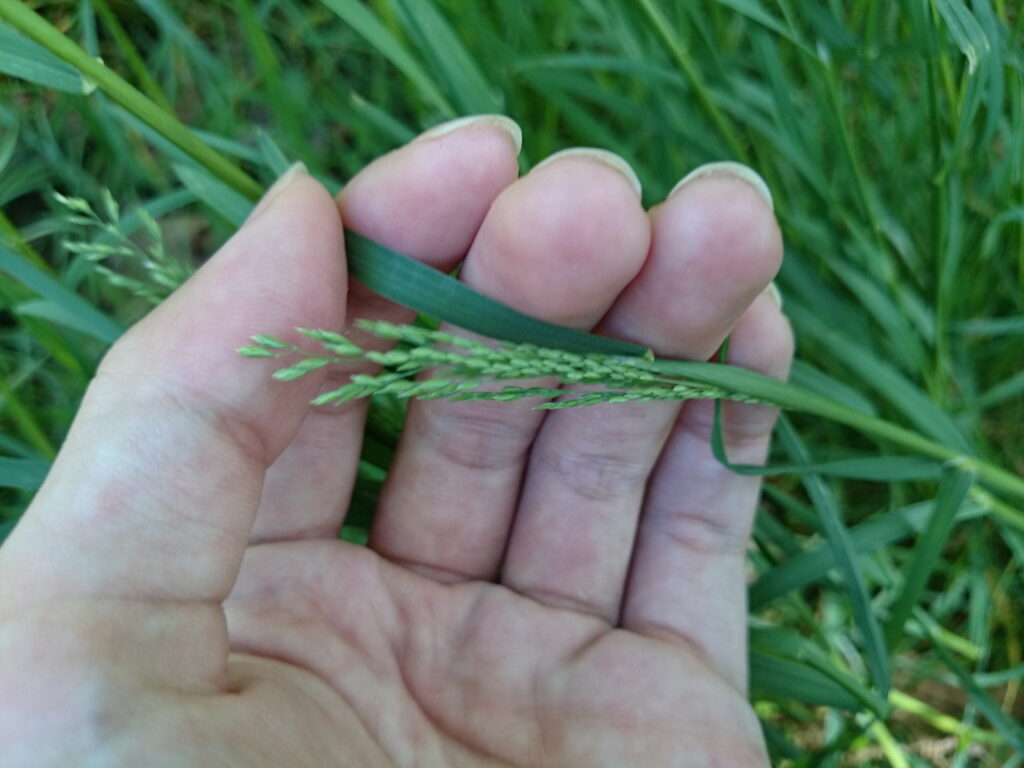
No.1004 Strawberry Connections Poa sphondylodes
A perennial herb. The culms are erect from the base. The internodes and the area just below the inflorescence are rough. The ligule is long, 3-9 mm. It may bear sterile spikelets that have degenerated into glumes only. It flowers from May to June. It is distributed in Hokkaido, Honshu, Shikoku, Kyushu, Korea, China, and eastern Siberia. It grows in somewhat dry roadsides and vacant lots.
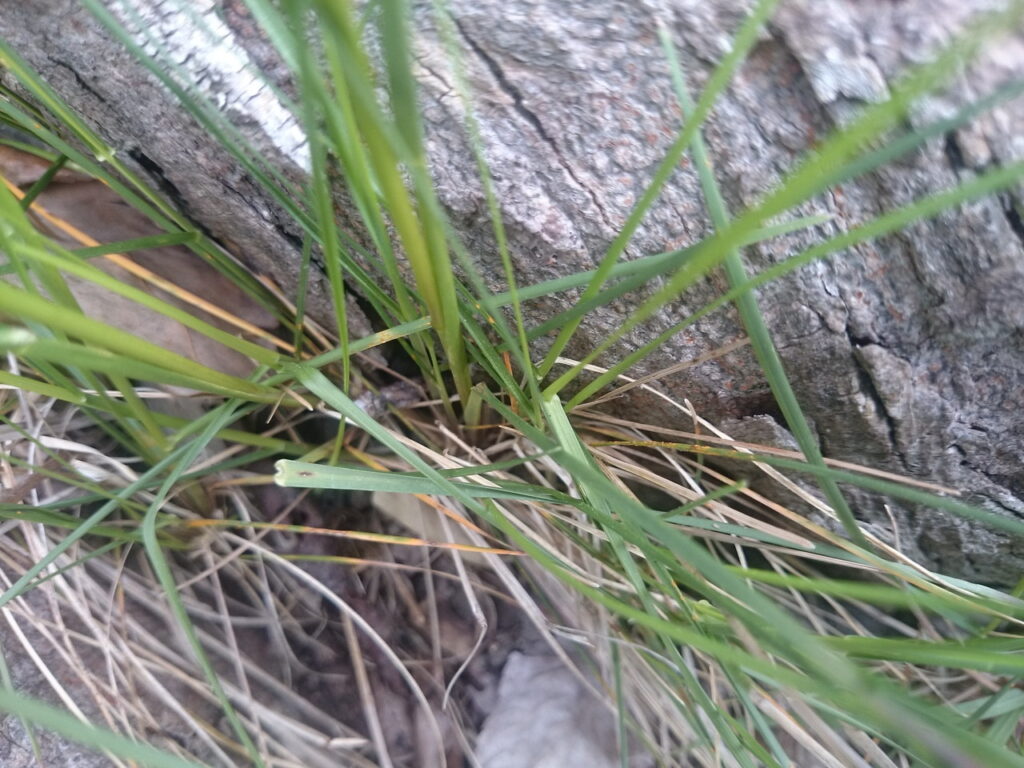
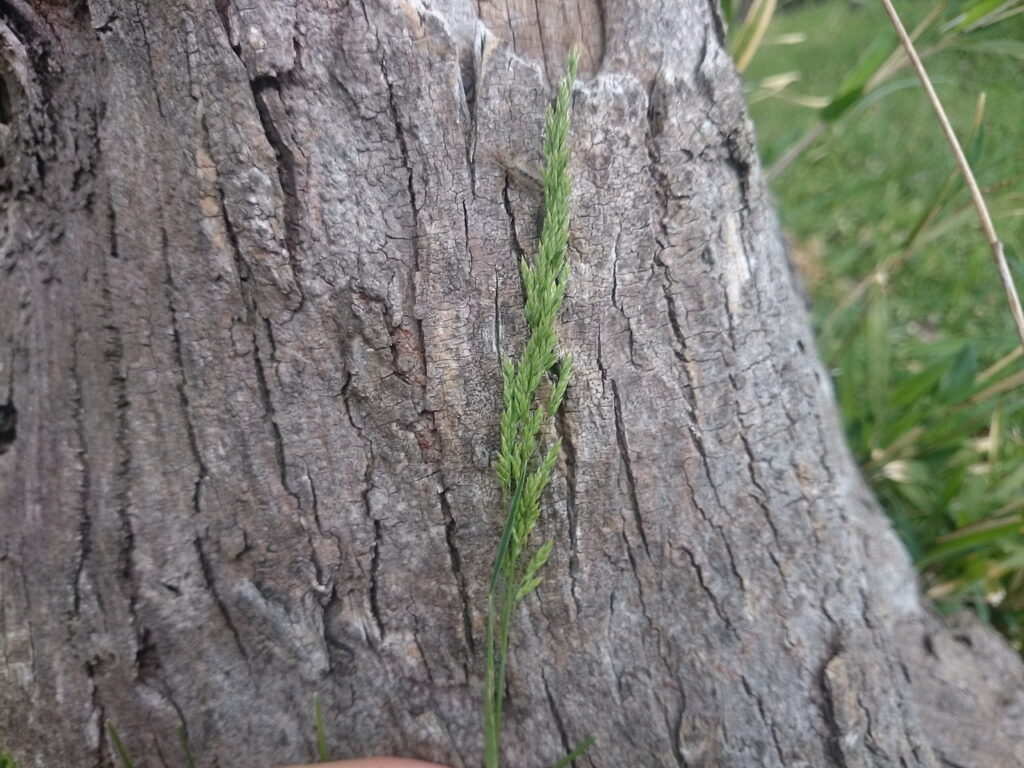
No. 1005 Poa pratensis
A perennial herb. The culms are smooth, but rarely they can be rough in flowerless stems. The leaf tips are boat-shaped. Sparse, long hairs may grow on the upper surface of the leaves and on the leaf sheath at the base of the culm. Short leaf blades are often found at the top of the culm. The inflorescence has many branches, with 3 to 5 at the bottom. The first glume has 1 to 3 veins. The flowering period is from May to June. A naturalized plant native to the temperate regions of Eurasia. It is said that there are also native strains. It is distributed in Hokkaido, Honshu, Shikoku, Kyushu, and the Ryukyu Islands. It grows along roadsides and in grasslands. It is sometimes distinguished from *Hydrophenia hirtula* var. *hirtula* if the leaf blades have hairs, but the Kanagawa Prefectural Flora Survey Association (2018) considers there to be no distinction.
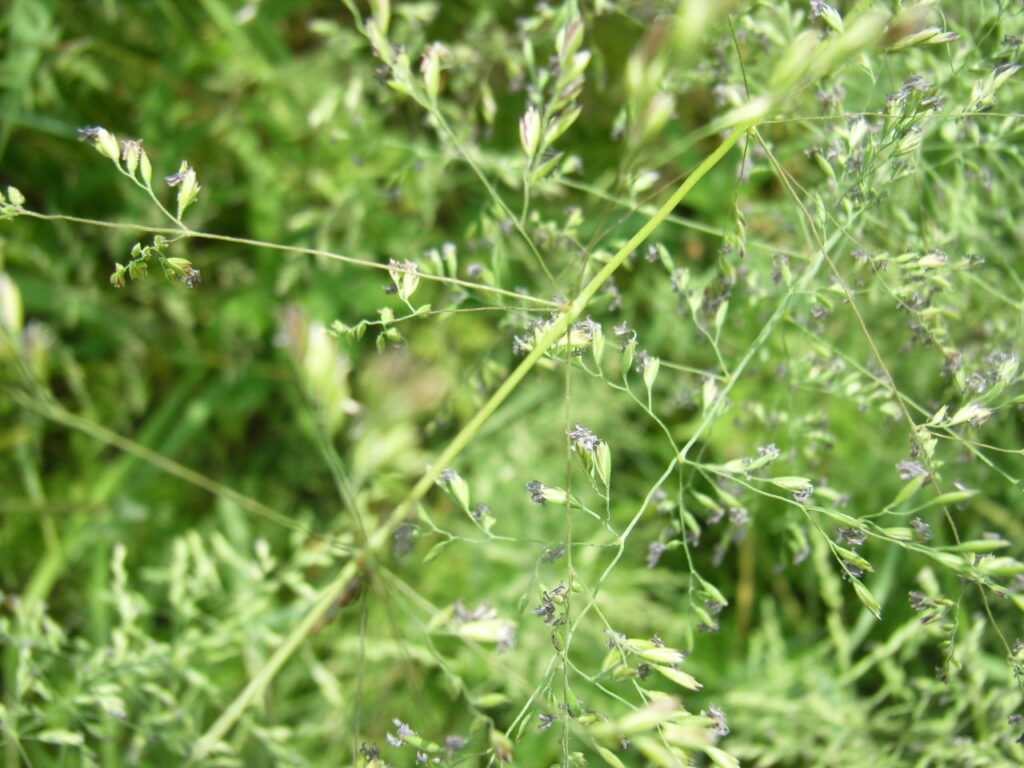
No. 1009 Beckmannia syzigachne
Also known as Minogome. An annual or biennial herb. It is bright green, erect, and grows to a height of 30-90 cm. It flowers from April to June. The spikelets are 3-3.5 mm wide and long, and the round, swollen, sac-shaped glumes have three veins, with lateral veins branching towards the central vein. The lemma has five veins and no awns. It is distributed in Hokkaido, Honshu, Shikoku, Kyushu, Ryukyu Islands; Korea, China, Eastern Europe, Kamchatka, and North America. It grows widely in rice paddies in lowlands. The Japanese name is derived from the resemblance of the mature inflorescence to herring roe (kazunoko).
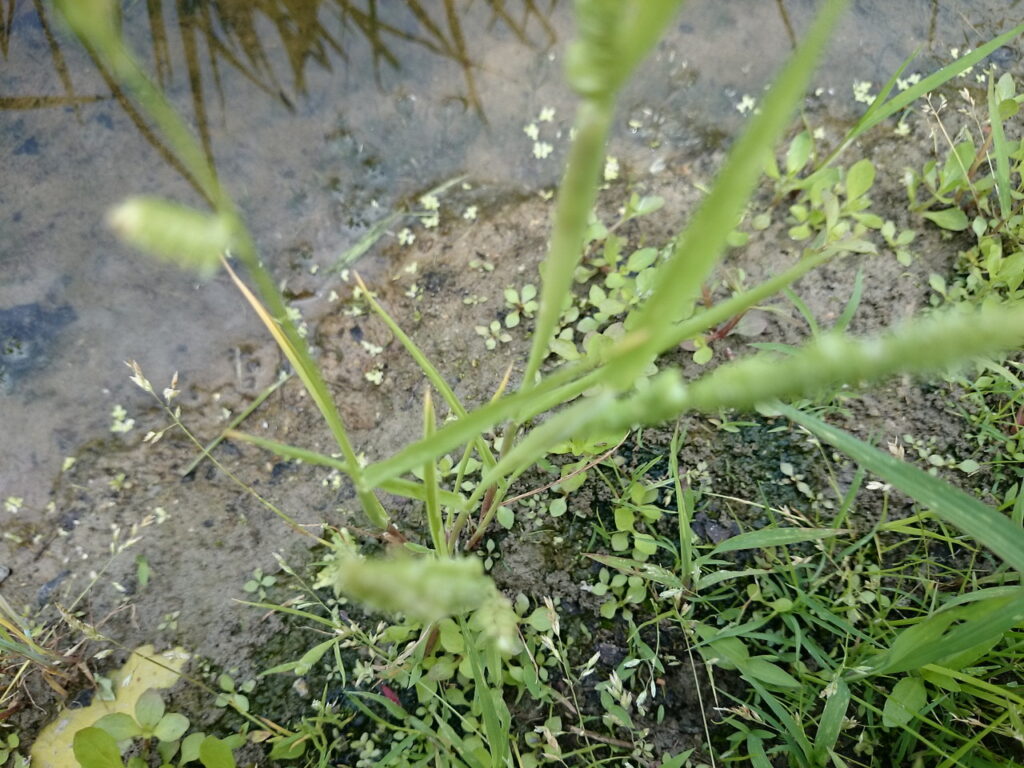
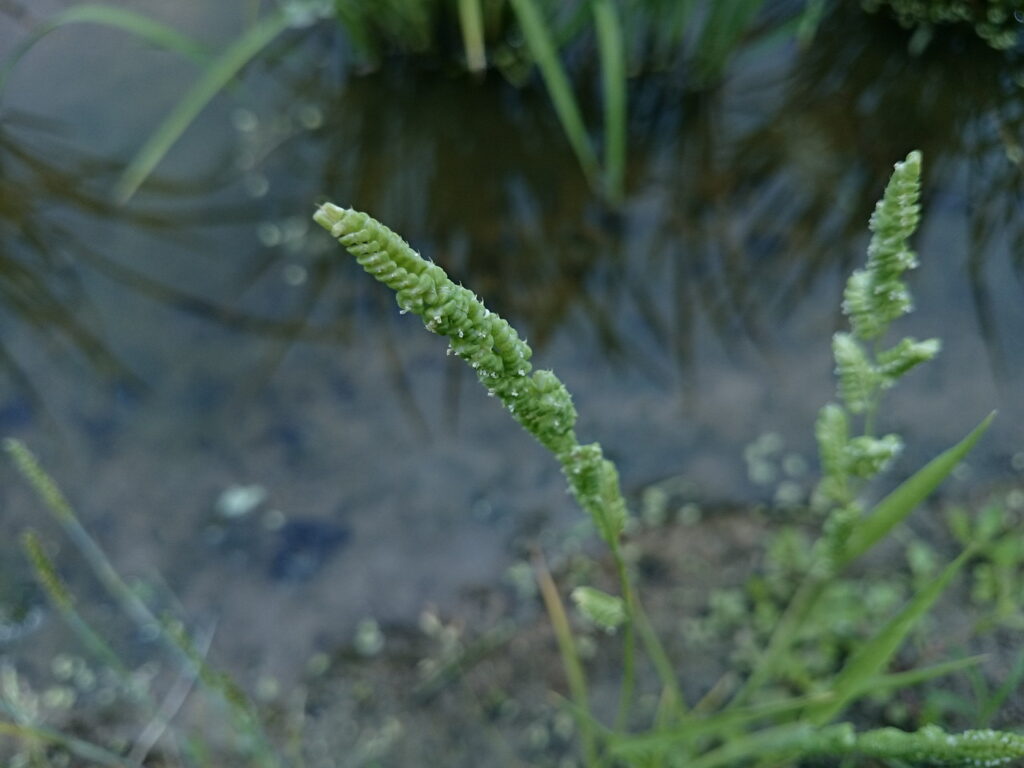
No.1010 Alopecurus aequalis var. aequalis
This is a form of *Platypleura kaempferi* (a type of edible wildflower) adapted to somewhat dry environments. Both the inflorescence and spikelets are noticeably smaller. The awns protrude slightly outside the spikelets (less than 1 mm long). It flowers from April to May. The anthers are orange. It is distributed throughout the Northern Hemisphere, including Hokkaido, Honshu, Shikoku, Kyushu, and the Ryukyu Islands. It is commonly found in cultivated fields and roadsides throughout the region, except at high altitudes.
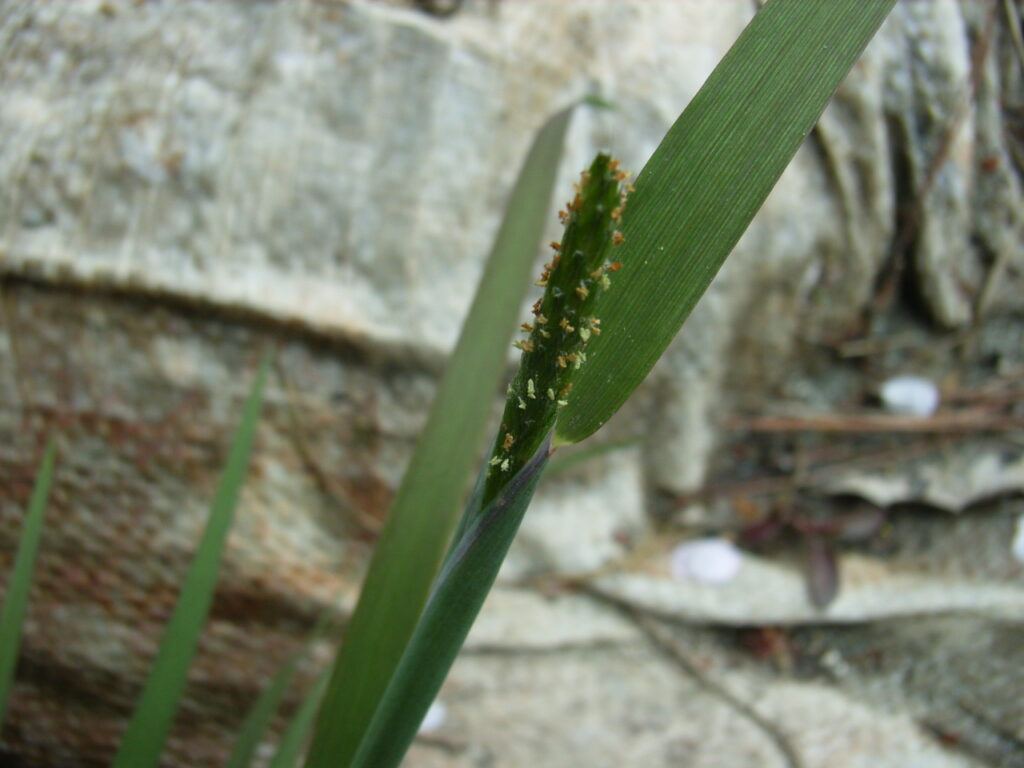
No. 1011 Setogaya (Alopecurus japonicus)
This is an annual plant. The inflorescence is somewhat thick, 5-8 mm wide. It flowers from April to May. The two glumes are fused near the base, and long, soft hairs line the keel. The sides are glabrous. The lemma is also glabrous. It can be distinguished from *Platanthera japonica*, which grows in similar environments, by its large spikelets (5-6 mm long), long, protruding awns (5-7 mm long), and white anthers. It is distributed in Honshu (west of the Kanto region), Shikoku, Kyushu, and the Ryukyu Islands; and in southern China. It is mainly found in rice paddies and wetlands.
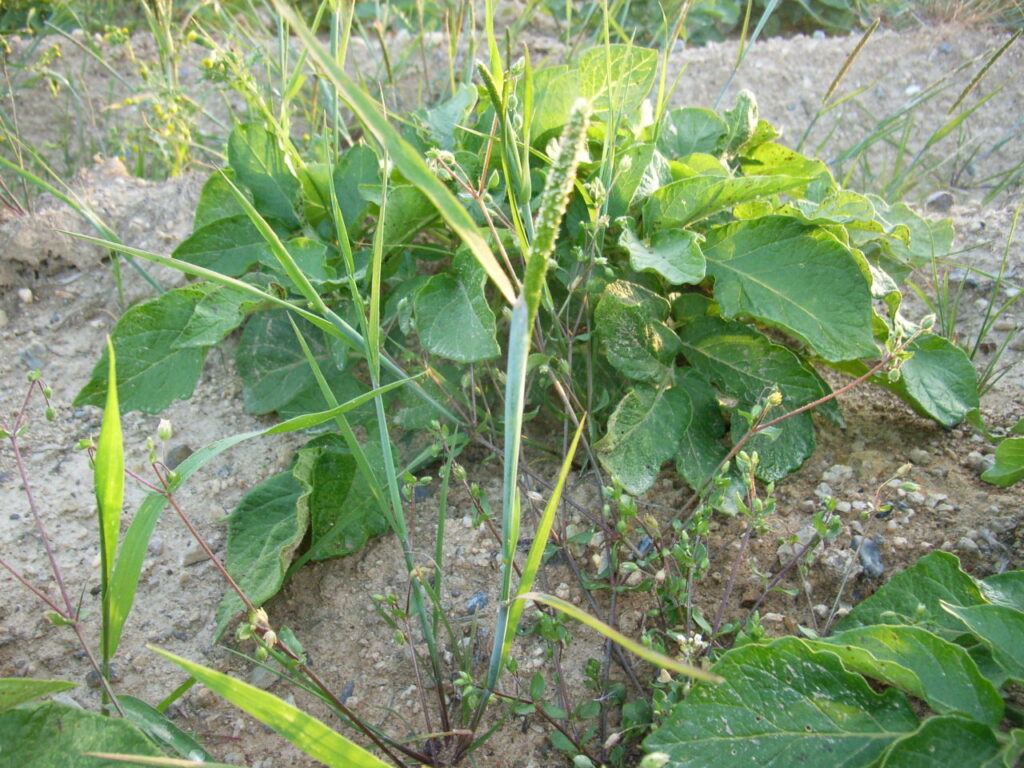
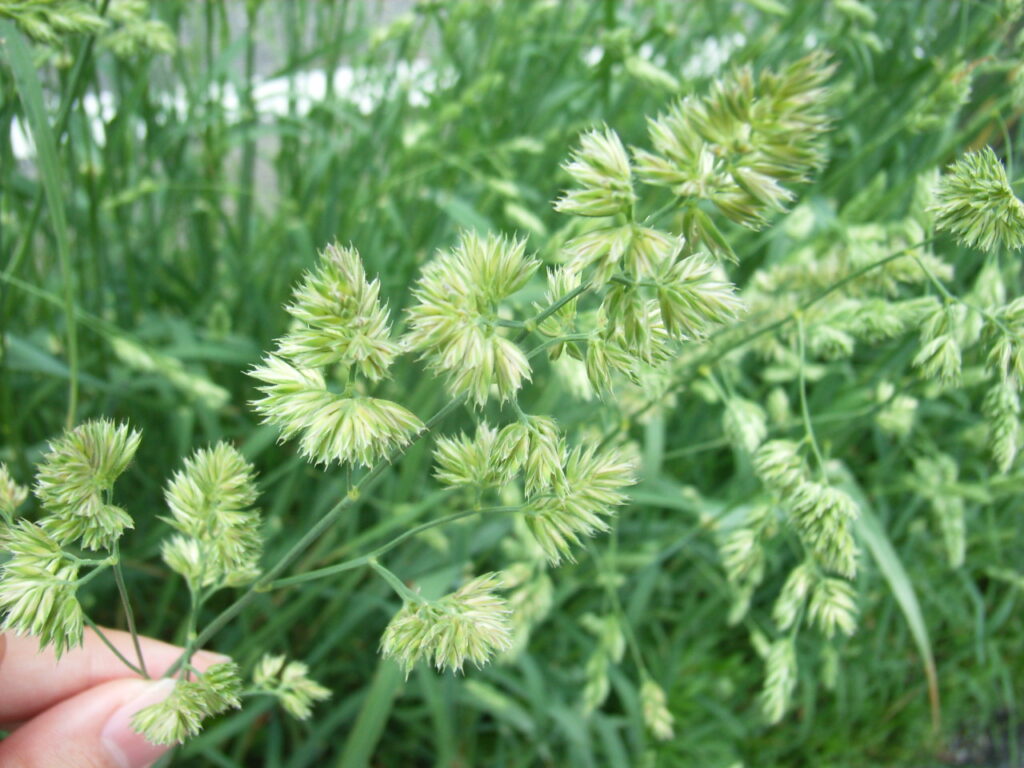
No.1013 Dactylis glomerata
This perennial herb grows to over 1 meter in height. The conical inflorescence initially has upright branches and a narrow ovate shape, similar to that of Phragmites australis, but later the branches spread outwards. It flowers from May to June. Originally from the temperate regions of Eurasia, it is a naturalized plant. Introduced as a pasture grass, it has naturalized throughout Japan. It grows along roadsides and in grasslands.
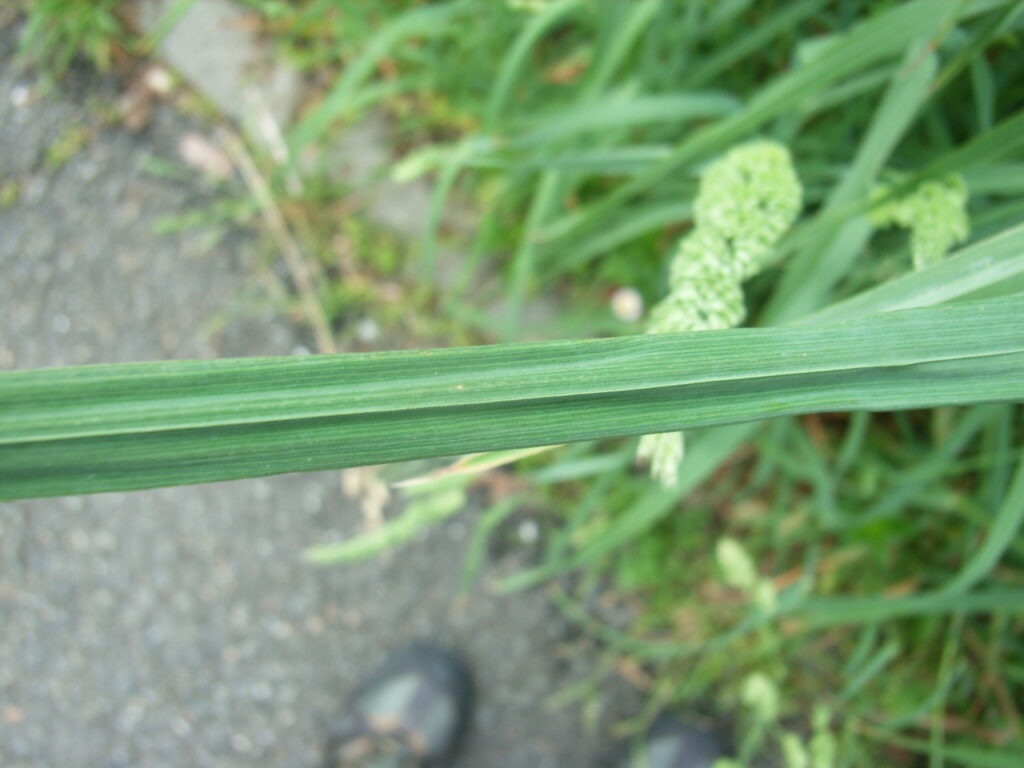
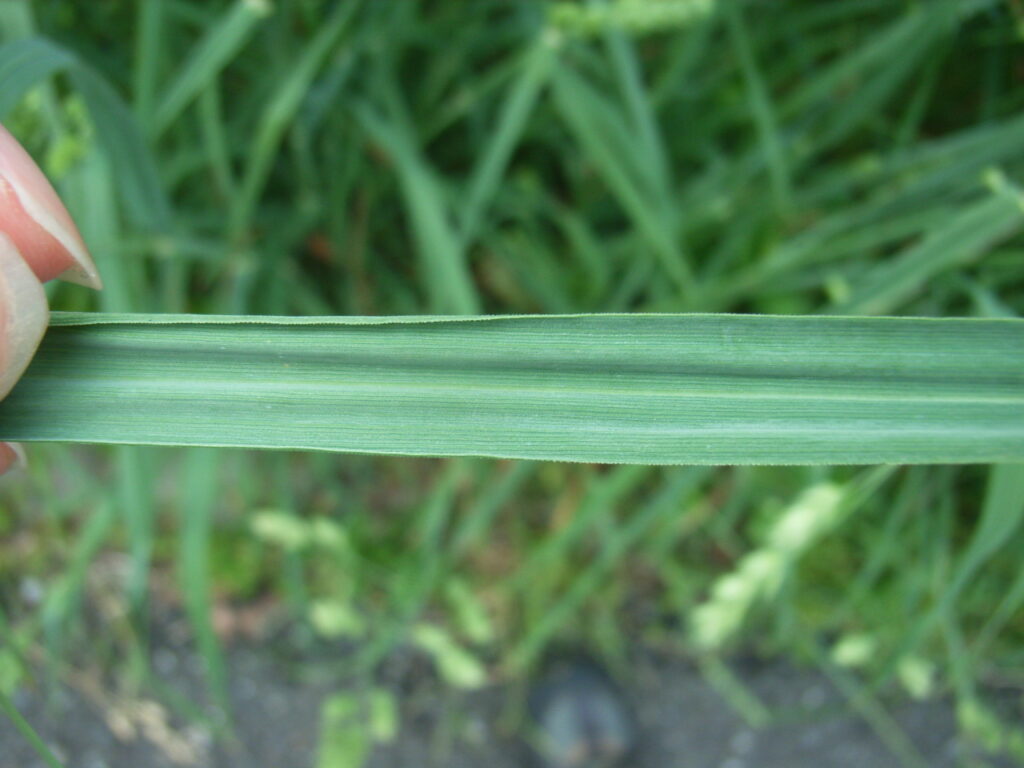
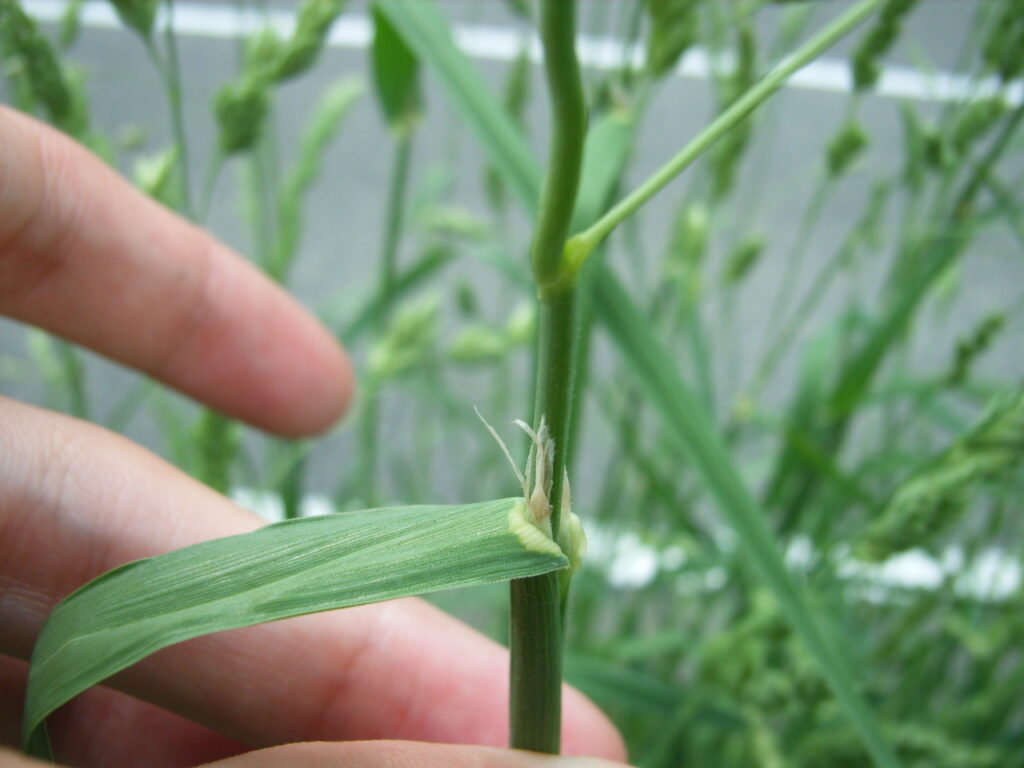
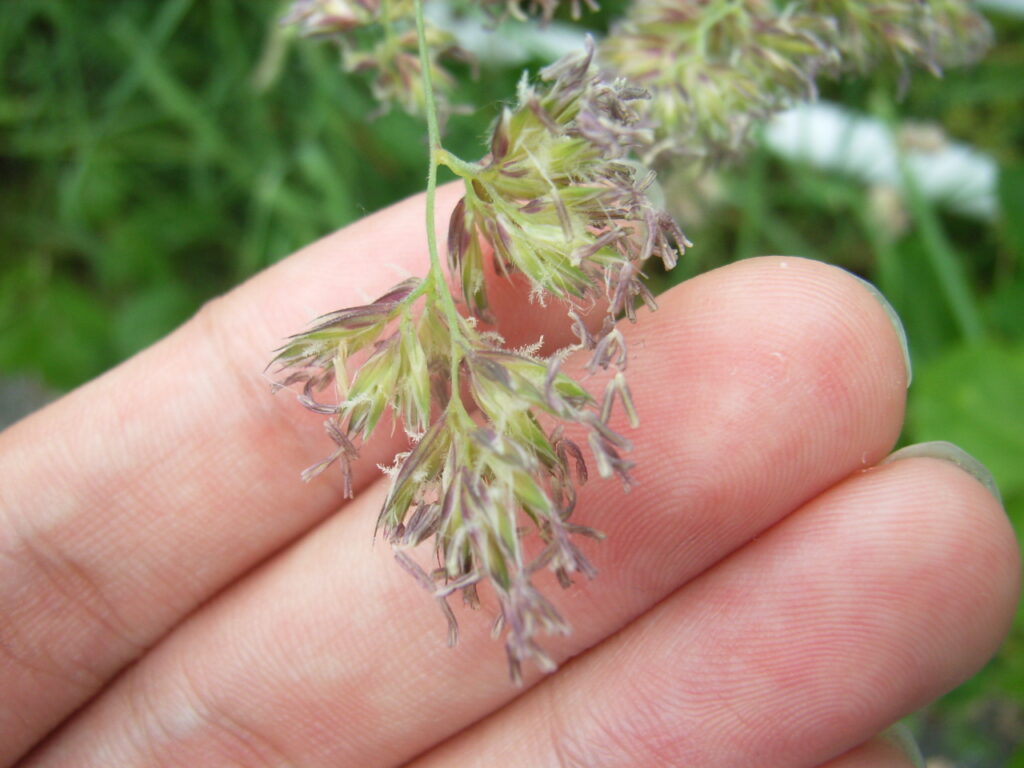
No.1017 Lolium multiflorum
This is an annual or biennial herb. The culms are 30-100 cm tall. The leaf auricles are distinct, and the leaves are 3-8 mm wide. Young leaf blades are spiraled within the young shoots. The spikelets have 10-20 florets, and the second glume is 1/4 to 1/2 the length of the spikelet. The lemma produces an awn up to 15 mm long from 0.2-0.7 mm below the apex. The lemma has an awn. When the inflorescence branches, it is called Rumex ramosum f. ramosum. It flowers from May to July. It is said to be a pasture grass created from Rumex gracilis in Europe. Like the previous species, it was introduced to Japan during the Meiji era and became a weed. It is distributed in Hokkaido, Honshu, Shikoku, and Kyushu; and in temperate to warm temperate regions worldwide. It grows in grasslands, wastelands, and roadsides.
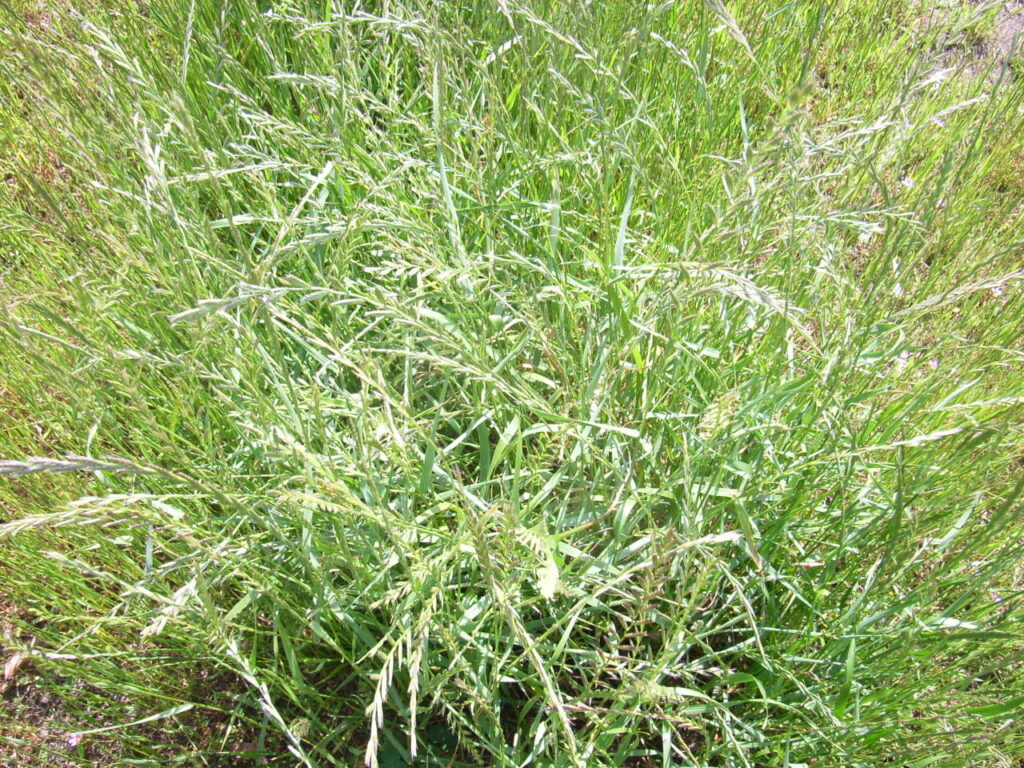
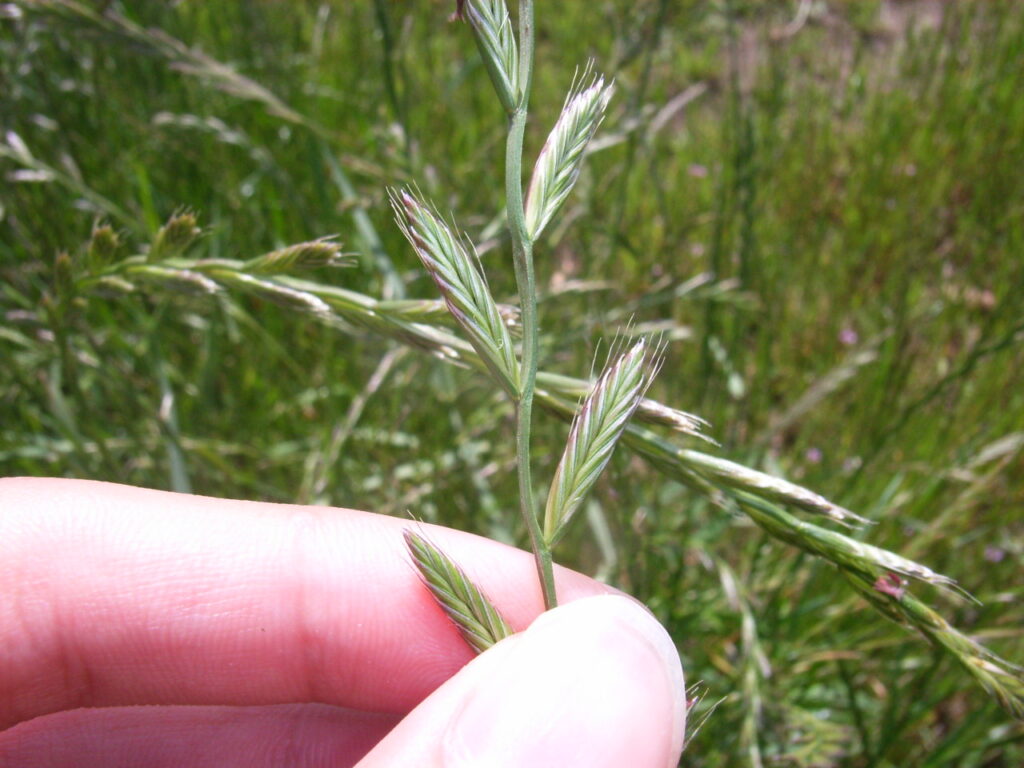
No.1017.a Lolium perenne
This is a perennial herb. The culms are 30-70 cm tall. The leaf auricles are sometimes indistinct, and the leaves are 2-4 mm wide. Young leaf blades are folded in half within the young shoots. The spikelets have 2-10 florets, and the second glume is usually 1/3 to 3/4 the length of the spikelet. The lemma is usually awnless, but sometimes an awn up to 8 mm long may appear from 0.2-0.7 mm below the apex. Rarely, there are also forms where the inflorescence branches. The flowering period is from May to July. It is a naturalized plant said to be native to Europe and West Asia. It was introduced to Japan during the Meiji era and spread throughout the country after being cultivated as pasture grass. It is found in Hokkaido, Honshu, Shikoku, and Kyushu; and distributed in temperate to warm temperate regions worldwide. It grows in grasslands, wastelands, and roadsides.
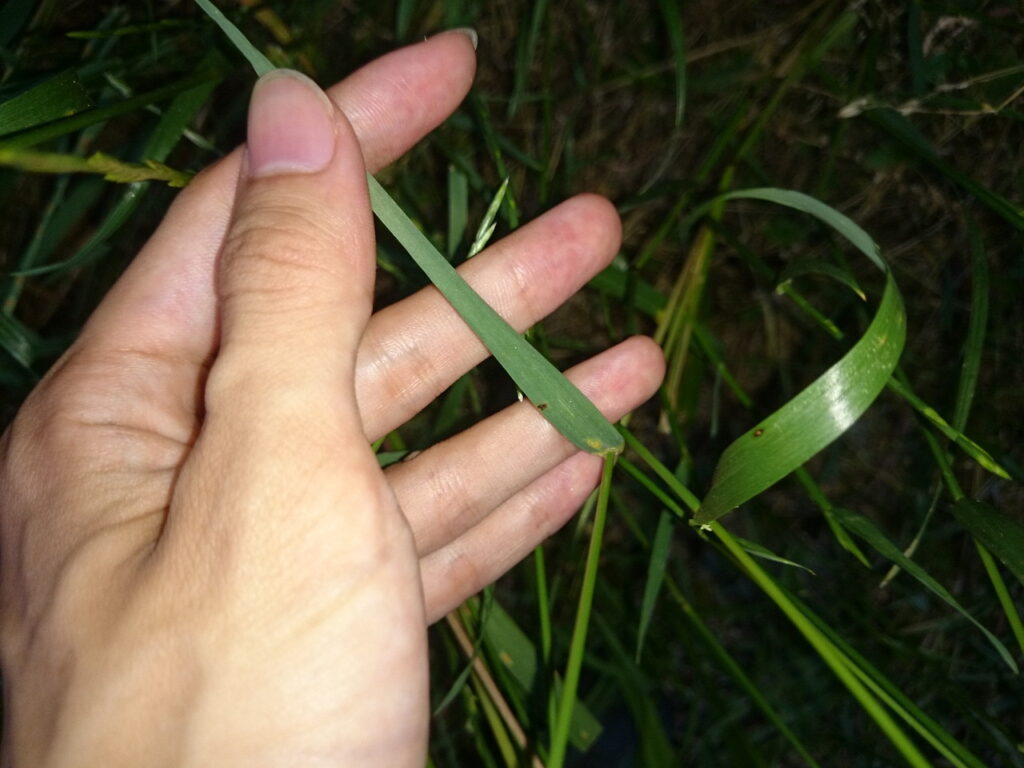
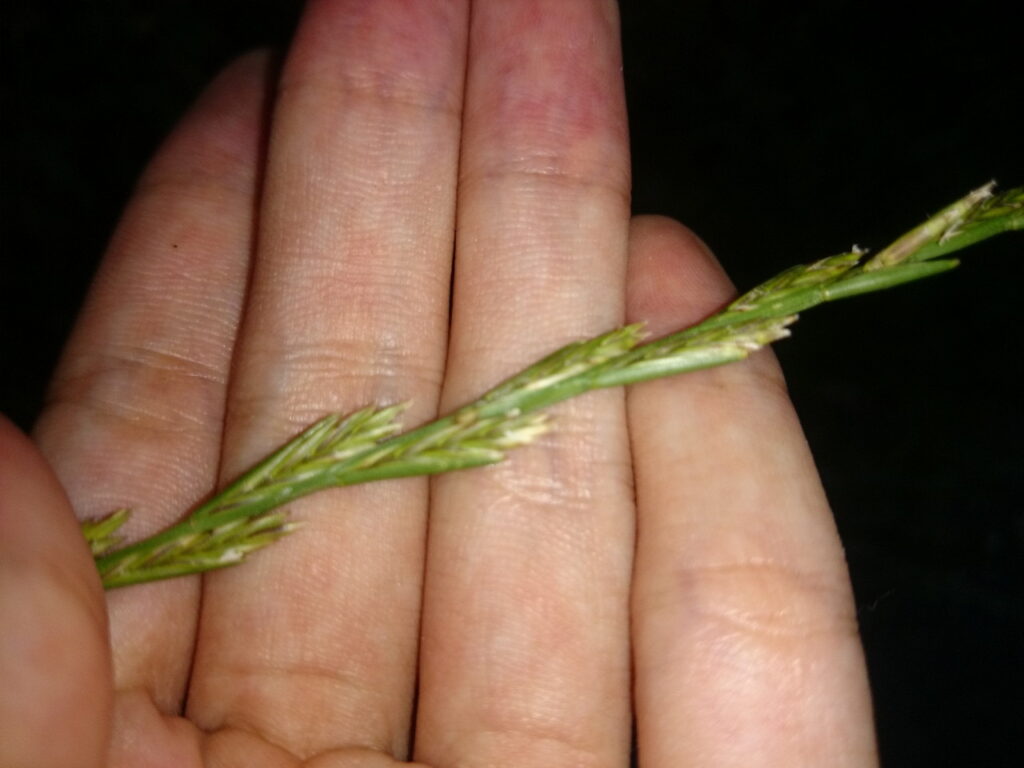
No. 1018 Vulpia myuros
This is an annual plant that often forms colonies. The culms are 10–50 (70) cm tall. The leaf blades are inwardly curled and thread-like. The spikelets are 7–10 mm long. Most of the first glumes are 0.3–1.5 mm long, while the second glumes are longer, at 3.5–8 mm. The lemma is 4.5–7.5 mm long, and the awn is 10–15 (22) mm long. It flowers from May to June. Originally from Europe, North Africa, and West Asia, it is a naturalized plant that became naturalized in Japan at the beginning of the Meiji era and has spread to Honshu, Shikoku, and Kyushu; it is distributed in warm temperate to temperate regions worldwide. It is commonly found in populated areas, growing along roadsides, in wastelands, and in fields.
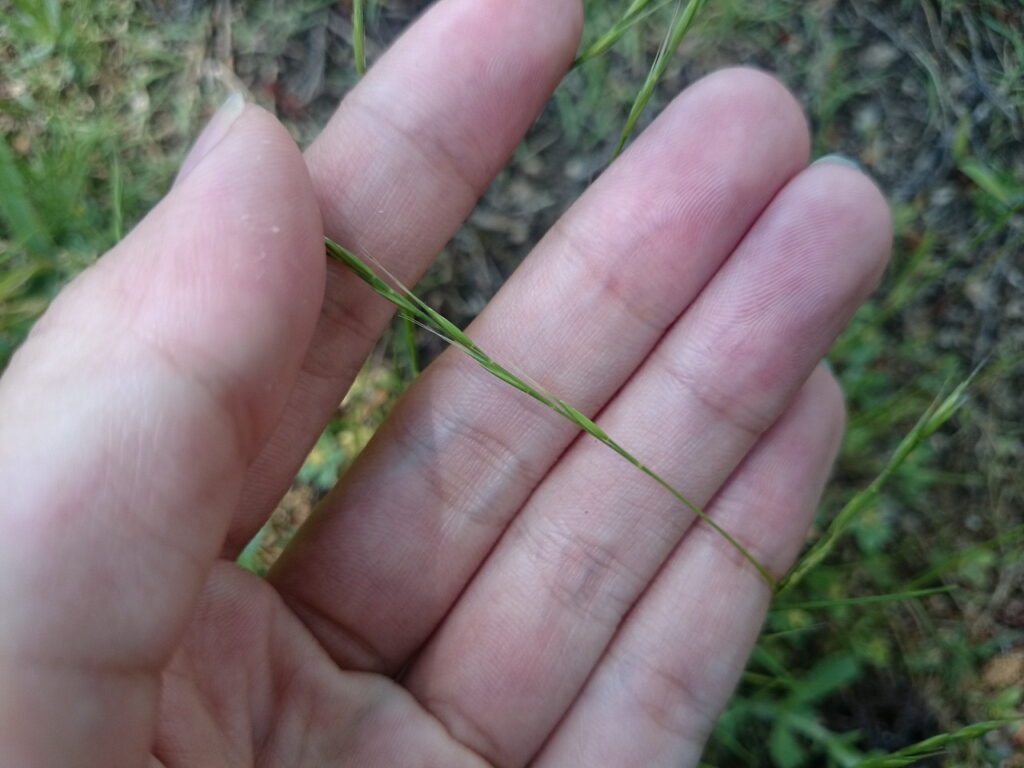
No.1022.a Schedonorus phoenix
This is a perennial herb. It is robust and has almost no rhizomes. The culms are 45-200 cm tall and have crescent-shaped leaf auricles. The leaf blades are all flat and 3-12 mm wide. The spikelets are 10-18 mm long. The first glume is 3.5-6 mm long and the second glume is 4.5-7 mm long. The lemma is 6-10 mm long and has a short awn. It can be distinguished from *Lysimachia japonica* by the presence of ciliates on the edges of the leaf auricles, but the edges decay quickly, making it often difficult to find the ciliates. It flowers from June to August. It is a naturalized plant native to the temperate regions of the Eurasian continent, and was imported to Japan during the Meiji era as pasture grass and for erosion control, and has spread throughout the country. Cultivated varieties have various characteristics such as excellent adaptability to local climates and no pollen dispersal, and are also well-established. It is distributed in Hokkaido, Honshu, Shikoku, Kyushu, and the Ryukyu Islands; in the temperate regions of the Northern Hemisphere. They can be found everywhere, including roadsides, grasslands, and wastelands.
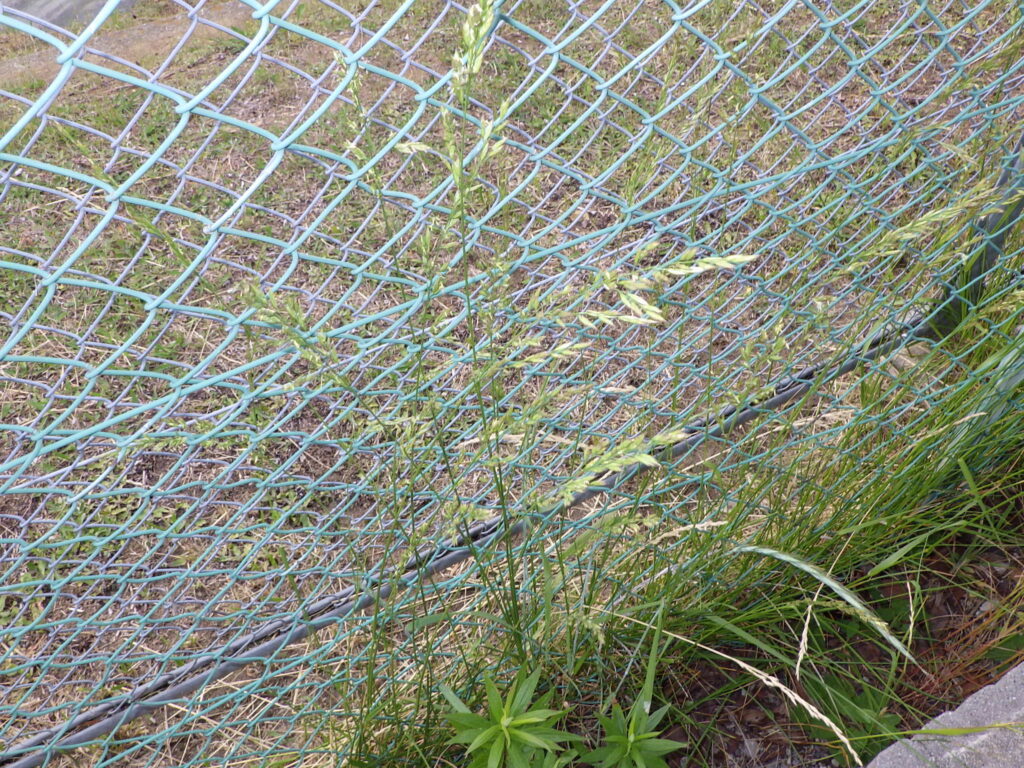
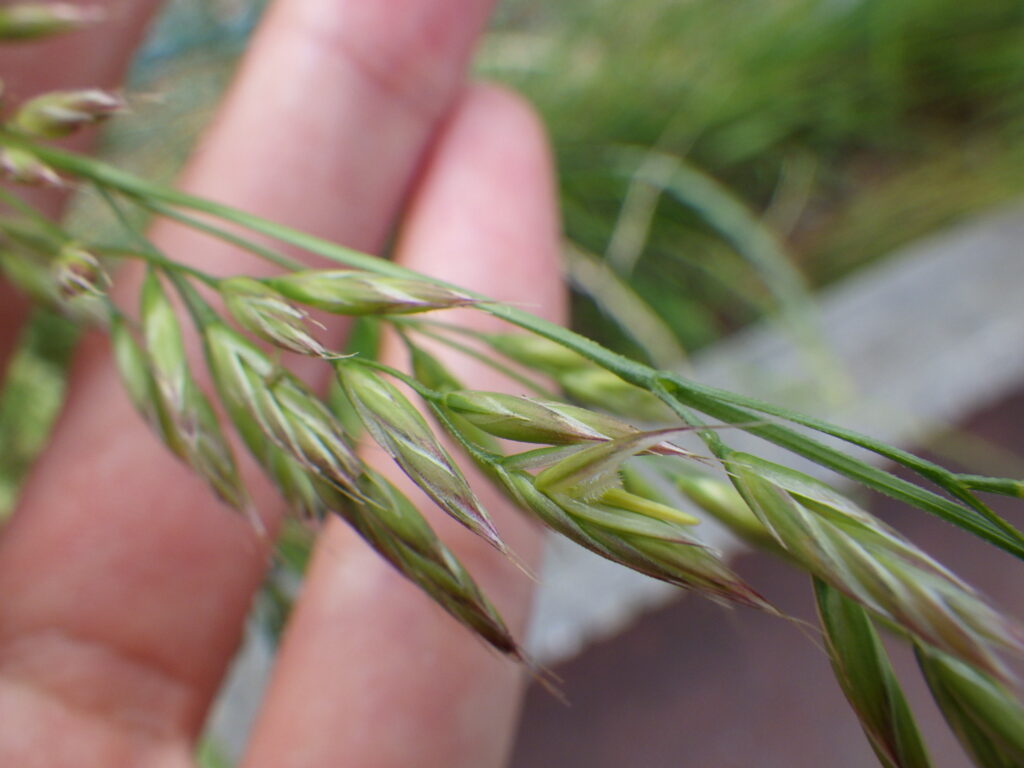
No. 1025 Sasakusa (Lophatherum gracile)
This is a perennial herb. The leaf blades are 10-25 cm long and 2-4 cm wide, with a short, petiole-like base, resembling bamboo leaves. The panicles are sparse, with a few spikelets arranged on one side of several branches. Each spikelet, consisting of 5-7 florets, is 8-11 mm long, with only the first floret being larger and bisexual. It flowers from August to October. It is distributed in Honshu (west of the Kanto region), Shikoku, Kyushu, and the Ryukyu Islands; as well as Asia and Oceania. It grows in forests.
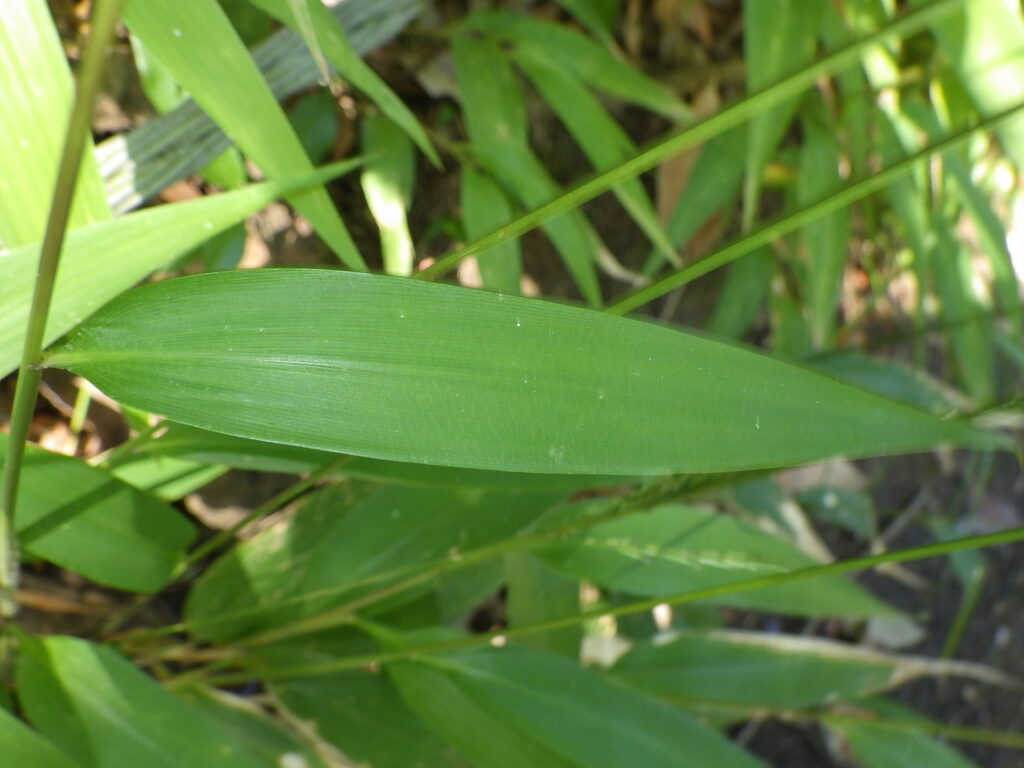
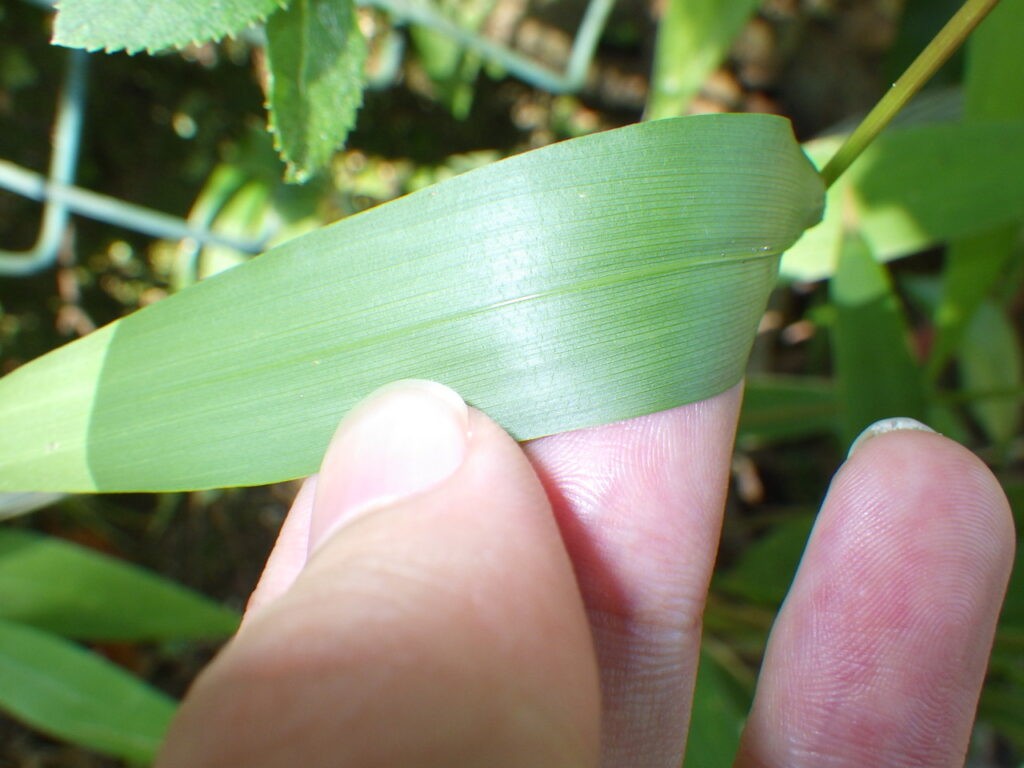
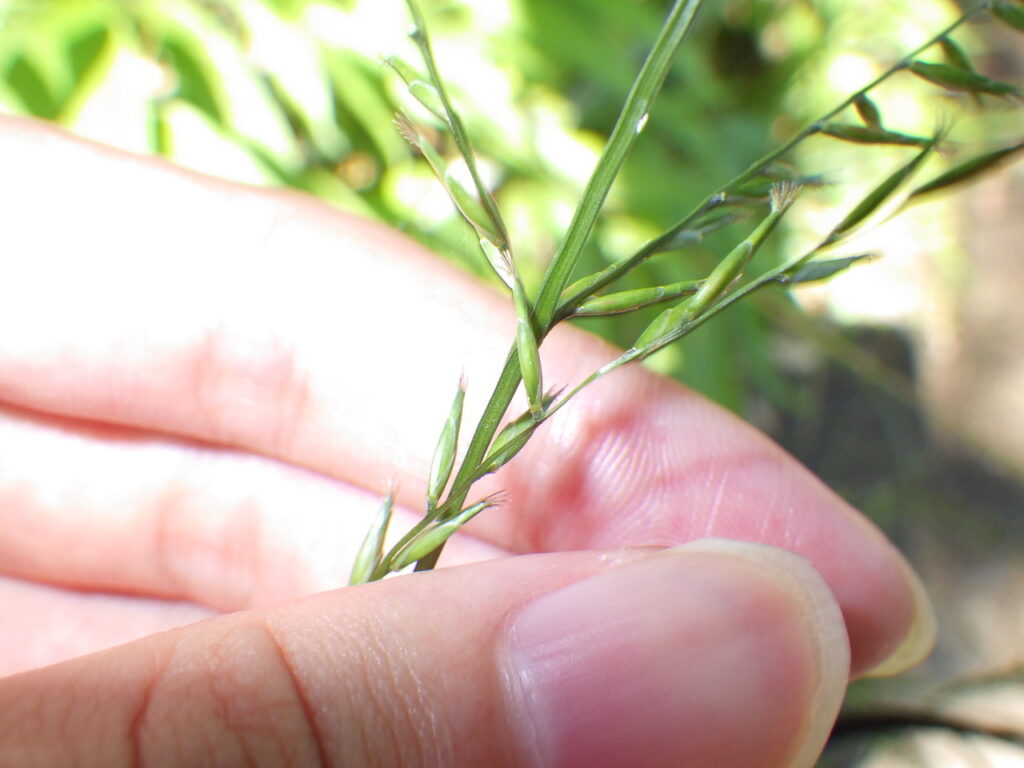
No. 1027 Pennisetum alopecuroides
This is a perennial herb. The scientific name follows that of the Kanagawa Prefectural Flora Survey Association (2018), but the NCBI Taxnomy uses Cenchrus compressus by Chemisquy et al. (2010), so we await the opinion of Japanese scholars. It grows to a height of 30-80 cm. The raceme is purplish-brown and columnar, 30-50 mm wide and 6-20 cm long. The spikelets are lanceolate, about 7 mm long, and consist of two florets; the first floret is male or sterile, while the second floret is bisexual and fertile. The involucral bracts are 10-30 mm long and lack pinnate branching, but minute upward-pointing bristles allow the caryops to attach to animals and be dispersed. A variety with pale green involucral bracts is called *Cenchrus compressus* f. viridescens, which is rarely seen. It flowers from September to October. It is distributed in Hokkaido (southwestern part), Honshu, Shikoku, Kyushu, and the Ryukyu Islands; as well as in Korea, China, the Philippines, India, and Australia. It grows in wastelands and along roadsides. It is a greening plant (Higashimura, 2013) because it has strong soil binding ability, its seeds are easy to collect, and they can be stored for long periods at room temperature. However, in pastures from western Japan to northern Kanto, it is a highly invasive weed because it is hardly eaten by grazing livestock and reproduces easily.
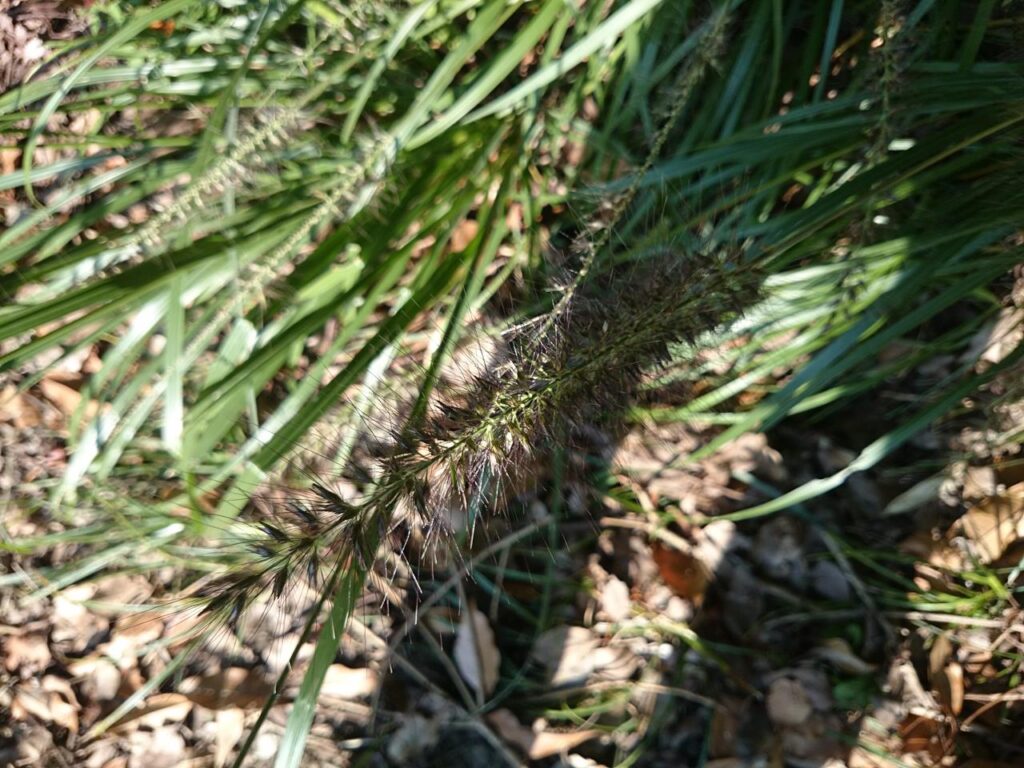
No. 1029 Foxtail grass (Setaria viridis var. minor)
This is an annual plant. It flowers from June to September. The second floret is enclosed in the glumes of the first floret. It heads earlier than Setaria viridis and Setaria purpurea. Its spikelets are smaller than other species in the same genus. It is distributed in Hokkaido, Honshu, Shikoku, Kyushu, and the Ryukyu Islands; and in temperate to warm temperate regions worldwide. It grows along roadsides and in grasslands. A variety with purplish leaf blades and wedge-shaped leaf bases is called Setaria viridis f. japonica, and grows in riverbeds, etc. It is more drought-tolerant than Setaria purpurea and more heat-tolerant than Setaria viridis (Sudo et al., 2004). In millet-cultivating areas, Setaria viridis, which has large spikes similar to millet, has adapted uniquely as a mimicry weed in millet fields (Kobayashi, 1988).
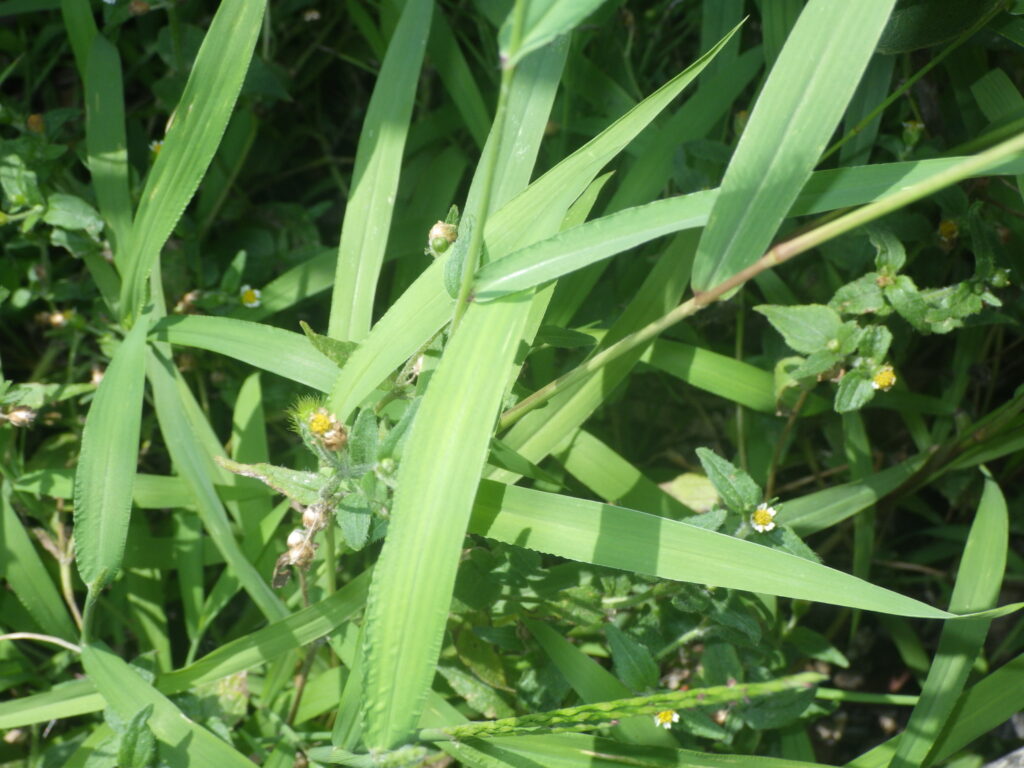
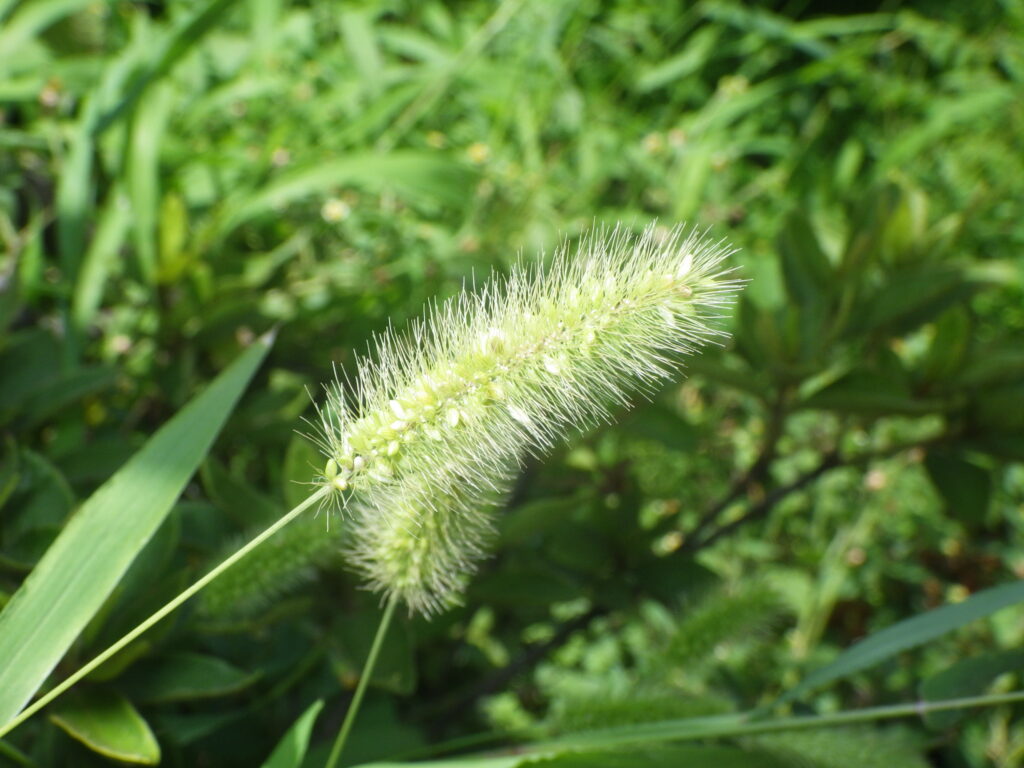
No. 1030 Purple Foxtail (Setaria viridis var. minor f. misera)
A variety of foxtail grass with purple bristles on its inflorescence. Found in various regions.
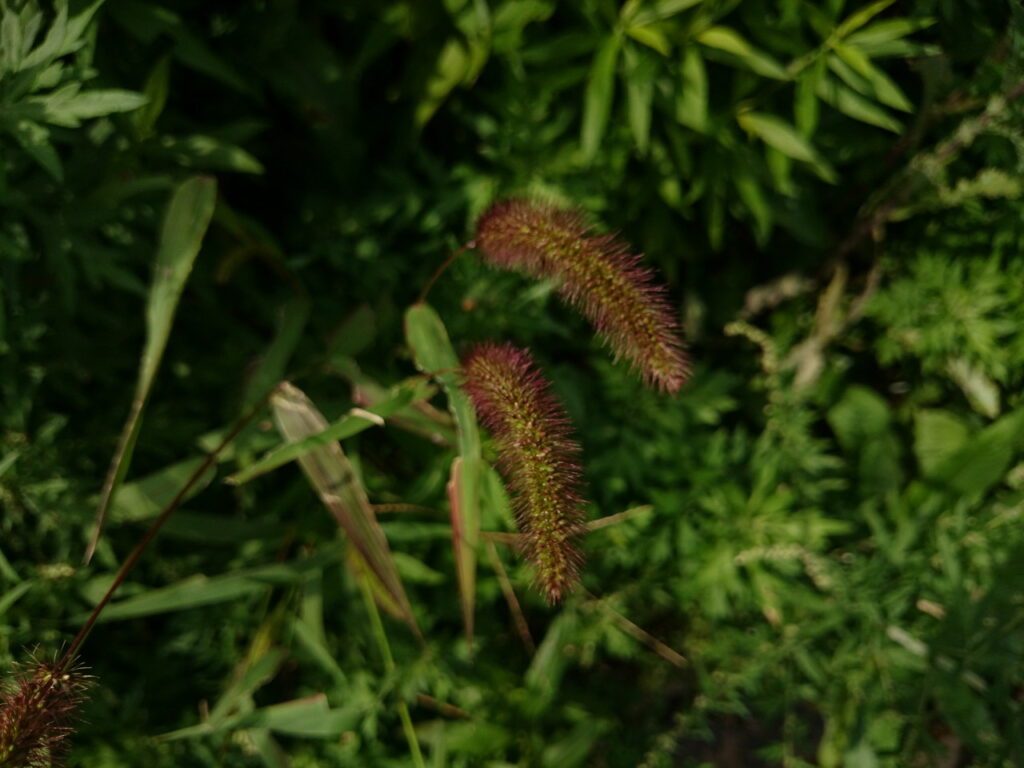
No. 1032 Setaria x pycnocoma
This is an annual plant. The spikelets are similar in size to those of foxtail grass, but the panicle is longer and has more developed branches. It flowers from July to September. The second floret is enclosed in the glumes of the first floret. It is considered a hybrid of foxtail grass and millet. It is distributed in Hokkaido, Honshu, Shikoku, Kyushu, and the Ryukyu Islands; and throughout Eurasia. It grows along roadsides and in grasslands.
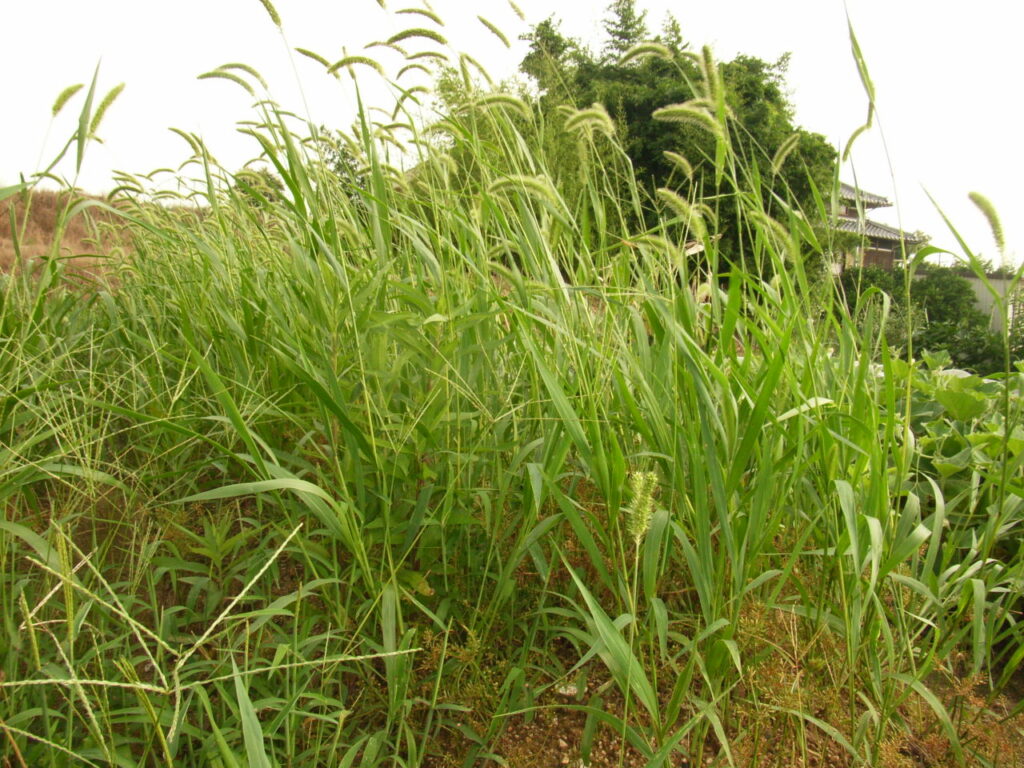
No. 1033 Setaria faberi
This is an annual plant. It flowers from August to September. Part of the second floret emerges from between the first floret and the glume. The spikelets are larger than those of Setaria viridis. It is distributed in Hokkaido, Honshu, Shikoku, Kyushu, and the Ryukyu Islands; as well as in Korea, China, Ussuri, and Sakhalin. It grows along roadsides and in grasslands. American-type Setaria viridis has been reported in Kamiwada (Miyakubo), Yamato City, Kanagawa Prefecture.
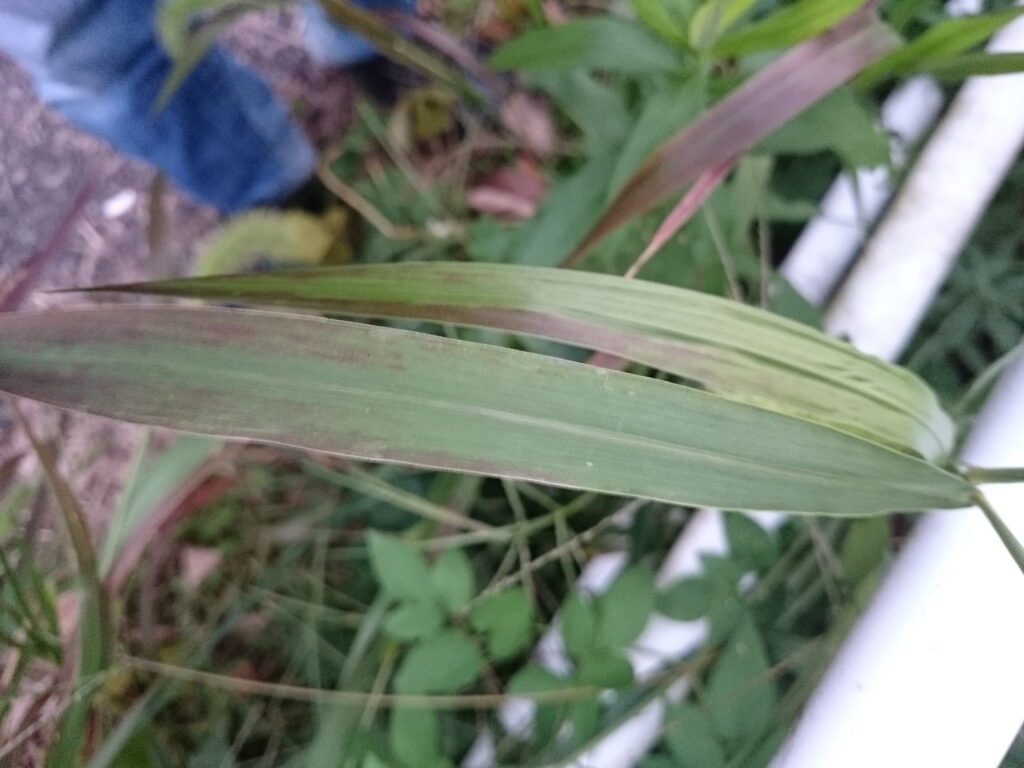
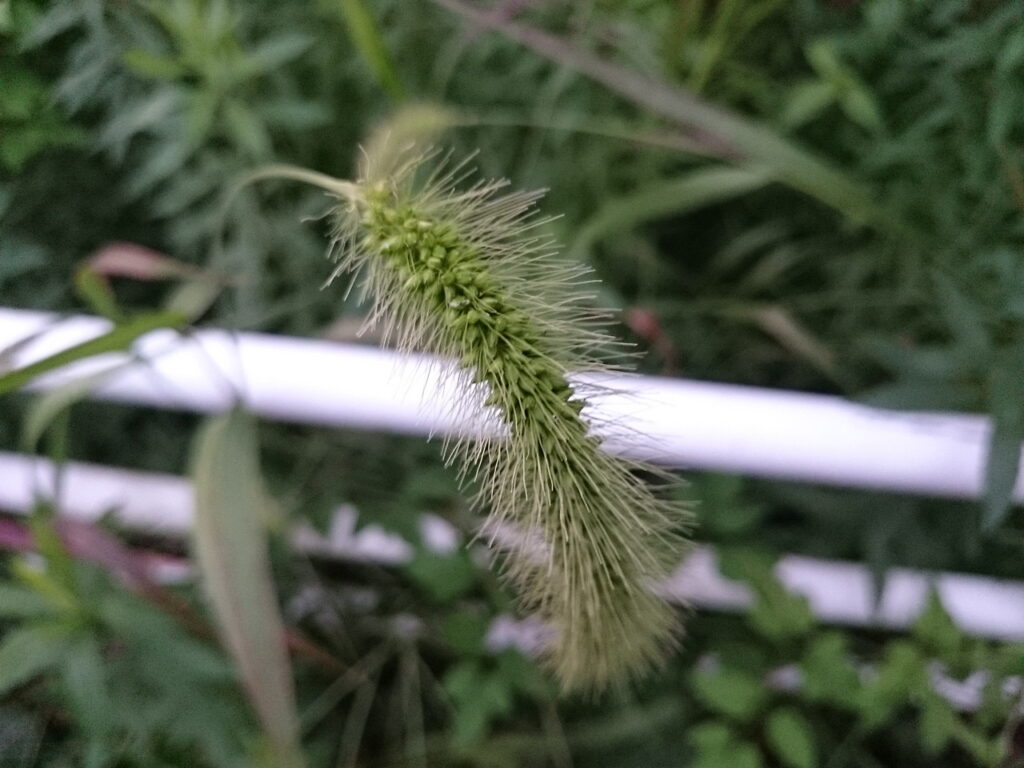
No. 1034 Golden Foxtail Setaria pumila
This is an annual plant. The base can be erect or creeping. The panicle is dense and cylindrical, 1.5-6 cm long. It flowers from August to October. The second floret is partially exposed between the first floret and the glume. The fully matured spikelets are wider and rounder than those of *Foxtail millet*. It is distributed in the temperate to warm temperate zones of the Northern Hemisphere, including Hokkaido, Honshu, Shikoku, Kyushu, the Ryukyu Islands, and the Ogasawara Islands. It grows along roadsides and in grasslands.
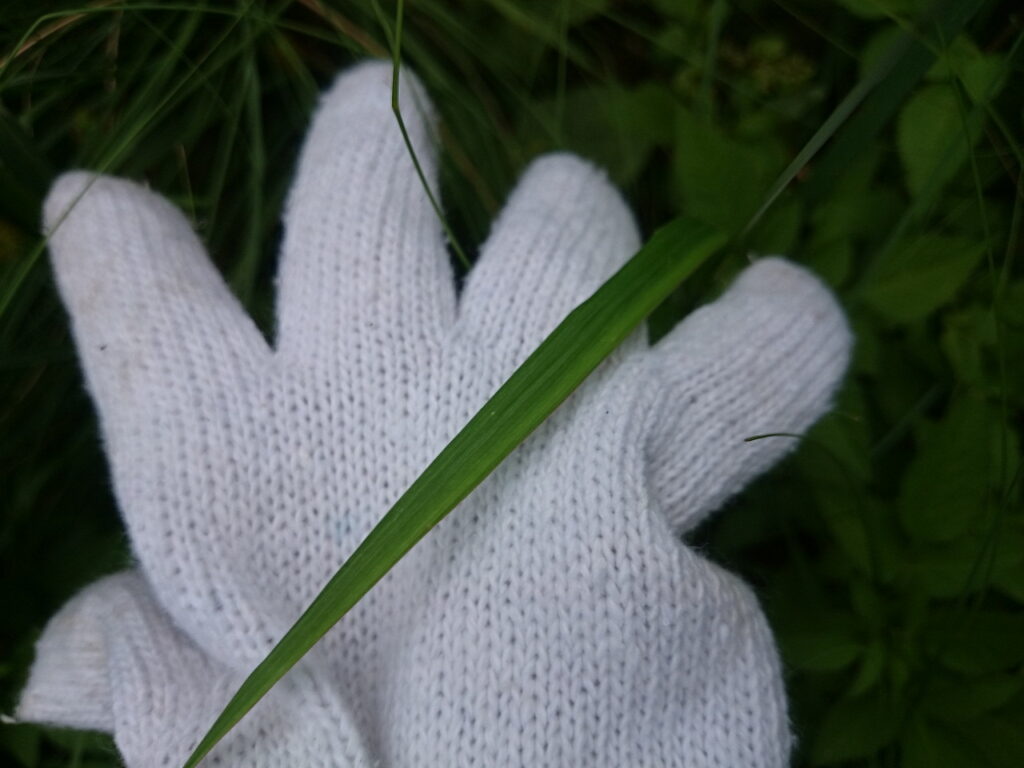
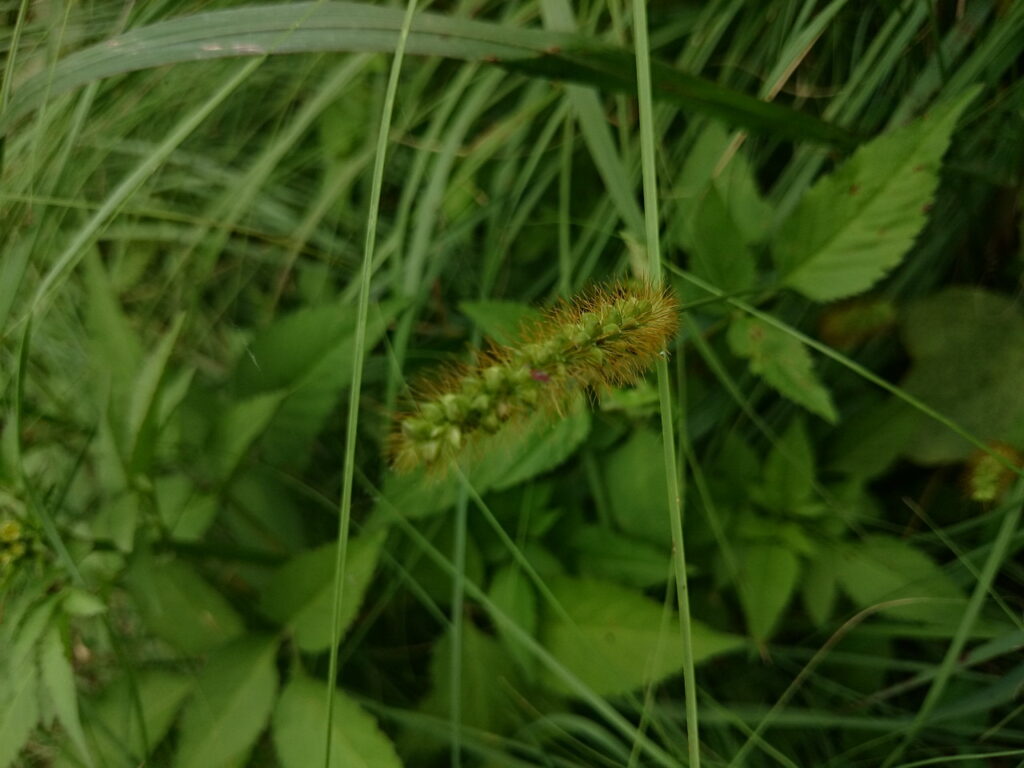
No.1034.a Setaria pallidefusca
This is an annual plant. The base can be erect or creeping. The panicle is dense and cylindrical, 1.5–6 cm long. The second floret is partially exposed between the first floret and the glume. The bristles (especially at the tip of the inflorescence) are often tinged with purple and have a dull color. It flowers from August to October. It is distributed in Hokkaido, Honshu, Shikoku, Kyushu, and the Ryukyu Islands; and in tropical and subtropical regions worldwide. It grows along roadsides and in grasslands.
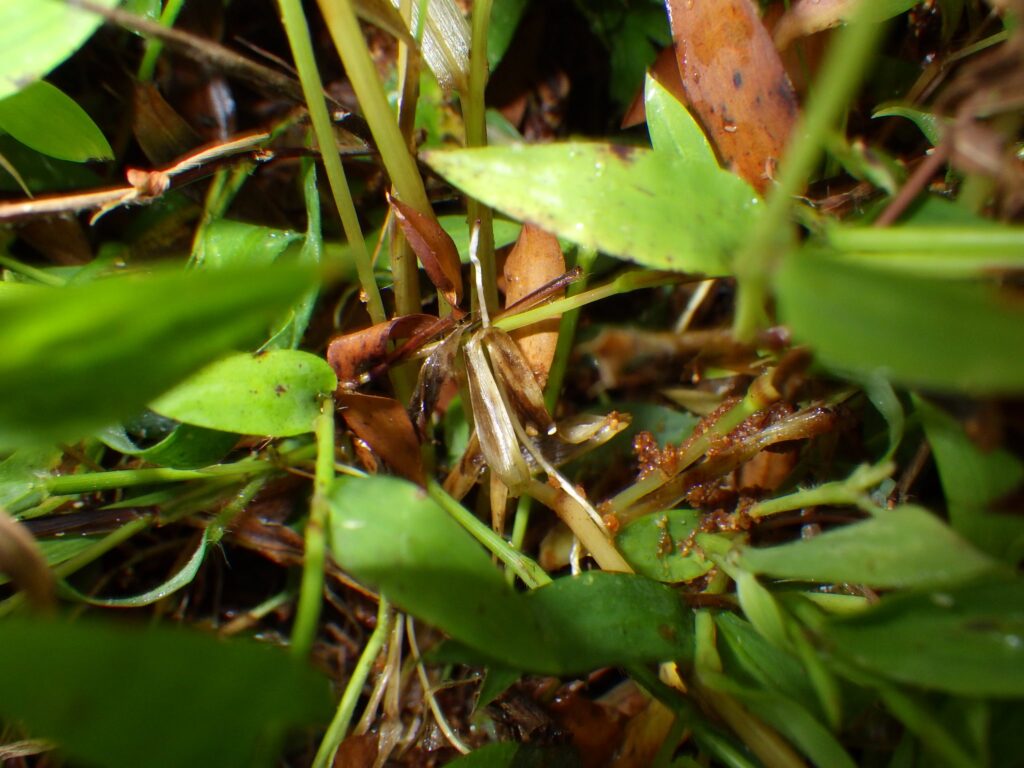
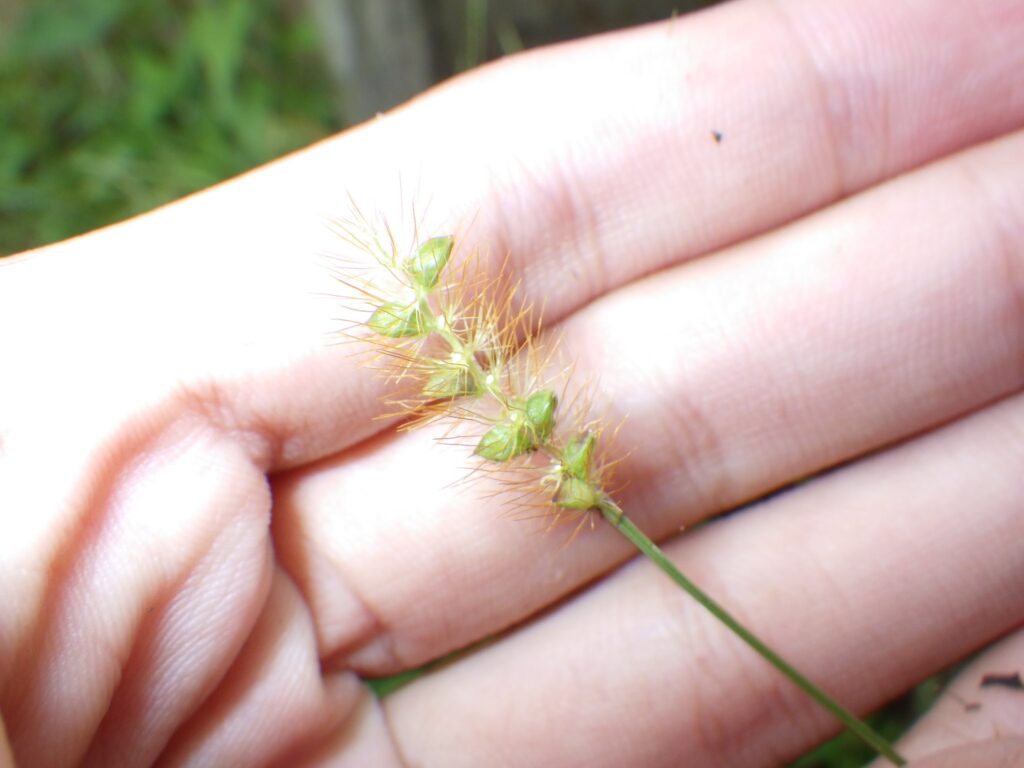
No.1035 Foxtail Setaria italica
This is an annual plant. The inflorescence droops, turns pale yellow when mature, and only the small flowers fall off. It flowers from August to October. It is said to be native to China, but this is not certain. It has naturalized in various parts of Japan. It escapes cultivation in grasslands around fields. A variety with narrow leaf blades (10-12 mm wide) and small inflorescences is called *Koawa* var. *germanica *.
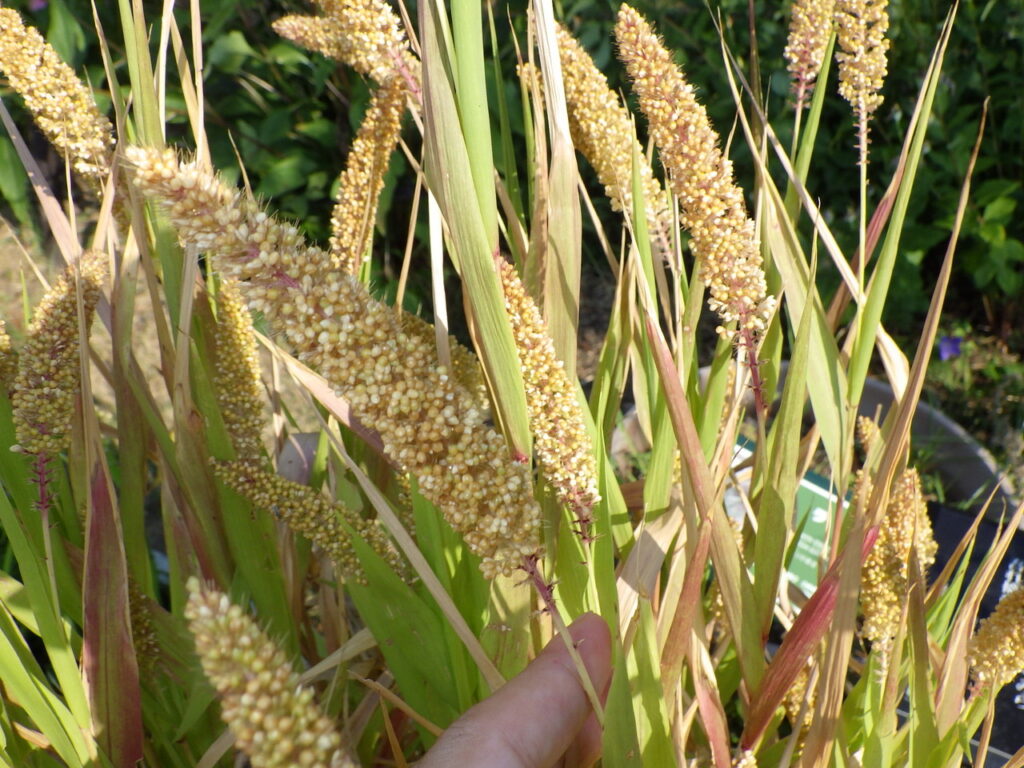
No. 1037.a Paspalidium distans
This is an annual plant. It grows to a height of about 30-40 cm, with linear leaves that spread radially and form numerous clumps. The leaves are yellowish-green, and it produces spike-like inflorescences at the top of the stem, bearing many small flowers and oval-shaped fruits. It is distributed in the Ogasawara Islands. It is classified as Vulnerable (VU).
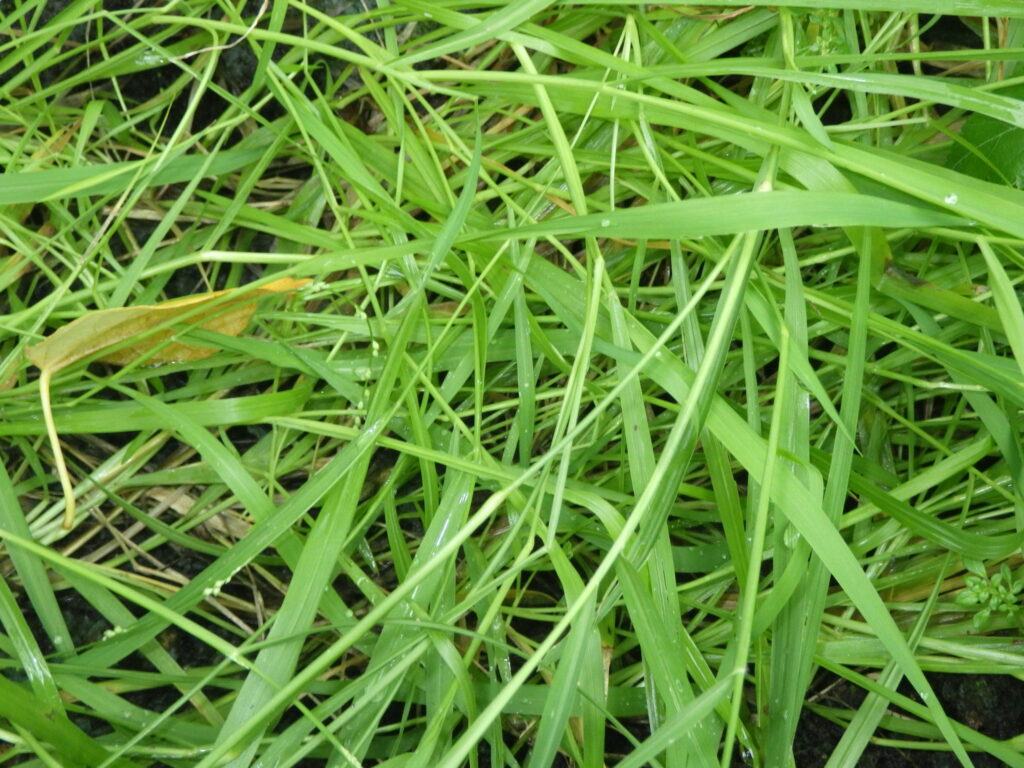
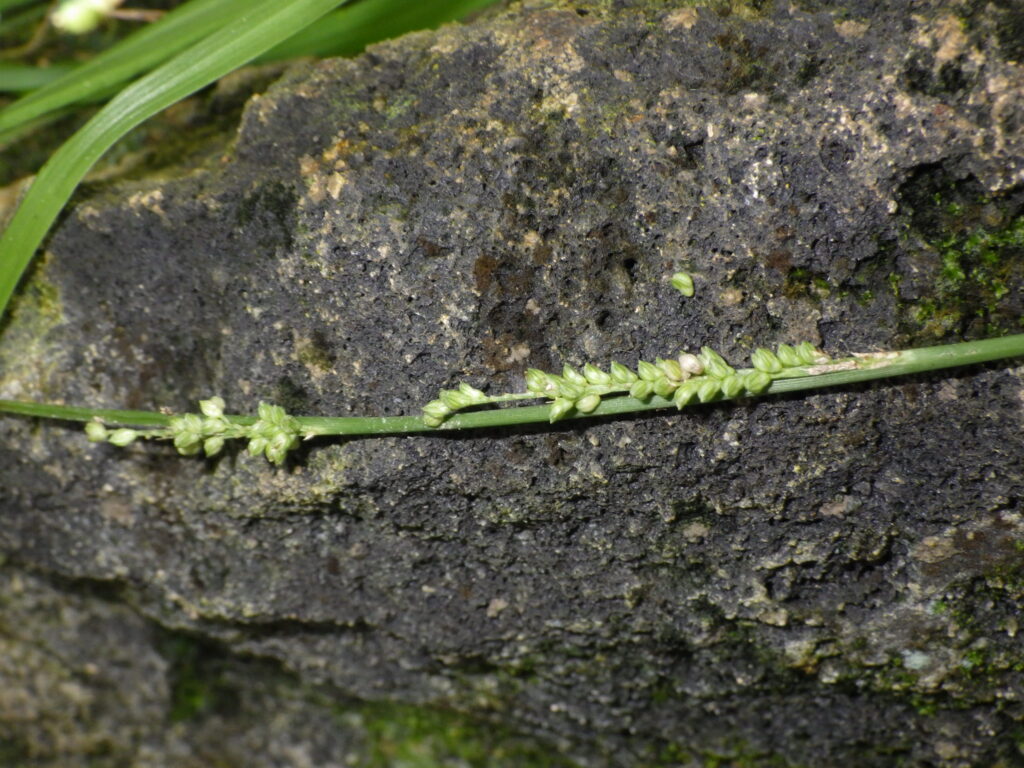
No.1038 Digitaria ciliaris
This is an annual plant. The culms are branched and creep along the ground, rooting at each node. The inflorescence is often arranged in whorls of 2-3 tiers with the bases offset, but smaller specimens with a single inflorescence are easily mistaken for Digitaria sanguinalis. There is considerable variation in culm length and inflorescence size. The midrib of the inflorescence has teeth on the edge, making it rough. The spikelets are lanceolate. Flowering occurs from July to October. It mainly grows along roadsides and in cultivated fields. It is widely distributed in warm temperate to temperate regions of the world, including Hokkaido, Honshu, Shikoku, Kyushu, the Ryukyu Islands, and the Ogasawara Islands. Some consider specimens with particularly long hairs on the glumes to be Digitaria sanguinalis var. fimbriata, but the Kanagawa Prefectural Flora Survey Association (2018) states that there are many intermediate forms and the degree of hairiness is mixed even within a single individual, so they do not distinguish between them.
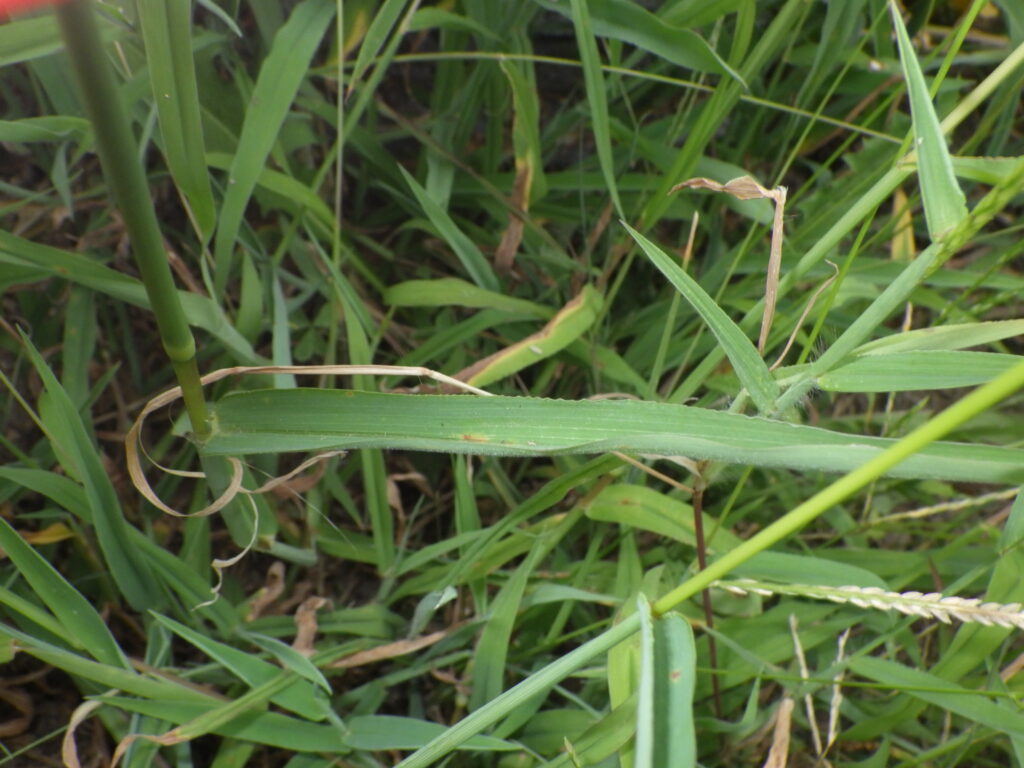
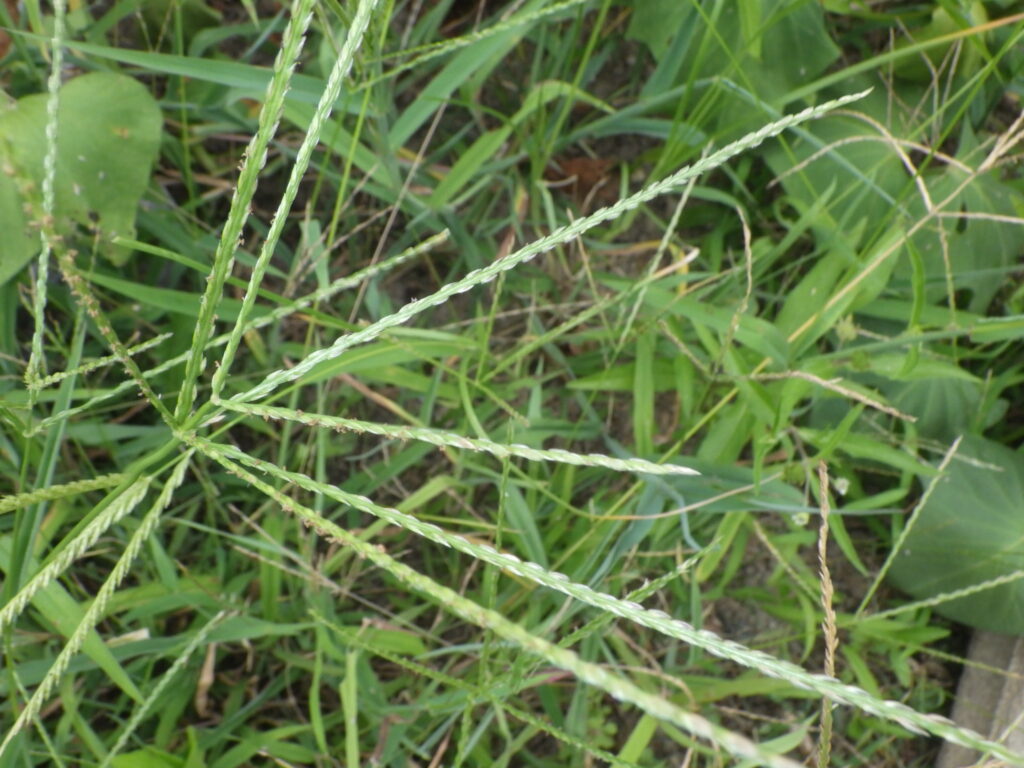
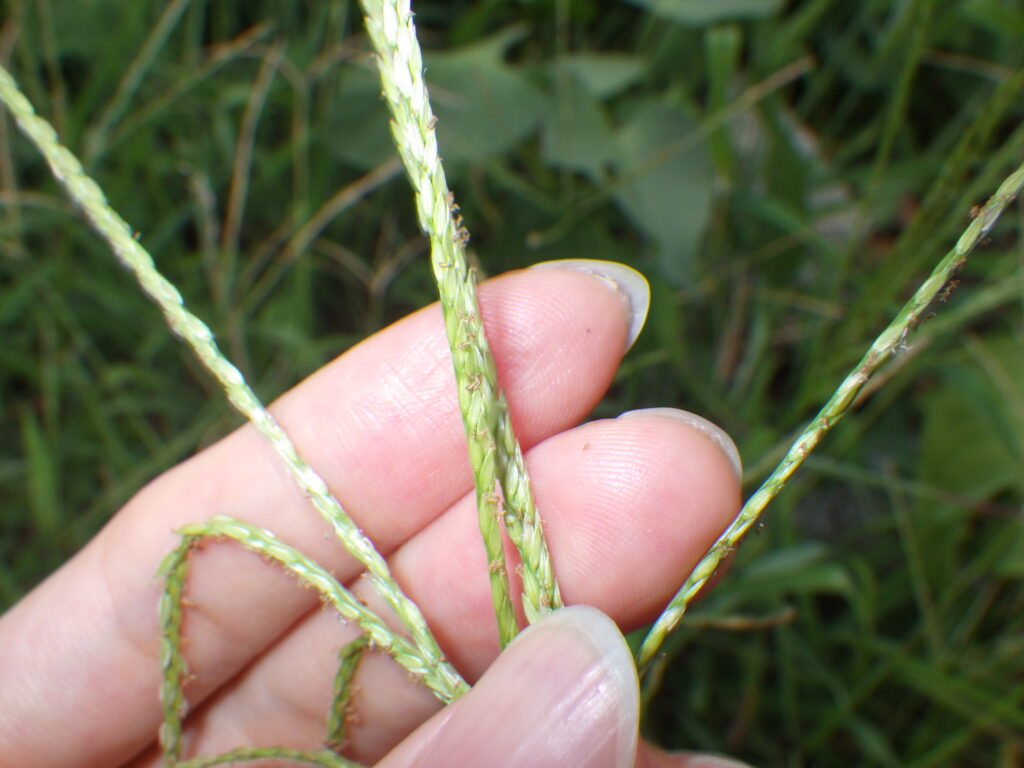
No. 1039 Digitaria radicosa
An annual plant. The entire plant is slender, small, and almost hairless. The inflorescence emerges from a single point, and its base rarely shifts. The margin of the midrib of the inflorescence is smooth. The spikelets are lanceolate. Flowering occurs from July to October. It is distributed throughout Honshu (west of the Kanto region), Shikoku, Kyushu, the Ryukyu Islands, the Ogasawara Islands, and Southeast Asia. Except in mountainous areas, it grows widely along roadsides and in garden corners.
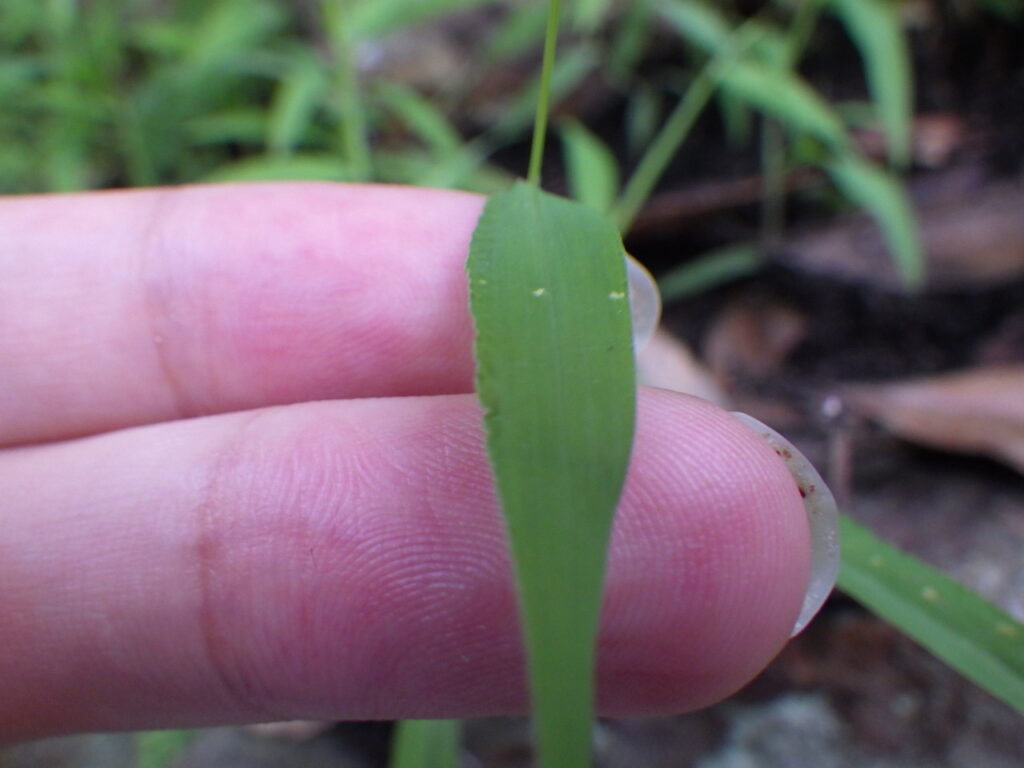
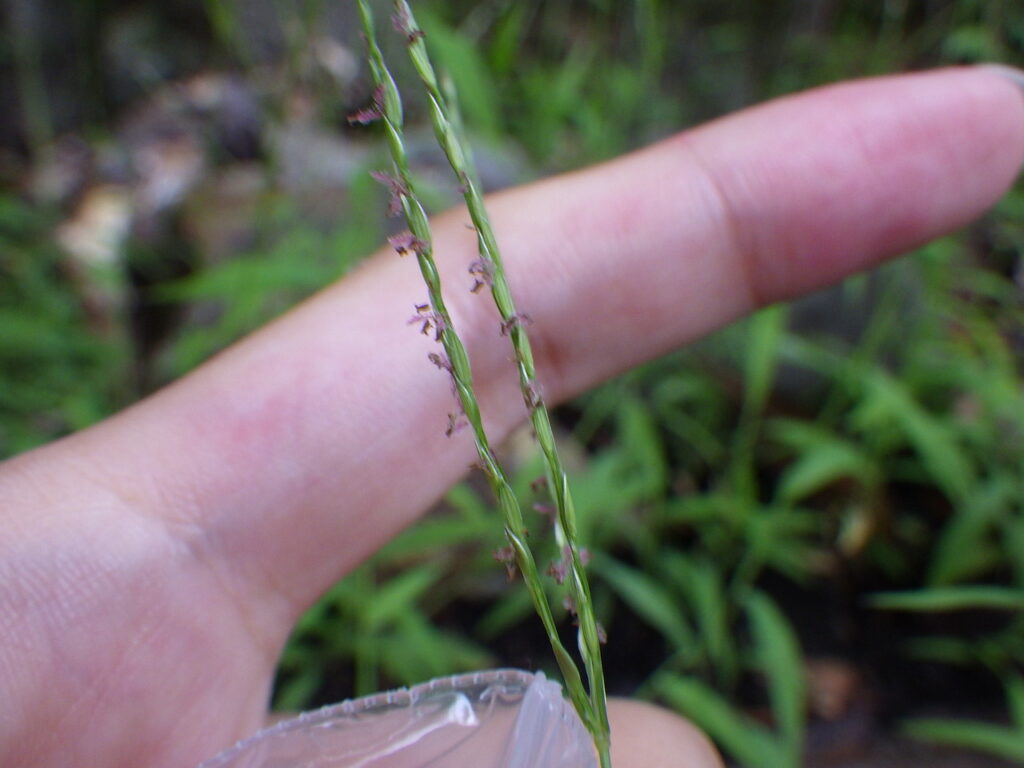
No. 1041 Millet Panicum miliaceum
This is an annual plant. It is characterized by long hairs covering the entire plant, broad leaves, and large spikelets or caryops. It flowers from July to August. This grain, said to be native to India, is widely cultivated. It can be found escaping from fields and as bird feed.
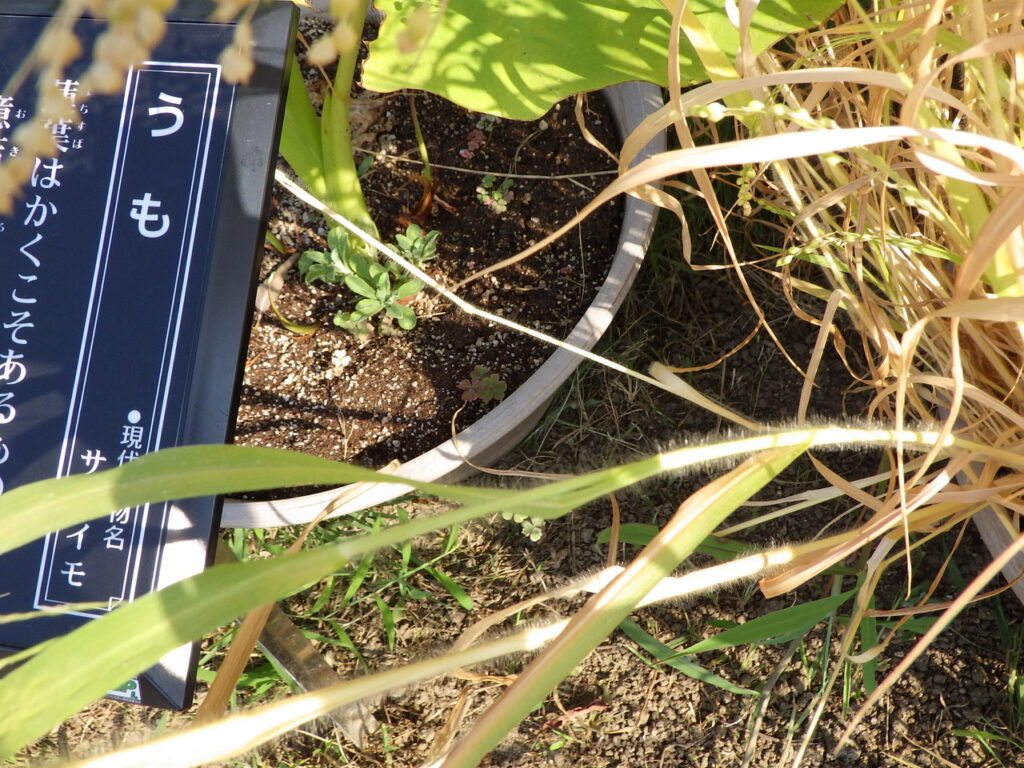
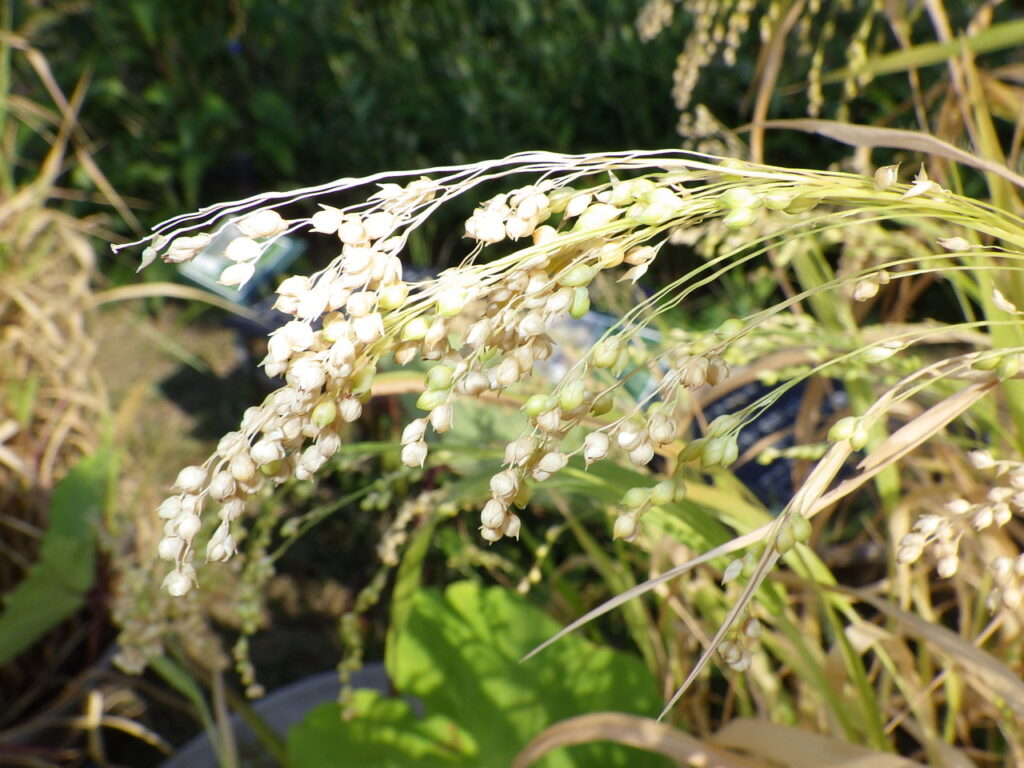
No. 1042 Rice bran (Panicum bisulcatum)
This annual herb has slender, weak culms. Its inflorescence branches emerge almost horizontally, and the spikelets droop, giving it a distinctive appearance. However, when the base of the inflorescence is within the leaf sheath, it can easily be mistaken for *Senecio serrata*. It flowers from September to October. The spikelets are 2.5 mm long, with the first glume being about one-third the length of the spikelet. Thorns are present on the inflorescence branches, but the spikelet stalks are smooth. It is distributed in Hokkaido, Honshu, Shikoku, Kyushu, and the Ryukyu Islands; as well as in Korea, China, Ussuri, Indonesia, and Australia. It is commonly found in slightly damp forest edges, former rice paddies, and vacant lots.
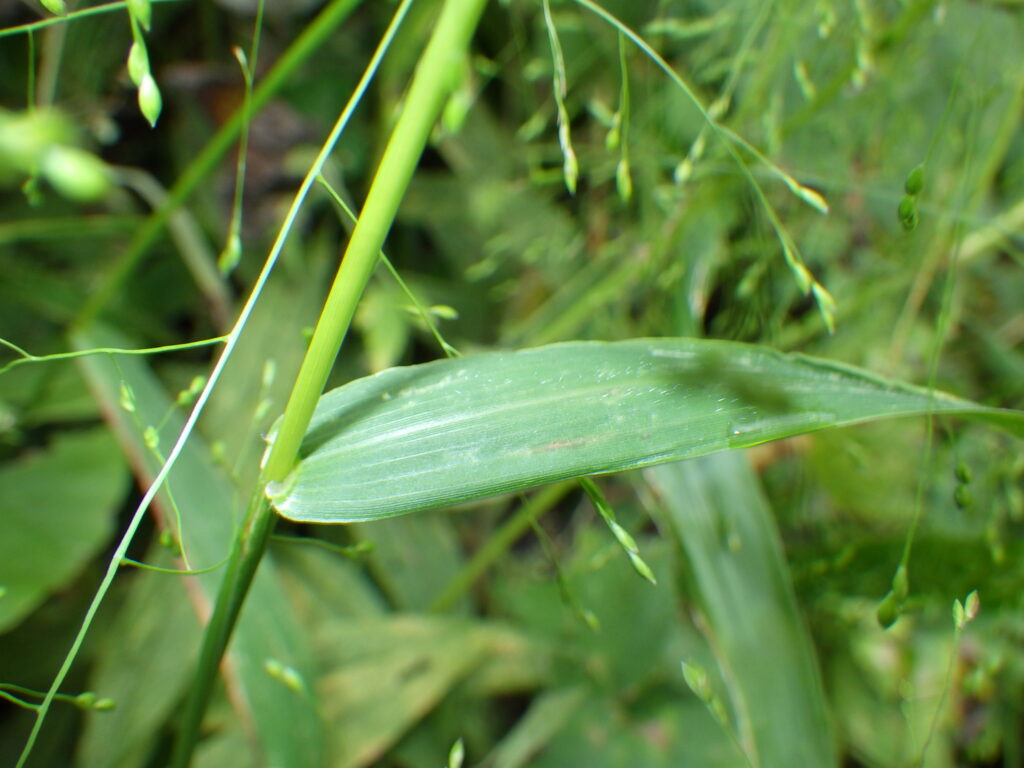
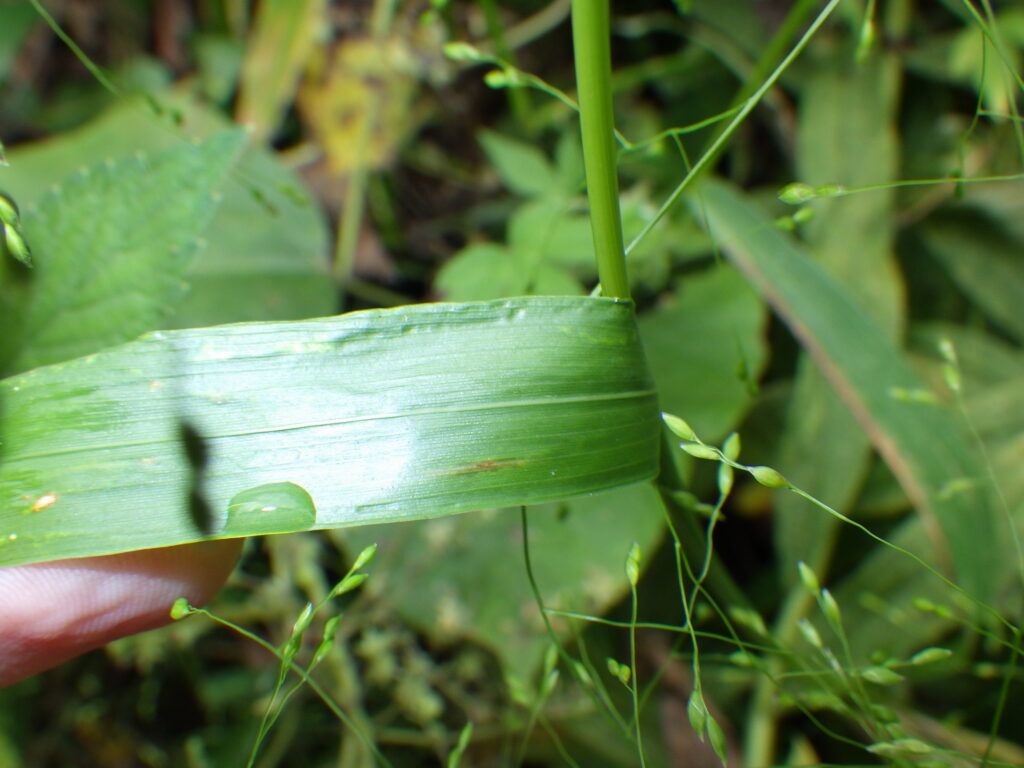
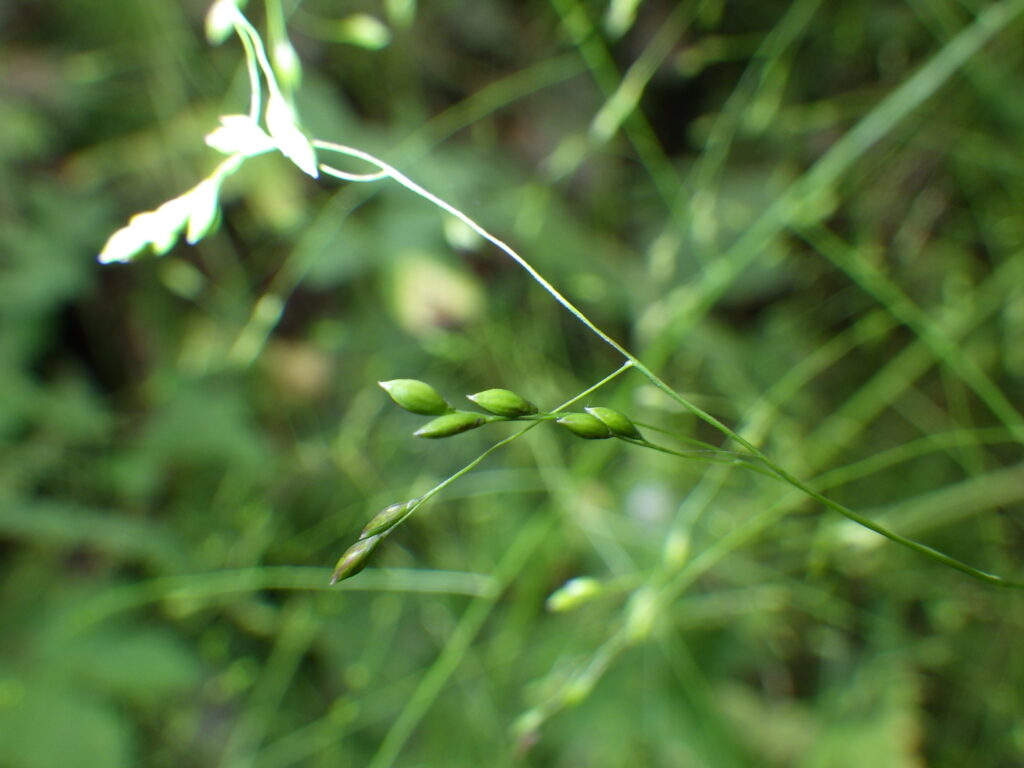
No.1045 Echinochloa crus-galli var. crus-galli
This is an annual plant. It exhibits great variation in leaf shape, size, color, white thickening of the leaf margins, spikelet color, size, and awn length. Its habitat is also diverse, ranging from roadsides and cultivated fields to rice paddies and wetlands. The heading period is long, from early summer to late autumn. The flowering period is from July to October. The first glume is small and obtusely triangular. The surface of the glume of the first floret is not swollen. It is widely distributed in temperate to tropical regions of the world, including Hokkaido, Honshu, Shikoku, Kyushu, the Ryukyu Islands, and the Ogasawara Islands. It is commonly found throughout the world except in mountainous areas. Sometimes, those with particularly long awns are distinguished as Barnyard grass var. echinata, but the Kanagawa Prefectural Flora Survey Association (2018) stated that there is continuity in the variation, and since both long and short awns coexist within a single individual, they did not distinguish between them.
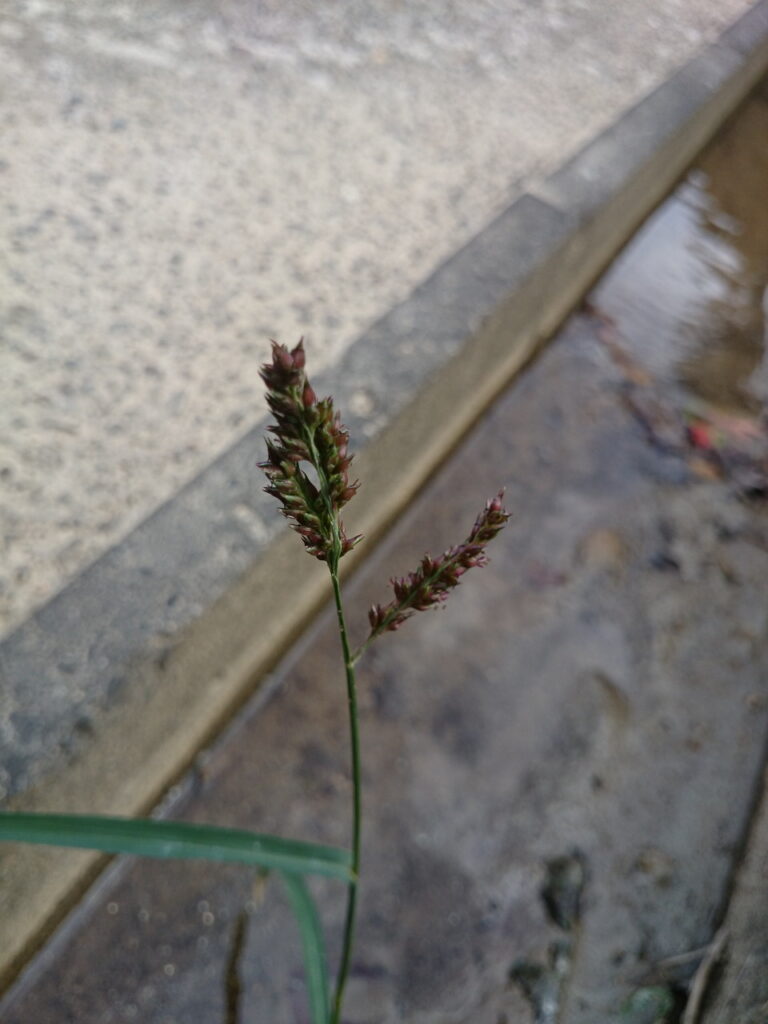
No.1046.a Echinochloa crus-galli var. praticola
This is a variety of barnyard grass that grows in stressful environments such as roadsides and grasslands prone to dryness, and is clearly smaller in both plant shape and spikelets. It begins to produce heads in early summer. The plant spreads out and is often tinged with purple. It flowers from June to September (October). The first glume is small and obtusely triangular. It is distributed in Hokkaido, Honshu, Kyushu, the Ryukyu Islands, Korea, and Taiwan.
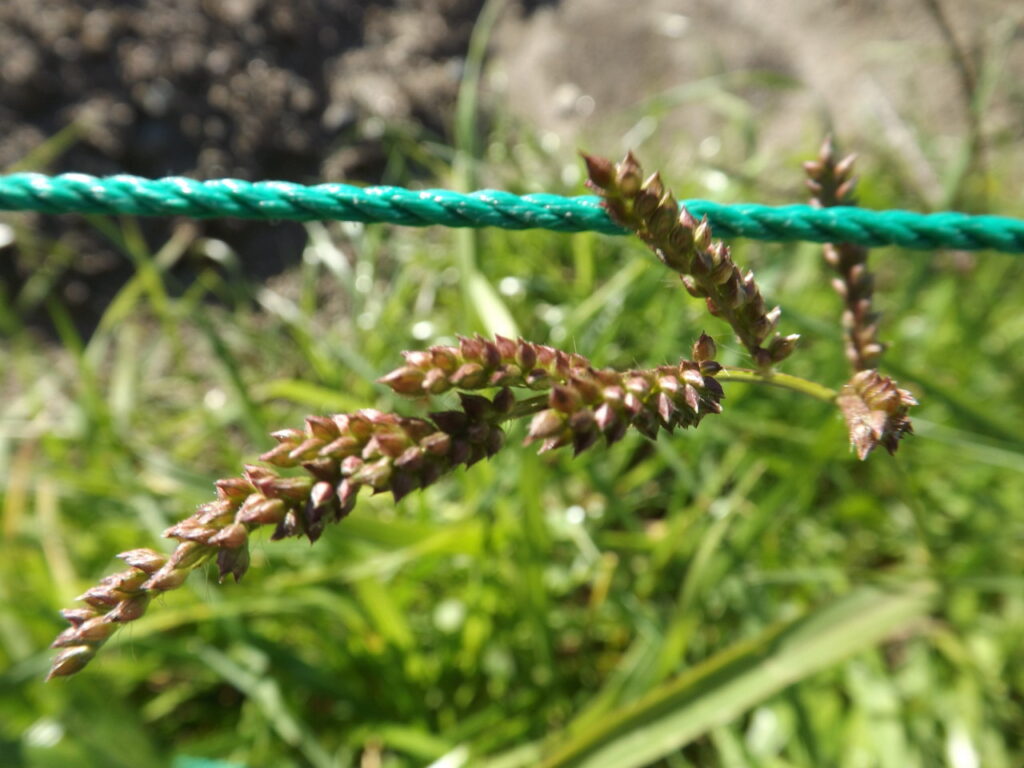
No. 1047.a Echinochloa oryzicola (Thai barnyard grass)
This is an annual plant. It is erect, with thickened white leaf margins, a sharply triangular first glume that is more than half the length of the spikelet, and a swollen, glossy glume of the first floret. It grows in paddy fields, heading at the same time as rice, and most spikelets lack long awns, although spikelets with long awns are sometimes present. The spikelets are clearly larger than those of barnyard grass and dwarf barnyard grass. It flowers from August to October. It is widely distributed in Hokkaido, Honshu, Shikoku, Kyushu, the Mediterranean, Siberia, and China. It is a prehistoric naturalized plant, a paddy field weed that naturalized along with human rice cultivation as a rice-related weed (Yasuda, 2018). It evolved through artificial selection due to meticulous weeding of barnyard grass in rice nurseries and paddy fields. As a result, the appearance of barnyard grass is the most similar to rice among the Barnyard grass species, and it serves as a mimicry weed for rice.
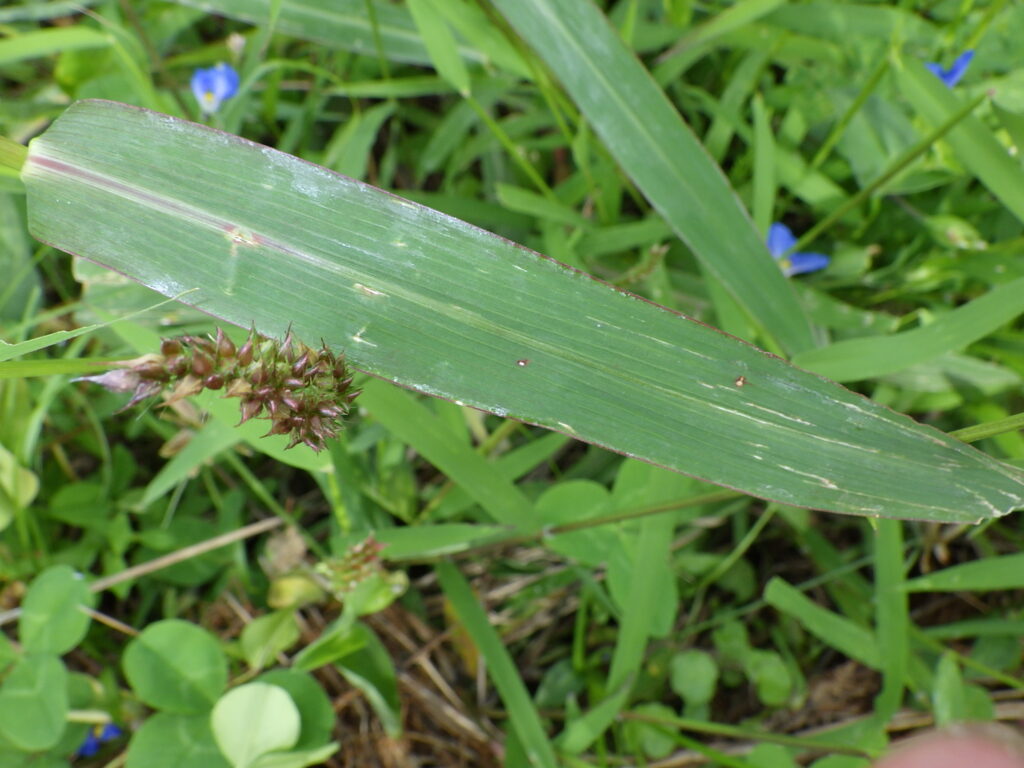
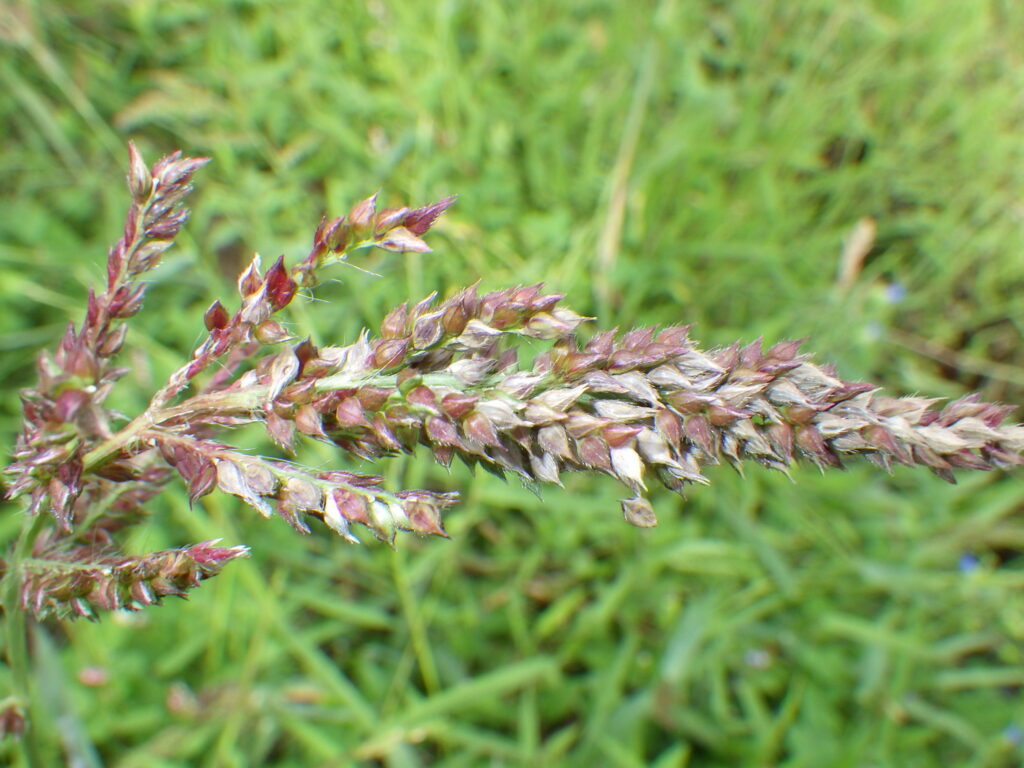
No.1050 Stingy wren Oplismenus undulatifolius var. undulatifolius f. undulatifolius
This is a perennial herb. The leaf blade is densely covered with short hairs, and also has swollen, long hairs at the base, which are particularly noticeable at the base of the leaf. The leaf sheath and inflorescence are also covered with spreading hairs, giving them a rough texture. It flowers from August to October. It is widely distributed in Hokkaido, Honshu, Shikoku, Kyushu, and the Ryukyu Islands; in temperate to subtropical regions of the Old World. It is common in shaded areas in forests and forest edges from plains to mountainous areas. The cells of the awn dissolve into a mucus that adheres to wild mammals and humans, allowing for seed dispersal (Tada, 2004; Kobayashi, 2007).
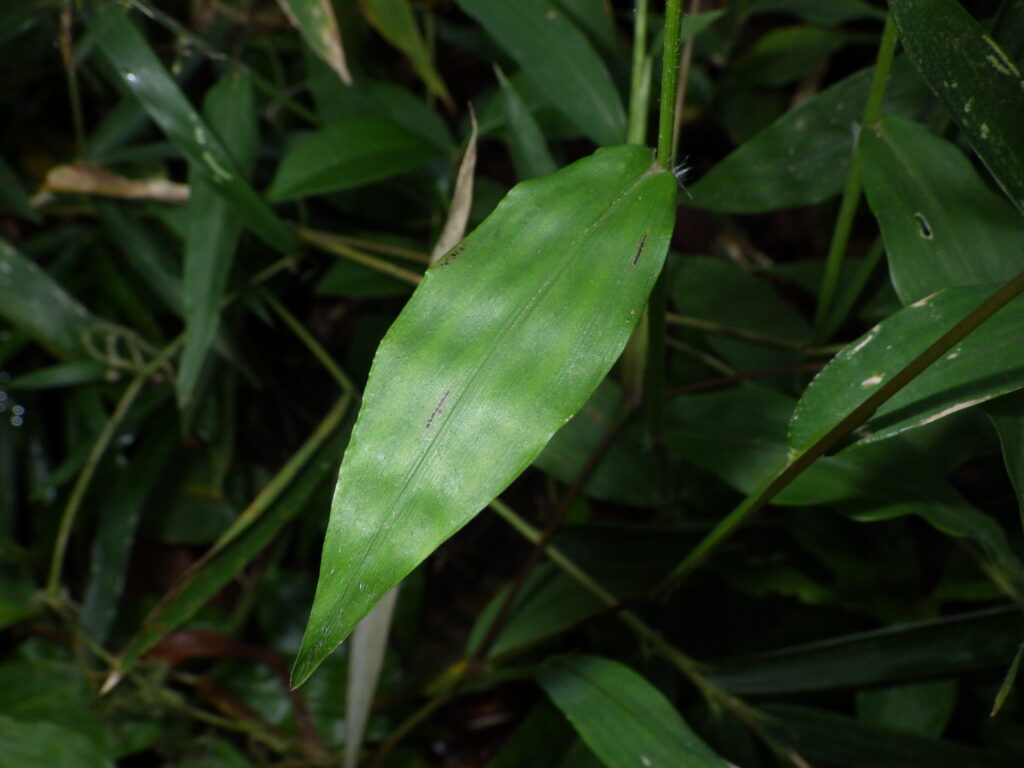
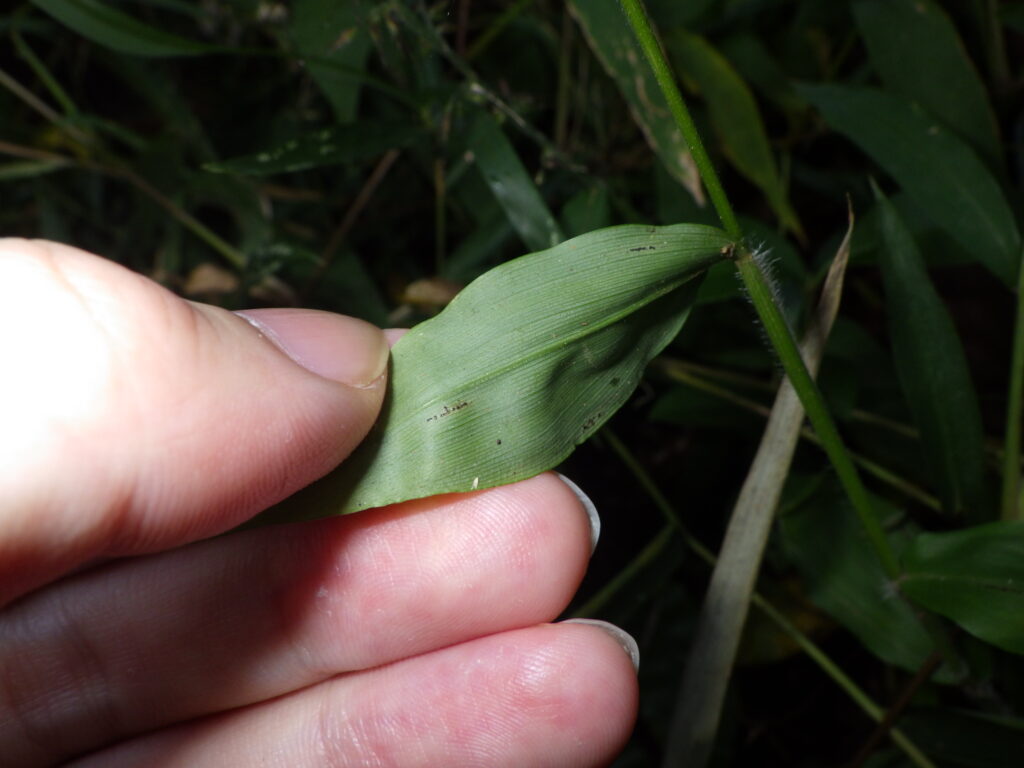
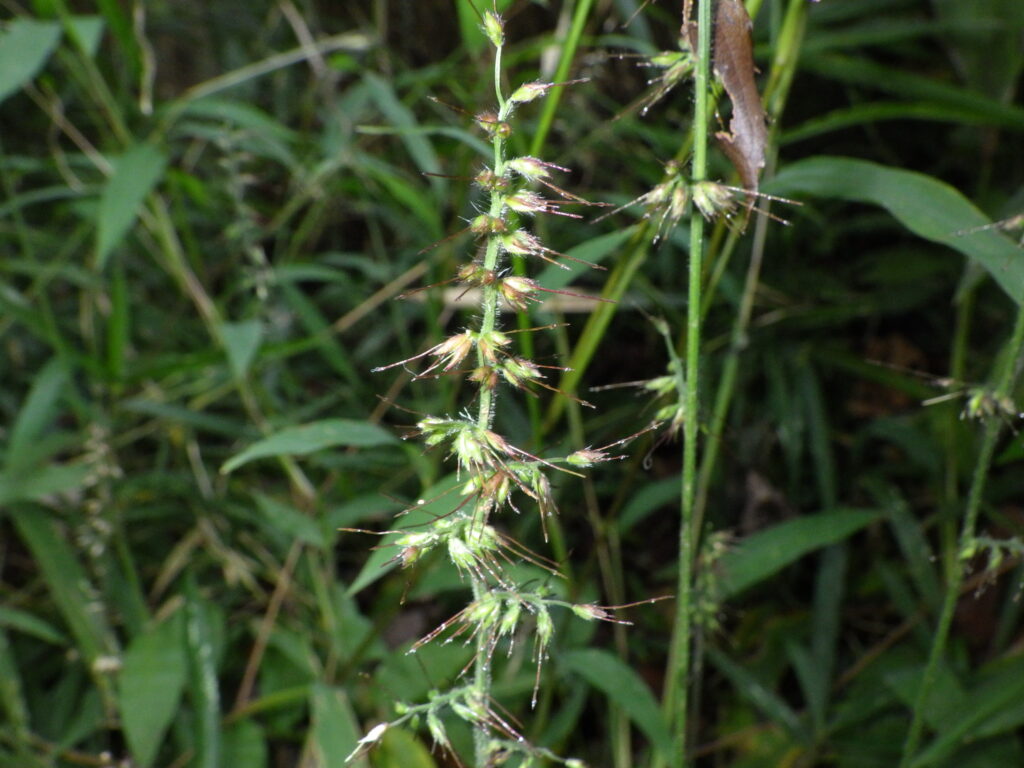
No.1051 Oplismenus undulatifolius var. undulatifolius f. japonicus
This is a perennial herb. Compared to *Ophiopogon japonicus*, it has fewer hairs overall, and the leaf blades are densely covered with short hairs, giving them a velvety texture. In particular, in typical specimens, the central axis of the panicle is almost hairless except at the nodes. The Kanagawa Prefectural Flora Survey Association (2018) distinguished between *Ophiopogon japonicus* and *Ophiopogon japonicus* as two varieties, using the presence or absence of swollen, long hairs at the base as the distinguishing criterion. They classified *Ophiopogon japonicus* as having only short hairs on the branches of the inflorescence and the leaf blades, and lacking the swollen, spreading hairs at the base. It flowers from August to October. It is distributed in Hokkaido, Honshu, Shikoku, Kyushu; Korea (central to southern); and China. It grows in shaded areas in forests and forest edges, and is commonly found in a wide range of areas from plains to mountains.
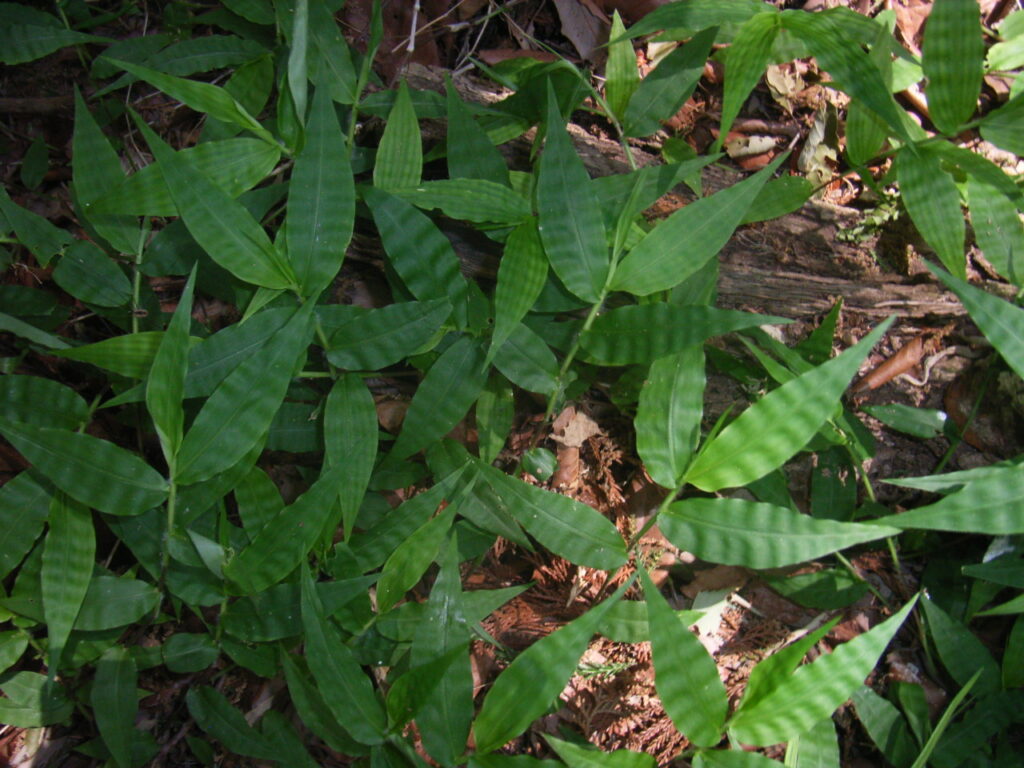
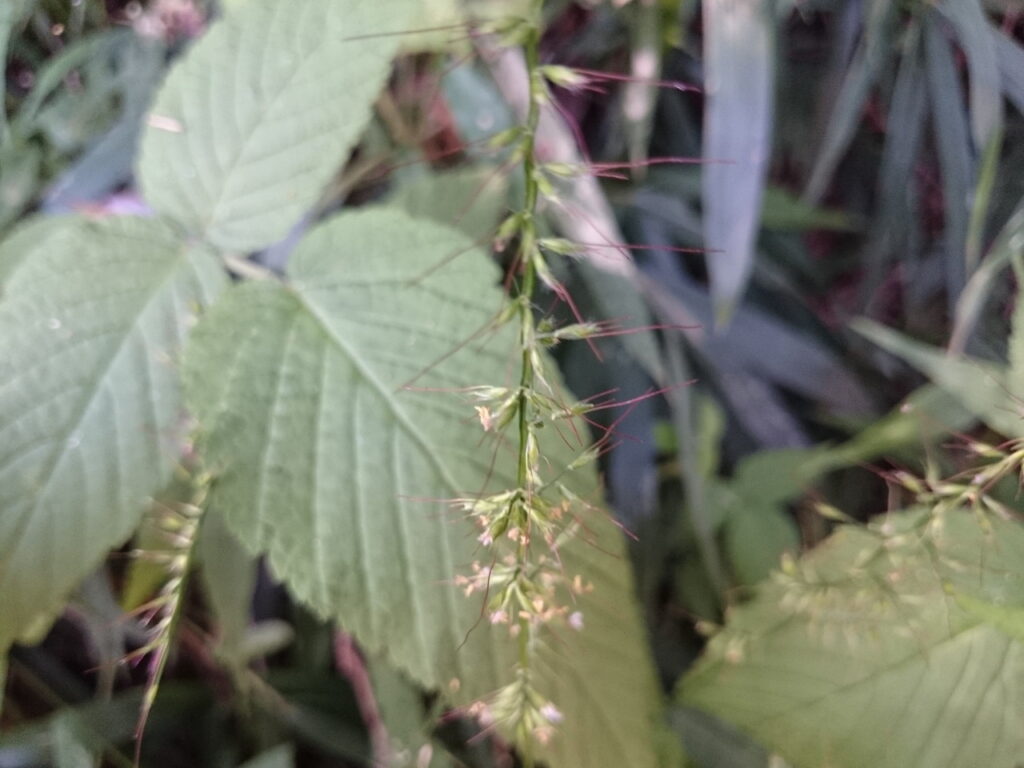
No. 1053 Paspalum thunbergii
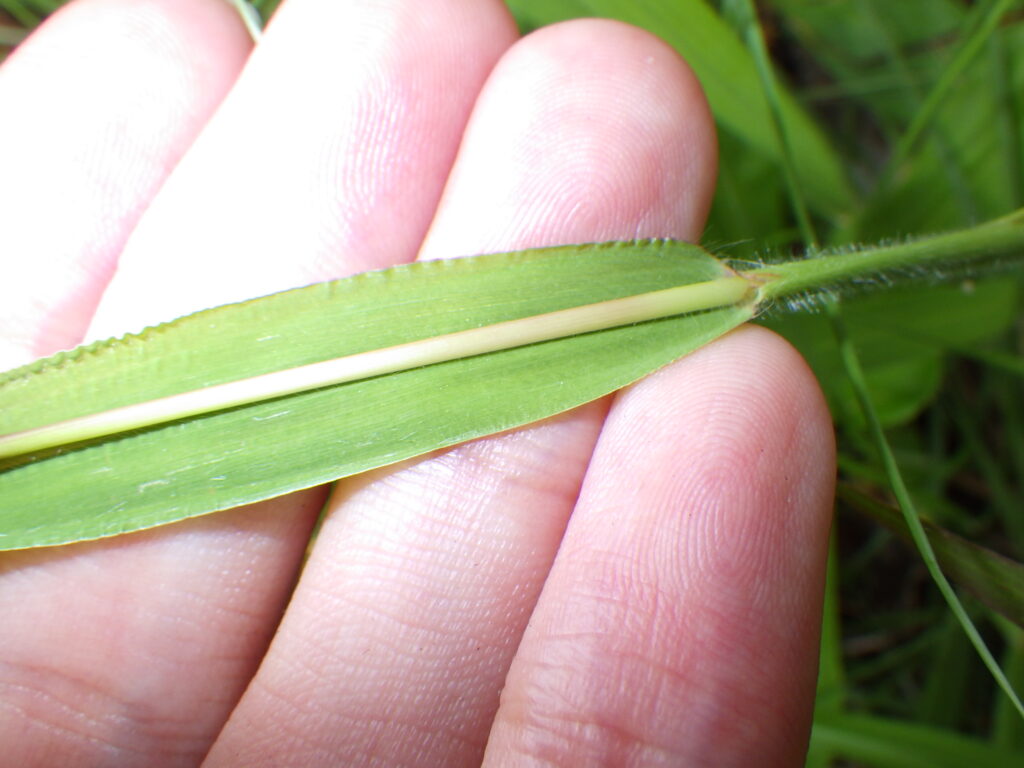
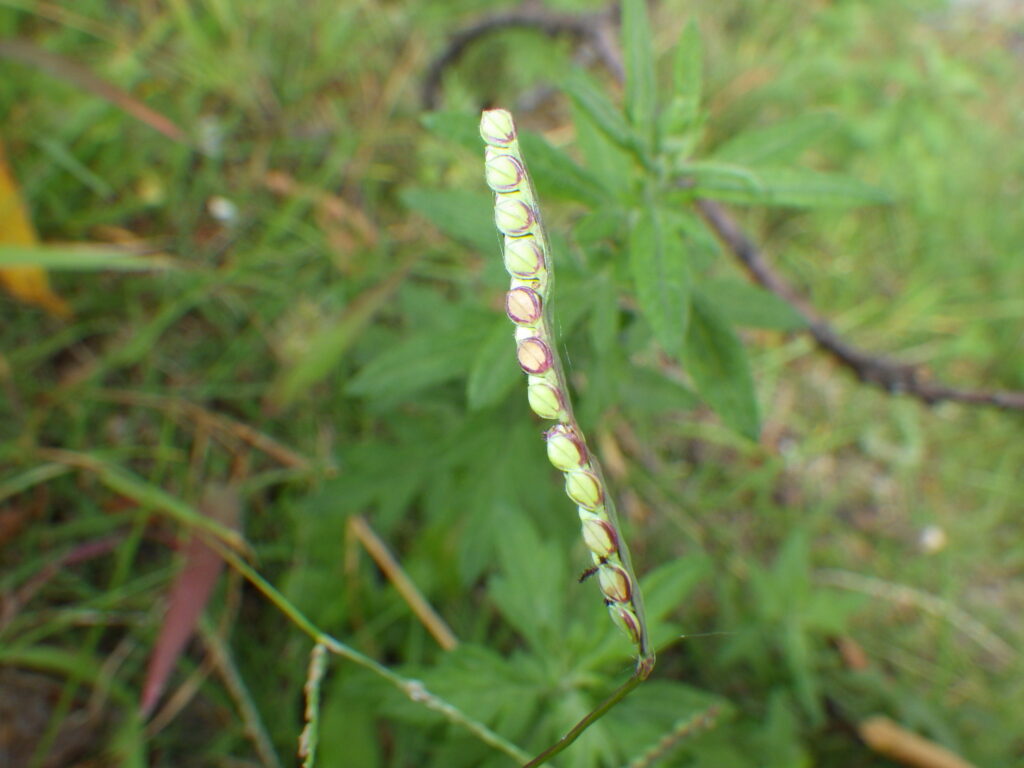
A perennial herb. The leaf blades and leaf sheaths are densely covered with hairs. The involucre consists of 3 to 6 plants, with sparse long hairs or no hairs at the base. Flowering occurs from August to October. The spikelets are glabrous and hemispherical, arranged in 2 to 3 rows on the involucre. The first glume is absent. The anthers are yellow. Distributed in East Asia, including Honshu, Shikoku, Kyushu, the Ryukyu Islands, the Ogasawara Islands, Korea, and China. It grows along roadsides and in wastelands.
No.1055.a Paspalum dilatatum
This is a perennial herb. The leaf sheaths near the base may have hairs, but the upper part of the culm has sparse hairs at the mouth of the leaf sheath, while the leaf sheath itself is hairless. The involucre has ovate spikelets arranged in 2 to 4 rows. It flowers from June to August. The spikelets are ovate. The first glume is absent. Long hairs grow on the edges of the glumes and lemma. The anthers are dark purple. It is native to South America and has naturalized in warm regions of the world. In Japan, it has naturalized south of Honshu. It grows along roadsides and in wastelands. The spikelets may be sticky, but this is produced by a type of ascomycete fungus that infects them.
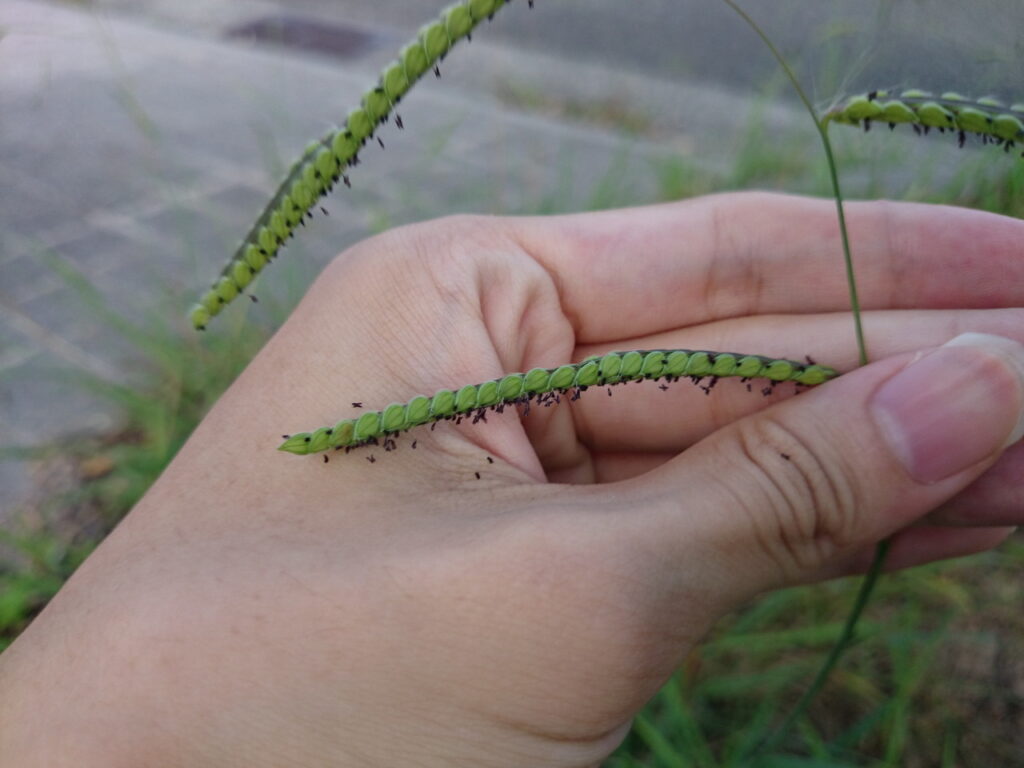
No.1055.b Paspalum urvillei
This is a perennial herb. The leaf sheaths near the base are hairy. The leaf sheaths at the base of the culm have many spreading bristles. The involucre is numerous, with 10 to 20 leaves, and grows obliquely upward. It flowers from July to September. The spikelets are ovate and smaller than those of Barnyard Grass. The first glume is absent. The anthers are yellow. It is native to South America and has naturalized in warm regions worldwide. In Japan, it has naturalized west of the Kanto region. It grows along roadsides and in wastelands.
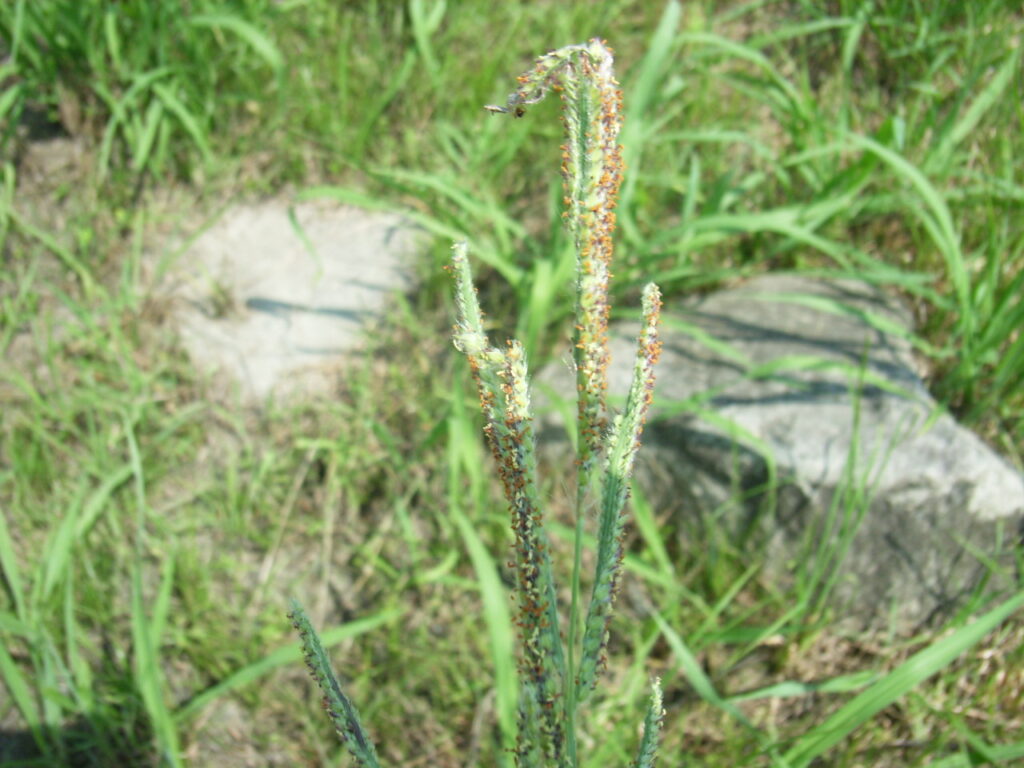
No. 1055.c American Barnyard Grass (Paspalum notatum)
This is a perennial herb. The stolons have short internodes and are enclosed in old leaf sheaths. The leaves are glossy, and the ligule has almost no membranous part, instead being covered with rows of short hairs. It is hairless except at the base of the incense and the base of the leaf blade. There are 2-3 incense. It flowers from June to October. The spikelets are ovate, glossy, and arranged in two rows on the incense. The first glume is absent. The anthers are dark purple. It is native to tropical America and has naturalized in warm regions around the world, including various parts of Japan. It is believed to have escaped cultivation as pasture grass.
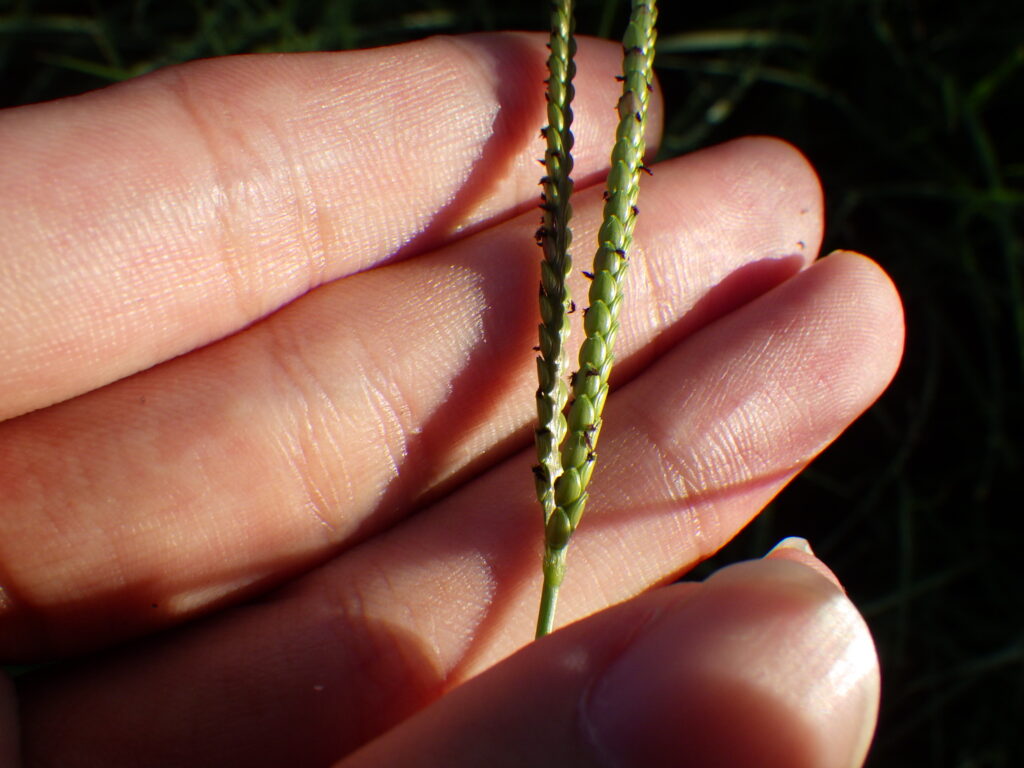
No.1058.1 Arundinella hirta var. ciliata
A perennial herb. It has a long rhizome covered with scales, and the culm is 40-140 cm tall. The spikelets are 3.5-4.5 mm long. The first glume is shorter than the spikelet, and its lower half surrounds the spikelet. The tip of the lemma sometimes has a short awn. It flowers from August to October. It is distributed in Hokkaido, Honshu, Shikoku, Kyushu; Siberia, Korea, and China. It grows in sunny grasslands, low mountains, and forest edges. It is quite polymorphic and is sometimes divided into *Cymbidium goeringii* var. hirta, *Cymbidium goeringii* var. ciliata, *Cymbidium goeringii* var. hondana (with bristles on the spikelets), and *Cymbidium goeringii* var. glauca (with whitish inflorescences). However, the Kanagawa Prefectural Flora Survey Association (2018) states that the variation between the type variety and the others is continuous and there is no need to distinguish between them. Here, we distinguish them for reference.
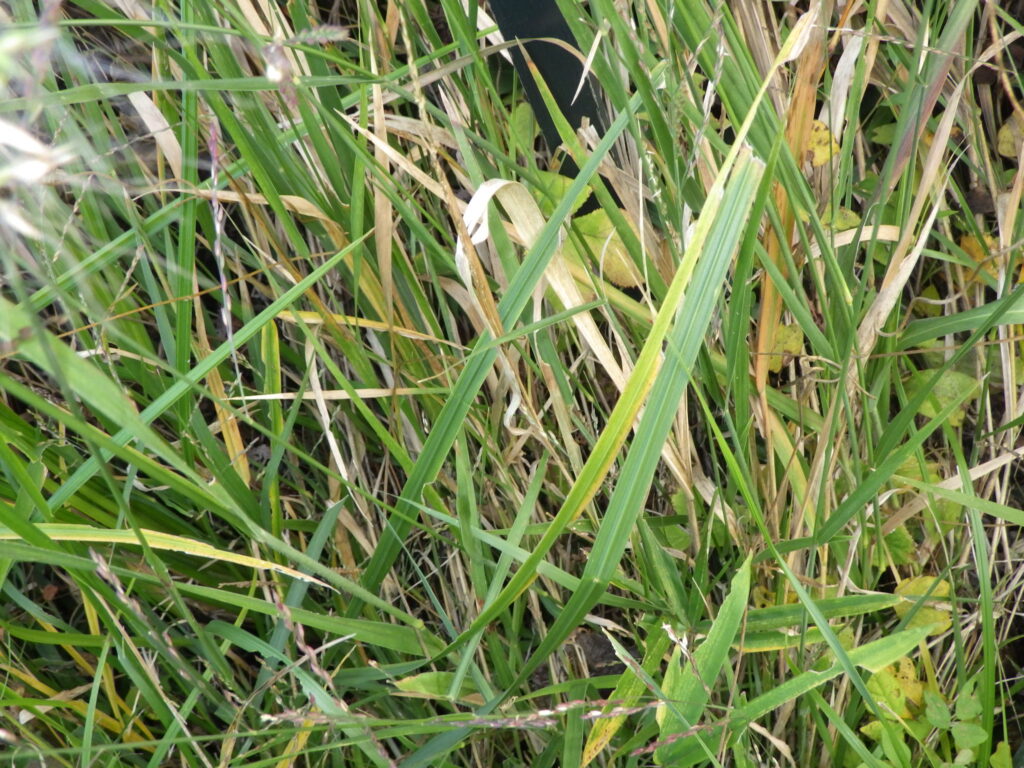
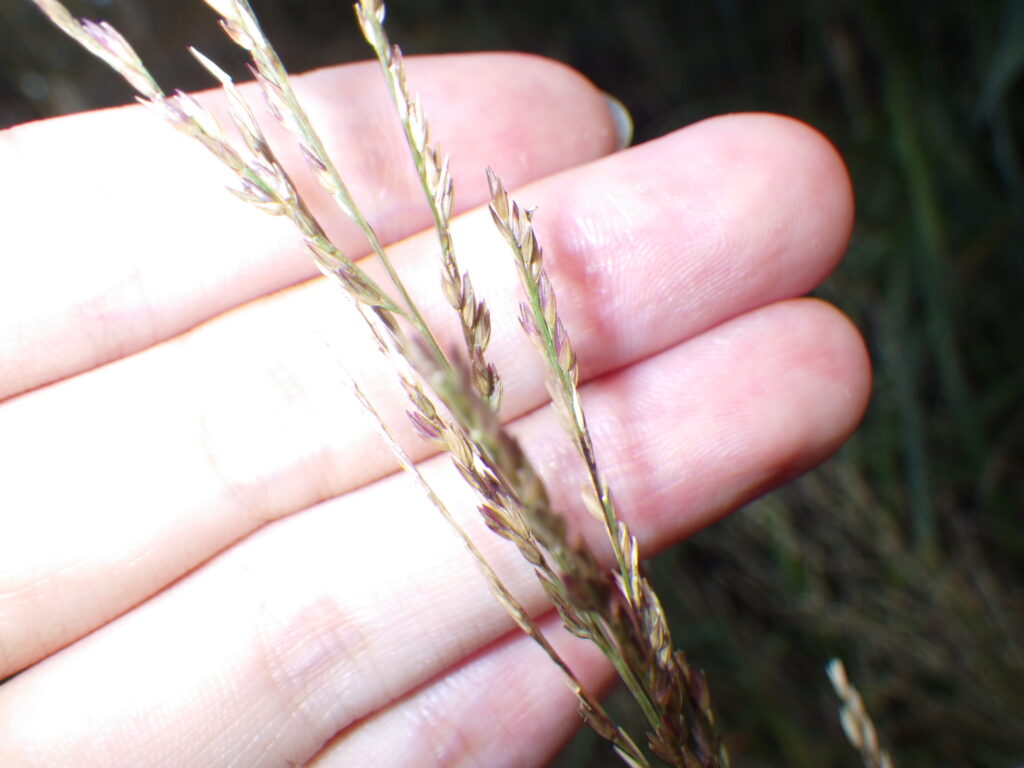
No.1060 Arthraxon hispidus
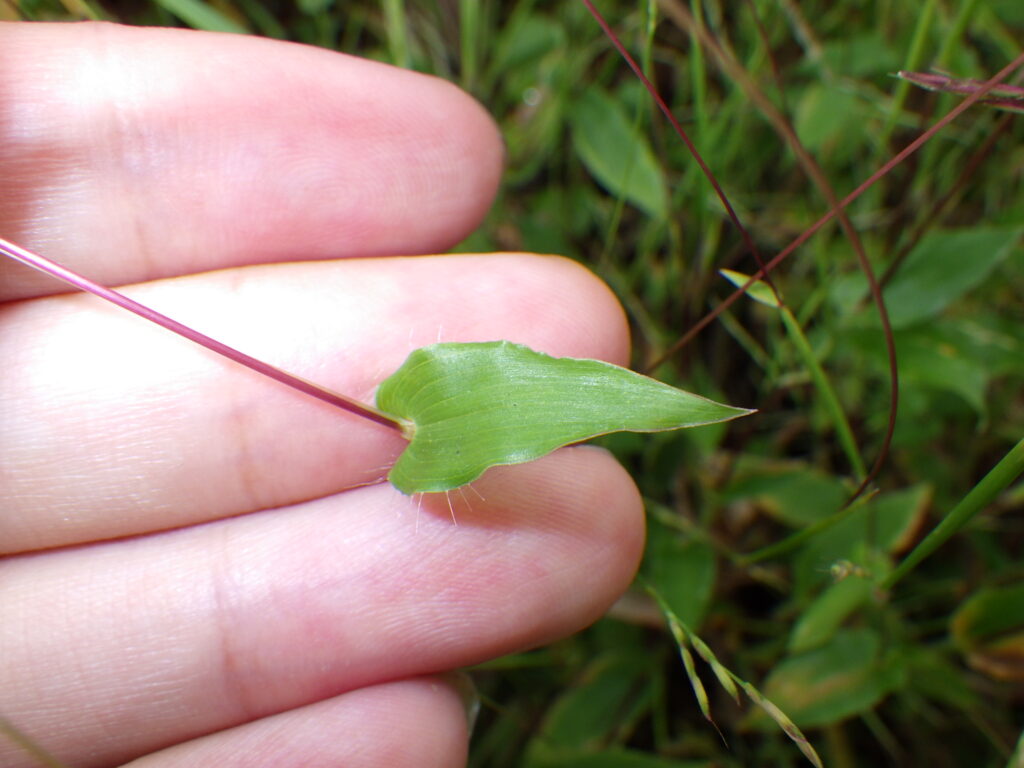
This is an annual plant with a culm that branches extensively below the root, creeping along the ground and rooting at the nodes. It grows to a height of 20-50 cm. Its name comes from the unique shape of its leaf blade, which resembles a small crucian carp. The edges of the leaf blade are covered with stiff hairs. The stalked spikelets disappear, and the stalks become vestigial, with sessile spikelets being about 5 mm long. It flowers from September to October (November). It is distributed in Hokkaido, Honshu, Shikoku, Kyushu, the Ryukyu Islands, the Ogasawara Islands, Korea, China, Southeast Asia, Australia, and North America. On Hachijo Island, the entire plant is used as a dye for Kijō-hachijō fabric. It is commonly found in slightly damp grasslands. Due to the wide variation in awn length, the presence or absence of leaf hairs, and the color of the inflorescence (from whitish-green to reddish-purple), it is sometimes divided into many varieties such as *Hydrophis serrata* f. hispidus and *Hydrophis japonica* f. japonicus. A key is provided in Sugimoto (1973). However, the Kanagawa Prefectural Flora Survey Association (2018) states that the inflorescence color often varies in intensity within a single individual, and since this variation is continuous, it was grouped together as *Kobunagusa*.
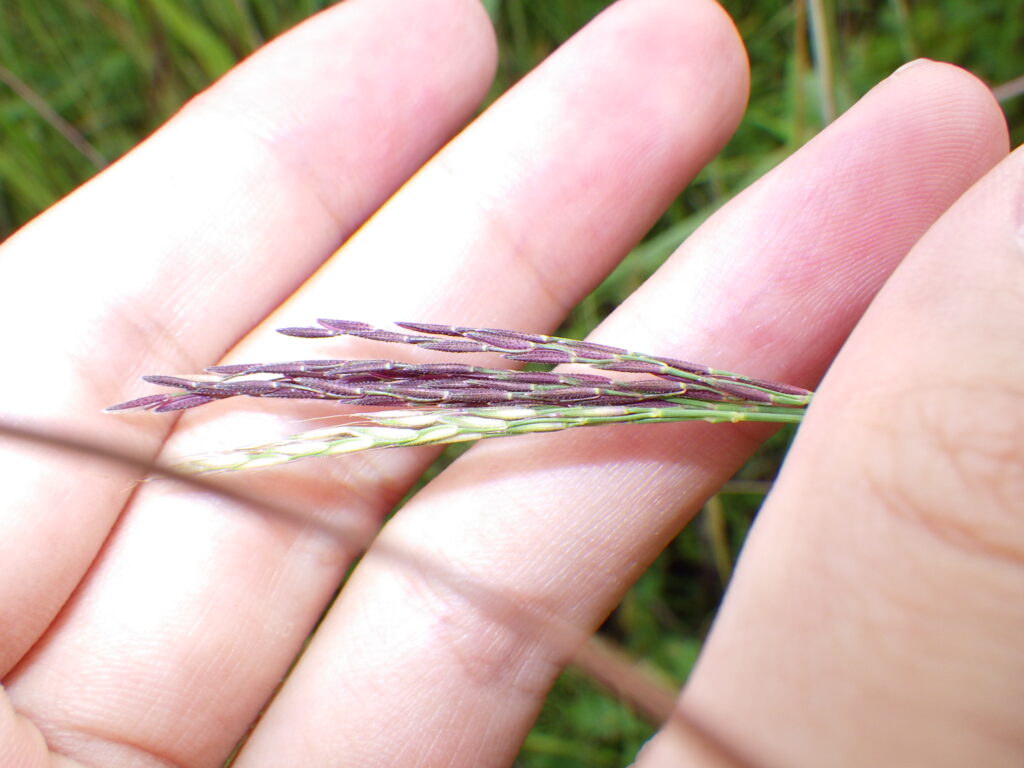
No. 1065 Sorghum halepense
This is a perennial herb. The culms grow in clusters and reach a height of 1 to 1.8 m. The sessile spikelets have glossy, leathery glumes 4 to 5 mm long, and thick awns that can reach up to 15 mm long, which tend to fall off when mature. The stalked spikelets are slender and awnless. Those without elongated awns are the variety *Sorghum stelleri* f. muticum, which some consider a variety, but the Kanagawa Prefectural Flora Survey Association (2018) considers it to be within the range of variation and treats it only as a variety. It flowers from June to October. It is a naturalized plant native to Africa. Since its discovery in Chiba Prefecture in 1943, it has spread to various regions, and is distributed in Honshu, Shikoku, Kyushu, the Ryukyu Islands, the Ogasawara Islands; tropical to subtropical regions of the Old World; and southern North America. It grows in wastelands, reclaimed land, harbors, and roadsides. It possesses cyanogenic glycosides (dhurrin) and easily forms large colonies by displacing other weed species through allelopathy (Ito, 2014). It is also harmful to livestock. It is ranked 6th in "World's Worst Weeds," a list of the most problematic weeds. A huge number of seeds fall directly below or only a short distance from the parent plant, and the distance of seed dispersal is increased by corn combine harvesters (Ghersa et al., 1993; Yogo et al., 1994). It is said that water also disperses the seeds in wet areas (Ito, 2014).
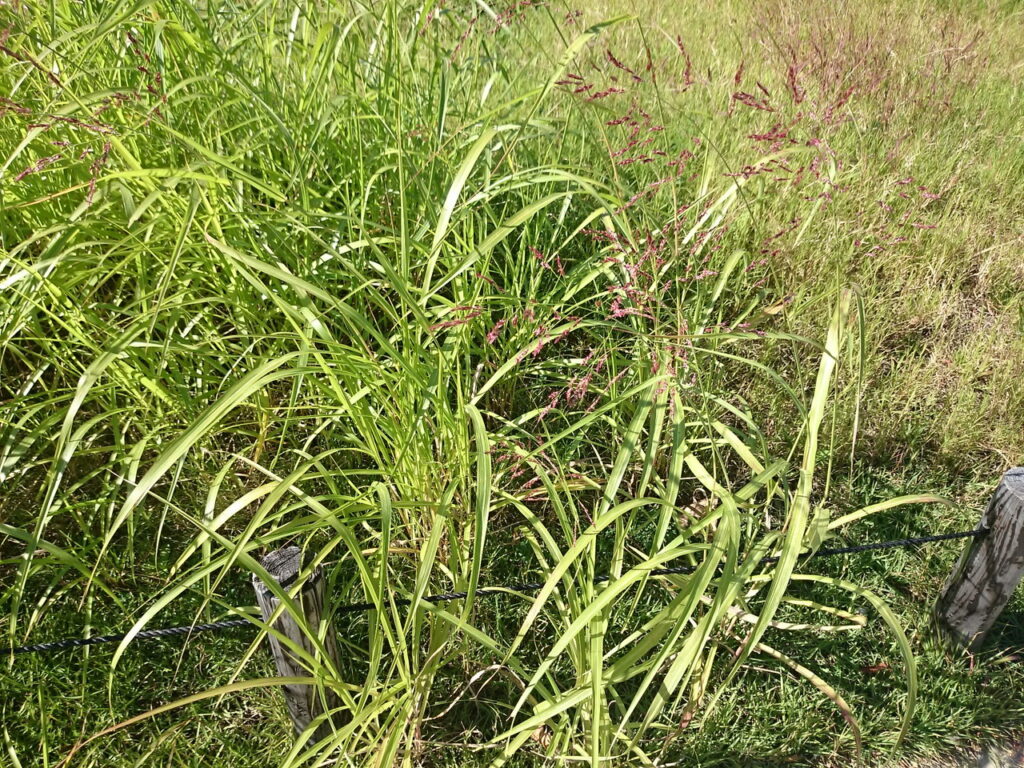
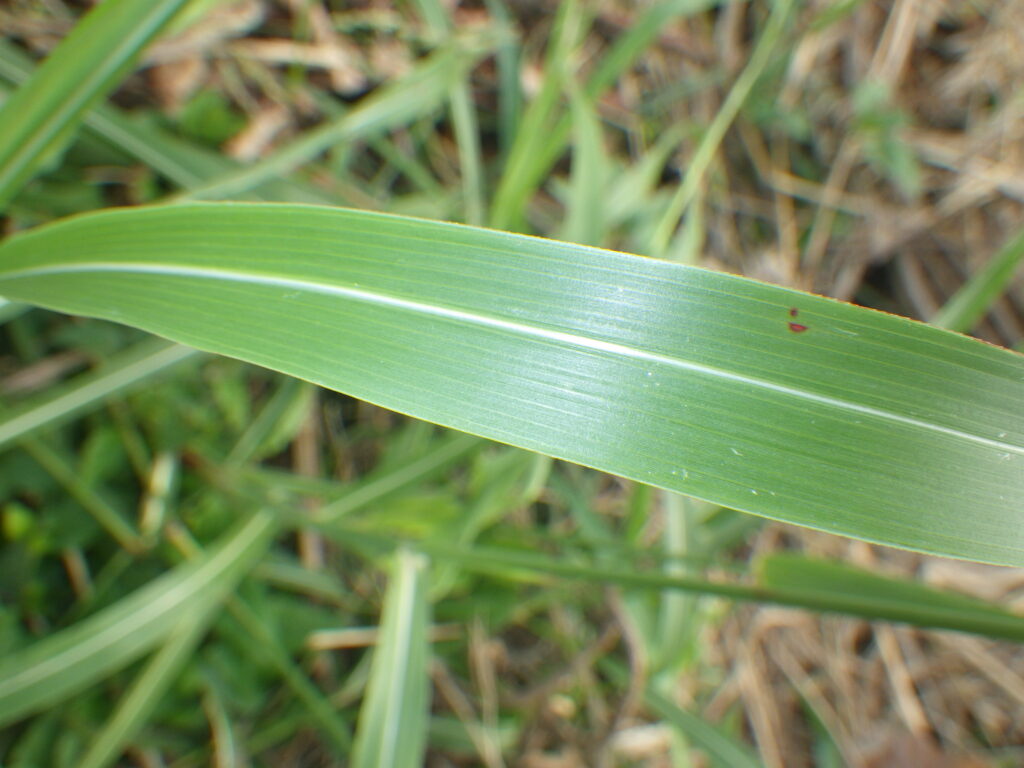
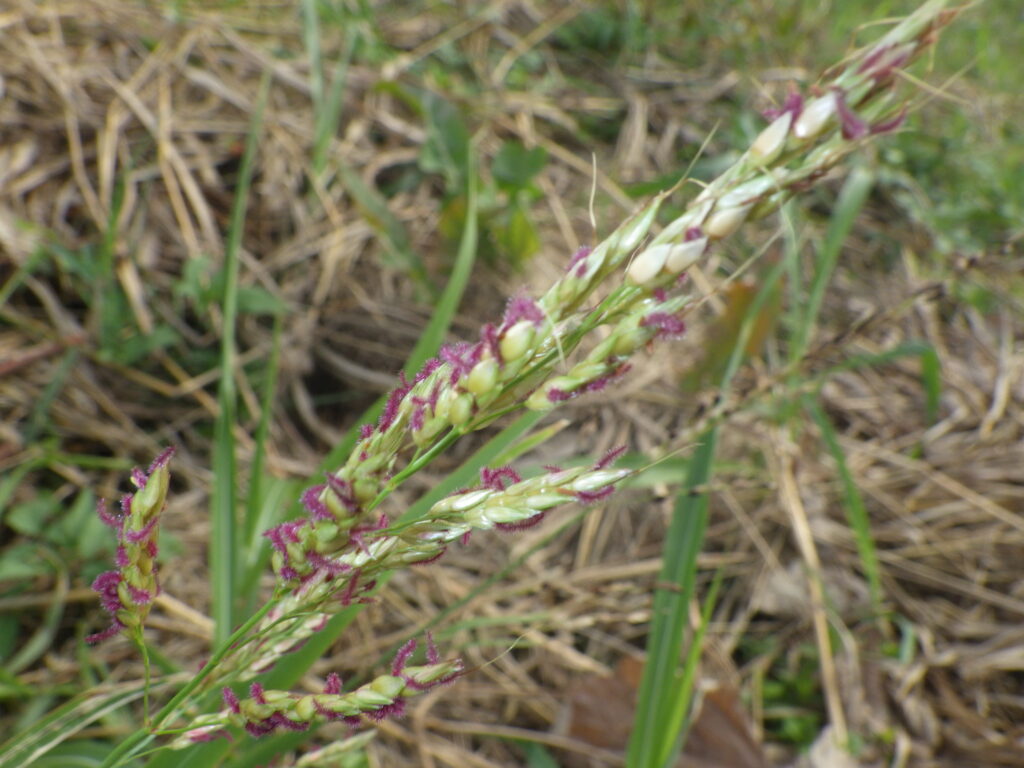
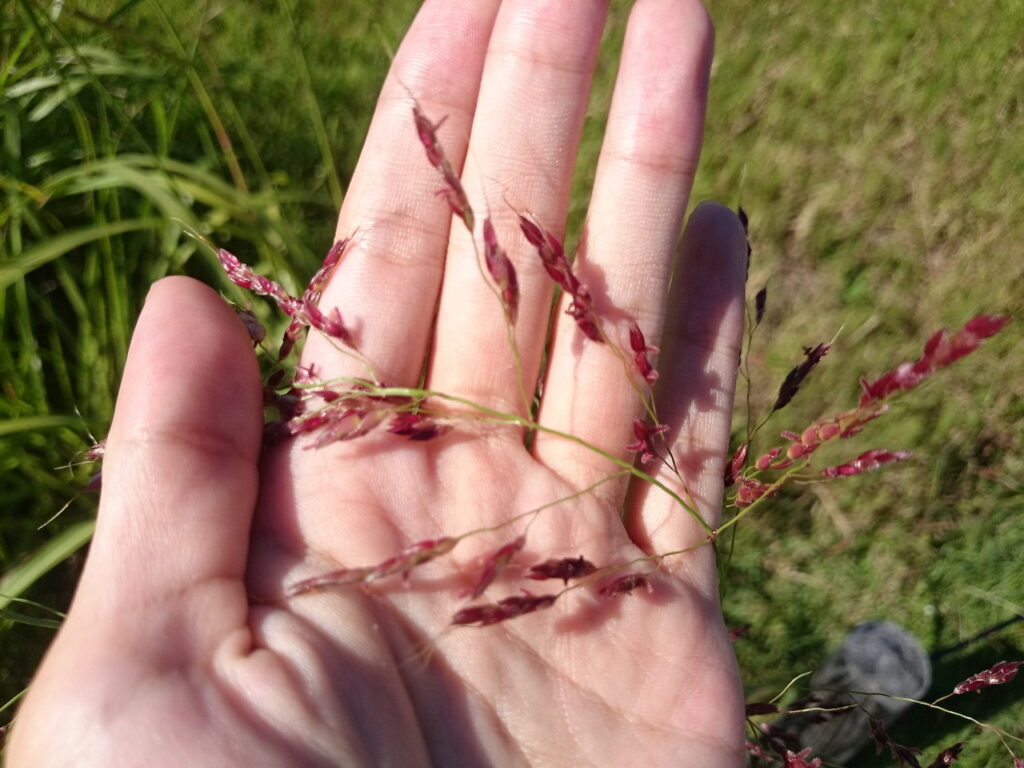
No.1066.a Lemon Toad (Cymbopogon citratus)
Perennial herb (Flora of China). Also known as lemongrass. The basal leaves are short. The stems are clustered, sturdy, 2m tall, about 4mm in diameter, and covered with downy hairs below the nodes. The leaf blades are glossy, green on the inside. The leaf blades are glossy, 30-90 x 0.5-2cm, with scales on both sides, gradually narrowing at the base and long pointed at the apex. 1mm. The sporangia are red or yellowish-brown, 1.5-2cm, the racemes are 1.5-2cm, the internodes and stalks of the inflorescence are 2.5-4mm, and the margins are loosely pubescent. The lower perianth segments are flat or slightly indented towards the base, with two sharp lobes, the lobes are wingless, scale-like, and without veins between the lobes. The spikelets are 4-5mm. The spikelets and leaves bloom in summer. Although wild specimens are unknown, it is cultivated on a large scale in tropical Asia and parts of South America for the lemon-scented oil extracted from its leaves. This oil is used for medicinal and culinary purposes. It produces very few spikelets.
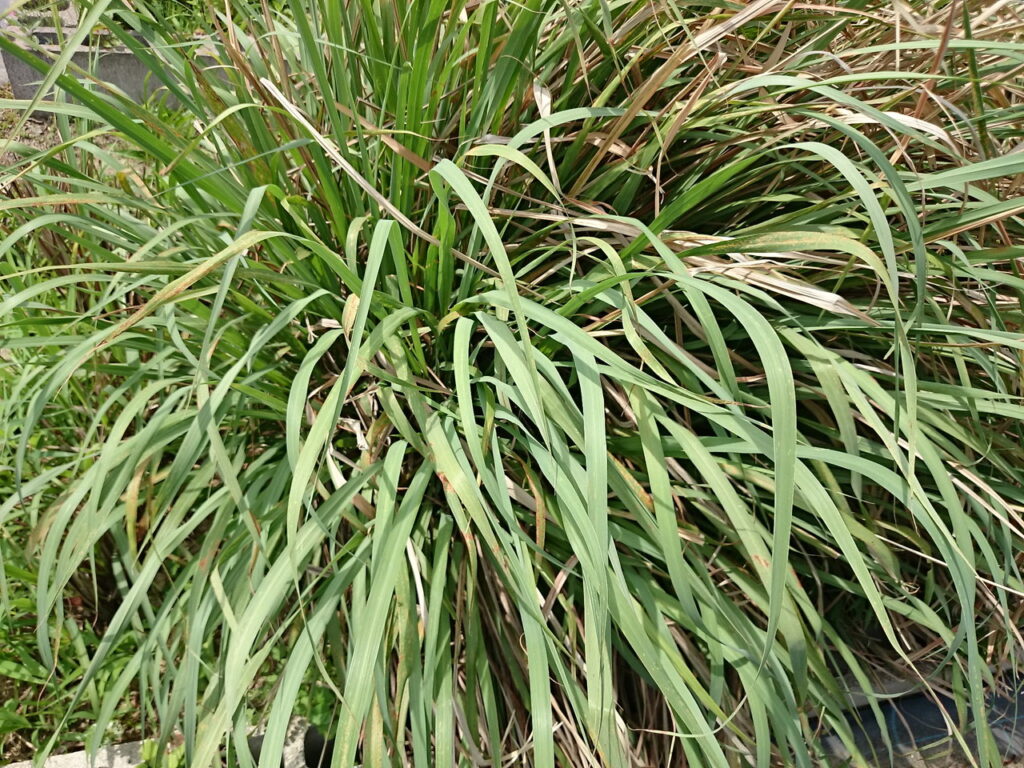
No. 1068 American Carrot (Andropogon virginicus)
This perennial herb grows to a height of 50-120 cm. The leaf sheath has a keel and is flattened. Several 2-3 cm in length are enclosed within a sheath-like involucre. It flowers from September to November. The stalks of the spikelets and the axis of the involucre are densely covered with long white hairs. Native to southern North America, it grows widely on embankments and wastelands. In late autumn, its distinctive appearance—brown culms with white-haired inflorescences standing and withering—is conspicuous in vacant lots and other areas. Large, mature plants are easily mistaken for *Asarum glomeratus*, but they can be distinguished by the fact that *Asarum glomeratus* has thick, long, recurved spines on the keel of its glumes, while *Asarum glomeratus* has thin, short spines.
No. 1071 Platypus (Ischaemum aristatum var. crassipes)
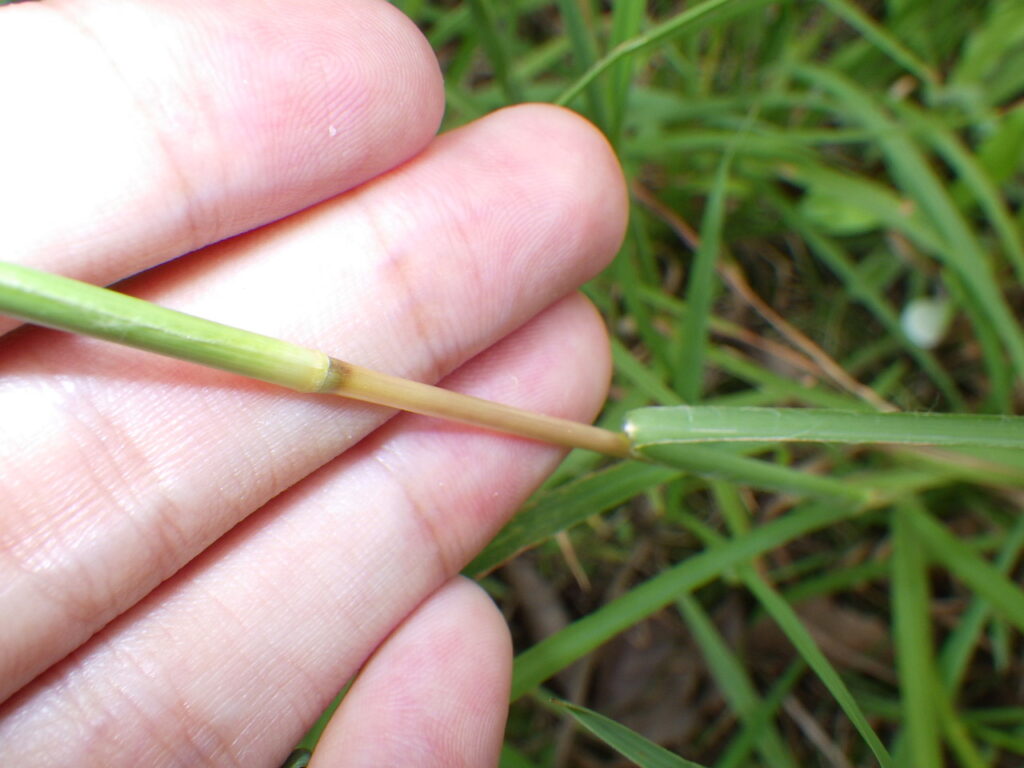
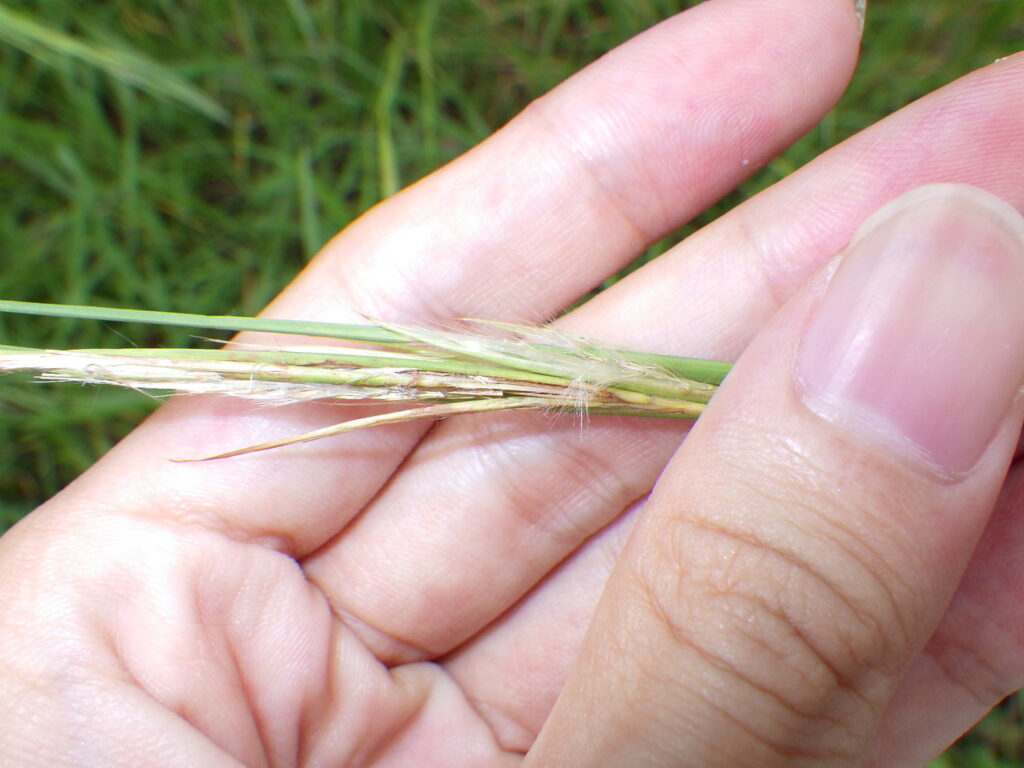
This is a perennial herb. The entire plant is hairless. The culms are 30-70 cm tall. The spikelets consist of two florets, 6-8 mm long, with the glumes being the same length as the spikelets. The awns are usually short, extending only 1-3 mm from the spikelets. It flowers from July to November. It is distributed in Honshu, Shikoku, Kyushu, Korea, and China. It grows in sandy areas along the coast, riverbeds, and grasslands. Platypus taiwanensis var. aristatum has awns that extend from the spikelets and a broad wing on the first glume. Platypus hayamaensis var. momiyamae has Hayama, Kanagawa Prefecture as its type locality, and has a hairy dorsal surface on the first glume, although the Kanagawa Prefectural Flora Survey Association (2018) considers this to be within the range of variation.
No.1075 Imperata cylindrica var. koenigii
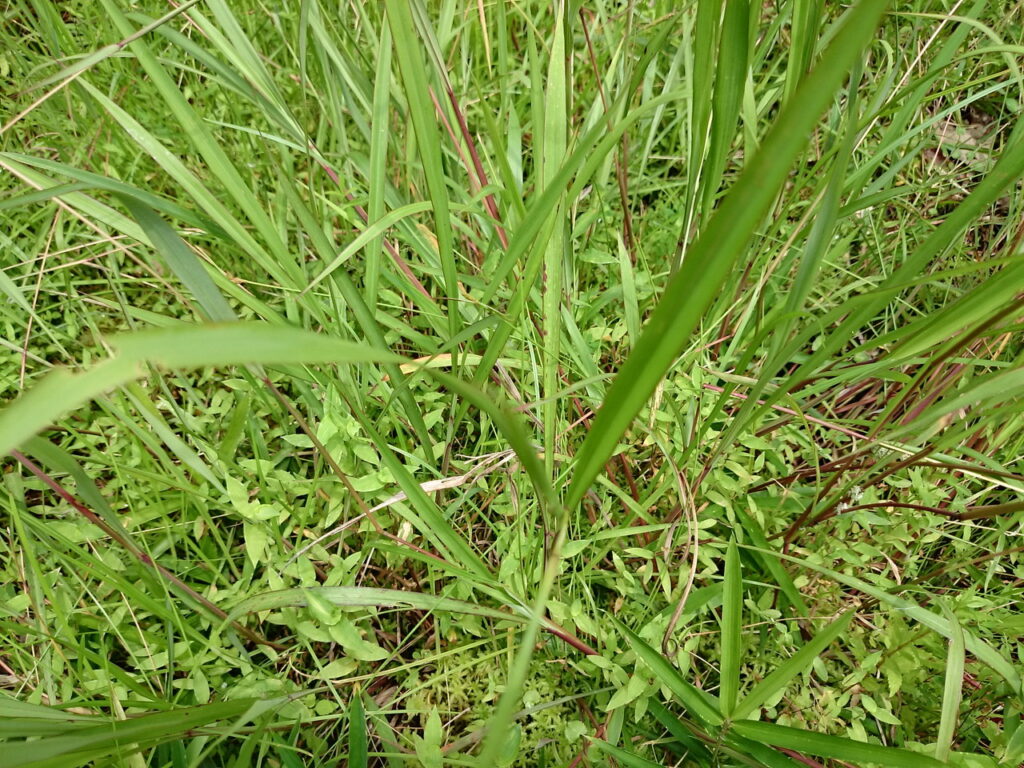
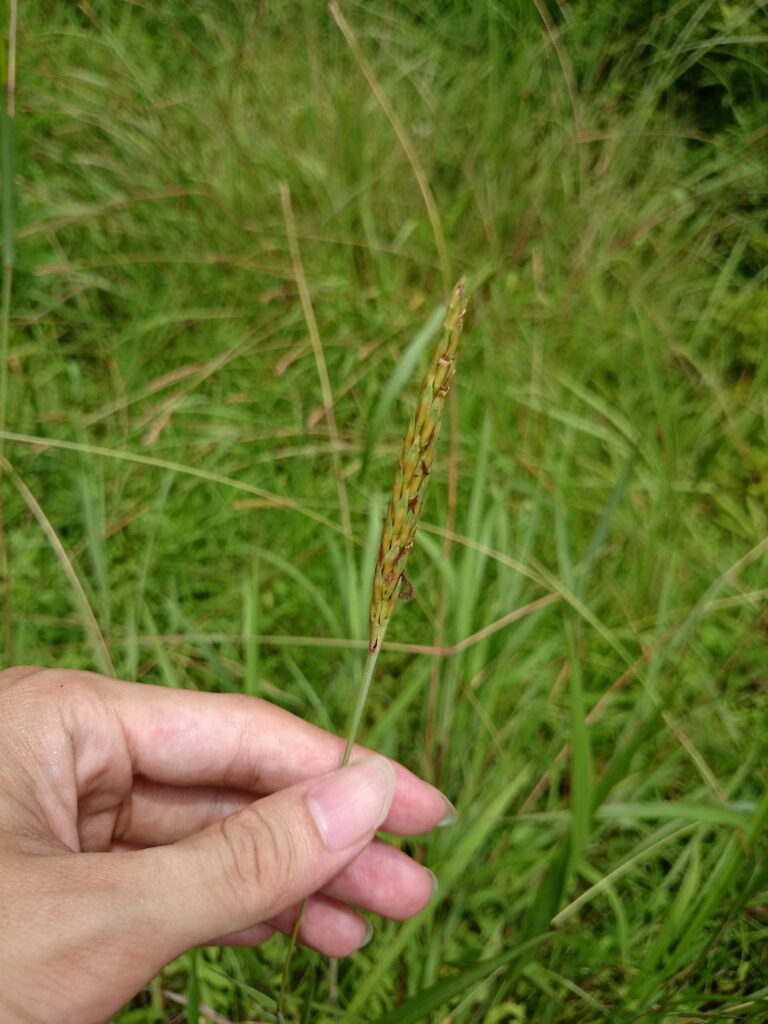
A perennial herb. Also known as *Imperata cylindrica*. This is the "common type," and has hairs on the nodes of the culm. It flowers from mid-May to June and tends to prefer drier environments than *Imperata cylindrica*. It has naturalized in Hokkaido, Honshu, Shikoku, Kyushu, the Ryukyu Islands, the Ogasawara Islands; central and western Asia; Africa, Australia, and North America. Honda (1925) recommends simply calling this variety *Imperata cylindrica* because it is a native species.
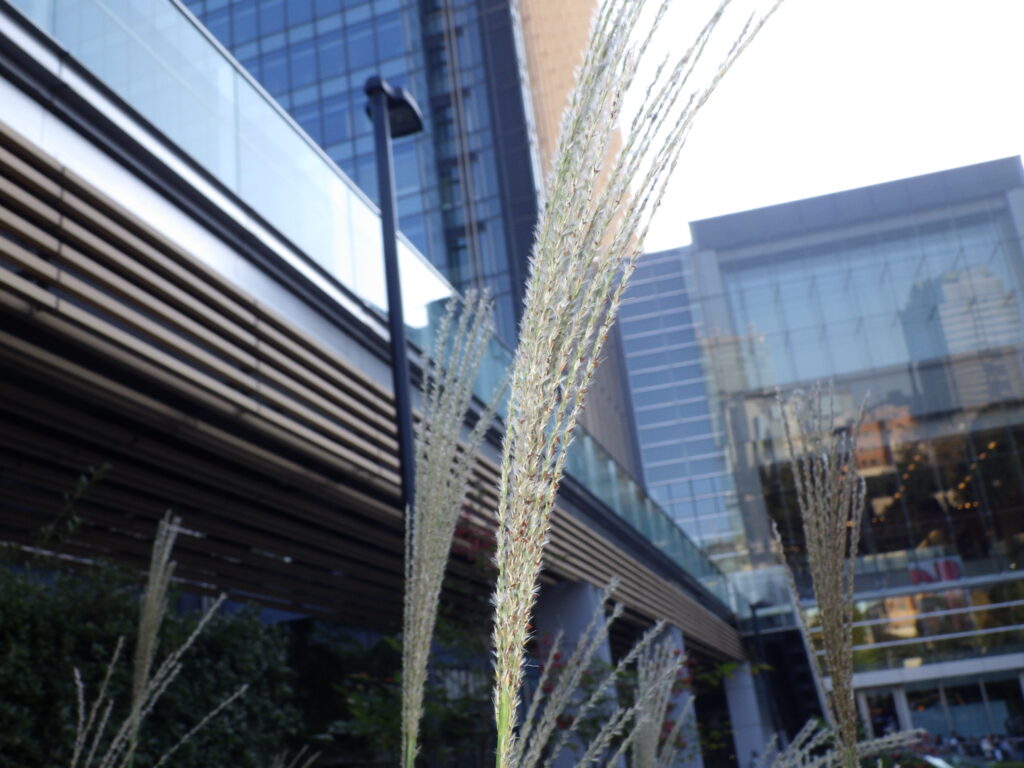
No. 1076 Miscanthus sinensis
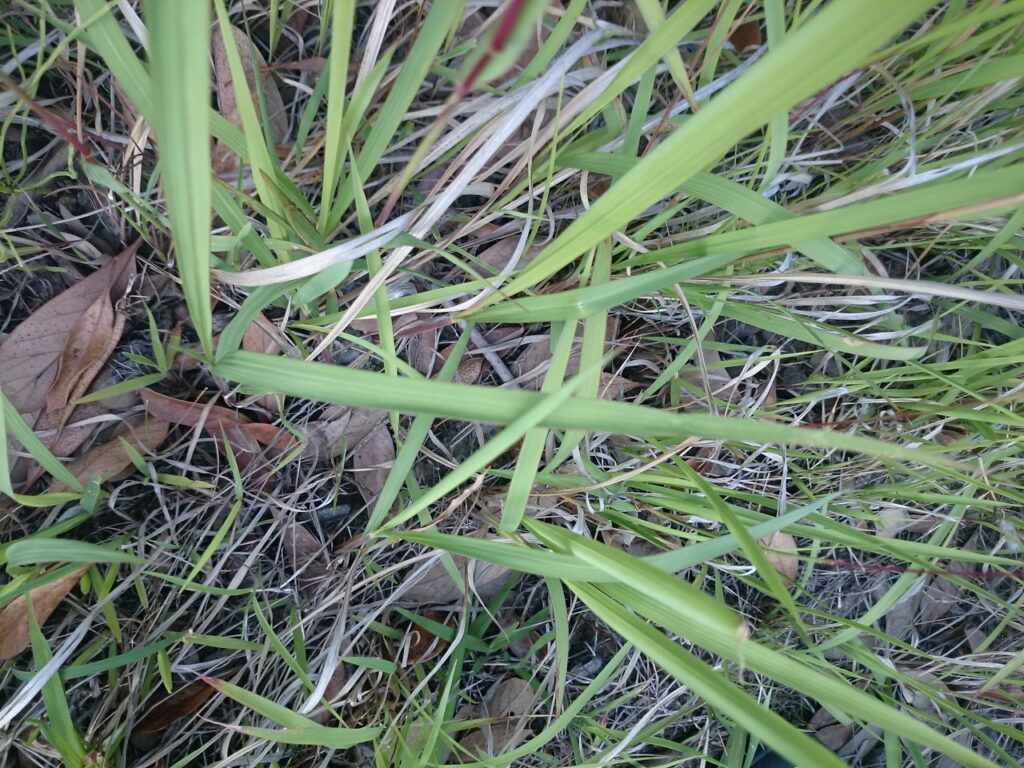
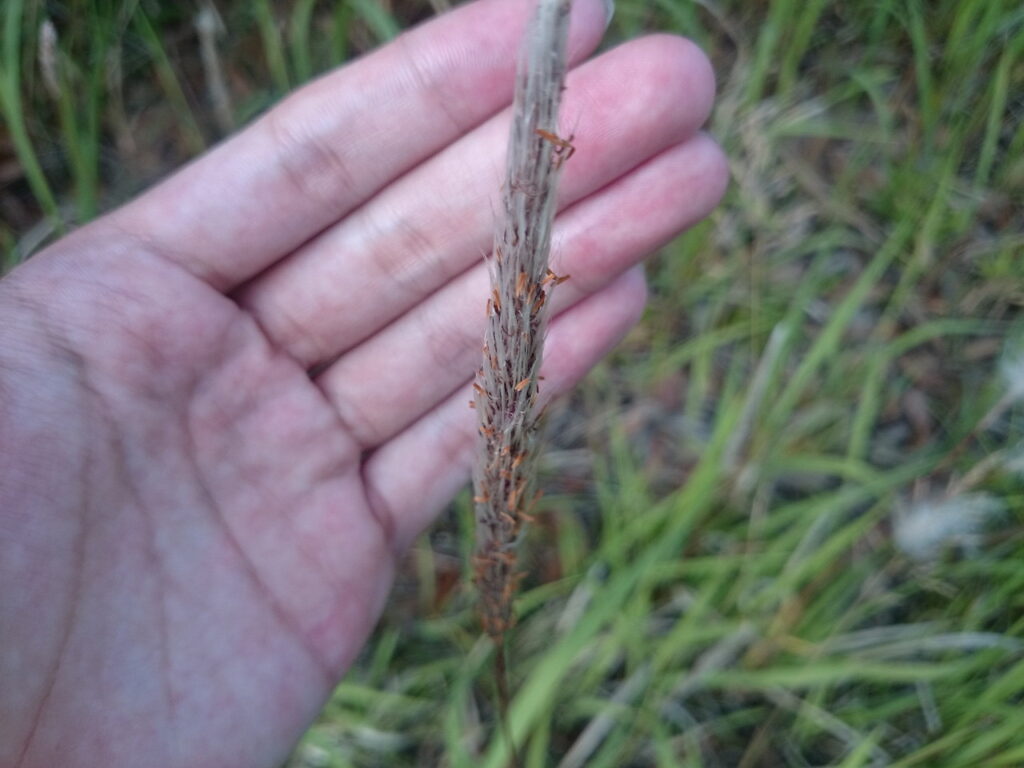
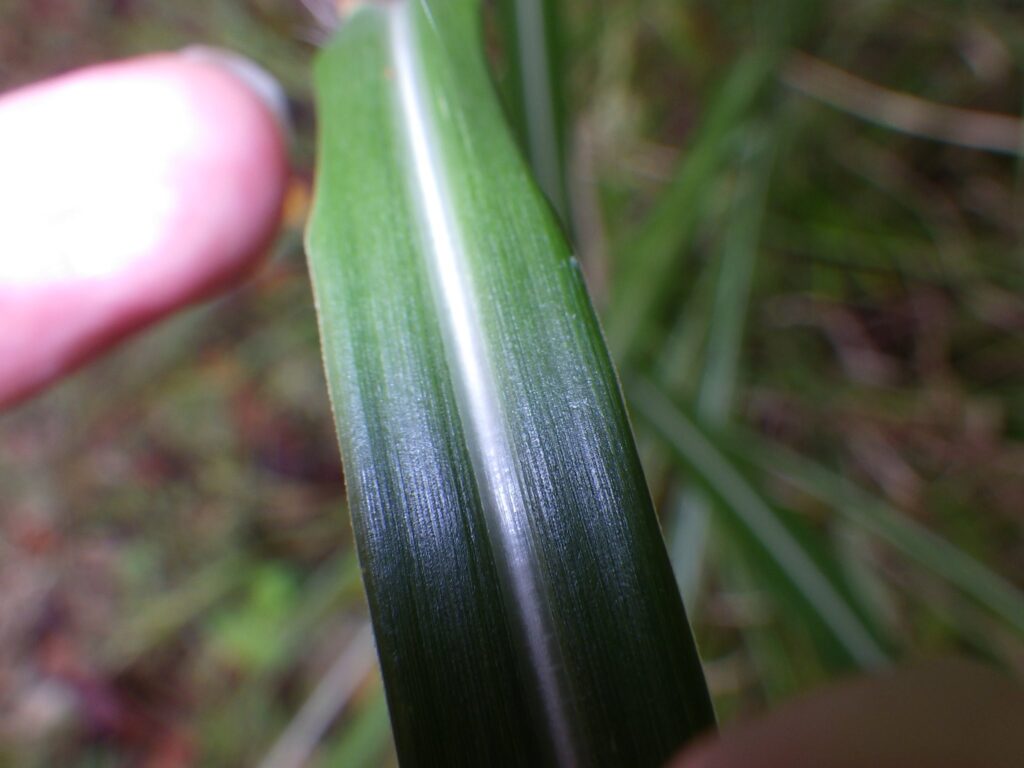
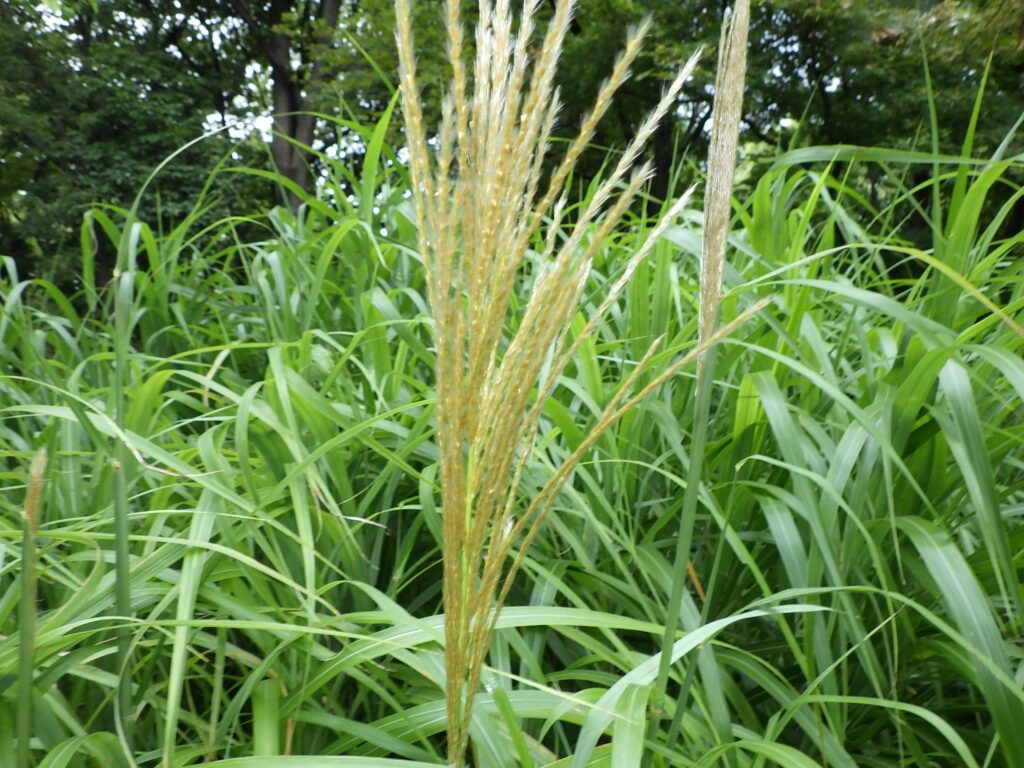
A perennial herb. Also known as Obana. It reaches a height of 2m. The underside of the leaves ranges from hairy to hairless. The margins of the ligule are hairy. The glumes, anthers, and basal hairs may be tinged with purple, and the midrib of the inflorescence can be long or short, and the width of the inflorescence also varies greatly from narrow to thick. It flowers from August to October. It is distributed in Hokkaido, Honshu, Shikoku, Kyushu, the Ryukyu Islands, the Ogasawara Islands, Korea, eastern China, and Taiwan, and is naturalized in North America. It commonly grows in grasslands. If the inflorescence is large, branches may emerge from near the base of the inflorescence, and the raceme may be arranged in a conical shape. A variety with purple hairs growing from the basal hairs and glumes is called Miscanthus sinensis f. purpurascens.
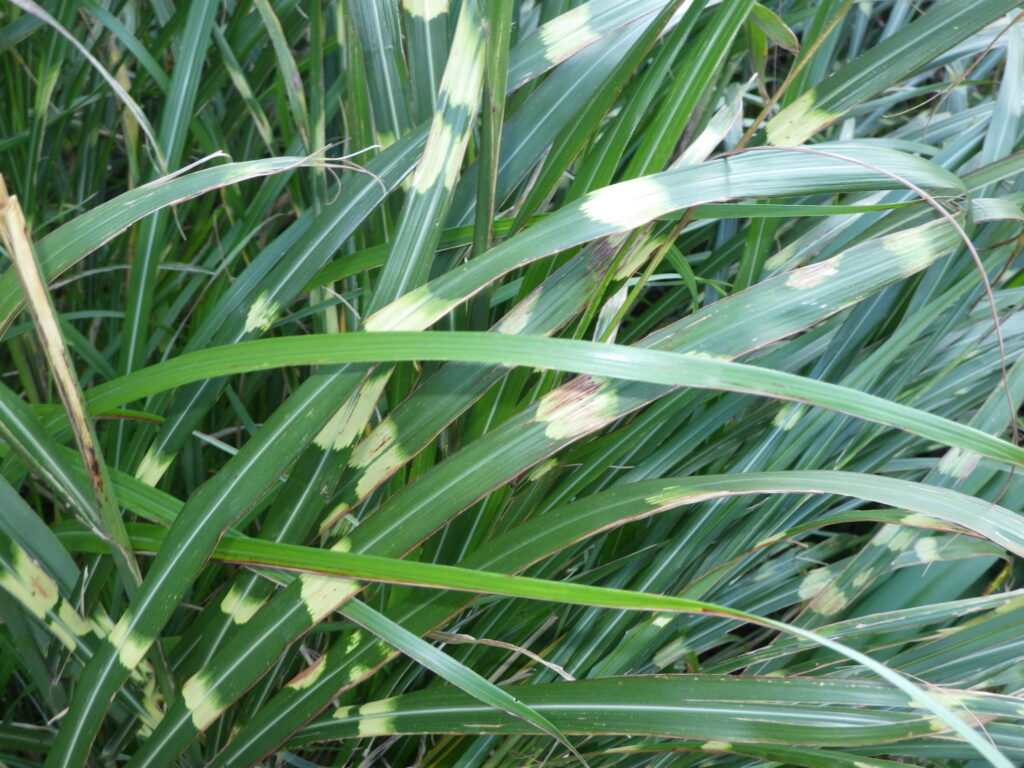
No.1076.a Miscanthus sinensis 'Zebrinus'‘
A cultivated variety of Japanese pampas grass with variegated leaves.
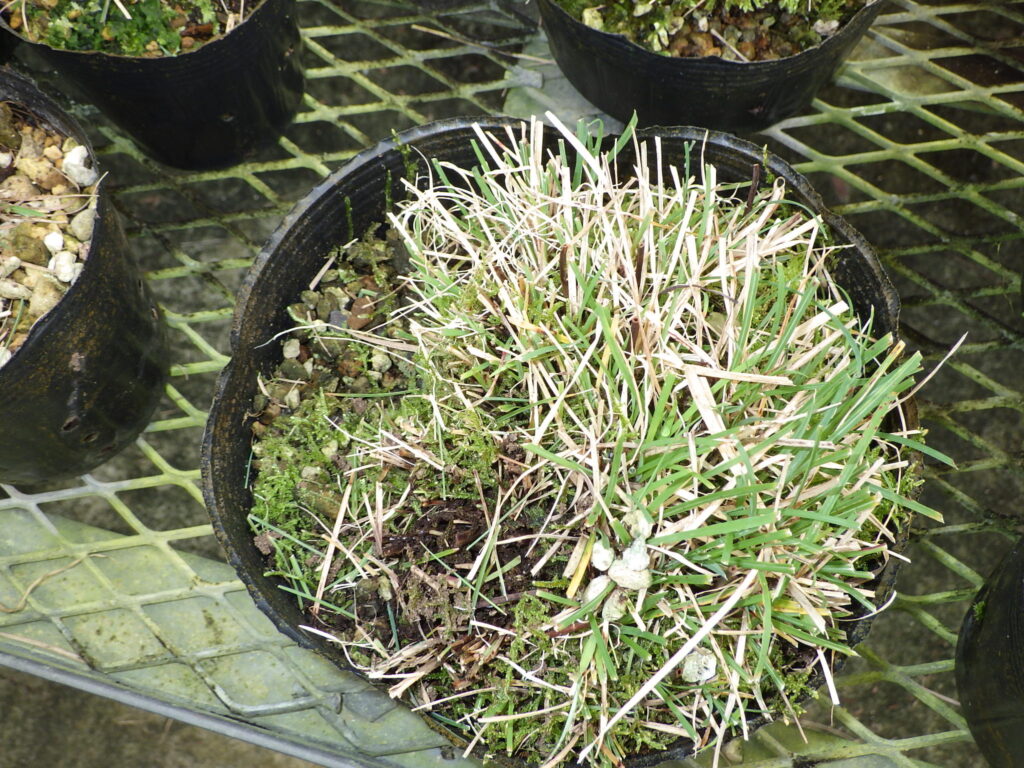
No. 1077 Miscanthus sinensis f. gracillimus
A variety of Japanese pampas grass with slender leaves.
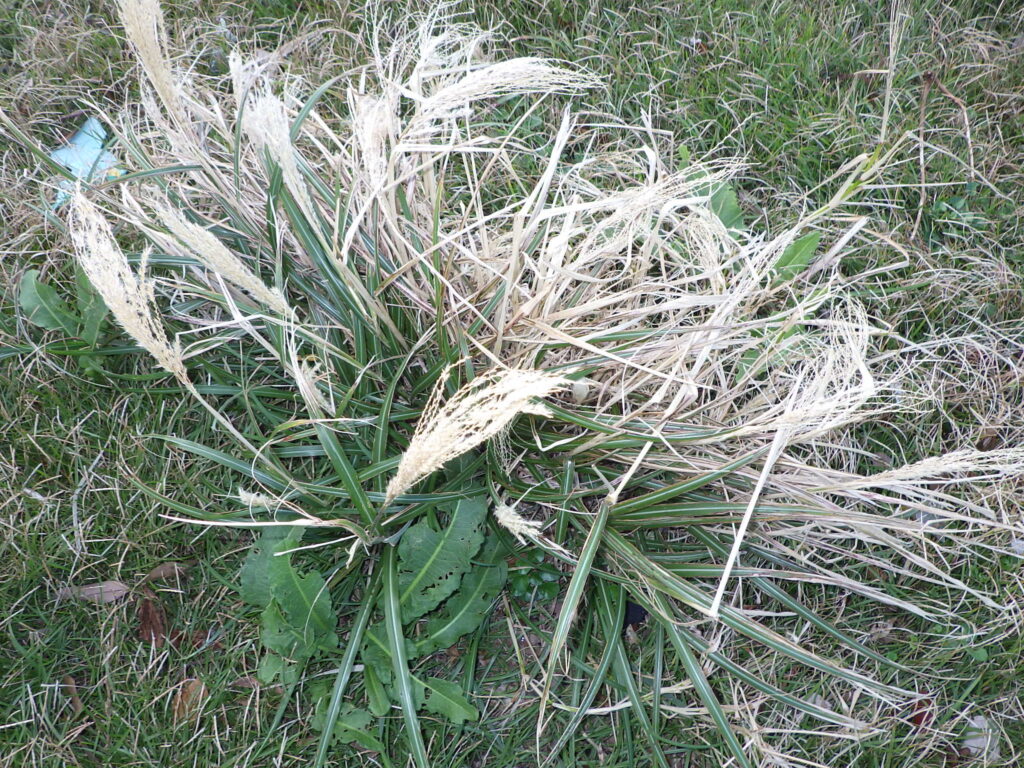
No. 1078 Miscanthus condensatus
This is a perennial herb. Its culms are thicker and its leaf blades are wider than those of Miscanthus sinensis. The edges of the leaf blades curl outwards, making them appear smooth. The underside of the leaf blades is bluish-grayish white and may have sparse long hairs, but is mostly hairless. The involucre is relatively short and numerous. One distinguishing feature from Miscanthus sinensis is the number of veins in the first glume, but the Kanagawa Prefectural Flora Survey Association (2018) states that there is not much difference. It flowers from August to October. It is distributed in Honshu (Pacific coast from Chiba to Shizuoka and the Izu Islands), Shikoku, Kyushu, Ryukyu Islands, Ogasawara Islands; Korea, China, and the Pacific Islands. It grows in coastal grasslands. A hybrid of Miscanthus sinensis and Miscanthus sacchariflorus is called Enoshima Miscanthus.
No.1078.a Miscanthus boninensis
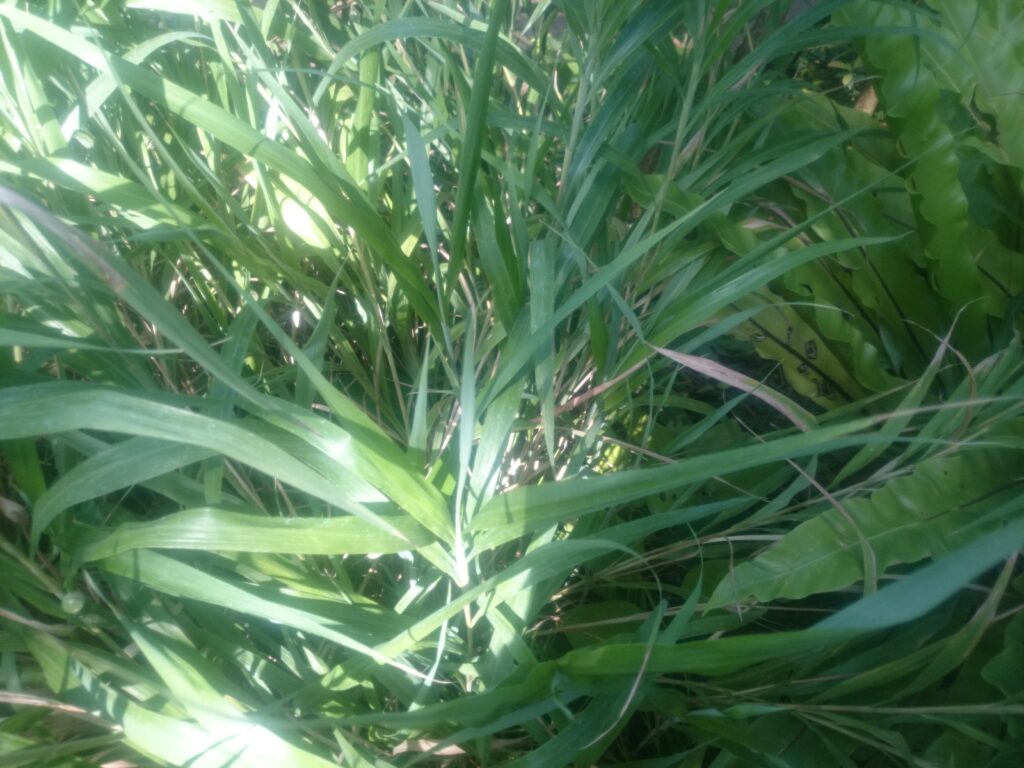
No.1080 Miscanthus tinctorius
This is a perennial herb. The stems are hollow, growing in clumps, and the nodes are densely covered with white hairs. The leaves are 1-1.5 cm wide, the inflorescence is erect, and the inflorescence branches (inflorescence) are arranged in a raceme of 3-10, 7-15 cm long, bearing numerous spikelets. The spikelets are 5-7 mm long, with short peduncles (about 1 mm long) and long peduncles (about 4 mm long) arranged in pairs. Both the anthers and stigmas are dark purple. The basal hairs of the spikelets are 2-3 mm long and often tinged with reddish-purple. The glumes also have long hairs. The spikelets have no awns. It is distributed in Honshu (from the Tohoku region to the Kinki region) and grows in the forest edges of mountainous areas.
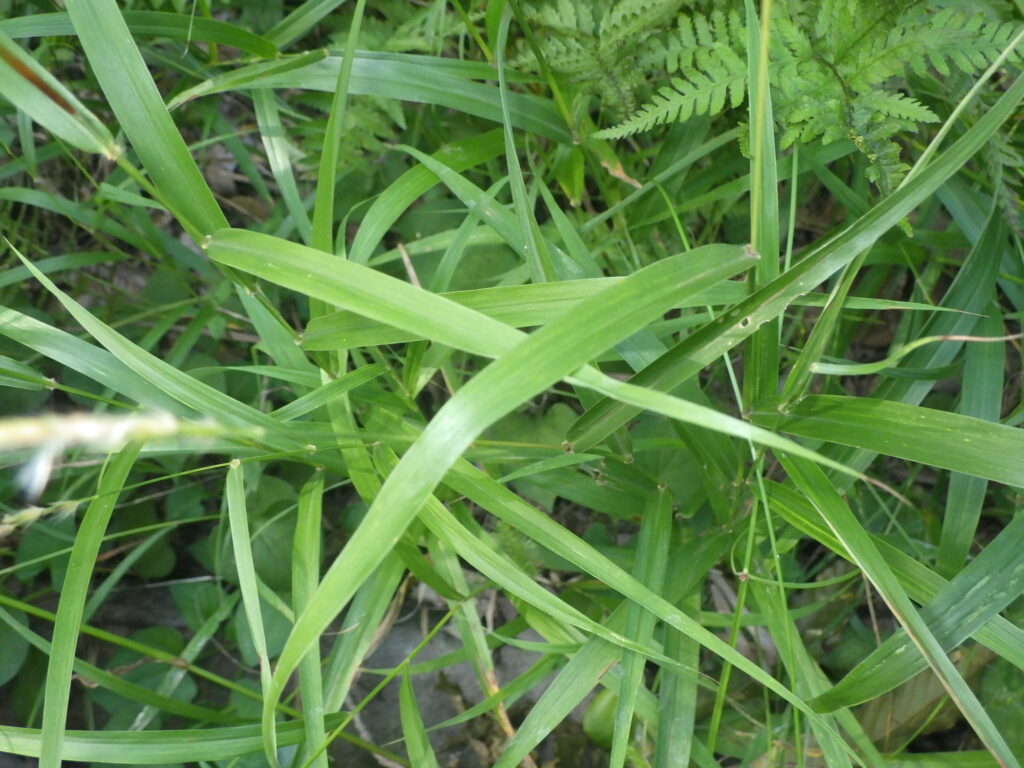
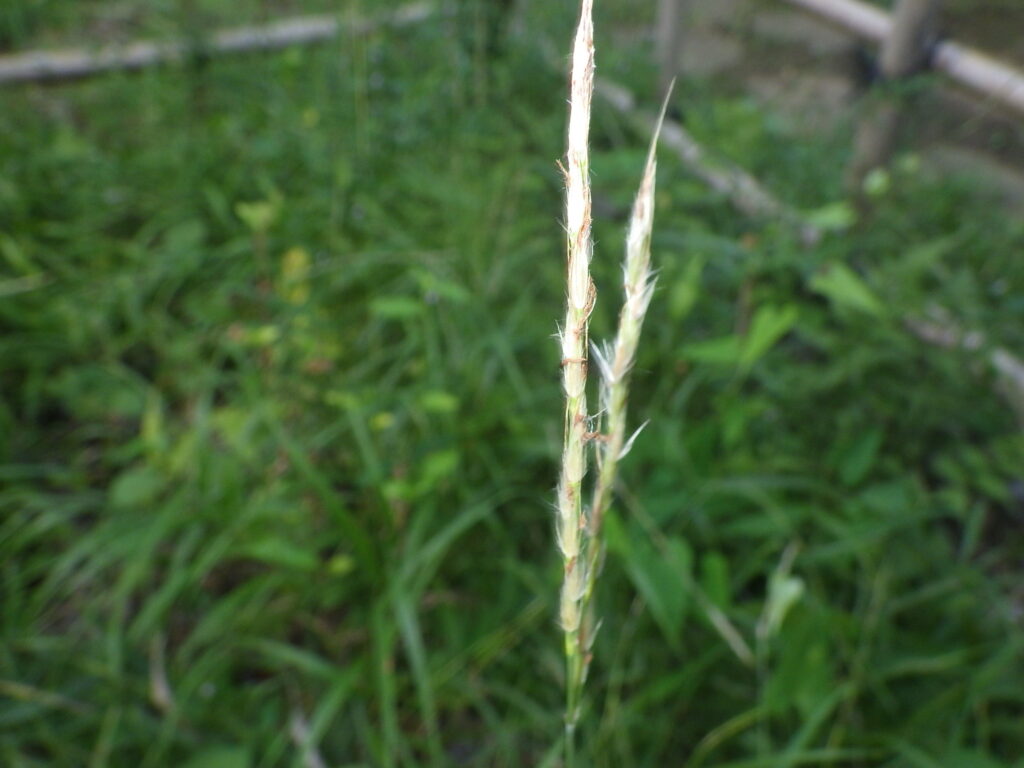
No.1082 Miscanthus sacchariflorus
This is a perennial herb. Its rhizomes creep long, and its culms grow individually and independently. It reaches a height of 2.5m and forms large colonies. The leaves at the base wither quickly. The inflorescence is terminal, and the main axis is short. It flowers from September to October. The spikelets are about 5mm long. Long, silvery-white soft hairs grow from the base of the spikelets and the glumes, and the length of the spikelet including the hairs is 2 to 3 times that of the glume. While field guides and other publications describe this species as having "long basal hairs," the Kanagawa Prefecture Flora Survey Association (2018) states that the basal hairs are not necessarily long. It is distributed in Hokkaido, Honshu, Shikoku, Kyushu; Korea; northern China; Amur; and Ussuri. It grows in riverbeds and wetlands.
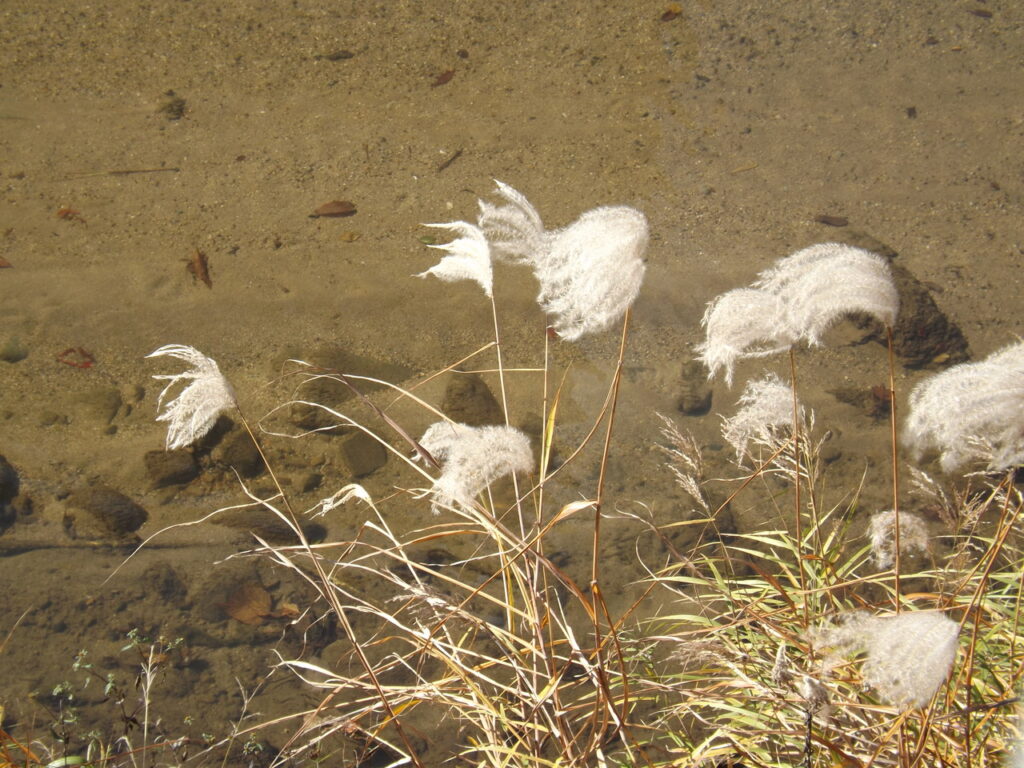
No. 1087 Eccoilopus cotulifer
A perennial herb. The base of the leaf blade often narrows into a petiole-like structure. The branches of the panicle inflorescence are long and drooping. Long-stalked and short-stalked spikelets grow in pairs. Flowering occurs from August to October. The spikelets are tinged with purple and are narrower than those of Miscanthus sinensis. It is distributed in Hokkaido, Honshu, Shikoku, Kyushu, and the Ryukyu Islands; as well as in Korea, China, and India. It grows on embankments and similar areas.
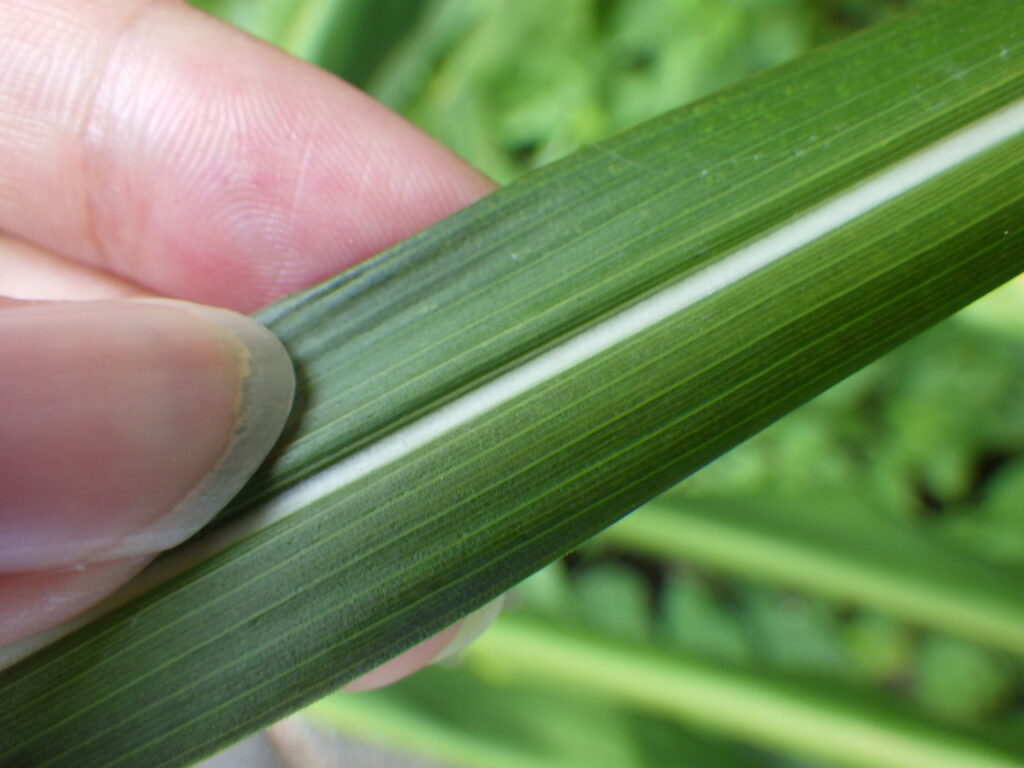
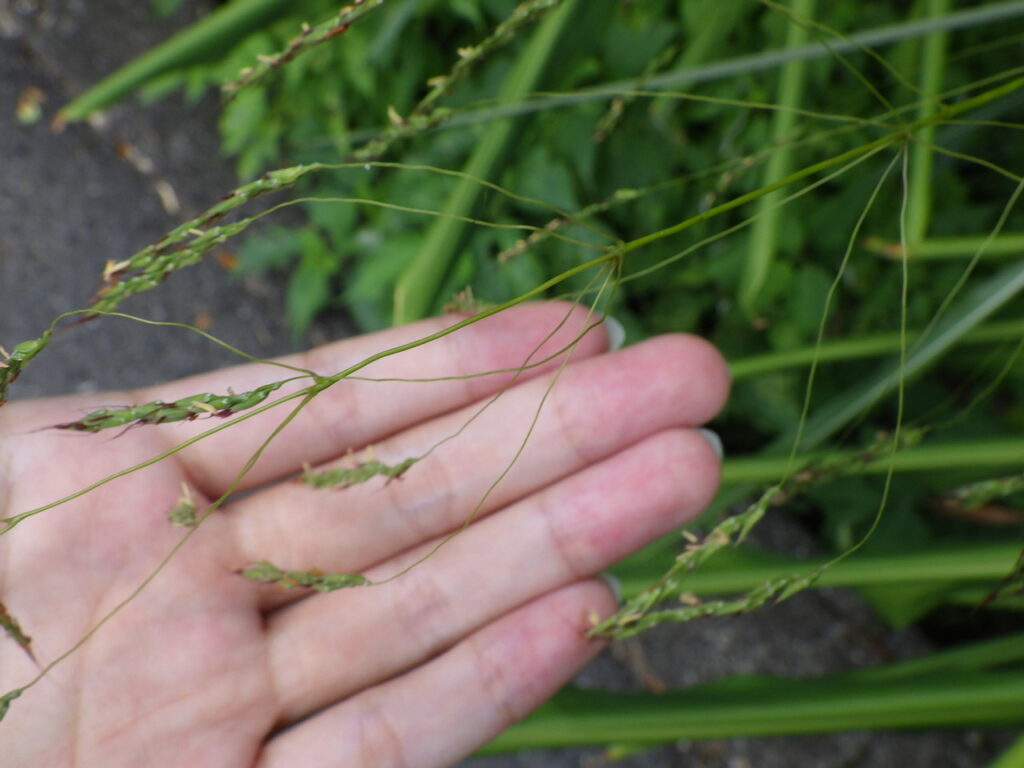
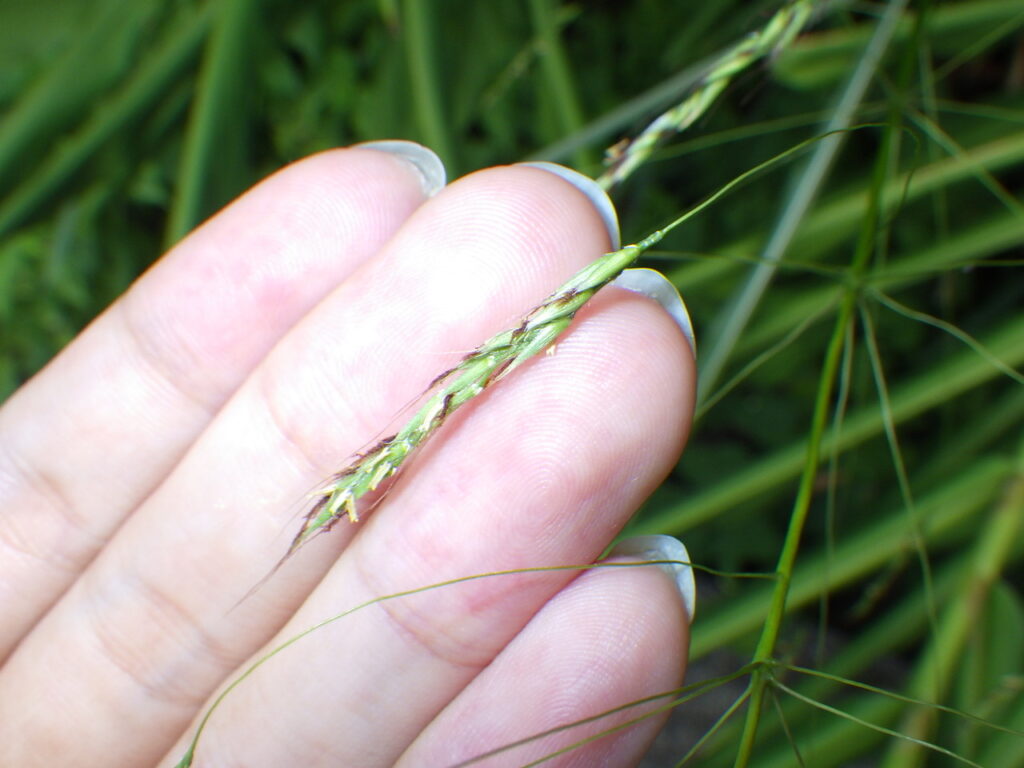
No. 1088.1 Microstegium vimineum f. willdenowianum
This is an annual plant. The culms creep along the ground, producing adventitious roots at the base. The leaf blades are lanceolate. The inflorescence consists of 1 to 3 spreading racemes, with stalked and sessile spikelets arranged in pairs. The spikelets are 4 to 6 mm long, with long hairs on the stalk, and awns 8 to 15 mm long extend from the glume. Flowering occurs around October. It is distributed in Hokkaido (southern part), Honshu, Shikoku, Kyushu, and the Ryukyu Islands; as well as Korea, China, Central Asia, India, and Malaysia. It grows in forests, grasslands, roadsides, and at the edges of rice paddies. *Himeashiboso f. willdenowianum * closely resembles *Himeashiboso*, but the spikelets either lack awns or have short awns that do not extend beyond the spikelet, and the spikelets are slightly smaller, 3.5 to 5.5 mm long.
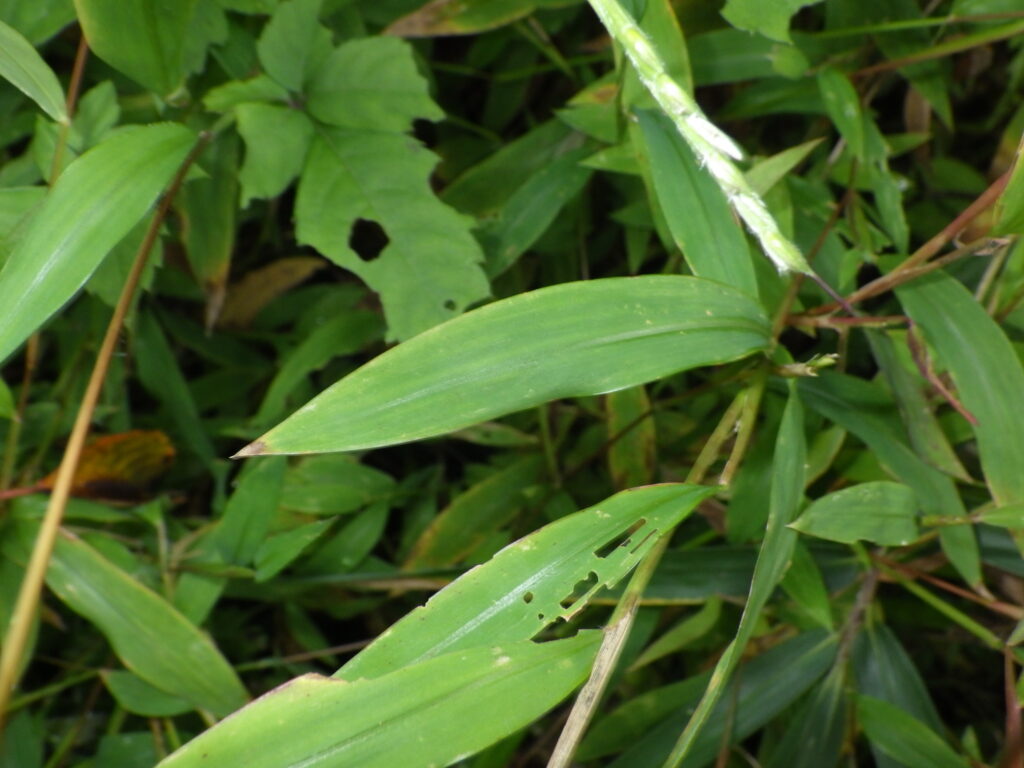
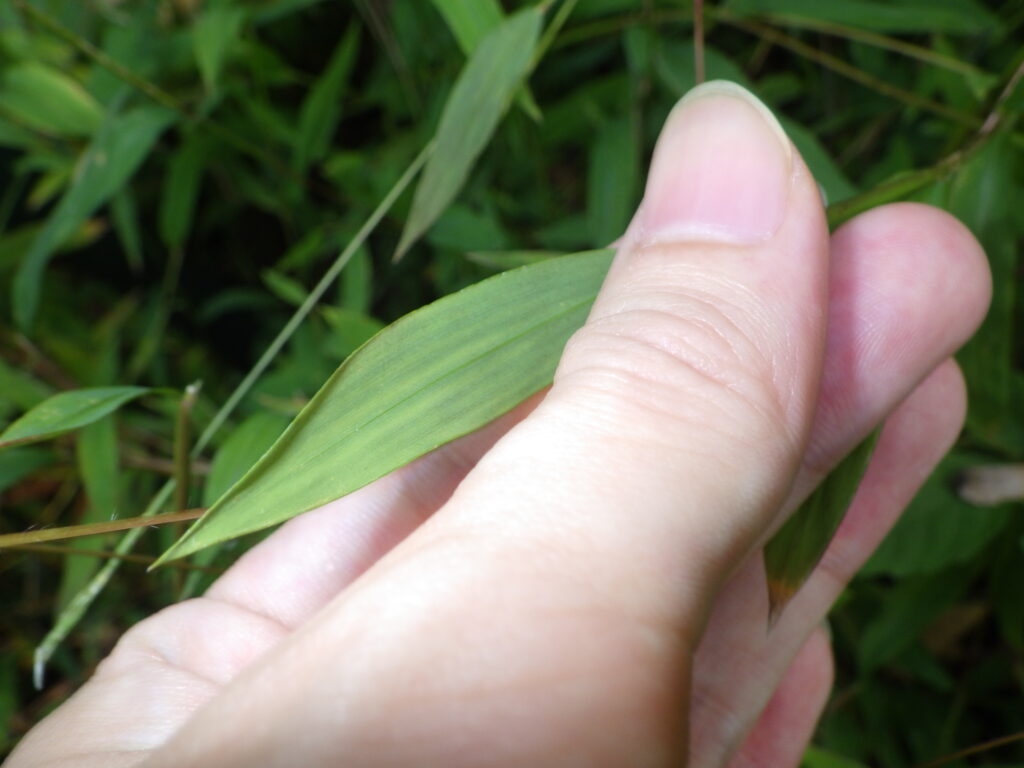
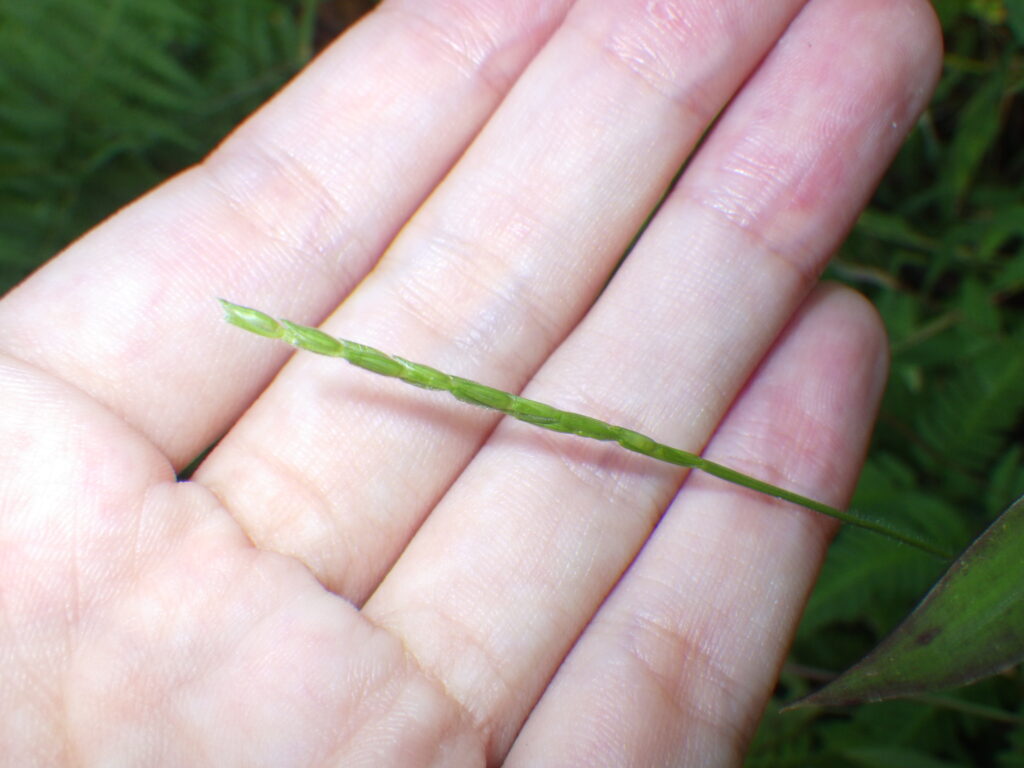
No. 1093 Corn (Zea mays subsp. mays var. saccharata)
Also known as corn, corn, millet, or nanban. An annual plant. It grows tall and sturdy. The culm can reach a height of about 4.5m, and suckers develop at the base. The leaves are arranged in two rows, and the leaf sheaths overlap each other. Unlike many other grasses, a major characteristic is that it produces unisexual spikelets, similar to the Coix genus. The male spikelets are clustered in a long terminal raceme, forming a panicle. The female spikelets are axillary, arranged in rows on a thickened inflorescence axis in a spike-like manner, enclosed in several large leaf-like bracts, and have a long style. The female inflorescence has many pistils that extend long like threads from the involucre (silks). The silks capture the pollen of the stamens. The stamens consist of spikelets, each spikelet containing two florets. The fruit is used as an edible vegetable. When it first arrived in Japan, it was called "Tang" (唐) because it came from China, or "Nanban" (南蛮) because it came from the south. The origin of maize subsp. mays is ancient; molecular phylogenetic analysis using genes and radiocarbon dating of archaeology have revealed that it originated in southern Mexico about 9,000 years ago through the domestication of ssp. parviglumis, a type of teosinte (a general term for wild species of the genus Zea) that is distributed in many parts of Mesoamerica from Mexico to Central America (Panda et al., 2020). This domestication is thought to have occurred only once. In ssp. parviglumis, the male spikelets and fruits are small and the pericarp is hard, but in maize, they have evolved to be large and soft for human consumption. In addition, the fruit is completely enclosed by leaf-like bracts to prevent it from falling off, and even if the leaf-like bracts are rolled up and the fruit is exposed, it will not fall off (Inagaki, 2018). This indicates that it has evolved to the point where it cannot grow wild and is convenient for human harvesting. Maize spread early on to North America via a northward route and to South America via a southward route, and was widely cultivated throughout the Americas (Fukunaga, 2009). As a result, it became a staple food in the Mayan and Aztec civilizations, and, paired with kidney beans as a source of protein, supported civilization by producing surplus crops. The Inca Empire also cultivated it on a large scale by constructing terraced farmlands. On the other hand, compared to wheat and barley, the significant morphological changes brought about by the domestication of sorghum took time, and some believe this was a factor in the time lag in social and cultural development between the Eurasian and American continents (Diamond, 1997). Its spread to Europe began when it was brought from Cuba to Spain upon the discovery of the New World (there are various theories), and it is one of the Columbian Exchanges. Over the next 30 years, it spread to France, Italy, Turkey, and even North Africa, and became widespread throughout Africa during the 16th and 17th centuries. In Asia, it was introduced by the Portuguese in the early 16th century, and spread to China via India and Tibet, or via Turkey and Iran. In Japan, var. indurata was first brought by the Portuguese to Nagasaki in 1579 (Tensho 7), but var. saccharata was introduced to Hokkaido from the United States in the early Meiji period and was widely cultivated in Hokkaido. Different varieties have different uses: dent corn (var. indentata) is used for livestock feed, starch (cornstarch), and ethanol production; flint corn (var. indurata) is used for food, livestock feed, and industrial raw materials; sweet corn (var. saccharata) is for food; popcorn (var. everta) is used as a raw material for popcorn snacks; waxy corn (var. seratina) is used as a substitute for glutinous rice and as a processing raw material; and soft corn (var. amyrae-saccharata) is for food. Corn is processed into products such as cornmeal, corn grits, corn flour, and cornstarch, and is used in a variety of dishes including masa (a type of bread) in Central America, tortillas (a type of masa), tacos (tortillas topped with various ingredients), popcorn, cornbread and cornflakes in North America, chicha (a type of alcoholic beverage) in South America, polenta in Italy, mamaliga in Eastern Europe, ugali in East Africa, corn tea in Korea, and corn soups in various countries. In Japan, it is often used in steamed corn, grilled corn, and salads. It can also be used to produce bioethanol.
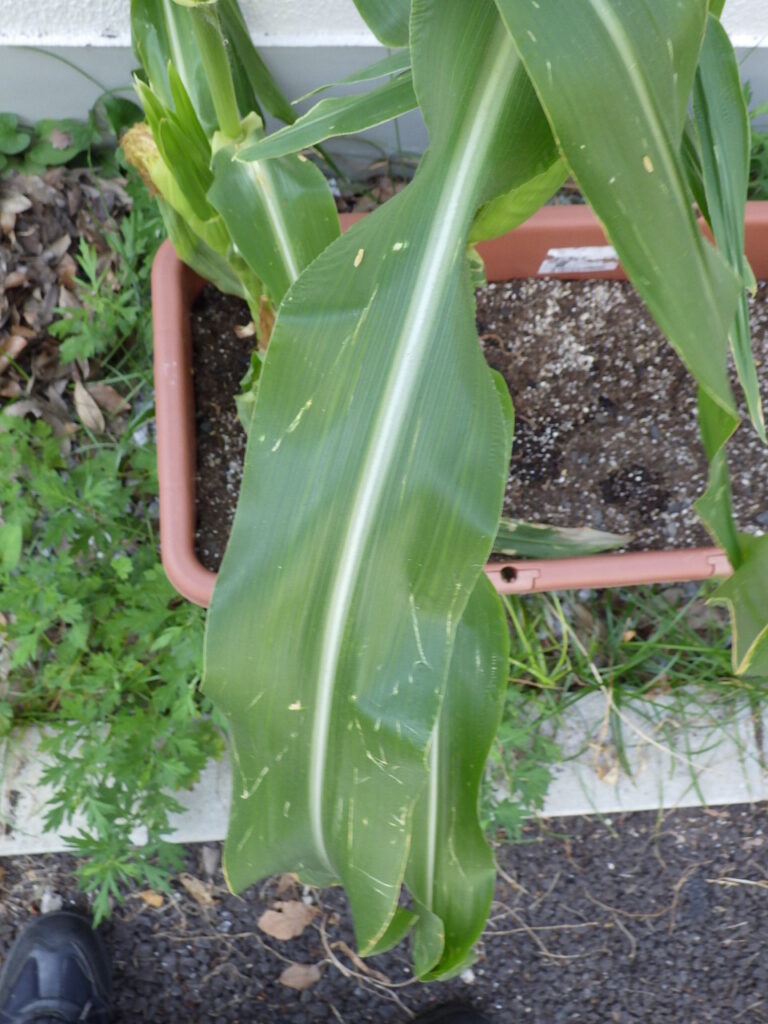
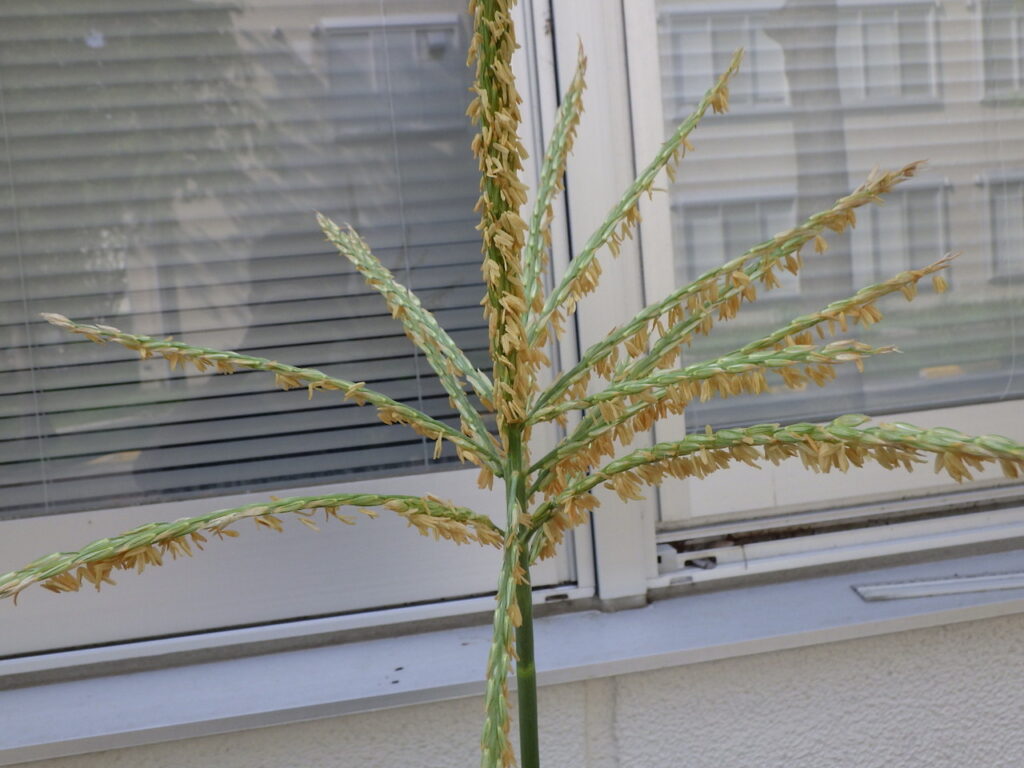
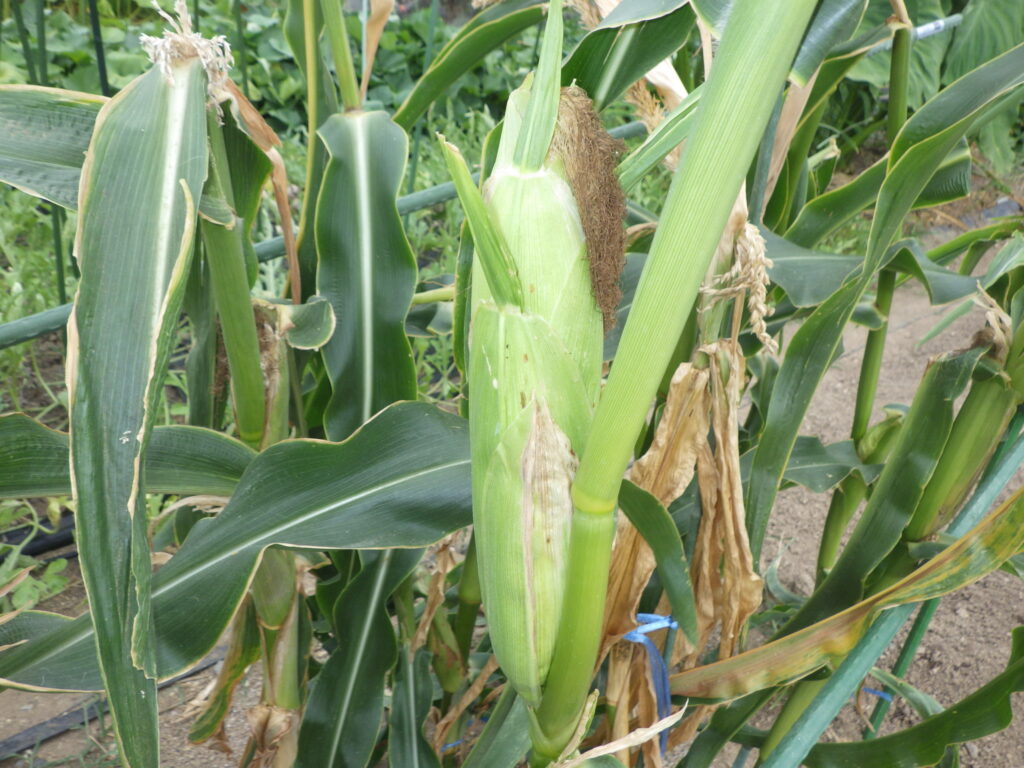
No.1094 Juzdama Coix lacryma-jobi
This is an annual plant that grows to a height of 2 meters. Its leaves can reach a width of 4 cm. Inflorescences are borne in the leaf axils of the upper few nodes. The modified leaf sheaths of the involucral bracts, known as Job's tears, are smooth and glossy. Occasionally, short leaf blades may be attached to these Job's tears. It flowers from August to October. It is a naturalized plant native to tropical Asia and has naturalized throughout Japan. It grows in waterside areas such as riverbanks. In particular, the variety with large fruits and thick enamel coatings is called Job's tears var. maxima. The cultivated variety, Job's tears var. ma-yuen, has longitudinal grooves on its Job's tears and its inflorescences droop.
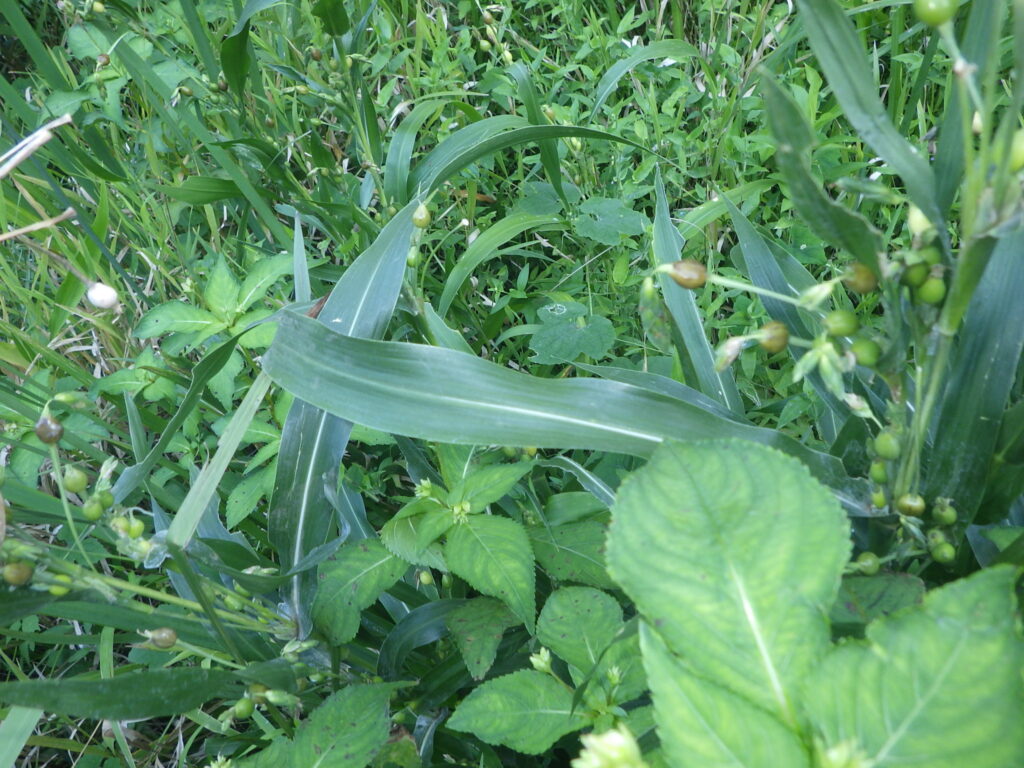
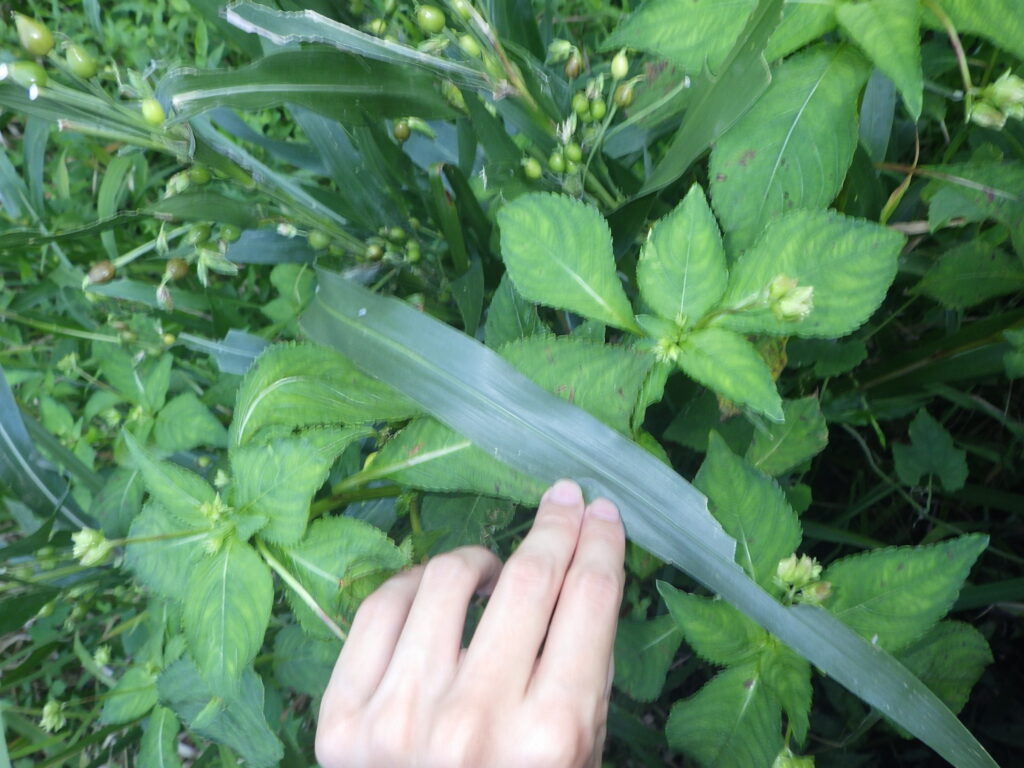
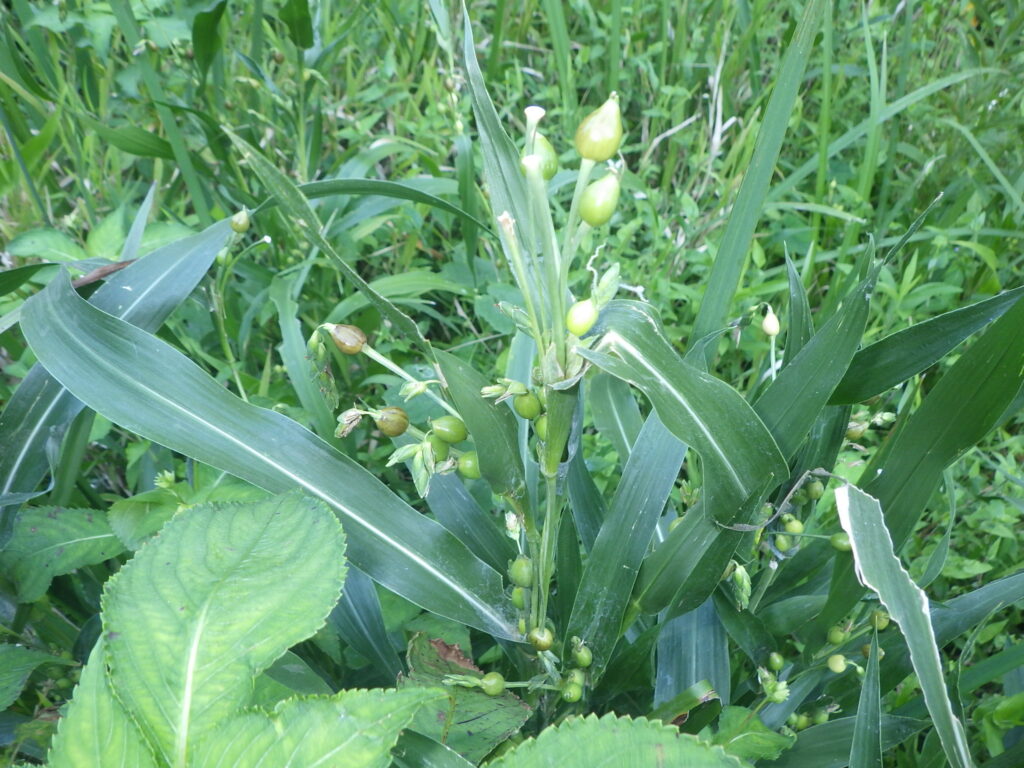
No. 1098 Phragmites australis
A perennial plant. Also known as ashi. Originally, its name was ashi, and it was called "ashi" until the Heian period, but because it sounded similar to "ashi" (bad), it was changed to "yoshi" (good). The rhizome is thick and long, creeping through the mud, and the nodes are almost hairless. The leaf blades tend to droop slightly from the culm. It flowers from August to October. The spikelets are 1.0 to 1.7 cm long. It is widely distributed in warm temperate to temperate regions of the world, including Hokkaido, Honshu, Shikoku, Kyushu, and the Ryukyu Islands. It grows in stagnant water areas such as riverbanks, fallow fields, and wetlands. In Japan, ashikari (reed cutting) is performed after the rice harvest and has become a local custom. It is used in various ways as a light and strong pole, and in particular, blinds made from reed stems are called yoshizu and have been used since ancient times. It is also ideal as roofing material and is still used today along with pampas grass for re-thatching thatched roofs of houses.
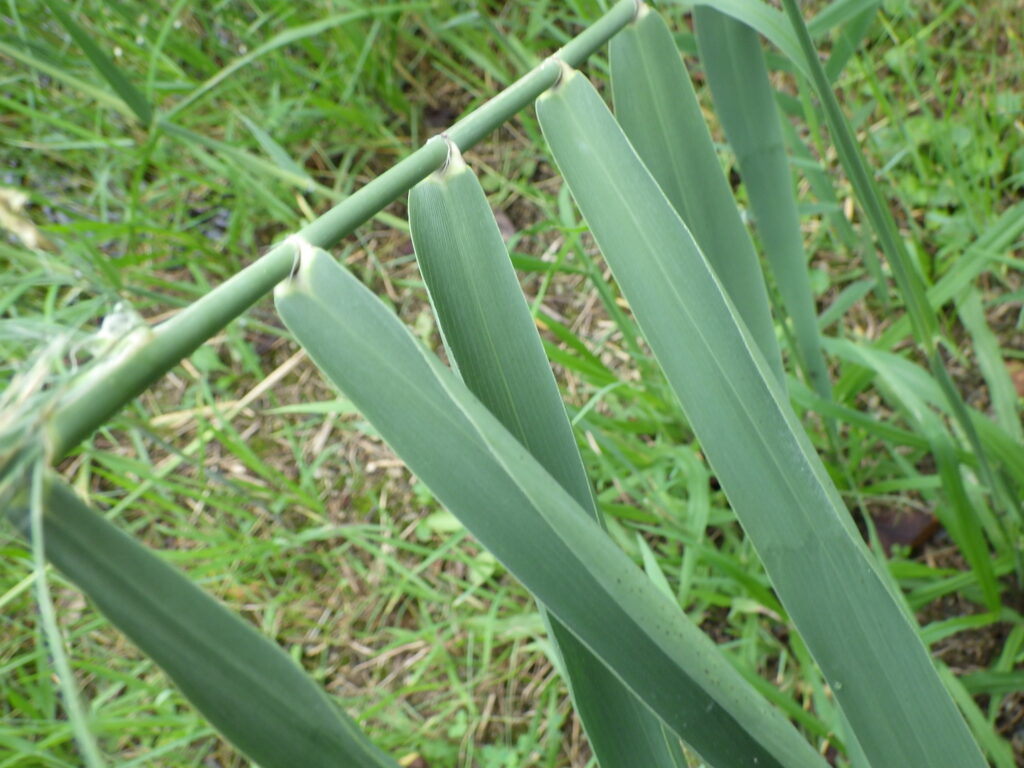
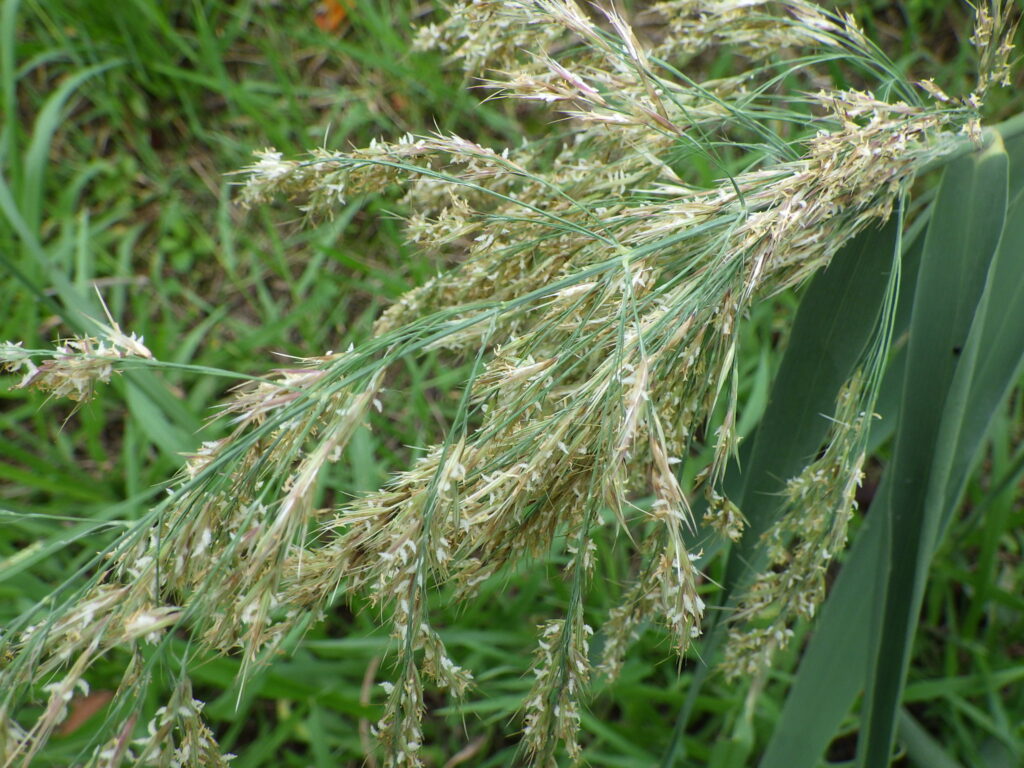
No.1102 Arundo donax 'Versicolor'‘
This is a large perennial herb that often forms colonies. The culms grow to a height of 2-4m. The spikelets are 7-14mm long, with glumes of roughly the same length. The lemma is 6-10mm long, membranous, and semi-transparent. The awns are short, 1-3mm long. It can be distinguished from the genus Phragmites by the long hairs on the back of the lemma and the presence of crescent-shaped leaf auricles. It flowers from July to October. It is distributed in Honshu (west of the Kanto region), Shikoku, Kyushu, the Ryukyu Islands, the Ogasawara Islands, Taiwan, India, and other parts of tropical Asia, as well as North America and the Mediterranean coast. Its habitat is limited to coastal areas and riverbanks. The variety with white stripes on the leaf blade is the horticultural variety 'Versicolor' (European bellflower), which sometimes escapes into urban areas.
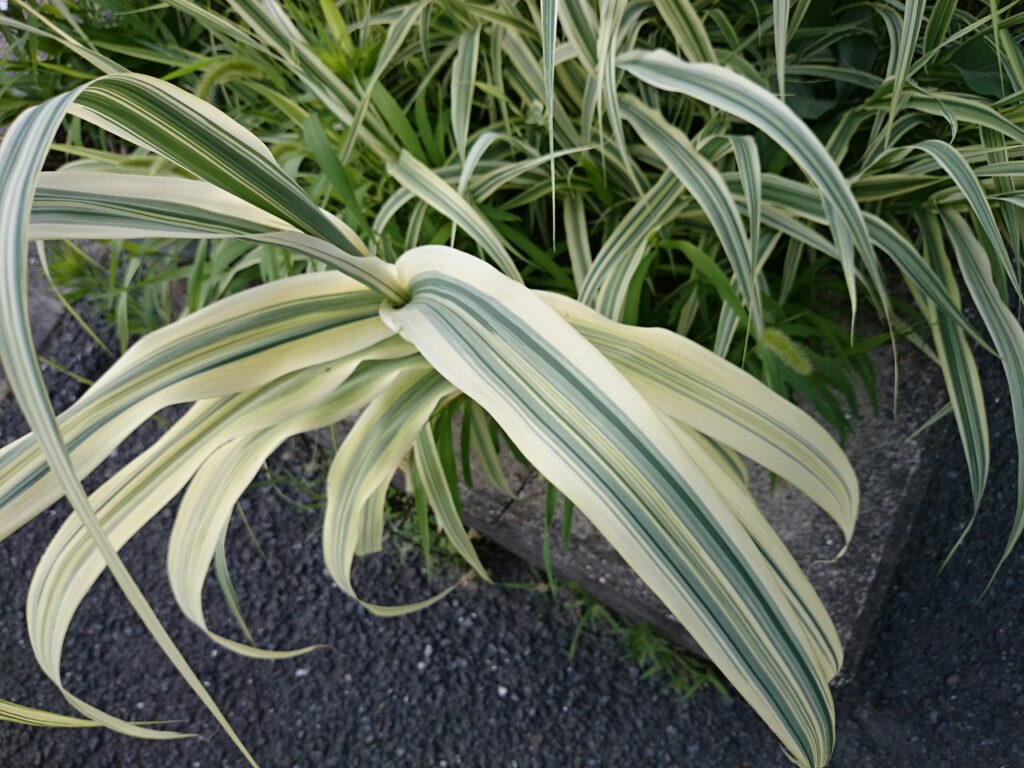
No. 1103 Cortaderia selloana
Also known as pampas grass, it is a perennial plant native to South America and cultivated for horticultural purposes in various countries, including Japan. There are instances of it becoming naturalized.
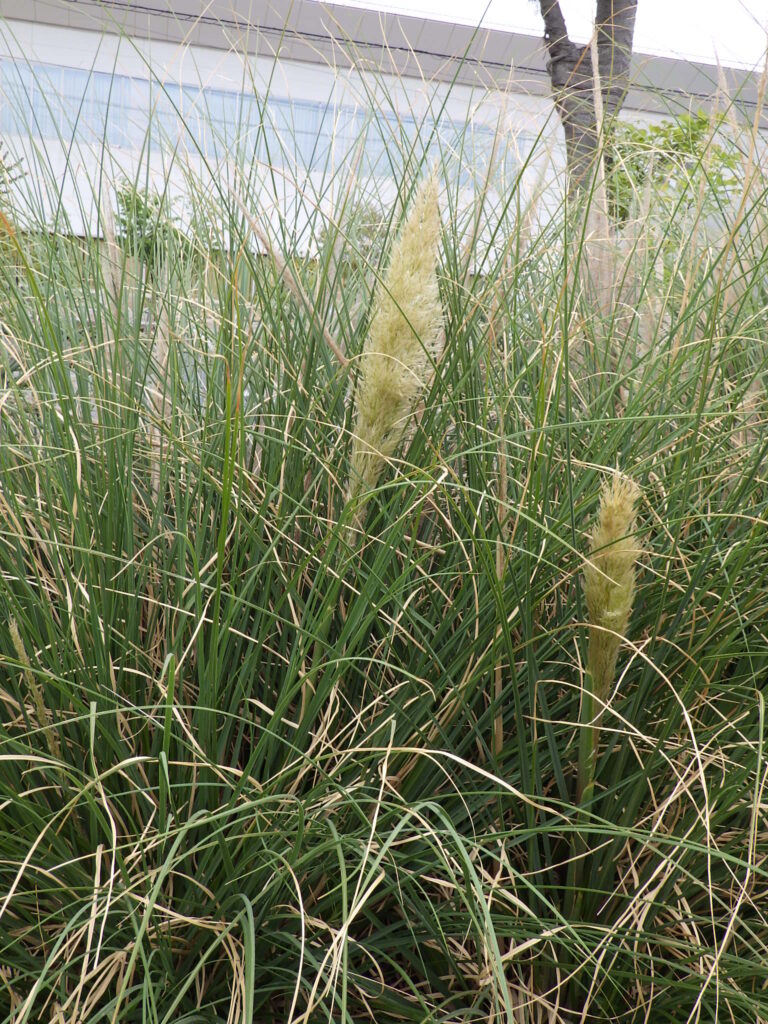
No.1105 Isachne globosa
A perennial herb. During the flowering season, the reddish-purple stigma of the pistil is conspicuous. The spikelets are pale green with a purplish tint and 2-2.2 mm long. The glands on the spikelet stalks are slightly swollen and pale yellow. The flowering period is from June to August. It is distributed in Hokkaido, Honshu, Shikoku, Kyushu, the Ryukyu Islands, Malaysia, Australia, China, Taiwan, etc. It grows in clusters in wetlands and rice paddies.
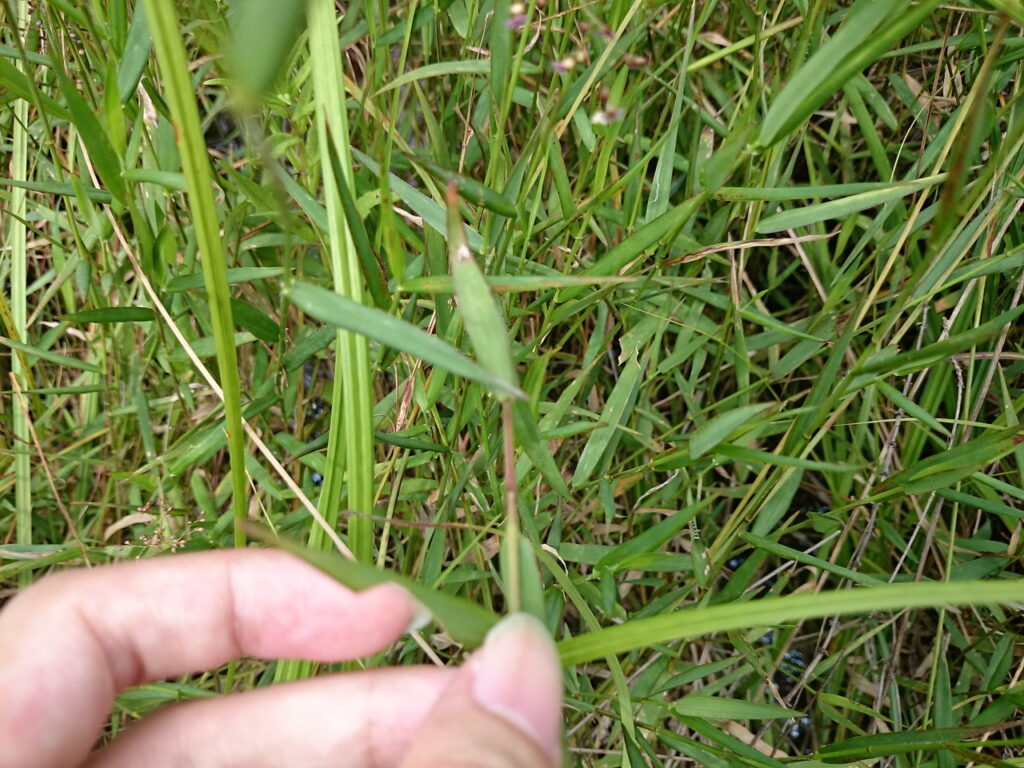
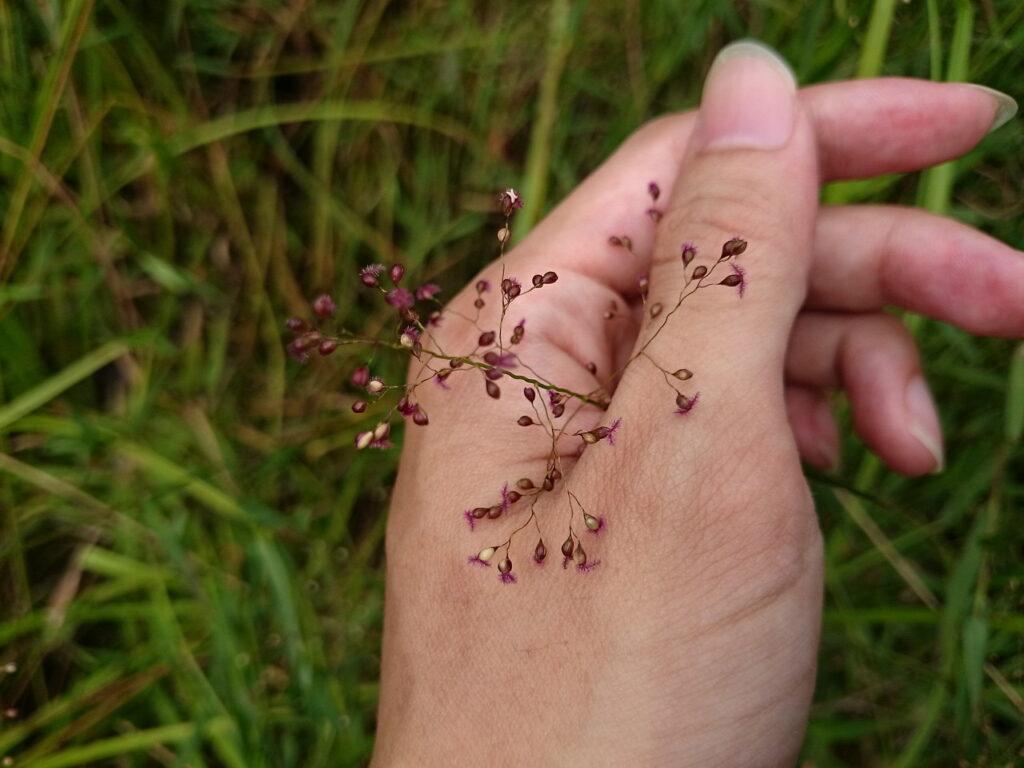
No.1108 Eragrostis ferruginea
This is a perennial herb. It is resistant to trampling and difficult to pull up. The culms grow in clumps, forming large clumps 30-80 cm tall. The panicles are widely spread, 20-40 cm long. The spikelets are 6-10 mm long and tinged with reddish-purple. The florets fall off sequentially from bottom to top, with the glumes remaining for a while. The flowering period is from August to November. It is a prehistoric naturalized plant, distributed in Honshu, Shikoku, Kyushu, China, Tibet, and Sikkim. It grows along roadsides, vacant lots, grasslands, wastelands, and riverbanks.
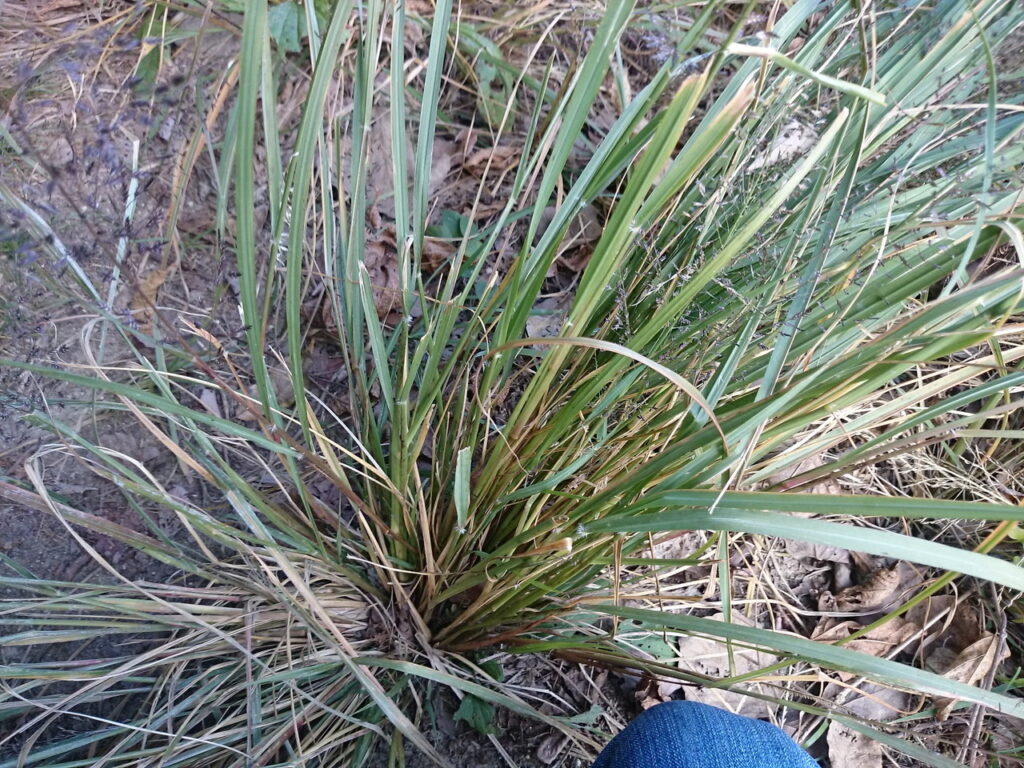
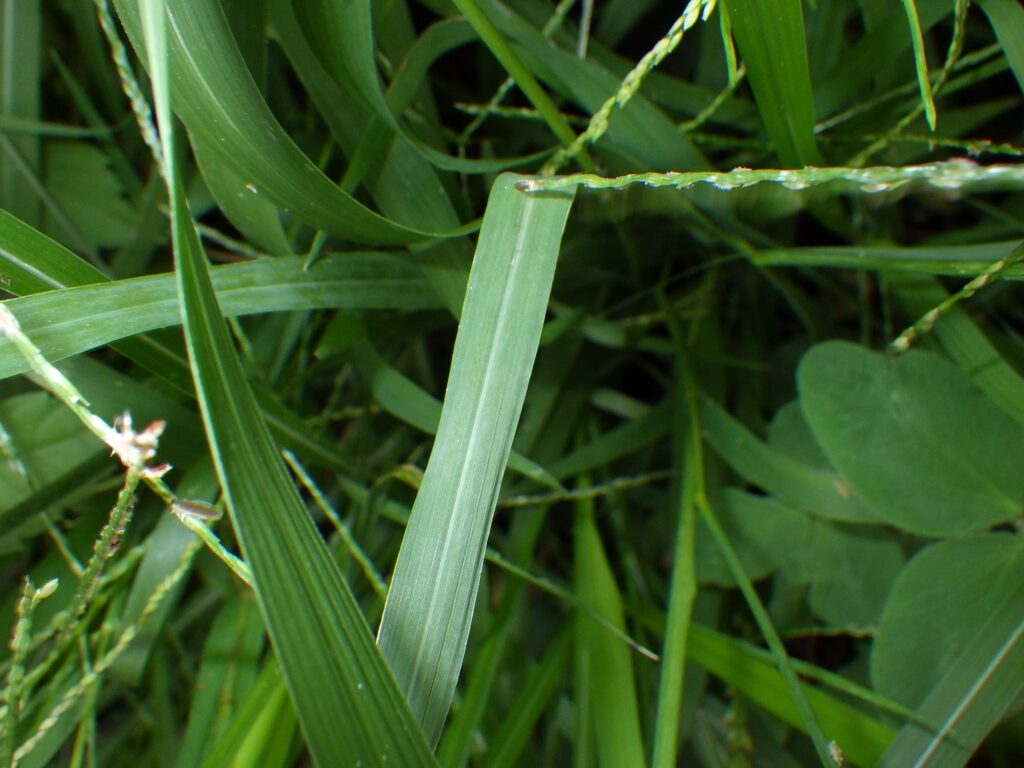
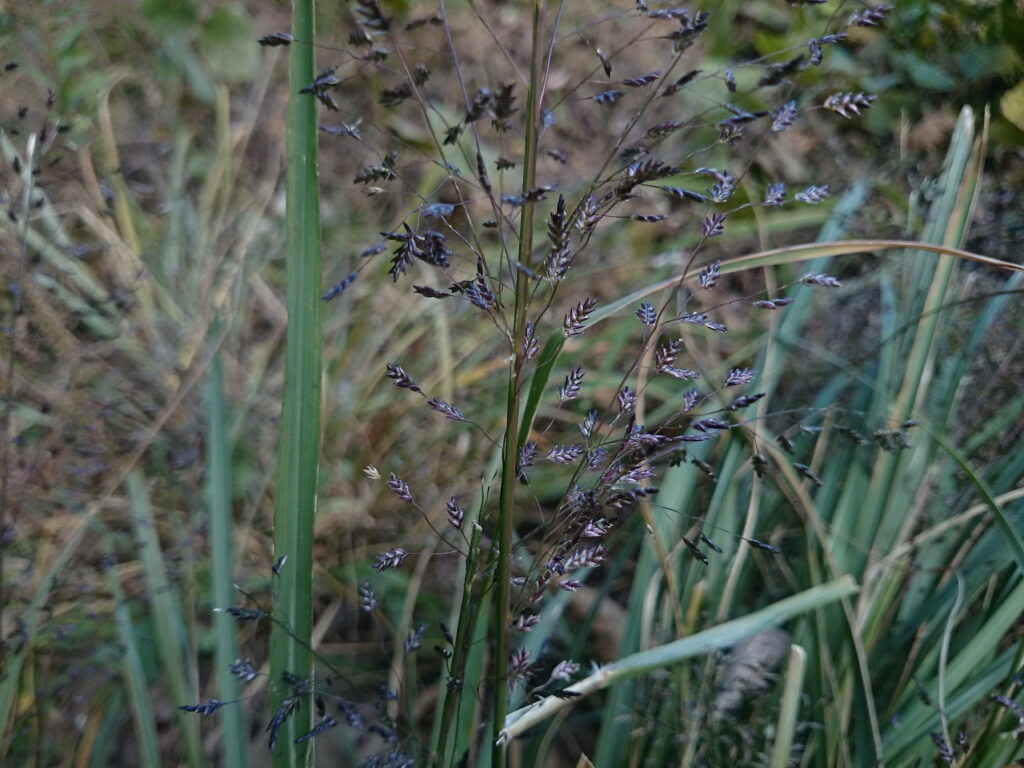
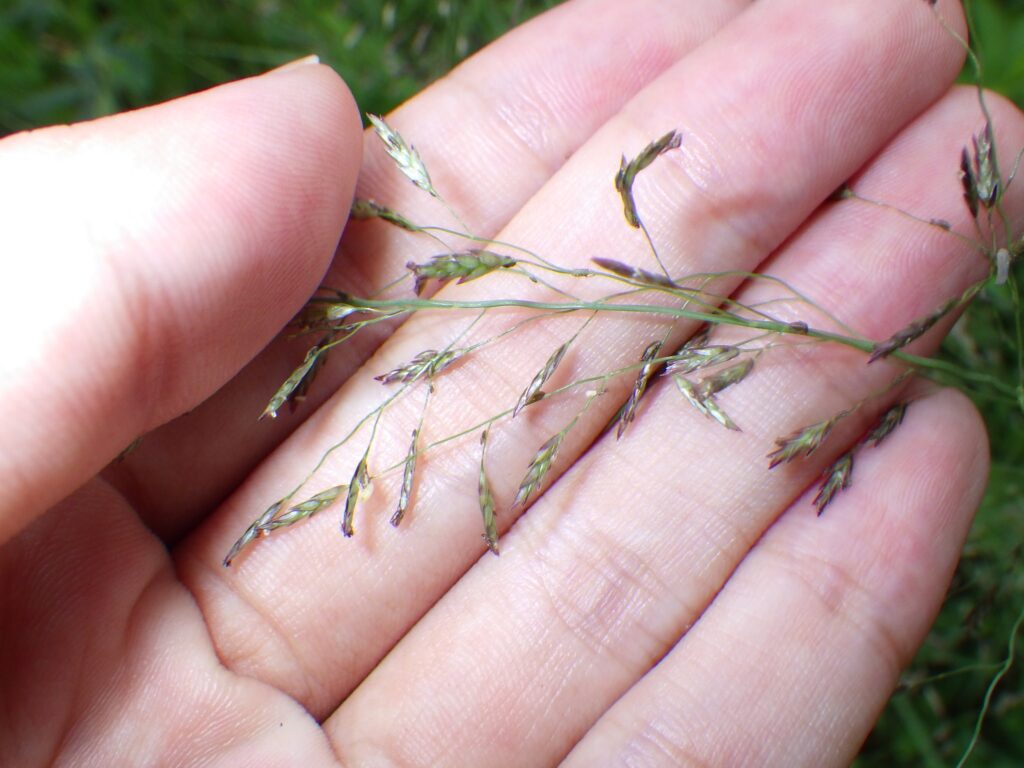
No. 1114 Eleusine indica
This is an annual plant. It grows to a height of 20-50 cm and is robust. The spikelets are arranged in two alternating rows on the flower stalk. There are 4-5 florets, which distinguishes it from the single florets of the similar-looking Digitaria and Cynodon genera. The surface of the seeds is wrinkled. It flowers from July to October. It is a prehistoric naturalized plant, distributed in Hokkaido, Honshu, Shikoku, Kyushu, and the Ryukyu Islands; and throughout the warm temperate to tropical regions of the world. It grows everywhere, including wastelands, grasslands, roadsides, and around houses.
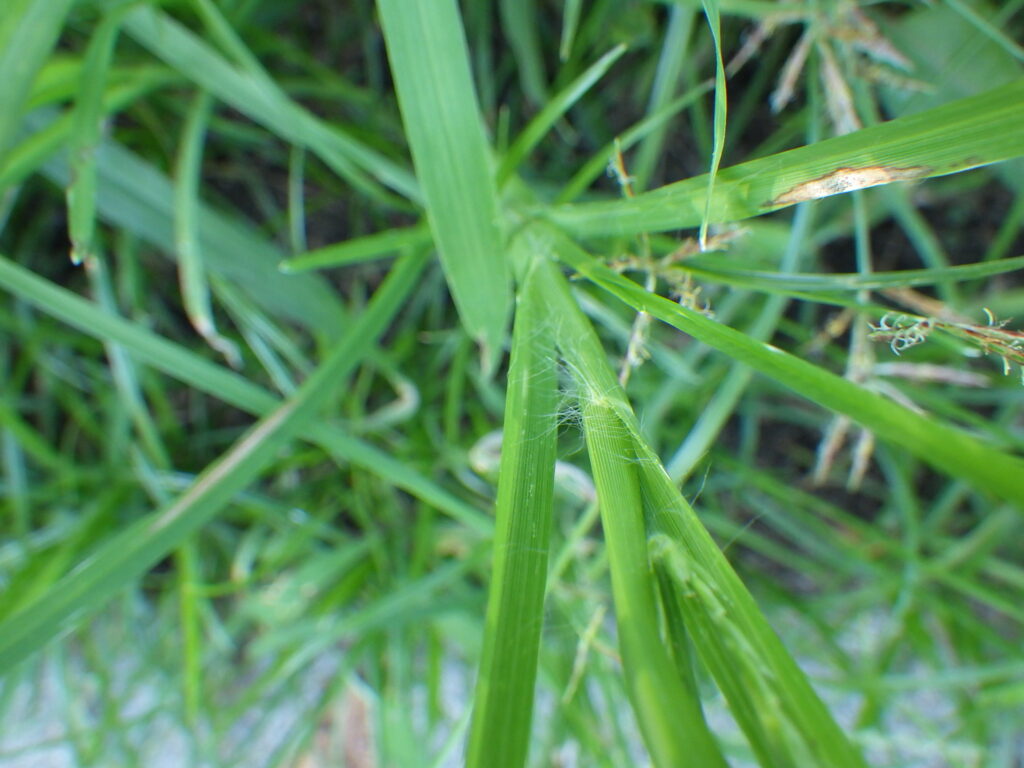
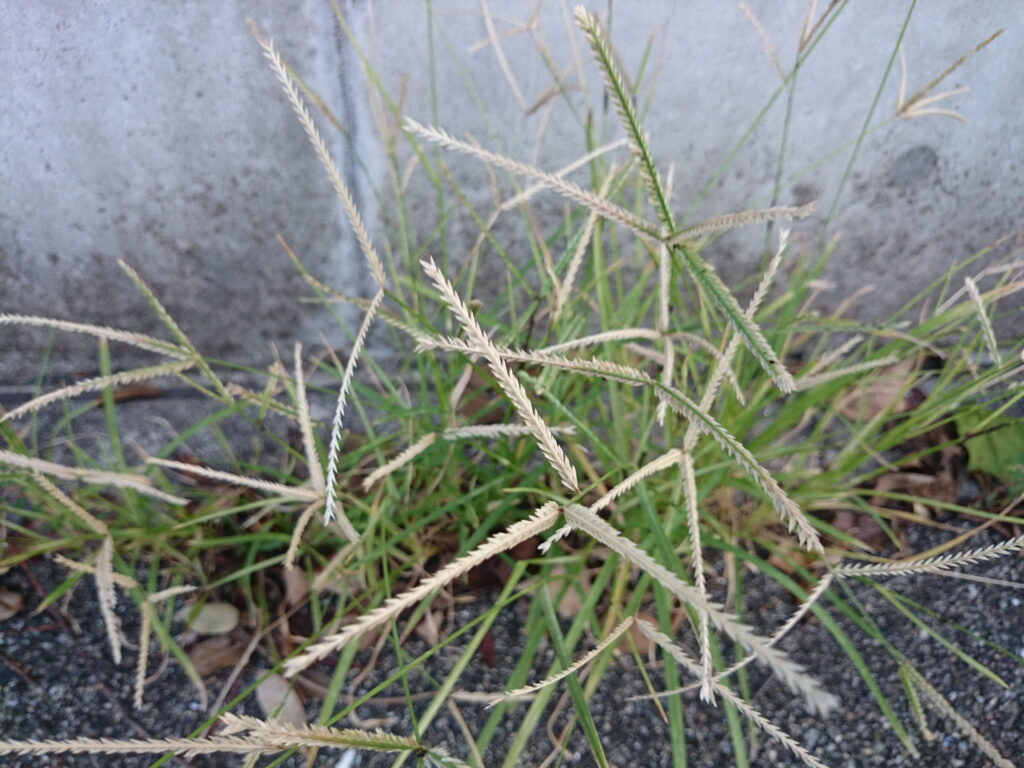
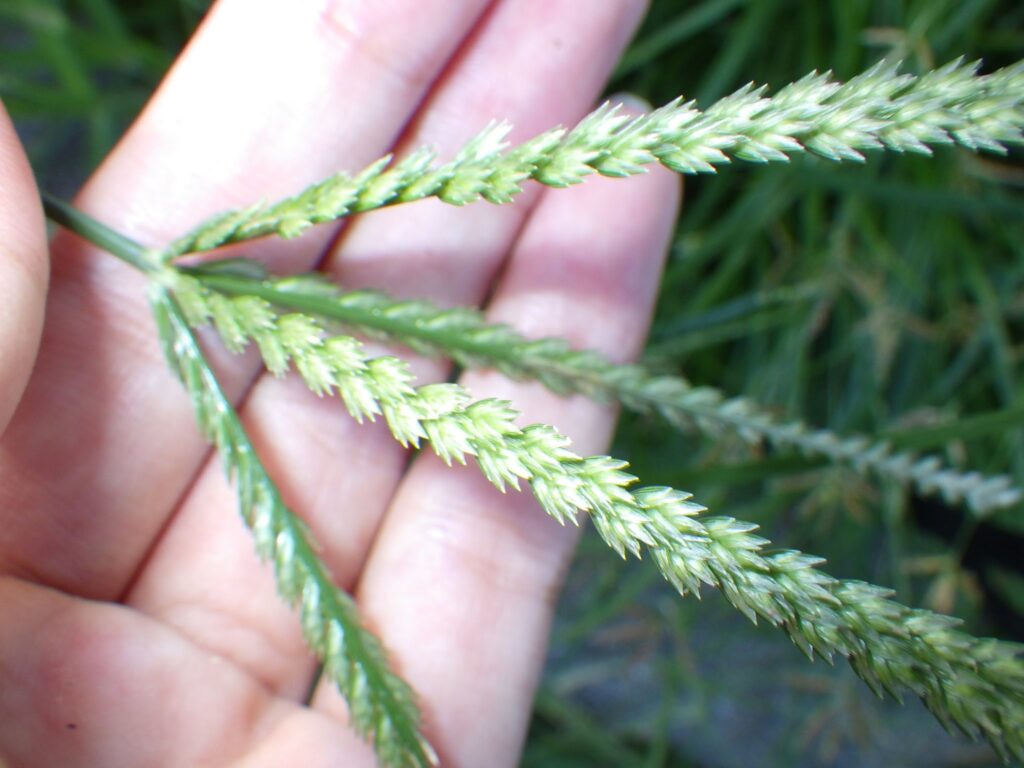
No. 1116 Cynodon dactylon
This is a perennial herb. The main culm creeps along the ground, and branches upright, bearing several palmately arranged carinae 3-5 cm long at the end of each culm. On the stolons, the internodes are short, and the next internode is elongated, resulting in three leaves growing close together. On the upright parts, short and long internodes alternate, making the leaves appear opposite. It flowers from June to September. It is distributed in tropical to temperate regions worldwide, including Hokkaido, Honshu, Shikoku, Kyushu, the Ryukyu Islands, and the Ogasawara Islands. It grows in bright open spaces, roadsides, and along footpaths.
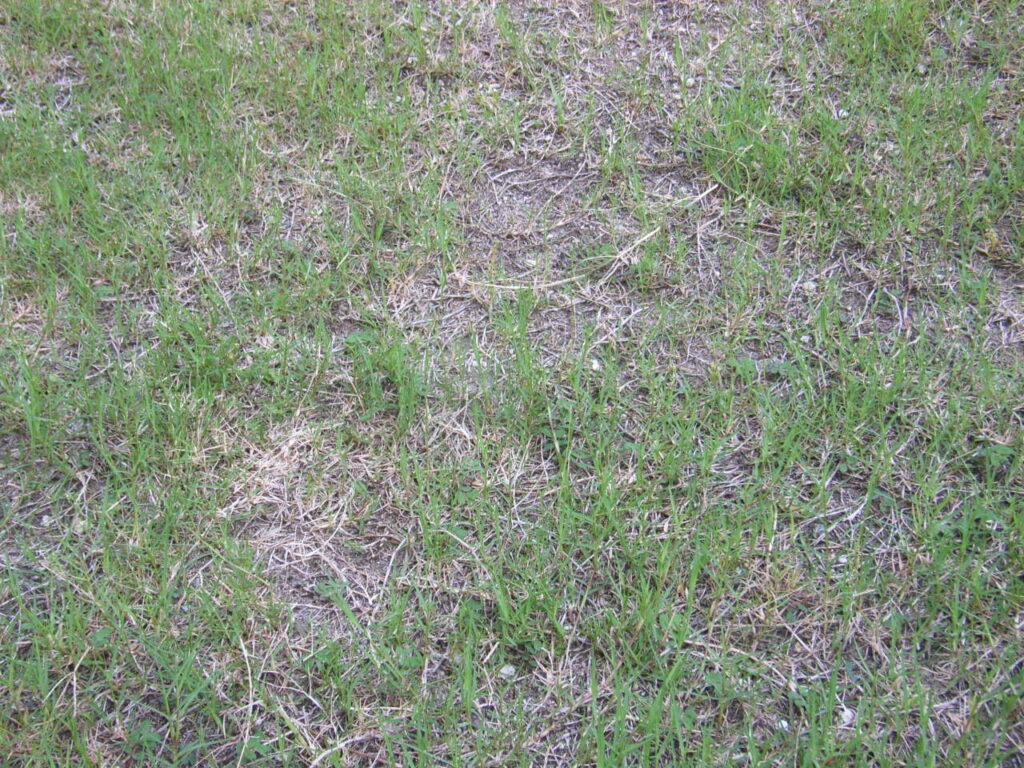
No.1122 Sporobolus fertilis var. fertilis
This is a perennial herb that grows in clusters. The inflorescence is 15-70 cm long, with short branches forming a spike along the central axis. The spikelets are 2-2.5 mm long and dull lead-green in color. It flowers from September to November. It is a prehistoric naturalized plant distributed in Honshu, Shikoku, Kyushu, and the Ryukyu Islands; as well as China, Taiwan, Southeast Asia, and India. It grows in grasslands, roadsides, riverbanks, and coastlines. The Kanagawa Prefectural Flora Survey Association (2018) states that there is a continuum of morphological variation between this species and *Purple Ragwort* var. * purpureosuffusus *, and that no boundary can be found in the specimens found in Kanagawa Prefecture.
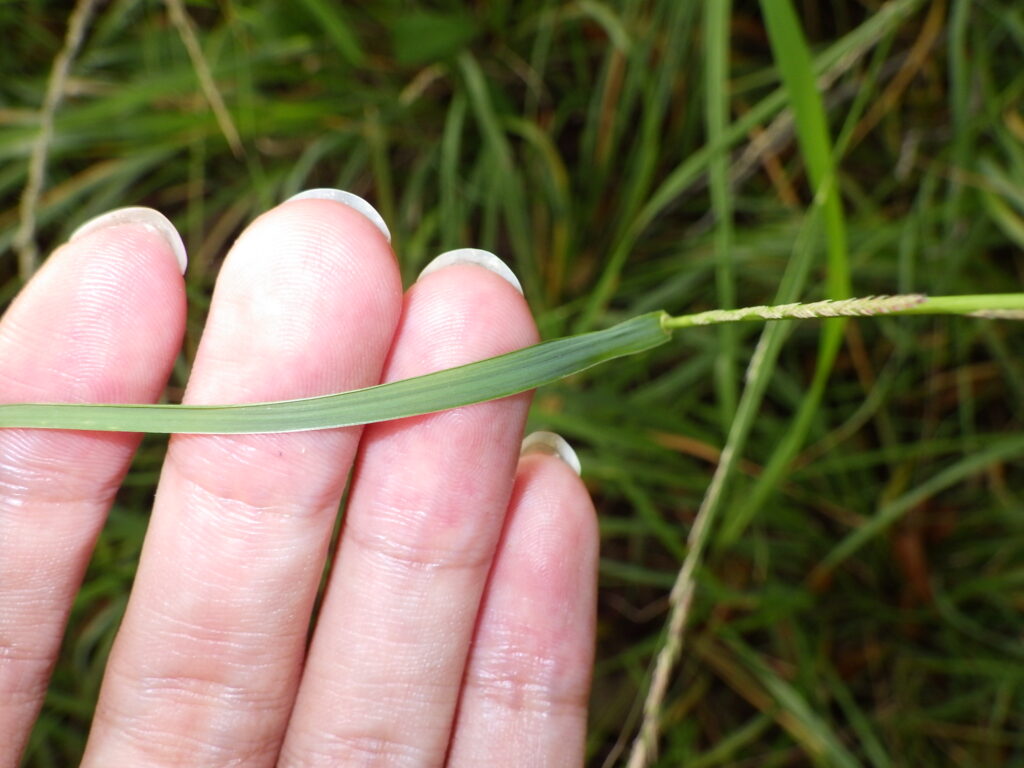
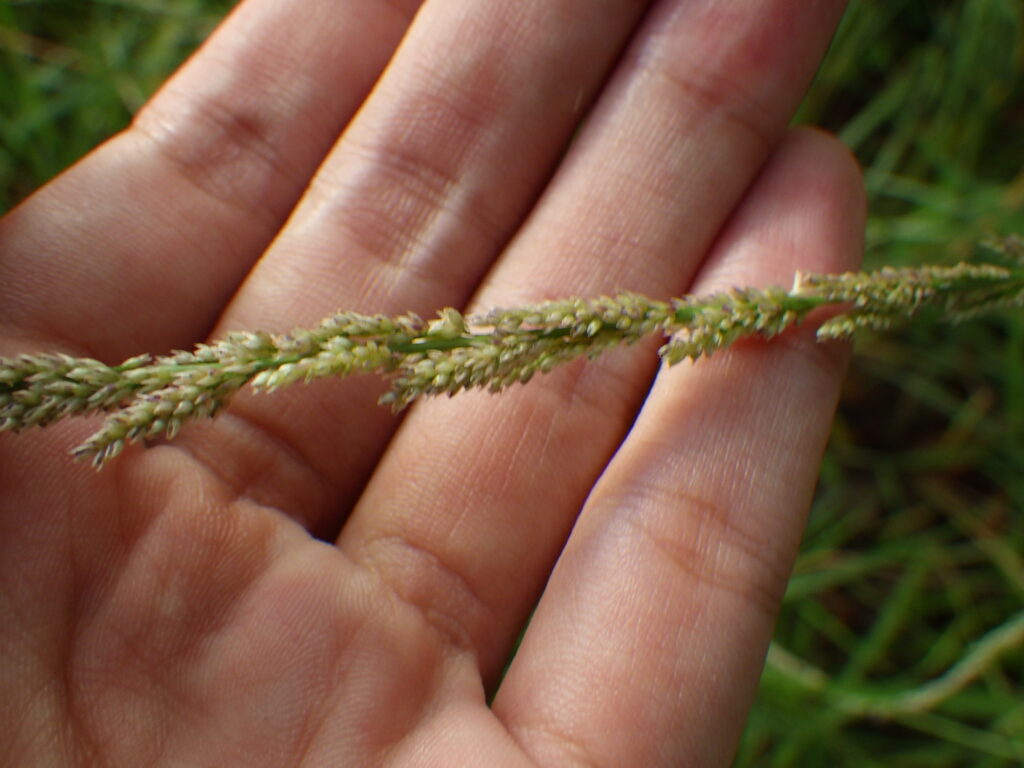
No. 1124 Zoysia japonica
A perennial herb. The leaf blades are sparsely covered with long hairs on both sides. The edges of the leaf blades are rough. It flowers from May to June. The tip of the second glume may have a short awn. It is distributed in Hokkaido, Honshu, Shikoku, Kyushu, the Ogasawara Islands, Korea, and China. It grows along roadsides and in grasslands.
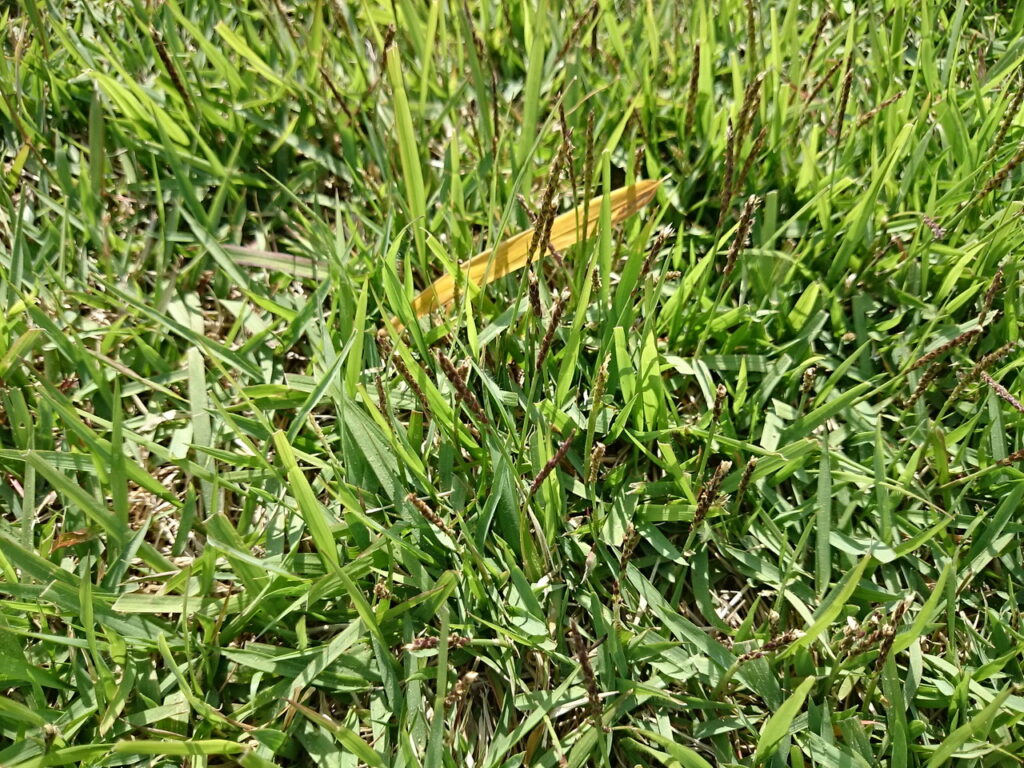
No. 1125 Zoysia macrostachya
This is a perennial herb. Its rhizome is underground, but it lacks creeping stolons. The leaf blades are spreading, with smooth margins. The inflorescence is partially enclosed by a leaf sheath with short leaf blades. It flowers from June to August. The spikelets are often tinged with purple. It is distributed in Hokkaido (southwestern part), Honshu, Shikoku, Kyushu, and Korea. It grows on sandy beaches along the coast.
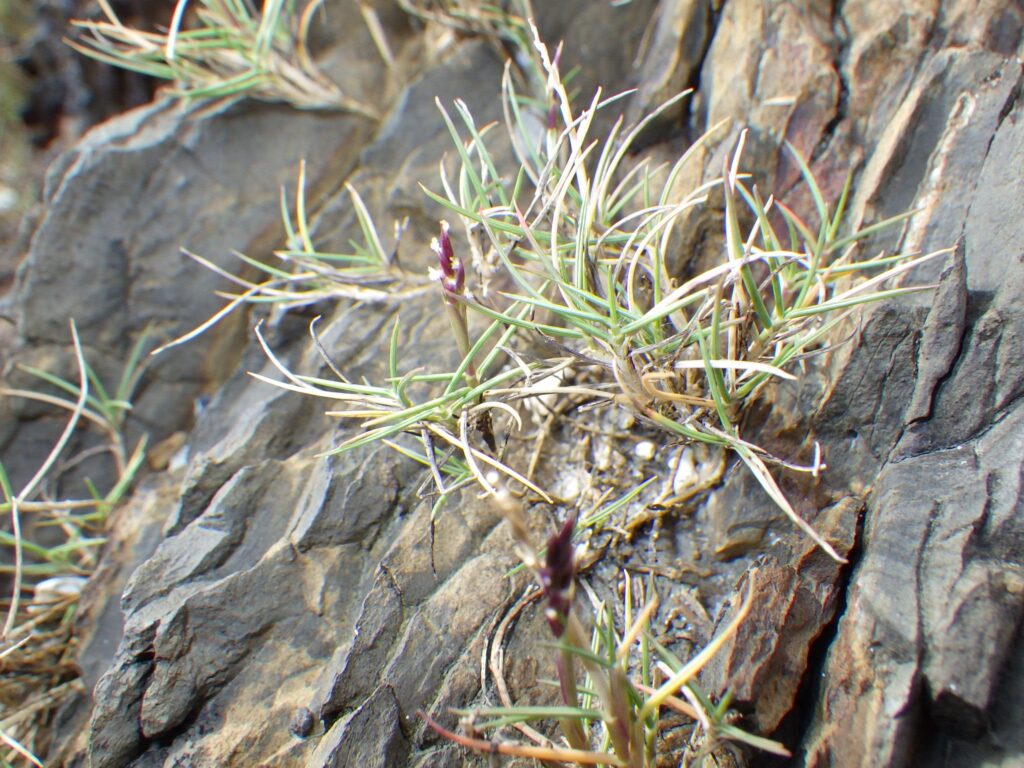
No.1125.a Zoysia pacifica
This is a perennial herb. Numerous erect stems emerge from the nodes of its stolons. The leaf blades are folded in half, are needle-like in shape, and have a U-shaped cross-section. The upper surface of the leaves is covered with short, spine-like hairs. It flowers from May to July. It is distributed in Kyushu, the Ryukyu Islands, the Ogasawara Islands, Southeast Asia, the Mariana Islands, and Hawaii.
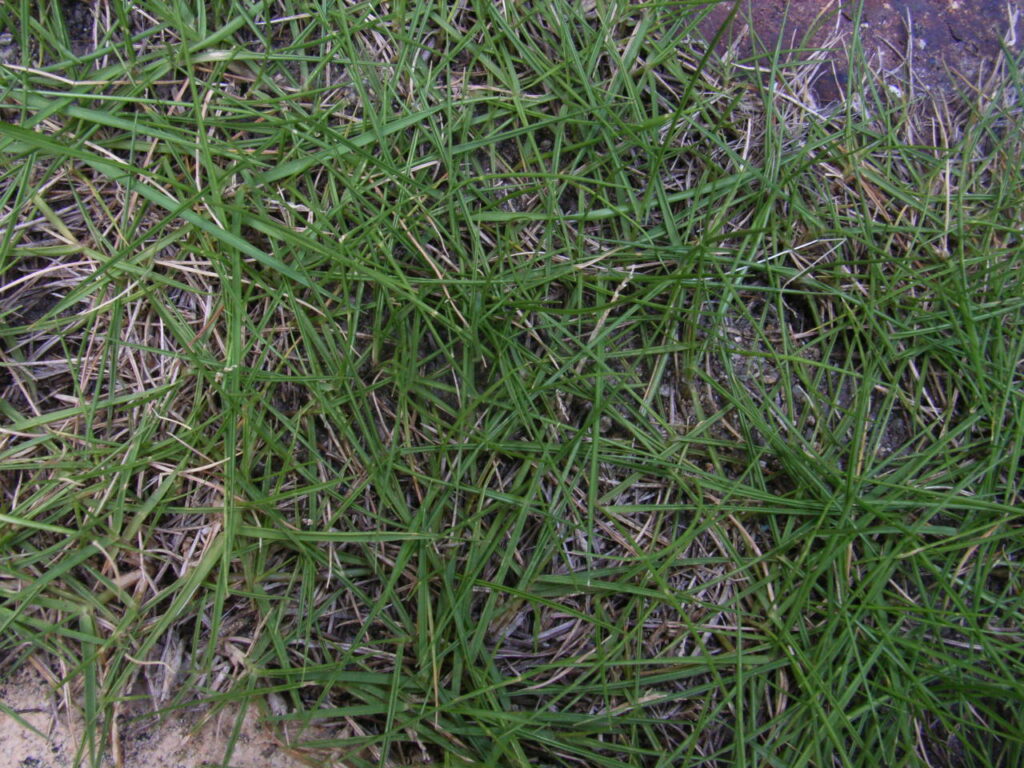
References
Baum, BR, YANG, JL, Yen, C., & Agafonov, AV 2011. A taxonomic synopsis of the genus Campeiostachys Drobov. Journal of Systematics and Evolution 49(2): 146-159. https://doi.org/10.1111/j.1759-6831.2010.00106.x
Chemisquy, MA, Giussani, LM, Scataglini, MA, Kellogg, EA, & Morrone, O. 2010. Phylogenetic studies favor the unification of Pennisetum, Cenchrus and Odontelytrum (Poaceae): a combined nuclear, plastid and morphological analysis, and nomenclatural combinations in Cenchrus. Annals of botany 106(1): 107-130. https://doi.org/10.1093/aob/mcq090
Diamond, JM 1997. Guns, germs, and steel: the fates of human societies. W.W. Norton, New York. 480pp. ISBN: 9780393038910 [=2012. Guns, germs, and steel, Volume 1. Sōshisha, Tokyo. ISBN: 9784794218780]
Fukunaga, Kenji. 2009. Plant domestication: The origin of maize—the teosinte hypothesis and genes involved in domestication. National Museum of Ethnology Research Report 84: 137-151. https://doi.org/10.15021/00001144
Ghersa, CM, Martinez-Ghersa, MA, Satorre, EH, Van Esso, ML, & Chichotky, G. 1993. Seed dispersal, distribution and recruitment of seedlings of Sorghum halepense (L.) Pers. Weed Research 33(1): 79-88. https://doi.org/10.1111/j.1365-3180.1993.tb01920.x
Higashimura, Yumiko. 2013. *Pennisetum alopecuroides*. Journal of the Japanese Society of Landscape Architecture 38(4): 459. http://www.jsrt.jp/pdf/dokomade/38-4_chikarashiba.pdf
Ito, Misako. 2014. Sorghum halepense (L.) Pers.. Grass and Greenery 6: 32-39. https://doi.org/10.24463/iuws.6.0_32
Inagaki, Hidehiro. 2018. Plants that Greatly Shaped World History. PHP Institute, Tokyo. 217pp. ISBN: 9784569840857
Kanagawa Prefecture Flora Survey Association. 2018. Kanagawa Prefecture Flora 2018 (Electronic Edition). Kanagawa Prefecture Flora Survey Association, Odawara. 1803pp. ISBN: 9784991053726
Kobayashi, Masaaki. 2007. From Flower to Seed: The Science of Seed Dispersal. National Rural Education Association, Tokyo. 247pp. ISBN: 9784881371251
Kobayashi, Mikio. 2017. Bamboo Subfamily Plants of Japan. Hokuryukan, Tokyo. 435pp. ISBN: 9784832610040 https://rnavi.ndl.go.jp/mokuji_html/028103774.html
Kobayashi, Hiroshi. 1988. Weeds in barnyard millet and foxtail millet fields: Exploring the primordial forms of millet cultivation through mimicked and accompanying weeds. In: Sasaki, Takaaki and Matsuyama, Toshio (Eds.), The Birth of Field Cultivation Culture: An Approach to Jomon Agriculture Theory (pp. 165-187). Japan Broadcasting Publishing Association. ISBN: 9784140091227
Panda, S., Borkataki, S., Reddy, MD, & Nanda, SP 2020. Domestication and evolution of maize. International Journal of Chemical Studies 8(1): 1834-1838. https://doi.org/10.22271/chemi.2020.v8.i1aa.8530
Raju, MVS 1984. Studies on the inflorescence of wild oats (Avena fatua). Morphology and anatomy of the awn in relation to its movement. Canadian Journal of Botany 62(11): 2237-2247. https://doi.org/10.1139/b84-304
Stinson, RH & Peterson, RL 1979. On sowing wild oats. Canadian Journal of Botany 57(11): 1292-1295. https://doi.org/10.1139/b79-157
Sudo, Y., Ogasawara, K., Nishio, T., and Ichimae, N. 2004. Weed vegetation formed in gaps within paved roads. Weed Research 49(1): 8-14. https://doi.org/10.3719/weed.49.8
Sugimoto, Jun-ichi. 1973. A Comprehensive Identification Guide to Japanese Herbaceous Plants II: Monocotyledons. Inoue Shoten. 630pp.
Tada, Taeko. 2004. Wildflowers living in mixed forests of rural woodlands: Life history strategies and reproductive characteristics. Forest Science 42: 38-45. https://doi.org/10.11519/jjsk.42.0_38
Yasuda, Kentaro. 2018. On Barnyard Millet, a paddy field weed distributed in Japan. Agriculture and Horticulture 93(9): 799-807. https://agriknowledge.affrc.go.jp/RN/2010922652.pdf
Y., Nakayama S., Shibuya T., and Kawana Y. 1994. Summary of contents of "Weed Research" Vol. 33, Nos. 1-3. Weed Research 39(3): 200-205. https://doi.org/10.3719/weed.39.200