The Proteaceae family consists entirely of evergreen plants, mostly woody, with some herbaceous. The flowers are bisexual, with a tubular perianth (without distinction between sepals and petals) that is four-lobed at the tip, each bearing a single stamen. There is a single pistil with a superior ovary, which develops into fruits such as nuts. The inflorescence can be raceme, spike, or capitate. With a few exceptions, they are known for their ability to adapt to phosphorus deficiency by altering the shape of their roots. These roots secrete organic acids into the soil, dissolving and absorbing phosphorus in forms that plants normally cannot utilize, allowing them to grow even in phosphorus-poor environments. The family comprises 75-80 genera and approximately 1600 species. Currently, many species thrive particularly in South Africa and Australia. Only one species, Helicia cochinchinensis, grows wild in Japan. They are distributed in South America, South Africa, India, Australia, New Caledonia, and New Zealand, which were once part of the supercontinent Gondwana. Furthermore, the discovery of a large amount of Proteaceae pollen in Cretaceous coal from the South Island of New Zealand suggests that this family developed on the Gondwana supercontinent (Gondwana plants).
This article provides a comprehensive, field guide-style introduction to plants belonging to the Proteaceae family.
The photos are replaced as soon as better ones are taken. Also, while the identification is done by the author, please note that if there are any misidentifications, they may be changed without notice.
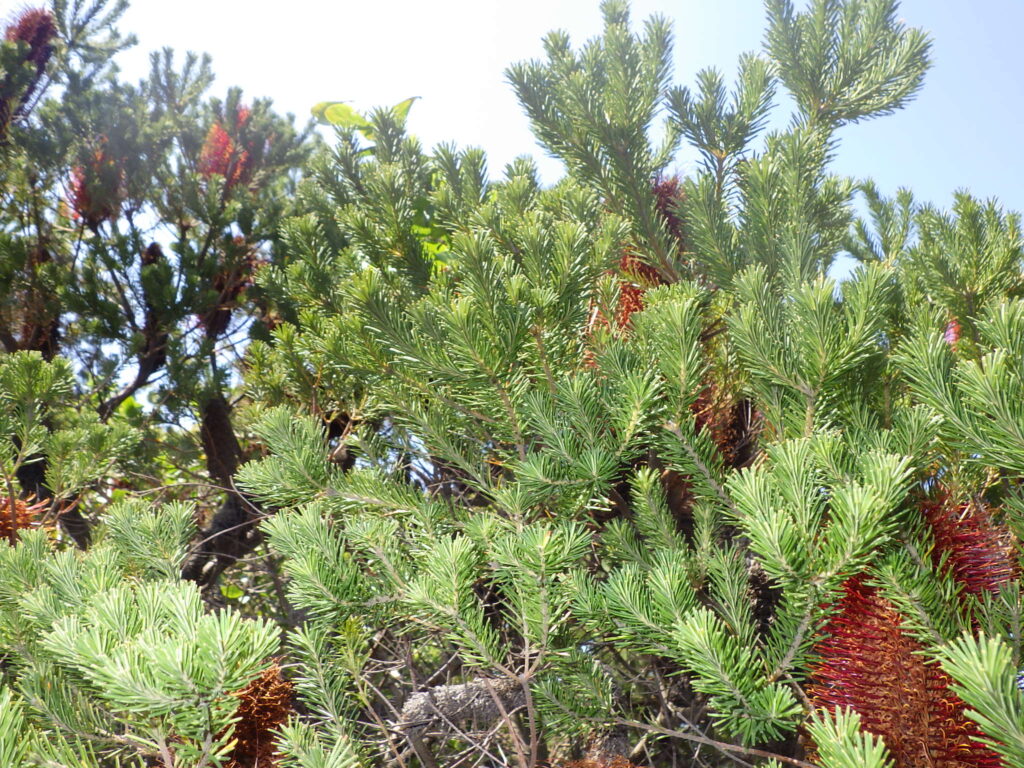
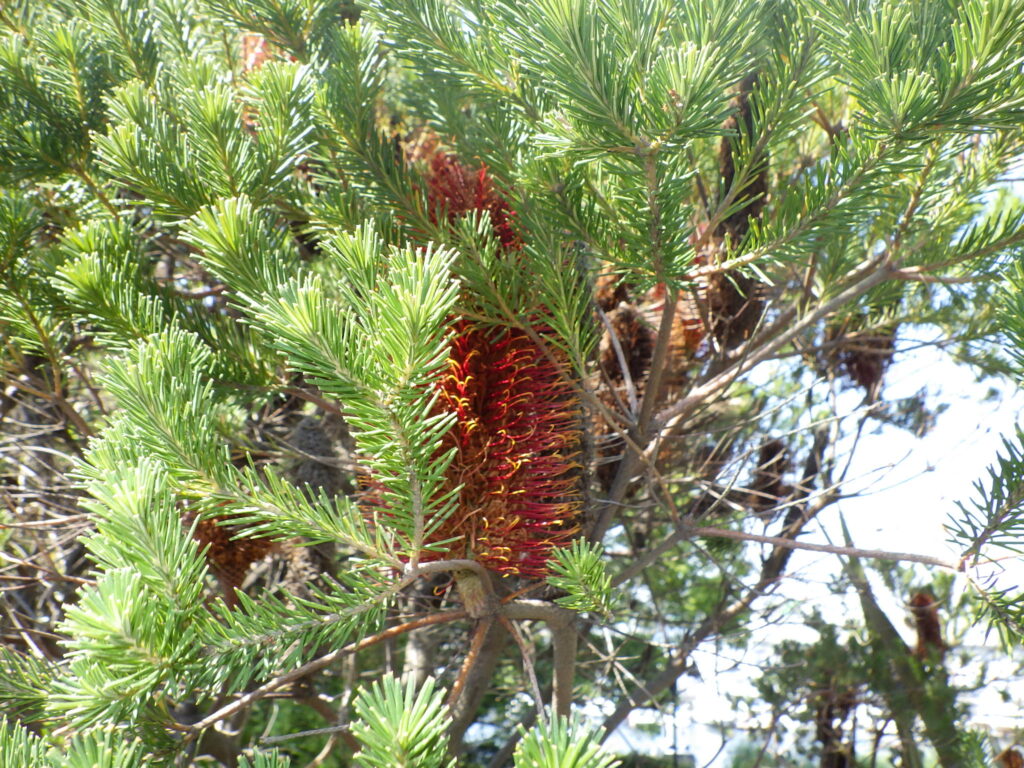
No.1323.a Heath Banksia ericifolia
It is a tree or shrub (Spencer et al., 2002), reaching a height of about 5m. The bark is smooth to corky. The leaves are alternate or mixed, 1-2cm long and about 1mm wide, with a blunt or two-toothed tip, and the margins curve downwards, covering the entire leaf. The spike inflorescence is about 22cm long. The perianth is 1.5-3cm long, golden-brown, and the flowering period is from late autumn to spring. There are numerous fruits, each 1.5-2cm long. It is distributed in Australia (New South Wales). Pollination is carried out by birds, with honeyeaters and white-eyes visiting the flowers, but introduced European honeybees also visit (Paton & Turner, 1985). The fruits release seeds due to bushfires, which frequently occur on the Australian continent (Bradstock & Myerscough, 1981).
No.1323.b Banksia integrifolia
The scientific name is Banksia integrifolia. It is a shrub (Spencer et al., 2002). It grows to over 15m in height, is fast-growing, and long-lived. The bark is finely fissured, and the leaves are arranged in a spiral of 3-5, narrowly ovate-elliptical in shape, mostly with irregular serrations, and the underside is covered with white hairs. It flowers from January to June. The spike inflorescence is mainly 5-10cm long and 6-7cm wide. The petals are pale yellow, and the style is curved or erect. There are many fruits, about 1.5cm long. It is distributed in Australia (coastal areas of Queensland, Victoria, and Tasmania) and grows in windy areas on capes. This species relies on honeyeaters and the southern fruit bat (Syconycteris australis) for pollination, with bats being considered important because they produce pollen at night through the dehiscence of nectar and anthers (Woodside & Pyke, 1995). Another study suggests that the non-flying dormouse (Cercartetus nanus) is also a pollinator (Evans & Bunce, 2000). Unlike other Banksia species, its seeds are released naturally at the end of summer when they mature, regardless of bushfires. However, for reasons unknown, a significant decline in population has been observed in the absence of bushfires, suggesting that bushfires are indeed necessary for this species (Price & Morgan, 2003).
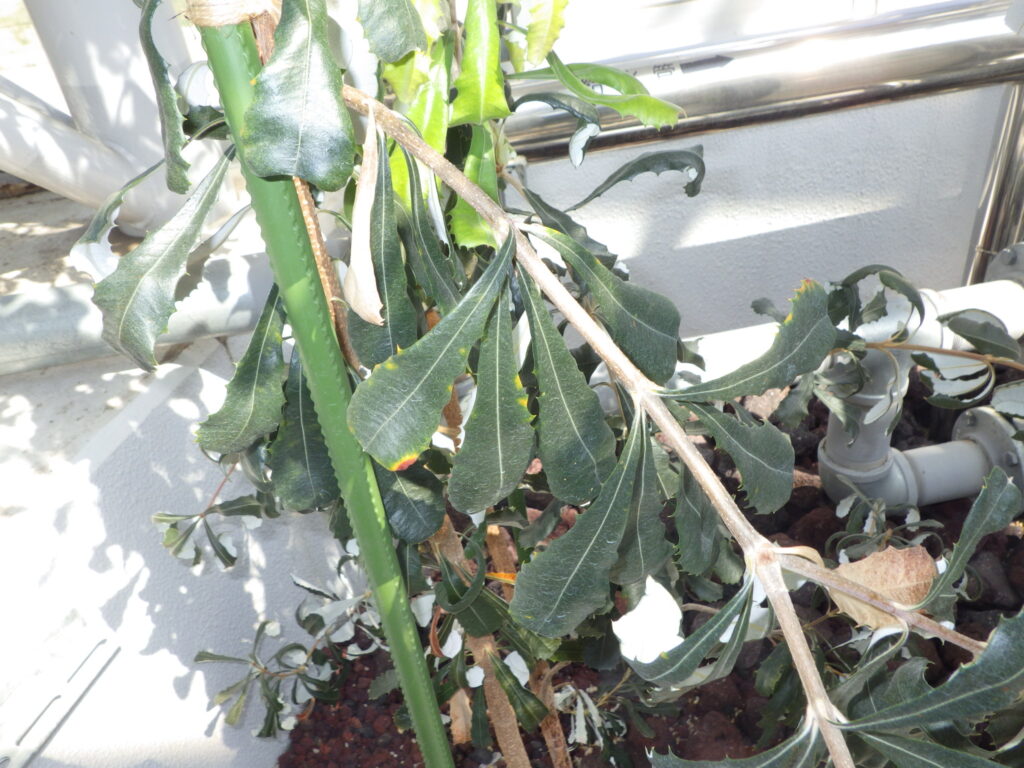
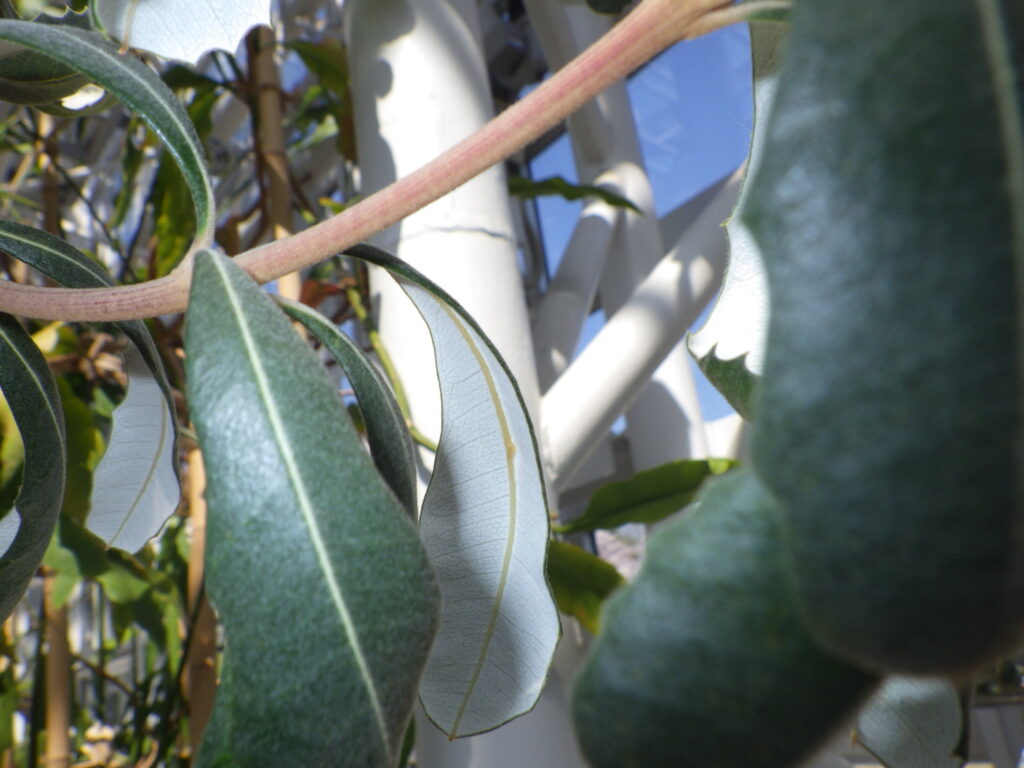
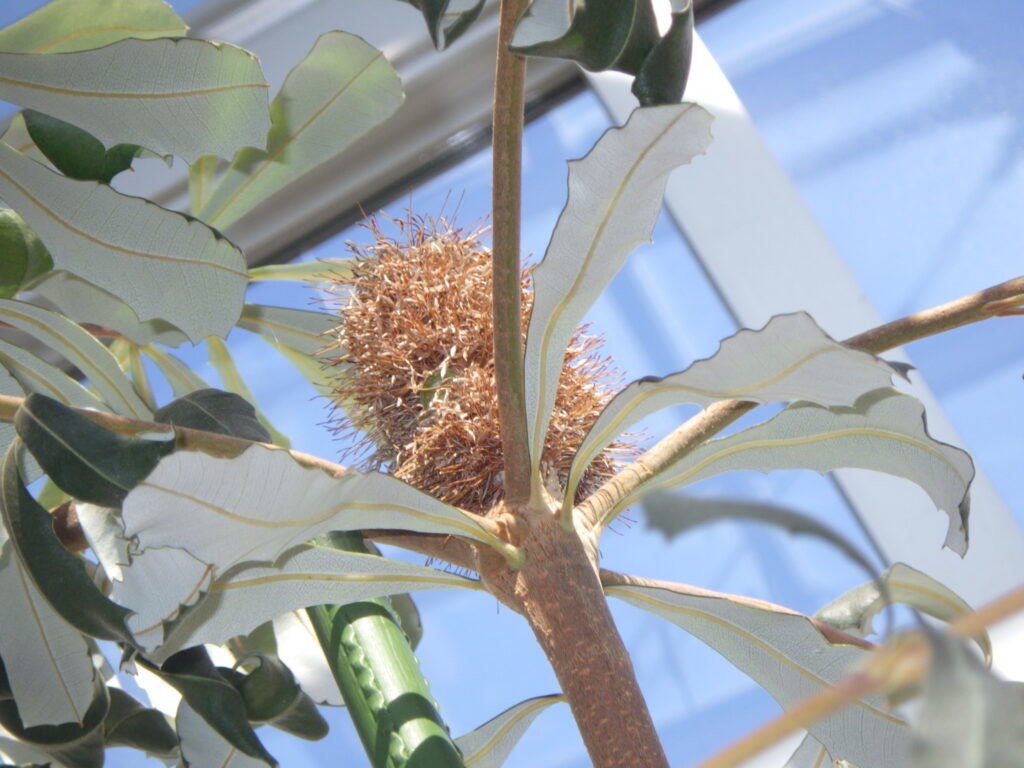
No.1323.c Swamp Banksia (Banksia robur)
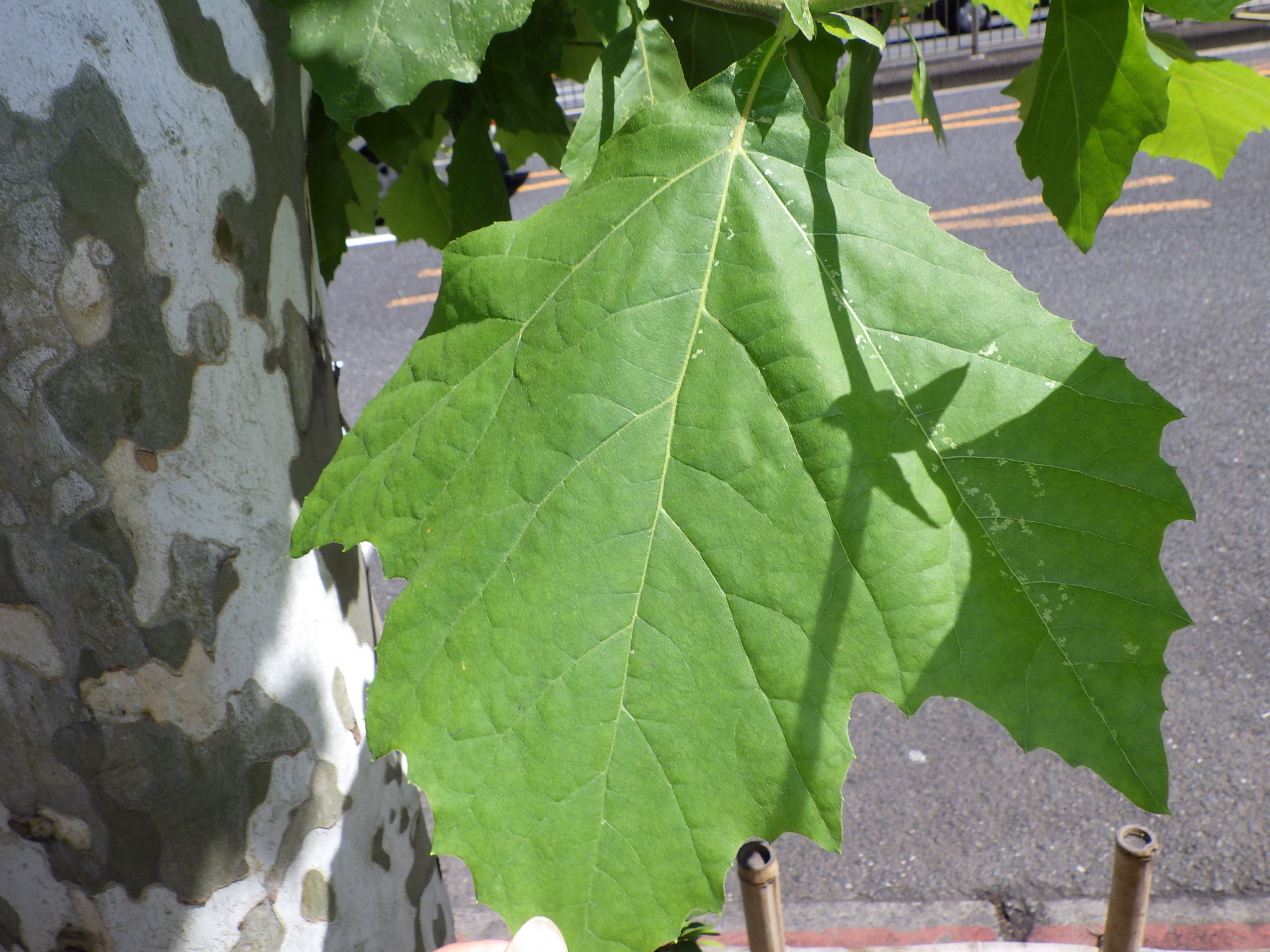
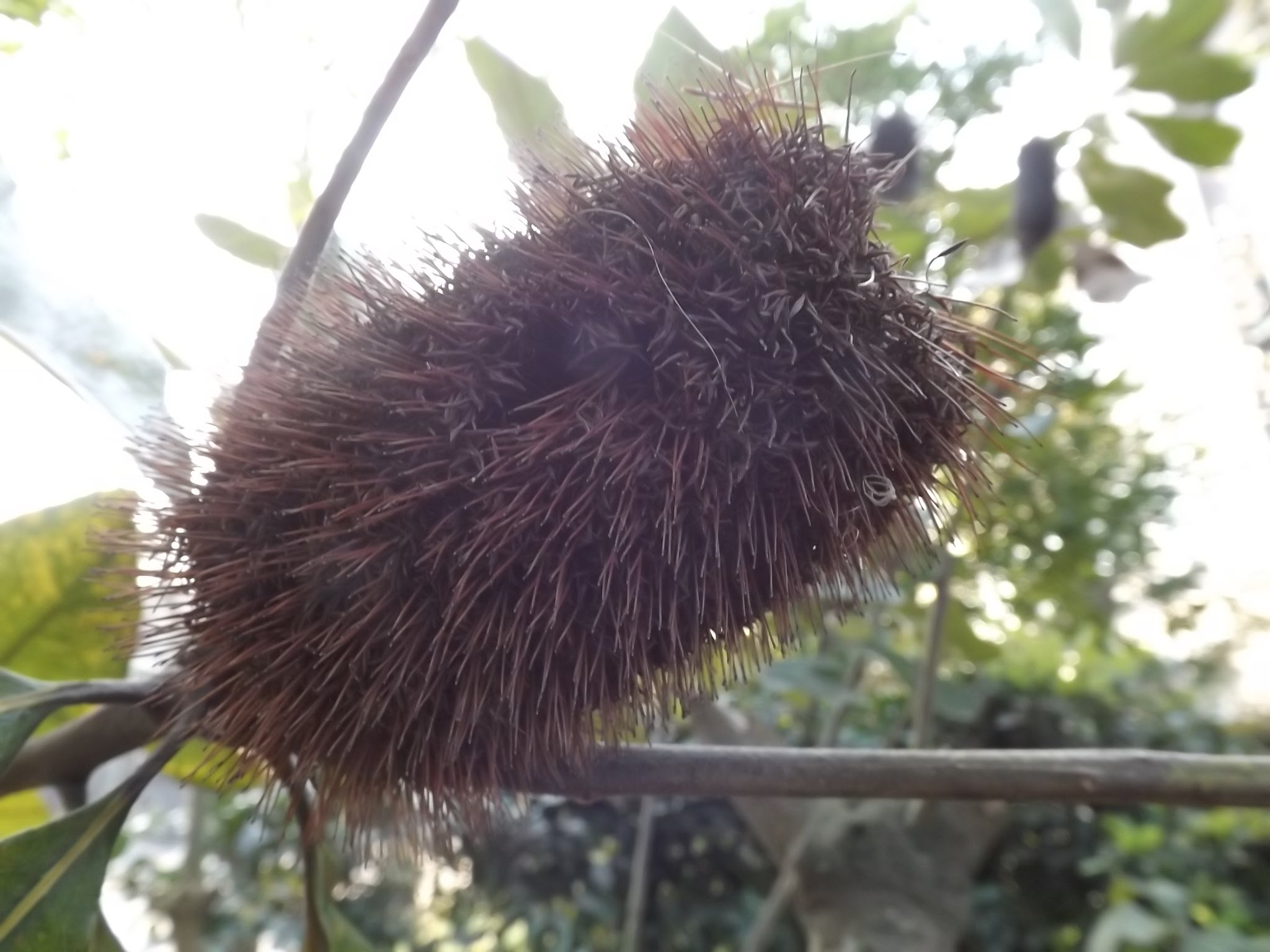
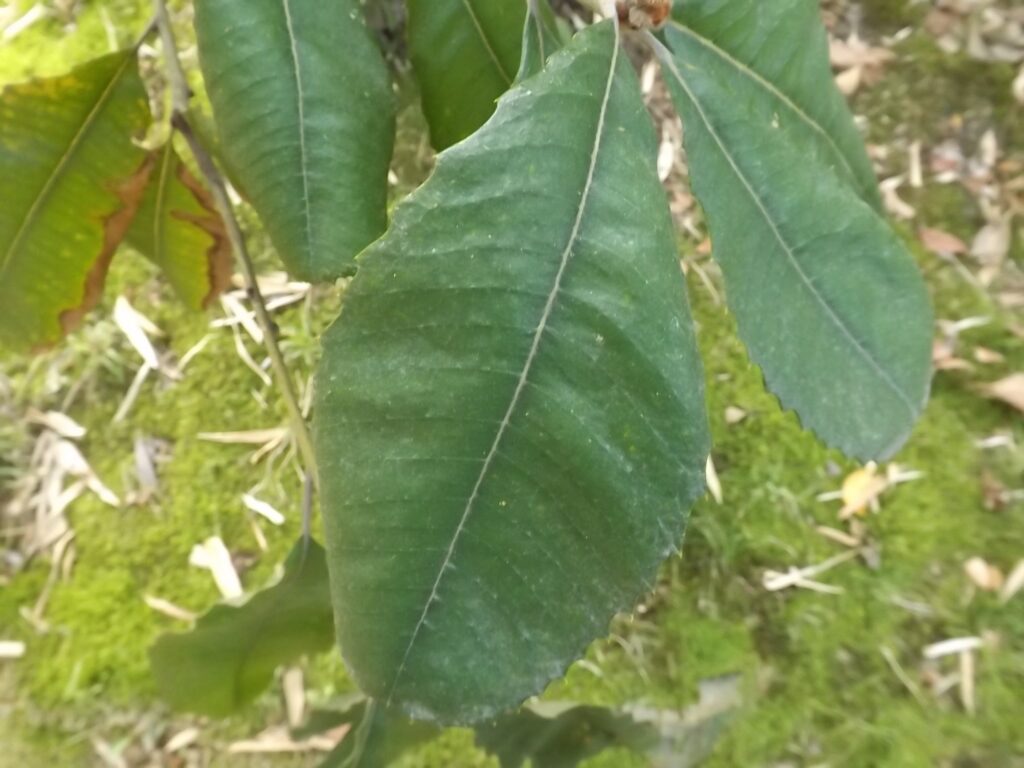
This shrub (Spencer et al., 2002) grows to about 3m in height. The bark is smooth. The leaves are alternate, mostly broadly elliptical, 15-30cm long and 5-15cm wide, with hairs on the underside, and the margins curve slightly downwards with many small serrations. It flowers from January to July. The spike inflorescence is cylindrical, 10-15cm long and about 6cm wide. The perianth is about 2.5cm long, changing from bright green to golden yellow. The style is straight. The fruits are numerous, 1-1.5cm long. It is distributed in Australia (Queensland and New South Wales). Pollination occurs through bird pollination by honeyeaters such as Phylidonyris novaehollandiae, Anthochaera chrysoptera, Lichmera indistincta, Gliciphila melanops, Meliphaga lewinii, and Philemon citreogularis (Taylor & Hopper, 1988). Insects such as butterflies, moths, bees, ants, and jewel beetles also visit the flowers. The fruits release seeds due to bushfires, which frequently occur on the Australian continent (Usher, 2011).
References
Bradstock, RA, & Myerscough, PJ 1981. Fire effects on seed relaease and the emergence and establishment of seedlings in Banksia ericifolia. Lf. Australian Journal of Botany 29(5): 521-531. https://doi.org/10.1071/BT9810521
Evans, KM, & Bunce, A. 2000. A comparison of the foraging behavior of the eastern pygmy-possum (Cercartetus nanus) and nectarivorous birds in a Banksia integrifolia woodland. Australian Mammalogy 22(1): 81-86. https://doi.org/10.1071/AM00081
Paton, DC, & Turner, V. 1985. Pollination of Banksia ericifolia Smith: birds, mammals and insects as pollen vectors. Australian Journal of Botany 33(3): 271-286. https://doi.org/10.1071/BT9850271
Price, JN, & Morgan, JW 2003. Mechanisms controlling establishment of the non-bradysporous Banksia integrifolia (Coast Banksia) in an unburnt coastal woodland. Austral Ecology 28(1): 82-92. https://doi.org/10.1046/j.1442-9993.2003.01252.x
Spencer, R., Molyneux, B., Mathews, D. 2002. Proteaceae. In: R. Spencer (Ed.), Horticultural Flora of South-eastern Australia: The identification of garden and cultivated plants (Vol. 3 Flowering plants. Dicotyledons. Part 2). University of New South Wales Press, Sydney. ISBN: 9780868406602, https://hortflora.rbg.vic.gov.au/taxon/ad97b024-5340-11e7-b82b-005056b0018f
Taylor, A., & Hopper, S. 1988. The Banksia Atlas (Australian Flora and Fauna Series Number 8). Australian Government Publishing Service, Canberra. 258pp. ISBN: 9780644071246
Usher, AV 2011. Complex and dynamic hybridization between Banksia robur and Banksia oblongifolia is revealed by genetic and morphological surveys and experimental manipulations [Doctoral dissertation, University of Wollongong]. https://hdl.handle.net/10779/uow.27661443
Woodside, DP, & Pyke, GH 1995. A comparison of bats and birds as pollinators of Banksia integrifolia in northern New South Wales, Australia. Australian Mammalogy 18(1): 9-18. https://doi.org/10.1071/AM95009