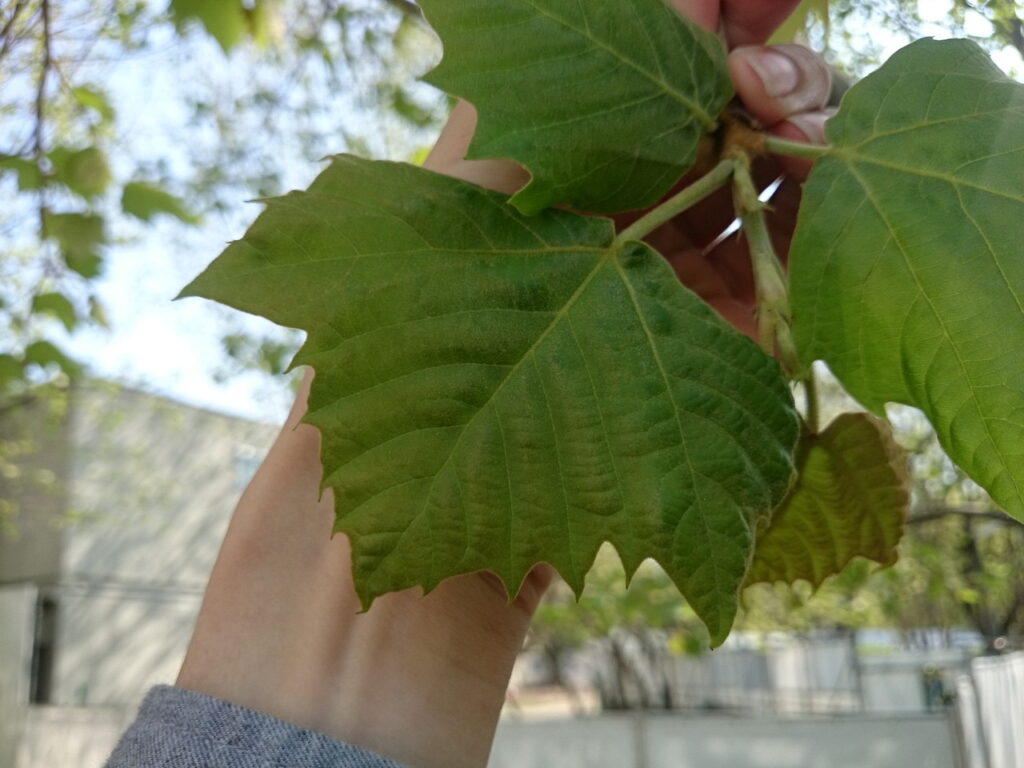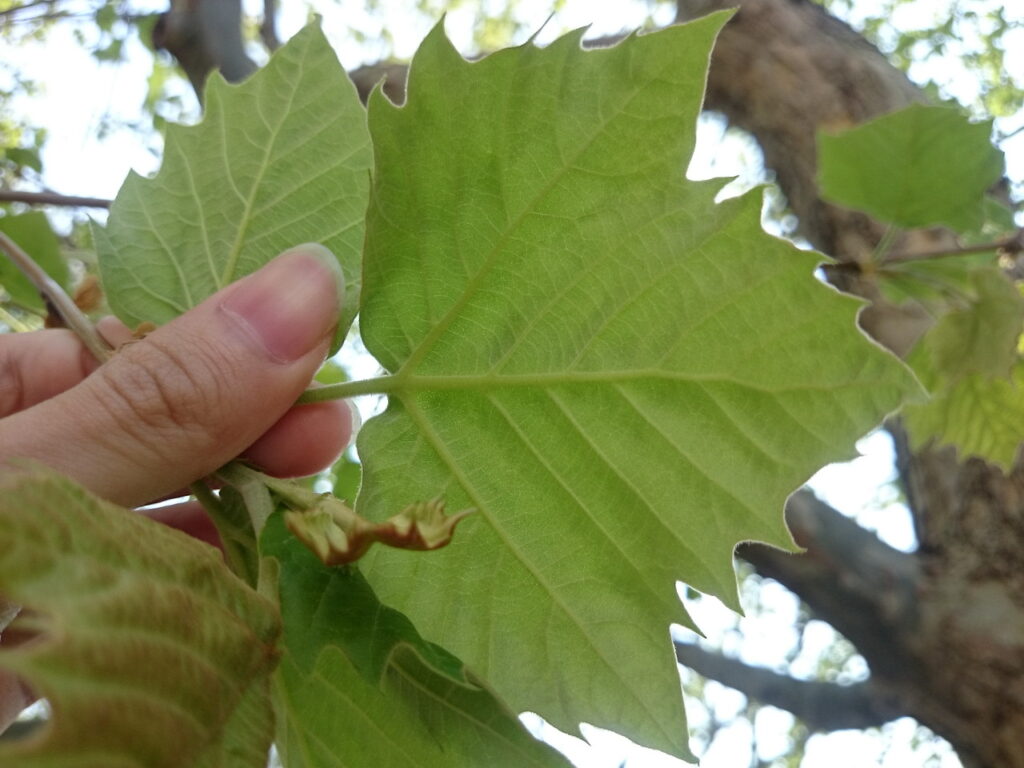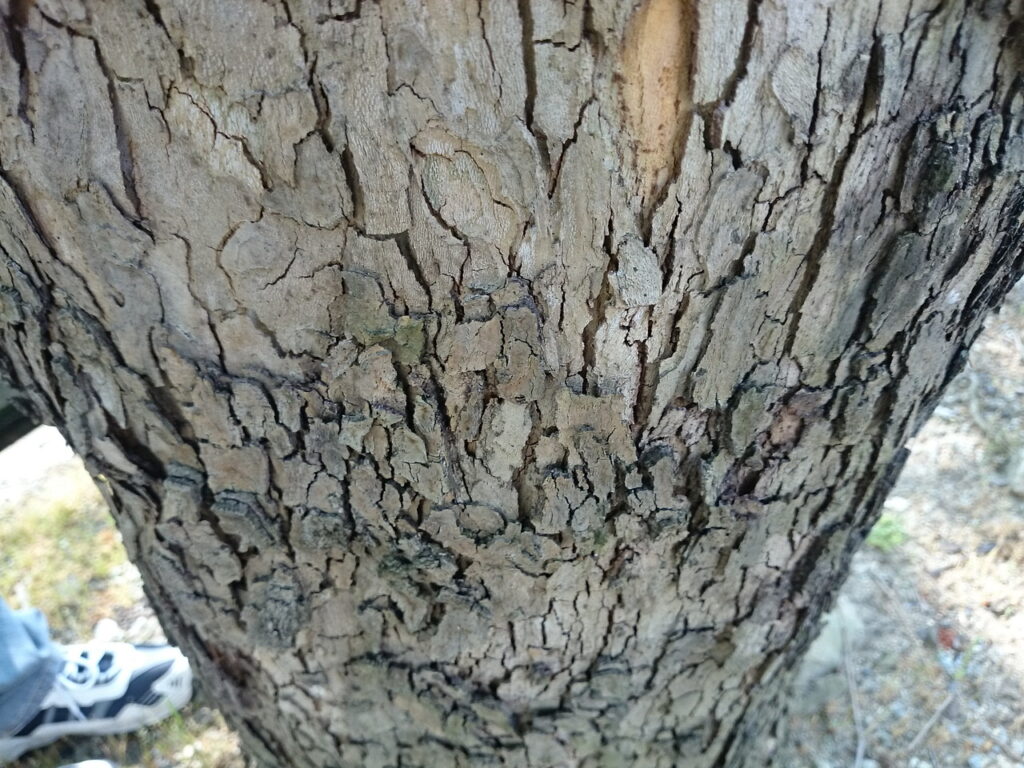
The family Platanaceae consists of deciduous trees. They have a disjunct distribution in temperate regions of North America, southeastern Europe, Turkey, and near Vietnam (only one species). Some species are cultivated worldwide as street trees and park trees. The leaves are alternate. The flowers are unisexual, small, wind-pollinated, and arranged in spherical capitulum inflorescences. They are monoecious. The calyx, petals (female flowers only), and stamens (female flowers also have staminodes) are usually arranged in groups of 3-4. The pistil consists of 5-8 free pistils, with a long stigma on the inside of the style. The fruit is a compound fruit composed of many cleistogamous fruits. The genus Platanus is collectively called "Platanus" in horticulture.
This article provides a comprehensive, illustrated guide to plants belonging to the Platanaceae family.
The photos are replaced as soon as better ones are taken. Also, while the identification is done by the author, please note that if there are any misidentifications, they may be changed without notice.
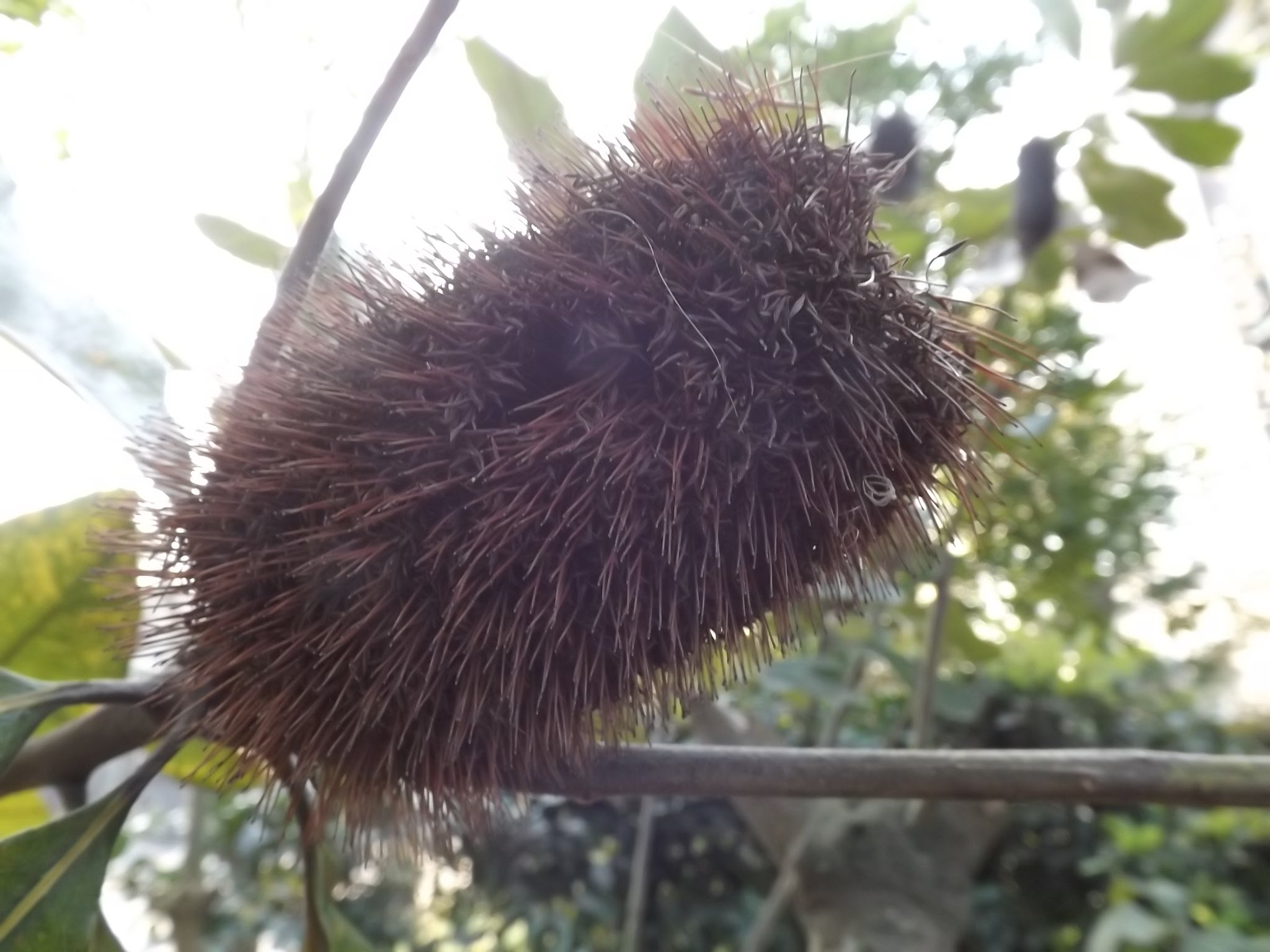
No. 1318 Platanus orientalis (Platanus orientalis)
Deciduous tree (Flora of China). Reaches a height of less than 30m. Young twigs are densely covered with yellowish-brown downy hairs; as they age, they dry and lose their hairs, becoming reddish-brown with lenticels. Stipules are less than 1cm long. Petioles are 3-8cm long and covered with downy hairs. Leaf blades are 9-18cm long and 8-16cm wide, deeply (3-)5 or 7-lobed, initially covered with short, grayish-yellow hairs on both surfaces, which fall off, leaving short hairs only on the veins on the underside. The midrib is 3 or 5 from the base. The leaf base is narrowly cordate to subtruncate. The central lobe is 7-9cm long and 4-6cm wide, with a lobed margin, and the lateral lobes are short with coarse teeth on the margin. Flowers are tetramerous. Male flowers have short, small sepals, stamens longer than petals, very short filaments, and long anthers. The female flowers have short hairs on the sepals, oblanceolate petals, four carpels, and a long, curled style. The fruiting twigs bear (2-)3-5 inflorescences. The inflorescences are capitate, 2-2.5 cm in diameter. The achenes have a persistent, spine-like style 3-4 mm long, with yellow hairs at the base; both the style and the hairs protrude from the inflorescence. Flowering occurs from March to May. Fruiting occurs from June to October. Native to southwestern Asia and southeastern Europe.
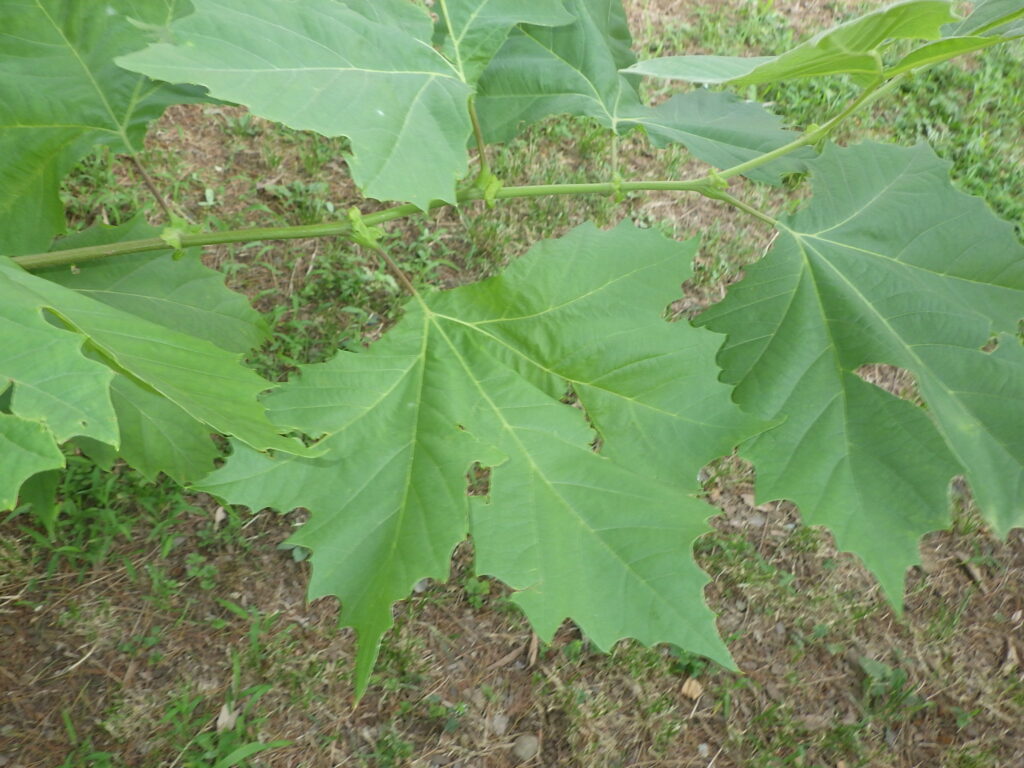
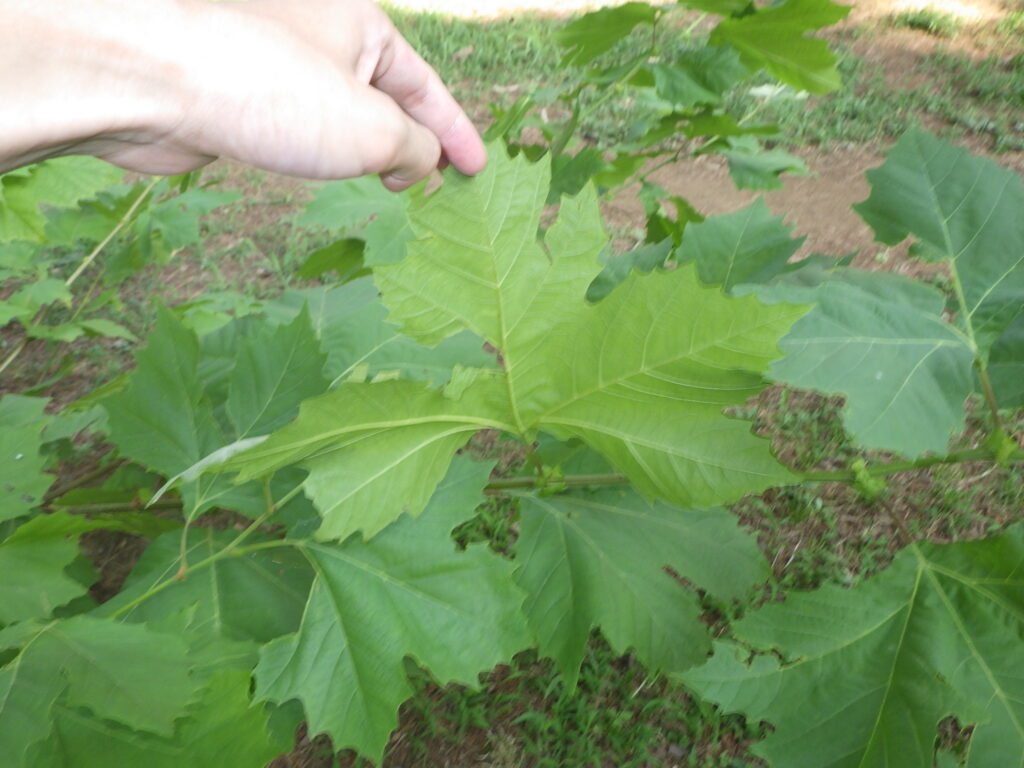
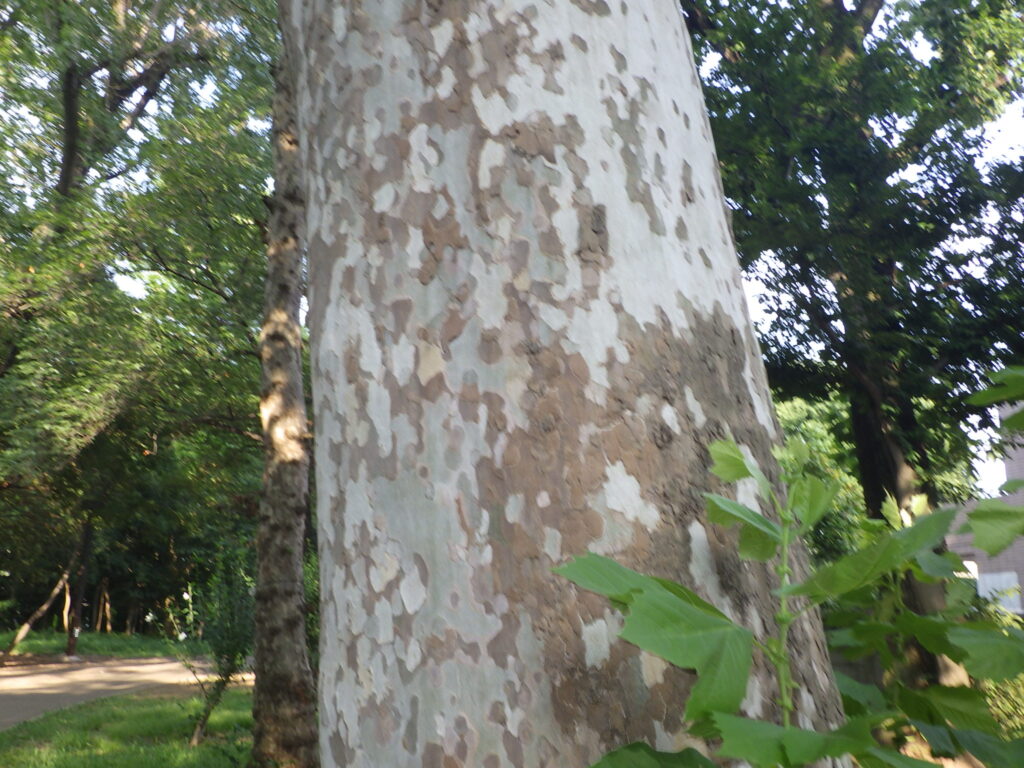
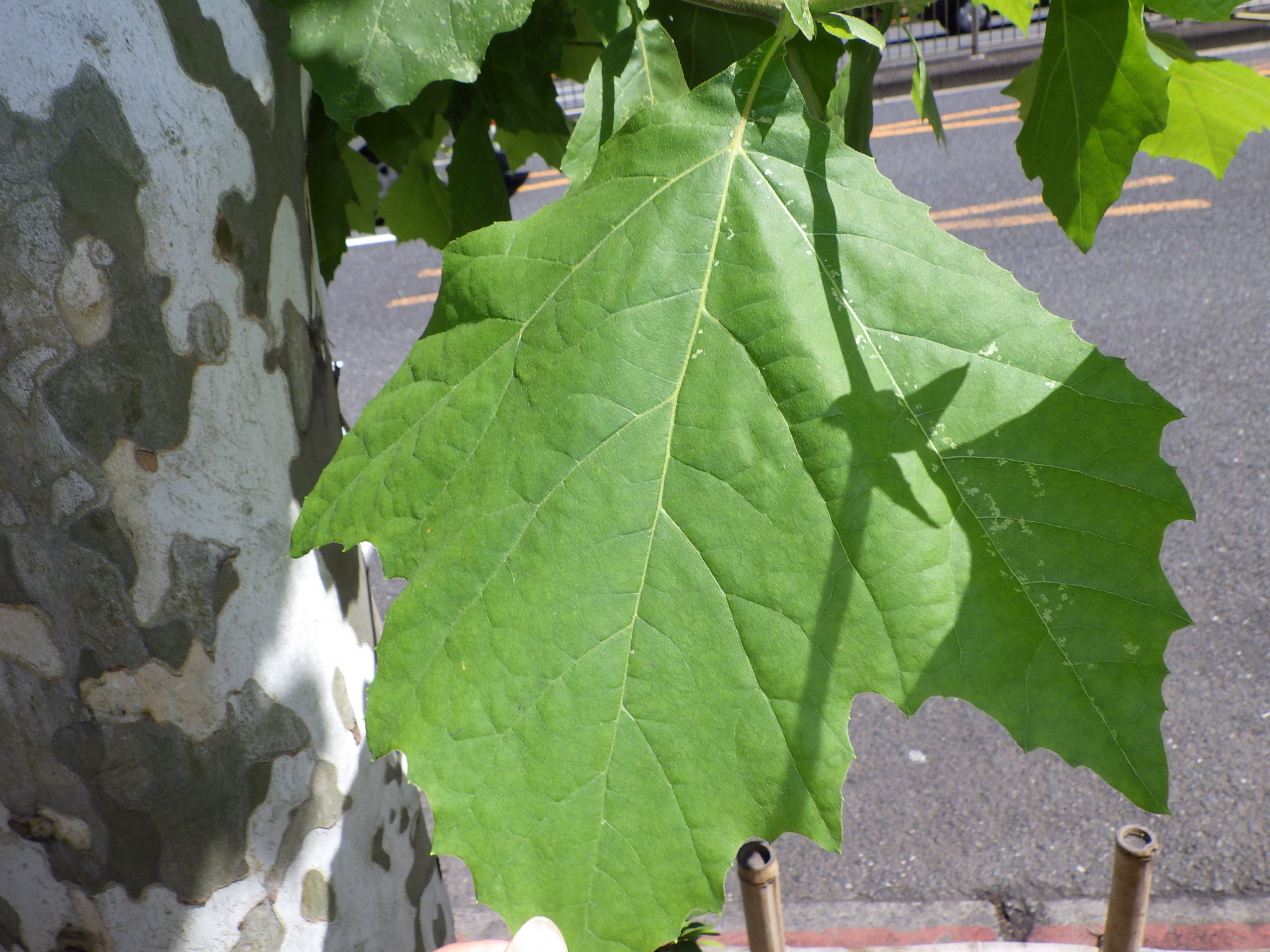
No. 1319 Platanus x acerifolia
Deciduous tree (Flora of China). A hybrid of Platanus sylvaticus and Platanus sylvaticus. The leaf lobes and number of inflorescences are intermediate between the two species, and the number of inflorescences on fruiting twigs is usually 2. The leaf lobes are deeply lobed, and the number of inflorescences on fruiting twigs is usually 3 or 4. Deciduous, less than 30m tall. Young twigs are densely covered with grayish-yellow downy hairs, becoming reddish-brown and glabrous as they age. Stipules are 1-1.5cm long. Petioles are 3-10cm long and densely covered with yellowish-brown short hairs. Leaf blades are 12-25cm long and 10-24cm wide, (3-)5 (-7) lobed, with grayish-yellow short hairs on both sides when young, later becoming almost glabrous, with short hairs remaining only on the veins on the underside of the leaf. The main vein is 3 (or 5), extending from the base, or 2 (or 4) lateral veins arise from the midrib from the base. The leaf base is nearly cordate to truncate. The leaf lobes are entire or have 1-2 coarse teeth on the margin, with the central lobe being broadly triangular in width and length. The flowers are usually tetramerous. Male flowers have ovate sepals with short hairs, and elliptical petals about twice the length of the sepals. The stamens are longer than the petals. The anthers are shimate and covered with short hairs. Fruiting twigs bear (1-)2 (-3) inflorescences. The inflorescences are capitate, about 2.5 cm in diameter. The achenes have a persistent, spine-like style 2-3 mm long, with no or very short hairs at the base that do not protrude from the inflorescence. The flowering period is from April to May. It is cultivated in Southwest Asia, Europe, and China, and is also cultivated in Japan.
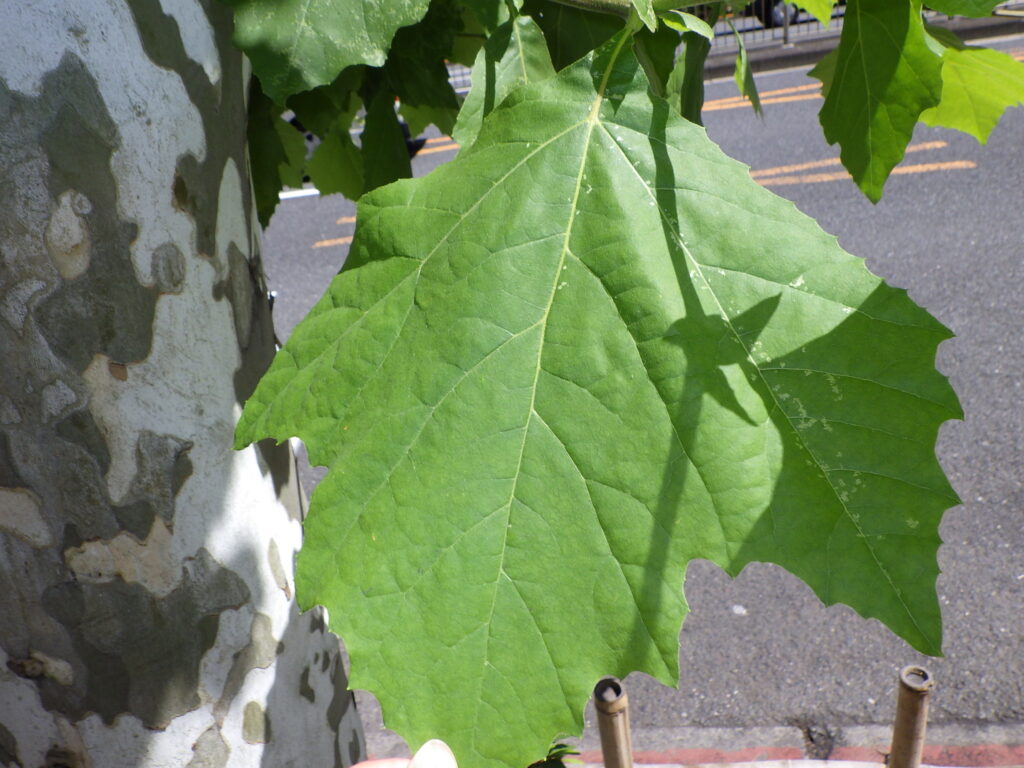
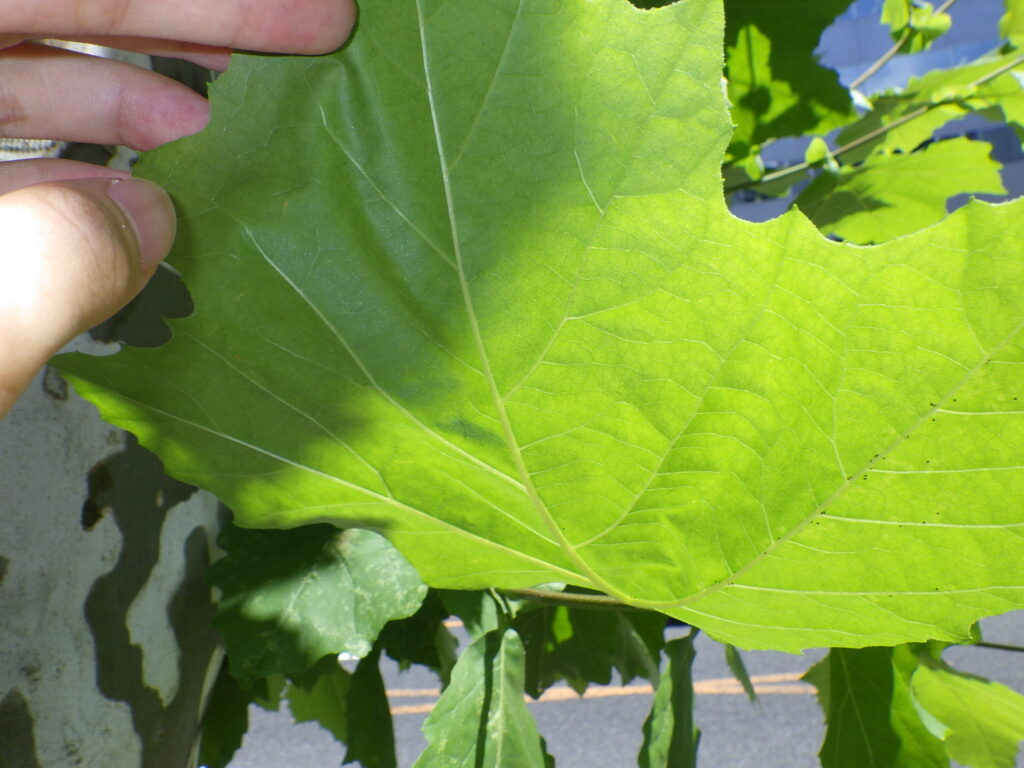
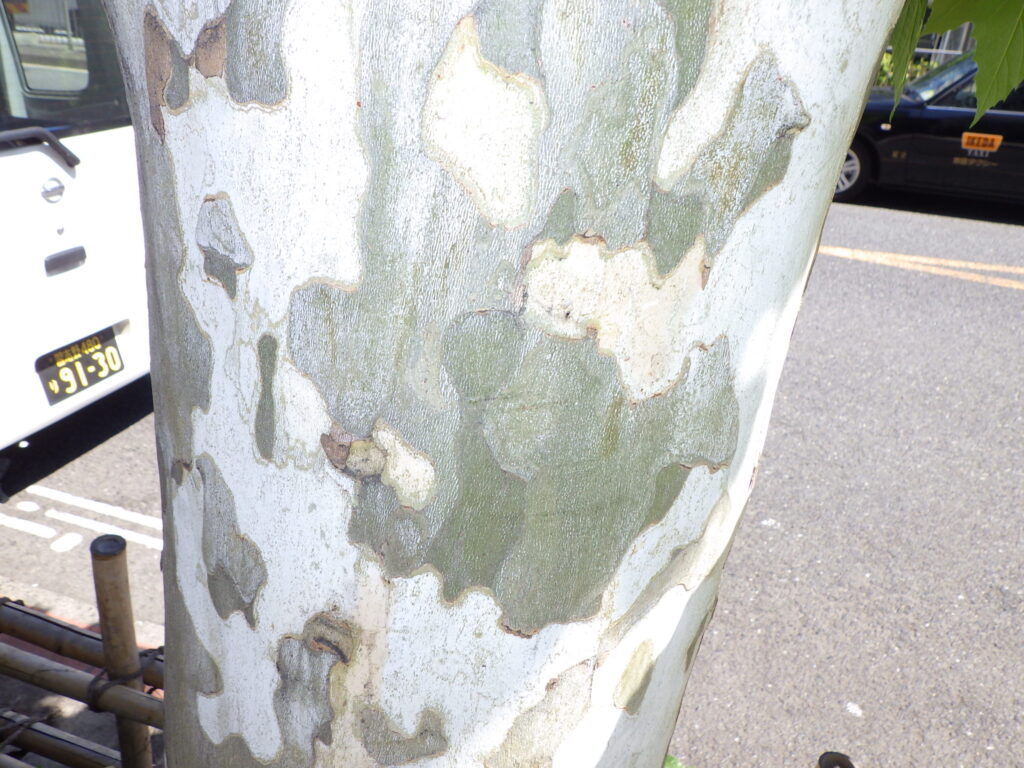
No. 1320 American Plane (Platanus occidentalis)
Deciduous tree (Flora of China). The leaf lobes are shallower than those of the London plane tree, and the lobes are short and triangular. Reaches a height of less than 40m. Young twigs are densely covered with yellowish-brown downy hairs. Stipules are 2-3cm long, trumpet-shaped, and deciduous. Petioles are 4-7cm long and densely covered with downy hairs. Leaf blades are 8-20cm long and 10-22cm wide, (3-)5-lobed, initially covered with grayish-yellow downy hairs on both sides, which quickly fall off, leaving short hairs only on the veins on the underside. There are three main veins, and two lateral veins emerge about 1cm below the midrib. The leaf base is broadly cordate to truncate to nearly wedge-shaped. Leaf lobes are short and triangular, with many coarse teeth on the margins. Flowers are 4-6merous. Male flowers have short, small sepals and petals. Filaments are very short. The anthers are shield-shaped, long, and glabrous at the junction. Female flowers have long, soft hairs at the base, and the sepals are short and small. The petals are 4-5 times the length of the sepals. There are 4-6 carpels. The style is long, longer than the petals. The fruiting twigs bear one (or two) inflorescences. The inflorescence is spherical, about 3 cm in diameter. The achene has a blunt tip, a very short persistent style, and the hairs at the base are about half the length of the achene and do not protrude from the inflorescence. Flowering occurs from March to May. Fruiting occurs from June to October. It grows in sandy soils near streams and lakes, in damp canyons, sometimes in highlands, and sometimes in limestone soils (Flora of North America).