The Haloragaceae family consists of terrestrial or aquatic perennial herbs or shrubs. Leaves are opposite, whorled, or alternate. Flowers are bisexual or unisexual. Stipules are absent. The calyx tube is fused to the ovary, and there are 2 to 4 petals, or sometimes none. There are 2 to 8 stamens. The ovary is inferior. The fruit is a nut or drupe. Widely distributed from tropical to subtropical regions, according to "Heibon Shin Yasei 2," there are 8 genera and 145 species worldwide, with 3 genera and 7 species native to Japan, and 2 species naturalized there.
This article provides a comprehensive, field guide-style introduction to plants belonging to the Crassulaceae family.
The basic information is based on the Kanagawa Prefecture Flora Survey Association (2018). Photos are replaced as better ones become available. While the identification is done by the author, please note that misidentifications may be corrected without notice.
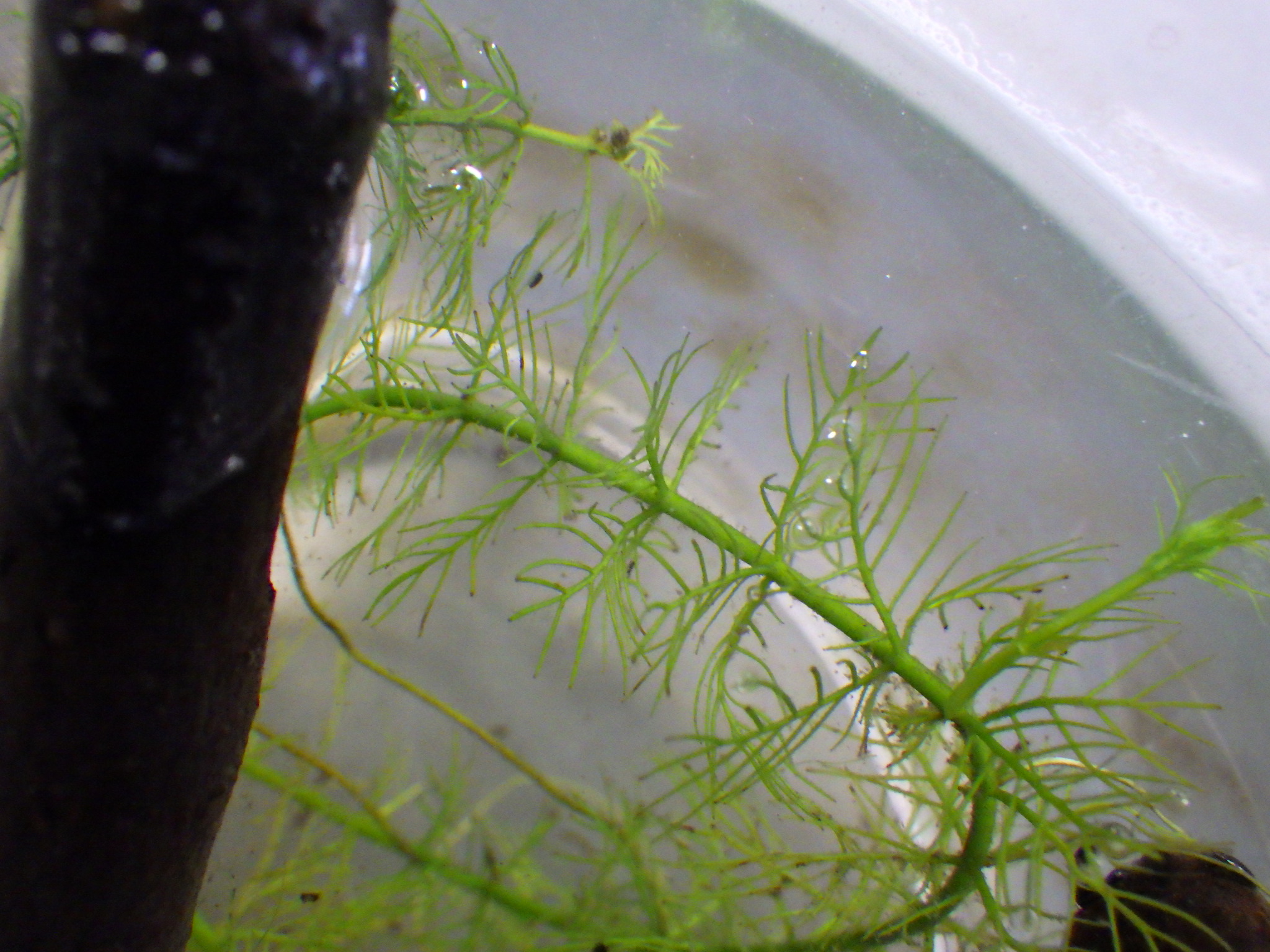
No. 1438 Myriophyllum spicatum
A perennial herb. Also known as goldfish weed. The stem elongates and branches upwards, reaching a length of 1-2m. The submerged leaves are arranged in whorls of four. The leaves are 1.5-3cm long. Their lobes are thread-like, opposite, and curve towards the axis. A terminal spike inflorescence protrudes from the water surface. The spike inflorescence does not have emergent leaves. The flowering period is from June to October. There are four petals, but they fall off when the flower blooms. The fruit is ovoid and divides into four segments. Widely distributed in temperate to subtropical regions: Hokkaido, Honshu, Shikoku, Kyushu, and the Ryukyu Islands. A submerged aquatic plant that grows in relatively shallow ponds and marshes. A variety with prominent projections on the back of the segments is called spiny-spotted tufted weed var. muricatum. Pollination is by aerial pollination, with a small amount of insect pollination, but mostly wind pollination (Patten Jr, 1956). In nature, seeds have increased germination ability when frozen or dried. Generally, at least 80–901 TP3T of the produced seeds are viable, and can remain so for more than 10 years. There are few predators of the seeds, but it has been suggested that if they are eaten by fish or waterfowl, they will not be digested and will be more viable. Dispersal to other waterways occurs by the movement of floating fragments downstream, but also partially by the attachment of small, slimy spring buds to the feet or feathers of birds.
No.1439 Myriophyllum verticillatum
This is a perennial herb. The submerged leaves are arranged in whorls of 4-5. The leaves are 2-6 cm long. The thread-like lobes are slightly fewer in number than those of Myriophyllum sp. and are not curved. It flowers from May to July. Smaller emergent leaves are attached to the spike-like inflorescence that protrudes from the water surface. Flowers are borne in the leaf axils. The lower male flowers have four grooves on the urn-shaped calyx tube. It is widely distributed in temperate to warm temperate regions such as Hokkaido, Honshu, Shikoku, Kyushu, Ryukyu Islands, Europe, Asia, and North America. It is a submerged aquatic plant that grows in ponds and marshes. Without flowers, specimens consisting only of submerged leaves are difficult to distinguish from Myriophyllum sp. From around autumn, it produces club-shaped replenishment buds on the stem and reproduces asexually (Kakuno, 1994).
References
Kakuno, Yasuo. 1994. Illustrated Guide to Japanese Aquatic Plants. Bun-ichi Sogo Shuppan. Tokyo. 179pp. ISBN: 9784829930342
Kanagawa Prefecture Flora Survey Association. 2018. Kanagawa Prefecture Flora 2018 (Electronic Edition). Kanagawa Prefecture Flora Survey Association, Odawara. 1803pp. ISBN: 9784991053726
Patten Jr, BC 1956. Notes on the biology of Myriophyllum spicatum L. in a New Jersey lake. Bulletin of the Torrey Botanical Club 83(1): 5-18. https://doi.org/10.2307/2482818