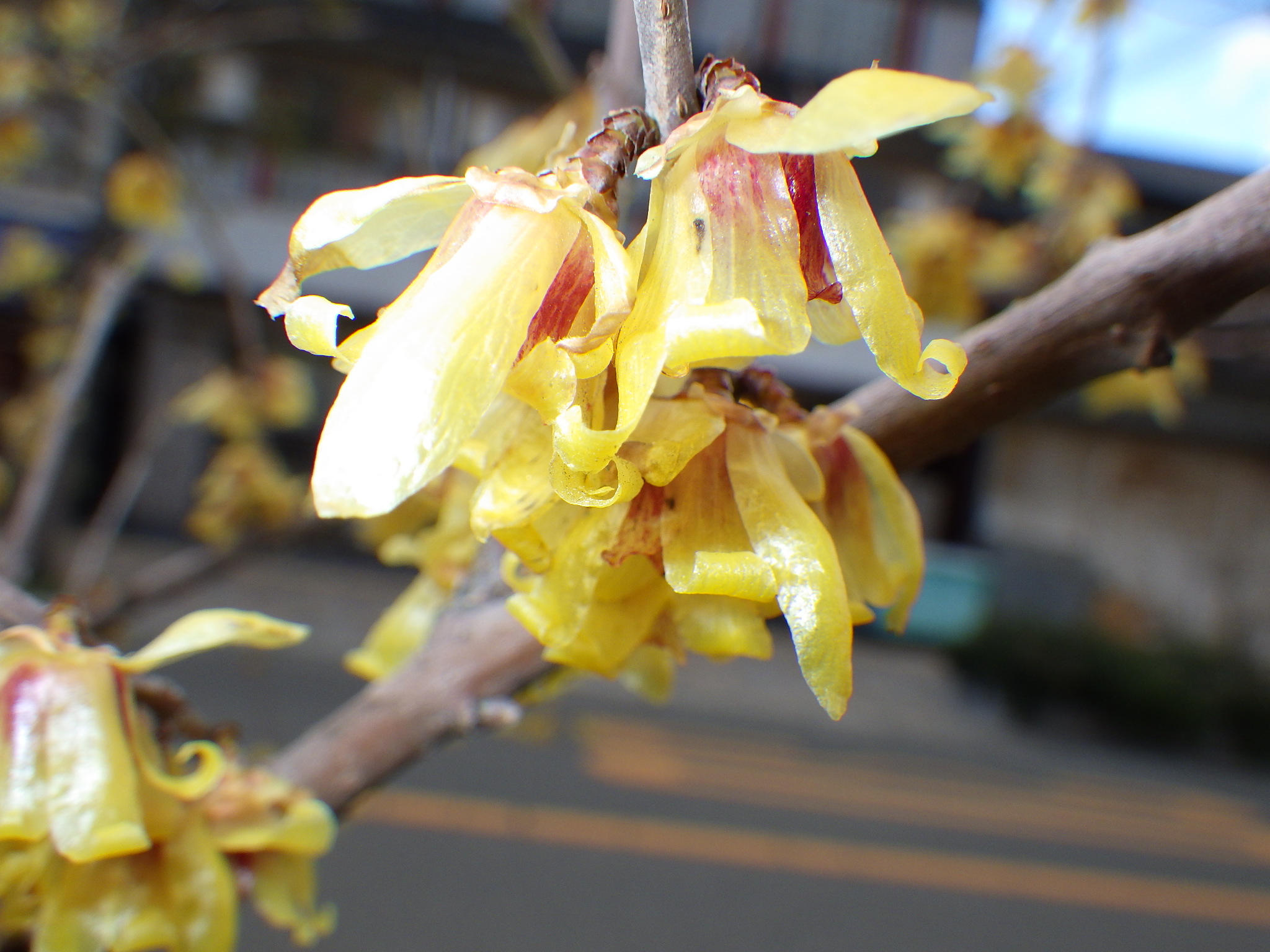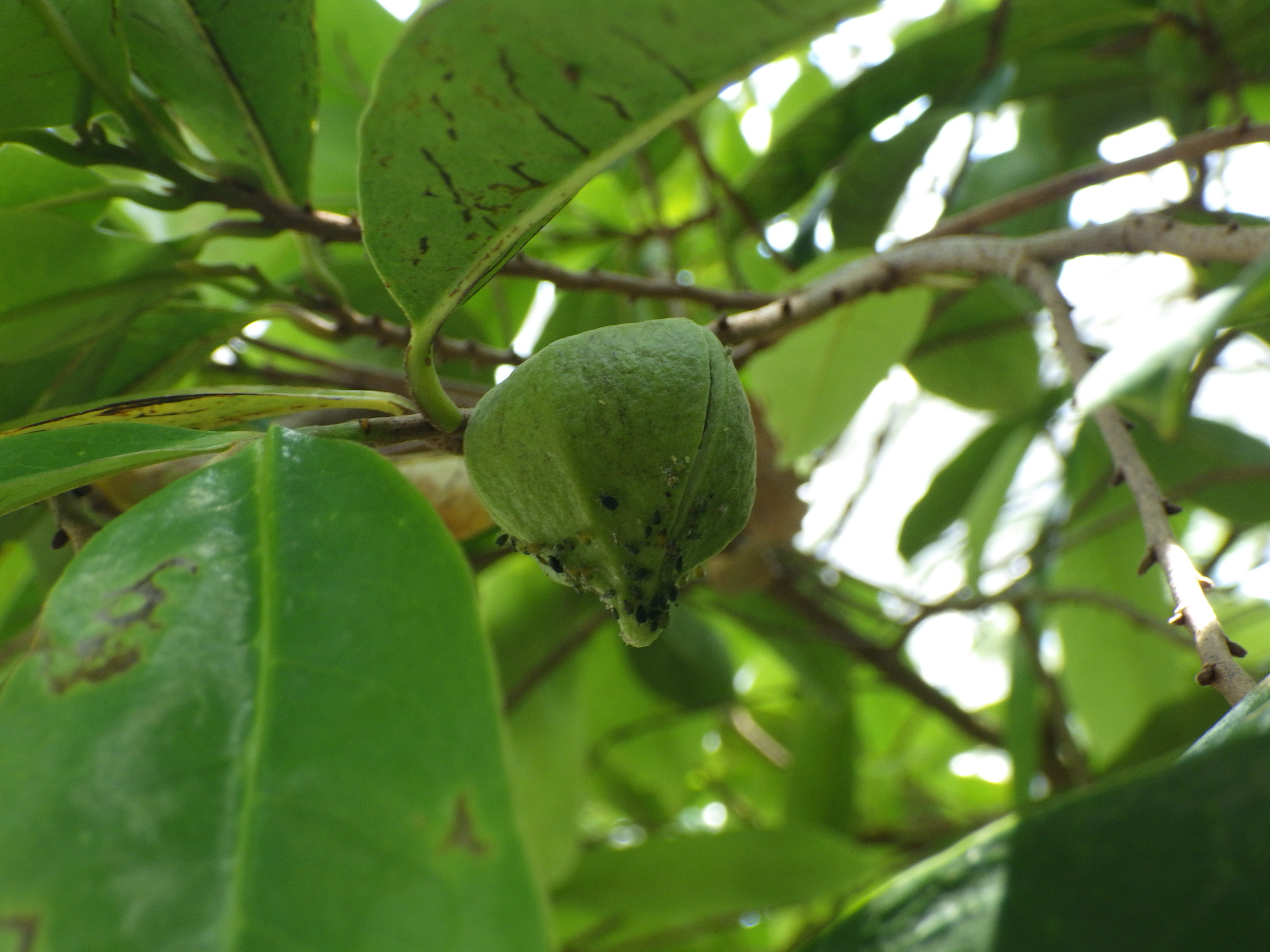
The Annonaceae family consists of evergreen, rarely deciduous, trees or shrubs, and sometimes climbing woody plants. Approximately 130 genera and 2,300 species are known, found in the tropical and subtropical regions of Asia, America, and Africa. In Japan, only one species , Monoun liukiuense, is found in the Ryukyu Islands. Cultivated Akebia quinata (Akebia persimmon) can escape cultivation.
This article provides a comprehensive, field guide-style introduction to plants belonging to the Annonaceae family.
Basic information is based on Hayashi (2014) and the Kanagawa Prefectural Flora Survey Association (2018). Photos are replaced as better ones become available. While identification is done by the author, please note that misidentifications may be corrected without notice.
No. 0132 Akebigaki (Akebia triloba)
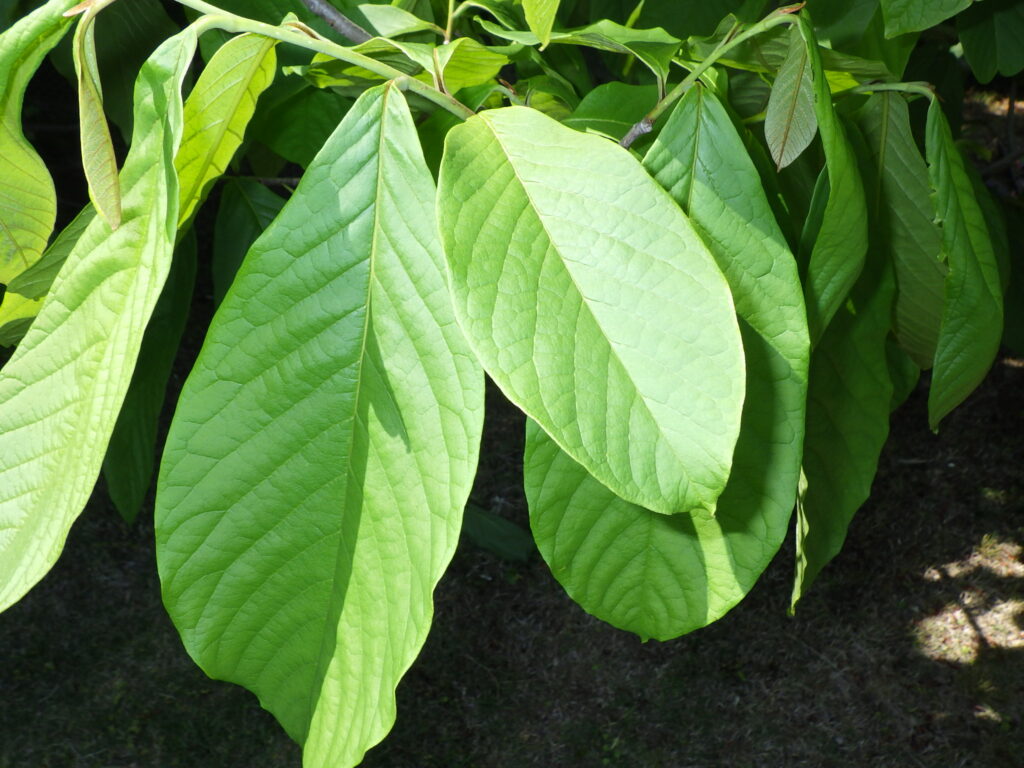
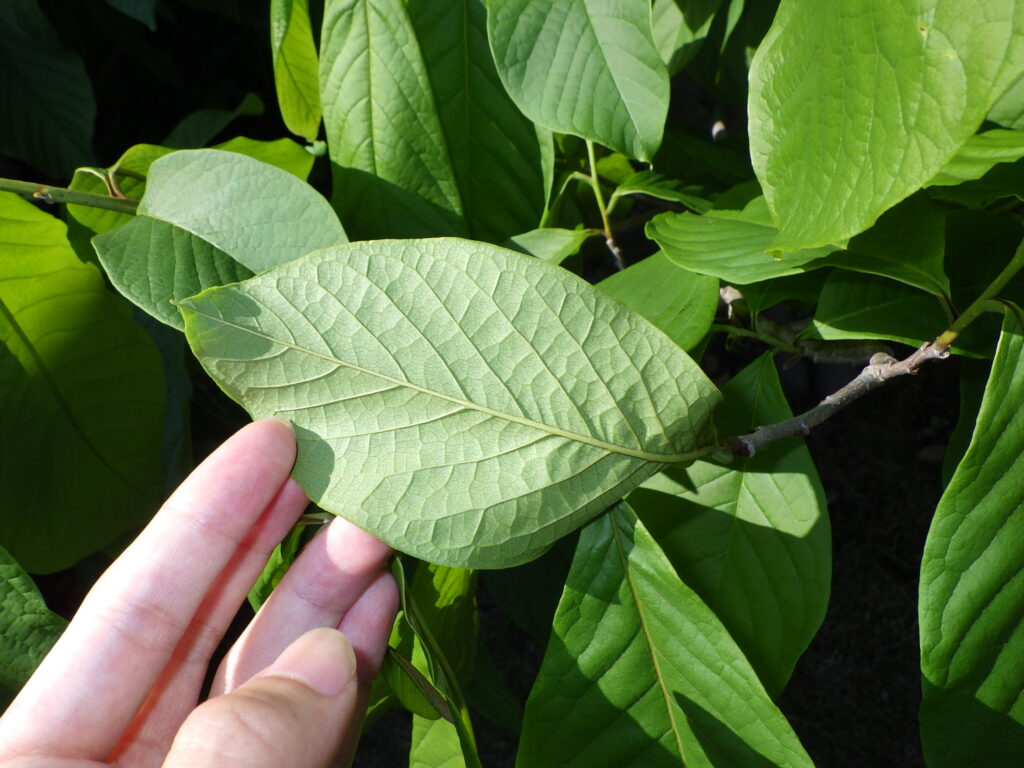
Also known as pawpaw, it is called akebigaki because its leaves and flowers resemble those of a persimmon, and its fruit resembles that of an akebi. The leaves are alternate, have petioles, and the leaf blade is obovate-elliptical. The flowers are purplish-brown, bisexual, and trimeral. There are three sepals. There are six petals, the three outer ones being larger and the three inner ones being smaller. It flowers in spring before the leaves unfold and bears fruit in autumn. The fruit is a fleshy aggregate fruit, with 1 to 4 fruits developing from a single flower. It resembles the shape of an akebi and ripens to a greenish-yellow in autumn. The fruit is edible. Native to North America, it is cultivated outdoors in Honshu (west of the Kanto region). Escaped plants can sometimes be found in woodlands around urban areas.
No. 0135 Annona muricata (Sour Soybean)
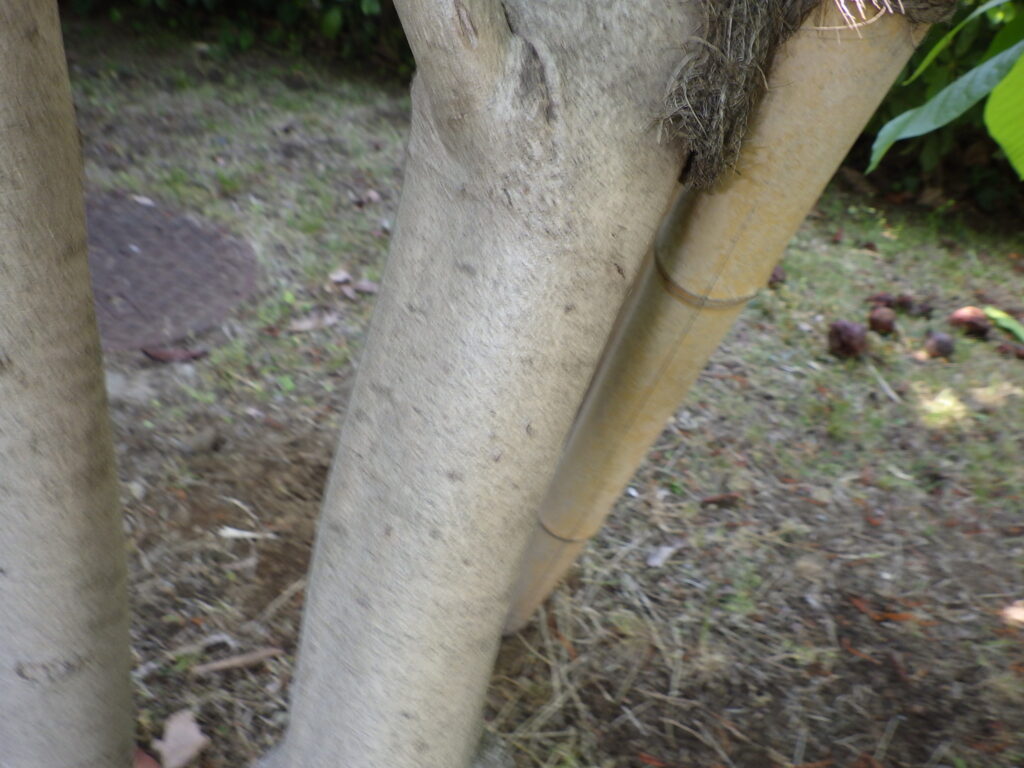
This evergreen shrub (Flora of China) grows to about 10m in height. The bark is rough. The leaf blade is oblique to elliptical, 5–18 × 2–7cm, papery, green and glossy on the outside, with 6–13 secondary veins on either side of the central vein, somewhat prominent on both surfaces, with a broad to rounded base and an acute to obtuse apex. The inflorescence is axillary, with 1–2 whorls. The flowers are about 3.8cm in diameter. The pedicels are 0.5–2.5cm long and glossy. The sepals are ovate-elliptical to ovate-triangular, 3–5mm long. The petals are green, later turning yellow, and lack red spots on the inside. The outer petals are thick, broadly triangular, 2.5–5 × 2–4cm, with fine soft hairs on the inside and an acute to obtuse apex. The stamens are 4–5mm long, with fleshy filaments and a bulging tip. The receptacle is about 5mm long and covered with soft hairs. The pericarp is green and oval-shaped, often oblique or curved, measuring 10–35 × 7–15 cm, covered with soft, spine-like projections, with a depressed base and a rounded tip. The flesh is white, and the seeds are brownish-yellow, bead-shaped, about 2 × 1 cm. Flowering occurs from April to July, and fruiting from July to December. The fruit is called soursop and is the largest of the Annona genus. It is eaten fresh, made into sorbet, or used in beverages. The flesh is sometimes consumed with wine or cognac. Native to tropical America, it is cultivated in parts of North and South America, Southeast Asia, China, and Taiwan. Fruiting and yield are very low, with wind pollination and self-pollination rates low at 1.5%, making cross-pollination necessary (Datiles & Acevedo-Rodríguez, 2015). The outer petals open towards evening, releasing pollen. The inner petals open very slowly and considerably later, allowing small insects attracted by the flower's fragrance to enter. Key pollinators are thought to include members of the Nitidulidae family (Carpophilus, Uroporus) and beetles such as those in the Cyclocephala genus (Peña et al., 2002; Parizotto & Grossi, 2019).
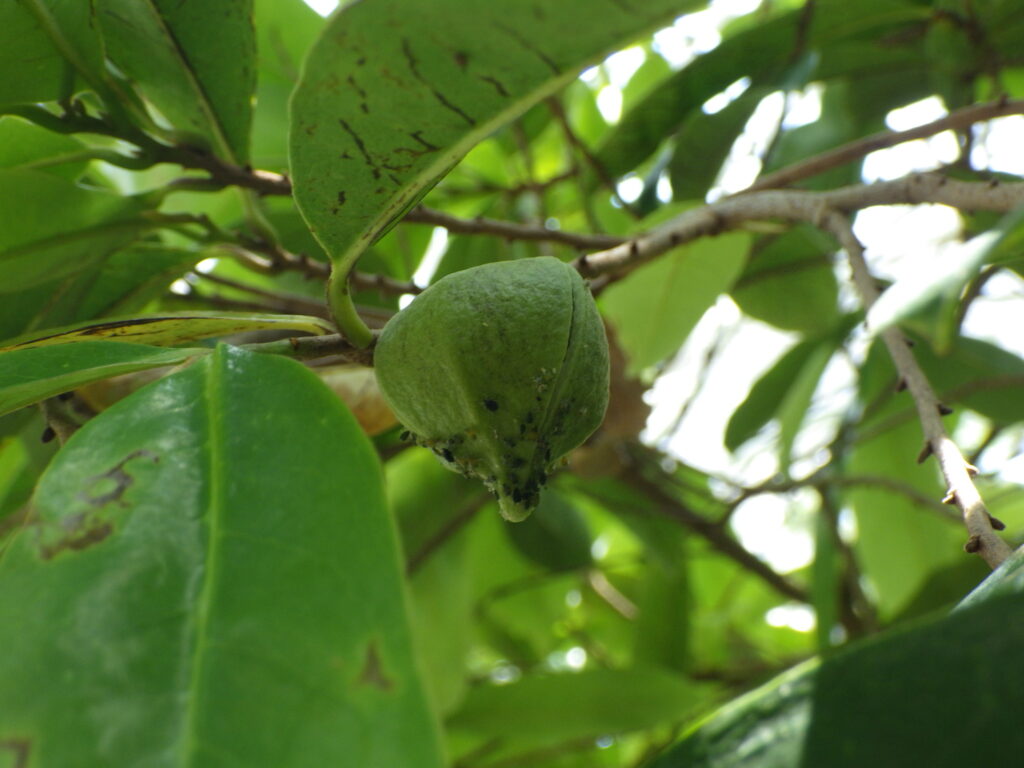
No.0135.a Cananga odorata var. fruticosa
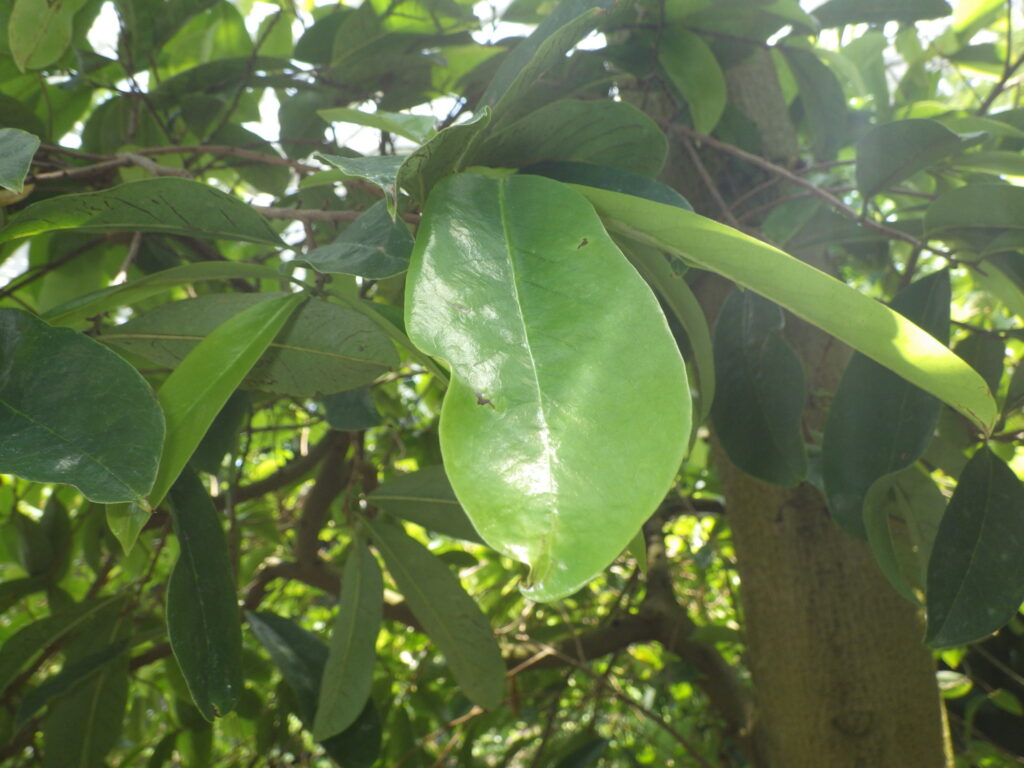
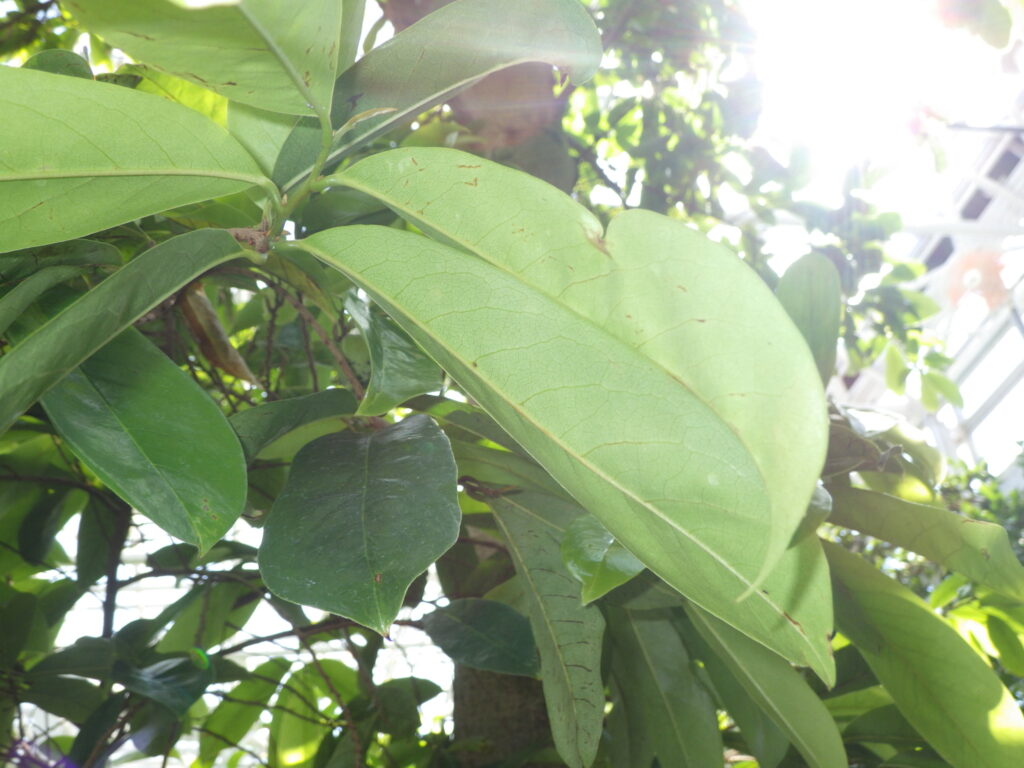
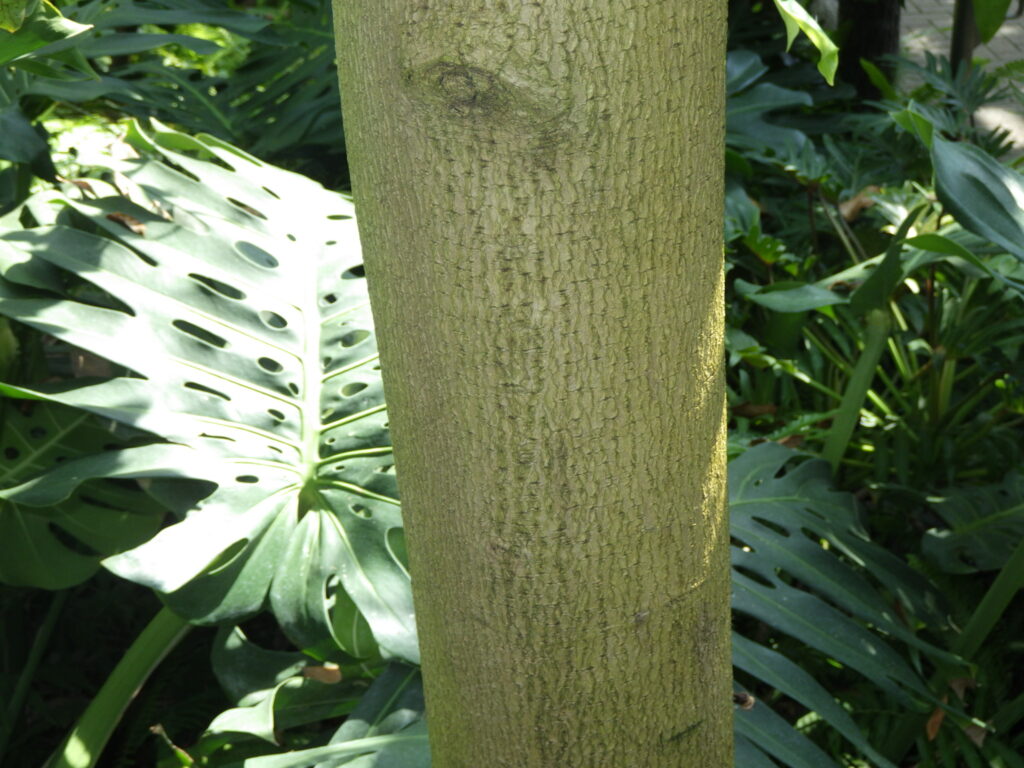
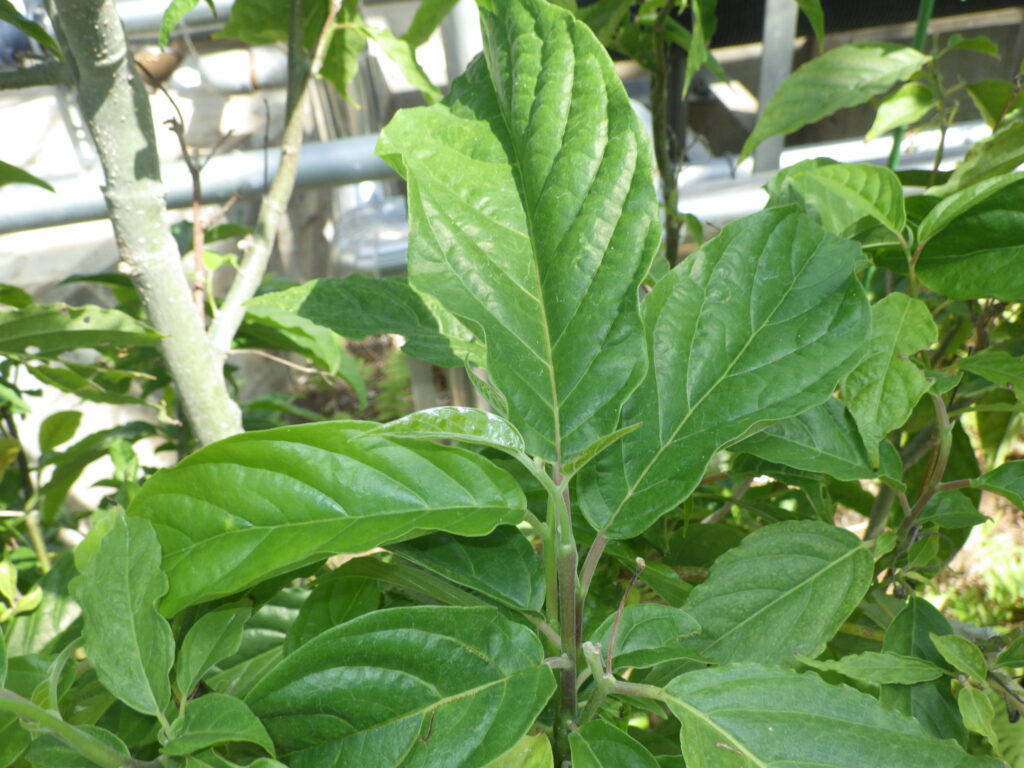
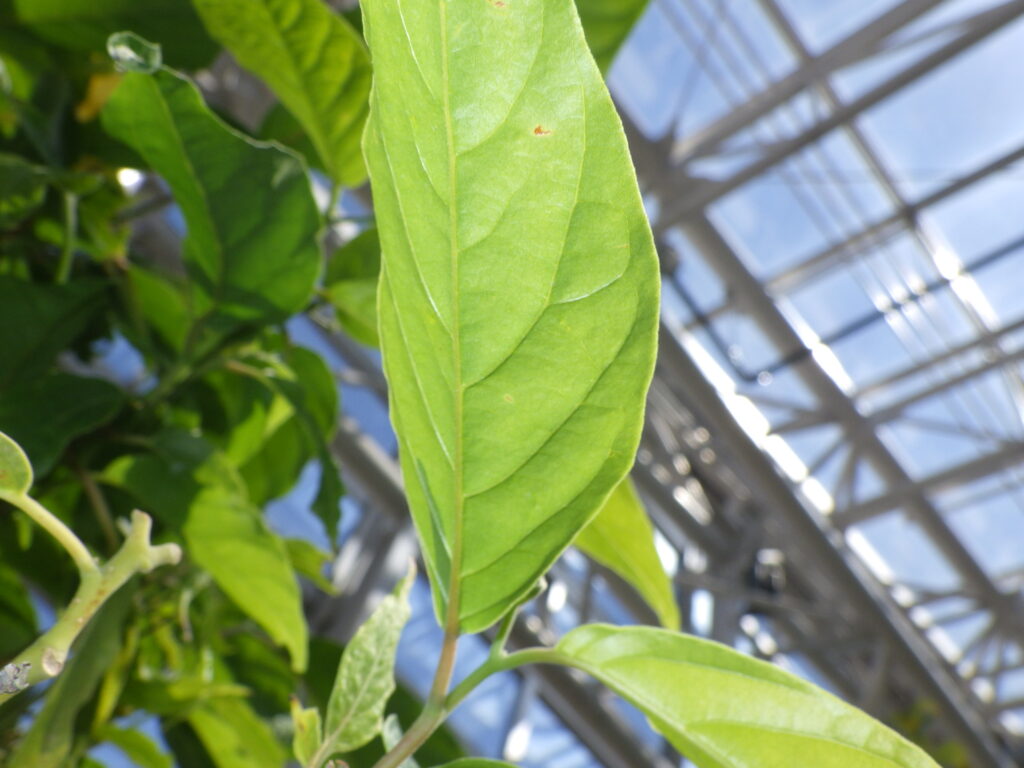
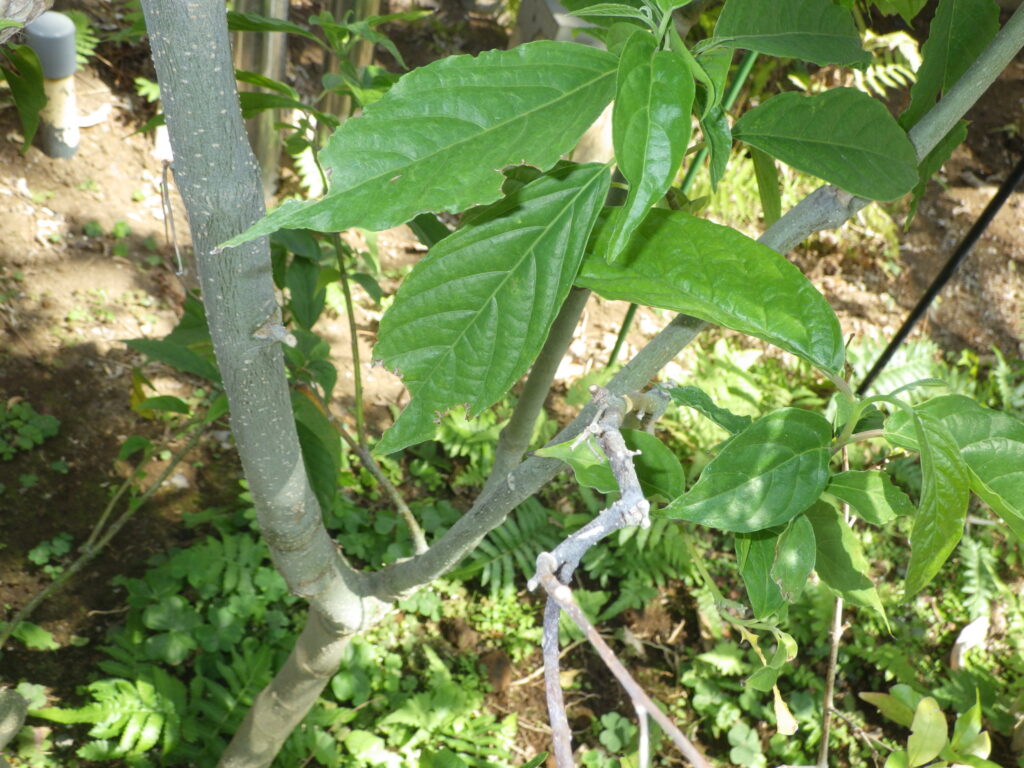
This is a dwarf variety of ylang-ylang. It is an evergreen shrub, reaching a height of about 2-3 meters. The leaves are oblong and glossy. Although the margins are entire, they are wavy and arranged alternately on the branches. The flowers, which have long pedicels, are initially pale green and later change to yellowish-green. When in bloom, they emit a fragrance, and the flowers are used as an ingredient in high-end perfumes. They are also used in Chanel perfumes. It is distributed from southern China to Southeast Asia.
References
Datiles, MJ, & Acevedo-Rodríguez, P. 2015. Annona muricata (soursop). CABI Compendium. https://doi.org/10.1079/cabicompendium.5812
Kanagawa Prefecture Flora Survey Association. 2018. Kanagawa Prefecture Flora 2018 (Electronic Edition). Kanagawa Prefecture Flora Survey Association, Odawara. 1803pp. ISBN: 9784991053726
Parizotto, DR, & Grossi, PC 2019. Revisiting pollinating Cyclocephala scarab beetles (Coleoptera: Melolonthidae: Dynastinae) associated with the soursop (Annona muricata, Annonaceae). Neotropical Entomology 48(3): 415-421. https://doi.org/10.1007/s13744-018-0647-y
Peña, JE, Nadel, H., Barbosa-Pereira, M., & Smith, D. 2002. Pollinators and pests of Annona species. In: JE Peña, JL Sharp, & M. Wysoki (Eds.), Tropical fruit pests and pollinators: biology, economic importance, natural enemies and control (pp. 199-221). CABI Publishing. ISBN: 9780851994345, https://doi.org/10.1079/9780851994345.0197