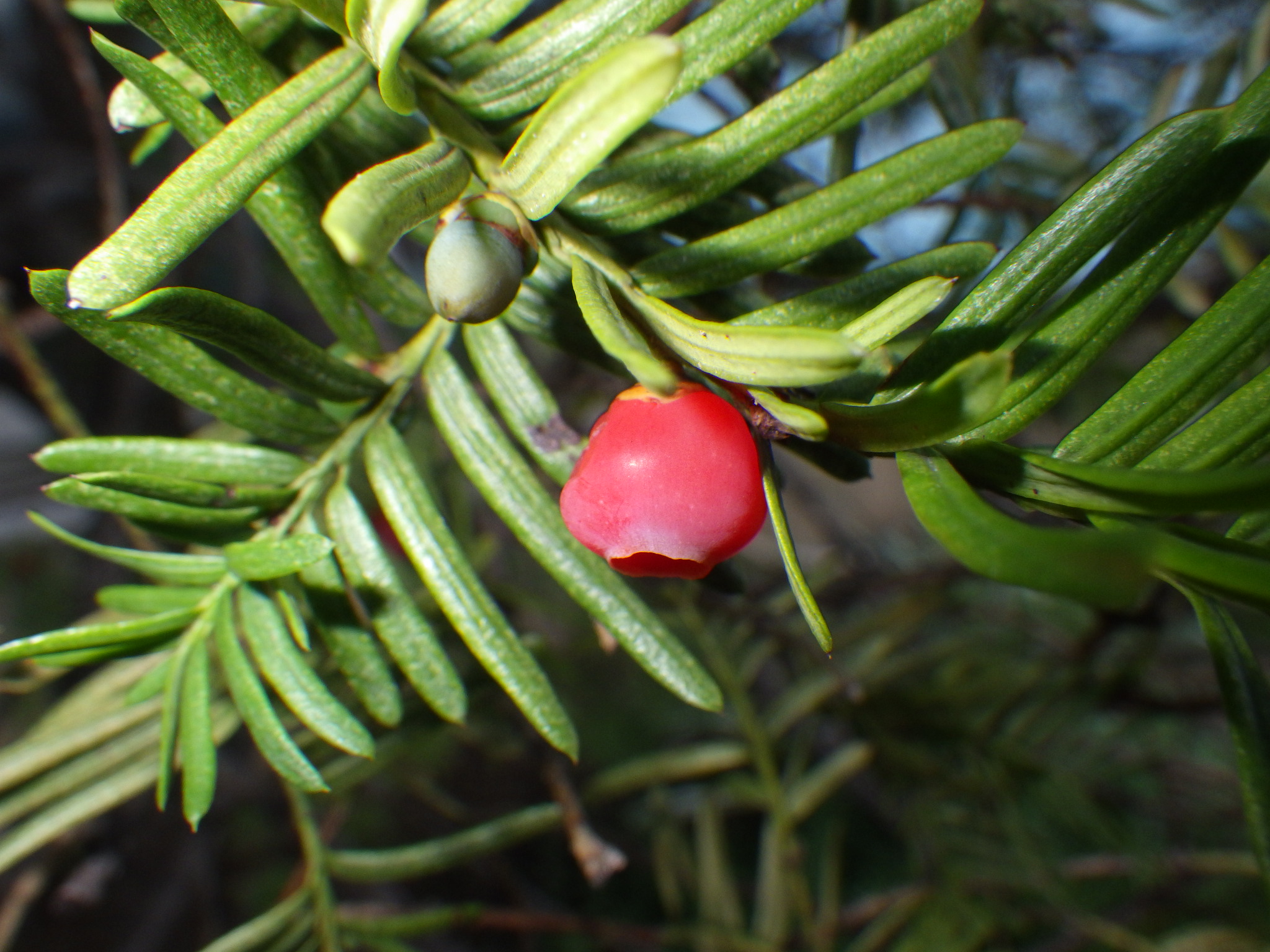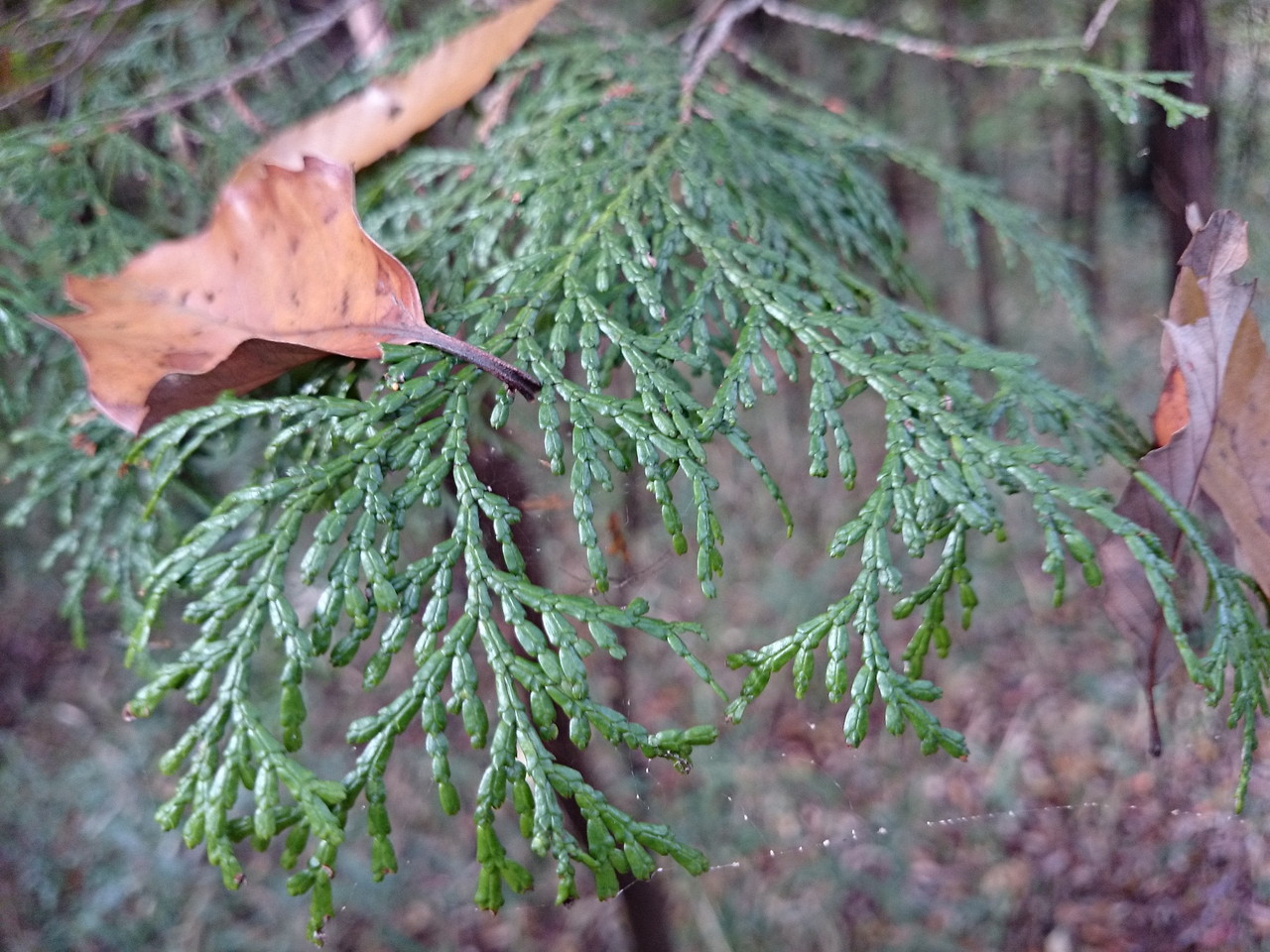
The Cupressaceae family consists of evergreen, rarely deciduous, trees or shrubs. Their leaves are scale-like, needle-like, or linear, arranged alternately, oppositely, or whorled. Flowers are unisexual, monoecious, and rarely dioecious. Male flowers are borne at the tips of branches. Female flowers are also often borne at branch tips and have scales arranged oppositely or whorled. Scales may consist only of seed scales without well-developed bracts, or they may have well-developed bracts. Cones can be woody and dehiscent, or fleshy and non-dehiscent. Approximately 32 genera and 162 species are known worldwide. Nine species from five genera are native to Japan. Many varieties have been cultivated for timber and landscaping purposes, making it difficult to determine whether they are native or non-native. Introduced species are also common. Quercus acutissima, Cunninghamia lanceolata, and Metasequoia are widely planted in parks and other public spaces.
This article provides a comprehensive, illustrated guide to plants belonging to the cypress family.
The basic information is based on the Kanagawa Prefecture Flora Survey Association (2018). Photos are replaced as better ones become available. While the identification is done by the author, please note that misidentifications may be corrected without notice.
- No. 0036 Platycladus orientalis (Japanese Thuja)
- No.0036.a Shonanboku (Calocedrus macrolepis var. formosana)
- No.0039 Asunaro (Thujopsis dolabrata)
- No.0040 Japanese cypress (Chamaecyparis obtusa)
- No.0044 Japanese Spanish mackerel (Chamaecyparis pisifera)
- No.0045.a Golden Thuja, Chamaecyparis pisifera 'Filifera Aurea'‘
- No.0046 Chamaecyparis pisifera 'Filifera'‘
- No.0047.a *Chamaecyparis pisifera 'Plumosa Aurea'*‘
- No. 0049 Juniperus rigida
- No.0050 Juniperus conferta 'Blue Pacific' (Blue Pacific)‘
- No.0051 Juniperus taxifolia var. lutchuensis
- No.0051.1 Shimamuro Juniperus taxifolia
- No.0053 Ibuki Juniperus chinensis var. chinensis
- No.0053.a Juniperus chinensis var. kaizuka
- No.0053.b Tamaibuki Juniperus chinensis 'Globosa'‘
- No. 0055 Juniperus chinensis var. sargentii
- No.0055.a Colorado Juniper (Blue Angel) Juniperus scopulorum 'Blue Angel'‘
- 07.0055.b Thin-skinned Arizona cypress (Blue Ice) Hesperocyparis glabra 'Blue Ice'‘
- No.0055.c Monterey Cypress (Goldcrest) Hesperocyparis macrocarpa 'Goldcrest'‘
- No.0055.d Cupressus sempervirens
- No.0056 Japanese Cedar (Cryptomeria japonica)
- No.0057.a Taxodium distichum var. distichum
- No.0058.a *Metasequoia glyptostroboides*
- No.0058.b American Cedar (Sequoia sempervirens)
- References
No. 0036 Platycladus orientalis (Japanese Thuja)
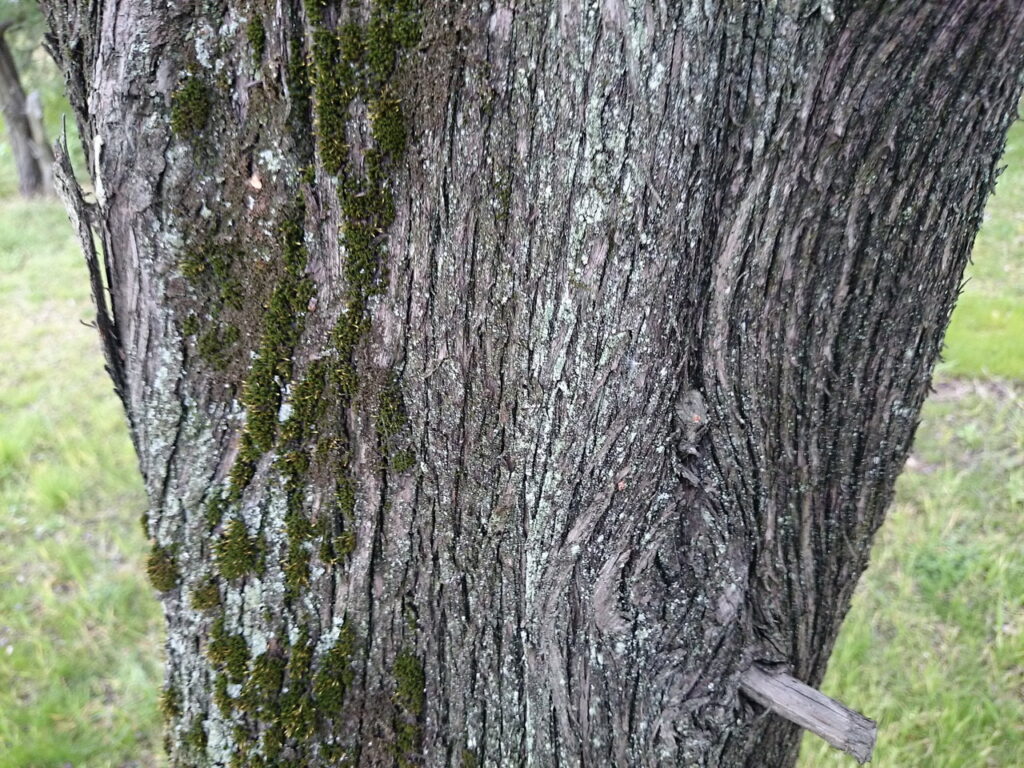
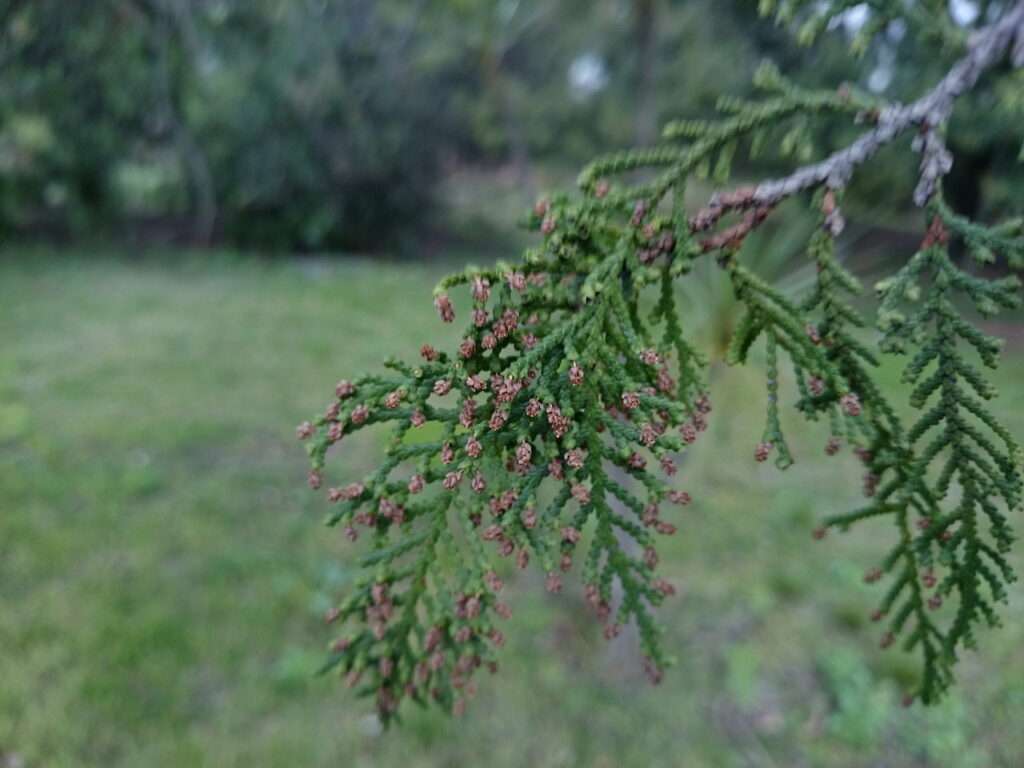
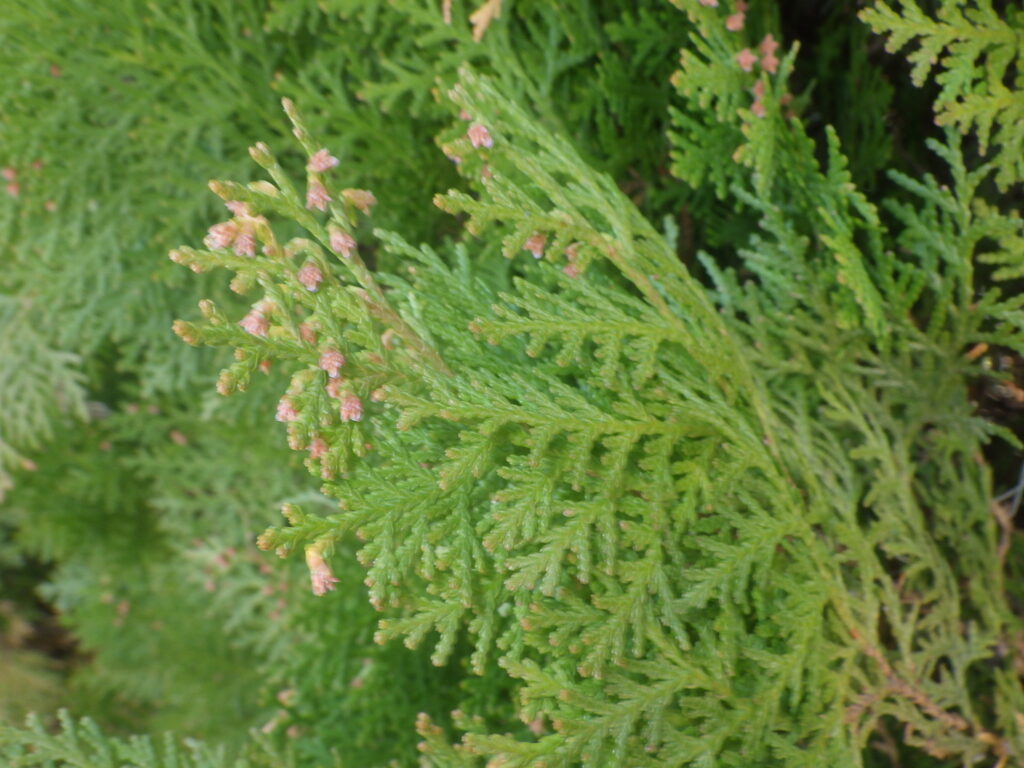
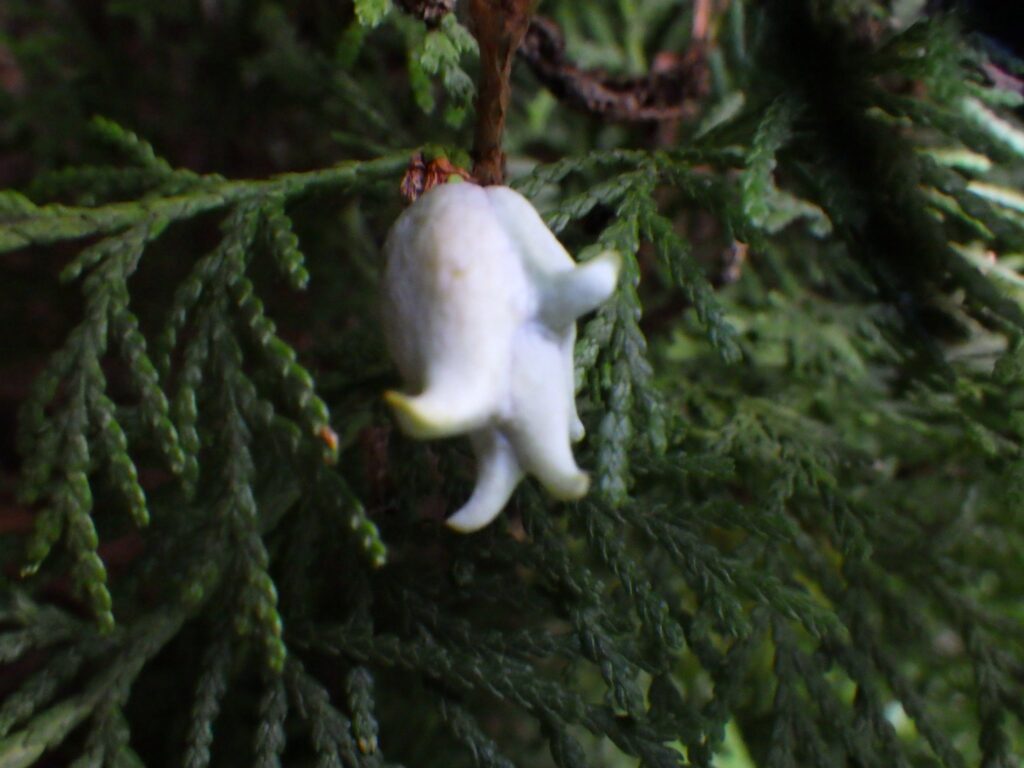
Evergreen small tree to shrub. Scale-like leaves, approximately 2mm long. Unlike cypress trees, which spread their branches and leaves horizontally, this species spreads its leaves vertically, and there is almost no difference between the upper and lower surfaces, making it easy to distinguish. Its bumpy fruit and teardrop-shaped tree form are also distinctive features. Native to China. Somewhat common as a garden or park tree. Those planted are mostly cultivated varieties native to Japan.
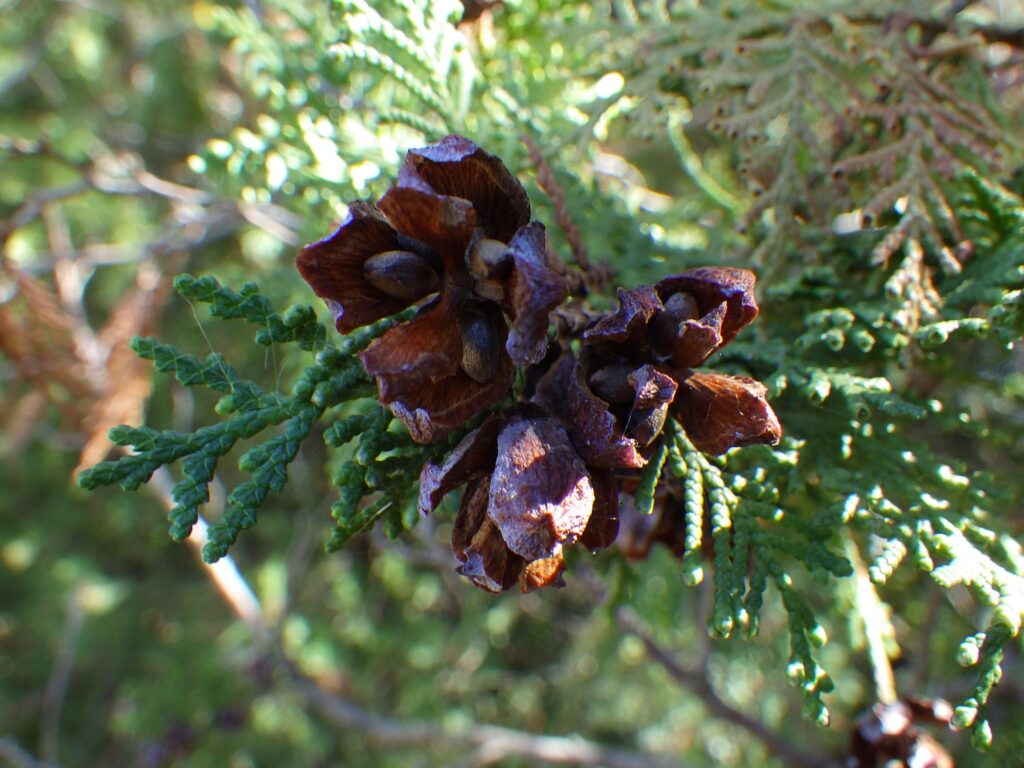
No.0036.a Shonanboku (Calocedrus macrolepis var. formosana)
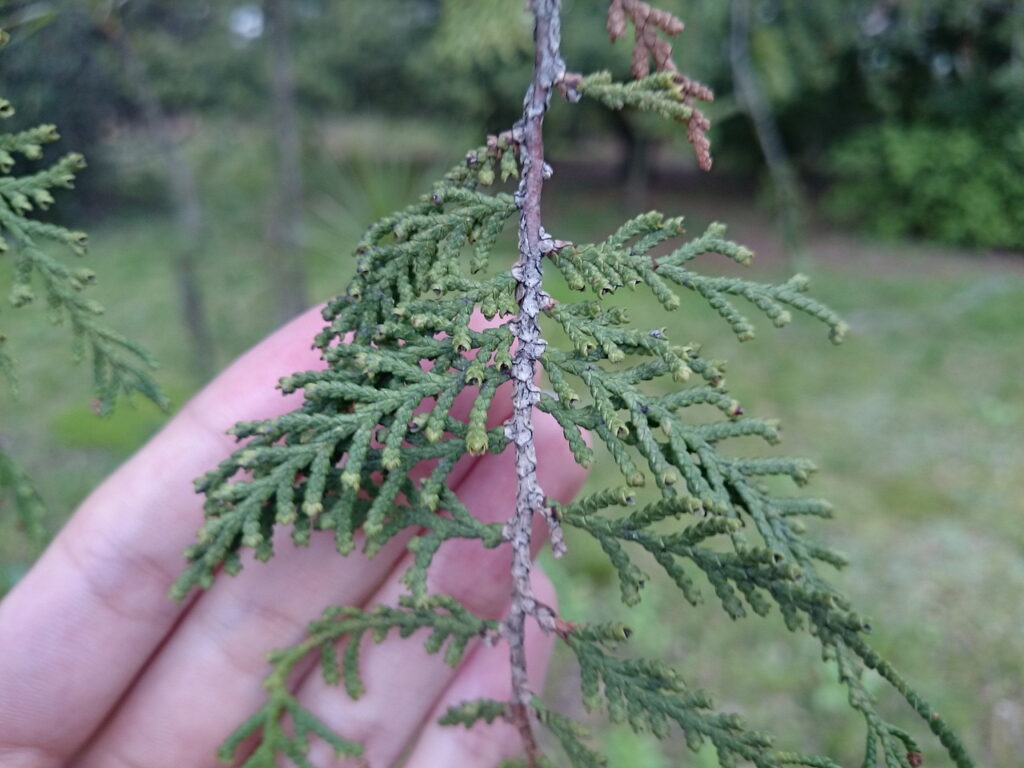
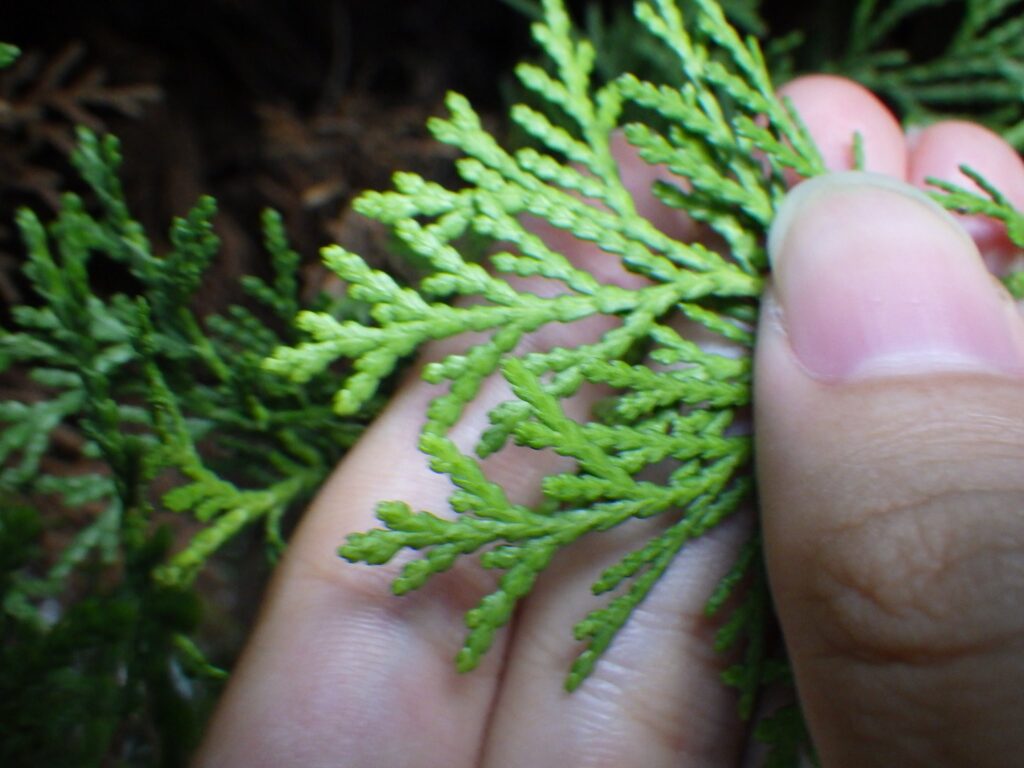
This is an evergreen tree. It grows into a large tree, and its trunk is often curved. The bark is smooth and purplish-reddish-brown. The branches are forked and arranged alternately. The leaves are scale-like and blunt, about 1.5-2.5 mm wide, dark green on the outside and light green on the inside. The pistil is oblong, 10-15 mm long, slightly curved, with four scales, the two on the sides being fertilized. One or two seeds develop inside each scale. The seeds are one or two in number, 8-12 mm long, and have a wing on one side. It is native to northern and central Taiwan, inhabiting altitudes of 33-1,900 m above sea level.
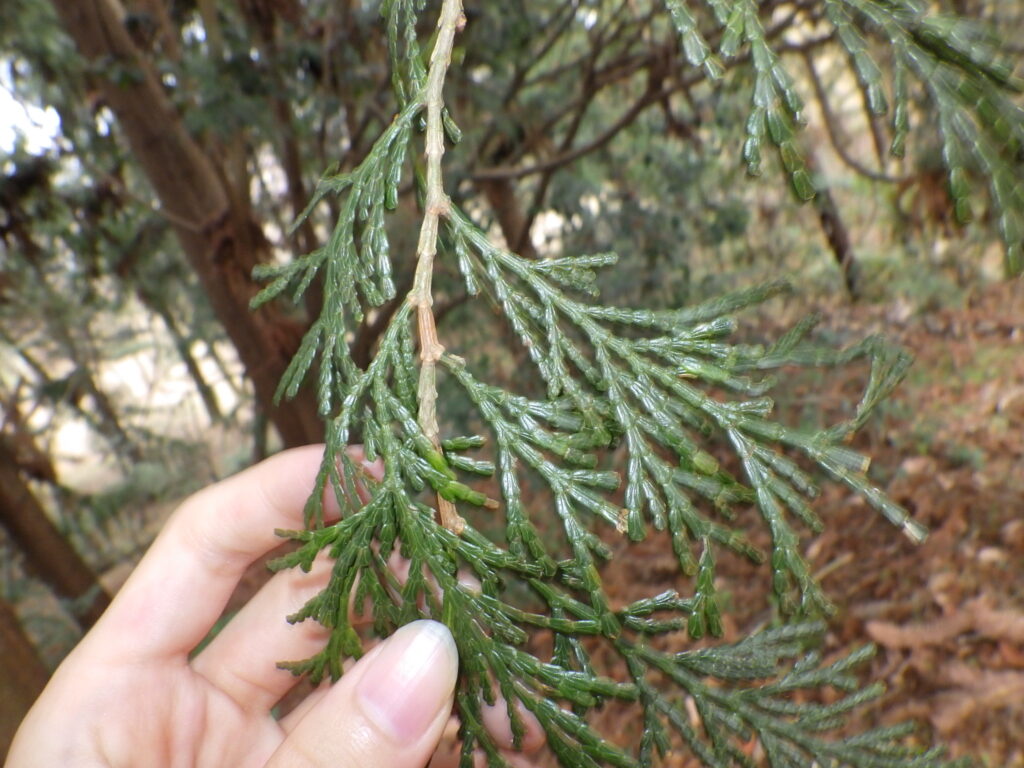
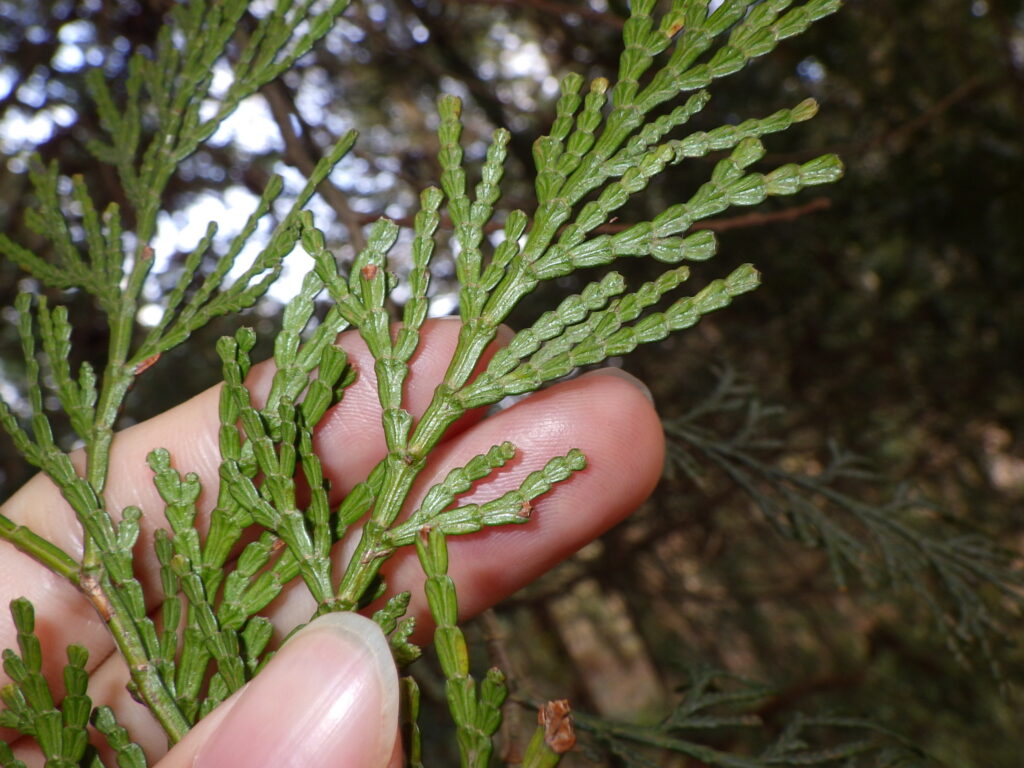
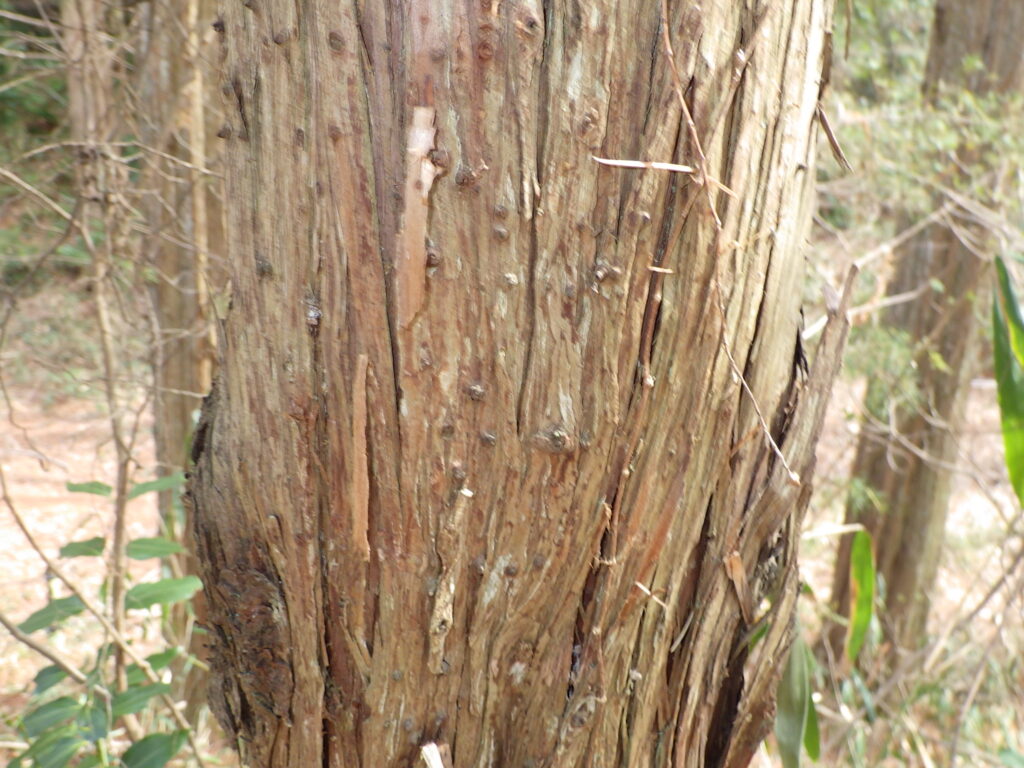
No.0039 Asunaro (Thujopsis dolabrata)
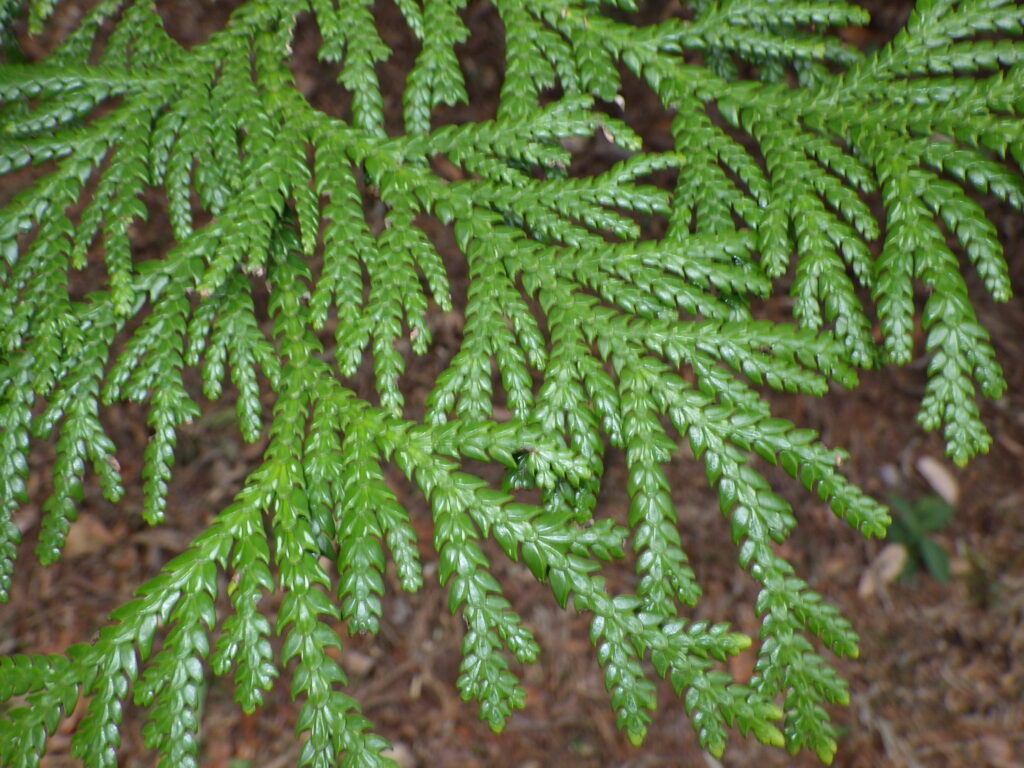
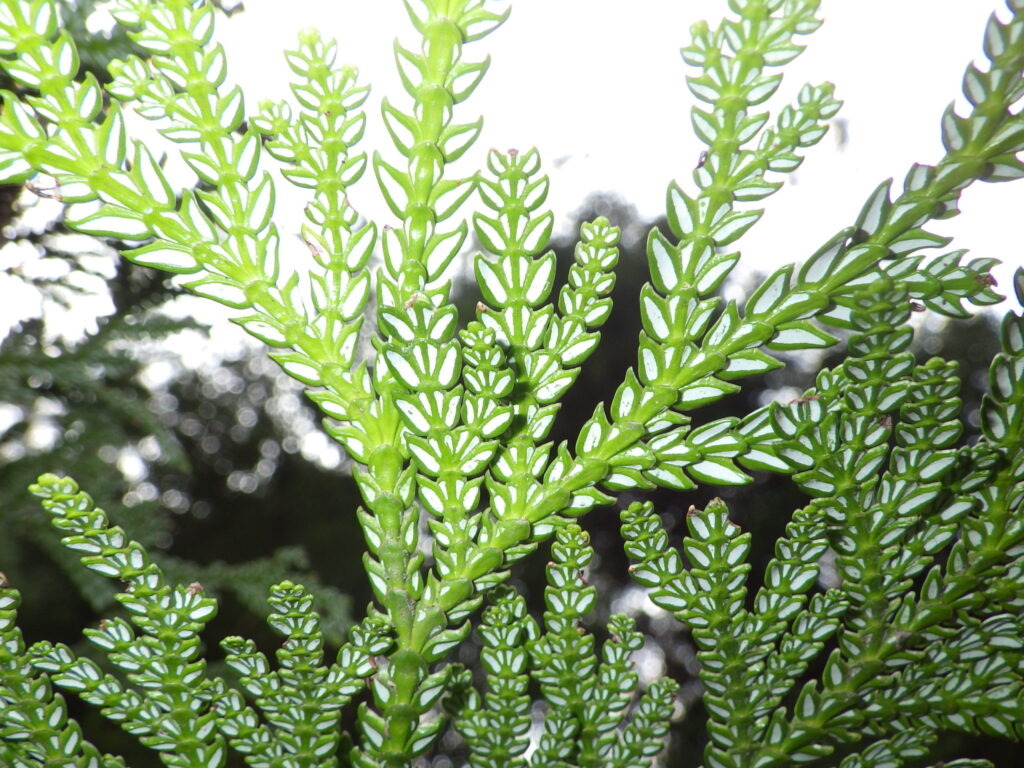
An evergreen tree. The bark is dark brown, splits vertically, and peels off in thin layers. The leaves are large, scale-like, arranged oppositely, with blunt tips, and the tips of the lateral leaves are slightly curved inward. The underside of the leaves is conspicuously covered with triangular to boat-shaped white stomata. The seed scales of the cones are thickened and slightly curved outward, with a horn-like projection at the tip of the dorsal side. It is distributed in Honshu, Shikoku, and Kyushu. Many are cultivated.
No.0040 Japanese cypress (Chamaecyparis obtusa)
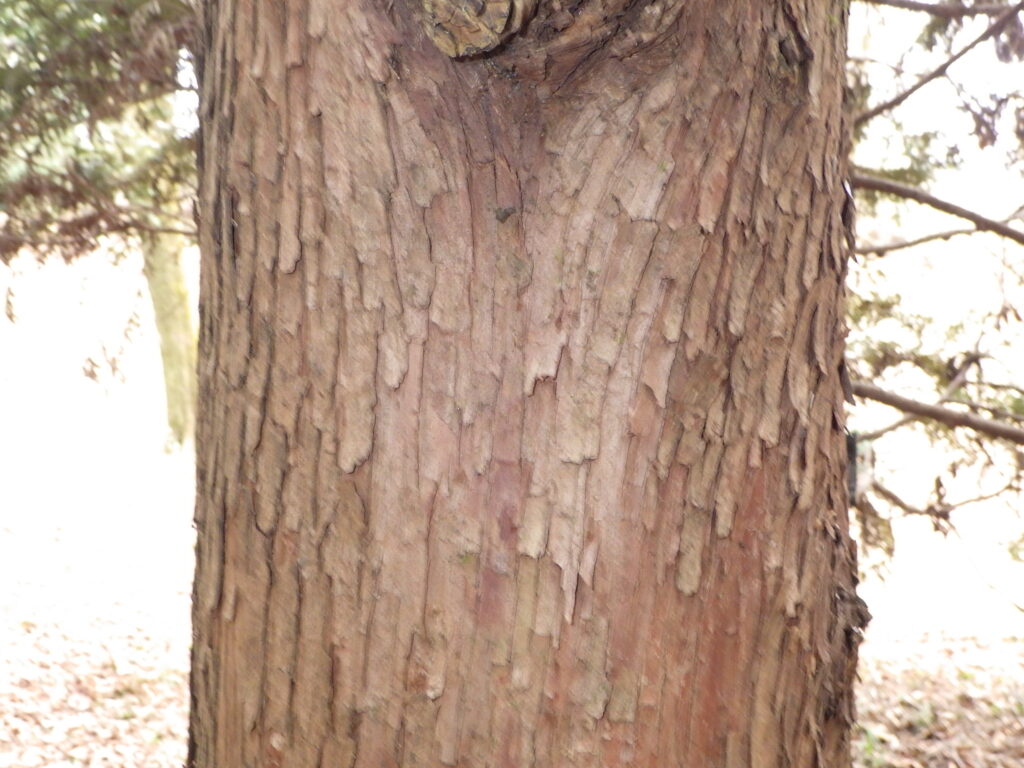
This is an evergreen tree. Its bark is reddish-brown, fibrous, and peels off in thin, broad strips. The lateral leaves are larger than the central leaves, with blunt, inwardly curved tips, and are not painful to the touch. The cones are spherical, 8-12 mm in diameter, and ripen to a brown color. It is distributed in Honshu (south of Fukushima Prefecture), Shikoku, and Kyushu (up to Yakushima), and is widely planted in various locations. There are many horticultural varieties, such as Kamakura cypress, Suiryu cypress, and Kujaku cypress, and they are widely planted in parks and private gardens.
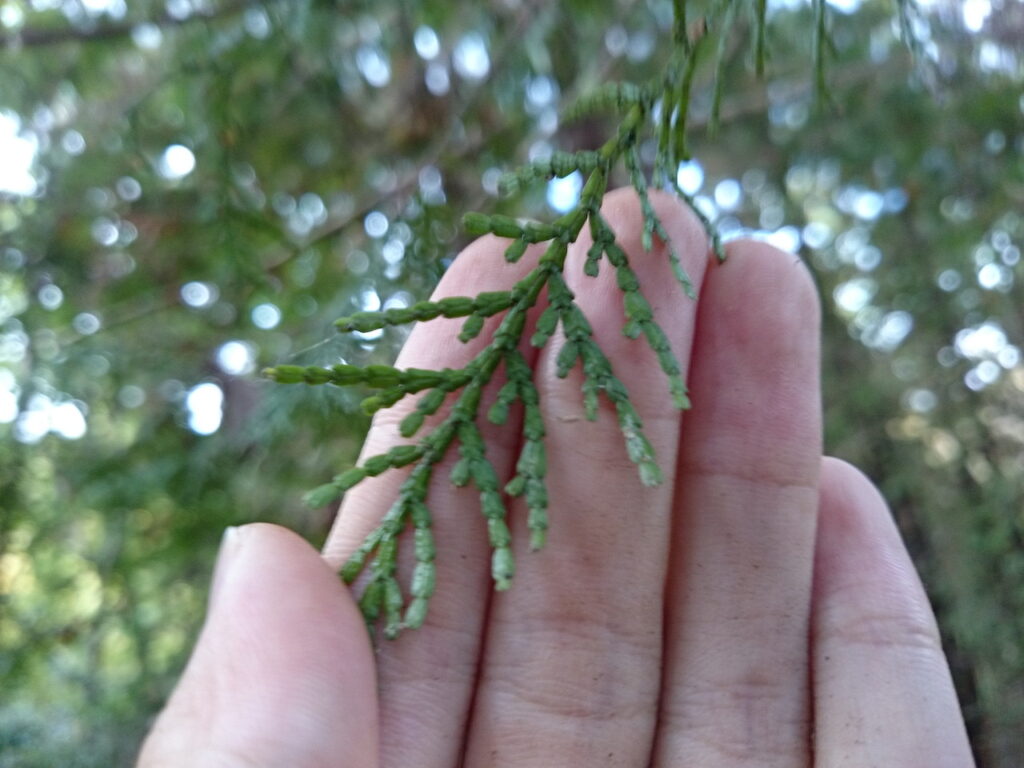
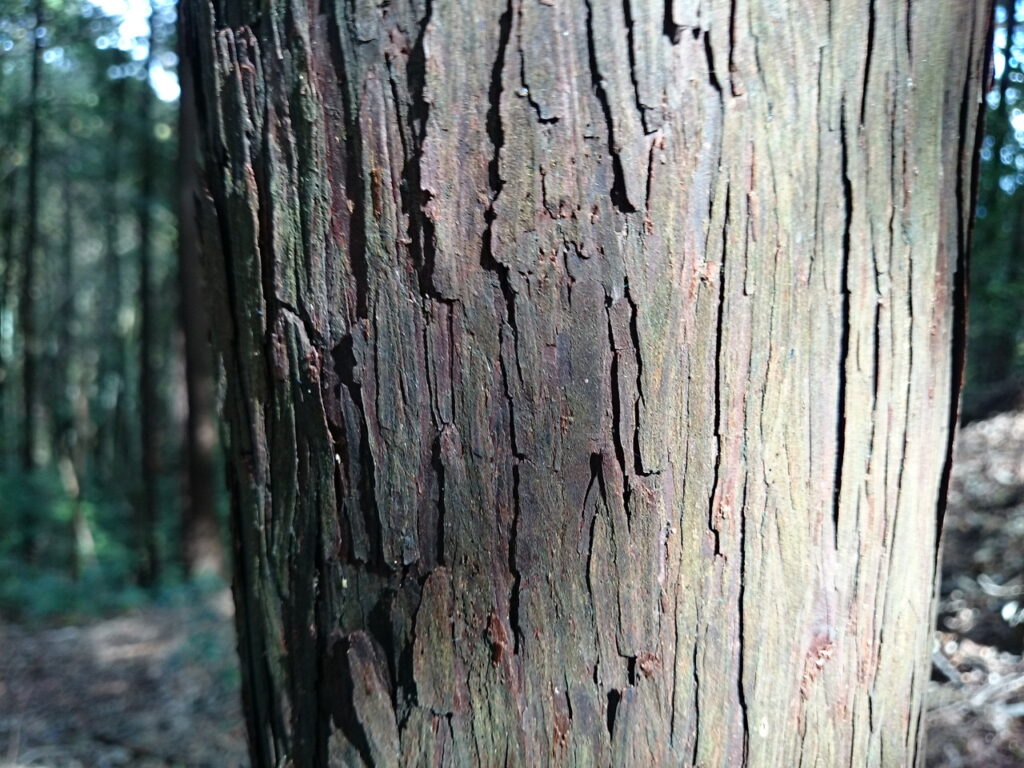
No.0044 Japanese Spanish mackerel (Chamaecyparis pisifera)
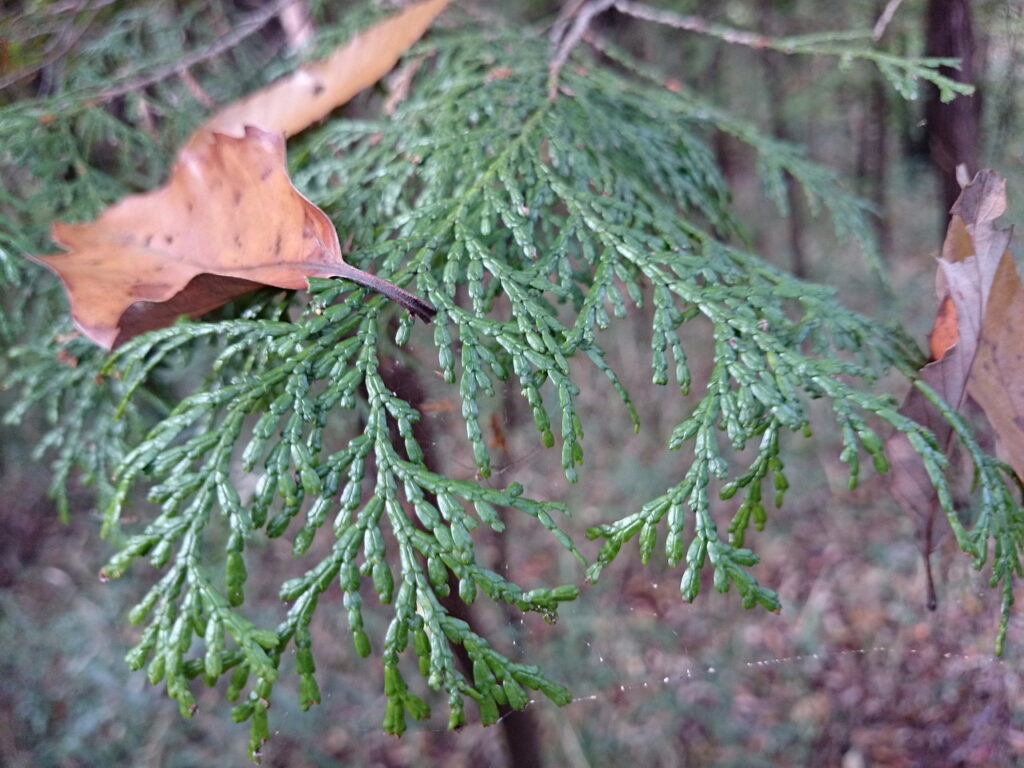
This is an evergreen tree. Its bark is brown, fibrous, and peels off in broad, longitudinal strips, though slightly narrower than that of the Japanese cypress (Hinoki). The lateral leaves are roughly the same size as the central leaves, with sharp, outward-spreading tips that are painful to the touch. The cones are bumpy and spherical, 5-7 mm in diameter, and ripen to a brown color. It is distributed in Honshu (south of Iwate Prefecture), Shikoku, and Kyushu (up to Yakushima). It is widely planted in various regions, making it difficult to determine whether a specimen is wild or not.
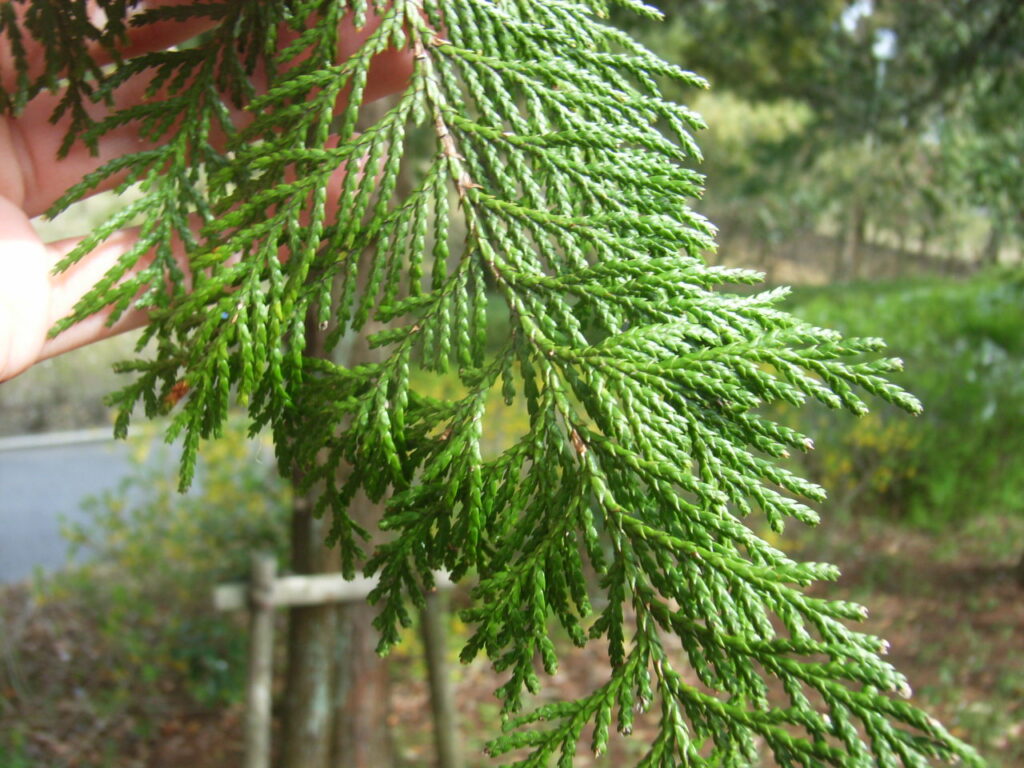
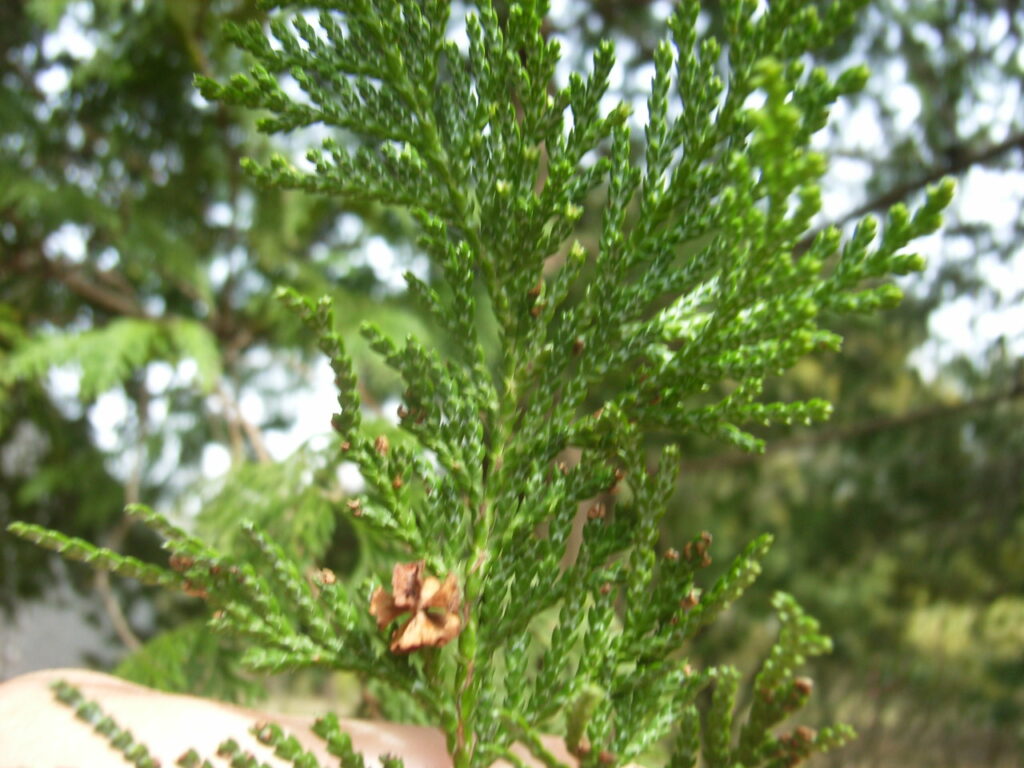
No.0045.a Golden Thuja, Chamaecyparis pisifera 'Filifera Aurea'‘
Evergreen small tree (Hayashi, 2014). A cultivated variety of Japanese cypress (Chamaecyparis obtusa). The branch tips are long and thread-like, with the upper surface turning yellow and the underside having a few white stomatal bands similar to those of Japanese cypress. Tree height 3-5m. Commonly used as a garden tree.
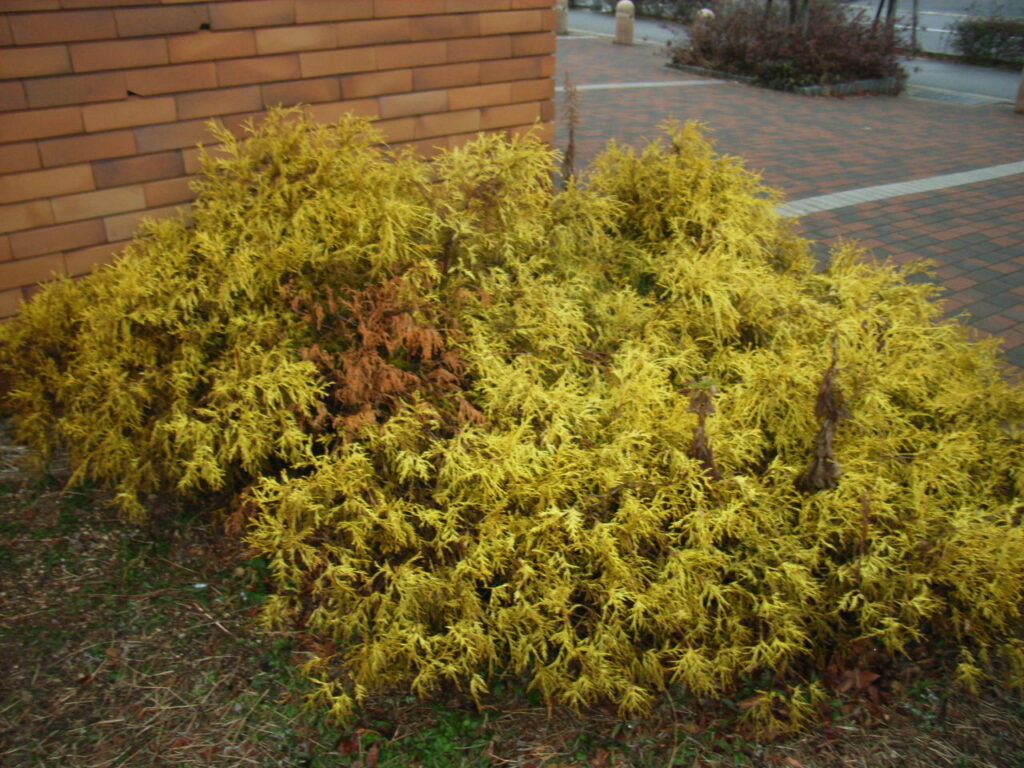
No.0046 Chamaecyparis pisifera 'Filifera'‘
A cultivated variety of Japanese cypress (Chamaecyparis obtusa). It resembles Chamaecyparis japonica 'Ougonhiyokuhiba' but does not turn yellow (Hayashi, 2014).
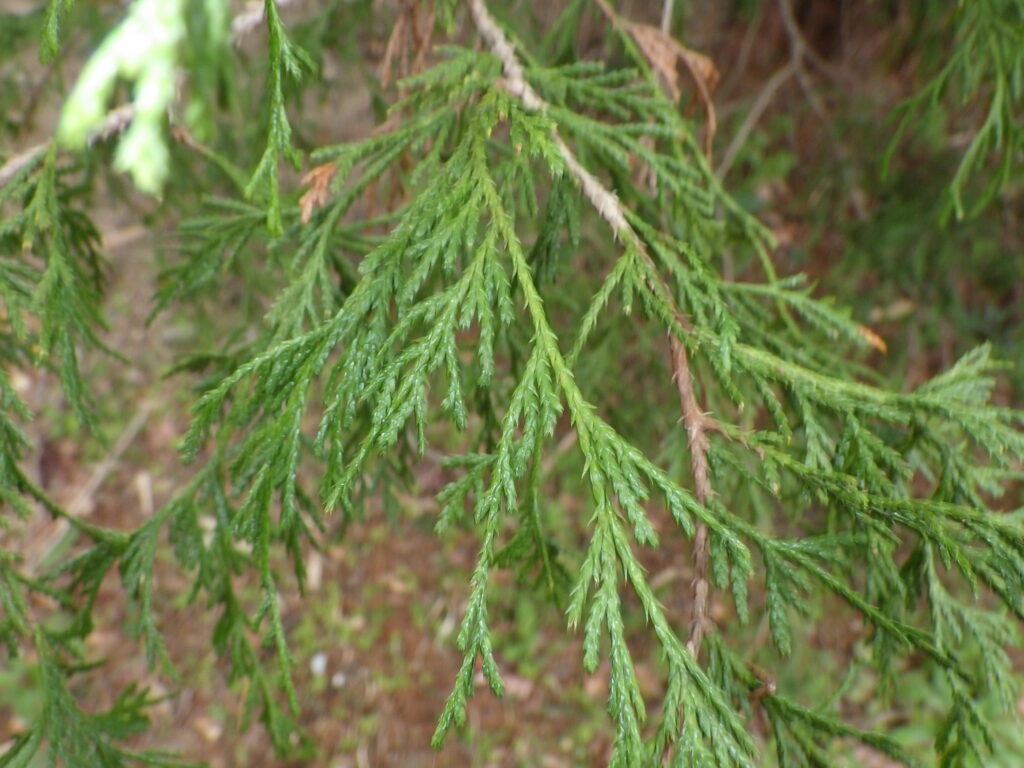
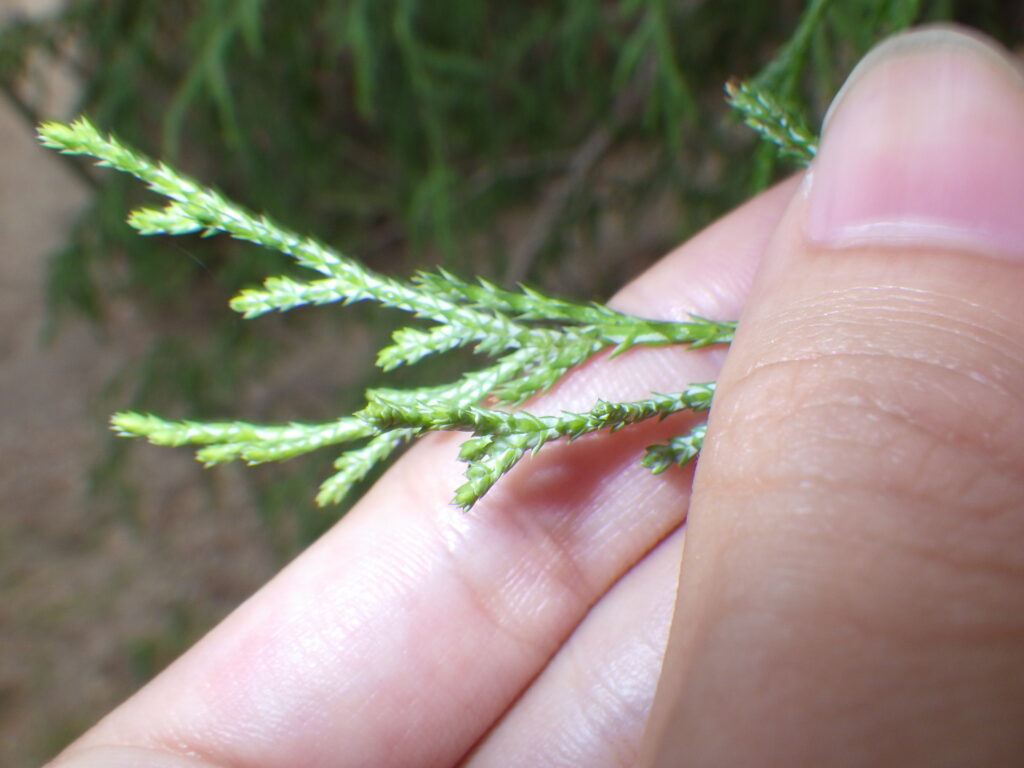
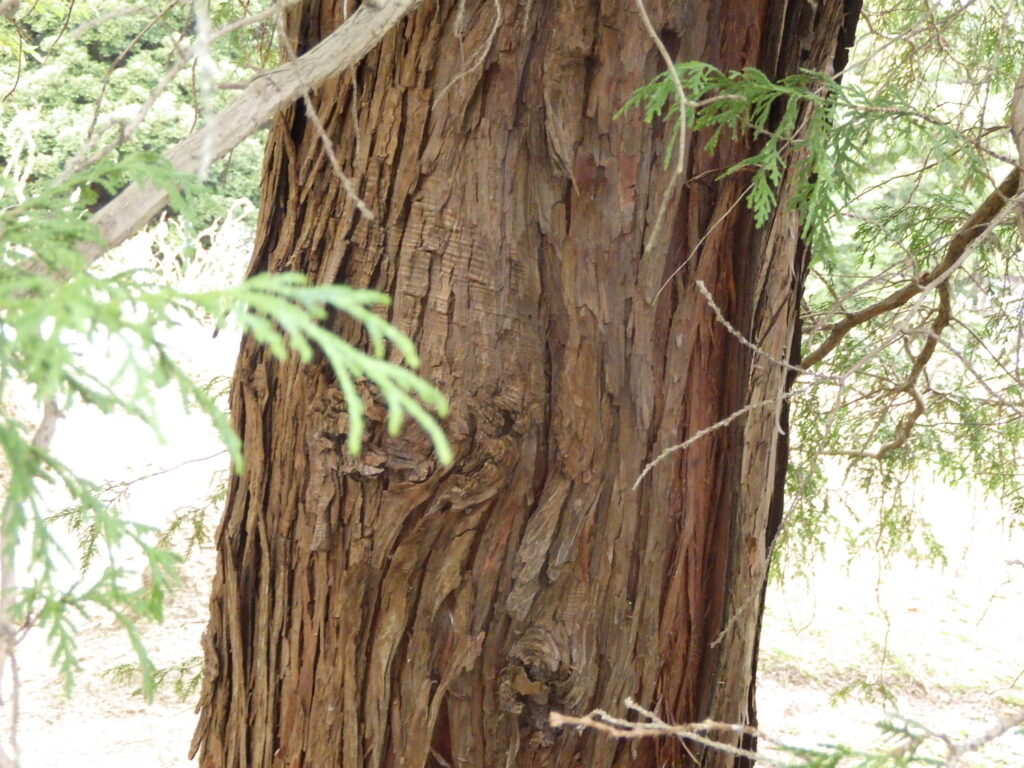
No.0047.a *Chamaecyparis pisifera 'Plumosa Aurea'*‘
Evergreen small to tall tree (Hayashi, 2014). A cultivated variety of Japanese cypress (Sawara cypress), somewhat common as a garden tree or hedge. The leaves are needle-shaped with short tips, and the leaves at the branch tips are yellowish-green. The tree grows to a height of about 10m.
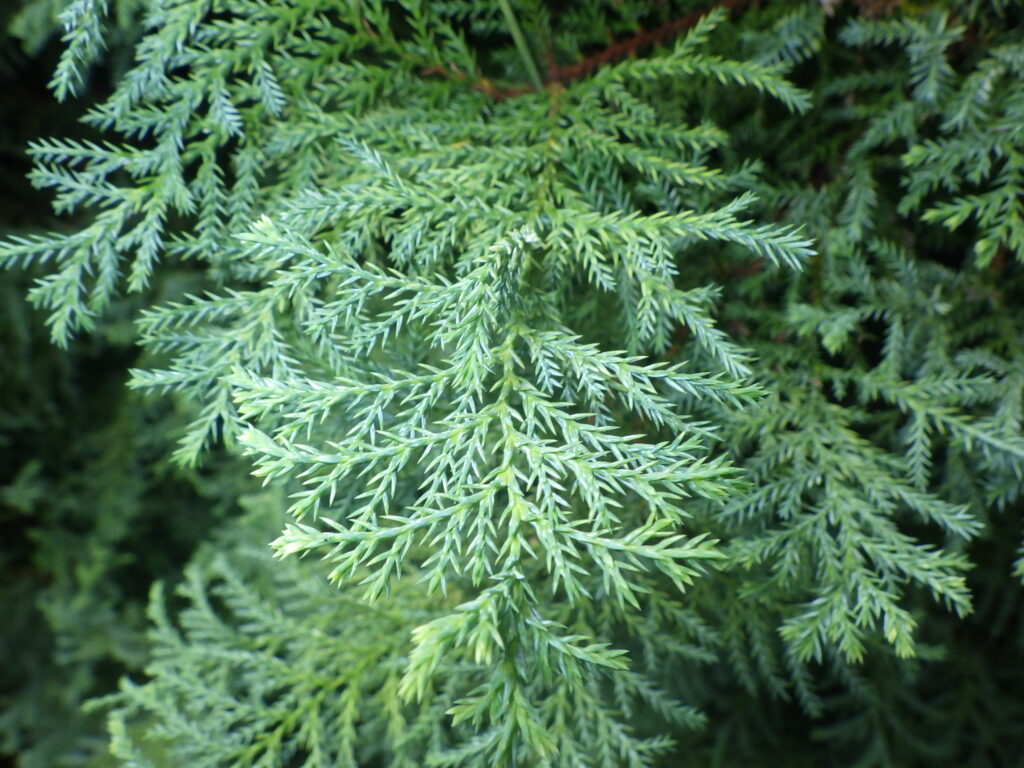
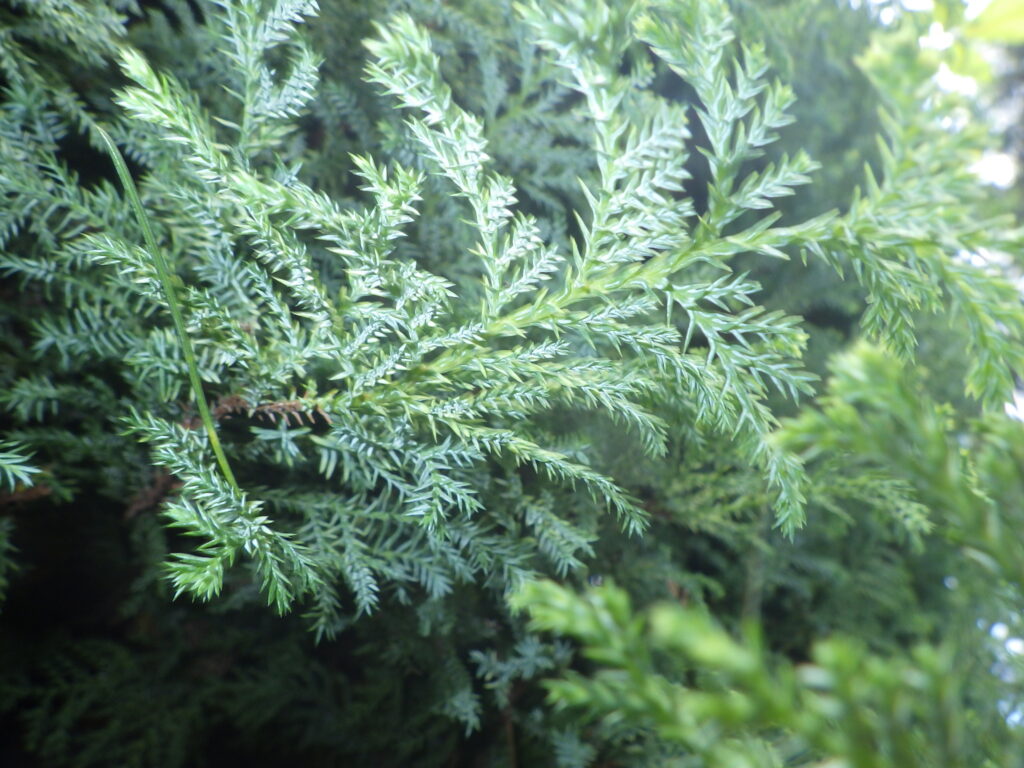
No. 0049 Juniperus rigida
Also known as Juniper or Muro. An evergreen small tree or shrub. The bark is grayish-brown, splits longitudinally, and peels off in thin, fibrous strips. The leaves are triangular in cross-section, needle-shaped, 10-20 mm long and about 1 mm wide, with sharply pointed tips that are painful to the touch. It is dioecious. It flowers in April. The cones ripen in the autumn of the following year, becoming fleshy, blackish-purple berries with a powdery white coating. Distributed in Honshu (south of Iwate Prefecture), Shikoku, Kyushu; Korea, and China. It grows on rocky slopes in hills and mountains.
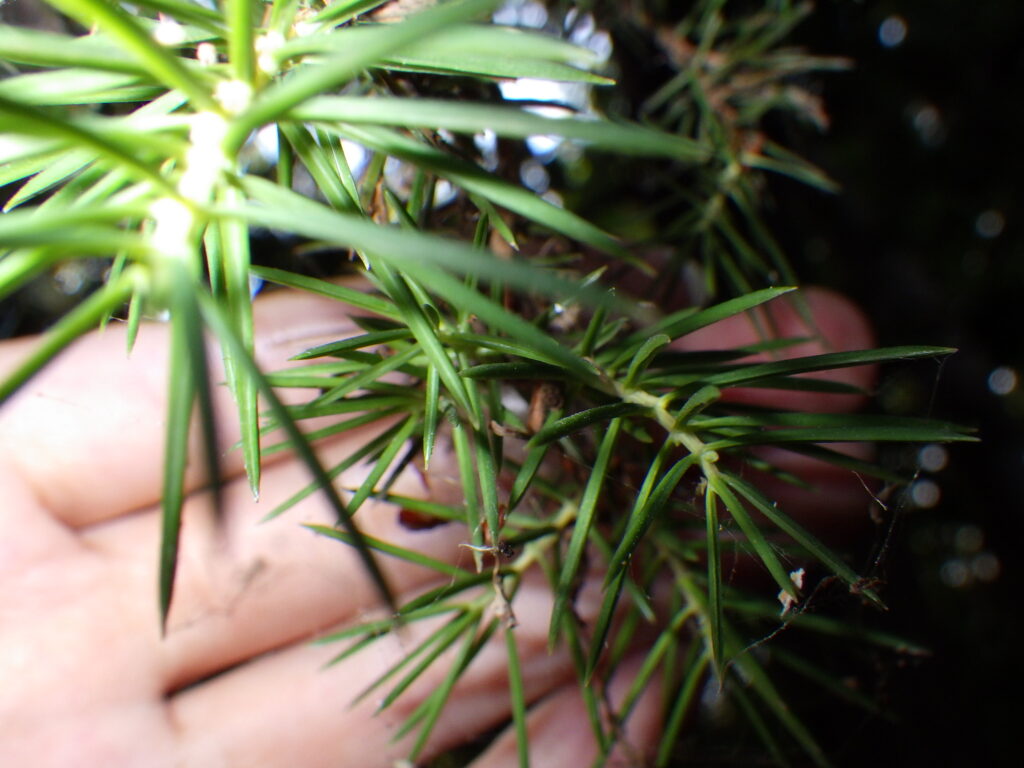
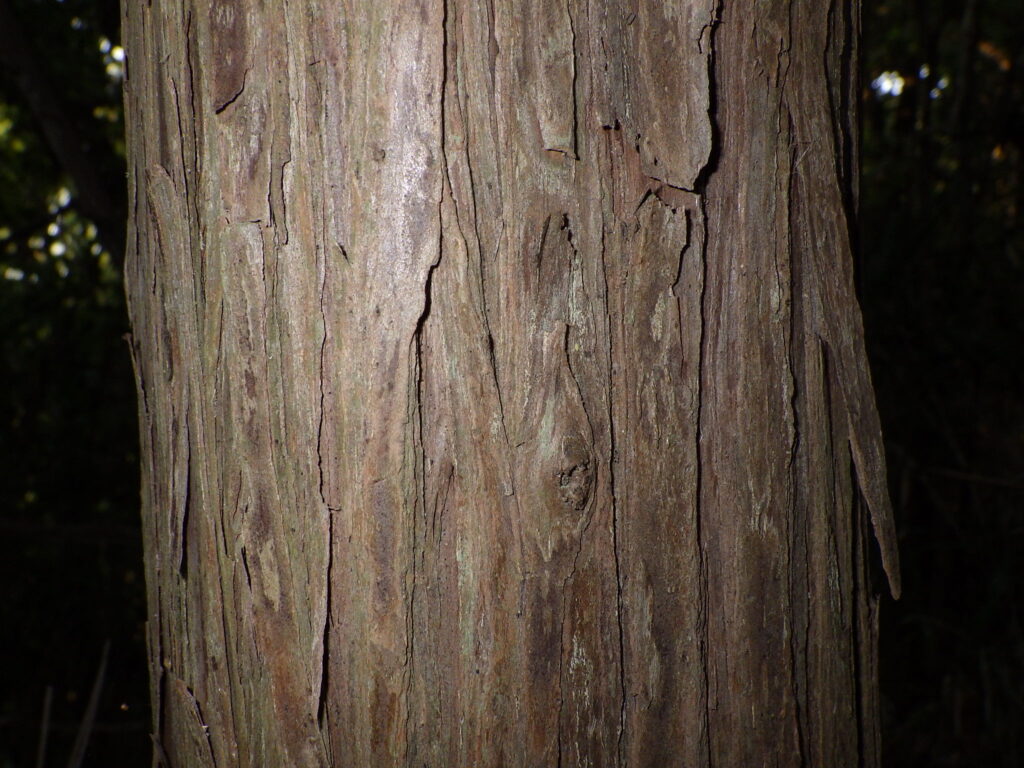
No.0050 Juniperus conferta 'Blue Pacific' (Blue Pacific)‘
An evergreen creeping shrub. The leaf morphology is similar to that of Juniperus chinensis. It flowers in May. The cones are slightly larger than those of Juniperus chinensis. It is distributed in Hokkaido, Honshu (the Sea of Japan coast from Aomori Prefecture to Shimane Prefecture, and the Pacific coast from Iwate Prefecture to Wakayama Prefecture, excluding the Izu Peninsula and the Izu Islands), Shikoku, Kyushu, and Sakhalin. It grows in sandy areas along the coast. It is thought to be a Juniperus chinensis adapted to coastal environments.
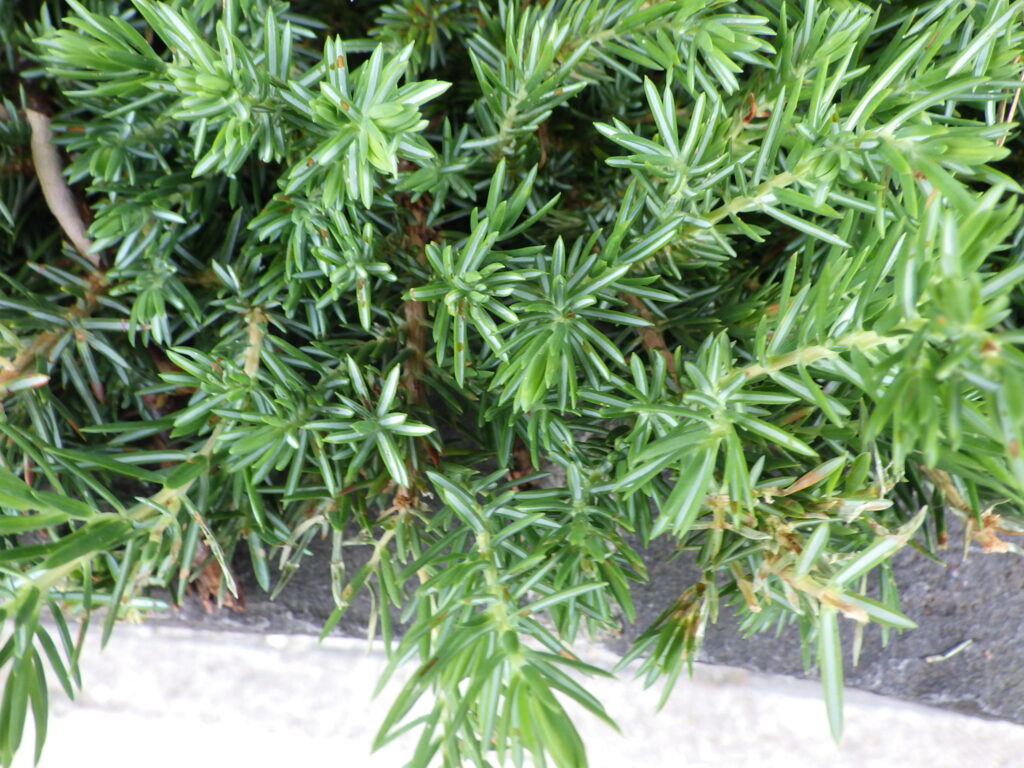
No.0051 Juniperus taxifolia var. lutchuensis
Also known as Oshima Juniper. An evergreen creeping shrub. Its tree shape is similar to Juniperus chinensis, but its leaves have slightly blunt tips, shallow grooves on the upper surface, and broad white stomatal bands in the grooves, with a raised central section forming two rows. It is distributed in Honshu (Izu Islands, Boso Peninsula, Miura Peninsula, Izu Peninsula, Omaezaki, Atsumi Peninsula, Kii Peninsula), Kyushu (Tanegashima), and the Ryukyu Islands. It grows on rocky coastal areas. Those distributed outside the Ryukyu Islands have leaf tips that are intermediate between Juniperus okinawaensis and Juniperus chinensis, and are sometimes distinguished as Oshima Juniperus (J. conferta var. maritima).
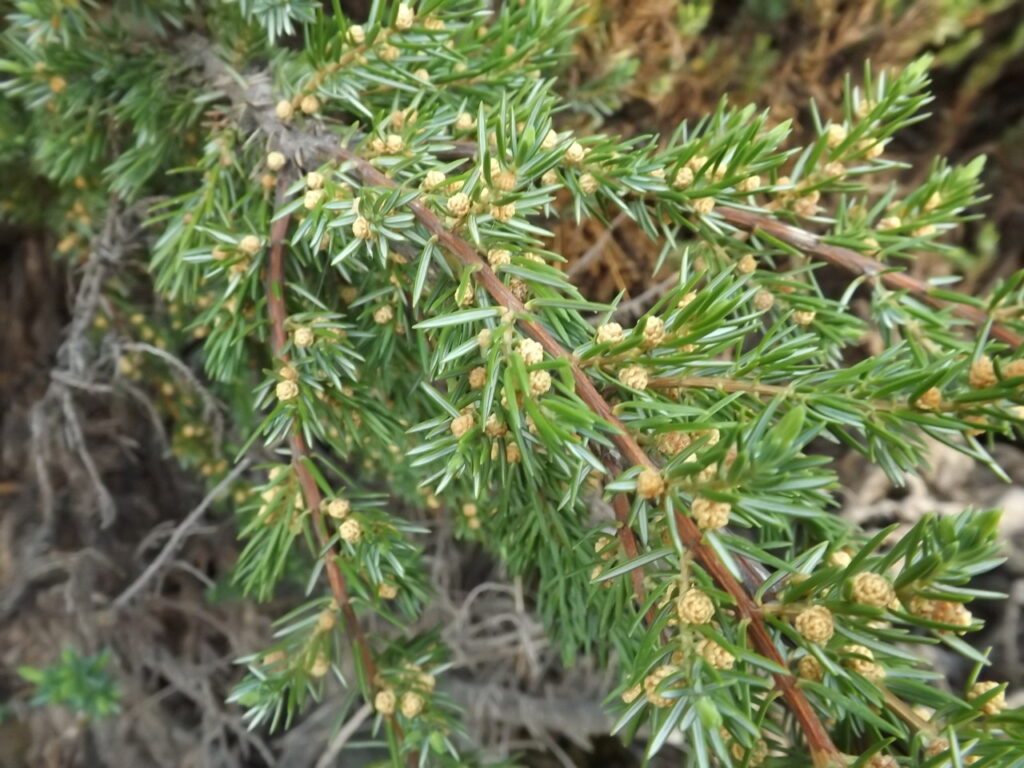
No.0051.1 Shimamuro Juniperus taxifolia
An evergreen shrub. It grows to a height of about 20 cm to 3 m. In the windy, rocky areas of Anijima, it creeps along the ground like a ground cover, while in sheltered, dry shrub forests, it grows upright as a small tree about 3 m tall. It flowers from January to April. It is dioecious (having separate male and female plants). It bears fruit from December to April. It takes a year after pollination for the fruit to ripen to a reddish-brown color. It is distributed in Mukojima, the Chichijima Islands, and the Hahajima Islands of the Ogasawara Islands.
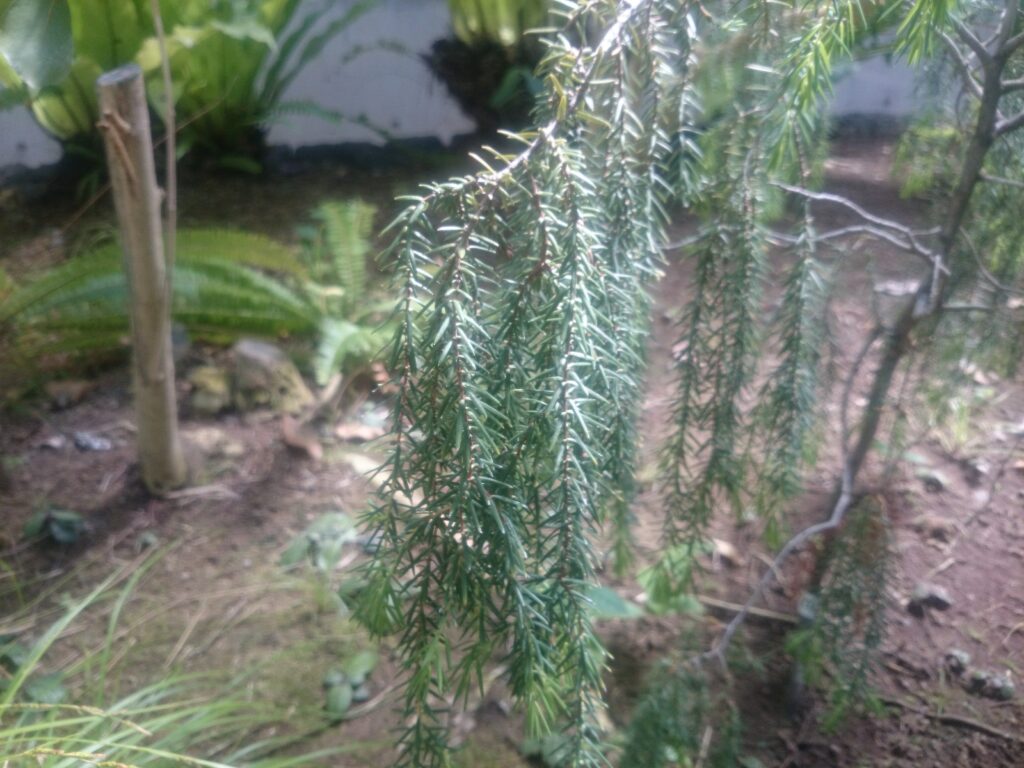
No.0053 Ibuki Juniperus chinensis var. chinensis
Also known as Juniperus chinensis or Juniperus ibukiensis. It is an evergreen tree or small tree, and its main trunk is often twisted. The bark is reddish-brown, splits longitudinally, and peels off in thin layers. Most of the leaves are scale-like and arranged in opposite pairs, but sometimes needle-like leaves arranged in whorls of three are mixed in. The scale-like leaves are ovate-rhomboid with a blunt tip and are about 1.5 mm long. The needle-like leaves are 5-10 mm long, with a notched upper surface and two stomatal bands. It is dioecious, rarely monoecious. It flowers from April to May. The cones ripen in the autumn of the following year, are spherical, 6-8 mm in diameter, and purplish-black with a powdery white coating. It is distributed in Honshu (south of Iwate Prefecture), Shikoku, Kyushu, Korea, China, and Mongolia. It is often planted in shrines and other places. It is rarely found growing wild on rocky shores.
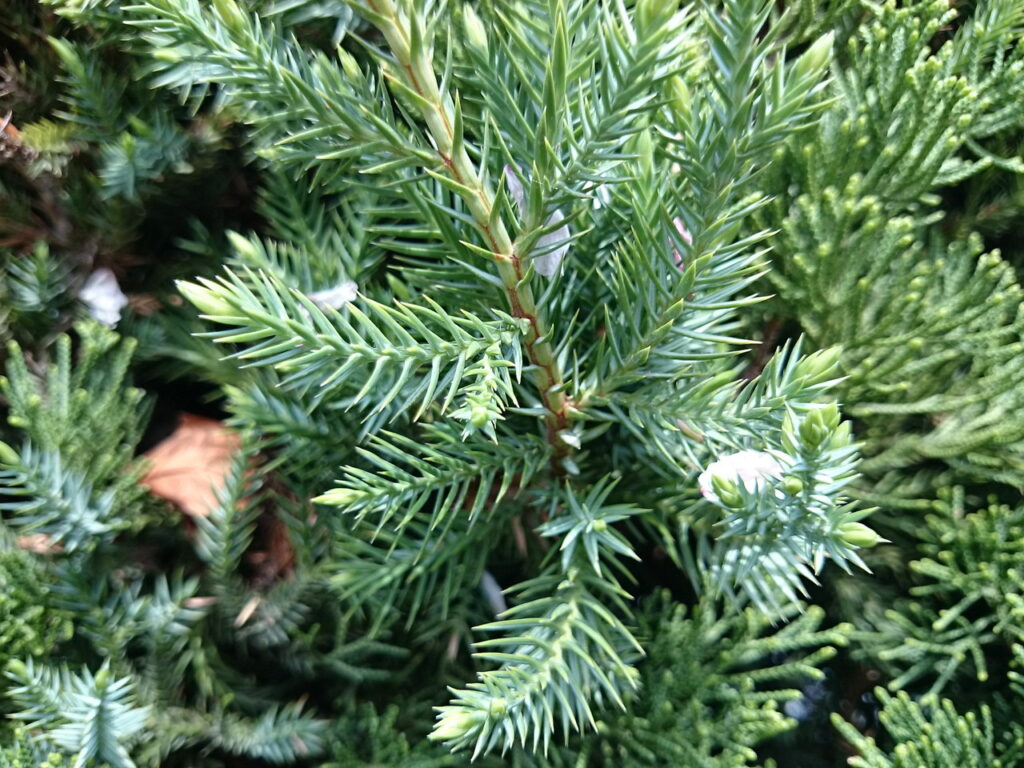
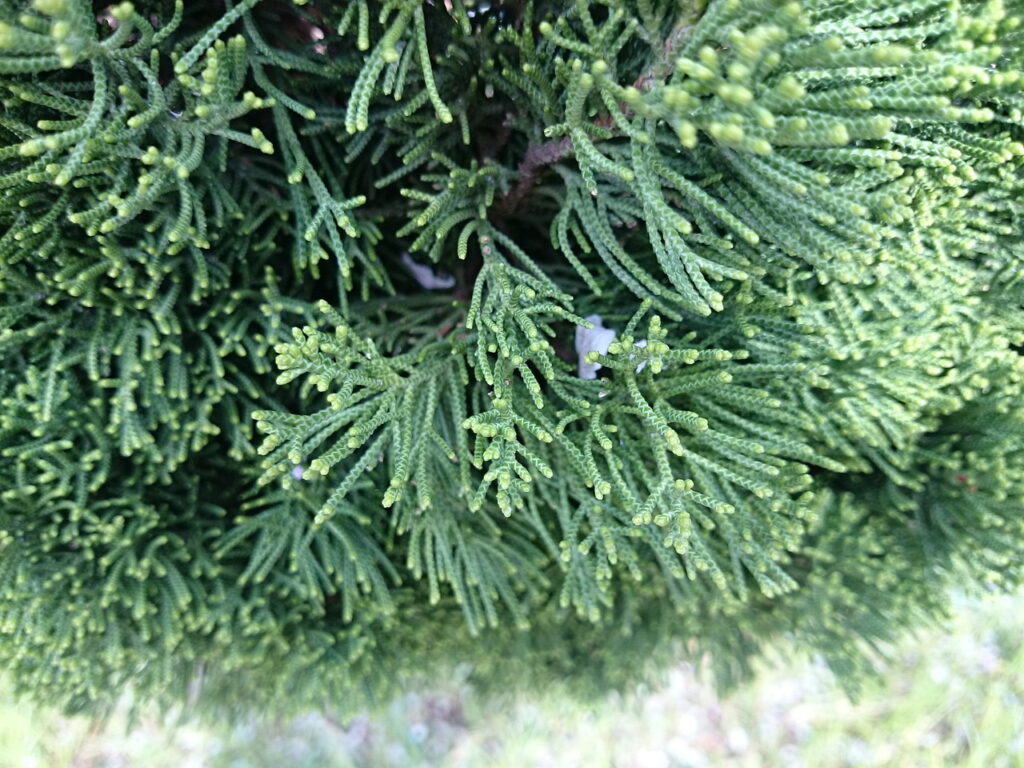
No.0053.a Juniperus chinensis var. kaizuka
This is a cultivated variety of the Japanese laurel (Juniperus chinensis). Unlike the Japanese laurel, it maintains a neat, unruly shape, with its lateral branches spiraling to form a well-proportioned cone, making it widely planted in parks, gardens, and hedges.
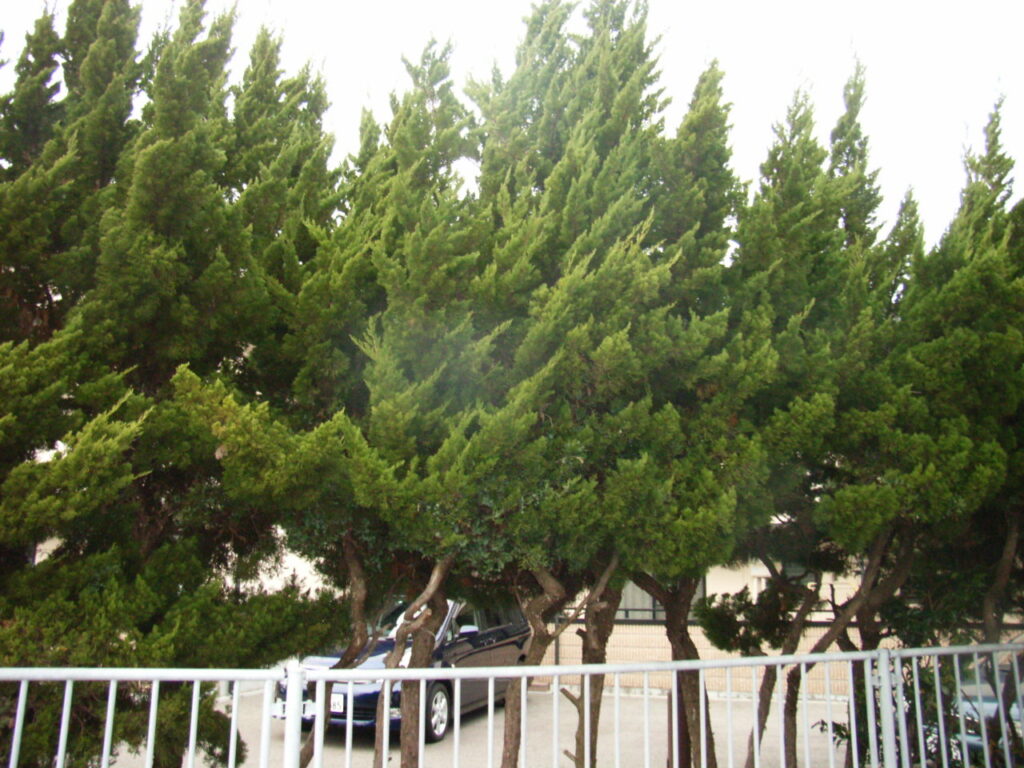
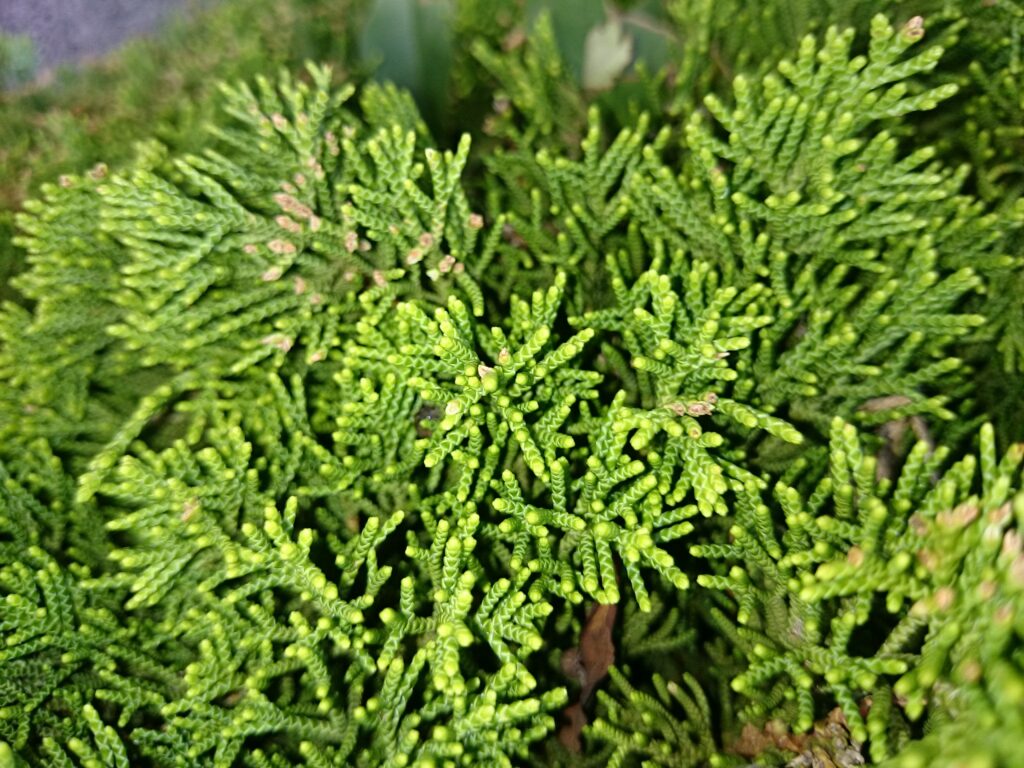
No.0053.b Tamaibuki Juniperus chinensis 'Globosa'‘
A cultivated variety of Juniperus chinensis. It is a shrub that grows to about 1 meter in height, with a rounded, ball-shaped form, and is fairly common as a garden tree.
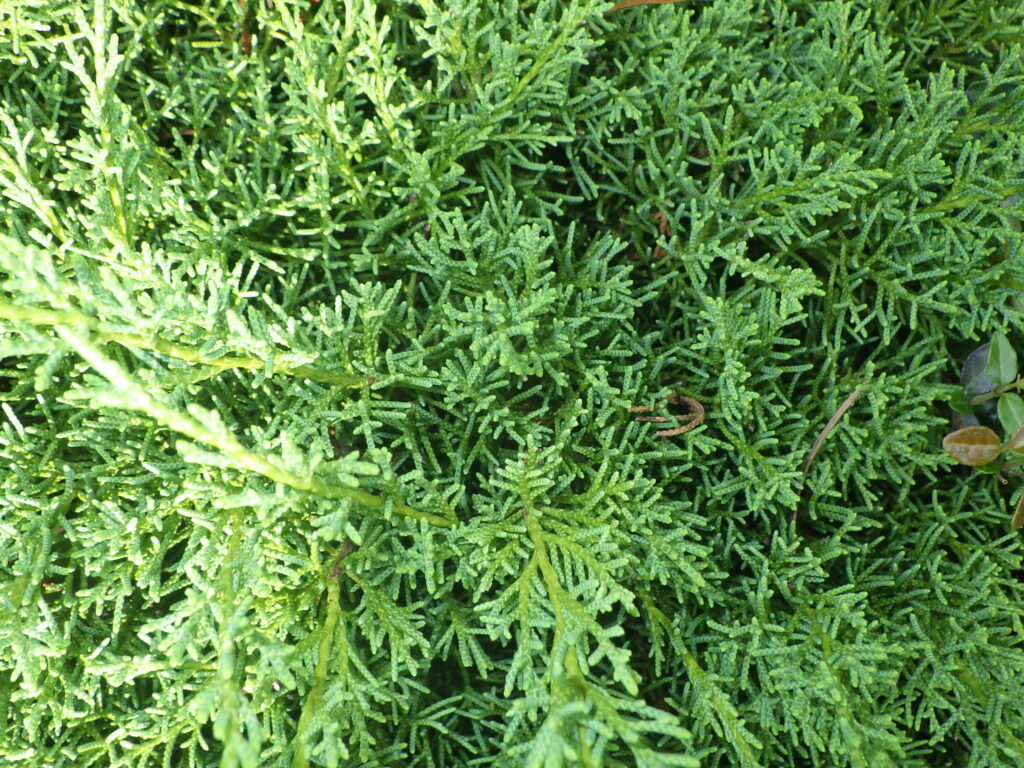
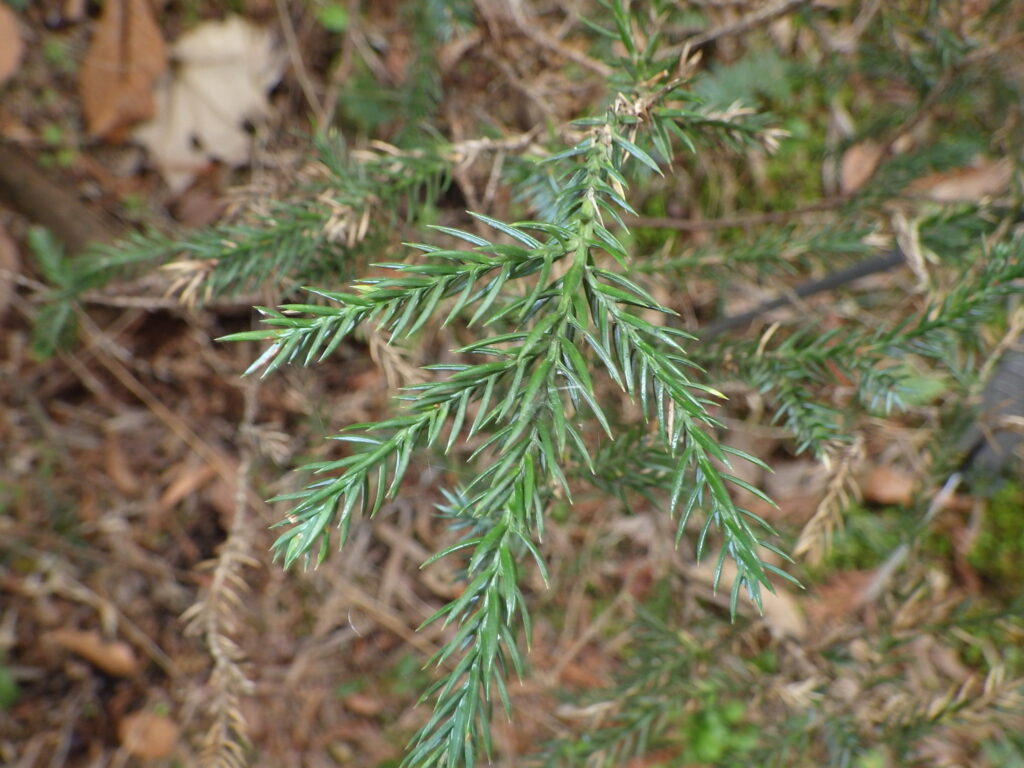
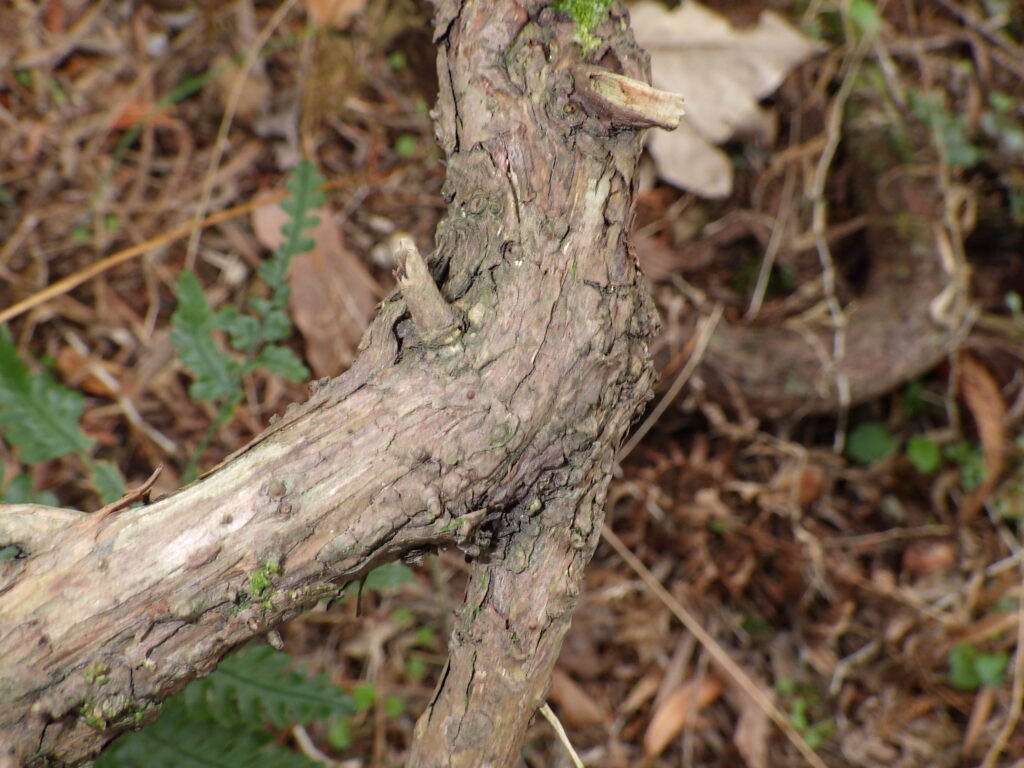
No. 0055 Juniperus chinensis var. sargentii
A variety of Juniperus chinensis with a creeping trunk that grows to less than 2 meters in height. It is distributed in Hokkaido, Honshu, Shikoku, Kyushu, Korea, Taiwan, Sakhalin, and the Kuril Islands. It grows on rocky areas in the fir and dwarf pine zones.
No.0055.a Colorado Juniper (Blue Angel) Juniperus scopulorum 'Blue Angel'‘
Evergreen small tree to tall tree (Hayashi, 2014). Scale-like leaves, 1-2 mm long. The leaves are bluish-green to bluish-gray, giving the entire tree a pale appearance. Many cultivated varieties are available as conifers, with 'Wichita Blue', 'Blue Heaven', 'Blue Angel', and 'Skyrocket' being representative examples. Generally, the latter varieties have a narrower, more elongated tree shape. Native to North America. Relatively common as a garden or park tree, and its popularity has been increasing in recent years.
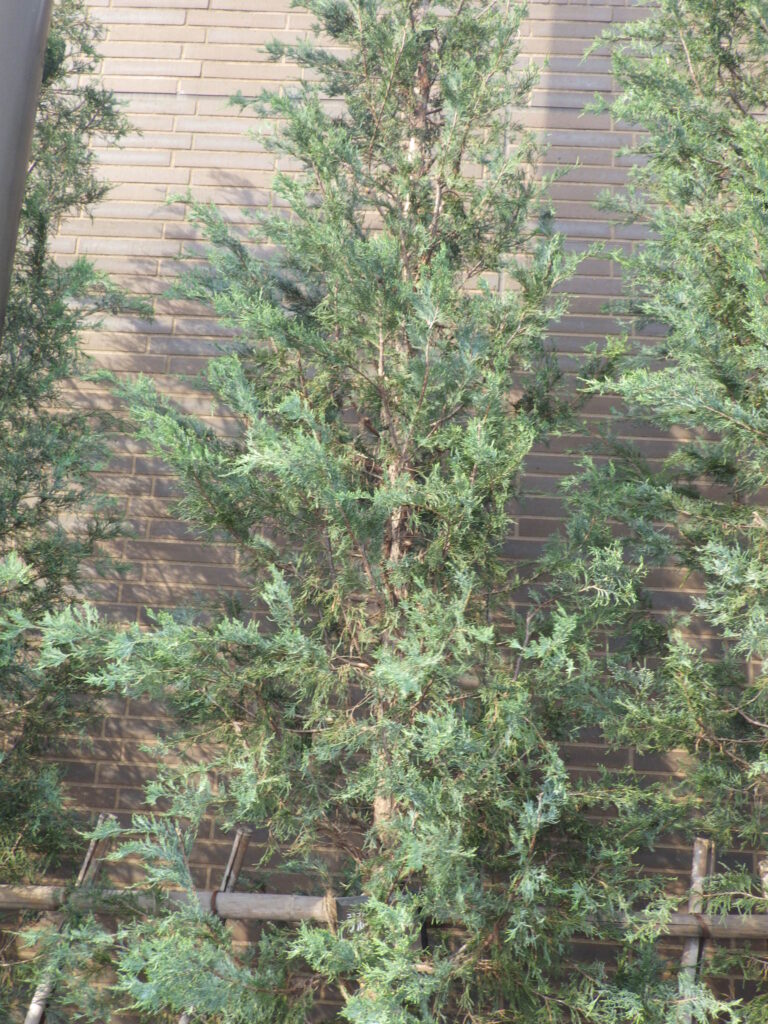
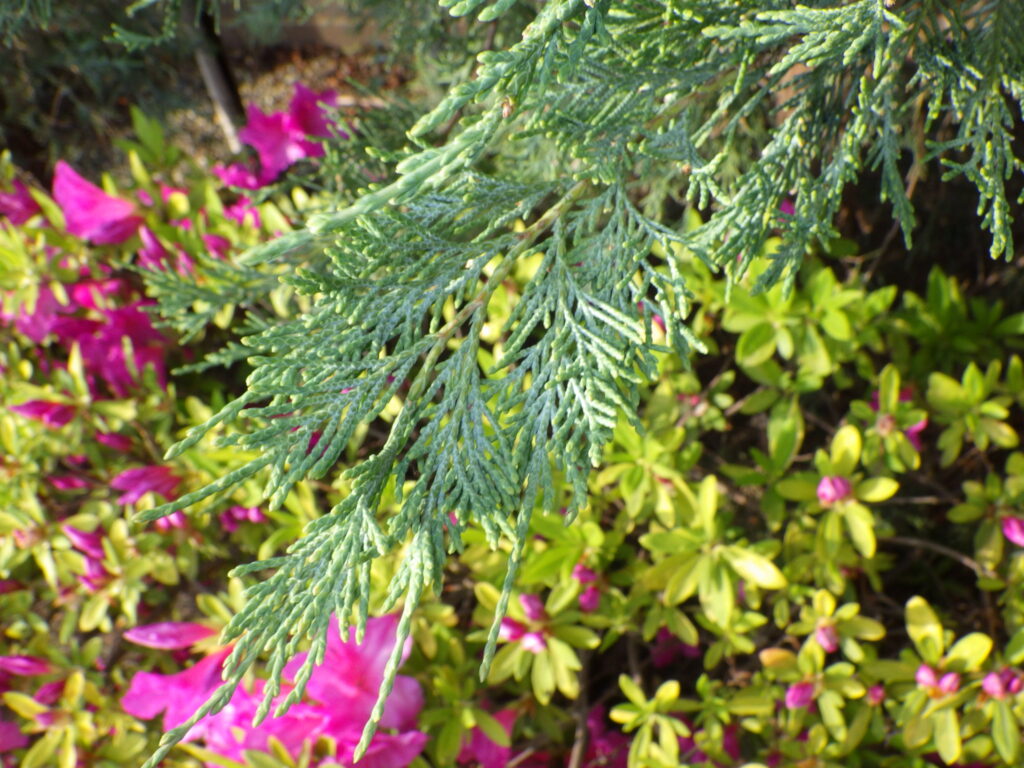
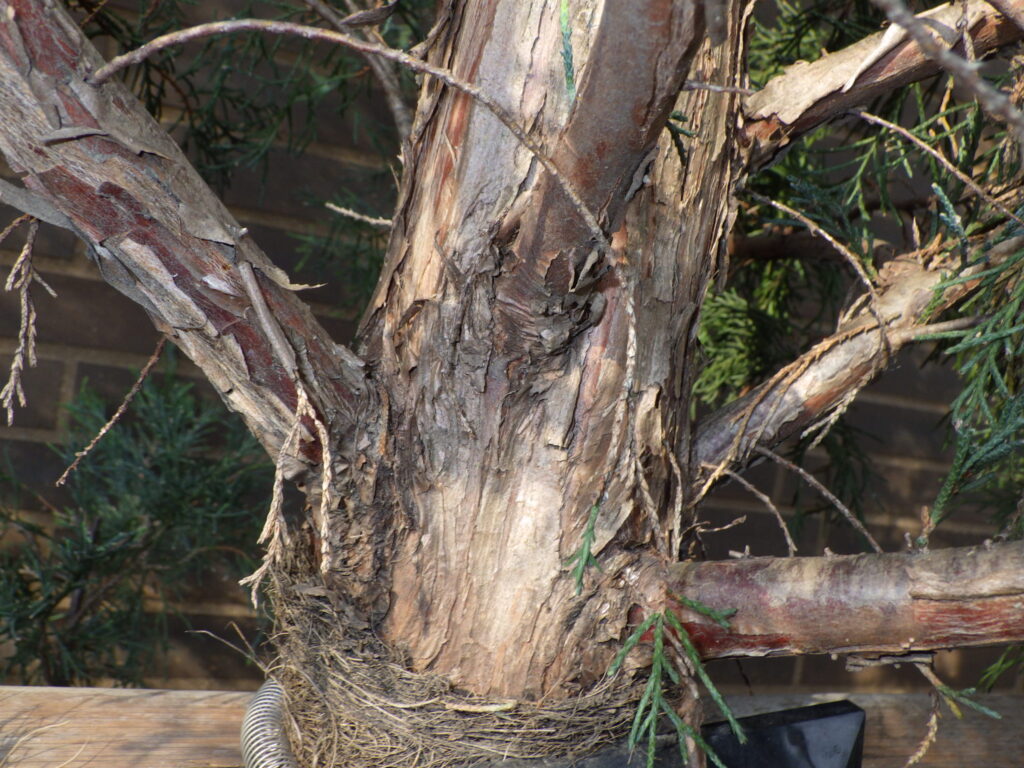
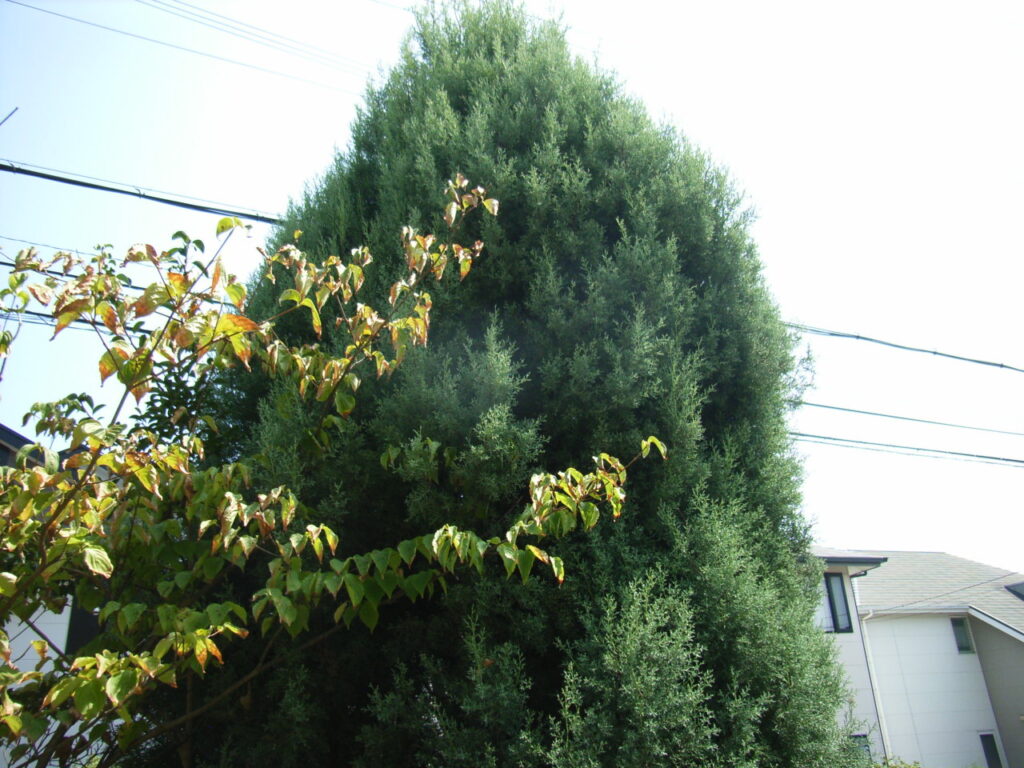
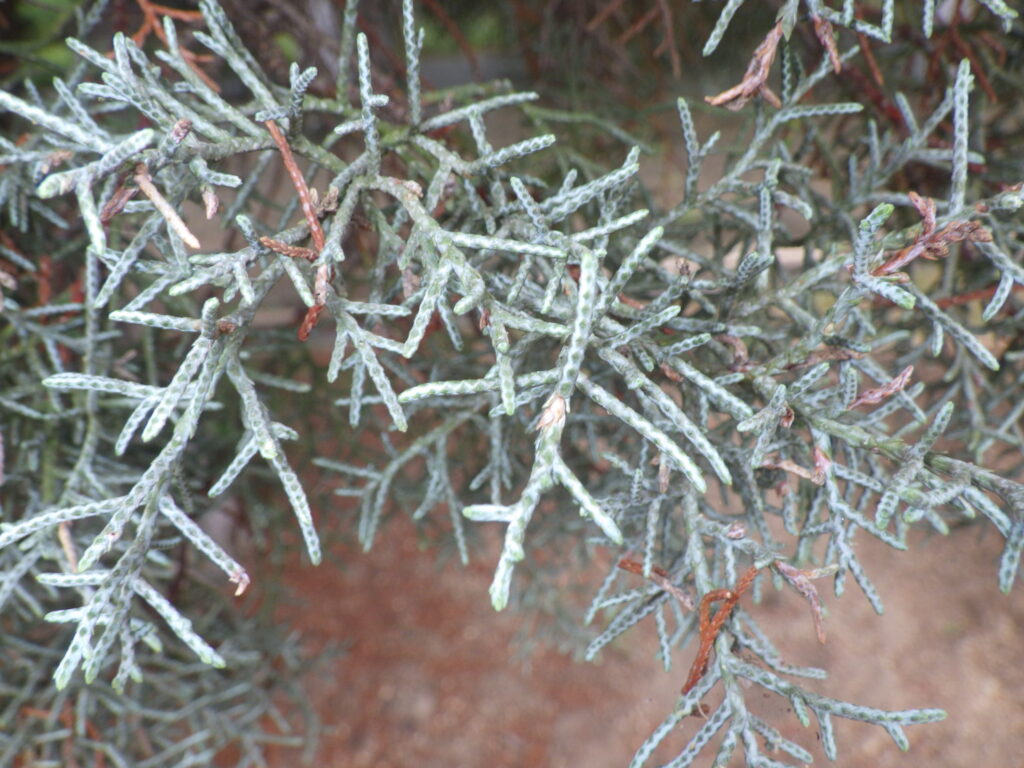
07.0055.b Thin-skinned Arizona cypress (Blue Ice) Hesperocyparis glabra 'Blue Ice'‘
The scientific name is based on Adams et al. (2009). It is a cultivated variety of the thin Arizona cypress, native to North America. It is an evergreen small tree (Hayashi, 2014). The scale-like leaves are 1-2 mm long. The leaves are bluish-gray with a white powdery coating, and the branches branch out like snowflakes. Like the narrow cypress, there is no distinction between the upper and lower sides of the leaves. The tree shape is a narrow triangle. There are several similar cultivated varieties. It is somewhat rare as a garden tree or park tree, but its numbers have been increasing in recent years.
No.0055.c Monterey Cypress (Goldcrest) Hesperocyparis macrocarpa 'Goldcrest'‘
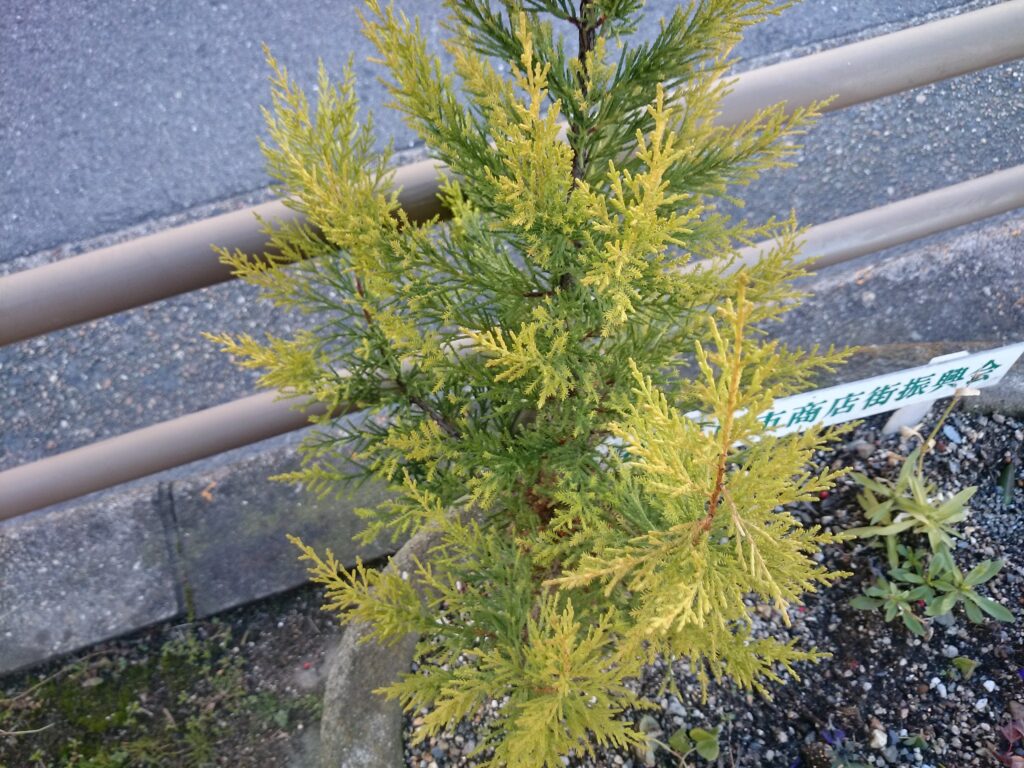
The scientific name is based on Adams et al. (2009). It is a cultivated variety of Monterey cypress, native to North America. It is an evergreen small tree to shrub (Hayashi, 2014). The leaves are scale-like to needle-like, 2-5 mm long. The leaves are fluorescent yellowish-green to golden, with the yellow color being stronger in young and winter leaves. It is easily identifiable by its slender, teardrop-shaped tree form. It is the most popular conifer, reaching a height of around 5 m. It is commonly used as a garden tree or in a pot.
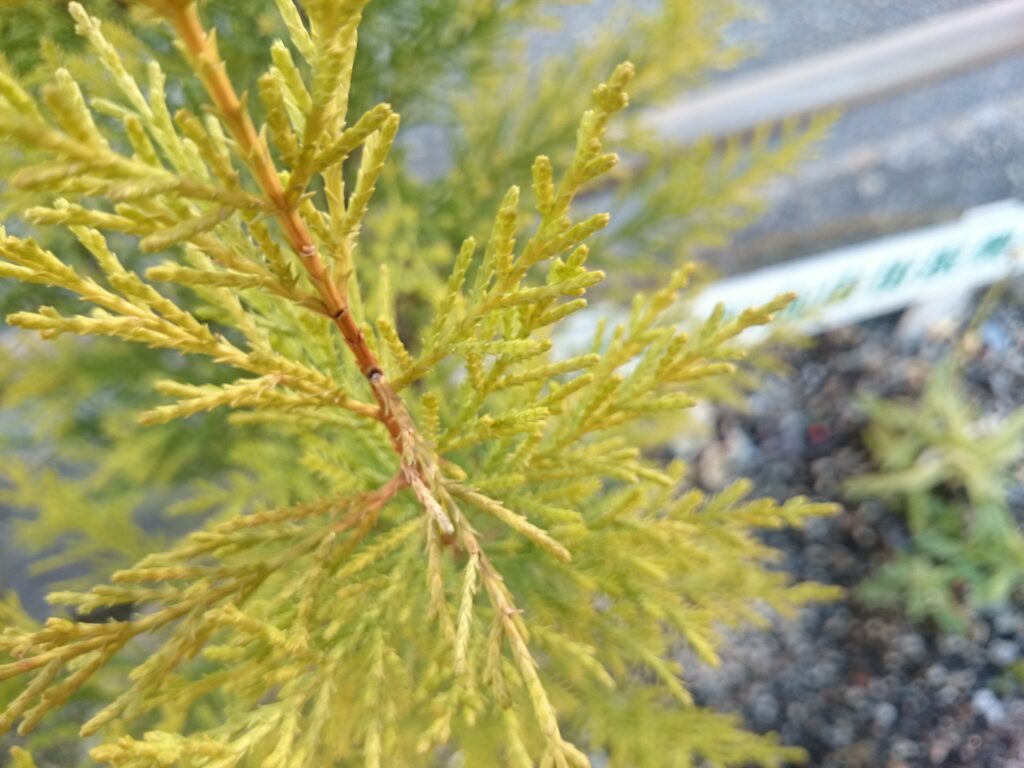
No.0055.d Cupressus sempervirens
Evergreen tree (Hayashi, 2014). Usually has scale-like leaves, about 1 mm long. It has a narrow, cylindrical tree shape, and its leaves are somewhat bluish-white, so it can be identified as this species from a distance. The leaves resemble those of *Juniperus chinensis*, with no distinction between the upper and lower surfaces, and are narrower. The fruit is about 3 cm in diameter. There are many cultivated varieties. Native to Europe to West Asia. Rarely found as a garden or park tree.
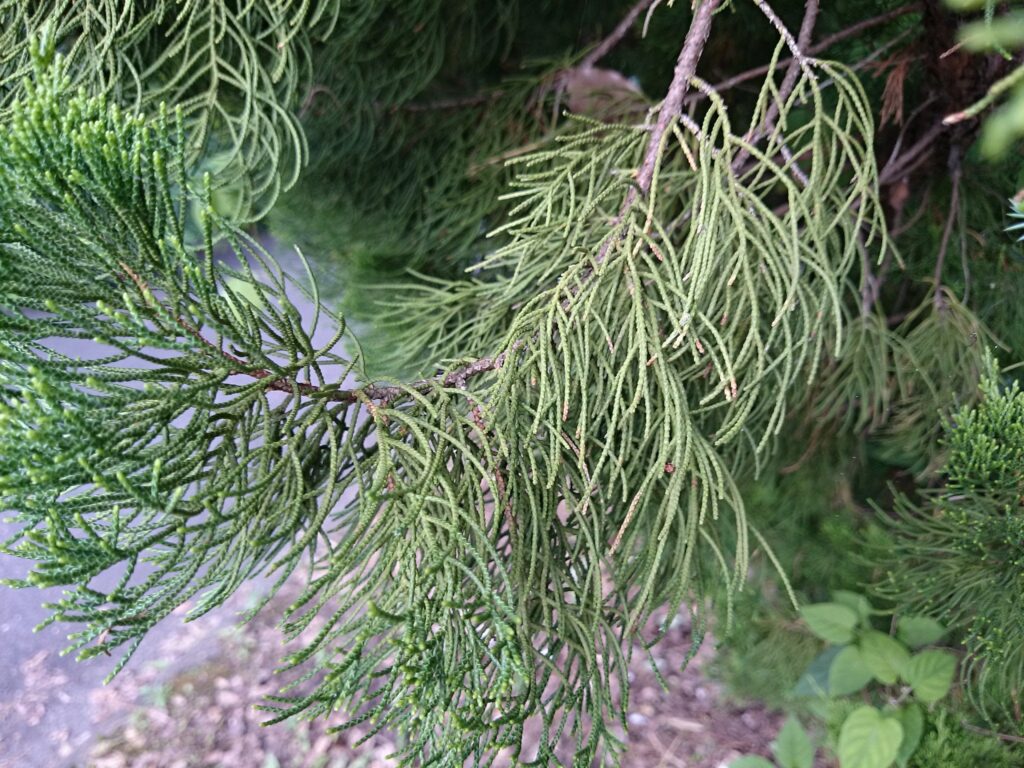
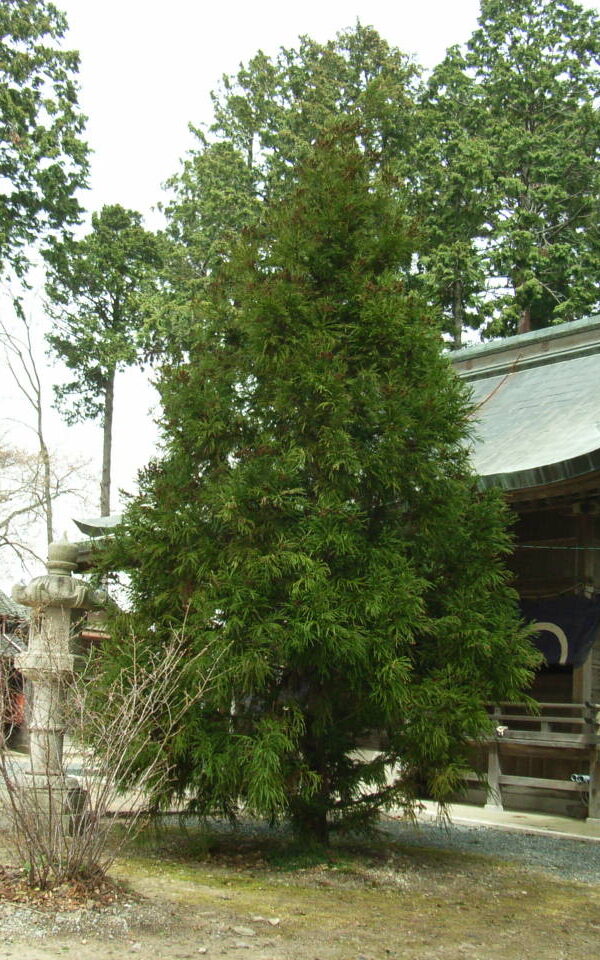
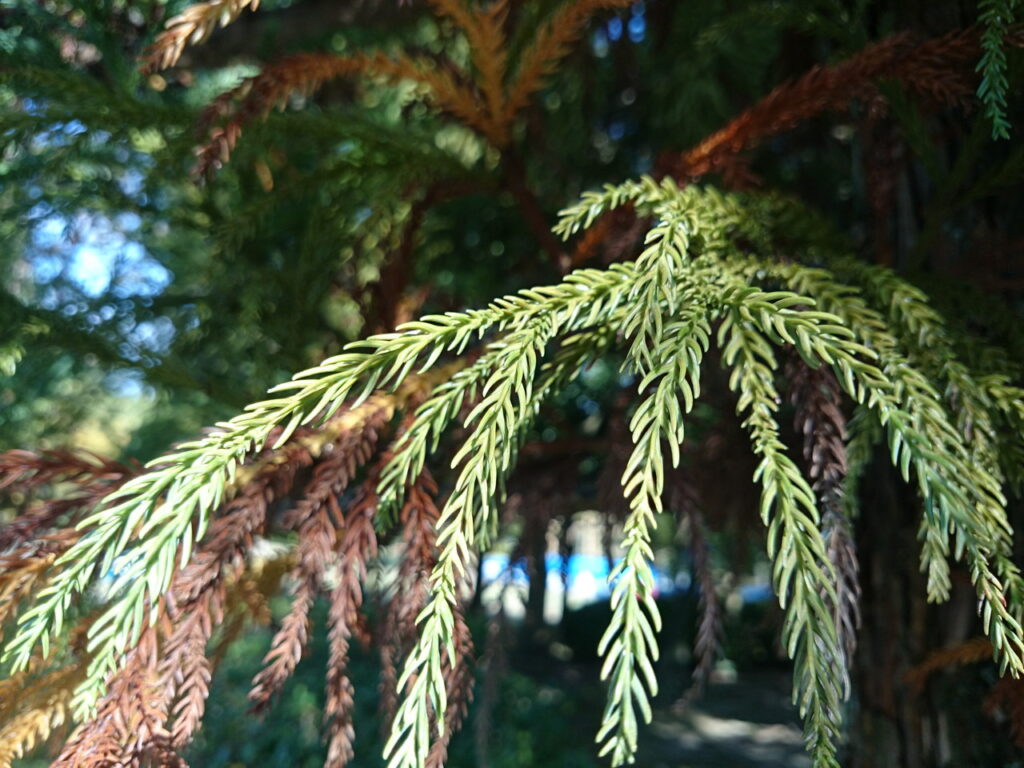
No.0056 Japanese Cedar (Cryptomeria japonica)
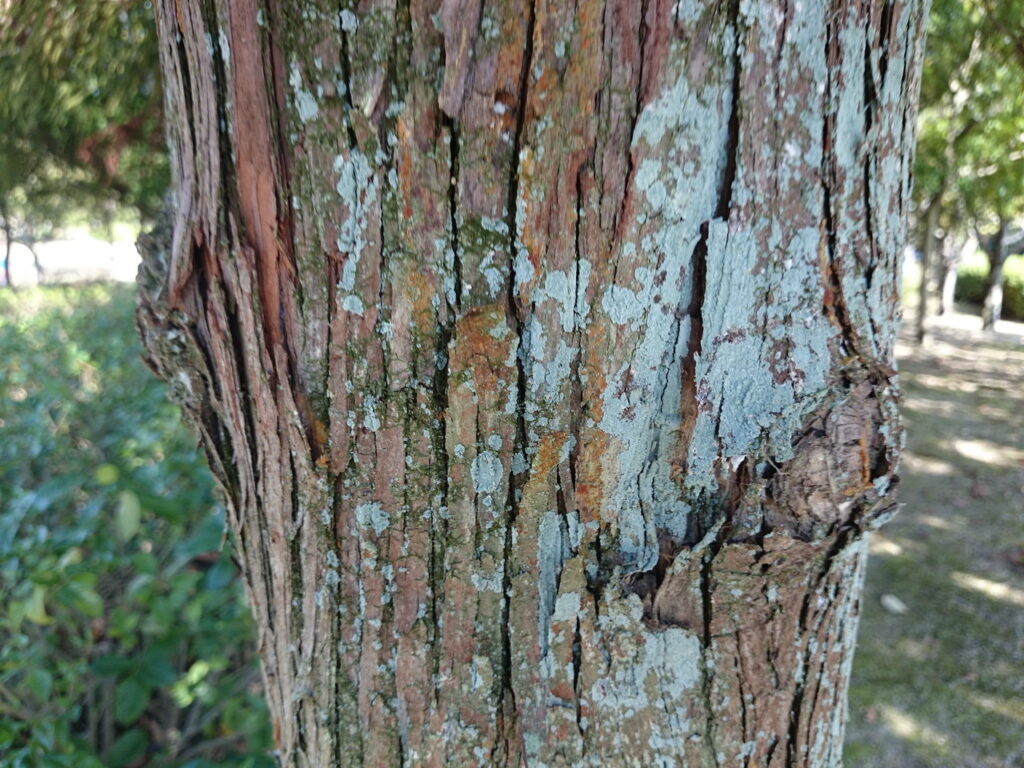
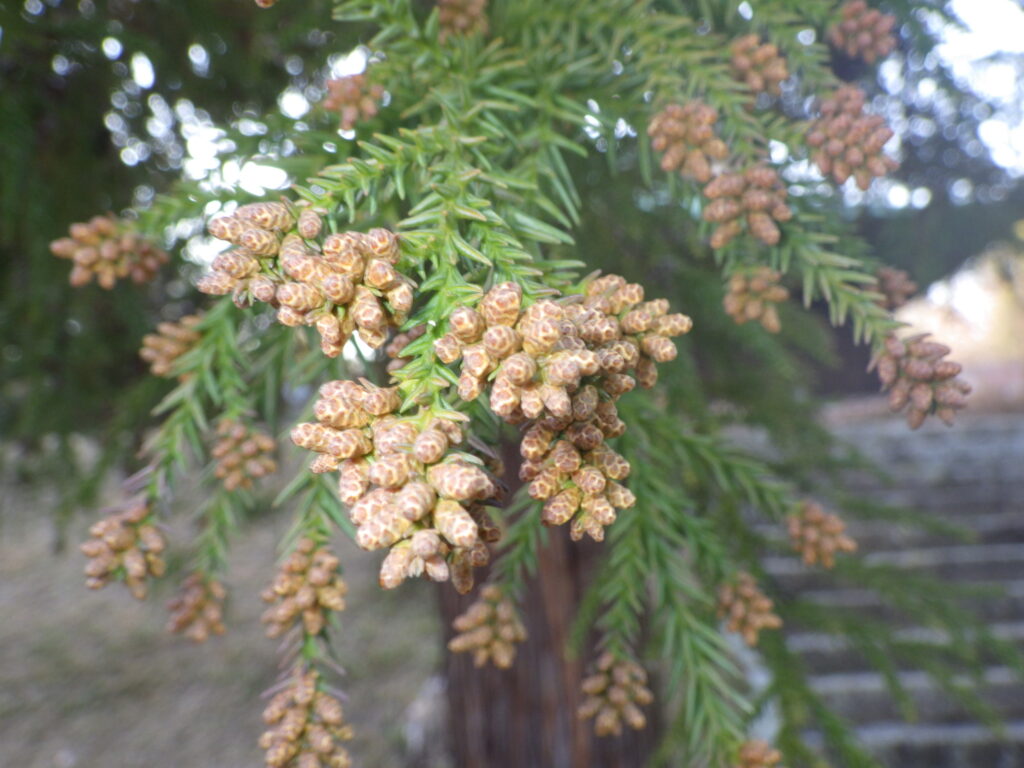
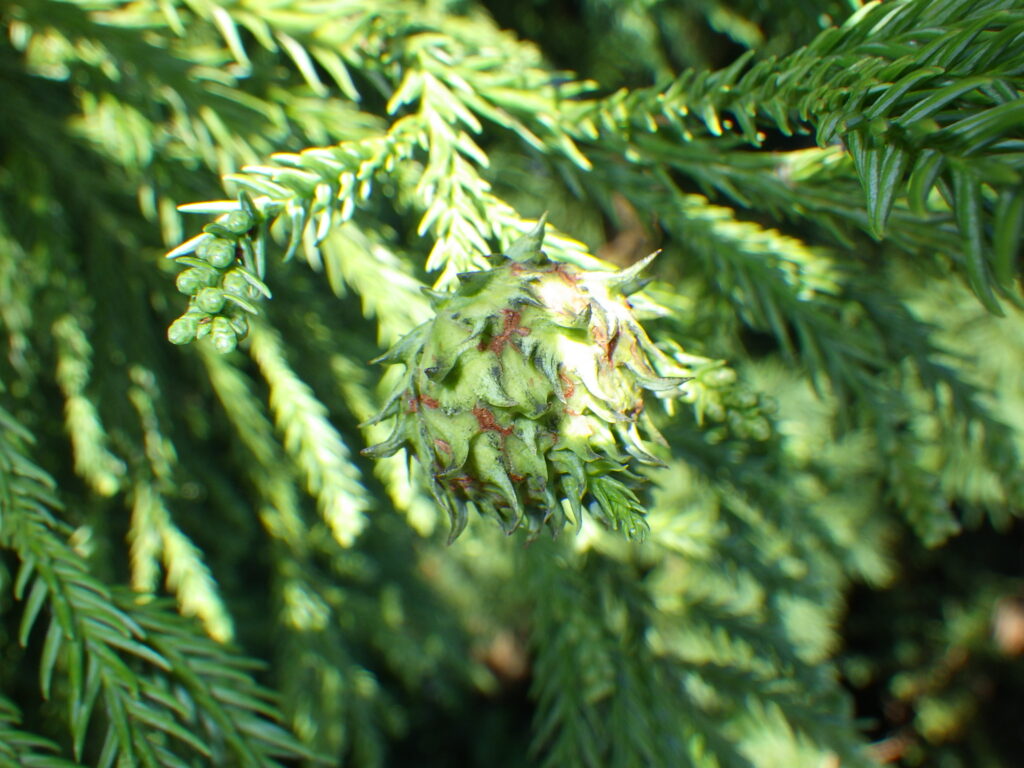
This is an evergreen tree. Its bark is brownish and peels off in thin, elongated strips. It flowers from March to April. Male flowers are oval-shaped, 5-6 mm long, and grow in spikes at the tips of twigs. Female flowers are spherical, growing singly at the tips of twigs, with numerous spine-like scales arranged spirally. The cones are spherical, 20-25 mm in diameter, turning brown when mature and splitting open while remaining spherical. In this prefecture, the leaves turn brown in winter. It is distributed in Honshu, Shikoku, and Kyushu (up to Yakushima). A variety, Chinese cedar var. sinensis, exists in China. Due to extensive breeding for timber and horticultural purposes, its characteristics have diversified, and specimens exhibit a variety of shapes. As an important tree species in forestry, it is widely planted in mountainous and hilly areas, and it is often difficult to determine whether it is a natural or ancient tree. There are many large and ancient trees.
No.0057.a Taxodium distichum var. distichum
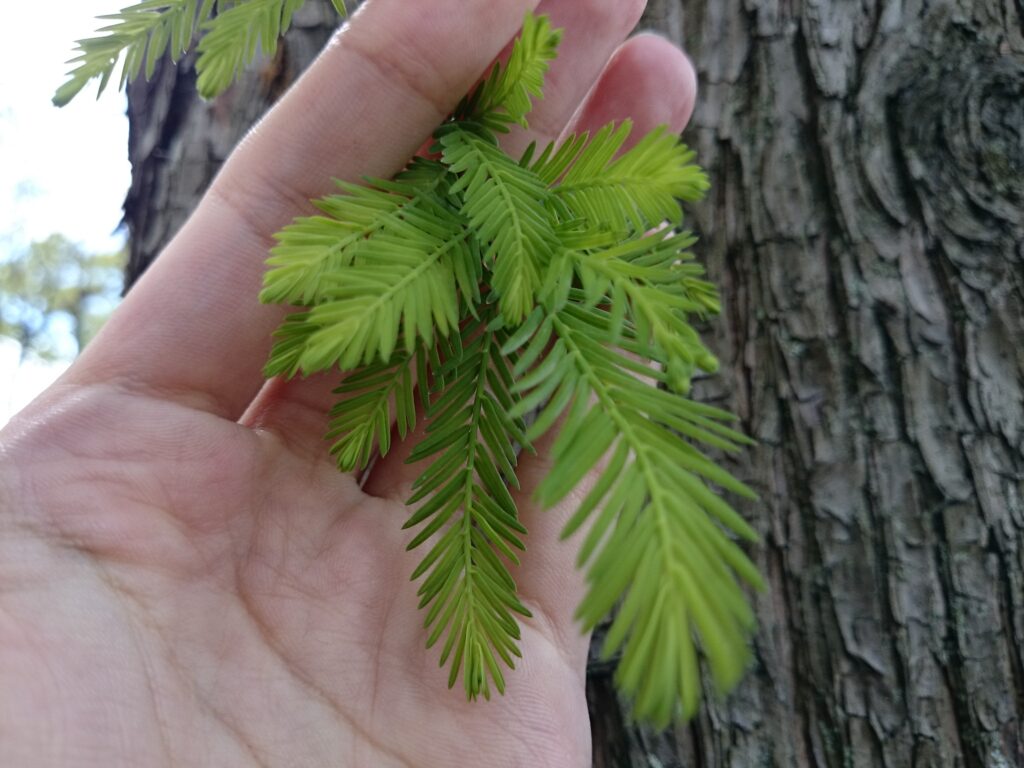
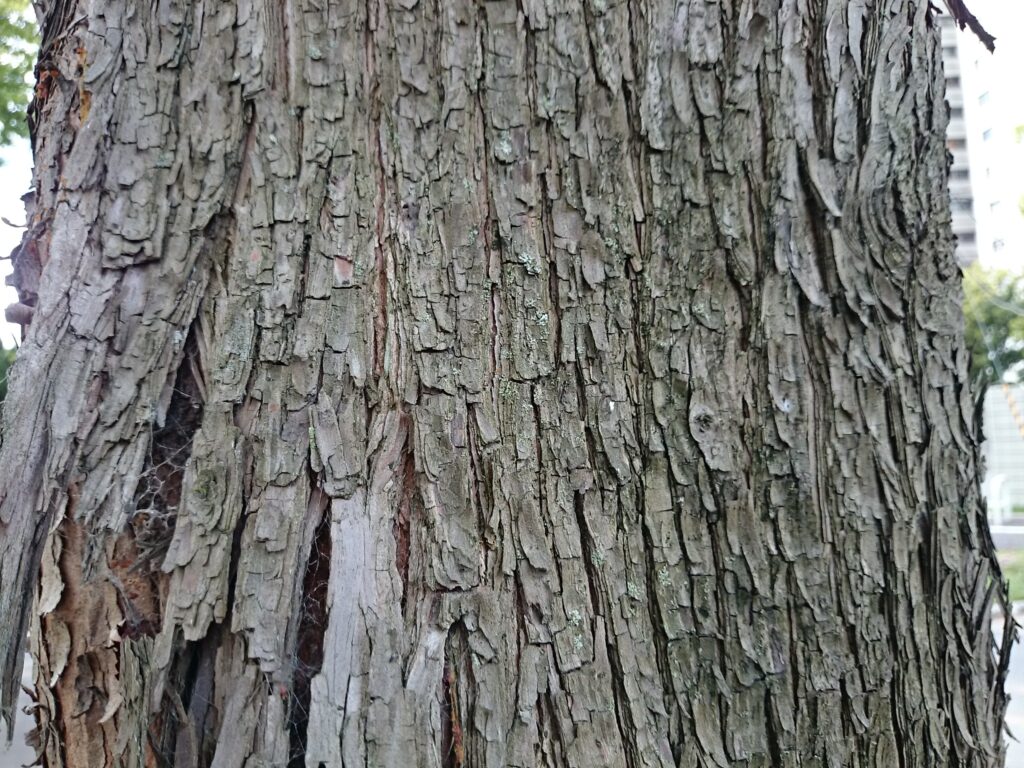
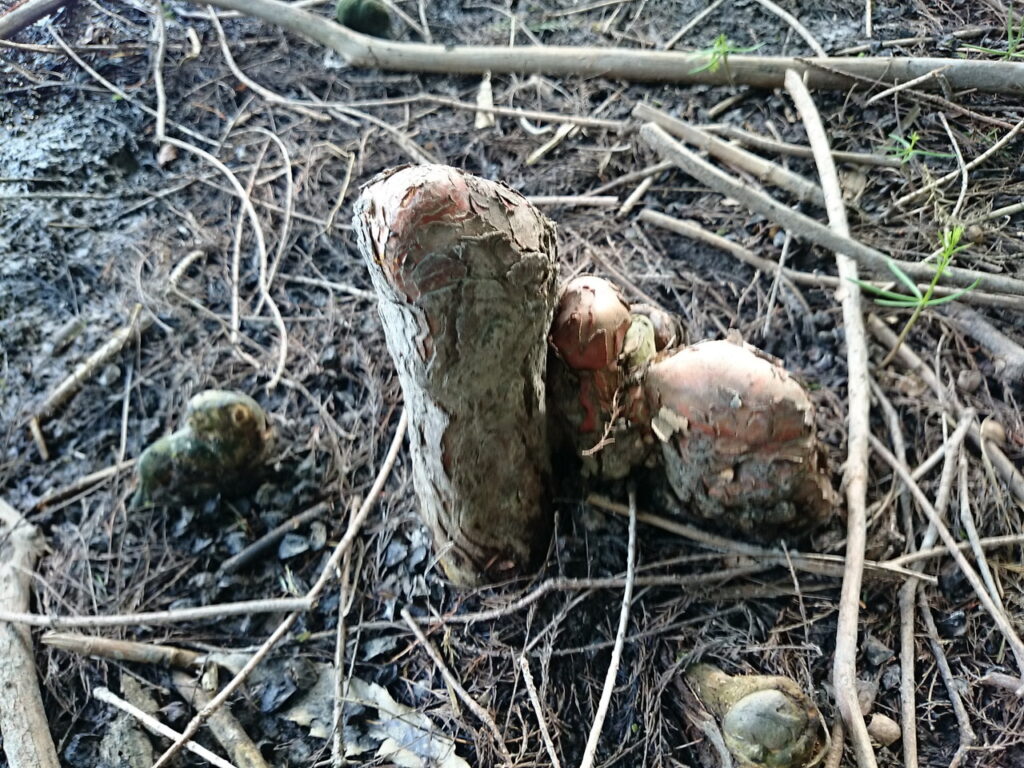
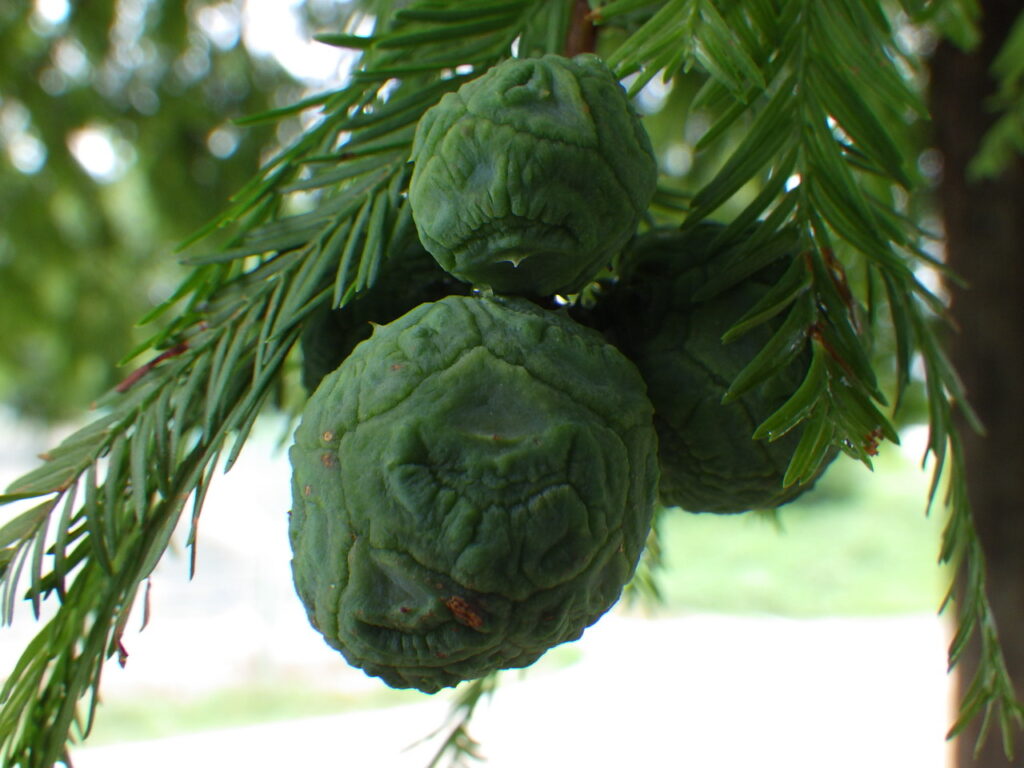
Also known as bald cypress, it is a deciduous tree. While it resembles the metasequoia overall, it differs in that its leaves and branches are alternate, it sometimes has pneumatophores, and its cones are spherical, about 3 cm in diameter. It has a somewhat cylindrical tree shape and grows to a height of 15-30 m. The leaves of the commonly planted variety, bald cypress var. distichum, are 0.7-2 cm long. It is native to North America and is a wetland species. In Japan, it is sometimes found as a park tree.
No.0058.a *Metasequoia glyptostroboides*
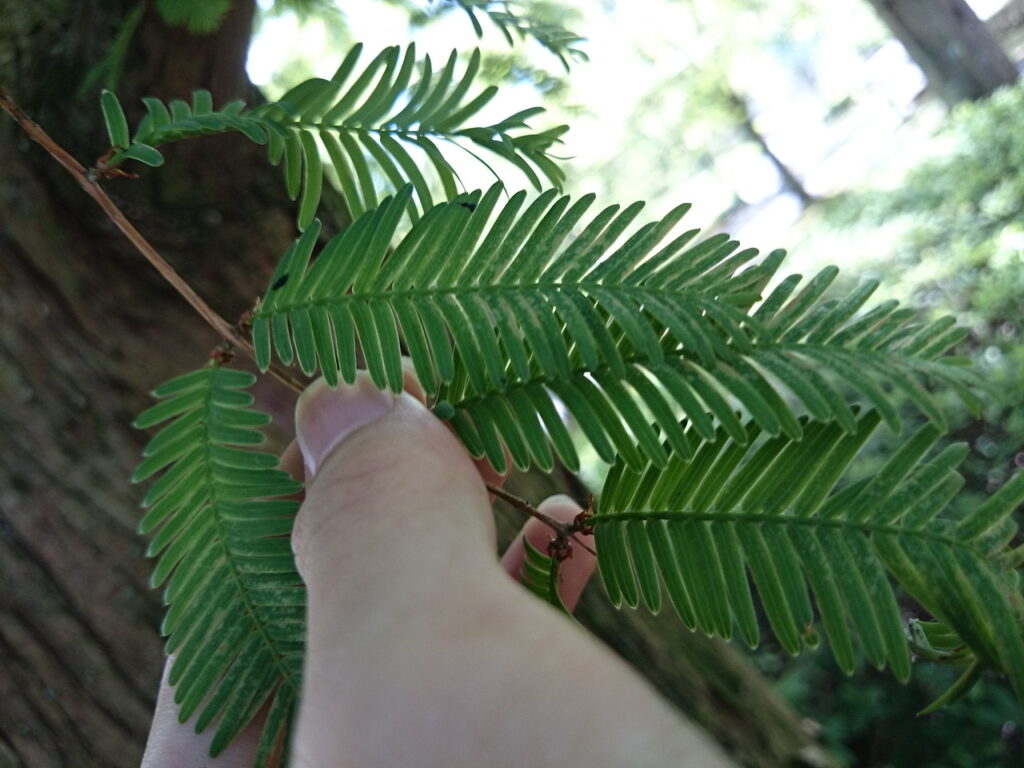
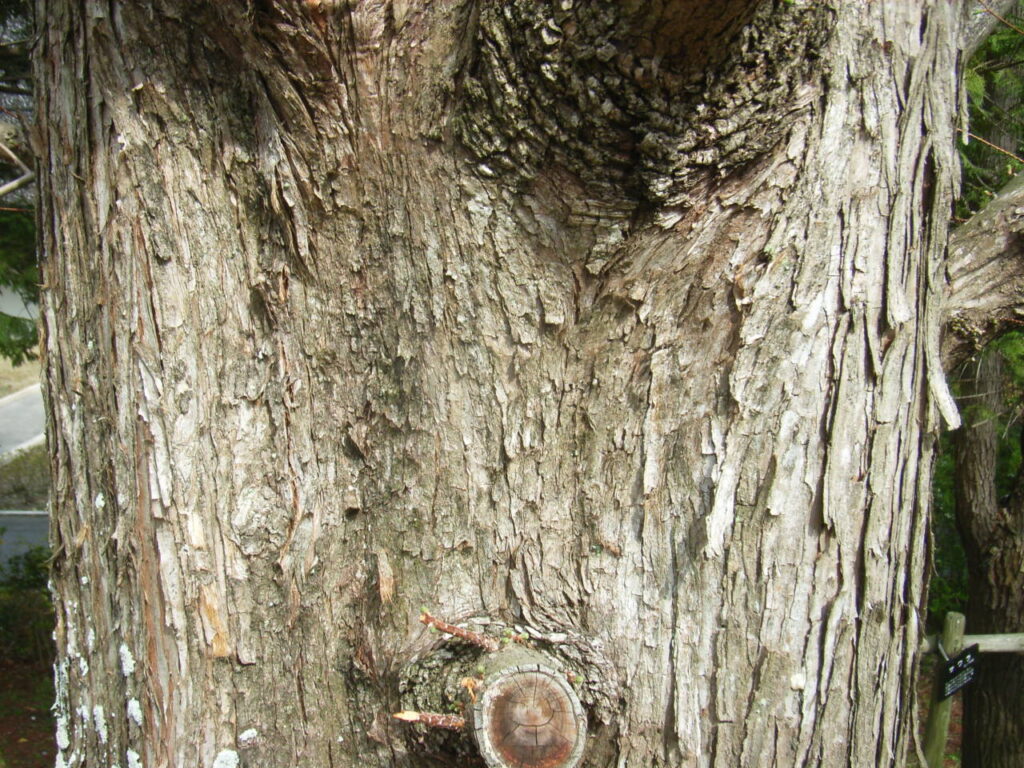
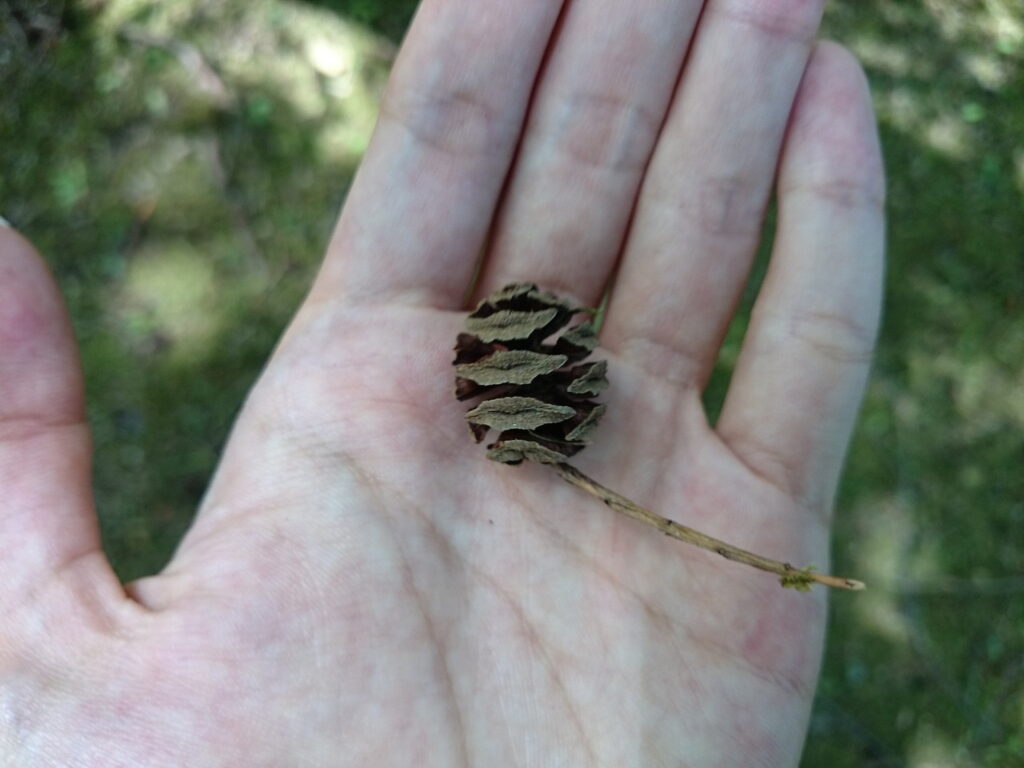
Also known as Metasequoia, it is a deciduous tree. Its distinctive feature is its conical shape, which rises higher than other trees. The leaves are linear, soft, and opposite, and fall in autumn along with the twigs. The cones are nearly spherical ellipsoids about 15 mm in diameter, and split open in a cross shape when ripe. It was thought to be extinct but was rediscovered in the remote areas of the Yangtze River in China, becoming a topic of discussion as a living fossil. It is widely planted in parks and schools.
No.0058.b American Cedar (Sequoia sempervirens)
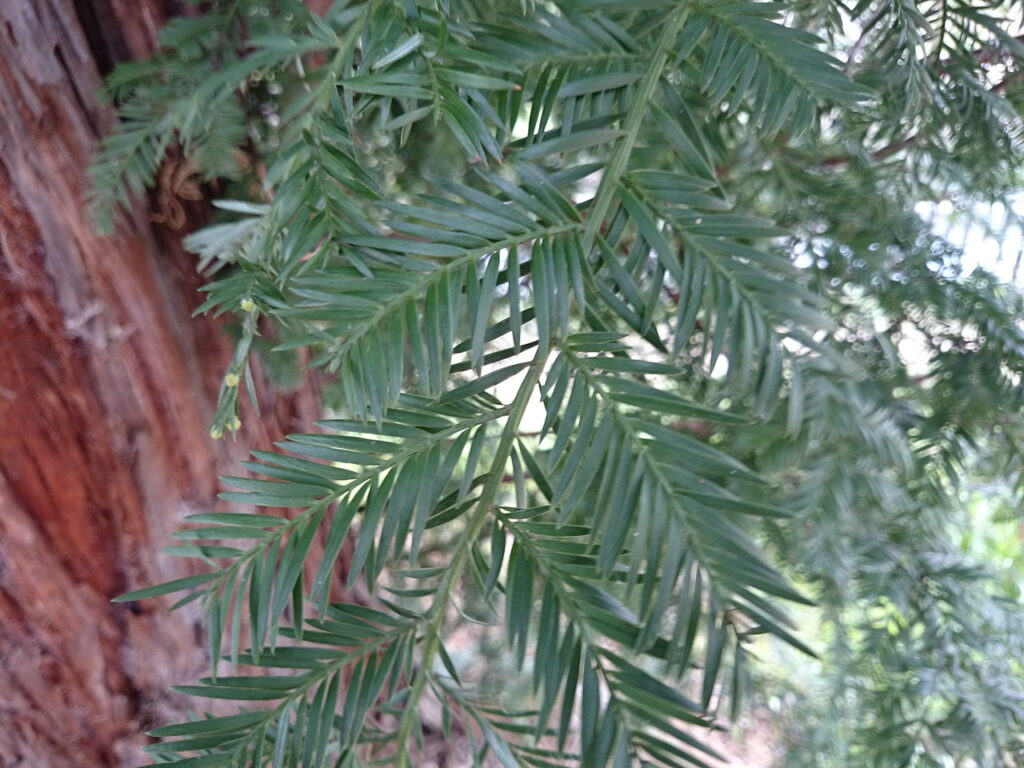
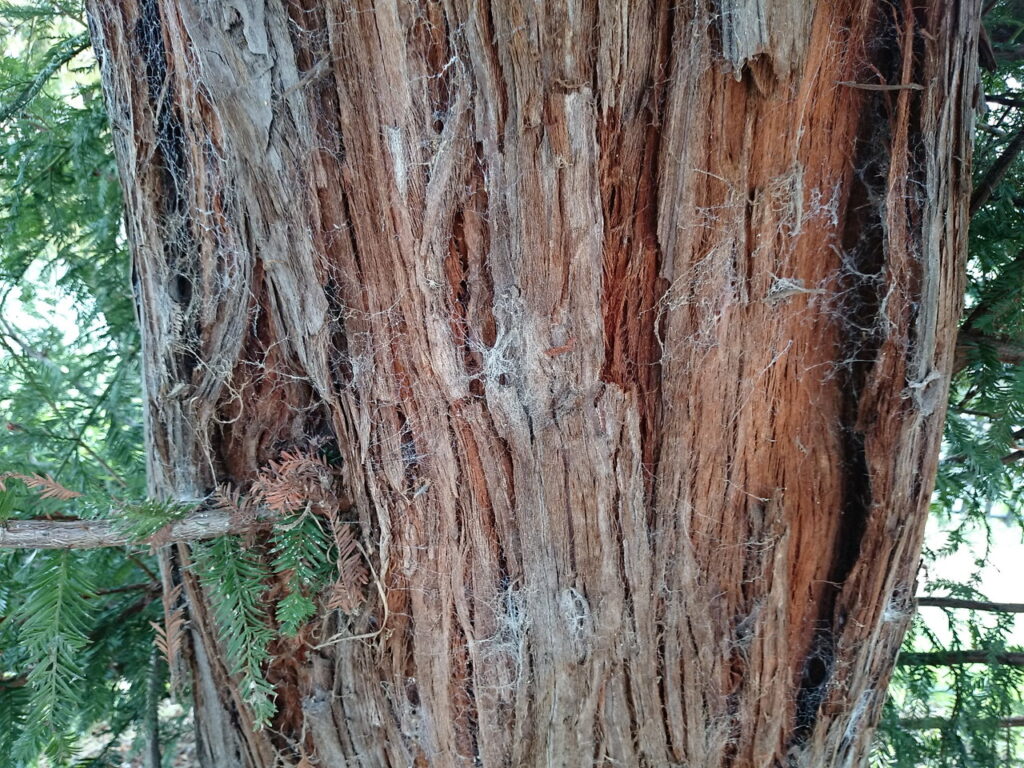
Also known as redwood, false yew, redwood cedar, or redwood cedar, it is an evergreen tree. It boasts the world's tallest height, reaching 115.5m in height and 9m in trunk diameter. It has a conical crown with branches that droop slightly from the horizontal. The trunk is straight. The bark is very thick, up to 30cm, and is quite soft and fibrous. When newly exposed, it is bright reddish-brown, and it becomes blackish as it weathers. The leaves vary in shape; in young trees, they are flat and 15-25mm long. The leaves are scale-like, and in new shoots in sunny areas at the top of the crown of older trees, they are 5-10mm long. The leaves are dark green at the top and have two pale stomatal bands at the bottom. The leaves are arranged spirally, but large, shade-loving leaves have twisted bases and lie flat to maximize light absorption. It is a monocotyledon, with pollen and seeds on the same plant. The fruit is oval-shaped, 15–32 mm long, with 15–25 scales arranged spirally. Pollination occurs in late winter, and the fruit matures about 8–9 months later. Each scale contains 3–7 seeds, 3–4 mm long and 0.5 mm wide, with two 1 mm wide wings. The seeds are released when the conical scales dry out, mature, and open. The pollen is oval-shaped, 4–6 mm long.
References
Adams, RP, Bartel, JA, & Price, RA 2009. A new genus, Hesperocyparis, for the cypresses of the Western Hemisphere (Cupressaceae). Phytologia 91(1): 160-185.
Hayashi, Masayuki. 2014. 1100 Tree Leaves Identified Through Real-Life Scans. Yama-kei Publishers, Tokyo. 759pp. ISBN: 9784635070324
Kanagawa Prefecture Flora Survey Association. 2018. Kanagawa Prefecture Flora 2018 (Electronic Edition). Kanagawa Prefecture Flora Survey Association, Odawara. 1803pp. ISBN: 9784991053726