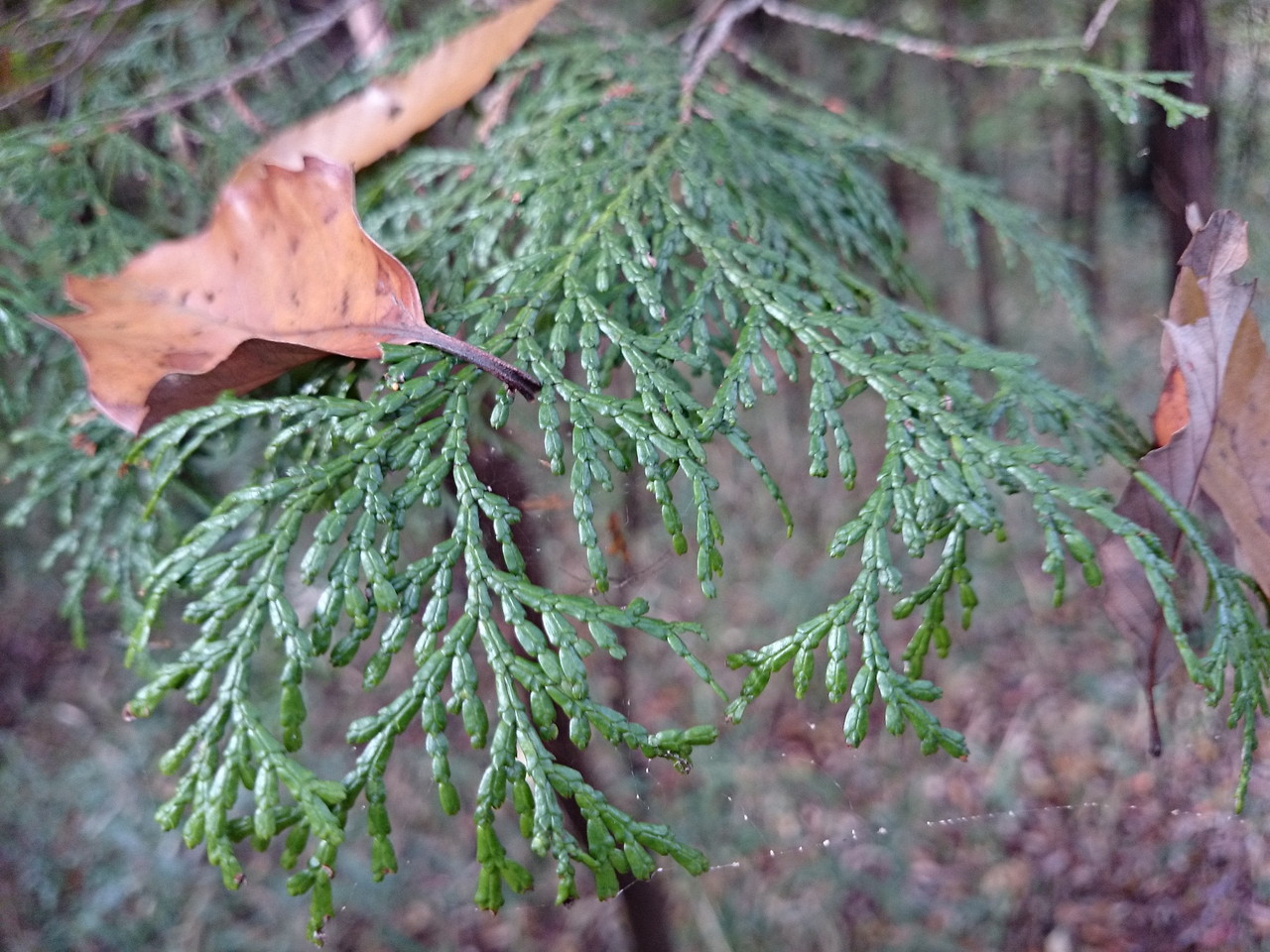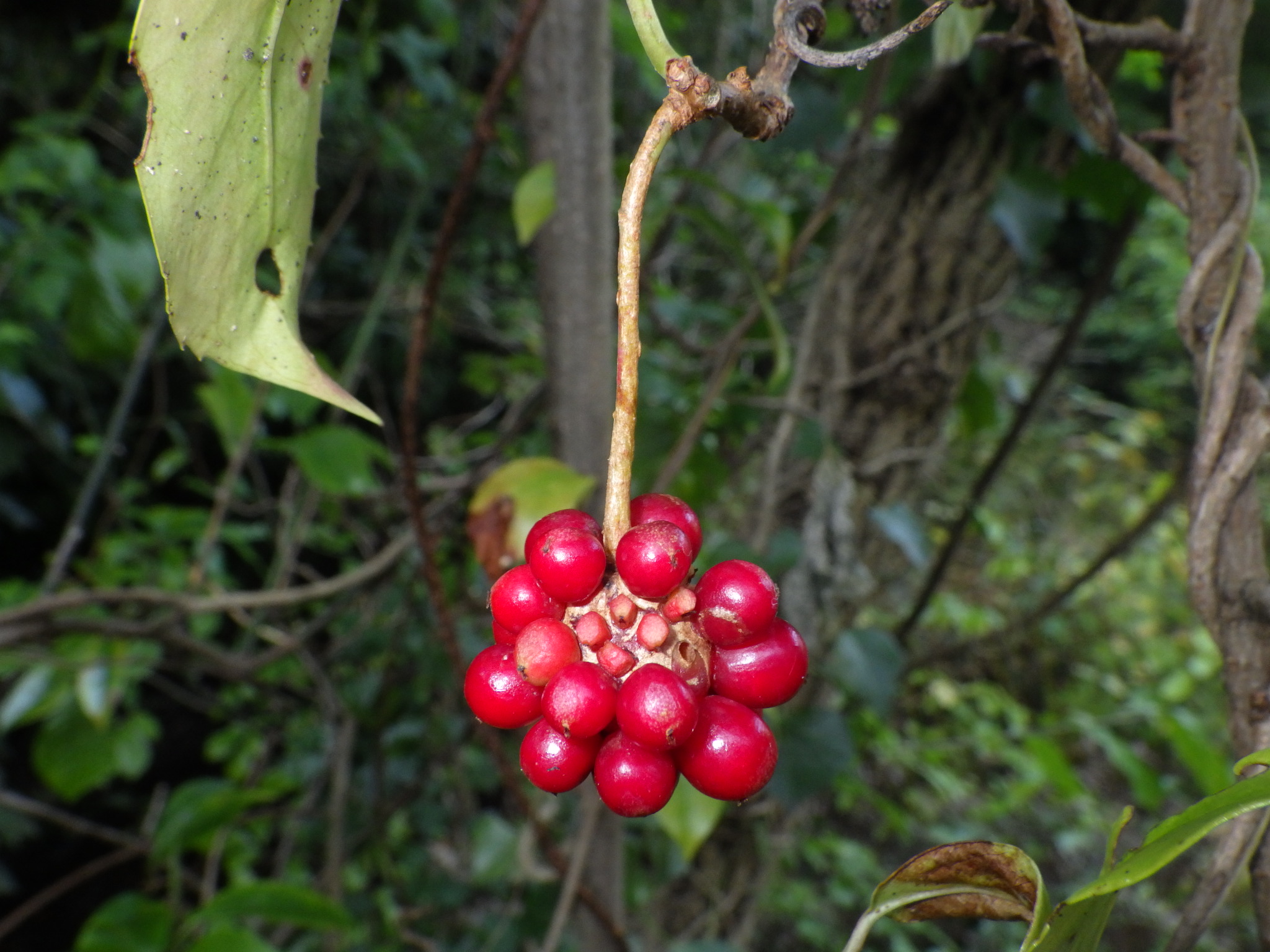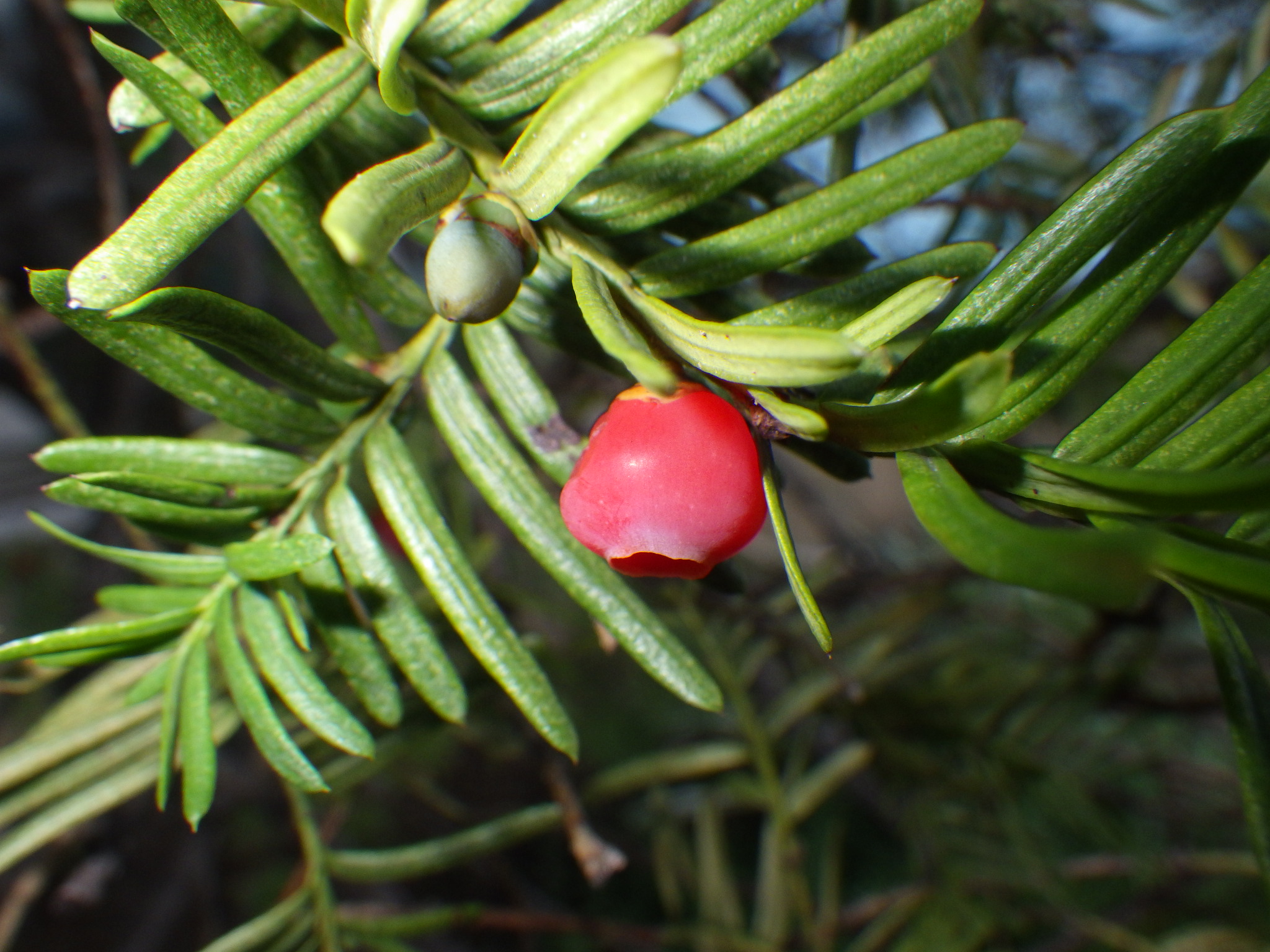
The Taxaceae family consists of evergreen trees or shrubs. Their leaves are linear to linear-lanceolate, arranged spirally and alternately, but the leaf blades are horizontally arranged in two rows. They are usually dioecious, but occasionally monoecious. Male flowers are solitary or borne in small spike-like inflorescences in the leaf axils, while female flowers are borne at the tips of previous year's branches or terminally on short branches enclosed by scale-like leaves in the leaf axils. After flowering, the base of the ovule gradually develops and is either partially or completely enclosed by a fleshy aril, or it is bare without an aril. Six genera and 28 species are known in the temperate regions of the Northern Hemisphere and New Caledonia, with three genera and three species distributed in Japan. Japanese yew (Taxus cuspidata) and Japanese yew (Taxus cuspidata) are commonly cultivated.
This article provides a comprehensive, illustrated guide to plants belonging to the Taxaceae family.
The basic information is based on the Kanagawa Prefecture Flora Survey Association (2018). Photos are replaced as better ones become available. While the identification is done by the author, please note that misidentifications may be corrected without notice.
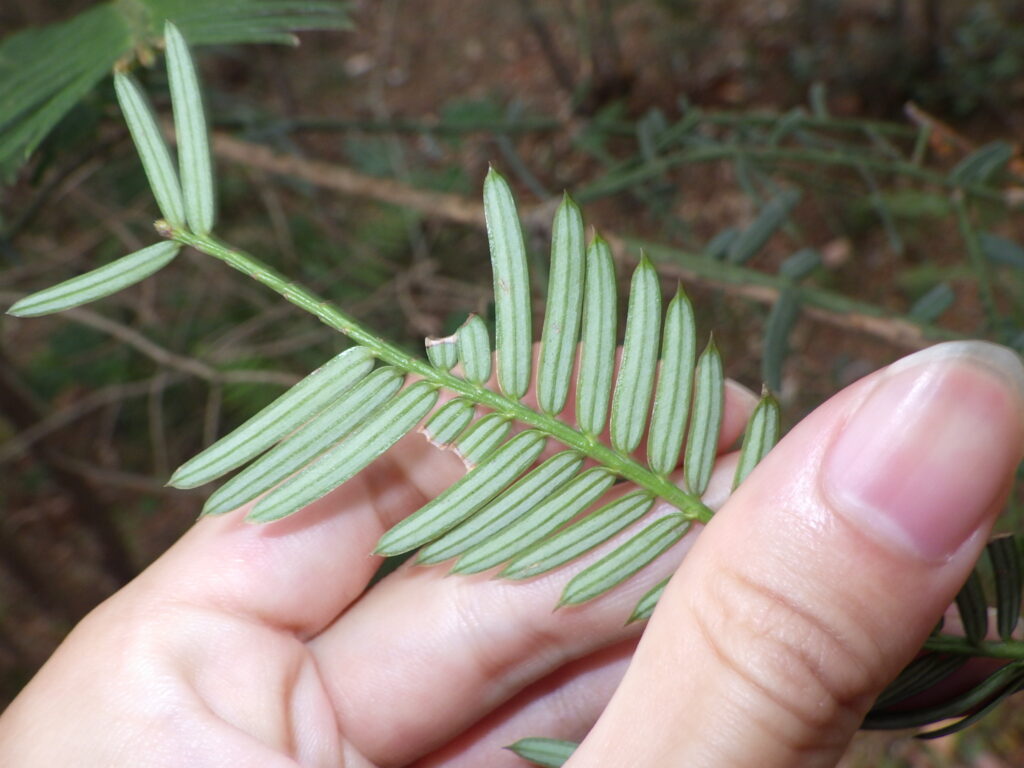
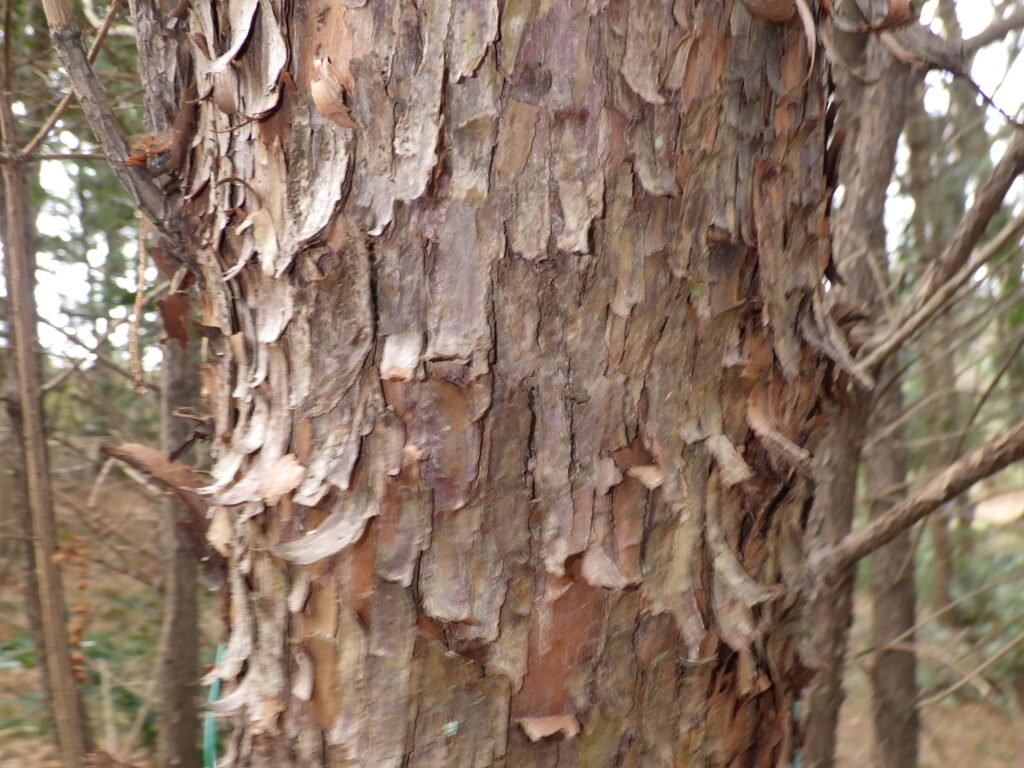
No.0060 Japanese yew (Cephalotaxus harringtonia var. harringtonia)
This is an evergreen small tree. The bark is dark grayish-brown and shallowly fissured. The leaves are 2-4 cm long and 2.5-4 mm wide. The flowers bloom in March and April. The male inflorescence is spherical, 6-7 mm in diameter. The female inflorescence is spherical, 3-4 mm in diameter. The seeds are drupe-like, enclosed in a thickened outer seed coat, and are ellipsoidal, 20-25 mm long, ripening to purplish-brown around October. It is distributed in Honshu (south of Iwate Prefecture), Shikoku, Kyushu (up to Yakushima), Korea, and northeastern China. It can be found in forests. Japanese yew var. nana is distributed in snowy areas on the Sea of Japan side. There is a horticultural variety called Korean yew 'Fastigiana', in which the leaves are arranged spirally even on the lateral branches, and it is sometimes planted in parks and private gardens.
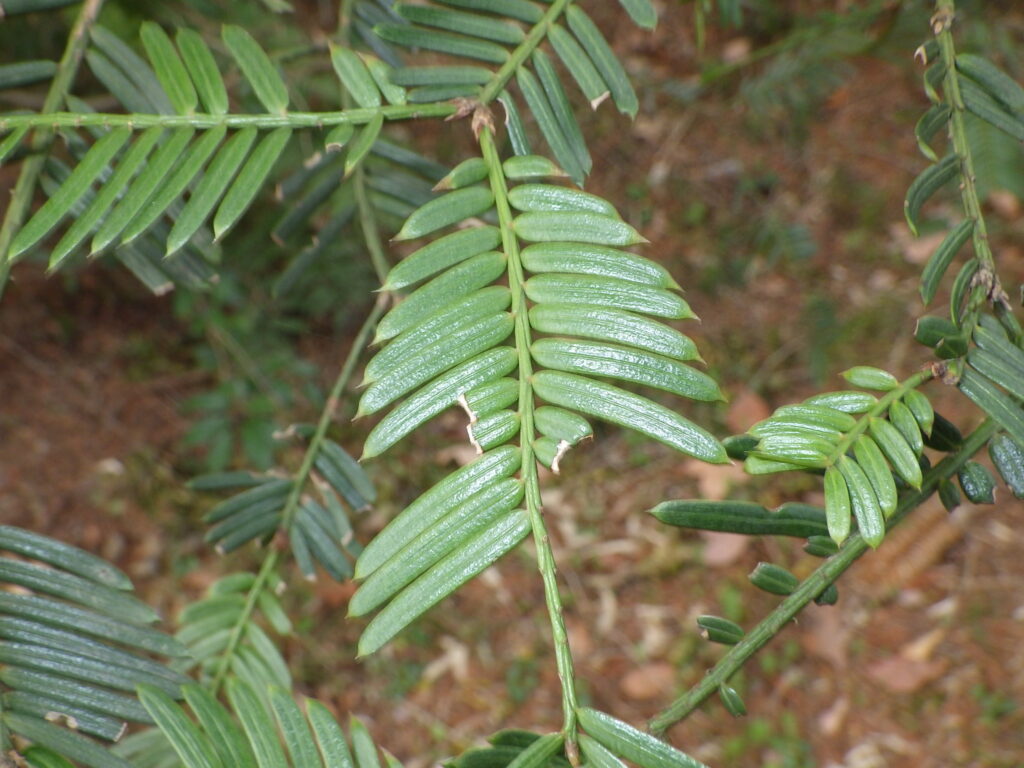
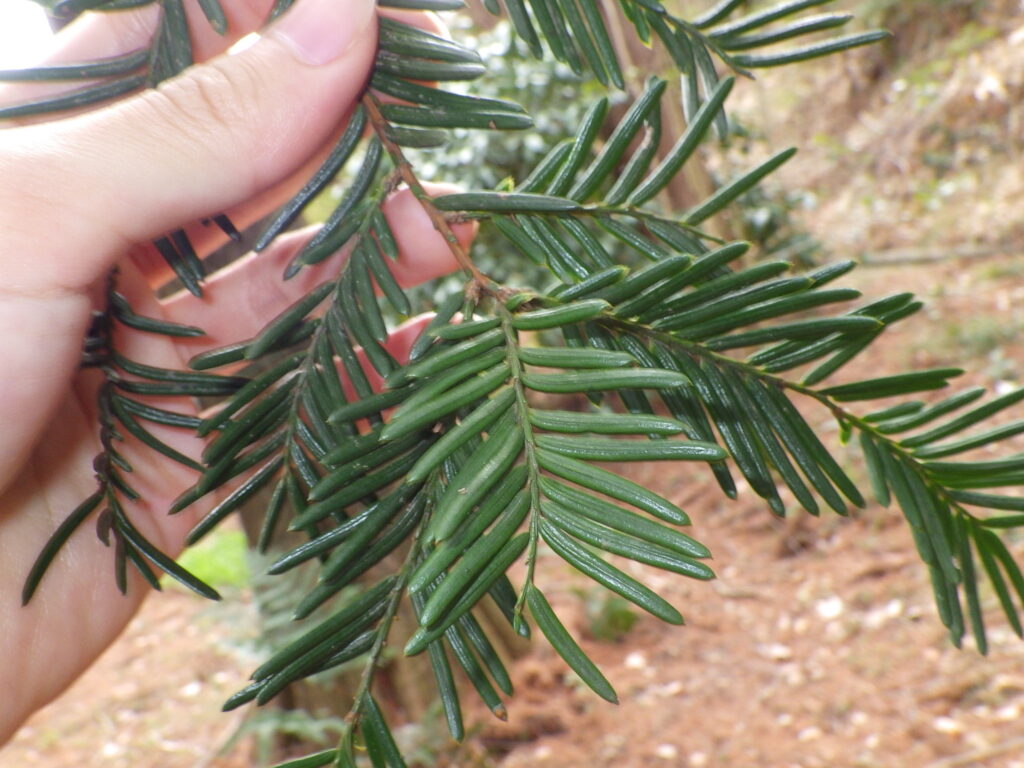
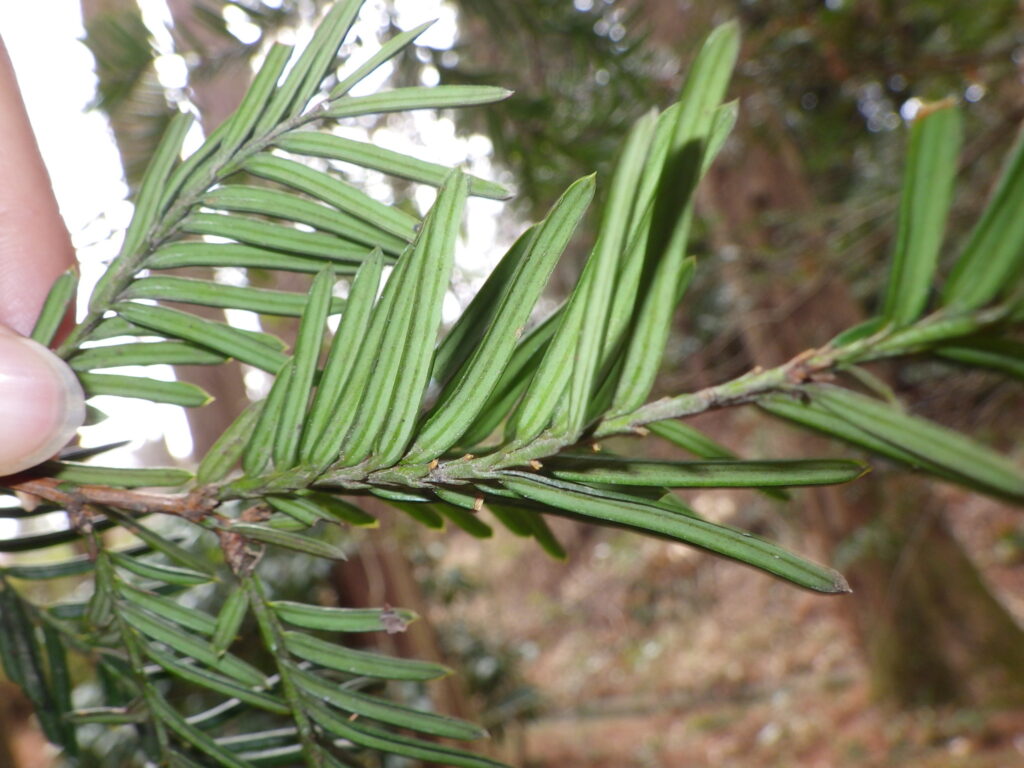
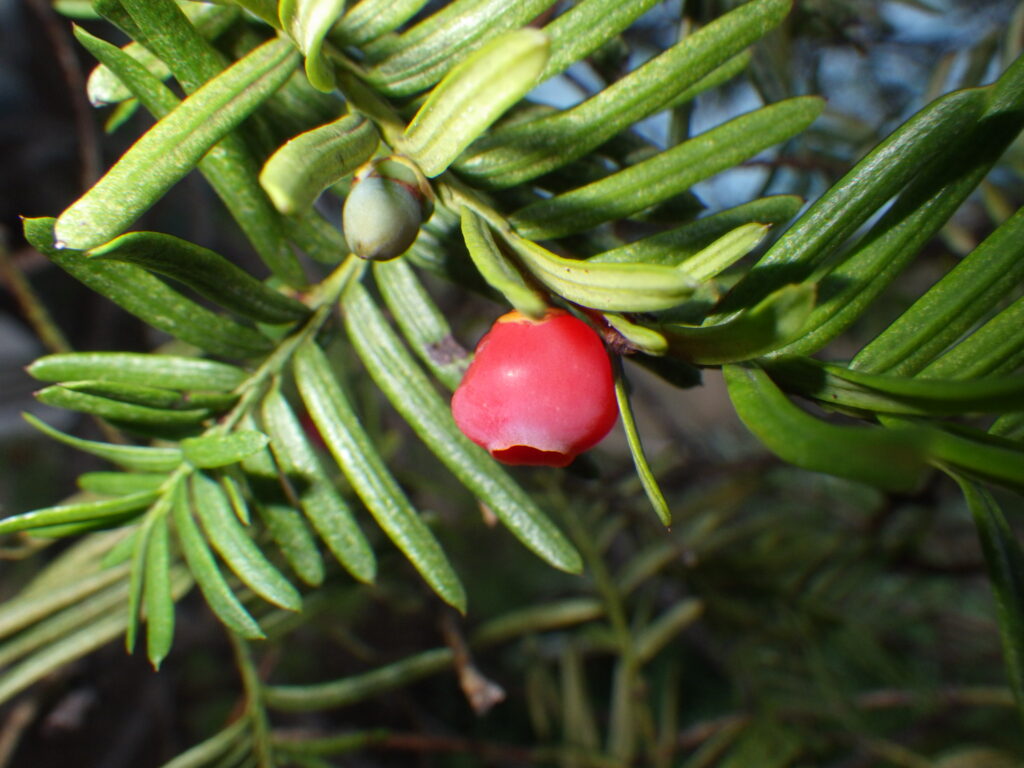
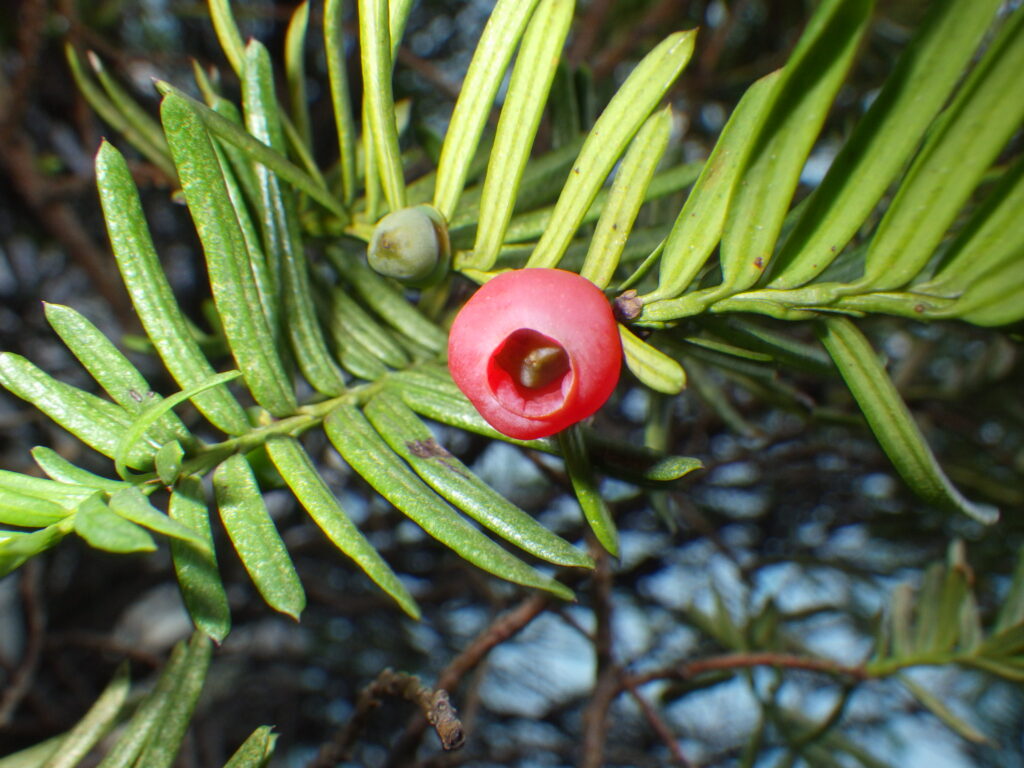
No.0062 Japanese Yew (Taxus cuspidata)
This is an evergreen tree. The bark is reddish-brown and shallowly fissured vertically. The leaves are arranged spirally and alternately, in two rows on the lateral branches, linear in shape, about 20 mm long and 1.5-3 mm wide. When ripe, the aril becomes a reddish sap and forms a vase-shaped structure that encloses the seed. It is distributed in Hokkaido, Honshu, Shikoku, Kyushu, Korea, Northeast China, the Kuril Islands, Sakhalin, and Siberia. It is cultivated. There is a species native to Europe, Taxus cuspidata ( European yew), which has longer leaves (about 30 mm) and rounder seeds on the berry, but it is difficult to distinguish it from Taxus cuspidata. There are many horticultural varieties with differences in tree shape and leaf color, and those with gold or silver variegated leaves, pencil-shaped or weeping tree shapes are thought to be Taxus cuspidata, and are occasionally planted in parks and private gardens. The genus Taxus has 7-8 known species in the Northern Hemisphere, and only Taxus cuspidata is found in Japan.
No.0063 Japanese yew (Taxus cuspidata var. nana)
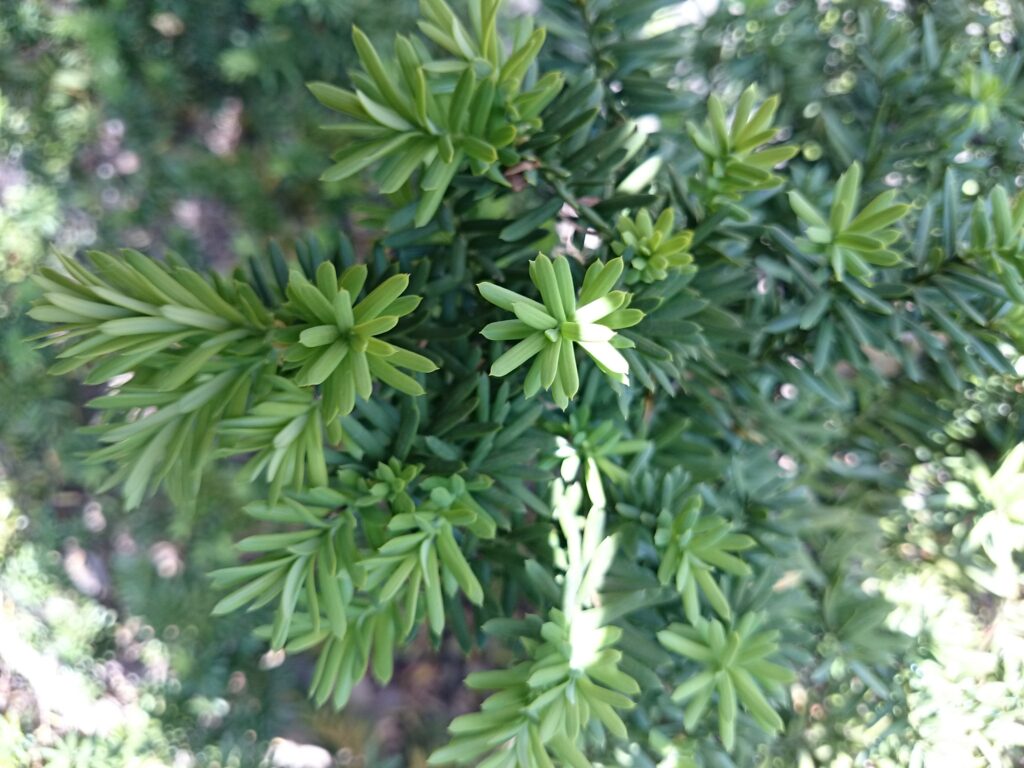
A variety of Japanese yew with leaves 1-2 cm long arranged spirally on the branches, reaching a height of 1-2 m. It grows in wind-exposed areas of deep mountains on the Sea of Japan side of Honshu (Hayashi, 2014). It is also cultivated.
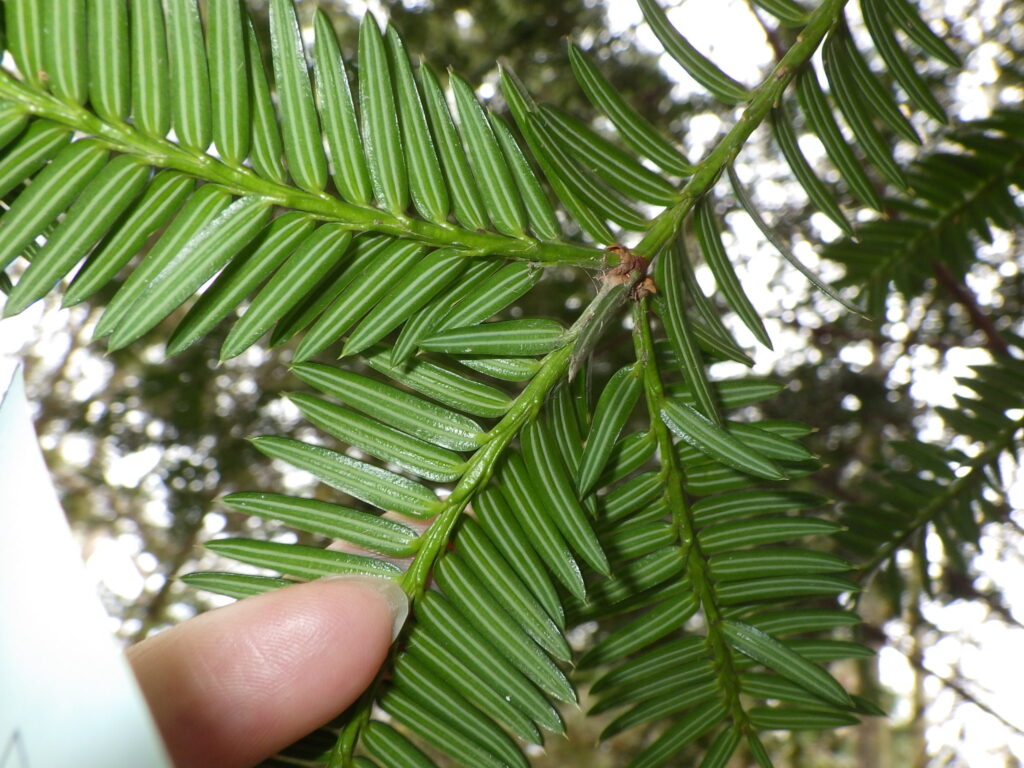
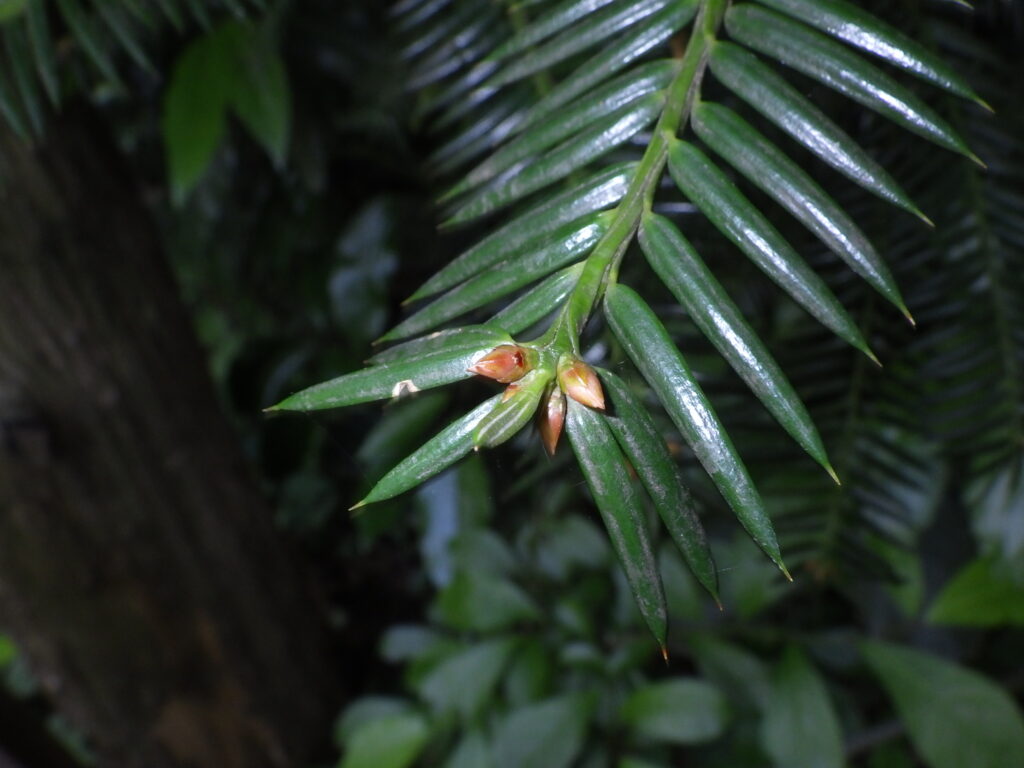
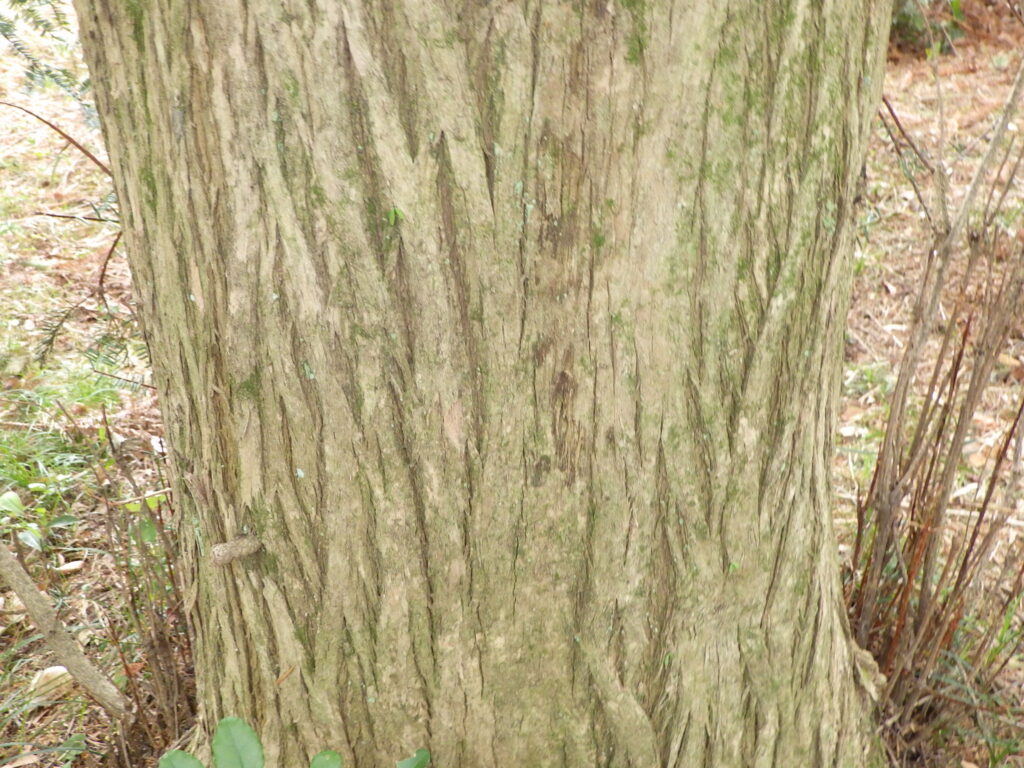
No.0064 Kaya Torreya nucifera
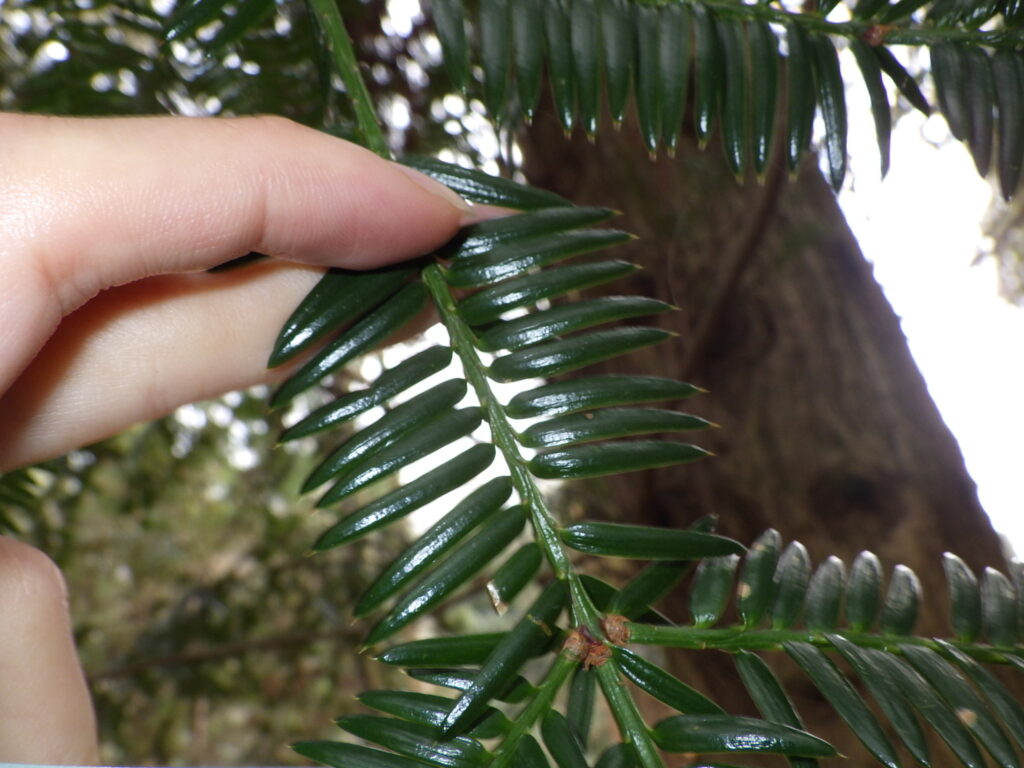
This is an evergreen tree to shrub. The bark is grayish-brown and splits vertically. The leaves are arranged almost horizontally in two rows, 18-25 mm long and about 3 mm wide, leathery and hard. The upper surface is glossy with an indistinct midrib, while the lower surface has a clear midrib with narrow white stomatal bands on both sides, and the tip is sharply pointed and painful to the touch. It flowers in May. The seeds mature in September-October of the following year, are oval-shaped, 20-30 mm long, and fall with a green aril that splits open to reveal brown seeds. It is distributed in Honshu (south of Miyagi Prefecture), Shikoku, and Kyushu (up to Yakushima).
References
Hayashi, Masayuki. 2014. 1100 Tree Leaves Identified Through Real-Life Scans. Yama-kei Publishers, Tokyo. 759pp. ISBN: 9784635070324
Kanagawa Prefecture Flora Survey Association. 2018. Kanagawa Prefecture Flora 2018 (Electronic Edition). Kanagawa Prefecture Flora Survey Association, Odawara. 1803pp. ISBN: 9784991053726