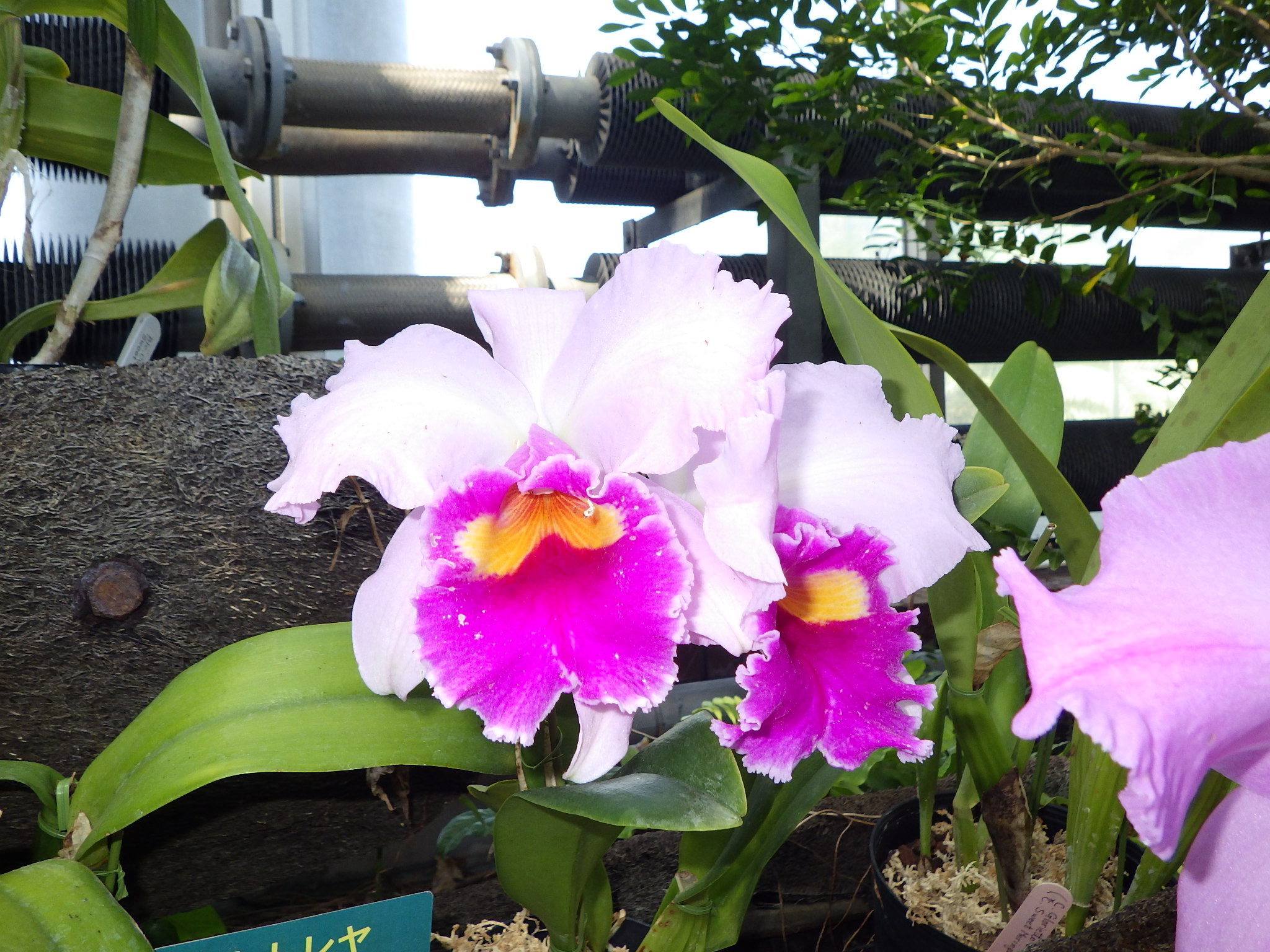
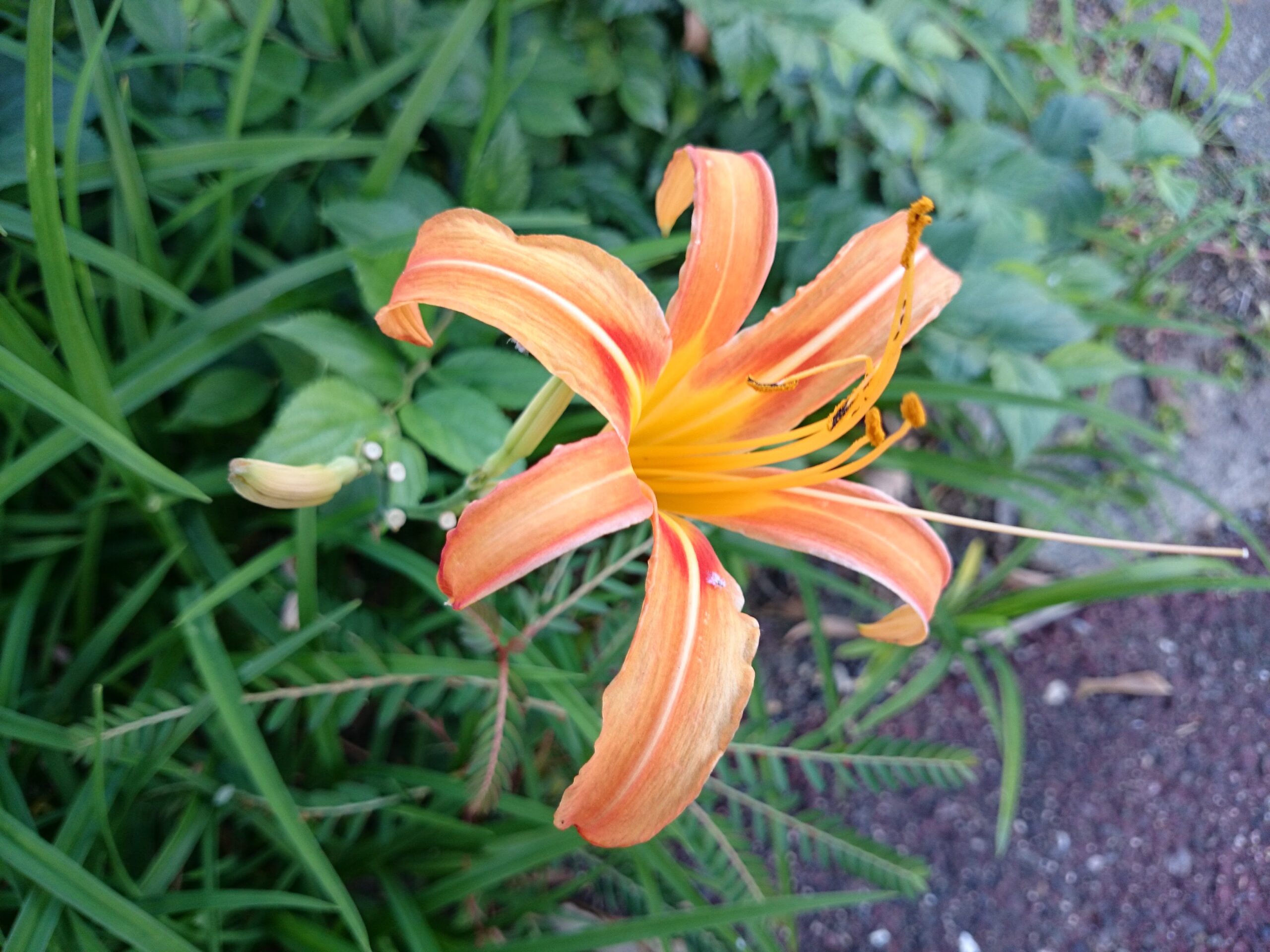
The Iridaceae family consists of annual or perennial herbs. They have rhizomes, corms, or bulbs underground. The leaves are sword-shaped, flattened, alternate, and strabiate. The flowers are bisexual and radially or bilaterally symmetrical. There are three inner and three outer perianth segments, which are either identical in shape or the outer segments are larger and fused at the base. There are three stamens, the pistil has a three-lobed style, an inferior ovary with three chambers and axial placenta. The fruit is a capsule that dehisces dorsally (lobular dehiscation) in each chamber of the ovary. In Japan, the genus Iris is native, while the genera Sisyrinchium and Crocosmia are naturalized. Belamcanda was previously classified under the genus Belamcanda, but due to changes in the classification system, it has been integrated into the genus Iris. The dwarf crocosmia, previously classified under the genus Tritonia, has now been reclassified into the genus Crocosmia.
This article provides a comprehensive, illustrated guide to plants belonging to the Iris family.
The basic information is based on Tsukamoto (1994) and the Kanagawa Prefectural Flora Survey Association (2018). Photographs are replaced as better ones become available. While the identifications are made by the author, please note that they may be changed without notice if misidentifications are found.
- No.0491 Iris sanguinea
- No.0492 Iris sanguinea var. violacea
- No. 0493 Japanese Iris (Iris ensata var. ensata)
- No. 0495 Yellow Iris (Iris pseudacorus)
- No. 0496 Iris laevigata
- No. 0497 Iris japonica
- No. 0498 Iris gracilipes
- No.0503 Ichihatsu Iris tectorum
- No. 0504 Fragrant Iris (Iris germanica 'Florentina')‘
- No. 0506 Dutch Iris (Iris x hollandica)
- No. 0508 Iris domestica
- No.0508.a Iris danfordiae
- No. 0509 Sisyrinchium rosulatum
- No.0509.a Sisyrinchium iridifolium
- No. 0510 Crocus sativus
- No.0511.a Crocus chrysanthus (Japanese saffron)
- No. 0513 Crocosmia x crocosmiiflora
- No.0515 Gladiolus x gandavensis
- No.0515.a Gladiolus x colvillii
- No. 0516 Blue-green narcissus (Freesia x hybrida)
- References
No.0491 Iris sanguinea
This is a perennial herb. The rhizome creeps horizontally and is covered in brown fibers. The leaves are sword-shaped, 30-50 cm long and 5-10 mm wide, with a thin, inconspicuous central vein. The flower stalk is 30-60 cm tall. It blooms from May to July. The flowers are about 8 cm in diameter and bluish-purple. The outer perianth segments are broadly obovate, thick and yellow to white from the base to the claw, with a purple reticulate pattern. The inner perianth segments are small, about 4 cm, spatulate, and erect. The style branches are 2-lobed at the tip, and the lobes have serrations. The capsule is oblong, 4 cm long. It is distributed in Hokkaido, Honshu, Shikoku, Kyushu; the Korean Peninsula; northeastern China; and eastern Siberia. It grows in grasslands in mountainous areas. It is often cultivated or escaped from cultivation.
No.0492 Iris sanguinea var. violacea
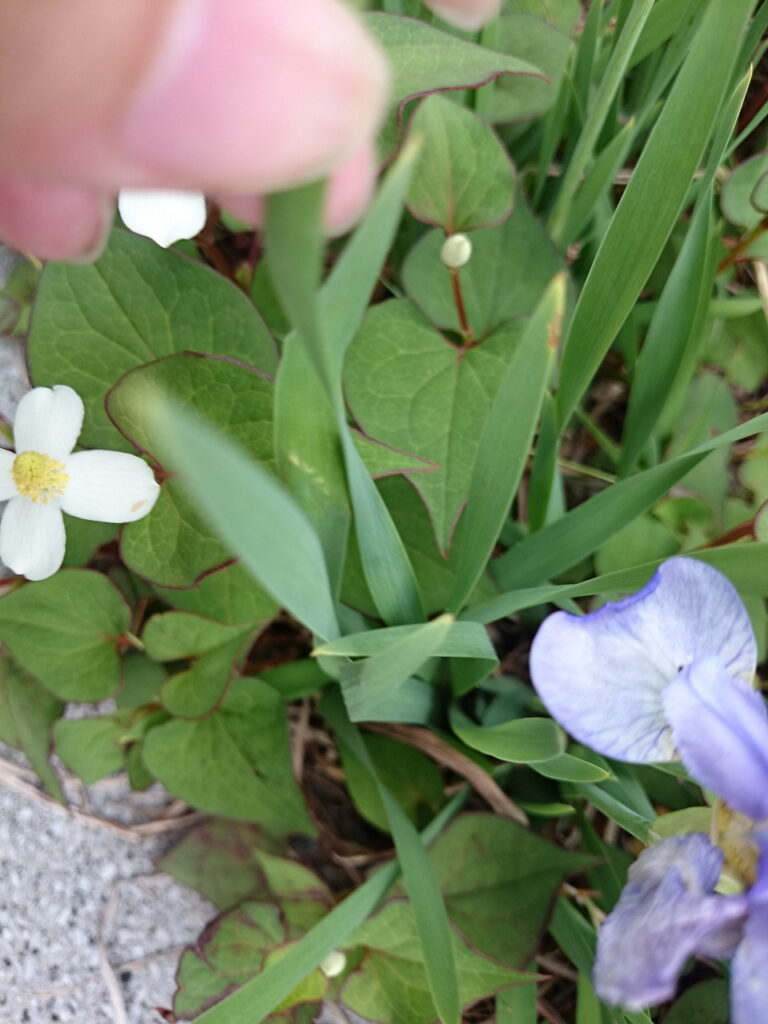
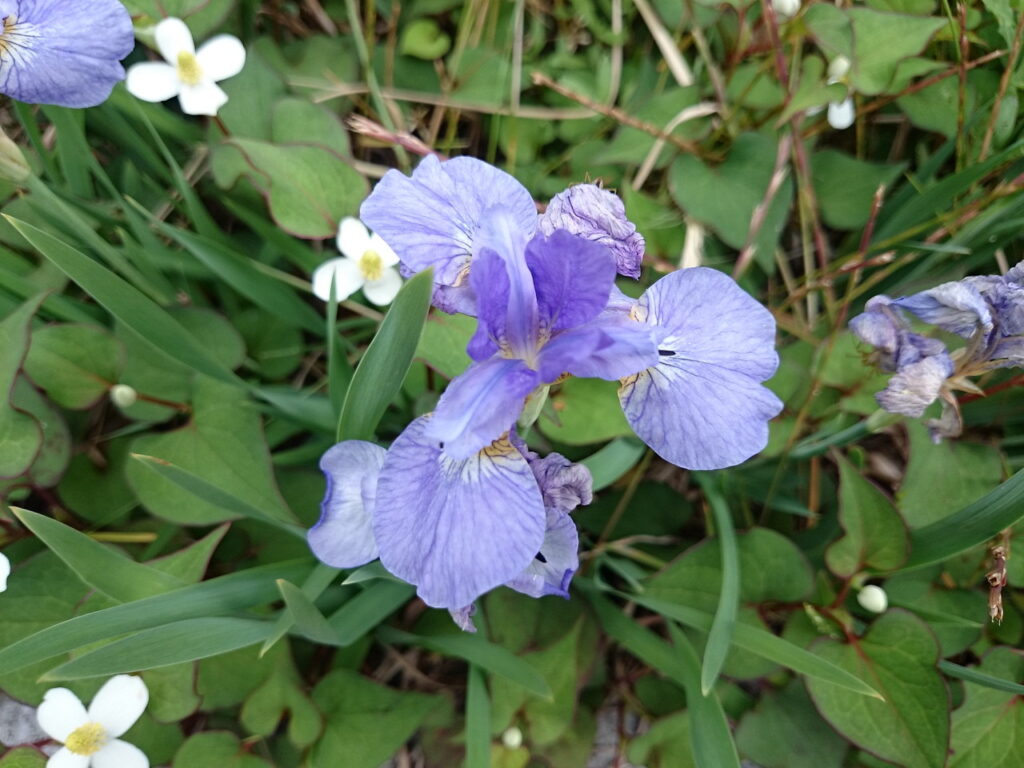
This is a variety of iris with flower stalks that protrude higher than the leaves, darker colored flowers, and wider outer perianth segments. The name is a Japanese reading of Busan. Leaves grow in clusters from a rhizome that grows diagonally. The leaves are slender and sword-shaped, slightly twisted, and the main vein is not prominent. The base is sheath-like and reddish. Several dark bluish-purple flowers bloom at the end of an upright flower stalk. The three inner perianth segments are spatulate and erect, while the three outer perianth segments are about 6 cm long, spreading laterally and drooping at the tip, with a reticulated pattern at the base. The oblong capsules face upwards and split into three sections at the tip when ripe. It is distributed in eastern China and the Korean Peninsula, and is cultivated in Japan for ornamental purposes and as a cut flower. It grows in relatively dry places.
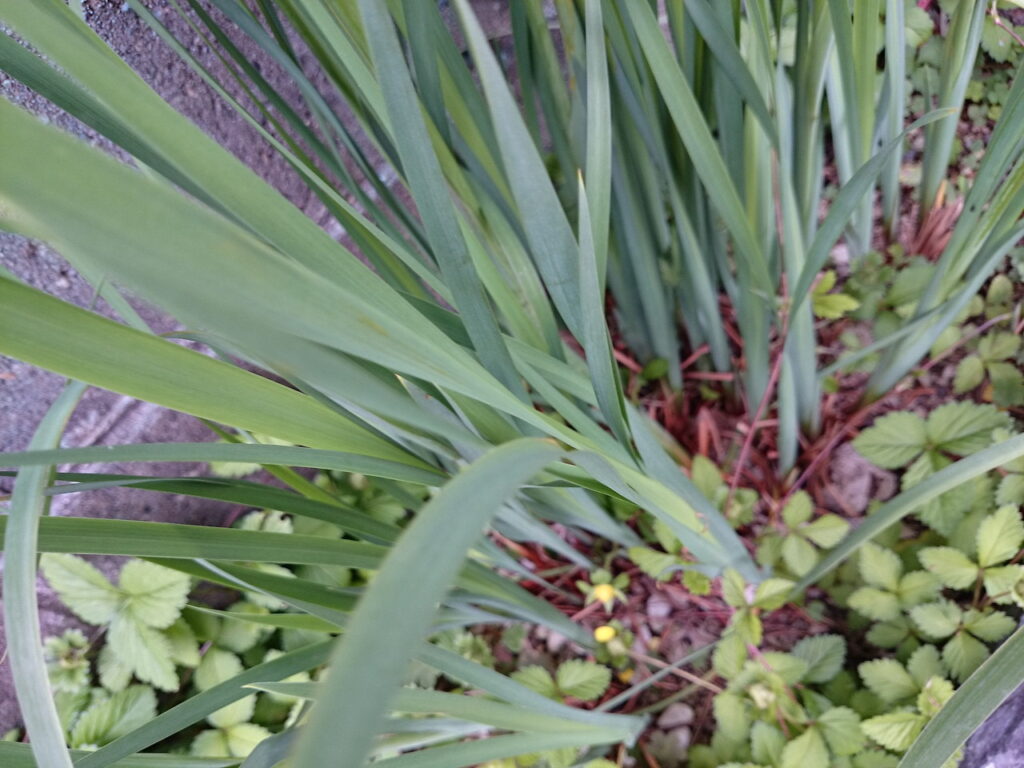
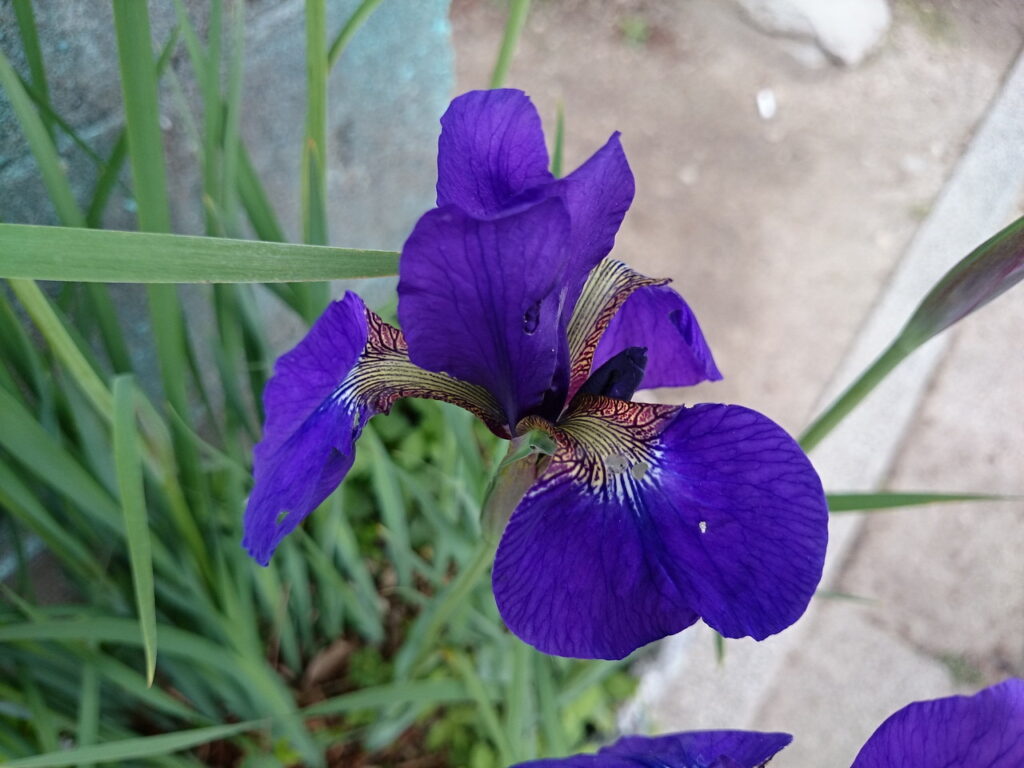
No. 0493 Japanese Iris (Iris ensata var. ensata)
Perennial herb. The wild species, Iris ensata var. spontanea, has branched rhizomes that are encased in the fibers of old leaves. The leaves are sword-shaped, 30-60 cm long and 5-12 mm wide, with a prominent thick central vein. The flower stalks are 40-80 cm tall. It blooms in June and July. The flowers are about 10 cm in diameter and reddish-purple. The outer perianth segments are oval-shaped with drooping tips, and the base from the center to the claw is yellow. The inner perianth segments are oblong and erect. The style branches at the end, and the lobes are entire. The capsule is oval-shaped, 2-3 cm long. Iris ensata var. ensata is a cultivated variety improved from Iris ensata, which grows in wetlands in mountainous areas. Its inner perianth segments are larger and almost the same shape as the outer perianth segments. It also has a wide variety of colors, with over 500 cultivars.
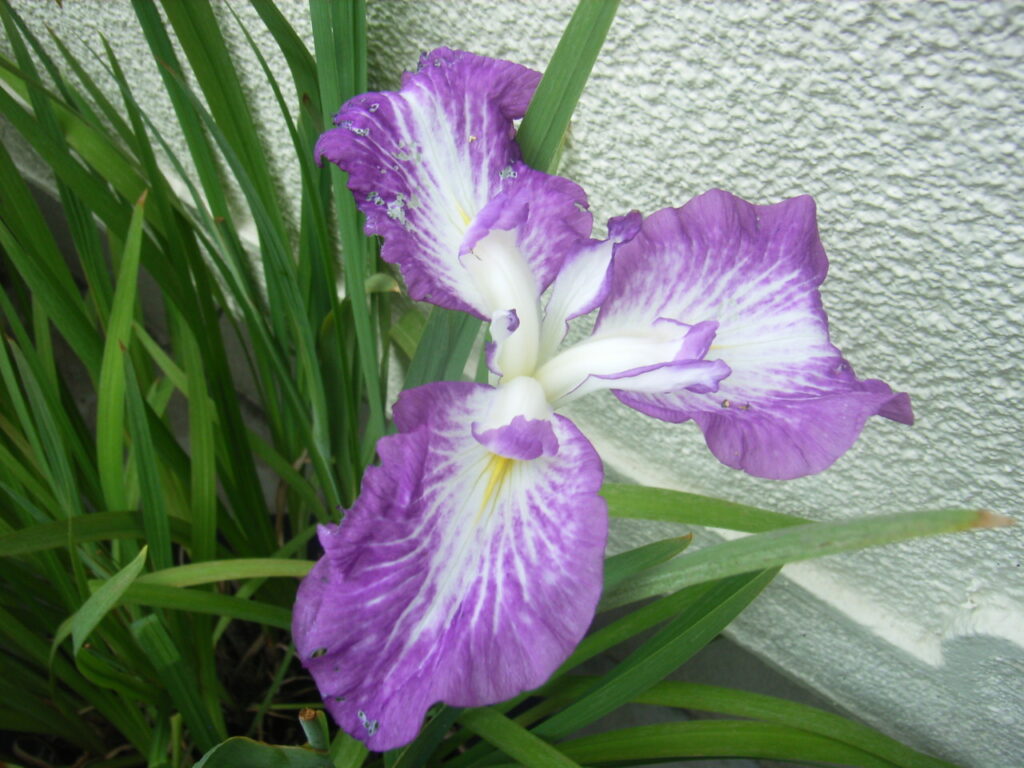
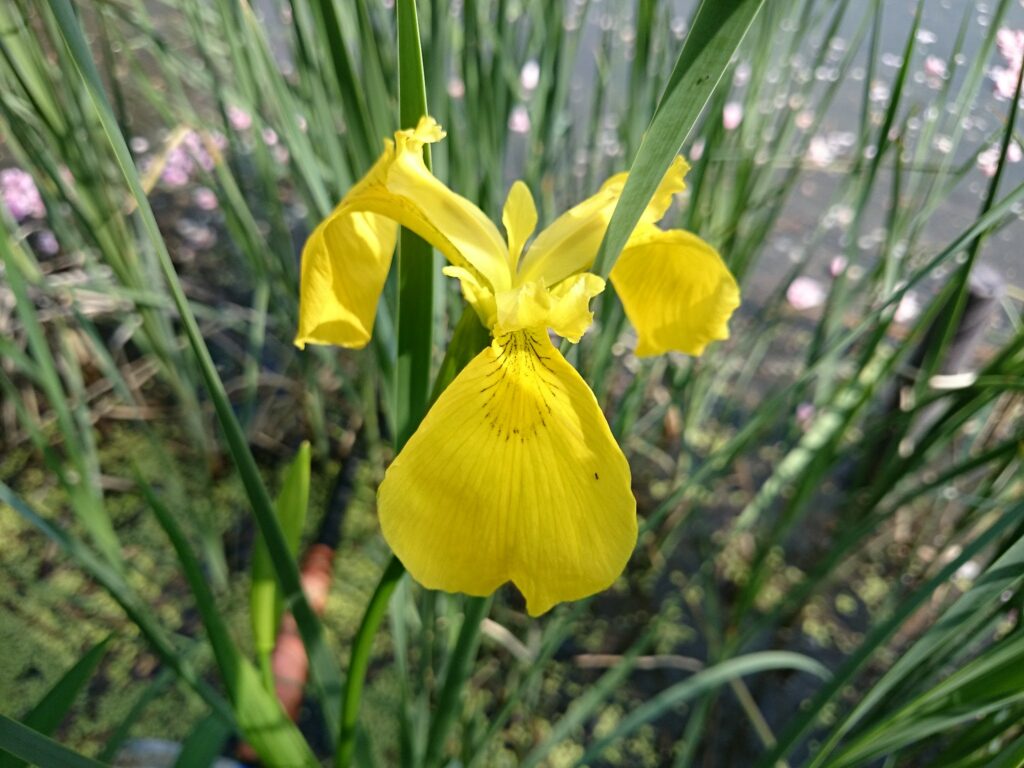
No. 0495 Yellow Iris (Iris pseudacorus)
This is a perennial herb. Its rhizome is strong and well-developed. The leaves are sword-shaped, 60-100 cm long and 2-3 cm wide, with a prominent, raised central vein. The flower stalk is 60-100 cm tall and branched. It flowers in May and June. The flowers are bright yellow. The outer perianth segments are broadly ovate with drooping tips and brown stripes at the base. The inner perianth segments are small, oblong, and erect. The style branches are two-lobed at the tip, and the edges of the lobes are serrated. The capsule is oblong, 6-7 cm long. Native to Europe and West Asia, it was imported to Japan around 1897 (Meiji 30) as an ornamental plant and is cultivated or naturalized in waterside areas throughout Japan. It is somewhat drought-tolerant and grows in forest edges. It is also distributed as an introduced species in Australia, North America, South America, and the Atlantic Islands. It has been selected as one of Japan's 100 worst invasive alien species and as an alien species that causes damage to ecosystems by the Ministry of the Environment, raising concerns about its expanding distribution and impact on native plant species.
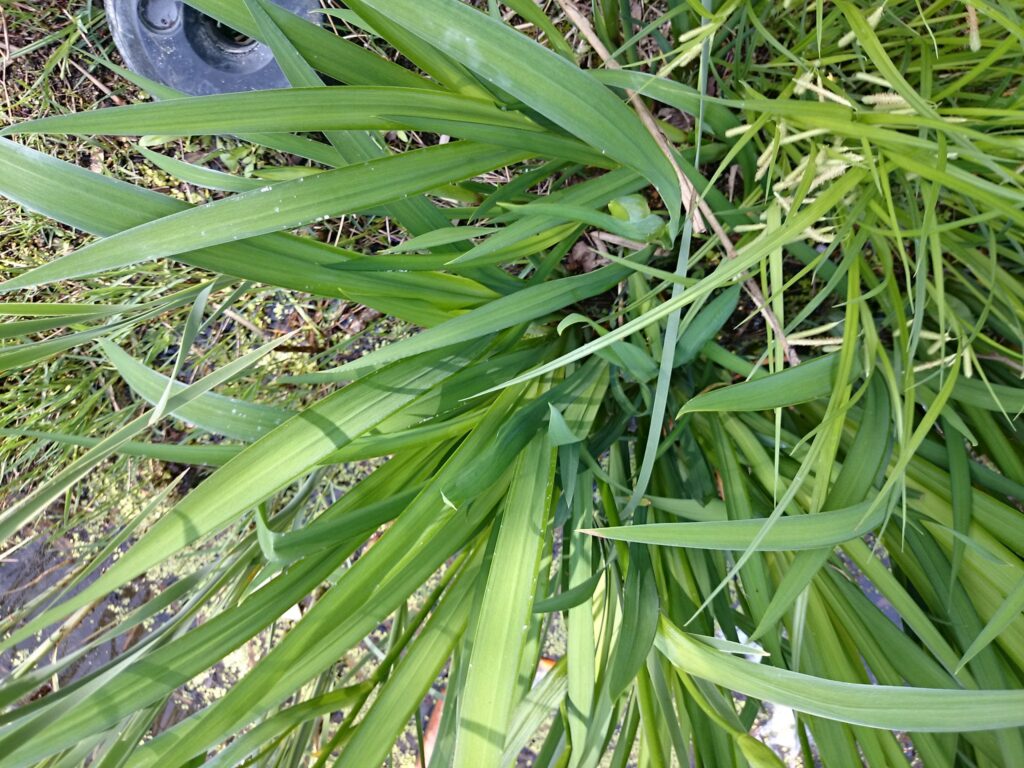
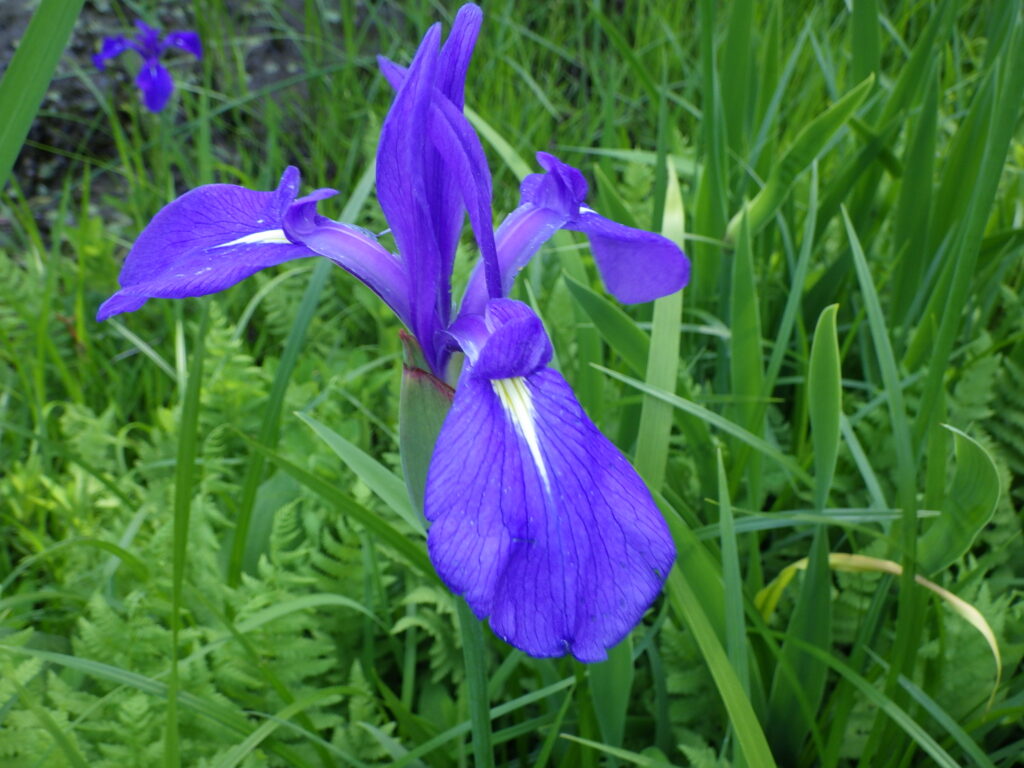
No. 0496 Iris laevigata
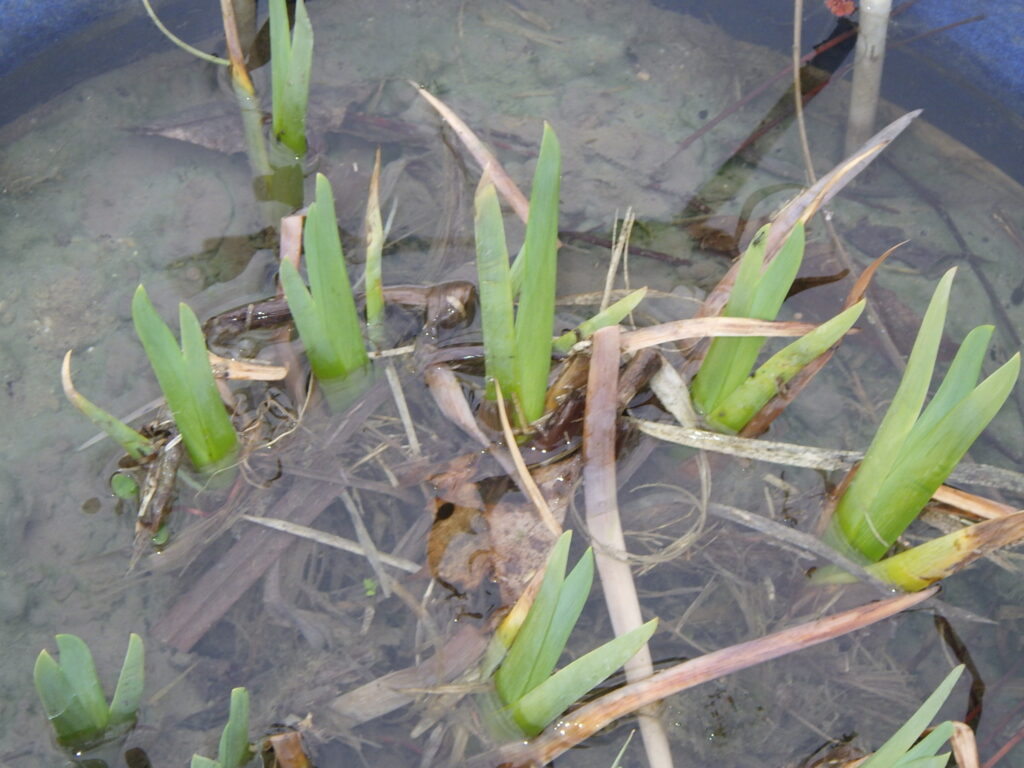
This is a perennial herb. The rhizome is branched and covered with numerous fibers. The leaves are 30-70 cm long and 2-3 cm wide, and lack a central vein. The flower stalk is 40-70 cm tall. It blooms in May and June. The flowers are purple and about 12 cm in diameter. The outer perianth segments are large and oval, and droop. The claws are pale yellow to white, and the tips are slender and pointed. The inner perianth segments are oblanceolate and erect, about 6 cm long. The pistil's style branches are two-lobed at the end, and the lobes are entire. The capsule is oblong, 4-5 cm long. It is distributed in Hokkaido, Honshu, Shikoku, Kyushu, Korea, China, and eastern Siberia. It grows in wetlands. It is also cultivated for ornamental purposes in ponds, etc. Escaped cultivation is common. There is a white-flowered variety called Iris laevigata f. leucantha, and there are many horticultural varieties.
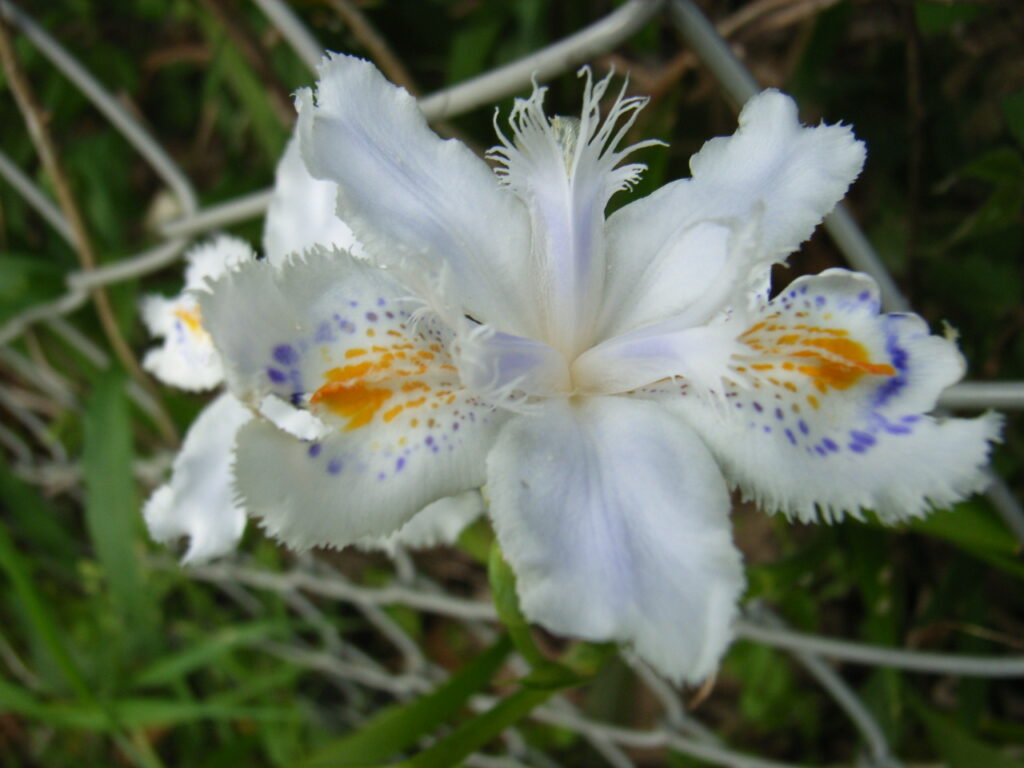
No. 0497 Iris japonica
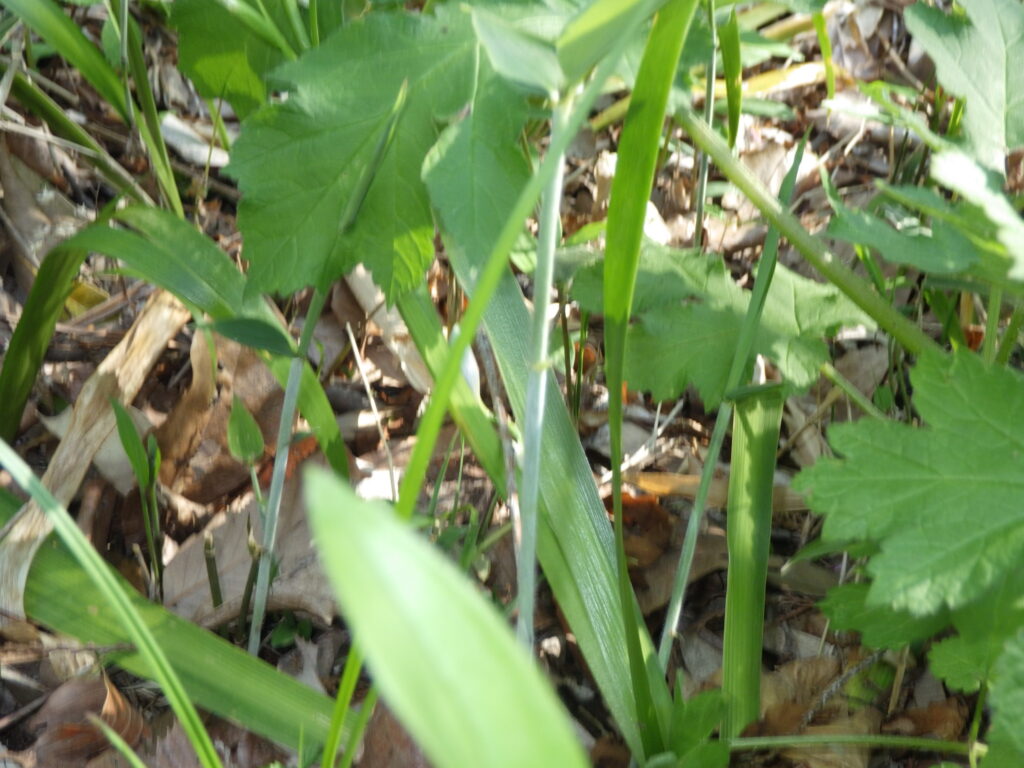
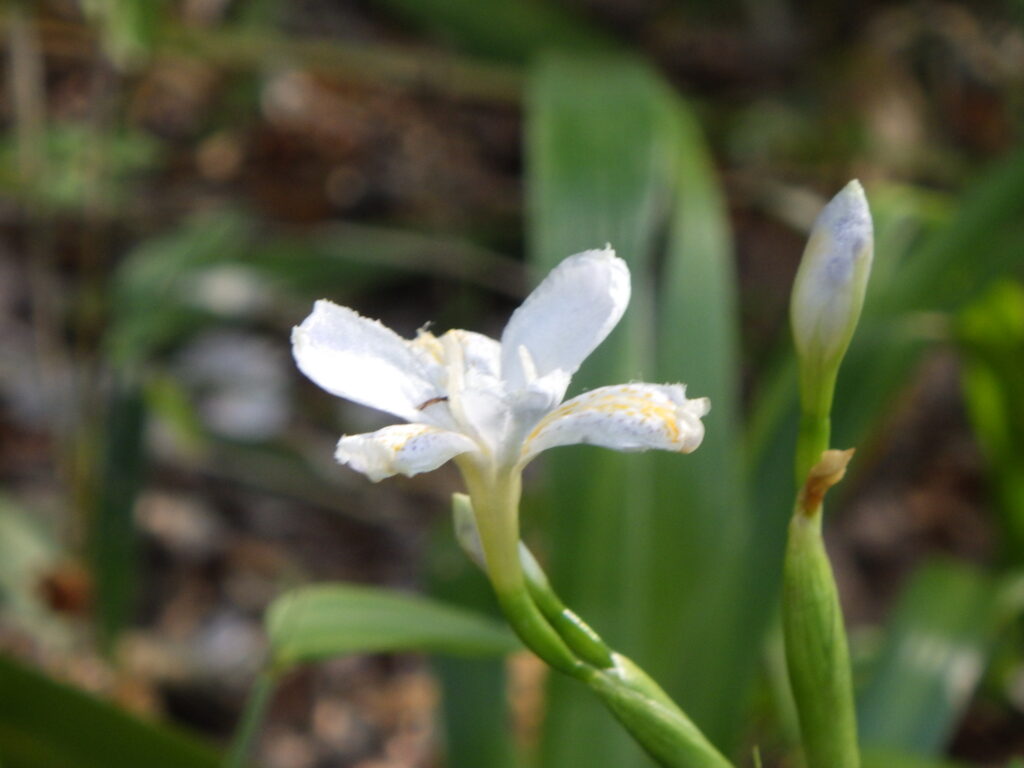
This is a perennial herb. Its rhizomes creep horizontally, producing long stolons that form clumps. The leaves are evergreen, dark green, glossy, 30-60 cm long and 2-3 cm wide, thick and stiff. The flower stalks are 30-70 cm tall, branched, and bear numerous flowers. It flowers in April and May. The flowers are about 5 cm in diameter and range in color from white to pale bluish-purple. The outer perianth segments are obovate, with finely incised edges, and have a yellow-orange spot on the central vein of the upper surface, forming a comb-like projection. There are bluish-purple spots around this area. The inner perianth segments are somewhat smaller, oblong, and two-lobed at the tip, with the tips of the lobes finely incised. The three branches at the top of the style are each two-lobed at the tip, with the tips of the lobes finely incised. It is usually triploid and does not produce fruit. It is distributed in Honshu, Shikoku, Kyushu, China, and Myanmar. It is said to have been introduced from China long ago and has become naturalized. They grow in clusters on the forest floor and at the forest edge near human settlements.
No. 0498 Iris gracilipes
This is a perennial herb. Its rhizomes creep horizontally. The leaves are pale green, 20-40 cm long and 5-15 mm wide, and wither in winter. The flower stalks are 15-30 cm tall and bear only 2-3 flowers. It flowers in May and June. The flowers are about 4 cm in diameter and pale purple. The outer perianth segments are obovate, entire, with a white center, purple veins and yellow spots, and a comb-like projection. The inner perianth segments are also entire, spatulate-oblong, and somewhat small. The tip of the style branch is completely 2-lobed and further divided into smaller segments. The capsule is spherical and about 8 mm in diameter. It is distributed in Hokkaido (southwestern part), Honshu, Shikoku, and Kyushu. It grows in rocky areas in mountainous regions and in sandy or gravelly areas within sparse forests.
No.0503 Ichihatsu Iris tectorum
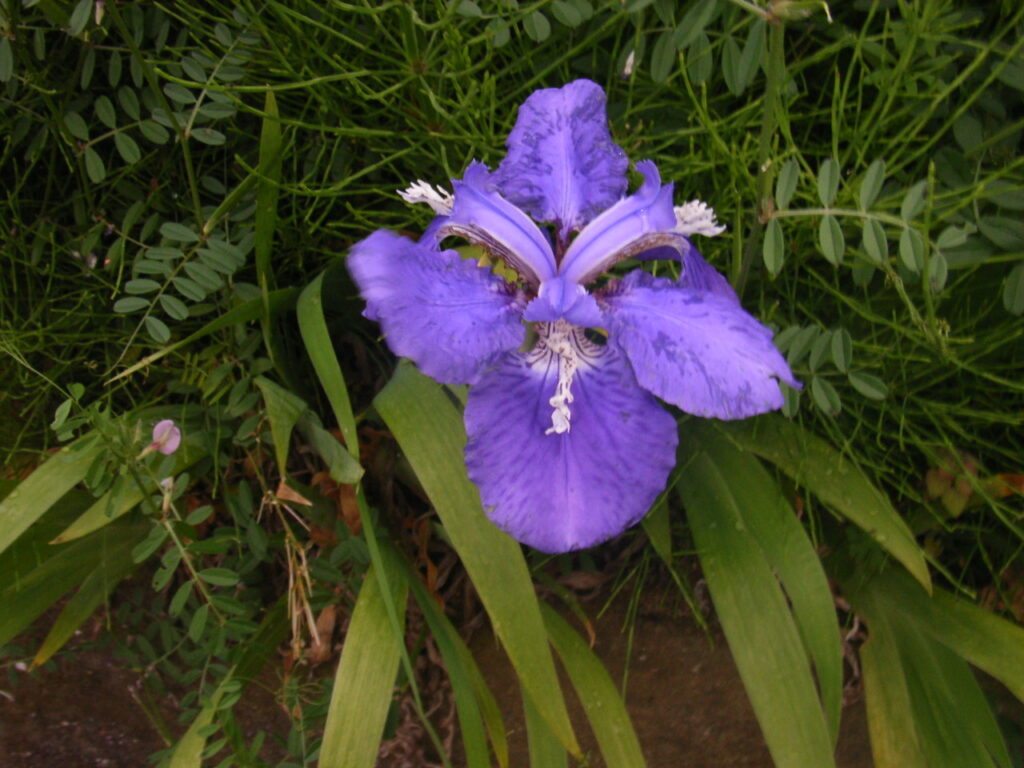
This perennial plant is said to have been named "Ichibatsu" (meaning "first bloomer") because it is the earliest flowering member of the iris family. It has a yellow rhizome underground. The leaves are sword-shaped, similar to those of the Japanese iris (Shaga), 2.5-3.5 cm wide and 30-60 cm long, with no raised midrib and entire margins. It flowers in May, with flower stalks 30-50 cm tall that branch and bear 2-3 flowers. The flowers are about 10 cm in diameter, purplish-brown, with obovate outer perianth segments with rounded tips and small inner perianth segments that both spread flat. What distinguishes it from other species is that the outer and inner petals spread out, giving it a flat flower shape. The outer perianth segments are scattered with dark purple spots, and there is a white, comb-like projection from the base to the center. It is distributed in central to southwestern China and northern Myanmar. It was introduced to Japan during the Edo period and has been cultivated as an ornamental plant. In the past, there was a superstition that it could protect against strong winds, so it was customary to plant it on the ridge of a farmhouse's thatched roof. Some have escaped cultivation and become naturalized. It prefers dry areas with partial shade.
No. 0504 Fragrant Iris (Iris germanica 'Florentina')‘
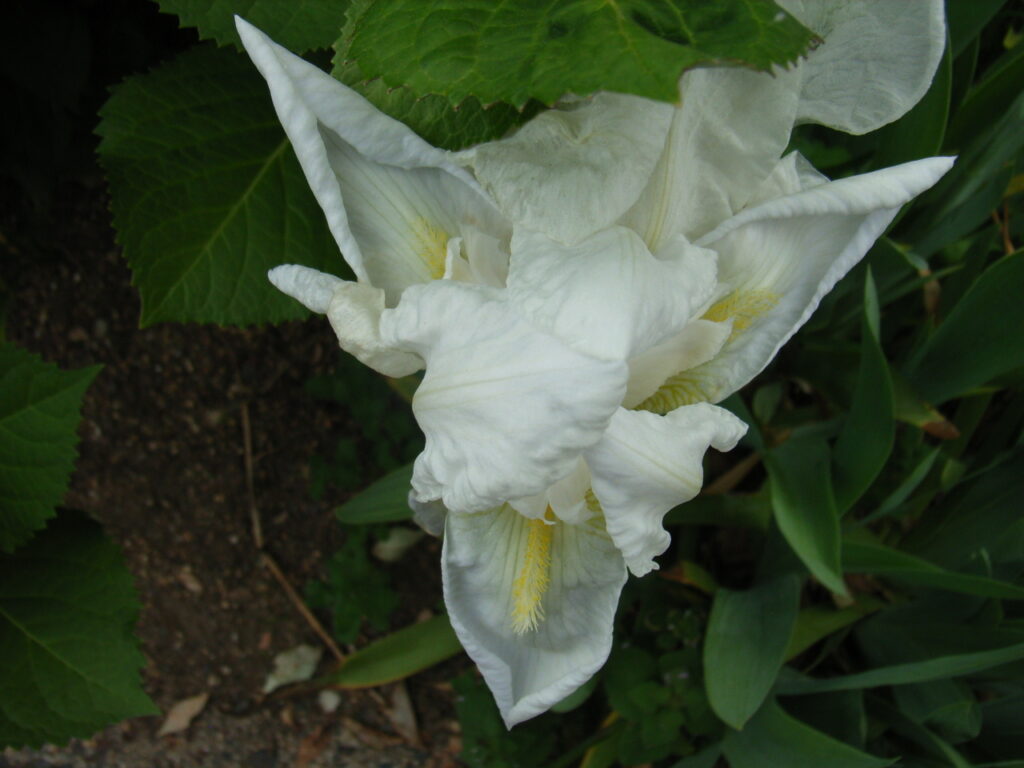
This evergreen perennial herb grows to a height of about 40-50 cm. Its root system spreads horizontally in a fan shape, is oblong, and persists for several years. The leaves are mostly basal, arranged alternately in two rows, and are sword-shaped. In spring, flower stalks emerge from between the leaves, bearing several white flowers at the top of the stem. In addition to its medicinal uses, it is enjoyed as an ornamental plant in flowerbeds and pots. It is native to Southern Europe, specifically Italy and France. It is cultivated in temperate regions worldwide. It was introduced to Japan around 1867.
No. 0506 Dutch Iris (Iris x hollandica)
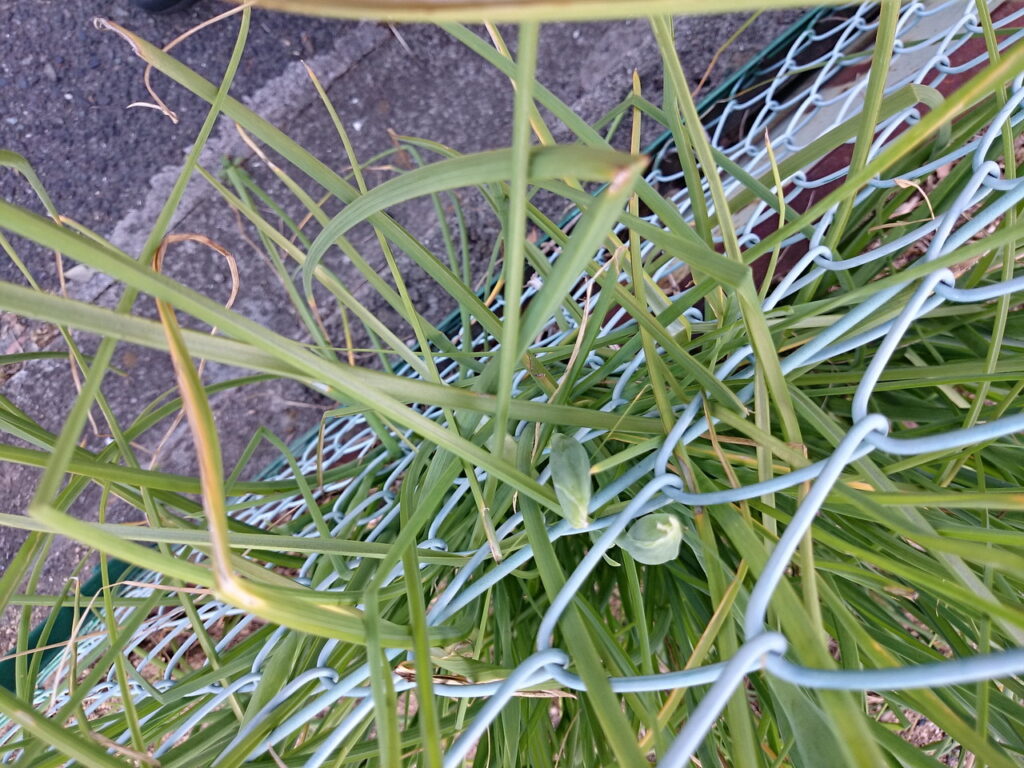
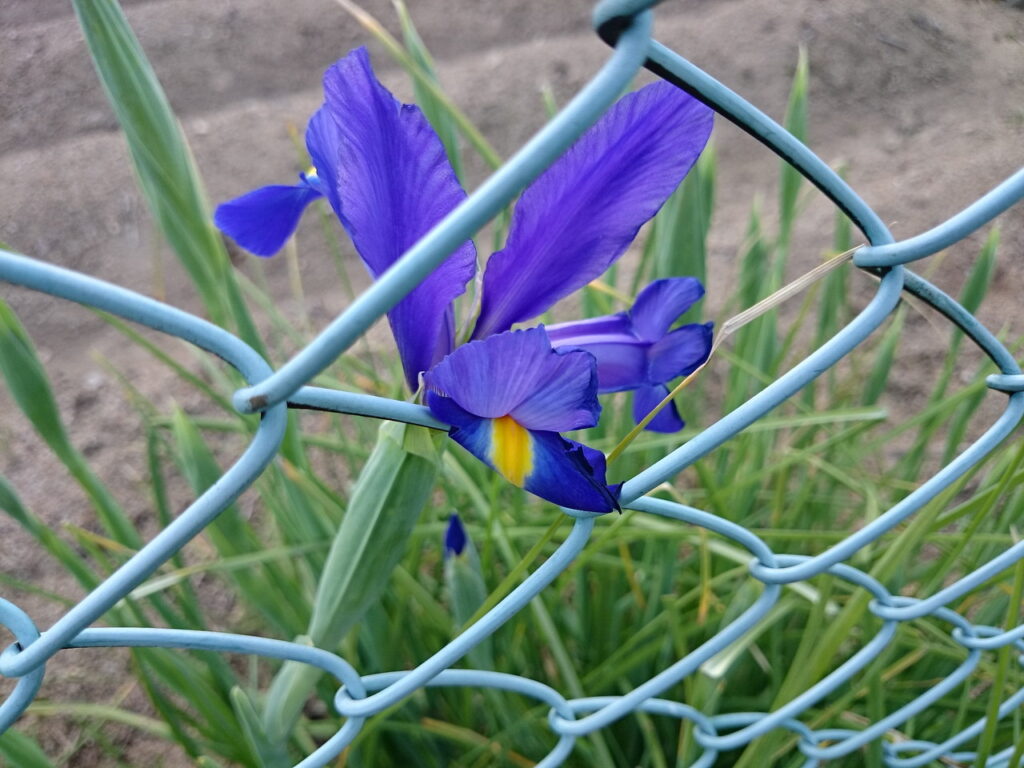
This perennial plant is also known as Dutch iris. It is a bulbous iris created in the Netherlands by crossbreeding Spanish iris (I. xiphium) with Moroccan iris (I. tingitana) and I. fontanesii. The bulb is spindle-shaped, and when planted in autumn, it produces several leathery leaves and a rigid flower stalk from the center, bearing several flowers at the top. The flowers come in white, yellow, and blue, and are often used as cut flowers. The flower stalk can reach about 50 cm in length, and the flowers can be 10 cm or more in diameter. It is also suitable for garden planting and blooms from April to May.
No. 0508 Iris domestica
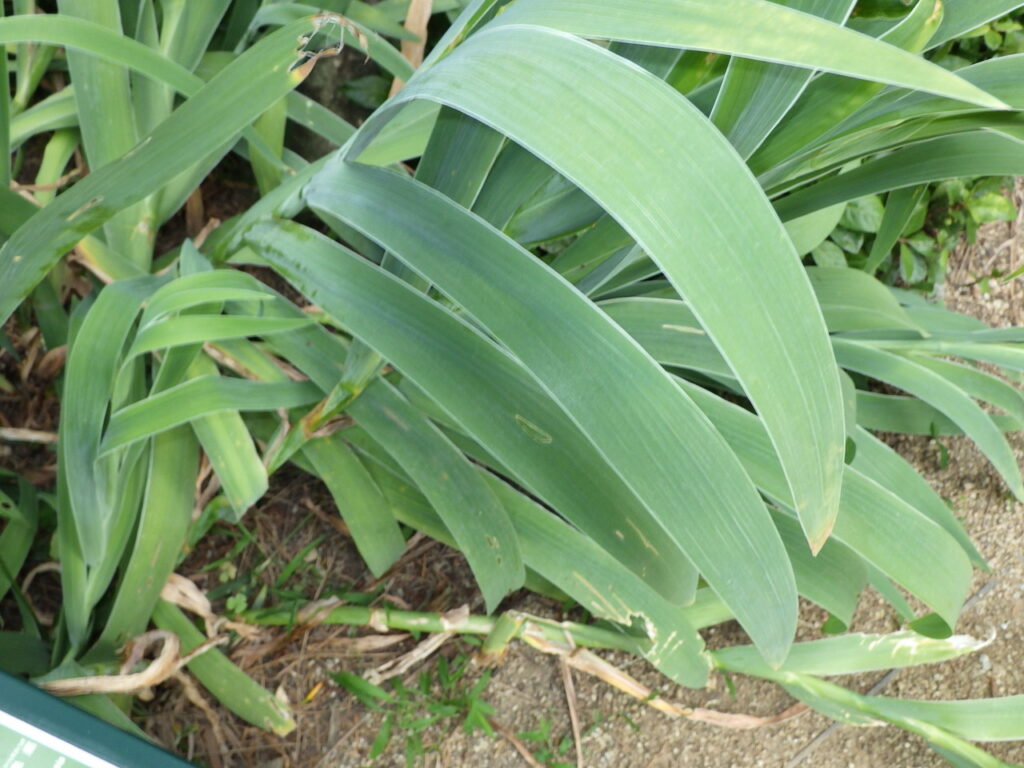
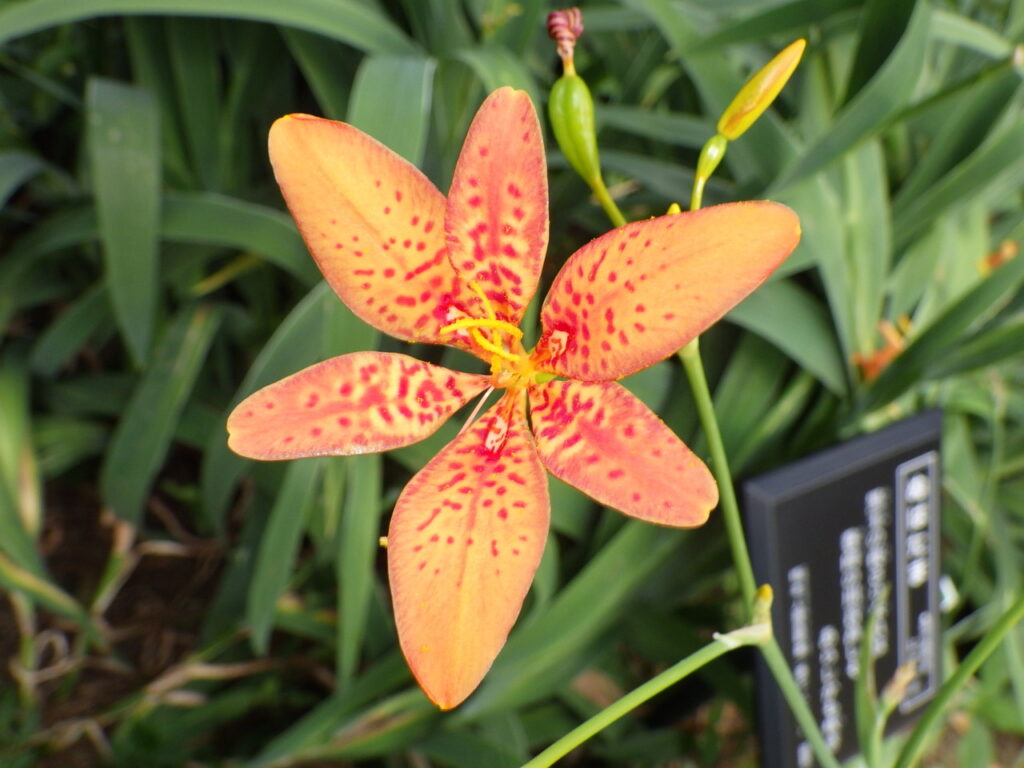
This is a perennial herb. Its branching rhizomes creep along the ground in short strips. The leaves are arranged alternately in two rows, forming a fan shape. They are broadly sword-shaped, 30-50 cm long and 2-4 cm wide, green with a powdery white coating. The flower stalk is 60-100 cm tall, branching at the top. Bracts are attached to the ends of the branches, from which several pedicels 1-4 cm long emerge, bearing 2-6 flowers. It blooms from July to September. The flowers are about 4 cm in diameter, radially symmetrical, and face upward. There are six narrow, oblong perianth segments, both inner and outer, similar in shape and size, but the inner segments are wider. They are orange with red spots covering the entire inner surface of both segments. The bases are fused. There are three stamens, erect and surrounding the style, attached to the base of the perianth segments. The anthers are yellow-orange. The upper part of the style is thread-like and three-lobed. The capsule is obovate-elliptic, about 3 cm long, and dehisces dorsally along each chamber of the ovary while the seeds remain attached to the midrib (locular dehiscation). The seeds are spherical, about 5 mm in diameter, black and glossy, and are called "nubutama." It is distributed in Honshu (west of the Kanto region), Shikoku, Kyushu, the Ryukyu Islands, the Korean Peninsula, China, Southeast Asia, and India. It grows in mountain grasslands. It is also cultivated. It is declining significantly due to vegetation succession.
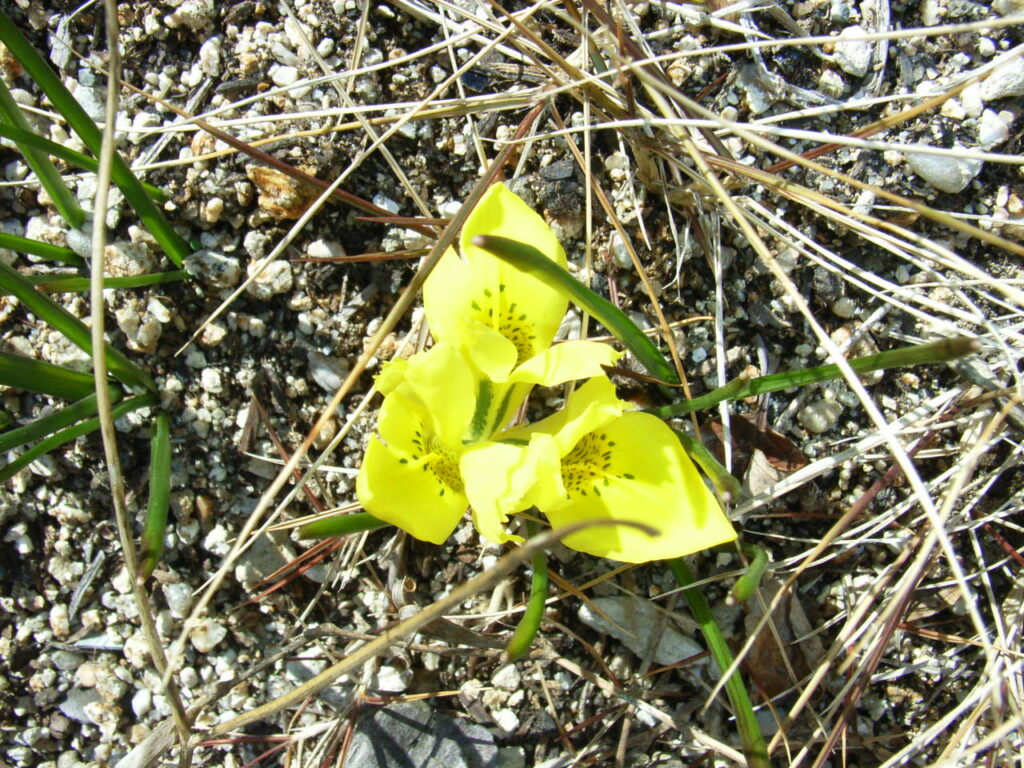
No.0508.a Iris danfordiae
The Japanese name is a provisional name given by the author. It is a perennial herb, a dwarf bulbous plant, growing to a height of 10-15 cm. It produces bright yellow flowers in early March and April. The flowers have a sweet fragrance. The leaves are long and narrow, growing after flowering, but wither and go dormant at the end of spring. It is native to the Taurus Mountains in southern Turkey. It grows in coniferous forests, forest edges, and sunny slopes with many exposed, dry rocks near the snowline. It is sometimes cultivated in Japan.
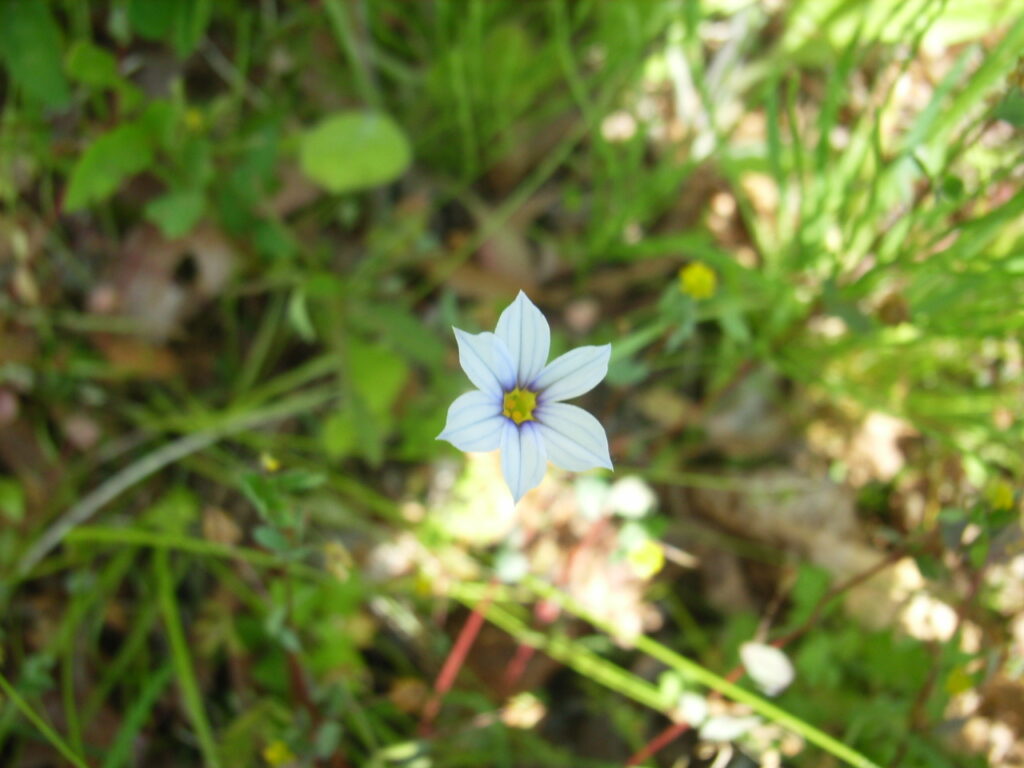
No. 0509 Sisyrinchium rosulatum
This is an annual or perennial herb. The stems and leaves grow in clumps. The leaves are linear, 4-8 cm long and 2-4 mm wide, with minute serrations along the edges. The flower stalk is about 15 cm tall, flattened, and has very narrow wings. It flowers from April to June. The flowers are about 1 cm in diameter, pale purple or white. The perianth segments are obovate-elliptic, fused at the base and yellowish. The stamens are less than 2.5 mm long, fused in the lower half, vase-shaped, and densely covered with yellow glandular hairs. The capsule is spherical, about 3 mm in diameter. The seeds are small, dark brown, and numerous. This is a naturalized plant native to North America, introduced to Japan during the Meiji era, and has naturalized in various regions from Hokkaido to the Ryukyu Islands. It grows in sunny roadsides and lawns. Sekka-niwazekisho is a variety of Niwazekisho with pure white flowers.
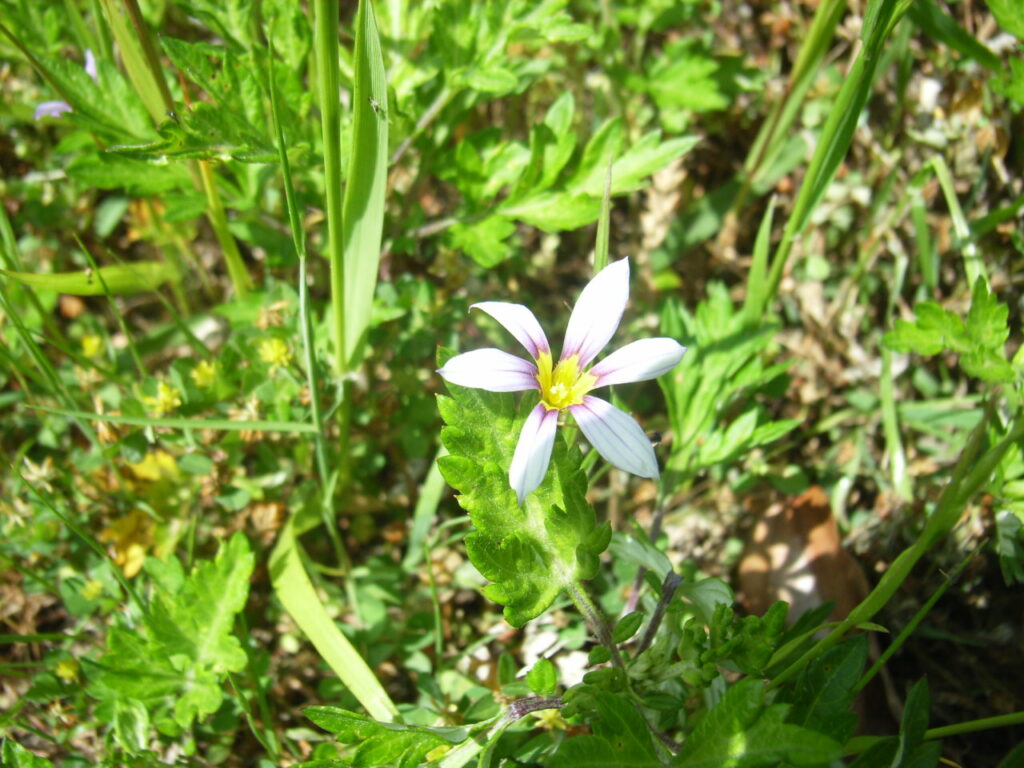
No.0509.a Sisyrinchium iridifolium
An annual plant. The flower stalk is about 25 cm tall and has narrow wings. The leaves are 4-8 mm wide. It blooms from April to June. The flowers are pale bluish-purple and less than 1 cm in diameter. The capsule is about 5 mm in diameter. The seeds are dark brown and bumpy. It is a naturalized plant believed to be native to North America.
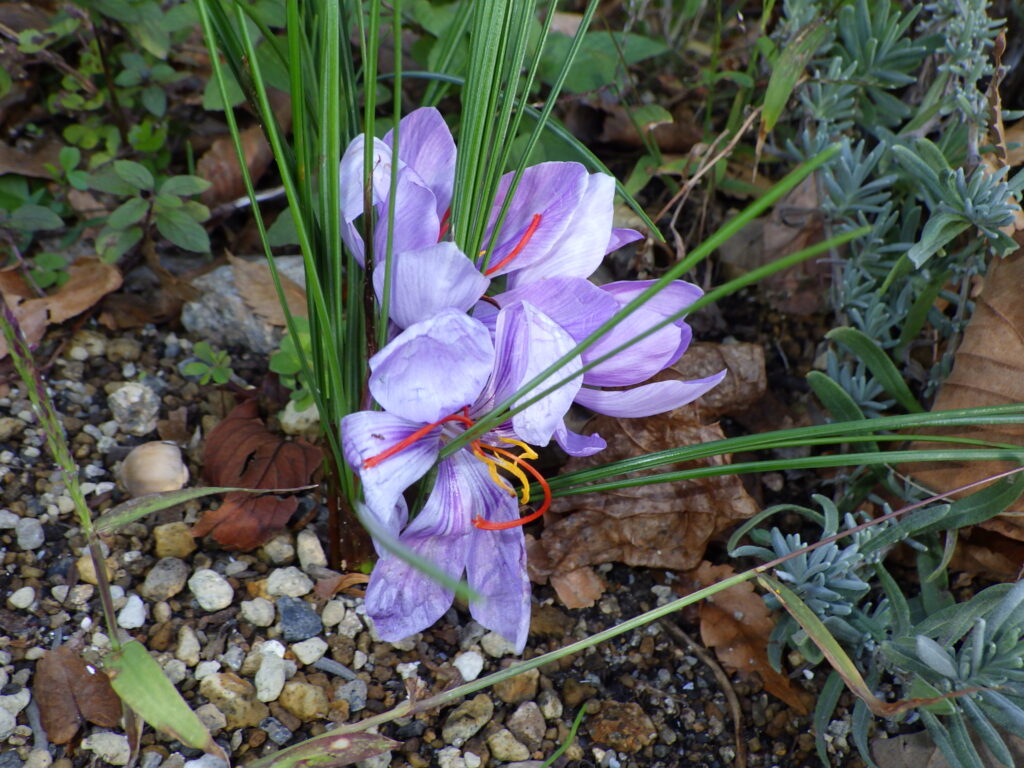
No. 0510 Crocus sativus
In 'Ylist', it is called saffron. Originally cultivated to obtain saffron for medicinal, dye, or fragrance purposes, it also came to be used for ornamental purposes, and the flower itself came to be called saffron. No wild populations have been found, and it is thought to have been selected from Crocus cartwrightianus, a wild crocus that grew around Athens (and Crete) during the Bronze Age, around 3200-3000 BC. While the latter species has a style branch shorter than the anthers, this species has larger flowers, and the style protrudes longer than the anthers and hangs downwards. It has many leaves, more than 10, which elongate during flowering and grow significantly after flowering. The flowers are large, fragrant, and pale purple. They bloom in early November. The filaments are white, and the anthers are yellow. The style is three-lobed and bright red, and saffron is obtained from this part. Saffron originally referred to the dried stylus of the saffron flower, but later the flower itself came to be called saffron. It was very expensive, requiring as many as 4,300 flowers to obtain one ounce (about 30g) of dried stylus, and was an important commodity used for multiple purposes, including medicine, fragrance, spice, and dye. One theory suggests that its etymology comes from the Arabic word "zafaran," meaning yellow, and it has been used since ancient times to dye clothing and to color and flavor food. It was used in a wide area from the Mediterranean in the west to Kashmir in the east, and in Japan, famous dishes such as paella, bouillabaisse, Milanese risotto, and saffron rice all owe their yellow color to saffron. However, nowadays, turmeric, a cheaper substitute, is often used. The yellow color of curry is also said to have originally come from saffron. It was considered a medicine effective against rheumatism, gout, and smallpox, and later it was also used to prevent seasickness and as a charm for safe childbirth. Due to abnormalities in meiosis, the plants do not reproduce sexually individually, and instead propagate vegetatively through methods of selective breeding, such as dividing and planting rhizomes.
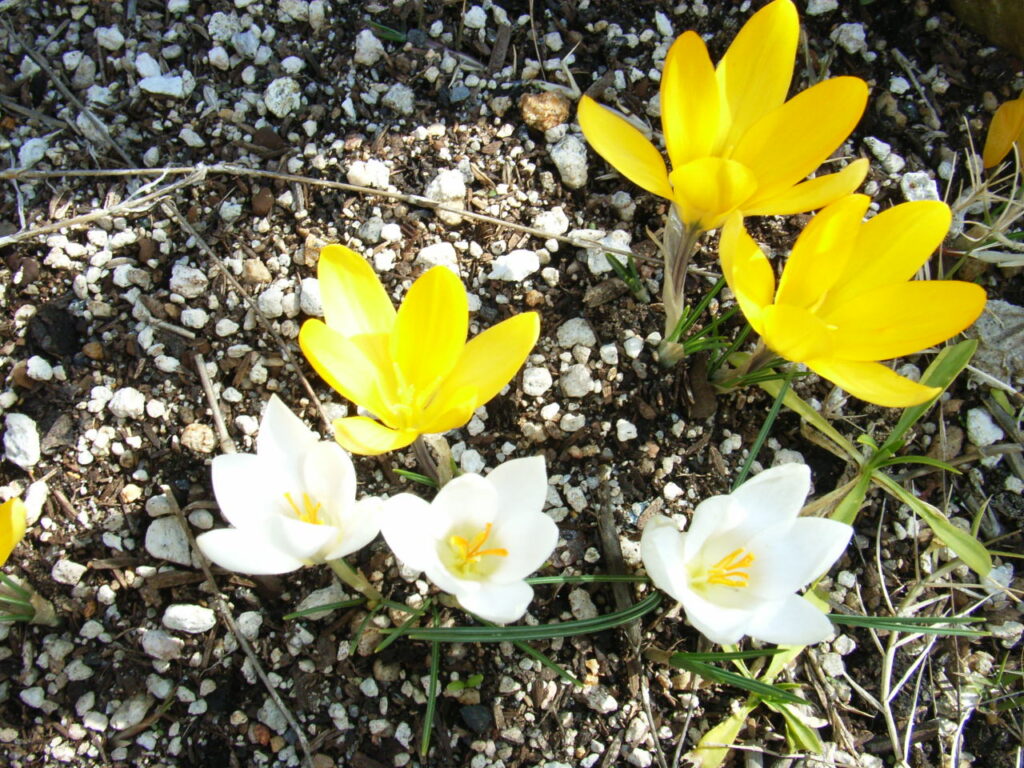
No.0511.a Crocus chrysanthus (Japanese saffron)
Chrysanthus 'Hanasaffron' is the author's provisional name. It is a yellow variety of what is called a crocus in horticulture. It is native to Greece, Albania, Bulgaria, former Yugoslavia, Romania, and Turkey. The thin skin of the corm is membranous or leathery. It blooms in February and March, and the flowers are a vivid orange-yellow. The original white-flowered species is var. albidus. The flowers bloom upwards and are cup-shaped. The flowers are smaller, the corms are smaller, and the leaves are generally narrower than those of the Crocus vernus lineage.
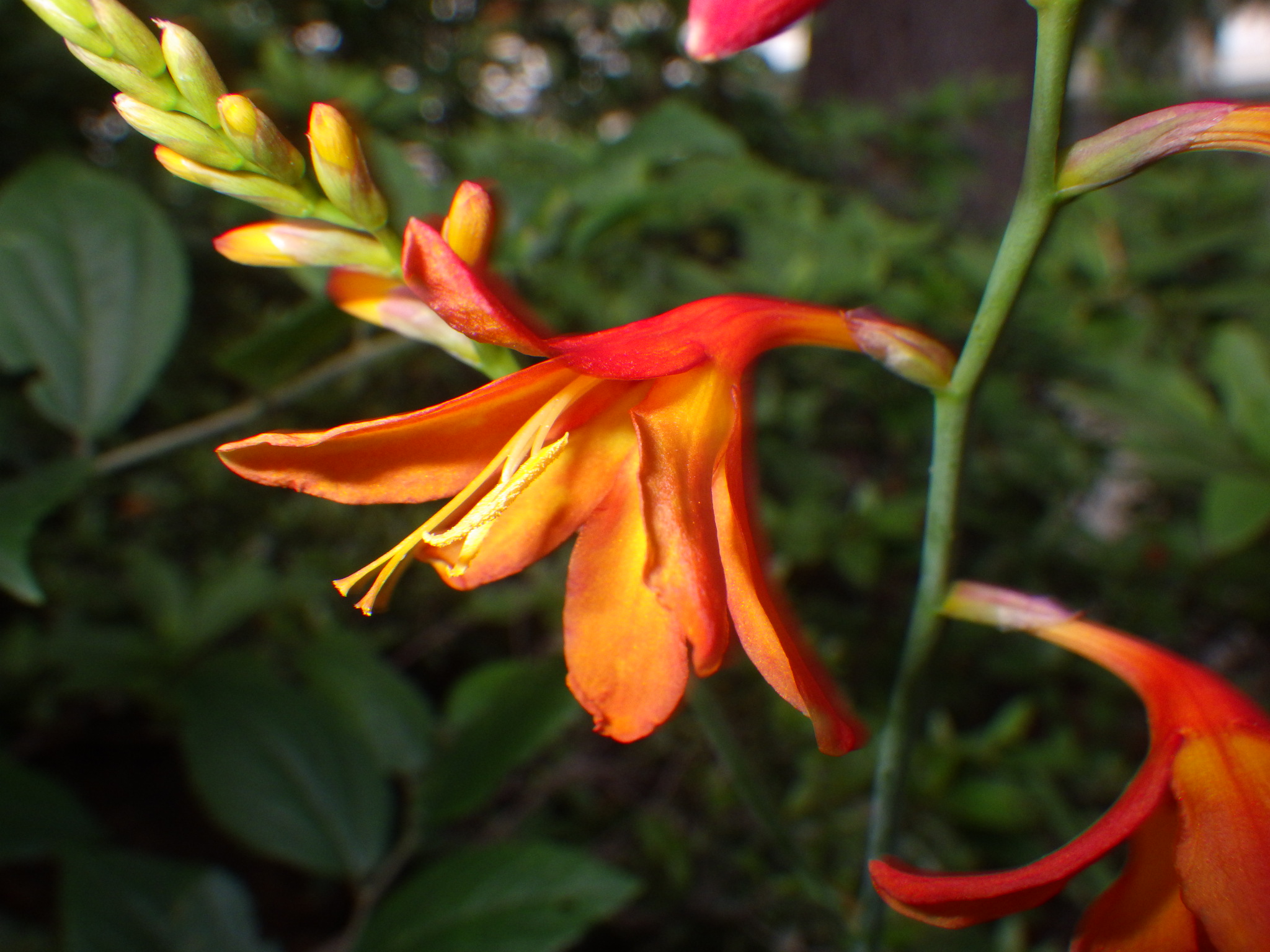
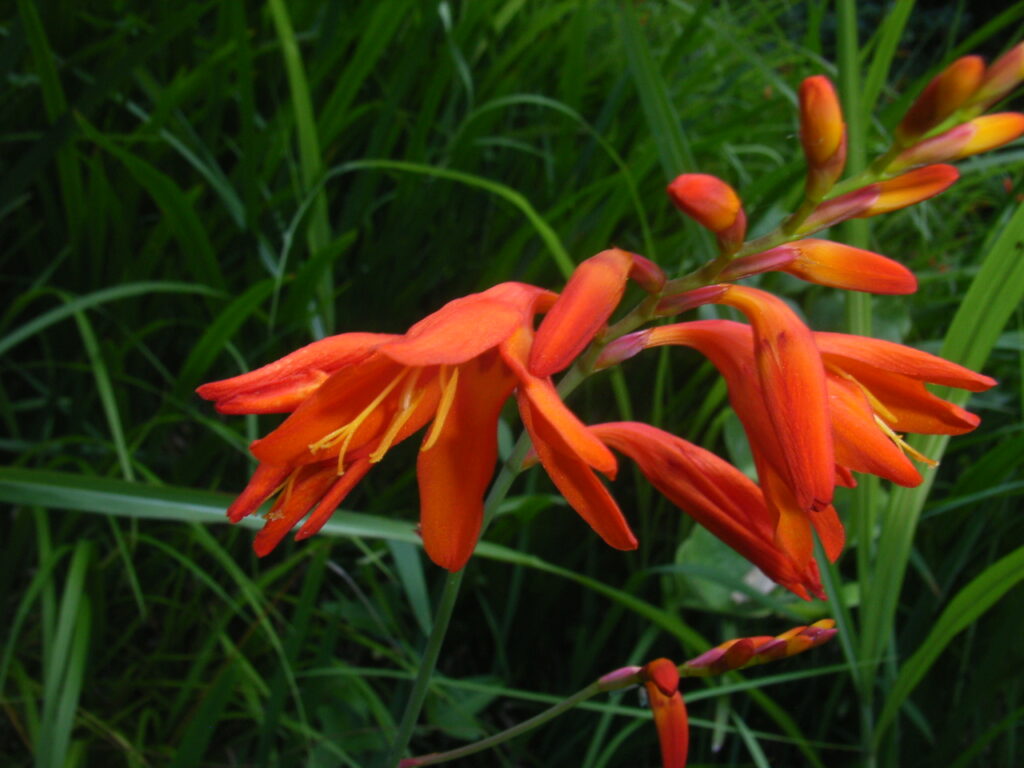
No. 0513 Crocosmia x crocosmiiflora
A perennial herb. Also known as Montbretia. It grows to a height of 0.5 to 1 m, with basal leaves 5 to 35 mm wide. The leaves have a central vein. It flowers from June to August, with many orange-red flowers, about 3 cm in diameter, arranged in two rows in a spike-like inflorescence. The six perianth segments are narrowly elliptical, with flattened tips, and the inner center is yellow with two orange-red spots. The bases of the perianth segments are fused to form a tube, and the ovary is embraced by two bracts. It is a horticultural plant that was cultivated in Europe in 1880 as a hybrid of Crocosmia aurea and Crocosmia pottsii. It was introduced to Japan in the mid-Meiji period (around 1890). It has naturalized throughout Japan.
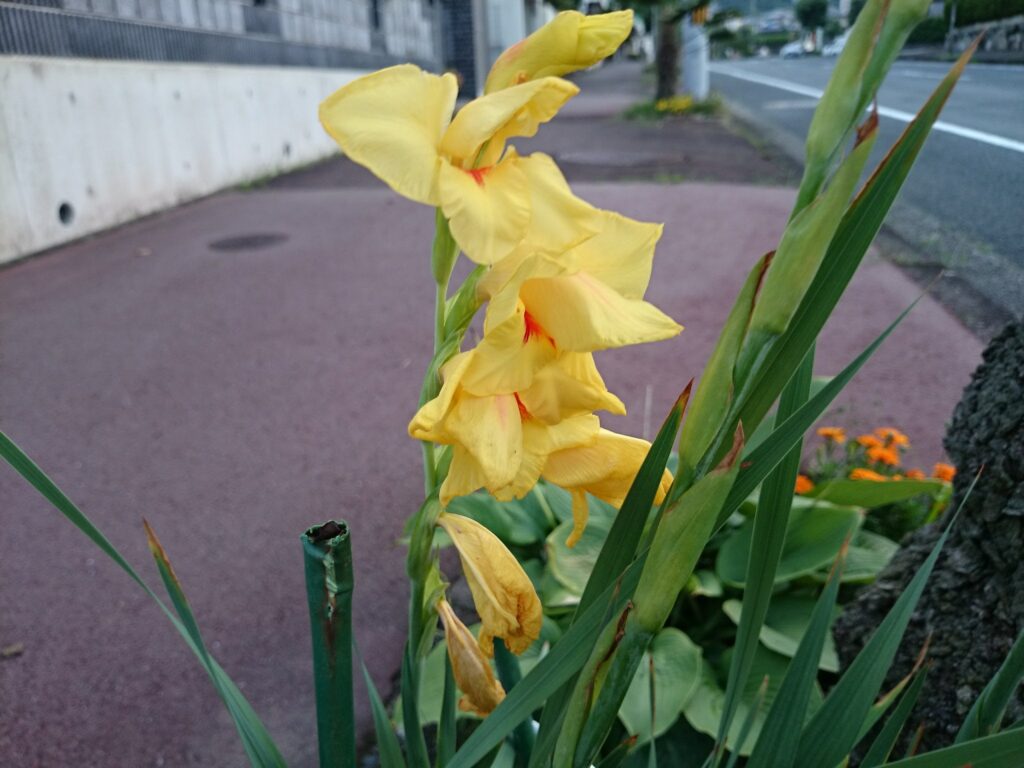
No.0515 Gladiolus x gandavensis
A perennial plant. Through numerous crosses, mutations, and selections, it is a type of summer-blooming gladiolus with a wide variety of cultivars cultivated today. The flowers come in a rich array of colors, with a wide range of variations in hue and shape, and in size from tiny flowers less than 6.4 cm in diameter to giant flowers over 14 cm. It is robust and grows vigorously, blooming profusely with many flowers flowering simultaneously. It is widely cultivated as a spring-planted bulb for cut flowers and flowerbeds, and there are a great many horticultural varieties. The group of tall, large-flowered horticultural varieties is collectively called the Grandiflora group, while the group of short, small-flowered horticultural varieties is called the Pixiola group.
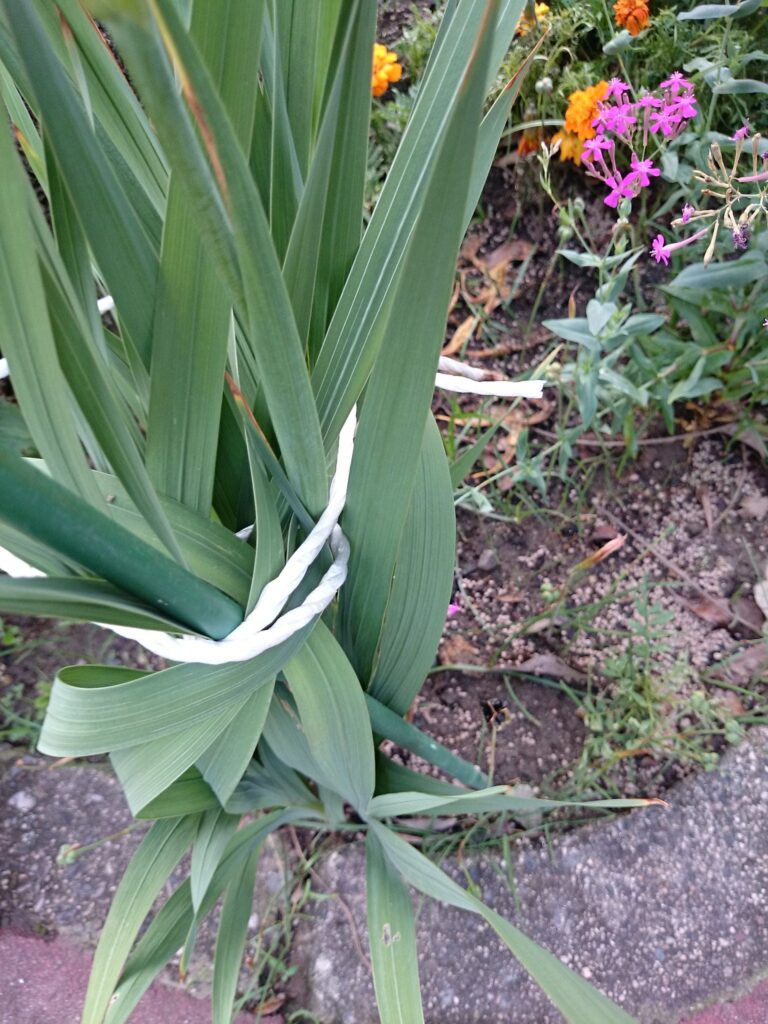
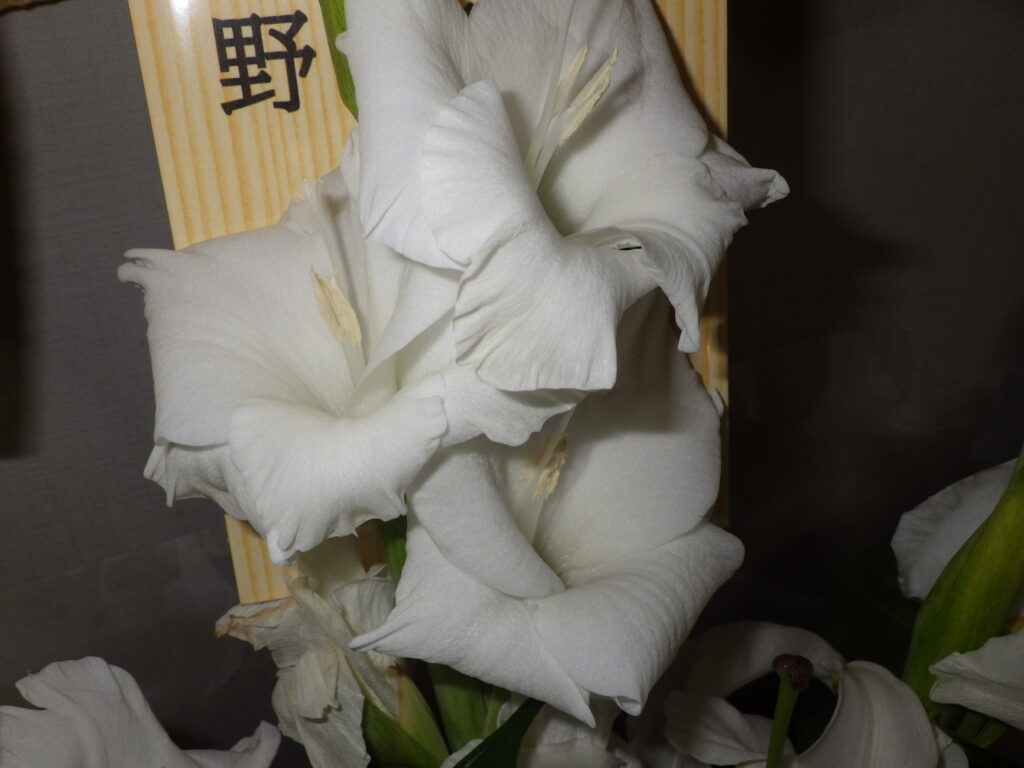
No.0515.a Gladiolus x colvillii
This is a perennial plant. While the name Gladiolus is often used as a general term for horticultural populations, the Ylist uses it as the Japanese name for Gladiolus x colvillii, so we will follow that here. It was propagated from the South African species G. tristis and G. cardinalis by James Colville, a nurseryman in Chelsea, London, and first described in 1823. The wild species has deep pink flowers with cream-colored stripes on the three lower petals. In 1826, G. colvilii 'Alba', which has white flowers with pale pink anthers, was put up for sale, and in 1871, G. colvilii 'The Bride', which has completely white flowers, was put up for sale. The author has not yet checked the literature regarding the botanical distinction between this and G. x gandavensis, but it is thought that the white-flowered horticultural population is the one in question (further verification is needed).
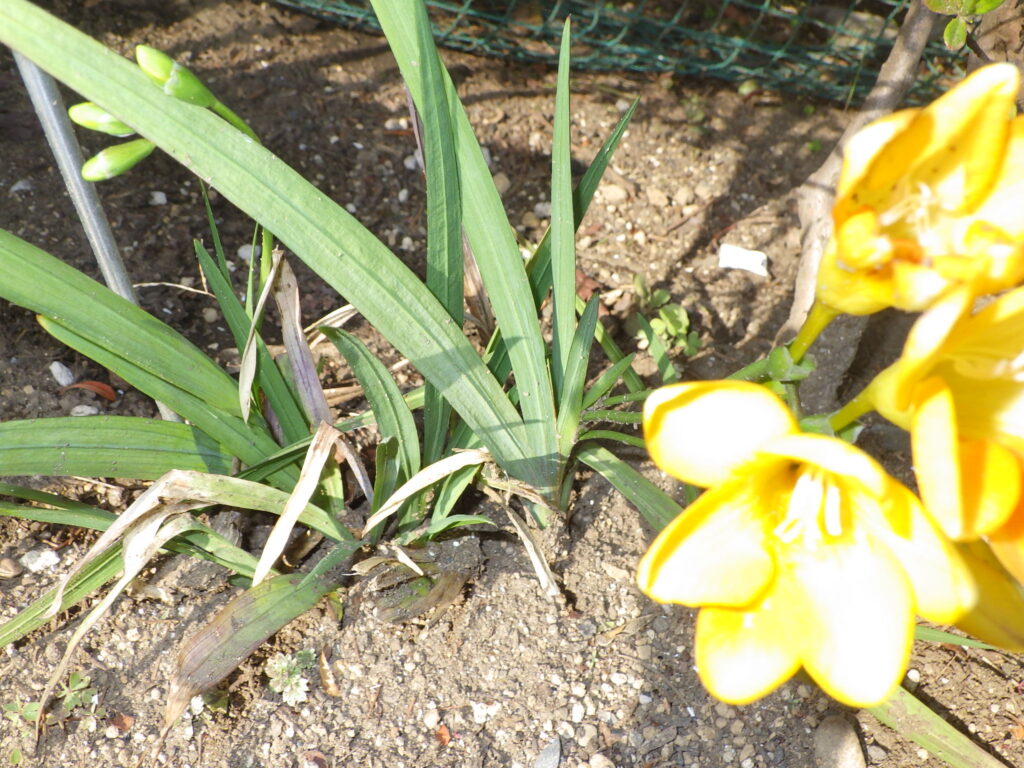
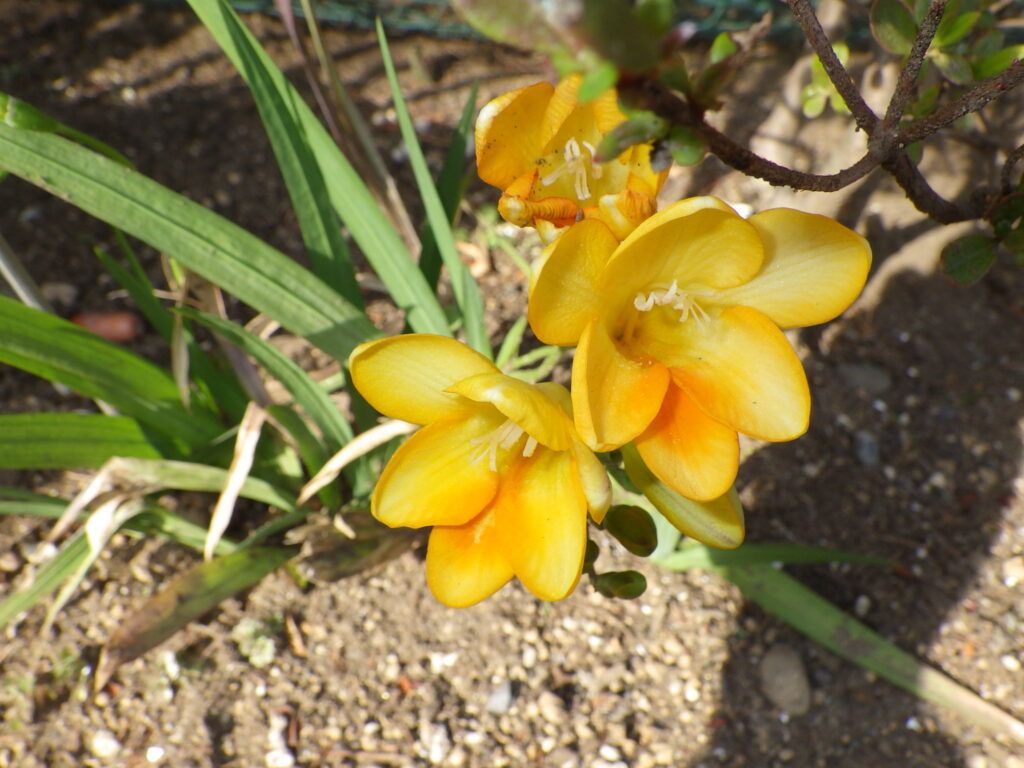
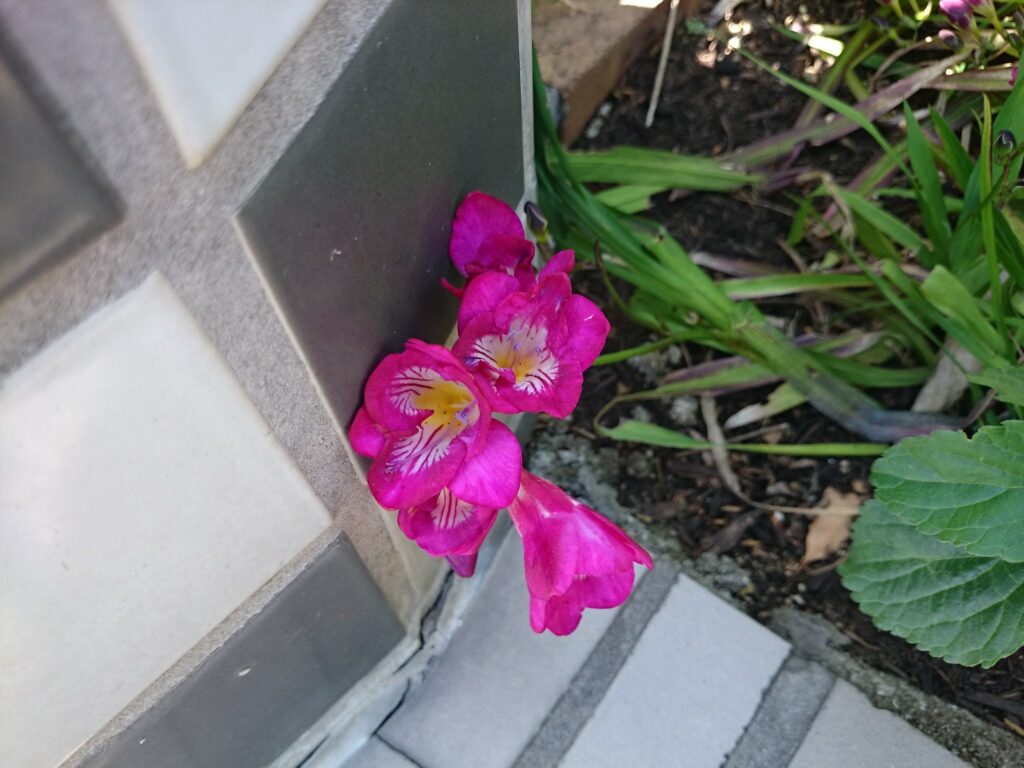
No. 0516 Blue-green narcissus (Freesia x hybrida)
Commonly known as freesia, it is a perennial plant. It is believed that 3-4 species were the ancestors from which it was improved, but it mainly originates from F. refracta and F. armstrongii. Horticulturally, before the war, F. refracta var. alba and buttercup were widely cultivated, but after the war, new horticultural varieties introduced from America and varieties created by Mr. Asanuma of Hachijo Island also became widely cultivated. Furthermore, in recent years, large-flowered varieties have been introduced from the Netherlands in succession, replacing the previous horticultural varieties. It is usually a spherical plant with 6 nodes, and the corm is covered with a fibrous outer layer at each node. When dormancy is broken, the bud at the top elongates and flowers bloom. The flowers are funnel-shaped, 1.5-5 cm long, and white or yellow, but many horticultural varieties are richly colored, such as red and purple. A raceme is formed at the top of a long, arching flower stalk, and usually bears 6-10 small flowers. The flower has six perianth segments and three stamens, and the style is divided into three short branches, each branch further splitting at the tip. The ovary has two chambers, but usually produces very few fruits. Native to the Cape region of southern South Africa, it blooms in winter (July-August) when temperatures are relatively low (8-10°C), but in Japan, it is appreciated as a fragrant and elegant early spring flower, grown as a cut flower or in a pot.
References
Kanagawa Prefecture Flora Survey Association. 2018. Kanagawa Prefecture Flora 2018 (Electronic Edition). Kanagawa Prefecture Flora Survey Association, Odawara. 1803pp. ISBN: 9784991053726
Tsukamoto, Yotaro. 1994. Encyclopedia of Horticultural Plants, Compact Edition. Shogakukan, Tokyo. 3710pp. ISBN: 9784093051118