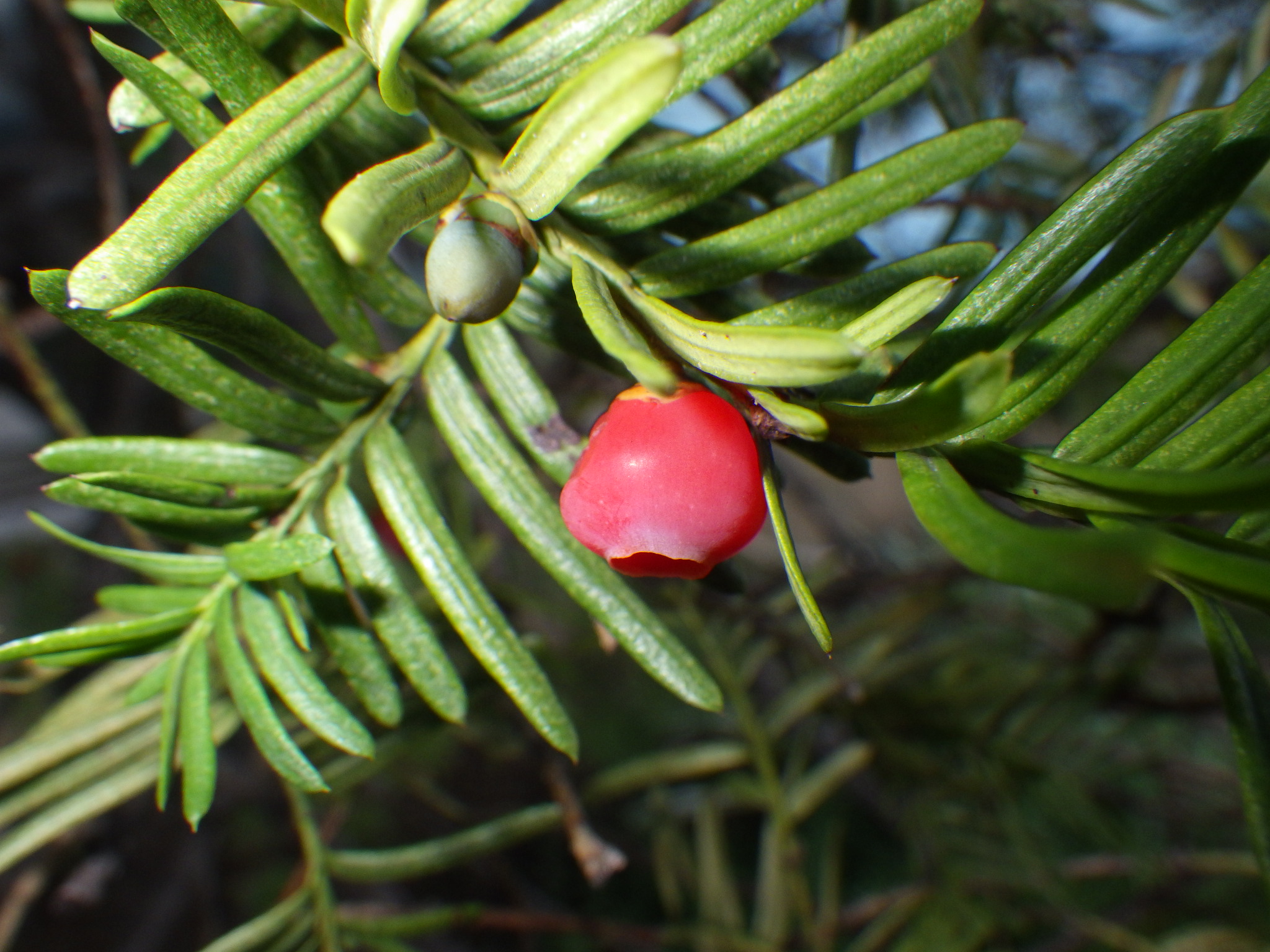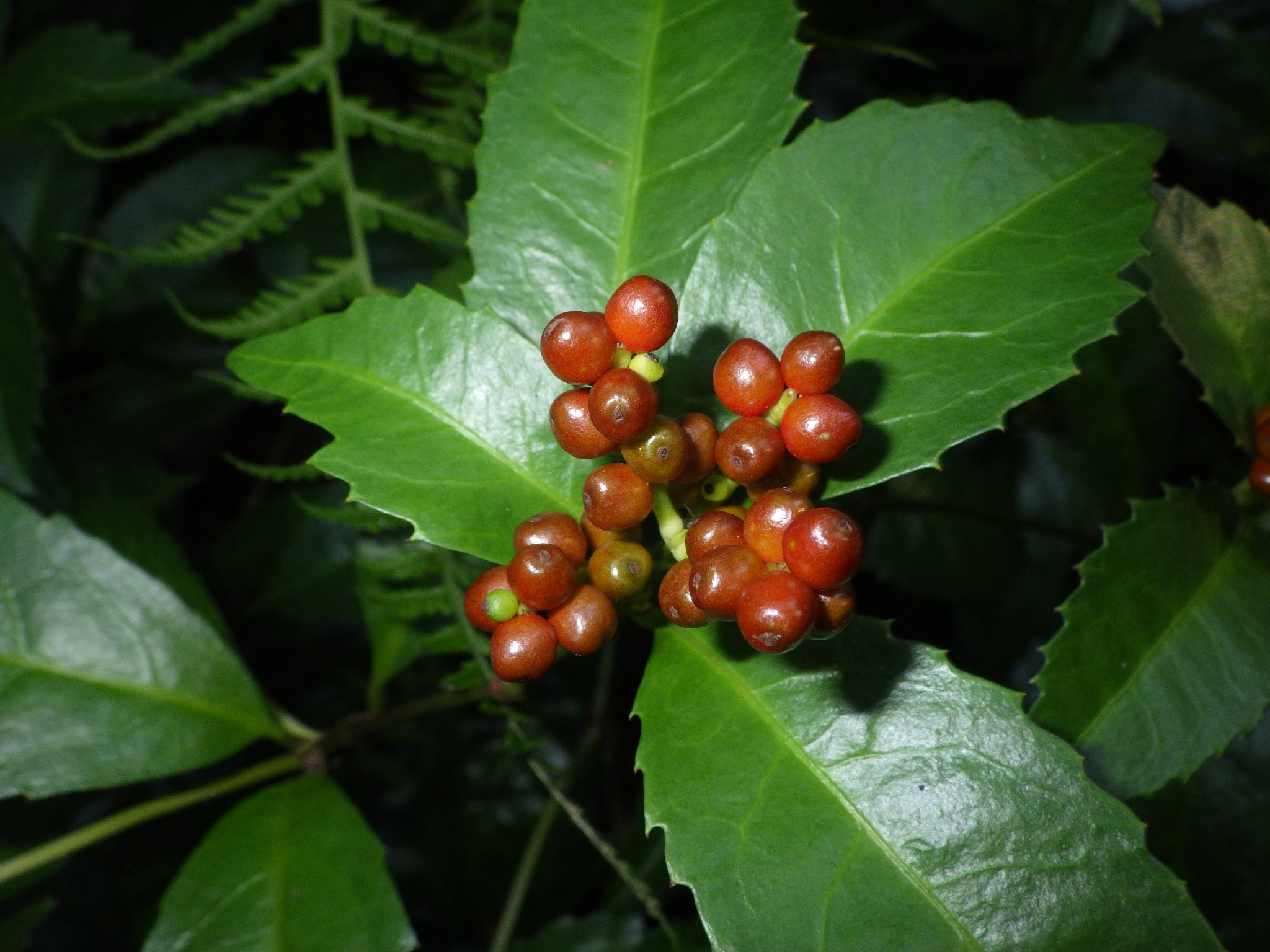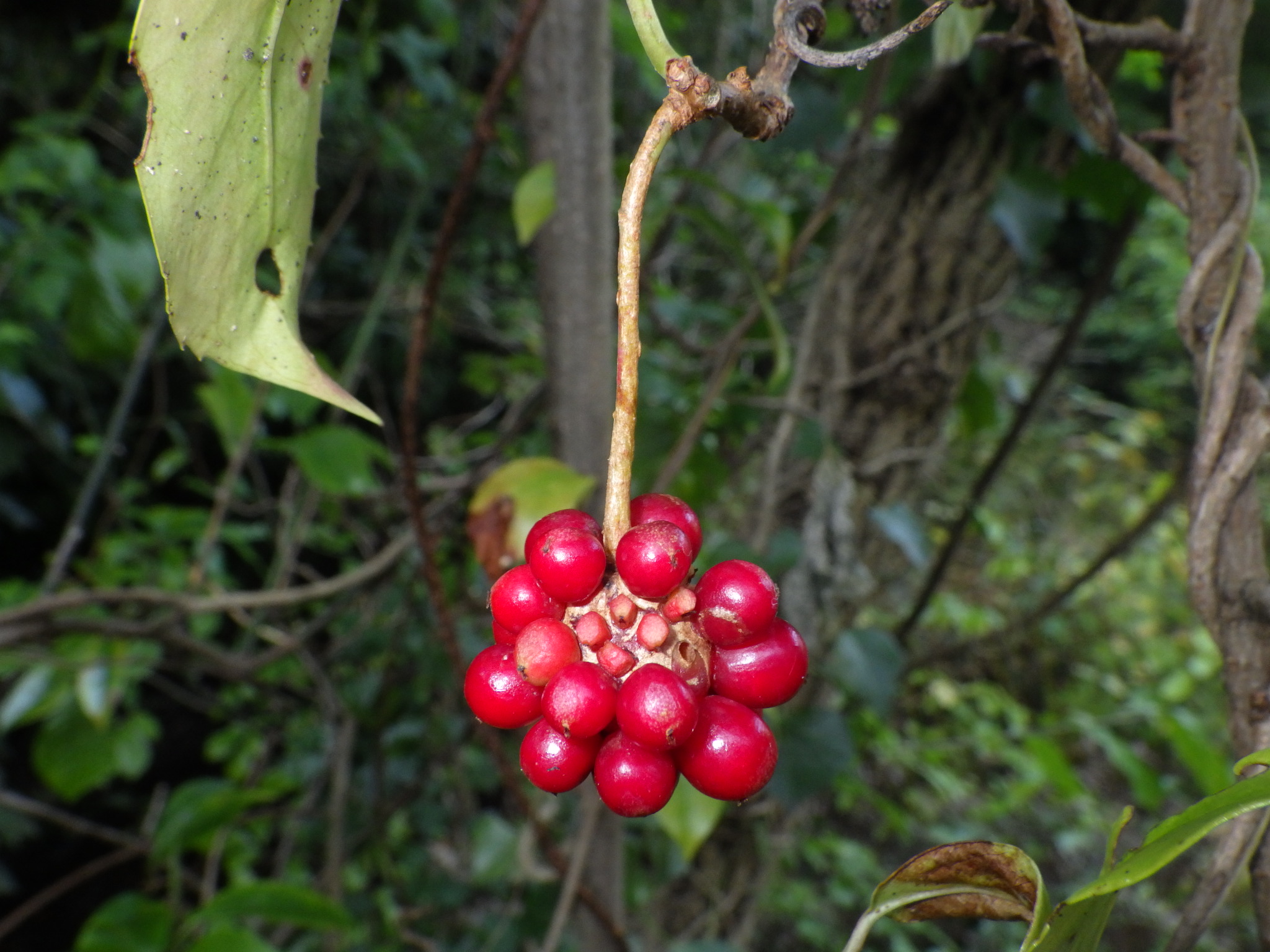
The Schisandraceae family consists of evergreen or deciduous woody plants, some of which are climbing. The leaves are simple, alternate, and lack stipules. Flowers are usually solitary in the leaf axils, lacking a clear distinction between sepals and petals, and having separate perianth segments. The fruits are aggregate fruits, consisting of berries clustered in a spherical or tufted arrangement, or follicles arranged radially. Approximately 73 species across 3 genera are known, distributed from East Asia to Southeast Asia and southeastern North America. Five species across 3 genera are found in Japan.
This article provides a comprehensive, field guide-style introduction to plants belonging to the Schisandraceae family.
The basic information is based on the Kanagawa Prefecture Flora Survey Association (2018). Photos are replaced as better ones become available. While the identification is done by the author, please note that misidentifications may be corrected without notice.
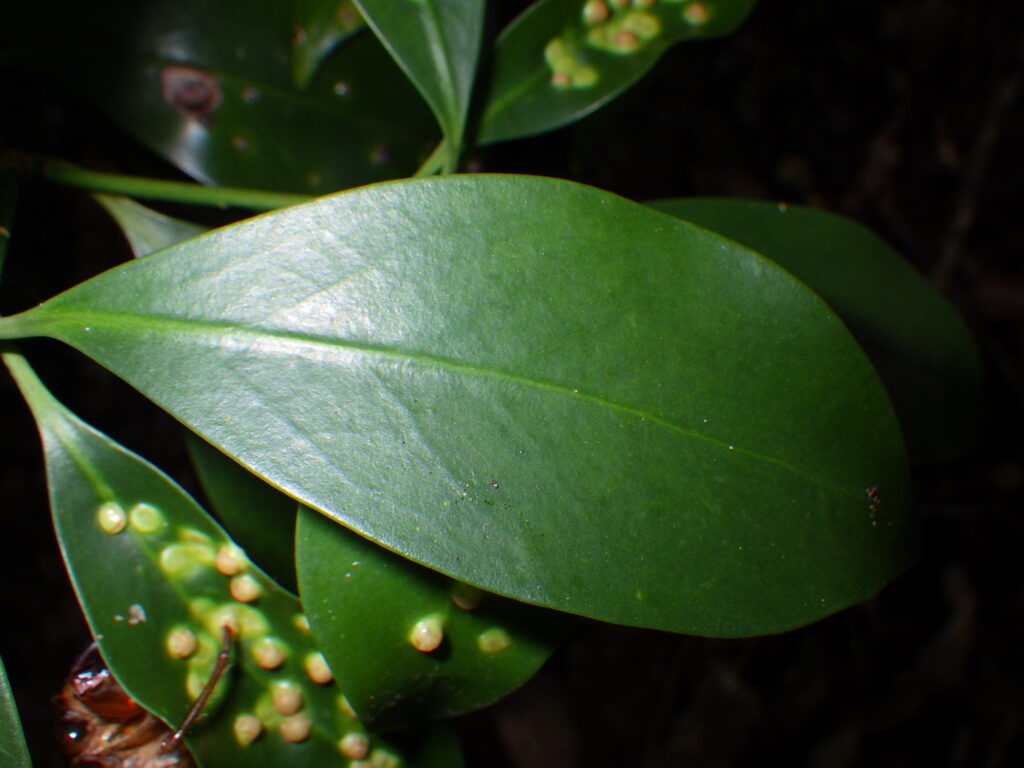
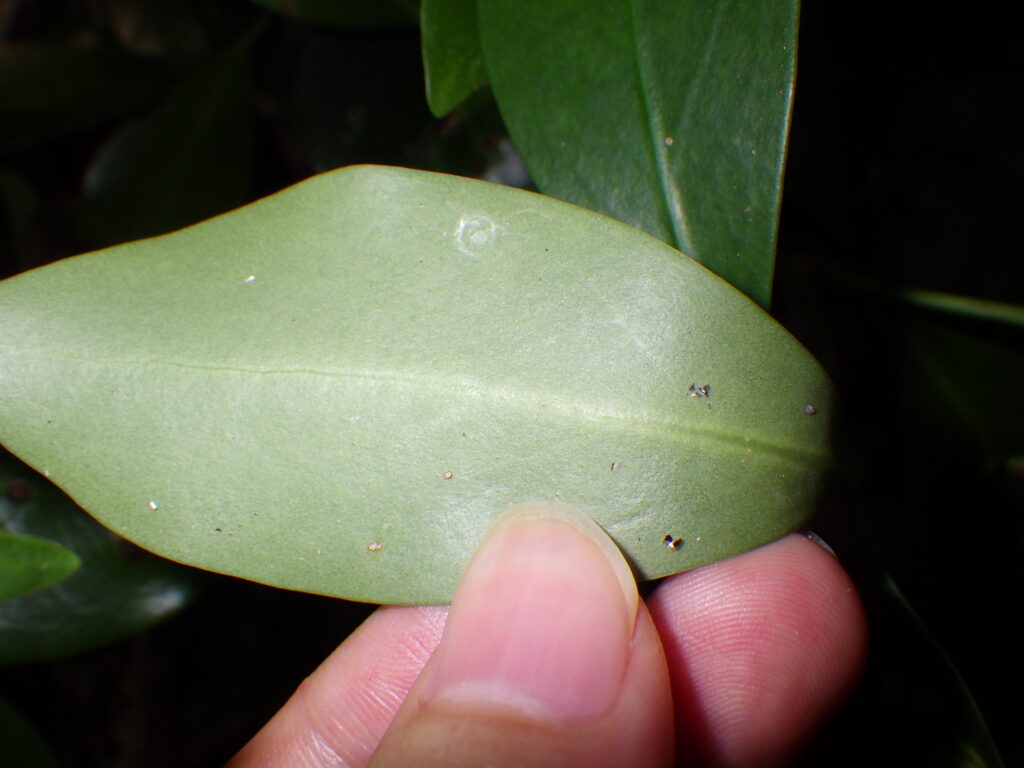
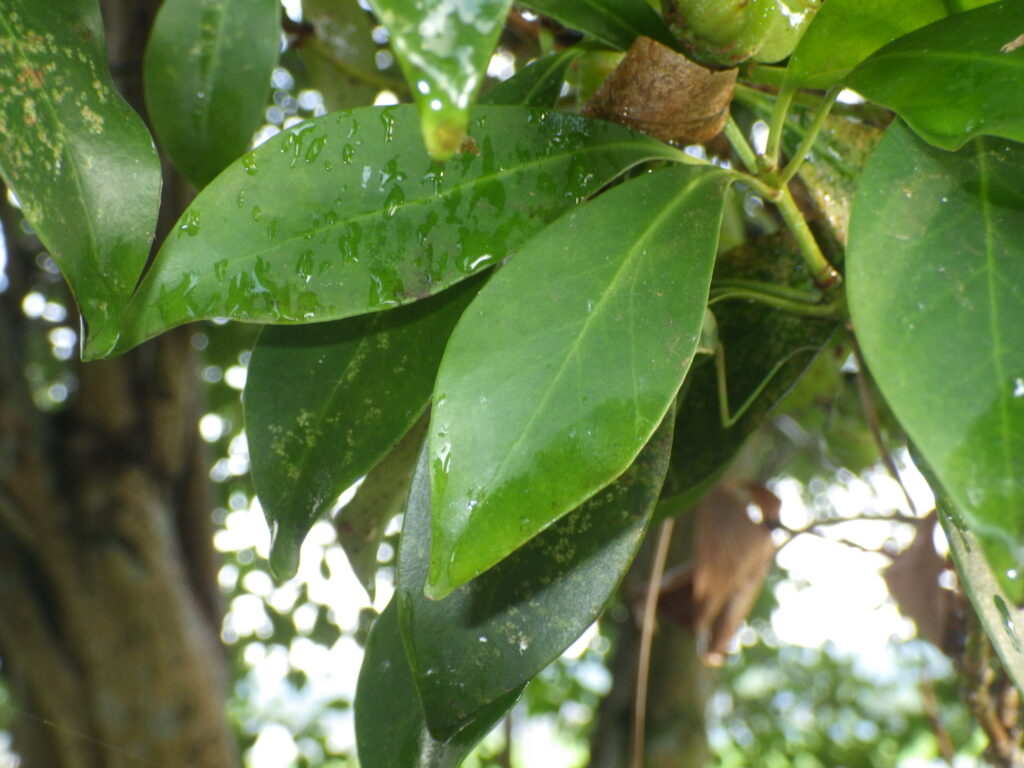
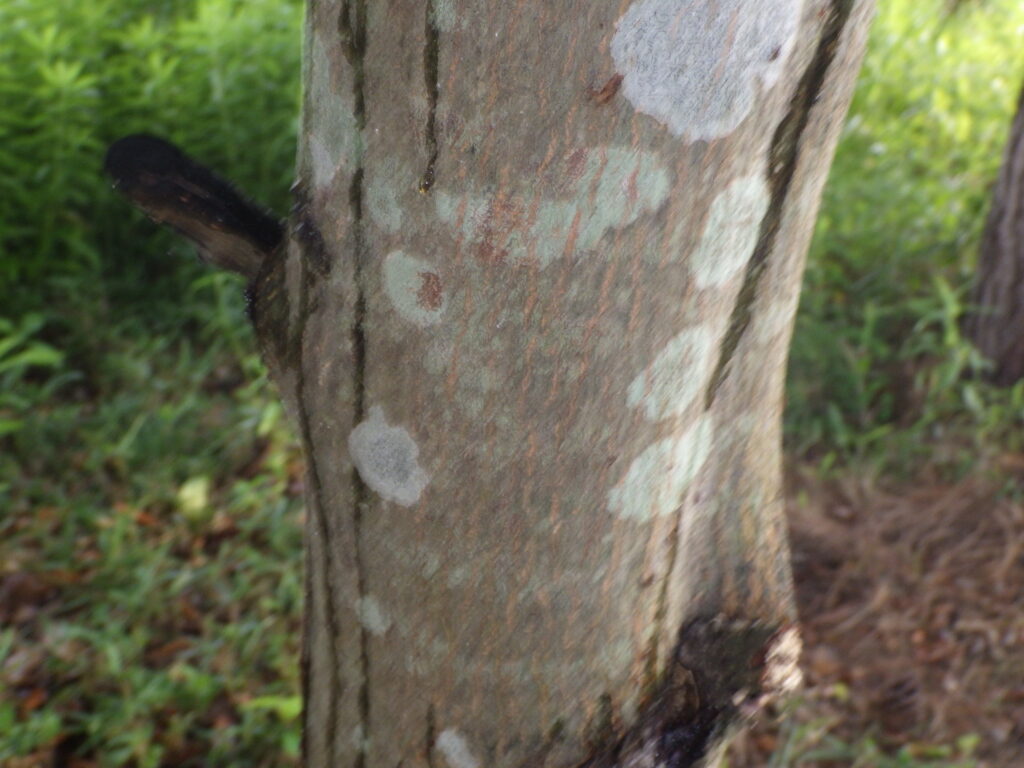
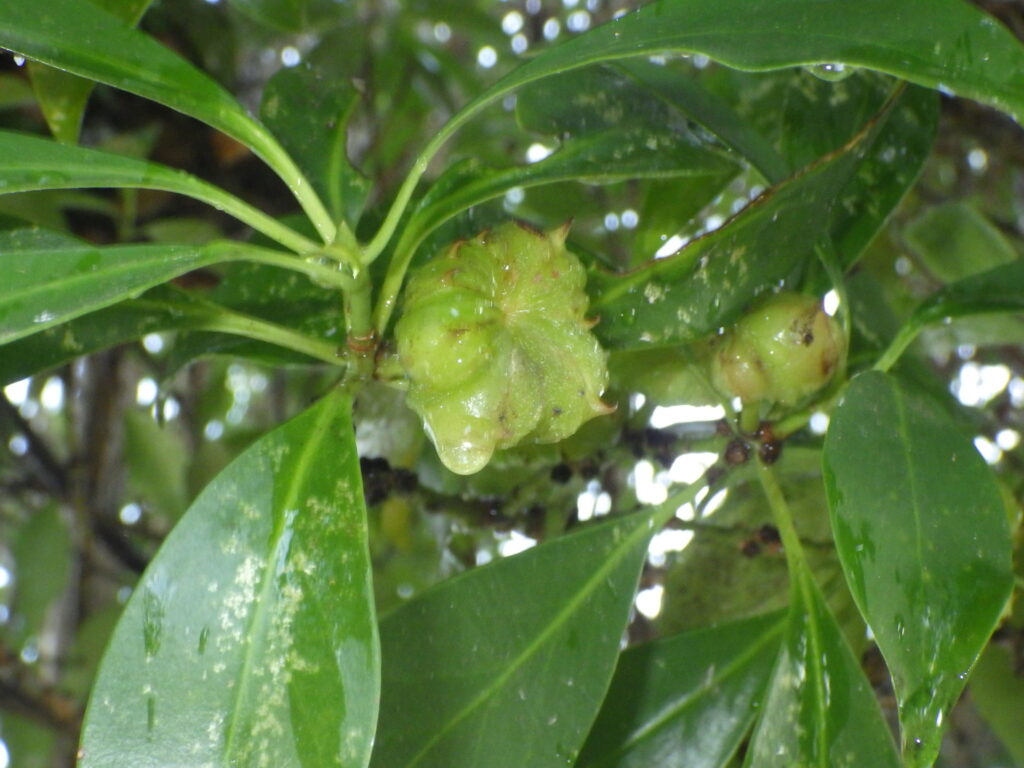
No.0073 Shikimi Illicium anisatum
Also known as Hananoki. The entire plant is hairless, and when damaged, it emits a fragrance like incense. The leaves are oblong, 4-10 cm long, entire, soft, leathery, and glossy, with indistinct lateral and veining lines. It flowers from March to April. The perianth segments are yellowish-white and numerous. There are many stamens, and the carpels consist of 6-18 arranged radially in a single row. It is distributed in Honshu (south of the southern Tohoku region), Shikoku, Kyushu, the Ryukyu Islands, the Korean Peninsula, China, and Taiwan. It is a characteristic species of the Shikimi-Abies community. It is common in mountainous fir forests, but can also be found in mixed forests in mountainous and hilly areas. The entire plant is poisonous, and the fruit in particular is highly poisonous, which may be why it is spared from excessive grazing by Japanese deer and grows abundantly in some places. It is planted in temples and cemeteries.
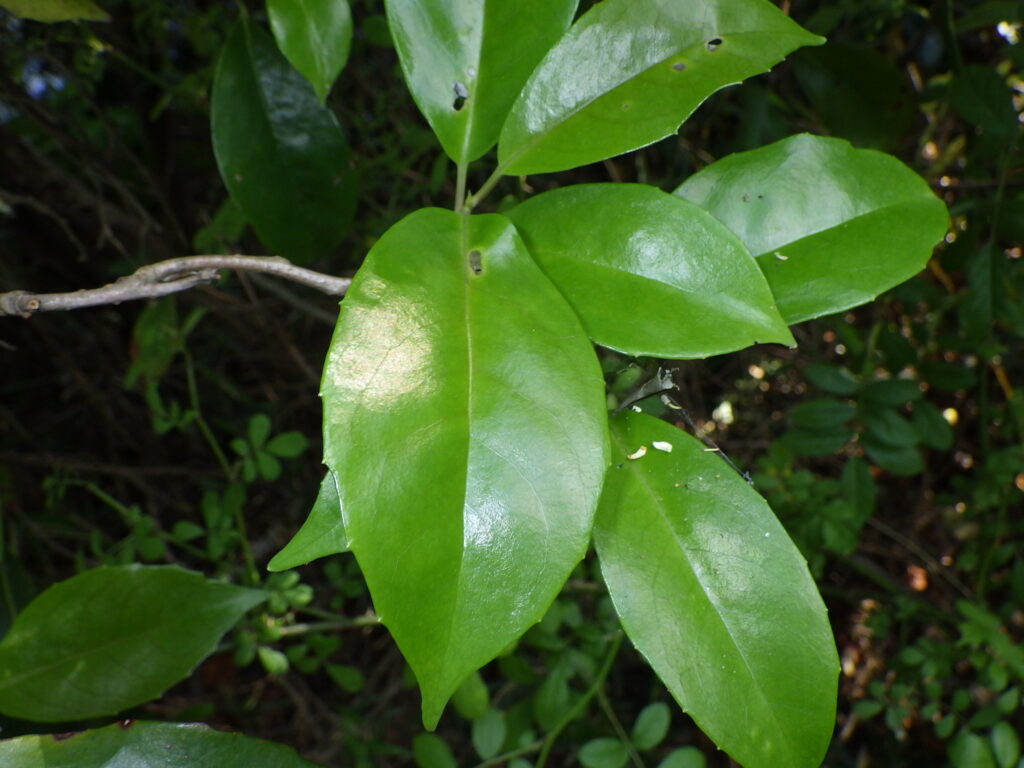
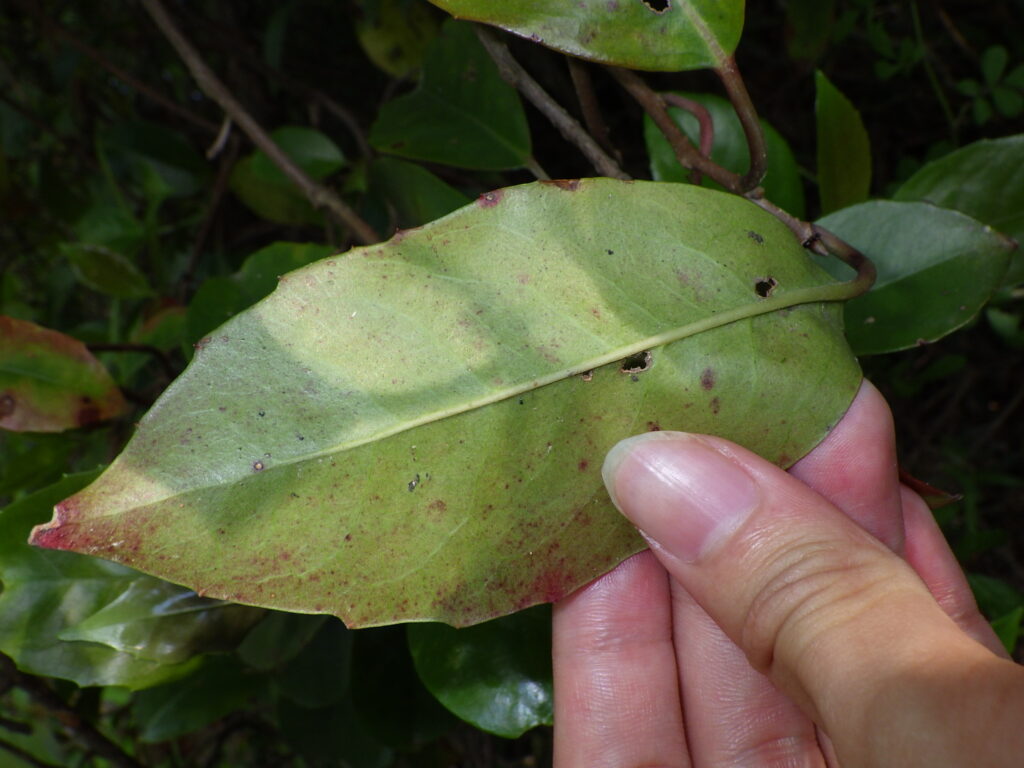
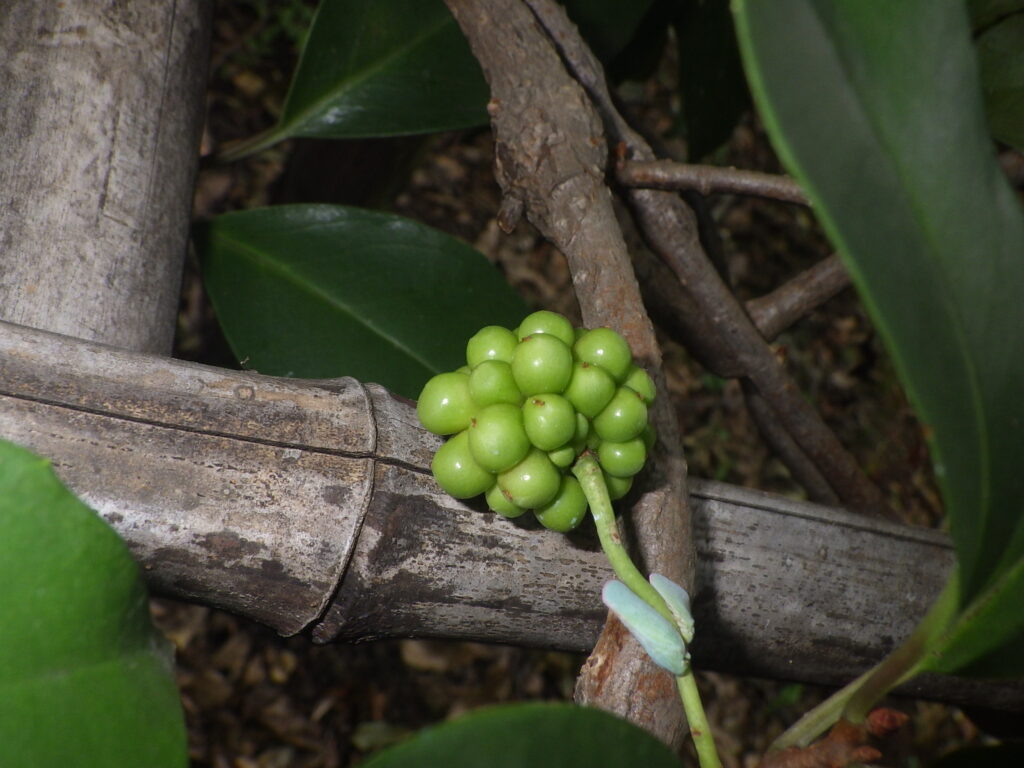
No.0076 Kadsura japonica
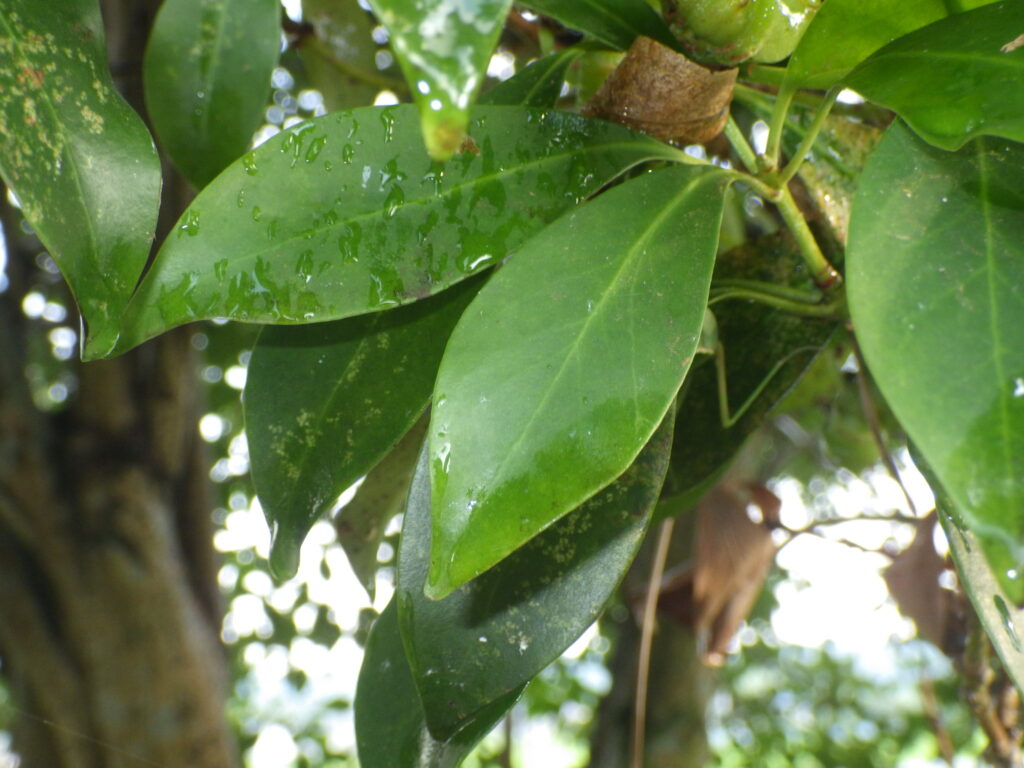
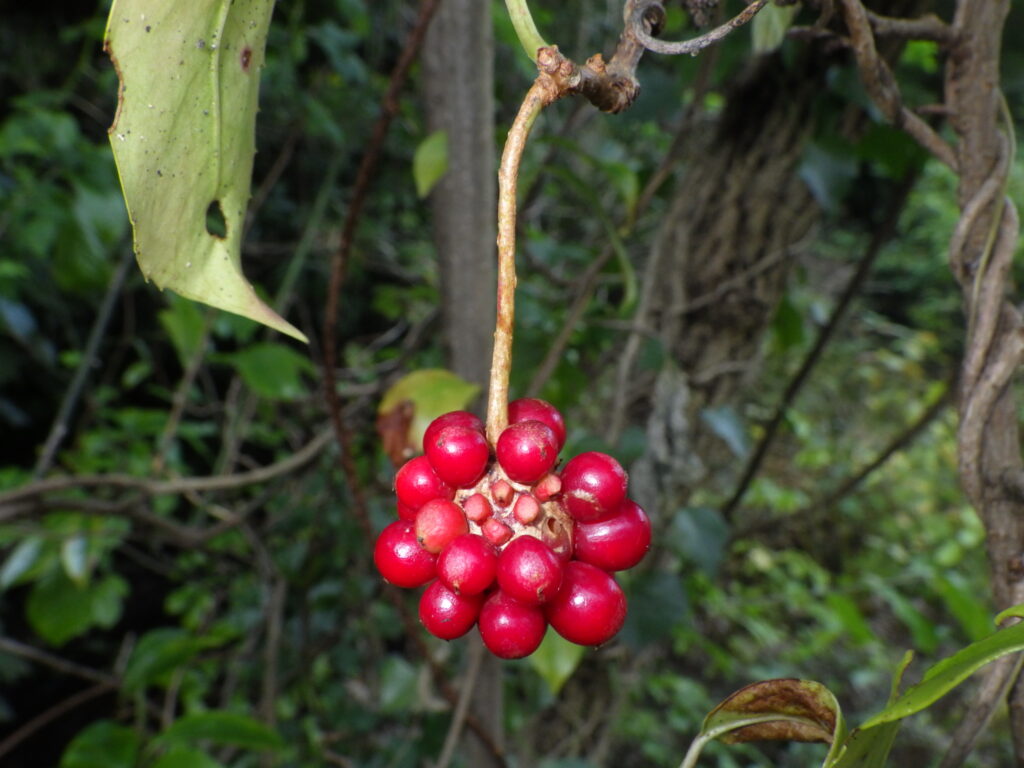
Also known as Binankazura. The leaves are oval-shaped, 5-13 cm long, somewhat thick and glossy, with sparsely spaced, low serrations. They can be seen with red leaves in winter. The flowering period is August. The flowers are axillary, solitary at the base of new branches or on short branches, with long pedicels about 1.5 cm in diameter. The perianth segments are yellowish-white, 9-15 in number, and free. Male flowers have numerous stamens arranged in a spherical shape. Female flowers have numerous carpels arranged in a spherical shape. The aggregate fruit is 2-3 cm in diameter and ripens to red. The seeds are kidney-shaped and about 5 mm in diameter. It is distributed in Honshu (west of the Kanto region), Shikoku, Kyushu, the Ryukyu Islands, the Korean Peninsula, and China. It is commonly found in the undergrowth of trees in hilly and mountainous areas. The fruit consists of (1) relatively small individual free (carpel) ovaries, and the base of the attachment to the receptacle is narrowed, making it easily removed by birds. (2) The free ovary is green and inedible when immature, and turns crimson to reddish-brown when ripe. (3) The pericarp is fleshy and has no noticeable odor, and the exocarp is not hard. (4) The free (carpellic) ovary usually contains 1-2 small seeds, which can pass through the digestive tract of most birds, and the seeds have a hard outer seed coat. These characteristics are called nithochory and are adapted for bird dispersal (Saunders, 1998).
References
Kanagawa Prefecture Flora Survey Association. 2018. Kanagawa Prefecture Flora 2018 (Electronic Edition). Kanagawa Prefecture Flora Survey Association, Odawara. 1803pp. ISBN: 9784991053726
Saunders, RM 1998. Monograph of Kadsura (Schisandraceae). Systematic Botany Monographs 54: 1-106. https://doi.org/10.2307/25096646