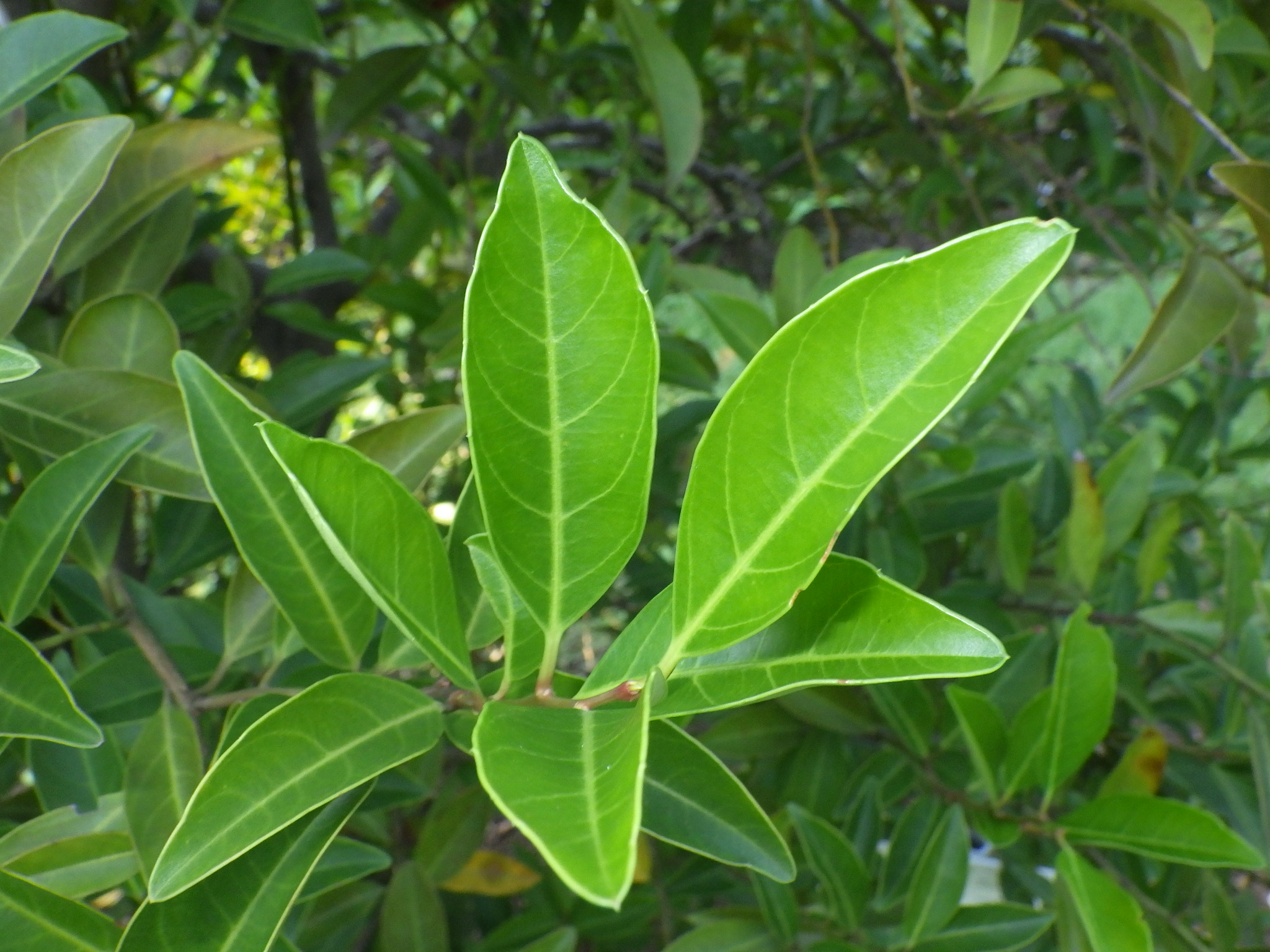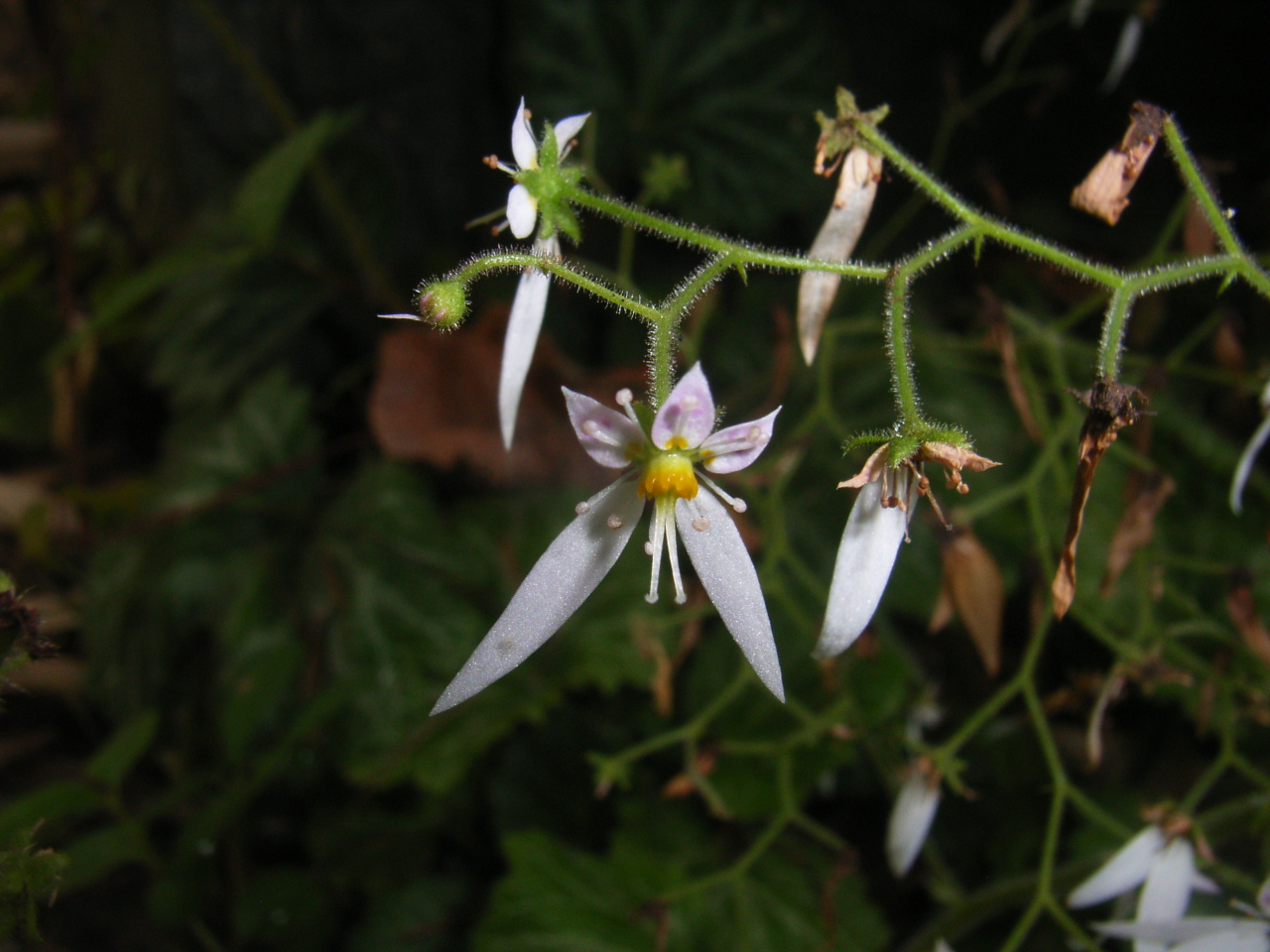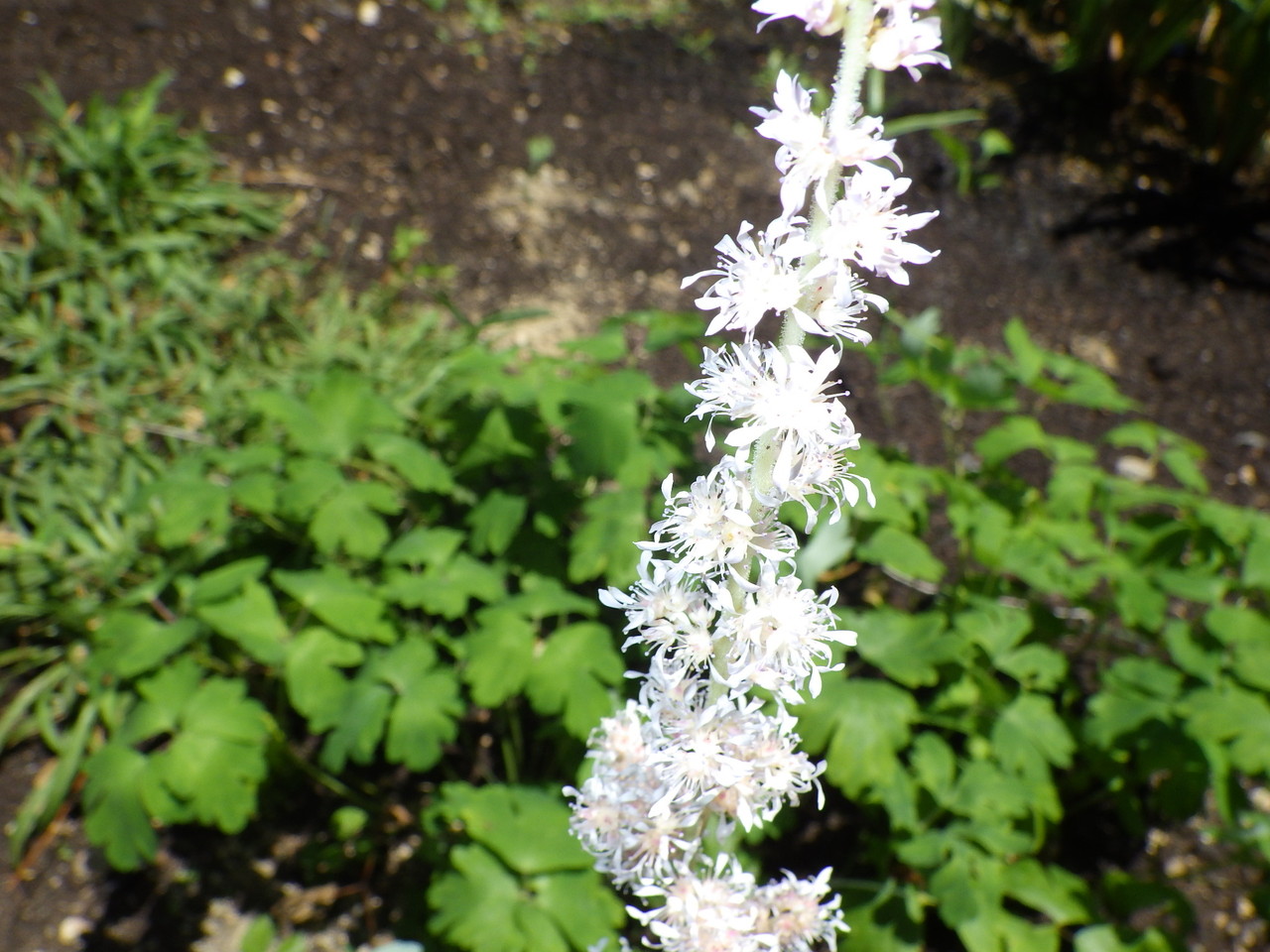
The family Grossulariaceae was previously classified under the Saxifragaceae family, but has been separated into the order Saxifragales. It consists of a single genus, Ribes, with approximately 150 species distributed in the temperate and subarctic regions of Eurasia, South America, and Northeast Africa.
This article provides a comprehensive, field guide-style introduction to plants belonging to the Grossulariaceae family.
The photos are replaced as soon as better ones are taken. Also, while the identification is done by the author, please note that if there are any misidentifications, they may be changed without notice.
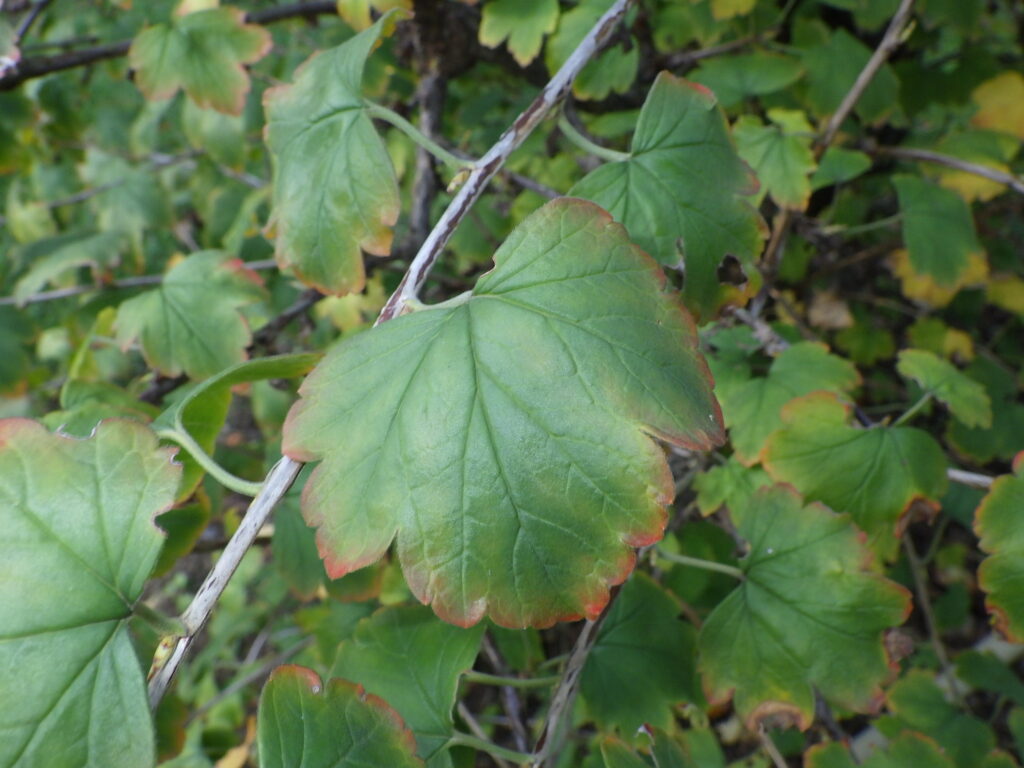
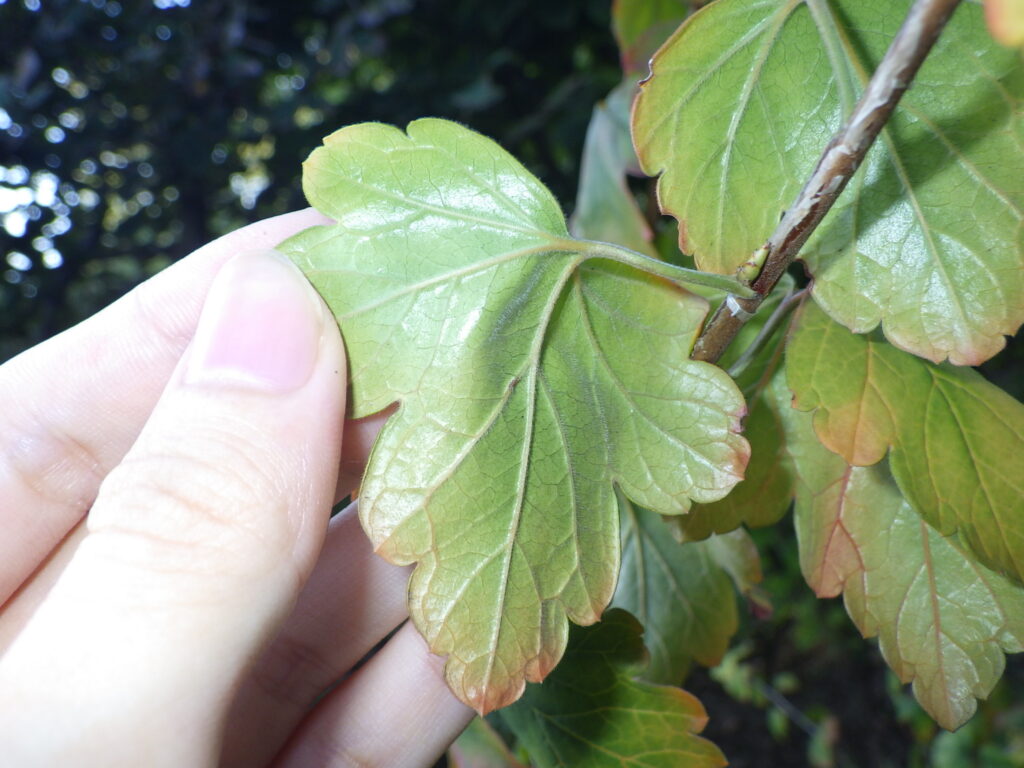
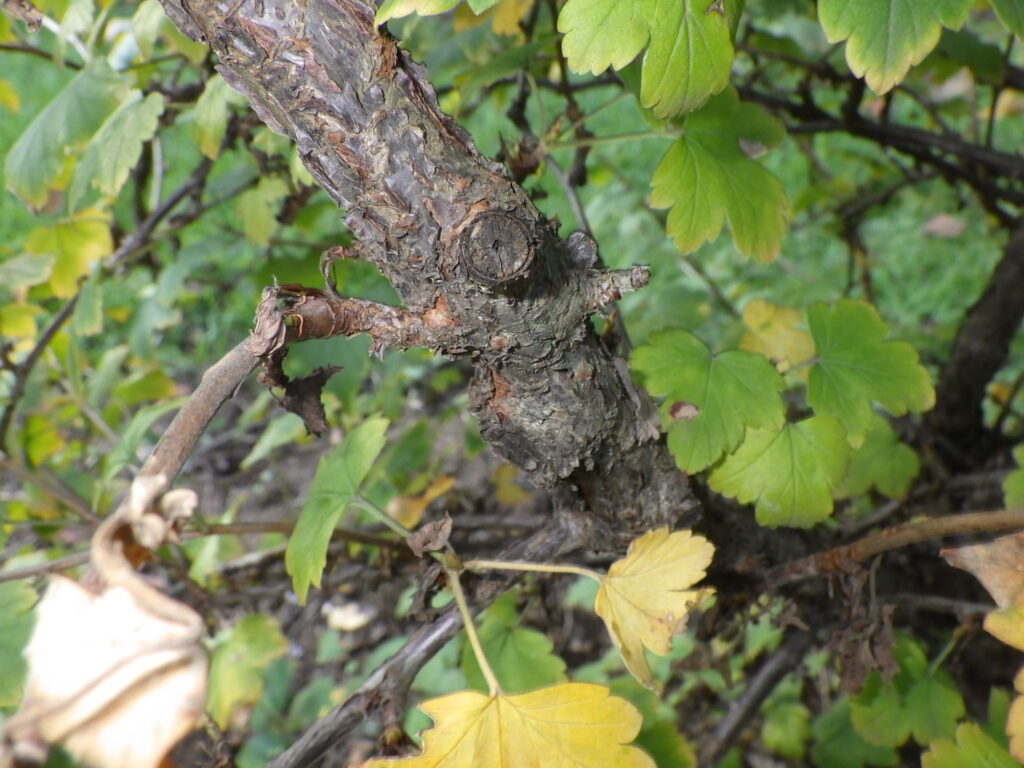
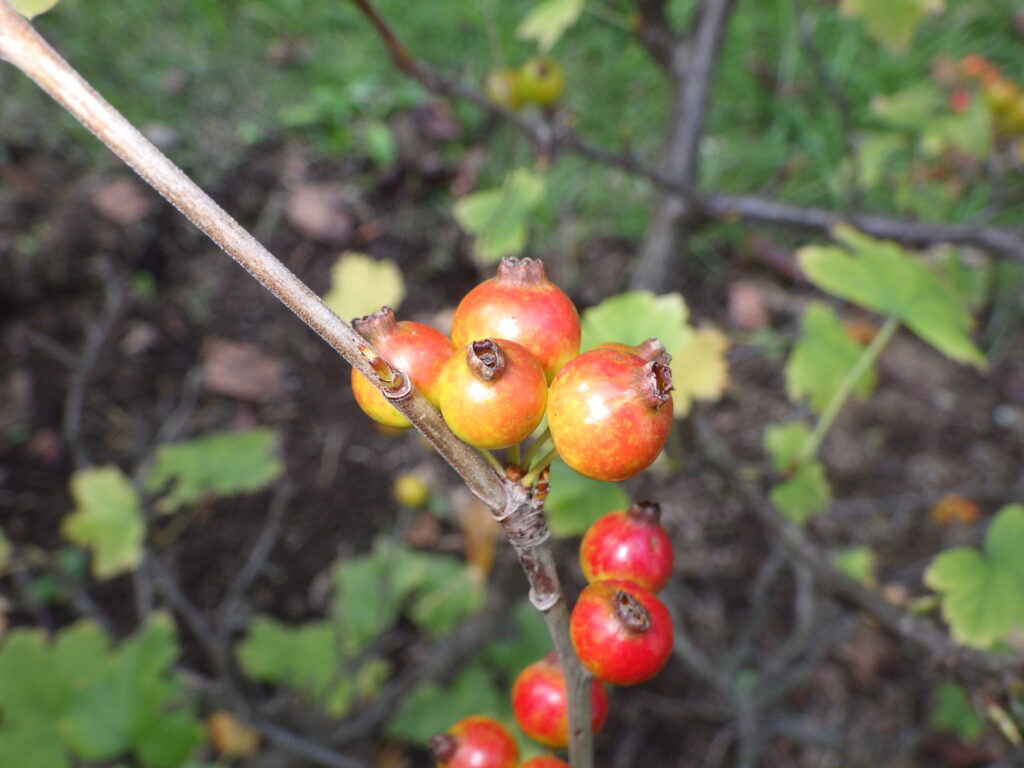
No. 1360 Japanese Crassula (Ribes fasciculatum)
Deciduous shrub (flowers that bloom on trees). It grows to a height of 1m. The bark is purplish-brown and peels off vertically. Young branches are grayish-white. Initially, they are densely covered with soft hairs, but later become hairless. The bark gradually peels vertically and turns dark reddish-brown. Leaves are alternate. The leaf blade is broadly ovate, 2-6cm long and 2.5-6cm wide, and shallowly palmately divided into 3-5 lobes. The base is truncate or shallowly heart-shaped. The edges of the lobes have notched, blunt serrations. The texture is herbaceous and thin, with short soft hairs on both sides. Short soft hairs grow somewhat densely along the veins on the underside. The petiole is 2-3.5cm long and has short soft hairs and long hairs. Dioecious (male and female flowers on separate plants). Flowering period is April to May. Small yellowish-green flowers grow in clusters of 1 to several in the leaf axils of the previous year's branches. The petals are spatulate, very small, and erect. The sepals are about 2.5 mm long and curve backward. There are five stamens, with short filaments, and the anthers appear to be directly attached to the calyx tube. Female flowers have stamens, but they are vestigial and small. The style is short, and the stigma is two-lobed and saucer-shaped. Male flowers have a joint near the base of the pedicel, while female flowers have a joint in the middle. The fruit is a berry, spherical, 7-8 mm in diameter, and ripens red in October-November. The seeds are oval, about 3.5 mm long. The winter buds are lanceolate, about 1 cm long, with short stalks, and loosely enclosed by reddish-brown bud scales. The leaf scars are crescent-shaped, and the vascular bundle scars are raised. It is distributed in Honshu, Shikoku, Kyushu, Korea, and China. It rarely grows wild in mountainous areas.
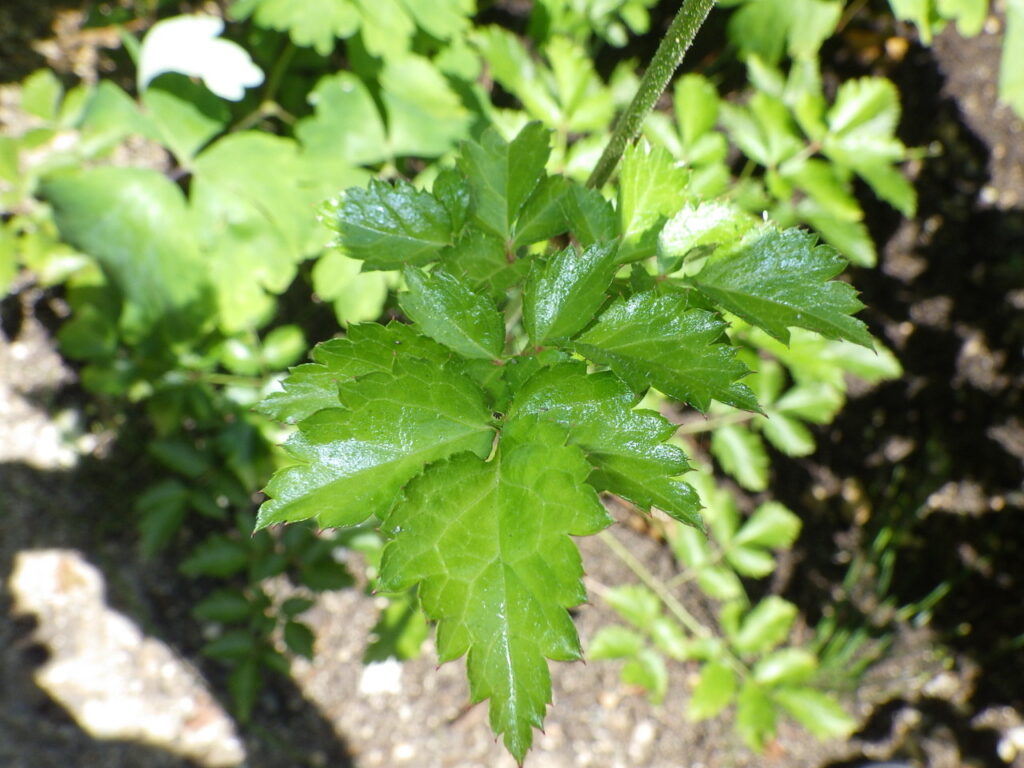
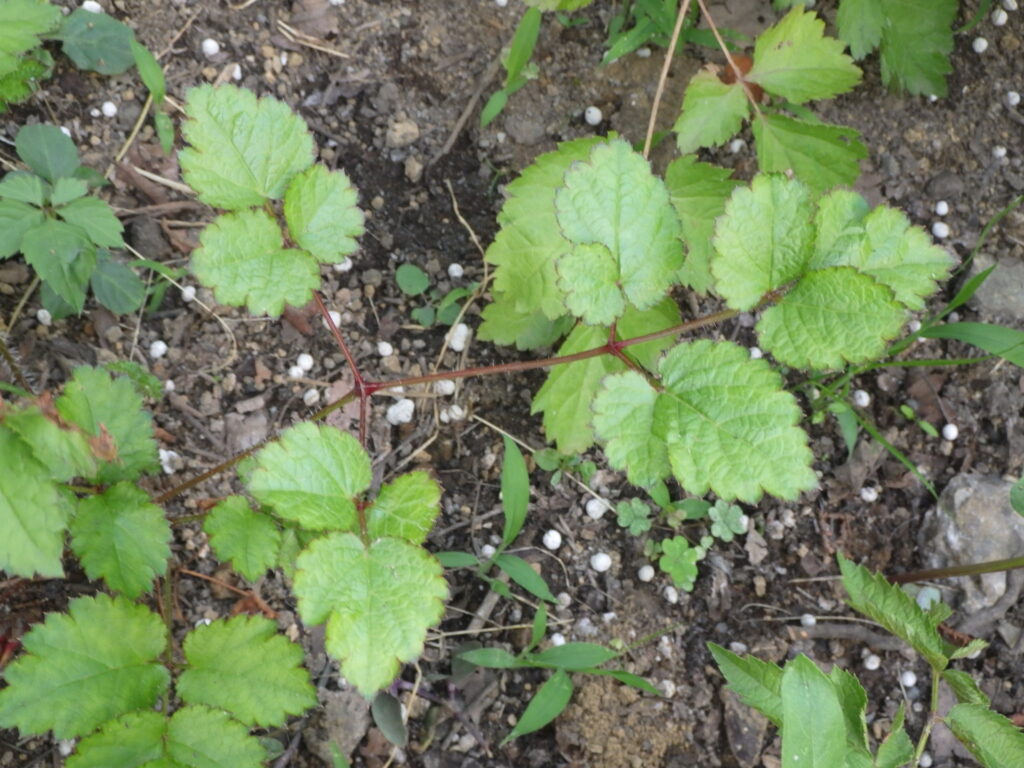
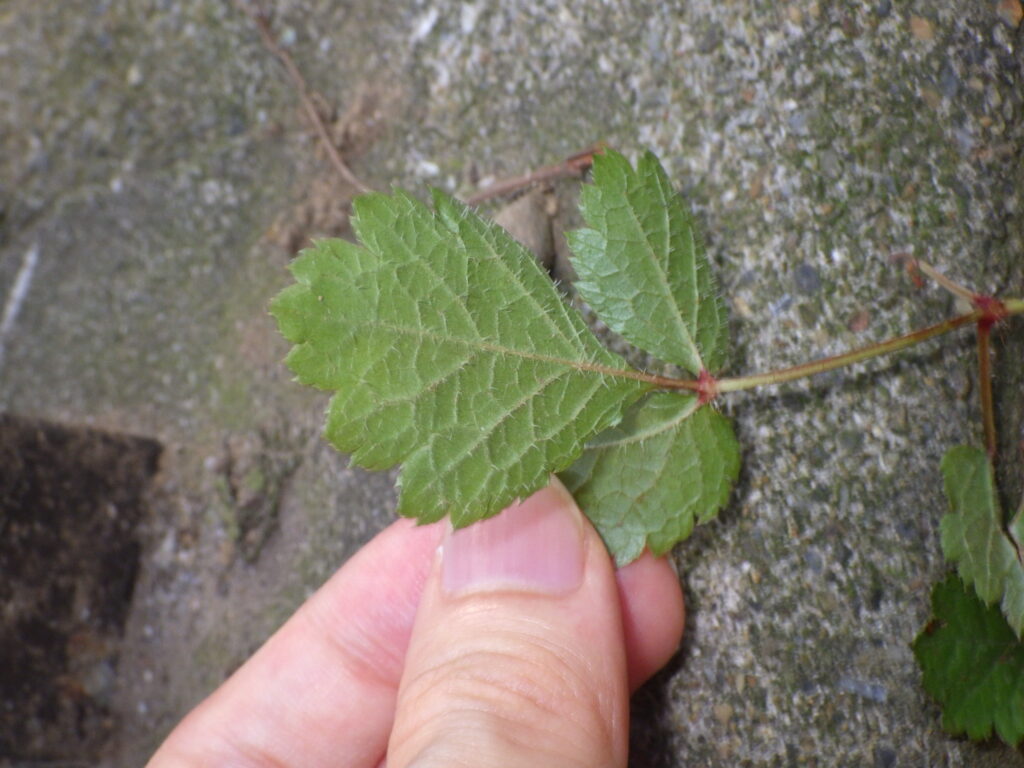
No.1363.a Astilbe formosa
The scientific name is sometimes given as a variety of Astilbe japonica, but this is according to 'Ylist'. It is a perennial herb (a mountain flower). It grows to a height of 40-70 cm. It produces stolons. The leaves are 3-part compound leaves, with the terminal leaflet being ovate, the tip pointed to a tail-like point, the base shallowly cordate, and having sharp double serrations. It flowers from July to August. The inflorescence is conical, with well-branched lateral branches bearing numerous small white flowers. The petals are spatulate, 4-6 mm long. It is distributed only in Honshu (Chubu region) of Japan, growing in forests and forest edges from mountainous to subalpine areas. It has been isolated from Astilbe japonica and Astilbe japonica by the Fossa Magna, and adaptive evolution has occurred (National Museum of Nature and Science, 2006).
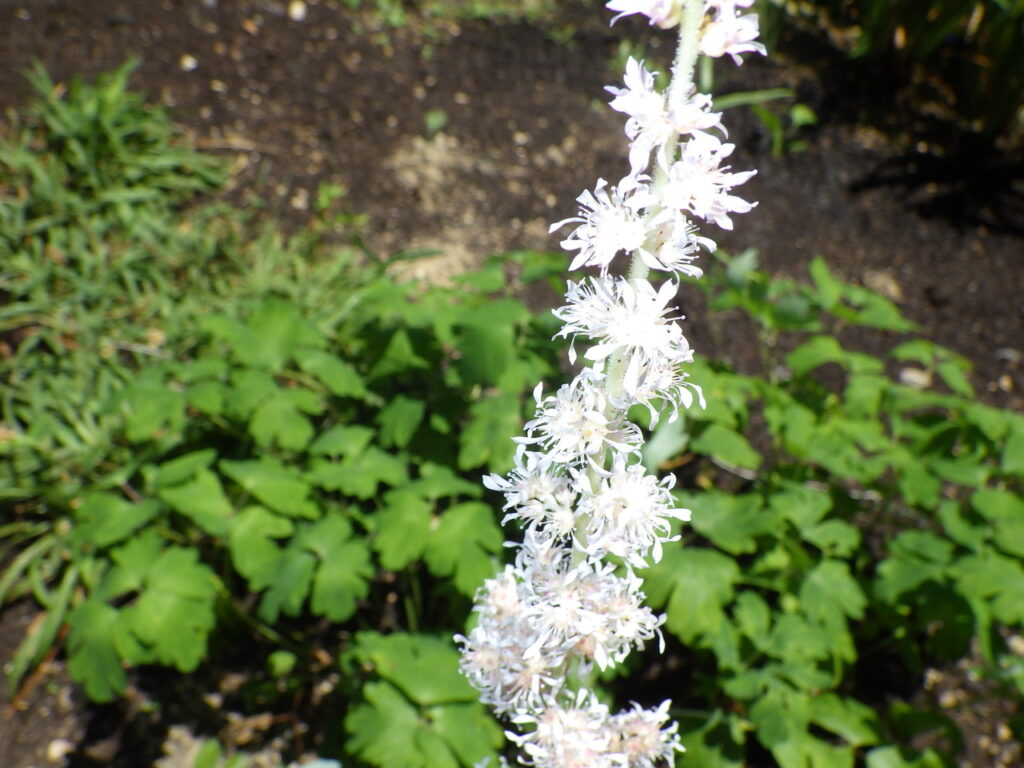
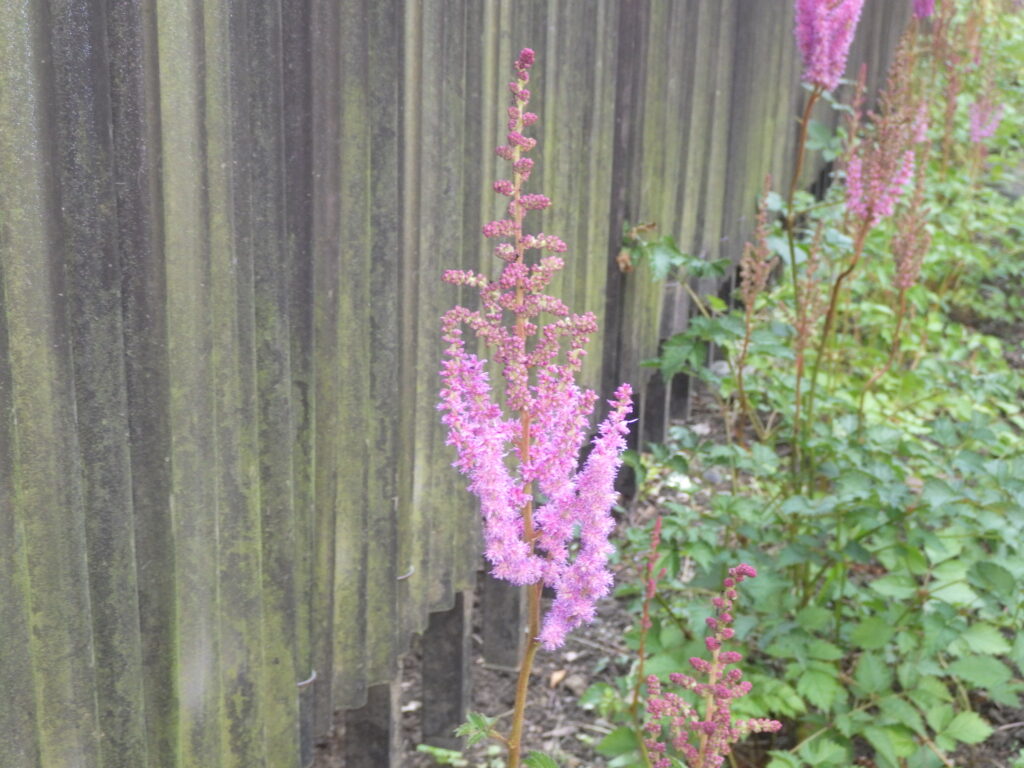
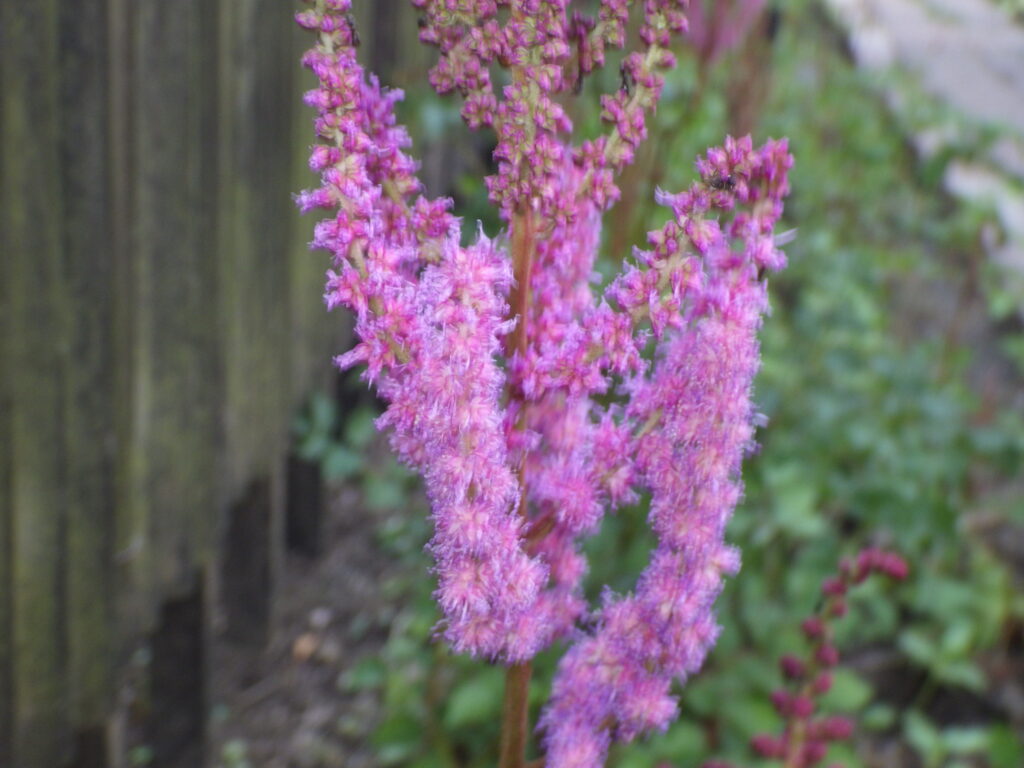
No.1367.a Astilbe chinensis 'Vision in Pink' (Large-leaved Astilbe)‘
This is a perennial herb, growing to a height of 15-50 cm. The leaves are 2-3 times compound, with elliptical to oblong-ovate leaflets. The edges have irregular double serrations. The upper surface is green, and the underside has brown hairs on the veins. The flowers are arranged spirally on the upper half of the flower stalk and are densely clustered. The petals are linear, pale pink, and about 5 mm long. The middle to upper part of the flower stalk is densely covered with brown, curled, downy hairs 1-2 mm long. It is distributed in Kyushu (Tsushima, Nagasaki Prefecture), Korea, China, Amur, and Ussuri, growing on rocks along riverbanks and along streams. Cultivated varieties are grown for ornamental purposes. Other horticultural varieties with red to pink flowers include Astilbe x arendsii and Astilbe chinensis var. taquetii, which is native to the Korean Peninsula (Jeju Island). However, while the inflorescence of Astilbe x arendsii is dense, meaning the whole plant is narrow, in Astilbe x arendsii the inflorescence is open, meaning the whole plant is spread out (Trader, 2006). Also, Astilbe x arendsii flowers in summer and its stems and leaves are green, while Astilbe chinensis flowers in late summer and its stems and leaves are sometimes bronze. 'Vision in Pink' is a variety with bright pink flowers. It is often combined with other Astilbe varieties in the 'Vision in Pink' series that bloom at the same time to create a beautiful color harmony.
References
Kanagawa Prefecture Flora Survey Association. 2018. Kanagawa Prefecture Flora 2018 (Electronic Edition). Kanagawa Prefecture Flora Survey Association, Odawara. 1803pp. ISBN: 9784991053726
National Museum of Nature and Science. 2006. Natural History of the Japanese Archipelago. Tokai University Press, Hadano. 339pp. ISBN: 9784486031567
Trader, BW 2006. Molecular and Morphological Investigation of Astilbe [Doctoral dissertation, Virginia Tech]. http://hdl.handle.net/10919/28145