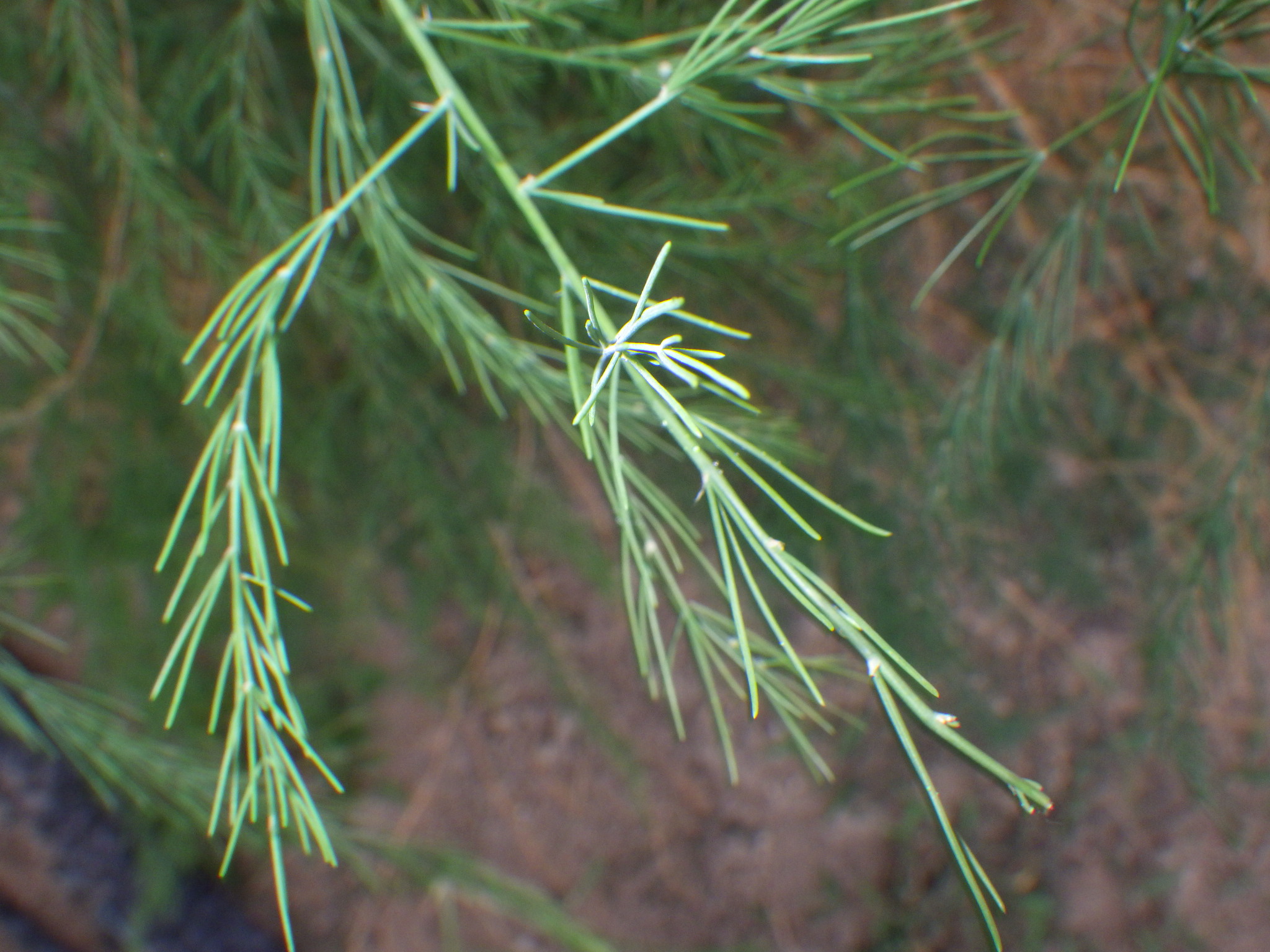
The Arecaceae family consists of evergreen trees or shrubs. Their leaves are palmately or pinnately lobed. The petioles clasp the stem at the base, forming a sheath. They bear small flowers in conical or spadixe inflorescences with bracts. Approximately 2,400 species belonging to 190 genera are known, primarily found in tropical and subtropical regions. Six genera and six species are native to Japan, mainly in the Ryukyu and Ogasawara Islands. Several species are cultivated and sometimes naturalize.
This article provides a comprehensive, illustrated guide to palm trees.
The basic information is based on Tsukamoto (1994) and Satake (1999). Photos are replaced as better ones become available. Also, while the identification was done by the author, please note that it may be changed without notice if there are any misidentifications.
- No.0605 Trachycarpus fortunei
- No.0606 Trachycarpus fortunei 'Wagnerianus'‘
- No.0606.a Chamaerops humilis
- No.0608 Rhapis excelsa
- No.0609 Livistona chinensis
- No.0610 Livistona boninensis (Ogasawara Livistona)
- No.0610.a Fan Palm (Licuala grandis)
- No.0611 Coconut palm (Cocos nucifera)
- No.0611.a Brazilian Palm (Butia odorata)
- No.0611.b Yatayashi Butia yatay
- No. 0612 Washingtonia robusta
- No. 0614 Nipa palm (Nypa fruticans)
- No.0615 Satacentia liukiuensis
- No.0616 Clinostigma savoryanum
- No.0616.a Cyrtostachys renda (Japanese dwarf palm)
- No.0617.a Manila Palm (Adonidia merrillii)
- No.0617.b Areca palm (Dypsis lutescens)
- No. 0618 Bottle Palm (Hyophorbe lagenicaulis)
- No. 0619 Date Palm Phoenix dactylifera
- No. 0620 Canary Island Date Palm (Phoenix canariensis)
- No.0621.a Sugar palm (Arenga pinnata)
- No.0622.a Table Palm (Chamaedorea elegans)
- References
No.0605 Trachycarpus fortunei
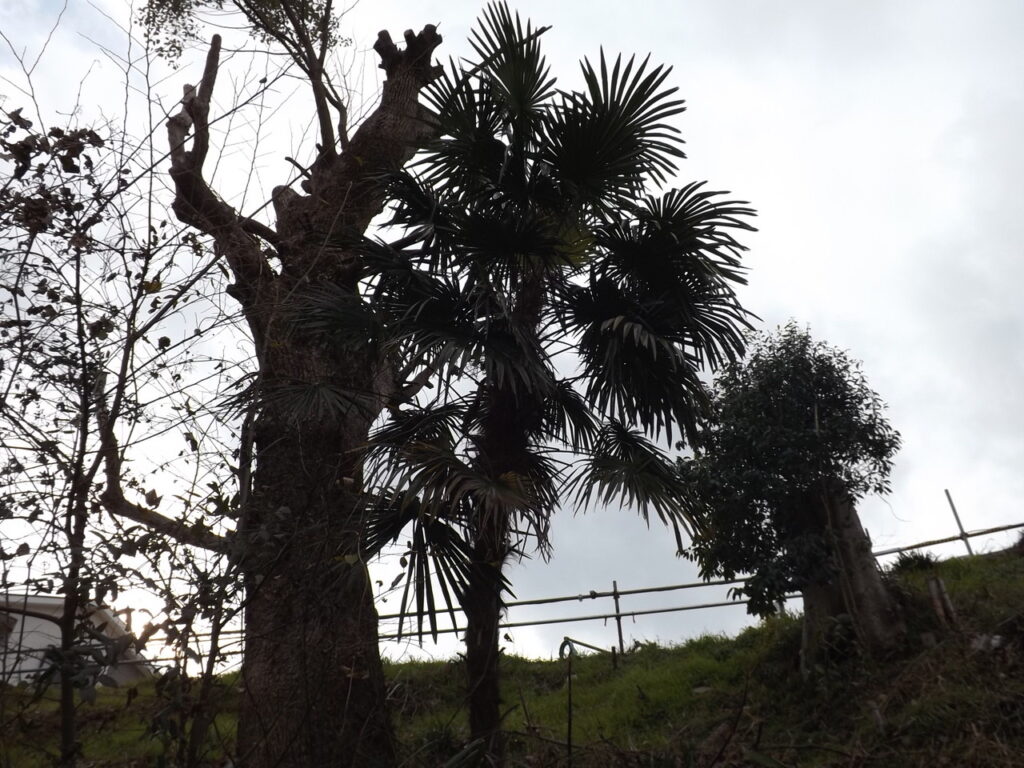
An evergreen tree. Also known as palm tree. In areas west of the Kanto region, seeds are dispersed by birds and it can be found growing wild, mainly in urban areas. The trunk is erect, reaching a height of 3-7m and a diameter of 10-15cm, with the upper part densely covered by withered leaf stalks and remaining leaf sheaths. The leaves are fan-shaped and circular, 50-80cm in diameter, deeply divided into numerous lobes in a fan shape. The lobes are linear, 1.5-3cm wide, folded inward, and have a blunt, shallowly two-lobed tip. As they age, the tips break off and droop. The petioles reach 1m in length and 4-5cm in width, with teeth and spine-like projections near the base. It is dioecious. The flowering period is from May to June. Large panicles, 30-40cm long, emerge from the leaf axils. Male flowers are found only on the male inflorescences, are pale yellow, and nearly spherical. The sepals are ovate-elliptic with obtuse tips, 1.2 mm long, and spread obliquely during flowering. There are three petals, broadly ovate with obtuse or rounded tips, about 3 mm long, and they remain almost erect even during flowering, not spreading flat. There are six stamens, which are clearly longer than the petals and have cylindrical filaments. Male flowers have three rudimentary pistils. Female inflorescences bear both female and hermaphroditic flowers. Female flowers are pale green, have three pistils, and six rudimentary stamens. There are three styles, shorter than the ovary, and shallowly two-lobed at the tip. The berry is oblate-spherical, 10-12 mm long and 6-9 mm wide, and ripens to a greenish-black color (wild plant of Japan). Seeds are dispersed by birds. It is naturally distributed in at least central China (southern Hubei Province), Taiwan, and southern Kyushu, but because it is widely cultivated for ornamental purposes in various countries, it is difficult to identify its original habitat. According to "Flora of China," it is naturally distributed from southern to northern Myanmar and also in northern India.
No.0606 Trachycarpus fortunei 'Wagnerianus'‘
This is an evergreen small tree. While it is listed as Trachycarpus wagnerianus in the NCBI Taxonomy, it is treated as a synonym in Flora of China and Ylist, so it is considered a cultivar here. It grows to a height of about 4m. The leaves are slightly smaller than those of the Japanese palm (Trachycarpus palm), and the tips of the lobes do not droop. It is dioecious (having separate male and female plants). It flowers from May to June, producing yellow flowers in early summer. In Japan, it is considered to be native to China, but according to Gibbons (2003) of Canada, no wild individuals are known, and it is believed that the original species originated from cultivated individuals in Japan discovered in the late 19th century by Albert Wagner, a horticulturist from Leipzig in the German Empire. Wagner made numerous collecting trips to Japan and China in the 19th century, and also frequently traveled to the Caribbean and South America, and it is said that he cultivated palms in a steam-heated greenhouse in northern Germany and made a living from it. As mentioned above, in "Flora of China," it is treated as a synonym for the Wajru, and there is no special description of the Chinese fiddler. The author is unsure of the truth.
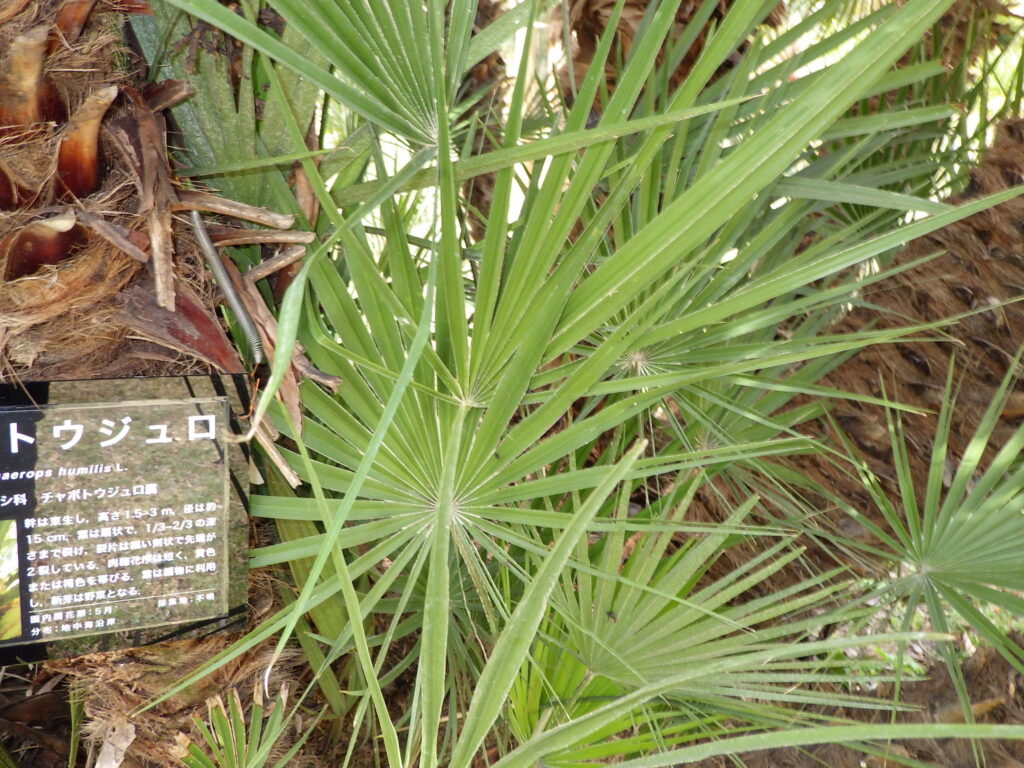
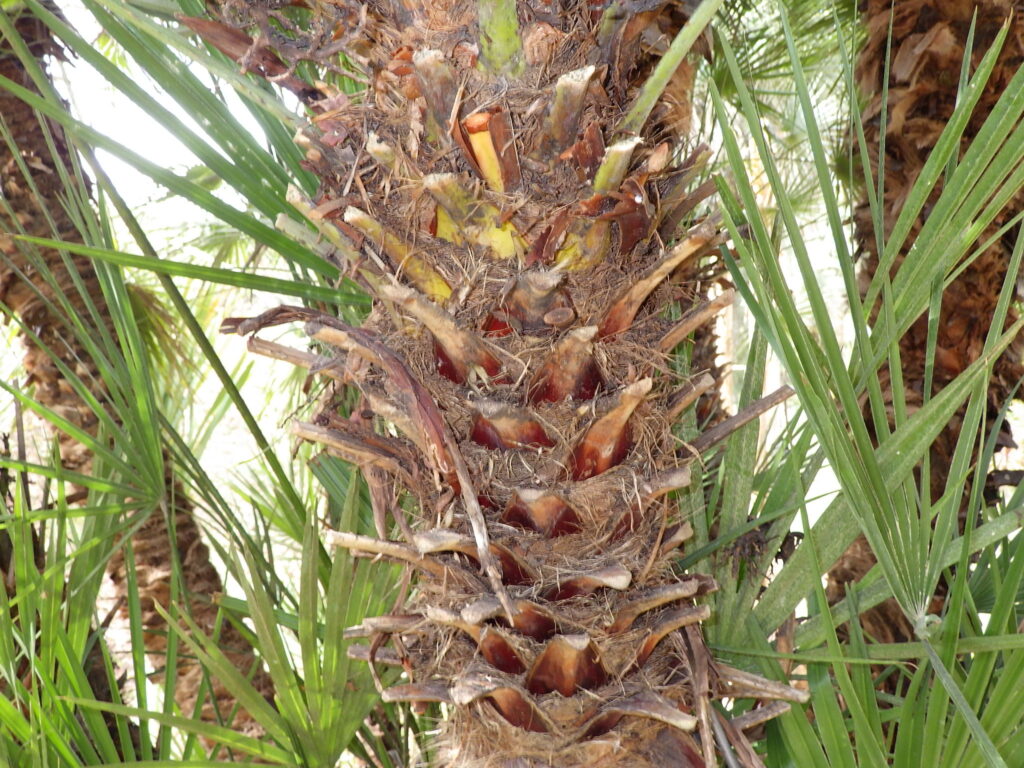
No.0606.a Chamaerops humilis
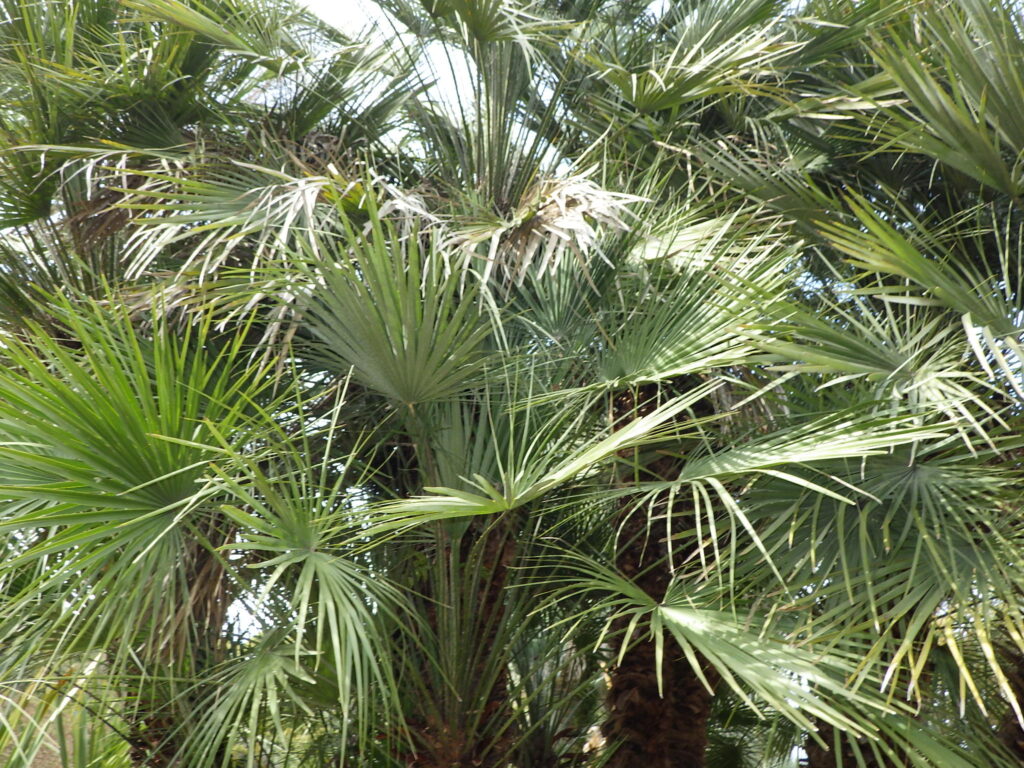
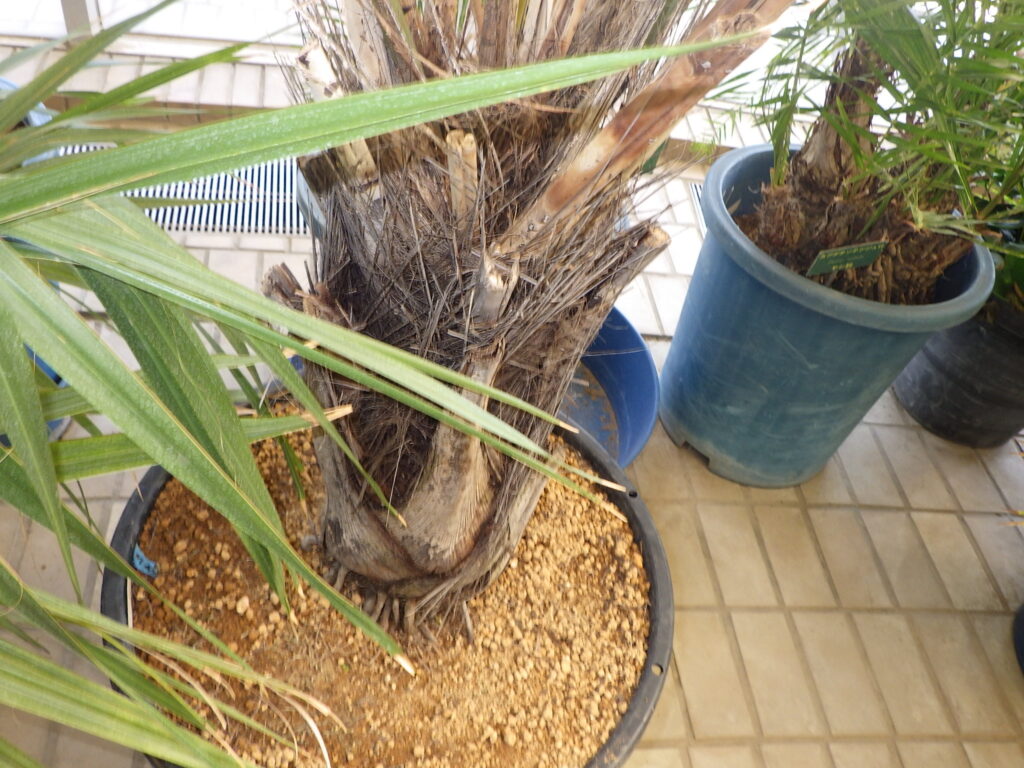
This evergreen shrub grows to a height of 4 meters. The trunk is unbranched and erect, encased in the brown fibers of old leaf sheaths. It is slow-growing. The leaves are arranged spirally at the top of the trunk, are circular in shape, 50-80 cm in diameter, deeply lobed in a palmate fashion, and the tips of the lobes are further divided into two. The petioles are about 1 meter long, triangular in cross-section, and have protrusions along the edges. It is dioecious, and flowers from May to June. In early summer, fleshy panicles emerge from the base of the leaves near the top of the trunk, bearing numerous small yellowish-white flowers. The fruit is a flattened spherical berry about 1 cm in diameter, which turns bluish-black when ripe. Native to southern Europe, it is cultivated as an ornamental plant in various countries, including Japan.
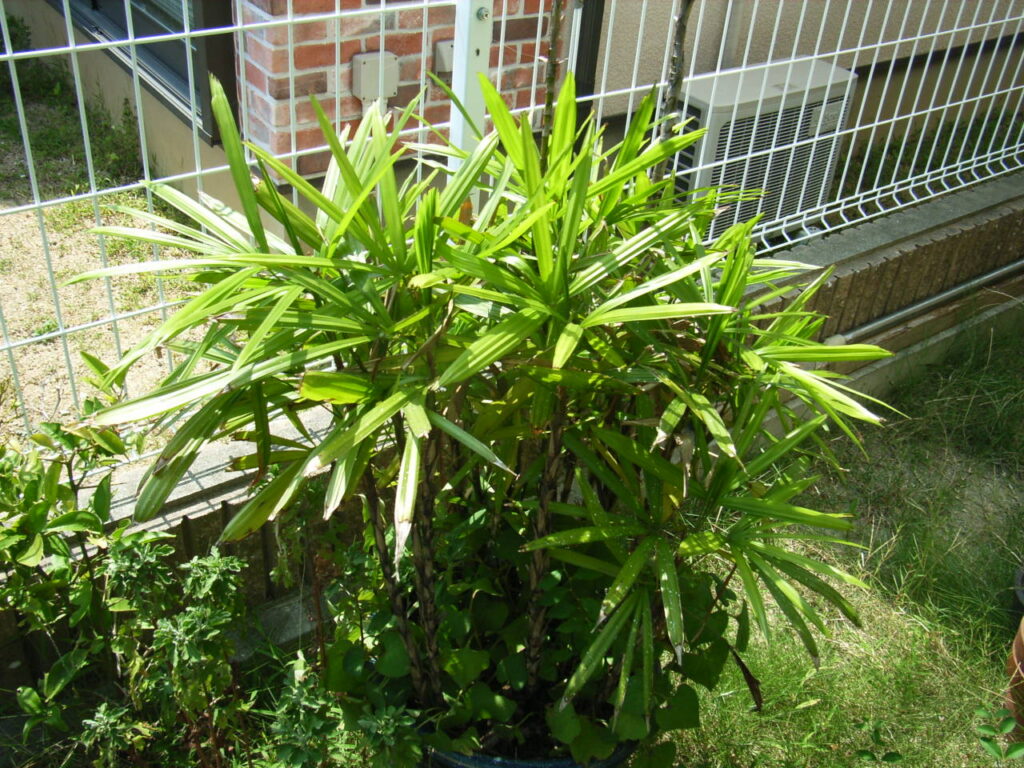
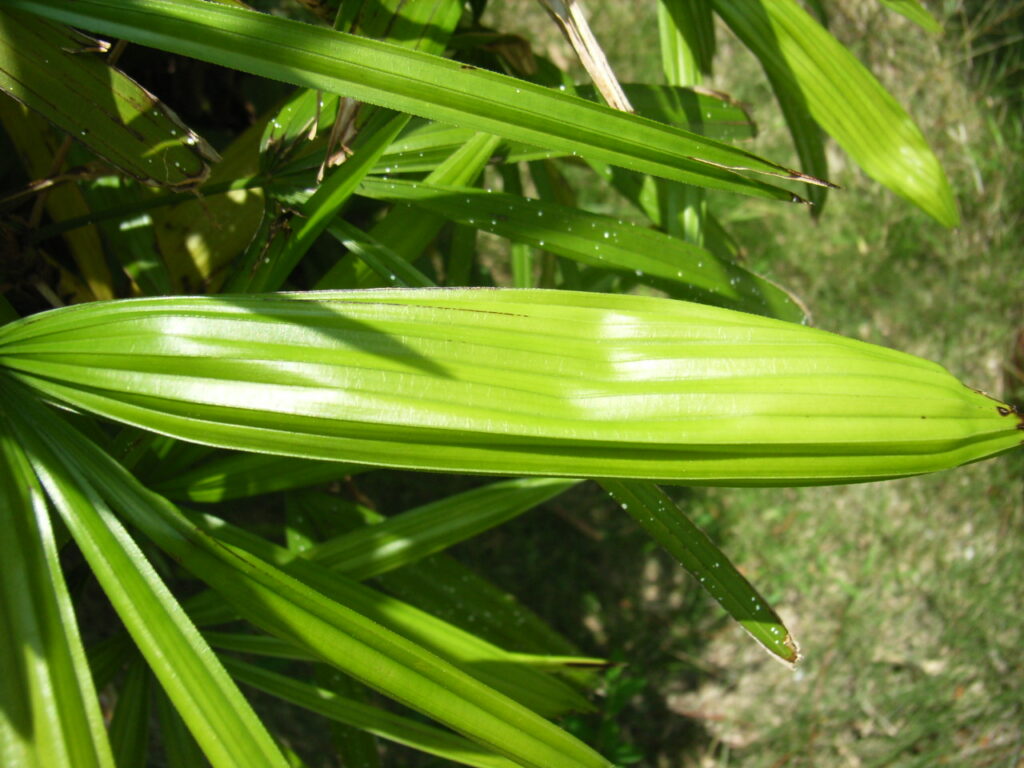
No.0608 Rhapis excelsa
This evergreen shrub propagates by extending short rhizomes. The stems are erect, reaching a height of 2m and a thickness of about 2cm. The stems do not branch, and their surface is tightly covered with old leaf sheaths and their fibers. The fibers are dark brown, but the actual bark is green. The leaves grow in clusters at the top of the stems, and the leaf blades, at the end of long petioles, are about 15-25cm long and palmately divided into 4-8 lobes. The leaf blades have longitudinal folds, bulging towards the surface, and the tips are finely split. The leaves are hard and dark green. It flowers in early summer and is dioecious. The spike inflorescences are 20-30cm long and are sparsely clustered in a conical shape. The fruit is broadly elliptical-spherical, and the outside is covered with hard, recurved scales. Native to southern China, it was cultivated in Japan starting in the Edo period, and since then many varieties have been created, and it is treated as one of the classic horticultural plants.
No.0609 Livistona chinensis
This evergreen tree grows in forests near the coast, reaching a height of 10-15 meters. Its leaves are circular, about 1 meter in diameter, and palmately lobed to deeply lobed. The lobes are further divided, and the tips are bent. It flowers from April to May, producing numerous small, yellowish-white bisexual flowers in a conical inflorescence from the base of the petiole. The fruit is an oval drupe that ripens to a bluish-black color. It is distributed in southern Shikoku, Kyushu, Okinawa, Taiwan, and southern China in Japan, growing in forests near the coast.
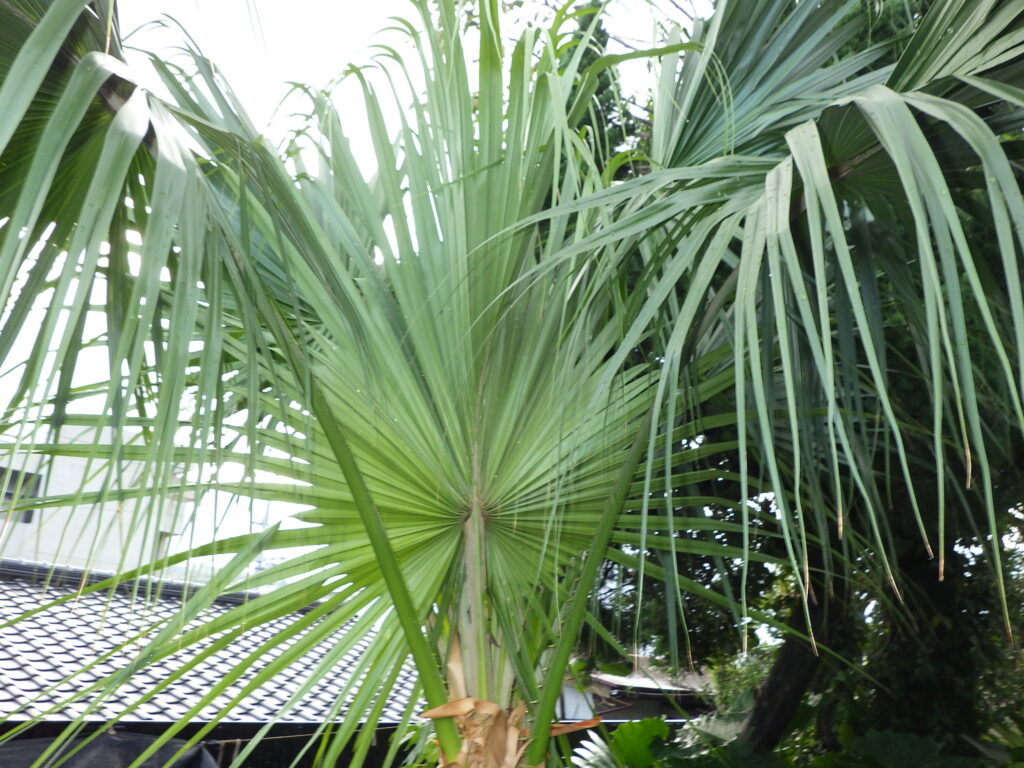
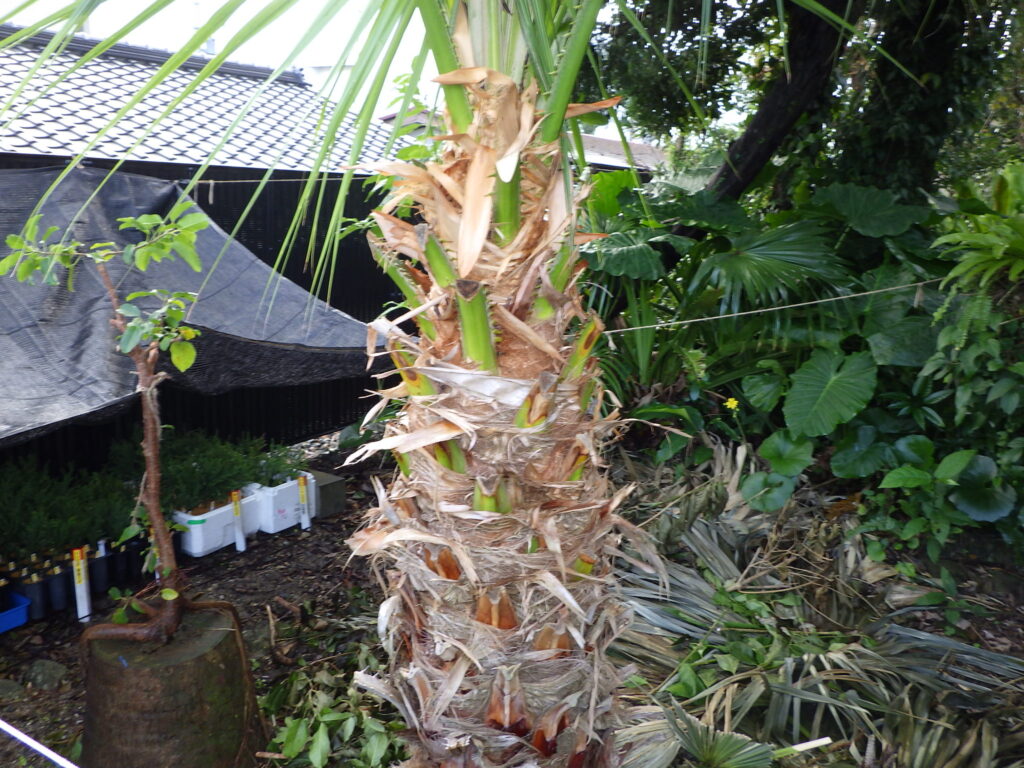
No.0610 Livistona boninensis (Ogasawara Livistona)
This is an evergreen tree, typically reaching a height of 5-10 meters, though it can grow taller. The trunk is characterized by a ring-shaped pattern left behind by fallen petioles. This pattern disappears with age, revealing vertical cracks. The base of the trunk is slightly swollen. The leaves are palmately deeply lobed, about 100 cm long, with the tips splitting into two and drooping. The petioles are about 150 cm long and triangular in cross-section. The base of the petiole has two rows of sharp thorns that curve towards the base. Some leaves lack thorns. It is widely distributed in the Ogasawara Islands, growing from the foothills near the coast to near the mountaintops.
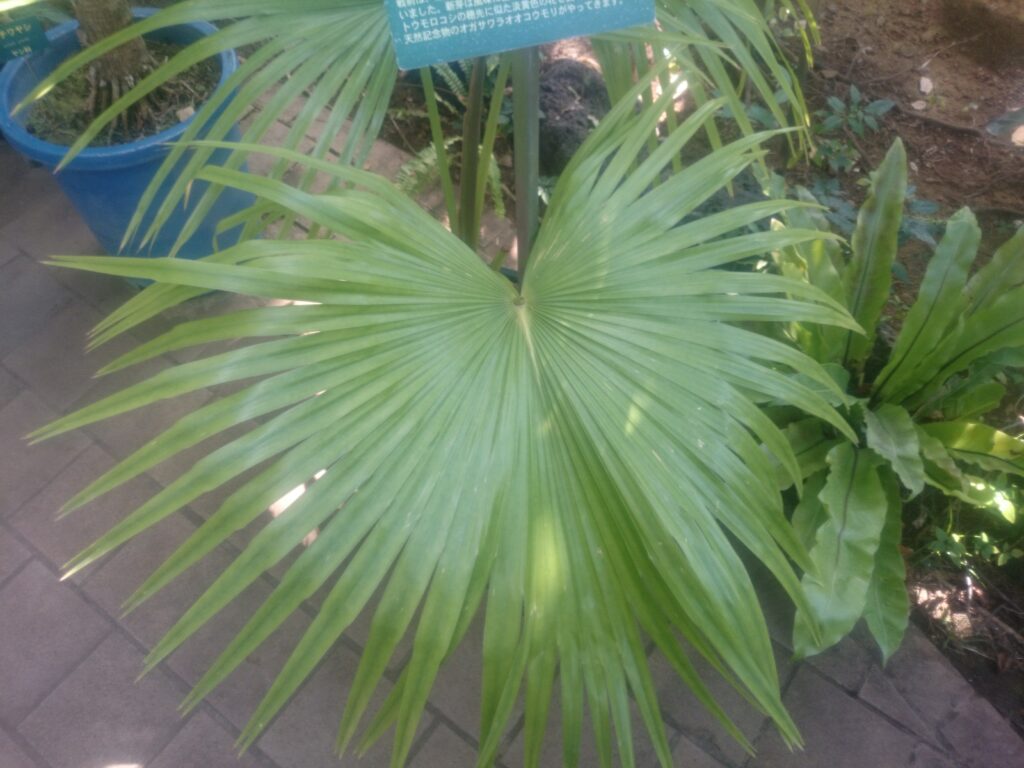
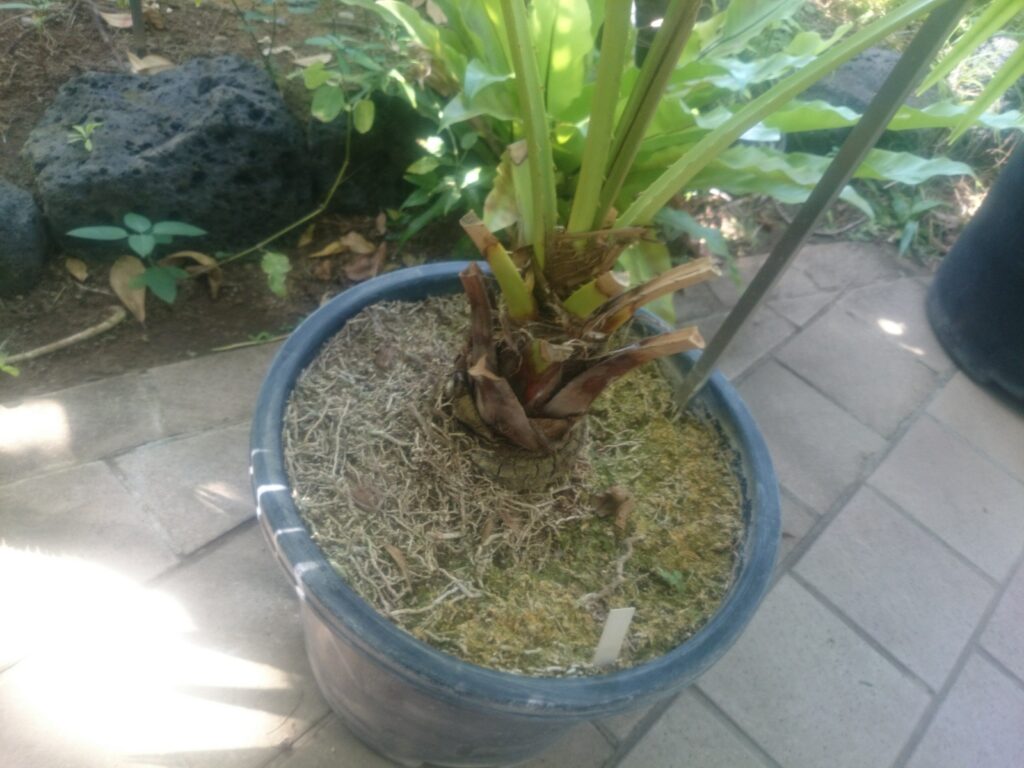
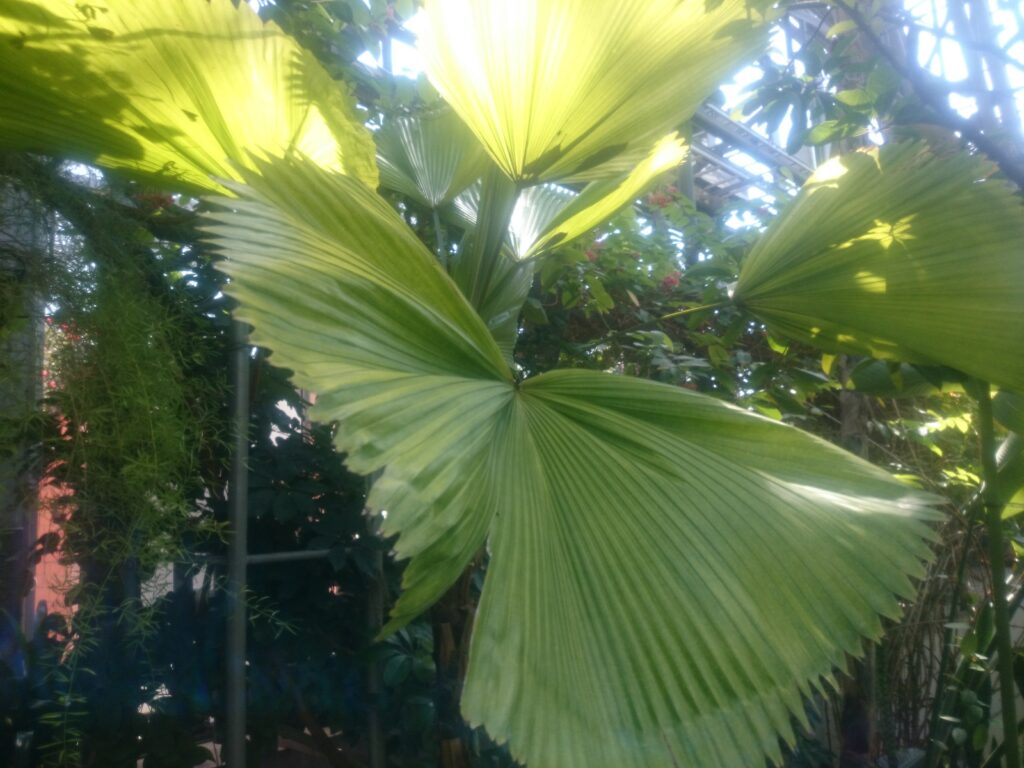
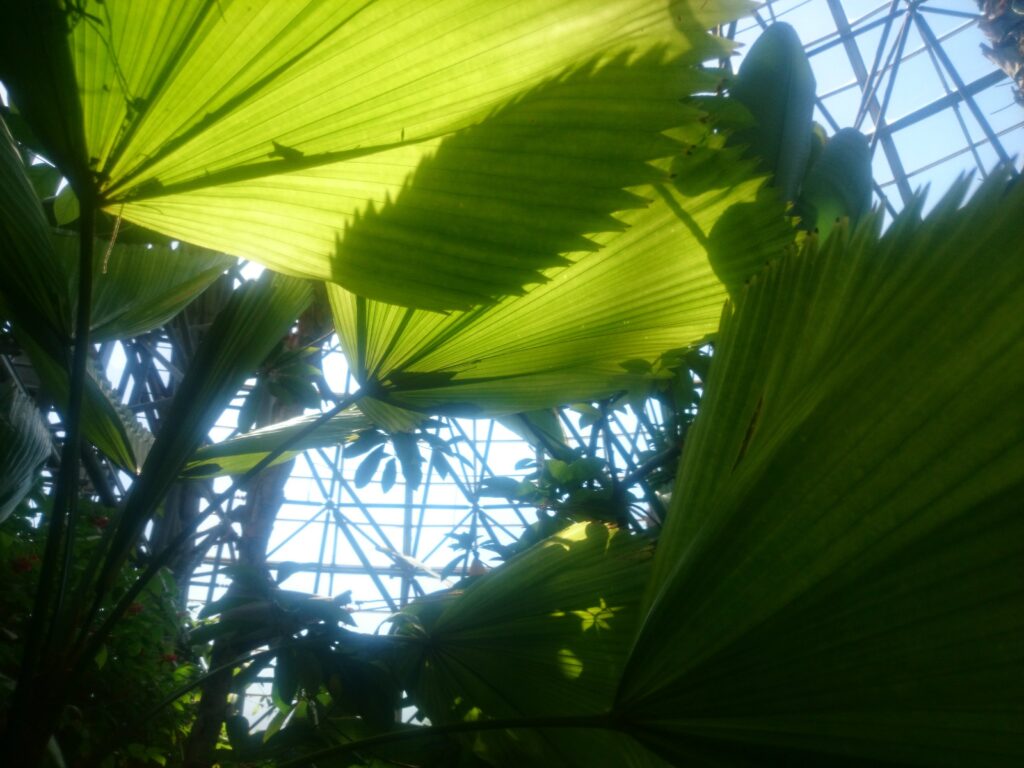
No.0610.a Fan Palm (Licuala grandis)
This is an evergreen tree. It has a slender, single trunk and grows to about 3 meters in height. The leaves are large and fan-shaped, with undivided blades. It is dioecious, producing numerous small, pale yellow, six-petaled flowers in a conical inflorescence from among the leaves. After flowering, it develops spherical, red drupes. It is distributed in Vanuatu and the Solomon Islands and is cultivated as an ornamental plant in various countries, including Japan.
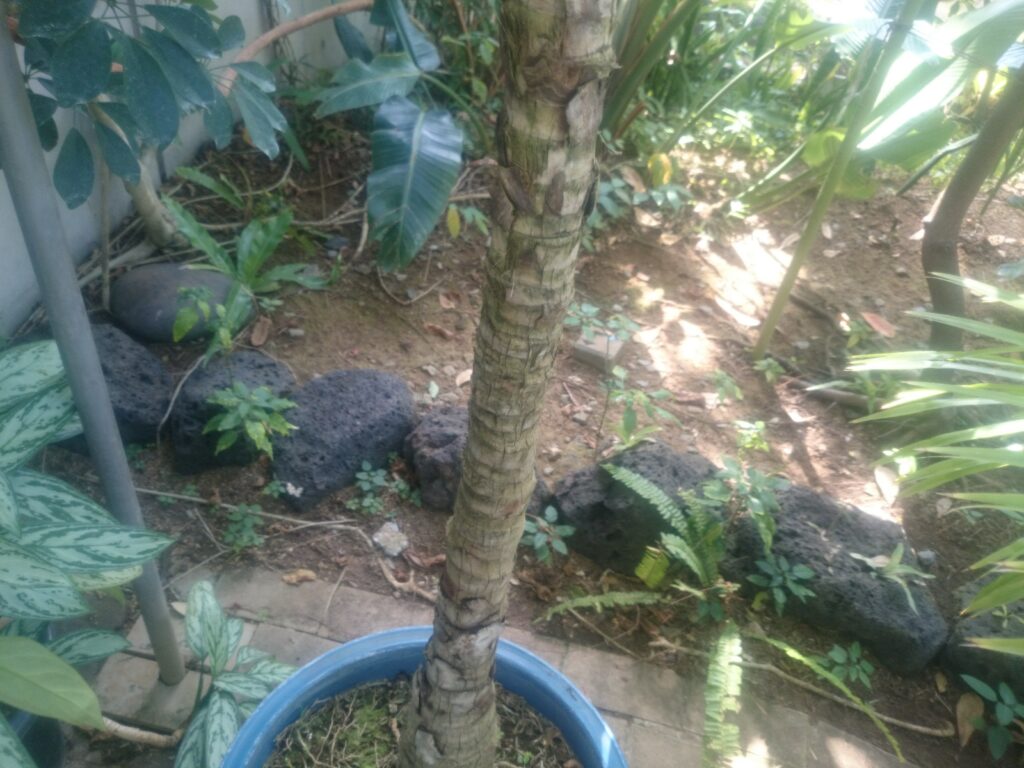
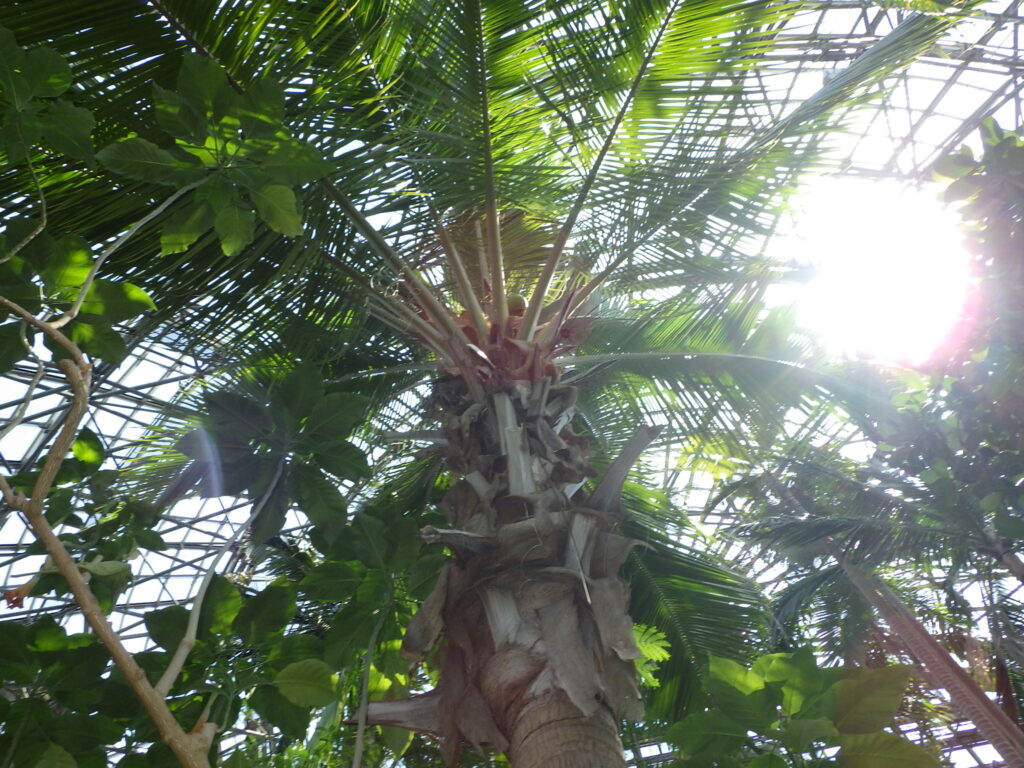
No.0611 Coconut palm (Cocos nucifera)
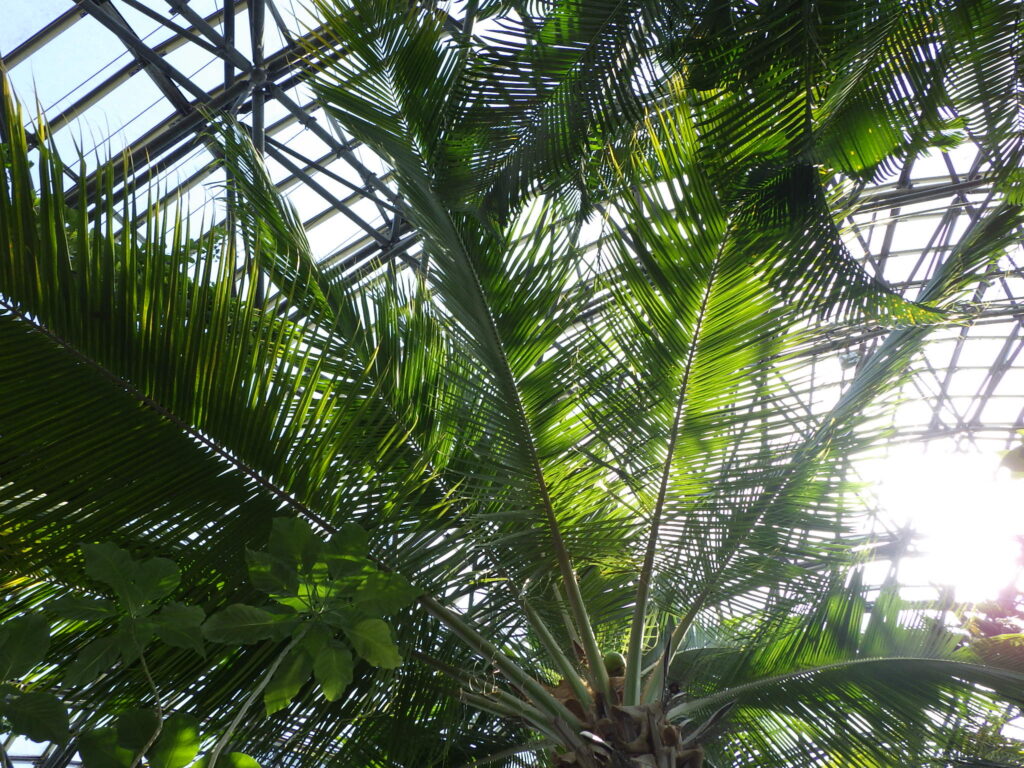
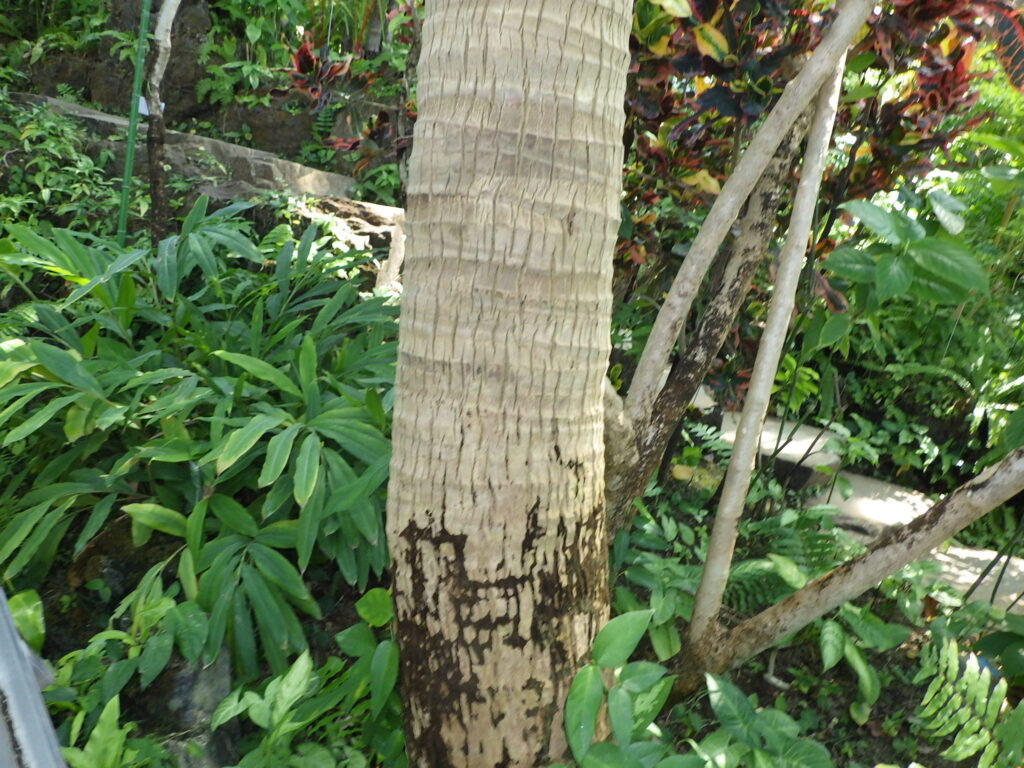
This is an evergreen tree. Typically, it has a single trunk and grows to a height of 15-30m, with 20-30 pinnate leaves, each 7-10m long, attached to the top of the trunk. After 7-8 years in normal varieties and 4-5 years in dwarf varieties, branched inflorescences appear in each leaf axil. Each inflorescence forms a spadix, with one female flower at the base of the inflorescence and numerous male flowers above it. The fruit, known as a "coconut," consists of a smooth exocarp, a fibrous mesocarp, and a hard, dark brown endocarp. Along the endocarp is a white endosperm, or "coconut milk," about 1cm thick. Further inside, the cavity is partially filled with a liquid endosperm, or "coconut juice (coconut water)" (only in young fruits). The liquid fruit reaches full size about 70 days after fertilization, but takes about a year to mature. It has been cultivated since prehistoric times, and its wild species is unknown, but genetic studies suggest it originates in the central Indo-Pacific region between West Southeast Asia and Melanesia (Lew, 2018). The fruit is well-suited for ocean dispersal. Wild-type fruits have an angular, highly raised shape for buoyancy and a pointed base to prevent the fruit from digging into the sand and being washed away. It cannot reach inland without human intervention. The high ratio of endosperm to shell and the high water content of coconuts are the result of artificial selection by Austronesian people who speak Austronesian languages. Nata de coco, which means "coconut membrane" in Spanish, is made by fermenting coconut juice with a type of acetic acid bacteria called Komagataeibacter xylinus (Acetobacter xylinum, which is seen in some articles as a synonym by Yamada et al. (2012)), and the resulting concentrated edible product is added to desserts and beverages (Ito et al., 2013). It was invented in 1949 by Filipino female chemist Teódula Kalaw África as a substitute for nata de piña, which originated in the 18th century and is made from pineapple (Vergara et al., 1999).
No.0611.a Brazilian Palm (Butia odorata)
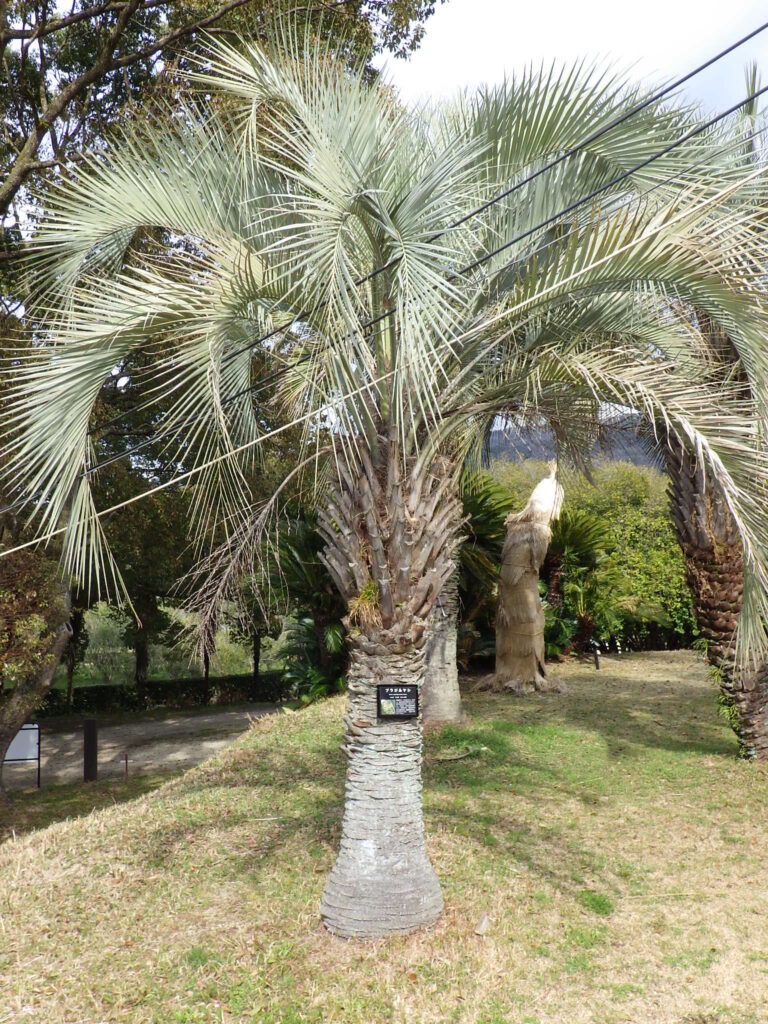
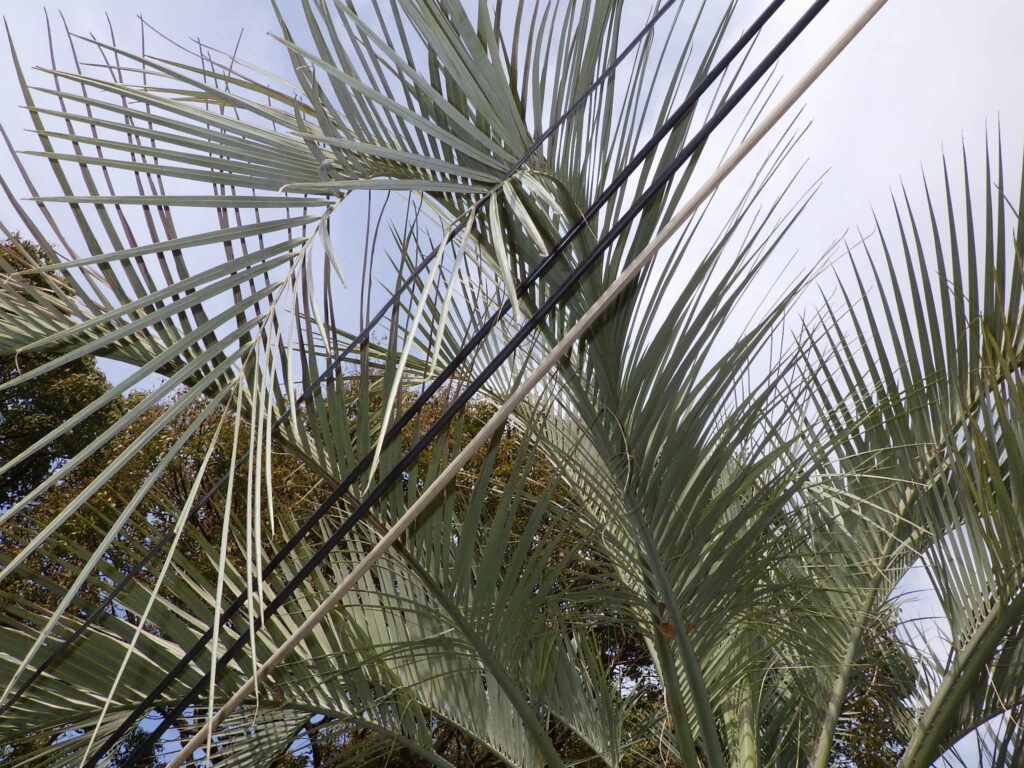
An evergreen shrub. Also known as the coconut palm. It is introduced as Butia capitata in all media both overseas and in Japan, but Noblick (2011) has shown that it is actually Butia odorata. Perhaps because this fact is not widely known, many botanical gardens, collectors, and nursery operators have not yet changed the scientific name. The true Butia capitata is not particularly hardy and is not widely cultivated. It grows to a height of 2 to 19 m. The leaves are large, pinnately compound, light green to bluish-gray, and are greatly curved, 1.5 to 3 m long. It produces white to yellow flowers in spring, and the fruit ripens to an orange-yellow in autumn and is edible. It is distributed in a band along the southernmost coast of Brazil and extends to Uruguay. It mainly inhabits shallow waters (restinga) on hills along the coast. It is cultivated as an ornamental plant in various countries, including Japan.
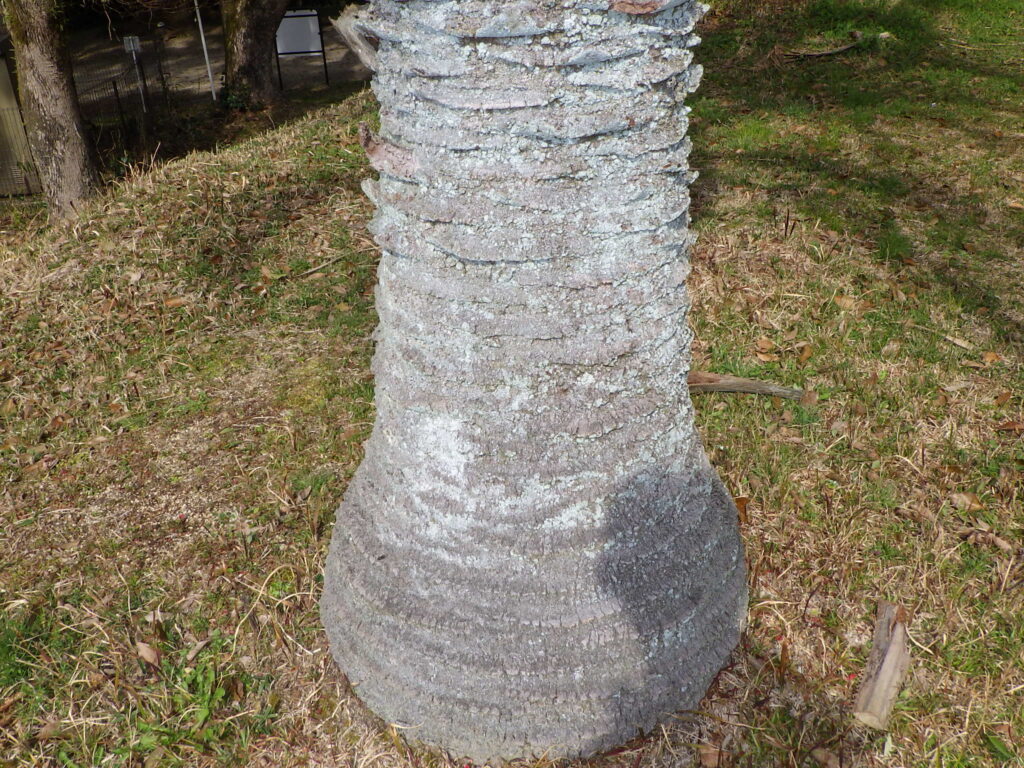
No.0611.b Yatayashi Butia yatay
This is an evergreen small tree. The name "yatai" comes from the Guarani word "yata'i," meaning small, hard fruit. The trunk is about 6 meters tall and 50 cm in diameter. The pinnate leaves are about 2.5 meters long and the underside of the leaves is bluish-green. The flowers are yellow, and the fruit is oval-shaped, dark yellow to crimson, and edible. It is distributed in the southernmost part of Brazil (Rio Grande do Sul), north-central Argentina (Chaco, Corrientes, Entre Ríos, Misiones, and Santa Fe), and Uruguay (Paysandu and Rio Negro departments), and inhabits the Pampas. It is cultivated as an ornamental plant in various countries, including Japan. The fruit is the main food source for the blue-fronted macaw (Anodorhynchus glaucus) (Yamashita & Valle, 1993).
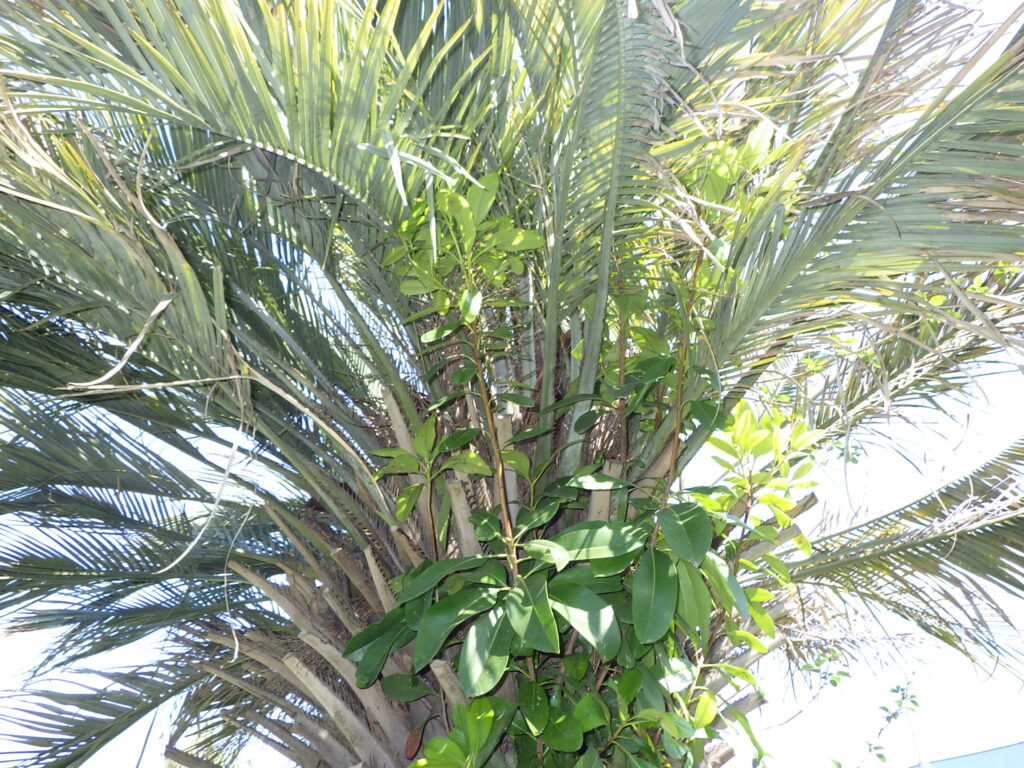
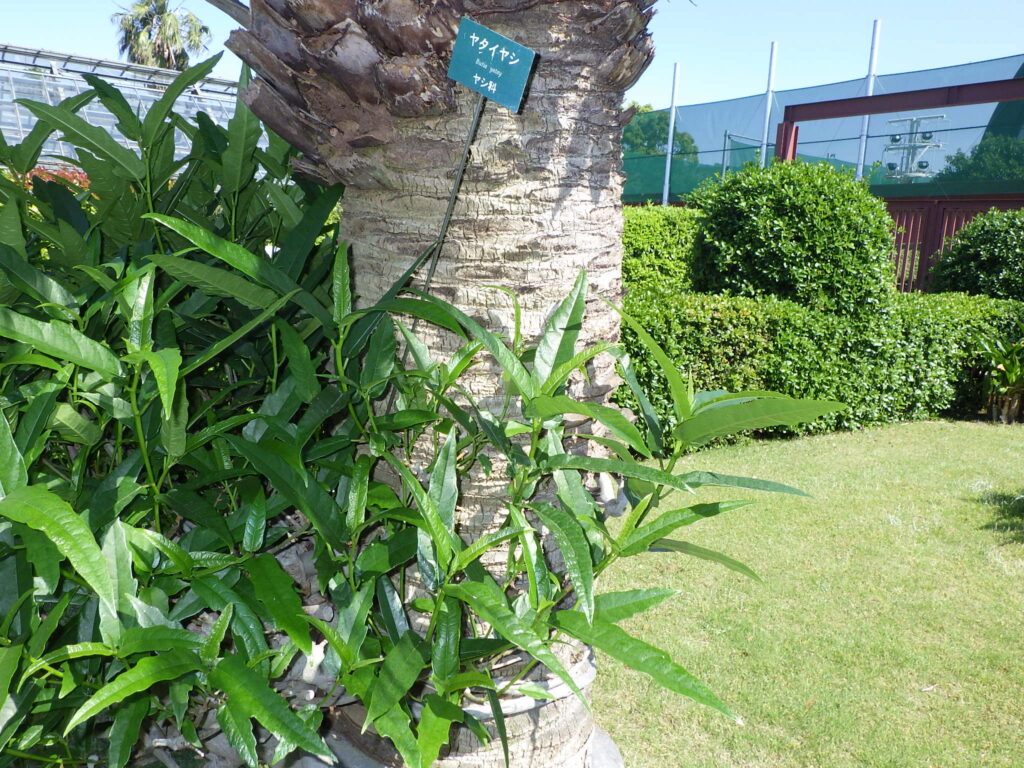
No. 0612 Washingtonia robusta
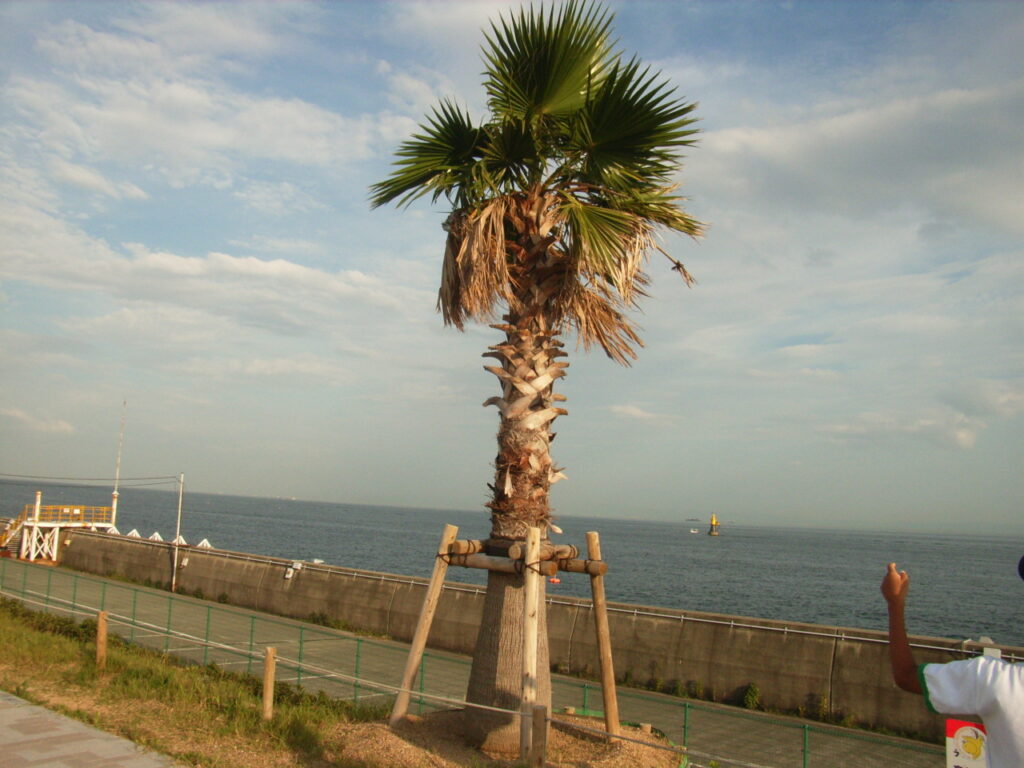
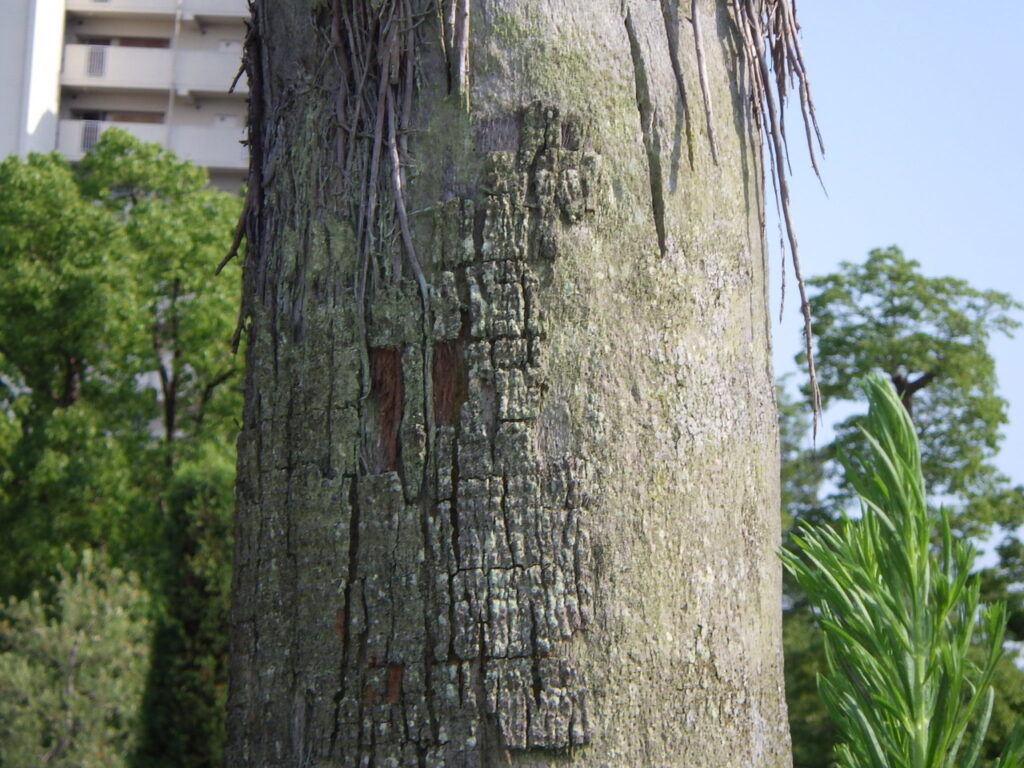
Also known as the Washingtonia palm, it grows to a height of about 25 meters. The leaves have petioles about 1 meter long, and at the end of these petioles are fan-shaped or circular, about 1 meter in diameter, deeply lobed in a palmate fashion, and the tips hang down in a white, thread-like manner. Even after the leaves wither, they remain on the trunk for a long time, overlapping and hanging down. The inflorescence is about 3 meters long and bears many small, pale orange-pink flowers. The fruit after flowering is a spherical drupe about 6-8 mm in diameter.
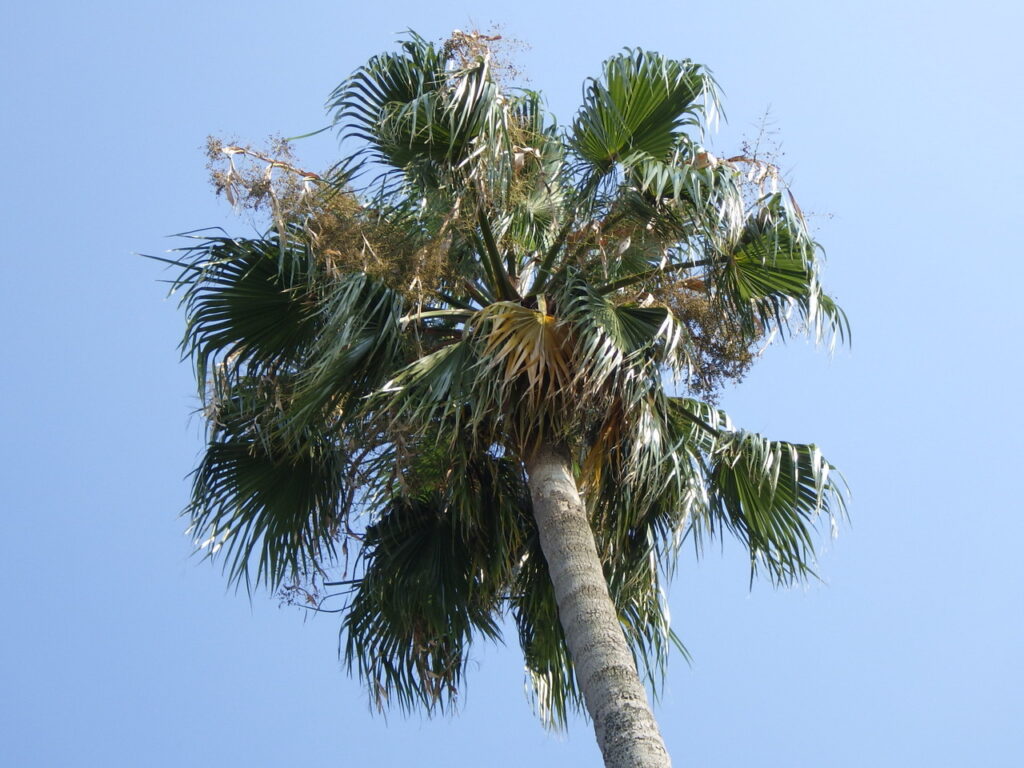
No. 0614 Nipa palm (Nypa fruticans)
This evergreen small tree reaches a height of approximately 9 meters. It extends dichotomously branched rhizomes into the mud of wetlands (dichotomous branching of rhizomes is a rare example among seed plants). There is no stem (above-ground stem); the above-ground part consists of several leaves with thick petioles and pinnately compound leaves, growing in clusters from the tip of the rhizome. The leaves are 5-10 meters long, with leaflets about 1 meter long, linear-lanceolate, entire, leathery, glossy, and pointed at the tip. During the flowering season, inflorescences extend from the base of the leaves, bearing slender male inflorescences about 80-100 cm long and spherical female inflorescences at their tips. The female inflorescences are capitulum, and the male inflorescences are catkins. The flowers have six petals. After flowering, the female inflorescences develop into spiny, spherical aggregate fruits about 15-30 cm in diameter. Reproduction occurs vegetatively, with above-ground parts growing from the tips of the rhizomes, as well as by seeds. The seeds, separated from the aggregate fruit, are oval-shaped, about 4.5 cm in diameter, and float on seawater. They spread their distribution through ocean current dispersal, settling in places where they drift ashore. It is distributed in India, Malaysia, Micronesia, and Japan (Iriomote Island and Uchijima Island in Okinawa Prefecture). It grows on coastlines.
No.0615 Satacentia liukiuensis
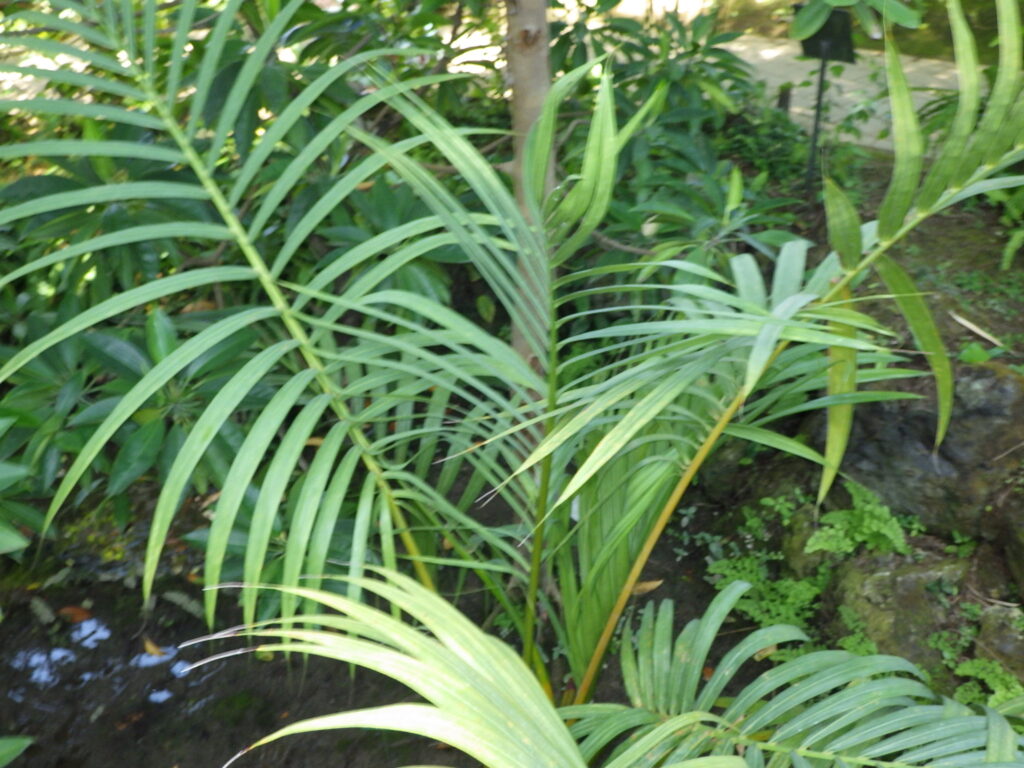
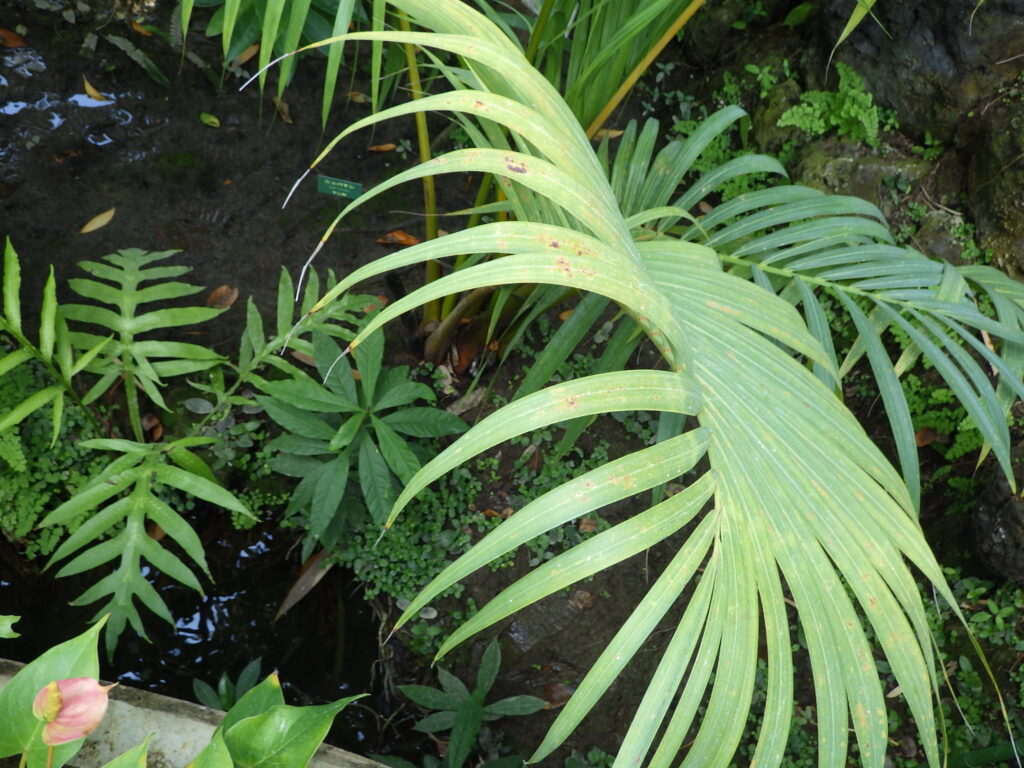
This is an evergreen tree. The stem is erect, reaching a height of 15-20m and a diameter of 20-30cm, with a further thickened base. The stem does not branch, and its surface retains ring-shaped streaks of fallen leaves. The leaves are large, simple-pinnately compound, reaching a length of 4-5m. The petioles are short, the leaf blades are leathery and glossy, and there are more than 90 pairs of leaflets. The leaflets are linear-sword-shaped, 30-70cm long and 3-4cm wide, with shallowly bifurcated tips. The underside is green with brown scales along the midrib. The leaf sheath is tubular, forming a tube that surrounds the tip of the stem. The inflorescence emerges from below the cluster of leaves at the tip of the stem, enclosed in a spindle-shaped bract, branching twice in a conical shape, and densely covered with short, stellate hairs. The inflorescence reaches a length of 1m, and the base of its stalk broadens to clasp the stem. This plant is monoecious, with unisexual, yellow flowers that grow in numerous spikes in a decussate arrangement on the inflorescence axis. Below the middle of the inflorescence, flowers grow in pairs, with the lower pair being female and the upper pair male. Beyond the middle of the inflorescence, only male flowers grow in pairs. Male flowers have three widely spaced, broadly ovate sepals with rounded tips, and three elliptical petals with triangular but blunt tips. There are six stamens that protrude longer than the petals. Female flowers have sepals and petals that are almost identical to those of male flowers, but slightly larger. There are three rudimentary stamens that are flattened and triangular. The fruit is ovate-elliptic and turns red when ripe. The seeds are oblong, 1 cm long, slightly curved, and have a hilum that extends along its entire length. This species is endemic to Ishigaki Island and Iriomote Island in the Yaeyama Islands of Japan, and grows in natural forests from lowlands to mountainous areas. It is listed as Near Threatened in the Ministry of the Environment's Red List and the Okinawa Prefecture Red Data Book.
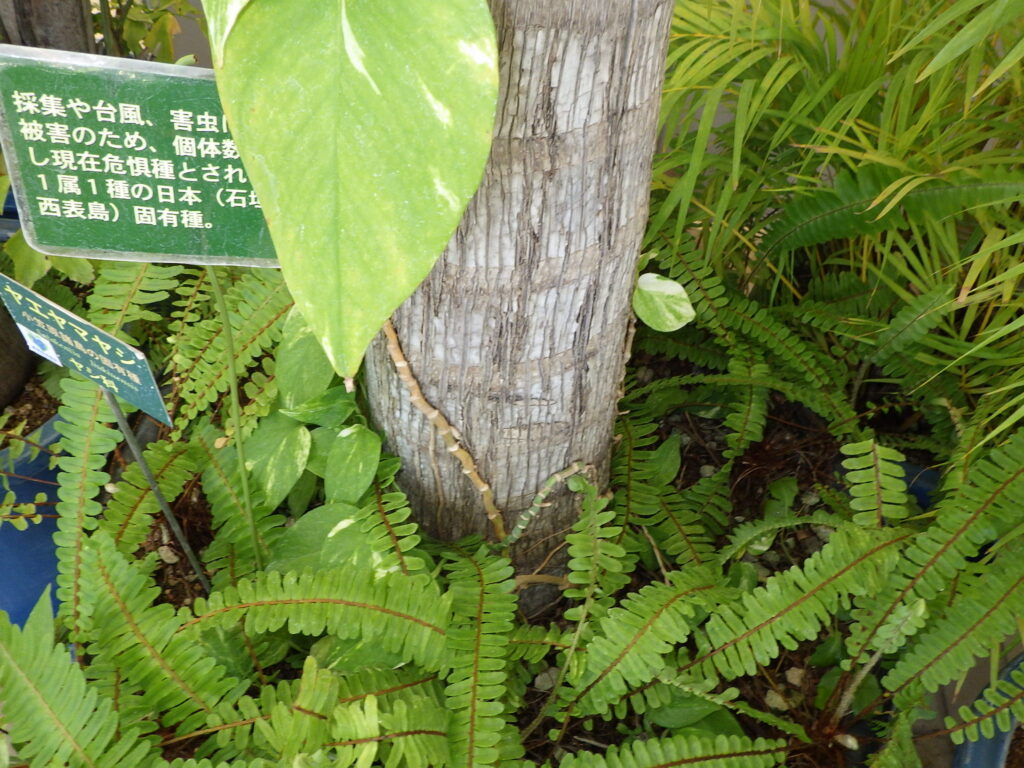
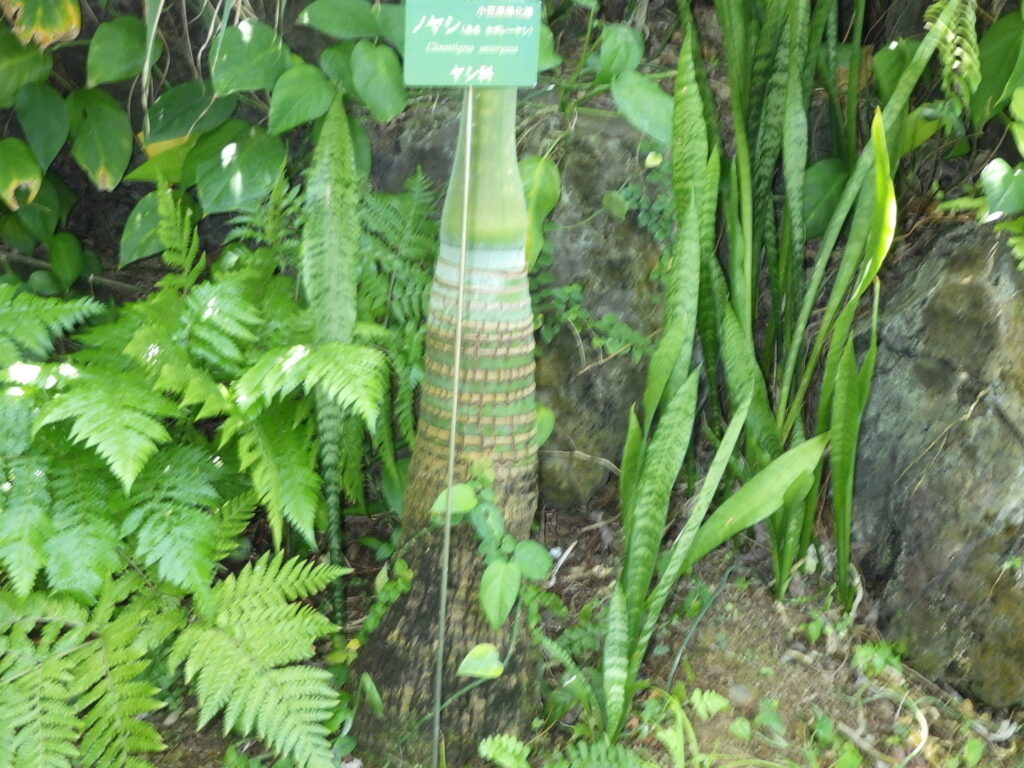
No.0616 Clinostigma savoryanum
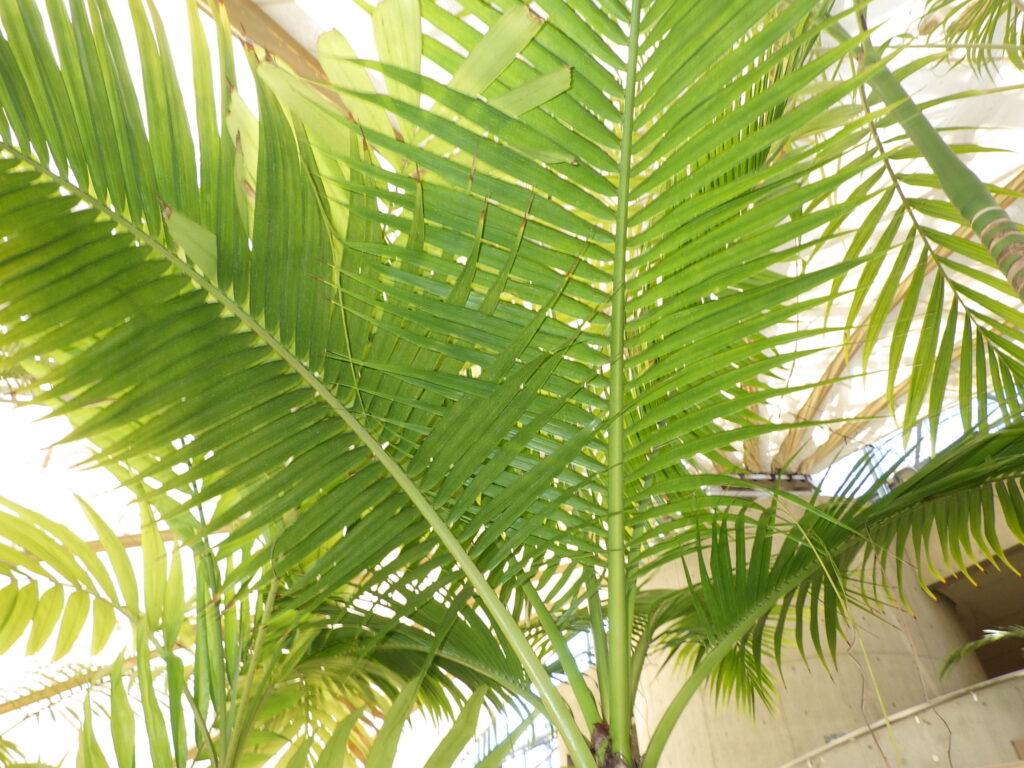
This evergreen tree grows to a height of 5-10 meters. When young, the trunk is pale green and swollen near the base. As it matures, it takes on a grayish color. Multiple layers of leaf scars form rings. The leaves are arranged in whorls at the top and are about 1-2 meters long. They are pinnately compound leaves with deep incisions down to the midrib. The leaves are leathery and have a dull sheen. It flowers from July to September. The inflorescence is enclosed in a boat-shaped bract with a notched tip at the leaf sheath. There are about 2-4 inflorescences per plant. The bracts fall off when a large panicle inflorescence emerges. The flowers are pale yellow. It is monoecious. Female flowers are in the center, with male flowers flanking them. The fruit ripens to red around May to June. It is an endemic species of the Ogasawara Islands, distributed in the Chichijima and Hahajima archipelagoes. It inhabits deep soil in mountain forests and valleys.
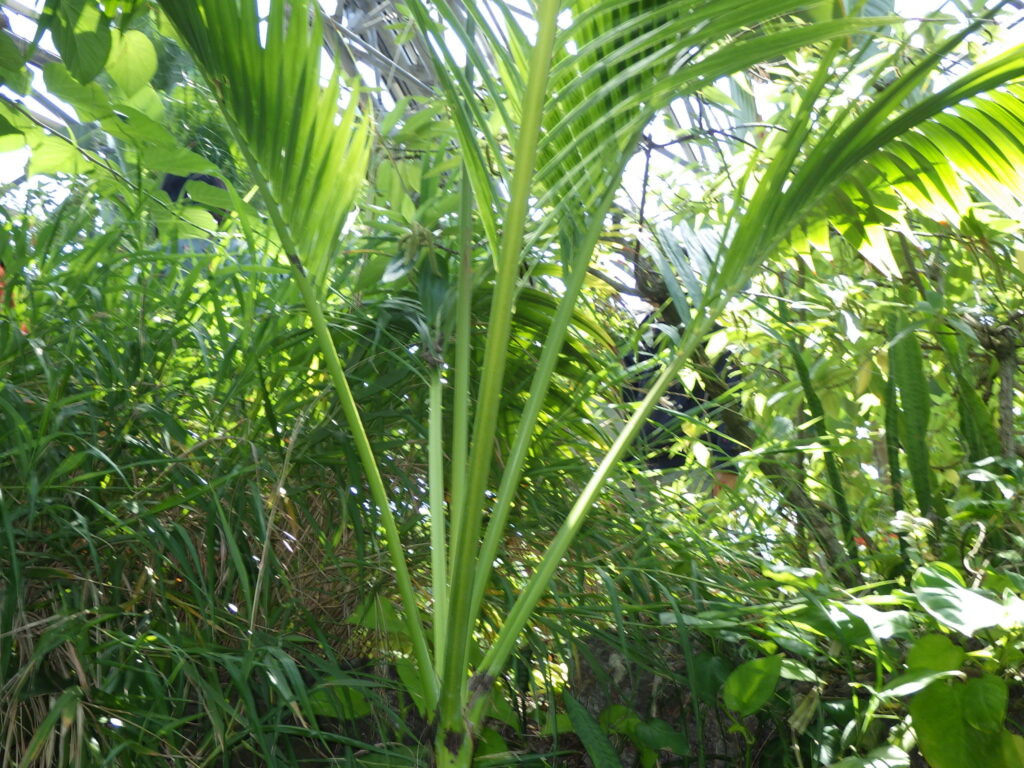
No.0616.a Cyrtostachys renda (Japanese dwarf palm)
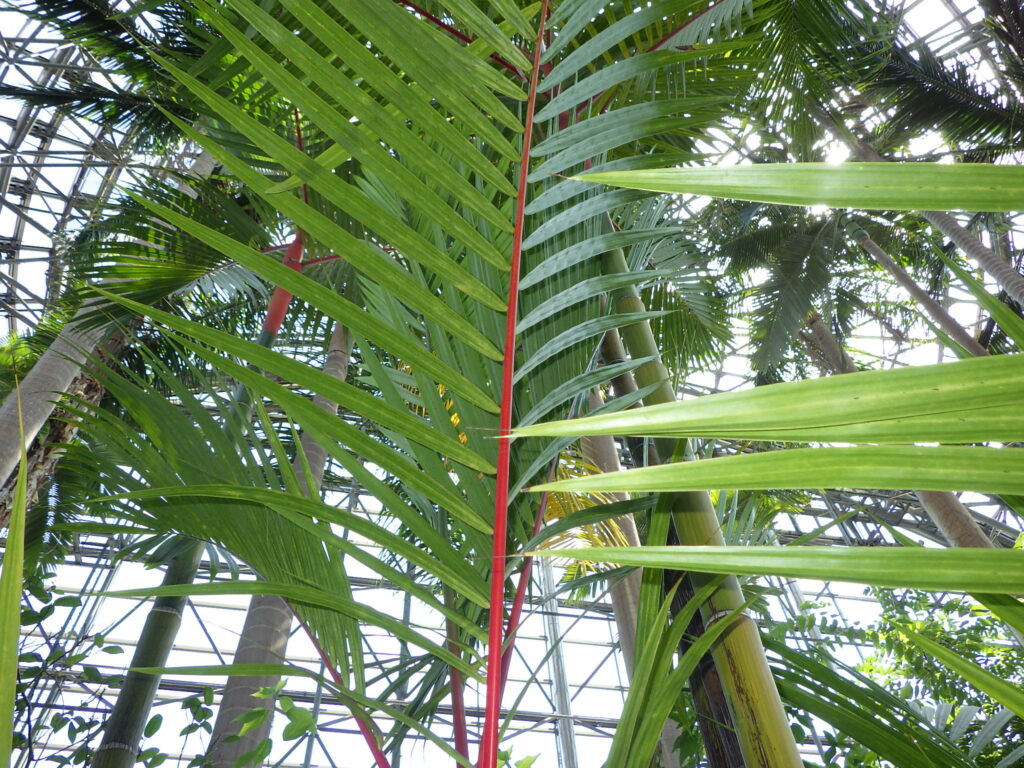
This evergreen medium-sized tree is clump-forming, branching profusely at the base. The stems are slender and bamboo-like, reaching a height of 5m and a diameter of about 8cm, and are smooth, glossy green. The marks left by fallen leaves form beautiful ring-shaped patterns resembling bamboo joints. The petioles are about 15cm long and, along with the leaf axis, are bright scarlet. The pinnate leaves are about 1.5m long and curve in an arch shape. The leaflets are about 50cm long, lanceolate, and there are about 25 pairs, with a dark green surface. In February, branched spike-like inflorescences, 30-60cm long, emerge from the leaf axils, bearing white flowers. The Japanese name comes from the fact that the color of the leaves and leaf axis resembles the vermilion color of the fur of the mythical Chinese monster, "Shōjō." Native to the Malay Peninsula and Kalimantan Island (Borneo), it is cultivated in Japan for ornamental purposes in greenhouses or outdoors (only in Okinawa).
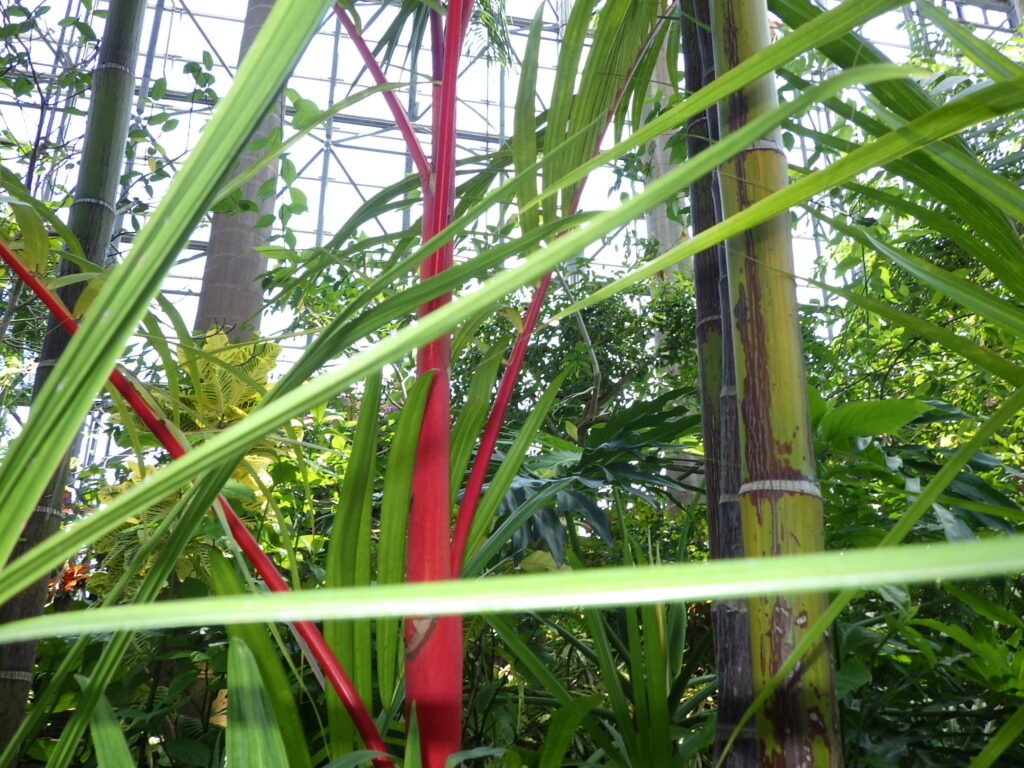
No.0617.a Manila Palm (Adonidia merrillii)
This evergreen small tree grows to a height of 5m. Young trees have deciduous scales on the internodes. The trunk retains shallow ring-shaped leaf scars. The leaves are 2m long and grow in an arch shape from the top of the trunk, with 14-15 leaves in each. The leaves are pinnately compound, with lanceolate leaflets 60-70cm long and a V-shaped cross-section. Only the basal leaflets are bifurcated at the tip. The petioles are short. Numerous flowers are borne in solitary spadixes at the base of the leaf sheath, and there are both male and female flowers. Male flowers are 1-1.2cm long and pale green, while female flowers are 0.6cm long. The fruit is spindle-shaped, about 3cm long, and ripens to a glossy, vivid crimson. Native to the Philippine Islands, it is cultivated for ornamental purposes in various countries, including Japan.
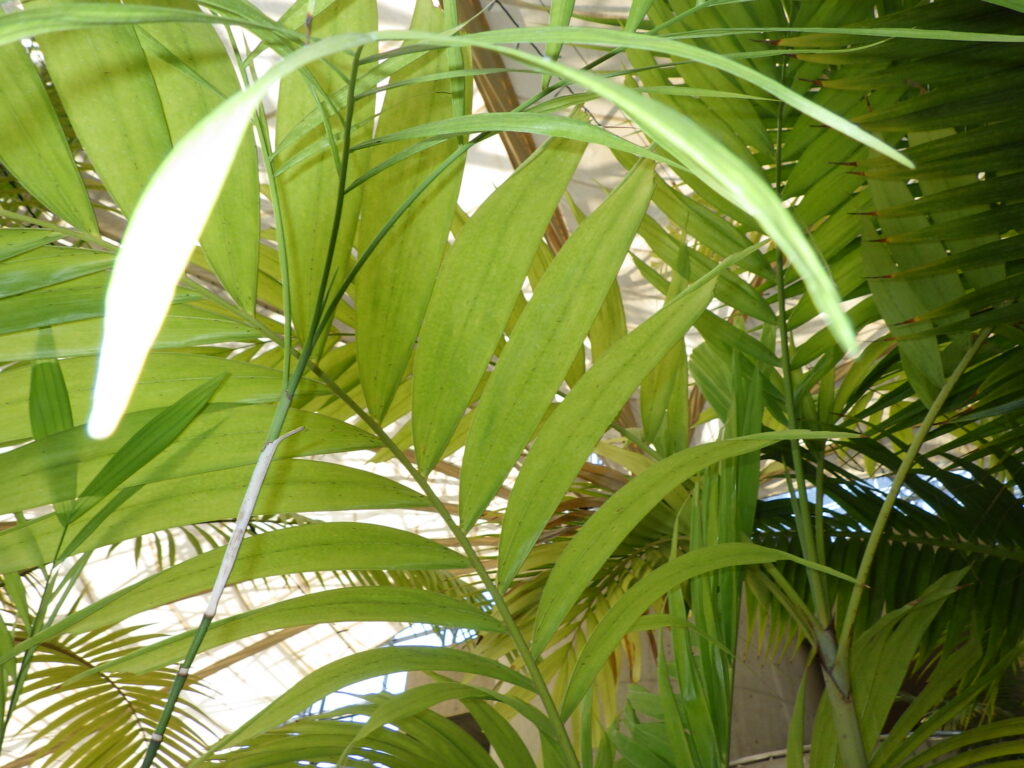
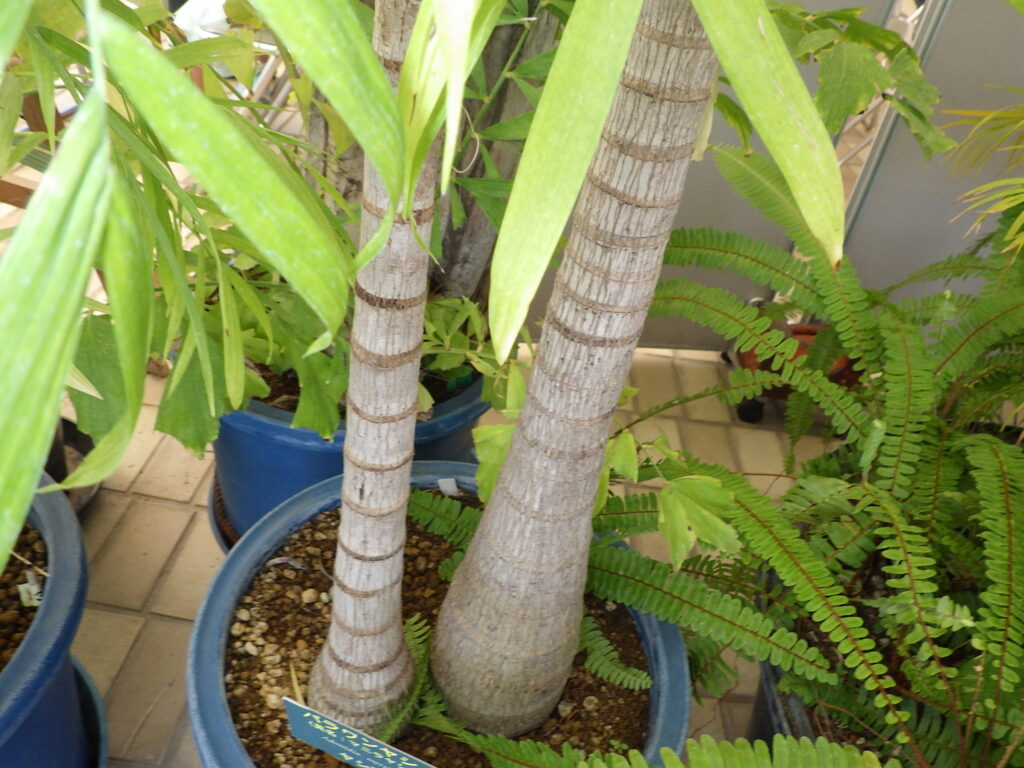
No.0617.b Areca palm (Dypsis lutescens)
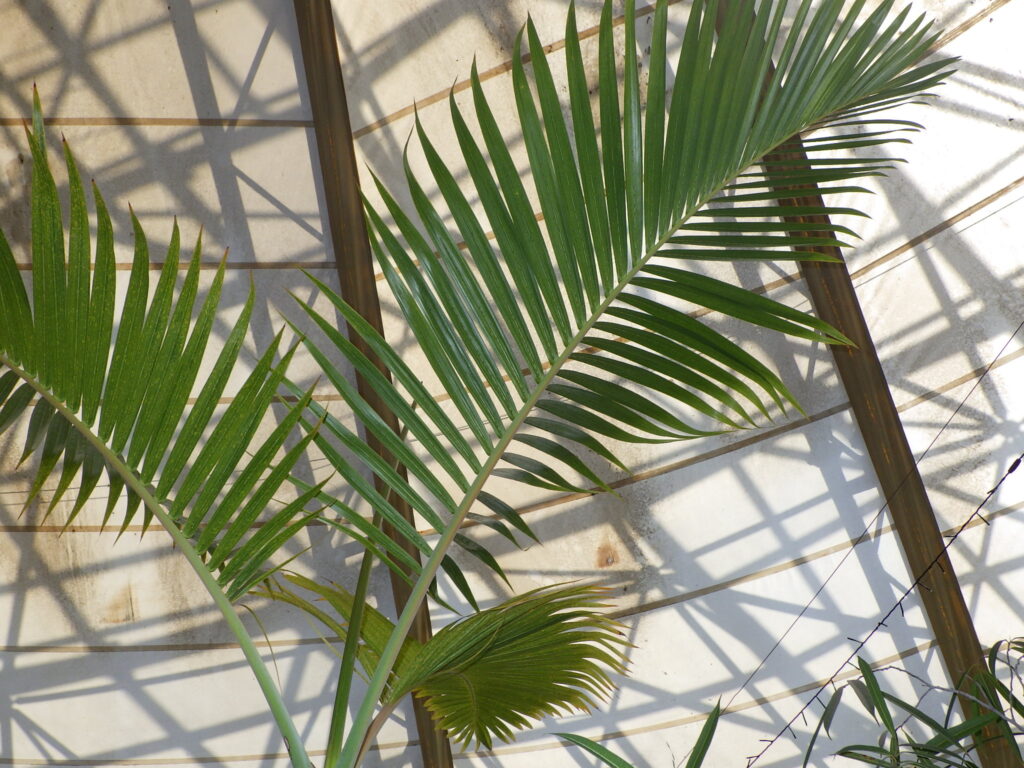
This is an evergreen small tree. The trunk grows in clumps, reaching a height of 8m and a diameter of 5-8cm, branching at the base and bearing annular leaf scars at approximately 10cm intervals. The petioles are yellowish or orange, with a narrow, deep groove at the top, and are 30-60cm long. The pinnate leaves are 6-8 in number, pointing upwards, 2-2.4cm long, and gracefully curved at the tip. The leaflets are narrow and leathery, arranged regularly in 40-50 pairs on a glossy yellowish-green to yellow leaf axis, 30-50cm long and about 1.5cm wide. The spadix is 40cm long and highly branched. The flowers are white. The fruit is oblong, somewhat elongated on one side, purplish-black, and 2cm long. The exocarp is fibrous. The seeds are oval or ovate, somewhat pointed on one side, 1.5cm long and 1cm in diameter, and dark brown. The embryo is approximately 2.5 cm long and 1.5 cm wide. Native to Madagascar, it is popular in tropical regions as a garden tree and as a potted plant for indoor decoration. It is also cultivated extensively in greenhouses in Japan.
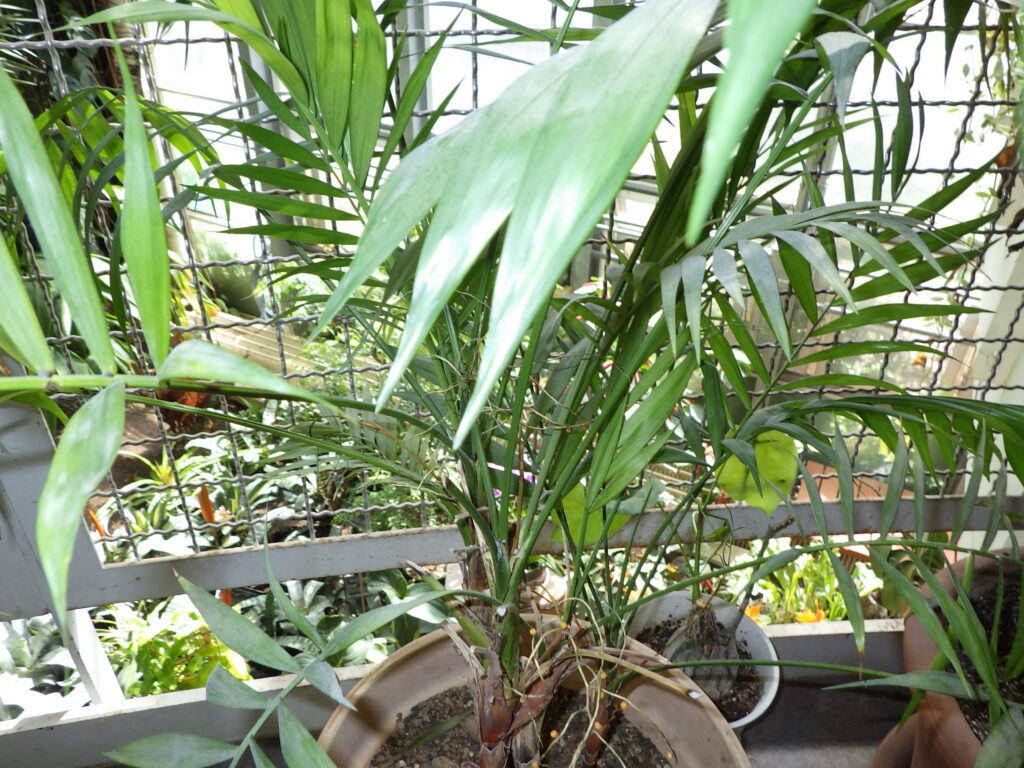
No. 0618 Bottle Palm (Hyophorbe lagenicaulis)
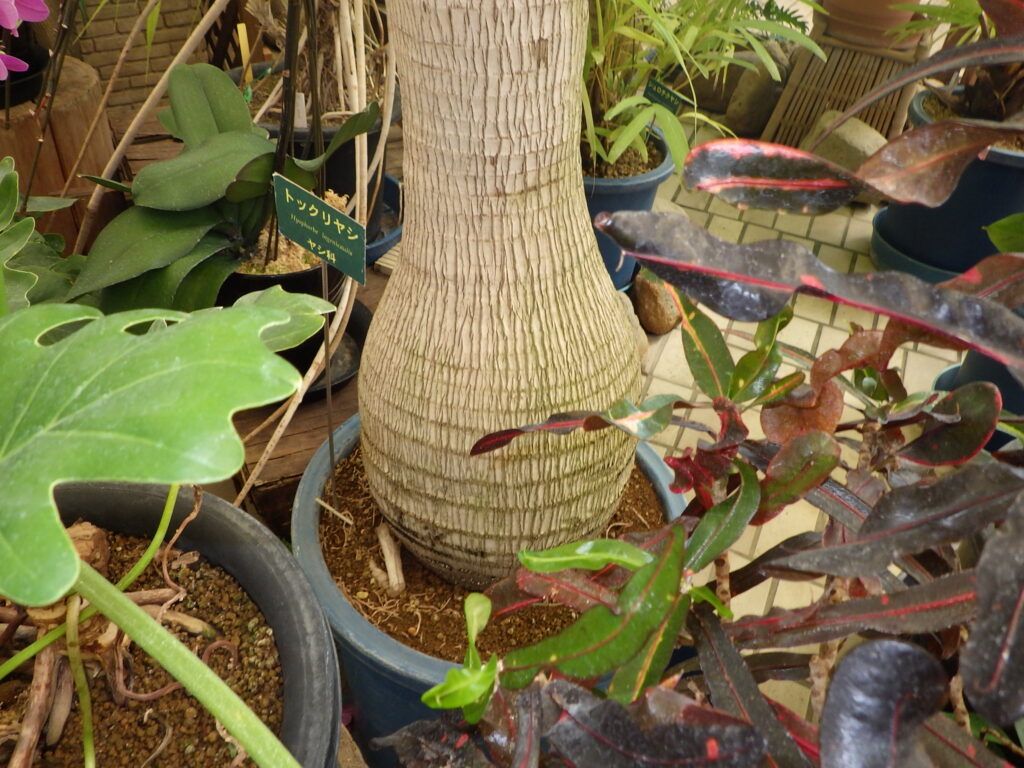
This is an evergreen shrub. The trunk has a very peculiar shape, swelling greatly at the base but tapering sharply upwards like a flask. The trunk reaches a height of about 4m, with a maximum diameter of 40-60cm, and then to 25cm in diameter at a certain height. The petioles are 30-40cm long, reddish-brown in young trees but green in mature trees. The pinnate leaves are heavy and arching, 1-2m long and 60-90cm wide, glossy yellowish-green, and somewhat twisted and elegant. The leaflets are straight and stiff, numbering 40-60 pairs, and 30-40cm long. The spadix is 60cm long, with male flowers that are yellowish-green and 0.4cm long, with the lower half of the sepals overlapping. The fruit is oval, 2.5cm long and 1.3-1.6cm in diameter, with a rough surface and an orange or yellowish-black color. This palm tree is native to Round Island in Mauritius and is a popular garden tree cultivated in tropical regions.
No. 0619 Date Palm Phoenix dactylifera
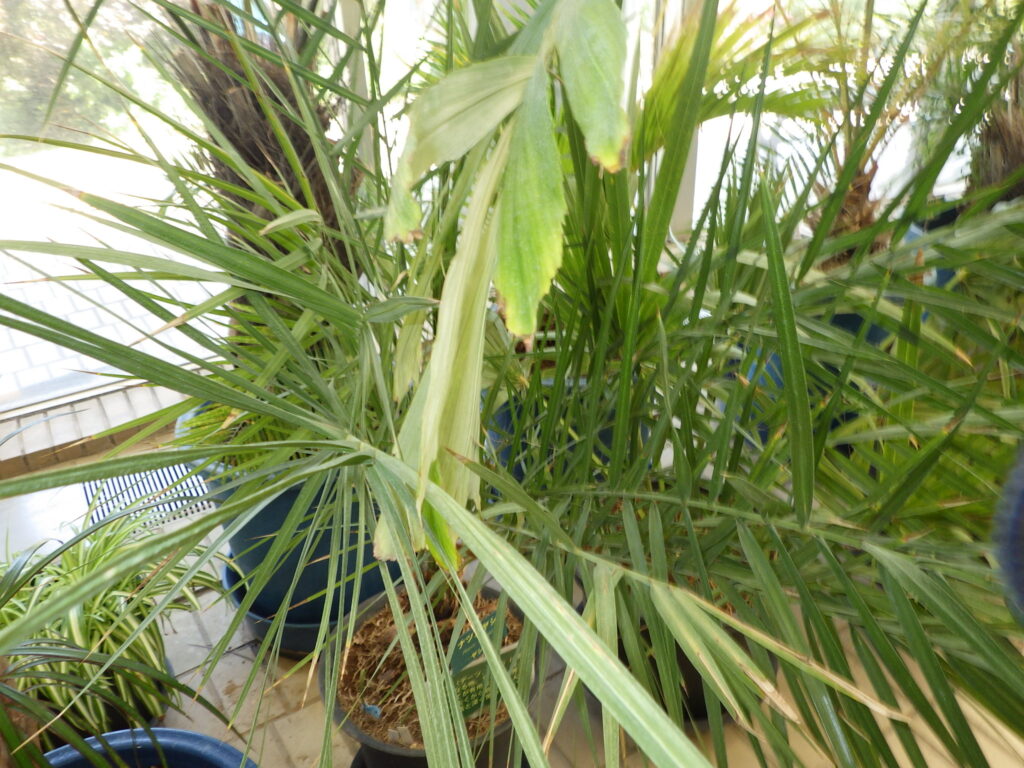
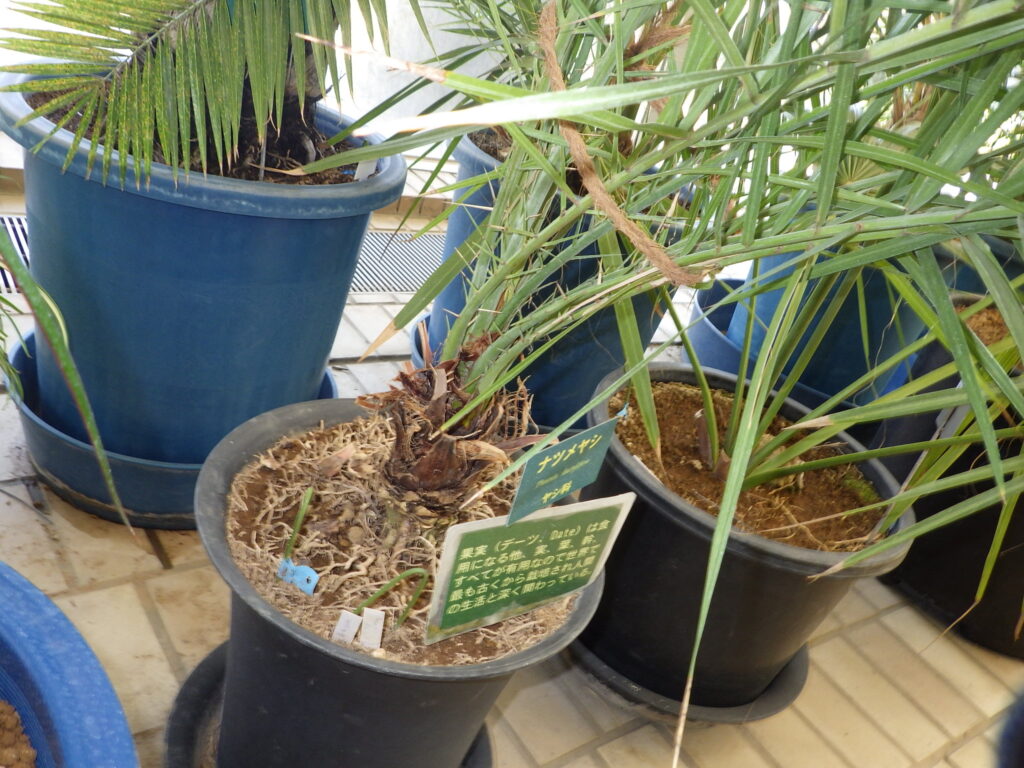
This evergreen tree has low cold tolerance but is relatively drought-tolerant. It is dioecious (having separate male and female plants). The tree grows to a height of 15-25m and may grow individually, but in some cases several trunks may grow from the same root, forming a cluster. The leaves are pinnate, and the long petioles can reach 3m. The petioles have thorns and bear about 150 leaflets, each about 30cm long and 2cm wide. It begins to bear fruit around the fifth year after growing from seed. The lifespan of the tree is usually about 100 years, but in some cases it can reach 200 years. It is likely native to the "Fertile Crescent" spanning Egypt and Mesopotamia, and it is believed that date palms were already being cultivated in Mesopotamia and ancient Egypt as early as the 6th millennium BC. There is also archaeological evidence suggesting cultivation in eastern Arabia as early as the 4th millennium BC. The fruit is called a date and is eaten in North Africa and the Middle East. Pollination occurs by wind, and artificial pollination is also performed under cultivation.
No. 0620 Canary Island Date Palm (Phoenix canariensis)
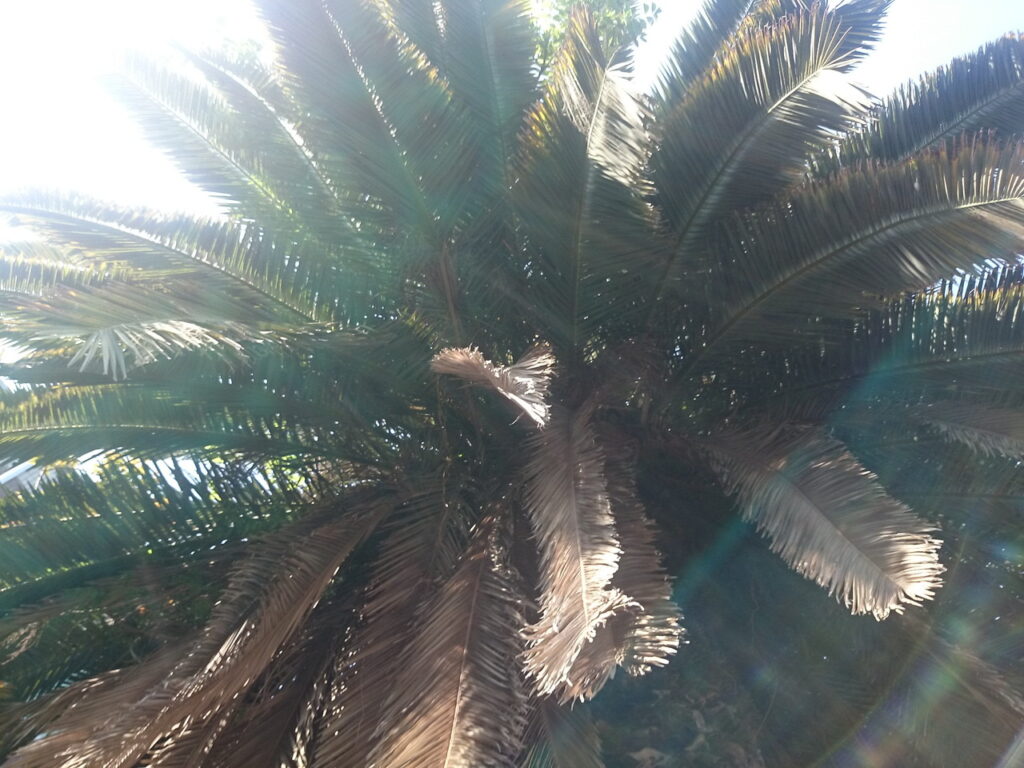
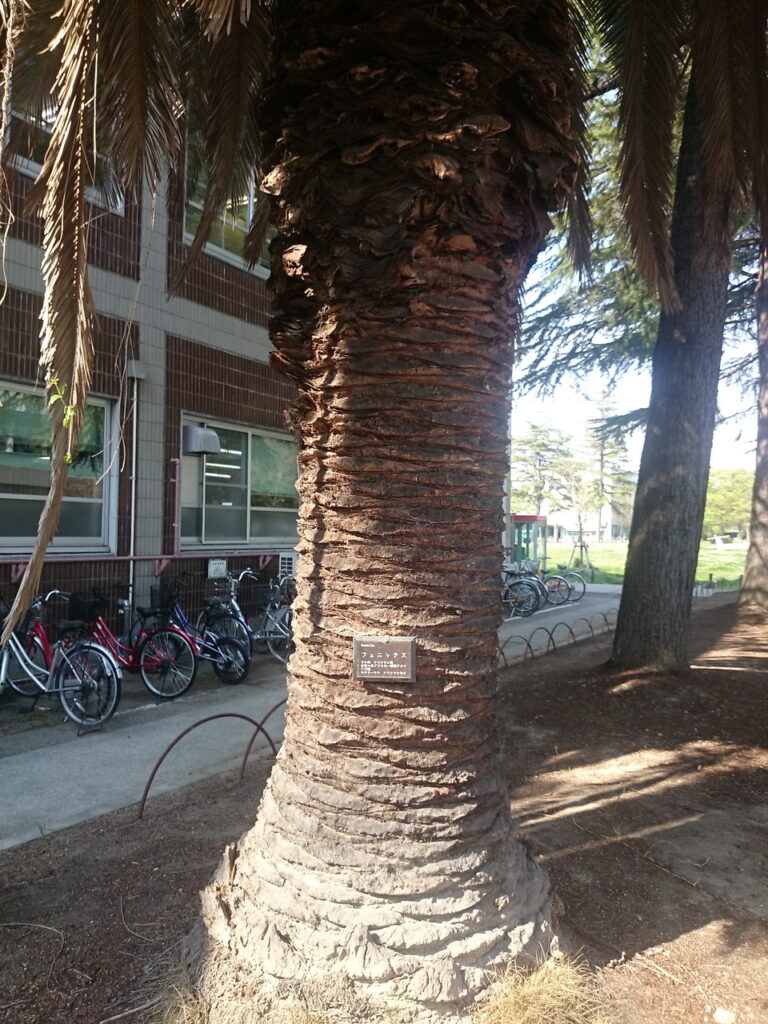
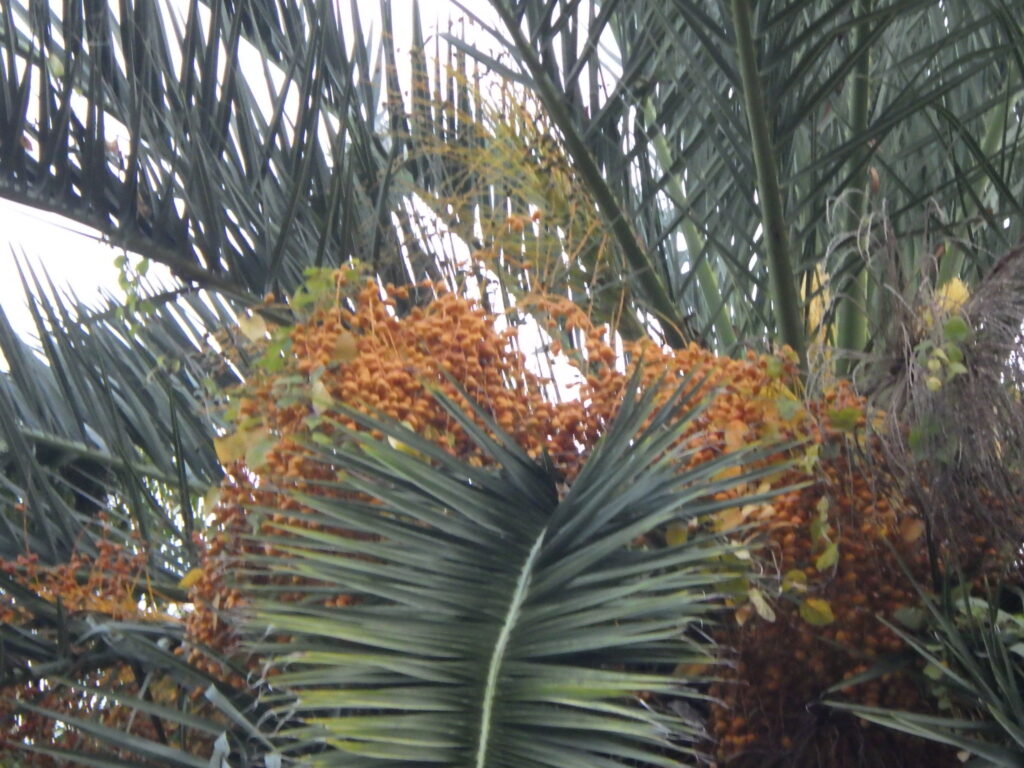
An evergreen tree. The trunk is erect and can reach a height of 15-20m. The pinnate leaves are densely clustered at the top and extend in an arch shape in all directions, 4-6m long, with sharp thorns near the base of the petiole. The spadix is 2m long and highly branched. The flowers are yellow. Male flowers are 0.9cm long, and female flowers are 0.4cm long. The fruit is 1.9cm long and 1.3cm in diameter, and is orange. There are many hybrids, and the original wild species is rare outside of its native habitat. It is very cold-hardy and ideal as a park tree or street tree. Native to the Canary Islands (seven islands off the northwest coast of Africa, a Spanish territory).
No.0621.a Sugar palm (Arenga pinnata)
This evergreen tree grows to a height of about 20 meters. The trunk is covered with petioles of old leaves. The leaves are pinnate, 6-12 meters long and 1.5 meters wide, with 1-6 rows of leaflets, 40-70 cm long and about 5 cm wide. The fruit is subglobose, about 7 cm in diameter. It is green when unripe, but turns black as it ripens. Native to tropical Asia from eastern India to Malaysia, Indonesia, and the eastern Philippines, it is commercially cultivated in Southeast Asia for sugar production. Sugar is made from the sap of the sugar palm, the fruit is eaten, and the bark is used for fiber.
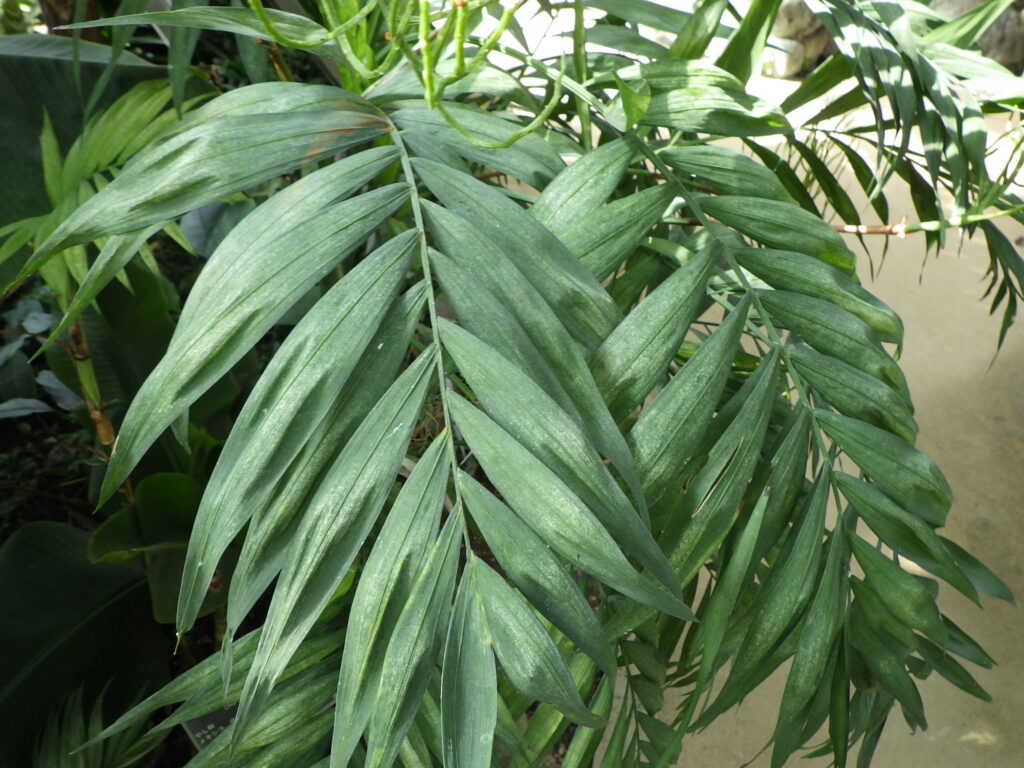
No.0622.a Table Palm (Chamaedorea elegans)
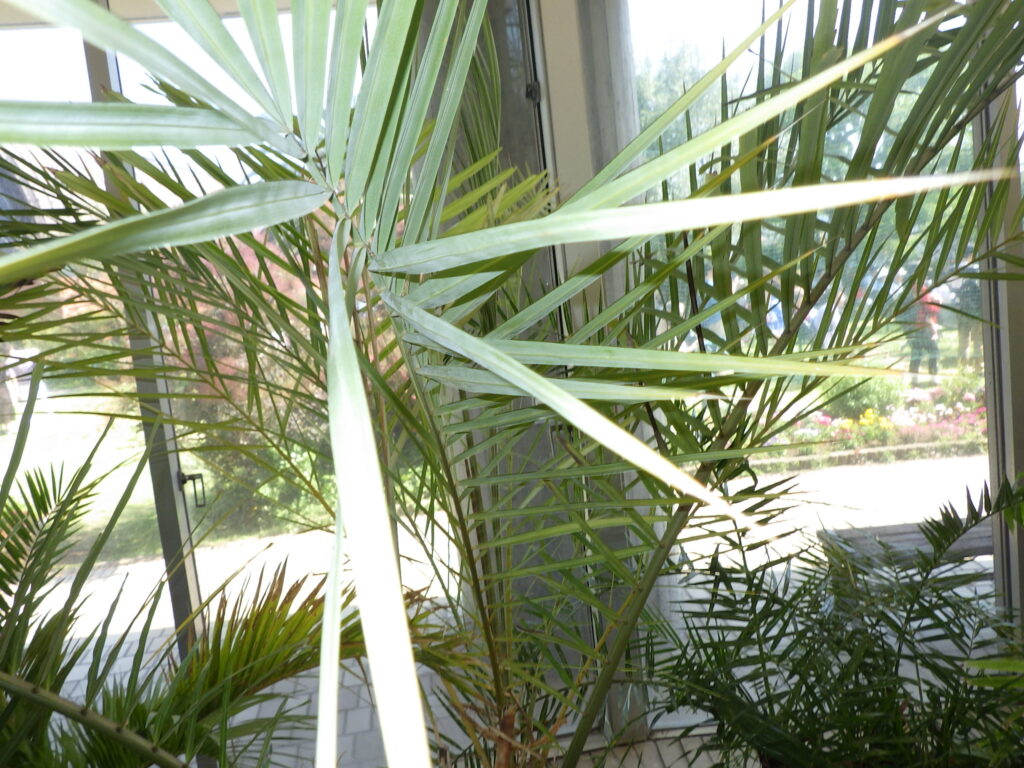
This evergreen shrub grows to a height of 1-2 meters. It has a clump-forming growth habit, with slender, green stems and ring-shaped markings. The leaves are simple-pinnately compound, dark green, 70-90 cm long, with leaflets that are pointed at the tip, broad in the middle, and somewhat glossy. It is dioecious, and the flowers are small and bright yellow. The fruit is reddish-orange, and the seeds are small and black. Native to Mexico and Guatemala, it is hardy and mainly cultivated indoors as an ornamental plant.
References
Gibbons, M. 2003. Pocket Guide to Palms. Salamander Books Ltd, 256pp. ISBN: 9781840655094
Ito, Seiko; Okayama, Junko; and Kato, Yoji. 2013. Permeability of low-molecular-weight substances into nata de coco. Bulletin of the Faculty of Education, Hirosaki University 110: 89-92. http://hdl.handle.net/10129/5095
Lew, C. 2018. Tracing the origin of the coconut (Cocos nucifera L.). Prized Writing 2018-2019: 143-157. https://prizedwriting.ucdavis.edu/sites/prizedwriting.ucdavis.edu/files/sitewide/pastissues/18%E2%80%9319%20LEW.pdf
Noblick, LR 2011. Validation of the name Butia odorata. Palms 55(1): 48. https://www.growables.org/information/TropicalFruit/documents/ButiaOdorataValidation.pdf
Satake, Yoshisuke. 1999. Wild Plants of Japan (New Edition, Woody Plants 2). Heibonsha, Tokyo. 305pp. ISBN: 9784582535051
Tsukamoto, Yotaro. 1994. Encyclopedia of Horticultural Plants, Compact Edition. Shogakukan, Tokyo. 3710pp. ISBN: 9784093051118
Vergara, B. S., Idowu, P. M. H., & Sumangil, J. H. 1999. Nata de Coco: A Filipino Delicacy. National Academy of Sciences and Technology, Philippines. ISBN: 9789718538616, http://scinet.science.ph/union/Downloads/Vergara%20BS%20Nata%20De%20Coco_422.pdf
Yamada, Y., Yukphan, P., Vu, HTL, Muramatsu, Y., Ochaikul, D., Tanasupawat, S., & Nakagawa, Y. 2012. Description of Komagataeibacter gen. nov., with proposals of new combinations (Acetobacteraceae). The Journal of General and Applied Microbiology 58(5): 397-404. https://doi.org/10.2323/jgam.58.397
Yamashita, C., & Valle, MDP 1993. On the linkage between Anodorhynchus macaws and palm nuts, and the extinction of the Glaucous Macaw. Bulletin of the British Ornithologists' Club 113(1): 53-60. https://www.biodiversitylibrary.org/part/76935