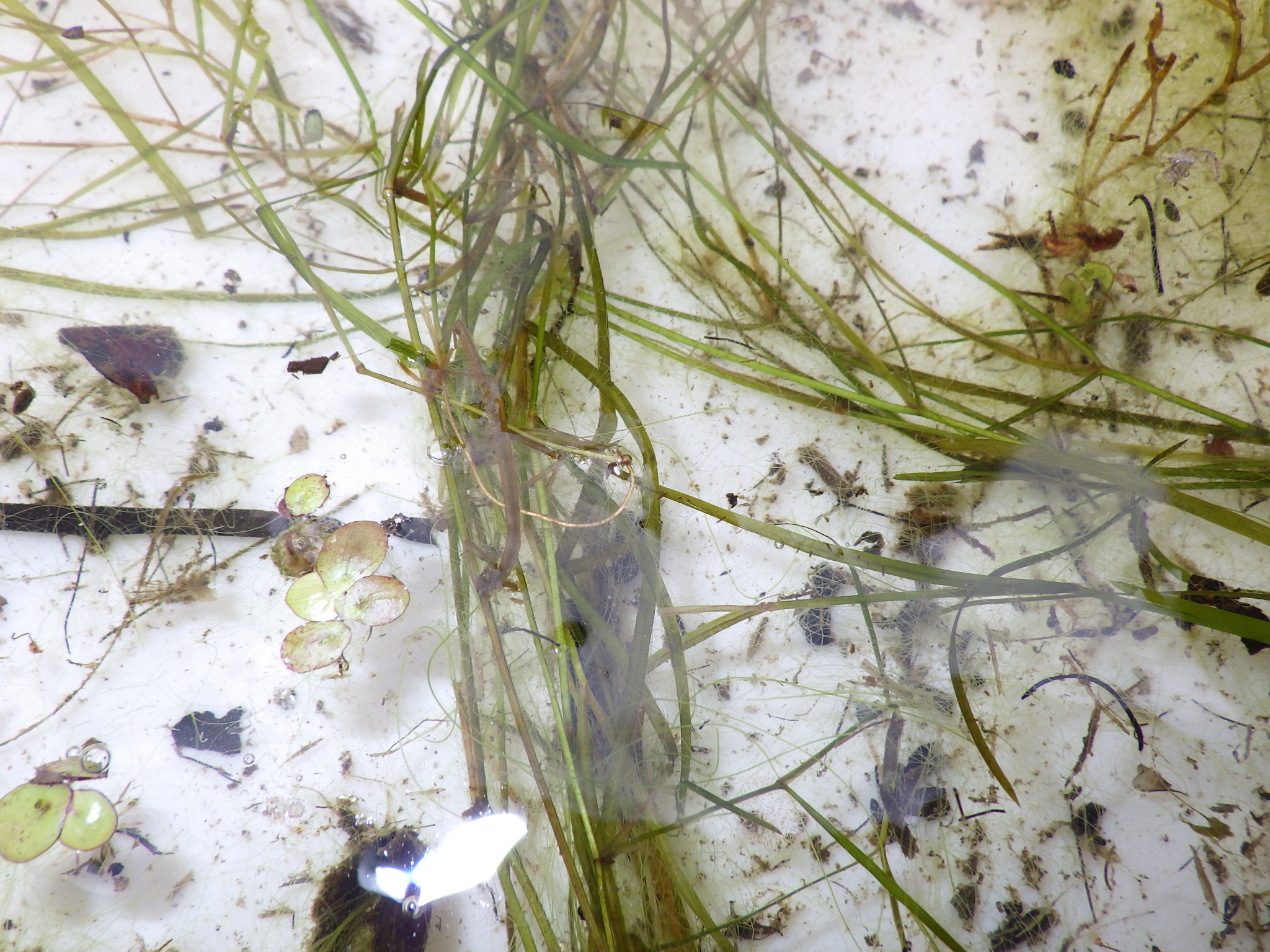
The family Hydrocharitaceae consists of annual or perennial aquatic plants that grow in freshwater or saltwater. Their morphology is extremely diverse. The base of the leaves often forms a leaf sheath, which contains 2 to 10 or more small scales. They are monoecious or dioecious, with inflorescences enclosed by 1 to 2 bracts, and the flowers are bisexual or unisexual. During pollination, some species have male flowers that detach from the parent plant, while others undergo underwater pollination (aquatic pollination). In newer classification systems, the family Najadaceae is included within the family Hydrocharitaceae. There are 18 genera and approximately 120 species worldwide, of which 3 genera are seagrasses. There are 12 genera in Japan. While there are concerns about the extinction of some native species such as *Hydrilla verticillata* and *Hydrilla verticillata*, invasive species such as *Elodea canadensis* tend to expand their distribution, and *Hydrilla fragarioides* has been newly added as an invasive species. Many non-native species are cultivated as ornamental plants (aquarium plants), and there is a possibility that they will escape or become naturalized in the future.
This article provides a comprehensive, field guide-style introduction to plants belonging to the Hydrocharitaceae family.
The basic information is based on the Kanagawa Prefecture Flora Survey Association (2018). Photos are replaced as better ones become available. While the identification is done by the author, please note that misidentifications may be corrected without notice.
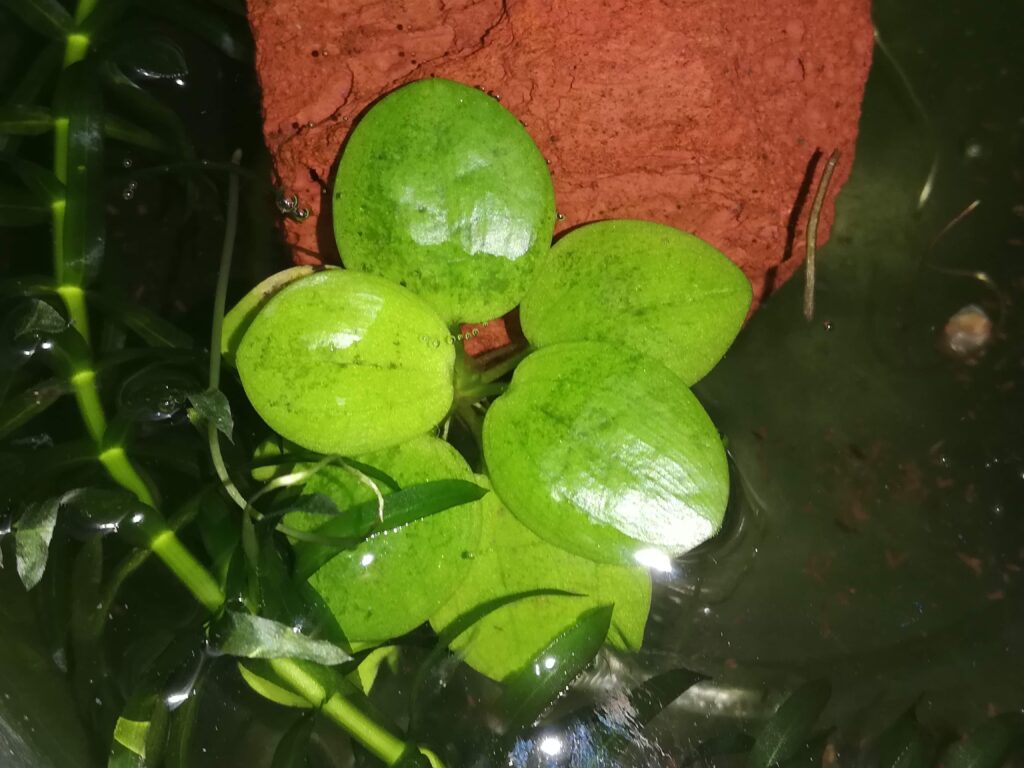
No.0225.a Amazon Water Mirror (Limnobium laevigatum)
Also known as Amazon frogbit, the leaves have petioles 0.5–8.5 cm long, and the leaf blades are usually rounded with an unlobed, heart-shaped base, 2–5 cm in diameter, with air sacs on the underside. Male flowers have 6 stamens and are arranged in whorls of 2. Female flowers have 3–6 carpels in the ovary and 3–6 stigmas. The fruit is about 9 mm long and 4 mm in diameter, containing numerous small seeds. This aquarium plant is native to South America and has been found to have escaped cultivation in various parts of Japan. It has been designated as a priority invasive alien species by the Ministry of the Environment to prevent damage to ecosystems.
No.0231 Cromo Hydrilla verticillata
The stem diameter is 0.5–1 mm. The leaves are often arranged in whorls of 5–7, 0.5–1.5 cm long and 1–1.5 mm wide. The serrations on the leaves are more prominent compared to Elodea canadensis and Elodea japonica. 2n=16 (Hakone Town). Widely distributed in Hokkaido, Honshu, Shikoku, and Kyushu; it is also found in the Old World and has naturalized in America. It grows in lakes, rivers, ponds, and waterways.
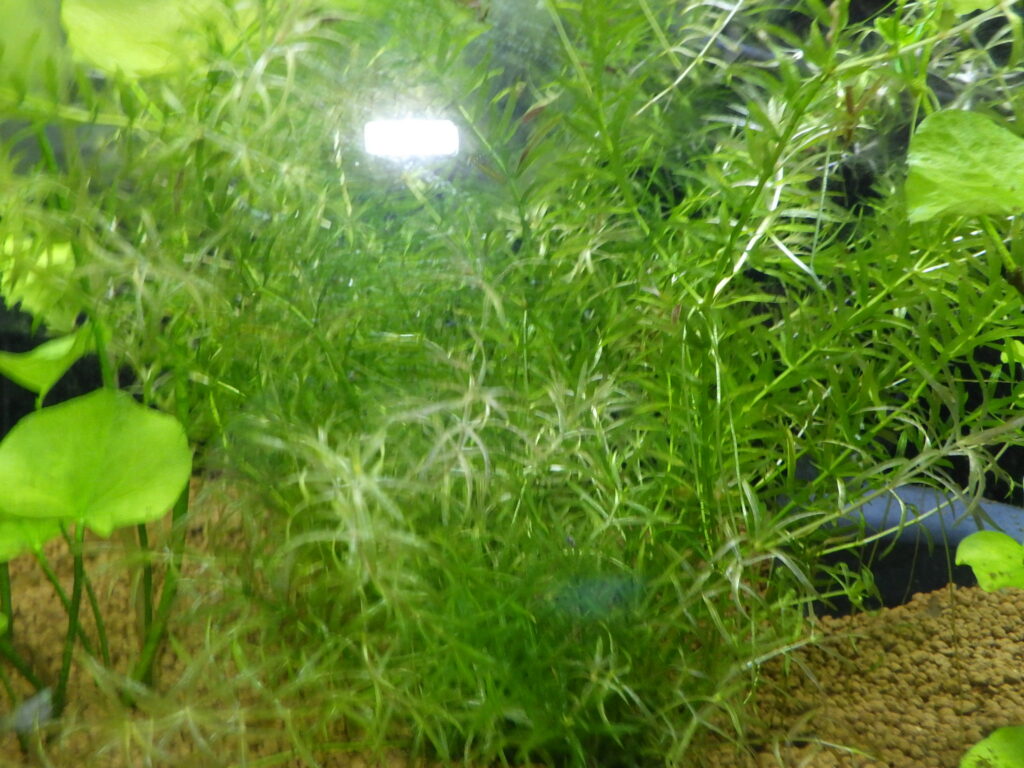
No.0232 Canadian pondweed (Egeria densa)
An evergreen perennial herb. The stem is 2-3 mm in diameter. The leaves are often arranged in whorls of four, 1.5-2.5 cm long and 2-5 mm wide. The plant is larger than Canadian pondweed and hydrangea (especially in stem thickness). It flowers from May to September. 2n=46 (Kamakura City). It is a naturalized plant native to South America, with only male plants naturalized in Japan. It is found in Honshu, Shikoku, and Kyushu; and is naturalized in various parts of the world. It has been designated as an alien species that causes damage to ecosystems (priority alien species) by the Ministry of the Environment, and is also included in the Ecological Society of Japan's "100 Worst Invasive Alien Species in Japan."
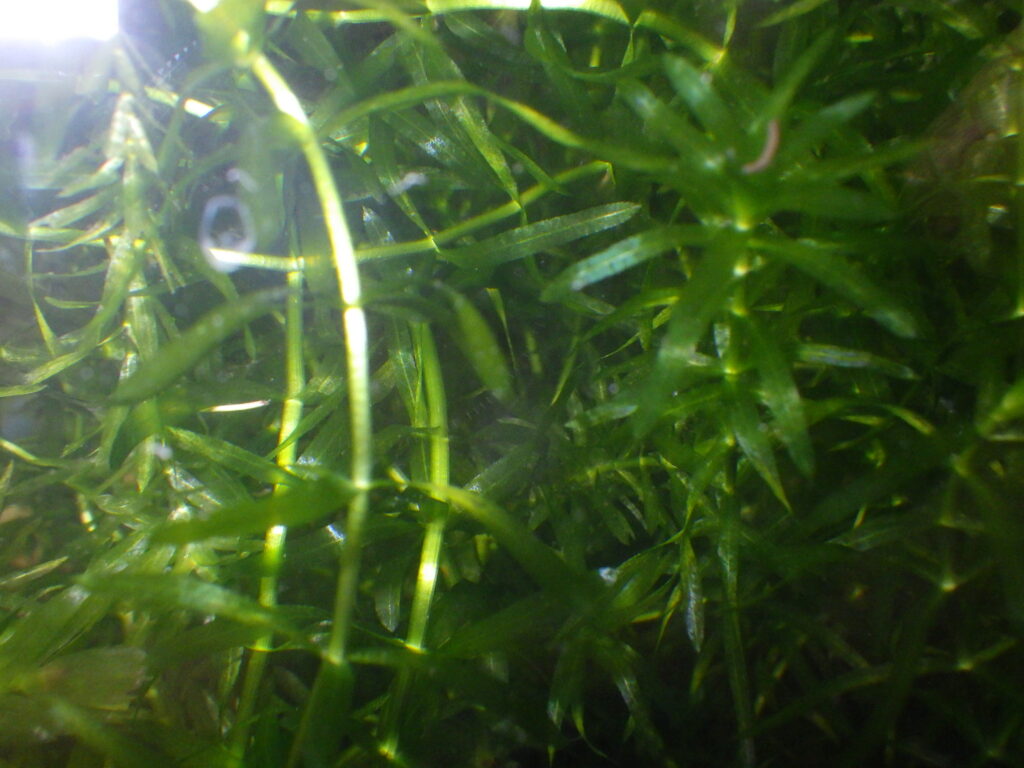
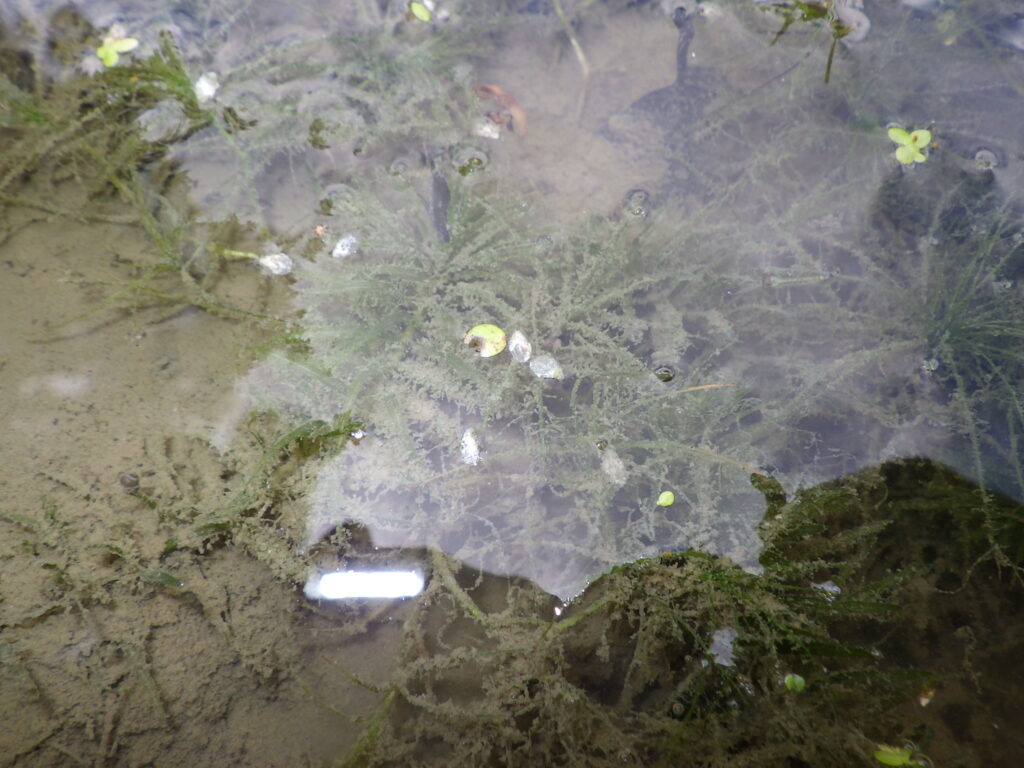
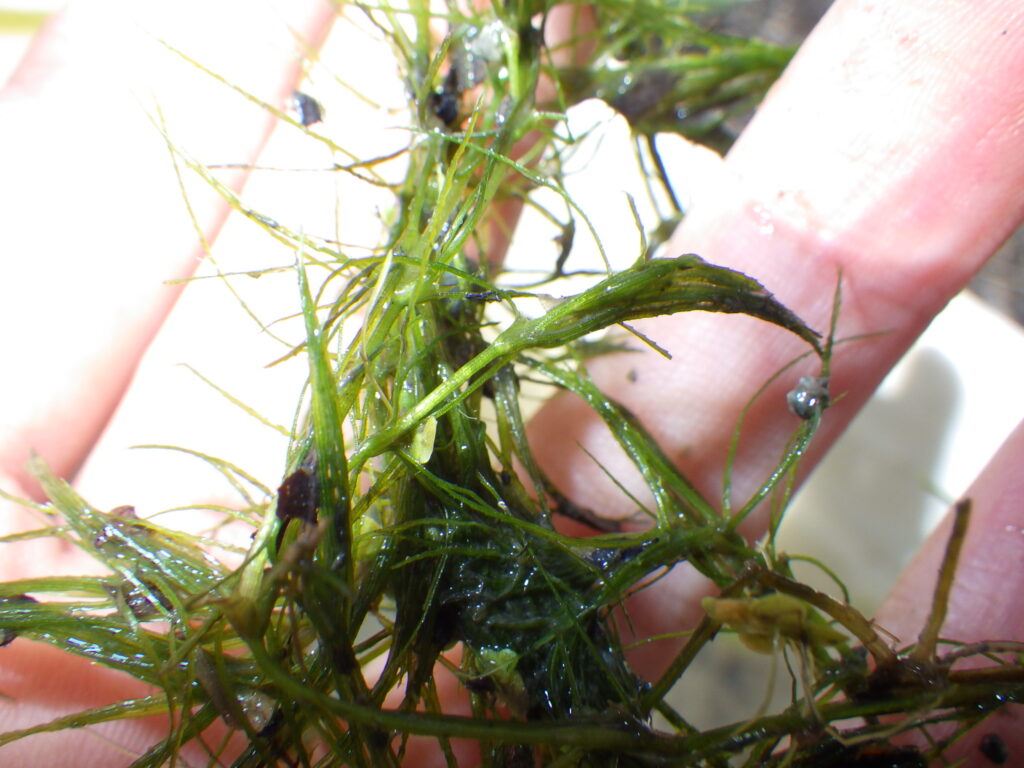
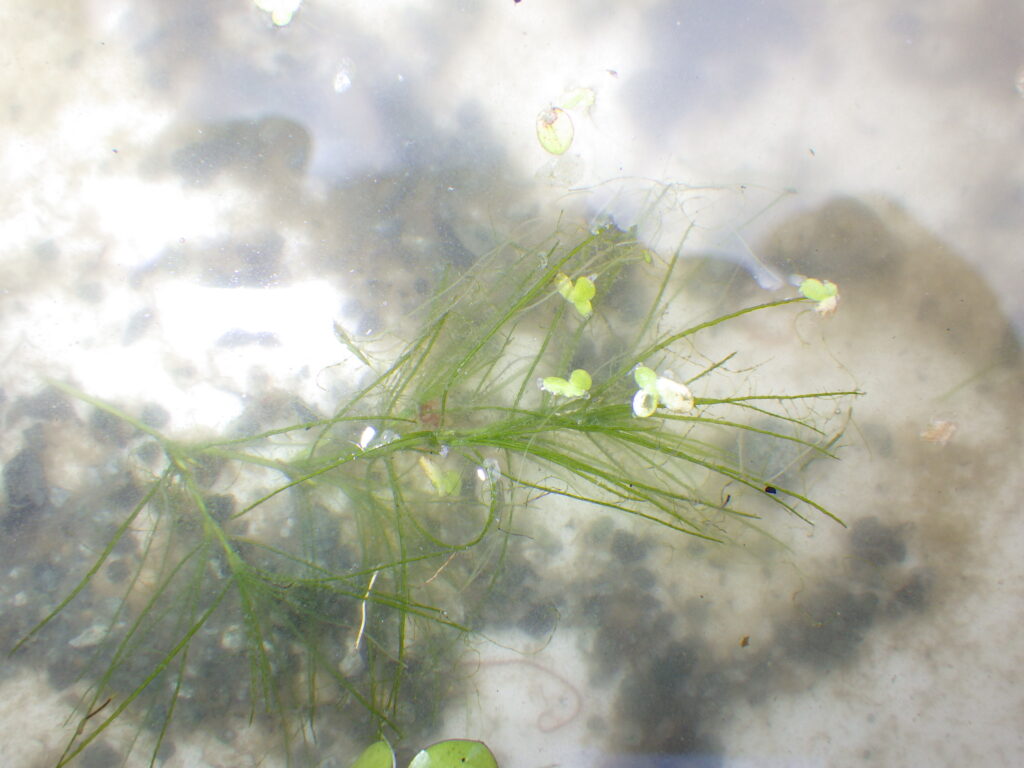
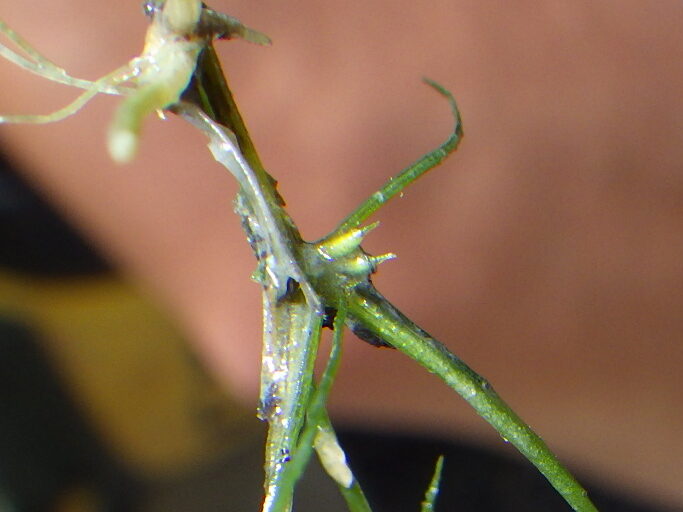
No.0240 Najas gracillima
The leaves are arranged in whorls of five, 1-2 cm long, and have small serrations. The leaf sheath has a truncate tip. The fruits are often borne in pairs at the nodes, are oblong, 2-2.5 mm long, and have elongated patterns on the seed surface. 2n=12 (Zama City). It is distributed in Hokkaido, Honshu, Shikoku, Kyushu, and the Ryukyu Islands; East Asia and Italy (naturalized). It is listed as near threatened in the National Red Data Book 15. There is a view that it is the same species as N. gracillima distributed in North America (Heibon New Wild Species 1), in which case N. japonica is a synonym for N. gracillima.
References
Kanagawa Prefecture Flora Survey Association. 2018. Kanagawa Prefecture Flora 2018 (Electronic Edition). Kanagawa Prefecture Flora Survey Association, Odawara. 1803pp. ISBN: 9784991053726