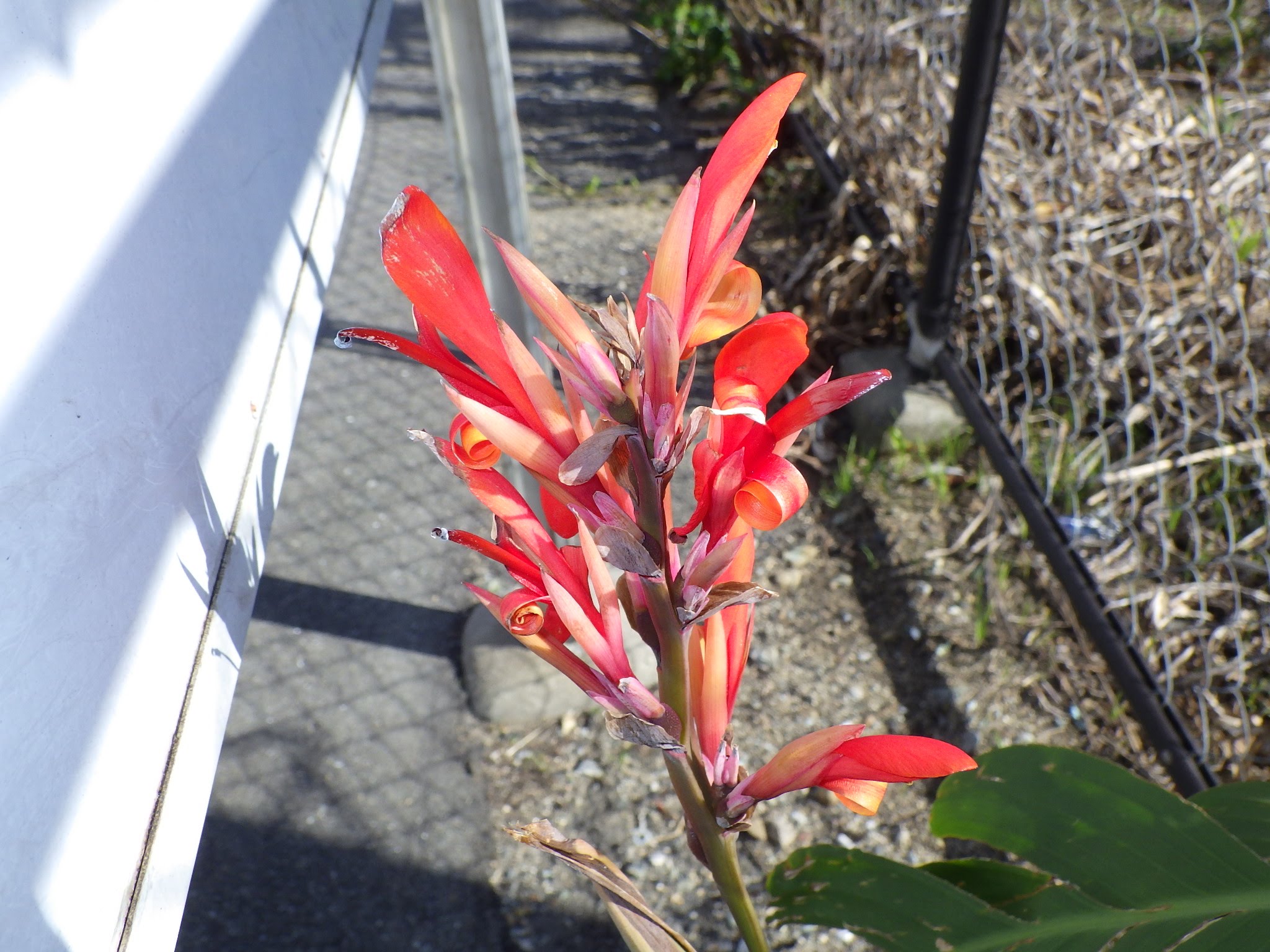
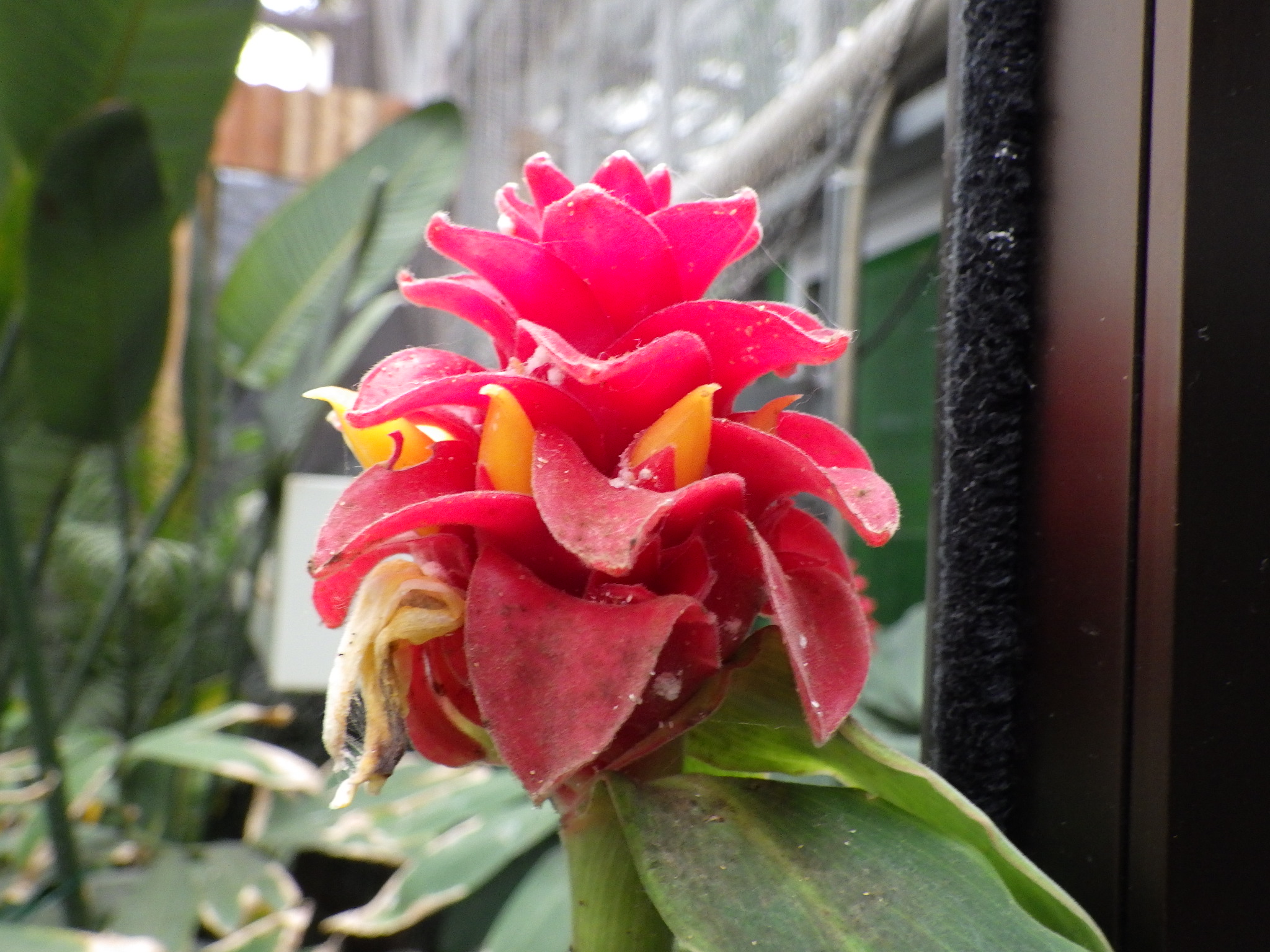
The Marantaceae family consists of evergreen perennial herbs that resemble the Canna and Zingiberaceae families in morphology. They produce short stems above ground from underground rhizomes, with leaves at the base. The flowers are arranged in racemes. The leaves are broad, with veins branching out from the central vein on both sides. The Marantaceae family comprises about 30 genera and 400 species found in tropical and subtropical regions worldwide, excluding Australia. While not native to Japan, some species have naturalized in subtropical areas. Although not particularly important economically, arrowroot is cultivated in various tropical regions as a source of starch, and some varieties are also cultivated as ornamental plants.
This article provides a comprehensive, field guide-style introduction to plants belonging to the Marantaceae family.
The photos are replaced as soon as better ones are taken. Also, while the identification is done by the author, please note that if there are any misidentifications, they may be changed without notice.
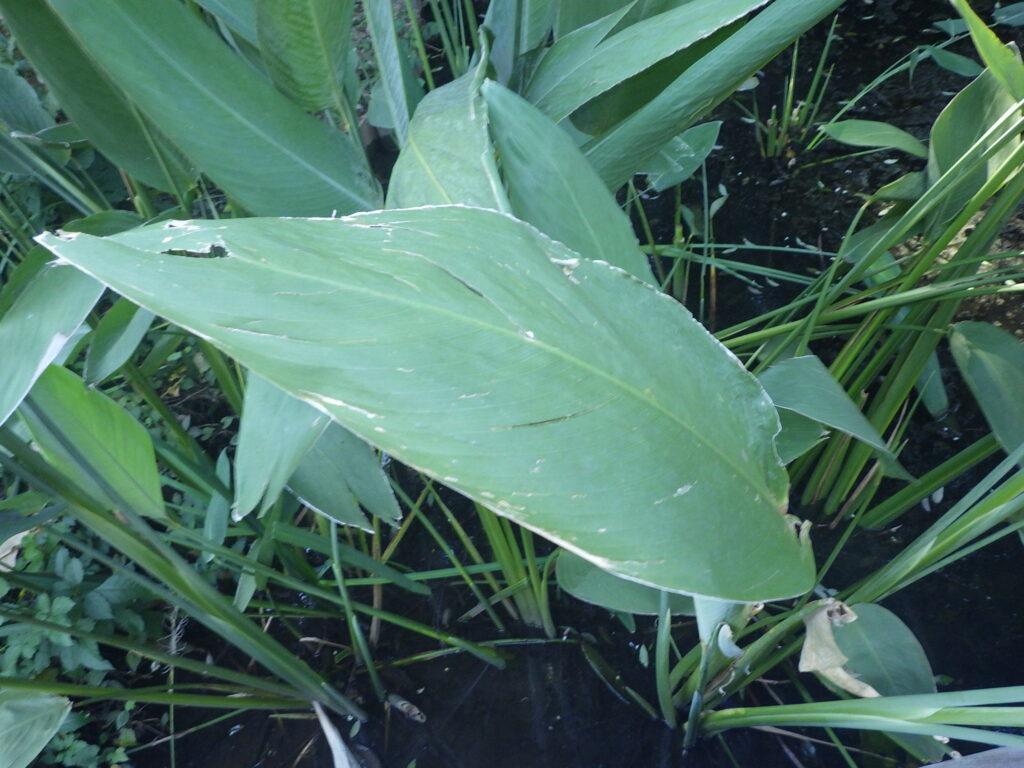
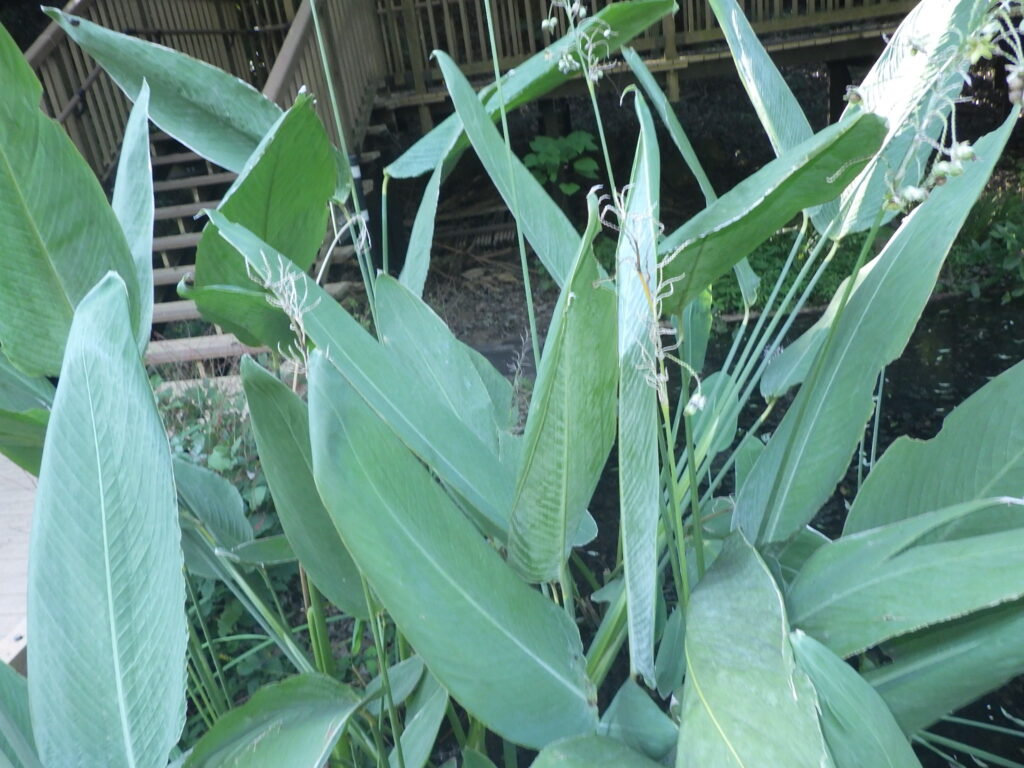
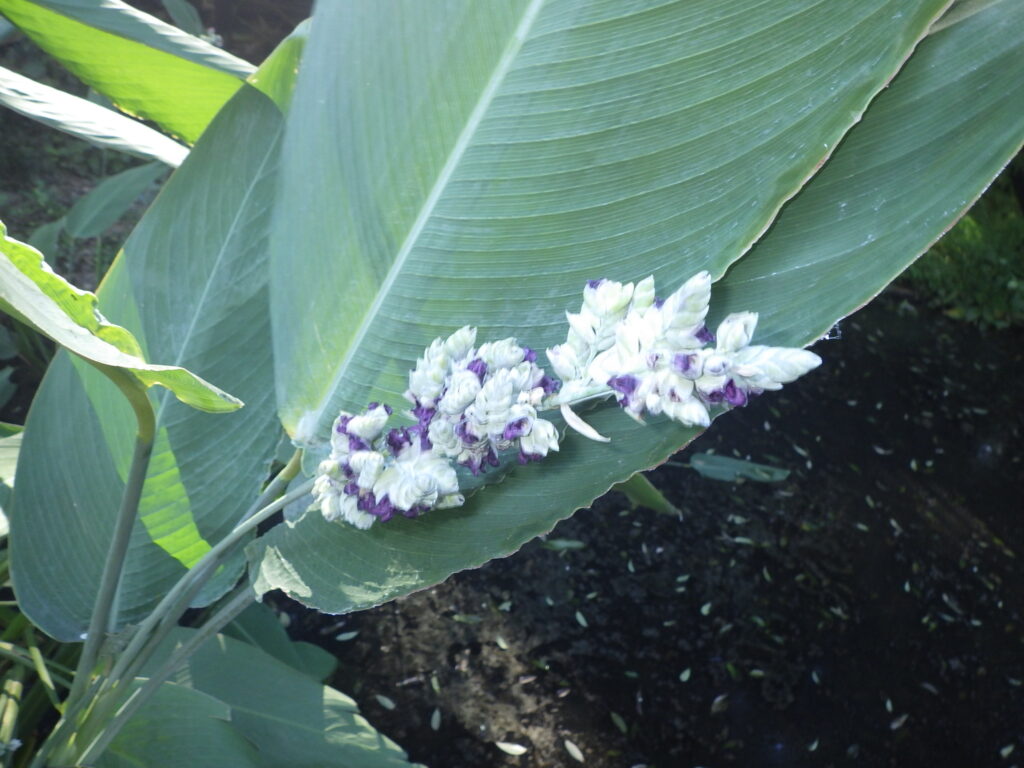
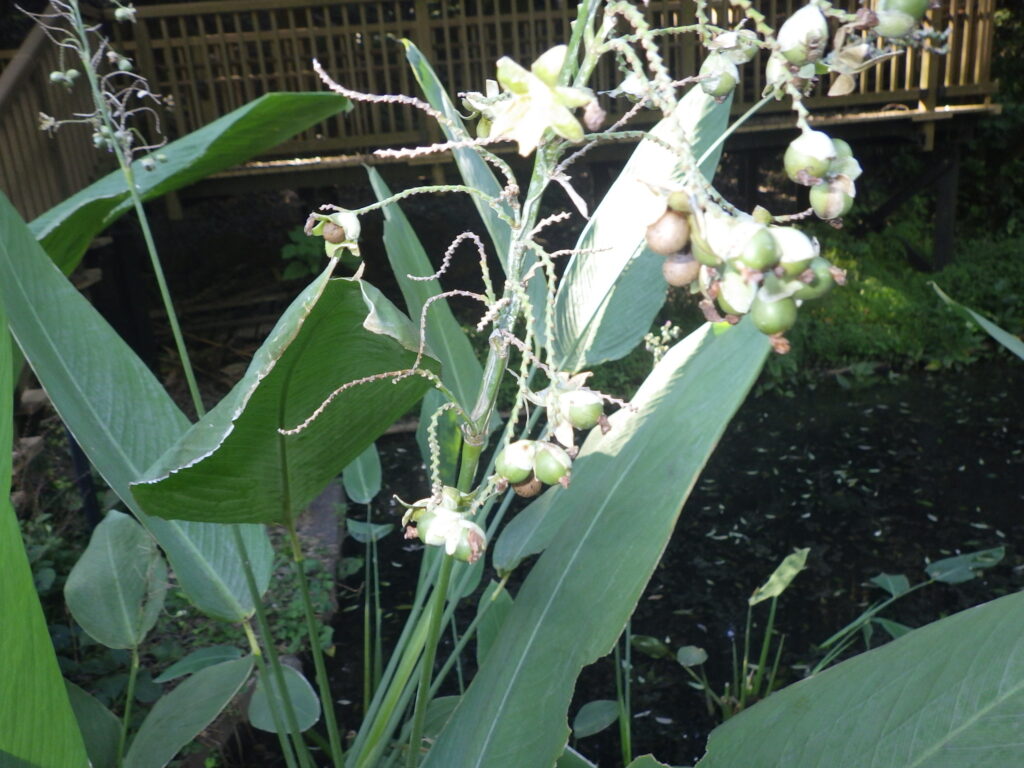
No.0644.a Water Canna Thalia dealbata
Perennial herb (Flora of North America). The entire plant is covered in a powdery substance, giving it a whitish appearance. The leaves are basal, ovate, 17-55 cm long and 7-22 cm wide, with entire margins, a stiff, papery texture, a rounded base, a pointed tip, and long petioles. Flowering occurs from July to October (in Japan). A cymose inflorescence, 7-18 cm long, emerges from a stem 50-190 cm long, bearing 10-30 purple flowers. The internodes of the flower stalk are 2-3 mm. The bracts are 0.8-1.5 cm long, reddish-brown to reddish-purple, and conspicuously covered in powder, appearing white. The sepals are 1.5-2.5 cm long. The flowers are somewhat similar to those of the canna, and what appear to be dark purple petals are actually modified staminodes. The fruit is nearly spherical to broadly obovate, 8-12 mm long. The seeds are nearly spherical to oval, 7-9 mm long, dark brown to black. This species is unique in its unusual distribution, found only in North America and not in tropical regions. Its close relative, Thalia multiflora, is found in South America, suggesting that this species may have evolved from those populations. Perhaps for this reason, it is self-pollinating. It inhabits wetlands, streams, roadside ditches, and coastal plains with ponds.