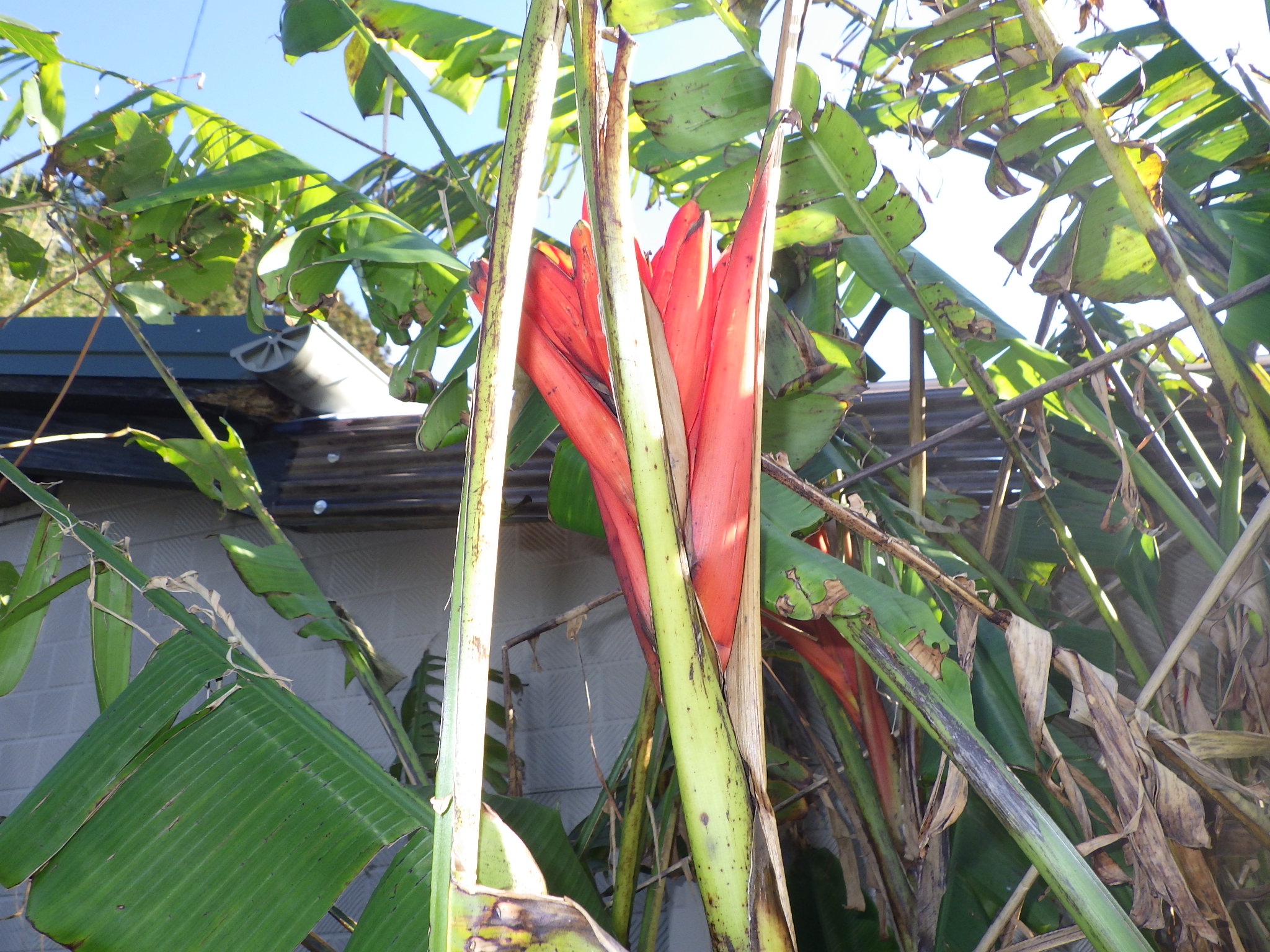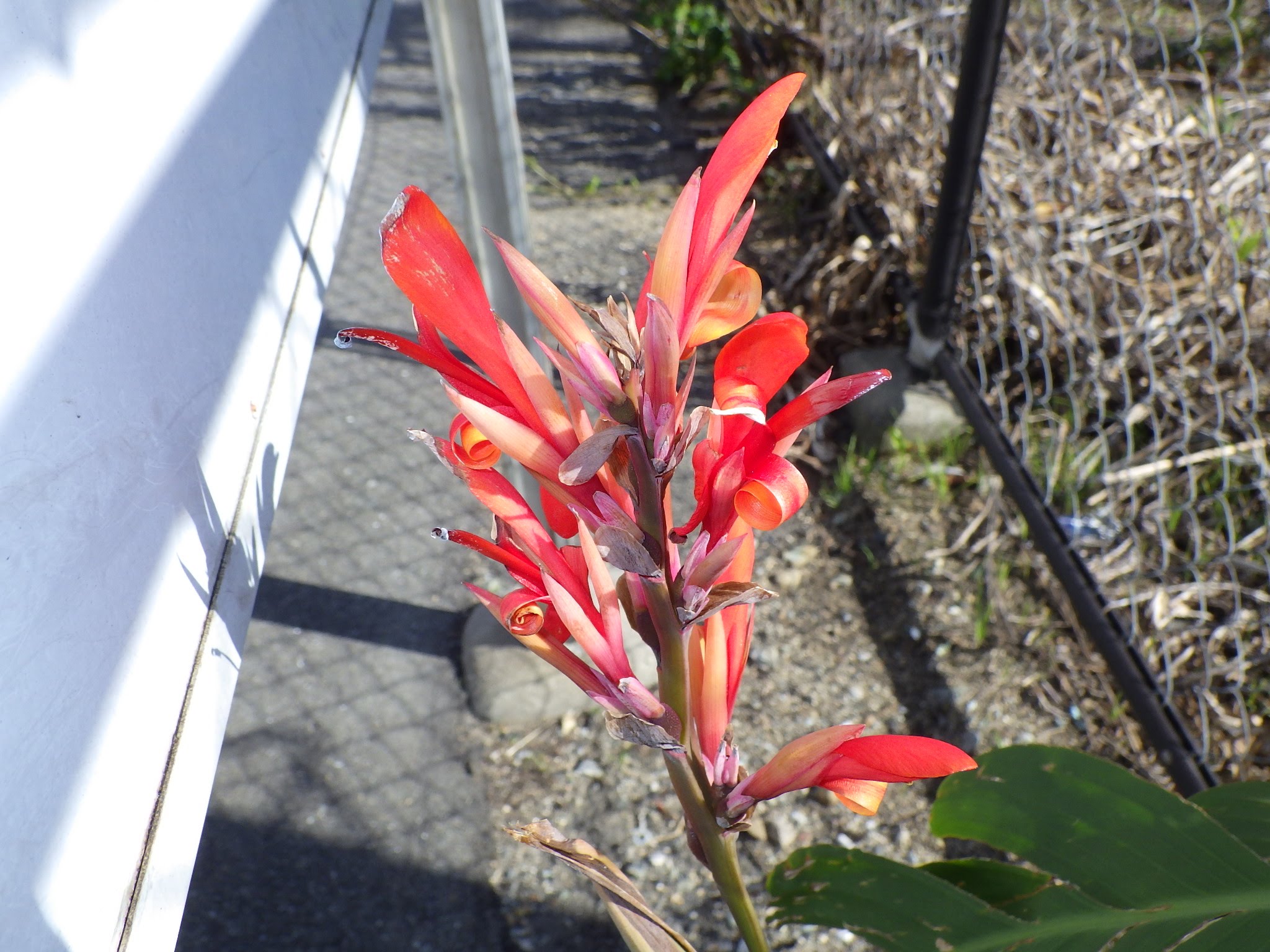
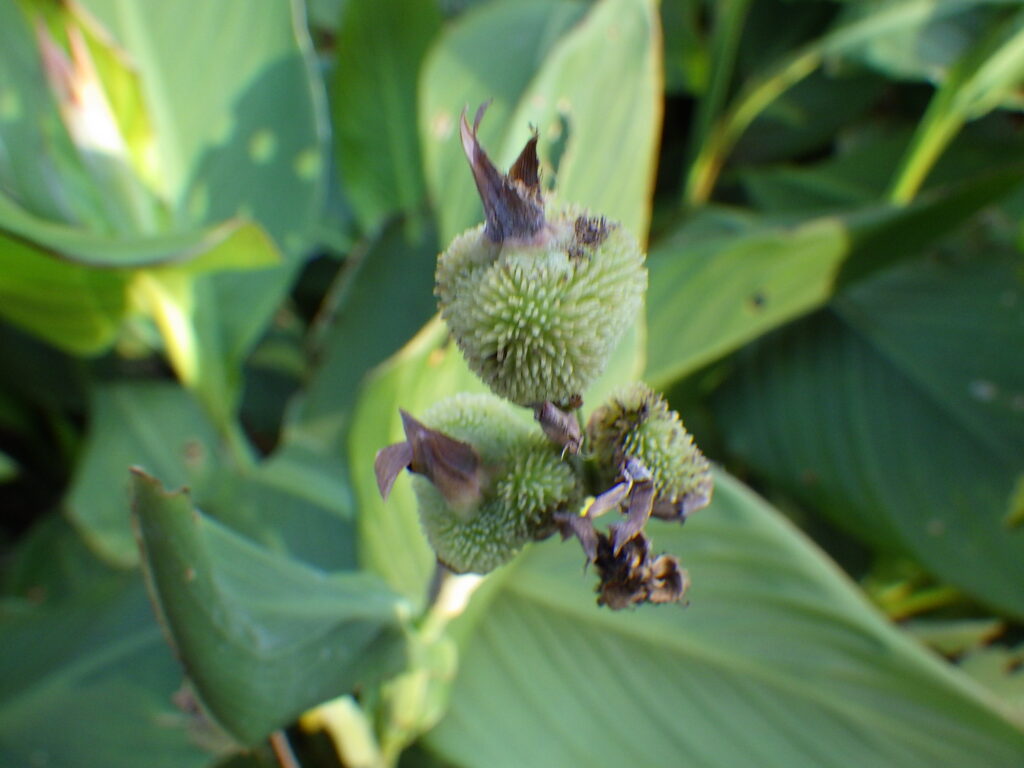
The Cannaceae family is a monotypic family consisting of only one genus, Canna. It is closely related to the Zingiberaceae family, but lacks the ligule found in Zingiberaceae. It is a perennial herb. The rhizome is succulent, tuberous, and branched. The stem is thick and long. The leaves are large, oblong or lanceolate, and pinnately venated. The flowers are bisexual and borne in racemes at the top of the stem. The calyx consists of three sepals and three petals fused at the base. Five of the six stamens are sterile staminodes, which develop into large, petal-like structures. The fertile stamens are narrowly petal-like and bear anthers. The style is spatulate, and the ovary is inferior. The capsule consists of three chambers and produces numerous black, spherical seeds. There are over 50 wild species in tropical regions, and numerous cultivated varieties exist.
This article provides a comprehensive, illustrated guide to plants belonging to the Canna family.
The basic information is based on the Kanagawa Prefecture Flora Survey Association (2018). Photos are replaced as better ones become available. While the identification is done by the author, please note that misidentifications may be corrected without notice.
No.0643 Canna indica
This is a perennial herb. It grows to a height of 1-1.5m, with a succulent rhizome. The stem is cylindrical and erect, with alternate leaves 30-40cm long. The leaves are ovate-oblong, and the base forms a leaf sheath that encloses the stem. It bears 5cm long flowers in a terminal raceme. The flowers are red or yellow. It is native to South America and was introduced to Japan during the Edo period. It has become naturalized in the Satsunan Islands and the Ryukyu Islands.
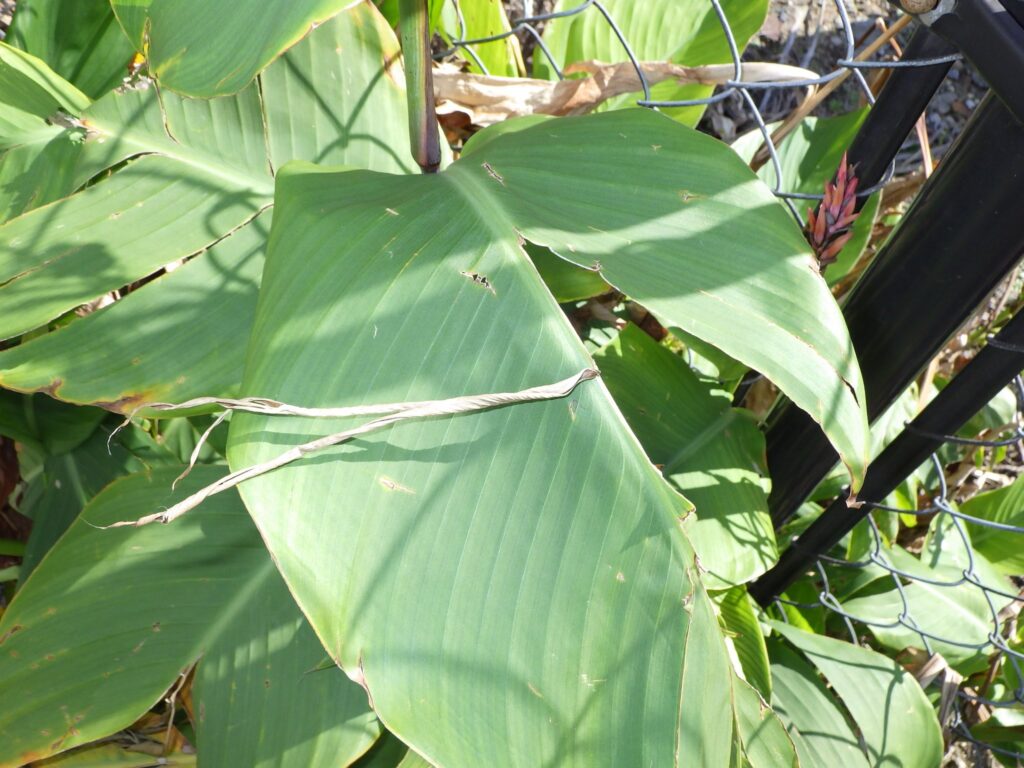
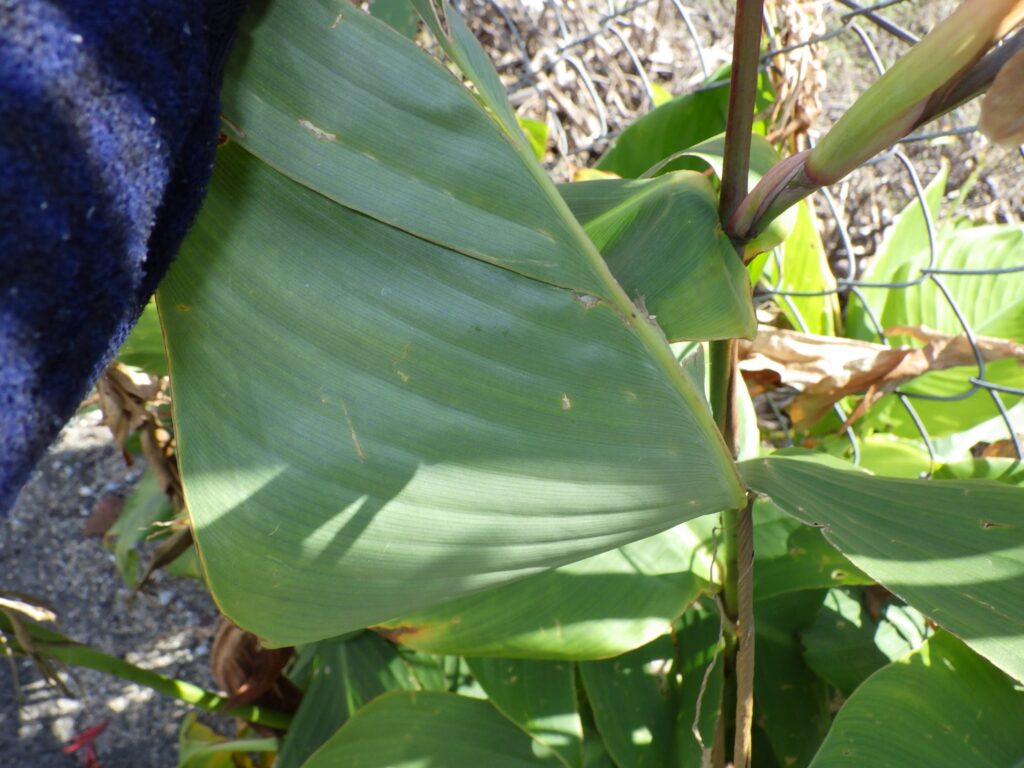
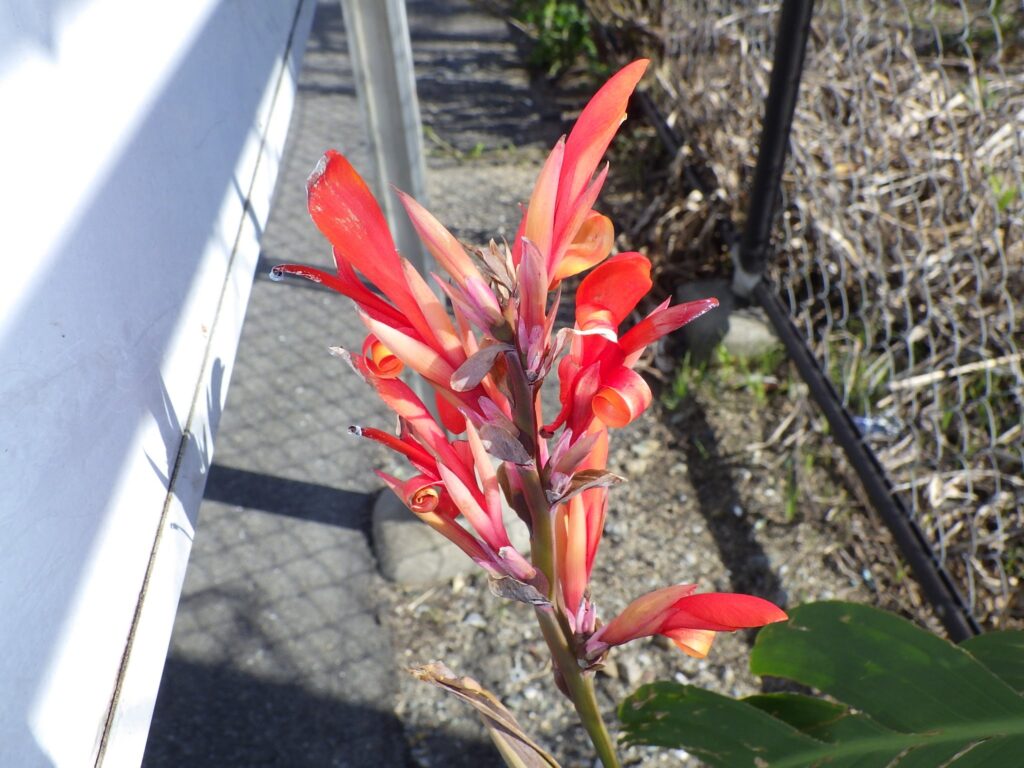
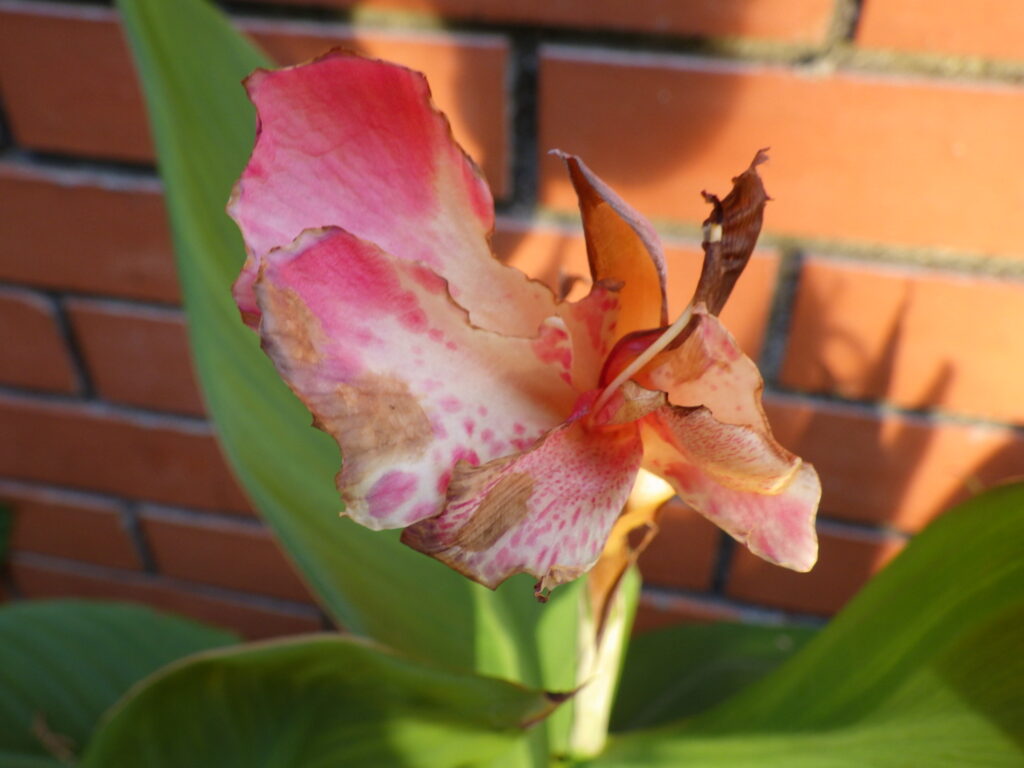
No. 0644 Canna x generalis
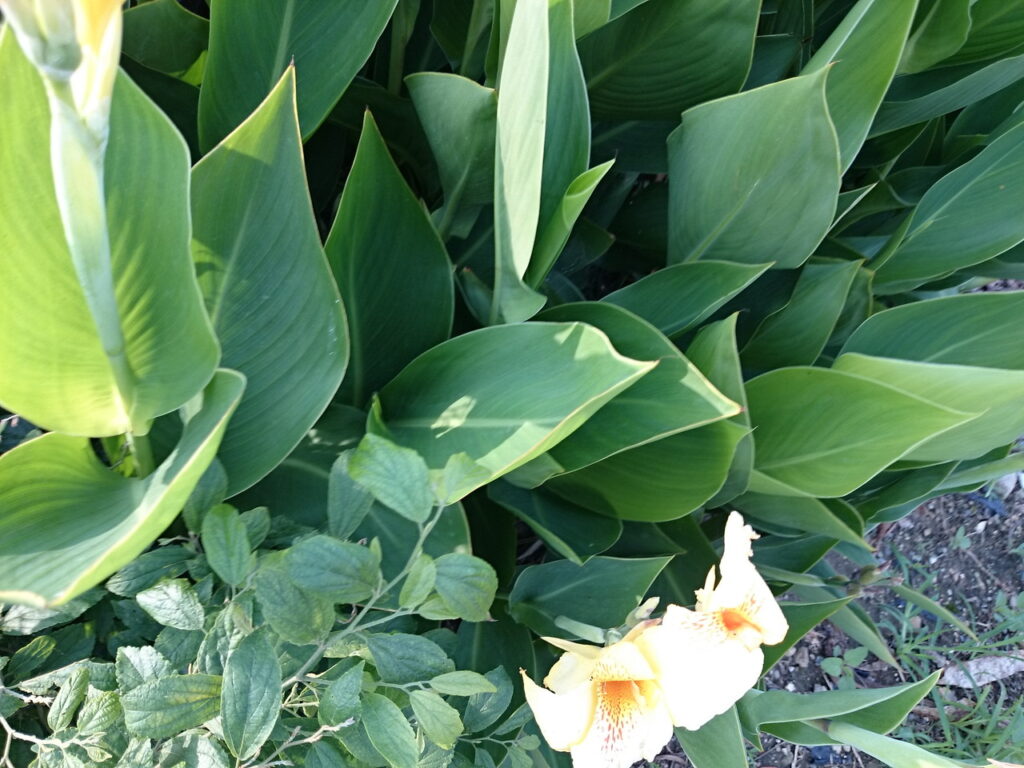
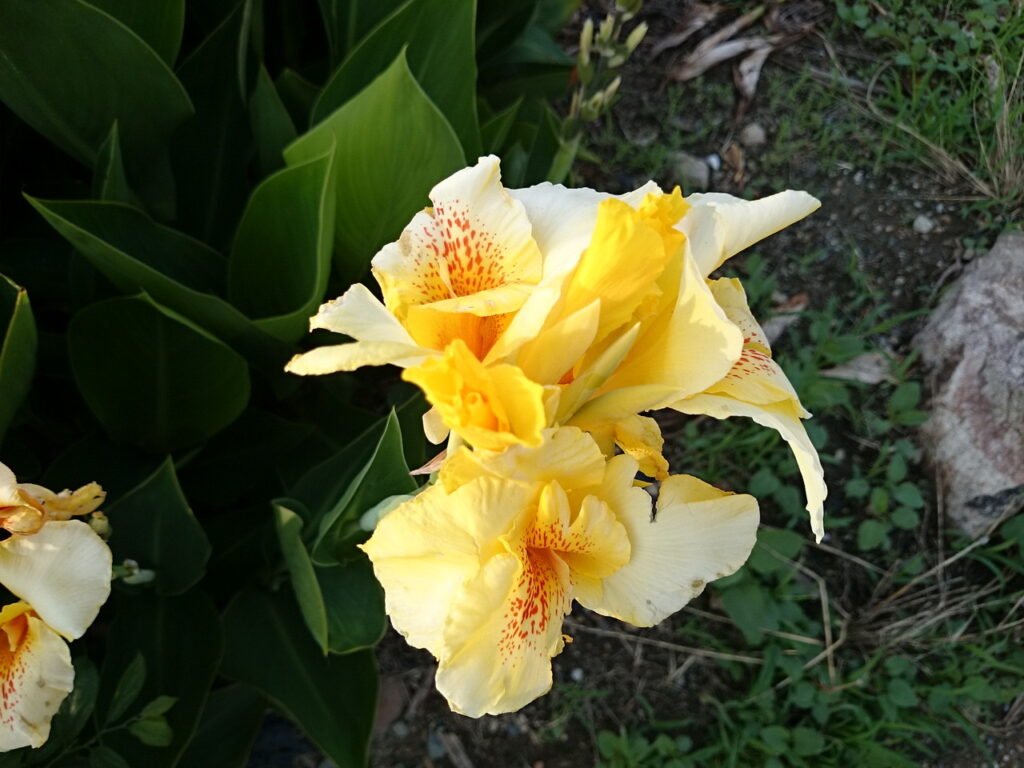
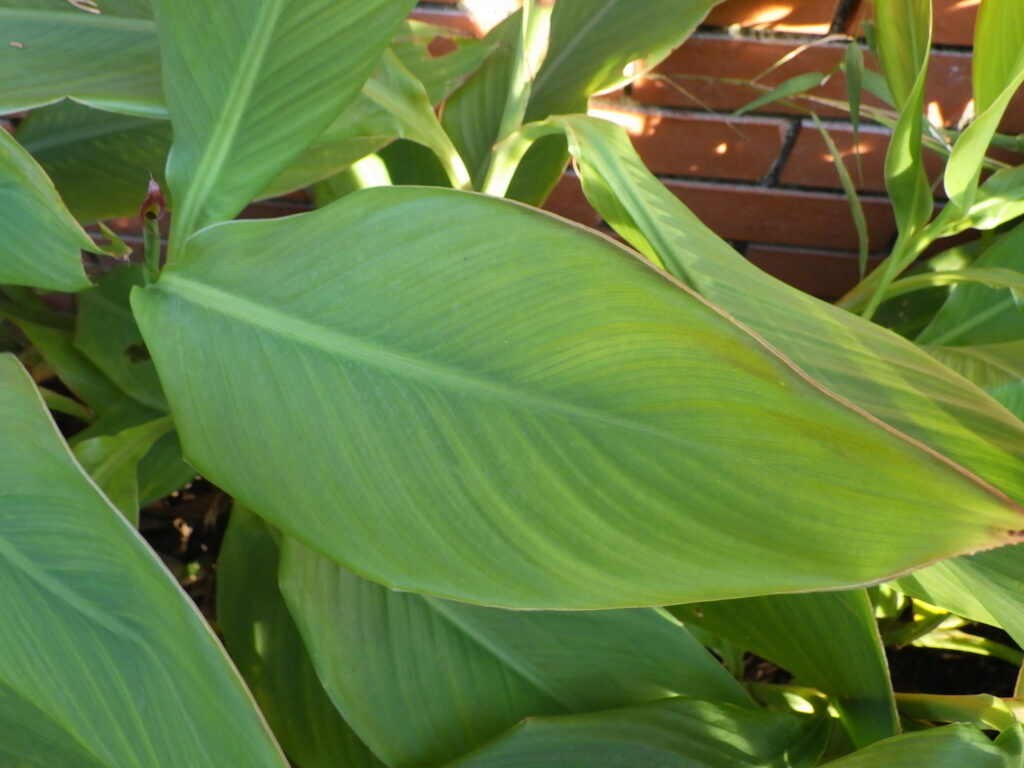
This is a perennial plant, a hybrid of * Canna glauca * and *Canna iridiflora * (Prince, 2010). Although it is originally a perennial, it is treated as a spring-planted bulb because it can be propagated by branching of its large rhizomes. The oval leaves are very large. It blooms from summer to autumn, producing flowers in red, yellow, pink, white, yellow with red stripes, or red polka dots. The parts that look like petals are actually five of the six stamens, with only the remaining one functioning as a stamen. There are tall varieties that grow to nearly 2m and dwarf varieties that grow to about 1m, both of which are used as background plants in flower beds.
References
Kanagawa Prefecture Flora Survey Association. 2018. Kanagawa Prefecture Flora 2018 (Electronic Edition). Kanagawa Prefecture Flora Survey Association, Odawara. 1803pp. ISBN: 9784991053726
Prince, LM 2010. Phylogenetic relationships and species delimitation in. Canna (Cannaceae). In: O. Seberg, G. Petersen, AS Barfod, & JI Davis (Eds.), Diversity, Phylogeny, and Evolution in the Monocotyledons (pp. 307-331). Aarhus University Press. ISBN: 9788779343986