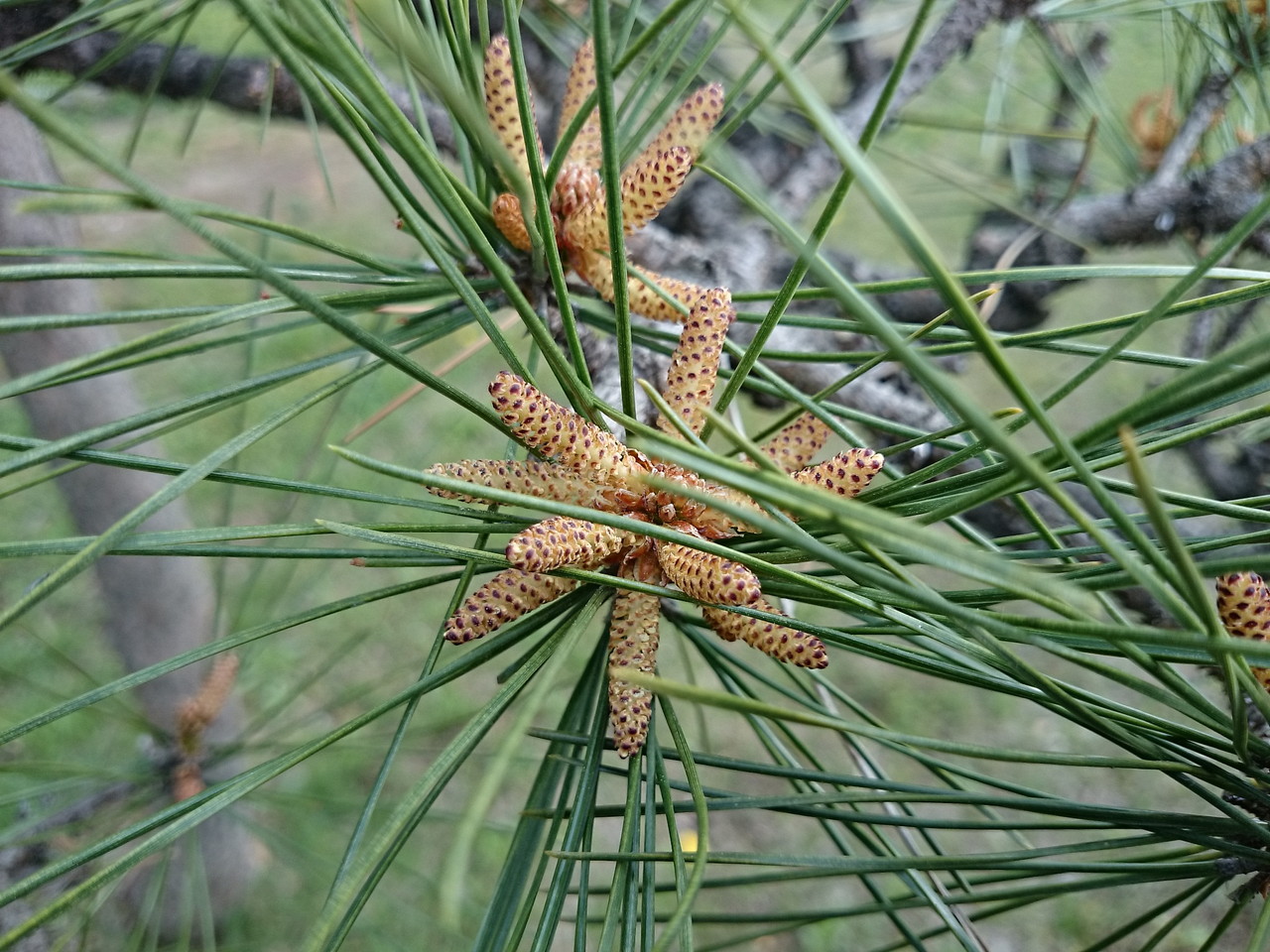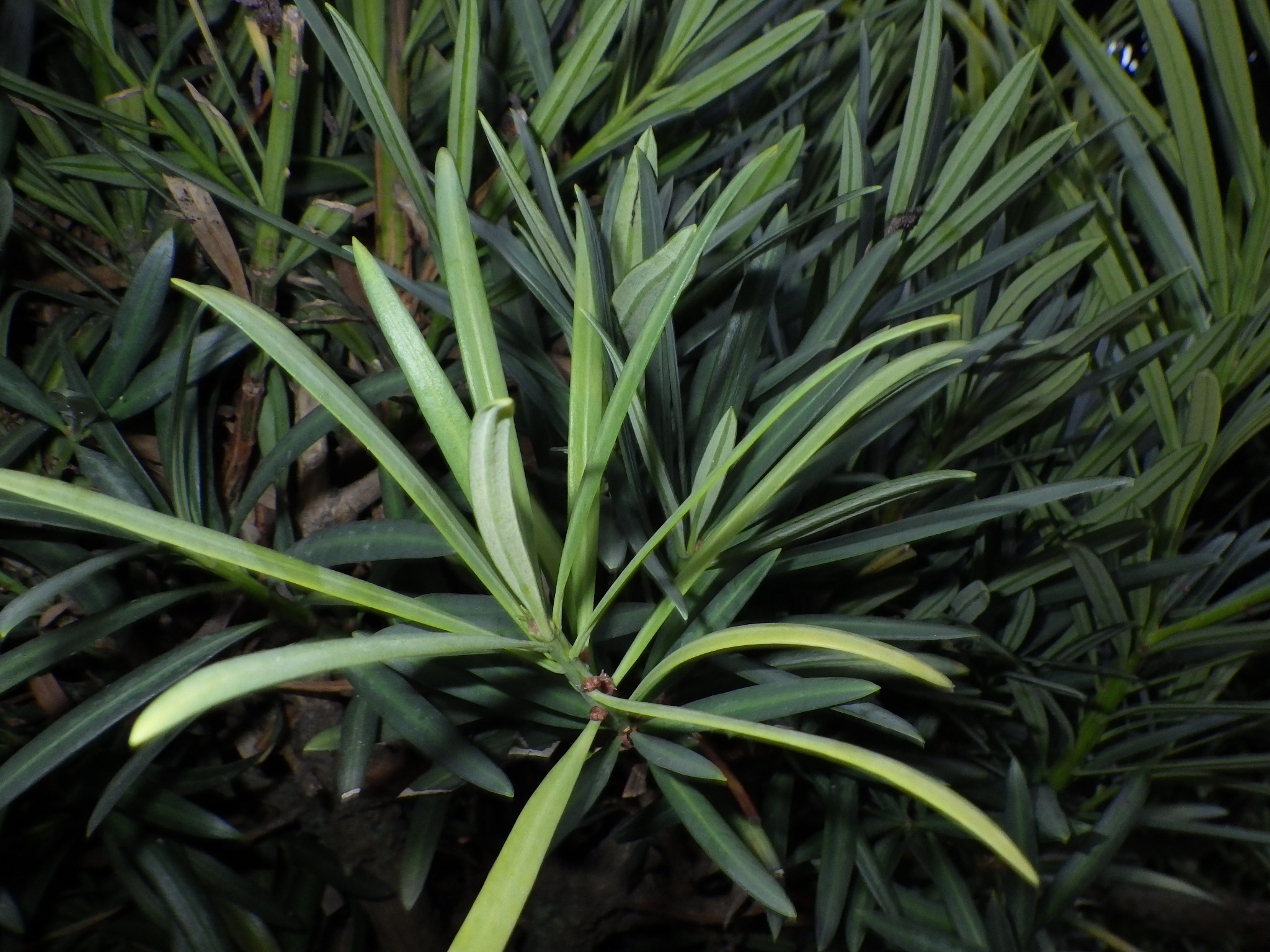
The family Podocarpaceae consists of evergreen trees or shrubs. Their leaves are flattened linear to ovate, sometimes scale-like, spirally arranged alternately, and sometimes oppositely. They are dioecious (having separate male and female plants). Male flowers have numerous stamens spirally arranged on the flower axis. Female flowers have a single ovule at the tip of the receptacle. In most cases, the scales of the female flower become fleshy and thickened, enclosing the seed, which then develops into a drupe. Nineteen genera and approximately 180 species are known, found from tropical to warm temperate regions. Two genera and three species are distributed in Japan.
This article provides a comprehensive, field guide-style introduction to plants belonging to the Podocarpaceae family.
The basic information is based on the Kanagawa Prefecture Flora Survey Association (2018). Photos are replaced as better ones become available. While the identification is done by the author, please note that misidentifications may be corrected without notice.
No.0032 Lakanmaki Podocarpus macrophyllus var. macrophyllus
Podocarpus macrophyllus is a cultivated variety of Podocarpus macrophyllus, with leaves about half the length of those of Podocarpus macrophyllus, slender and slightly upward-facing, and short, conical male flowers that are less conspicuous than those of Podocarpus macrophyllus. While Podocarpus macrophyllus tends to have a rough and unruly appearance, Podocarpus macrophyllus has a more compact form and is therefore planted in gardens. Its native habitat is unknown, and it is believed to have been introduced from China, but "Treatise on Chinese Trees 1," compiled by the Chinese Tree Species Compilation Committee, lists its origin as Japan. Ancient trees remain in old Japanese gardens, and it is thought that it was selected as a garden tree in Japan and then spread from there.
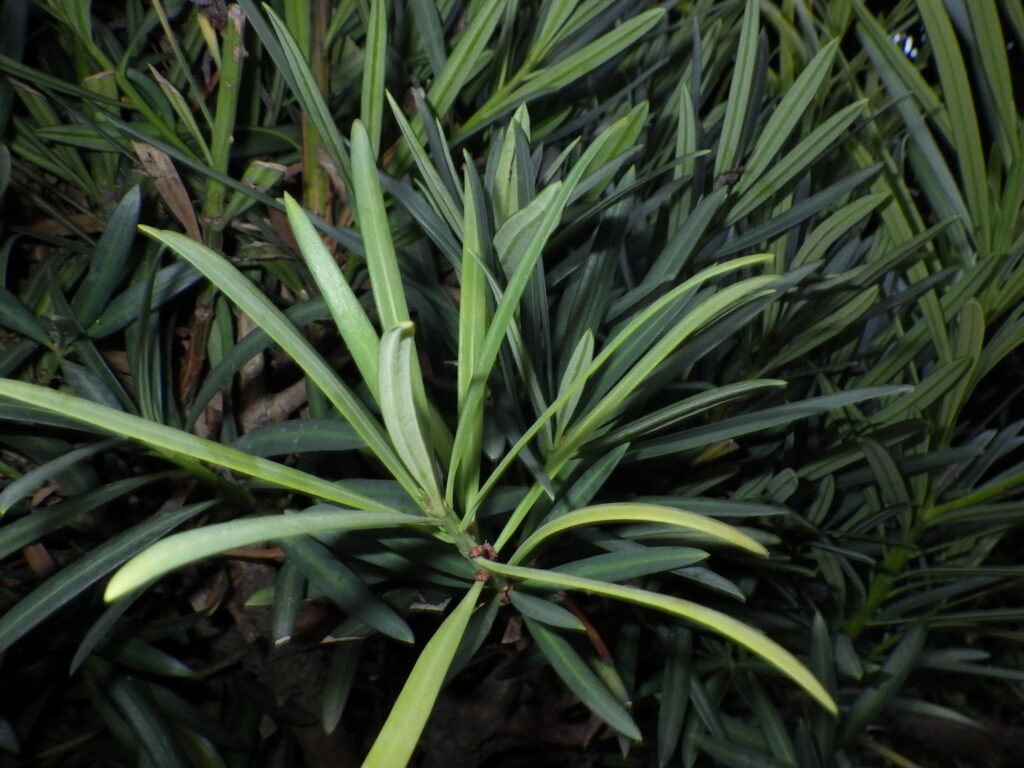
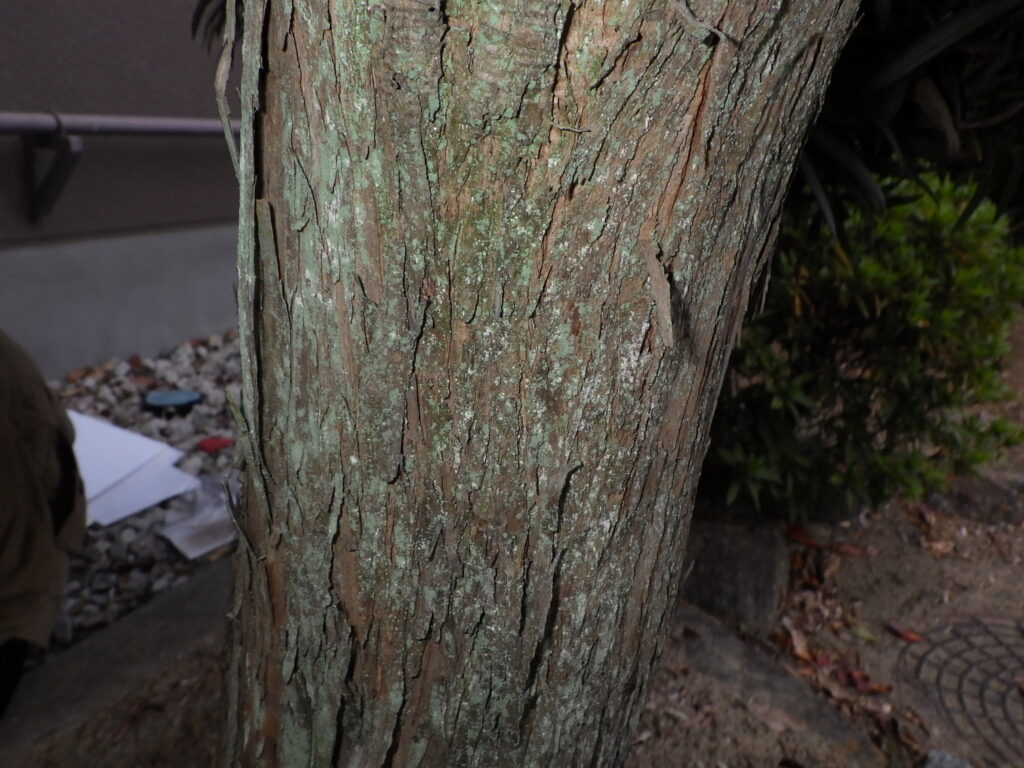
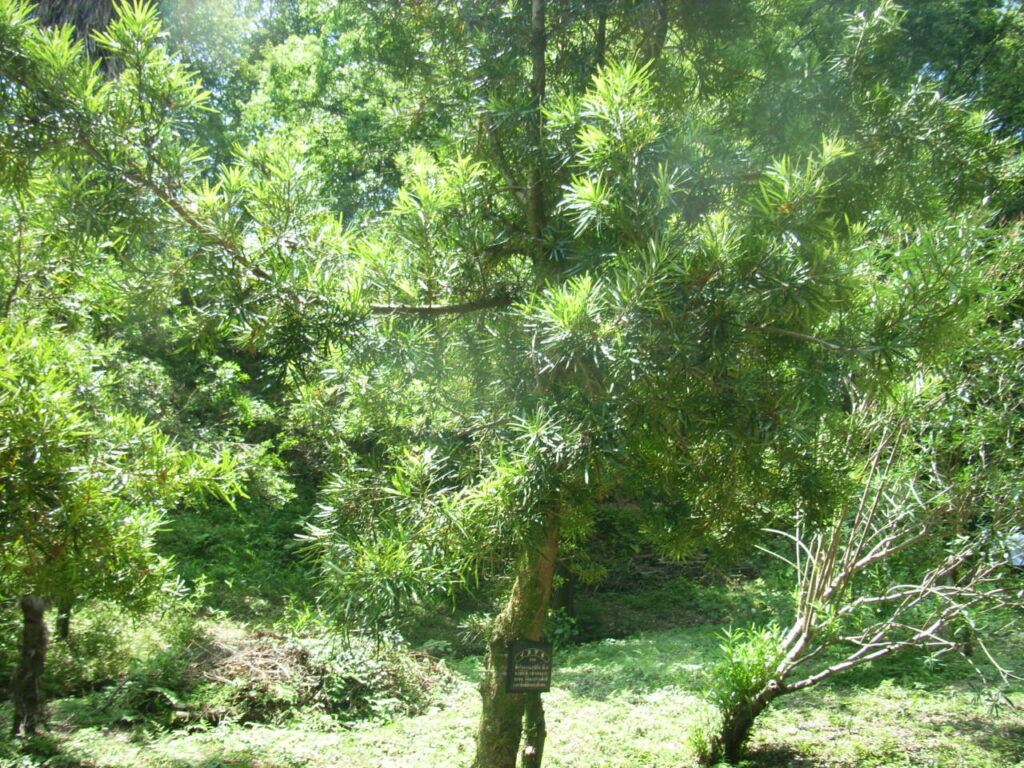
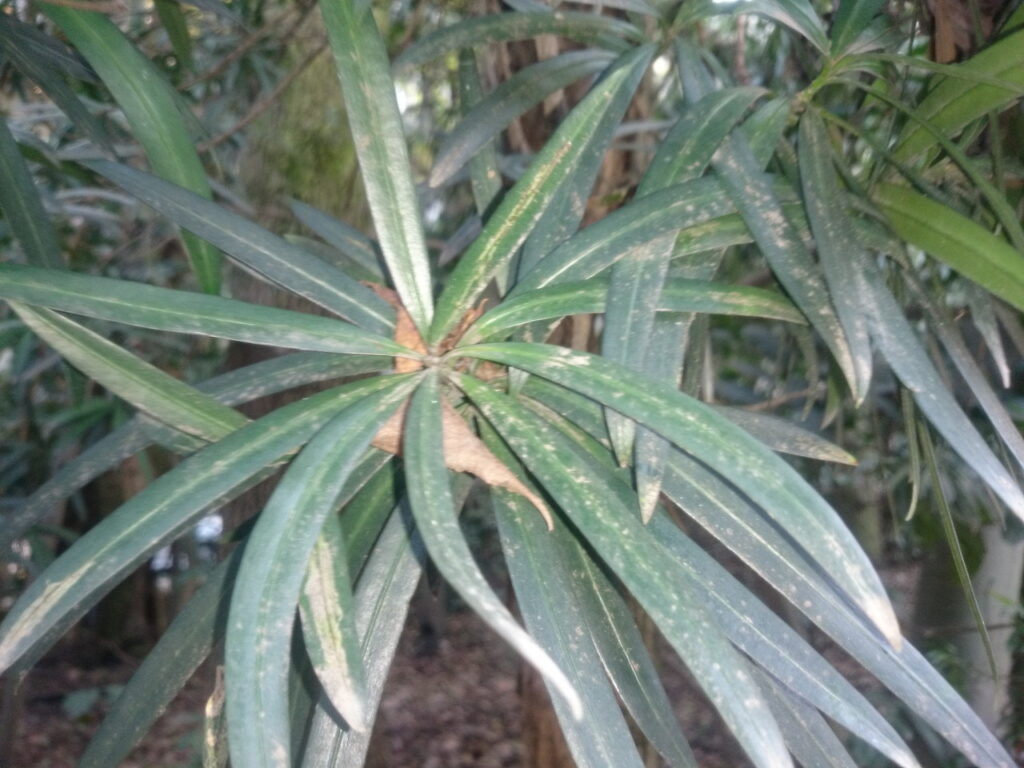
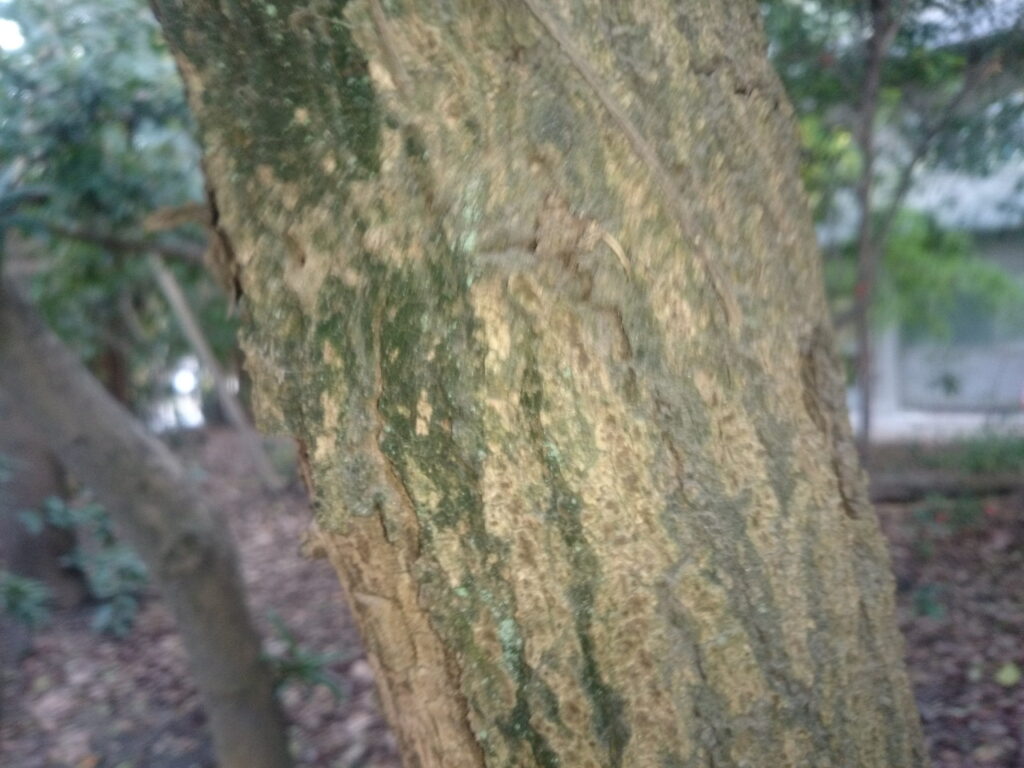
No.0033 Dogmaki Podocarpus macrophyllus ver. spontaneus
An evergreen tree. Also known as Kusamaki. The branches and leaves grow horizontally or slightly downward. The leaves are broadly linear with entire margins, 10-20 cm long and 7-10 mm wide, and somewhat leathery. Flowers bloom from May to June. Male flowers have many stamens clustered together to form a cylindrical shape, with several clustered in the leaf axils, often protruding above the leaves. Female flowers are solitary, borne on pedicels about 1 cm long in the leaf axils of the previous year's branches. The seeds mature around October, encased in fleshy, thickened whitish-green scales, 8-10 mm in diameter. The receptacle is thickened to a dark red, sweet, and edible. Distributed in Honshu (Pacific coast west of the Kanto region), Shikoku, Kyushu, Ryukyu Islands; Taiwan, and China. It grows wild in coastal hills and mountains. It is widely planted in parks, private gardens, and hedges, and it is thought that some plants originated from these locations.
No.0034 Nagi Nageia nagi
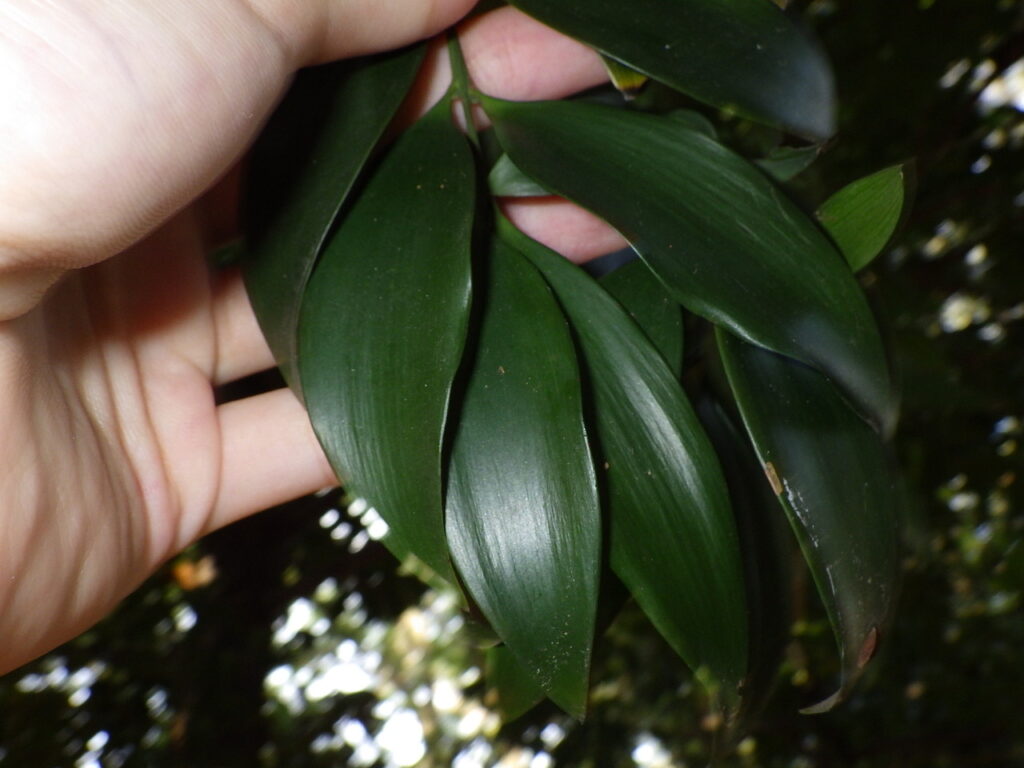
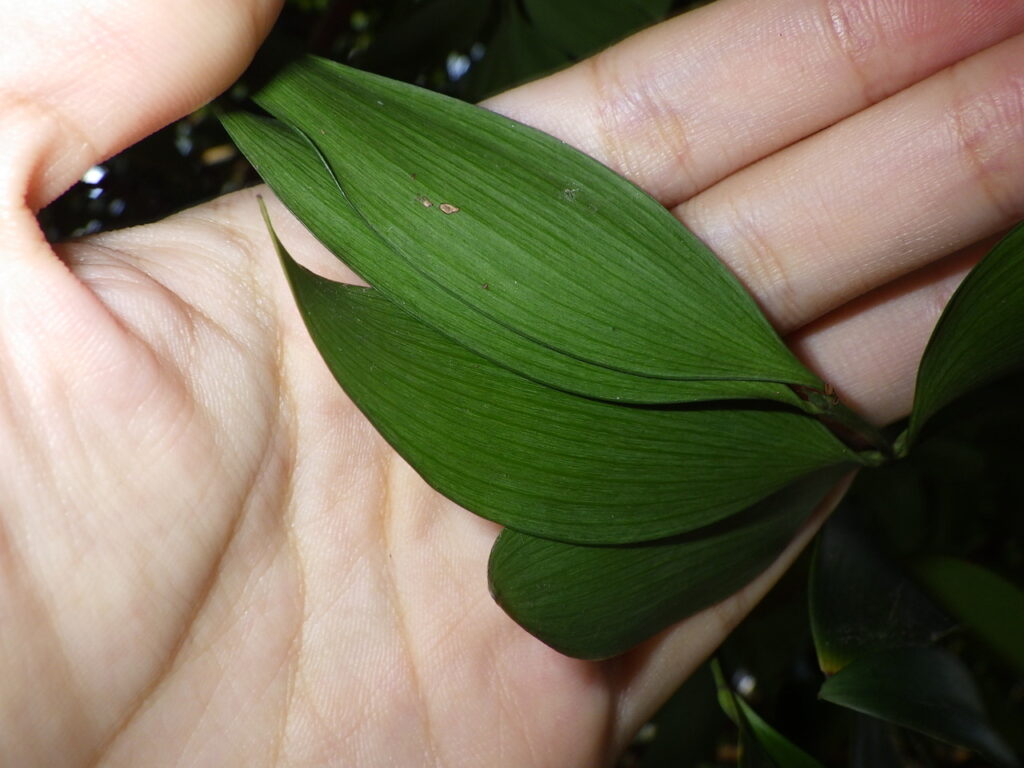
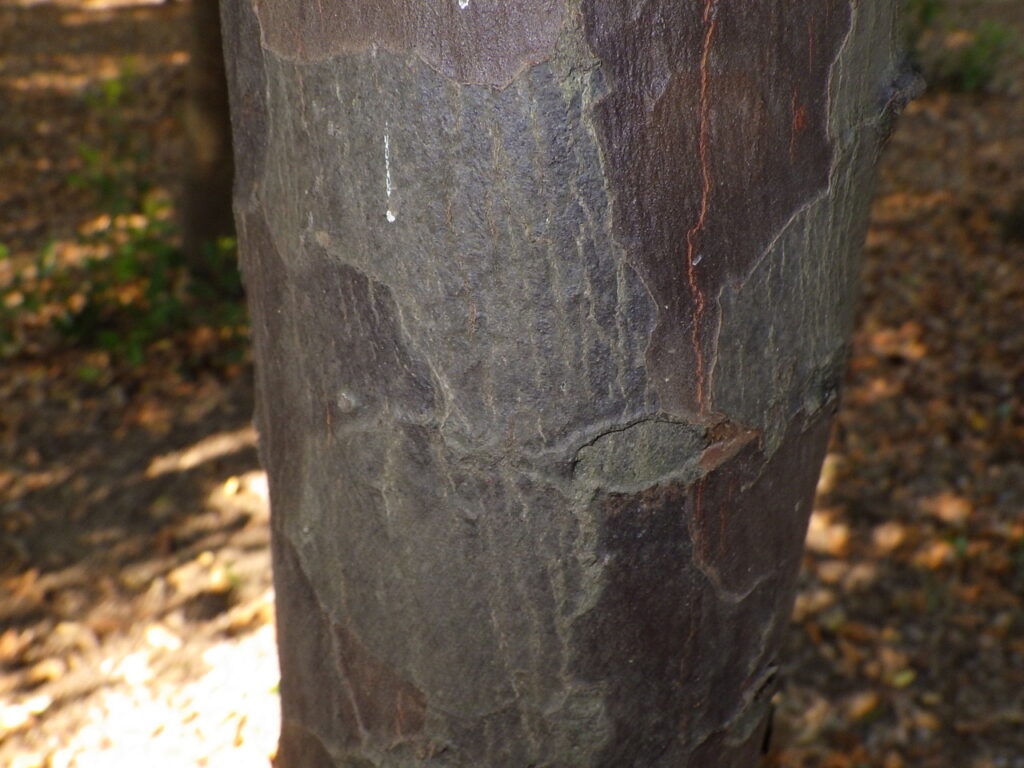
This is an evergreen tree. The bark is smooth, dark brown to grayish brown, and peels off in thin, scaly flakes. The leaves are ovate to oblong-lanceolate, 4-8 cm long and 1-3 cm wide, with numerous parallel veins. The flowers bloom in May and June. The seeds mature in October, are spherical, 10-15 mm in diameter, and enclosed in thickened, whitish-green scales. It is distributed in Honshu (Wakayama and Yamaguchi prefectures), Shikoku, Kyushu, the Ryukyu Islands, and Taiwan. It is often planted in Shinto shrines, and although young trees are occasionally found in the forests surrounding shrines, it is believed that it does not regenerate through generations.
References
Kanagawa Prefecture Flora Survey Association. 2018. Kanagawa Prefecture Flora 2018 (Electronic Edition). Kanagawa Prefecture Flora Survey Association, Odawara. 1803pp. ISBN: 9784991053726