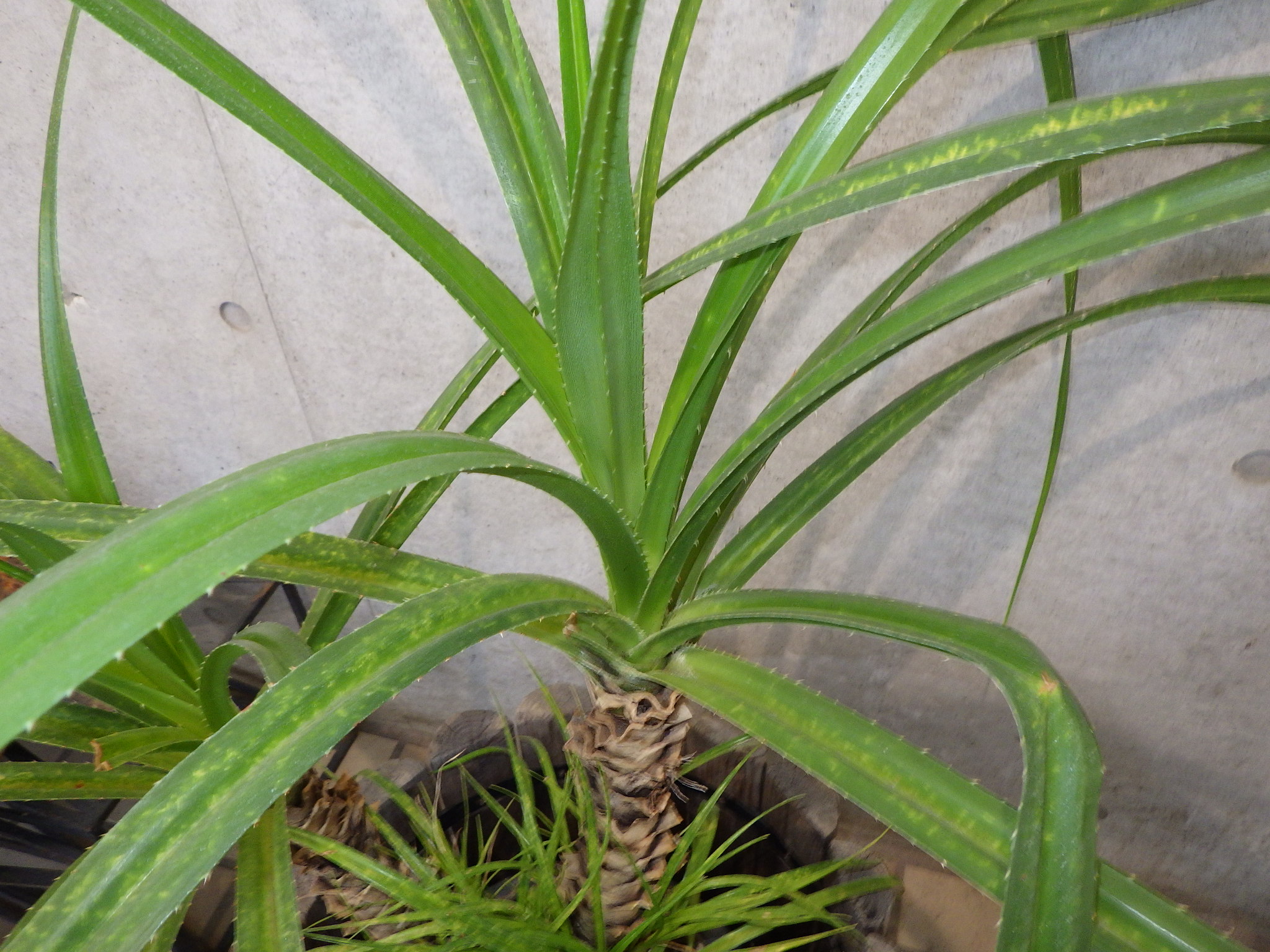
The family Melanthiaceae consists of perennial herbs, usually possessing rhizomes. Leaves are alternate or whorled. Flowers are solitary or borne in racemes or spikes. Flowers are bisexual or unisexual. Perianth segments are free, typically six in number, although some have reduced perianth segments. The ovary is superior. Some species produce capsules (Genus Veratrum and Heloniopsis), while others produce berries (Genus Trillium and Paris). There are approximately 180 species in 17 genera worldwide, mostly found in the temperate regions of the Northern Hemisphere. Japan has approximately 13 species in 7 genera. Among the former Asparagoideae subfamily that produces berries, species with whorled leaves, such as Trillium and Paris, are now classified under the Melanthiaceae family.
This article provides a comprehensive, illustrated guide to plants belonging to the Melanthiaceae family.
The basic information is based on Kadota (2013) and the Kanagawa Prefectural Flora Survey Association (2018). Photographs are replaced as better ones become available. While the identifications are made by the author, please note that they may be changed without notice if misidentifications are found.
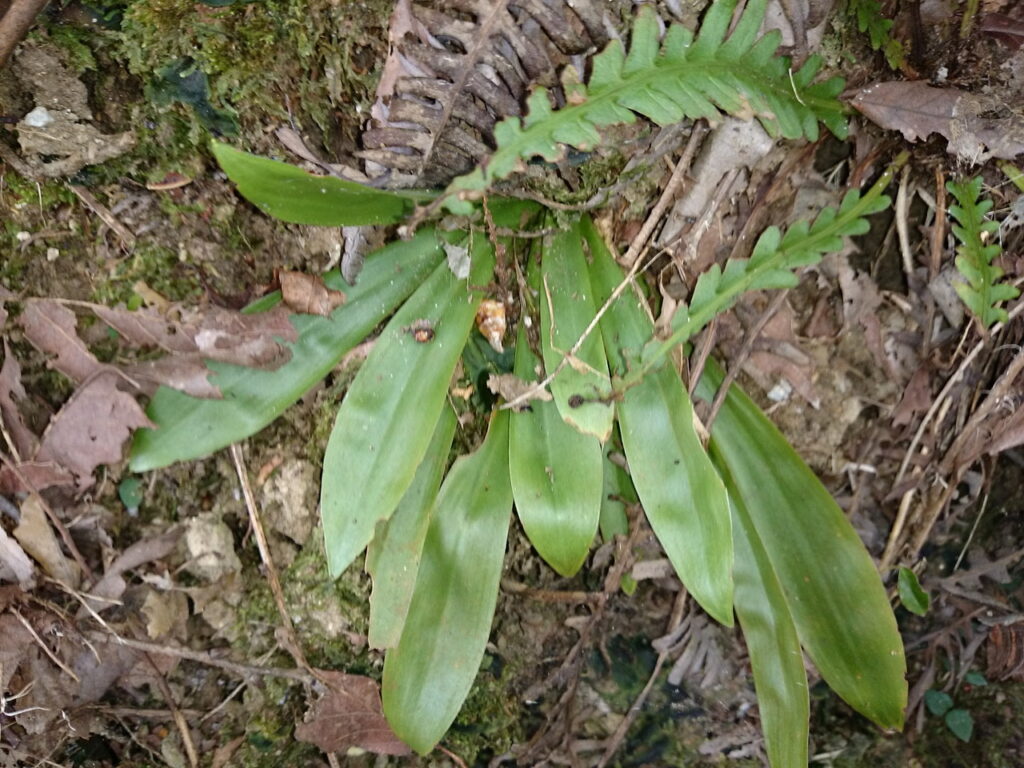
No. 0306 Heloniopsis orientalis
This is a perennial herb. The basal leaves are numerous and arranged in a rosette, oblanceolate in shape, 5-20 cm long, and often produce seedlings at the tips of the leaves. The flower stalk is 10-30 cm tall and has several scale-like leaves. Several flowers are borne laterally in a shortened raceme at the top of the stalk. The flowers transition from female to male phases. The perianth segments are pale pink to dark reddish-purple, rarely white, 1-1.5 cm long, slightly swollen at the base, and remain green after flowering. There are six stamens, and the filaments are the same length as or slightly longer than the perianth segments. The anthers are reddish-purple. The flower stalk elongates during the fruiting period, reaching a height of 50-60 cm. The capsule is deeply constricted into three sections. It splits into two from the central inner suture. The seeds are linear with thread-like appendages at both ends. The flowering period is from April to May. It grows in damp areas along valleys and in forests in mountainous regions from Hokkaido to Kyushu.
No.0307 Chionographis japonica
This is a perennial herb. It has a short rhizome. The leaves are basal, oblanceolate or oblong, with a blunt tip, a petiole at the base, and a wavy margin, 8-14 cm long, and glabrous on both sides. The flower stalk is 25-65 cm tall, glabrous, and bears linear leaves. Numerous flowers are borne in spike-like inflorescences, with both bisexual and male flowers. The perianth segments are 6 in number, of unequal length; the upper ones are spatulate-linear, 7-9 mm long, while the lower ones are slightly longer or shorter than the stamens. There are 6 stamens, about 1 mm long, with flattened filaments and 2 locules, and they are free. The pistil has a superior ovary, 3 styles, slightly recurved, and a stigma on the inner surface. The capsule is oblong, 3-4 mm long, and the seeds are narrowly oblong, 2.5-3 mm long. Flowering occurs from May to June. It is distributed in Korea and Japan, and in Japan, it grows in mountainous forests from the Kanto and Hokuriku regions westward to Kyushu.
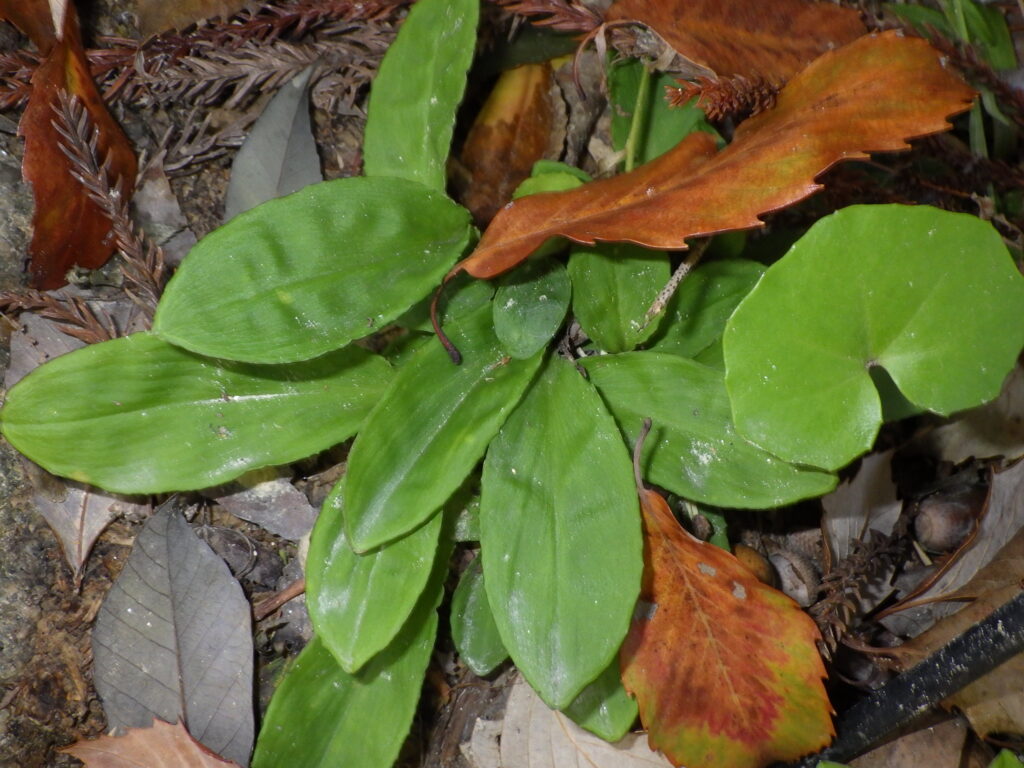
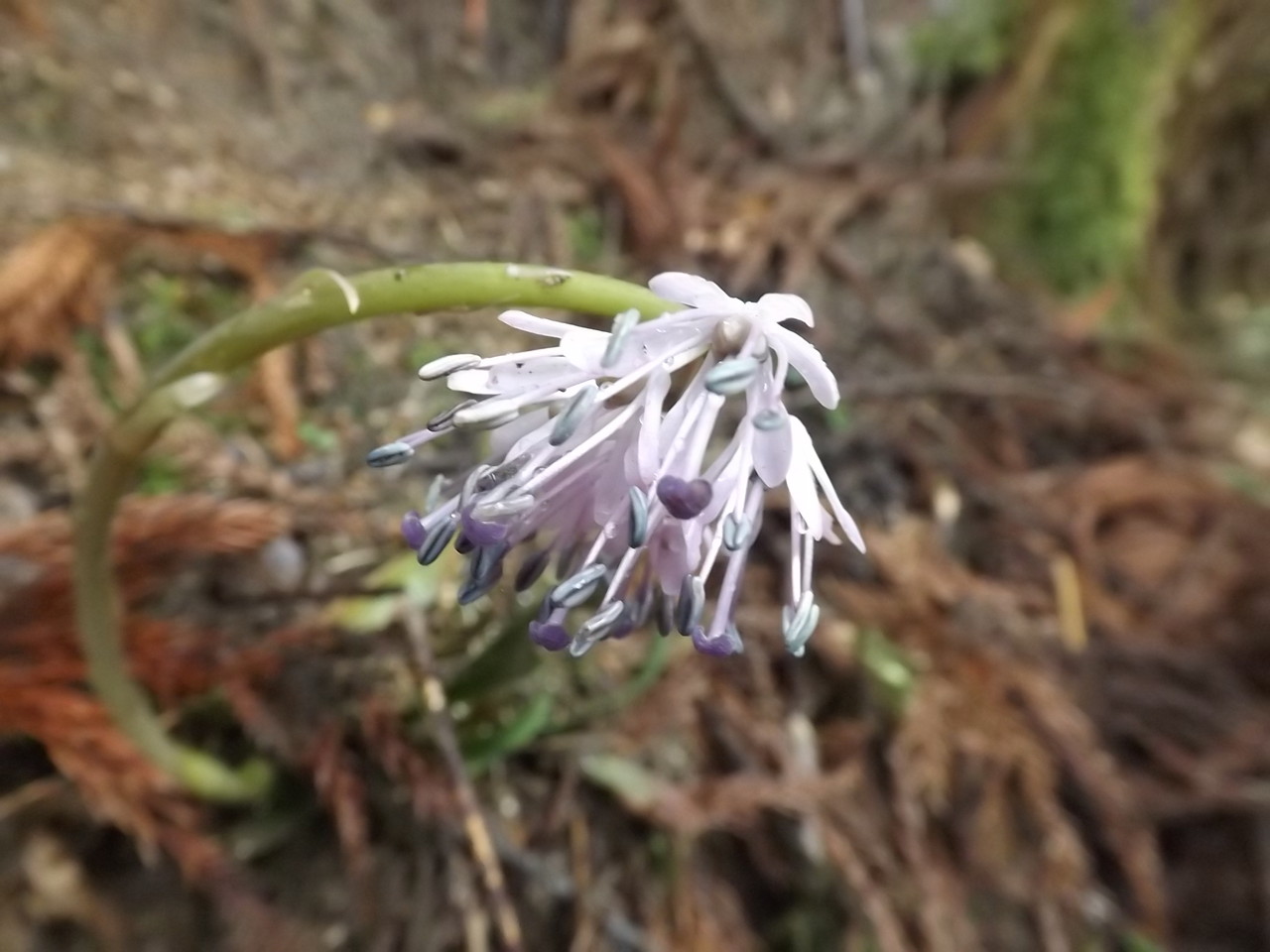
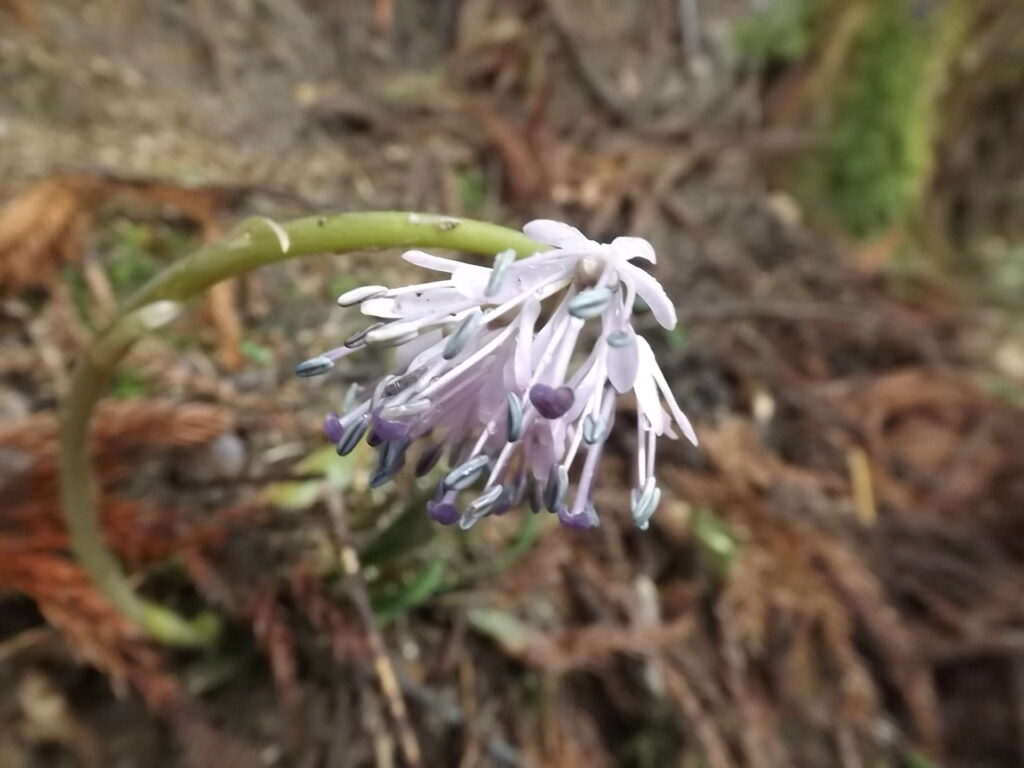
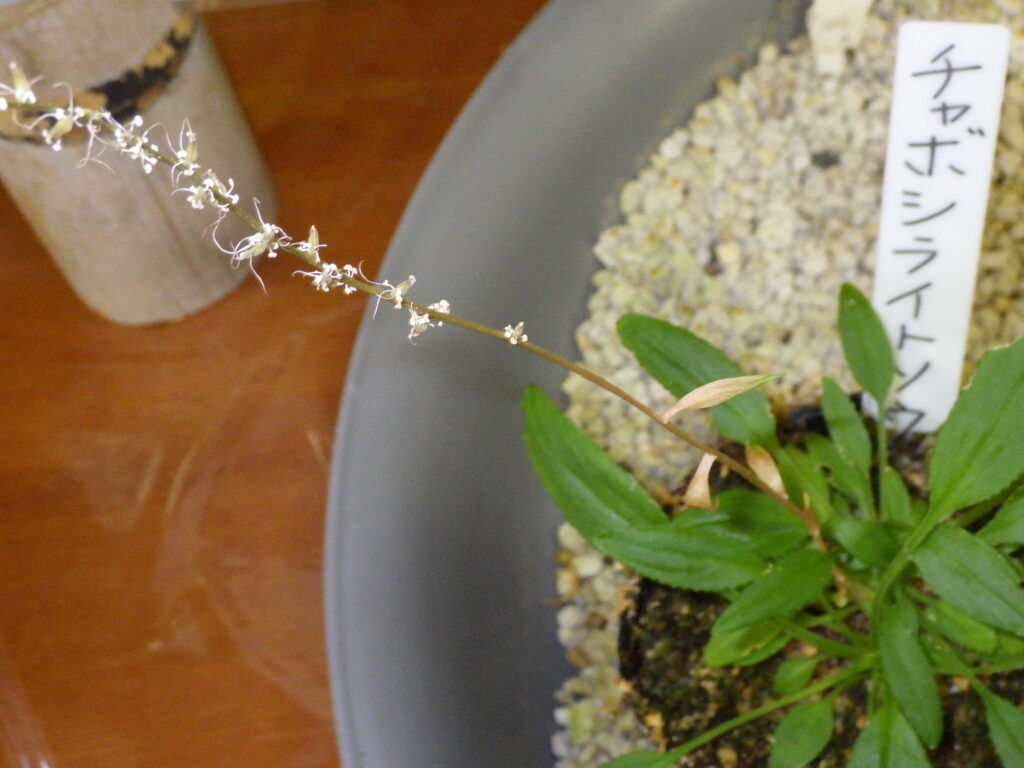
No.0307.a Chionographis koidzumiana
This is a perennial herb, growing to a height of 12-40 cm. The basal leaves are small, ovate to narrowly ovate, and 2-8 cm long including the petiole. The flowers are somewhat sparsely arranged at the tip of the flower stalk, with white to greenish-white to purplish perianth segments. The upper 3-4 segments are thread-like and long, 9-15 mm, while the lower 2 are reduced. There are 6 stamens with short filaments and somewhat spherical anthers. The ovary is superior and spherical, with the anther locules fused at the top to form a single chamber. The fruit (capsule) is 3-4 mm long. This species is endemic to Japan, distributed in Honshu (Aichi and Wakayama prefectures), Shikoku, and Kyushu, and inhabits bright forest floors and rocks in mountainous areas.
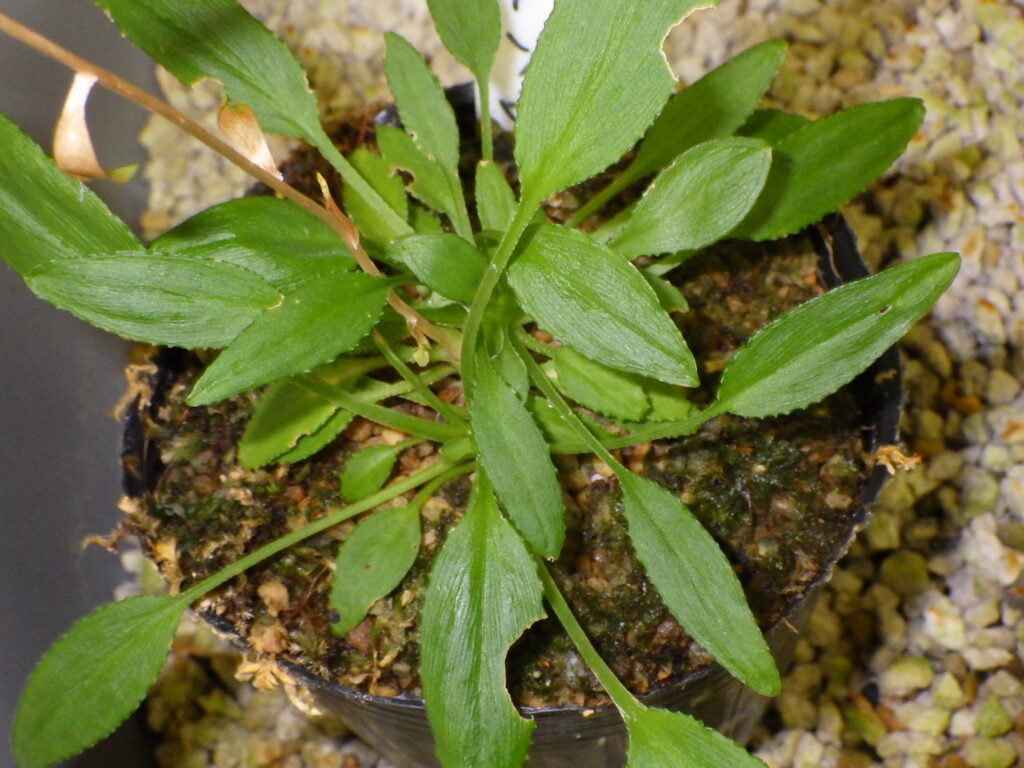
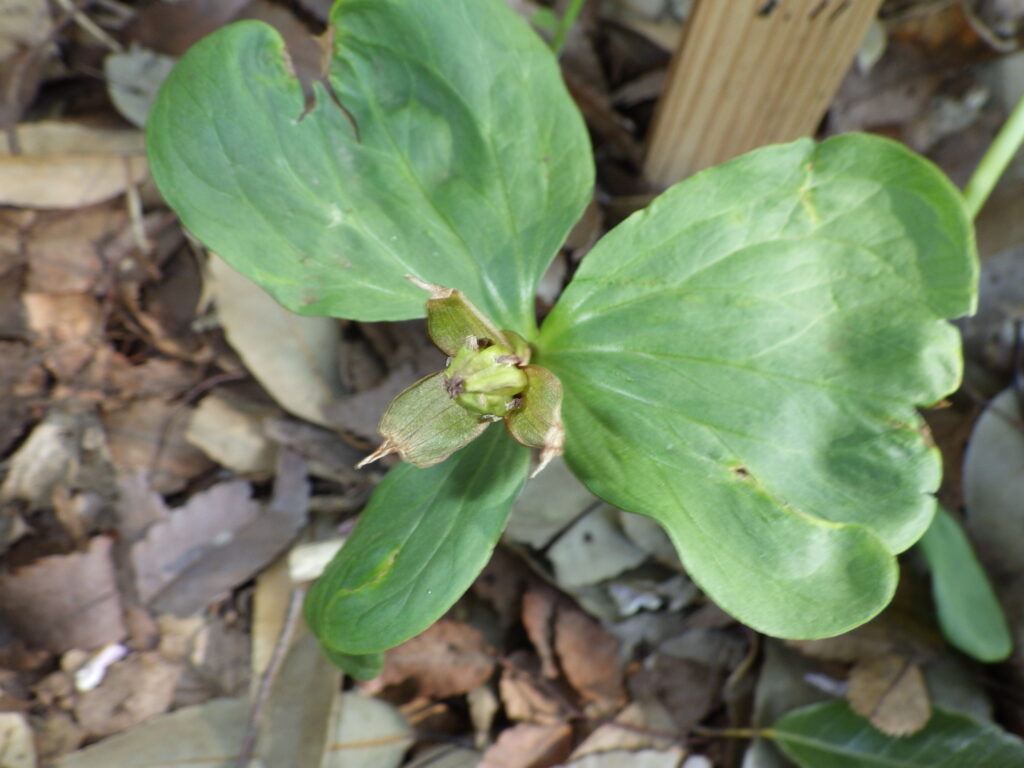
No. 0310 Trillium apetalon
This is a perennial herb. The stems are 20-40 cm tall, and the leaves are ovate-rhomboid, 6-17 cm long and wide, with a sharply pointed tip and a broadly wedge-shaped base. A single flower is borne at the top of the stem, facing slightly sideways. The pedicel is 2-4 cm long, and the outer perianth segments are green or brownish-purple, ovate-oblong, and 12-20 mm long. They do not fall off after flowering. The inner perianth segments are usually absent, but rarely they are absent. There are six stamens, with oblong anthers slightly shorter than the filaments. The stigma is three-lobed and very short. The berry is spherical with three ridges, 1-2 cm in diameter, and green to dark purple. The seeds are curved and oblong. The flowering period is from April to May. It is distributed in Sakhalin, the Southern Kuril Islands, and Japan, and in Japan, it grows in slightly damp areas in mountainous forests from Hokkaido to Kyushu.
References
Kadota, Y., Nagata, Y., & Azegami, N. 2013. Flowers Blooming in the Mountains (Revised and Expanded New Edition). Yama-kei Publishers, Tokyo. 616pp. ISBN: 9784635070218
Kanagawa Prefecture Flora Survey Association. 2018. Kanagawa Prefecture Flora 2018 (Electronic Edition). Kanagawa Prefecture Flora Survey Association, Odawara. 1803pp. ISBN: 9784991053726