![Juncus [cipiens]](https://ecological-information.com/wp-content/uploads/2022/09/07.0678-イグサ-果実.jpg)
The Juncaceae family consists mainly of annual to perennial herbs that grow in wetlands, rarely becoming shrub-like. The stems are cylindrical or biangled, usually unbranched. The leaves are arranged alternately in two rows, linear, flattened, or cylindrical, with a sheathed base that opens on one side or forms a complete tube. The flowers are small, nearly identical in shape, and bear six lanceolate perianth segments. There are 3 to 6 stamens. The fruit is a capsule containing 3 to many seeds. There are about 440 species in 7 genera known worldwide, and in Japan, there are two genera, Juncus and Juncus, which have the most species in the family. Capsules are essential for the classification of this family.
This article provides a comprehensive, illustrated guide to plants belonging to the Juncaceae family.
The basic information is based on the Kanagawa Prefecture Flora Survey Association (2018). Photos are replaced as better ones become available. While the identification is done by the author, please note that misidentifications may be corrected without notice.
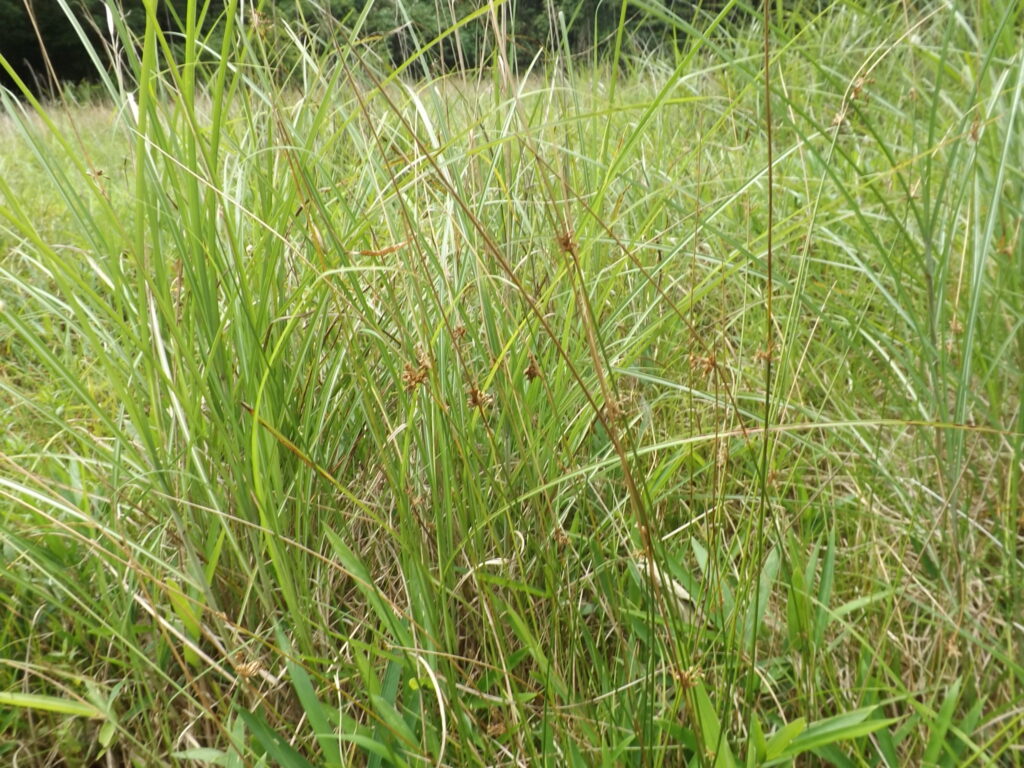
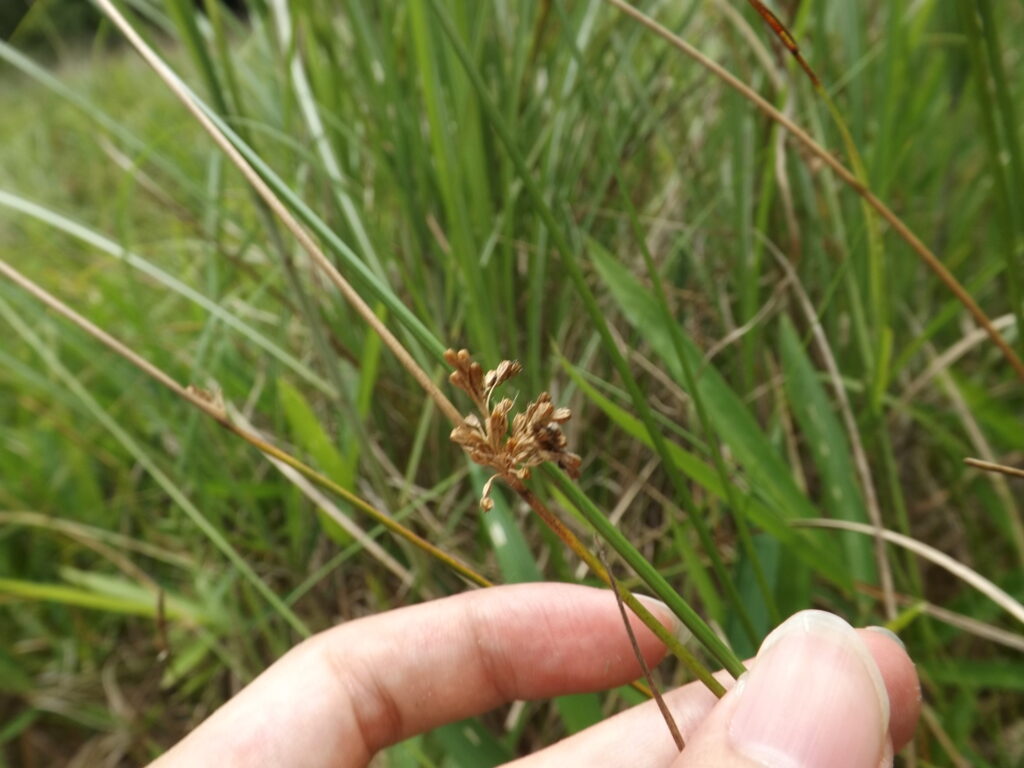
No.0678 Rush Juncus decipiens
A perennial herb. According to the Ylist, it is also known as I, and in this case, it is considered the plant with the shortest Japanese name. The rhizome is creeping and has short internodes. The stem is cylindrical and erect, reaching a height of 20-100 cm. The surface is green with numerous indistinct longitudinal grooves. It flowers from June to September. The inflorescence consists of 30-90 solitary flowers. Some inflorescence axes are partially curved downwards. The perianth segments are lanceolate, acute, and green on the back. There are three stamens. The capsule is brown, three-angled ovate or elliptical with a blunt or slightly convex tip. It is roughly the same length as the perianth segments, or slightly longer. The seeds are about 0.5 mm long and rust-colored. It is distributed in Hokkaido, Honshu, Shikoku, Kyushu, the Ryukyu Islands, Korea, China, Taiwan, and North America, and grows in wetlands such as riverbeds, lakes, ponds, and abandoned rice paddies. The rushes found in East Asia, including Japan, were previously considered a variety of *J. effusus *, which is mainly distributed in Europe, but in recent years they have been classified as a separate species. The two species are said to be distinguished by their overall size, leaf sheath color, and the structure of the capsule chambers, but distinguishing them from specimens is difficult. The cultivated variety *J. utilis* is used to make tatami mats and rush mats. It is characterized by having smaller inflorescences than the wild species. The stems of rushes are also used as material for hats and pillows.
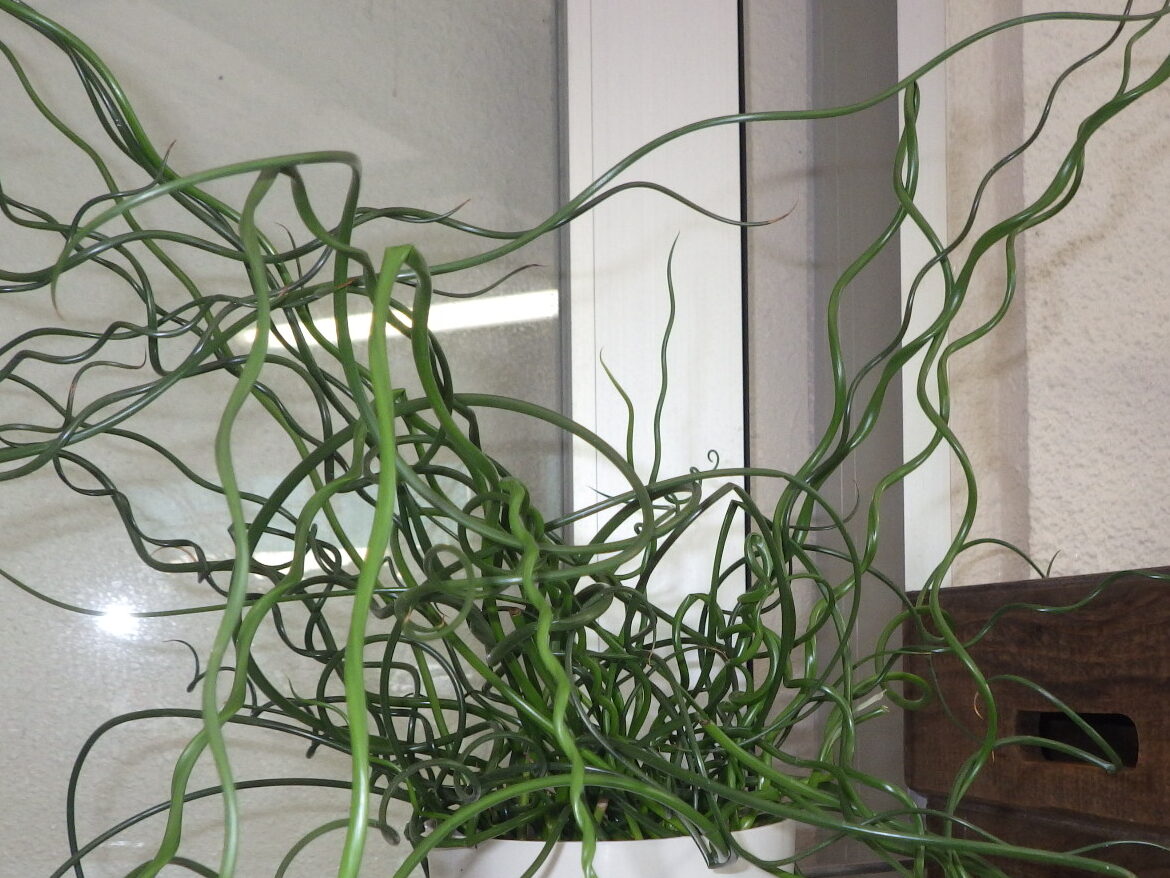
No.0679.a Juncus decipiens 'Spiralis'‘
A variety of rush whose flower stalks curl like a spring.
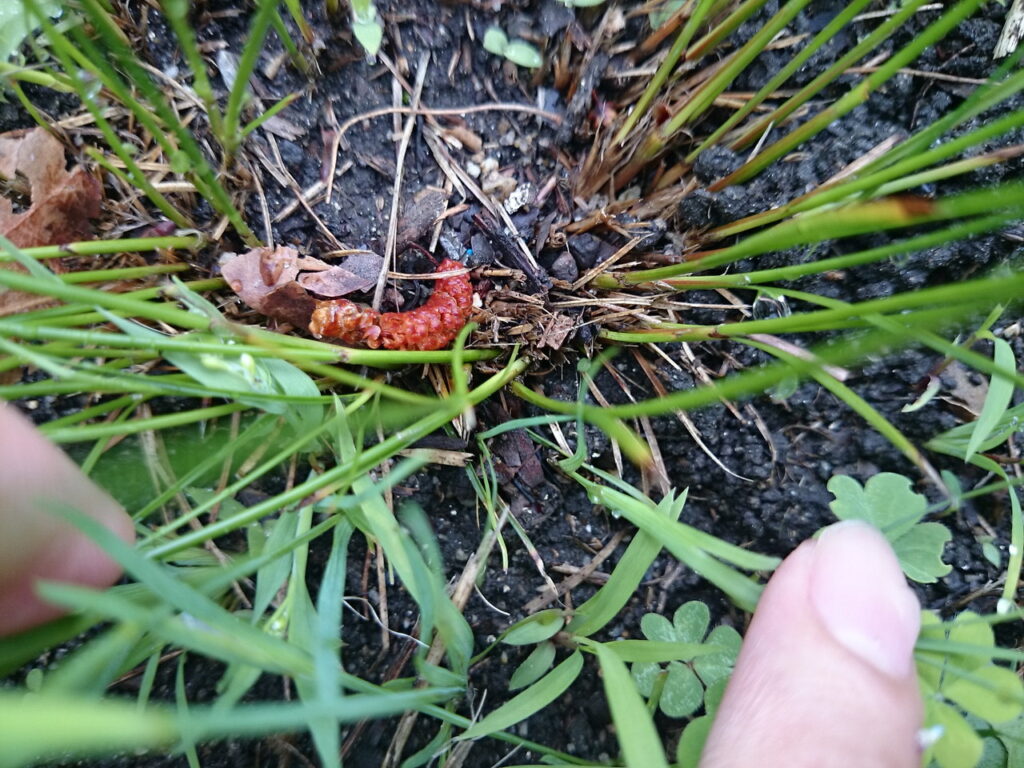
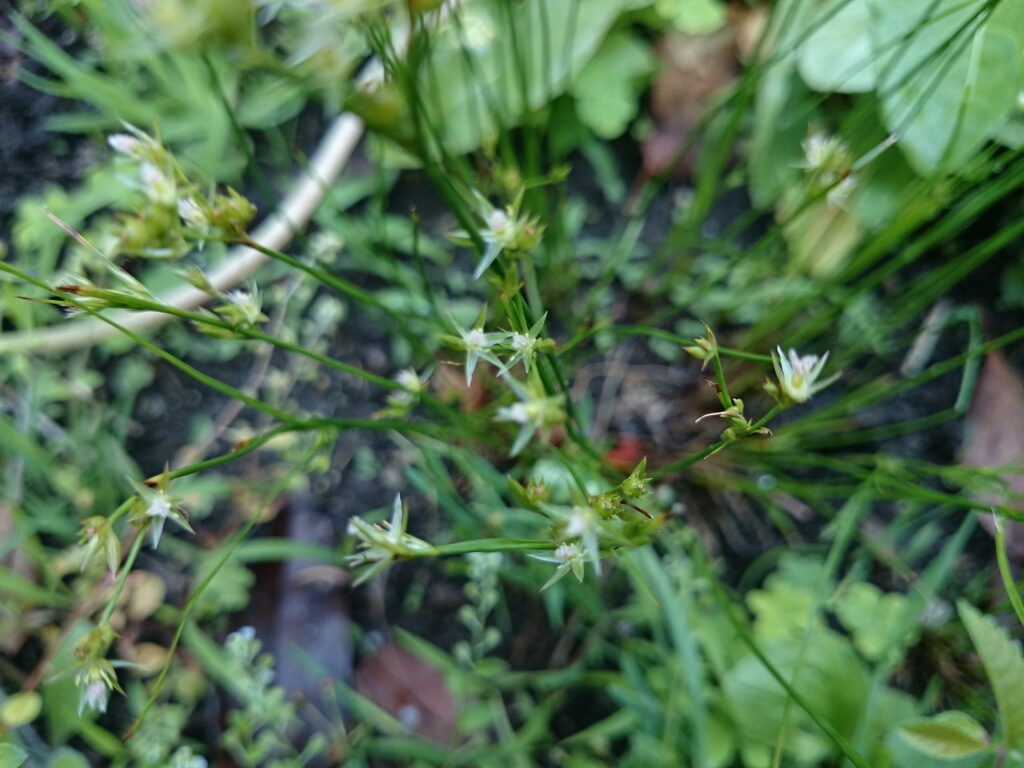
No.0681 Juncus tenuis
Also known as Shiranei. A perennial herb. Its rhizome is short and creeping. The stem is cylindrical and erect. The lowest bracts are leaf-like and longer than the inflorescence. It flowers from May to September. The perianth segments are almost the same length both inside and out, with a membranous margin. There are 6 stamens, and the capsule is shorter than or the same length as the perianth segments. The seeds are obovate and have a sticky surface. It is widely distributed in Hokkaido, Honshu, Shikoku, Kyushu, and the Ryukyu Islands; as well as in Eurasia, the Americas, and Australia. It grows in damp roadsides, grasslands, and forest edges. The alternative name Shiranei comes from the fact that Tomitaro Makino and Fuseki Takahashi collected it at Bintara Pond of Shirane Fudoson in Shirane-cho, Asahi-ku, Yokohama City.
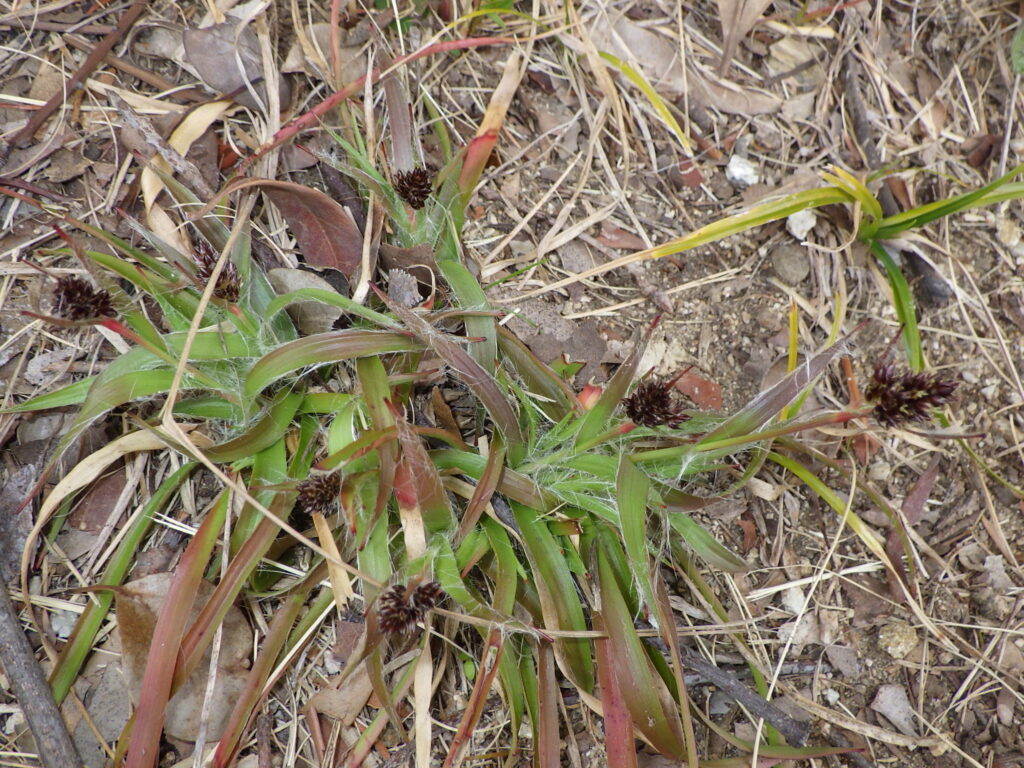
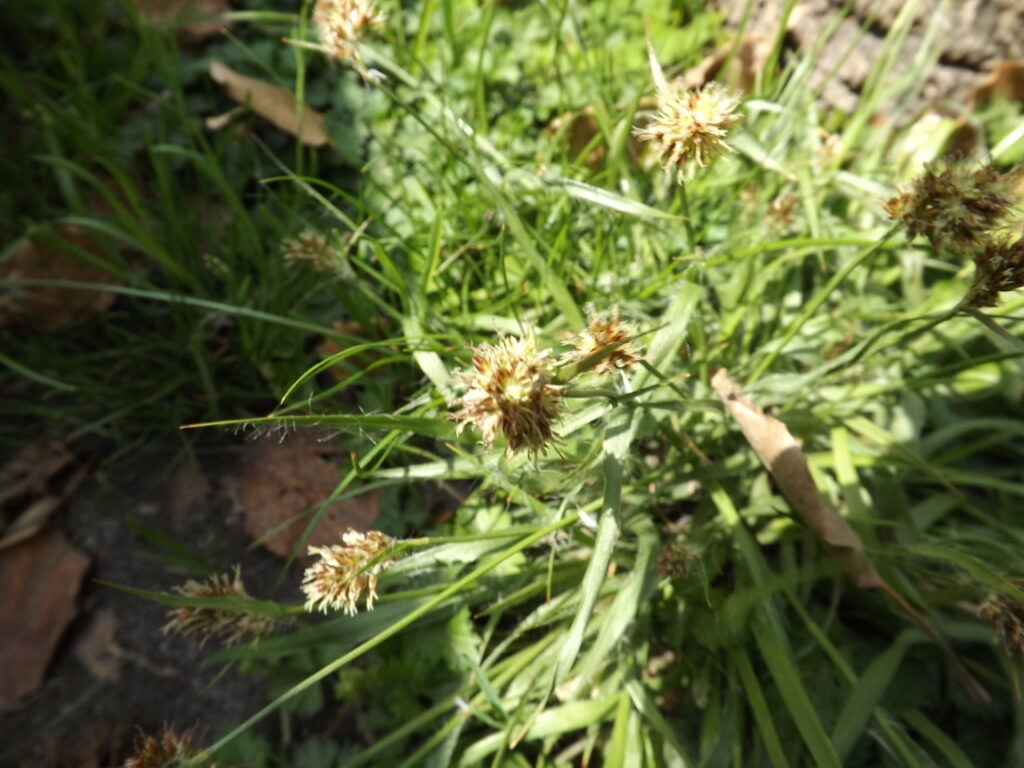
No. 0692 Luzula capitata (Sparrow's Spear)
This is a perennial herb. The rhizome is short. The stem is 10-30 cm tall. The basal leaves are linear, 5-20 cm long and 2-4 mm wide. The stem leaves are 2-3 in number and smaller than the basal leaves. Both types of leaves have numerous white hairs on the margins. The flowering period is from April to May. The inflorescence consists of one (rarely 2-3) terminal flower heads. The perianth segments are oblong, brown on the back and membranous with white margins. There are 6 stamens, 2/3 the length of the perianth segments. The anthers are linear, longer than the filaments, about three times longer. The capsule is the same length as the perianth segments, about 3 mm. It is ovate and brown or dark brown. The seeds are obovate, about 1 mm long. The seed cushion is half the length of the seed. It is distributed in Hokkaido, Honshu, Shikoku, Kyushu, the Ryukyu Islands, Korea, China, Kamchatka, Sakhalin, and eastern Siberia. It is widely distributed throughout almost the entire prefecture, growing along roadsides, grasslands, and forest edges in areas ranging from the oak and chestnut zones to the beech zone.
References
Kanagawa Prefecture Flora Survey Association. 2018. Kanagawa Prefecture Flora 2018 (Electronic Edition). Kanagawa Prefecture Flora Survey Association, Odawara. 1803pp. ISBN: 9784991053726