Bromeliaceae are perennial plants. Many have a structure where the bases of their leaves overlap tightly, allowing them to store water. However, this group is diverse, including tank bromeliads, the gray-leaved epiphytic plant Tillandsia which can only collect water through leaf structures called trichomes, and succulents that inhabit deserts. Adapted to various climates, their leaves vary in shape from needle-like to broad and flat, from symmetrical to irregular, and from pointed to soft. The leaves, which usually grow in rosettes, are broad, patterned, and colored. Leaf colors range from maroon to shades of green and even golden. Some varieties have leaves with red, yellow, white, or cream-colored variations. Others have purple, red, or cream-colored leaves with spots, or different colors on the top and bottom. It mainly includes 75 genera and 3,590 species native to the tropical Americas, with a few species found in the subtropical regions of America and one species, Pitcairnia feliciana, found in tropical West Africa.
This article provides a comprehensive, illustrated guide to plants belonging to the pineapple family.
The photos are replaced as soon as better ones are taken. Also, while the identification is done by the author, please note that if there are any misidentifications, they may be changed without notice.
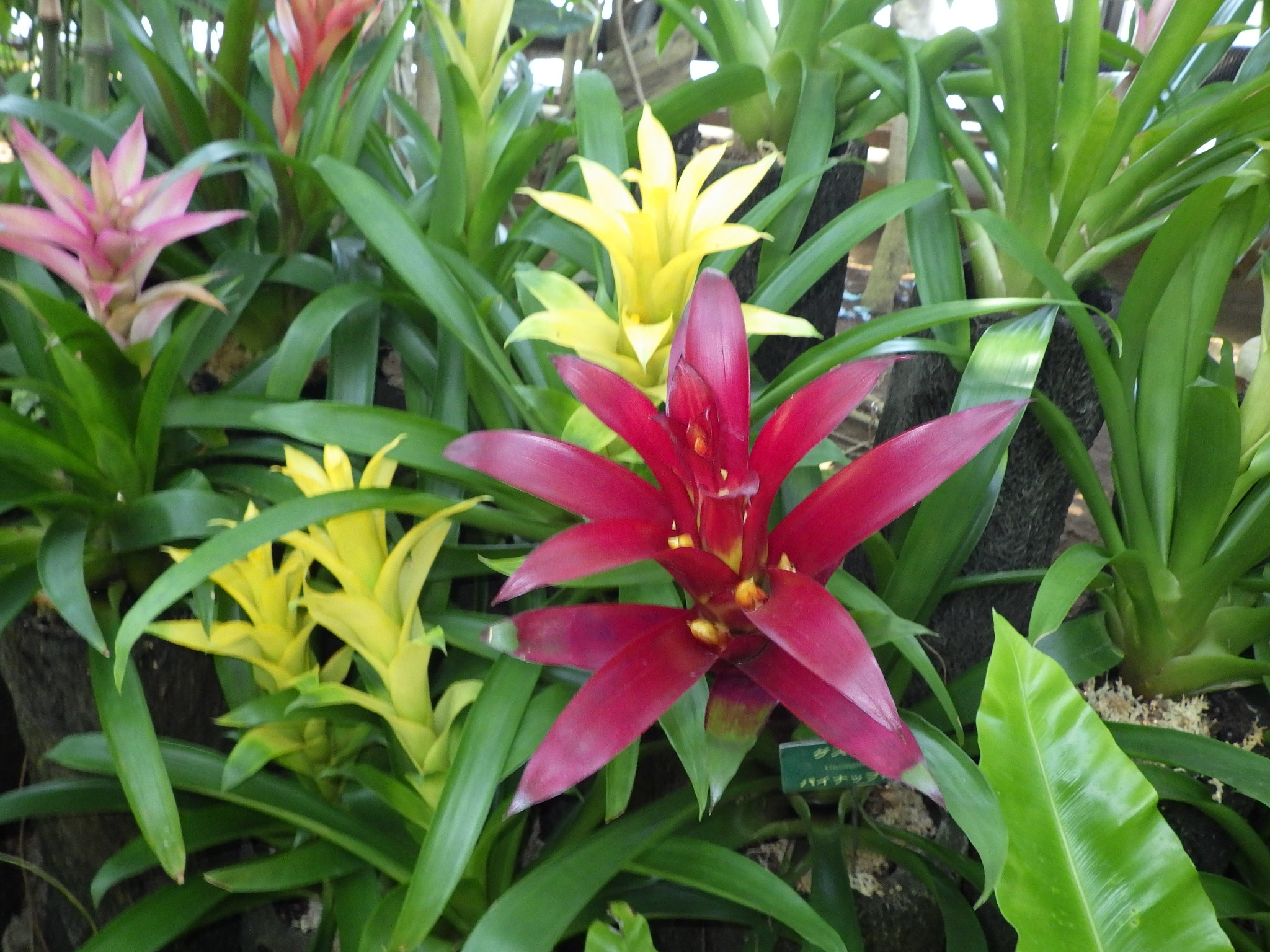
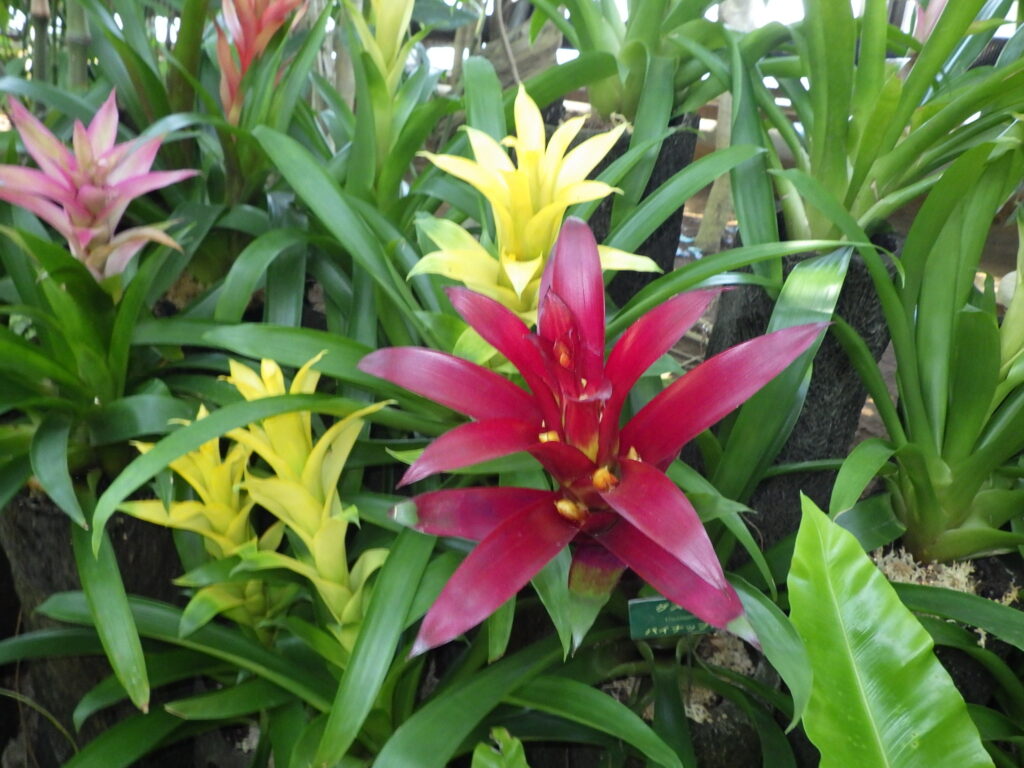
No.0664.a Guzmania lingulata
"Lingulataguzmania" is the author's provisional name. Reading the scientific name in order, it is Guzmania lingulata. In horticulture, it is collectively called Guzmania and there are many varieties, so no particular distinction is made, but referring to Christensen & Butcher (2005) and the English Wikipedia, it seems reasonable to consider it as Guzmania lingulata, or a variety derived from it. It is a perennial herb. Epiphytic or terrestrial. The leaves are long, up to 45 cm long and about 2 cm wide, flat, glossy green, with smooth margins, forming a funnel-shaped rosette. The flower stalk is usually shorter than the leaves, up to 30 cm long. The capitulum is spherical, bearing up to 50 flowers, the flowers are enclosed in large, bright red to pink bracts (sometimes yellow or orange in horticultural varieties), the petals are white, and the flowers often last for 2 to 4 months. It is distributed from Central America and the West Indies to Bolivia and Brazil. Varieties can be identified in Christensen & Butcher (2005), but the following individuals may be cultivars, so they are not distinguished here.
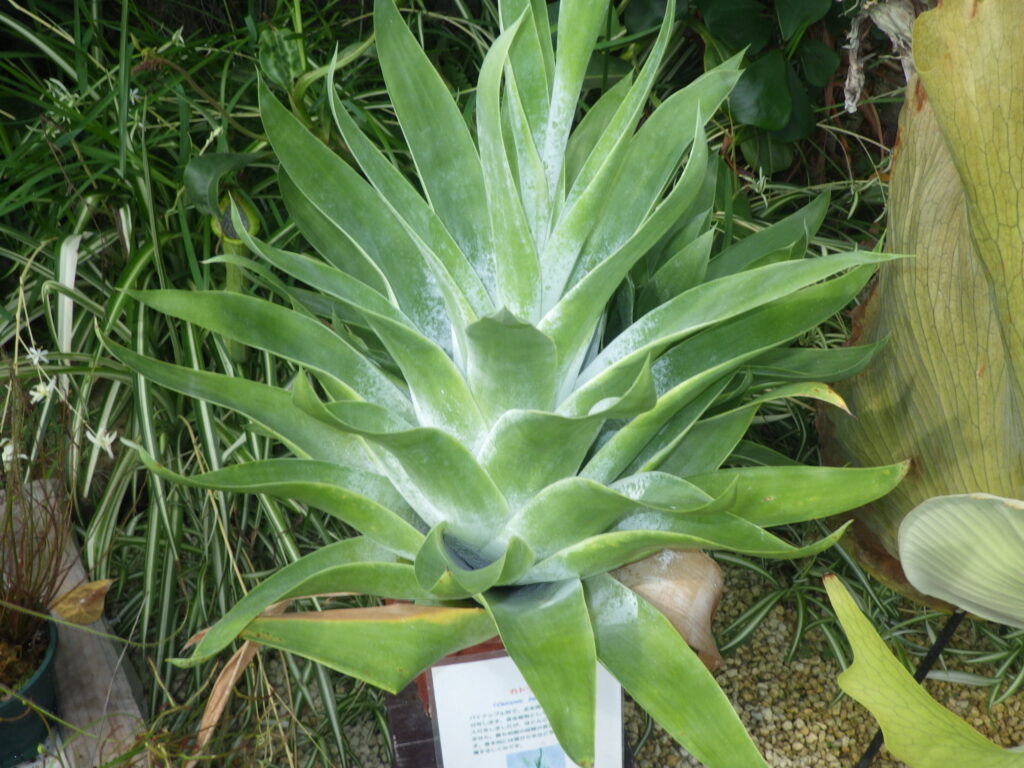
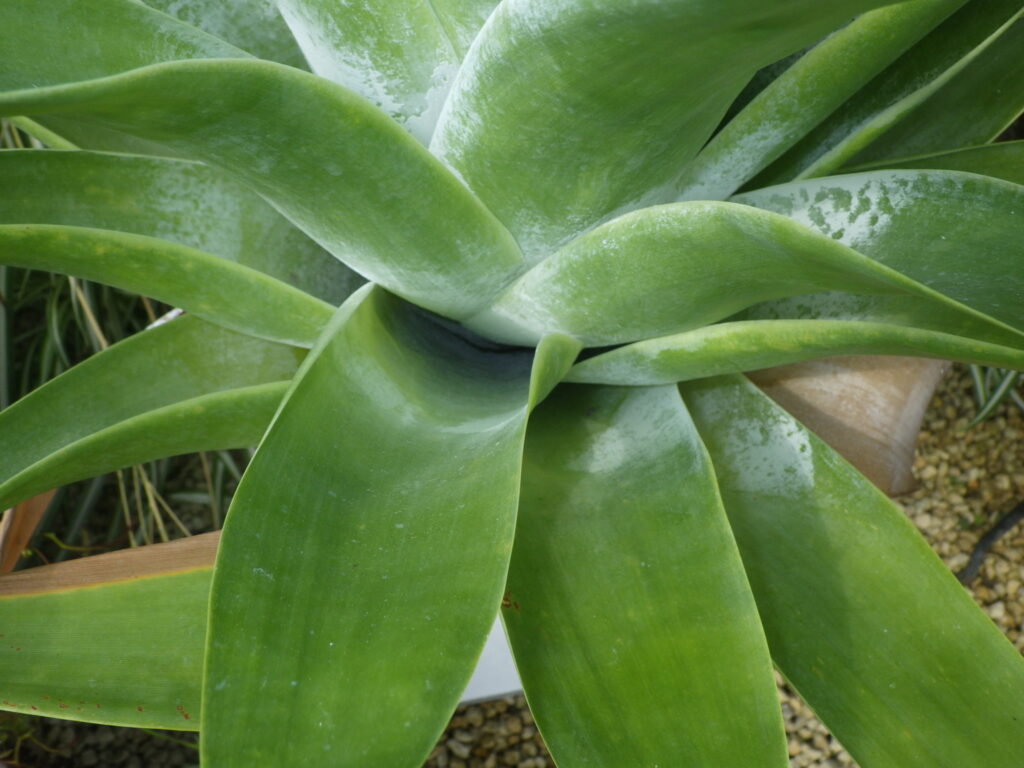
No.0664.b Catopsis berteroniana
"Berthorniana catopsis" is the author's provisional name. Reading the scientific name in order, it is Catopsis berteloniana. It is an epiphytic carnivorous plant with long, narrow leaves. These upright leaves overlap to form a tube-like structure. Rainwater falls and lands in the tube, forming a pool of water called a phytotelmata (Frank & O'Meara, 1984; Adlassnig et al., 2011). The pool is filled with an aqueous medium teeming with nutrients that the plant can absorb. This medium is slightly acidic but very close to neutral (pH = 6.8). The plant's epidermis contains sessile glands used for nutrient absorption. While other carnivorous plant species, such as Cephalotus follicularis, use these glands to secrete enzymes that break down debris and capture prey, this species does not produce enzymes, suggesting that it decomposes matter in a different way. The white powder seen on the leaves is released from the plant's leaves. This powder is extremely slippery and reflects ultraviolet light. Capturing prey is the primary way this species obtains nutrients. It uses passive traps called tanks to trap and digest its targets. Being insectivorous, the typical prey caught in the traps are insects. The purpose of these traps is to obtain inorganic nutrients, most commonly nitrogen and phosphorus, from the decomposition of insects. As it is an epiphytic plant, most of the insects caught in the traps are winged insects. They are attracted to the plant by the white powder on its leaves. This powder is attracted because it reflects ultraviolet light similar to pollen. In addition, the powder also makes the insects' feet slippery, preventing them from escaping and causing them to fall into the phytothermata. Most organisms end up drowning. However, 11 species of insects called inquilinus, including a type of mosquito called Wyeomyia mitchellii, have been identified as inhabiting the phytothermata, and a symbiotic relationship has been established where the plant provides a habitat for the larvae, and the larvae help the plant break down nitrogen nutrients for faster absorption. It is distributed in the Neotropical region from southern Florida to southern Brazil, and grows on the canopies of other trees that are exposed to a lot of sunlight.
References
Adlassnig, W., Peroutka, M., & Lendl, T. 2011. Traps of carnivorous pitcher plants as a habitat: Composition of the fluid, biodiversity and mutualistic activities. Annals of Botany 107: 181-194. https://doi.org/10.1093/aob/mcq238
Christensen, T. & Butcher, D. 2005. Bromeliaceae. In: R. Spencer (Ed.), Horticultural Flora of South-eastern Australia: The identification of garden and cultivated plants (Vol. 5 Flowering plants. Monocotyledons). University of New South Wales Press, Sydney. ISBN: 9780868408323, https://hortflora.rbg.vic.gov.au/taxon/adae2160-5340-11e7-b82b-005056b0018f, https://hortflora.rbg.vic.gov.au/taxon/adae2160-5340-11e7-b82b-005056b0018f/key
Frank, JH & O'Meara, GF 1984. The bromeliad Catopsis berteroniana traps terrestrial arthropods but harbors Wyeomyia larvae (Diptera: Culicidae). Florida Entomologist 67(3): 418-424. https://www.jstor.org/stable/3494721