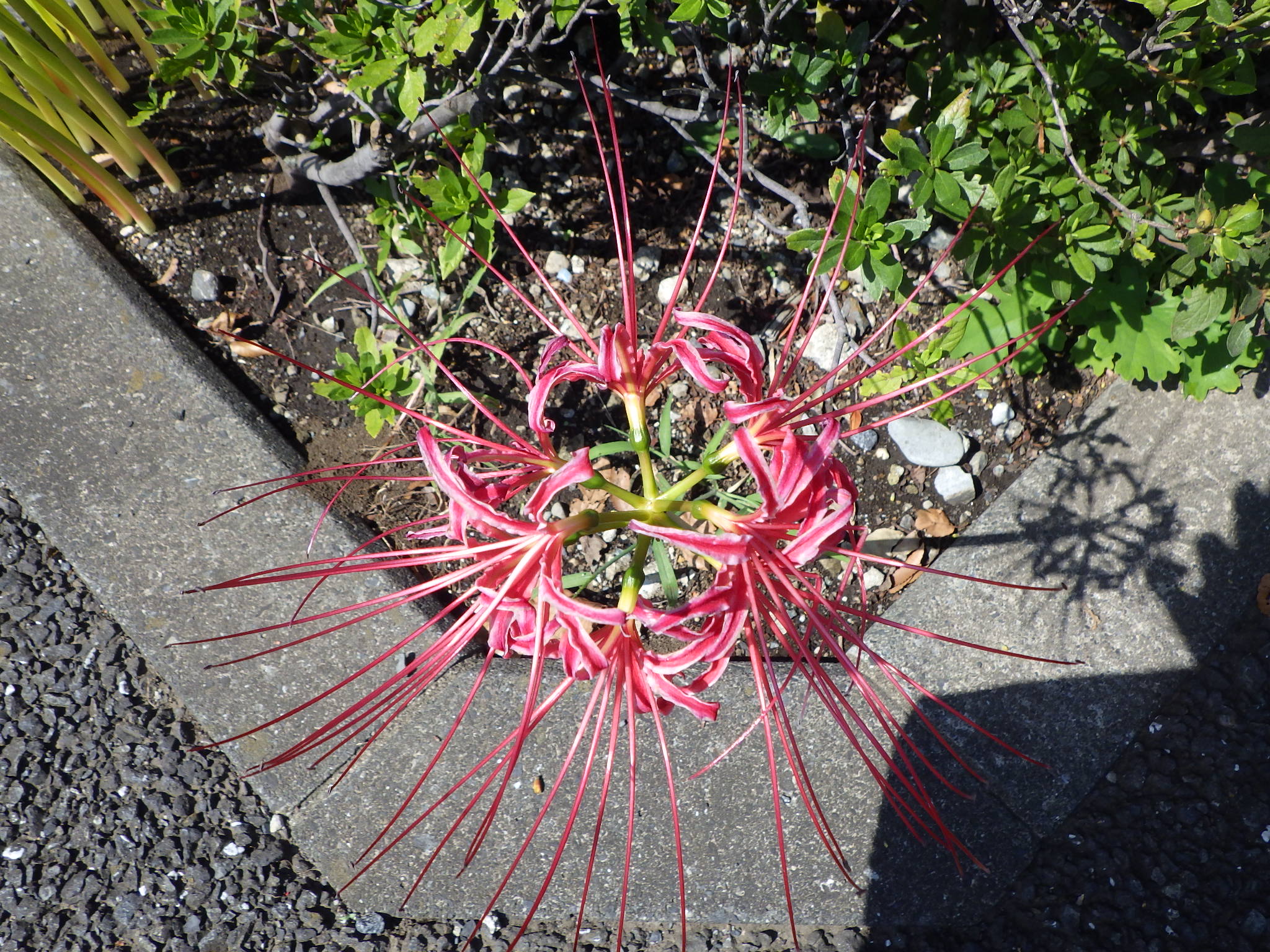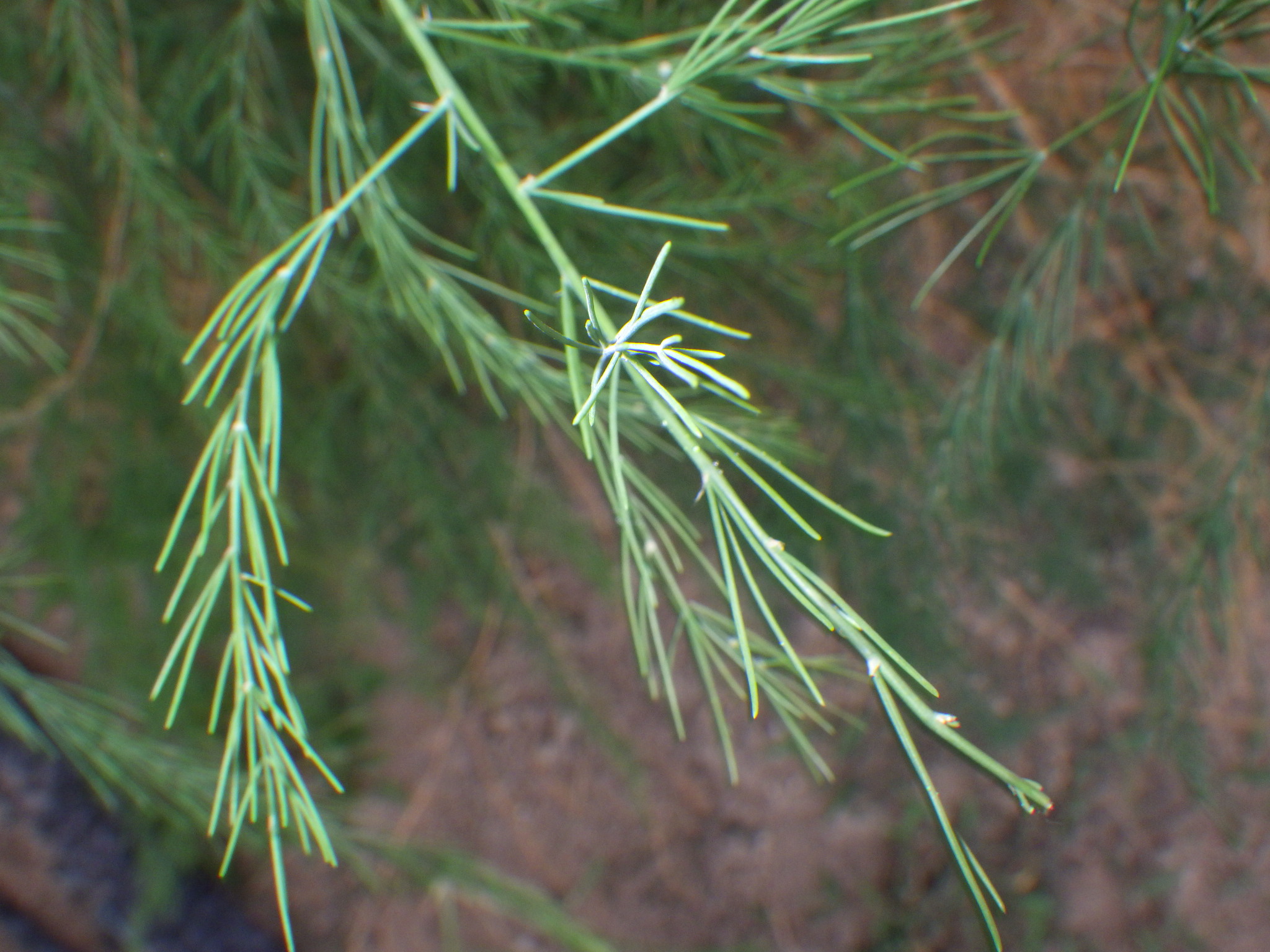
The Asparagaceae family, also known as the Asparagaceae family, consists of perennial herbs, woody plants, or vines. They have rhizomes or bulbs. Leaves are alternate, opposite, or whorled, and may be clustered at the base of the stem. Terminal branches may also be leaf-like (asparagus and Ruscus genera). Flowers are solitary at the stem apex or leaf axils, or borne in diverse racemes or umbels. They bear bisexual flowers. Perianth segments are free or fused, with three outer and three inner perianth segments, some identical and some heteromorphic. The ovary is usually superior. Some species produce berries, while others produce capsules. They are widely distributed worldwide, comprising 153 genera and approximately 2,500 species. There are 14 genera and 56 species in Japan. The Asparagaceae family includes most of the Asparagine subfamily, which is characterized by berries and rhizomes, as well as the Ophiopogonoideae subfamily, the entire Scilloideae subfamily, and the genus Hosta, which was previously classified as the Asphodeloideae subfamily. Along with the Hemerocallisaceae family and the Amaryllidaceae family, it belongs to the Asparagales order.
This article provides a comprehensive, illustrated guide to plants belonging to the Asparagaceae family.
The basic information is based on Tsukamoto (1994) and the Kanagawa Prefectural Flora Survey Association (2018). Photographs are replaced as better ones become available. While the identifications are made by the author, please note that they may be changed without notice if misidentifications are found.
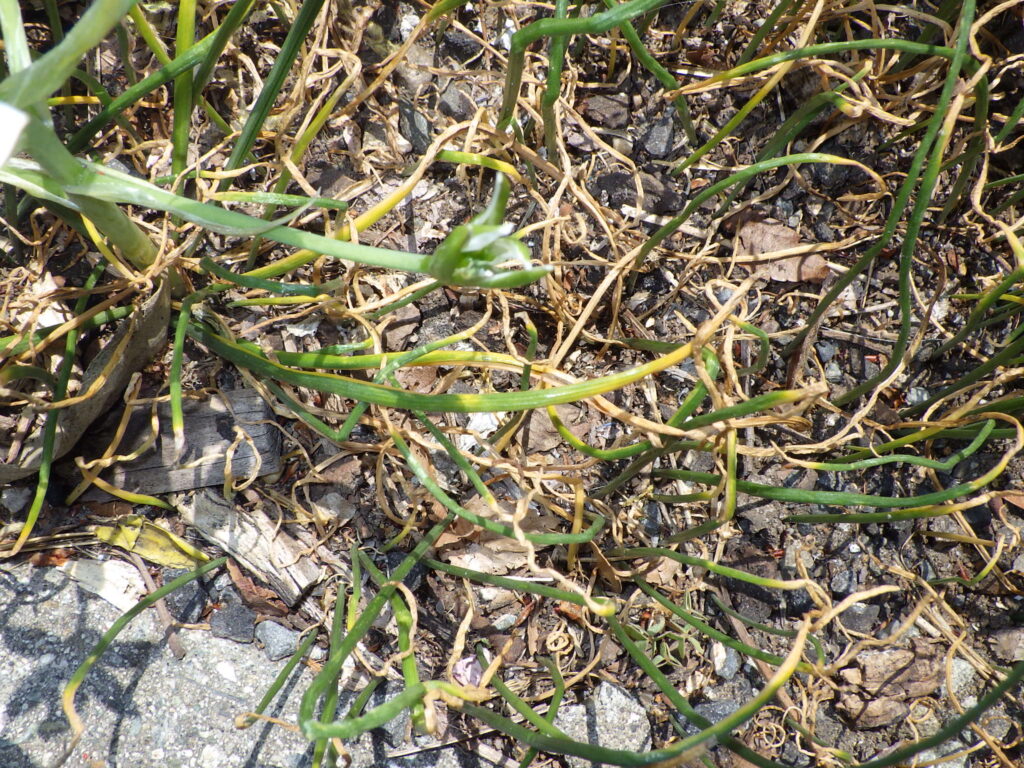
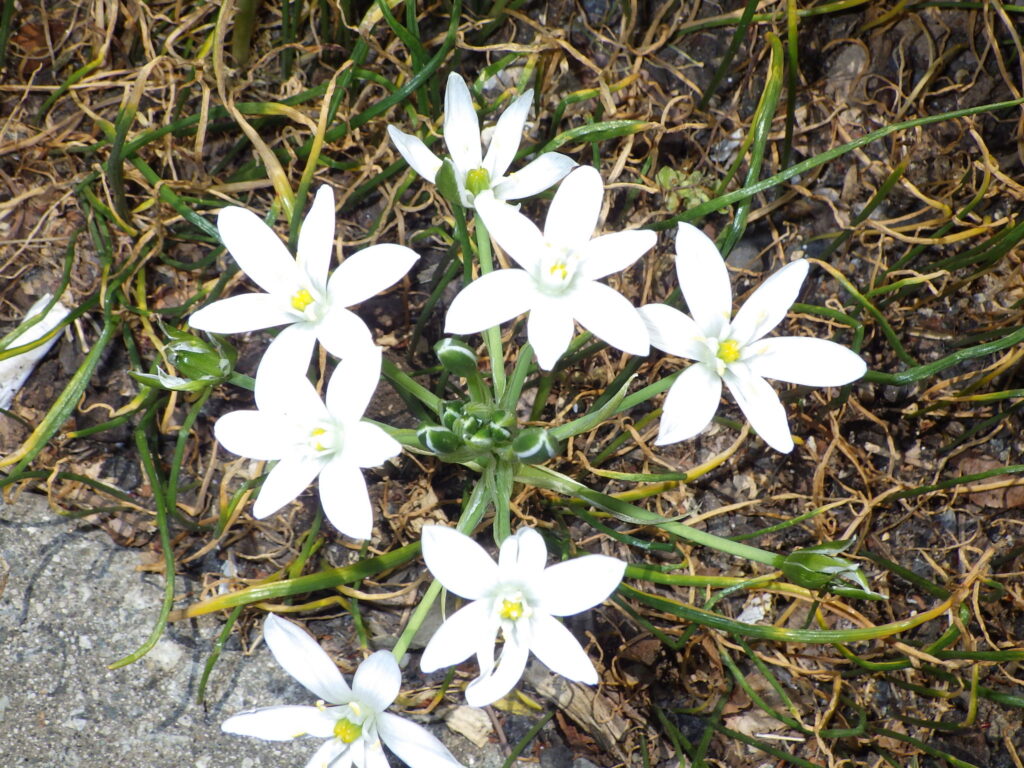
- No. 0557 Ornithogalum umbellatum
- No.0557.a False Seaweed (Albuca bracteata)
- No. 0558 Nishikiyuri (Lilium orientalis)
- No. 0560 Hyacinthoides hispanica
- No.0560.a Scilla forbesii
- No. 0561 Muscari botryoides
- No.0561.a Grape Muscari (Muscari armeniacum)
- No.0561.b Eucomis pallidiflora subsp. pole–evansii
- No.0561.c Eucomis autumnalis
- No.0561.d Bowiea volubilis
- No. 0563 Chlorophytum comosum (Spider Plant)
- No.0563.1 Chlorophytum comosum 'Variegatum' (Spider Plant)‘
- No. 0564 Agave americana
- No.0564.1 Agave americana 'Marginata'‘
- No.0565.a Agave stricta
- No. 0566 Yucca gloriosa var. gloriosa
- No. 0567 Yucca gloriosa var. recurvifolia
- No. 0568 Itran (Yucca filamentosa)
- No.0568.a Yucca aloifolia
- No.0568.b Variegated Yucca aloifolia 'Marginata'‘
- No.0571.a Hosta 'Halcyon'‘
- No. 0574 Hosta sieboldii var. sieboldii f. spathulata
- No. 0578 Cordyline fruticosa
- No.0578.a Cordyline australis
- No.0579 Asparagus cochinchinensis var. lucidus
- No. 0582 Asparagus officinalis
- No.0584 Dracaena draco
- No.0584.a Dracaena concinna
- No.0584.b Dracaena fragrans
- No.0584.c Dracaena surculosa 'Florida Beauty' (Star-flowered pine tree)‘
- No.0584.d Beaucarnea recurvata (Ponytail Orchid)
- No.0586.1 Dracaena trifasciata 'Laurentii'‘
- No.0587 Aspidistra elatior
- No.0588 Rohdea japonica
- No. 0589 Reineckea carnea
- No.0590 Liriope muscari
- No.0590.1 Liriope muscari f. variegata
- No.0591 Liriope spicata
- No. 0593 Ophiopogon japonicus var. japonicus
- No.0593.1 Ophiopogon japonicus var. japonicus f. nanus
- No.0593.2 White Banana Ophiopogon japonicus var. umbrosus f. leucanthus
- No.0594.a Ophiopogon jaburan
- No.0597 Polygonatum odoratum var. pluriflorum
- No. 0599 Polygonatum falcatum
- No. 0601 Polygonatum lasianthum
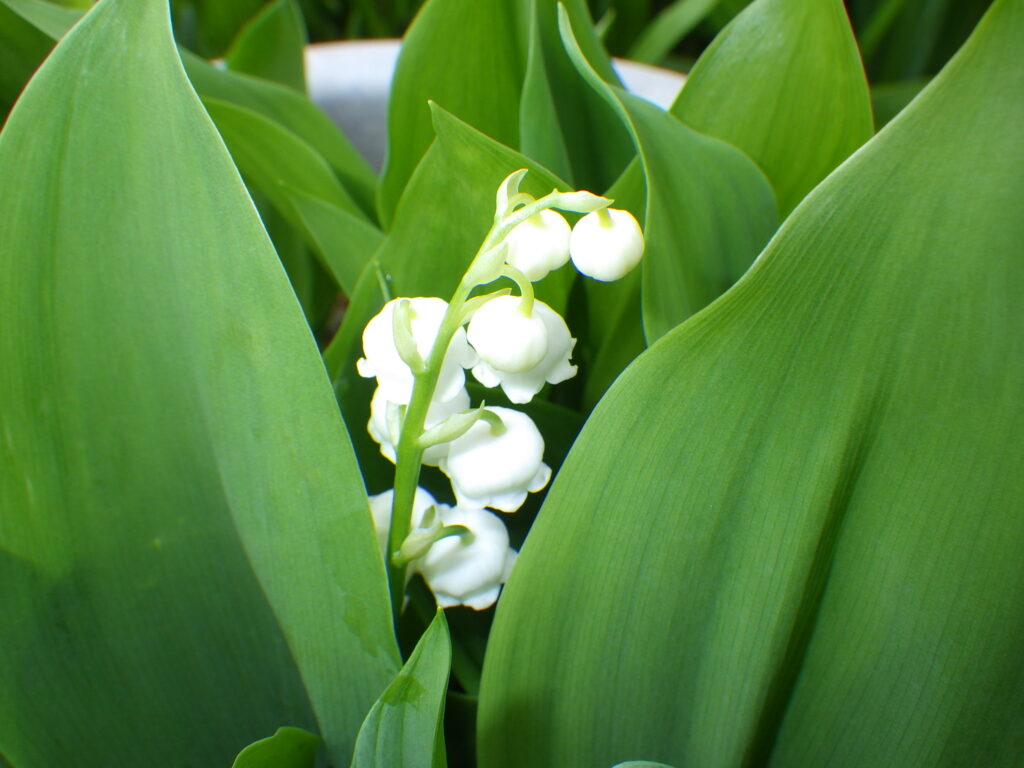
- No.0603.1 German Lily of the Valley (Convallaria majalis)
- References
No. 0557 Ornithogalum umbellatum
This perennial plant is native to Europe and Southwest Asia, and is cold-hardy. Its bulb is spherical and relatively small, about 3 cm in diameter, but it readily produces small bulbs and propagates easily. The leaves are somewhat broad, 2-16 mm in length. In typical specimens, the midrib is white. It bears 12-20 flowers in a cymose inflorescence, and the lower flower stalk is long, about 10 cm. The flowers are 2.5 cm in diameter, white in color, with the outside of the perianth petals being green with white stripes on the ground. The flowers open around 11 a.m. and close around 3 p.m. The flowering season is April. It is a naturalized plant native to the Mediterranean region. It was introduced to Japan in the early Meiji period as an ornamental plant. It has been confused with Ornithogalum umbellatum, which has a corymbose inflorescence with 6-10 flowers.
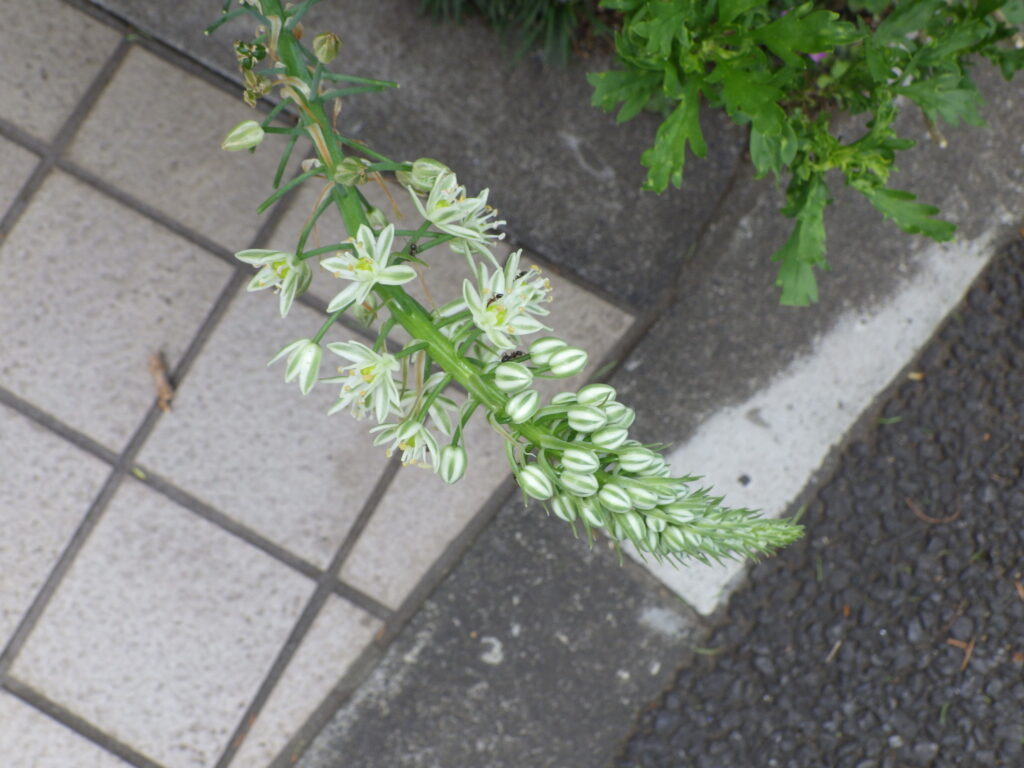
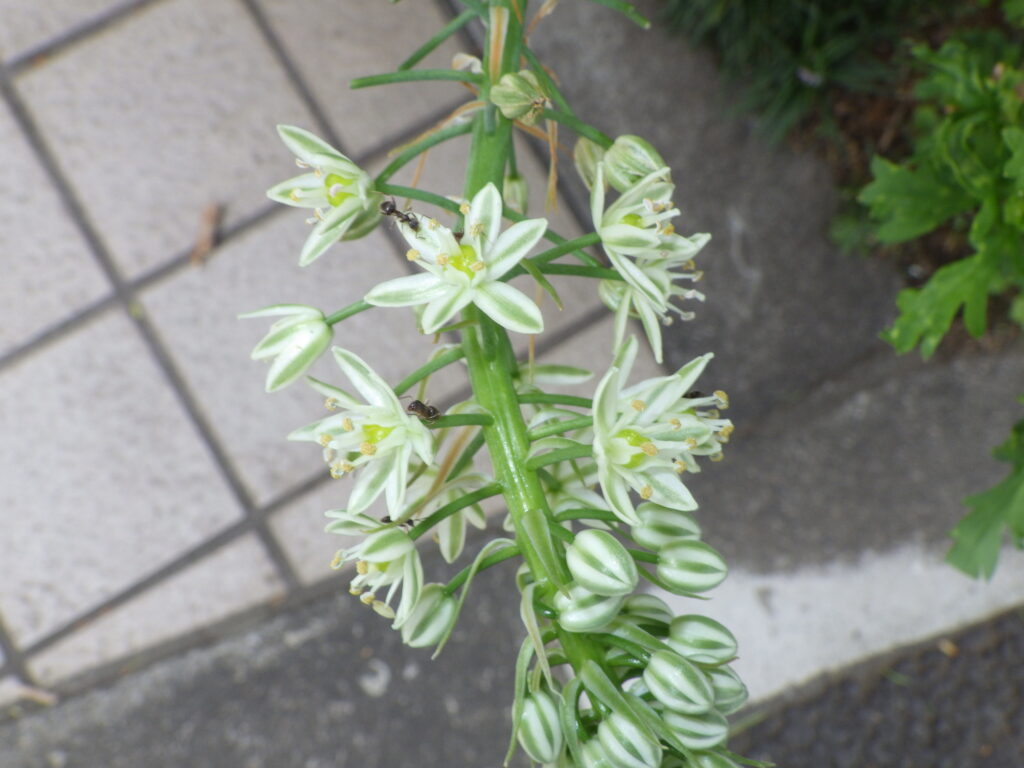
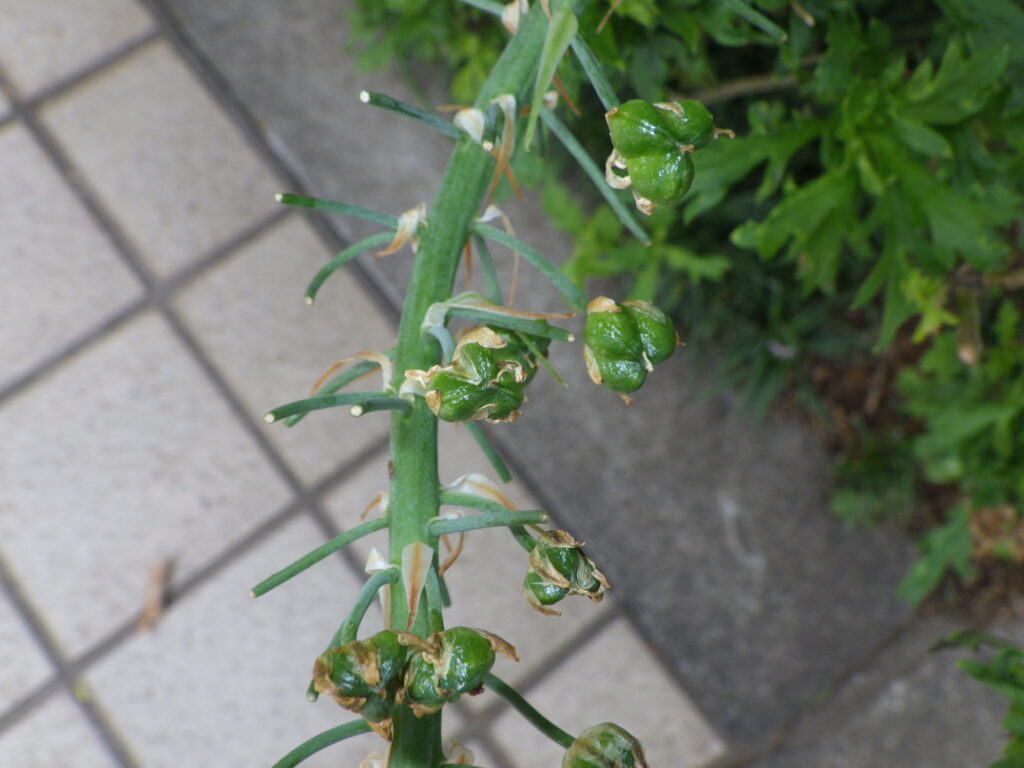
No.0557.a False Seaweed (Albuca bracteata)
This perennial herb has a bulb that grows up to 10 cm in diameter. The leaves are basal, linear, 30-60 cm long and 2-4 cm wide, with a pointed, tail-like tip. 50-100 flowers are densely borne in corymbs or racemes on flower stalks 30-80 cm tall. The flowers are 2.5 cm in diameter with six perianth segments; the inside is white with a green stripe down the center, and the outside has prominent, thick green stripes. The fruit is a capsule. It is a subterranean plant whose leaves wither during droughts. Native to South Africa (Cape and KwaZulu-Natal provinces), it can also be found in tropical East Africa, although it may have been introduced there. It inhabits forests, forest edges, enclosed woodlands, and protected slopes. It is cultivated as an ornamental plant in various countries, including Japan.
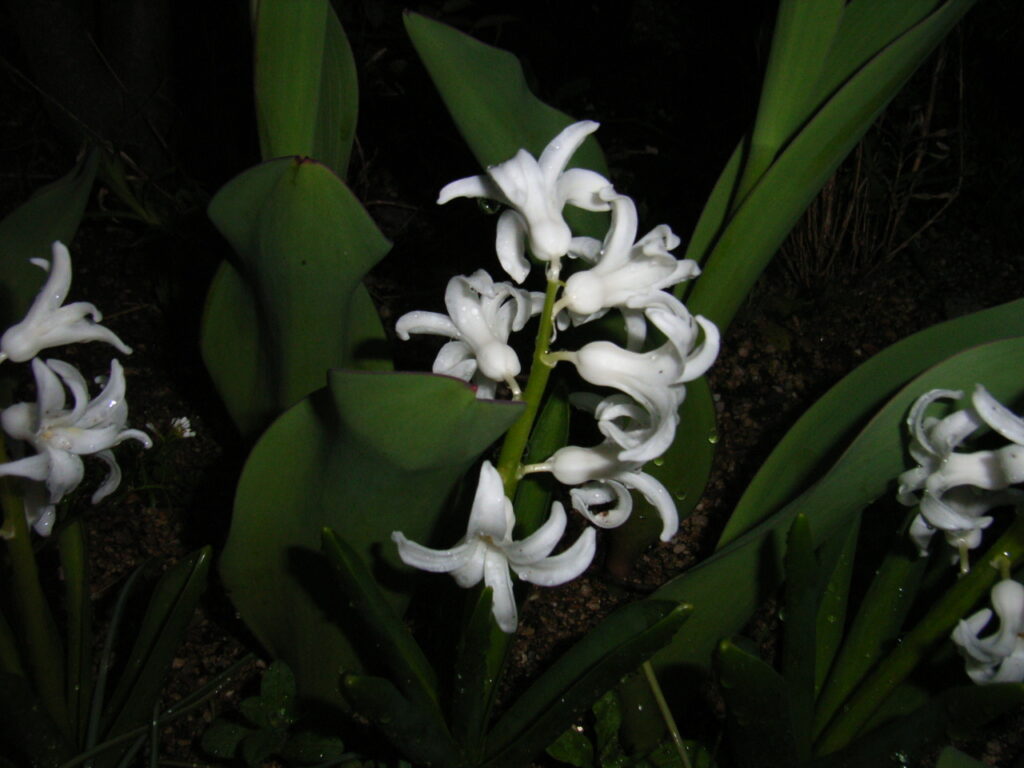
No. 0558 Nishikiyuri (Lilium orientalis)
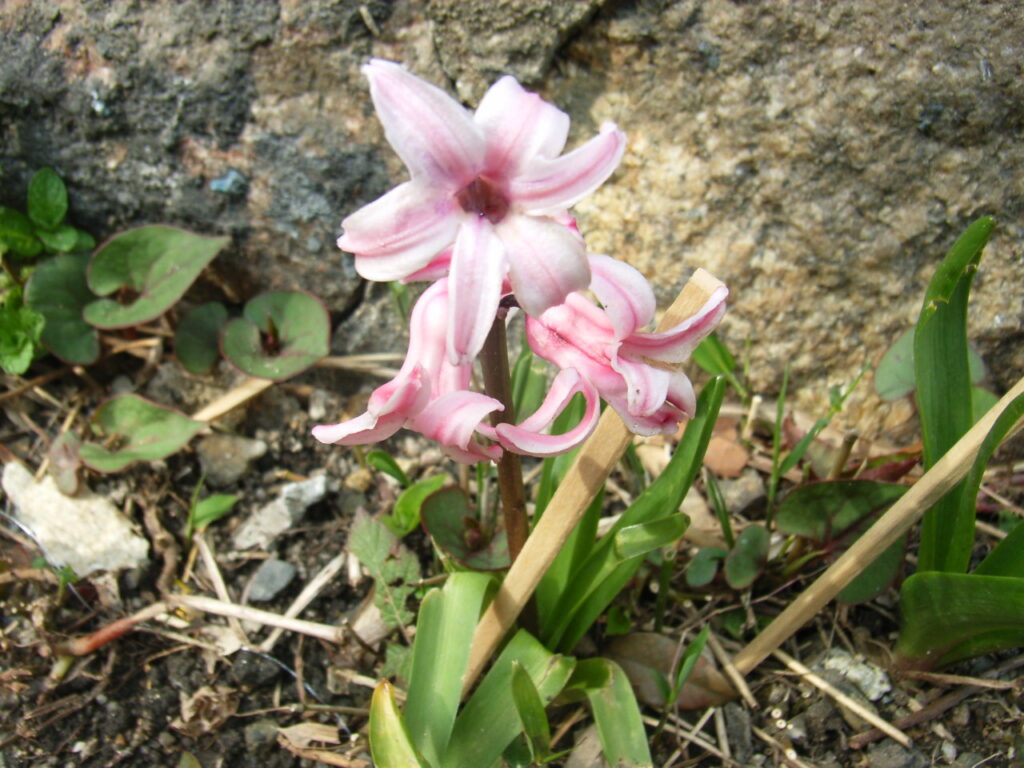
A bulbous perennial herb, also known as hyacinth. It has a bulb and in early spring produces 4 to 6 fleshy leaves about 2 cm wide and 20 cm long, with a thick flower stalk rising from the center of the basal leaves. In April, it bears numerous funnel-shaped flowers about 3 cm in diameter in racemes. The perianth is 6-lobed, with the lobes spreading and reversing. There are 6 stamens, attached to the middle of the flower tube. The fruit is a 3-angled capsule with 3 chambers, and it dehisces with 3 petals. The wild species has bluish-purple flowers, but there are horticultural varieties with pink, red, white, and yellow flowers. The bulb is a layered bulb. The mother bulb remains and enlarges without being consumed, and in the case of large bulbs, it is composed of scales formed over 3 years, and the outside is covered with a thin, papery outer skin. The color of the outer skin is almost the same as the flower color, so the flower color can be roughly determined by looking at the bulb. It is distributed in the Mediterranean region, including Greece, Syria, and Asia Minor. Hyacinths were introduced to Europe via Italy in the 16th century, resulting in the development of Dutch hyacinths, primarily cultivated in the Netherlands, and Roman hyacinths, improved in France. While the latter are hardier and easier to grow, their flowers and clusters are smaller, leading to less cultivation. Dutch hyacinths became more widespread, particularly gaining popularity in the 18th century. Hyacinths were introduced to Japan during the Edo period, specifically the Ansei era (1854-1860), but widespread cultivation only began in the Taisho era (1912-1926). It is said that there were once as many as 2,000 horticultural varieties of hyacinths, but their diversity lies mainly in flower color; they do not exhibit the same level of variation in plant form or flower shape as tulips or narcissus. This is attributed to the fact that they originated from only one wild species, and no interspecific hybrids were created.
No. 0560 Hyacinthoides hispanica
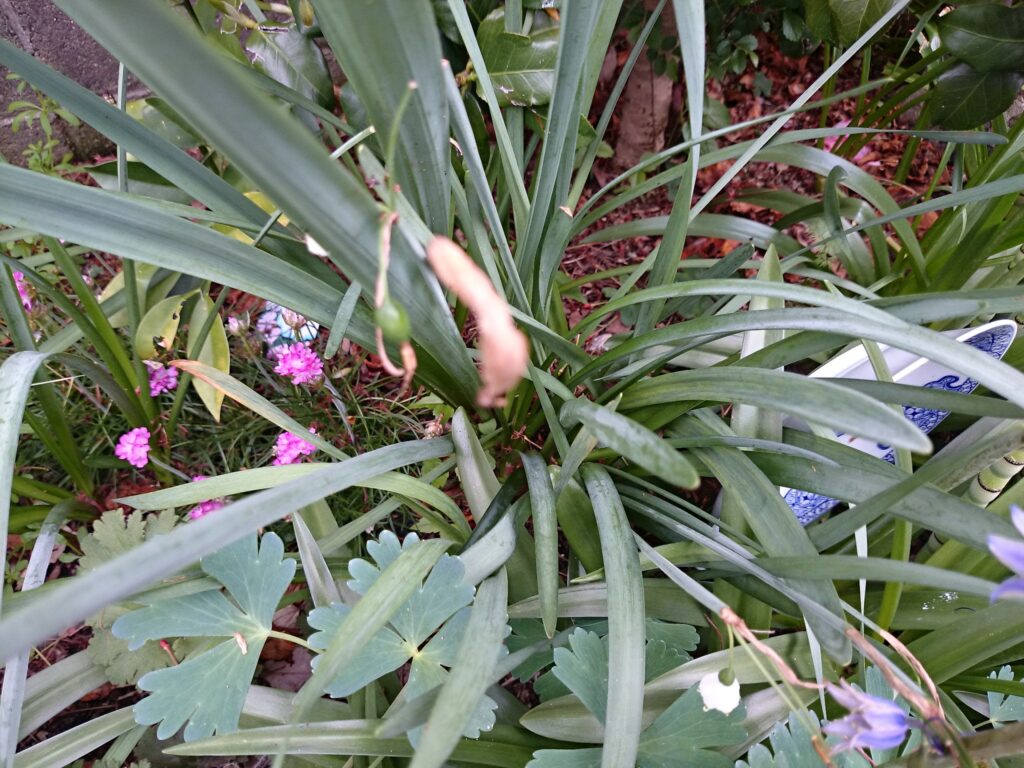
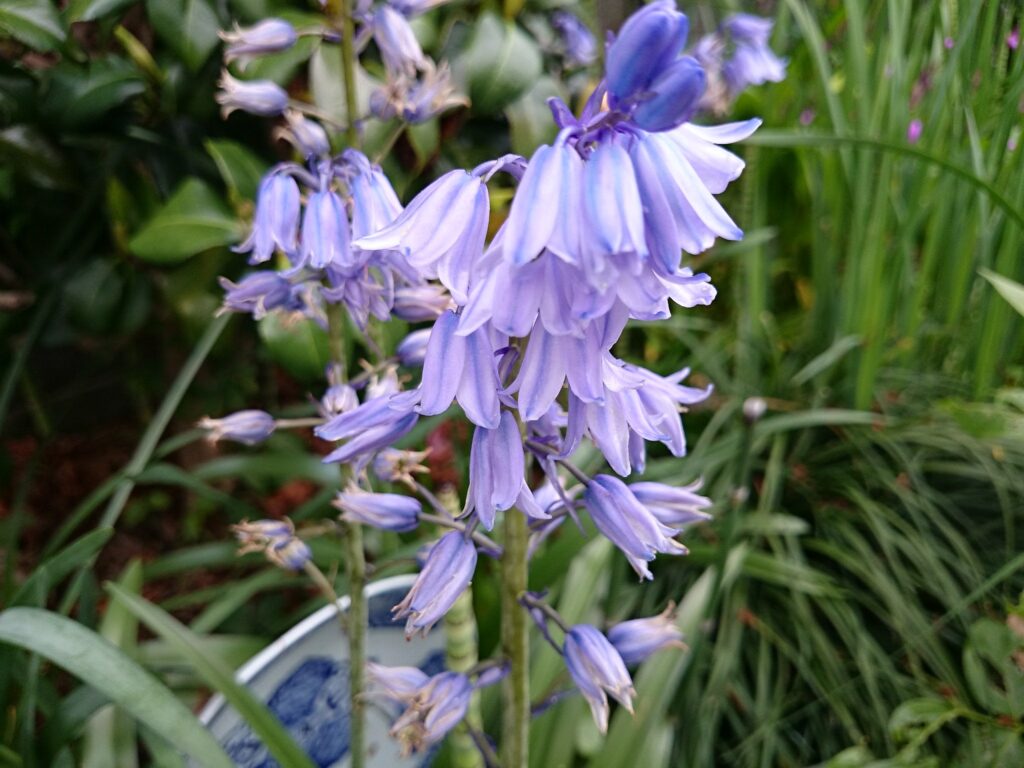
This is a bulbous perennial herb. The leaves are linear-lanceolate to lanceolate. It flowers from April to May. A raceme of about 10 small, somewhat slender, tubular flowers with bell-shaped openings extend from the tip of an upright flower stalk. The fruit is a capsule. It is native to the western part of the Iberian Peninsula (excluding the extremely northwest), including Portugal and western Spain, but is cultivated in many countries, including Japan. It has naturalized in many European countries, North America, and Australia.
No.0560.a Scilla forbesii
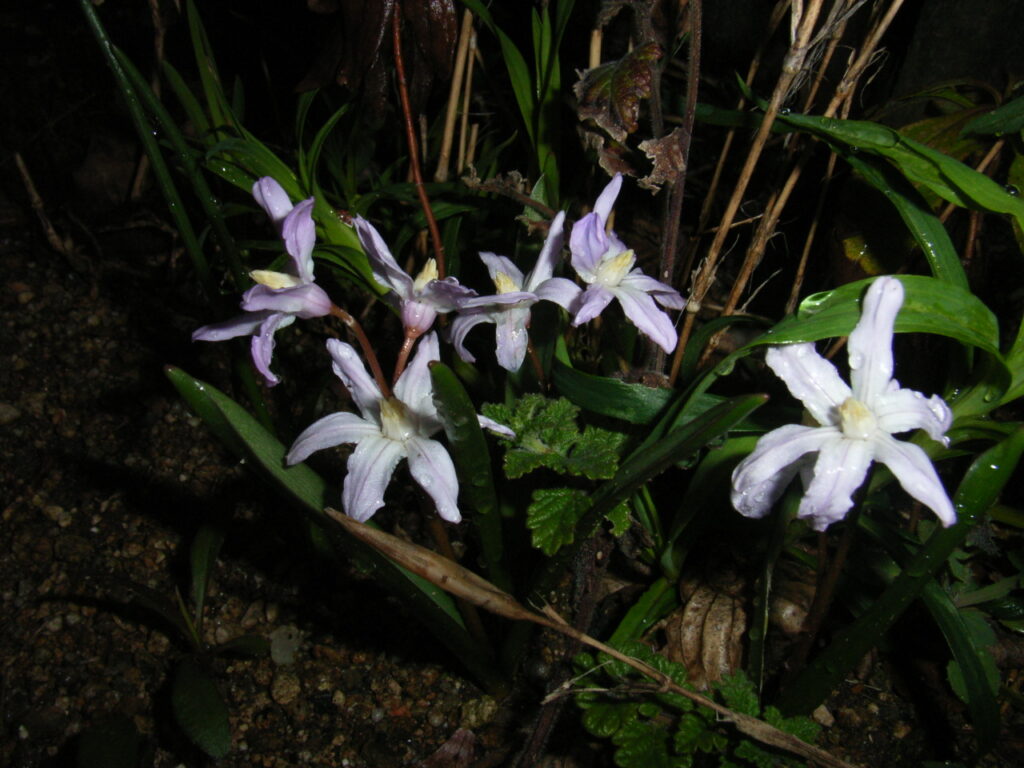
Forbesii's Snow Lily is the author's provisional name. It is part of a group of plants known horticulturally as Chionodoxa. It is a perennial herb. The bulb produces two leaves up to 12 cm long and 2 cm wide, and one flower stalk up to 10.5 cm long. The flowers are borne in broad, pyramidal racemes, with up to 12 flowers per stalk. The lower flowers face outwards, and the upper flowers face upwards. Each flower is up to 3 cm in diameter, with individual petals 1.3 cm long. The base of each perianth segment is white, creating a white "eye." The outside of the perianth segments is dark blue to purplish-blue. It is distinguished from other species of the same genus by the flattened base of the stamens, which are densely clustered in the center of the flower. It is native to western and southern Turkey. It is cultivated as an ornamental plant in many countries, including Japan.
No. 0561 Muscari botryoides
This is a perennial herb, growing up to 20 (to 30) cm tall. The bulb is ovate, 1.5–2.5 × 1–2 cm, without lateral branches, and translucent to pale brown. There are 2–4 (to 5) leaves. The leaf blade has prominent ridges, is linear to umbel-shaped, 15–35 (to 40) cm × 3–8 (to 12) mm, and the apex is abruptly curled. It flowers from March to May. The pedicels are 20–35 (to 40) cm long, usually slightly exceeding the leaves. The racemes consist of 12–20 flowers. The flowers have sky-blue corolla tubes, are spherical to ovate, 2–4 × 2–3 mm, with white margins, and spreading pedicels 1–3 (to 5) mm long. The fruit is a capsule, 4–6 × 4–6 mm, and 3-lobed. It is native to Central and Southeastern Europe, growing in open forest areas and mountain meadows. It is cultivated for ornamental purposes in various countries, including Japan, and escapes cultivation in the United States (Flora of North America). Information on identifying Muscari species is scarce on the Japanese internet, but it is clearly described in "Flora of North America". Although both Muscari ruficollis and Muscari ruficollis have sky-blue flower tubes, they can be distinguished by the number of flowers in the raceme: Muscari ruficollis has 12-20 flowers, while Muscari ruficollis has 20-40.
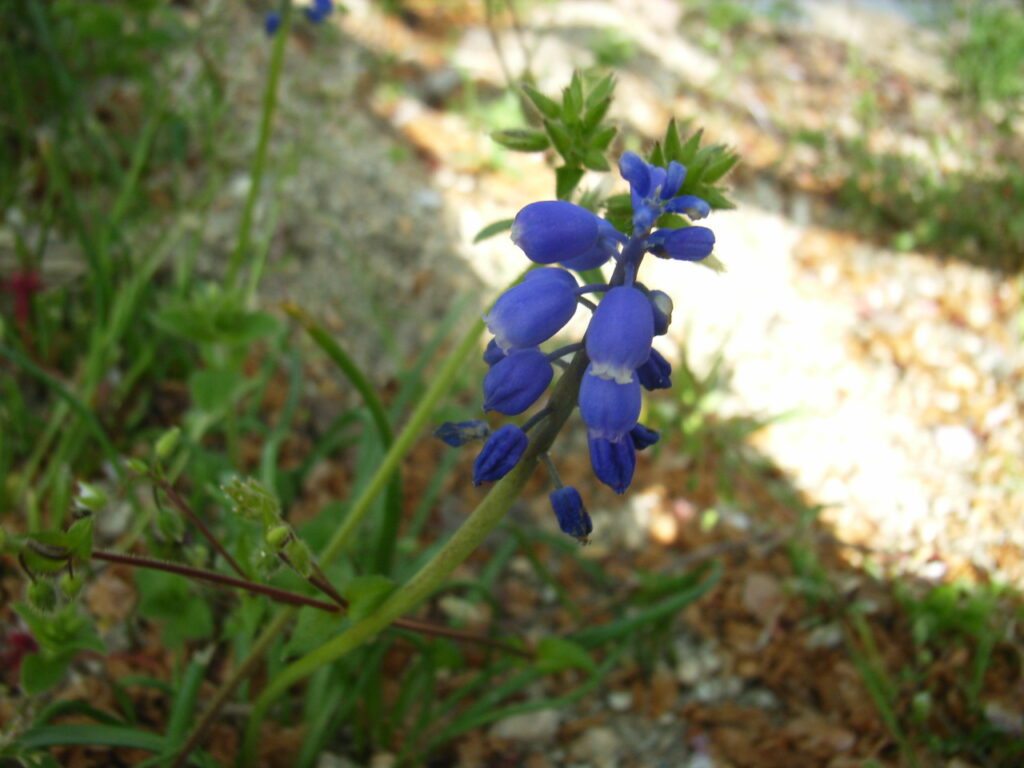
No.0561.a Grape Muscari (Muscari armeniacum)
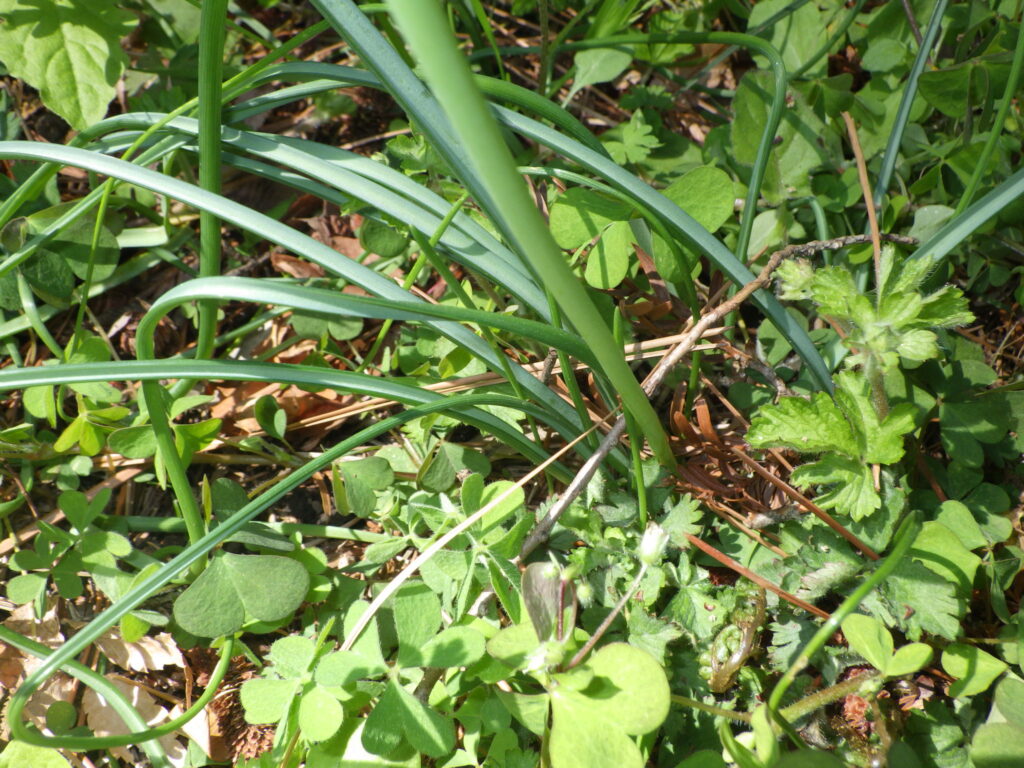
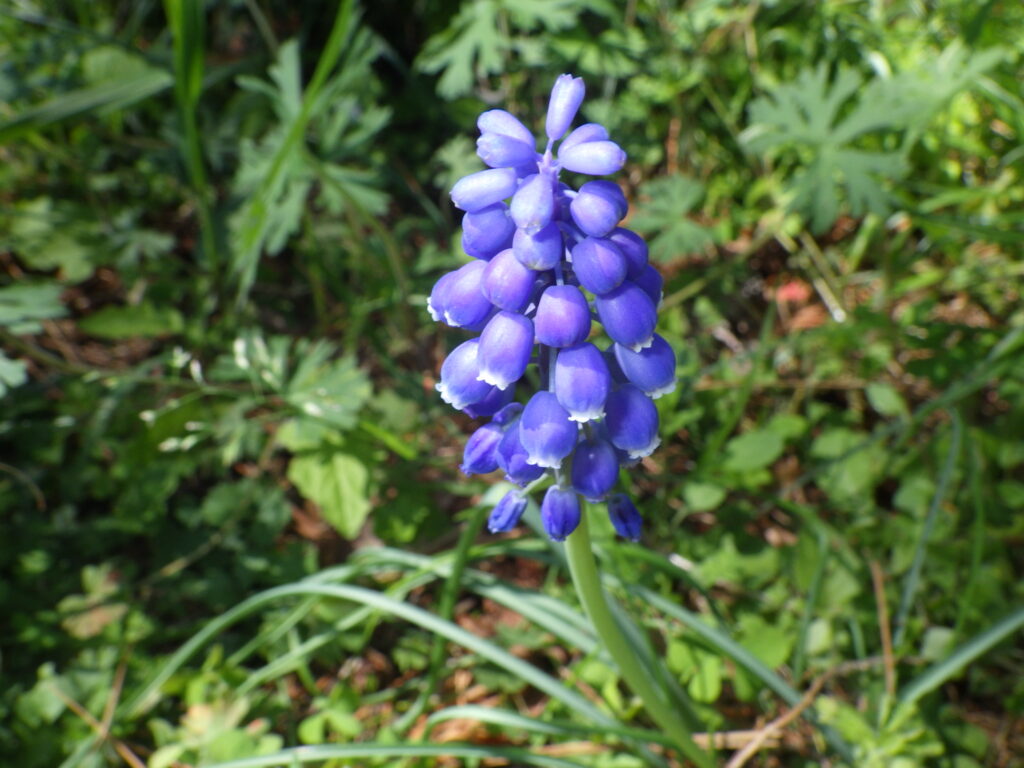
Perennial herb. Also known as Large Blue Limuscari. 15–22.5 cm tall. The bulb is less than 2.5 cm in diameter (10 cm in circumference), slightly elongated, with a brown (gray) skin. Leaves emerge in autumn and persist until flowering. Leaves are (3–)6–8 in number, linear, 30–40 cm long × 3–8 (–10) mm wide, uneven, the convex side is glossy green, the concave side is blunt, powdery white, and always longer than the flower stalk. One–3 flower stalks grow on the bulb, about 20 (–30) cm long. The raceme is borne on the flower stalk, conical, thick, 2–10 cm long, and densely bearing 20–40 flowers. It is called "grape" because it resembles an inverted bunch of grapes. Bracts are small and white. Flowers are slightly fragrant. Pedicels are slightly shorter than the flowers. The corolla is urn-shaped to cup-shaped (oblong to obovate), with a constricted mouth, 6-7 mm long, dark purplish-blue to light blue, and has white teeth. Sterile flowers are borne in clusters of 2-10 (18 or fewer) at the tip of the raceme, and these sterile flowers lack pedicels. The entire plant is light blue. The seeds are about 2 mm long and black. Flowering occurs from March to May (August to October in the Southern Hemisphere). Fruiting occurs from October to December in the Southern Hemisphere.
No.0561.b Eucomis pallidiflora subsp. pole–evansii
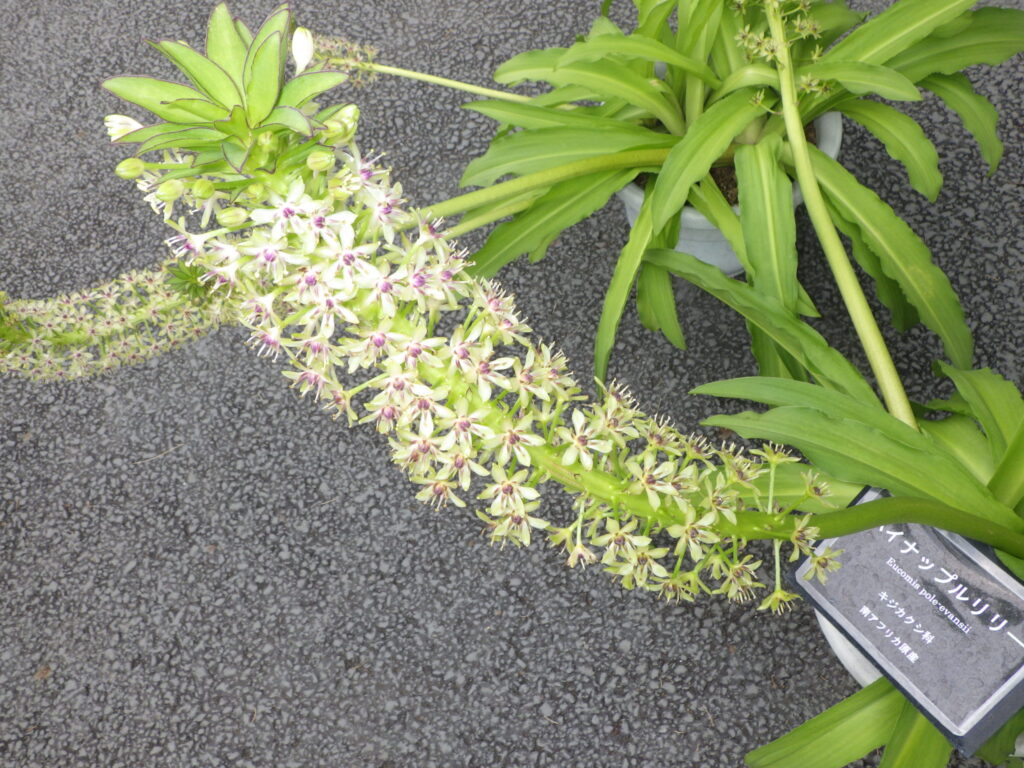
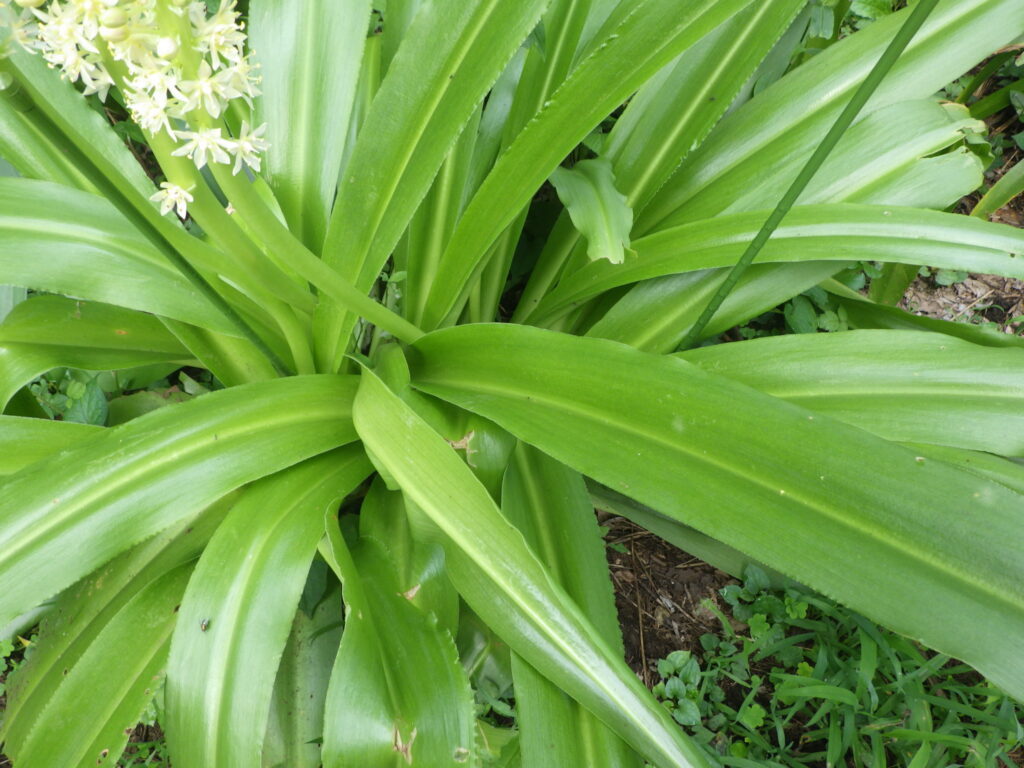
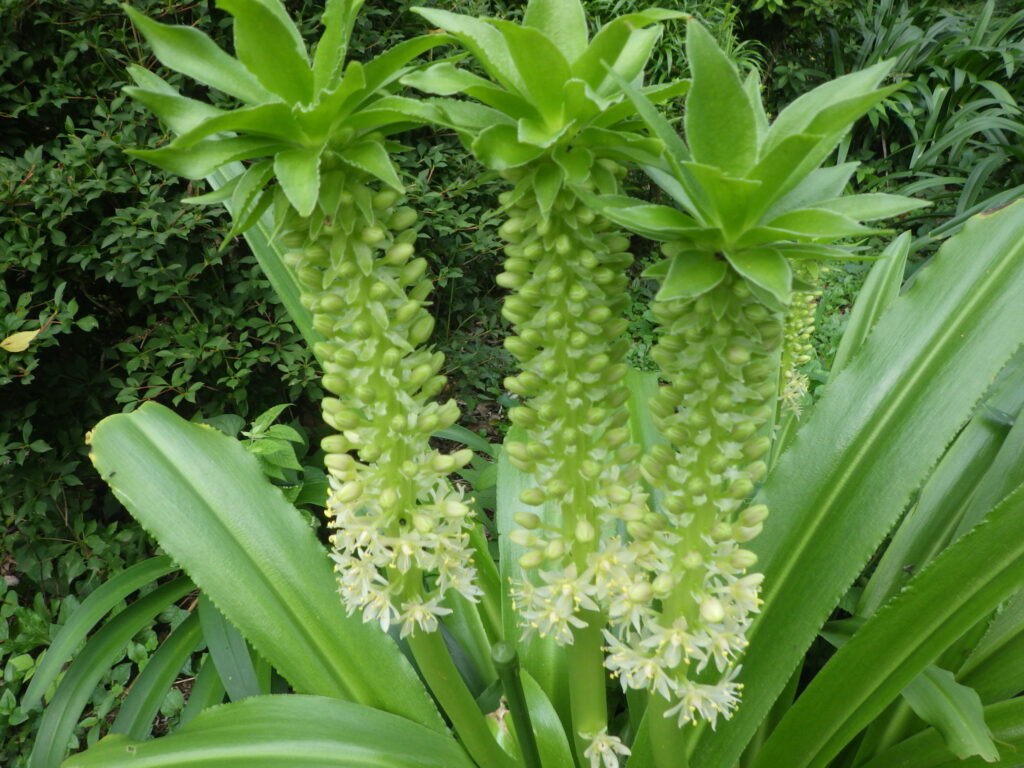
Poleevansi Hoshiomoto is the author's provisional name. It is a perennial herb. It is part of what is called Eucomis in horticulture. It is also called Eucomis pole-evansii, but recent papers often classify it as a subspecies (e.g., Rasethe et al., 2019). The academic history is unclear. It has very large rosette leaves and flowers in the summer. Thick flower stalks with purple spots reach a height of 1.3 to 1.5 m, from which green or greenish-white flowers bloom in a spiral. After flowering, purple to black fruits form along the flower heads. It is native to South Africa and is cultivated as an ornamental plant in various countries.
No.0561.c Eucomis autumnalis
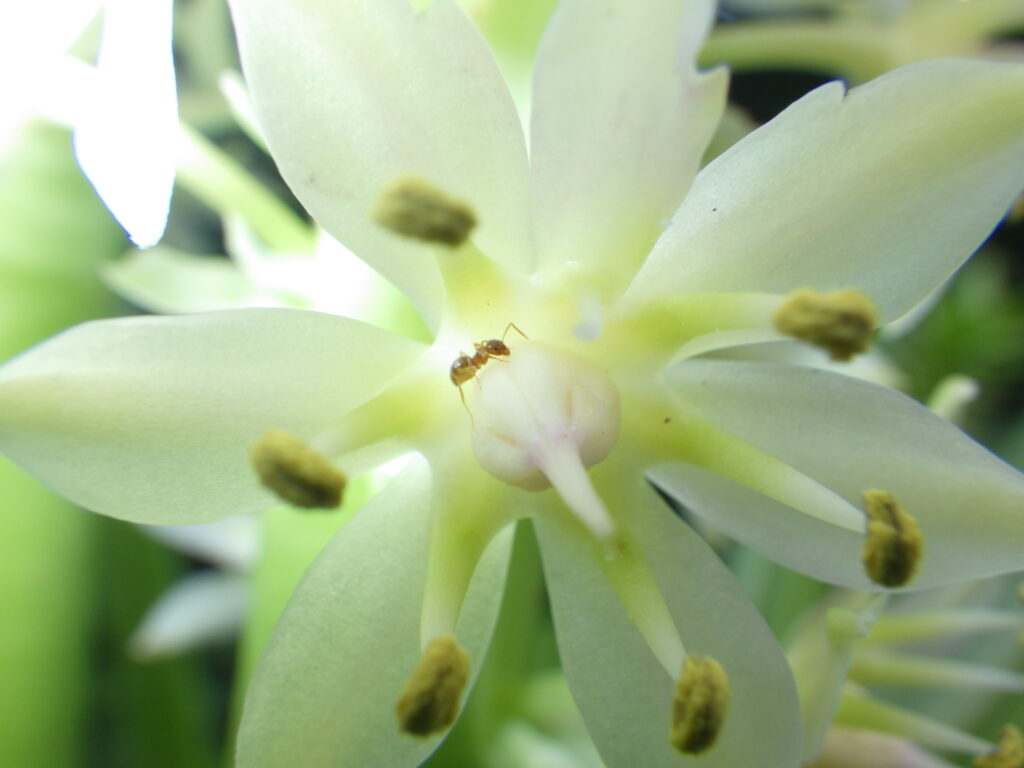
Otumnari sieboldii is the author's provisional name. It is a perennial herb, part of what is called Eucomis in horticulture. Like other Eucomis species, it has rosette leaves. The leaves are up to 55 cm long and 6-13 cm wide, with wavy margins. The sweet-smelling inflorescences that form at the end of summer are dense racemes, reaching an overall height of 30-45 cm. Individual flowers have green, yellowish-green, or white perianth segments, growing on pedicels 2-10 mm long. The stamen filaments are joined at the base, forming a slightly cup-shaped structure. At the top of the inflorescence are green bracts, up to 65 mm long. There is no purple coloration overall. It is native to Malawi and the Cape Province of South Africa and is cultivated as an ornamental plant in various countries.
No.0561.d Bowiea volubilis
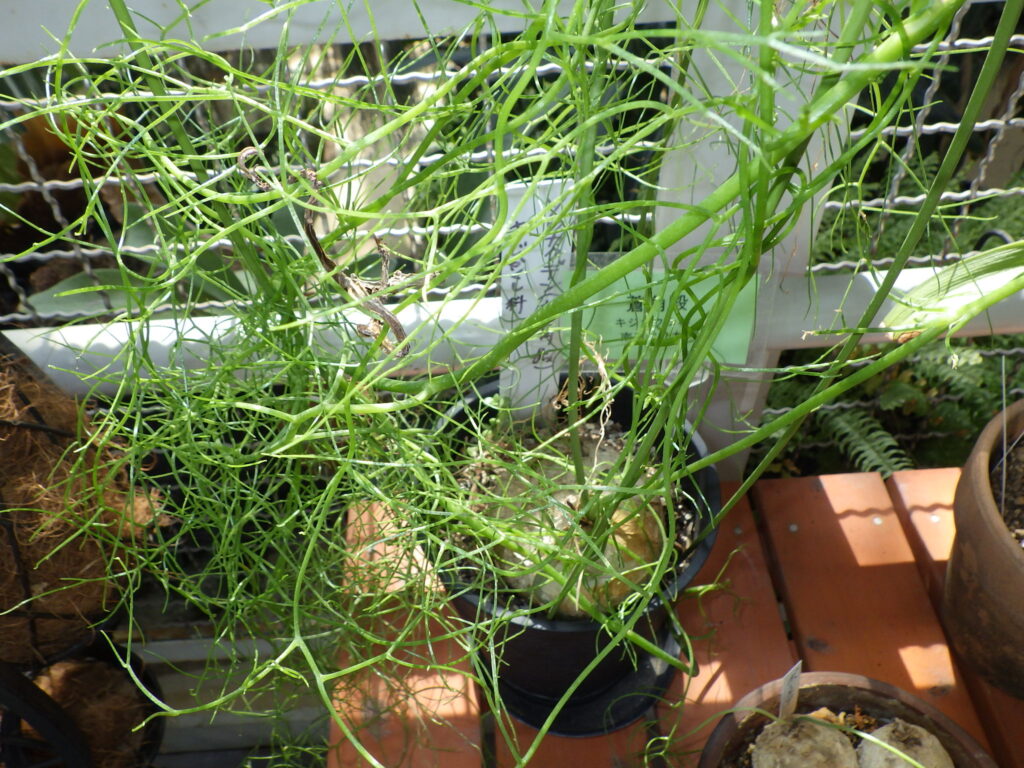
This is a perennial succulent plant with an onion-like bulb that can reach 20 cm in diameter. The surface is smooth and pale green. One or two vine-like stems grow from the top of the bulb. These vine-like stems are annuals. The stems branch repeatedly as they grow upwards, reaching a maximum length of 2-3 meters. Small, pale green, six-petaled flowers bloom from spring to summer, but they are not very conspicuous. The leaves are almost vestigial. It is native to South Africa, from Kenya to the Cape Province, and is cultivated as an ornamental plant in various countries, including Japan.
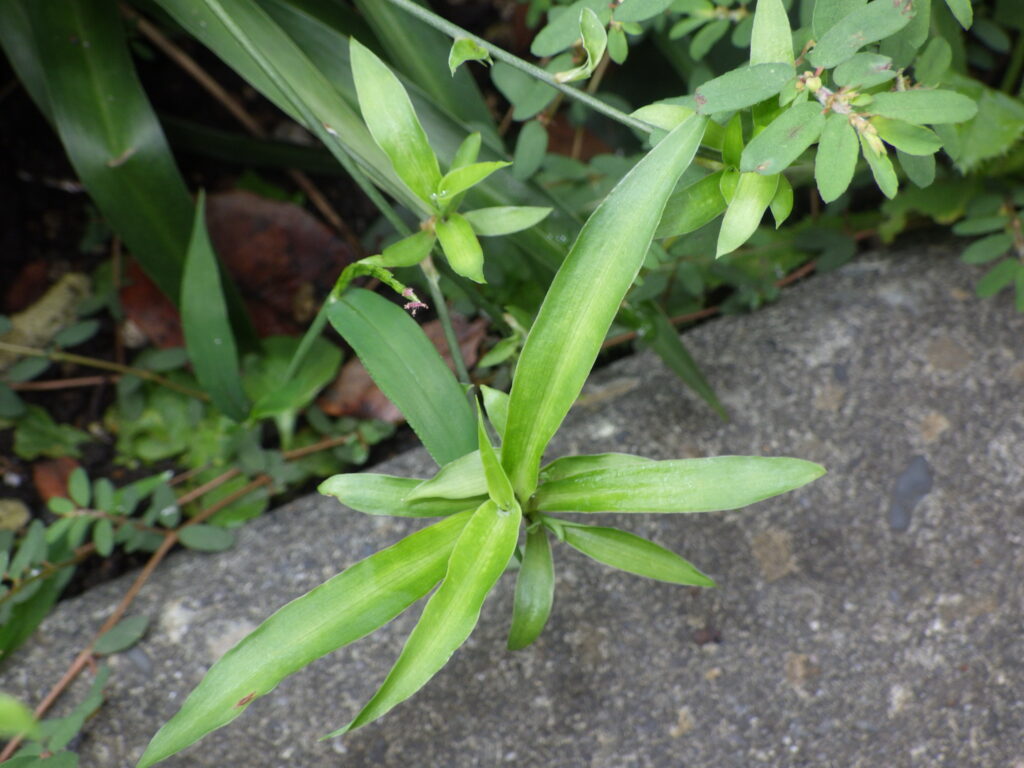
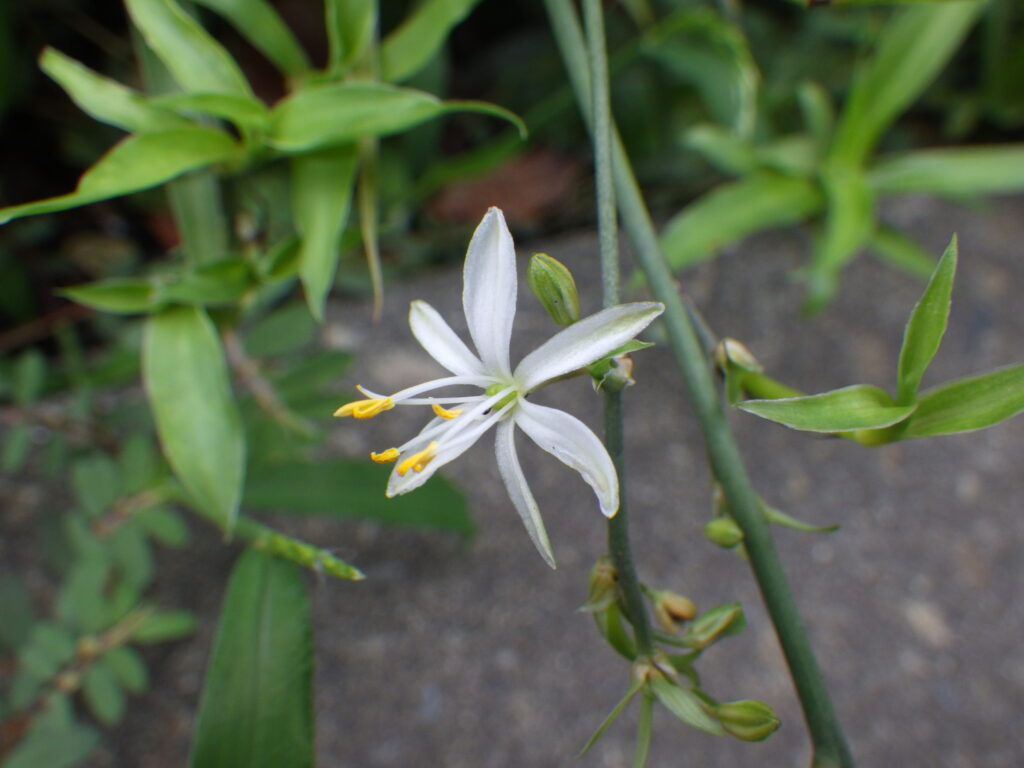
No. 0563 Chlorophytum comosum (Spider Plant)
This is an evergreen perennial herb. The leaves are long and narrow, reaching 20-30 cm in length, with pointed tips. The roots are succulent and grow in clumps. Runners emerge from between the leaves, producing new plants (seedlings) with aerial roots at each node. The name "spider plant" comes from the appearance of these new plants hanging down in several tiers with their aerial roots. The flowers are white and small, blooming at several nodes on the runners in spring. It is native to Natal, South Africa, and is cultivated in Japan for ornamental purposes. 'Vittatum' is a horticultural variety with variegated leaves.
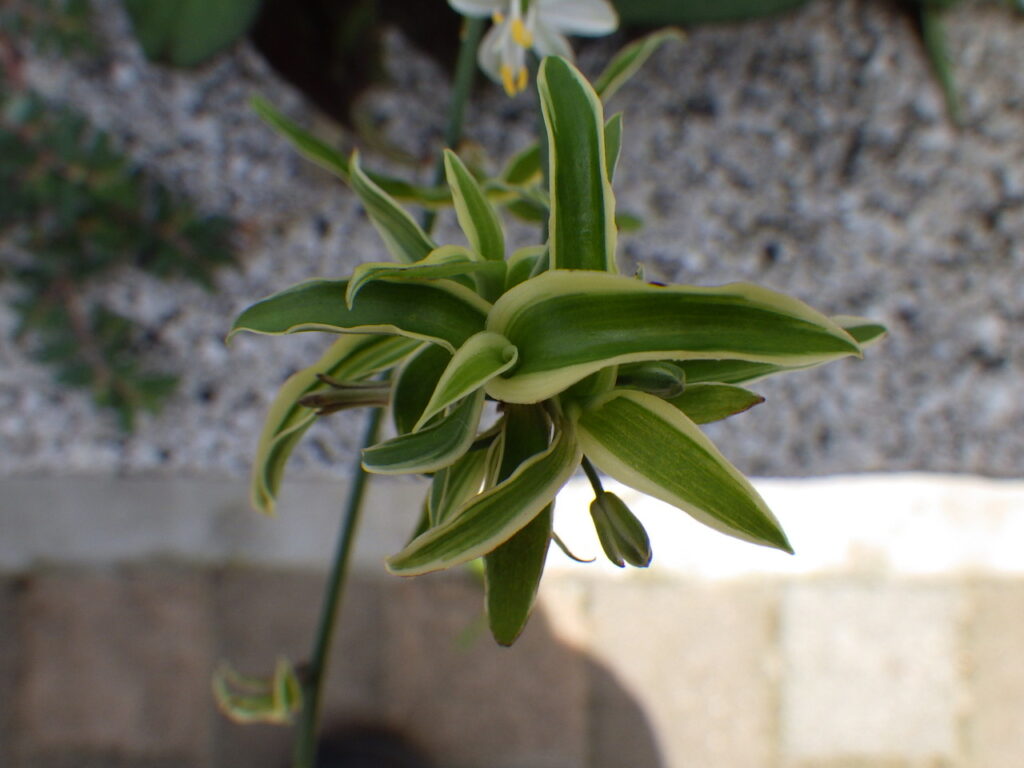
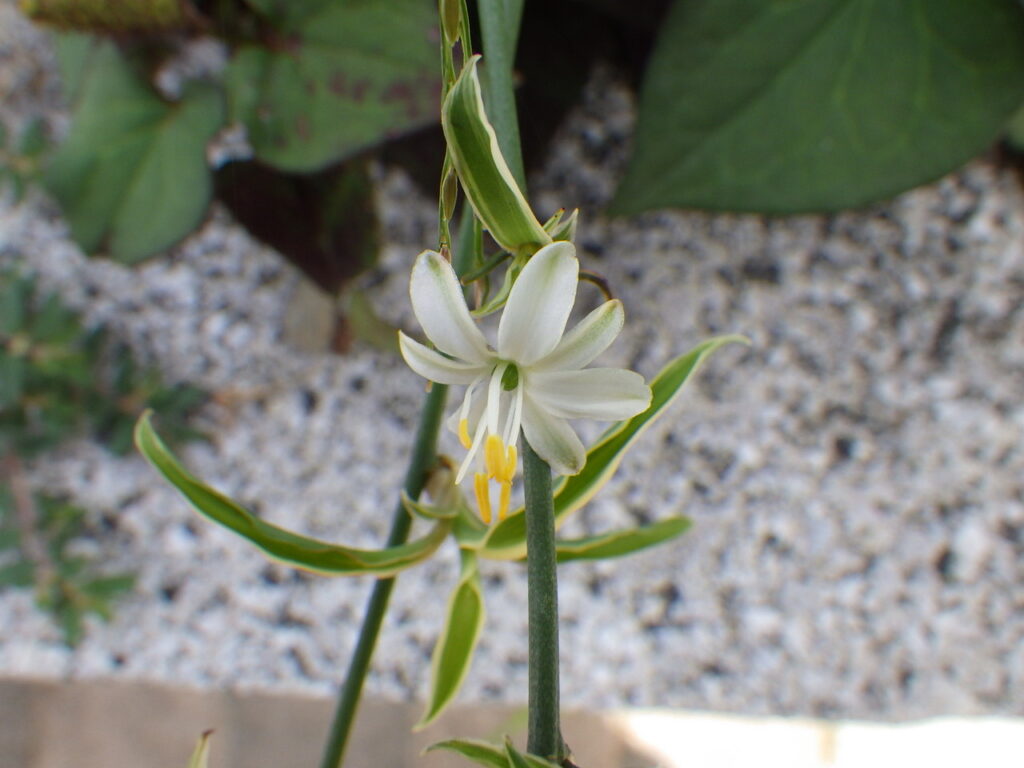
No.0563.1 Chlorophytum comosum 'Variegatum' (Spider Plant)‘
A cultivated variety of spider plant with green leaves edged in white.
No. 0564 Agave americana
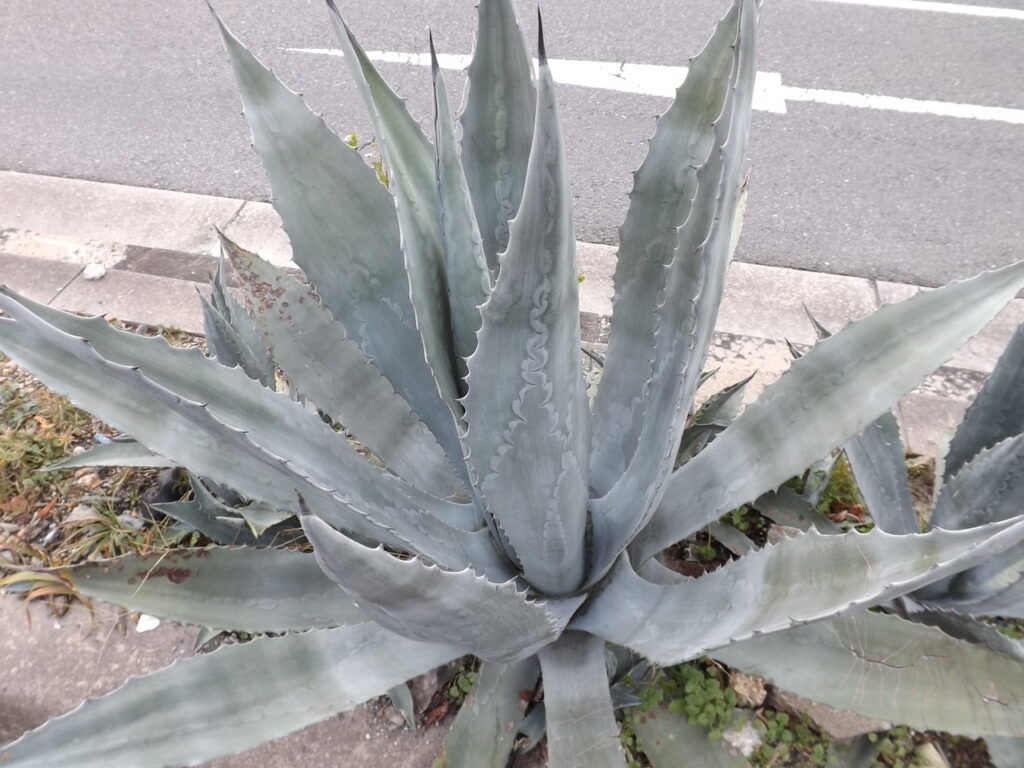
This evergreen perennial herb is native to Mexico and Texas, USA, and is cultivated as an ornamental plant worldwide, including Japan, and has naturalized in some countries. It thrives in hot climates and drought-prone areas. Due to its long lifespan, it is sometimes called the "plant of the century," and in Japan, it is sometimes said to live for over 50 years, but this is likely false; according to information from English-speaking countries, it usually lives for 10 to 30 years (no scientific literature found). It spreads to about 1.8 to 3.0 m and has grayish-green leaves 0.9 to 1.5 m long, each with a spiny edge and a heavy spike at the tip that can pierce deeply. It is a unirtrix plant, and near the end of its life, it produces tall, branched stems covered with many yellow flowers, which can reach a height of up to 8 to 9 m. It is pollinated by bats at night, which come to feed on nectar and pollen, and by hummingbirds during the day (Knudsen & Tollsten, 1995). No literature describing specific species could be found. On the other hand, in Agave angustifolia, the Saussure bat (Leptonycteris curasoae) is almost exclusively pollinated by bats that come to feed on nectar and pollen (Molina-Freaner & Eguiarte, 2003). The pollination ecology of wild and cultivated species of the genus Agave has been largely unstudied, and a comprehensive review can be found in Trejo-Salazar et al. (2016). The plant dies after flowering, but adventitious buds emerge from the base, continuing to grow as the next generation. The reason why it is a unicycled plant with tall inflorescences, more flowers, nectar, and complex carbohydrates is thought to be an adaptation to bat pollination that allows for long-distance pollination (Eguiarte et al., 2021). The reason it rarely flowers is probably because the production of these substances takes a very long time. If the flower stalk is cut before the flowers bloom, a sweet liquid called agua miel (honey water) collects in the hollow center of the plant. In pre-Columbian Mexico, this was fermented to produce an alcoholic beverage called pulque or octori. Mezcal is a distilled spirit made from this liquid. Agave americana is a species of agave used to make mezcal. It is sometimes said that Agave americana is the raw material for tequila, a well-known type of mezcal, but this is also false. Tequila is produced in the town of Tequila and refers to the tequila agave, Agave tequilana, which is the main ingredient, so it is different from this species. Similarly, tequila agave is pollinated by bats, so its conservation needs to be considered in conjunction with bats (Trejo-Salazar et al., 2016). The leaves were also used to make a fiber called pita.
No.0564.1 Agave americana 'Marginata'‘
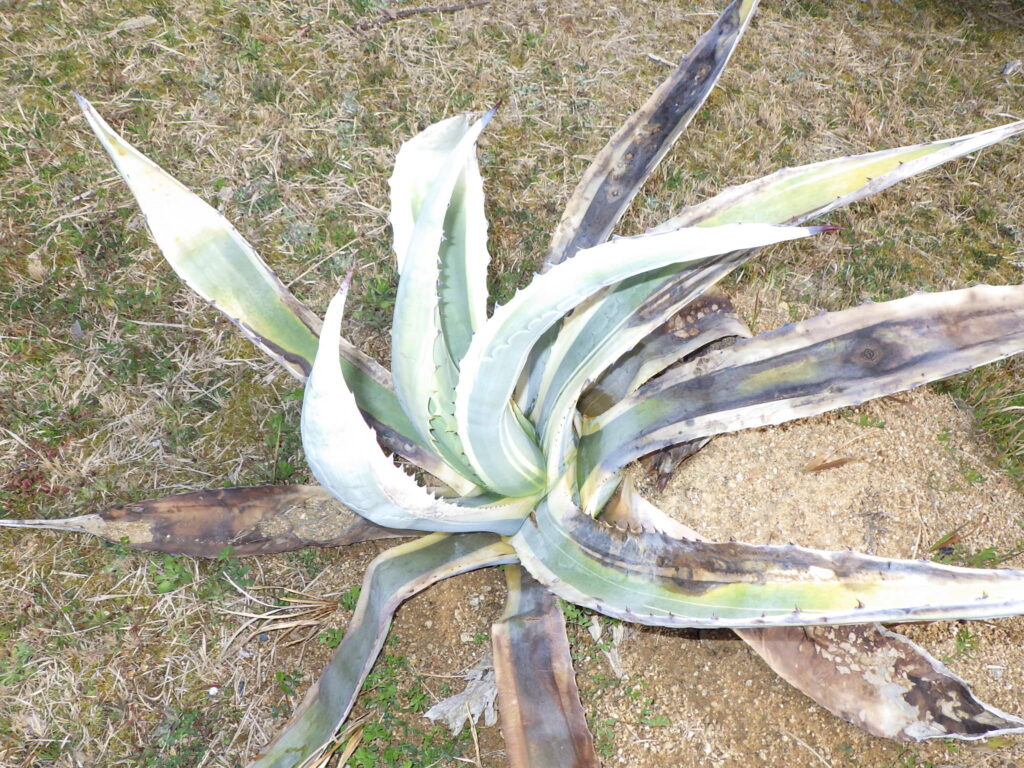
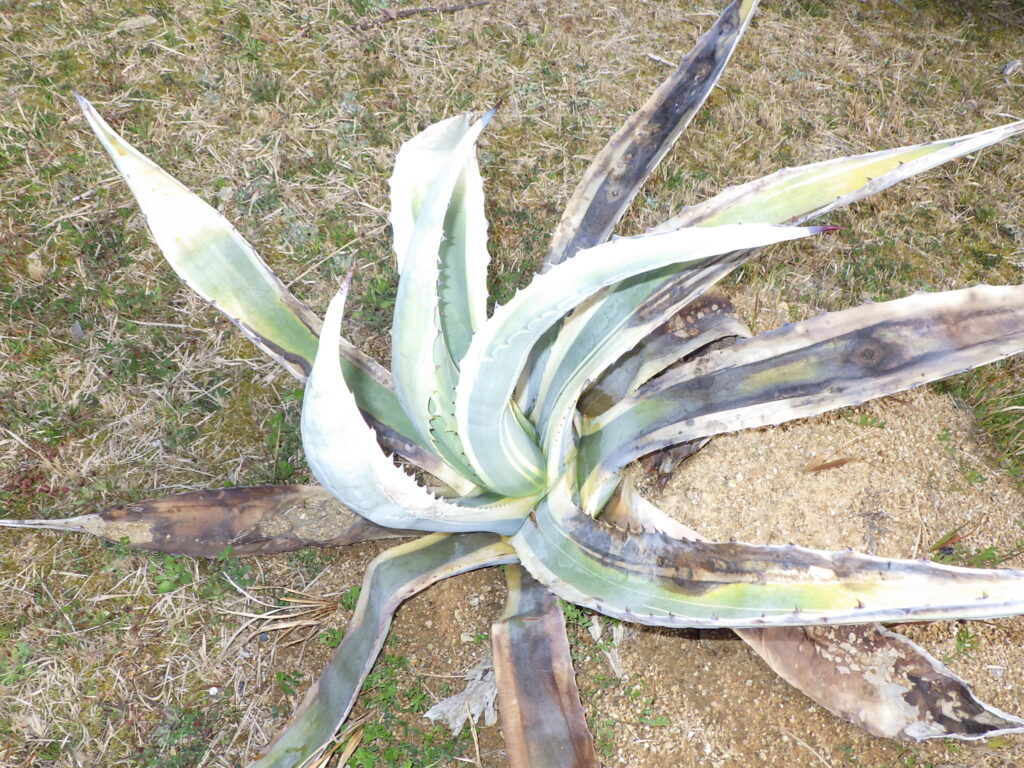
This is a variety of Agave americana with yellow stripes along the edges of each leaf. Note that the relationship between the Japanese name and the scientific name is reversed.
No.0565.a Agave stricta
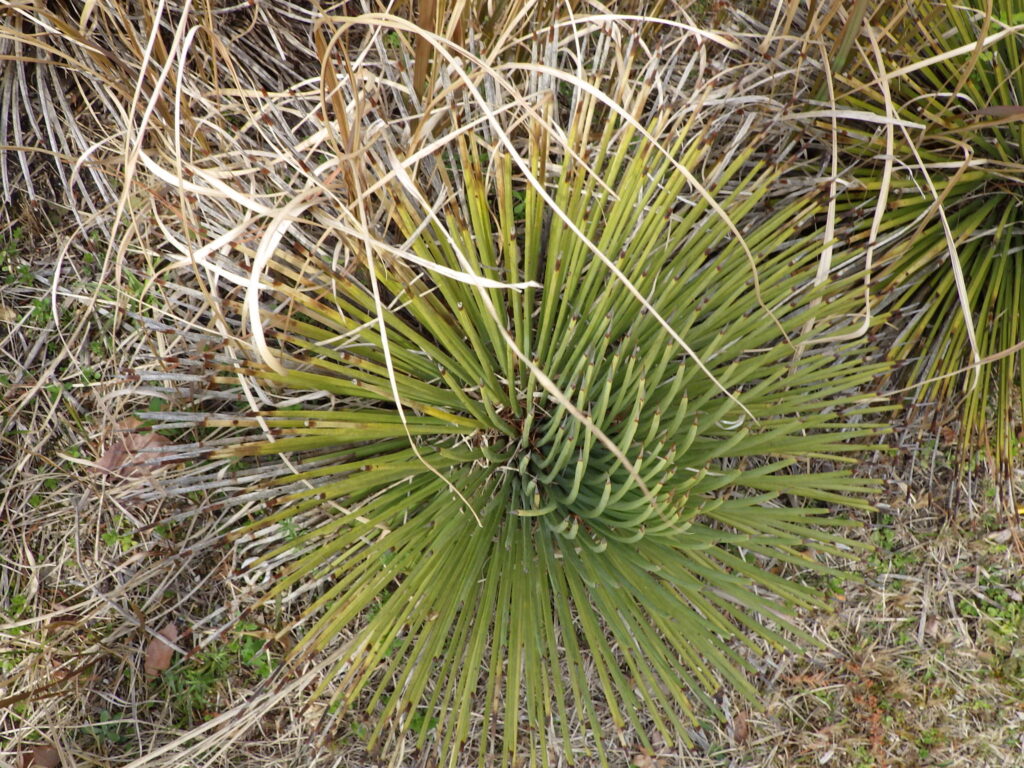
This is an evergreen perennial herb. It is an evergreen succulent that grows to a height of 50 cm, with a rosette diameter of 50-60 cm, and narrow, spiny, elongated leaves that radiate outwards. In summer, it produces upright racemes up to 2 m long, bearing reddish-purple flowers. The leaves may take on a reddish tint in summer. It is native to Puebla and Oaxaca in southern Mexico. In Japan, it is cultivated as an ornamental plant. It may be pollinated by bats or hummingbirds, but no research literature confirming this could be found.
No. 0566 Yucca gloriosa var. gloriosa
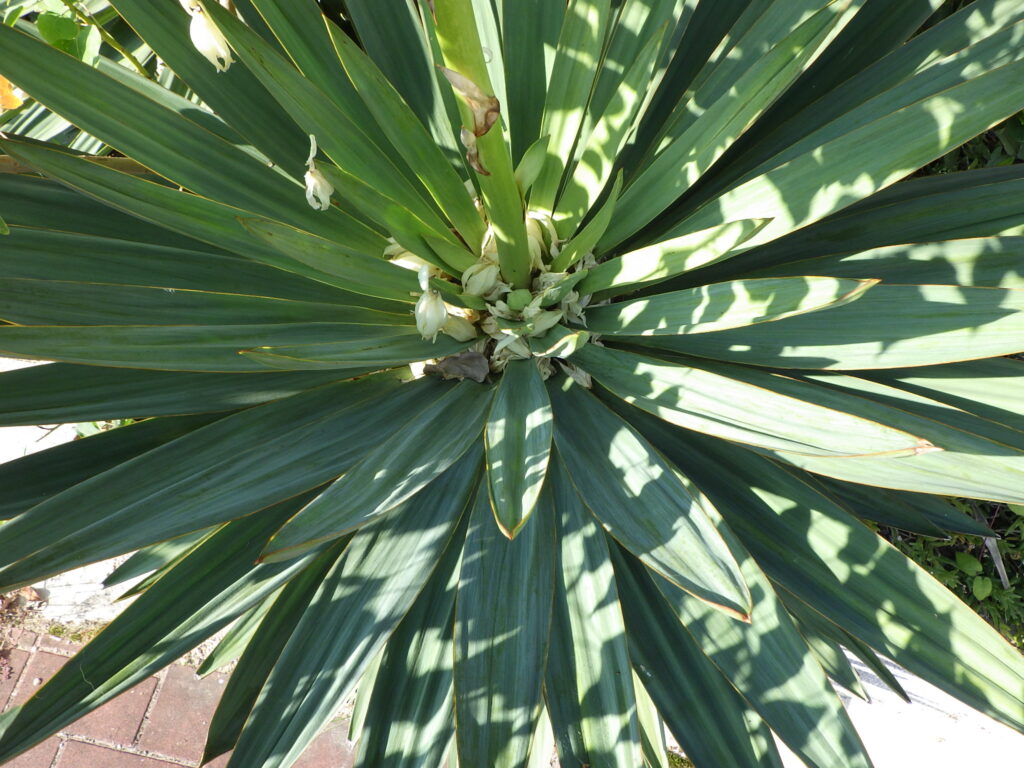
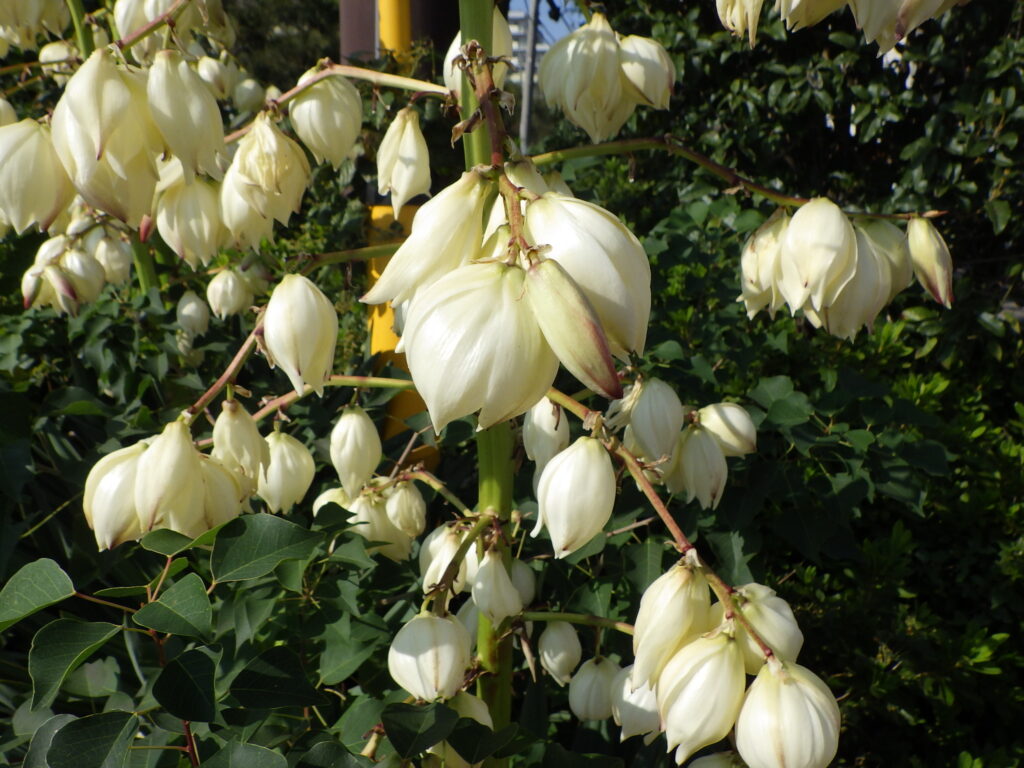
This evergreen shrub is also known as Yucca (a general term for the genus). It grows to a height of 50-250 cm and branches. The leaves are 60-75 cm long and about 5 cm wide, firm and thick, dark green to later grayish-green, and pointed at the tip. The flowers are erect, forming a conical inflorescence at a height of 1-2 m, bearing numerous white flowers. The individual flowers are large and bell-shaped, reaching nearly 10 cm in diameter. It blooms in June, sometimes blooming again in the fall. The fruit is a slender, leathery fruit. Native to the southern United States, it grows on exposed sand dunes and breakwater islands along the coast. It is the most commonly cultivated species in Japan. The genus Yucca, including this species, is known to have an obligate pollination symbiotic relationship with the moths Tegeticula and Parategeticula (Kawakita, 2012; Ishii, 2020). Female yucca moths visit Yucca plants with the purpose of laying eggs on the pistils. These moths use their specialized antennae to collect pollen from other Yucca plants, thus pollinating the Yucca plants. The eggs laid by the yucca moths hatch when the pistils mature and develop into seeds, and the larvae complete their development by eating the seeds. Yucca plants regulate the behavior of yucca moths by exhibiting a physiological phenomenon that stops fruit maturation if a certain number of eggs are laid on the pistils, preventing excessive seed consumption. In Japan, where yucca moths are absent, fruit rarely develops. Yucca yuccasella is pollinated by Tegeticula yuccasella, and very rarely, introduced European honeybees also visit (Heyduk et al., 2021). The thin fruits are dispersed by wind (Kawakita, 2012). The symbiotic relationship between Yucca and yucca moths is only found in the continental United States and Mexico.
No. 0567 Yucca gloriosa var. recurvifolia
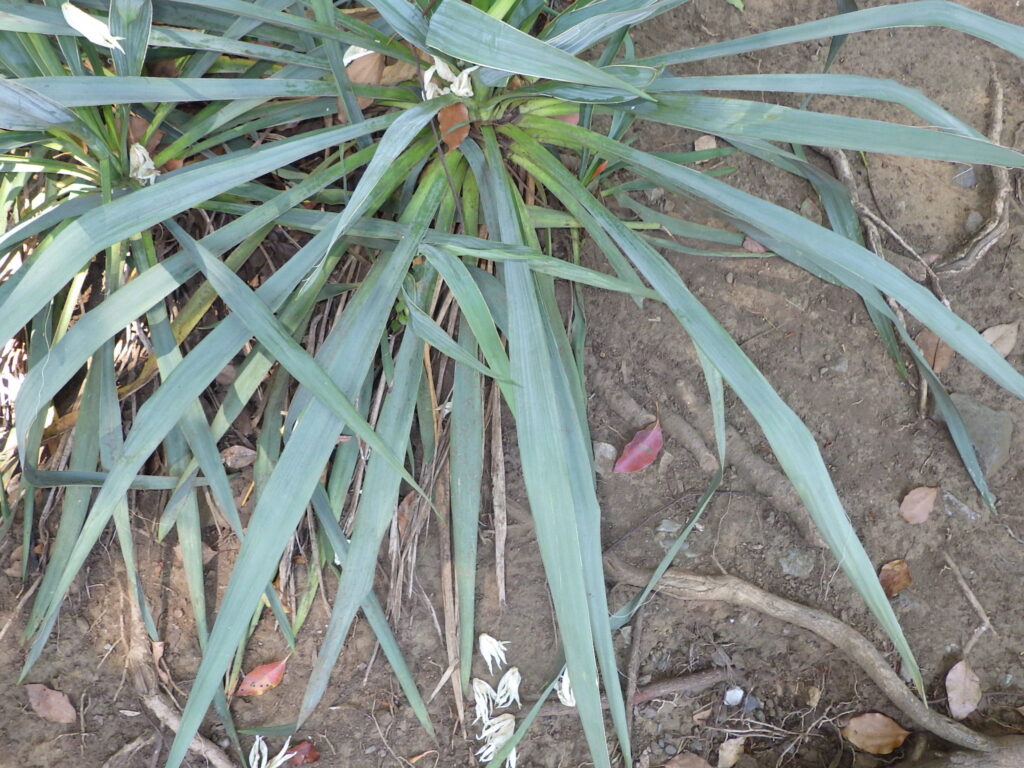
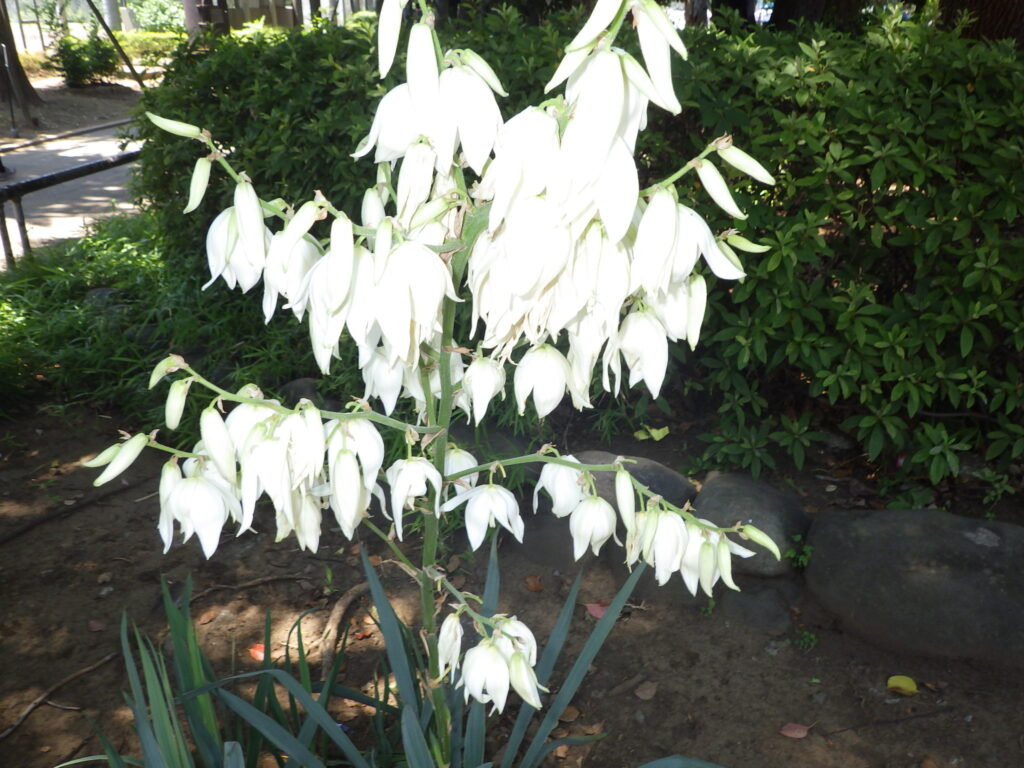
Yucca gloriosa is a variety of Yucca gloriosa that is taller and has slightly softer leaves, causing the lower leaves to bend in the middle. It is native to the southeastern United States, from southeastern Virginia along the coast south to Florida in the south and Texas in the west.
No. 0568 Itran (Yucca filamentosa)
This is an evergreen shrub. In 'Ylist', it's listed as Yucca flaccida. There's a belief that Yucca flaccida is included within Yucca filamentosa (NCBI, Flora of North America). Yucca filamentosa is older in description, so the reason for 'Ylist' listing it as Yucca flaccida is unclear. It typically lacks a trunk and has thread-like, bluish-green, string-like leaves up to 75cm long with multiple suction cups. It's easily distinguished from other Yucca species by the white, thread-like filaments along the leaf margins. The flower stalks can reach 3m in height, bearing drooping cream-colored flowers in early summer. It's native to southeastern Virginia and Florida, and as far west as southern and southeastern Texas. It's most commonly found in sandy soils, especially as a coastal shrub or in sand dunes. In Japan, it's cultivated as an ornamental plant. Yucca filamentosa is pollinated by the yucca moth Tegeticula cassandra and, in the northern population, by the distantly related T. yuccasella (Svensson et al., 2005), while Yucca flaccida is pollinated by Tegeticula intermedia (Pellmyr, 1999), indicating an obligate pollination symbiotic relationship.
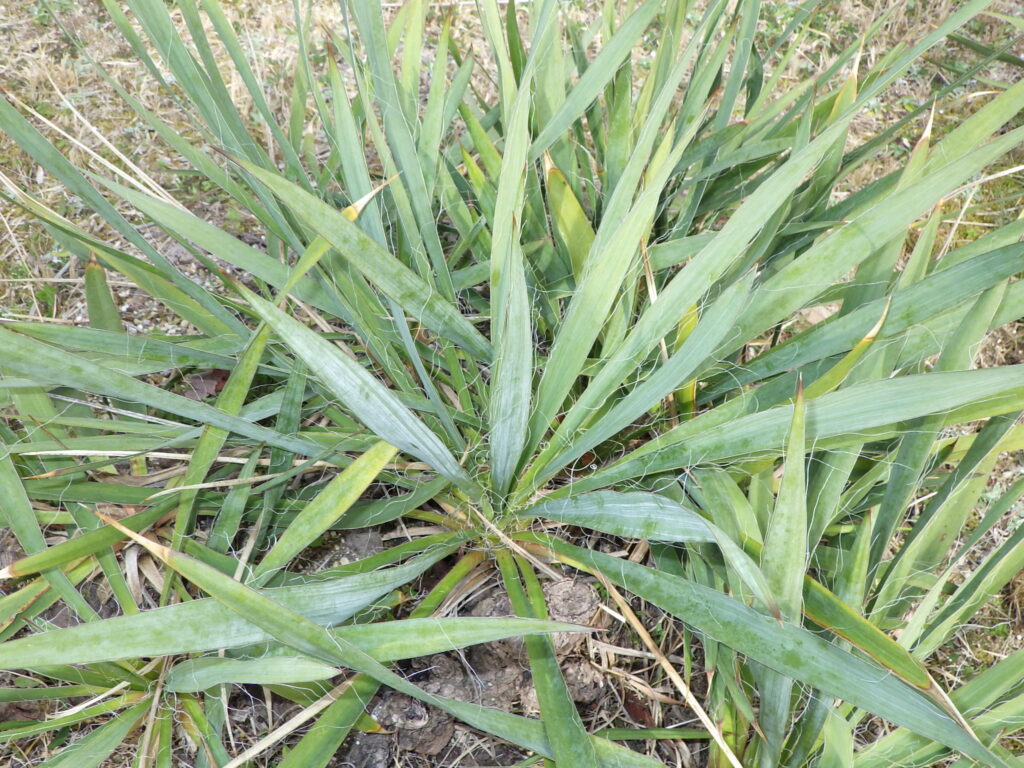
No.0568.a Yucca aloifolia
This evergreen shrub has an upright trunk, 7.6–12.7 cm in diameter, reaching a height of 1.5–6.1 m before the top becomes heavy and falls over. Once fallen, the tip turns upward and continues to grow. Each trunk is armed with a band of sharply pointed leaves with fine serrations, each about 0.61 m long. Young leaves near the growing tip are upright. Older leaves bend downward, and older leaves wither and turn brown, hanging from the lower trunk. Eventually, a spike of white-purple flowers, 0.61 m long, develops at the tip of the trunk, with each flower about 12.7 cm in diameter. After flowering, the trunk stops growing, but one or more lateral buds quickly form, with the top becoming a new terminal bud. New buds or branches are produced near the base of the trunk. Native to the Atlantic and Gulf Coast regions of the United States, from southern Virginia in the southeastern United States south to Florida, the Texas Gulf Coast in the west, Mexico along the Yucatan Coast to Bermuda, and parts of the Caribbean, it inhabits dry sandy beaches and shrub coastal areas, forming bushes. It is cultivated as an ornamental plant in many countries, including Japan. There is a hypothesis that Mexican timoran (Tetechia elephantipes ), native to Mexico, is a variety introduced and selected by early European settlers. In the southern United States, it is pollinated by the yucca moths Tetechia yuccasella and T. cassandra, and they have an obligate pollination symbiotic relationship (Rentsch & Leebens-Mack, 2014).
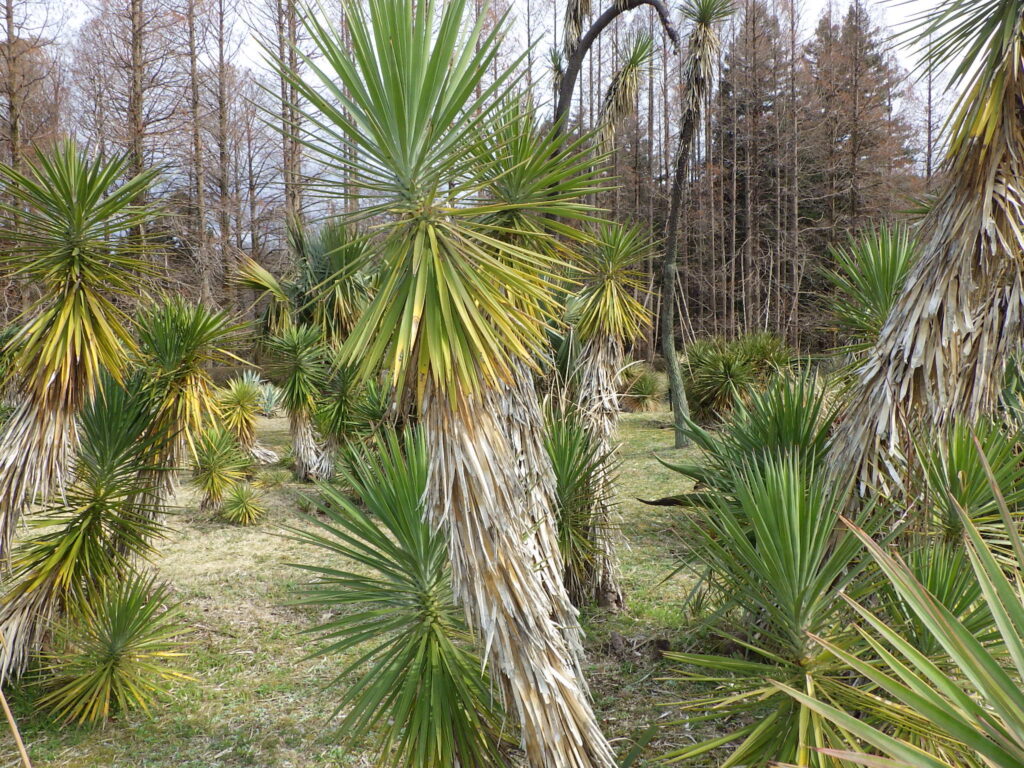
No.0568.b Variegated Yucca aloifolia 'Marginata'‘
A variety of *Senjuran* with yellow variegation on its leaves.
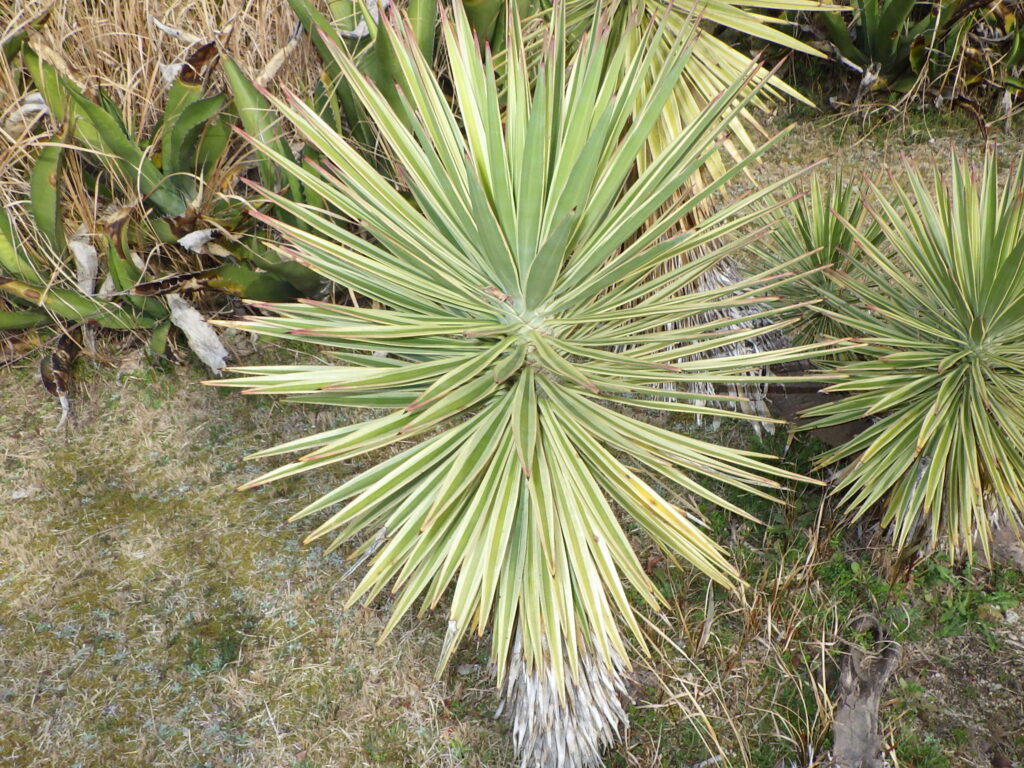
No.0571.a Hosta 'Halcyon'‘
This is a variety of hosta with grayish-blue-green leaves. The original species is unknown according to the author's research; it is also considered a hybrid.
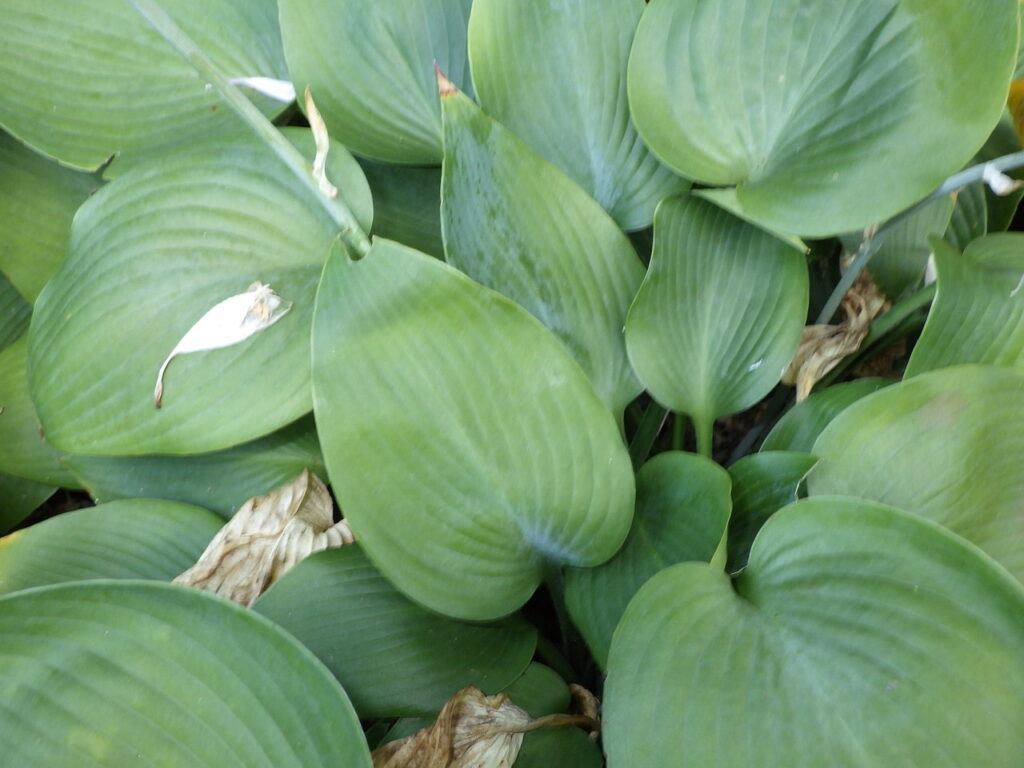
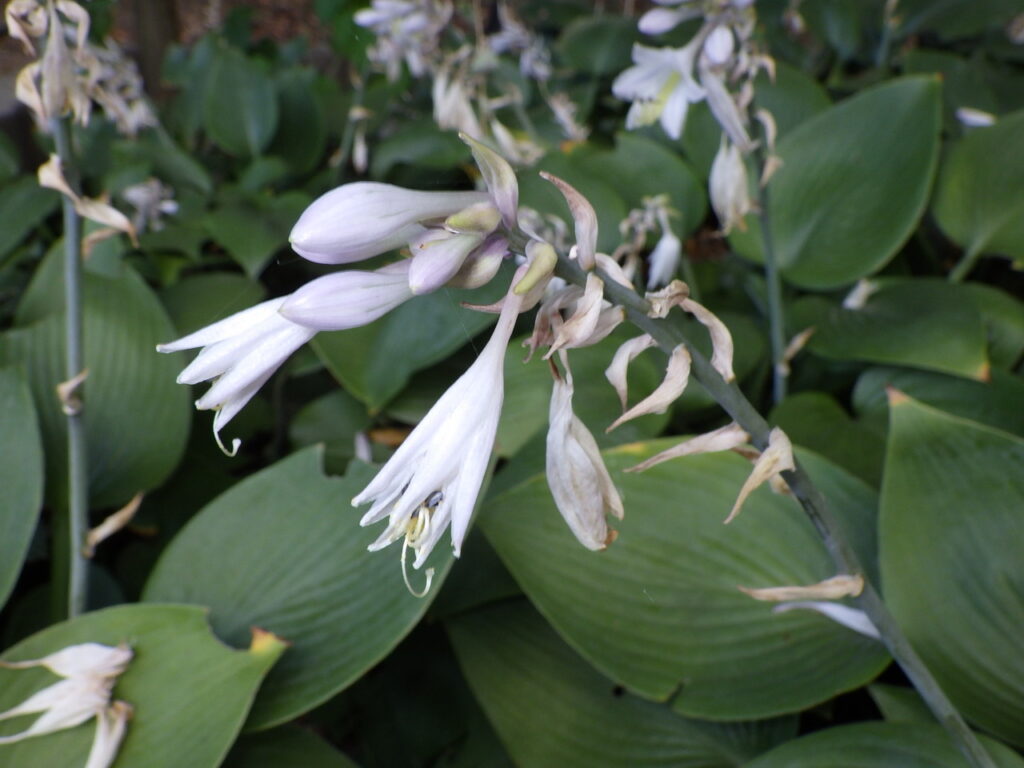
No. 0574 Hosta sieboldii var. sieboldii f. spathulata
This is a perennial herb, reaching a height of 40-50 cm. The leaf blades vary considerably in shape and size, ranging from narrowly ovate to elliptic or ovate-elliptic, with an acute or acute apex, gradually narrowing at the base to form a wing that flows into the petiole, and having 3-6 veins on each side. The bracts are green, narrowly ovate, and acutely apex. The flowers are pale purple, 4-5 cm long. Flowering occurs from July to August. It is distributed in Hokkaido, Honshu, Shikoku, Kyushu, Sakhalin, the Kuril Islands, and Ussuri. It grows in grasslands and sparse forests. There is also a form called Hosta var. intermedia with particularly narrow leaf blades, but there appear to be no definitive taxonomic characteristics between the two.
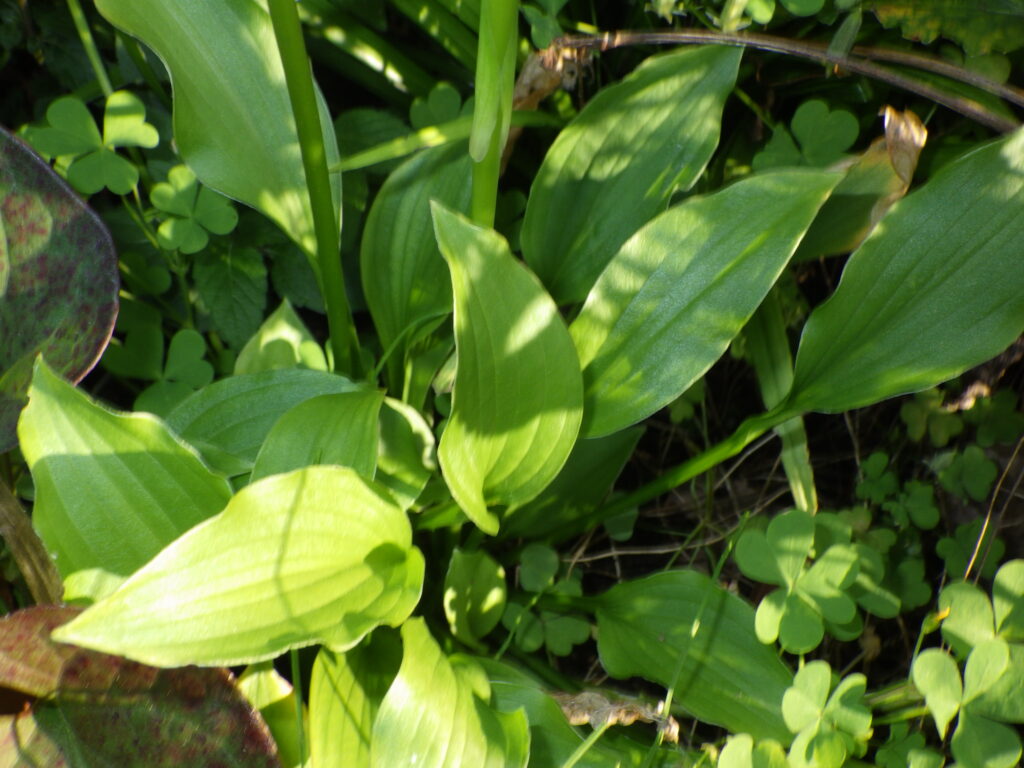
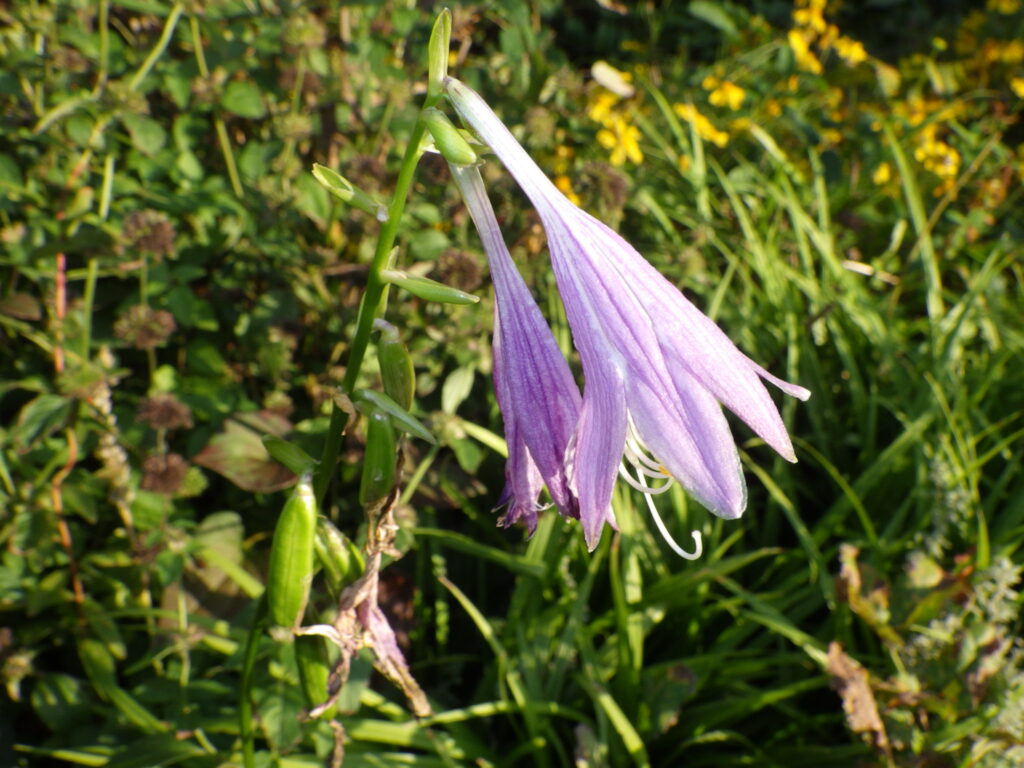
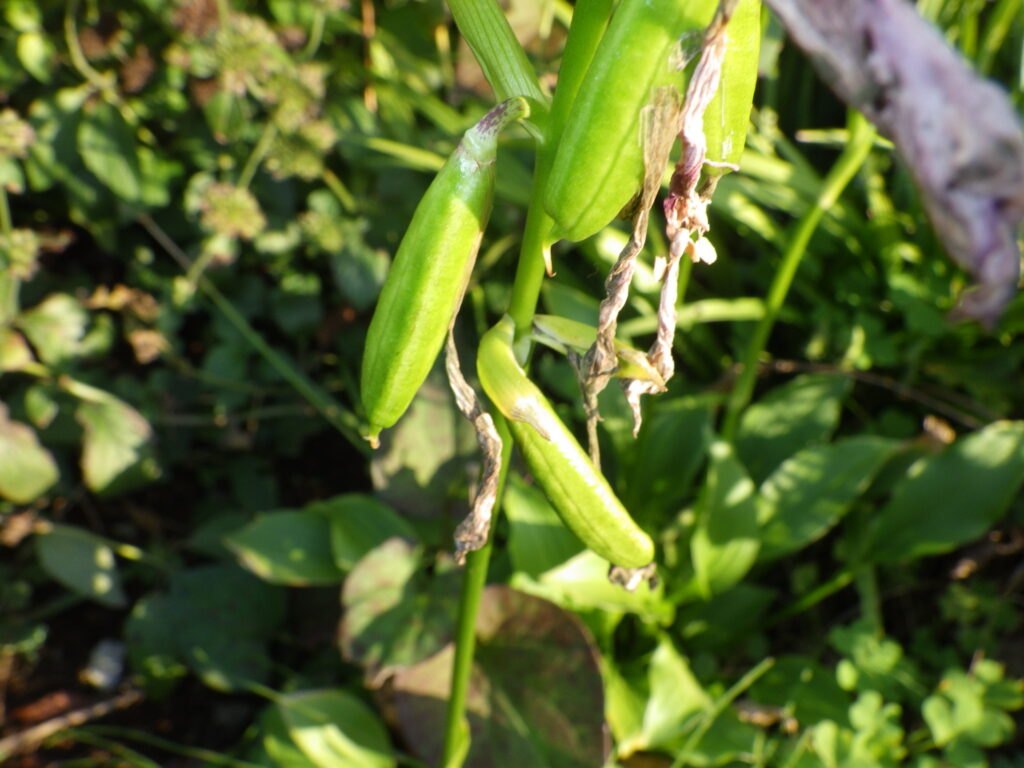
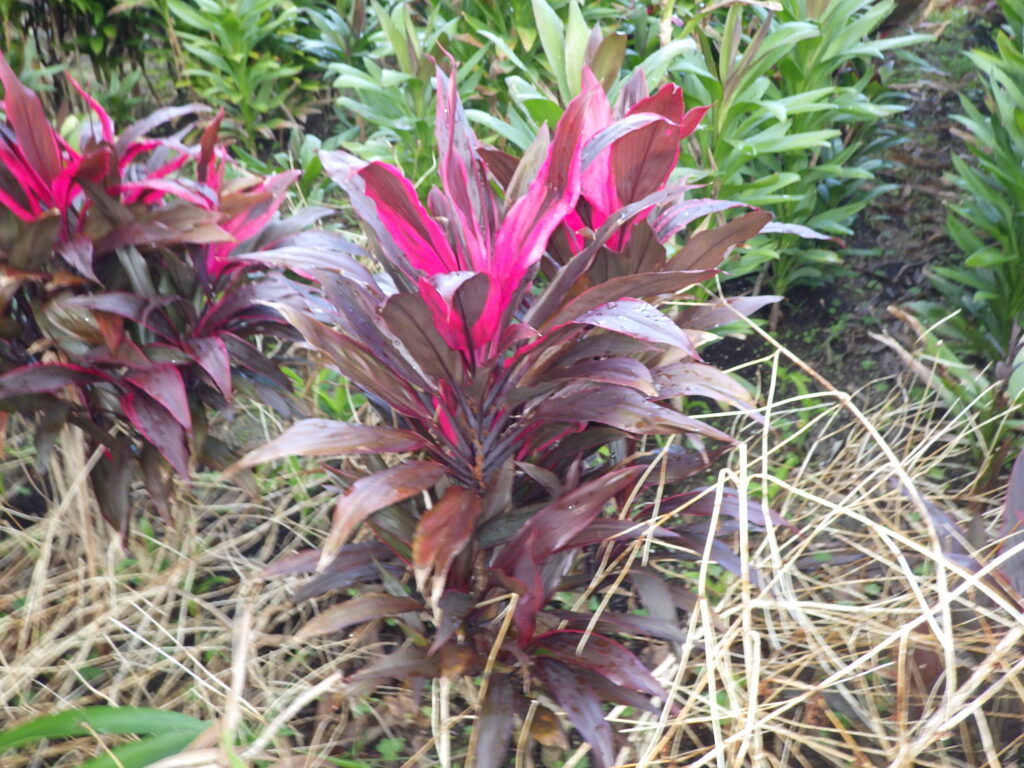
No. 0578 Cordyline fruticosa
This evergreen shrub grows upright, reaching a height of approximately 100-450 cm and a width of approximately 100-250 cm. Its leaves come in various colors, including green, purple, red, pink, and black. New leaves are bright red or yellow, becoming darker as they age. The leaf blades are oval-shaped (approximately 30-75 cm long and 5-10 cm wide), and the leaves are arranged alternately. Flowering occurs from November to March of the following year, or year-round in warmer climates. It produces long inflorescences bearing small, fragrant yellow to red flowers. After flowering, small, spherical fruits develop, which ripen to a red color. It is distributed from Bangladesh to mainland Southeast Asia, southern China, Taiwan, the islands of Southeast Asia, New Guinea, and northern Australia. It was carried throughout Oceania by the Austronesian people, who speak the Austronesian language family and spread from Taiwan to the islands of Southeast Asia, the Pacific islands, and Madagascar, reaching as far as Hawaii, New Zealand (including the Kermadec Islands), and Easter Island. It is also cultivated as an ornamental plant in other countries, including Japan. In East Polynesia, a variety with large green leaves is cultivated for use as an edible rhizome, and it has been artificially selected to be sterile and propagate only by cuttings. It is deeply associated with animistic religion among Austronesians, who believe it can hold the soul and therefore help heal the loss of the soul. The most familiar use to Japanese people is in the skirts (rai'i skirts) worn by hula dancers in Hawaii. The leaves are also used in cooking, as well as for canoe ropes and clothing.
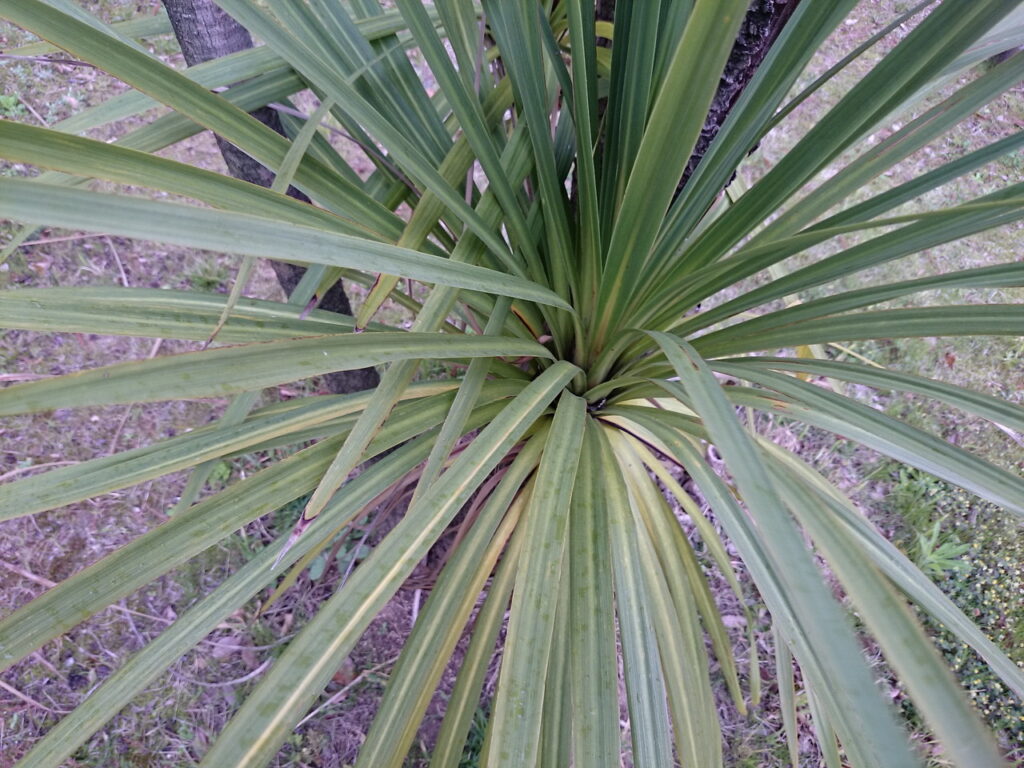
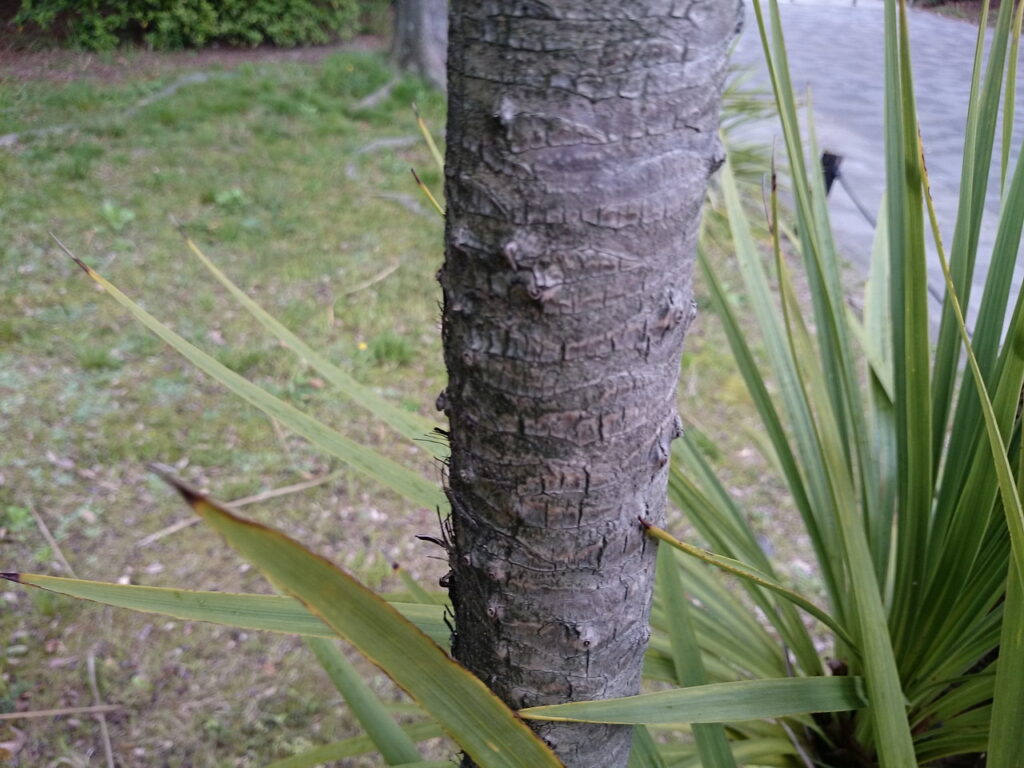
No.0578.a Cordyline australis
This evergreen tree can reach a maximum height of 20 meters. Its trunk is thick, with a diameter of 1.5 to 2 meters. Before flowering, it has thin, unbranched stems, but after the first flowering, it forms a crown consisting of many branched branches with clusters of leaves at their tips. Each branch may further branch after the formation of the inflorescence. The bark is light gray to dark gray, corky, with cracks on the surface but does not peel naturally, and feels spongy to the touch. The leaves are long, narrow, and erect, light green to dark green. They are 40 to 100 cm long, with a base width of 3 to 7 cm. They have numerous parallel veins. They grow in clusters at the tips of branches, and the tips of the leaves, and in older leaves, the bases, may droop. The leaves are thick, with an indistinct midrib, and fine veins run somewhat uniformly and parallel. There is little difference between the upper and lower surfaces of the leaves. From spring to early summer, it bears sweet-smelling flowers in large racemes 60 to 100 cm long. The flowers and inflorescences are sessile or nearly sessile, with the flowers densely arranged along the inflorescence. Each flower is 5-6 mm in diameter, with six perianth segments that separate near the base and curve backward. The stamens are roughly the same length as the perianth segments. The pistil is short, and the stigma is three-lobed. The fruit is a white berry, 5-7 mm in diameter. It is endemic to New Zealand, a pioneer plant, and can be found in a wide variety of locations, from forests and rocky coastlines to low-lying wetlands, lakesides and riverbanks, and on isolated rocks. In Japan, Europe, and North America, it is cultivated for ornamental purposes. The sweet fragrance of the flowers attracts many insects, but the nectar contains aromatic compounds, mainly esters and terpenes, which particularly attract moths. The fruit takes about two months to ripen and is dispersed by birds by the end of summer. The inflorescence structure is sturdy enough for heavy birds, such as the New Zealand pigeon, which was once the main seed disperser, to cling to it. Each fruit contains 3 to 6 glossy black seeds, each covered in a charcoal-like substance (phytomelan) that protects the seeds in the digestive tract of birds. The Maori people have used the stems for food and the leaves for fiber.
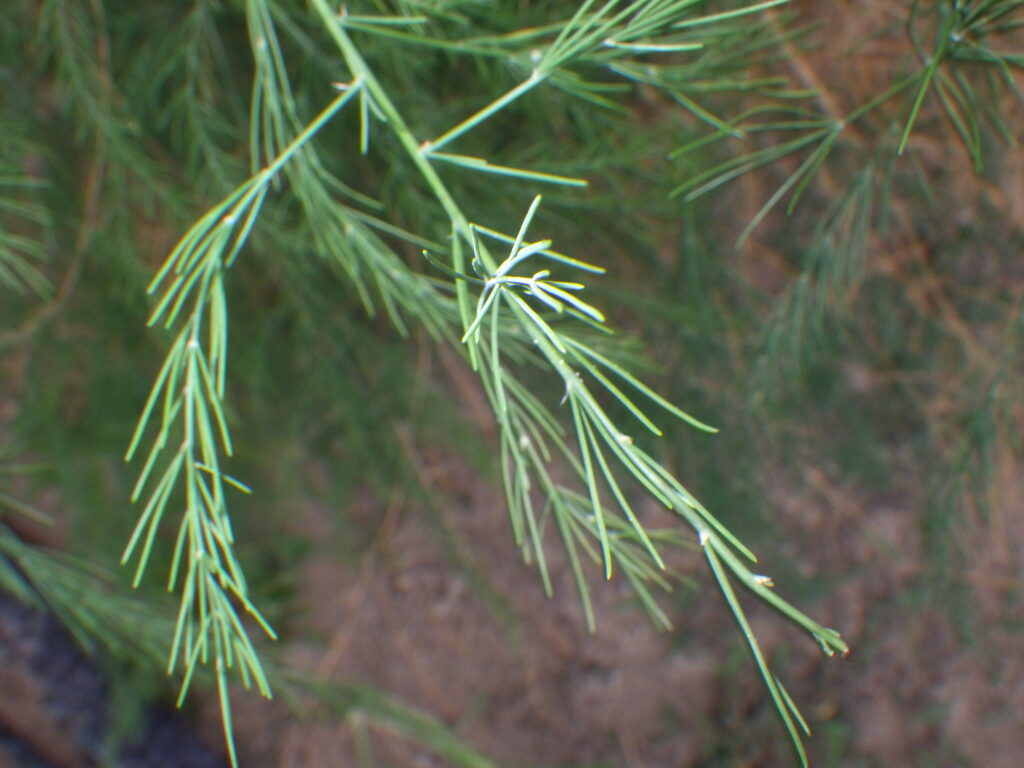
No.0579 Asparagus cochinchinensis var. lucidus
Asparagus jasmine is a dioecious perennial herb. Also known as Tenmondou, it is a climbing perennial herb. The stems grow to about 2m in length. In May, it bears small, pale yellowish-green flowers, about 6mm in diameter, in clusters of 1 to 4. The flower stalks are 2-5mm long. The fruit ripens to white. It is distributed from Honshu, Shikoku, Kyushu, and the Ryukyu Islands to Korea, Taiwan, and Southeast Asia. It grows in coastal forest edges and rocky areas.
No. 0582 Asparagus officinalis
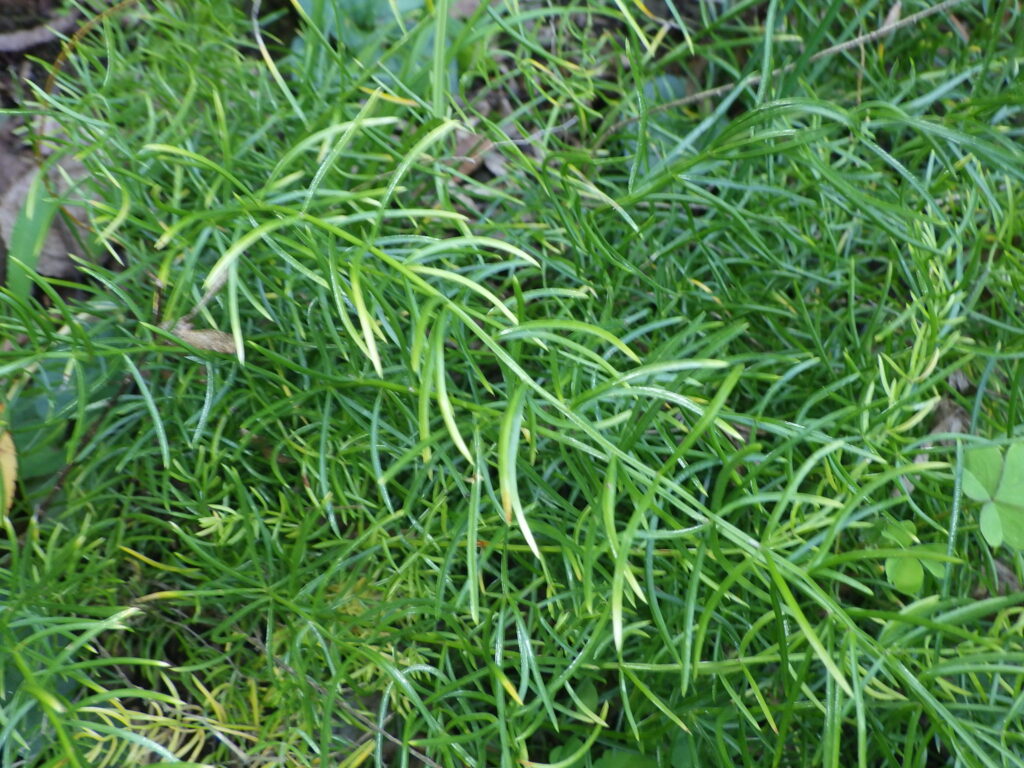
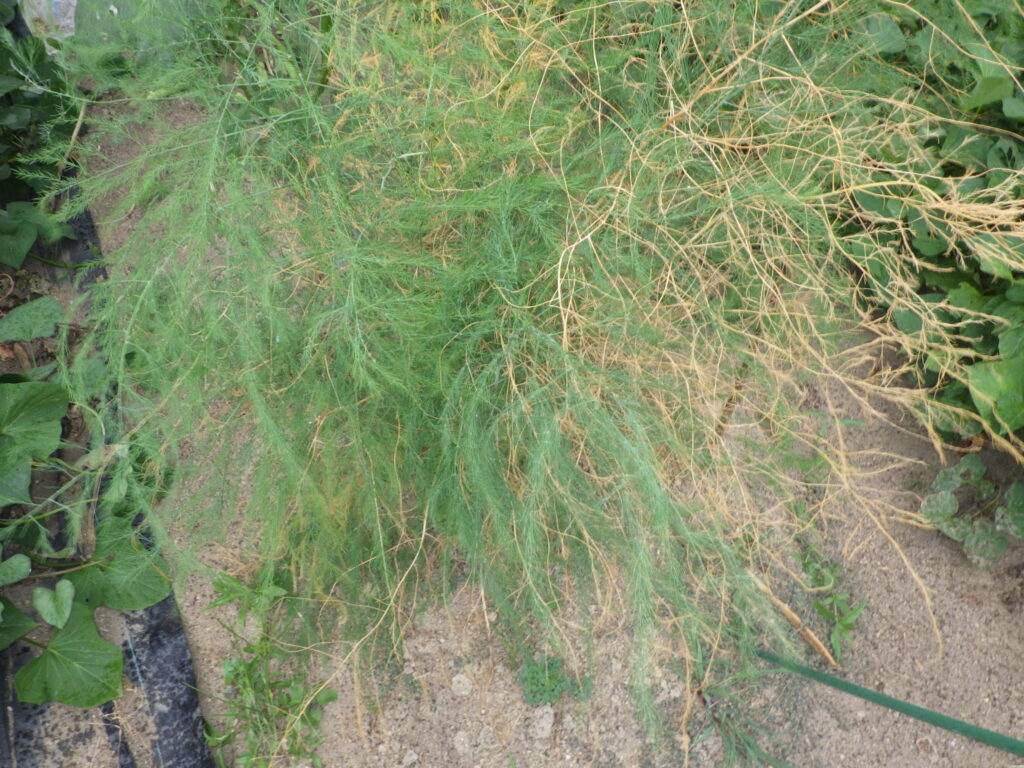
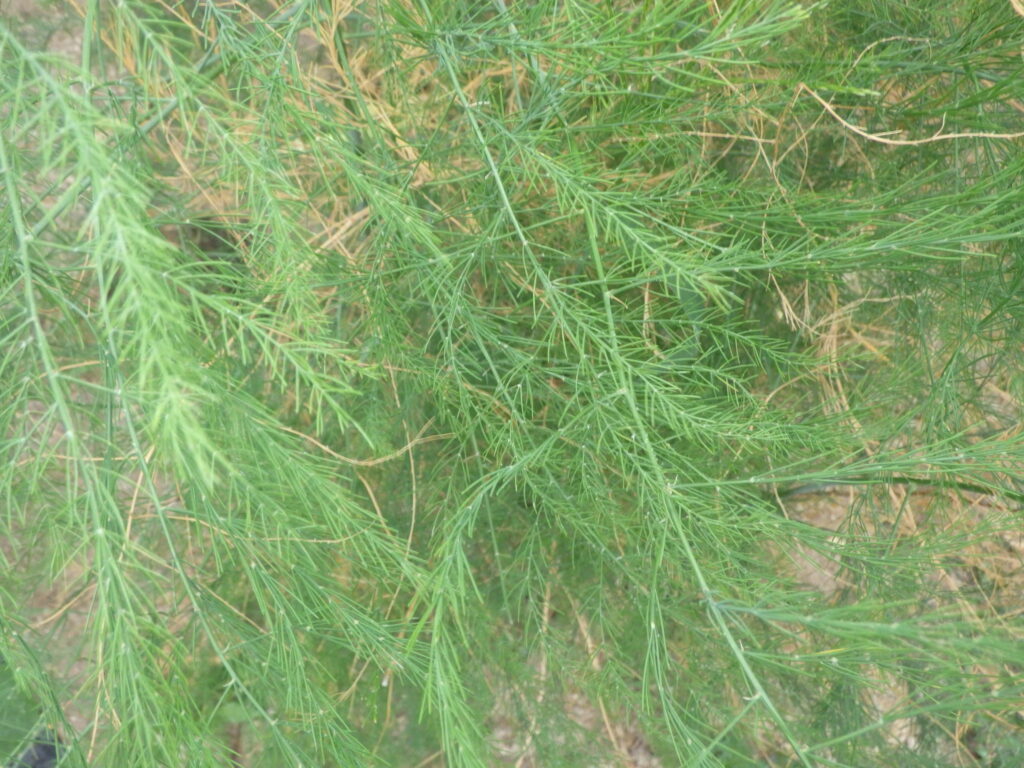
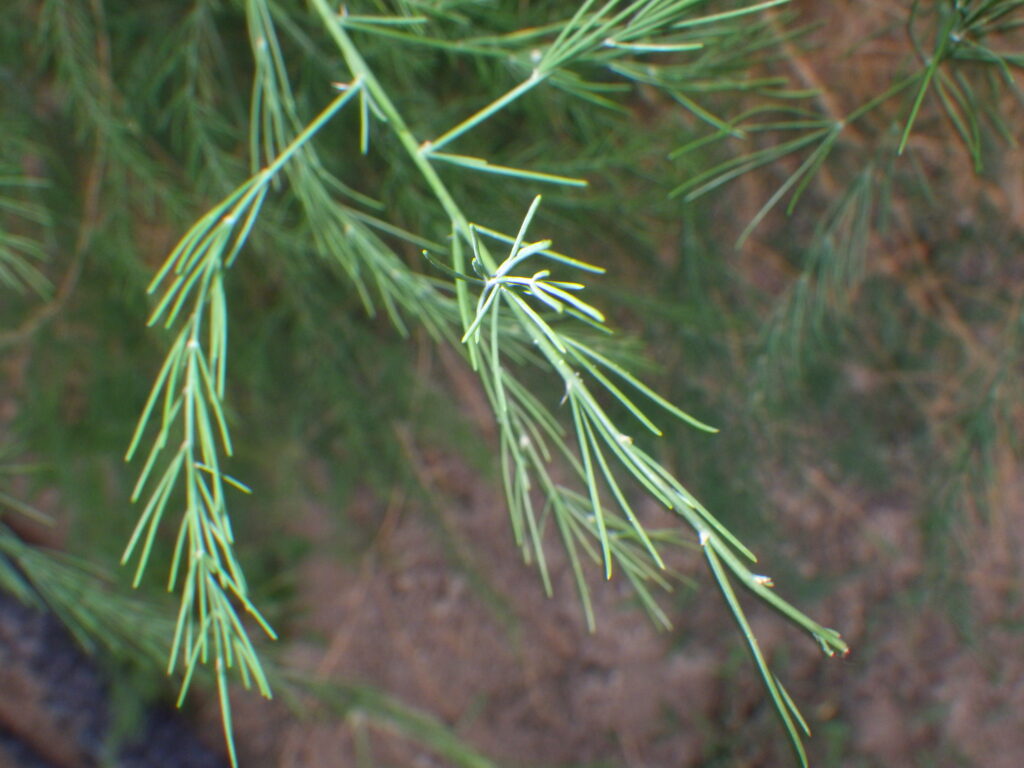
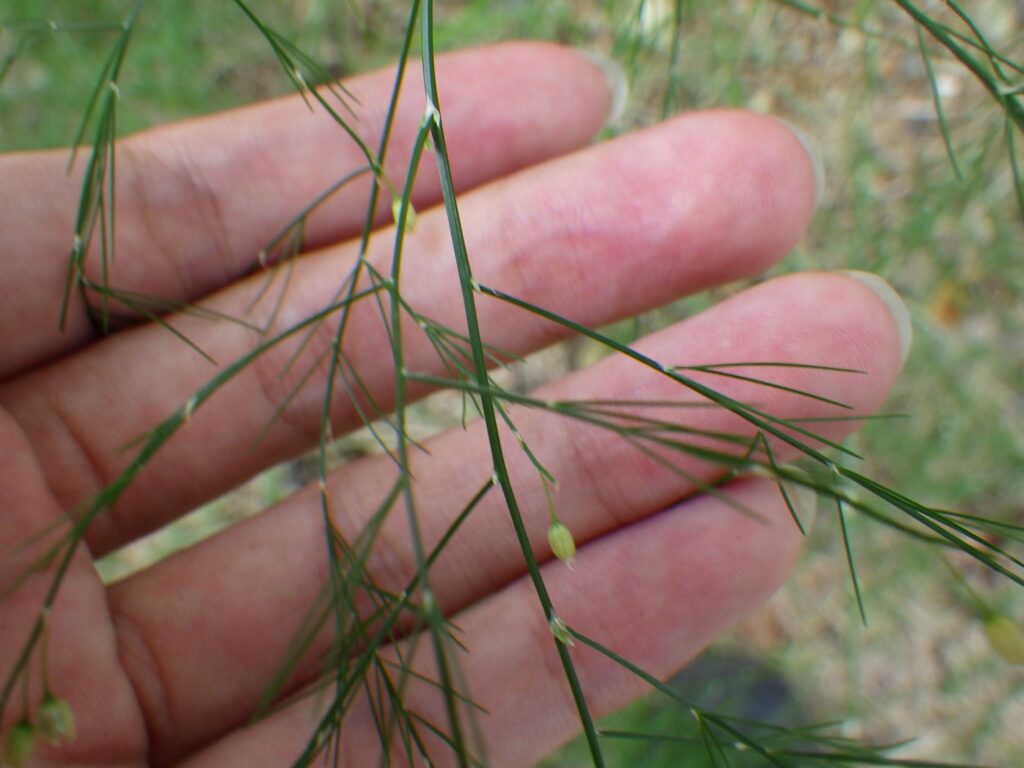
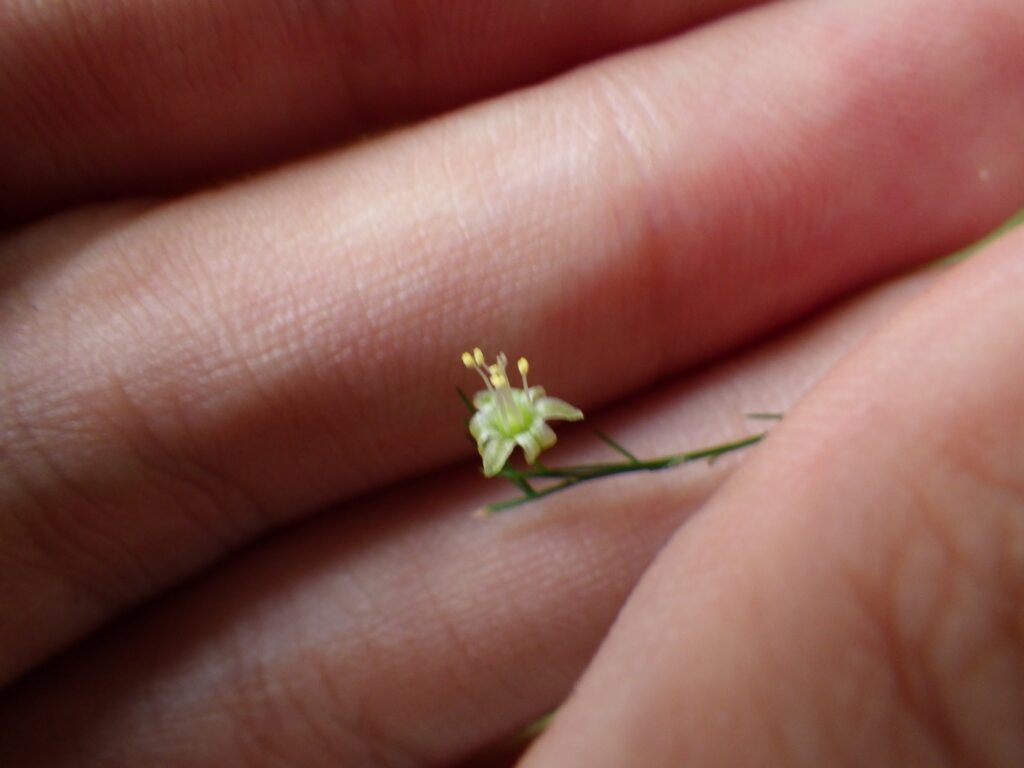
This is a dioecious perennial herb, also known as asparagus. Its fruits ripen to a red color. The plant grows to about 1.5m tall, and the long, slender, leaf-like structures at the end of the stem are modified stems that perform photosynthesis and are therefore called pseudoleaves (or cladoid branches). Morphologically, the true leaves are the triangular parts clinging to the stem, commonly called "hakama" (skirts). It produces small, yellowish-white flowers from May to July. Propagation is by seed. It resembles Asparagus, but can be distinguished by its clusters of 5-8 straight, slender cladoid branches and its flower stalks, which are about 1cm long. It is native to the west coast of Europe (from northern Spain to northwestern Germany, Northern Ireland, and the United Kingdom). It is cultivated in various countries, including Japan, as a vegetable and sometimes as an ornamental plant. In Japan, it sometimes escapes cultivation and becomes naturalized, mainly in alluvial plains. The young shoots that emerge from the third year after planting are generally used for food. Asparagus has been used as a vegetable due to its unique flavor, and also as a medicine due to its diuretic and aphrodisiac properties. It is a vegetable that contains notable nutrients such as aspartic acid (named after asparagus, one of the umami components, and acts as an excitatory neurotransmitter in the central nervous system in humans), as well as vitamins, folic acid, and rutin. Historically, it was already depicted as an offering in Egyptian friezes (part of architectural decoration) from 3000 BC. In ancient times, it was also known in Syria and the Iberian Peninsula. The Greeks and Romans ate fresh asparagus when it was in season and dried it for use in winter. Today, it is eaten all over the world after being boiled, steamed, or stir-fried. It was introduced to Japan by Dutch ships during the Edo period (after 1781) and cultivated for ornamental purposes, but it was not until the Meiji era (1871) that it was introduced for food by the Hokkaido Development Commission. Varieties such as white asparagus are also known. When asparagus is digested, volatile sulfur-containing compounds are released from aspartic acid, causing an odor in human urine, although the degree of odor varies from person to person. It has been found that this is not due to individual differences in digestion, but rather to individual differences in olfactory genes caused by single nucleotide polymorphisms (SNPs). However, the adaptive significance of this, as well as the adaptive significance of the high aspartic acid content for the Dutch asparagus, is not yet understood.
No.0584 Dracaena draco
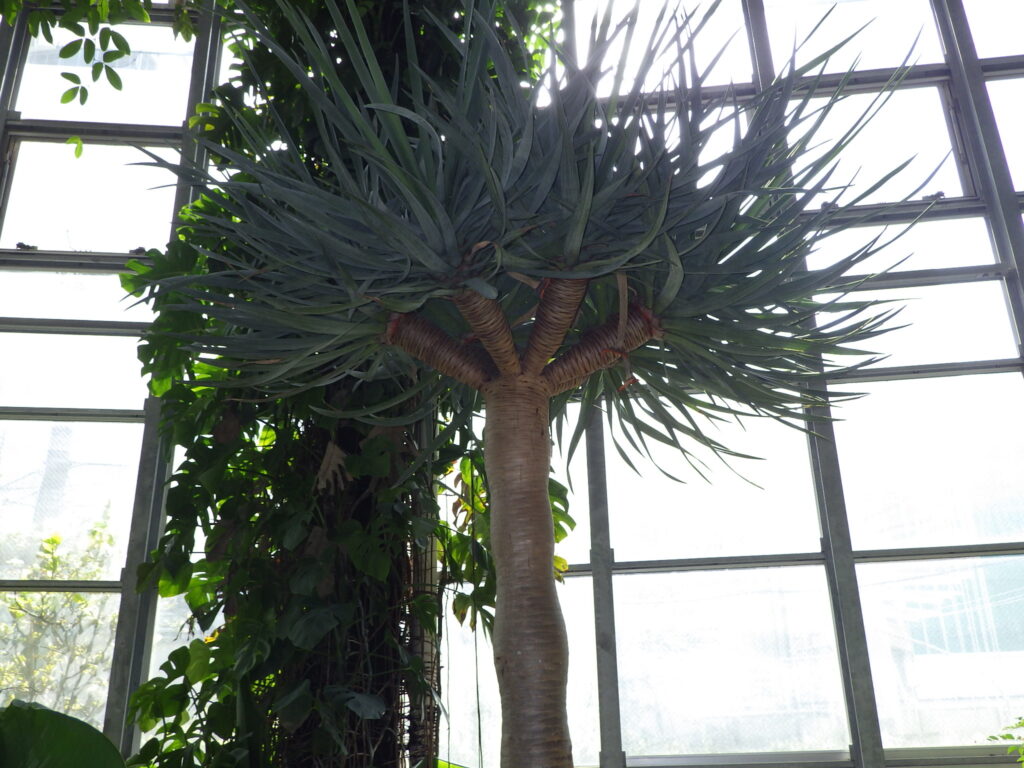
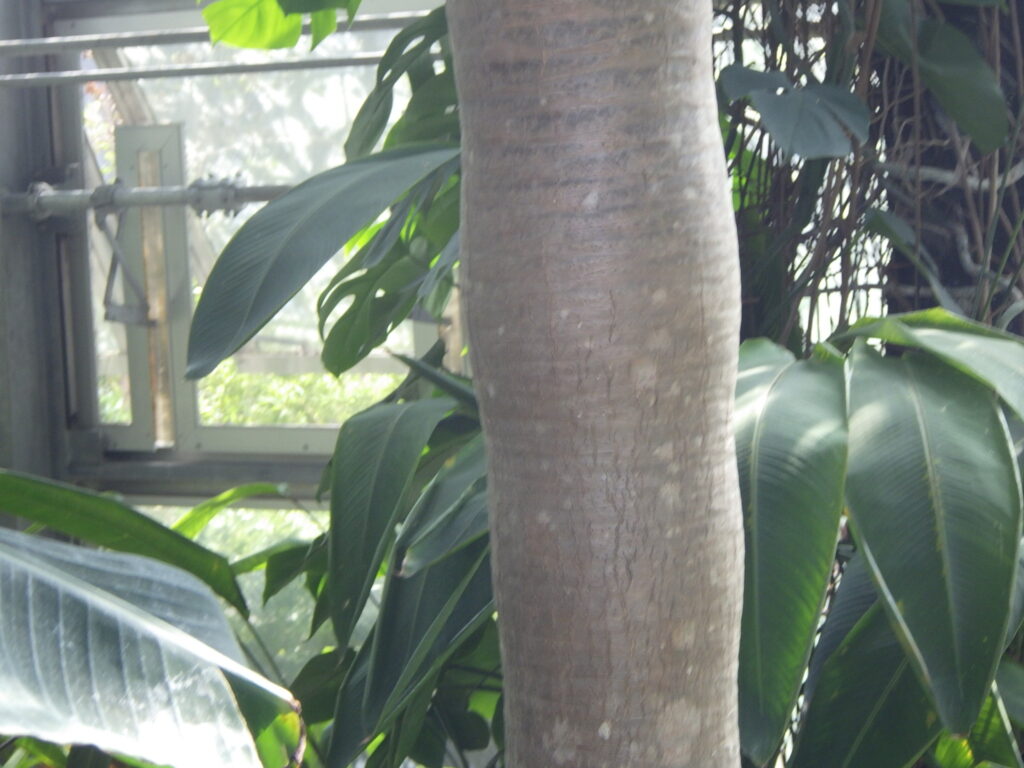
This evergreen tree is long-lived, reaching a maximum height of over 15 meters and a trunk circumference of over 5 meters. Its bark starts smooth and becomes rougher as it ages. The leaves are flat, leathery, bluish-green, and sword-shaped, growing in clusters at the tips of the branches. In June, large conical inflorescences emerge from the branch tips, bearing small, white-green, tubular flowers with a lily-like fragrance, and producing round, orange fruits. When young, it has a single stem, but at around 10-15 years old, stem growth stops, a terminal bud appears, and the plant begins to branch. Each branch grows for about 10-15 years before re-branching, resulting in a mature dragon's blood tree with an umbrella-like shape. Growth is slow, taking about 10 years to reach a height of 1.2 meters. The name "dragon's blood tree" comes from the fact that a reddish resin is secreted when the bark or leaves are cut. Native to the Canary Islands, Cape Verde, Madeira, and western Morocco in Africa, it is believed to have been introduced to the Azores. Its unusual tree shape has led to its cultivation as an ornamental plant in various countries, including Japan.
No.0584.a Dracaena concinna
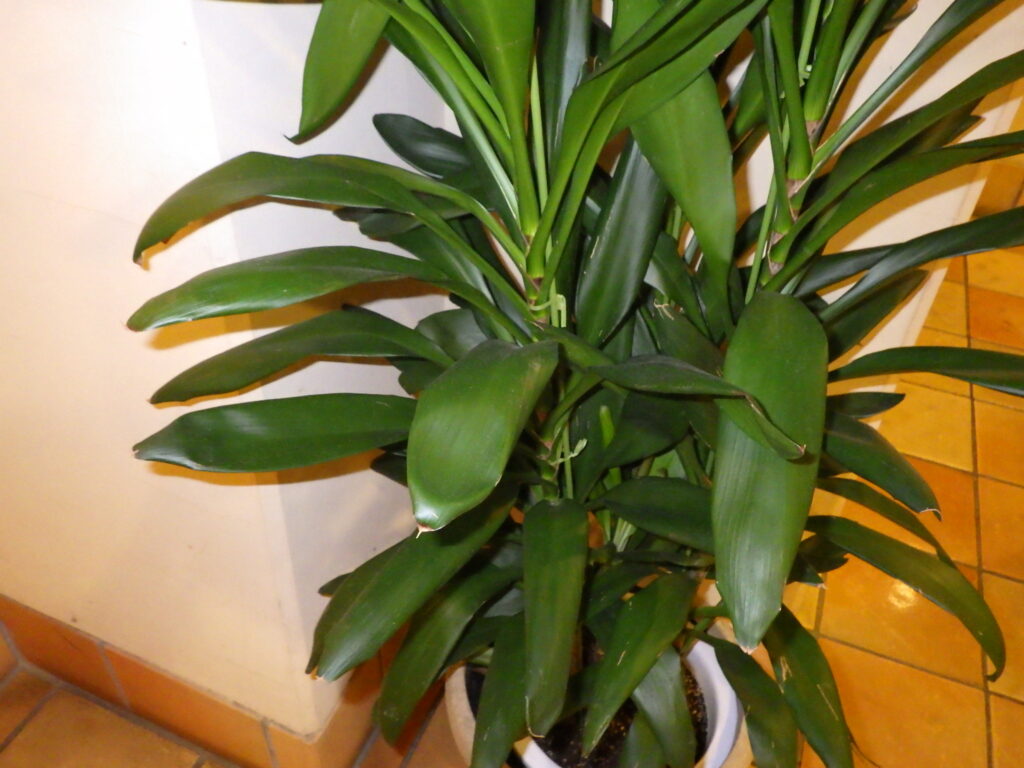
This is an evergreen shrub. It can grow to a height of 2-4.5m, but indoors it will be about 0.5-2m. Narrow, elongated leaves, 30-50cm long, grow densely at the top of the stems. The leaves are green with a red margin. Native to Madagascar and the Mauritius Islands, it is cultivated as an ornamental plant in many countries, including Japan.
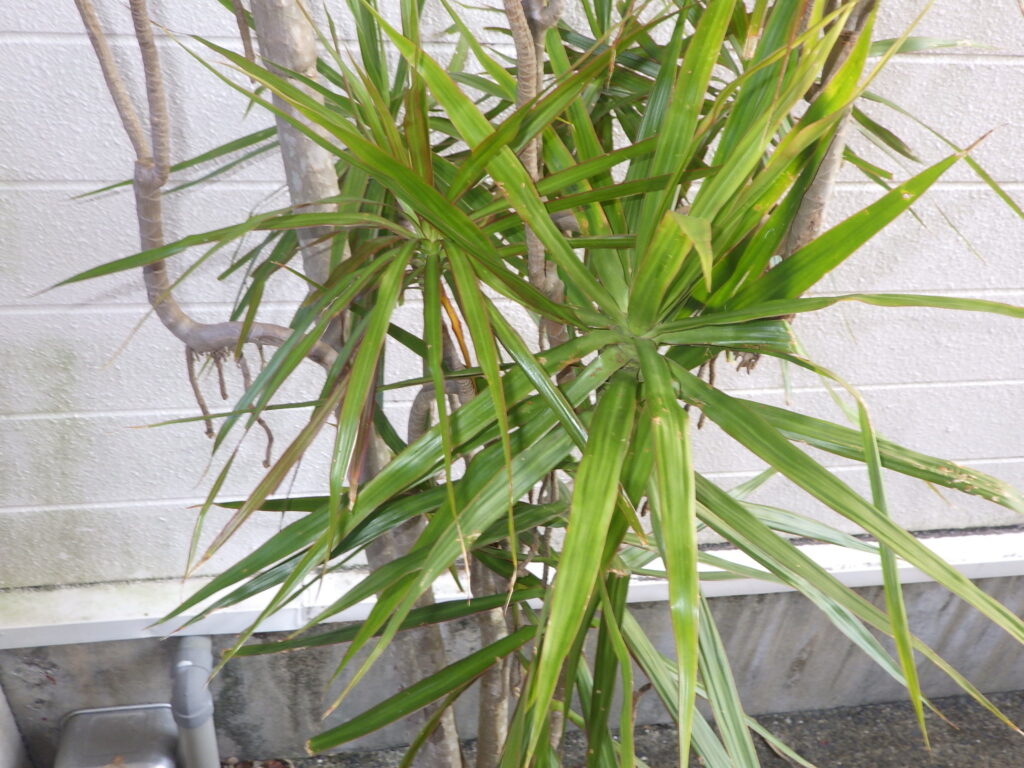
No.0584.b Dracaena fragrans
This evergreen shrub to tree grows to over 6 meters tall in its natural habitat, sometimes reaching 15 meters. It does not have a succulent rhizome. Young plants have a single, unbranched trunk, but if the mature tip flowers or is damaged, that part will branch out into two or more new trunks. The branches are usually slender, erect, and form a narrow canopy. The leaves are densely clustered at the ends of the trunk and branches, glossy green, and have wavy edges. They are lanceolate, 20-150 cm long and 2-12 cm wide, and the larger leaves droop under their own weight. As it grows, the lower leaves fall off, leaving the trunk exposed. From the leaf axils emerge panicles 15-160 cm long, bearing numerous small, six-petaled flowers clustered in a rounded head. The flowers are pinkish in bud, and when they open at night, they turn white to cream-colored, with thin red or purple lines in the center of each perianth segment. The flowers are fragrant. The flower has no bracts at its base. The ovary is divided into three chambers, each containing one ovule. The fruit is a berry that ripens to an orange-red color, 1-2 cm in diameter. Native to tropical Africa, it is distributed from southern Sudan to Mozambique, as far west as Côte d'Ivoire, and as far southwest as Angola. It is cultivated as an ornamental plant in various countries, including Japan. It is sometimes referred to as Koufuku-no-ki, but it is a completely different species and is actually said to refer to Sennenboku.
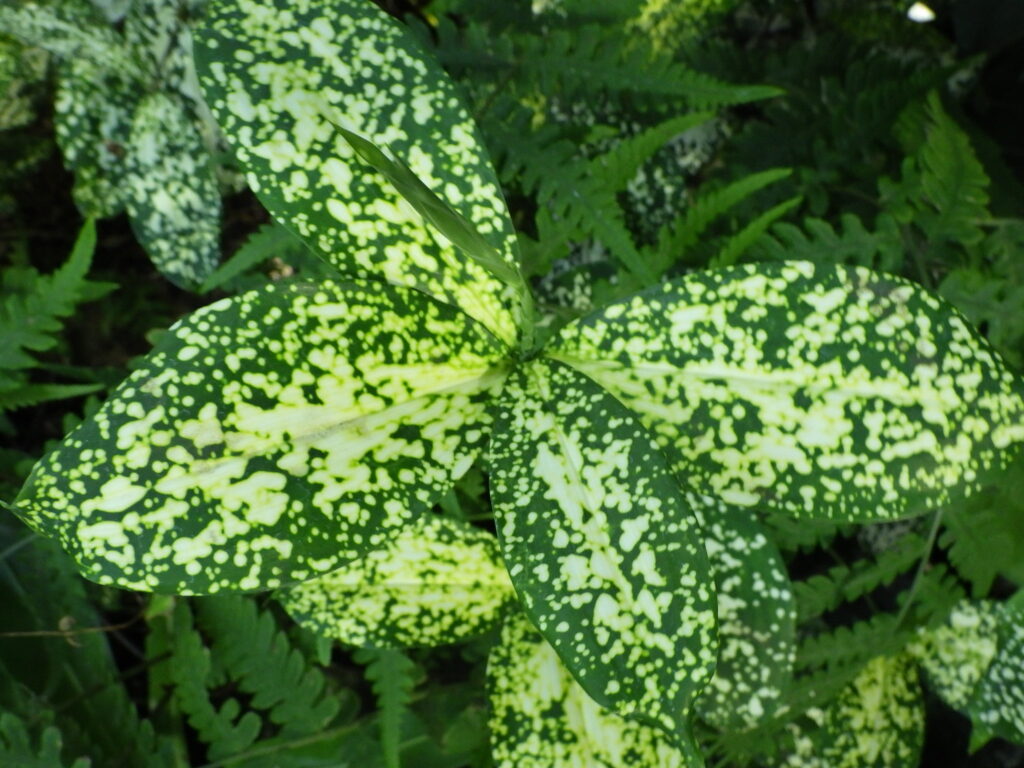
No.0584.c Dracaena surculosa 'Florida Beauty' (Star-flowered pine tree)‘
This is an evergreen shrub. Its leaves are ovate with pointed tips, thin and soft, and have entire margins. It produces numerous small, slender, tubular white flowers in spike-like inflorescences. A distinctive feature of the 'Florida Beauty' variety is its green leaves with many yellow spots. These yellow spots turn white as the leaves age. The corolla is five-lobed at the tip. Native to tropical West and Central West Africa, from Guinea to the Republic of Congo, it is cultivated as an ornamental plant in various countries, including Japan.
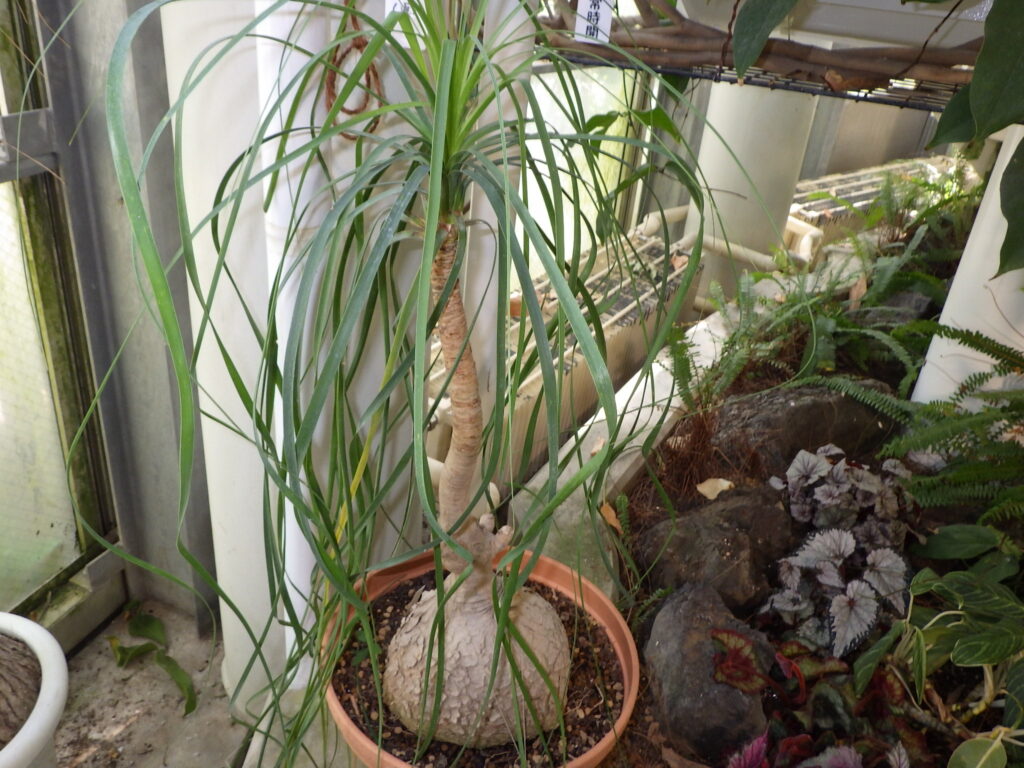
No.0584.d Beaucarnea recurvata (Ponytail Orchid)
This evergreen tree grows up to 4.72m tall, with a single, palm-like stem bearing thin, linear, green, flat or slightly ridged leaves. The leaves form clusters, and after more than 10 years, it occasionally produces small white flower clusters. The trunk, which is greatly swollen only at the base, branches slightly at the top. It has a large tuber to store water. The nearly spherical tuber in its youth later grows to 4-6m in length and reaches a diameter of over 50cm at the base. The bark is smooth. Native to eastern Mexico, it used to grow wild in many states, but is now limited to Veracruz. It is cultivated as an ornamental plant in various countries, including Japan. Human activity is reducing its population.
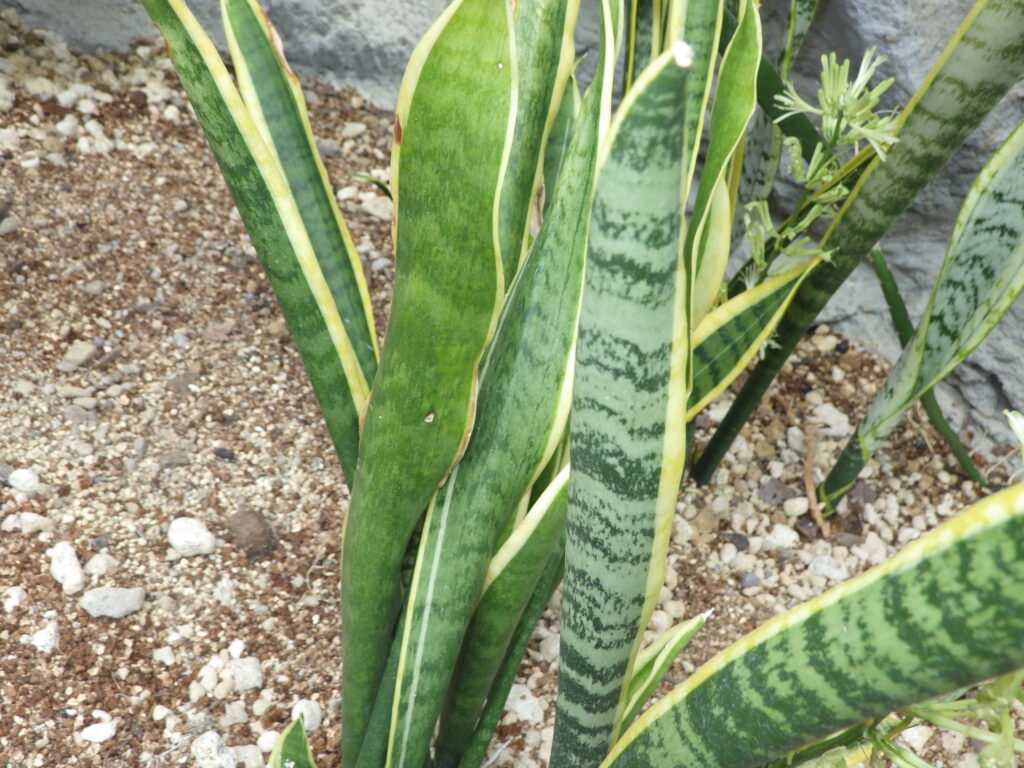
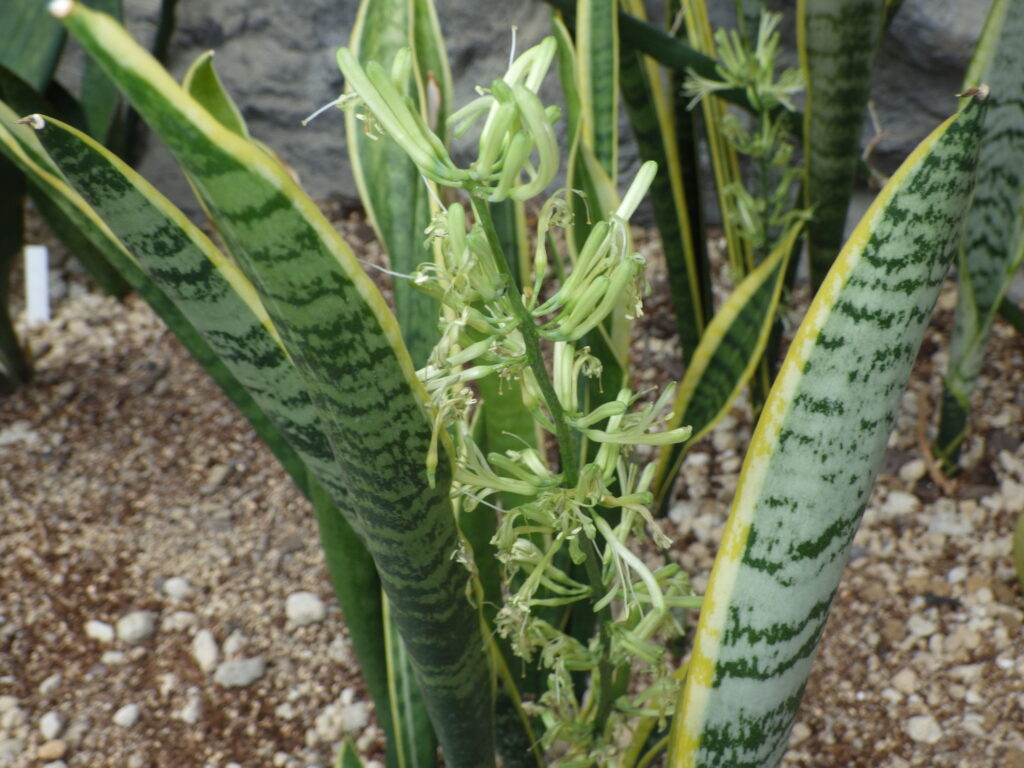
No.0586.1 Dracaena trifasciata 'Laurentii'‘
This is an evergreen perennial herb. The previously used name Sansevieria trifasciata was later identified by Mabberley (2017) as a synonym of Dracaena trifasciata. The NCBI Taxonomy still lists it as Sansevieria trifasciata. The stems are underground and creep horizontally, with only the leaves emerging above ground. Leaves grow from the creeping stems at small intervals, and these then grow long and upright above ground, resulting in a plant with rows of flat, board-like leaves. The leaves have horizontal stripes of varying shades of green, which is the origin of its name, "tiger's tail orchid." Flower stalks emerge from between the leaves, bearing small, inconspicuous flowers. Nectaries are located at the base of the slender stems of the flowers and buds, from which small, transparent nectar droplets hang. It is a CAM plant and uses a special type of photosynthesis called CAM photosynthesis to suppress daytime photosynthesis, thereby preventing water evaporation and allowing it to withstand drought. On cool nights, it opens its stomata to concentrate carbon dioxide. Native to Africa (Nigeria and the Democratic Republic of Congo), it is cultivated as an ornamental plant in various countries, including Japan. It is believed to have been introduced to Japan sometime between the mid-Meiji and late Meiji periods, and for a long time, only this species of the genus was cultivated. Fukurin Chitosera 'Fukurin Chitosera' is a variety of Atsuba Chitosera with yellow margins on its leaves, and it was introduced to Japan in the early Showa period and has become widely cultivated.
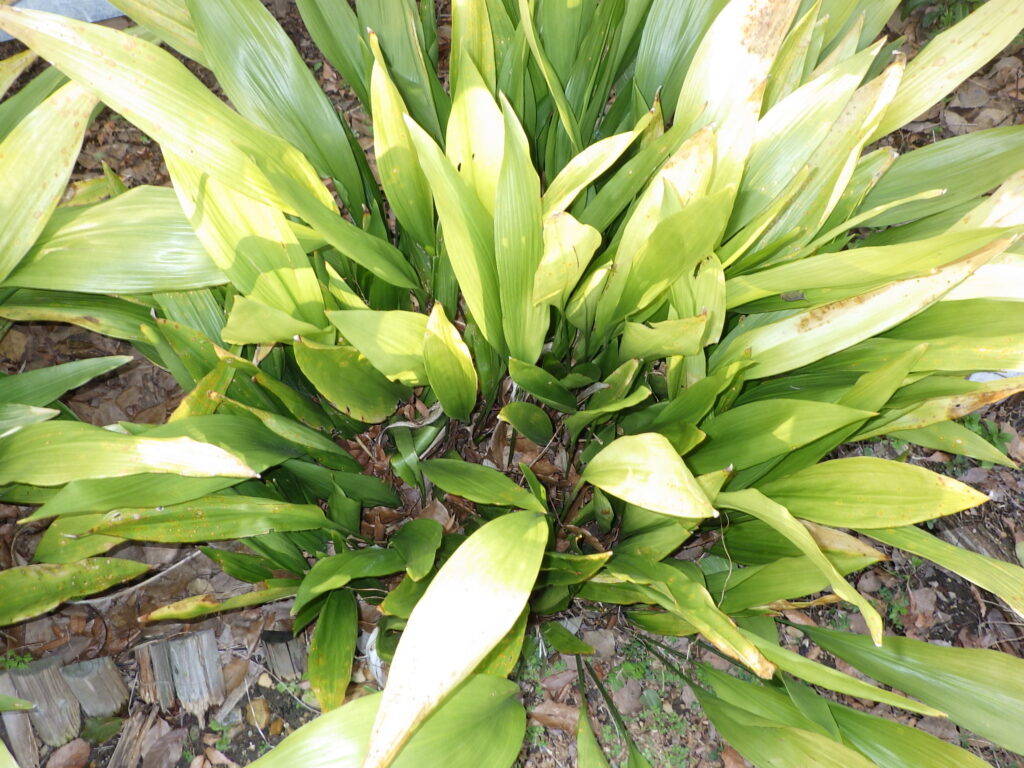
No.0587 Aspidistra elatior
This is an evergreen perennial herb. The leaves are oblong-lanceolate, dark green, 20-50 cm long, and have long petioles. The flower stalks are 2-7 cm tall, and the flowers bloom from February to May, being brownish-purple. They are succulent and bloom close to the ground, so they are hidden by the leaves and are not easily seen unless you observe carefully. It is native to the Uji Islands, Kuroshima, and Suwanosejima in southern Kyushu, Japan, and grows in scattered hilly areas, forming colonies under house groves and bamboo forests. It is cultivated as an ornamental plant all over the world and escapes cultivation. There were once hypotheses that it was pollinated by snails and slugs, or by amphipods, but it is now known that these species rarely visit, and that it is pollinated by fungus gnats of the genera Cordyla and Bradysia (Suetsugu & Sueyoshi, 2018). The flowers mimic mushrooms. In Japan, it has been used as a garnish when plating Japanese cuisine. The green plastic ornaments called "baran" that come with sushi and other foods are an imitation of the old name for haran, or a shortened form of "artificial baran," and are made to resemble haran.
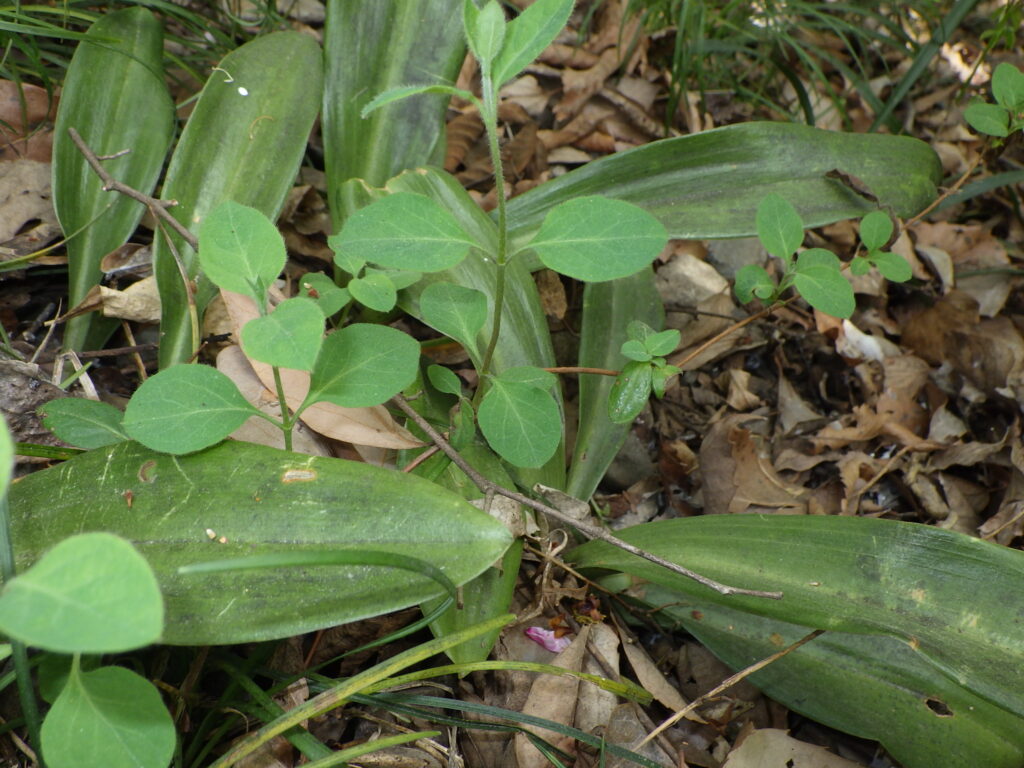
No.0588 Rohdea japonica
Evergreen perennial herb (Kitamura et al., 1957). The rhizome is thick and grows obliquely or horizontally, with numerous sturdy roots. The leaves are basal leaves arranged in clusters. They are lanceolate, gradually tapering to a point at the tip and narrowing towards the base. They are thick in texture, glabrous on both sides, glossy, and 30-50 cm long. The flower stalk is 8-18 cm long, glabrous, and leafless. The flowers are densely borne in oblong spike-like inflorescences. The bracts are broadly ovate, membranous, obtuse, and 2-3 mm long. The flowers are sessile and lateral, hemispherical in shape, with perianth segments fused together above the middle to form a tube, and the lobes curve inward and rounded at the apex. There are 6 stamens enclosed in the perianth, with filaments fused to the flower tube and ovate anthers. The ovary is spherical, 3-chambered, with 2 ovules in each chamber. The style is very short, and the stigma is shallowly 3-lobed. The berries are spherical, 1 cm in diameter, red, rarely yellow, and contain one seed. Flowering occurs from May to July. It grows in forests in warm regions of Honshu (west of the Kanto region), Shikoku, Kyushu, and China. It is often found in limestone areas. It also grows in forests around human settlements and escapes cultivation. It is cultivated for ornamental purposes, and many horticultural varieties are known. Classically, it was believed to be malacophilic, with slugs and snails pollinating the flowers, but additional experiments have shown that flowers pollinated by slugs do not bear fruit (Suetsugu, 2019), raising doubts about their contribution to pollination. The possibility of pollination by ants has also been suggested.
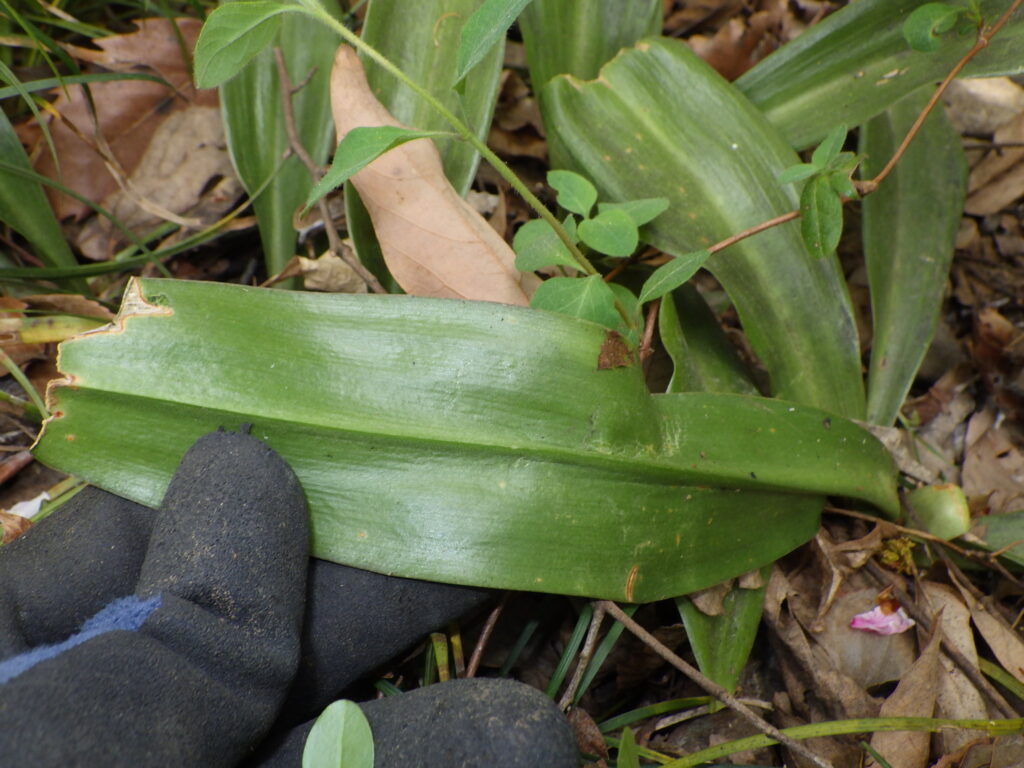
No. 0589 Reineckea carnea
This is an evergreen perennial herb (Kitamura et al., 1957). The berry has a well-developed rhizome that creeps long, producing numerous roots at various points, from which leaves and flower stalks emerge. The leaves are arranged in clusters, linear with an acute apex, sessile, 8-30 cm long, and glabrous on both sides. The flowering period is from August to November (to December). The pale reddish-purple flower stalks are leafless, 5-13 cm tall, erect, and glabrous. The spike-like inflorescence is 4.5-7 cm long, with ovate bracts 5-7 mm long. The perianth is about 1 cm long, glabrous, fused to form a tube halfway through, deeply 6-lobed, with narrowly oblong lobes, obtuse apex, and recurved. There are 6 stamens, slightly shorter than the perianth, fused to the flower tube, glabrous at the free part, and anthers 2 mm long. The style is longer than the perianth and glabrous, with a capitate stigma shallowly 3-lobed. The berries are spherical, 6-9 mm in diameter, and ripen to red. The seeds are oval, 4 mm long. It is distributed in Honshu (west of the Kanto region), Shikoku, Kyushu, and China, growing in clusters in evergreen broad-leaved forests and cedar plantations in hilly areas. It grows in mountainous forests from west of the Kanto region to Kyushu.
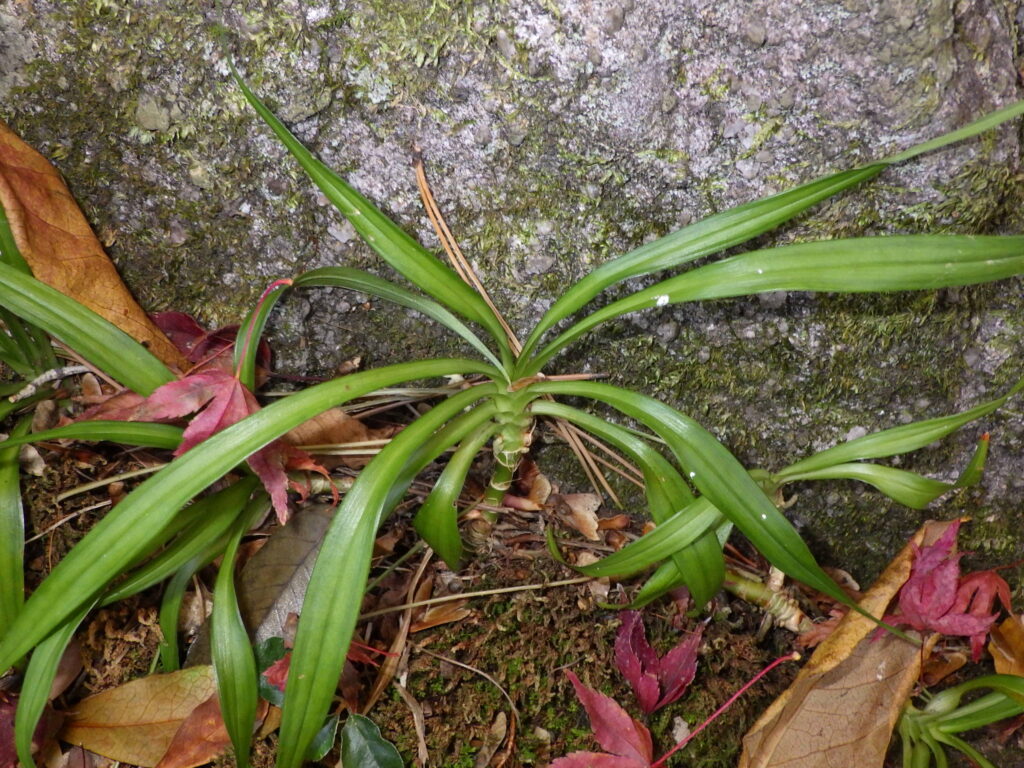
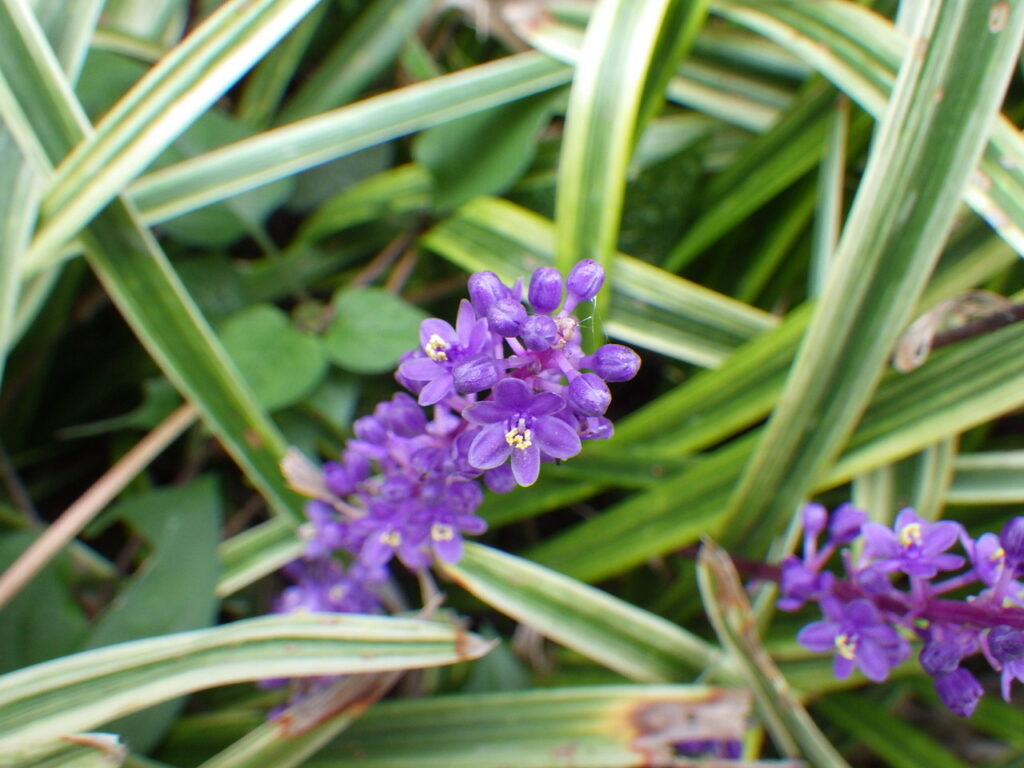
No.0590 Liriope muscari
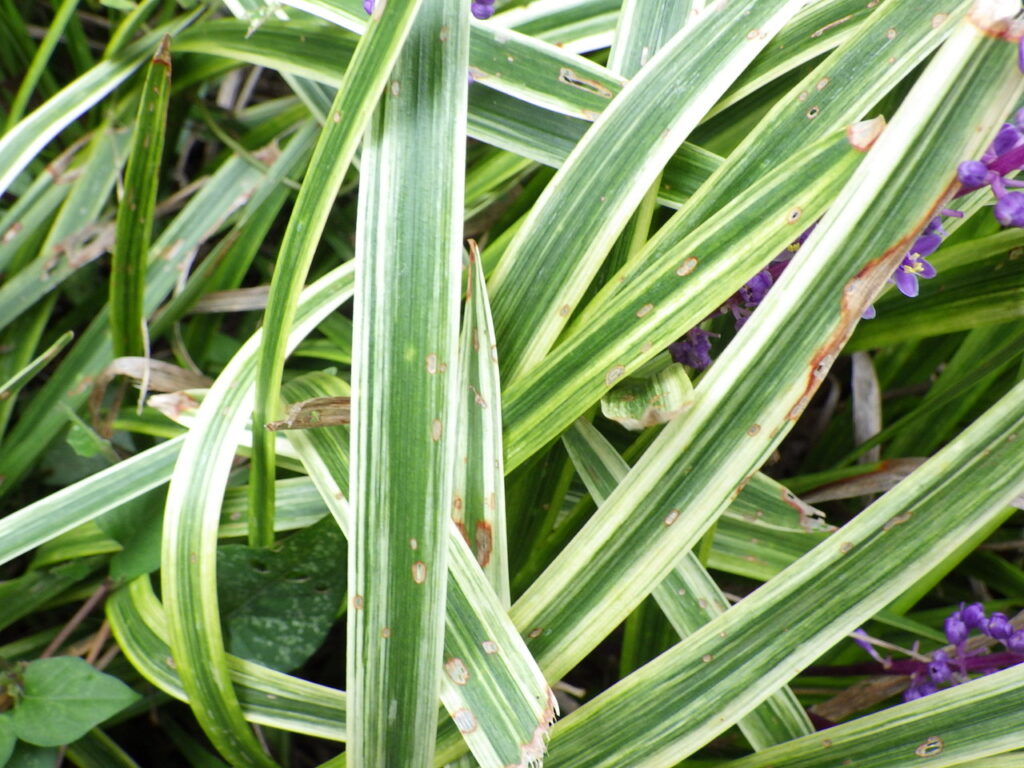
This is an evergreen perennial herb, growing to a height of 20-60 cm. The leaves have 11-15 veins. The flowers bloom in July, August, and September and are purple. The seeds are spherical, 6-8 mm in diameter, and ripen to black. It is distributed in Honshu (west of the Kanto region), Shikoku, Kyushu, the Ryukyu Islands, Korea, China, and Taiwan, and is somewhat common throughout the oak and evergreen broad-leaved forest zones, growing in forests of evergreen broad-leaved trees and cedar plantations. The white-flowered variety is called Liriope muscari f. albiflora.
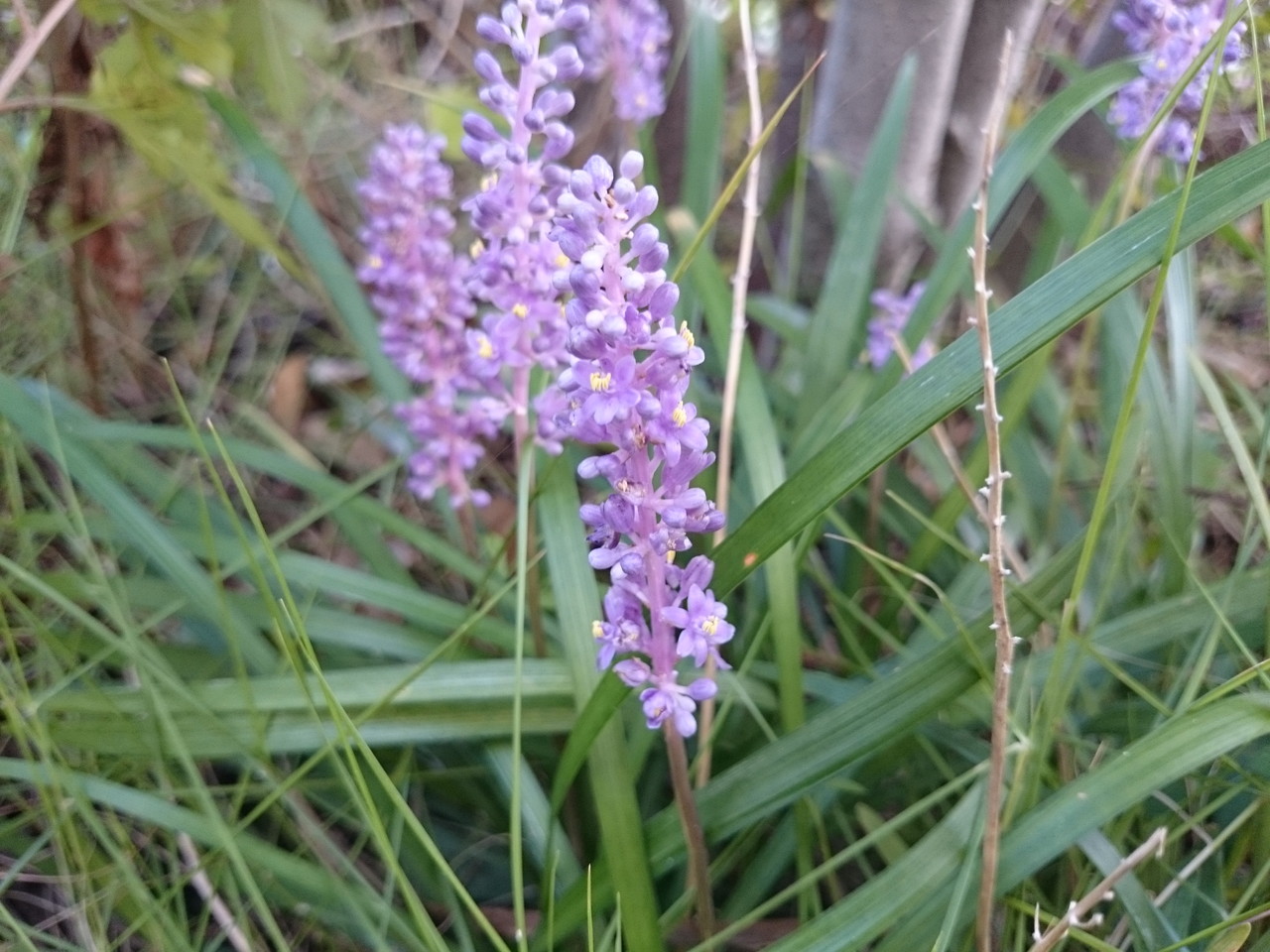
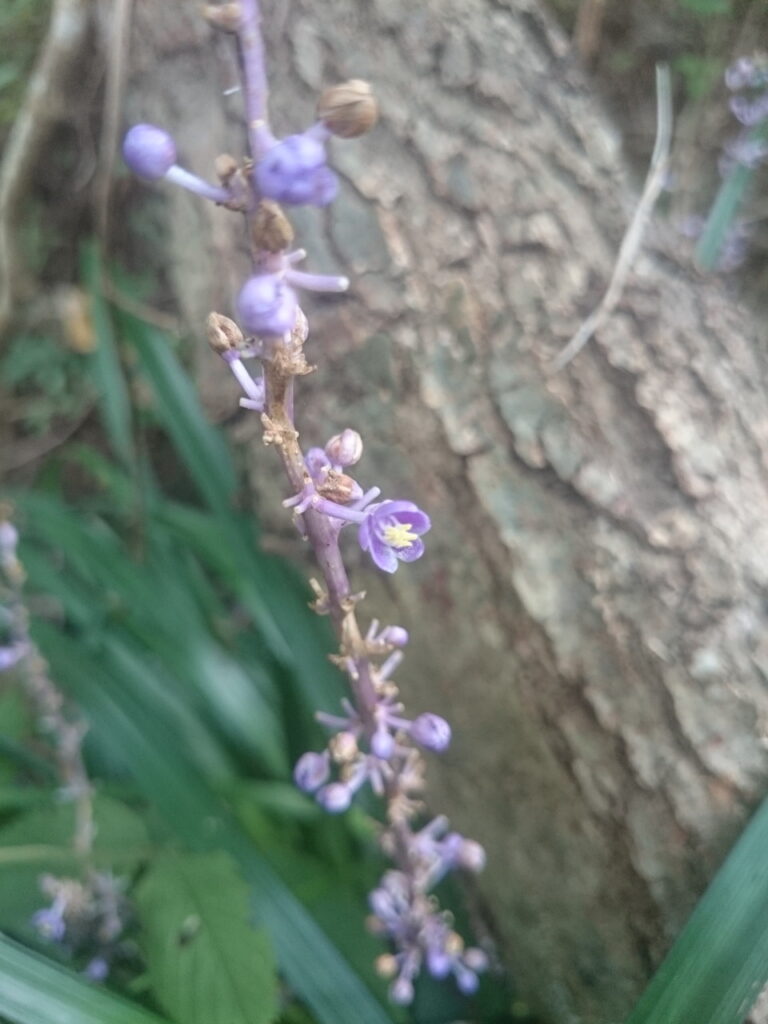
No.0590.1 Liriope muscari f. variegata
A variety of liriope with slender green leaves and thin yellow or white stripes.
No.0591 Liriope spicata
No. 0593 Ophiopogon japonicus var. japonicus
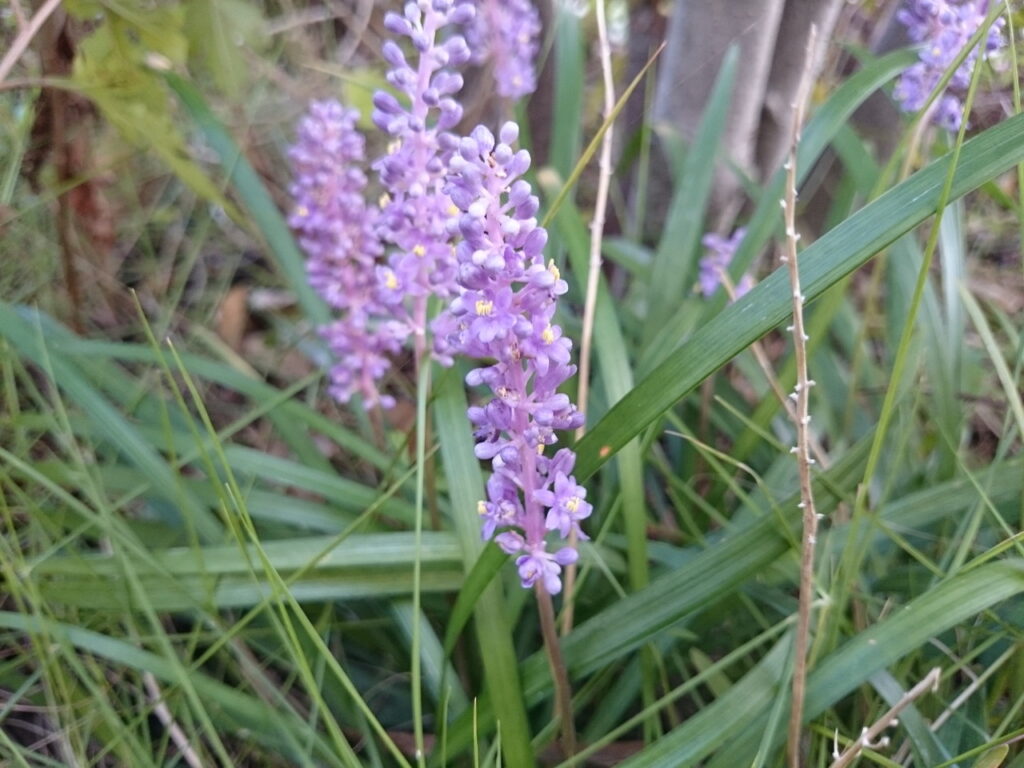
An evergreen perennial herb. Also known as Ophiopogon japonicus. It grows to a height of 7-12 cm. The leaves are 2-4 mm wide with rough edges. Compared to Ophiopogon japonicus, the leaves are shorter but wider, and it often grows in clusters in sunny locations. The flowers bloom in June and July and are pale purple. The seeds ripen to a bluish-green color. It is distributed in Hokkaido, Honshu, Shikoku, Kyushu, Korea, China, and Taiwan, and is somewhat common in the oak and chestnut zones, mainly growing under evergreen broad-leaved forests and in grasslands. The white-flowered variety is called Ophiopogon japonicus f. leucanthus. There is also a type that grows in clumps and does not produce stolons, called Ophiopogon japonicus var. caespitosus, which is often found as a cultivated variety.
No.0593.1 Ophiopogon japonicus var. japonicus f. nanus
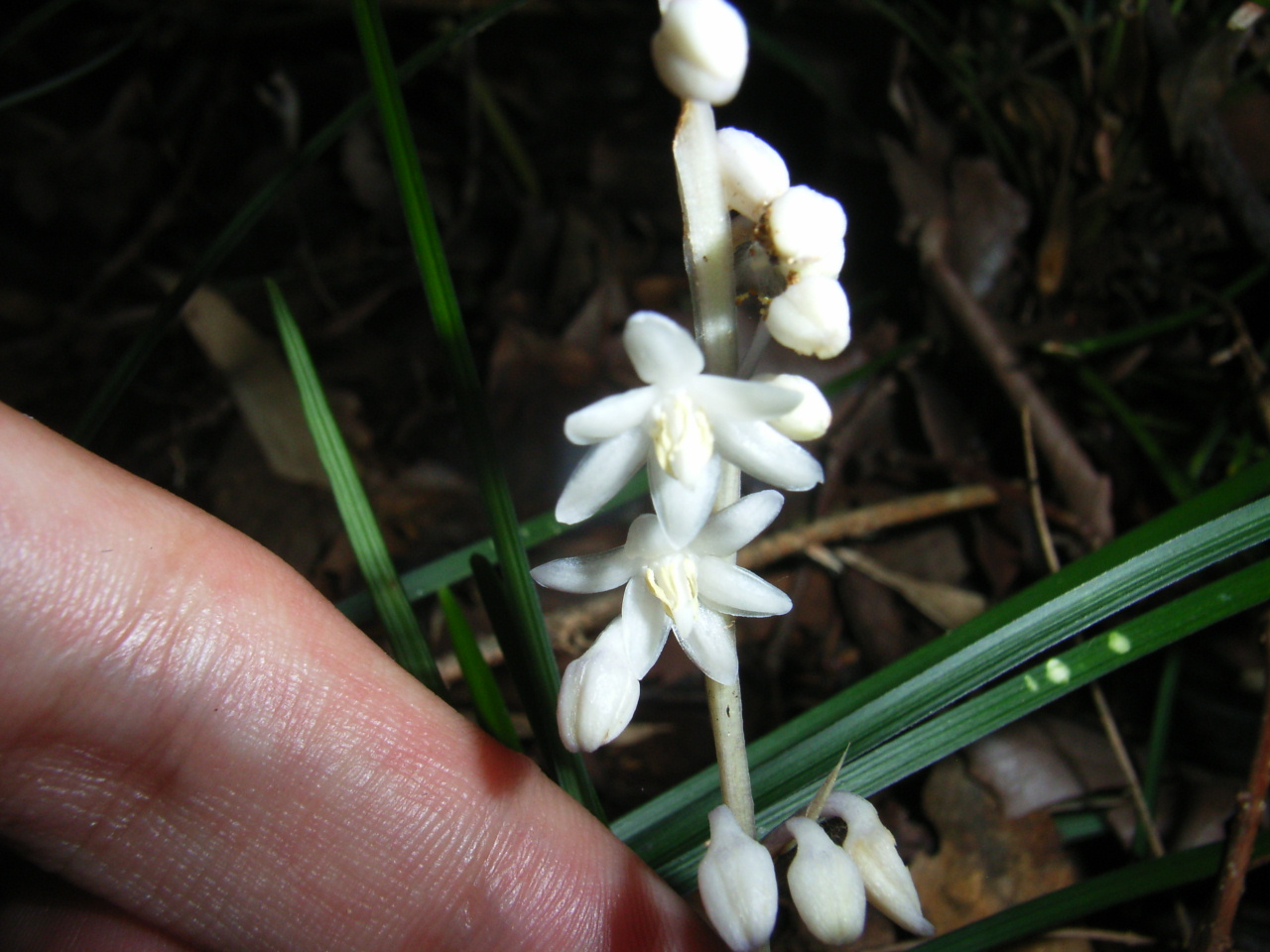
This variety of Ophiopogon japonicus grows to a small, dense plant height of 5-8 cm. It has high resistance to flooding and submersion, and can survive even when its roots are submerged in water or submerged in water, making it suitable for cultivation as a ground cover in gardens.
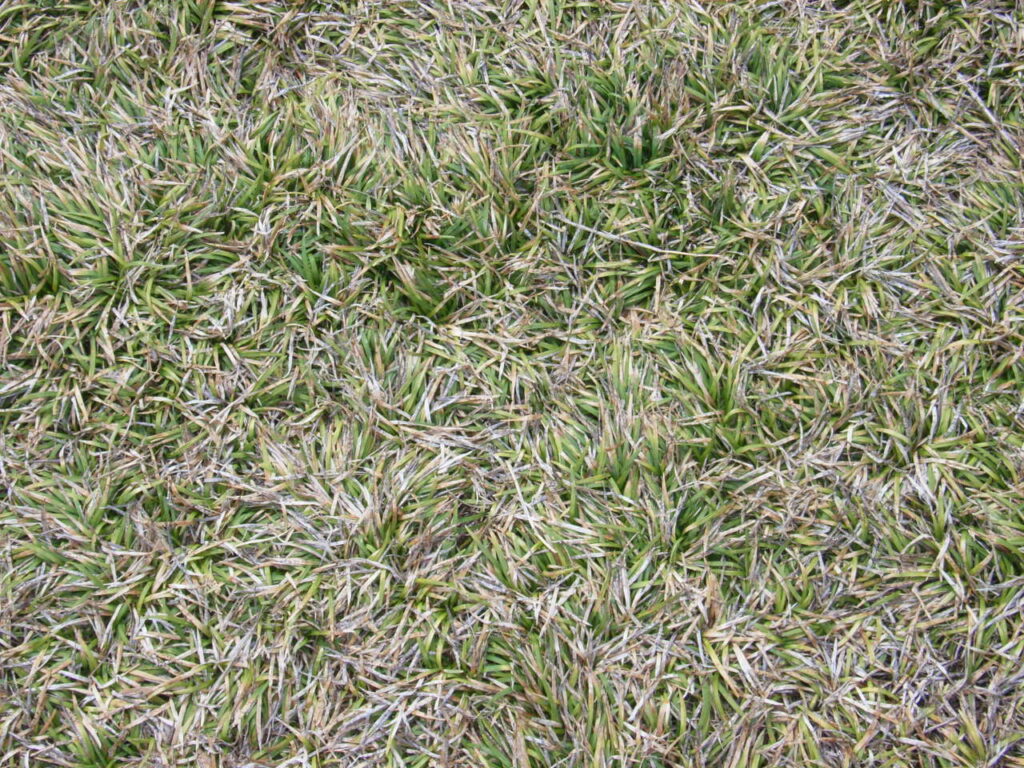
No.0593.2 White Banana Ophiopogon japonicus var. umbrosus f. leucanthus
An evergreen perennial herb. The flower stalks are 10-30 cm tall. The leaves are 1.5-2.5 mm wide. The flowers bloom in June and July and are pale purple. It is distributed in Honshu, Shikoku, Kyushu, southern Korea, and China, and is common in the oak and chestnut zone, growing on the forest floor and forest edges. White-flowered variety Ophiopogon japonicus f. leucanthus.
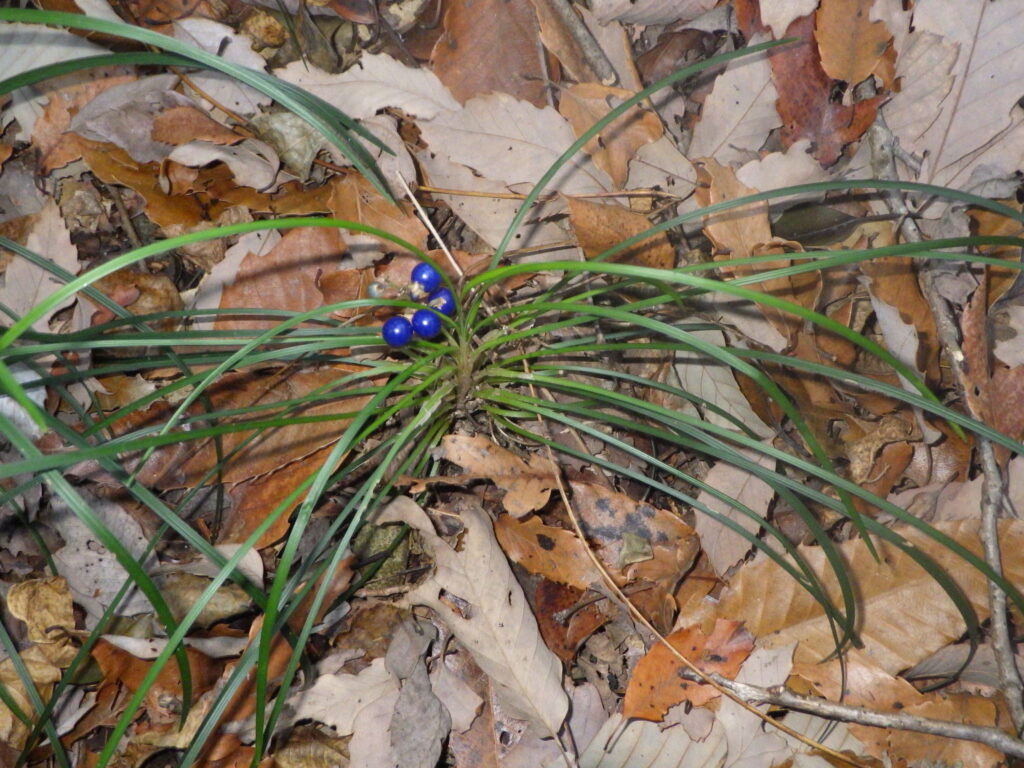
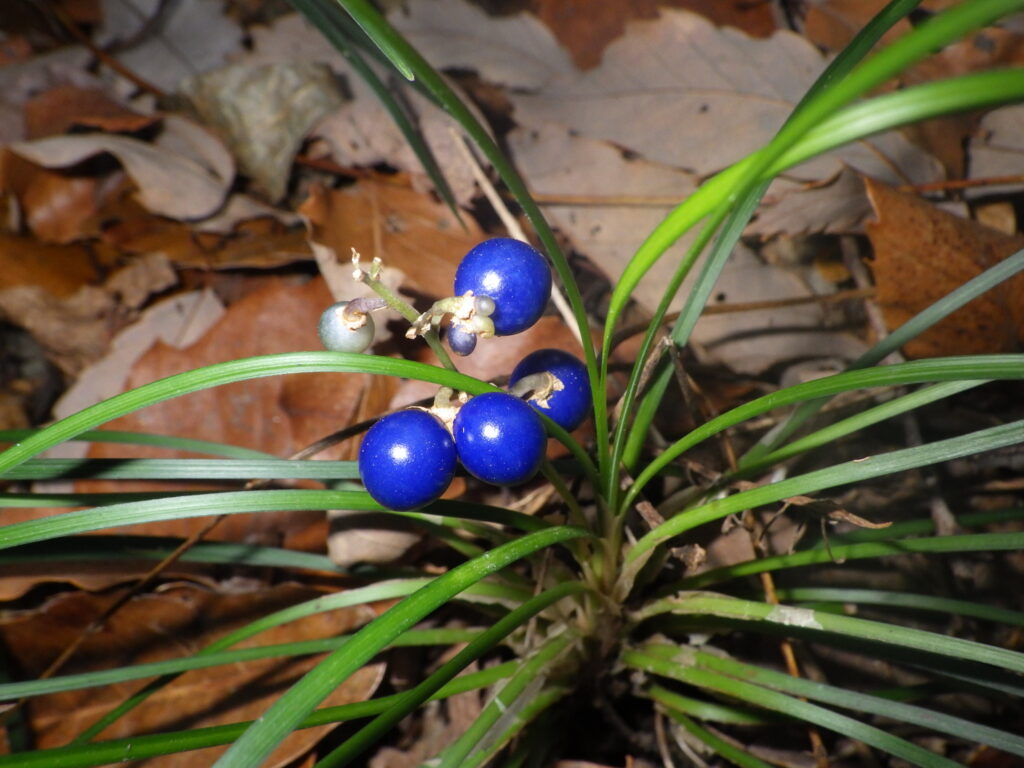
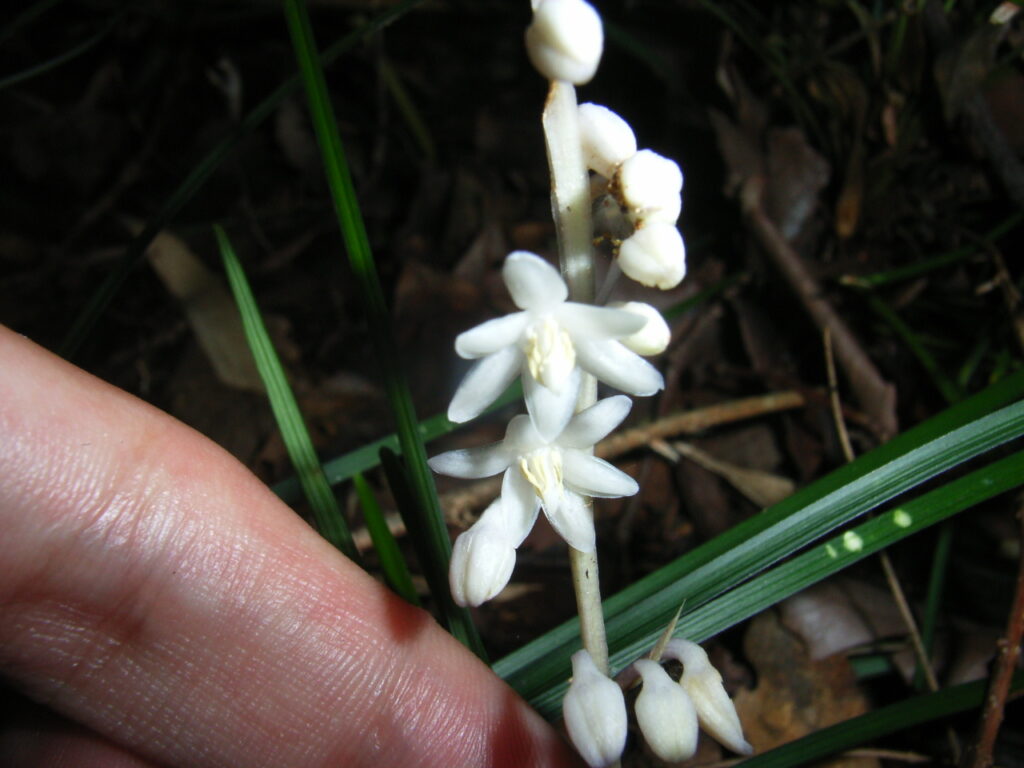
No.0594.a Ophiopogon jaburan
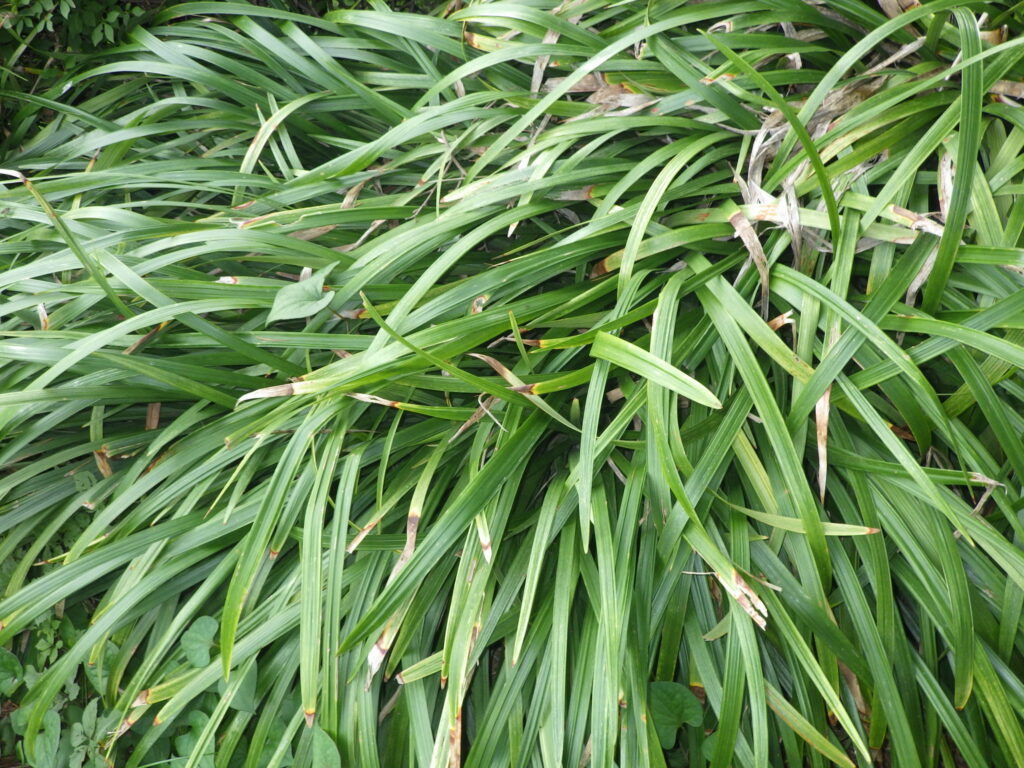
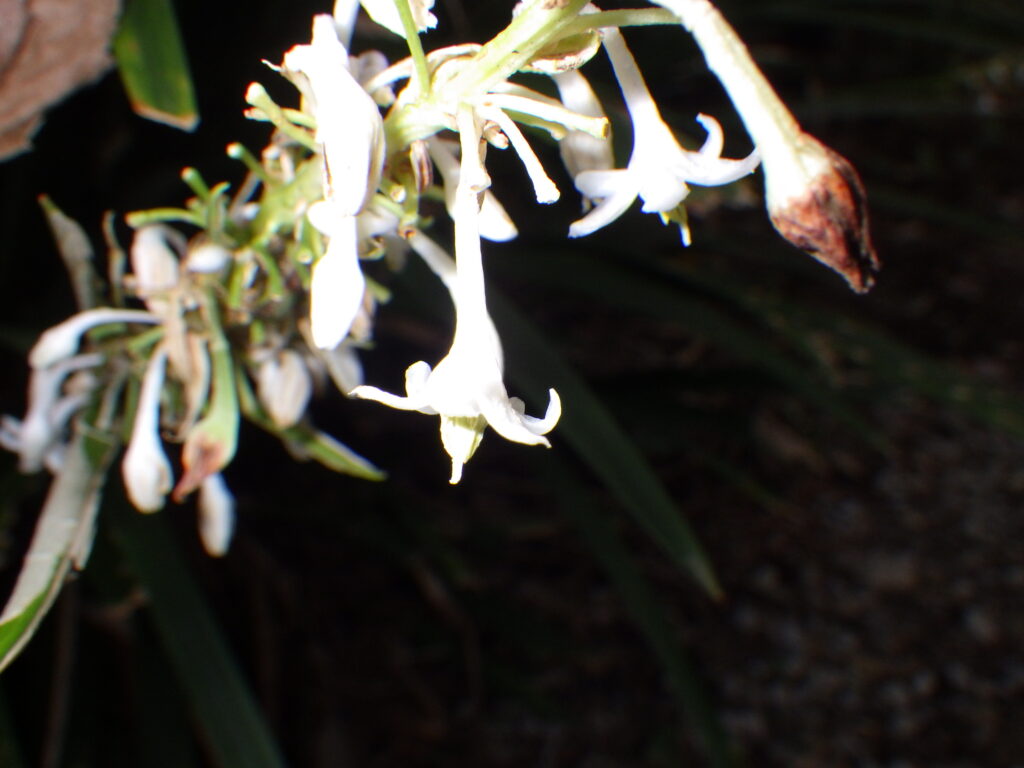
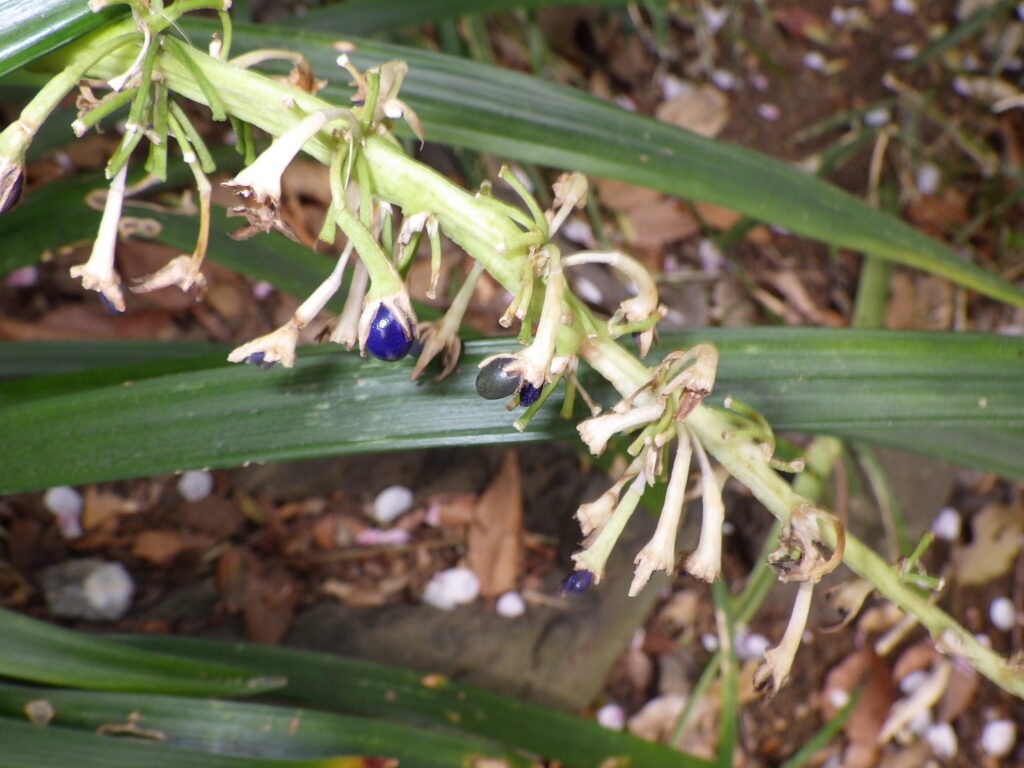
This is an evergreen perennial herb. The rhizome is vertical and branched. It lacks a stolon. A slender, spindle-shaped thickening may be seen in the middle of the root. The leaves are evergreen and thick, 40–130 cm long and (7–)10–18 mm wide, with an acute to acute apex, sometimes with a narrow, membranous wing on the lower part of the margin, and finely serrated on the upper part of the margin. The flower stalk is arching, 25–75 cm long and 4–8 mm wide, with a flattened, two-angled, narrow wing. The inflorescence is 7–13 cm long, bearing 3–8 flowers at each node. The bracts are narrowly lanceolate to lanceolate, the lowest being 1.5–9 cm long, pale green, with a membranous margin and an apicate apex. The flowers open downwards. The pedicel (including the part enclosed in the perianth sheath) is 10–22 mm long, usually more than twice as long as the perianth (excluding the sheath). The perianth (excluding the sheath-like part) is usually shorter than the perianth sheath, white to pale purple, with ovate-oblong lobes 5-7 mm long and slightly recurved. The anthers are lanceolate, 4-5 mm long. The seeds are dark blue. Mature seeds are elliptical, 8-14 mm long and 6-10 mm wide. The flowering period is from July to September. It is distributed in Honshu (west of Tokai), Shikoku, Kyushu, and Korea (Jeju Island), growing in the undergrowth of forests near the sea. It escapes cultivation mainly near the coast.
No.0597 Polygonatum odoratum var. pluriflorum
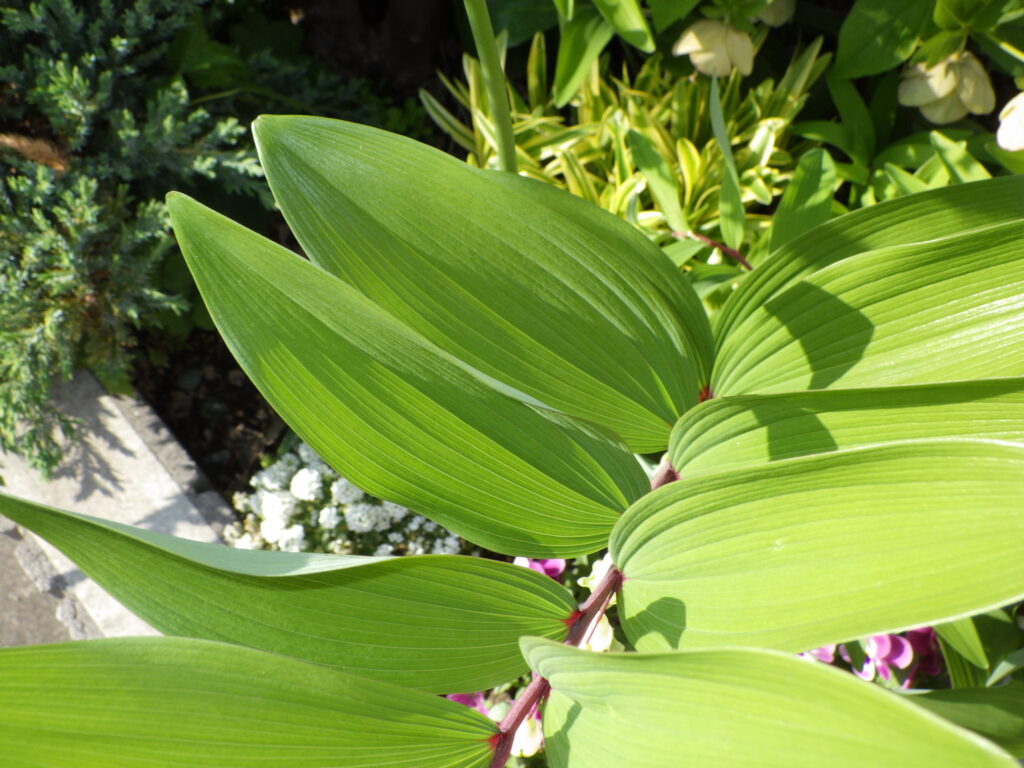
This is a perennial herb, growing to a height of 30-60 cm. The leaves are oblong, with a powdery white-green underside. The flowers bloom in April and May, and are white with pale green perianth segments. The filaments have minute projections. It is distributed in Hokkaido, Honshu, Shikoku, Kyushu, Korea, and China. It is commonly found on hills and foothills, growing in grasslands and bright woodlands.
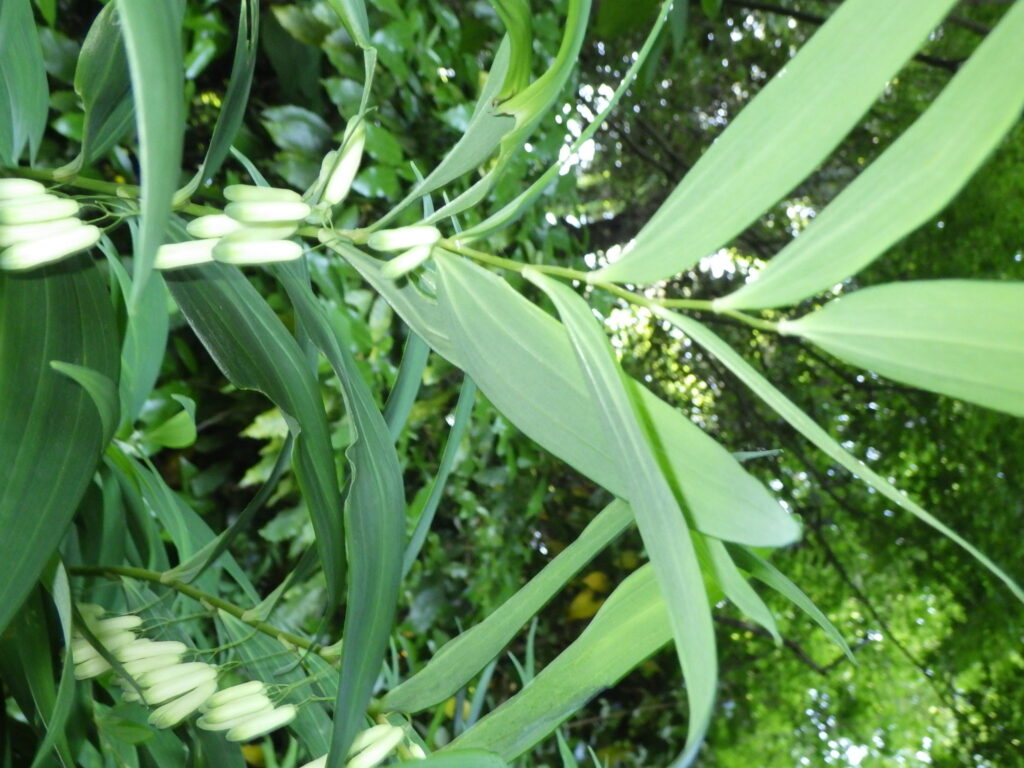
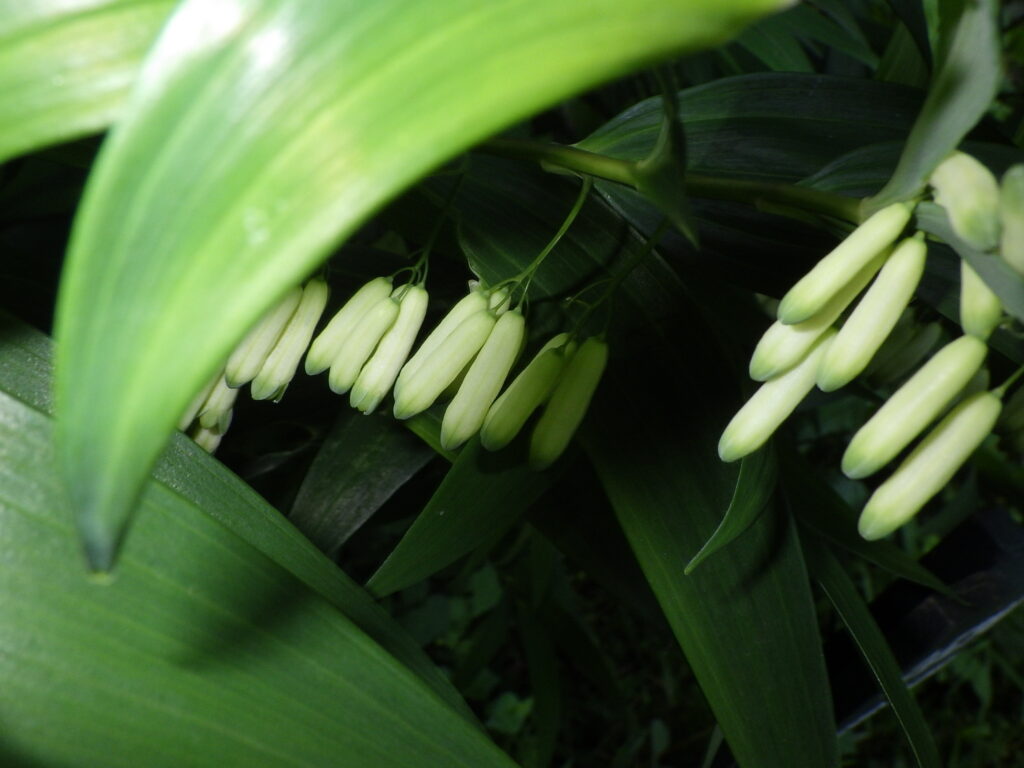
No. 0599 Polygonatum falcatum
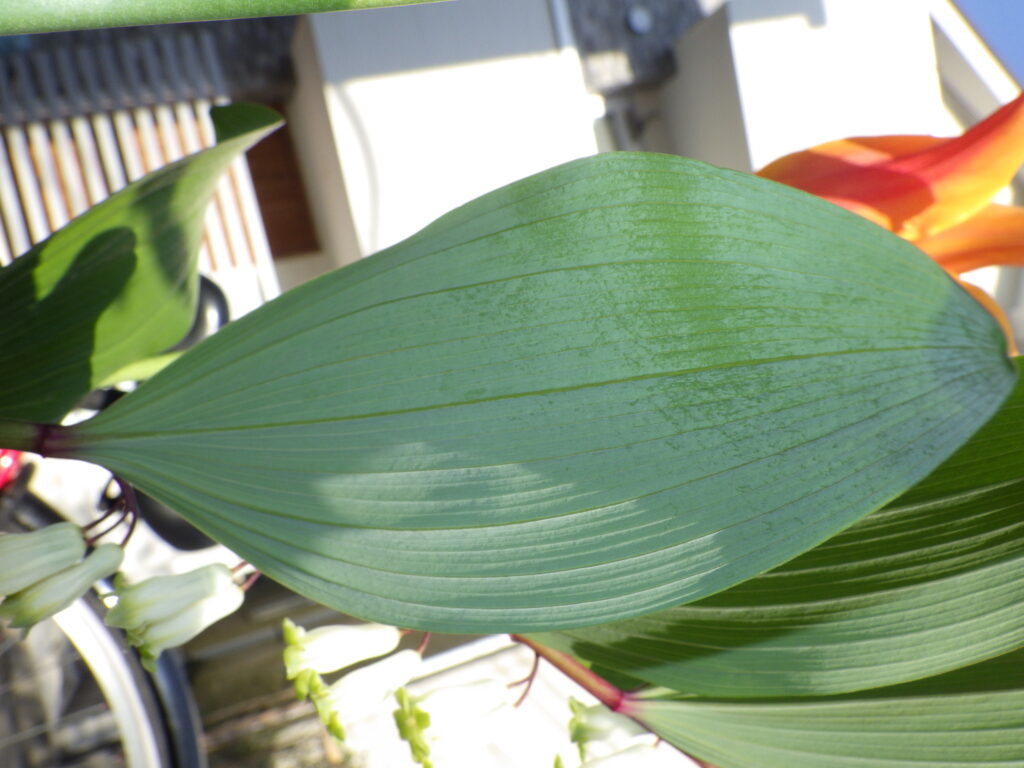
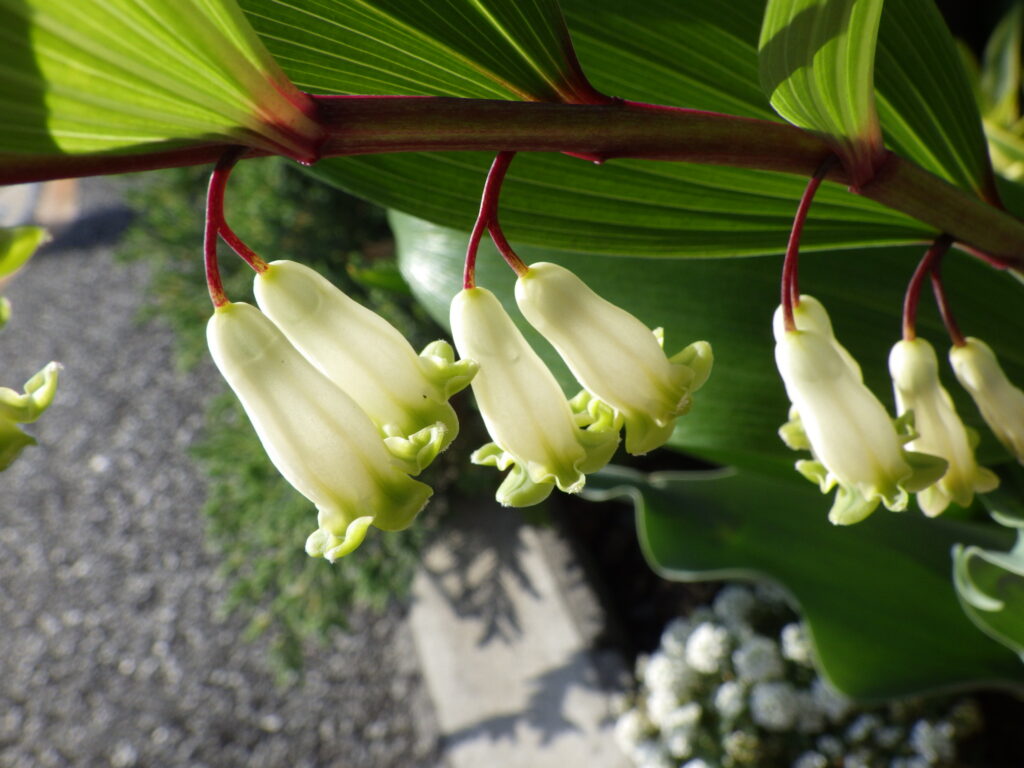
This is a perennial herb, growing to a height of 30-60 cm. The rhizome is thick, with short internodes, resembling a string of beads. It has 13-17 leaves, broadly lanceolate in shape, with three prominent main veins, and projection-like hairs on the veins of the underside. Often, a white line runs down the center of the upper surface of the leaf, especially noticeable on young leaves. In May and June, pale yellowish-green, tubular flowers hang down in clusters of 3-4 from the leaf axils. It is distributed in Honshu, Shikoku, and Kyushu; as well as Korea and Northeast China. It grows in forests and grasslands.
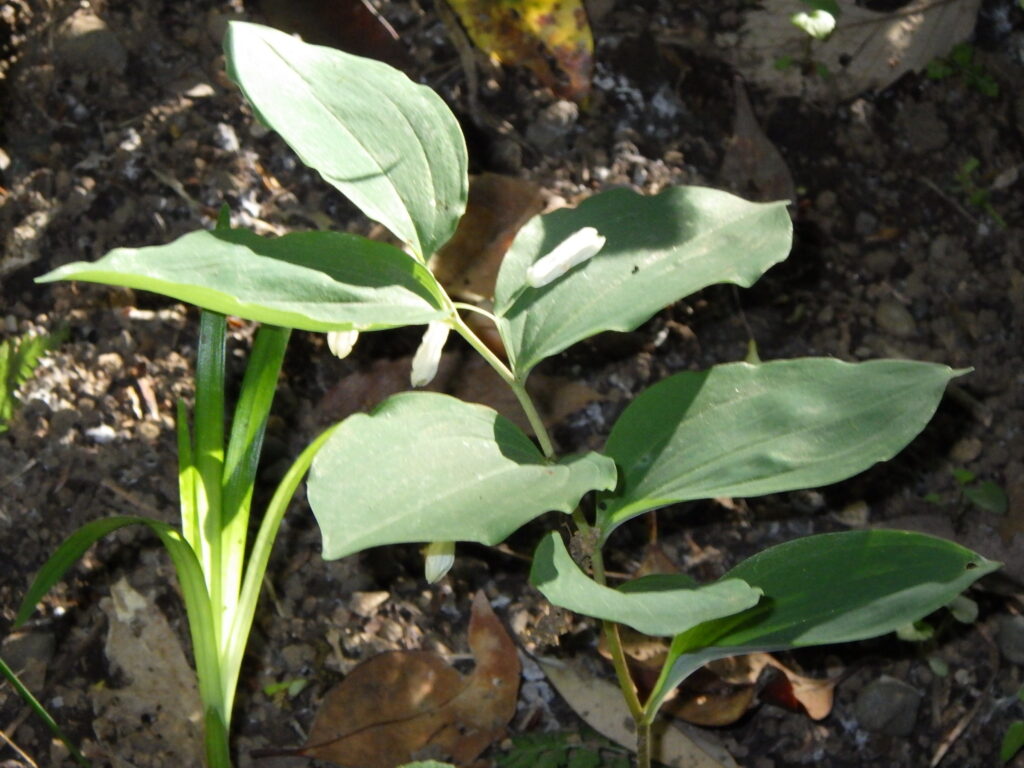
No. 0601 Polygonatum lasianthum
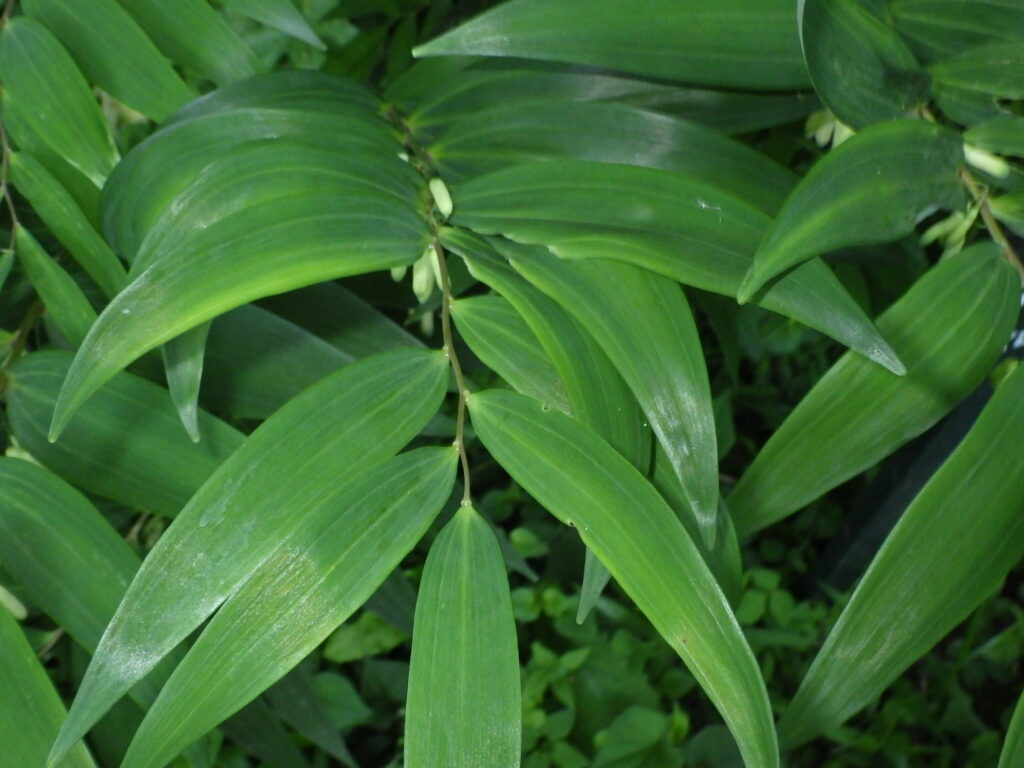
This is a perennial herb, reaching a height of 30-60 cm. It has approximately eight leaves, broadly oblong with wavy margins and three prominent main veins. In May and June, the pedicels emerge from the leaf axils, spreading along the underside of the leaves, bearing 1-3 drooping white tubular flowers. In many individuals, the tips of the perianth segments do not open flat. It is distributed in Hokkaido, Honshu, Shikoku, Kyushu, and Korea. It mainly grows in bright deciduous forests. In Hokkaido, there is a record of the Hokkaido bumblebee, Bombus diversus tersatus, visiting the flowers (Akabane et al., 2016).
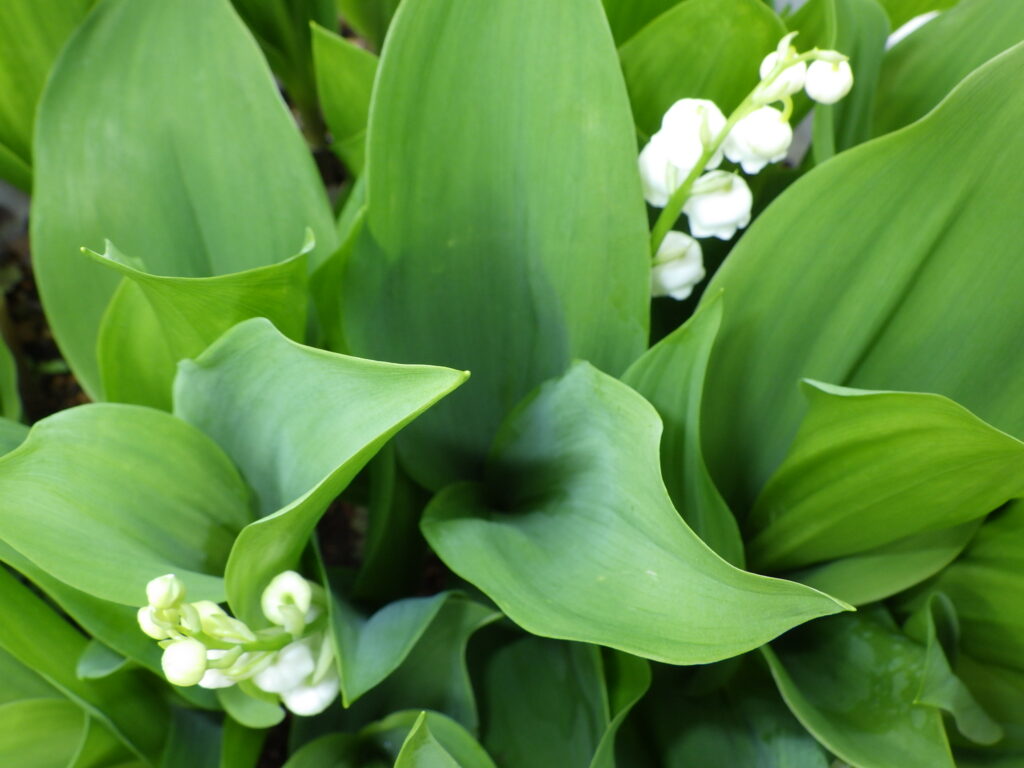
No.0603.1 German Lily of the Valley (Convallaria majalis)
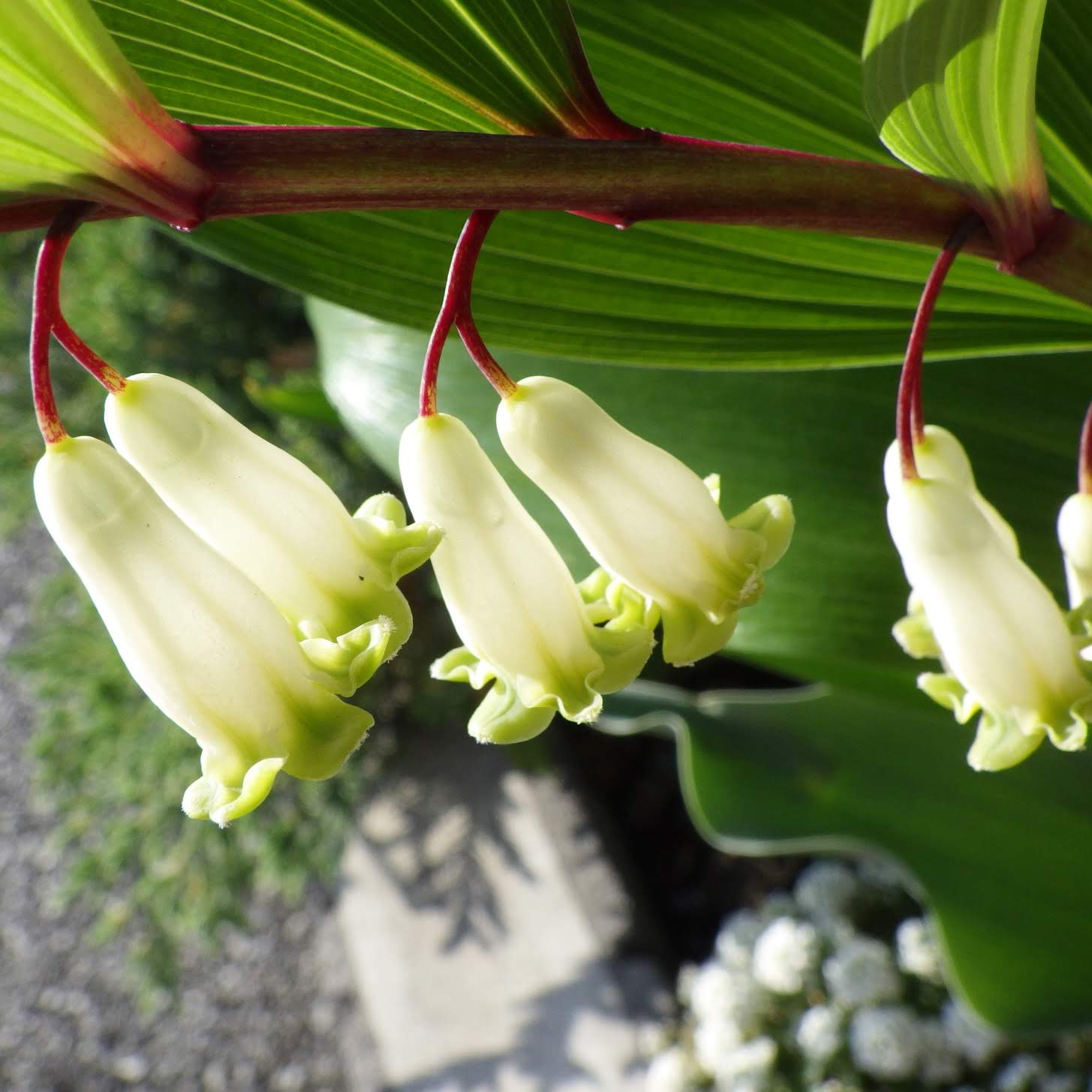
This perennial herb has a rhizome and two oblong leaves, about 15 cm long and 5 cm wide. The long petioles clasp together, and the lower part is enclosed in membranous, apical leaves. In late spring, a flower stalk about 30 cm long grows from the axil of these apical leaves, usually reaching the same height as the leaves. About 10 small, fragrant, bell-shaped white flowers, about 7 mm long, hang downwards in a raceme. The corolla is 6-lobed with recurved lobes, and there are 6 stamens. The fruit is a red berry. The entire plant contains glycosides such as convallamarin, convallalin, and convallatoxin, which are poisonous but have cardiotonic and laxative effects. This is the species sold in garden centers, and it has larger flowers, a stronger fragrance, glossy leaves, and is suitable for early cultivation compared to the Japanese lily of the valley. In Europe, it is an indispensable flower for May Day celebrations. It is native to Europe, has naturalized in eastern North America, and is cultivated in Japan for ornamental purposes. As horticultural varieties, double-flowered, pink-flowered, red-flowered, and variegated-leaved varieties are known.
References
Akabane, S., Hino, T., & Yoshida, T. 2016. Response of bumblebee communities to increased density of Ezo deer. Journal of Forest Wildlife Research 41: 1-9. https://doi.org/10.18987/jjwrs.41.0_1
Eguiarte, LE, Jiménez Barrón, OA, Aguirre-Planter, E., Scheinvar, E., Gamez, N., Gasca-Pineda, J., … & Souza, V. 2021. Evolutionary ecology of Agave: distribution patterns, phylogeny, and coevolution (an homage to Howard S. Gentry). American Journal of Botany 108(2): 216-235. https://doi.org/10.1002/ajb2.1609
Heyduk, K., McAssey, EV, Grimwood, J., Shu, S., Schmutz, J., McKain, MR, & Leebens-Mack, J. 2021. Hybridization history and repetitive element content in the genome of a homoploid hybrid, Yucca gloriosa (Asparagaceae). Frontiers in Plant Science 11: 573767. https://doi.org/10.3389/fpls.2020.573767
Ishii, Hiroshi. 2020. The Resilient and Wonderful Relationship Between Flowers and Insects: Ecology Related to Pollination. Bere Publishing, Tokyo. 290pp. ISBN: 9784860646103
Kanagawa Prefecture Flora Survey Association. 2018. Kanagawa Prefecture Flora 2018 (Electronic Edition). Kanagawa Prefecture Flora Survey Association, Odawara. 1803pp. ISBN: 9784991053726
Kawakita, Atsushi. 2012. How did obligate pollination symbiosis cross the ocean? – Island biogeography of symbiotic systems of the Phyllanthaceae family and the genus Phyllanthus. Journal of the Ecological Society of Japan 62(3): 321-327. https://doi.org/10.18960/seitai.62.3_321
Kitamura, Shiro, Murata, Gen, and Hori, Masaru. 1957. Illustrated Flora of Japan in Color: Herbaceous Plants, Vol. 1, Revised Edition. Hoikusha, Osaka. 297pp. ISBN: 9784586300150
Knudsen, JT, & Tollsten, L. 1995. Floral scent in bat-pollinated plants: a case of convergent evolution. Botanical Journal of the Linnean Society 119(1): 45-57. https://doi.org/10.1111/j.1095-8339.1995.tb00728.x
Pellmyr, O. 1999. Systematic revision of the yucca moths in the Tegeticula yuccasella complex (Lepidoptera: Prodoxidae) north of Mexico. Systematic Entomology 24(3): 243-271. https://doi.org/10.1046/j.1365-3113.1999.00079.x
Rasethe, MT, Semenya, SS, & Maroyi, A. 2019. Medicinal plants traded in informal herbal medicine markets of the Limpopo Province, South Africa. Evidence-Based Complementary and Alternative Medicine 2019: 2609532. https://doi.org/10.1155/2019/2609532
Rentsch, JD, & Leebens-Mack, J. 2014. Yucca aloifolia (Asparagaceae) opts out of an obligate pollination mutualism. American Journal of Botany 101(12): 2062-2067. https://doi.org/10.3732/ajb.1400351
Suetsugu, K., & Sueyoshi, M. 2018. Subterranean flowers of Aspidistra elatior are mainly pollinated by not terrestrial amphipods but fungus gnats. Ecology 99(1): 244-246. https://doi.org/10.1002/ecy.2021
Suetsugu, K. 2019. Slug pollination in Rohdea japonica ? Testing a one-hundred-year-old hypothesis. Journal of Molluscan Studies 85(2): 284-285. https://doi.org/10.1093/mollus/eyz011
Svensson, GP, Hickman Jr, MO, Bartram, S., Boland, W., Pellmyr, O., & Raguso, RA 2005. Chemistry and geographic variation of floral scent in Yucca filamentosa (Agavaceae). American Journal of Botany 92(10): 1624-1631. https://doi.org/10.3732/ajb.92.10.1624
Trejo-Salazar, RE, Eguiarte, LE, Suro-Piñera, D., & Medellin, RA 2016. Save our bats, save our tequila: industry and science forces join to help bats and agaves. Natural Areas Journal 36(4): 523-530. https://doi.org/10.3375/043.036.0417
Tsukamoto, Yotaro. 1994. Encyclopedia of Horticultural Plants, Compact Edition. Shogakukan, Tokyo. 3710pp. ISBN: 9784093051118
Mabberley, DJ 2017. Mabberley's plant-book: a portable dictionary of plants, their classification and uses. Cambridge University Press. 1120pp. ISBN: 9781107115026,
https://doi.org/10.1017/9781316335581
Molina-Freaner, F., & Eguiarte, LE 2003. The pollination biology of two paniculate agaves (Agavaceae) from northwestern Mexico: contrasting roles of bats as pollinators. American Journal of Botany 90(7): 1016-1024. https://doi.org/10.3732/ajb.90.7.1016