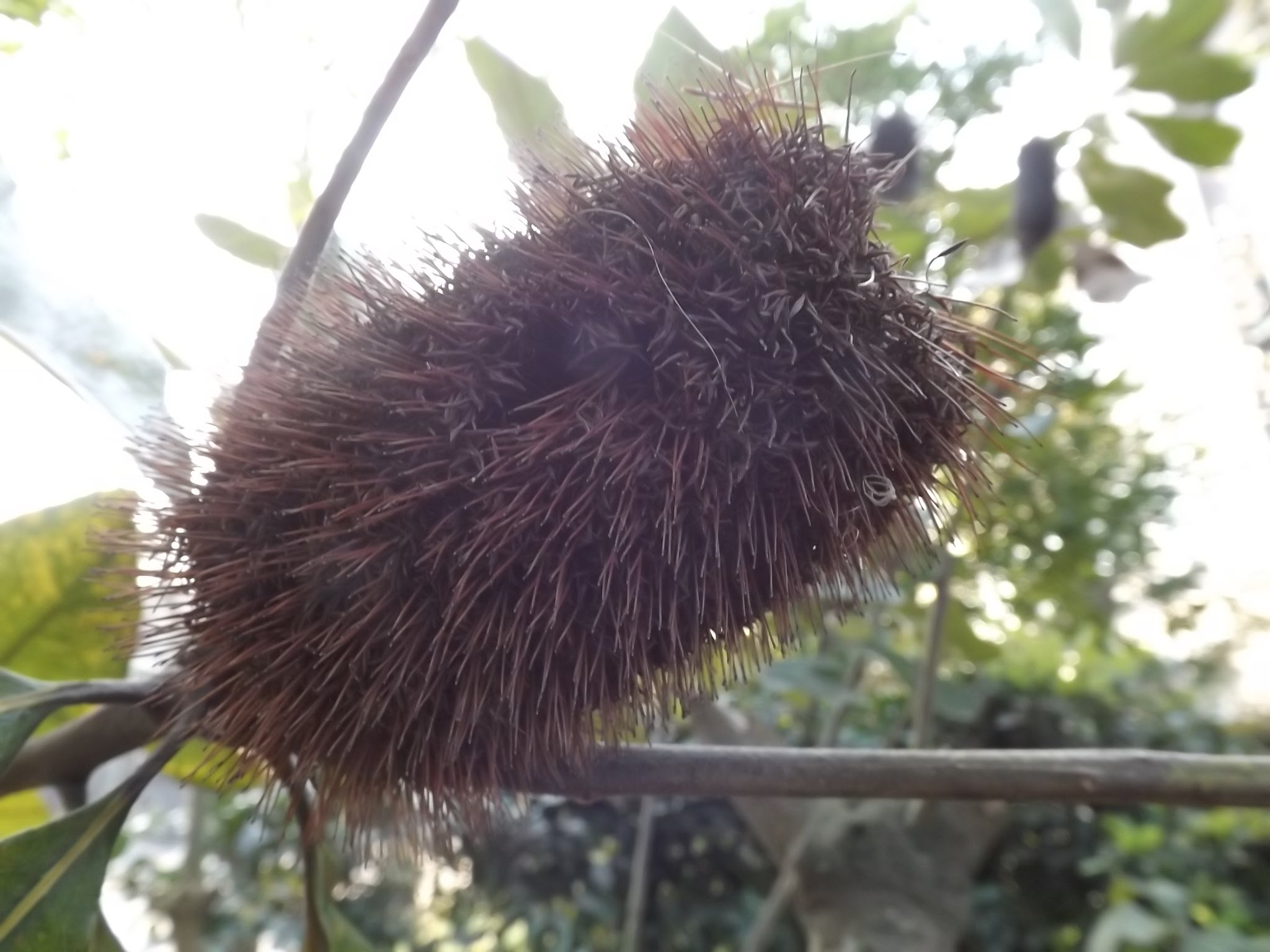
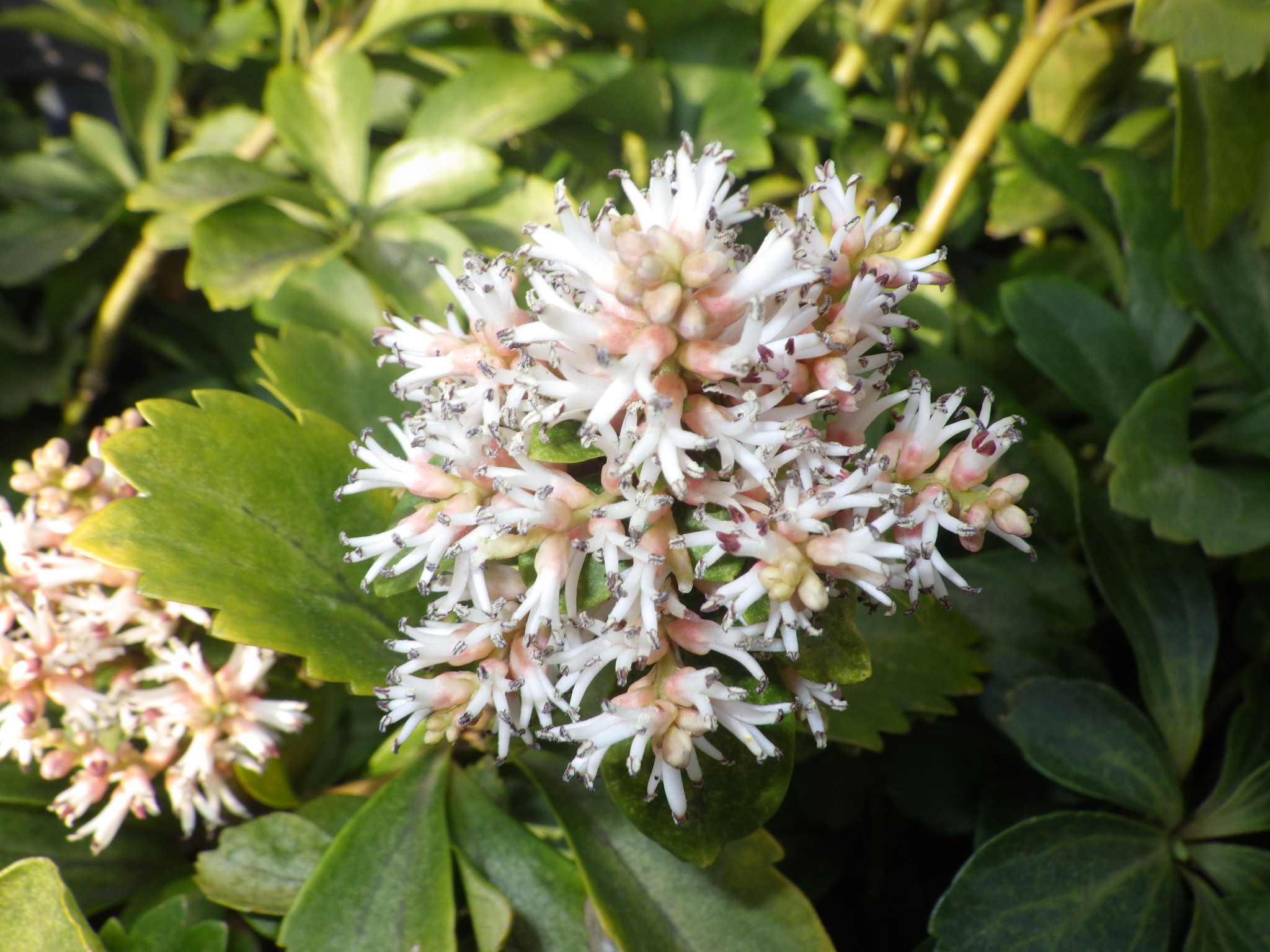
The family Trochodendraceae consists of evergreen small trees. The leaves are alternate, simple, and lack stipules. The flowers are borne in short terminal racemes, with long pedicels, and are small, bisexual, and lack a perianth. There are numerous stamens and 5-10 carpels arranged in a whorl, with the lower parts fused together. The fruit is a cluster of follicles, and the seeds are linear and numerous. In the APG system, where there is only one genus in East Asia, Trochodendraceae is a single family that constitutes the order Trochodendraceales.
This article provides a comprehensive, field guide-style introduction to plants belonging to the family Trochodendronaceae.
The basic information is based on the Kanagawa Prefecture Flora Survey Association (2018). Photos are replaced as better ones become available. While the identification is done by the author, please note that misidentifications may be corrected without notice.
No. 1325 Trochodendron aralioides
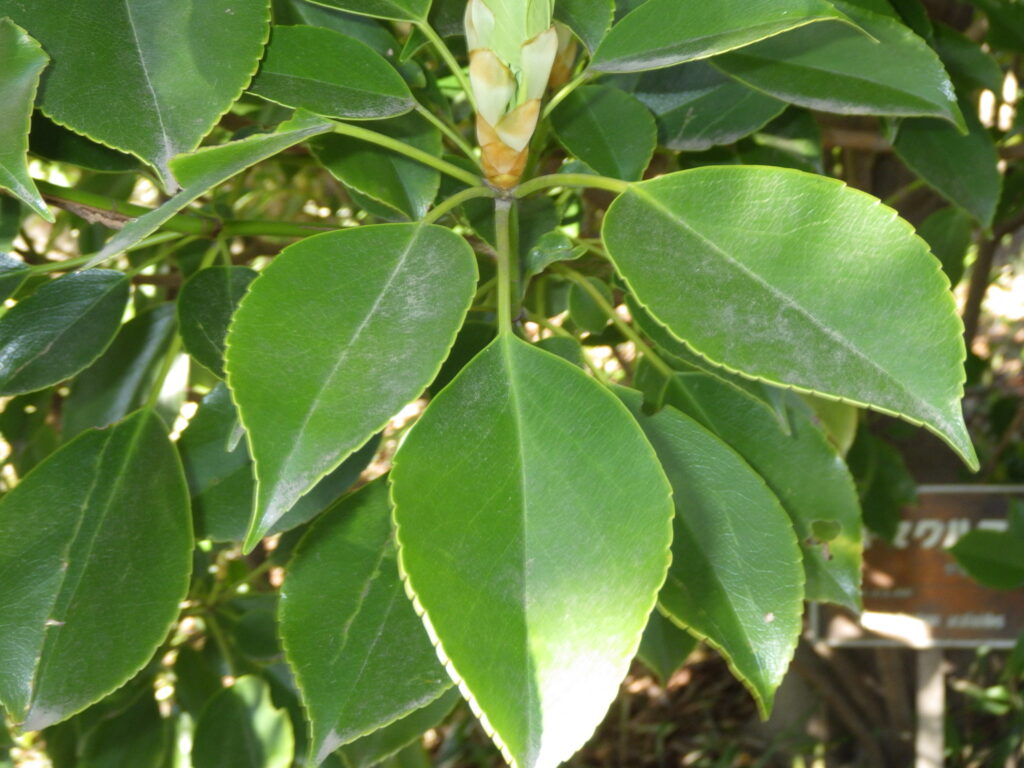
This is an evergreen small tree. The leaves have long petioles 3-8 cm long, and the leaf blades are broadly obovate to narrowly obovate, 8-15 cm long and 2-8 cm wide, with a somewhat caudate tip and wavy, blunt serrations on the upper part. Inflorescences 7-12 cm long are borne at the ends of the branches. The fruit is oblate and spherical, 7-10 mm in diameter. Flowering occurs from May to June, and the fruit ripens in autumn. It is distributed in Honshu (south of Yamagata Prefecture), Shikoku, Kyushu, the Ryukyu Islands, Korea, and Taiwan. It is common on steep slopes, rocky areas, and cliffs, and can also grow on trees. A variety with narrower, oblanceolate leaves is called * Longifolium longifolium* f., and it grows mixed with the parent species, but many individuals are difficult to distinguish.
References
Kanagawa Prefecture Flora Survey Association. 2018. Kanagawa Prefecture Flora 2018 (Electronic Edition). Kanagawa Prefecture Flora Survey Association, Odawara. 1803pp. ISBN: 9784991053726